A Guidebook Library: TLD's year-long randomised walkthrough of zoo guides

Day 83: Tierpark Hellabrunn (1995) - King Cheetah

full


Page count: 128 pages (including 20 pages of advertisements scattered throughout)
Photographs: 148 colour photographs (including 24 full-page images)
Illustrations/diagrams: N/A
Layout: Introduction, followed by discussion of the species held within the collection arranged by geozone.
Map: Fold-out map located within interior rear cover.


Today, we shall be discussing one of the very first guidebooks to enter my collection; I obtained this particular guidebook when I attended the 2013 Zoohistorica event at Bristol Zoo, where I purchased around two dozen guidebooks and was given around the same number of guidebooks for free through the kindness of various collectors attending the meeting. It may well not surprise anyone to learn that I picked this guidebook up purely on the grounds of the cover image; at the time of publication, the individual depicted on the cover was one of only two or three king cheetah displayed within a European collection, and this is still probably one of the most eye-catching and unique cover images found throughout the various zoo guides located within my collection.

full


The guidebook opens with a fairly brief, but nonetheless quite detailed introduction to Tierpark Hellabrunn, discussing the history of the collection and the "Geo-Zoo" concept (displaying species by geographical and ecological habitat rather than taxonomic grouping) which the various exhibits and enclosures follow, along with a prelude giving details of the most recent developments and construction projects at the collection; although the main body of the guidebook is presented solely in German-language, an abridged form of these introductory segments (omitting the passages relating to current developments) is provided in English, French, Spanish and Italian. As such, this guidebook - and similar ones issued by Tierpark Hellabrunn over the course of the 1990s - is quite possibly one of the most multi-lingual in my collection, and certainly one of the longest to contain content in more than two languages. It is worth mentioning here that these introductory accounts are illustrated by small but colourful photographs depicting various of the exhibits and species located throughout the collection; the guidebook as a whole makes very good use of colour photographs to illustrate the content within, with many of the images encompassing full pages, leading to an attractive and eye-catching format wherein the text and imagery complement one another well.

full


The main body of the text comprises a species-by-species walkthrough of the collection, divided into the various geozones and exhibits present at Tierpark Hellabrunn as follows; the primate house; the aquarium and terrarium; the elephant house and associated exhibits; the Australia zone; the jungle house and associated exhibits; the Africa zone; the Polar zone; the children's zoo and associated exhibits; the Asian zone; the European zone; the free-flight aviary; and the New World zone. As can be seen in the examples above and below (which have been partially-cropped for clarity due to the fact that the page format of this guidebook meant that scanning double-page spreads in their entirety was infeasible and led to sections being cut off) the accounts are well-illustrated with colour photographs, and contain a wide amount of information; in part, this is presented within information boxes at the start of each account which relay information such as the habitat, diet, and conservation status of the taxa in question, with more specific information relayed within the main body of each account. These go into further detail about aspects such as the behaviour, physical attributes and range of the species, along with the threats facing them in the wild, captive breeding successes, lifespan and other such noteworthy points. For instance, the above account relating to the cheetahs held at the collection at the time of publication notes that the "King" morph is extremely scarce in captivity; however, as can be seen from both this account and the cover image of the guidebook there was in fact a single King present at Tierpark Hellabrunn at the time of publication.

Along with these accounts, there are more general discussions about the particular geographic or ecological zones represented at the collection throughout the main body of the guidebook, located at the start of each overall section, along with introductions to the various major exhibit complexes and houses; in the case of the latter, these convey a large amount of information about the history of these structures, their general dimensions and size, and where appropriate information such as the temperature maintained within, the volume of water and quantity of vegetation present, and so forth. As such these provide a very clear picture of the collection to which they pertain and, in conjunction with the quality of the species accounts, greatly increase the value of this guidebook both as a historical document and a zoological document.

full


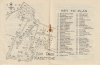
The other key strength of this guidebook - as I noted for the previous edition from the 1950s I discussed some time ago - is the high quality of the map provided within the interior rear cover, the houses and exhibits are comprehensively labelled, with the overall design of the map being both aesthetically-pleasing and extremely clear and easy to reference. The fold-out section of the rear cover also contains detailed information on the feeding times for key species throughout the collection, making note of where these differ depending on day and time of year.. The only real downside of the map, as far as this review is concerned, is merely the fact that (as I have already observed) the format and size of the guidebook as a whole prevents double-page spreads from being scanned in their entirety; as such, the below scan is slightly incomplete, although I feel that it nonetheless fully conveys the high quality of the map as a whole.

full


Overall, I hope that this review has gone some way to demonstrating why I have long said that the guidebooks issued by Tierpark Hellabrunn in the late 20th century are some of the best German-language material of this nature published within the timespan in question; although not quite in the league of the guidebooks formerly published by Zoo Berlin or Tierpark Berlin, they are informative, easily-accessible and aesthetically-pleasing. As a result, it is gratifying to note that after several years where the collection ceased to publish guidebooks on the grounds that the director of the time deemed material of this sort to be antiquated and surplus to requirements, the collection has once again published a guidebook in recent years.

I'm fairly certain that I have omitted much that could be stated - as such, I am happy to receive any questions, feedback or criticism which those reading this thread may have to offer :) and of course, any general remarks and comments about this guidebook or any other discussed within this thread are always welcome!

A particularly fantastic post :P And now one of the first in my collection, as well! It would be a great cover if the cheetah had regular spots, but the king markings make it more unique. I agree with Sealy that the map is excellent and what a good map should look like. The paths are obvious and uncluttered, the species are easy to ID instead of generic silhouettes or stylized.
 
The spelling of "touraco", the mention of "Hyancintine Macaws", and even the labeling of a "PENQUIN POOL" on the map all stood out to me... unless the historical evolution of language is giving them too much credit and these are just typos :p

Well, the first one definitely *is* an antiquated spelling of the word in question..... but I suspect the other two examples are indeed spelling errors ;)
 
I always spell it touraco.

Just checked our Gallery and there at least 164 photos which are labeled "touraco" for the different species and/or enclosures in which they are kept. Most of these are by myself ( because I also still use this name in most cases ) but also several other posters still seem to use this name :).
 
The map design in that Hellabrunn guidebook is along the lines of what I think the "ideal" zoo map should look like; artistically detailed enough that it has easily-distinguished color illustrations of specific animals, yet technically detailed enough that you can easily tell where the paths and buildings are. I'm glad you decided to scan what you could of it, as it's a great example of what a high quality map looks like IMO.

It's truly surprising to me how many zoos have more recently opted away from this style of map design and opted instead to produce unclear, sometimes crowded, unnecessarily colorful, and ultimately unhelpful maps. Sometimes they're just ugly, too :p

~Thylo
 
The last time I went to Hellabrunn was about 2000. It is the only time I've seen a king cheetah - a stunning cat.
 
Day 84: Tierpark Hagenbeck (1948) - Erläuterungen zum Rundgang durch Carl Hagenbecks Tierpark

full


Page count: 16 pages
Photographs: 16 black-and-white photographs
Illustrations/diagrams: 4 drawings
Layout: General walkthrough of collection interspersed throughout historical account relating to collection and the various Hagenbeck family operations.
Map: Located within central pages.


The guidebook we shall be discussing today was, for a long time, the only publication in my collection deriving from Tierpark Hagenbeck, having been obtained through an AbeBooks seller around five or six years ago - not long after I first visited the collection in question, as a matter of fact. As guidebooks go, it is something of an oddity but - for reasons which I suspect will soon become clear - one which is extremely well-suited to my own personal interests and biases where zoological guidebooks are concerned. As can be seen above, the cover art - something which was always a particular highlight of the guidebooks published by Tierpark Hagenbeck from what I have been able to gather - is deceptively appealing to the eye. with the initial drab brown impression quickly displaced by the attractive and well-executed artwork depicting a wide variety of species.

full

full


Although the guidebook does contain a rough walkthrough account of the collection, the primary focus of the text is a comprehensive historical account of the years which passed from Carl Hagenbeck Sr first founding an animal import and trade business in 1848, through the foundation of Tierpark Hagenbeck by his son Carl Hagenbeck Jr in 1908 and the growth of the associated circus and animal import businesses, to the expansion and development of the Tierpark throughout the early decades of the 20th century up to the time of publication. As such, it is very much apparent that this particular guidebook was published specifically to mark the centenary of the Hagenbeck involvement with captive wildlife, something corroborated by the fact that (as demonstrated by guidebooks which have subsequently entered my personal guidebook collection) the general format, style and print quality of this guidebook is rather different to other editions published by Tierpark Hagenbeck around this time. However, there is still more than enough discussion of the collection as it was at the time of publication for it to qualify *as* a guidebook to the collection, even if it is perhaps not counted among the "main" sequence of publications.

As I have noted previously, the interest in collecting and reading zoological guidebooks which was sparked within me when I attended the Zoohistorica event at Bristol Zoo owes just as much, if not more, to my pre-existing passion for the study of history as it does the fact I am a zoo enthusiast. This has been made incredibly clear, I suspect, by my various posts on the subject of zoological history within this thread remarking on the importance I place in the presence of historical material and discussion within the guidebooks and other printed material published by zoological collections, and that I fear historical material of this sort is increasingly scarce in both density and quality even where zoological guidebooks are still produced. As such, it is perhaps unsurprising that I feel this is one of the most interesting guidebooks in my collection, particularly when one considers the possibility that some of the historical material presented here has never been formally published in an English-language setting. It is for the latter reason that I intend, when time and mental energy allows, to go through the text more methodically and translate any notable passages for publication either within this thread or elsewhere on this forum.

full


The guidebook as a whole is well-illustrated with a large number of photographs - considering the relatively brief nature of the document as a whole - depicting various animals and exhibits at the Tierpark which are discussed within the main body of the text, along with animal performances within the Hagenbeck circus and images showing points in the overall process of capturing and importing wild animals for the Hagenbeck businesses; these occur alongside a handful of drawings and prints showing Carl Hagenbeck Sr and various of his activities. However, the most interesting aspect of this guidebook where illustrative material is concerned must certainly be the detailed map of the collection located within the central pages; this is methodically-labelled and shows the precise position and orientation of the various exhibits, houses and footpaths throughout Tierpark Hagenbeck in a clear and readily-accessible fashion.

full


I am certain that there is more I could say about this item - and, as I have already noted, I intend to translate much of the historical content when I have the time, opportunity and mental energy. However, for now it suffices to say that this is an extremely interesting guidebook to Tierpark Hagenbeck, not only as a document discussing the history of the collection and the Hagenbeck animal business but also as a record of the collection as it existed at the time of publication, and as such would be a fine addition to any guidebook collection.

As always, I urge those reading this thread to post any thoughts, queries or feedback which may occur to them!
 
Well, the first one definitely *is* an antiquated spelling of the word in question..... but I suspect the other two examples are indeed spelling errors ;)
"Hyacinthine" means "in color like the hyacinth" so is most likely an alternative common name. Many species found in aviculture had multiple common names used in different regions, less so now than in the past. Agreed that "Penquin" is almost certainly a spelling error.
 
"Hyacinthine" means "in color like the hyacinth" so is most likely an alternative common name.

Very true, but as @Coelacanth18 noted the guidebook actually said "Hyancintine" which is presumably a spelling error rather than an alternative spelling of "Hyacinthine"! :p

upload_2022-5-20_3-43-27.png
 

Attachments

  • upload_2022-5-20_3-43-27.png
    upload_2022-5-20_3-43-27.png
    75 KB · Views: 33
As always, I urge those reading this thread to post any thoughts, queries or feedback which may occur to them!
Well earlier you did mention that you were taking requests, so while I'm at it, I'd be very interested in seeing a book from Saint Louis if you have one in your collection. Barring any sudden changes I intend on making a visit next month and have been interested in seeing some of its former holdings and details of the older houses. Anything from the San Diego parks would also be of interest for the same reasons.
 
Very true, but as @Coelacanth18 noted the guidebook actually said "Hyancintine" which is presumably a spelling error rather than an alternative spelling of "Hyacinthine"! :p

View attachment 545926
It is definitely a spelling error, because they make the same mistake in the scientific name (so, in other words, that's how the author mistakenly thinks hyacinthine is spelled, rather than it being an actual alternative spelling).
 
Day 85: Birmingham Nature Centre (c.1980) - Brief Guide

full


Page count: 6 pages
Photographs: N/A
Illustrations/diagrams: 9 drawings of animals and plants
Layout: General walkthrough account of collection
Map: Located on back cover


An interesting little oddity today, and one which - although it does not quite fit the description of a guidebook per se - most certainly qualifies as a zoo guide of some form, and a remarkably early example from the history of the collection in question at that. This is one of my newest acquisitions, having picked it up from eBay mere days ago, but given the fact that writing the post planned for today has come relatively difficult I have elected to move this item up several places considering its general brevity and hence the fact it should prove relatively easy to write about overall.

full


As noted, this item is not a true guidebook - comprising as it does a single folded sheet of paper measuring 60x20cm, which when folded forms a total of six interior pages along with a front and rear cover - but in my opinion the detail and quality of content is sufficient to "count" as a zoo guide rather than a mere leaflet or brochure, a conclusion which appears to have been reached by the Bartlett Society given the presence of this item on their master-list of guidebooks. In any case, given the fact that this item was published only a few years after Birmingham Nature Centre (latterly, of course, renamed Birmingham Wildlife Conservation Park) first opened on the site of Birmingham Zoo, it most certainly represents a valuable and interesting look at the early days of one of the smaller but more "choice" zoological collections currently open in the United Kingdom.

At the time of publication, the captive collection at Birmingham Nature Centre was (appropriately enough, given the name of the collection) focused specifically on the display and discussion of British and European native wildlife, with none of the more exotic species which have been present there in recent decades; as those reading will know, both from my posts within this thread and elsewhere on the forum, I have a strong soft spot for zoological collections of this sort and the publications which they release. Given this fact, the historical relevance of the document in question and its relative brevity, I was actually somewhat tempted to scan the entirety of this item for the reference of those reading this thread..... something I may still end up doing, if those reading this thread are interested in viewing the document as a whole.

After a brief introduction discussing the general aims of the collection and the events which led to the Nature Centre first opening, the pages that follow provide a general walkthrough account of the collection, with each major exhibit area or section of the collection numbered in correspondence with the map located on the rear cover. It must be immediately noted that the contents of this document are remarkably detailed and in-depth considering the brevity of the whole, and meet the sort of quality one would expect from a guidebook published by a larger and more-established collection; each section of the walkthrough account provides a large amount of information not only about the species held within the collection and the exhibits within which they are located, along with often-lengthy discussions of the wild habitats and ecological niches which they represent, but also goes into some detail about the plants and vegetation found within the Nature Centre. Simple but visually-appealing drawings scattered throughout the guide illustrate the majority of these accounts.

full


The map itself, as can be seen below, follows a simple but concise design - each of the areas discussed within the main body of the text is clearly labelled on the map, with the accompanying key allowing ease-of-reference and also showing the location of visitor amenities such as the cafe, toilets and the exhibition hall.

full


Overall, this is an extremely interesting document on several levels; it seems to have been very well-suited to its original purpose of providing a guide to the collection for which it was published, given the high quality and appealing presentation of the content within, but when viewed from the context of a historical record pertaining to the earliest days of a collection which (although different in many ways) still exists to this day, it is even more valuable now. As always, I am entirely happy to answer any questions on the content of this guidebook - and if people want to see more from it, just ask!
 
Day 86: Paignton Zoo (1949) - "Wild Animals in Wonderland"

full


Page count: 52 pages (including 10 pages of advertisements)
Photographs: 38 black-and-white photographs
Illustrations/diagrams: N/A
Layout: General walkthrough account of collection
Map: N/A


Today, we shall be discussing a relatively early guidebook from one of the most notable UK collections operating into the present day, Paignton Zoo; having opened in 1923, the collection had experienced several years of decline and closure during WWII, re-opening two or three years prior to the publication of this guidebook. As such, this guidebook represents an important historical record both of a collection undergoing active re-development and rebuilding, and of one as yet in its infancy when compared to the Paignton Zoo familiar to those reading this thread. I was fortunate enough to obtain this guidebook a few months ago, having stumbled across it on eBay and (to my significant surprise given how popular older items from the collection tend to be on the secondary market) was able to secure it for a remarkably low sum of money!

full

full


After a short introduction to the collection, which provides information both regarding the events which led to the collection opening and the current status of the zoo in the years immediately following the end of WWII, the main body of the text opens with a comprehensive walkthrough account of Paignton Zoo; as I shall relate, this truly does qualify for the term "walkthrough" given the fact that it provides a step-by-step description of the enclosures and species visible at each and every point of a suggested visitor route throughout the zoo. Although many of the species are referred to only briefly and in passing, at several points longer and more detailed discussions take place, with information provided relating to the wild habitat, diet and behaviour of a given species, or in some cases further information about the specific individuals displayed at Paignton Zoo.

Unfortunately, the use of scientific names within the text is somewhat patchy and erratic; many of the species mentioned in the text are referred to by their common names alone, and often in rather loose terminology - for instance, referring to "baboons" and "other monkeys" without further elucidation. Curiously, the section of the guidebook pertaining to the tropical house devotes a significant quantity of space and detail to discussion of the various plants and flowers located within said exhibit, providing a full scientific name for the vast majority of plant taxa cited within, whilst addressing the subject of the animal inhabitants in the most general terms. However, where photographic content is concerned the quality of this guidebook is consistently high, with numerous black-and-white photographs provided throughout which show a variety of species and exhibits; these include a number of full page spreads showing multiple images.

full

full


Another interesting aspect of this guidebook is the relatively-high density of advertisement material; as I have remarked on several occasions in the past, content of this nature is highly valuable from both a socio-economic and historical point of view given the insight it provides to the cultural, commercial and social landscape within which the guide book was published. Many of these adverts pertain to businesses and services available within the Paignton and wider Torbay area at the time of publication, as one might expect. As such, we find advertisement material for local grocers, taxis, food wholesalers and cafes, very much akin to some of the other advertisement material I have discussed within the accounts relating to previous guidebooks.

However, two of the most interesting advertisements represent something a little different; as such, it is these which I have selected for representation and further discussion within this post. The first of these is located several pages into the walkthrough account of Paignton Zoo; as can be seen in the above image, it comprises an advertisement for the Western National Omnibus Company, which at the time of publication provided bus services to the zoo throughout much of southern Devon. More interestingly still, it is accompanied by a bus timetable detailing all relevant services running between Paignton Zoo and the train station at the time of publication. This is perhaps unique within the entirety of my guide book collection! The second advertisement which I have selected for particular discussion occurs after the conclusion of the walkthrough account; here, a list of the major zoological collections within England and Scotland is provided. Alongside collections which still exists to this day, it is interesting to note the presence of collections long-gone such as Wellingborough, Glasgow and Maidstone; given the fact that at the time this guidebook was published, Glasgow Zoo had only been open for two years, it serves as something of a surprise that this collection in particular is cited as one of the foremost within the UK!

full


Overall, then, this guidebook not only serves its original purpose - providing a large amount of information about Paignton Zoo for the benefit of the visitor - very well, but also represents an important and interesting primary resource for those interested in the wider history of the collection to which it pertains, or indeed late-1940s Devon as a whole. The level of information provided - despite the minor gripes which I voiced previously within this post - is generally high, and the guidebook is appealingly designed and presented; I do not know if the absence of a map is due to one having not been provided originally, or whether an enclosed map was lost at some point prior to my copy entering my possession, but either way this is the only real omission which is worthy of mention.

As is often the case, I feel that there is a great deal of information which I have omitted from this post - for some reason, this post has been rather hard to get flowing from my brain to the keyboard - and as such, I would as ever be entirely happy to provide any further information which those reading this thread may choose to request; beyond this, any feedback, questions and remarks on this post or any other would be more than welcome!
 
Last edited:
The second advertisement which I have selected for particular discussion occurs after the conclusion of the walkthrough account; here, a list of the major zoological collections within England and Scotland is provided. Alongside collections which still exists to this day, it is interesting to note the presence of collections long-gone such as Wellingborough, Glasgow and Maidstone

Exactly the kind of neat historical find I love to see!

Is Brighton Zoo still around? I don't recognize that one from any of the UK discussions I've stumbled into. Also do you have any sense of what Wellingborough or Maidstone were like?
 
Is Brighton Zoo still around? I don't recognize that one from any of the UK discussions I've stumbled into.

Brighton Zoo is another closed collection, and one whose inclusion as a major UK zoo is even more baffling than that of Glasgow given the fact that it was (as far as I know) a very small collection which first opened in 1948, only a year before this guidebook was published. I believe that it had closed again by 1952! :P

Also do you have any sense of what Wellingborough or Maidstone were like?

I don't know much at all about Wellingborough, but by happenstance I recently had brief possession of a pair of Maidstone Zoo guidebooks (purchases on eBay by Leszek Solski, zoo-historian at Wroclaw, which he had sent to me to save on postage given the fact I was going to be meeting him at said collection shortly thereafter) and took scans before they left my possession again :) I've got these, plus a few other guidebooks which don't fall under the remit of this thread given the fact they aren't actually in my guidebook collection, ready for bonus posts as-and-when required. For now, here's a 1945 map from Maidstone:

IMG_20220427_0004.jpg
 

Attachments

  • IMG_20220427_0004.jpg
    IMG_20220427_0004.jpg
    173.2 KB · Views: 31
Is Brighton Zoo still around? I don't recognize that one from any of the UK discussions I've stumbled into.

Brighton Zoo is another closed collection, and one whose inclusion as a major UK zoo is even more baffling than that of Glasgow given the fact that it was (as far as I know) a very small collection which first opened in 1948, only a year before this guidebook was published. I believe that it had closed again by 1952! :p
Clin Keeling writes briefly about Brighton Zoo in his books Where the Crane Danced (1985; 2020) and Where the Zebu Grazed (1989; 2022). According to the latter book the zoo closed in June 1951.
 
Also do you have any sense of what Wellingborough or Maidstone were like?
I don't know much at all about Wellingborough, but by happenstance I recently had brief possession of a pair of Maidstone Zoo guidebooks....
For those interested in Maidstone Zoo, there is a book on the subject The Story of Maidstone Zoo (Vickie Harris; 1994). Moreover Clin Keeling devotes a chapter of his book Where the Lion Trod (1984; 2019) to Maidstone Zoo.

For those interested in Wellingborough Zoo, Clin Keeling again has a chapter on this animal collection in Where the Crane Danced (1985; 2020); he also provides further information about this zoo in the first chapter of Where the Zebu Grazed (1989; 2022).
 
Day 87: Bognor Regis Pets Corner (1956) - Rhesus Macaque "Judy"

full


Page count: 18 pages (including interior front and rear covers)
Photographs: 26 black-and-white photographs
Illustrations/diagrams: 6 drawings
Layout: General overview of species held in collection, advice on keeping pets and summary of other attractions within Hotham Park.
Map: Two maps; on interior front cover showing location of collection within Bognor Regis; and plan of collection within central pages.


Appropriately enough, considering the fact that the most recent discussions within this thread have revolved around closed UK collections, the guidebook which has come up for discussion today pertains to one such collection - albeit not one of those which was cited within the previous guidebook. Bognor Regis Pets Corner first opened in 1950, and per the information available on the Bartlett Society website remained open until 1984; beyond these basic details, I have never really known all that much about the collection. As such, when I found this particular guidebook on eBay some time ago I was very pleased to seize the opportunity to learn more!

full


The guidebook opens with the above map showing the location of the Pets Corner within Hotham Park, an area of parkland in southeast Bognor Regis, along with a brief introduction both to the Pets Corner and the park as a whole. Beyond here, the main body of the text can be divided into three distinct segments; a general summary of the species (both domestic and exotic) displayed within the Pets Corner itself; a segment relating to the correct care of various commonplace domestic species which the readers of the guidebook may have owned as pets; and finally a brief segment discussing some of the other attractions available to the public within Hotham Park.

full


As one can imagine, this guidebook is very obviously aimed towards a younger audience; in many ways, the general tone and content of the text is reminiscent of children's literature published around this time, echoing much of the stilted and somewhat condescending delivery found in such books. However, it must be noted that the guidebook is nonetheless rather well-illustrated with a wide range of black-and-white photographs depicting the animals held within the collection at the time of publication, along with some of the exhibits and paddocks located within the Pets Corner, and *does* provide a reasonably high amount of information about those species and individual animals discussed within the text. Each of the major species located within the collection are addressed within a paragraph or two, separated numerically; it should, however, be noted that unlike some guidebooks I have discussed within this thread, the numbering does not correspond whatsoever to that presented within the map found within the central pages of the guidebook. Another notable feature of these accounts is that, by and large, they pertain specifically to the individual animals held within the collection, referring to them by name and in rather anthropomorphic terms - although, as noted, a large amount of information about the species and individual animals held within the Pets Corner is conveyed, this is interwoven with statements such as the claim within the above scan that the European Badger held within the collection had "become more civilised" as regards his diet.

These accounts are followed by a section - visible below - providing a wide range of advice on the care and upkeep of pet animals; again, this is very obviously aimed towards a younger audience as regards the general tone and content of the text. The quality of the advice presented is extremely variable; some comprises fairly reasonable and common-sense observations, other portions feel a little more antiquated, which some - the section relating to hedgehogs being the most obvious example - are actively and harmfully misleading in the information they relay. Beyond here, the guidebook concludes with a very brief summary of some of the other attractions and features which the visitor to Hotham Park could see at the time of publication.

full


The map located within the central pages of this guidebook, showing the general footprint and layout of the Pets Corner and surrounding areas of Hotham Park, is remarkably attractive and detailed given the aforementioned child-friendly focus of the guidebook as a whole, being presented in an aesthetically-pleasing isometric point of view which somewhat simulates an aerial view of the collection as a whole. The use of labelling and supporting information within the key is also particularly good - although, as noted, the exhibit numbering on the map does not correspond to the numbering within the main body of the text, it *does* present a large amount of information, noting where multiple exhibits hold a given species or group of animals and also displaying the location of various supplementary buildings and structures. Most notable of these is the Georgian mansion which forms the original focus of Hotham Park itself - and which, to the best of my knowledge, still stands to this day, several decades after the closure of the Pets Corner.

full


Overall, then, this is an rather interesting and historically-significant guidebook for one of the lesser-known closed collections which operated within the UK during the second half of the 20th century; given the somewhat old-fashioned and child-focused language, it is possibly more fulfilling and enjoyable to read as a historical record than it is as a guidebook for the collection to which it pertains - with the key exception of the map located within the central pages, which is perhaps the best part of the guidebook when viewed as a physical guide to the collection as it stood at the time of publication.

As usual, I would be very interested to receive any comments, questions or feedback - I imagine it is possible that some reading this thread may have even visited the collection over the years!
 
Day 87: Bognor Regis Pets Corner (1956) - Rhesus Macaque "Judy"

full


Page count: 18 pages (including interior front and rear covers)
Photographs: 26 black-and-white photographs
Illustrations/diagrams: 6 drawings
Layout: General overview of species held in collection, advice on keeping pets and summary of other attractions within Hotham Park.
Map: Two maps; on interior front cover showing location of collection within Bognor Regis; and plan of collection within central pages.


Appropriately enough, considering the fact that the most recent discussions within this thread have revolved around closed UK collections, the guidebook which has come up for discussion today pertains to one such collection - albeit not one of those which was cited within the previous guidebook. Bognor Regis Pets Corner first opened in 1950, and per the information available on the Bartlett Society website remained open until 1984; beyond these basic details, I have never really known all that much about the collection. As such, when I found this particular guidebook on eBay some time ago I was very pleased to seize the opportunity to learn more!

full


The guidebook opens with the above map showing the location of the Pets Corner within Hotham Park, an area of parkland in southeast Bognor Regis, along with a brief introduction both to the Pets Corner and the park as a whole. Beyond here, the main body of the text can be divided into three distinct segments; a general summary of the species (both domestic and exotic) displayed within the Pets Corner itself; a segment relating to the correct care of various commonplace domestic species which the readers of the guidebook may have owned as pets; and finally a brief segment discussing some of the other attractions available to the public within Hotham Park.

full


As one can imagine, this guidebook is very obviously aimed towards a younger audience; in many ways, the general tone and content of the text is reminiscent of children's literature published around this time, echoing much of the stilted and somewhat condescending delivery found in such books. However, it must be noted that the guidebook is nonetheless rather well-illustrated with a wide range of black-and-white photographs depicting the animals held within the collection at the time of publication, along with some of the exhibits and paddocks located within the Pets Corner, and *does* provide a reasonably high amount of information about those species and individual animals discussed within the text. Each of the major species located within the collection are addressed within a paragraph or two, separated numerically; it should, however, be noted that unlike some guidebooks I have discussed within this thread, the numbering does not correspond whatsoever to that presented within the map found within the central pages of the guidebook. Another notable feature of these accounts is that, by and large, they pertain specifically to the individual animals held within the collection, referring to them by name and in rather anthropomorphic terms - although, as noted, a large amount of information about the species and individual animals held within the Pets Corner is conveyed, this is interwoven with statements such as the claim within the above scan that the European Badger held within the collection had "become more civilised" as regards his diet.

These accounts are followed by a section - visible below - providing a wide range of advice on the care and upkeep of pet animals; again, this is very obviously aimed towards a younger audience as regards the general tone and content of the text. The quality of the advice presented is extremely variable; some comprises fairly reasonable and common-sense observations, other portions feel a little more antiquated, which some - the section relating to hedgehogs being the most obvious example - are actively and harmfully misleading in the information they relay. Beyond here, the guidebook concludes with a very brief summary of some of the other attractions and features which the visitor to Hotham Park could see at the time of publication.

full


The map located within the central pages of this guidebook, showing the general footprint and layout of the Pets Corner and surrounding areas of Hotham Park, is remarkably attractive and detailed given the aforementioned child-friendly focus of the guidebook as a whole, being presented in an aesthetically-pleasing isometric point of view which somewhat simulates an aerial view of the collection as a whole. The use of labelling and supporting information within the key is also particularly good - although, as noted, the exhibit numbering on the map does not correspond to the numbering within the main body of the text, it *does* present a large amount of information, noting where multiple exhibits hold a given species or group of animals and also displaying the location of various supplementary buildings and structures. Most notable of these is the Georgian mansion which forms the original focus of Hotham Park itself - and which, to the best of my knowledge, still stands to this day, several decades after the closure of the Pets Corner.

full


Overall, then, this is an rather interesting and historically-significant guidebook for one of the lesser-known closed collections which operated within the UK during the second half of the 20th century; given the somewhat old-fashioned and child-focused language, it is possibly more fulfilling and enjoyable to read as a historical record than it is as a guidebook for the collection to which it pertains - with the key exception of the map located within the central pages, which is perhaps the best part of the guidebook when viewed as a physical guide to the collection as it stood at the time of publication.

As usual, I would be very interested to receive any comments, questions or feedback - I imagine it is possible that some reading this thread may have even visited the collection over the years!
This place might have the strangest name of any zoo ever. If you asked me what "Pet's Corner" was without seeing this I would have said a pet shop or maybe a dog groomer.
 
Back
Top