Day 102: Scottish Sea Life Sanctuary (1979) - Octopus
Page count: 40 pages
Photographs: 19 colour photographs within main guidebook, and 11 colour photographs on supplementary poster.
Illustrations/diagrams: 1 diagram within main guidebook, and 6 diagrams/illustrations on supplementary poster.
Layout: Brief introduction and information for visitors, followed by general overview of species held within aquarium during first season, discussion of fish farming in Scotland, and technical information relating to the tanks within the aquarium; supplemented by a fold-out double sided poster including further information on Scottish fish farming and discussion of the Harbour Seal and other marine mammals found within British waters.
Map: Within main body of guidebook, and reproduced on supplementary poster.
Today, we have a rather interesting subject to discuss; this is the first guidebook released by the original Sea Life Centre on the outskirts of Oban, Scotland from which the worldwide chain arose, and which in latter years would be renamed the Scottish Sea Life Sanctuary in order to differentiate it from its "offspring". Unfortunately after many years of being neglected by the eventual parent company Merlin Entertainments, both through a general lack of investment and a pronounced reduction in promotion, the collection was ultimately closed down in 2018 - something which I feel represents both a real missed opportunity, and a massive loss to the historical landscape of UK zoological collections. As such, this guidebook is significant in two major regards for the purposes of this thread, along with a more personal aspect; firstly, this represents a key historical record of the very earliest days of a zoological collection which has since been lost; secondly, given the mass-produced identikit model followed by the Sea Life chain in latter years (with the collection in question having been impacted just as much as others in the chain) it is extremely interesting to see what the Oban site was like originally, and how different it was from what followed. On a more personal note, this was one of the very first zoological collections which I visited as a small child - neither myself nor my parents now recall whether we visited Oban before or after Highland Wildlife Park, both visits having come during the same holiday in the Scottish Highlands a day or so apart from one another. As such, seeing what the collection was like a decade or so prior to my first visit carries another level of interest on my part.

After a contents page and a very brief introduction discussing the background to the Sea Life Centre - noting that at the time of publication in late 1979 the aquarium represented the largest collection of native marine life in Great Britain - the guidebook opens with the above collection of key visitor information; as can be seen, this covers a wide range of subjects including opening hours, facilities and amenities available, and prohibitions on smoking and the admission of pets, and is accompanied by a pair of colour photographs showing some of the species held within the collection. It is worth noting here that photographic material of this nature is found throughout the guidebook, being generally presented in an attractive and eye-catching manner, but is most certainly intended as an accompaniment to the text rather than a focal point in itself. This is quite a stark difference from the previous guidebook from the Sea Life chain covered within this thread, which like all such guidebooks in modern years was extremely brightly illustrated and contained a significantly-higher ratio of images to text.
One minor point which immediately leaps to attention when reading this collection of visitor information is that at the time of publication, it seems that the collection was open for almost twelve hours a day during the summer months, from 8:30am to 8pm, and even during the spring and autumn it remained open for around ten hours; although opening hours of this sort are not particularly unusual within zoological collections in continental Europe, they would now be entirely unheard-of here in the UK. For comparison, the current summer opening hours within the Weymouth site of the Sea Life chain appear to extend from 10am to 4pm, whilst even the longest opening hours at a "mainstream" zoological collection such as Chester Zoo only extend from 10am to 6pm for a handful of summer weeks.

The main body of the guidebook covers three distinct subjects; the first of these is a general overview of the various species displayed at the Sea Life Centre over the course of the 1979 season - the first year that the collection had been open to the public. This section opens with the note that "
all the animals on display in the Sea Life Centre, with the exception of those in our tropical marine section, are to be found in the seas around the coast of Britain. Most have been caught within 100km of Oban" before remarking that due to the sensitive nature of many species, their presence within the collection would often be erratic and dependent on availability and husbandry limitations. This style of native-species aquarium, stocked by regular catches from the local area, represents very much the same model as seen within the guidebooks for Brixham Aquarium and Brighton Aquarium which have previously been discussed within this thread - however the scale of the collection seems to be rather larger than that seen there, with a remark that over 60 species of fish and 70 species of marine invertebrate had been displayed over the course of the first open season.
After a general overview of the three main categories which the animal collection at the Centre fell into - cartilaginous fish, bony fish and invertebrates - this section of the guidebook moves onto a more focused overview of some of the most "typical" species within the collection; these contain a surprisingly-large amount of detail about the wild behaviour, diet and ecological niches within which the species can be found, along with information on their commercial value and utility, notes on which species are capable of surviving for prolonged durations in captivity, and other items which would be of interest to those visiting the collection. Moreover, all of the species cited - even smaller invertebrates and those fish species alluded to only in passing - are listed both under their common names and scientific names, further increasing the value of this section. As such, this portion of the guidebook serves rather well not only as a general overview of the species displayed - whether temporarily or for more prolonged periods - at the Sea Life Centre during the first year it operated, but moreover as a fairly-comprehensive discussion of the marine life found off the western coastline of the British Isles.


The second major subject covered by the guidebook is, as can be seen above, an overview of the importance which commercial fish farming had attained over the course of the 1970's; this discussion is itself divided into three segments, with a lengthy discussion on the salmon farming industry followed by a pair of shorter segments on trial attempts at commercial production of Turbot - which took place in a farm fed by the warm outflow water from a nuclear power station - and the long-established tradition of oyster farming. Each of these segments provides a large amount of information about the process, timespans and methods employed within each of the three sub-cultures of fish farming cited. Given the significance of these segments from a socio-economic and historical point of view, providing as they do a valuable insight into the status of one of the key marine industries in Scotland as it stood at the time of publication, they represent a resource of significant value which once again - in my opinion - elevates this guidebook rather above the usual standard found within an item focusing on an aquarium or similar collection.

However, in my opinion the third and final segment of this guidebook is - by some margin - not only the most interesting and informative in my opinion, but also possibly the best segment of any aquarium guidebook within my collection; a detailed discussion of the dimensions, design factors and technical statistics pertaining not only to the on-show tanks, pools and exhibits within the Sea Life Centre, but also the behind-the-scenes systems required to ensure their successful operation. This section concludes with a table listing the precise dimensions, volume and weight of every tank within the collection, along with the materials used and the thickness of glass used. As I have remarked before, this sort of technical information is incredibly valuable both as a means of informing the general public about the behind-the-scenes functioning of a zoological collection in general, and as a permanent record of the particular collection to which the guidebook pertains; moreover, if zoological collections published this sort of in-depth information more often, and made it more accessible to interested enthusiasts in general, the increased understanding of the logistics required for the successful operation of zoological exhibits and enclosures would perhaps lead to a better standard of post within the Speculative Zoo sub-forum here on Zoochat!
Given the high quality of this segment of the guidebook, I must admit to having been rather tempted to reproduce the contents in their entirety; however, I ultimately chose to select two double-page spreads in particular, one giving an example of the discussion relating to tank design and construction, and one showing a diagram of the filtration systems used within the Centre alongside discussion of the behind-the-scenes life support and monitoring systems. These, I hope, give a good impression of the whole without overly swamping this already-lengthy post!


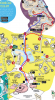
Here, it seems prudent to briefly discuss the map located within the opening pages of the guidebook; this is simple but well-presented, providing a clear image of the general layout and design of the Sea Life Centre at the time of publication in an easy-to-interpret fashion. with each of the tanks displayed on the map given a number corresponding to the tables of technical information provided at the end of the guidebook, and colour-coded according to the ecological niche or purpose of the exhibit. As such, it is possible to consult the map and immediately get a general sense, through cross-referencing with the aforementioned section of the guidebook, of what the collection was like.
Given the fact that in latter years - and even when I first visited the collection a decade or so after the publication of this guidebook - the Sea Life Centre was perhaps predominantly known for its involvement in the rescue and rehabilitation of stranded seals, this being one reason why it was ultimately renamed to the Scottish Sea Life Sanctuary, it is noteworthy that at this point in time this was yet to be the case; in fact, seals are
entirely unmentioned within the main body of the guidebook. However, one somewhat suspects that plans to expand the collection to include facilities suitable for the long-term care of pinnipeds may well have been in motion at the time of publication, given the fact that this guidebook is accompanied by a large double-sided fold-out poster containing a range of supplementary information about fish farming, a simplified form of the collection map located within the guidebook itself, and pivotally a detailed discussion (containing several diagrams) about the Common or Harbour Seal, its various biological adaptations to a marine lifestyle, and other marine mammals native to the Scottish coastline. This poster is attractive and well-designed, and complements the contents of the main body of the guidebook very well.

Overall, this is a detailed and highly-interesting guidebook which covers a wide range of subjects seldom discussed within the material usually published by aquariums and similar zoological collections, or at the very least seldom discussed in quite as much depth; moreover, as I have noted, it represents an important historical record not only of a now-closed zoological collection, but also the earliest years of what would become a world-spanning chain of aquariums.... even if the chain in question has long-since largely become the antithesis of the collection presented here, being flashy, over-commercialised and "style over substance" whereas the Sea Life Centre of this guidebook seems to have been rather more down-to-earth, individual and localised in focus.
As always, any feedback, comments or questions would be more than welcome - given the fact that the collection we have discussed here was his "local zoo" for many years, this is perhaps an opportune time to call upon
@kiang for any recollections he may have about the Scottish Sea Life Sanctuary, whether during the earlier years of its operation or the more commercialized "Merlin" years which followed.