A Guidebook Library: TLD's year-long randomised walkthrough of zoo guides

Yes indeed - although of course on on-line auction sites there must be at least 2 bidders for high prices to be realised, the winner being just one bid ahead of the looser - unless some kind of 'running up' or other skullduggery is going on. So at least two collector must be pretty much agreed on a value. Certain postcards have increased in value too.
I'm sure all collectors have their own specific interests; but there are some major general collections out there too. Personally I am interested in those which I visited years ago, but did not obtain a guide at the time, especially those local to me and collections which have closed.
The prices do seem to be generally on the up now though.
 
Day 101: Zoopark Moscow (1978) - Assorted Species

full

full


Page count: 160 pages
Photographs: c.90 photos (24 in colour)
Illustrations/diagrams: N/A
Layout: General introduction, followed by species-by-species walkthrough of collection and assorted visitor information.
Map: Within interior rear cover


A fairly short and sweet one today; not because the guidebook we will be discussing is all that brief (quite the contrary) or because there is little to discuss, but rather because it is one of the small handful of guidebooks in my collection which I have close to zero ability to read and interpret given the fact it is entirely printed in Cyrillic. Although I have discussed a handful of guidebooks printed in non-Latin alphabets previously, they tended to contain sufficient Latin text, images or diagrams for some interpretation to be possible, when supplemented with the camera function on Google Translate. In this case, however, I am presented with a fairly lengthy guidebook with densely-packed Cyrillic text throughout, intermittent photographic illustration and little-to-no content in the Latin alphabet - it is, of course, possible to flick through the guidebook and translate scattered patches to get an overall sense of the contents, and this is precisely what I have done in the past, but this is grossly inadequate given the scale of the guidebook as a whole.

One may find themselves wondering, then, why I picked this guidebook up in the first place? The answer is fairly simple - although fully appreciating the contents within are beyond my skills at present, guidebooks from Russian collections are few-and-far-between on the secondary market - especially Soviet-era material - and as such this guidebook (and another I obtained at the same time) represents a rare opportunity to obtain and preserve an important historical record. Moreover, even on a surface level it is clear to me - as I shall briefly discuss anon - that there is much of merit within, and it is always possible I may be able to glean more in the fullness of time.

full

full


From what I have been able to gather, the guidebook contains the following; an introduction discussing the history of zoological collection and the various European collections which (alongside Moscow Zoo) opened during the early and mid-19th century, along with a lengthy discussion of the history of Moscow Zoo itself, followed by a species-by-species walk-through account of the collection at the time of publication divided into rough taxonomic groups. As noted previously, the text seems to be fairly in-depth and detailed; judging from the occasional Arabic numerals, the species accounts contain figures noting the size and weight of at least some of the taxa discussed, with other figures potentially noting the years which given species were discovered, or perhaps arrived at the collection. Photographs sporadically occur throughout the main body of the text, with lengthier clusters of photographic plates at two or three points; the majority comprise black-and-white images, but where photographs cover a double-page spread at least one image is displayed in colour.

Given the fact that the above description is incredibly sparse, I have selected four segments of the guidebook in order to convey as comprehensive a picture of the contents as possible, with a particular focus on passages which include both photographic content and text, and photographic plates; hopefully those reading this thread will agree with me that the layout and general aesthetics "feel" both appealing and accessible, and that the photographic material complements the written material rather well.

full

full


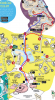
The guidebook closes with a highly-detailed and attractive map of the collection, which is comprehensively-labelled through the use of numbers corresponding to supplementary text, and various silhouette images of the species contained within various exhibits; furthermore, the map appears to contain a suggested route through the collection, something which is always rather interesting and informative when encountered within material of this sort. To be quite honest, given the historical and sociological value inherent in this map - representing, as it does, a zoological collection located within the USSR during the height of the Cold War - I feel that it alone makes obtaining the guidebook worthwhile; as I have noted several times previously, both within this thread and elsewhere, one of the key factors motivating my interest in zoological guidebooks is the desire to collect and preserve historical documents for future generations. As such, the quality of the guidebook as a whole is something of a bonus!

full


Overall, then, this is an interesting and unusual item; I very much wish that my ability to understand and interpret the contents was significantly better, but I am nonetheless very pleased to have it within my guidebook collection. It goes without saying that any feedback, questions or comments would (as always) be more than welcome - especially if anyone reading this thread happens to know anything about Moscow during the timespan in question, and can therefore supplement the scant information I have been able to provide.
 
Day 101: Zoopark Moscow (1978) - Assorted Species

full

full


Page count: 160 pages
Photographs: c.90 photos (24 in colour)
Illustrations/diagrams: N/A
Layout: General introduction, followed by species-by-species walkthrough of collection and assorted visitor information.
Map: Within interior rear cover


A fairly short and sweet one today; not because the guidebook we will be discussing is all that brief (quite the contrary) or because there is little to discuss, but rather because it is one of the small handful of guidebooks in my collection which I have close to zero ability to read and interpret given the fact it is entirely printed in Cyrillic. Although I have discussed a handful of guidebooks printed in non-Latin alphabets previously, they tended to contain sufficient Latin text, images or diagrams for some interpretation to be possible, when supplemented with the camera function on Google Translate. In this case, however, I am presented with a fairly lengthy guidebook with densely-packed Cyrillic text throughout, intermittent photographic illustration and little-to-no content in the Latin alphabet - it is, of course, possible to flick through the guidebook and translate scattered patches to get an overall sense of the contents, and this is precisely what I have done in the past, but this is grossly inadequate given the scale of the guidebook as a whole.

One may find themselves wondering, then, why I picked this guidebook up in the first place? The answer is fairly simple - although fully appreciating the contents within are beyond my skills at present, guidebooks from Russian collections are few-and-far-between on the secondary market - especially Soviet-era material - and as such this guidebook (and another I obtained at the same time) represents a rare opportunity to obtain and preserve an important historical record. Moreover, even on a surface level it is clear to me - as I shall briefly discuss anon - that there is much of merit within, and it is always possible I may be able to glean more in the fullness of time.

full

full


From what I have been able to gather, the guidebook contains the following; an introduction discussing the history of zoological collection and the various European collections which (alongside Moscow Zoo) opened during the early and mid-19th century, along with a lengthy discussion of the history of Moscow Zoo itself, followed by a species-by-species walk-through account of the collection at the time of publication divided into rough taxonomic groups. As noted previously, the text seems to be fairly in-depth and detailed; judging from the occasional Arabic numerals, the species accounts contain figures noting the size and weight of at least some of the taxa discussed, with other figures potentially noting the years which given species were discovered, or perhaps arrived at the collection. Photographs sporadically occur throughout the main body of the text, with lengthier clusters of photographic plates at two or three points; the majority comprise black-and-white images, but where photographs cover a double-page spread at least one image is displayed in colour.

Given the fact that the above description is incredibly sparse, I have selected four segments of the guidebook in order to convey as comprehensive a picture of the contents as possible, with a particular focus on passages which include both photographic content and text, and photographic plates; hopefully those reading this thread will agree with me that the layout and general aesthetics "feel" both appealing and accessible, and that the photographic material complements the written material rather well.

full

full


The guidebook closes with a highly-detailed and attractive map of the collection, which is comprehensively-labelled through the use of numbers corresponding to supplementary text, and various silhouette images of the species contained within various exhibits; furthermore, the map appears to contain a suggested route through the collection, something which is always rather interesting and informative when encountered within material of this sort. To be quite honest, given the historical and sociological value inherent in this map - representing, as it does, a zoological collection located within the USSR during the height of the Cold War - I feel that it alone makes obtaining the guidebook worthwhile; as I have noted several times previously, both within this thread and elsewhere, one of the key factors motivating my interest in zoological guidebooks is the desire to collect and preserve historical documents for future generations. As such, the quality of the guidebook as a whole is something of a bonus!

full


Overall, then, this is an interesting and unusual item; I very much wish that my ability to understand and interpret the contents was significantly better, but I am nonetheless very pleased to have it within my guidebook collection. It goes without saying that any feedback, questions or comments would (as always) be more than welcome - especially if anyone reading this thread happens to know anything about Moscow during the timespan in question, and can therefore supplement the scant information I have been able to provide.

What an incredible collection, just from the photos!
 
I wish we still had major zoos do this on their maps to this day; it would be very helpful to newcomers and general visitors alike.
These recommended routes seemed very popular post Covid-lockdowns, but seem to be less seen now. Personally it would be the last thing I would want as a visitor, as I just look for the crowds and go the opposite way...
 
Personally it would be the last thing I would want as a visitor, as I just look for the crowds and go the opposite way...

Definitely agree with you there!

Moreover, there are a number of exhibits/houses both here in the UK and on the continent with mandated entry and exit points which (if it is quiet and therefore going the opposite way around doesn't have any practical impact) I actually *prefer* doing in the opposite direction! For instance, when visiting Chester Zoo, if one wants to visit the Monsoon Forest house in the Islands complex immediately on arrival (and therefore avoiding the crowds) it is quicker to head to the house via the official "exit" of Islands near the Spectacled Bear enclosure!

upload_2022-6-25_18-9-56.png
 

Attachments

  • upload_2022-6-25_18-9-56.png
    upload_2022-6-25_18-9-56.png
    462.4 KB · Views: 28
Day 102: Scottish Sea Life Sanctuary (1979) - Octopus

full


Page count: 40 pages
Photographs: 19 colour photographs within main guidebook, and 11 colour photographs on supplementary poster.
Illustrations/diagrams: 1 diagram within main guidebook, and 6 diagrams/illustrations on supplementary poster.
Layout: Brief introduction and information for visitors, followed by general overview of species held within aquarium during first season, discussion of fish farming in Scotland, and technical information relating to the tanks within the aquarium; supplemented by a fold-out double sided poster including further information on Scottish fish farming and discussion of the Harbour Seal and other marine mammals found within British waters.
Map: Within main body of guidebook, and reproduced on supplementary poster.


Today, we have a rather interesting subject to discuss; this is the first guidebook released by the original Sea Life Centre on the outskirts of Oban, Scotland from which the worldwide chain arose, and which in latter years would be renamed the Scottish Sea Life Sanctuary in order to differentiate it from its "offspring". Unfortunately after many years of being neglected by the eventual parent company Merlin Entertainments, both through a general lack of investment and a pronounced reduction in promotion, the collection was ultimately closed down in 2018 - something which I feel represents both a real missed opportunity, and a massive loss to the historical landscape of UK zoological collections. As such, this guidebook is significant in two major regards for the purposes of this thread, along with a more personal aspect; firstly, this represents a key historical record of the very earliest days of a zoological collection which has since been lost; secondly, given the mass-produced identikit model followed by the Sea Life chain in latter years (with the collection in question having been impacted just as much as others in the chain) it is extremely interesting to see what the Oban site was like originally, and how different it was from what followed. On a more personal note, this was one of the very first zoological collections which I visited as a small child - neither myself nor my parents now recall whether we visited Oban before or after Highland Wildlife Park, both visits having come during the same holiday in the Scottish Highlands a day or so apart from one another. As such, seeing what the collection was like a decade or so prior to my first visit carries another level of interest on my part.

full


After a contents page and a very brief introduction discussing the background to the Sea Life Centre - noting that at the time of publication in late 1979 the aquarium represented the largest collection of native marine life in Great Britain - the guidebook opens with the above collection of key visitor information; as can be seen, this covers a wide range of subjects including opening hours, facilities and amenities available, and prohibitions on smoking and the admission of pets, and is accompanied by a pair of colour photographs showing some of the species held within the collection. It is worth noting here that photographic material of this nature is found throughout the guidebook, being generally presented in an attractive and eye-catching manner, but is most certainly intended as an accompaniment to the text rather than a focal point in itself. This is quite a stark difference from the previous guidebook from the Sea Life chain covered within this thread, which like all such guidebooks in modern years was extremely brightly illustrated and contained a significantly-higher ratio of images to text.

One minor point which immediately leaps to attention when reading this collection of visitor information is that at the time of publication, it seems that the collection was open for almost twelve hours a day during the summer months, from 8:30am to 8pm, and even during the spring and autumn it remained open for around ten hours; although opening hours of this sort are not particularly unusual within zoological collections in continental Europe, they would now be entirely unheard-of here in the UK. For comparison, the current summer opening hours within the Weymouth site of the Sea Life chain appear to extend from 10am to 4pm, whilst even the longest opening hours at a "mainstream" zoological collection such as Chester Zoo only extend from 10am to 6pm for a handful of summer weeks.

full


The main body of the guidebook covers three distinct subjects; the first of these is a general overview of the various species displayed at the Sea Life Centre over the course of the 1979 season - the first year that the collection had been open to the public. This section opens with the note that "all the animals on display in the Sea Life Centre, with the exception of those in our tropical marine section, are to be found in the seas around the coast of Britain. Most have been caught within 100km of Oban" before remarking that due to the sensitive nature of many species, their presence within the collection would often be erratic and dependent on availability and husbandry limitations. This style of native-species aquarium, stocked by regular catches from the local area, represents very much the same model as seen within the guidebooks for Brixham Aquarium and Brighton Aquarium which have previously been discussed within this thread - however the scale of the collection seems to be rather larger than that seen there, with a remark that over 60 species of fish and 70 species of marine invertebrate had been displayed over the course of the first open season.

After a general overview of the three main categories which the animal collection at the Centre fell into - cartilaginous fish, bony fish and invertebrates - this section of the guidebook moves onto a more focused overview of some of the most "typical" species within the collection; these contain a surprisingly-large amount of detail about the wild behaviour, diet and ecological niches within which the species can be found, along with information on their commercial value and utility, notes on which species are capable of surviving for prolonged durations in captivity, and other items which would be of interest to those visiting the collection. Moreover, all of the species cited - even smaller invertebrates and those fish species alluded to only in passing - are listed both under their common names and scientific names, further increasing the value of this section. As such, this portion of the guidebook serves rather well not only as a general overview of the species displayed - whether temporarily or for more prolonged periods - at the Sea Life Centre during the first year it operated, but moreover as a fairly-comprehensive discussion of the marine life found off the western coastline of the British Isles.

full

full


The second major subject covered by the guidebook is, as can be seen above, an overview of the importance which commercial fish farming had attained over the course of the 1970's; this discussion is itself divided into three segments, with a lengthy discussion on the salmon farming industry followed by a pair of shorter segments on trial attempts at commercial production of Turbot - which took place in a farm fed by the warm outflow water from a nuclear power station - and the long-established tradition of oyster farming. Each of these segments provides a large amount of information about the process, timespans and methods employed within each of the three sub-cultures of fish farming cited. Given the significance of these segments from a socio-economic and historical point of view, providing as they do a valuable insight into the status of one of the key marine industries in Scotland as it stood at the time of publication, they represent a resource of significant value which once again - in my opinion - elevates this guidebook rather above the usual standard found within an item focusing on an aquarium or similar collection.

full


However, in my opinion the third and final segment of this guidebook is - by some margin - not only the most interesting and informative in my opinion, but also possibly the best segment of any aquarium guidebook within my collection; a detailed discussion of the dimensions, design factors and technical statistics pertaining not only to the on-show tanks, pools and exhibits within the Sea Life Centre, but also the behind-the-scenes systems required to ensure their successful operation. This section concludes with a table listing the precise dimensions, volume and weight of every tank within the collection, along with the materials used and the thickness of glass used. As I have remarked before, this sort of technical information is incredibly valuable both as a means of informing the general public about the behind-the-scenes functioning of a zoological collection in general, and as a permanent record of the particular collection to which the guidebook pertains; moreover, if zoological collections published this sort of in-depth information more often, and made it more accessible to interested enthusiasts in general, the increased understanding of the logistics required for the successful operation of zoological exhibits and enclosures would perhaps lead to a better standard of post within the Speculative Zoo sub-forum here on Zoochat!

Given the high quality of this segment of the guidebook, I must admit to having been rather tempted to reproduce the contents in their entirety; however, I ultimately chose to select two double-page spreads in particular, one giving an example of the discussion relating to tank design and construction, and one showing a diagram of the filtration systems used within the Centre alongside discussion of the behind-the-scenes life support and monitoring systems. These, I hope, give a good impression of the whole without overly swamping this already-lengthy post!

full

full


Here, it seems prudent to briefly discuss the map located within the opening pages of the guidebook; this is simple but well-presented, providing a clear image of the general layout and design of the Sea Life Centre at the time of publication in an easy-to-interpret fashion. with each of the tanks displayed on the map given a number corresponding to the tables of technical information provided at the end of the guidebook, and colour-coded according to the ecological niche or purpose of the exhibit. As such, it is possible to consult the map and immediately get a general sense, through cross-referencing with the aforementioned section of the guidebook, of what the collection was like.

Given the fact that in latter years - and even when I first visited the collection a decade or so after the publication of this guidebook - the Sea Life Centre was perhaps predominantly known for its involvement in the rescue and rehabilitation of stranded seals, this being one reason why it was ultimately renamed to the Scottish Sea Life Sanctuary, it is noteworthy that at this point in time this was yet to be the case; in fact, seals are entirely unmentioned within the main body of the guidebook. However, one somewhat suspects that plans to expand the collection to include facilities suitable for the long-term care of pinnipeds may well have been in motion at the time of publication, given the fact that this guidebook is accompanied by a large double-sided fold-out poster containing a range of supplementary information about fish farming, a simplified form of the collection map located within the guidebook itself, and pivotally a detailed discussion (containing several diagrams) about the Common or Harbour Seal, its various biological adaptations to a marine lifestyle, and other marine mammals native to the Scottish coastline. This poster is attractive and well-designed, and complements the contents of the main body of the guidebook very well.

full


Overall, this is a detailed and highly-interesting guidebook which covers a wide range of subjects seldom discussed within the material usually published by aquariums and similar zoological collections, or at the very least seldom discussed in quite as much depth; moreover, as I have noted, it represents an important historical record not only of a now-closed zoological collection, but also the earliest years of what would become a world-spanning chain of aquariums.... even if the chain in question has long-since largely become the antithesis of the collection presented here, being flashy, over-commercialised and "style over substance" whereas the Sea Life Centre of this guidebook seems to have been rather more down-to-earth, individual and localised in focus.

As always, any feedback, comments or questions would be more than welcome - given the fact that the collection we have discussed here was his "local zoo" for many years, this is perhaps an opportune time to call upon @kiang for any recollections he may have about the Scottish Sea Life Sanctuary, whether during the earlier years of its operation or the more commercialized "Merlin" years which followed.
 
Been a bit slow of late, and I'm away for a day or two - so I thought I'd open the floor up for feedback and requests!

  • Firstly, is there anything I could be doing better in my reviews/discussion/coverage?
  • Secondly, having discussed what I personally look for in a guidebook, and what I do or do not like, I'd be interested to hear what others feel about such matters! By extension, I'd be interested to hear about the guidebook collections of those reading this thread :)
  • Thirdly, to get July off to a good start I feel like shaking things up and doing some requests :) as such, if there are any collections which people would like to see covered (or indeed guidebooks from a given country) feel free to provide ideas, and if I have suitable material I shall prioritise it!
 
Do you have any guidebooks from Shedd Aquarium? If so I'd love to see them. I'd also be interested in anything from Milwaukee County Zoo, I know that it has produced a few guidebooks over the years.
 
Well, that was an even more abject damp squib than my last handful of guidebook posts.... :( :p

But, onwards and upwards:

Do you have any guidebooks from Shedd Aquarium? If so I'd love to see them. I'd also be interested in anything from Milwaukee County Zoo, I know that it has produced a few guidebooks over the years.

I have guidebooks from both collections - although a little awkwardly shaped/formatted and in some cases delicate, I shall get material scanned in anon for discussion per your request!
 
Been a bit slow of late, and I'm away for a day or two - so I thought I'd open the floor up for feedback and requests!

  • Firstly, is there anything I could be doing better in my reviews/discussion/coverage?t
  • Secondly, having discussed what I personally look for in a guidebook, and what I do or do not like, I'd be interested to hear what others feel about such matters! By extension, I'd be interested to hear about the guidebook collections of those reading this thread :)
  • Thirdly, to get July off to a good start I feel like shaking things up and doing some requests :) as such, if there are any collections which people would like to see covered (or indeed guidebooks from a given country) feel free to provide ideas, and if I have suitable material I shall prioritise it!
I'm enjoying your posts but there is not much I can comment on. You give a thorough overview of each item. No requests as such but it would be interesting to see examples of good guidebooks from small or specialist collections. I've often thought it would be nice to do a guidebook for Moonlit however never believed it would justify either the cost or the effort. COVID managed to finish off even our paper map.
 
I'm enjoying your posts but there is not much I can comment on. You give a thorough overview of each item. No requests as such but it would be interesting to see examples of good guidebooks from small or specialist collections. I've often thought it would be nice to do a guidebook for Moonlit however never believed it would justify either the cost or the effort. COVID managed to finish off even our paper map.
It would depend on your visitor numbers, and the uptake of such a product in Australia. From what I have heard about the experiences of small UK collections such as Exmoor and Hamerton, their books are very popular and very profitable. Hamerton has had several reprints during and since Covid; as TLD said above the most recent update is due any moment; and I have heard that a brand new one is due next year. I'm pretty sure that other small UK collections like Shepreth and Thrigby still do them too? I doubt that they are able to do this at a loss! - quite the reverse.
 
Hi, I am lurking but really enjoying this thread.

What I would really, really love is a collection of photos from zoo guidebooks showing animals no longer kept in Europe or extremely rare - African manatees, mountain gorillas, Sumatran rhinos etc. And even mentions of them!
 
Do you happen to have a guidebook of Burgers' Zoo or Rotterdam Zoo? Or any other Dutch zoo in your collection not yet covered
 
Day 103: Milwaukee County Zoo (1967) - Gorilla eating grapes

full

full


Page count: 64 pages
Photographs: 140 photographs (18 in colour)
Illustrations/diagrams: Two; a diagram of a haha moat, and plans for a future reptile house.
Layout: General introduction, followed by walkthrough account of collection divided into discussion of the central geographic zones, and the stand-alone houses and exhibits.
Map: Two; an overall plan of the zoo, and close-up map of central geographic zones.


This guidebook, the first of two requests from @birdsandbats which I will be discussing within this thread in the coming days, represents one of the more interesting and higher-quality North American items within my personal collection; certainly once one has discounted the "big hitters" at Bronx and San Diego. It came into my possession a year or so ago, when an eBay seller who had previously lived in North America for some time returned home to the UK and started to sell off their collection of US zoo guidebooks; as one can imagine, this represented an influx of usually-scarce items into the European secondary market, and I was not the only collector to purchase several nice little oddities!

full


The guidebook opens with several introductory pages covering a variety of key points for visitors such as opening hours and feeding times, the amenities and services available at the zoo itself, and emergency contact information, before moving into a more general discussion of the intended purpose of the guidebook as a whole; here it is noted that the general intention was to provide a reference aid and resource which could be used over the course of a visit to Milwaukee County Zoo in order to provide a walkthrough guide through the collection. This is, of course, one of the primary purposes of many zoological guidebooks - however, as I shall discuss anon I feel that this guidebook manages to fulfil this aim rather more effectively than is usually the case.

The first segment of the walkthrough accounts discusses the various geographically-themed panorama exhibits located within the collection at the time of publication; these appear to have been very much in the same vein as those found within (and pioneered by) Tierpark Hagenbeck, comprising several distinct paddocks and enclosures separated by dry moats, hahas and other "invisible" barriers. Each account contains a detailed description of the overall panoramic effect being achieved, followed by discussion of the individual species and paddocks located within the geographic zone in question. The detail and quality within these individual species accounts reaches a consistently high level, containing information about the habitat, diet and behaviour of the species in the wild, details of their morphology, and other items of trivia relating to the species in question. It is here worth noting that the guidebook is lushly-illustrated with a wide range of photographs, both colour and black-and-white, depicting the various exhibits and species discussed within the text itself; several of these present full-page images of the geographic panoramas within the zoo, making it even clearer how much these exhibits owe to Hagenbeck in terms of their concept, design and contents.

full

full


The second major segment of the walkthrough account comprises lengthy and detailed discussions relating to the dedicated animal houses and exhibits located throughout the collection, above and beyond the geographic panorama exhibits. These are as follows; the Aviary or Bird House, containing a Penguin Hall, an Aquatic Hall, a Rainforest Hall, and a Shorebird Hall; the Primate House and associated Monkey Island exhibit, with a dedicated segment relating specifically to "Samson", the Western Lowland Gorilla located at Milwaukee County Zoo at the time of publication; the Small Mammal House, which is divided into a diurnal and nocturnal exhibit; the Feline House; and the Pachyderm House. Each of these exhibits are discussed in a high amount of detail, in some cases covering several pages in total, and with species accounts relating to the key inhabitants. These meet the same high standard exhibited within the aforementioned geographical exhibits, with the portion dedicated to the nocturnal exhibits within the small mammal house providing a number of points which I suspect would be of particular interest to those reading this thread given the extreme rarity of the species concerned.

Beyond here, a number of concluding pages discuss a variety of supplementary points relating to the collection in question, most pertinently the plans for a reptile house to be constructed within the zoo at some point subsequent to the publication of this guidebook; given the fact I am only vaguely familiar with the collection in question, with the majority of my knowledge deriving directly from this guidebook, I do not know whether these plans eventually bore fruit. The final double-page spread of the guidebook contains a general potted history of Milwaukee Country Zoo, the council authority responsible for the management of the collection, and key information relating to the senior membership of the zoo management.

full

full


Here, it is worth briefly discussing the pair of maps located within the introductory segment of the guidebook; as one will have noticed over the course of the last few months, I have a particular liking for aesthetically-striking and attractive maps where they occur within a zoological guidebook, and feel that they strongly increase the overall quality of the guidebook within which they are located. In this case, both of the maps in question - one depicting the entirety of the zoo, whilst the second focuses on the central geographically-defined exhibits and those animal houses and enclosures located in their immediate proximity - are attractively-presented, easy to reference and well-labelled, with the second map providing a particular highlight in my opinion given the fact that it depicts the overall design and layout of the panoramic exhibits and paddocks in relation to one another.

full


Overall, then, this is an attractive and well-formatted guidebook, and one which displays a high level of production quality; one of the few issues I have with the guidebook as a whole, however, happens to be a minor point relating to the production of this guidebook - to wit the choice to produce it in a large format slightly larger than A4, as this is somewhat counter-intuitive given the stated purpose of the guidebook requires ease of use whilst walking around the collection. In terms of overall design and presentation, however, this guidebook is excellent - the quality and quantity of the text is pleasingly-high, and the use of photographic images to both break up the text and illustrate the exhibit accounts themselves produces an attractive and aesthetically-pleading impression.

There is, it goes without saying, a vast amount of information which I have omitted or glossed over within this guidebook; as such, I am as happy as ever to answer whatever questions may arise... and of course, general comments and remarks would be much appreciated! I would be particularly interested to hear more about what the collection in question was like in more recent years, from those Zoochatters who have been fortunate enough to visit in person.
 
Is there a key to the numbered exhibits?
 
Is there a key to the numbered exhibits?

The numbering corresponds to numbering used within the species/exhibit accounts (for instance the scan of the page discussing the primate house shows that this was number 8 :) completely forgot to mention that, as I was close to falling asleep when writing/posting the review, so thanks for flagging it up!

I also forgot to respond to some queries/requests, so....

it would be interesting to see examples of good guidebooks from small or specialist collections

Certainly got plenty of guidebooks which fit the bill - so I shall give a little thought to picking out one or two I think would interest you :)

COVID managed to finish off even our paper map.

It's happened at Chester Zoo too, sadly - a pity, as I rather liked collecting their maps, and the sole provided option of using an app is (as I have complained in the past) far too ephemeral and represents a massive loss of information for future zoo historians.

What I would really, really love is a collection of photos from zoo guidebooks showing animals no longer kept in Europe or extremely rare - African manatees, mountain gorillas, Sumatran rhinos etc. And even mentions of them!

Well, I've definitely been managing to highlight such "guest star appearances" as and when they occur - perhaps most notably with the 19th century London guidebook I posted - but perhaps what I should do to sate your interest further is to provide a dedicated post to one or both of the photo-books published by Zoo Berlin in 1899 and 1927, and which I have alluded to previously within this thread :) as these both contain a wide variety of photographs showing oddities both animal and architectural!

Do you happen to have a guidebook of Burgers' Zoo or Rotterdam Zoo? Or any other Dutch zoo in your collection not yet covered

I most certainly do :) in fact, I've had a guidebook for Blijdorp on the "scanned and scheduled but writing a post hasn't been coming easily" pile for a few weeks now; when that happens I put the guidebook aside for a time, moving onto other selected guidebooks, and then return to it when inspiration strikes.

In total I own 26 guidebooks from 12 Dutch collections, so even if the Blijdorp one continues to provide difficulty I can certainly select a suitable replacement to sate your interest in a Dutch guidebook for the time being!
 
It's happened at Chester Zoo too, sadly - a pity, as I rather liked collecting their maps, and the sole provided option of using an app is (as I have complained in the past) far too ephemeral and represents a massive loss of information for future zoo historians.
Surely a zoo of Chester's size is not using Covid as an excuse for not producing maps and guide-books?
If it is economic for Exmoor, Shepreth or Hamerton to produce one, and Dublin (for example) has a brand new one - then Chester with its enormous footfall, must have other reasons for not doing so. If they are pretty much guaranteed income generators, selling for £4+ and costing say £1 to print, I dont see how ANY zoo can afford not to do them, and turn down this income stream. Modern printing makes economical print runs much shorter, reducing the huge runs needed historically - which helps small collections, but does not explain Chester's decision either.:confused:
 
Surely a zoo of Chester's size is not using Covid as an excuse for not producing maps and guide-books?

Well, they haven't produced guidebooks in 15 years, with the last true guidebook being published in 2008; from what I recall being told, the decision there is allegedly due to it being seen as economically infeasible - along with a belief that the zoo's mobile phone app provides everything that a guidebook could, and that guidebooks are out-of-date before they even go on sale. All nonsense, in my opinion :p in latter years, I believe suggestions that guidebooks should be resumed have been met with an additional response, that ceasing or severely reducing the publication of printed material is the responsible thing to do for conservation purposes. This latter reason is also why, from the end of this year, the member's magazine is going digital-only.

As for the production of maps, I suspect they were temporarily ceased during the height of the restrictions as a means of reducing the amount of interpersonal contact as the maps were always given out directly at the entrance booths - @MRJ can presumably verify whether or not that was also the line of thought at Moonlight - and that the fact they have not been resumed plays more into the aforementioned "reduction in printed material" initiative.
 
Well, they haven't produced guidebooks in 15 years, with the last true guidebook being published in 2008; from what I recall being told, the decision there is allegedly due to it being seen as economically infeasible - along with a belief that the zoo's mobile phone app provides everything that a guidebook could, and that guidebooks are out-of-date before they even go on sale. All nonsense, in my opinion :p
Mmmm..I would certainly agree that the economically infeasible argument, is utter nonsense. It can only be a wealthy zoo which does not need or want the income, that can afford NOT to do them.
Inevitably all books risk being out-of-date before coming on sale (presumably Hamerton's revised one has Aardwolves in it?) - the new much complimented UK Zoo book certainly was/is. This is actually part of their charm, proving a snap-shot in time, and proving that zoos are living, evolving organisations... I dont see why any zoo would want to give the impression that it was stuck in time.
 
Back
Top