American Herping: A Guide to Reptiles and Amphibians in US Zoos

Like the bush vipers, they have a fierce temper
While you shouldn't underestimate them, bush vipers are considerably more sluggish than saw-scaled vipers.

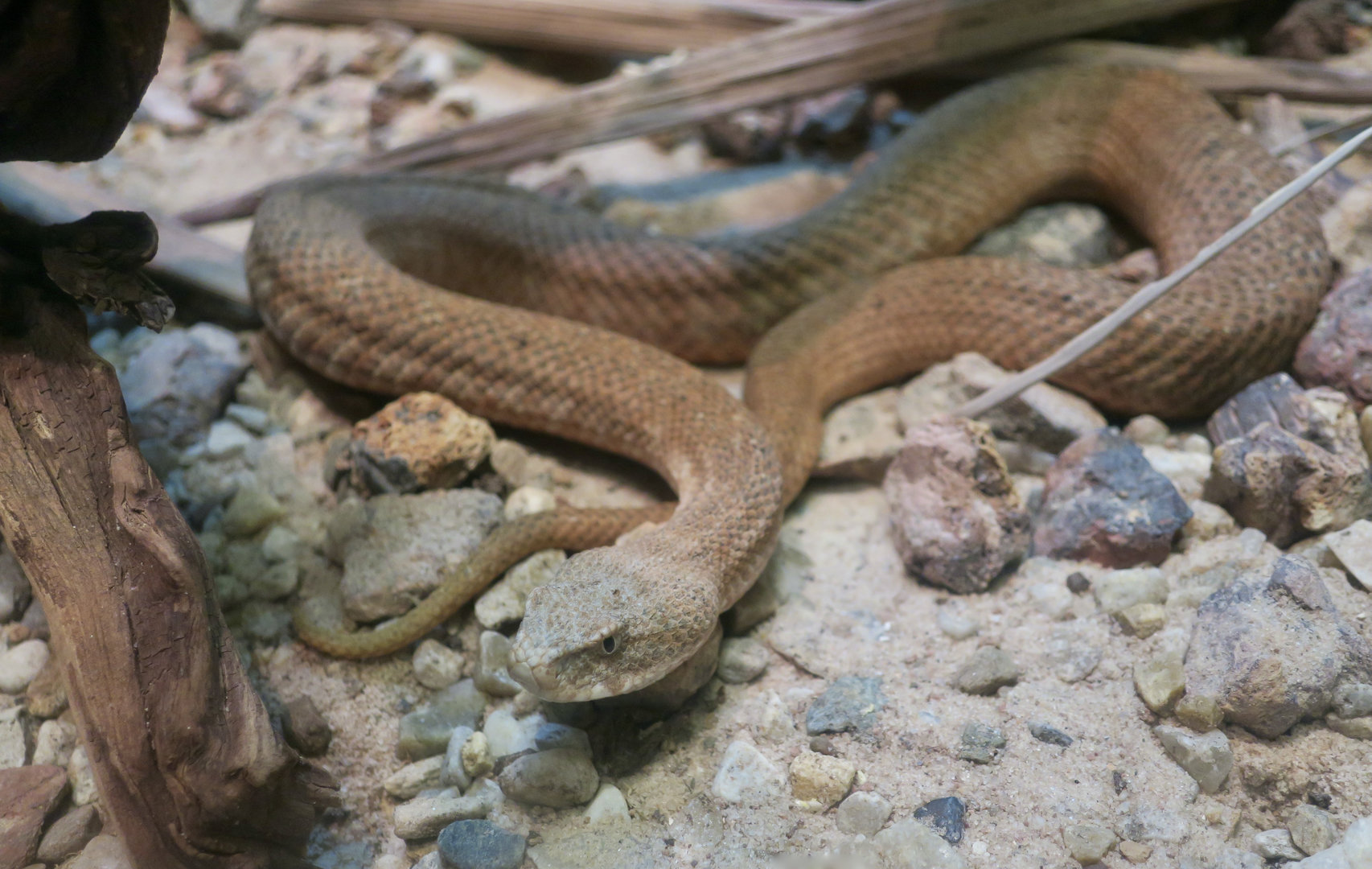
Found in Italy and the Balkan states, the Long-nosed Viper’s name is self-explanatory. Found on rocky hillsides, it is generally considered the most dangerous European snake.
The distribution of V. ammodytes is far more widespread, including Greece, Macedonia, Georgia, Turkey and even Austria. In regard to the severity of bite-related symptoms, the Macro/Montivipera species you mention in the following text are considered as generally even more dangerous. The red specimen on the picture is representative of the Lake Skutari region in Montenegro.

I'm surprised that no American zoo seems to house one of the smaller Bitis species such as Bitis cornuta.
 
It's times like these I'm glad I have Premium :D I've made several edits to the European viper section based on all of this new information - as well as a quick aside about Vipera berus that I seem to have left out by accident.

In regard to the severity of bite-related symptoms, the Macro/Montivipera species you mention in the following text are considered as generally even more dangerous.

Fair enough. I realize now I meant to specify Western Europe (and now have), as many of those viper species are on the eastern edges of the region - although even then I could be off-base about the venom toxicity :)

I'm surprised that no American zoo seems to house one of the smaller Bitis species such as Bitis cornuta.

They have in the past. Omaha held B. cornuta for several years into 2018, so it should have been included in the survey results; I only just found a passing reference to it now after you mentioned it. Denver also had the species until at least 2016. But yeah, no zoo seems to have them on display currently.
 
Vipera berus in general tends to do not well when kept indoors and doesn't tolerate heat well. Given that outdoor terraria for venomous snakes are even rarer in the USA than in Europe, I'm not surprised about the absence of this species in American zoos.
 
Last edited:
Pitvipers (Subfamily Crotalinae)

This group’s name comes from the presence of their pit organ, which allows them to sense things using infrared wavelengths – in other words, they can “see” heat. Boas and pythons have the same capability, but the pit organs of Crotalinae are more advanced. They primarily use this ability to catch prey, though it is also used to maintain body temperature and detect predators. Most species are ovoviviparous, which means the offspring develop inside eggs while in vitro before being birthed essentially free.

As probably everyone is aware, the United States is a hotspot for rattlesnake diversity and the vipers hold a special place in American culture and zoological facilities. Due to their uniqueness and abundance, next week will be devoted just to rattlesnakes. This week’s post will cover the other pitvipers, which actually make up over half the total species. Only one genus of those are native – and that’s the genus we’ll start with.

Agkistrodon

Copperhead (A. contortrix) – Abundant

One of the most common venomous snakes in the northern parts of the country, copperheads survive cold winters by hibernating in dens – often alongside other kinds of snakes like rattlers and ratsnakes. Smaller than rattlers, they can be distinguished by their hourglass pattern and light red tones – oh yeah, and the lack of a rattle.

The western population was split about a decade ago into the Broad-banded Copperheads (A. laticinctus), characterized by the fact that its bands don’t narrow into an hourglass-type shape. These make up a minority of copperhead holdings, but still qualify as Prevalent; they are primarily found in Texan zoos (where most of the wild population lives) and also in a few reptile zoos outside the Lone Star State.

full

Eastern Copperhead / Taken at Riverside Reptiles (Connecticut) by @TinoPup

full

Broad-banded Copperhead (Trans-Pecos ssp)
Taken at the Gladys Porter Zoo (Texas) by @ThylacineAlive

Cottonmouth (A. piscivorus) – Very Common

Yes, even the water isn't safe here :p most cottonmouths will engage in a defensive display when cornered, and got their name from that habit of showing off their Dentyne-white mouth. Cottonmouths are the largest Agkistrodon vipers at 2 to 3 ft long, and range in color from black to golden overlaid with banding. They are commonly confused with the colubrid water snakes here, which is unfortunate for the latter since venomous snakes aren’t super popular in much of the Southeast.

As with copperheads, part of the population – the Florida part – was split off into the Florida Cottonmouth (A. conanti) which are mostly but not exclusively found in their home state's zoos and nature centers. In Europe this species is almost absent, so don't take them for granted!

full

Eastern Cottonmouths / Taken at the Riverbanks Zoo by @ThylacineAlive

Cantils (Agkistrodon spp.)
Status in US Zoos: Common

Neotropical relatives to the copperhead and cottonmouth, cantils are broad-headed banded vipers from Mexico and Central America. The two species that make up nearly all of US collections appear to be the Prevalent Taylor’s Cantil (A. taylori) and the Uncommon Mexican Cantil (A. bilineatus); the Saint Louis Zoo also holds A. howardgloydi.

full

Taylor's Cantil / Taken at the Sedgwick County Zoo by @Ituri
 
Last edited:
Backtracking to colubrids for a moment..

Ring-necked Snake (Diadophis punctatus) is a snake missing from your list that is in US collections; one was present at Calusa Nature Center in Florida less than a year ago.

Common Roadguarder (Conophis lineatus) was at Audubon Zoo in early 2022.

Zoo Miami had a couple of rare neotropical snakes in the last year that I never saw and unfortunately are gone, but I do wonder if they're in other collections somewhere?
  • Ringed Hognose Snake (Lystrophis semicinctus)
  • Cuban Racer (Cubophis cantherigerus) - it was newly added and signed very briefly last year before a different species was put in its place. I wonder if they are bts.
Phoenix Zoo also had a couple of other western snakes when I visited that are missing, but this was back in 2020 so they may be gone from collection.
  • Banded Sand Snake (Chilomeniscus straminea)
I also assume you split Colubridae into several other families that aren't yet covered?
 
  • Like
Reactions: CMP
Thanks for the additions @SusScrofa.

Ringed Hognose Snake (Lystrophis semicinctus)

Hmm. I had Miami as holding Tricolor Hognose (X. pulcher); might be the same animal but I got the wrong species? Either that or Miami has had two similar Lystrophis species recently.

I also assume you split Colubridae into several other families that aren't yet covered?

Not intentionally. There are miscellaneous snakes still in waiting as with previous groups, maybe some of them have been considered colubrids in the past. What snakes were you expecting to see?
 
Thanks for the additions @SusScrofa.


Hmm. I had Miami as holding Tricolor Hognose (X. pulcher); might be the same animal but I got the wrong species? Either that or Miami has had two similar Lystrophis species recently.


Not intentionally. There are miscellaneous snakes still in waiting as with previous groups, maybe some of them have been considered colubrids in the past. What snakes were you expecting to see?
The sign I had photographed back when it was present listed it as semicinctus.

Referring to families like Homalopsidae and Lamprophiidae. They are well-recognized as split nowadays so I'm guessing you're planning on covering them at a different point.
 
The sign I had photographed back when it was present listed it as semicinctus.

Referring to families like Homalopsidae and Lamprophiidae. They are well-recognized as split nowadays so I'm guessing you're planning on covering them at a different point.
I also remember Miami having X. pulcher during my 2021 visit, but I'm stupid and didn't take a picture of the sign as I didn't see the snake...
 
So the common name on the sign is "Tri-colored Hognose Snake" but the scientific name is "Lystrophis semicinctus".
 
This week’s post will cover the other pitvipers, which actually make up over half the total species.

So I made a couple mistakes here regarding the schedule. I meant to start pitvipers next week rather than yesterday, but my calendar got messed up during editing. I also made a typo and said "post" but there are still three more pitviper posts to go before we get to rattlesnakes. Those will be next week :) then rattlesnakes the week after. Thought I'd let people know so they're not confused as to why I suddenly stopped for a few days after Agkistrodon!

In the meantime, here is a preview photo of a snake to be discussed on Monday:

full

Bushmaster; taken at the Santa Cruz Zoo (Bolivia) by @devilfish
 
Interesting that viperids are the reptile family that's most speciose in US Zoos. It wasn't the one I'd expect, however looking at my lifelist it apparently is the family I've seen the most of, with a whole 31 species. That being said, 19 of those 31 species I saw only at Bronx and/or Staten Island Zoos, both of which I visited for the first (and only) time a few months ago. In fact, I've almost exclusively seen viperids at a total of four zoos: Bronx, Staten Island, Philadelphia, and Buffalo. Removing these four zoos, I've only seen three viperid species: Northern Copperhead at Roger Williams, Timber Rattlesnakes at multiple zoos, and Eastern Massasauga at Rosamond Gifford.

For comparison, the family I'd expect to be most common, the tortoises, I've only seen 22 species- yet only four of them were new at Bronx/Staten Island. Furthermore, the majority of zoos I have visited keep at least one tortoise species, unlike viperids. That majority is 19/31 zoos, however most of the twelve tortoise-less zoos are either aquariums or specialist collections (also Queens and Utica Zoos).
 
Interesting that viperids are the reptile family that's most speciose in US Zoos. It wasn't the one I'd expect, however looking at my lifelist it apparently is the family I've seen the most of, with a whole 31 species. That being said, 19 of those 31 species I saw only at Bronx and/or Staten Island Zoos, both of which I visited for the first (and only) time a few months ago. In fact, I've almost exclusively seen viperids at a total of four zoos: Bronx, Staten Island, Philadelphia, and Buffalo. Removing these four zoos, I've only seen three viperid species: Northern Copperhead at Roger Williams, Timber Rattlesnakes at multiple zoos, and Eastern Massasauga at Rosamond Gifford.

For comparison, the family I'd expect to be most common, the tortoises, I've only seen 22 species- yet only four of them were new at Bronx/Staten Island. Furthermore, the majority of zoos I have visited keep at least one tortoise species, unlike viperids. That majority is 19/31 zoos, however most of the twelve tortoise-less zoos are either aquariums or specialist collections (also Queens and Utica Zoos).

You need to get out more :P I'm really surprised you haven't seen them at more, I'd be pressed to find places with more than a couple herps that doesn't have one.
 
You need to get out more :p I'm really surprised you haven't seen them at more, I'd be pressed to find places with more than a couple herps that doesn't have one.
Yeah, New England doesn't exactly have much for venomous snakes, and most of the other zoos I've been to happen to not have them either (Cleveland, DAK, the smaller WCS zoos, etc.) I don't doubt that they are fairly common at a lot of zoos, they just aren't something I've seen at very many facilities, partially because the northeast (excl. Bronx and Staten Island) is likely the least herp-dense part of the country zoo-wise. I should definitely see some more though in October when I hit a few major midwest zoos!
 
Interesting that viperids are the reptile family that's most speciose in US Zoos.
I don't doubt that they are fairly common at a lot of zoos,
Furthermore, the majority of zoos I have visited keep at least one tortoise species, unlike viperids. That majority is 19/31 zoos, however most of the twelve tortoise-less zoos are either aquariums or specialist collections (also Queens and Utica Zoos).

Worth noting that "speciose" and "common" don't mean the same thing. There are far more viper species in US zoos than tortoises (about 3.5x as many) but a lot of those vipers are rare and concentrated in a handful of major zoos. Of the more "traditional" zoos in the survey (i.e. excluding aquariums, reptile specialists, native-only and strictly indoor collections), ~20 did not have any vipers while not a single one lacked tortoises. This is even more pronounced at smaller zoos, which are underrepresented in the survey: of the zoos I looked into and disqualified for having too few herps, tortoises were one of the most likely reptiles for them to have (along with box turtles, Green Iguana and American Alligator).

I forgot to mention this when I started venomous snakes, but there are several major US zoos that don't have any venomous snakes. Cleveland and Disney's Animal Kingdom are two of them; others include San Francisco, Honolulu, Oregon, Minnesota, Oakland, Kansas City, and (soon/as of recently) Philadelphia.

It also does seem like the Northeast in particular lacks vipers, which makes sense. Large zoos hold most of the exotic vipers, and the Northeast is a geographically small region with fewer large zoos. Meanwhile, rattlesnakes and Agkistrodon are frequently held by zoos in the South and West where they are common in the wild; the Northeast mostly just has Timber Rattlesnakes and Copperheads (and a small number of Massasauga), and many local collections reflect that low diversity.

Should be exciting to see what reptile lifers you pick up on your Midwest trip :) Saint Louis and Toledo in particular are fantastic for venomous snakes.
 
Last edited:
Neotropical Ground Vipers

Piggybacking off the cantil vipers from last week, this post will look at other kinds of ground-dwelling pitvipers from Central and South America.

Bothrops – Lancehead Vipers

Also commonly called “fer-de-lances” (French for “iron of the lance” – so essentially “lancehead”), these snakes are variable in size and pattern but all share the characteristically spear-shaped head. The genus has ~50 species nowadays, including several described just recently; a dozen are found in US collections, all of which seem to be Uncommon or Rare. The most widespread is the Brazilian Lancehead (B. moojeni) whose survey count was almost in double digits. The other 11 species are listed below:

Urutu (B. alternatus)
Terciopelo (B. asper)
Barnett's Lancehead (B. barnetti)
Two-striped Forest Pitviper (B. bilineatus)
Saint Lucia Lancehead (B. caribbaeus)
Caatinga Lancehead (B. erythromelas)
Jararaca (B. jararaca)
Jararacussa (B. jararacussu)
Desert Lancehead (B. pictus)
Speckled Forest Pitviper (B. taeniatus)
Venezuelan Lancehead (B. venezuelensis)

full

Saint Lucia Lancehead / Taken at the Kentucky Reptile Zoo by @TinoPup

full

Brazilian Lancehead / Taken at the Santa Cruz Zoo (Bolivia) by @devilfish

Lachesis – Bushmasters

The longest vipers in the world, typically growing 6.5 to 10 ft long. These large vipers are an exception to the ovoviviparous nature of the subfamily; the female will lay eggs and incubate them, defending her nest aggressively. There are four recognized species as of recently; the three original species are all held in US collections. There has been an AZA breeding program for South American Bushmaster (L. muta), which is held in ~20 major zoos around the country. The other two species are the Uncommon Central American Bushmaster (L. stenophrys) - which was bred by at least one zoo (Gladys Porter) last year - and the Black-headed Bushmaster (L. melanocephala) at the San Diego Zoo.

full

Bushmaster / Taken at the Audubon Zoo by @geomorph

Metlapilcoatlus and/or Atropoides – Jumping Pitvipers
Status in US Zoos: Uncommon

Very similar in appearance to bushmasters, jumping pitvipers are named because they can strike so hard their body gets lifted off the ground – although it’s a lot more subtle an effect than the name suggests. Given that they also have a tendency to latch on to a potential threat rather than pulling back post-strike, I personally think “bulldog viper” would be a better name. Regardless of what you want to call it, there’s multiple species but it’s unclear exactly which ones we have here. The majority are signed as Metlapilcoatlus (or Atropoides) nummifer; it seems that there is also M. mexicanus and possibly A. picadoi.

Black-tailed Horned Pitviper (Mixcoatlus melanurus) – Uncommon

An endangered species from the Mexican highlands; its genus name derives from the Nahuatl (Aztec) term for “cloud serpent”. This small viper has distinctive little horns over its eyes.

full

Taken at the San Antonio Zoo by @jayjds2

Porthidium – Hognose Pitvipers
Status in US Zoos: Rare

Small vipers named for their elevated snouts. The survey found three species, all at only one facility each (two of which were snake specialist facilities); they are nearly absent from Europe as well. Two other major US zoos held the genus as recently as the mid-2010’s, but it seems they’re generally a very rare group in captivity.

Species:
Dunn's Hognose Pitviper (P. dunni)
Lansberg's Hognose Pitviper (P. lansbergii)
Slender Hognose Pitviper (P. ophryomegas)
 
Tree Vipers

We’ll now switch from watching our step to looking over our heads. Thought the canopy would be safer? Think again ;) There’s a lot of tree vipers in American zoos and most of them are uncommon or rare, so this post will cover some of the more prevalent ones briefly but mainly focus on cataloging species.
Bothriechis – Palm Pitvipers

Colorful tree vipers from the Americas.

Eyelash Viper (Bothriechis schlegelii) – Very Common to Abundant

This is one of the three most common exotic hots in American zoos, alongside king cobras and Gaboon vipers. Found in shady ravines across tropical Latin America, the eyelashes on these small vipers are fashioned from modified scales. They come in a variety of colors, the most iconic of which is a bright gold (seen below).

full

Taken at the Audubon Zoo by @geomorph

Other Bothriechis species:
Rowley's Palm Pitviper (B. rowleyi) – Uncommon
Yellow-blotched Palm Pitviper (B. aurifer) – Rare
Side-striped Palm Pitviper (B. lateralis) – Rare

Craspedocephalus

A genus from tropical Asia.

Sri Lankan Pitviper (C. trigonocephalus) – Prevalent

A slender, green pitviper from the island of Sri Lanka; one of the more common tree vipers seen in American collections.

full

Taken at the Oklahoma City Zoo by @Coelacanth18

Other Craspedocephalus species:
Flat-nosed Pitviper (C. puniceus) – Rare

Trimeresurus – Asian Palm Pitvipers

A large genus found throughout tropical Asia. The survey found 13 species in captive collections here.

White-lipped Island Pitviper (T. insularis) – Prevalent

The most widespread member of the genus here (though not by a wide margin), a bright green species from Java and many smaller islands. At least two zoos have the Wetar Island locality.

full

Taken at the Dallas Zoo by @jayjds2

McGregor’s Pitviper (T. mcgregori) – Uncommon

An endangered pitviper from the Philippines; some individuals are a snowy-gray white, but like many species they vary in color.

Mangrove Pitviper (T. purpureomaculatus) – Uncommon

Found in the coastal mangrove marshes of India and Bangladesh, this is yet another highly variable snake in coloration – but some individuals are notable for being a purplish brown-black.

Other Trimeresurus species in the survey (all Rare):
White-lipped Tree Pitviper (T. albolabris)
Philippine Pitviper (T. flavomaculatus)
Hagen's Pitviper (T. hageni)
Kanburian Pitviper (T. kanburiensis)
Schultze's Pitviper (T. schultzei)
Sumatran Pitviper (T. sumatranus)
Beautiful Pitviper (T. venustus)
Gumprecht's Green Pitviper (T. gumprechti) – no longer on display anywhere

Temple Pitviper (Tropidolaemus wagleri) – Rare

A beautiful, often kaleidoscopic viper from Southeast Asia. It is often called “temple viper” due to its association with a snake temple in Malaysia; it is also called Wagler’s or bamboo viper.

full

Taken at the Stockholm Aquarium (Sweden) by @FunkyGibbon
 
Back
Top