London Zoo 1904

Yes to both! I didn't do a great job of explaining it in the video, but my understanding is that the interior dens (two per outer cage) all communicated with each other so the animals could be shifted around, so essentially all 24 of the dens could be linked to form a continuous corridor. How they got enough light to work in there, I don't know...
And yes, after half of the terrace was demolished in 1919, the individual cages were replaced with one 'large' (relatively speaking) bear pit on each side - definitely pandas in one of them at one point, though I'm not sure it was Chi Chi specifically?
Yes, definitely CHI CHI, I saw her in there when I was a child, in 1966
 
She really moved around all over the place - I know she was in the deer and cattle house paddocks at one point, was she also in the pit by the lion house, or was that other pandas?
I don't think Chi Chi went in the pit by the Lion House. However, bear cubs were housed in it
 
I don't think Chi Chi went in the pit by the Lion House. However, bear cubs were housed in it
The famous giant panda "Chi-Chi" was housed in three different places in London Zoo. Initially she was kept in the pit near the old Lion House (that was subsequently converted into a seal pond). "Chi-Chi" was then moved to the old bear dens near the Clock Tower (which were demolished to make way for the Sobell Pavilions). She was then moved to the old Deer and Cattle Sheds, occupying the area that previously housed white rhino.
 
In what is becoming a pattern, it's been a while since the last post. As it turns out, working three jobs really cuts down on post and video making time, who would have thought?
Anyway, let's continue with the tour, after you've been stood next to a second lot of camelids for several months...

Crossing over the tunnel entrance for now, we pass the Sheldrakes' Pond on our way to the Otter Cage. This was originally a beaver pool which had been around, as far as I can see, since the 1830s, but seemed to be converted into a seal pool in the 1850s.
Across the open space which will one day become Barclay Court, we have the Civet House - originally the Crescent Aviary, or Winter Aviary, one of the zoo's original features. This was converted in the late 1800s to house mammals, including the fitting of glass panels, which spared the public having to experience the scents of several cooped up civets - 'it is mercifully decreed that we can observe these malodourous brutes from the outside', writes Aflalo. Next to this is the Kestrels' Aviary, for which I have been able to find no visual reference whatsoever, though references are made to it being an out-of-date wooden structure - answers on a postcard if you've got any better ideas of what it might have looked like!
otters-cage-1-jpg.408179

24-otter-cage-2-jpg.408184

Rounding the corner, we come to the Small Mammals' House - the newest building in the zoo, having been built in 1904 to replace the old house on the same site (not sure when exactly, so it might have been more authentic for this to be a building site). This was intended to be a very flexible space, with each exterior compartment being linked by sliding doors, meaning multiple compartments could be connected depending on what animals were in residence. In practice, there ended up being too much moving around of branches and shelves for this to be practical, and it basically stayed static. To begin with, mostly herbivorous or omnivorous animals, such as red (or 'lesser') pandas, binturongs, and kinkajous were kept in here, separating them from the carnivorous residents of the Small Cats' House in the middle garden, but it had become the Small Cats' House itself by 1928. It was converted into the zoo's education department in the 1960s, and demolished in 1985.
small-mammals-house-1-jpg.408180

27-small-mammal-house-7-jpg.408185

Beyond this are two more buildings I've been able to find no references for - the Raccoons' Cages, for raccoons, badgers, and wolverines, and Kites' Aviary; a very modern and up to date wooden structure (as opposed to the outdated Kestrels' Aviary). Beyond these, a far more impressive aviary - the Vultures' Aviary. This large row of cages was built at some point in the 1880s, and expanded in 1910 to reach the South Entrance. As well as the expected vultures and eagles (thank you again to Drac and Jaguar_X for the birds available on the workshop), in 1904, a few of the cages were fitted up for use by baboons. I'm not sure when the aviary was demolished, but possibly around the same time as the Small Mammals' House?
20241112091708_1-jpg.408181

30-vulture-aviary-8-jpg.408186

Let's leave it there, by the South Entrance, with one of my favourite views of the zoo - looking across the ornamental lawns to the Refreshment Building beyond.
ornamental-lawns-1-jpg.408182

36a-lawns-5-jpg.408187

Swoop time!
 
On with the tour! We'll head back into the zoo through the South Entrance. The zoo had multiple entrances for most of it's history, with the Main Entrance on the Outer Circle, North Entrance on the other side of Regent's Canal, and South Entrance from Regent's Park, in addition to multiple exit-only turnstiles. Only the Main Entrance remains, though there were multiple exits at least until the late 1990s.

Just past the South Entrance is the Eastern Pheasantry, which is brand new, having been built in early 1904. This displayed various game birds, as well as a variety of lories and other small parrots, which made a bit of extra space in the very overcrowded parrot house.
eastern-pheasantry-jpg.422168

31-eastern-pheasantry-9-jpg.422102


Opposite the Pheasantry is the Wapiti-Deer House, built in 1868. This was one of many structures which housed deer at the time, and was home to larger species such as red deer, barasingha, and the eponymous wapiti. It was expanded in 1906 to also house cattle, and was eventually demolished to make way for the New Lion Terraces in the 1970s.
wapiti-deer-house-jpg.422169

32-wapati-house-1-jpg.422103


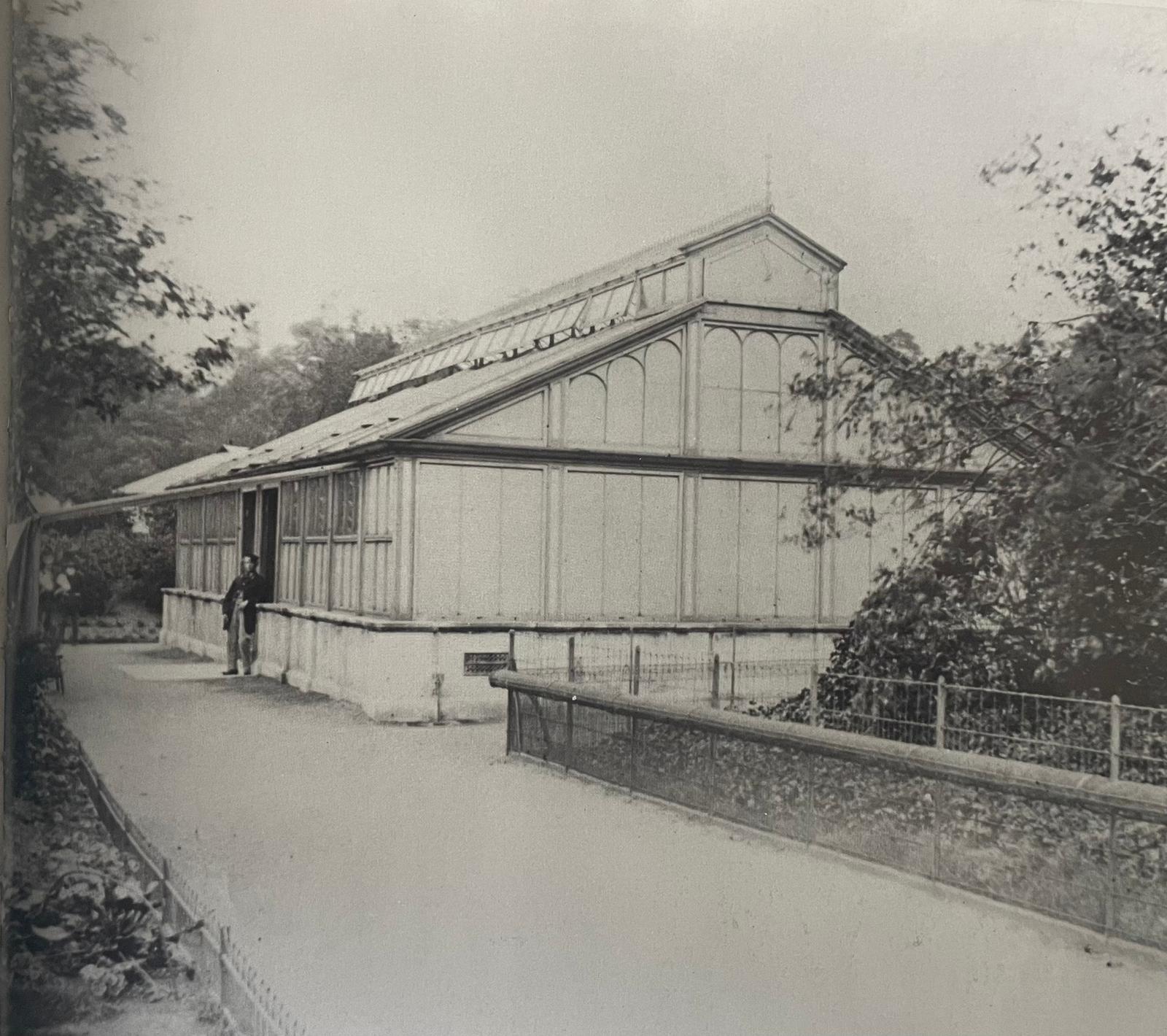
Next, we come to the Reptile House, which we have toured before and the Tortoise House. This glasshouse was built in 1897, and housed various tortoises and turtles, as well as some tropical fish, and the occasional gharial. After the new reptile house was built in 1927, this became a tropical house, and a few (largely unsuccessful) attempts were made to keep humingbirds in it. It was demolished around the 1980s, and the area it once stood is now part of the squirrel monkey enclosure.

tortoise-house-jpg.422170

33a-tortoise-house-2-jpg.422104


Following around the end of the Wapiti-Deer House, we come to the Cattle Sheds. This timber structure was built in 1863, and would be replaced with a brick version in 1906.
cattle-sheds-jpg.422171

34-cattle-sheds-21-jpg.422105

Finally for today, we come to Three Island Pond - one of the original bits of landscaping in the zoo, having been laid out by Decimus Burton in the 1830s. The pond has always been home to various species of waterfowl, and still exists today, hosting the zoo's flamingos and pelicans.
three-island-pond-jpg.422173

36-three-island-pond-jpg.422106


Let's have a swoop!
 
Just over a week out from release, let's get the tour of the south garden wrapped up at least. Oh yes, forgot to mention here - I'll be uploading the zoo to the Steam Workshop 30/04/25!
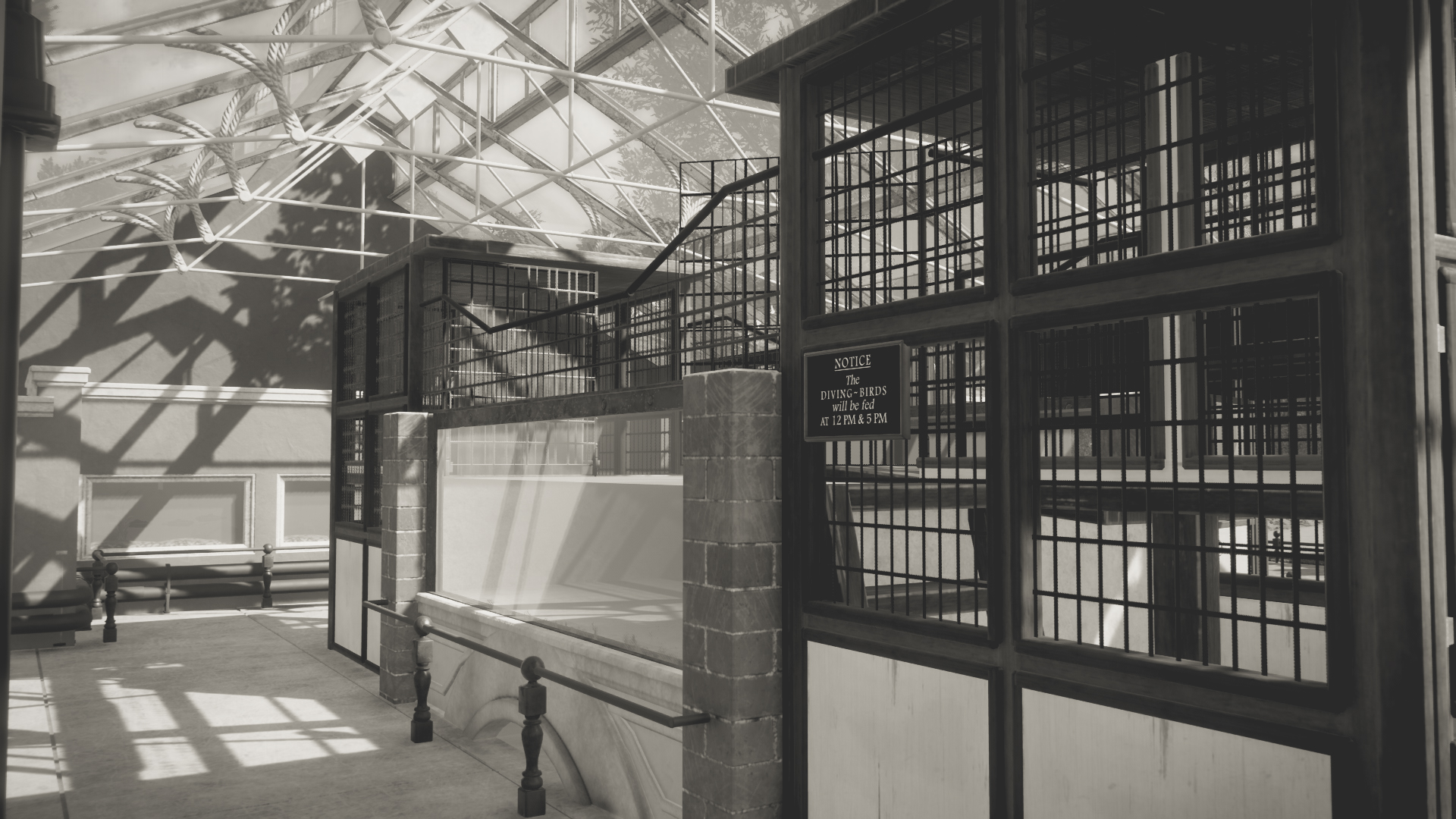
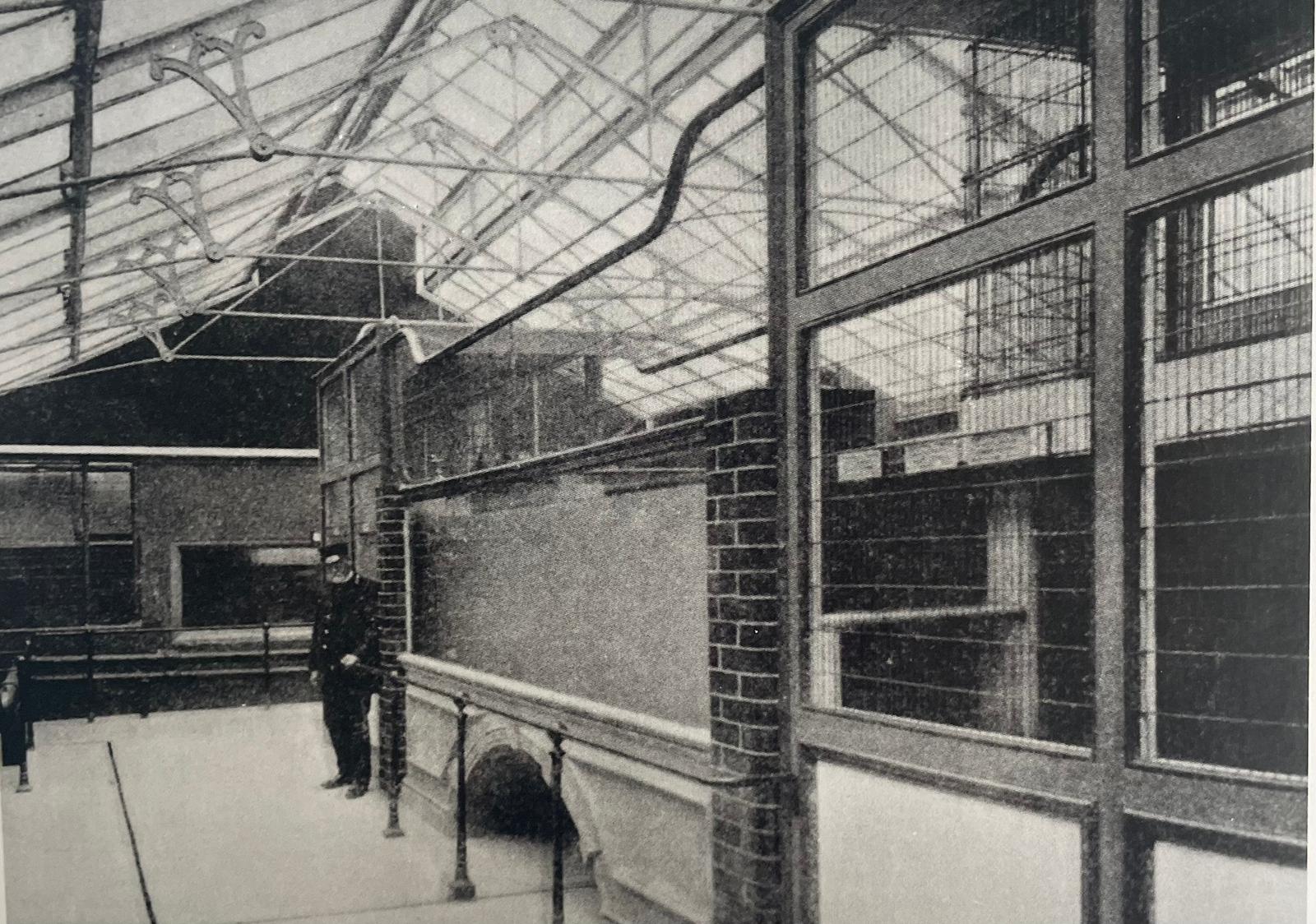
Carrying on along the edge of Three Island Pond and the Main Lawn, we get to the Diving Birds' House. This was originally the 'Fish House' - the world's first public aquarium, built in 1853 (London Zoo coined the word 'aquarium', being a portmanteau of 'aquatic vivarium'). In 1882, a large tank was added to display diving birds, and the focus seems to have gradually shifted away from the fish and towards the birds. In 1903, the tank was moved to the centre and the building renamed. Small penguins, guillemots, cormorants etc would be fed fish in the diving tank at 12:00 and 5:00pm. Unfortunately, I wasn't able to actually move the penguins to their holding cages, so they're just having a little waddle around the house itself.
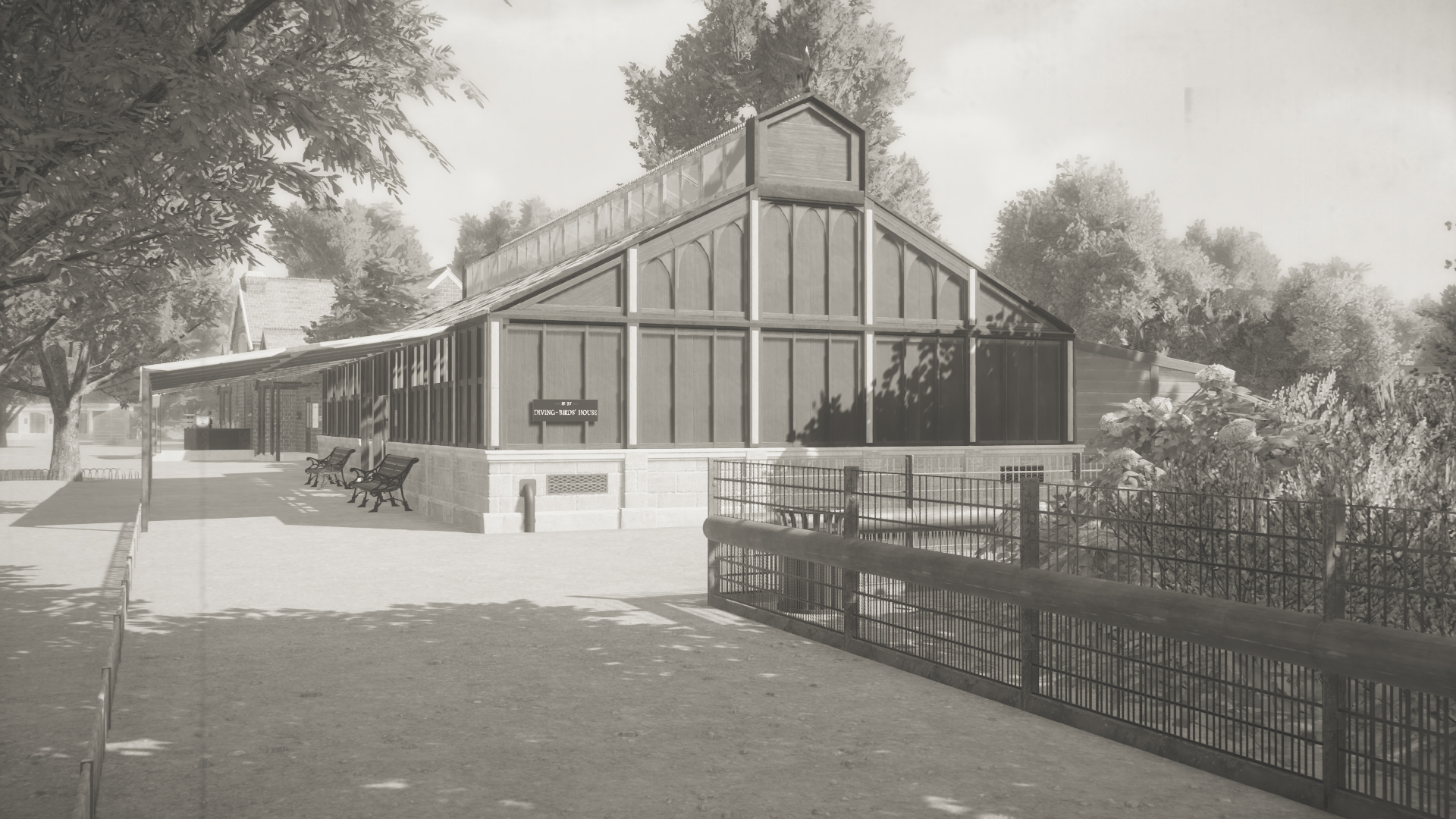
diving-birds-1-jpg.427094

37-diving-birds-house-4-jpg.427084

diving-birds-2-jpg.427095

37-diving-birds-house-5-jpg.427086

Next, we come to the Refreshment Rooms. The main dining room was built in 1868, though additional blocks were added in 1873 and 1878 as separate second-class and fellows dining rooms. After the Regent Building was constructed in 1929, the Refreshment Rooms were converted into a parrot house, which it remained until its demolition in 2011 to make way for Penguin Beach. The basement of the building was used as part of the footprint for the new penguin pool, and the archway of the main entrance was preserved near to the spot it originally stood.
refreshment-rooms-1-jpg.427096

38-refreshment-rooms-6-jpg.427087

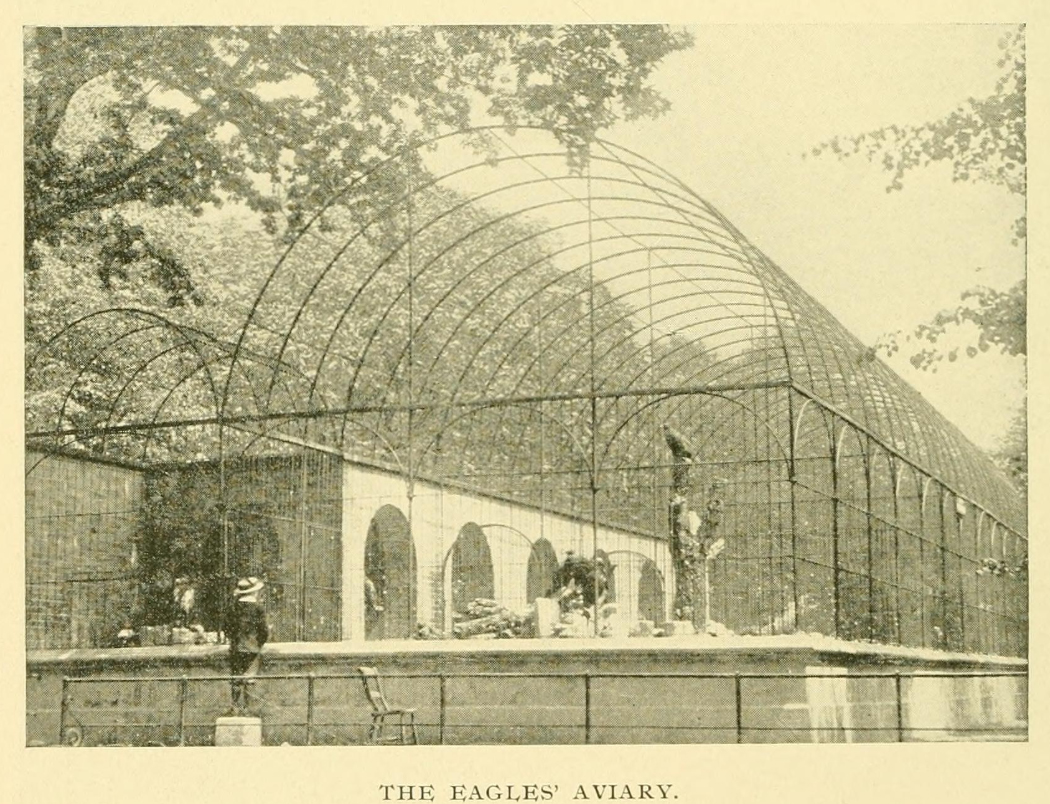
Nearby is the Eagles' Aviary. Built in 1866, this structure incorporated metalwork from the outdoor cages of the zoo's first monkey house (built in 1839), and was built on the same site, replacing a very similar aviary which had been nearby. It was demolished in 1910, and the birds moved to the extended range of aviaries on the zoo's eastern border.
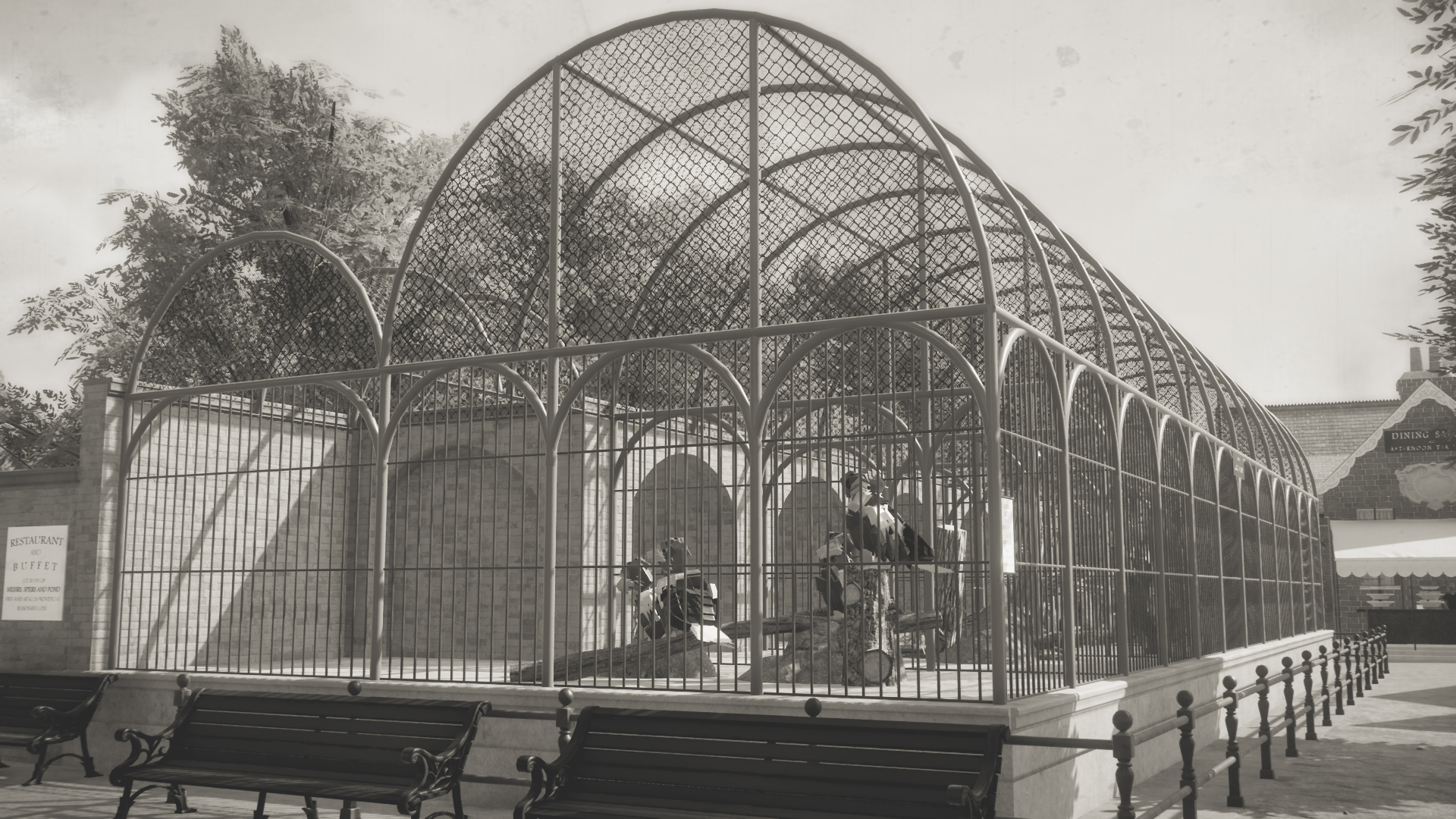
eagles-aviary-1-jpg.427097

40-eagle-aviary-6-jpg.427088

We now pass a few kiosks selling light refreshments, postcards, and tickets for elephant and camel rides. These would have been available every afternoon, weather permitting, along with llama (and occasionally ostrich)-drawn carts, pony rides and other similar activities. The elephant ride would take guests alongside the Great Lawn down to the Lion House before doubling back. As the Elephant House was located in the middle garden, the elephants would have been lead through the tunnel to get to the mounting steps, and were saddled there, so saddles were kept suspended from nearby trees. On one occasion, the famous elephant Jumbo bolted back through the tunnel while wearing his saddle, and carved a gouge in the ceiling (luckily, no one was mounted at the time). In 1920, an additional larger tunnel was built, meaning the elephants could be saddled at the house.
Elephant rides stopped around 1960, though camel and donkey rides, as well as llama and pony carts continued into the 1980s.
main-square-1-jpg.427100

Finally, we approach what is now the East Tunnel (but in 1904 was simply the tunnel, being the only one) from the south. This tunnel was built in the 1830s to link the south and middle gardens. In World War Two, it was used as an air raid shelter - after the 'all clear' was given, a warden would scout ahead to make sure no dangerous animals had been set free by the bombs before letting people out.
As for what's on the other side? Well, you can find out for yourselves in a week, but this series will be continuing for those who want more of the history!
 
Managed to get another tour video together just before the zoo hits the Steam Workshop tomorrow - check out the elephant and rhino house before you check out the whole zoo yourself tomorrow!
A couple of comments, I had no idea that there was keeper accommodation in there plus complete lack of barriers in front of animal units and the passage way above the animals. I wonder if any unfortunate keeper ever toppled over .
 
A couple of comments, I had no idea that there was keeper accommodation in there plus complete lack of barriers in front of animal units and the passage way above the animals. I wonder if any unfortunate keeper ever toppled over .
Yes, it definitely feels like a risky way of doing things... I've not heard of any incidents of keepers falling over the edge, but it's certainly a possibility - there's more than one story of Victorian keepers returning to their accommodations after a few drinks at the pub, so I can't imagine rope ladders and railing-less high platform were the best mix. I'd probably just sleep it off on one of the benches to be honest...
 
Yes, it definitely feels like a risky way of doing things... I've not heard of any incidents of keepers falling over the edge, but it's certainly a possibility - there's more than one story of Victorian keepers returning to their accommodations after a few drinks at the pub, so I can't imagine rope ladders and railing-less high platform were the best mix. I'd probably just sleep it off on one of the benches to be honest...
God,can you imagine trying to get to bed after having a few too many . I think some members would like to see some of those stories, I certainly would, you could start a new thread.
 
Back
Top