ZooBinh’s Journey West: California Chronicles and other Adventures

Thoroughly enjoying this thread! I feel like I'm reliving my visit from a year and a half ago.

Note: Out of respect for Steinhart’s no-photo policy in the next two exhibits, I do not have any to share with you all.
As much as I love CAS, this has to be the most irritating policy of perhaps any visit I've been on. Too many in the general public probably have their flashes left on so I suppose it's a fine precaution. As long as you don't use flash it has absolutely no effect on the animals, so I ignored it and took pictures as I normally would. However, I rushed through and was paranoid I'd get in trouble. Because of that, other than the Peppermint Angelfish and a few others, not until looking through the photos afterwards did I realize the majority of those were ultra rare-in-captivity. I regret not staying longer to fully appreciate that fact.

Otherwise, CAS is fantastic, and I enjoyed it about as much as I did Monterey.
 
Last edited:
Day 2 - Sunday, July 6 - Monterey Bay

7:00am - San Jose

Early start to the morning today. We headed to 7:30 mass at a local Vietnamese congregation in order to make it to Monterey in time. But of course, I couldn’t leave for the aquarium without finding myself a nice cup of coffee first…

I found a very new-wave, quirky, creative coffee shop a few blocks from the church called “dr.ink”. There, I had probably my favorite coffee of the trip: a blueberry latte. A simple latte topped with a blueberry cold foam. I’m no coffee purist, so I personally enjoy the wacky drinks that my fellow young people do. I’m also a sucker for anything blueberry. But yes, the latte was great— well presented and not-too-sweet.

View attachment 750732
Drink of the day: solid 9.5/10

10:00am - Monterey Bay

It’s no surprise to us ZooChatters that the Monterey Bay Aquarium is undoubtedly one of the best in the United States, if not the world. Many of us would be willing to brave long lines just to get in— which is exactly what I did today. The line to get in stretched down just past the corner of the block, but it wasn’t too horrible, seeing that I was taking my first photos around 10:20 or so.

I followed the same route that I did my last time at the aquarium five years ago (you can find that review here, if you truly have time to waste), starting with the popular sea otter exhibit…where the stars of the show unfortunately decided to no-show. So I moved on quickly, as much as I love sea otters, since my attention was focused elsewhere for the day.

The famous (well, what’s not famous here, let’s be honest) Kelp Forest! Definitely one of my absolute favorite tanks in this, or really any, aquarium. For those unfamiliar with this marvel, it’s 28-foot view into an underwater world, where you’ll see schools of anchovies balling around, leopard sharks gliding past, rockfish creeping around, and their huge giant sea bass making its rounds. Not only is it just an impressive view to look up at a stalk of kelp many times taller than you are, but it’s just an incredibly beautiful tank too. The way it’s designed, I personally feel as if I’m standing in a glass elevator that’s taking me down into the waters below. As one of the first exhibits to catch your eye upon entry, Kelp Forest is a warm invitation into the aquarium, but far from the last of the surprises you’ll find there.

Opened in 1984 (their 40th anniversary just passed recently!) in the shell of an old cannery, the Monterey Bay Aquarium focuses on exhibiting species and displaying ecosystems native to the waters on the other side of its walls. For the main gallery of “smaller” exhibits, it does just that. Making your way through, you get a detailed look through just about every aspect of the bay. In the rocky crevices, you’ll see giant pacific octopus and wolf-eels, accompanied by a squad of invertebrates (especially the strawberry anemone) ubiquitous across the entire aquarium. One of my personal highlights in this section is the rockfish tank, which on my visit held eight species, showcasing the vivid colorations of rockfish aside from the dull blue, black, and brown many are familiar with.

My favorite aquarium in the gallery is the large shark(?) tank, which is viewable throughout the gallery at a few different windows. Here, you’ll find some rarities such as the broadnose sevengill shark, which is a pleasure to watch, and the Pacific angel shark (which I could not find). Their exhibits are very well designed to showcase the natural scapes of the bay, and I really enjoy the larger, panoramic examples such as this.

View attachment 750733Broadnose Sevengill Shark (Notorynchus cepedianus)

The middle portion of the gallery focuses on the sandy floors of the bay, and it was here that I haparticularly fun moments: first, I became familiar with the longspine combfish (which was unsigned) which I felt was particularly noteworthy because its a crazy cool-looking species in general. Second, I finally was able to see the blackeye goby, a species which evaded me at the Cal Academy as well as multiple previous tanks at Monterey…but nonetheless I prevailed :D.

Exiting the gallery, we work our way out of the depths to the shores, where there’s some interesting species such as the fat innkeeper worm, bay pipefish, and tube-snout. There’s also some particularly fun tidal displays, namely a tank for reef surfperch where guests can spin a wheel to change the direction of the current. While it is educational to see how the fish adapt to the changes, I do wonder whether this is particularly bothersome to the animals or not— though this is probably how rough their natural habitat is anyway.

Now, onto the aviary!! This is my absolute favorite of the Monterey Bay Habitats, and it totally has nothing to do with my affinity for birds :p. I easily spent the longest time looking and photographing here (30 minutes or so), and was lucky enough to catch a feeding demonstration in that time. The birds, shy at first, darted around the exhibit wary of the keeper when she entered. But, upon realization this intruder carried food with her, the birds quickly let down their guard and became rather greedy menaces. Highlights here included the red-necked phalarope and the American avocet— one of my personal favorites.

View attachment 750735
Red Knot (Calidris canutus)
View attachment 750734
American Avocet (Recurvirostra americana)

The next few sections of the aquarium are ones I tend to gloss over, due to my combined general disinterest in its inhabitants and the congestion. As such, my reflection will be rather short. The exhibits include the rest of the Monterey Bay Habitats (touch pools and freshwater exhibits, though I’d like to honorably mention the wave tunnel, that’s always fun to walk through), Coral Kingdom, the Penguin exhibit, and the Enchanted Kelp Forest. If this journal hasn’t bored you already, any account of mine for these exhibits will definitely do the job. I do have some pictures, though:

View attachment 750736
Lion’s Mane Nudibranch (Melibe leonina)
View attachment 750738
Bluethroat Triggerfish (Sufflamen albicaudatum)

Somewhere in the blur of time in between my stop at the aviary and the Open Ocean, two major moments happened. Firstly, a majorly disappointing moment when Makana, one of the resident Laysan albatrosses, decided she would not be participating in the day’s encounter. Probably one of the bigger gut punches of the trip, but the blow was softened knowing I’d already seen her on my last visit in 2019. Some nicer pictures would have been appreciated, though :(. The other moment was a bit more exciting, however. Monterey, in my opinion, ranks up there in terms of zoo food (there’s a thread on that somewhere, no?). Though a bit on the pricier side, (or not, this is California) my dad and I shared some seafood paella and king salmon poke. Their focus on sustainable seafood led to some rather commendable culinary choices, specifically the red seaweed salad that came with the poke. Not sure what kind of seaweed it was, but I’m assuming it was locally collected? Whatever it was, it was good. Oh! And the meal was made even better with our view out into the bay, where we watched a seal lounge and some birds float by.

View attachment 750737 View attachment 750739
Great review! Really need to try out that seafood place, looks awesome! The trigger is a blue-throated triggerfish, Xanthichthys auromarginatus also known as the gilded triggerfish, wonder why ichthyologists chose such similar names.
 
Great review! Really need to try out that seafood place, looks awesome! The trigger is a blue-throated triggerfish, Xanthichthys auromarginatus also known as the gilded triggerfish, wonder why ichthyologists chose such similar names.
Thanks for the correction! This is on me for not learning scientific names :p.
 
Thoroughly enjoying this thread! I feel like I'm reliving my visit from a year and a half ago.


As much as I love CAS, this has to be the most irritating policy of perhaps any visit I've been on. Too many in the general public probably have their flashes left on so I suppose it's a fine precaution. As long as you don't use flash it has absolutely no effect on the animals, so I ignored it and took pictures as I normally would. However, I rushed through and was paranoid I'd get in trouble. Because of that, other than the Peppermint Angelfish and a few others, not until looking through the photos afterwards did I realize the majority of those were ultra rare-in-captivity. I regret not staying longer to fully appreciate that fact.

Otherwise, CAS is fantastic, and I enjoyed it about as much as I did Monterey.
I've heard several people that it is basically as you said, a big precaution taken since so many of the animals there likely are extremely sensitive to light. So photos are "allowed" without flash, and some people have taken photos near staff who didn't care or asked if they knew about the fish they were photographing.
 
Thanks for the correction! This is on me for not learning scientific names :p.
Didn't know them either but as I was identifying and inputting species to zootierliste I noticed that I had websites open describing two different species, I didn't even know one of them existed!
 
Part 2: Coconut Smoothies and Coachella Valley

Day 4 - Monday, July 8- Los Angeles

3:00am - San Francisco

After about two winks of sleep and some time waiting for laundry to finish up, we were up bright (dark, really) and early to catch our 6am flight to LAX. Two notable things happened for me this morning (disclaimer, however, if you have no interest in my personal laments and celebrations): I lost my earbuds, and as someone who listens to music more than most should, this was a major, major setback for the trip. However, not all was bad— I received news about that same time that I scored the highest I could on a pretty important exam I took a few months prior. So maybe not that notable after all, but this is my thread :p and I think that’s a lot to have happen at 3am.

10:00am - Los Angeles (Erewhon!!)

The land of Hollywood fame and movie stardom. Also, the land of social media influencers and their out-of-touch lifestyles and trends. Normally, I don’t buy into whatever bull these (probably) nepo babies are trying to sell on the internet, but I had to cave for these smoothies that took my algorithm by storm a while back. Erewhon is a local upscale grocery chain in Los Angeles, which gained some online notoriety for its $20 smoothies and other pricey cafe items. Food and fun grocery stores are some of my weak spots, so I had to see what was up with the place.

Let me say, these smoothies are a work of art. They’re gorgeous. They’re also pretty freaking good. I hate to admit, but all these months later I still think about my “coconut cloud smoothie” and I will 100% waste so much more money at Erewhon if I ever return to LA. My smoothie was a blend of banana, avocado, almond butter, some kind of plant milk, coconut cream, and blue spiraling. Visually, it’s a vibrant swirl of blue and white meant to picture ocean waves. Not pictured, but I also had this polenta toast situation with sautéed mushrooms and a fried egg to eat. Also good.

IMG_4311.jpeg
Drink of the day: 9/10. loved every sip. seeing the trend in highly rated drinks?

11:00am - Los Angeles Zoo

Alright. Finally. If there’s anything to understand about the LAZoo, it’s that it is rather confusing and windy and horribly (if one can call it so? I’ll elaborate) organized. You will be going in circles, the thematics of the zoo aren’t necessarily clear, and you will have to pretty regularly retracing/backtracking your steps to make your way around.

*To elaborate, it seems that the architect and designer of the zoo intentionally made it so, in order for guests to leisurely stroll and wander around. So maybe it’s not so horrible, and I need to learn to obsess a bit less over efficient paths and comprehensible maps :p.

Since I arrived so late into the morning, my first move was to make a mad dash to the back of the zoo to catch their Calamian deer before they disappeared for the day (around noon). My efforts were successful, as I was able to catch one of their deer quite close to the fence finishing up its morning graze. Continuing along that row of ungulate exhibits, I was also able to get another significant lifer— Chinese goral! They had evaded me twice before at St. Louis and Omaha, but third times the charm, right? :D The rest of the Asia collection was pretty nice, with species like markhor, takin (a personal favorite), and another lifer for me— wrinkled hornbill.

Calamian Deer (9)_Original.jpeg
Calamian Deer (Axis calamianensis)
Chinese Goral (5)_Original.jpeg
Chinese Goral (Naemorhedus griseus)

South America is home to one of ZooChat’s favorite animals at Los Angeles, no doubt. I had the extreme pleasure of watching Mojito, the mountain tapir, awaken from his slumber and beg for love and affection from the keeper who was bringing him browse. For a few minutes, he trailed her every move around the enclosure, and went as far as calling for her return after she left! It’s a shame she probably wasn’t allowed to pet him. Darn safety protocols :p. Both South America and Asia were pretty similar visually, a series of moated yards and pits for larger carnivores/ungulates, with a series of roundhouses about. Well, pretty much the entire zoo looks like that, but I’d argue that these two sections are most alike.

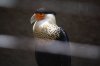
Crested Caracara (3)_Original.jpeg
Crested Caracara (Caracara plancus)
Mountain Tapir (20)_Original.jpeg
Mountain Tapir (Tapirus pinchaque)

A short walk from South America takes you to the back entrance of Rainforest of the Americas, which is one of LA’s newer and more impressive complexes. Through the route I went, I passed the jaguar exhibit first, though unfortunately I was not able to catch a glimpse of the cats. I then passed a few outdoor terrariums and aviaries until I got to the Baird’s tapir exhibit, which I thought was quite nice. The highlight of the rainforest came at the giant otter exhibit— a species I’d never seen before! Their exhibit is huge, with multiple viewing spaces across two stories. On my visit, I was only lucky enough to see a single otter lounging on the shore. Would have been magnificent to see such beautiful animals glide about the water…

The ‘focal point’ of the zoo is the multi-acre “Elephants of Asia” complex, which houses their (you guessed it) Asian elephant herd in a series of yards at the center of the zoo, themed around different nations in which elephants range in. It’s a shame that LA was the only stop on my trip where I could see my favorite animals, but the zoo does surely have some impressive elephants. Billy the elephant, who is constantly subject to animal rights legal battles, has one of the most impressive pairs of tusks I’ve seen on an elephant. Truly amazing to see him in person.

On my visit, only one of their aviaries was open, so I made a quick dash through. As a bird lover, it’s a shame the other aviary was closed, but it was a treat to see a pretty cool lifer— the black-collared starling. At this point, I had worked my way back to the front of the zoo (considering the first thing I did was) run straight to the back of the zoo to see the Calamian deer). I must admit, due to a long day of traveling and the time crunch I was faced with to see the rest of the zoo, my memory is a bit hazy for these last four complexes.

The LAIR, which I’m sure of the best regarded reptile complexes in America, truly show the strength of LA’s reptile collection. The exhibit is comprised of two “LAIR” buildings, one a tropical and the other a desert ecosystem, and two outdoor sections, one a desert exhibit and the other for crocodilians. The first building is the largest, and holds several notable species such as: Chinese giant salamander, Armenian viper, Mary River turtle (though I missed this one :(), and Gray’s monitor. Exiting this building will take you to a round outdoor exhibit designed for a myriad of Southwestern desert species, which provides a perfect segue into the smaller, desert building. This building is more heavily designed to the desert theme, and hosts mostly Southwestern desert herps, but also some of the more common Saharan species in public display. The crocodilian exhibits are last, and display two rarer species found in North American zoos: the tomistoma and gharial. I found LAIR to be impressive, and one of the zoo’s stronger exhibits along with Rainforest of the Americas and Elephants of Asia.

Australia and Drylands. Both pretty similar complexes, they have a main ‘loop’ of exhibit yards accompanied with their fair share of roundhouses. Both are clearly intentioned to be more ‘arid’, with more sparsely planted foliage compared to the Asia and South America sections. They also host a solidly unique collection of species. In Australia, you’ll find short-beaked echidnas, perentie, yellow-footed rock wallaby, and Southern hairy-nosed wombats (in a rather peculiar and large indoor nocturnal building). The Drylands stands out for having one of the only Ruppell’s Foxes on display anywhere in the world, which unfortunately I was not able to find :(. I did, however, watch a failed zebra breeding event, which was rather interesting, to say the least…

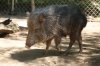
Chacoan Peccary (3)_Original.jpeg
Chacoan Peccary (Catagonus wagneri)
Desert Bighorn Sheep (2)_Original.jpeg
Desert Bighorn Sheep (Ovis canadensis nelsoni)

Africa was the last section I visited, though it was an incredibly quick visit. Again, so much of the zoo is similar that it’s fair to describe Africa as a larger, more densely planted and shaded, and disorganized version of the Asia/South America sections. I do consider Africa, however, to be what comes to mind as the ‘Los Angeles Zoo’. Winding paths, shady palms, all very LA. Much of the complex was under construction at the time— a few of the primate roundhouses, the Cape Vulture area (is that even open yet?). But, I had one objective in mind: to find the Somali ostrich. So after rushing through Africa to see her, I concluded my visit.

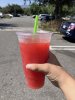
Closing notes— Overall, Los Angeles isn’t bad. But, it has its weaknesses that are obvious in the same way San Francisco’s are (though not nearly as bad). I think the zoo deserves the praise for their impressive newer complexes and noteworthy collection, and I think that overall I do appreciate the winding, confusing paths…but to enjoy them I’d need to learn how to embrace the feeling of being lost :p. Anyways, I do have my bones to pick with them too. The gift shops sold absolutely no postcards or original keychain designs! San Francisco’s gift shop set a pretty low bar, and somehow LA was able to lower it further. They also have street vendors in the parking lot as you leave? Not sure on the legality of such operations, but I did get myself a rather mediocre watermelon aqua fresca upon exit.

IMG_4316.jpeg
Drink #2 of the day: Meh. 7/10.
 

Attachments

  • Crested Caracara (3)_Original.jpeg
    Crested Caracara (3)_Original.jpeg
    54 KB · Views: 118
  • IMG_4316.jpeg
    IMG_4316.jpeg
    78.6 KB · Views: 115
  • IMG_4311.jpeg
    IMG_4311.jpeg
    68.7 KB · Views: 119
  • Chacoan Peccary (3)_Original.jpeg
    Chacoan Peccary (3)_Original.jpeg
    170.5 KB · Views: 117
  • Mountain Tapir (20)_Original.jpeg
    Mountain Tapir (20)_Original.jpeg
    138.8 KB · Views: 119
  • Calamian Deer (9)_Original.jpeg
    Calamian Deer (9)_Original.jpeg
    130.1 KB · Views: 120
  • Chinese Goral (5)_Original.jpeg
    Chinese Goral (5)_Original.jpeg
    285.6 KB · Views: 115
  • Desert Bighorn Sheep (2)_Original.jpeg
    Desert Bighorn Sheep (2)_Original.jpeg
    148.8 KB · Views: 125
Last edited:
4:30pm - Koreatown

After leaving the zoo at, say, 3:30 or so? I had intentions of driving down to Long Beach to see the Aquarium of the Pacific, but after factoring in our zoo (and overall) fatigue and LA traffic, we thought it would be a better idea to just enjoy a pleasant evening and prepare ourselves for that night’s two hour drive to Palm Desert. A shame that I’d miss out on the auklets, but considering I only came up with that idea the night before, it wasn’t too sore a loss.

For dinner, we hit up a katsu curry restaurant in Koreatown, which was exciting because I’d never had any form of Japanese curry before. Katsu curry is traditionally a fried cutlet (usually pork or chicken) with a Japanese curry sauce, but the dish is also popular elsewhere. I had chicken katsu curry, which came with a ginger-carrot salad on the side, and my dad had a pork katsu with I think a demi-glacé sauce and some bonito flakes on top. Very good meal, would definitely recommend to you all if you ever have the chance.

IMG_4317.jpeg IMG_4318.jpeg

This may have been the only day on the trip where I had three drinks, but that was exactly what I did. We stopped by Boba Guys, which is one of my favAforite boba chains, since they only have locations in California and NYC. I got myself a strawberry matcha latte and a regular milk tea for my dad (but guess who ended up drinking most of it :p). I do personally remember their drinks tasting a bit better and fresher, but I’m pretty confident it was because I went so close to closing. The chain does pride themselves in high-quality and locally-sourced ingredients, so I do applaud them for the genuine thought and consideration that they put into their products.

IMG_4319.jpeg
Drink of the day #3: I had my complaints but because of the nostalgia factor I gave it a very undeservedly high 1000000/10.
IMG_4320.jpeg

After that last little pit stop, we left LA for Palm Desert in order to prepare for the next day…
 

Attachments

  • IMG_4317.jpeg
    IMG_4317.jpeg
    140.9 KB · Views: 121
  • IMG_4318.jpeg
    IMG_4318.jpeg
    114.9 KB · Views: 117
  • IMG_4319.jpeg
    IMG_4319.jpeg
    50.9 KB · Views: 117
  • IMG_4320.jpeg
    IMG_4320.jpeg
    45.5 KB · Views: 118
*To elaborate, it seems that the architect and designer of the zoo intentionally made it so, in order for guests to leisurely stroll and wander around. So maybe it’s not so horrible, and I need to learn to obsess a bit less over efficient paths and comprehensible maps :p.

It has its positives and negatives IMO; the layout is frustrating for first-time visits especially, but having been many times and more or less memorized the layout I enjoy how many quiet little side paths there are.

Mary River turtle (though I missed this one :()

I've never seen this animal FWIW. You're actually lucky the giant salamander was visible, that one is 50-50 for me at Los Angeles (haven't failed to see it at San Diego, though).

The Drylands stands out for having one of the only Ruppell’s Foxes on display anywhere in the world, which unfortunately I was not able to find :(

It's also not a very visible animal, it likes to hide; I've seen it a couple times, but only by its ears.
 
Day 5 - Tuesday, July 9 - Living Desert and Little Saigon

7:00am - The Living Desert Zoo and Gardens

We were up bright and early this morning in order to make it to The Living Desert right at open. Normally I don’t obsess over showing up when the gates open, (this was only my second time doing this, the other being for the Academy) but The Living Desert is only open from 7:00am to 1:30pm during the summer. The reason being that the Coachella Valley gets incredibly hot during the day, reaching triple digits (Fahrenheit, sorry non-Americans) before noon. With this in mind, I had every intention of making my visit as quick as I could, since it was already solidly in the 90s’ when I arrived.

The Living Desert is an absolutely beautiful facility. Not sure what I was expecting, but all my expectations were surpassed. It’s a very manicured and well-designed park, probably to cater to the Palm Springs population and whatever high-class expectations they have :p. There are two main portions: African Safari and Wild Americas, as well as a smaller third Australian Outback exhibit.

Upon entry to the park, you’re greeted with a view into their Rhino Savanna, and I was lucky enough to have one of their black rhinos feeding so close to the barrier in front of me. The exhibit is rather vast, and also exhibits herds of ungulates (including springbok!) and pelican flocks alongside the rhinos. Not sure that I’ve seen black rhinos in mixed exhibits besides when SDZSP used to have them, so that’s definitely a unique aspect of the place. The mongoose are also a joy to watch this early in the morning— it’s a treat to watch the animals wake up and explore their exhibits first thing in the morning. There’s also a pretty extensive naked mole rat tunnel system located under, well, a larger tunnel, which makes photography quite easy (I’ve never been able to take good mole rat pics).

Naked Mole Rat (1)_Original.jpeg
Naked Mole Rat (Heterocephalus glaber)

The giraffe, kudu, and ostrich yard is another vast panoramic exhibit, with a beautiful view into the mountains beyond. Since I was so early, I was able to watch a keeper do an early feeding with the giraffes and be in the presence of a huge kudu bull grazing a few feet away. Not far away was the highlight of the day for me— the striped hyena, which is probably a pretty major lifer for arguably all ZooChatters. Now, if only I’ll ever see a spotted hyena :p

Ostrich (1)_Original.jpeg
Ostrich (Struthio camelus)
Striped Hyena (12)_Original.jpeg
Striped Hyena (Hyaena hyaena)

The aviary across from the hyena exhibit displays some of your typical African weavers, but there’s also the incredibly gorgeous racquet-tailed roller, so don’t leave that aviary unnoticed if you ever visit.

Now, a quick note about their food. Full disclaimer, I didn’t have a full meal there but I did stop at the ThornTree Grill in the morning for a quick snack/breakfast. I had only had sweet potato fries, but holy **** were they good. If their fries were that good, I’d love to know how good the rest of their food is.

IMG_4323.jpeg

After the larger savanna exhibits, the section switches focus to more arid ecosystems, with a series of desert ungulate yards— addax, dromedary, addra, oryx, etc. Those species are accompanied by a selection of (unfortunately) pinioned birds— yellow-billed storks, cinereous vultures, marabou stork, etc. After a quick dash by their smaller carnivore exhibits, I was on my way to the North American section of the zoo.

Wild Americas ranks up there as one of the favorite zoo complexes I’ve been to. One note though— it is hottt. I bought a water bottle solely for the purpose of cooling myself off throughout the day, which was a great decision. I started off in the North American reptile house, where I met their resident Great Basin collared lizard that loves to interact with visitors, according to one of the keepers.

Australian Adventures, as it’s called, is located within Wild Americas, and it’s hard to continue along the North American path without stopping by this exhibit. Outside, I had a lovely chat with some senior docents and an ambassador blue-tongue skink. Speaking of lovely chats, The Living Desert has some of the best hospitality among the zoos I’ve visited. Every keeper or docent I interacted with was incredibly helpful and welcoming, which really adds to the overall experience of the zoo. Anywho, the exhibit is a small desert-dome style building with an emu yard right outside. Inside, the main attractions are the Bennett’s wallabies that hop about the walkway, but my focus was drawn towards the large rocky outcrop for their many (seriously, there’s quite a few) yellow-footed rock wallabies. They’re quite fun to watch, too! I came right as one of their keepers was preparing their lunches. They all have seemingly assigned bowls and corners to eat in, so it’s quite a treat to watch all the wallabies neatly arranged and in a row as they eat.

Yellow-Footed Rock Wallaby (19)_Original.jpeg
Yellow-Footed Rock Wallaby (Petrogale xanthopus)

Continuing along Wild Americas, I was consistently pleased with the exhibits and sights. The walk from Australian Adventures to the main cluster of animal exhibits was quite long (and hot), but full of desert landscapes and flora (huge trees and cactus) I’d never see before. I also stopped by the desert pupfish pond, though it’s a little hard to see the fish with how small they are. Once I finally got to the main exhibit area, I was met with a bit of relief under the plentiful cool buildings and shaded paths. The highlight of this area was definitely the island fox, which a keeper so kindly called out from its slumber for me (for context, I didn’t ask her to call out or bother the animal at all, but I mentioned the fox was sleeping and she decided that she’d see if it would want to come out :)). A close second would be their personable American badger, (Midas, I think was his name?) who loves to observe and interact with visitors.

American Badger (5)_Original.jpeg
American Badger (Taxidea taxus)
Island Fox (8)_Original.jpeg
Island Fox (Urocyon littoralis)
IMG_4324.jpeg

Closing notes— After touring the American portion of the zoo, time was nearing 11am and temperatures were beginning to skyrocket. I stopped by the gift shop (which made up for the disappointment that was LA) for a keychain, book, and postcards and began my way to the next destination.
 

Attachments

  • Naked Mole Rat (1)_Original.jpeg
    Naked Mole Rat (1)_Original.jpeg
    79.1 KB · Views: 93
  • Ostrich (1)_Original.jpeg
    Ostrich (1)_Original.jpeg
    125.5 KB · Views: 94
  • Striped Hyena (12)_Original.jpeg
    Striped Hyena (12)_Original.jpeg
    162.3 KB · Views: 95
  • Yellow-Footed Rock Wallaby (19)_Original.jpeg
    Yellow-Footed Rock Wallaby (19)_Original.jpeg
    99 KB · Views: 94
  • American Badger (5)_Original.jpeg
    American Badger (5)_Original.jpeg
    138.4 KB · Views: 93
  • Island Fox (8)_Original.jpeg
    Island Fox (8)_Original.jpeg
    139 KB · Views: 95
  • IMG_4324.jpeg
    IMG_4324.jpeg
    156.8 KB · Views: 95
  • IMG_4323.jpeg
    IMG_4323.jpeg
    66.2 KB · Views: 94
12:30pm - Orange County, California

Orange County, specifically the city of Garden Grove, is the largest and oldest Vietnamese community in the United States. It’s a major hub for the diaspora in the states, so it’s always a bit of a cultural pilgrimage, if you will, for me whenever I visit. We stopped for lunch in Little Saigon, at a shop called “Bánh Cuốn Thanh Trì.” Bánh cuốn are rice rolls, usually stuffed with a pork or shrimp filling and eaten with a variety of toppings and sauces. The plate I ordered had the shrimp and pork rolls, and came with an egg roll, fried sweet potato, fish cake, Vietnamese sausage (like the pork version of a fish cake), and bánh cóng, which is a fried cake (like a hush puppy almost?) which traditionally has shrimp, but mine did not have any. It also came with fried shallots, bean sprouts, Thai basil, and cucumber. For dipping, I had fish sauce and a soy sauce concoction I made myself with various ingredients on the table. We also had bánh bèo, which are steamed rice cakes with various toppings— fried shallot, mung bean, dried shrimp, sautéed green onion, and pork rind— also to be eaten with fish sauce.

IMG_4326.jpeg IMG_4325.jpeg

Afterwards, we met up with a martial arts friend of my dad’s at a Vietnamese dessert shop (Bambu, if you’ve heard of it). Their specialty is chè, which is any variety of Vietnamese dessert “soups”. They can come in any sort of variety, with many kinds having various fruits, tapioca pieces, mung or red bean, coconut milk, etc. I had their take on halo halo (which is a similar Filipino dessert), but it wasn’t anything noteworthy. The dessert chain is known for being quite good, but it seems their quality has gone down in recent years. Personally, I wouldn’t recommend any of you waste your time and try the chain Bake&Che instead (I didn’t have it, but I’ve heard it’s much better).

IMG_4327.jpeg

We then checked into our hotel, which is an activity I wouldn’t usually report on :p. But, this specific hotel is a Ramada branch that is somewhat ‘iconic’ amongst Vietnamese-Americans. I’m not so clear on the details, but I think it was the first major hotel to be operated by Vietnamese for the Vietnamese community, and it was heavily advertised on the Vietnamese TV channels and DVDs I grew up watching. So the hotel itself isn’t actually anything special, but there’s a bit of cultural significance and it’s a point of pride for the community.

4:30pm - Still Orange County, but I thought I’d let you know that time has passed

At this point in the day, I met up with my cousin who was working a summer internship in California. We made plans to go and eat our hearts out, and that’s pretty much what we did! I’ll just walk you through it all ;).

First up, was this popular boba joint in Irvine that had a pretty long line out the door. Totally worth the wait, though, for the drink of the day!! I had the cream oolong milk tea and my cousin had a strawberry yakult tea. OMOMO Tea, they have a few locations in SoCal. Definitely check them out if you have the chance, some of the best boba I’ve had. I’m still thinking about it now :).

IMG_6315.jpeg
Drink of the day: 2000000/10 soooo good i forgot to take a picture until i was done lol plz

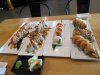
Next was dinner, sushi at Tomikawa in Irvine. Initially the plan was to do all-you-can-eat, but we realized the price we’d pay for four huge rolls would be less than the AYCE price and still be more than enough food. Excuse the image quality, but if I recall correctly there was a soft shell crab roll, scallop roll, salmon roll, and a shrimp tempura roll. Very much worth the price we paid.

IMG_6322.jpeg

At this point, we were getting quite full for sure. Yet, we decided we’d fit in dessert! We headed to The Spoon, a little pastry/dessert shop in Stanton, for some rather cute and aesthetically pleasing desserts. We got this bear-shaped dragonfruit berry dessert, a matcha tiramisu, and a calamansi panna cotta. Clearly our eyes ate first, because they honestly weren’t that good. I liked the panna cotta, but the bear dessert and tiramisu were just…decent. Not worth what we paid at all. Wouldn’t recommend the place if you want something outstanding, but I’m not not recommending it.

IMG_4330.jpeg

After dessert, we came back to the hotel for some final goodbyes and…you guessed it…more food! My dad had dinner with some friends at a local seafood hotpot restaurant (Oc & Lau 2 in Garden Grove) and I just had some leftovers. I’ve heard that place is pretty good and popular though, but I’ve yet to properly try it.

So yes, a lot of food (definitely the most I ate on the trip), but a great way to wrap up this second leg of the trip :). To say the least I slept well and full that night.
 

Attachments

  • IMG_6322.jpeg
    IMG_6322.jpeg
    121.3 KB · Views: 92
  • IMG_6315.jpeg
    IMG_6315.jpeg
    84.7 KB · Views: 92
  • IMG_4325.jpeg
    IMG_4325.jpeg
    74 KB · Views: 93
  • IMG_4326.jpeg
    IMG_4326.jpeg
    67.9 KB · Views: 92
  • IMG_4330.jpeg
    IMG_4330.jpeg
    85.5 KB · Views: 94
  • IMG_4327.jpeg
    IMG_4327.jpeg
    72.7 KB · Views: 91
It has its positives and negatives IMO; the layout is frustrating for first-time visits especially, but having been many times and more or less memorized the layout I enjoy how many quiet little side paths there are.


I've never seen this animal FWIW. You're actually lucky the giant salamander was visible, that one is 50-50 for me at Los Angeles (haven't failed to see it at San Diego, though).


It's also not a very visible animal, it likes to hide; I've seen it a couple times, but only by its ears.
I like your take. It definitely was quite frustrating, especially with how tired and rushed my visit was, but I can see the meandering and quiet paths being quite peaceful and relaxing if I were used to them.

I barely saw it move in the huge log (the salamander). Good to know about the turtle, though, this makes me feel better :p.

I think someone on ZooChat saw the fox on the same day or around the same day I visited the zoo? So that was a bit of salt in the wound, but only another reason to return someday ;).
 
The Living Desert is an absolutely beautiful facility. Not sure what I was expecting, but all my expectations were surpassed. It’s a very manicured and well-designed park

Living Desert is one of my favorite zoos I've been to and this is a lot of the reason why. It's one thing to have a solid species lineup and good enclosures, but it's hard for a lot of zoos to capture a certain memorable aesthetic... a lot of zoos I've been to are perfectly fine, but it's all built on lawns with some trees here and a hill there. Living Desert feels like it is constantly immersing you in various desert environments - and while the actual ecosystem it sits in helps, a lot of it is the horticultural department doing a fantastic job with geographic-themed gardening. I've been to few other zoos that put the "and Gardens" part of their name at the forefront of the experience as much as Living Desert.

Did you see any wild roadrunners while you were there? They are a common sight at the zoo and very entertaining to watch; on my last visit there was one stealing scraps from the wolves inside their pen.

Next was dinner, sushi at Tomikawa in Irvine. Initially the plan was to do all-you-can-eat, but we realized the price we’d pay for four huge rolls would be less than the AYCE price and still be more than enough food.

Not a bad call, those rolls do look very good. Although in terms of meal satisfaction it's hard to beat a good Korean all-you-can-eat BBQ joint IMO. The amount of meat one can consume for $30 a person is astounding, honestly.

a matcha tiramisu

I think it says something about who I've become that I - who grew up in the Midwestern countryside, and have only as a young adult experienced fancier cuisine in Los Angeles - read words like "matcha tiramisu" and my first thought was "oh I can recommend a couple places for that, but it's pretty standard fare so let's hear more about that panna cotta". Unfortunately, I think what it says about me is that I've become an uppity nob :p a hard reality to reckon with after my fast food review career from three years past.

Speaking of being an uppity California nob... how long will I have to wait for a taco truck review? Everyone knows the best tacos are in LA, so I'm going to be very disappointed if you have no opinions for me to dissect on this.

upload_2024-12-4_17-59-27.gif
 

Attachments

  • upload_2024-12-4_17-56-28.jpeg
    upload_2024-12-4_17-56-28.jpeg
    8 KB · Views: 1
  • upload_2024-12-4_17-59-27.gif
    upload_2024-12-4_17-59-27.gif
    1.1 MB · Views: 84
Living Desert is one of my favorite zoos I've been to and this is a lot of the reason why. It's one thing to have a solid species lineup and good enclosures, but it's hard for a lot of zoos to capture a certain memorable aesthetic... a lot of zoos I've been to are perfectly fine, but it's all built on lawns with some trees here and a hill there. Living Desert feels like it is constantly immersing you in various desert environments - and while the actual ecosystem it sits in helps, a lot of it is the horticultural department doing a fantastic job with geographic-themed gardening. I've been to few other zoos that put the "and Gardens" part of their name at the forefront of the experience as much as Living Desert.

Did you see any wild roadrunners while you were there? They are a common sight at the zoo and very entertaining to watch; on my last visit there was one stealing scraps from the wolves inside their pen.


Not a bad call, those rolls do look very good. Although in terms of meal satisfaction it's hard to beat a good Korean all-you-can-eat BBQ joint IMO. The amount of meat one can consume for $30 a person is astounding, honestly.


I think it says something about who I've become that I - who grew up in the Midwestern countryside, and have only as a young adult experienced fancier cuisine in Los Angeles - read words like "matcha tiramisu" and my first thought was "oh I can recommend a couple places for that, but it's pretty standard fare so let's hear more about that panna cotta". Unfortunately, I think what it says about me is that I've become an uppity nob :p a hard reality to reckon with after my fast food review career from three years past.

Speaking of being an uppity California nob... how long will I have to wait for a taco truck review? Everyone knows the best tacos are in LA, so I'm going to be very disappointed if you have no opinions for me to dissect on this.

View attachment 752416
As someone who basically only knows Midwestern cuisine, I didn't even know what matcha was until there was matcha Pokemon introduced last year. :p And although I've heard of tiramisu I couldn't actually tell you what it is.
 
Living Desert feels like it is constantly immersing you in various desert environments - and while the actual ecosystem it sits in helps, a lot of it is the horticultural department doing a fantastic job with geographic-themed gardening.
Completely— couldn’t have said it better myself. I’d even say the well-planted scenery makes the heat almost…pleasantly bearable :p!
Did you see any wild roadrunners while you were there? They are a common sight at the zoo and very entertaining to watch; on my last visit there was one stealing scraps from the wolves inside their pen.
I don’t think I did. Seems like something that would be hard to miss, but I also wasn’t on the lookout for them.
Not a bad call, those rolls do look very good. Although in terms of meal satisfaction it's hard to beat a good Korean all-you-can-eat BBQ joint IMO. The amount of meat one can consume for $30 a person is astounding, honestly.
Agreed. You can get some pretty good AYCE KBBQ out in the Midwest nowadays (a KPOT was opening soon near me during the trip so I didn’t get any) though, so I do seek out sushi whenever I go to Cali.
I - who grew up in the Midwestern countryside, and have only as a young adult experienced fancier cuisine in Los Angeles - read words like "matcha tiramisu" and my first thought was "oh I can recommend a couple places for that, but it's pretty standard fare so let's hear more about that panna cotta".
It’s worth noting that Midwest cities (probably not the countryside) are really catching up in this sector. I’ve seen so many fancy little dessert shops pop up in the past two years alone!

You’ll have to let me know where to get a good matcha tiramisu in LA, though :).

Speaking of being an uppity California nob... how long will I have to wait for a taco truck review? Everyone knows the best tacos are in LA, so I'm going to be very disappointed if you have no opinions for me to dissect on this.
I do hate to disappoint…but I did not go to a taco truck :(. I did contemplate it, but considering how my dad doesn’t really enjoy Mexican cuisine and how my craving for katsu curry was quite heavy, that's the way we went for the day in LA.

As someone who basically only knows Midwestern cuisine, I didn't even know what matcha was until there was matcha Pokemon introduced last year. :p And although I've heard of tiramisu I couldn't actually tell you what it is.
…and now I might have to take back what I said about the Midwest :p
 
…and now I might have to take back what I said about the Midwest :p
Large Midwestern cities might have that fancy cuisine, but as someone who has lived all my life in small Midwestern cities it doesn't really have that stuff. And as I was really picky eater as a kid, the more diverse cuisine it does have isn't really something I've explored until recently. The point still stands about matcha and tiramisu though. :p
 
small Midwestern cities it doesn't really have that stuff.
Any 'small' midwestern city with a metro over 200k has some diverse cuisine options. Not that I'd necessarily call it fancy, just there are Asian, Arab, Indian, Latin, and African restaurants across the Midwest even in smaller cities.
 
We are finishing this thread!! Seriously, I have it all written down this time :p

Part 3: The Redemption Tour


Day 6 - Wednesday, July 10 - The Trifecta

9:30am - Garden Grove

Before we headed off to any zoos, we made it a point to not leave Little Saigon without wishing we hadn’t had enough Vietnamese food. And even before that, it was even more important that I get a coffee!! :p Today’s stop was Da Vien Coffee, where I got myself an Ube Iced Coffee— a Vietnamese iced coffee with an Ube cream foam on top. It was quite good, which is typical for any Vietnamese coffee ;), and the ube cream only made it better. Breakfast was Pho 79, a popular and renowned OC joint. As someone who usually avoids pho made in restaurants, I had high hopes. Turns out they were too high, as nothing beats the flavor of homemade pho, it’s never the same at a restaurant. I’d like to know if there’s better pho in Vietnam ;)

IMG_4372.jpeg
Just your average restaurant-quality phở tái…
IMG_4332.jpeg
The drink of a day was a 9/10!

10:30am - Santa Ana Zoo at Prentice Park

I didn’t like this place. I really only visited out of curiosity and because we were in Orange County, so I didn’t have any high expectations, really. I thought it would be a little bit better, considering it’s past as an AZA facility, but nah. Quite boring, barring some species I enjoyed seeing: rhea, Laysan teal, and dusky titi. That’s all I have to say, really. Good enough? :p

12:00pm - Orange County Zoo

After a brisk walk through Santa Ana, I was out and at Irvine Park within an hour. Though it’s much smaller, I found the Orange County Zoo much more enjoyable. Like many others that have visited, I thought the big cat exhibits to be quite impressive. Spacious and modern in design, the complex is not unlike one which would be found in today’s AZA zoos. The rest of the zoo, while not horrible, is definitely a step down from there (a few paths of rather standard exhibits, a petting zoo, and a desert reptile house). But for $2 and 2 acres, it’s worth a quick visit— especially as one of the few places where you can see kit fox (though it was a no-show for me :().

3:00pm - San Diego Zoo

To provide some context surrounding why I consider this last leg of my trip to be a so-called “redemption tour”, my first visit to San Diego prior didn’t play out how I necessarily wanted it to. Not being able to finish seeing either SDZ park, I’ve looked forward to redeeming myself ever since. And that’s what exactly what I did…

My first stop was no other than zoo’s welcoming American flamingo flock, conveniently viewable right upon entry into the park. The flamingoes are usually accompanied by an entourage of other waterfowl, but due to various reasons, many birds around the park were either off-display or shuffled amongst exhibits during my visit. Speaking of off-display birds, I foolishly still tried to test my luck and see if *magically* there would be any birds in the rarity-studded bus loading aviary just a short walk away…but of course there were none :p.

I continued to the Reptile House and Reptile Walk, which were just as I remembered. The Reptile House had a handful of surprises for me— lifers such as South American green snake, Ashy pit viper, Chiapan beaded lizard— as well as some mysteries. I’m sure others have reported on this, but I found there to be a few unsigned exhibits during my visit. For such an extensive and dynamic collection as SDZ’s, it’s bound to happen, but the Reptile House stands out in my memory from the rest of the zoo.

Before I go on, I’d like to quickly note that since San Diego has been so often and well-covered by other forum members, please forgive me if I’m repeating known points :p. I really, really do love the outdoor mixed exhibits that San Diego does for reptiles. I feel that many of us are so used to seeing species-by-species terrariums for reptile exhibitry, so this is a refreshing change of pace. Of course, they aren’t unique in this— I covered LA’s LAIR complex earlier— and not every climate allows for such displays. But I really do love the two tortoise/lizard pits adjacent to the Reptile House and the plethora of turtles in the Gharial exhibit (though crocodilian/chelonian mixes seem quite common). Perhaps it’s not as unique as I make it out to be, but I do think that the Reptile Walk is an especially well-done exhibit.

Chiapan Beaded Lizard (3)_Original.jpeg
Chiapan Beaded Lizard (Heloderma alvarezi)

Continuing on, the Wildlife Explorers Basecamp! I believe this was the zoo’s former Children’s Zoo, and home to the previous renditions of their renowned hummingbird house and insect house. Since the area was under construction during my first visit, I was highly anticipating the exhibit this time around. And wow, was I impressed! Coming from the reptile exhibits, my first stop was the Komodo Kingdom. Of course, it was a visually appealing exhibit— but in all honesty I very briefly passed by it in the interest of time…

But the Hummingbird Habitat!! I didn’t skip through that!! I spent a solid 30 minutes in the building (though that might be rather short compared to other dedicated ZooChatters :p). Lifers were abundant here, some notable ones: pompadour cotinga, wattled jacana, screaming piha, golden-collared manakin, green-backed trogon. From what I had seen prior to my visit, I knew I really liked the figure-eight shape of the building and the exhibit design (though I must admit I’m not the biggest fan of the mock rockwork). Yet, the amazing cast of birds and how entertaining it was to watch them flit hear them (pihas sure can scream!!) tweet. Just an overall amazing exhibit, and surely an all-time highlight for me.

Pompadour Cotinga (2)_Original.jpeg
Pompadour Cotinga (Xipholena punicea)

Entering into the main portion of the basecamp, I stopped a bit for an acapella performing group’s serenade that was clearly meant for a younger audience :p. But hey, I appreciate talent and a good tune :D! What I really liked about the basecamp was the multi-level design— even though it made navigation a bit challenging. Spineless Marvels and Cool Critters surprised me with how large and extensive their collections were, especially the many stick insect species— including the Lord Howe Island stick insect I’d wanted to see for years. Cool Critters had some solid aquatic displays, including a great view of their Chinese giant salamander (which I did not get at LA). The other exhibits for small mammals across the basecamp were also quite good, and I was pretty amused with the course I took across the various hills/bridges/etc. in order to see them all.

Children's Stick Insect_Original.jpeg
Children’s Stick Insect (Tropidoderus childrenii)

My next stop of the afternoon— Northern Frontier. To get there, I hitched a ride on the Skyfari, which stopped for a pleasant two minutes or so when I reached its highest point. Though I was slightly concerned, I luckily landed directly above the (then) unopened panda enclosures, but I wasn’t lucky enough to glimpse any bears venturing out. Upon landing, I made sure to stop and view out to the zoo’s off-show hoofstock yards, where I was fortunate enough to see a bachelor herd of all three of the San Diego takin subspecies (Sichuan, Golden, Mishmi) enjoying a late-day graze. I don’t think we zoochatters get to see that too often!

Northern Frontier is a must for hoofstock lovers like myself. Gerenuks (speaking of which, I had an incredibly up-close view of a male on his hind legs browsing off a tree!!), bontebok, blue duikers— those are just a few of the unique ungulates in the Horn and Hoof Mesa. Also in Northern Frontier is Polar Bear Plunge, an exhibit which, if I recall correctly, has generated rather lengthy discussions about exhibiting polar bears outdoors in Southern California. ZooChatters also flock to comment on the complex’s aviaries, including the Marsh Aviary (which only signed Northern cardinals and European goldfinches on my visit) and a distant view to an offshow row of aviaries. That row was, at one point, famously home to the only captive Tongan Scrubfowl in the world— I wonder if she’s still at the zoo? On my visit, I was fortunate to find a blue coua hopping about the branches. :)

1E56C0A2-9E9A-459F-9D15-D624D1CD41A2.jpeg
Southern Gerenuk (Litocranius walleri)

Moving on from Northern Frontier, I headed down Park Way towards Center Street, passing through the future Panda Ridge (but then Asian Leopards), Eagle Trail, and the adjacent waterfowl ponds. The zoo has both Amur and snow leopards in a heavily Asian highland themed passage with bridges that the cats can use to cross over guests below. Eagle Trail notably houses the zoo’s harpy eagles, and previously held an ornate hawk-eagle as well. The larger adjacent waterfowl aviary holds a flock of greater flamingoes, alongside some more unique species such as the ashy-headed goose and African comb duck. If I’m not mistaken, however, the usual repertoire for those aviaries is usually different, since many of the bird present during my visit typically reside in the main American flamingo pond at the front of the zoo.

At around 6:45, I headed to my reservation at Albert’s Restaurant, located somewhere in the canopy of Lost Forest. It wasn’t easy to find— but after a few flights of stairs and maybe an elevator ride or two, I made it. Dinner was pretty good, superb as far as zoo food typically goes. I had a few crab cakes with a watercress fennel salad on the side, and spent a good while enjoying the view and ambience.

IMG_6327.jpeg

After dinner, I continued down Center Street through Sun Bear Forest, where no sun bear was present. I spent a few minutes snapping blurry shots of a grey peacock-pheasant before continuing down the rest of the bear grottoes and watching their inhabitants begin to wind down for the night.

At this point in the evening, I was losing light fast— so I made an incredibly brisk walk through Urban Jungle and spent the rest of my visit in the Outback. Although the lighting wasn’t ideal for photography, the approaching cool of the night invited a lovely scene of hopping bettongs and climbing koalas— I was even able to catch a dark glimpse of the zoo’s wombat digging in the far back corner of its exhibit!

Well, that about wraps up the first of many busy days in San Diego. Full of new memories, visits to old ones, and pure enjoyment at every turn. Until next time :)
 

Attachments

  • IMG_4332.jpeg
    IMG_4332.jpeg
    61.5 KB · Views: 30
  • IMG_4372.jpeg
    IMG_4372.jpeg
    85.5 KB · Views: 34
  • Chiapan Beaded Lizard (3)_Original.jpeg
    Chiapan Beaded Lizard (3)_Original.jpeg
    91.2 KB · Views: 31
  • Children's Stick Insect_Original.jpeg
    Children's Stick Insect_Original.jpeg
    61.6 KB · Views: 33
  • 1E56C0A2-9E9A-459F-9D15-D624D1CD41A2.jpeg
    1E56C0A2-9E9A-459F-9D15-D624D1CD41A2.jpeg
    83.1 KB · Views: 33
  • Pompadour Cotinga (2)_Original.jpeg
    Pompadour Cotinga (2)_Original.jpeg
    87.9 KB · Views: 32
  • IMG_6327.jpeg
    IMG_6327.jpeg
    112.3 KB · Views: 31
Day 7 - Thursday, July 11 - The San Diego Seas

7:00am - La Jolla

SHARKS!! We were up early today, heading out to La Jolla to search for leopard sharks as they gather close to the shores to breed in the summers. It was a chilly, cloudy morning. The beaches were empty, but the waters were a bit rough, affecting visibility and my ability to go further out. So, no sharks this morning, but I was able to see a few round rays and a guitarfish while on the beach.

IMG_6331.jpeg

After the beach, we walked around the UC San Diego campus for a bit. La Jolla is a beautiful setting, though incredibly hilly. We walked around the Scripps Institute of Oceanography, eventually working up an appetite for coffee. The drink of the day was an iced vanilla latte from Pinpoint Cafe, enjoyed alongside a blueberry scone.

IMG_6332.jpeg

IMG_6333.jpeg

IMG_4374.jpeg
Vanilla latte was a solid 9/10

10:00am - Birch Aquarium

Post-coffee, I took the incredibly long and uphill walk from the cafe on UC San Diego’s campus to Birch Aquarium. Though smaller than other popular aquariums, Birch displays an incredibly thorough and diverse collection. Birch was the first institution on my trip where I enjoyed the benefit of being a (then) future college student, as they offer a whopping $3 off the general adult ticket price for us students!! Three dollars, that’s a whole 300 cents guys!!

At the point in time when I’m writing this entry (May 2025…oops), Birch is far underway with their soon-to-be Living Seas exhibition, slated to open late this month. But, before all the renovations, the aquarium’s main exhibit hall, the Hall of Fishes, occupied the space for three decades. Looking at the webpage, it does appear that Living Seas will retain the general exhibition flow/structure of Hall of Fishes, going from local, Californian species to tropical/Pacific fishes. Regardless, here’s what I recall from my visit:

A tall, cylindrical tank displaying Pacific sardine and Pacific mackerel welcomes you into the Hall of Fishes. The first segment of the exhibit is dedicated to the Californian coasts. It’s your typical array of small aquariums and the expected species: rockfishes, spiny lobsters, various sea stars and molluscs, a Giant Pacific Octopus exhibit…etc etc. In the mix, still, are some more unique species: Pacific spiny lumpsucker (a personal favorite), Aequorea victoria (crystal jelly), banded guitarfish…

The highlight of this portion, and likely the whole Hall of Fishes, is the giant Kelp Forest exhibit. The 70,000 aquarium is accompanied by a seating area, and if you’re lucky like I was, you’ll be able to catch a feeding presentation! I found the crowd gathered around the exhibit at around 11am, watching a diver in the tank feed and interact with the animals. Divers at Birch are typically volunteers who spend time cleaning the exhibit and caring for its animals, which I found fascinating. The tank, while smaller than Monterey’s Kelp Forest, is still impressive in its own right. It has the kelp tank classics: garibaldi, sargo, giant sea bass— as well as some more unique species: rock wrasse, giant kelpfish, etc.

Horned Shark (5)_Original.jpeg
California Horn Shark (Heterodontus francisci)

After some time watching the dive presentation and snapping photos, I moved on to a smaller, more bare tank with some bigger, exciting inhabitants. Their resident rescued loggerhead sea turtle is accompanied by a group of larger, pelagic fishes— yellowtail, broomtail grouper, etc. But, for good measure, the size imbalance is countered by a few tiny Klein’s Butterflyfish darting about.

The rest of Hall of Fishes takes a focus on tropical reef ecosystems. One of my favorites was the larger Indo-Pacific exhibit with some unique species I’d never or rarely seen: two-lined monocled bream, Panamic sergeant major, etc. I’m not sure whether or not my experiences reflect whether these species are actually uncommon in public aquaria, but they were interesting to see nonetheless. There is one last reminder of the Californian coasts in the Hall of Fishes, the Aquarium Nursery— a wall of small tanks exhibiting smaller species, such as the California twospot octopus, red abalone, and gulf pipefish.

Popeye Catalufa (8)_Original.jpeg
Popeye Catalufa (Pristigenys serrula)

A little disclaimer: at this point in my trip journal I recognize how much I sound and reek of ‘species hunter’. Zoos and aquariums are more than whatever unique or obscure species they may be so lucky to be the sole holder of, and I firmly stand by that. But, I do think that Birch has a collection that’s pretty different from other aquariums! I also think that after visiting so many aquariums, exhibit styles or whatnot aren’t necessarily so surprising or innovative, so the varying species end up being more noticeable or impressionable to me.

After exiting the Hall of Fishes, I headed to the Tide Pool Plaza with a splendid view into the Pacific and a large series of touch pools. While I didn’t partake in the touch tank activities, I appreciated that the exhibit was a more lively representation of a tide pool system— anemones, urchins, fish like garibaldi, zebra perch, etc— than many other touch pool exhibits which usually have just a collection of invertebrates on a bed of sand or whatnot.

The next exhibit I visited, titled Hold Fast, was a temporary art gallery (it ran through Labor Day 2024) focused on kelp forests and their plight to survive against climate change through the works of local artists and scientists. Guests here can immerse under a ‘kelp forest’ of large cyanotype prints by photographer and marine scientist Oriana Poindexter, or Daniel Hwang’s prints of local species made through gyotaku— a Japanese method of printing where ink is applied onto fish, then pressed onto paper. While I personally don’t have any images of the exhibition, I find it powerful how Birch has employed an array of artwork which blends art and science to encourage us to explore the diverse forms of conservation and climate advocacy.

After going through the Seahorses and Seadragons gallery and the blue penguin exhibit, I made my way to the most surprising part of the aquarium for me: Sharks and Rays. This is by no means the usual shark exhibit with the typical assortment of reef, nurse sharks, and sand tiger sharks. The tank is an individual structure with outdoor viewing away from the main aquarium building. In the tank are a cast of local Californian species, from familiar leopard sharks and bat rays to the elusive Pacific angel shark and California butterfly ray. I was fortunate enough to arrive during the animals’ feeding time, so I was able to catch a rare glimpse of activity from the latter species. The shark tank is definitely one of Birch’s highlights, my personal favorite exhibit (especially with the lively scene during feeding times), and a great way to end a visit.

Blue Penguin (5)_Original.jpeg
Blue Penguin (Eudyptula minor)
Gray Smoothhound (10)_Original.jpeg
Grey Smoothhound (Mustelus californicus)
 

Attachments

  • IMG_4374.jpeg
    IMG_4374.jpeg
    55.1 KB · Views: 28
  • IMG_6333.jpeg
    IMG_6333.jpeg
    89.6 KB · Views: 27
  • IMG_6332.jpeg
    IMG_6332.jpeg
    145.1 KB · Views: 27
  • IMG_6331.jpeg
    IMG_6331.jpeg
    82.5 KB · Views: 28
  • Horned Shark (5)_Original.jpeg
    Horned Shark (5)_Original.jpeg
    49.6 KB · Views: 28
  • Popeye Catalufa (8)_Original.jpeg
    Popeye Catalufa (8)_Original.jpeg
    49.8 KB · Views: 28
  • Gray Smoothhound (10)_Original.jpeg
    Gray Smoothhound (10)_Original.jpeg
    53.9 KB · Views: 27
  • Blue Penguin (5)_Original.jpeg
    Blue Penguin (5)_Original.jpeg
    84.7 KB · Views: 28
??:00pm - In-N-Out (somewhere in San Diego)

Not as good as I remember. A bit disappointing, but not sure what all I should’ve expected from, well, fast food. I’ll still give them credit for a good meal, however— I enjoyed it, but I just remember it being so, so much better. The patty was a bit on the salty side for my preference, which was the main offender. But everything else was nice, I like their sauce, the toppings, and (this may be controversial to some) I really enjoy their fries. When they’re good and crisp, they have a really snappy/starchy taste and texture that reminds me of the fried taro I grew up eating.

Not pictured— the one meal I forgot to capture :p

3:00pm - SeaWorld San Diego

Ahhhh, SeaWorld. Though I’ve been to the Orlando park a few times, it’s the original San Diego park that evokes nostalgia from the photos and stories my dad brought home from his business trips when I was younger (a recurring theme with the San Diego parks).

My first stop was to make it in time for the 3:00 showing of Dolphin Adventures. While I appreciate and prefer the wild behavior-focused approach of SeaWorld’s Orca Encounter, a nostalgic part of me still loves the cheesy, entertaining, and vibrant presentation of Dolphin Adventures. This was an even more special show for me, too, as it was my first time seeing the short-finned pilot whales.

Bottlenose Dolphin (18)_Original.jpeg
Bottlenose Dolphin (Tursiops truncatus)
Short-Finned Pilot Whale (14)_Original.jpeg
Short-Finned Pilot Whale (Globicephala macrorhynchus)


In the pools surrounding the stadium, I was able to catch more views of the bottlenose dolphins, as well as some other special inhabitants: Bullet, the common/bottlenose dolphin hybrid and Cardiff, the recent common dolphin calf rescued by SeaWorld! I spent some time watching the pod glide and jump around their pool and listening to their cheerful clicks. Also surrounding the pools are two enclosures for their ambassador Linneaus’s two-toed sloth and Asian small-clawed otters.

Common Dolphiin (2)_Original.jpeg
Common Dolphin (Delphinus delphis)

SeaWorld San Diego is known here on ZooChat for hosting a few unique pinniped species aside from the usual California sea lions or harbor seals. One of these species is the Guadalupe fur seal, exhibited alongside the two formerly mentioned species in a series of rocky pools by the Sea Lion Stadium. I wasn’t able to catch a glimpse of their fur seal, unfortunately, but I did have a nice chat with a volunteer about the fur seals’ schedule (their female tends to retreat off show after being fed midday, apparently) and the social dynamics of their resident sea lions. And on that note, I should mention I found the volunteers at SeaWorld that I encountered (there were quite a few around) to be extremely friendly and helpful during my visit!

California Sea Lion (10)_Original.jpeg
California Sea Lion (Zalophus californianus)

I continued forth to Turtle Reef, which was quite exciting to me as its’ similar counterpart at Orlando (the Manatee Rescue and Rehabilitation Center/Turtle Trek) was closed during my visit a few years ago. Turtle Reef houses several turtles of three species— hawksbill, green, and loggerhead— in a large aquarium. Some surface level digging around some internet articles show me that the tank holds at least 300,000 gallons of water and that the park’s collection includes 30 sea turtles. Not exactly sure how many of these animals live in Turtle Reef, but there are quite a few! I’m not sure I’ve ever seen so many turtles in an exhibit. Accompanying the turtles are various tropical fish species, from smaller snappers and angelfish to coral groupers, leather bass, and southern stingrays.

The Shark Encounter at SeaWorld San Diego is another impressive exhibit, and I had a much more enjoyable experience here than I did at the exhibit in Orlando being rushed along by staff. To be fair, however, I visited on an incredibly busy day during Christmas Week, so such measures were appropriate and necessary for crowd control. Here at San Diego, I really enjoyed the above-tank view into the exhibit, which is famously (on ZooChat, and only on ZooChat, probably) known for housing a lemon shark alongside other, more common shark species (zebra, nurse, reef, sand tiger, etc.). There, of course, are many other fish species along with the sharks, including some large Queensland grouper and one of my personal favorites— the yellowtail fusilier. The other exhibits in the building are a smaller shark tank for some smaller species (bonnethead, epaulette, leopard) and some colorful reef species as well as a small, open-topped tank that I found to be a big risk for guests looking for a touch tank…

Emperor penguins!! Probably the most exciting lifer of the day for me (though there’s tough competition from the pilot whale, common dolphin, lemon shark…). Penguin Encounter is home to six Antarctic species (macaroni, gentoo, emperor, king, chinstrap, and Adelie), Magellanic penguins in an outdoor exhibit, and a few alcids (Atlantic and tufted puffins, common murre). Having visited in the summer, it was incredibly special to see that the park has replicated the Antarctic winter by keeping the exhibit in 24-hour darkness, lit only by a red glow. While the visibility is a bit inconvenient for guests and photography, it really is a unique experience and way of displaying Antarctic species. Come to think of it, a similar style of husbandry probably explains why I saw Orlando’s exhibit in broad light very late into the evening!

Magellanic Penguin (9)_Original.jpeg
Magellanic Penguin (Spheniscus magellanicus)

I left the dark winter in the South Pole to a bright summer in the North Pole. Wild Arctic at San Diego, unlike Orlando’s, is outside in the San Diego sun. Beluga whales, sea otters, walrus— a lineup of some of my favorite marine mammals. I wasn’t able to see the ringed seal I’ve seen discussed on the site, and it appears that sea otters took its place as a new addition into Wild Arctic (per the SWSD updates thread). But I was able to see some pretty active belugas and otters!

Beluga (23)_Original.jpeg
Beluga (Delphinapterus leucas)

On my way over to catch the 6:00pm orca presentation, I stopped by some of the smaller exhibits on the way over: Explorers Reef, two touch tanks with bamboo sharks and red garra (the typical fish used to nibble skin in those ‘fish spas’) and the deep sea spider crab and octopus exhibits. The Orca Encounter was fun, and I enjoyed the visuals that reinforce the messaging about natural Orca behaviors. My show was a good example on how the animals’ participation in the presentation truly is voluntary, as there was an instance about halfway through the show where one of the orcas decided not to demonstrate whatever behavior was being featured at the moment, and instead decided to take a few laps in the pools behind the main show pool. After the show, I had a quick, informative conversation with one of the trainers, who was more than happy to share that occurrences like that aren’t too uncommon, due to the voluntary and punishment-free nature of their shows. Of course, that should be a given for SeaWorld to be an institution that practices good husbandry and animal welfare, but it was a good segue for her to explain to me the ways they train their cetaceans through association and positive reinforcement, methods that are tried and true across the animal industry through many different species.

Orca (43)_Original.jpeg
Orca (Orcinus orca)

My last stops, which I won’t ramble on about, were the Bat Ray Shallows and, obviously, the gift shop. I think I saw an overwhelming majority of the park, and everything I was able to find— I didn’t see the bird exhibits near whatever entrance with the bald ibis or the outdoor sea turtle beach-style exhibits I’ve seen mentioned on the site, which was a bummer (especially for the latter). But, all in all, I always enjoy visiting SeaWorld parks for the mix of animals and theme park magic that always brings out a bit of my inner child and nostalgia :).

DED5D5DE-D095-4D71-96F9-3B4C6FBC73BD.jpeg
Honeycomb Rockfish (Sebastes umbrosus)

8:00pm - Dinnerrrrrr

This was one of my favorite meals on the trip!! I think I might even be more excited to share what I ate than what I saw at all these zoos. This thread might even just be an excuse to show you guys how well I eat :P

Anyways, dinner was at So Saap, a Thai/Lao restaurant in San Diego (obviously). A particularly exciting dinner since it was my first time having Lao food. It’s common in the US for Lao restaurants to serve or market themselves as Thai restaurants in order to gain clientele who are familiar and more likely to eat Thai cuisine. Understandable, but unfortunate because Lao food deserves the spotlight and clout to stand on its own! So, I’m doing my duty by strongly recommending you all do your research and find a Lao restaurant near you!! The meal spread was chicken khao poon (a vermicelli soup with a coconut red curry broth and a bunch of herbs, my main craving and what I wanted to try the most), beef laab (also popular in Thai cuisine, but this dish has Lao origins), and a platter of Lao sausage, sticky rice (a staple, Lao cuisine tends to eat sticky rice in place of white/Jasmine rice other Asian cuisines are familiar with), seen lod, seen savanh (both Laotian beef jerky), and jel maklen (dipping sauce). So, so, good. I would totally recommend you try Lao food. Like other Southeast Asian cuisines, there’s an emphasis on herbs, fish sauce, light and acidic flavors, complex and hearty broths, etc etc. I had my second drink of the day, a green Thai tea, which was also just phenomenal. This was my first time having that drink, and I still think about it to this day (it’s literally been a year). Compared to the typical orange Thai tea, it’s really floral, creamy, and bright— which makes sense since it’s a green tea infused with other flavors like pandan. 8/10 (maybe a bit of a low rating for how much I’m raving about it, but I feel like there has to be better green Thai teas out there, so I’m giving room to grow).

IMG_4390.jpeg

IMG_4381.jpeg
 

Attachments

  • Beluga (23)_Original.jpeg
    Beluga (23)_Original.jpeg
    30.4 KB · Views: 29
  • DED5D5DE-D095-4D71-96F9-3B4C6FBC73BD.jpeg
    DED5D5DE-D095-4D71-96F9-3B4C6FBC73BD.jpeg
    54.7 KB · Views: 28
  • Common Dolphiin (2)_Original.jpeg
    Common Dolphiin (2)_Original.jpeg
    93 KB · Views: 26
  • Orca (43)_Original.jpeg
    Orca (43)_Original.jpeg
    174.1 KB · Views: 28
  • Short-Finned Pilot Whale (14)_Original.jpeg
    Short-Finned Pilot Whale (14)_Original.jpeg
    159.9 KB · Views: 28
  • Bottlenose Dolphin (18)_Original.jpeg
    Bottlenose Dolphin (18)_Original.jpeg
    83.7 KB · Views: 27
  • IMG_4381.jpeg
    IMG_4381.jpeg
    46.5 KB · Views: 29
  • IMG_4390.jpeg
    IMG_4390.jpeg
    118.9 KB · Views: 28
  • Magellanic Penguin (9)_Original.jpeg
    Magellanic Penguin (9)_Original.jpeg
    86.2 KB · Views: 30
  • California Sea Lion (10)_Original.jpeg
    California Sea Lion (10)_Original.jpeg
    92.7 KB · Views: 27
Day 8 - Friday, July 12 - San Diego Zoo Safari Park

8:30am - San Diego

A bit of a disappointing start to the morning, I’m sad to report. We began the day at Selva Coffee House for the drink of the day, which is a really aesthetic and pretty shop located in a local plant nursery. They had lots of really interesting drinks, but I opted for an ube latte, having liked the ones I had earlier on in the trip. Their version of an ube latte, however, was just ube flavored milk, so I added a a shot of espresso into my drink. It wasn’t a great latte, which is pretty disappointing considering the rather unbroken streak of great coffee I had during the week. Had a rather flat and watered-down flavor, which I just did not enjoy (6.5/10). Selva found themselves a bit of redemption, however, with the ube concha (a Mexican sweet bread) I had along with the drink— that was incredibly soft and fluffy with the perfect amount of sweetness. I also appreciate the shop for not upcharging alternative milks (e.g. soy, oat, almond)— other cafes should definitely follow suit with that…

IMG_4397.jpeg

9:30am - Escondido

My story with the safari park is the same as the zoo’s: I visited it for the first time back in 2019, and wasn’t able to finish it then, so it was important to me to finally see the entire park. Having arrived when I did with a plan to stay until close (7pm), I was sure to achieve that.

While I was hoping for my first stop to be the Wings of the World Aviary, it was closed and emptied during my visit for renovations. The next few exhibits on that entry path (Safari Walk) were empty as well, so my first animal sighting came at the flamingo pond, where I watched a flock of lesser flamingos and some keepers tend to their nests and eggs. Joining the flamingos were a few waterfowl species (of which the safari park has plenty), including white-faced whistling duck and Hawaiian geese.

The Nairobi Village a bit less exciting than I recall it was five years prior— which is not to say that it’s any worse of an exhibit. It’s a series of small yards, aviaries, terrariums, and for a variety of species: rhinoceros hornbill, dwarf mongoose, Madagascar tree boa, babirusa etc. It’s missing the palm nut vultures now, though ;). The nursery kraal, as they call it, held two juvenile (duh) animals— a red-flanked duiker and a really energetic, zoomy addra. The pen was much livelier on my first visit, my photos from then show: young addra, Vietnamese sika, red lechwe, and Cuvier’s gazelle. The lagoons (large waterfowl ponds) are still a fun sight with the many birds inhabiting them, though there’s no longer any shoebill at the park :p. There is, however, another incredibly rare and beautiful stork (both in captivity and the wild) on display: the Storm’s stork. I caught a short glimpse of their individual in the back pen of one of the waterfowl ponds and was told by a keeper that it is usually kept back there and visible during its feedings.

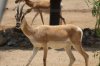
Addra (6)_Original.jpeg
Addra Gazelle (Nanger dama)

I made it in time for the 10:30am showing of their bird presentation, Journey Into the Wild. The show highlights species from various ecosystems around the world— rainforests, grasslands, etc. In the show are some expected species: macaws, raptors (Harris’ hawk and black vulture), toucans. They also included a grey crowned crane, which is a lovely species I’d never seen in a bird show before. After the show, I made my way up through Gorilla Forest and its adjacent aviary, which prominently displays white-fronted bee eaters alongside some other species, including the gorgeous chestnut-backed thrush, a species I’d been wanting to see for quite some time!

East African Crowned Crane (10)_Original.jpeg
Black Crowned Crane (Balearica pavonina)
IMG_8553.jpeg
Western Lowland Gorilla (Gorilla gorilla gorilla)

Next was Hidden Jungle, one of the exhibits I was really looking forward to seeing again. In the weeks leading up to my visit, I was a bit concerned the building wouldn’t be open having read on the forums that it’s only open seasonally, or closed for some reason, or only open for their temporary butterfly habitat— whatever the reason, thankfully that was not the case on my visit! Hidden Jungle is, essentially, two greenhouses filled with plenty of little colorful birds! As a lover of these little colorful birds, I gladly spent 40 minutes just looking around and spotting the many birds I could find (for all that I saw, there were many more that were great hiders that I couldn’t find!). Among those included some of my favorites— swallow tanager, pin-tailed whydah, as well as some new species— Cuban grassquit, golden-fronted leafbird, etc. Since Hidden Jungle didn’t satisfy my bird itch, I was thrilled to advance to the Rainforest Aviary, first stopping by the two standalone avaries by it, home to the park’s kagu along with some other species (great blue turaco, Malayan great Argus, etc.). The Rainforest Aviary is home to some notable species— Madagascar crested ibis, Socorro dove, pompadour cotinga. On my visit, most of my attention was directed to the red-breasted geese who had decided on the path and terrorize any visitor who dared step too close. I was also struck by the African spoonbills that seemed to be comfortable quite close to guests!

The combination of the African Woods and African Outpost is one of my favorite zoo ‘walks’. I think the exhibits are gorgeous, the layout and windings of the path is pleasing to stroll through, the species lineup is wonderful— throw in a sweet breeze and the vibes are just immaculate. I find that the views into the hoofstock yards allow for good photos, and there’s no hiding that there are some special species present for hoofstock lovers— Nubian Soemmering’s gazelle and gerenuk to name some. Sure, giant eland and steenbok may no longer be present, but if we continue to dwell on what was, how would we enjoy what is? :p There was also an Egyptian vulture present on my visit, though it doesn’t seem to be there still according to ZTL— a bit of a shame, because that’s a damn cool bird. Moving along, I noticed the large waterfowl lakes in African Outpost were noticeably empty of the lesser flamingos I remembered from my last visit— perhaps these were the birds moved up to the front of the park (where there used to be Chilean flamingos, if I’m remembering correctly)?

IMG_8977.jpeg
Nubian Soemmerring’s Gazelle (Nanger soemmerringii soemmerringii)

Up to here, barring the African tram ride, is practically everything I saw the last time I visited the safari park. I decided doing against the tram ride at that point in my visit due to how I’d scheduled my visit, and continued into the unknown. It’s a long, hot walk to the other side of the safari park. There’s some great views into the African savanna as you pass by the camping area and, at the time, there was also a path leading into the elephant viewing as Elephant Valley undergoes construction. That same viewing doesn’t seem to be on the current map on the safari park’s website, so I wonder if that’s been closed since? Anyhow, it wasn’t the most pleasant walk up the hill and in the day’s heat.

Tiger Trail is a pretty solid and high quality Sumatran tiger habitat, I appreciated the variety of viewing opportunities present and how many animals the safari park had— I feel that I never see more than just one or two lounging cats on an average zoo visit, but the tigers today were quite active, I even got a good view of one gnawing on some carcass! Other than that, no comments, I liked it. I also liked Condor Ridge! I think the natural landscape of Escondido lends well to how they were able to shape the visuals of the exhibit and its surrounding gardens, but I really enjoyed walking through the exhibit. I love seeing California condors, I think they’re just such impressive birds, (like any large raptor, really) and the conservation story behind their presence just makes the experience so much more significant. I also enjoyed that I was able to get a pretty close view of their herd of desert bighorn sheep!

IMG_9240.jpeg
Sumatran Tiger (Panthera tigris sondaica)
IMG_9344.jpeg
California Condor (Gymnogyps californianus)

Now, one of the highlights of my trip and one of the moments I was so looking forward to— Walkabout Australia! Now, it’s a well-themed and well-built complex in general with an expected cast of species— Western grey kangaroo, Southern cassowary, Matschie’s tree kangaroo, a few birds, etc. But what we all know makes this complex special is the pair of platypus that call the safari park home!! You enter a ‘cave’ in order to see the platypus darting around in their nocturnal exhibit, which is really just so amazing to see. I found them to be really fast swimmers and a lot smaller than I thought they’d be. I really loved watching them. I also had the most interesting conversation with the volunteer/docent posted there. He was an older man, said he’d retired working at some sort of construction (cement, I think it was?) company that did projects down at the zoo, or safari park, or SeaWorld— my memory’s a bit fuzzy. But what was…odd…about our conversation is that he claimed the safari park got their pair of platypus from the Irwin family at the Australia Zoo? Which, it seems pretty well-reported that the animals came from their Taronga Zoo in Sydney :p. When I mentioned that fact he said something along the lines of “No, no, they didn’t— but that’s their zoo too. But they love coming here, especially Robert he’s here all the time”. Like, what?? Of course, I’m not disputing the visiting habits of the Irwin family to the San Diego parks but I’m a bit perplexed how someone representing the zoo could be so far off the mark?? But, hey, maybe the media coverage is all wrong— but what do I know, I wasn’t there when it all happened :P

Finishing Walkabout Australia completed my loop around the safari park, leaving me with just one last stop— the African Plains….and! And! The Asian Savanna! I booked the 4:15 cart safari, which required me to check in to their booth pretty early, so I planned to finish the rest of the park before making it back over to the safari station, and then to catch the last African Plains tram after my cart tour. The tour was wonderful— the guide was well-versed and friendly, and the exhibit is really just one of a kind! Acres upon acres of Indian rhinos (so many rhinos— including some calves!), herds of banteng, Bactrian deer, blackbuck, nilgai, to name a few! And you can’t forget the Nilgiri tahr that are the only herd on public display in the world! In addition to the main Asian savanna yards, the tour showed us a few of the smaller yards for individual rhinos, hillside exhibits for Transcapian urial, Nubian ibex, Arabian oryx, Przewalski’s horse— the latter two species mentioned as part of the park’s strong conservation efforts.

IMG_9652.jpeg
Indian Rhino (Rhinoceros unicornis)

The tour ended approximately at 5:45, and I made it in the nick of time for the final 6:00 tram tour (coincidentally the same thing happened during my last visit!). It was extremely close and risky, but the requirement for me to check in to the cart safari early by, I think it was, half an hour made even riskier for me to try and go before that tour. Regardless, I made it in time. The beginning portion of the tram tour was also covered in my cart safari, as we had to pass by the East Africa, Bird Delta, and North Africa yards— and maybe even the white rhino center? A bit of an aside, but during the cart tour, the guide explained to us that as we passed the flamingo pond that the flamingos, which used to have full access to the large lake, had significantly improved breeding success when restricted to a smaller portion of the area, as they were apparently uncomfortable with such a wide area to roam! The tram tour is obviously a must-do for anyone visiting the park, with multiple yards highlighting hoofstock from various regions of Africa. Breeding herds of many species inhabit the yards, and you’re sure to see calves of all different species during your visit. From my visit, I recall seeing Cape buffalo and Thomson’s gazelle calves. The yards are also home to some notable species, including the Somali wild ass, Barbary deer (which I didn’t see), red-fronted gazelle (which I luckily caught and snapped a few images of right before my camera died!), and the Uganda kob (I also missed these— totally forgot to look out for them with all there was on my mind).

IMG_9874.jpeg
Southern Sable Antelope (Hippotragus niger niger)

After the tour, I made my way back up front for a necessary gift shop visit before ending an incredibly satisfying visit! The safari park has landed itself as one of my favorite zoos, and I’m definitely planning to return in the future— and maybe indulge in some of the special safaris/overnight stays they offer!

8:00pm - San Diego

Dinner was simple, we went to one of the Vietnamese restaurants my dad frequented on past business trips to San Diego. Unfortunately, I don’t remember the name of the place, but I had myself a mediocre Thai tea (7/10), an incredibly delicious plate of calamari (served with some cilantro, jalapeño, and fried garlic that was a great touch), and a chicken yellow curry soup with vermicelli since I hadn’t gotten over my craving for the khao poon the night before. A satisfying way to end the day.

IMG_4411.jpeg
 

Attachments

  • IMG_4397.jpeg
    IMG_4397.jpeg
    44.6 KB · Views: 22
  • IMG_8553.jpeg
    IMG_8553.jpeg
    130.6 KB · Views: 25
  • East African Crowned Crane (10)_Original.jpeg
    East African Crowned Crane (10)_Original.jpeg
    95.8 KB · Views: 22
  • Addra (6)_Original.jpeg
    Addra (6)_Original.jpeg
    180.3 KB · Views: 22
  • IMG_9240.jpeg
    IMG_9240.jpeg
    139.9 KB · Views: 22
  • IMG_9652.jpeg
    IMG_9652.jpeg
    187.9 KB · Views: 22
  • IMG_9344.jpeg
    IMG_9344.jpeg
    97.7 KB · Views: 24
  • IMG_8977.jpeg
    IMG_8977.jpeg
    98.4 KB · Views: 23
  • IMG_4411.jpeg
    IMG_4411.jpeg
    103.7 KB · Views: 25
  • IMG_9874.jpeg
    IMG_9874.jpeg
    138 KB · Views: 23
Back
Top