Day 8 - Friday, July 12 - San Diego Zoo Safari Park
8:30am - San Diego
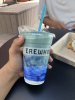
A bit of a disappointing start to the morning, I’m sad to report. We began the day at Selva Coffee House for the drink of the day, which is a really aesthetic and pretty shop located in a local plant nursery. They had lots of really interesting drinks, but I opted for an ube latte, having liked the ones I had earlier on in the trip. Their version of an ube latte, however, was just ube flavored milk, so I added a a shot of espresso into my drink. It wasn’t a great latte, which is pretty disappointing considering the rather unbroken streak of great coffee I had during the week. Had a rather flat and watered-down flavor, which I just did not enjoy (6.5/10). Selva found themselves a bit of redemption, however, with the ube concha (a Mexican sweet bread) I had along with the drink— that was incredibly soft and fluffy with the perfect amount of sweetness. I also appreciate the shop for not upcharging alternative milks (e.g. soy, oat, almond)— other cafes should definitely follow suit with that…

9:30am - Escondido
My story with the safari park is the same as the zoo’s: I visited it for the first time back in 2019, and wasn’t able to finish it then, so it was important to me to finally see the entire park. Having arrived when I did with a plan to stay until close (7pm), I was sure to achieve that.
While I was hoping for my first stop to be the Wings of the World Aviary, it was closed and emptied during my visit for renovations. The next few exhibits on that entry path (Safari Walk) were empty as well, so my first animal sighting came at the flamingo pond, where I watched a flock of lesser flamingos and some keepers tend to their nests and eggs. Joining the flamingos were a few waterfowl species (of which the safari park has plenty), including white-faced whistling duck and Hawaiian geese.
The Nairobi Village a bit less exciting than I recall it was five years prior— which is not to say that it’s any worse of an exhibit. It’s a series of small yards, aviaries, terrariums, and for a variety of species: rhinoceros hornbill, dwarf mongoose, Madagascar tree boa, babirusa etc. It’s missing the palm nut vultures now, though

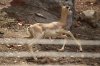
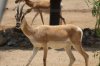
. The nursery kraal, as they call it, held two juvenile (duh) animals— a red-flanked duiker and a really energetic, zoomy addra. The pen was much livelier on my first visit, my photos from then show: young addra, Vietnamese sika, red lechwe, and Cuvier’s gazelle. The lagoons (large waterfowl ponds) are still a fun sight with the many birds inhabiting them, though there’s no longer any shoebill at the park

. There is, however, another incredibly rare and beautiful stork (both in captivity and the wild) on display: the Storm’s stork. I caught a short glimpse of their individual in the back pen of one of the waterfowl ponds and was told by a keeper that it is usually kept back there and visible during its feedings.
 Addra Gazelle (Nanger dama)
I made it in time for the 10:30am showing of their bird presentation, Journey Into the Wild. The show highlights species from various ecosystems around the world— rainforests, grasslands, etc. In the show are some expected species: macaws, raptors (Harris’ hawk and black vulture), toucans. They also included a grey crowned crane, which is a lovely species I’d never seen in a bird show before. After the show, I made my way up through Gorilla Forest and its adjacent aviary, which prominently displays white-fronted bee eaters alongside some other species, including the gorgeous chestnut-backed thrush, a species I’d been wanting to see for quite some time!
 Black Crowned Crane (Balearica pavonina)
 Western Lowland Gorilla (Gorilla gorilla gorilla)
Next was Hidden Jungle, one of the exhibits I was really looking forward to seeing again. In the weeks leading up to my visit, I was a bit concerned the building wouldn’t be open having read on the forums that it’s only open seasonally, or closed for some reason, or only open for their temporary butterfly habitat— whatever the reason, thankfully that was not the case on my visit! Hidden Jungle is, essentially, two greenhouses filled with plenty of little colorful birds! As a lover of these little colorful birds, I gladly spent 40 minutes just looking around and spotting the many birds I could find (for all that I saw, there were many more that were great hiders that I couldn’t find!). Among those included some of my favorites— swallow tanager, pin-tailed whydah, as well as some new species— Cuban grassquit, golden-fronted leafbird, etc. Since Hidden Jungle didn’t satisfy my bird itch, I was thrilled to advance to the Rainforest Aviary, first stopping by the two standalone avaries by it, home to the park’s kagu along with some other species (great blue turaco, Malayan great Argus, etc.). The Rainforest Aviary is home to some notable species— Madagascar crested ibis, Socorro dove, pompadour cotinga. On my visit, most of my attention was directed to the red-breasted geese who had decided on the path and terrorize any visitor who dared step too close. I was also struck by the African spoonbills that seemed to be comfortable quite close to guests!
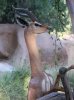
The combination of the African Woods and African Outpost is one of my favorite zoo ‘walks’. I think the exhibits are gorgeous, the layout and windings of the path is pleasing to stroll through, the species lineup is wonderful— throw in a sweet breeze and the vibes are just immaculate. I find that the views into the hoofstock yards allow for good photos, and there’s no hiding that there are some special species present for hoofstock lovers— Nubian Soemmering’s gazelle and gerenuk to name some. Sure, giant eland and steenbok may no longer be present, but if we continue to dwell on what was, how would we enjoy what is?
There was also an Egyptian vulture present on my visit, though it doesn’t seem to be there still according to ZTL— a bit of a shame, because that’s a damn cool bird. Moving along, I noticed the large waterfowl lakes in African Outpost were noticeably empty of the lesser flamingos I remembered from my last visit— perhaps these were the birds moved up to the front of the park (where there used to be Chilean flamingos, if I’m remembering correctly)?
 Nubian Soemmerring’s Gazelle (Nanger soemmerringii soemmerringii)
Up to here, barring the African tram ride, is practically everything I saw the last time I visited the safari park. I decided doing against the tram ride at that point in my visit due to how I’d scheduled my visit, and continued into the unknown. It’s a long, hot walk to the other side of the safari park. There’s some great views into the African savanna as you pass by the camping area and, at the time, there was also a path leading into the elephant viewing as Elephant Valley undergoes construction. That same viewing doesn’t seem to be on the current map on the safari park’s website, so I wonder if that’s been closed since? Anyhow, it wasn’t the most pleasant walk up the hill and in the day’s heat.
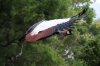
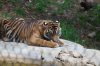
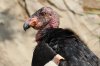
Tiger Trail is a pretty solid and high quality Sumatran tiger habitat, I appreciated the variety of viewing opportunities present and how many animals the safari park had— I feel that I never see more than just one or two lounging cats on an average zoo visit, but the tigers today were quite active, I even got a good view of one gnawing on some carcass! Other than that, no comments, I liked it. I also liked Condor Ridge! I think the natural landscape of Escondido lends well to how they were able to shape the visuals of the exhibit and its surrounding gardens, but I really enjoyed walking through the exhibit. I love seeing California condors, I think they’re just such impressive birds, (like any large raptor, really) and the conservation story behind their presence just makes the experience so much more significant. I also enjoyed that I was able to get a pretty close view of their herd of desert bighorn sheep!
 Sumatran Tiger (Panthera tigris sondaica)
 California Condor (Gymnogyps californianus)
Now, one of the highlights of my trip and one of the moments I was so looking forward to— Walkabout Australia! Now, it’s a well-themed and well-built complex in general with an expected cast of species— Western grey kangaroo, Southern cassowary, Matschie’s tree kangaroo, a few birds, etc. But what we all know makes this complex special is the pair of platypus that call the safari park home!! You enter a ‘cave’ in order to see the platypus darting around in their nocturnal exhibit, which is really just so amazing to see. I found them to be really fast swimmers and a lot smaller than I thought they’d be. I really loved watching them. I also had the most interesting conversation with the volunteer/docent posted there. He was an older man, said he’d retired working at some sort of construction (cement, I think it was?) company that did projects down at the zoo, or safari park, or SeaWorld— my memory’s a bit fuzzy. But what was…odd…about our conversation is that he claimed the safari park got their pair of platypus from the Irwin family at the Australia Zoo? Which, it seems pretty well-reported that the animals came from their Taronga Zoo in Sydney
. When I mentioned that fact he said something along the lines of “No, no, they didn’t— but that’s their zoo too. But they love coming here, especially Robert he’s here all the time”. Like, what?? Of course, I’m not disputing the visiting habits of the Irwin family to the San Diego parks but I’m a bit perplexed how someone representing the zoo could be so far off the mark?? But, hey, maybe the media coverage is all wrong— but what do I know, I wasn’t there when it all happened
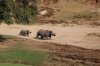
Finishing Walkabout Australia completed my loop around the safari park, leaving me with just one last stop— the African Plains….and! And! The Asian Savanna! I booked the 4:15 cart safari, which required me to check in to their booth pretty early, so I planned to finish the rest of the park before making it back over to the safari station, and then to catch the last African Plains tram after my cart tour. The tour was wonderful— the guide was well-versed and friendly, and the exhibit is really just one of a kind! Acres upon acres of Indian rhinos (so many rhinos— including some calves!), herds of banteng, Bactrian deer, blackbuck, nilgai, to name a few! And you can’t forget the Nilgiri tahr that are the only herd on public display in the world! In addition to the main Asian savanna yards, the tour showed us a few of the smaller yards for individual rhinos, hillside exhibits for Transcapian urial, Nubian ibex, Arabian oryx, Przewalski’s horse— the latter two species mentioned as part of the park’s strong conservation efforts.
 Indian Rhino (Rhinoceros unicornis)
The tour ended approximately at 5:45, and I made it in the nick of time for the final 6:00 tram tour (coincidentally the same thing happened during my last visit!). It was extremely close and risky, but the requirement for me to check in to the cart safari early by, I think it was, half an hour made even riskier for me to try and go before that tour. Regardless, I made it in time. The beginning portion of the tram tour was also covered in my cart safari, as we had to pass by the East Africa, Bird Delta, and North Africa yards— and maybe even the white rhino center? A bit of an aside, but during the cart tour, the guide explained to us that as we passed the flamingo pond that the flamingos, which used to have full access to the large lake, had significantly improved breeding success when restricted to a smaller portion of the area, as they were apparently uncomfortable with such a wide area to roam! The tram tour is obviously a must-do for anyone visiting the park, with multiple yards highlighting hoofstock from various regions of Africa. Breeding herds of many species inhabit the yards, and you’re sure to see calves of all different species during your visit. From my visit, I recall seeing Cape buffalo and Thomson’s gazelle calves. The yards are also home to some notable species, including the Somali wild ass, Barbary deer (which I didn’t see), red-fronted gazelle (which I luckily caught and snapped a few images of right before my camera died!), and the Uganda kob (I also missed these— totally forgot to look out for them with all there was on my mind).
 Southern Sable Antelope (Hippotragus niger niger)
After the tour, I made my way back up front for a necessary gift shop visit before ending an incredibly satisfying visit! The safari park has landed itself as one of my favorite zoos, and I’m definitely planning to return in the future— and maybe indulge in some of the special safaris/overnight stays they offer!
8:00pm - San Diego
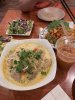
Dinner was simple, we went to one of the Vietnamese restaurants my dad frequented on past business trips to San Diego. Unfortunately, I don’t remember the name of the place, but I had myself a mediocre Thai tea (7/10), an incredibly delicious plate of calamari (served with some cilantro, jalapeño, and fried garlic that was a great touch), and a chicken yellow curry soup with vermicelli since I hadn’t gotten over my craving for the khao poon the night before. A satisfying way to end the day.


 .
. . The other moment was a bit more exciting, however. Monterey, in my opinion, ranks up there in terms of zoo food (there’s a thread on that somewhere, no?). Though a bit on the pricier side, (or not, this is California) my dad and I shared some seafood paella and king salmon poke. Their focus on sustainable seafood led to some rather commendable culinary choices, specifically the red seaweed salad that came with the poke. Not sure what kind of seaweed it was, but I’m assuming it was locally collected? Whatever it was, it was good. Oh! And the meal was made even better with our view out into the bay, where we watched a seal lounge and some birds float by.








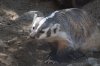
 ). A close second would be their personable American badger, (Midas, I think was his name?) who loves to observe and interact with visitors.