I confirm the mistletoe identification, looks identical to the British one.
You are using an out of date browser. It may not display this or other websites correctly.
You should upgrade or use an alternative browser.
You should upgrade or use an alternative browser.
Chlidonias Goes To Asia, part seven: 2024-2025
- Thread starter Chlidonias
- Start date

I just looked it up - the Japanese Mistletoe is the same species as the European one, Viscum album, but of the East Asian subspecies coloratum (treated as a distinct species in some sources).I confirm the mistletoe identification, looks identical to the British one.

I just looked it up - the Japanese Mistletoe is the same species as the European one, Viscum album, but of the East Asian subspecies coloratum (treated as a distinct species in some sources).
Had that Japanese region you visited big problems with mistletoe invasion? Because in parts of my country, mistletoe got "invasive" in last decade (despite being native here, go figure) to the point it destroys large amount of grown trees, decimating both city parks and dispersed trees and windbreaks in countryside. It´s quete distressing to see dying trees everywhere so mistletoe pics trigger sort of pstd reaction in me.
I don't think so. I saw it here and there on trees, and it was obvious because the trees were otherwise bare of leaves, but I didn't see lots of it.Had that Japanese region you visited big problems with mistletoe invasion? Because in parts of my country, mistletoe got "invasive" in last decade (despite being native here, go figure) to the point it destroys large amount of grown trees, decimating both city parks and dispersed trees and windbreaks in countryside. It´s quete distressing to see dying trees everywhere so mistletoe pics trigger sort of pstd reaction in me.
Kogawa Dam (Izumi)
There are two main birding sites at Izumi, one obviously being the cranes at Arasaki, and the other being Kogawa Dam which is about 10km east of town. As the name suggests this is a dam, but it is surrounded by forest and there is a road running right around the dam's lake.
Most birders drive out there from town. My idea was to just walk there. I had found a walking route on the internet called the Olle Trail which runs from Izumi along a small river and past the dam. This had the double benefit of being free and of probably being good bird habitat along the way.
In the morning I thought I'd check at the hotel reception to see how much a taxi would cost to get out there. It might be better to get to the dam early, and then walk back. The person at the desk looked up on his computer and said it was an hour's drive. That couldn't be right, I said, it's only 10km. He looked confused in return, and showed me the driving-route map on his screen, where the end-point was at the bottom of the dam's lake. I said the dam is at the top of the lake. He said it wasn't (it totally is!). I decided that this sounded like a recipe for taxi driver confusion and elected to walk both there and back.
To start with I walked from the hotel straight west to the river, and turned left to follow the pedestrian walkway which runs alongside. The river turned out to be very ducky - Mallards, Spot-billed Ducks, and to my surprise two pairs of Falcated Ducks. There were two species of ducks I particularly wanted to see in Japan (well, more than two, but the others were in Hokkaido). One was the Falcated Duck and the other was the Baikal Teal. Male Falcated Ducks are fantastic birds, with bright green heads and curving feathers like talons splaying out over their tail. All the bird reports talk about the moats of the Imperial Palace in Tokyo as the place to see these, so I had that down in my plans as a must-visit. Yet here they were just chilling out on a shallow rocky river in the middle of Izumi.

My first Falcated Duck
Further up the river there was a weir behind which the water became deeper, on which were scattered groups of Common Teal, Wigeon, and Pochards. The road and river parted company for a short distance, but when they rejoined the river had become more of a broad pool - too small for a lake but too still for a river. There were lots more Falcated Ducks here, maybe a dozen of them, along with bigger numbers of all the others too. And while I was scanning through the Mallards floating under the overhanging branches at the far bank, there was a male Baikal Teal! Both of my "most-wanted" Japanese ducks on my second day.
Also, I'd just like to say how beautiful pure male Mallards are! In New Zealand all our Mallards are manky hybrid things, mixed up with the native Grey Duck so much that probably neither occurs in pure form any more. When I see pure wild Mallards in their native lands it is astonishing how attractive they are. If they weren't the "common" duck, everybody would be trying to see them.

Mallards (these ones were photographed on Kogawa Dam the next day rather than today on the river)
The walk along the river is just a straight line until it suddenly turns sharply to the left and becomes the 447 road, which leads to the Kogawa Dam. Directly before that left turn is a large bridge on the right, which I took, and then on the other side followed the road a short distance to a narrow road on the left. This is the route for the Olle Trail (which started earlier in Izumi at the Samurai Residences). The road is drivable I guess but is mostly a walking route. It crosses another bridge over a small creek, on the other side of which was a big flock of Bramblings on the powerlines, and then continues on through mostly rough cultivated land. I saw a family of White-naped Cranes in one of the fields.
Soon I came to a bridge crossing the river on my left. The road itself continued onwards on the side of the river I was on. I had a vague memory of the instructions for the Olle Trail mentioning this bridge but I couldn't remember if I was supposed to take it or not. I had saved the map of the route on my phone but not the written instructions, because who needs those? It looked like the whole route was on the right side of the river, so I continued on.
The walk is a really nice one. The part before that bridge is mostly rough fields and so forth, but the section after passing the bridge follows the river much more closely and goes through nice forest. I was surprised to see Pekin Robins because I only associate them with China. I startled a pair of Mandarin Ducks as well, and they flew on further up the river where I later scared them again. Mandarin Ducks are one of the main reasons birders go to Kogawa Dam. I've seen them before (in China) so wouldn't have been bothered if I hadn't seen them at the dam, but it was nice to see them anyway.
Eventually the road ended at a little water plant sort of building. I scouted around it but there was no track leading from the end of the road or along the river. This was confusing. I guess I was supposed to have taken that bridge after all. As I was heading back the way I'd come I stopped at a worker's van parked beside the road and asked the driver if this was the end of the trail. He immediately led me across to a set of steps on the hillside which, once he'd pointed them out, were clearly a trail marked with coloured ribbons. It seemed that this was a track going over the hill and joining up with the next section of road.
This track ... well, it wasn't fun. It went dead straight up the hill, and straight down again. There wasn't more than four or five feet of it that was flat, and most of it did not seem safe at all! It was like someone was instructed to create a track that was technically walkable, but to also make it a death-trap. It took me about forty minutes and to make it worse, when I came out at the river again I could literally still see that water plant building. Even worse than that, the other side of the river bank was flat. They could have literally just put in a foot-bridge to that side, cut out a track in no time, and then had another foot-bridge back to this side. It would have taken less time and cost less than making the murder-track that they did.
The track continued on up the river through the forest, still rough but at least not vertical, then came out at a fence which it skirted around, and then ... it ended. All along this track there had been "rescue point" signs, and I was now at the Olle Trail Rescue Point 1 sign. But there was nowhere to go. The fence looked brand new. It seemed almost as if a land-owner had got sick of walkers and stuck a fence up to block them. I stood there looking around in bewilderment, wondering what I was missing. The fence was made of panels of square mesh (like deer fencing) wired together on metal poles - too high to jump over but not sturdy enough to climb over without being skewered by the metal ends on top. I really didn't want to go back the way I had come over the hill, so I tried going around the other side but the fence kept going, then tried along the river but the passage along the banks became blocked.
I returned to the trail, strumming at the fence in frustration as I walked along it, hoping it might accidentally fall down. Wait, there was a carabiner on the wire. There was a hidden gate! I felt pretty stupid, but the gate was just another mesh panel exactly like the rest of the fence, and the "hinges" were just the same strands of wire used to hold all the other panels together. It was basically invisible.
As I was going through, I saw a hiker coming the other way. When we met I asked if this was the Olle Trail and he said it was. Being considerate, I warned him that the trail ahead was "very steep". I looked back when he got to the fence, and even though he'd had the benefit of having seen me coming through, he was still clearly having a struggle to find where the gate actually was.
The trail on this side of the fence was once again wide and easy, and shortly came out onto a paved road at another little bridge. To the left it led to the 447 road, and to the right up to the dam after about a kilometre or so.
I didn't get very far around the reservoir today, and actually didn't see any birds there which I hadn't seen earlier in the day whilst walking along the Olle Trail. Instead I was detained by badgers.
While walking around the lake, the uphill side is typically very uphill, with the slope mostly ranging from steep to cliff. While I was paused trying to unsuccessfully locate a woodpecker I could hear drumming, I was instead distracted by the sound of something moving about in the forest up the hill. The crunching of the dry leaves on the ground and the sound of loose dirt and stones cascading down the slope made it clear that "something" was moving about up there.
Whatever it was sounded very large indeed. I was mentally going through the large mammals of Japan and kept coming back to bear. I didn't think Sika would be on such steep slopes. Serow would but I didn't think there were any in this place. I wanted to see a bear, but I also was pretty wary about one suddenly popping out from the forest because the noise made it sound close and getting closer.
For half an hour I lurked below this slope, trying to see something - anything - moving up there. There was a flock of Pekin Robins which kept sending little showers of stones down the cliff which fronted the slope, as they foraged around the base of plants, but it wasn't them making all the noise.
The beast above was, as far as I could tell, moving along the top of the slope. I positioned myself where I could see a wide open area where whatever it was would hopefully have to cross as it headed that way. I didn't have to wait long. Some sort of long brown mustelid loped across and disappeared. I just got a glimpse of it - it had looked like an otter, which didn't seem likely at all. Fortunately it quickly reappeared, again for just a few seconds, but this time I saw it well enough to see that it was a Japanese Badger.
This was very much not what I was expecting it to be. Not only was it many times smaller than what I was expecting from all the noise, but it was also the middle of the day (about 2pm, I think). It was a frustrating sighting as well, given that I only saw it for a few seconds.
Immediately, though, another cascade of stones came down the cliff to my left. This time I knew what I was looking for. Not some big scary beast, but a small snuffly one. I quickly located the source of the noise - a second badger! For the next hour I watched it foraging all over the top half of the cliff, sometimes going up over the top and then coming back down again, almost always in or under the leaf litter which was collected around the bases of the trees and shrubs on the cliff front. Interestingly, the Pekin Robins were constantly flitting around it, presumably snatching small insects scared up by the badger's digging.
The photographs I got of the badger were all really bad. It was maybe fifty feet up from the road, and most of the time it was half-obscured by branches or leaves or whatever. The two below were the best of the lot, one showing its cute stripy face, and the other worse one showing the body. They don't look like they are up a cliff either, but you can see the rock-face behind the badger in the first photo.


There are two main birding sites at Izumi, one obviously being the cranes at Arasaki, and the other being Kogawa Dam which is about 10km east of town. As the name suggests this is a dam, but it is surrounded by forest and there is a road running right around the dam's lake.
Most birders drive out there from town. My idea was to just walk there. I had found a walking route on the internet called the Olle Trail which runs from Izumi along a small river and past the dam. This had the double benefit of being free and of probably being good bird habitat along the way.
In the morning I thought I'd check at the hotel reception to see how much a taxi would cost to get out there. It might be better to get to the dam early, and then walk back. The person at the desk looked up on his computer and said it was an hour's drive. That couldn't be right, I said, it's only 10km. He looked confused in return, and showed me the driving-route map on his screen, where the end-point was at the bottom of the dam's lake. I said the dam is at the top of the lake. He said it wasn't (it totally is!). I decided that this sounded like a recipe for taxi driver confusion and elected to walk both there and back.
To start with I walked from the hotel straight west to the river, and turned left to follow the pedestrian walkway which runs alongside. The river turned out to be very ducky - Mallards, Spot-billed Ducks, and to my surprise two pairs of Falcated Ducks. There were two species of ducks I particularly wanted to see in Japan (well, more than two, but the others were in Hokkaido). One was the Falcated Duck and the other was the Baikal Teal. Male Falcated Ducks are fantastic birds, with bright green heads and curving feathers like talons splaying out over their tail. All the bird reports talk about the moats of the Imperial Palace in Tokyo as the place to see these, so I had that down in my plans as a must-visit. Yet here they were just chilling out on a shallow rocky river in the middle of Izumi.
My first Falcated Duck
Further up the river there was a weir behind which the water became deeper, on which were scattered groups of Common Teal, Wigeon, and Pochards. The road and river parted company for a short distance, but when they rejoined the river had become more of a broad pool - too small for a lake but too still for a river. There were lots more Falcated Ducks here, maybe a dozen of them, along with bigger numbers of all the others too. And while I was scanning through the Mallards floating under the overhanging branches at the far bank, there was a male Baikal Teal! Both of my "most-wanted" Japanese ducks on my second day.
Also, I'd just like to say how beautiful pure male Mallards are! In New Zealand all our Mallards are manky hybrid things, mixed up with the native Grey Duck so much that probably neither occurs in pure form any more. When I see pure wild Mallards in their native lands it is astonishing how attractive they are. If they weren't the "common" duck, everybody would be trying to see them.
Mallards (these ones were photographed on Kogawa Dam the next day rather than today on the river)
The walk along the river is just a straight line until it suddenly turns sharply to the left and becomes the 447 road, which leads to the Kogawa Dam. Directly before that left turn is a large bridge on the right, which I took, and then on the other side followed the road a short distance to a narrow road on the left. This is the route for the Olle Trail (which started earlier in Izumi at the Samurai Residences). The road is drivable I guess but is mostly a walking route. It crosses another bridge over a small creek, on the other side of which was a big flock of Bramblings on the powerlines, and then continues on through mostly rough cultivated land. I saw a family of White-naped Cranes in one of the fields.
Soon I came to a bridge crossing the river on my left. The road itself continued onwards on the side of the river I was on. I had a vague memory of the instructions for the Olle Trail mentioning this bridge but I couldn't remember if I was supposed to take it or not. I had saved the map of the route on my phone but not the written instructions, because who needs those? It looked like the whole route was on the right side of the river, so I continued on.
The walk is a really nice one. The part before that bridge is mostly rough fields and so forth, but the section after passing the bridge follows the river much more closely and goes through nice forest. I was surprised to see Pekin Robins because I only associate them with China. I startled a pair of Mandarin Ducks as well, and they flew on further up the river where I later scared them again. Mandarin Ducks are one of the main reasons birders go to Kogawa Dam. I've seen them before (in China) so wouldn't have been bothered if I hadn't seen them at the dam, but it was nice to see them anyway.
Eventually the road ended at a little water plant sort of building. I scouted around it but there was no track leading from the end of the road or along the river. This was confusing. I guess I was supposed to have taken that bridge after all. As I was heading back the way I'd come I stopped at a worker's van parked beside the road and asked the driver if this was the end of the trail. He immediately led me across to a set of steps on the hillside which, once he'd pointed them out, were clearly a trail marked with coloured ribbons. It seemed that this was a track going over the hill and joining up with the next section of road.
This track ... well, it wasn't fun. It went dead straight up the hill, and straight down again. There wasn't more than four or five feet of it that was flat, and most of it did not seem safe at all! It was like someone was instructed to create a track that was technically walkable, but to also make it a death-trap. It took me about forty minutes and to make it worse, when I came out at the river again I could literally still see that water plant building. Even worse than that, the other side of the river bank was flat. They could have literally just put in a foot-bridge to that side, cut out a track in no time, and then had another foot-bridge back to this side. It would have taken less time and cost less than making the murder-track that they did.
The track continued on up the river through the forest, still rough but at least not vertical, then came out at a fence which it skirted around, and then ... it ended. All along this track there had been "rescue point" signs, and I was now at the Olle Trail Rescue Point 1 sign. But there was nowhere to go. The fence looked brand new. It seemed almost as if a land-owner had got sick of walkers and stuck a fence up to block them. I stood there looking around in bewilderment, wondering what I was missing. The fence was made of panels of square mesh (like deer fencing) wired together on metal poles - too high to jump over but not sturdy enough to climb over without being skewered by the metal ends on top. I really didn't want to go back the way I had come over the hill, so I tried going around the other side but the fence kept going, then tried along the river but the passage along the banks became blocked.
I returned to the trail, strumming at the fence in frustration as I walked along it, hoping it might accidentally fall down. Wait, there was a carabiner on the wire. There was a hidden gate! I felt pretty stupid, but the gate was just another mesh panel exactly like the rest of the fence, and the "hinges" were just the same strands of wire used to hold all the other panels together. It was basically invisible.
As I was going through, I saw a hiker coming the other way. When we met I asked if this was the Olle Trail and he said it was. Being considerate, I warned him that the trail ahead was "very steep". I looked back when he got to the fence, and even though he'd had the benefit of having seen me coming through, he was still clearly having a struggle to find where the gate actually was.
The trail on this side of the fence was once again wide and easy, and shortly came out onto a paved road at another little bridge. To the left it led to the 447 road, and to the right up to the dam after about a kilometre or so.
I didn't get very far around the reservoir today, and actually didn't see any birds there which I hadn't seen earlier in the day whilst walking along the Olle Trail. Instead I was detained by badgers.
While walking around the lake, the uphill side is typically very uphill, with the slope mostly ranging from steep to cliff. While I was paused trying to unsuccessfully locate a woodpecker I could hear drumming, I was instead distracted by the sound of something moving about in the forest up the hill. The crunching of the dry leaves on the ground and the sound of loose dirt and stones cascading down the slope made it clear that "something" was moving about up there.
Whatever it was sounded very large indeed. I was mentally going through the large mammals of Japan and kept coming back to bear. I didn't think Sika would be on such steep slopes. Serow would but I didn't think there were any in this place. I wanted to see a bear, but I also was pretty wary about one suddenly popping out from the forest because the noise made it sound close and getting closer.
For half an hour I lurked below this slope, trying to see something - anything - moving up there. There was a flock of Pekin Robins which kept sending little showers of stones down the cliff which fronted the slope, as they foraged around the base of plants, but it wasn't them making all the noise.
The beast above was, as far as I could tell, moving along the top of the slope. I positioned myself where I could see a wide open area where whatever it was would hopefully have to cross as it headed that way. I didn't have to wait long. Some sort of long brown mustelid loped across and disappeared. I just got a glimpse of it - it had looked like an otter, which didn't seem likely at all. Fortunately it quickly reappeared, again for just a few seconds, but this time I saw it well enough to see that it was a Japanese Badger.
This was very much not what I was expecting it to be. Not only was it many times smaller than what I was expecting from all the noise, but it was also the middle of the day (about 2pm, I think). It was a frustrating sighting as well, given that I only saw it for a few seconds.
Immediately, though, another cascade of stones came down the cliff to my left. This time I knew what I was looking for. Not some big scary beast, but a small snuffly one. I quickly located the source of the noise - a second badger! For the next hour I watched it foraging all over the top half of the cliff, sometimes going up over the top and then coming back down again, almost always in or under the leaf litter which was collected around the bases of the trees and shrubs on the cliff front. Interestingly, the Pekin Robins were constantly flitting around it, presumably snatching small insects scared up by the badger's digging.
The photographs I got of the badger were all really bad. It was maybe fifty feet up from the road, and most of the time it was half-obscured by branches or leaves or whatever. The two below were the best of the lot, one showing its cute stripy face, and the other worse one showing the body. They don't look like they are up a cliff either, but you can see the rock-face behind the badger in the first photo.

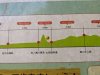
When I reached the Kogawa Dam I found a signboard for the Olle Trail which had this gradient map. That sharp spike in the middle is the murder-trail over the hill. A distance of 800 metres taking thirty to forty minutes!
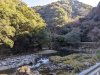
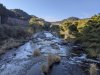
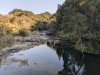
Some shots of the nicer parts of the route along the Olle Trail:


Attachments
Kogawa Dam (Izumi), again
On my third day in Izumi it was raining when I got up. I had the option of going back to Arasaki (which I would have probably done if I hadn't seen the Sandhill Cranes yet) or back to Kogawa Dam. I chose the dam because I hadn't had time to explore the forest around it yesterday - after spending so long watching and trying to photograph that badger I'd headed straight back to town because it was quite a long walk and it gets dark quite early in winter.
This time I walked to the dam via the 447 road the whole way rather than via the Olle Trail, so I would get there a bit earlier. From the hotel to the JA SS petrol station (where the side-road comes off the 447 to the dam) took an hour and fifteen minutes with only a few stops on the way along the river in town. Today there was a big mixed swarm of Barn Swallows and Asian House Martins above the river, more Falcated Ducks than yesterday, and a trio of Marsh Sandpipers. The walk along the river was as nice as yesterday, but the walk along the 447 wasn't that interesting. Getting to the dam via the Olle Trail is definitely preferable.
The reservoir at the dam is pretty big and has lots of arms, so the road around it takes quite some time to walk. There was an extremely disconcerting noise which sounded like a Predator's gurgling coming from the forest. I don't know what was making it, but it was eerie. Good thing I wasn't armed. No sport.
I got the impression there was still a badger at the same spot as yesterday. The Pekin Robins were there and I could hear some sounds of leaves being crunched, but I couldn't see anything.
The ducks at the dam are very flighty. It made me feel bad, because just by walking along the road even ducks out in the middle of the lake would suddenly take flight when they saw me. I can't imagine they are hunted here, but I guess where-ever they migrate from they are.
This was the case especially with the Baikal Teal. I had seen my first one yesterday in town. Today a flock I estimated at fifty birds exploded out from under the bank-side vegetation as I walked past, and flew out to the centre of the reservoir. Around the next bend another fifty-odd did the same thing and flew out to join the first group. I roughly counted the ones I could see out there as about a hundred birds. Around the next bend, another fifty-odd joined the growing flock. I took a photo of part of the flock out on the lake, and even though it was showing much less than half the birds there are still about a hundred birds in the photo. There must have been over two hundred Baikal Teal there.

Baikal Teal

Baikal Teal flock
The rain had held off for most of the morning - it had been raining when I first got up but had stopped by the time I left the hotel. Around midday it started up again, and just kept getting heavier. About half the walk around the dam was therefore in the rain and not much was seen, although my first Japanese Pigmy Woodpeckers were great.
The road is paved almost all the way, but the last short stretch is not. Or rather, I think it once was but maybe has now been covered over by dirt from slips. This section was pretty muddy by now. But that was fine, because as I came around one of the bends I saw a small mammal on the road - a third Japanese Badger! Again, out and about in the middle of the day. I don't know if this is a winter thing, or if they are just regularly active by day in the normal course of events.
Like the badger yesterday, this one clearly knew I was there but didn't seem to care much. The difference was that this one wasn't fifty feet up a cliff, but on the road right there ahead of me.
I followed it along the road as it trotted along sniffing for food, occasionally stopping to root into the mud or under a log. After a few hundred metres it disappeared into a drain at the side of the road which I assume it was using as one of its burrows, and I continued on my way.
Japanese Badgers used to be treated as a subspecies of the Eurasian Badger (the "regular" badger of England) which I find so strange having seen them in the flesh. They are so much smaller, a different colour entirely - although with the same striped face - and just look totally different. Watching today's one as it foraged it reminded me much more of a small Hog Badger or a large Ferret-Badger than a Eurasian Badger.

Japanese Badger
On my third day in Izumi it was raining when I got up. I had the option of going back to Arasaki (which I would have probably done if I hadn't seen the Sandhill Cranes yet) or back to Kogawa Dam. I chose the dam because I hadn't had time to explore the forest around it yesterday - after spending so long watching and trying to photograph that badger I'd headed straight back to town because it was quite a long walk and it gets dark quite early in winter.
This time I walked to the dam via the 447 road the whole way rather than via the Olle Trail, so I would get there a bit earlier. From the hotel to the JA SS petrol station (where the side-road comes off the 447 to the dam) took an hour and fifteen minutes with only a few stops on the way along the river in town. Today there was a big mixed swarm of Barn Swallows and Asian House Martins above the river, more Falcated Ducks than yesterday, and a trio of Marsh Sandpipers. The walk along the river was as nice as yesterday, but the walk along the 447 wasn't that interesting. Getting to the dam via the Olle Trail is definitely preferable.
The reservoir at the dam is pretty big and has lots of arms, so the road around it takes quite some time to walk. There was an extremely disconcerting noise which sounded like a Predator's gurgling coming from the forest. I don't know what was making it, but it was eerie. Good thing I wasn't armed. No sport.
I got the impression there was still a badger at the same spot as yesterday. The Pekin Robins were there and I could hear some sounds of leaves being crunched, but I couldn't see anything.
The ducks at the dam are very flighty. It made me feel bad, because just by walking along the road even ducks out in the middle of the lake would suddenly take flight when they saw me. I can't imagine they are hunted here, but I guess where-ever they migrate from they are.
This was the case especially with the Baikal Teal. I had seen my first one yesterday in town. Today a flock I estimated at fifty birds exploded out from under the bank-side vegetation as I walked past, and flew out to the centre of the reservoir. Around the next bend another fifty-odd did the same thing and flew out to join the first group. I roughly counted the ones I could see out there as about a hundred birds. Around the next bend, another fifty-odd joined the growing flock. I took a photo of part of the flock out on the lake, and even though it was showing much less than half the birds there are still about a hundred birds in the photo. There must have been over two hundred Baikal Teal there.
Baikal Teal
Baikal Teal flock
The rain had held off for most of the morning - it had been raining when I first got up but had stopped by the time I left the hotel. Around midday it started up again, and just kept getting heavier. About half the walk around the dam was therefore in the rain and not much was seen, although my first Japanese Pigmy Woodpeckers were great.
The road is paved almost all the way, but the last short stretch is not. Or rather, I think it once was but maybe has now been covered over by dirt from slips. This section was pretty muddy by now. But that was fine, because as I came around one of the bends I saw a small mammal on the road - a third Japanese Badger! Again, out and about in the middle of the day. I don't know if this is a winter thing, or if they are just regularly active by day in the normal course of events.
Like the badger yesterday, this one clearly knew I was there but didn't seem to care much. The difference was that this one wasn't fifty feet up a cliff, but on the road right there ahead of me.
I followed it along the road as it trotted along sniffing for food, occasionally stopping to root into the mud or under a log. After a few hundred metres it disappeared into a drain at the side of the road which I assume it was using as one of its burrows, and I continued on my way.
Japanese Badgers used to be treated as a subspecies of the Eurasian Badger (the "regular" badger of England) which I find so strange having seen them in the flesh. They are so much smaller, a different colour entirely - although with the same striped face - and just look totally different. Watching today's one as it foraged it reminded me much more of a small Hog Badger or a large Ferret-Badger than a Eurasian Badger.
Japanese Badger
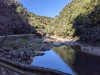
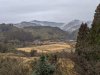
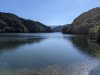
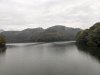
Some phone photos at the Kogawa Dam.

The view just before reaching the dam.

The reservoir on the first visit (when it was sunny).

And on the second day when it was not sunny.
The view just before reaching the dam.
The reservoir on the first visit (when it was sunny).
And on the second day when it was not sunny.
Attachments
How to get to Kogawa Dam:
For the benefit of anyone planning to or wanting to go to Izumi for the cranes, and who might want to visit the dam to look for other birds or badgers (e.g. @Dr. Wolverine and @Lafone) here is how to get there:
Taxi: this would be the easiest way. I didn’t because the hotel staff made it seem like there would be confusion. However, if you can explain or show it on a map to the driver, you simply head out of town on the 447 road and turn right at the JA SS petrol station, and that road leads right to the dam.
Bus: there is a bus that goes that way, and there is a stop right at the JA SS petrol station. The return bus is directly on the other side of the road. I don’t know which bus it is though, and it only runs about five times a day (every two to three hours). If you taxi or walk to the dam, you could catch the bus back to town afterwards. If so, check the timetable at the bus stop when you first arrive at the JA SS petrol station so you know when to be back there!
[March edit: I was back in Izumi in March and revisited the Kogawa dam. When I was returning to town I had a look at the bus timetable at the stop and there was supposed to be a bus along in five minutes. I waited for five minutes after the stated time then walked. No buses passed me in either direction on the walk back to town, so I think this bus may no longer be in commission.]
Walking from town along the 447 road: this is very straightforward. For argument’s sake we’ll start at the train station. Walk straight west(ish) from the train station to the river, turn left and follow the riverside walkway all the way to the end of this road where it makes a sharp left-hand turn – this is the 447 road (which runs through Izumi, and as you walk along the river you merge onto it without realising). Then simply continue following the 447 until you reach the JA SS petrol station. This walk took me one hour and fifteen minutes to the JA SS, with some stops along the river to look at ducks. There is a pavement almost the entire way, apart for a short stretch near the end but it is safe to walk along the side of the road. It isn’t a very interesting walk though, and it feels longer than it is because you’re just walking alongside a road. From the JA SS petrol station, you take the road directly opposite and follow it without making any turns; I think it’s about ten or fifteen minutes to the dam. Then there is a road around the entire reservoir which you can walk.
Walking from town along the Olle Trail: this is my recommended route because it is a nice walk, you will see more birds, and it doesn’t feel like a long way when you’re doing it. Any time you're passing along or over the river during the walk, keep an eye out for the large carp and salmonids which occur there - I don't know the species but the carp in particular are very conspicuous. First, find a route map for the Olle Trail. You don’t need it but it might make things easier, although the entire Olle Trail is much longer than the path I’ll describe. You can start out as above from the train station to the river and follow it along. Where the 447 road makes the sharp left, just before this on your right is a bridge with copper-green cranes on either side. Take the bridge and on the other side keep following the road to the first left-hand turn after the tunnel houses (note: not the gravel track directly beside the bridge). This left-hand road has mesh fencing either side, yellow-and-black-striped panels on the power-poles, and ahead is a bridge over a creek. Follow this road without making any turns until you come to a bridge on your left – this is the bridge to take to reach the 447 so you can bypass the murder-climb. Although I definitely do not recommend doing that climb, I do recommend following the road to the end anyway (until you reach the little water plant building) because it is a really nice walk. You will have to return back to the bridge though to continue on. Crossing the bridge, turn right to get to the 447 (the little road from the bridge goes under the 447 and comes up onto it on the other side) and just follow it along until you reach the JA SS petrol station as before.
For the benefit of anyone planning to or wanting to go to Izumi for the cranes, and who might want to visit the dam to look for other birds or badgers (e.g. @Dr. Wolverine and @Lafone) here is how to get there:
Taxi: this would be the easiest way. I didn’t because the hotel staff made it seem like there would be confusion. However, if you can explain or show it on a map to the driver, you simply head out of town on the 447 road and turn right at the JA SS petrol station, and that road leads right to the dam.
Bus: there is a bus that goes that way, and there is a stop right at the JA SS petrol station. The return bus is directly on the other side of the road. I don’t know which bus it is though, and it only runs about five times a day (every two to three hours). If you taxi or walk to the dam, you could catch the bus back to town afterwards. If so, check the timetable at the bus stop when you first arrive at the JA SS petrol station so you know when to be back there!
[March edit: I was back in Izumi in March and revisited the Kogawa dam. When I was returning to town I had a look at the bus timetable at the stop and there was supposed to be a bus along in five minutes. I waited for five minutes after the stated time then walked. No buses passed me in either direction on the walk back to town, so I think this bus may no longer be in commission.]
Walking from town along the 447 road: this is very straightforward. For argument’s sake we’ll start at the train station. Walk straight west(ish) from the train station to the river, turn left and follow the riverside walkway all the way to the end of this road where it makes a sharp left-hand turn – this is the 447 road (which runs through Izumi, and as you walk along the river you merge onto it without realising). Then simply continue following the 447 until you reach the JA SS petrol station. This walk took me one hour and fifteen minutes to the JA SS, with some stops along the river to look at ducks. There is a pavement almost the entire way, apart for a short stretch near the end but it is safe to walk along the side of the road. It isn’t a very interesting walk though, and it feels longer than it is because you’re just walking alongside a road. From the JA SS petrol station, you take the road directly opposite and follow it without making any turns; I think it’s about ten or fifteen minutes to the dam. Then there is a road around the entire reservoir which you can walk.
Walking from town along the Olle Trail: this is my recommended route because it is a nice walk, you will see more birds, and it doesn’t feel like a long way when you’re doing it. Any time you're passing along or over the river during the walk, keep an eye out for the large carp and salmonids which occur there - I don't know the species but the carp in particular are very conspicuous. First, find a route map for the Olle Trail. You don’t need it but it might make things easier, although the entire Olle Trail is much longer than the path I’ll describe. You can start out as above from the train station to the river and follow it along. Where the 447 road makes the sharp left, just before this on your right is a bridge with copper-green cranes on either side. Take the bridge and on the other side keep following the road to the first left-hand turn after the tunnel houses (note: not the gravel track directly beside the bridge). This left-hand road has mesh fencing either side, yellow-and-black-striped panels on the power-poles, and ahead is a bridge over a creek. Follow this road without making any turns until you come to a bridge on your left – this is the bridge to take to reach the 447 so you can bypass the murder-climb. Although I definitely do not recommend doing that climb, I do recommend following the road to the end anyway (until you reach the little water plant building) because it is a really nice walk. You will have to return back to the bridge though to continue on. Crossing the bridge, turn right to get to the 447 (the little road from the bridge goes under the 447 and comes up onto it on the other side) and just follow it along until you reach the JA SS petrol station as before.
Last edited:

Lafone
Well-Known Member
Arasaki Crane Observatory (Izumi)
Seeing the wintering cranes at Arasaki was one of my main "goals" for Japan. It's not a difficult goal to achieve, you just need to go there in winter and you'll see them, but not all goals need to be difficult!
There is some accommodation actually at Arasaki which would be ideal if you wanted to spend as much time there as you could just photographing cranes (say, @Lafone), but I couldn't figure out how to book it in advance, and I didn't know how I'd get there from town when I arrived at night on the bus from the airport, and it would have been awkward getting back to the train station to catch that bus at 6am on my departure morning.
The Hotel Wing International was more expensive but logistically in a better place, and it could be easily booked online (on booking. com) before leaving New Zealand. They have a free coffee machine in the lobby which was appreciated, as well as free bicycles which I thought about but didn't use, and a free laundry room. There is a restaurant by the lobby which I only used for breakfast (12,000 Yen and it's a buffet so eat as much as you like). For other meals I just bought the takeaway meals they sell at Lawson and FamilyMart, which get discounted at the end of the day. They are good meals, lots of selections, and they only cost a few dollars so eating was quite cheap (roughly about 300 to 600 Yen per meal, depending on what it was).
In the little park directly opposite the hotel I saw my first Japanese Grosbeaks while having breakfast. They are huge! Like bulbul-size. I didn’t think the Yellow-billed Grosbeaks in China were that big, although they were also bigger than most finches.
Brown-eared Bulbuls, one of which I also saw outside the hotel on the first morning, are also very large, like thrush-sized (so, quite a bit bigger than the "bulbul size" that the Japanese Grosbeaks were!). Every time I saw one flying I thought it was a thrush at first. They are everywhere around Izumi, and sound like a dog’s squeaky toy when they aren't hissing.

Brown-eared Bulbul
Speaking of thrushes, I was seeing about equal numbers of Dusky and Pale Thrushes here. The Pale Thrushes are really nice.

Dusky Thrush

Pale Thrush
...............................................
From internet sources I had thought there was a dedicated crane bus going from the train station to the Crane Observatory each day in winter, but this seems to not be the case any more. The chap at reception looked up the local bus timetables on his computer, and found that there is a regular bus Monday to Friday with limited times, which (from what I gather) stops on the main road not at the observatory itself, although it isn't far to walk. At the information centre inside the train station they told me the same thing. Because my first day in Izumi was a Saturday that counted that bus out.
The alternative I chose was to get the hotel to call the special taxi service for the Crane Observatory, which costs 2000 Yen. This is advertised on the flier as being half the price of a regular taxi fare, which seems to be a genuine thing - when I went out there the driver had the meter running and it came to somewhere around 3600 Yen but he only charged me the 2000 Yen. The taxi driver, incidentally, was dressed in a uniform like a chauffeur with white gloves and hat. Very classy.
When we got to the Observatory the driver asked me what time I wanted him to come back to pick me up, but as I had no idea how long I'd be out there for I said I would just walk back to town. I figured I'd probably be able to find a bus somewhere along the main road heading towards Izumi, although in the event I did not. I mean, I found bus stops with (I assume) weekend times listed but they were so infrequent - as in, hours apart - that I ended up walking the whole way.
It is a trouble-free walk and it’s all flat, but it is a long way. When you reach the main road south of the Observatory you simply walk east in a straight line for about 10km, and when north of Izumi turn right and walk another 5km or so. Simple as that.
...............................................
Arasaki is the main wintering ground for two species of cranes, the Hooded Crane and the White-naped Crane. Something like 90% of the world's Hooded Cranes winter here. There are up to 15,000 of them here each winter, and maybe 1000 White-naped Cranes. Both species are extremely easy to see here. When driving to the Observatory they are in fields all about, but it is directly around the Observatory that the numbers are greatest. They spend the night right here, and in the morning fly in flocks across the river to the east to feed. They are fed artificially at the Observatory though, so even in the middle of the day there are hundreds of cranes in plain view.

White-naped Cranes

Hooded Cranes
The Observatory has telescopes on the upper deck and they also provide binoculars if you don't have your own. I spent maybe an hour up here when I arrived, scanning through all the cranes trying to find the few rare ones which I knew were also here.
Every year there are a bare handful of Common Cranes and Sandhill Cranes at Arasaki, a lone Siberian Crane used to turn up yearly, and very very occasionally there are Red-crowned Cranes and Demoiselle Cranes. There is a whiteboard inside the Observatory with daily crane numbers, so I knew there were five Common Cranes and two Sandhill Cranes here somewhere.
Amongst the flocks of cranes squabbling over the supplementary food were Grey Herons, Little and Great Egrets, and Black Kites. Spot-billed Ducks and Northern Lapwings dotted the fields, and a pool in the back held Common Shelducks. There were also lots of little birds like pipits and buntings down in the grass but I only saw them when I was walking around the roads leading to and from the Observatory, and that was only when they flew suddenly up into the air so I never managed to identify any of them.
The fields were also covered in Rooks, which like the cranes appear here only in winter. I checked through the Rooks as well, until I found a Daurian Jackdaw. These jackdaws come in two phases - all black, and black and white - but I only saw the black phase. The other two black corvids here are the Large-billed Crow and Carrion Crow, so I made sure I kept checking until I'd definitely seen all four.

Rooks
The time spent in the Observatory was well-spent, and eventually I even saw one of the Common Cranes although it was too far back for any of the photos to turn out well. It was a very angry sort of bird, too, and kept chasing any of the smaller Hooded Cranes which came near it.
Once I felt like I'd seen most of what I could from the Observatory area, I walked to the river (about a minute to the east), seeing a Bull-headed Shrike on the way, some Japanese White-eyes, and a flock of Russet Sparrows.

Bull-headed Shrike

Russet Sparroow
It was really cold out here due to a biting wind. Out of the wind it was okay, but in the fields there was nothing to break it. Back in Izumi it had been so still and warm that I, like an idiot, had left my bush-shirt at the hotel and was just wearing a sweatshirt. A bush-shirt, in case that doesn't translate, is a thick woollen shirt worn when tramping. It's mostly what I've been wearing in the "cold" places because most of them haven't been cold enough for anything more than that.
I crossed over the river and walked along the road towards the cranes' feeding grounds. I could see a large flock congregated much further down the road. I didn't really want to walk down there because the wind was chilling, but cranes were why I was here and I hadn't seen the Sandhill Cranes yet.
I walked down, stopping all along the way to check out other cranes and take their photos, and trying unsuccessfully to see pipits before they disappeared into the grass. Once at the main crane flock I started scanning. Hmm, those ones look too grey to be Hooded Cranes. All morning I had been getting scammed by Hooded Cranes looking different - they are so variable in plumage with age (and probably other reasons). Were these ones actual Sandhill Cranes? They were almost the first ones I'd looked at in this flock.
Both of them had their heads tucked into their back feathers but they definitely looked small and grey. Then one popped its head up. That looked like a Sandhill Crane head! I took some photos to zoom in on to double-check. Then a Hooded Crane walked past them and I realised just how small these two cranes were. I had no idea Sandhill Cranes were that small!

Hooded Crane and Sandhill Cranes
Seeing a Sandhill Crane won't sound that exciting to a North American, but they are really rare in Asia and with only two birds amongst many thousands of other cranes I wouldn't have been surprised if I hadn't see them at all. Also, of the four cranes I saw today only the Sandhill Crane was a lifer because I had seen all three of the others very recently in China.

Three species of cranes in one photo: Hooded, Sandhill, and White-naped Cranes
After that success I wandered around some of the other roads in the area, seeing numerous Common Snipe and Dunlin along a canal-like river branching off the main river, and an Osprey and various ducks on the main river. On the walk back to town I also came across a pair of the endemic Japanese Wagtails on another stream, making a three-wagtail day (along with the ubiquitous White Wagtails and an Eastern Yellow Wagtail).
Today was an excellent start to my Japan trip. Technically yesterday was my first day but that was entirely a travel day, so I'm counting Arasaki as my first "real" day in Japan. I saw 41 bird species today, with five being lifers (Japanese Grosbeak, Bull-headed Shrike, Sandhill Crane, Dunlin, and Japanese Wagtail), but even without those just the spectacle of the crane flocks was something else to behold. I'm really glad I started out in Japan with Arasaki.
All the birds are lovely, those cranes though they are so beautiful! And holy crap the sheer numbers. Birds en masse is a particular thrill I think. Thanks for the note on the accommodation, I'll have to do a bit of research as staying just nearby, hearing the crane calls, wowser.
The badgers are also fantastic. Out in the day, I had no idea they would do that. What a great part of the trip! Glorious stuff. Great photos as in all your posts so far too. Those Grosbeaks and the Bulbul are a treat.

I just found out about this. Darn, that's rather unfortunate, would've been a nice stop for the species. I think I'll have to make my way back someday for Hokkaido in the winter anyways.All the bird reports talk about the moats of the Imperial Palace in Tokyo as the place to see these, so I had that down in my plans as a must-visit.
Very nice on the Badgers!
Last edited:
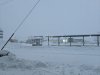
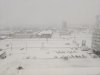
Hokkaido is great, although today I am stuck inside. There is currently a severe snowstorm warning with an alert level 3, which the Japanese met service defines as "Elderly people, those with disabilities, and others who may need more time to evacuate should evacuate from affected areas."I just found out about this. Darn, that's rather unfortunate, would've been a nice stop for the species. I think I'll have to make my way back someday for Hokkaido in the winter anyways.
I was going to go to the Kushiro Zoo today - I've never been to a zoo in the snow before - but now I can't or I'll die


That wall of grey is the snowstorm approaching.
Attachments
A day in Tokyo
After Izumi I was heading to Hokkaido, the northernmost island of Japan which should right now be in a death-grip of ice and snow. I had booked a flight with Jetstar from Kagoshima Airport to Narita Airport in Tokyo, and from there would be catching a ferry to Hokkaido.
Jetstar takes safety seriously. Before their pre-flight safety instructions they said in English that the instructions would be only in Japanese and if you have any questions to ask! Jetstar is an Australian airline by the way. In contrast the Shanghai to Osaka flight with Peach (which is a Japanese airline) did the safety instructions in both Japanese and English, and had a recorded version in Chinese; and the connecting Peach flight to Kagoshima also did them in both Japanese and English.
I was in Tokyo for just two nights, giving me one full day which I had pencilled in for the Inokashira Park Zoo because it is quite small and specialises in Japanese animals, and is situated in Inokashira Park which is supposed to be a good birding spot, and then planned to go to the Sumida Aquarium in the evening because it was relatively close to my hotel.
The hotel I'd booked was the Tokyo SA Ryokan which was 7920 Yen for the two nights (about NZ$45 per night - about half what the hotel in Izumi had cost me). It took me a while to find it. Getting from Narita Airport to the street the hotel was on was straightforward, via first the airport bus and then a subway, but the actual hotel itself took a bit more effort to locate.
The next morning I left early for Inokashira Park. Gotta say, I do not like the Tokyo metro system. The metros in China are a breeze. In Tokyo they are a nightmare. Maybe it needs a few days to get the hang of it, but what a disaster I made of today. I'm going back to Tokyo later in the trip so we'll see how I fare with more time, but I'm really not a big city person.
Just as another point of interest, in China every time you enter a train or metro station you have to go through airport-style security. In Japan, nothing. You could be carrying a cobra stuffed with Agent Orange in your bag and nobody would know.
When I finally got to Inokashira Park it was still before the zoo opens so I had time to wander around looking for birds. First stop was the small lake I could see ahead of me. A pair of Gadwalls was nice, as my first in Japan, but what's that other duck in front of me I hear you ask. Why, it's just a Falcated Duck.
I had of course already seen lots of Falcated Ducks and Baikal Teal at Izumi, so I wasn't going to bother with the Imperial Palace moats any more. But here was another Falcated Duck cruising around just awaiting a photo to be taken.

Falcated Duck - you can see why it was a duck I really wanted to see!

Gadwall
There were quite a few bird photographers around the park this morning (and probably every morning). That didn't stop some tourist asking me what I was photographing. You know, while I was pointing the camera at the ducks on the lake! Idiot. There are too many foreigners in Japan I tell you. They should vette them at the airport. "Do you watch birds? No? Then you have to go home."
Azure-winged Magpies were new for my Japan list, and I was startled to hear Indian Ringnecks screeching as they flew in over the trees. I didn't even know they were here, but I looked it up and they are well established in Tokyo. Following the lake around I came to the entrance of the Aquatic Life Park section of the zoo. It was still too early so I kept going, seeing a pair of Northern Shovellers (lots of other ducks too, with Mallards, Eastern Spot-billed Ducks, Tufted Ducks, Common Pochards, and other expected water-dwelling birds like Coots and Little Grebes).
Moving away from the lake flurries of movement in the trees drew me to a flock of Long-tailed Tits, accompanied by a Japanese Pigmy Woodpecker and a Japanese Bush Warbler. I spent some time trying to get acceptable photos of them but without any success.
After visiting the zoo I did some more birding, this time finding a pair of Northern Goshawks in the bird reserve at the park (a fenced area of trees), one of which was perched in an exposed position allowing photographs to be taken.

Northern Goshawk
.................................................
Inokashira Park Zoo
The Inokashira Park Zoo is a small zoo which specialises in native Japanese fauna. I loved this zoo. I spent 3.5 hours there altogether. It is very well presented and feels like the sort of place a person could open for themselves. There are very few cages which are too small although, equally, few are very large.
Highlights at the zoo were the Yakushima Sika (a dwarf form of Sika which looks almost goat-like with its little short legs), Japanese and Tsushima Martens, Tsushima Leopard Cats, and the walk-through squirrel "aviary".
I posted a little review and species list here: Inokashira Park Zoo species list, January 2025 [Inokashira Park Zoo]

Yakushima Sika Deer

Japanese Marten, like a day-glo ferret

Tsushima Leopard Cat
.................................................
Sumida Aquarium
After a series of unfortunate events and very late in the day - when darkness had already overtaken both the city and my soul - I managed to finally triumph over the Tokyo subway system and arrive at the Skytree Tower, in which is located the Sumida Aquarium.
There are some people on the forum who have raved about Sumida, but it's not for me. It just feels so shallow, and there really isn't much there for the price you're paying. The entry fee was 2500 Yen and I was only there for an hour, whereas the Aqua World Ibaraki Oarai which is coming up next cost 2300 Yen and I only left because they told me to.
The first tanks you see upon entry are fantastic - like beautifully aquascaped gardens. Completely lacking in signage but they look amazing. Then there is a series of jellyfish tanks, including a wonderful-looking open-topped pool, and that's when you realise that the whole of Sumida is just going to be "look at this flashy thing we did". And it's so dark in there! The tanks are mostly brightly-lit which makes the visitor side even darker and makes the visitors more prone to walking into walls and other visitors (not even joking!).
There are sofas and little tables everywhere, with some tanks completely blocked from viewing unless you can snag a comfy chair. It's like a coffee shop - slash - art gallery. There is signage on most of the tanks but it is minimal and sometimes takes an effort to find where they have hidden it.
A large percentage of the floor area is taken up with an exhibit for Magellanic Penguins. Lots of swimming space, very little land space, and all I could think was how the penguins must be spending their whole lives in semi-darkness.
Not a fan at all of Sumida, and it's not somewhere I would recommend visiting except to people who just want to add a number to their list.
Photos in the gallery: Sumida Aquarium - ZooChat

One of the Amano aquascaped tanks - the best part of the aquarium.

Jellyfish pool
After Izumi I was heading to Hokkaido, the northernmost island of Japan which should right now be in a death-grip of ice and snow. I had booked a flight with Jetstar from Kagoshima Airport to Narita Airport in Tokyo, and from there would be catching a ferry to Hokkaido.
Jetstar takes safety seriously. Before their pre-flight safety instructions they said in English that the instructions would be only in Japanese and if you have any questions to ask! Jetstar is an Australian airline by the way. In contrast the Shanghai to Osaka flight with Peach (which is a Japanese airline) did the safety instructions in both Japanese and English, and had a recorded version in Chinese; and the connecting Peach flight to Kagoshima also did them in both Japanese and English.
I was in Tokyo for just two nights, giving me one full day which I had pencilled in for the Inokashira Park Zoo because it is quite small and specialises in Japanese animals, and is situated in Inokashira Park which is supposed to be a good birding spot, and then planned to go to the Sumida Aquarium in the evening because it was relatively close to my hotel.
The hotel I'd booked was the Tokyo SA Ryokan which was 7920 Yen for the two nights (about NZ$45 per night - about half what the hotel in Izumi had cost me). It took me a while to find it. Getting from Narita Airport to the street the hotel was on was straightforward, via first the airport bus and then a subway, but the actual hotel itself took a bit more effort to locate.
The next morning I left early for Inokashira Park. Gotta say, I do not like the Tokyo metro system. The metros in China are a breeze. In Tokyo they are a nightmare. Maybe it needs a few days to get the hang of it, but what a disaster I made of today. I'm going back to Tokyo later in the trip so we'll see how I fare with more time, but I'm really not a big city person.
Just as another point of interest, in China every time you enter a train or metro station you have to go through airport-style security. In Japan, nothing. You could be carrying a cobra stuffed with Agent Orange in your bag and nobody would know.
When I finally got to Inokashira Park it was still before the zoo opens so I had time to wander around looking for birds. First stop was the small lake I could see ahead of me. A pair of Gadwalls was nice, as my first in Japan, but what's that other duck in front of me I hear you ask. Why, it's just a Falcated Duck.
I had of course already seen lots of Falcated Ducks and Baikal Teal at Izumi, so I wasn't going to bother with the Imperial Palace moats any more. But here was another Falcated Duck cruising around just awaiting a photo to be taken.
Falcated Duck - you can see why it was a duck I really wanted to see!
Gadwall
There were quite a few bird photographers around the park this morning (and probably every morning). That didn't stop some tourist asking me what I was photographing. You know, while I was pointing the camera at the ducks on the lake! Idiot. There are too many foreigners in Japan I tell you. They should vette them at the airport. "Do you watch birds? No? Then you have to go home."
Azure-winged Magpies were new for my Japan list, and I was startled to hear Indian Ringnecks screeching as they flew in over the trees. I didn't even know they were here, but I looked it up and they are well established in Tokyo. Following the lake around I came to the entrance of the Aquatic Life Park section of the zoo. It was still too early so I kept going, seeing a pair of Northern Shovellers (lots of other ducks too, with Mallards, Eastern Spot-billed Ducks, Tufted Ducks, Common Pochards, and other expected water-dwelling birds like Coots and Little Grebes).
Moving away from the lake flurries of movement in the trees drew me to a flock of Long-tailed Tits, accompanied by a Japanese Pigmy Woodpecker and a Japanese Bush Warbler. I spent some time trying to get acceptable photos of them but without any success.
After visiting the zoo I did some more birding, this time finding a pair of Northern Goshawks in the bird reserve at the park (a fenced area of trees), one of which was perched in an exposed position allowing photographs to be taken.
Northern Goshawk
.................................................
Inokashira Park Zoo
The Inokashira Park Zoo is a small zoo which specialises in native Japanese fauna. I loved this zoo. I spent 3.5 hours there altogether. It is very well presented and feels like the sort of place a person could open for themselves. There are very few cages which are too small although, equally, few are very large.
Highlights at the zoo were the Yakushima Sika (a dwarf form of Sika which looks almost goat-like with its little short legs), Japanese and Tsushima Martens, Tsushima Leopard Cats, and the walk-through squirrel "aviary".
I posted a little review and species list here: Inokashira Park Zoo species list, January 2025 [Inokashira Park Zoo]
Yakushima Sika Deer
Japanese Marten, like a day-glo ferret
Tsushima Leopard Cat
.................................................
Sumida Aquarium
After a series of unfortunate events and very late in the day - when darkness had already overtaken both the city and my soul - I managed to finally triumph over the Tokyo subway system and arrive at the Skytree Tower, in which is located the Sumida Aquarium.
There are some people on the forum who have raved about Sumida, but it's not for me. It just feels so shallow, and there really isn't much there for the price you're paying. The entry fee was 2500 Yen and I was only there for an hour, whereas the Aqua World Ibaraki Oarai which is coming up next cost 2300 Yen and I only left because they told me to.
The first tanks you see upon entry are fantastic - like beautifully aquascaped gardens. Completely lacking in signage but they look amazing. Then there is a series of jellyfish tanks, including a wonderful-looking open-topped pool, and that's when you realise that the whole of Sumida is just going to be "look at this flashy thing we did". And it's so dark in there! The tanks are mostly brightly-lit which makes the visitor side even darker and makes the visitors more prone to walking into walls and other visitors (not even joking!).
There are sofas and little tables everywhere, with some tanks completely blocked from viewing unless you can snag a comfy chair. It's like a coffee shop - slash - art gallery. There is signage on most of the tanks but it is minimal and sometimes takes an effort to find where they have hidden it.
A large percentage of the floor area is taken up with an exhibit for Magellanic Penguins. Lots of swimming space, very little land space, and all I could think was how the penguins must be spending their whole lives in semi-darkness.
Not a fan at all of Sumida, and it's not somewhere I would recommend visiting except to people who just want to add a number to their list.
Photos in the gallery: Sumida Aquarium - ZooChat
One of the Amano aquascaped tanks - the best part of the aquarium.
Jellyfish pool

Supposedly Tokyo has an established population of Budgies as well, which is even crazier than the Ringnecks!A day in Tokyo
After Izumi I was heading to Hokkaido, the northernmost island of Japan which should right now be in a death-grip of ice and snow. I had booked a flight with Jetstar from Kagoshima Airport to Narita Airport in Tokyo, and from there would be catching a ferry to Hokkaido.
Jetstar takes safety seriously. Before their pre-flight safety instructions they said in English that the instructions would be only in Japanese and if you have any questions to ask! Jetstar is an Australian airline by the way. In contrast the Shanghai to Osaka flight with Peach (which is a Japanese airline) did the safety instructions in both Japanese and English, and had a recorded version in Chinese; and the connecting Peach flight to Kagoshima also did them in both Japanese and English.
I was in Tokyo for just two nights, giving me one full day which I had pencilled in for the Inokashira Park Zoo because it is quite small and specialises in Japanese animals, and is situated in Inokashira Park which is supposed to be a good birding spot, and then planned to go to the Sumida Aquarium in the evening because it was relatively close to my hotel.
The hotel I'd booked was the Tokyo SA Ryokan which was 7920 Yen for the two nights (about NZ$45 per night - about half what the hotel in Izumi had cost me). It took me a while to find it. Getting from Narita Airport to the street the hotel was on was straightforward, via first the airport bus and then a subway, but the actual hotel itself took a bit more effort to locate.
The next morning I left early for Inokashira Park. Gotta say, I do not like the Tokyo metro system. The metros in China are a breeze. In Tokyo they are a nightmare. Maybe it needs a few days to get the hang of it, but what a disaster I made of today. I'm going back to Tokyo later in the trip so we'll see how I fare with more time, but I'm really not a big city person.
Just as another point of interest, in China every time you enter a train or metro station you have to go through airport-style security. In Japan, nothing. You could be carrying a cobra stuffed with Agent Orange in your bag and nobody would know.
When I finally got to Inokashira Park it was still before the zoo opens so I had time to wander around looking for birds. First stop was the small lake I could see ahead of me. A pair of Gadwalls was nice, as my first in Japan, but what's that other duck in front of me I hear you ask. Why, it's just a Falcated Duck.
I had of course already seen lots of Falcated Ducks and Baikal Teal at Izumi, so I wasn't going to bother with the Imperial Palace moats any more. But here was another Falcated Duck cruising around just awaiting a photo to be taken.
Falcated Duck - you can see why it was a duck I really wanted to see!
Gadwall
There were quite a few bird photographers around the park this morning (and probably every morning). That didn't stop some tourist asking me what I was photographing. You know, while I was pointing the camera at the ducks on the lake! Idiot. There are too many foreigners in Japan I tell you. They should vette them at the airport. "Do you watch birds? No? Then you have to go home."
Azure-winged Magpies were new for my Japan list, and I was startled to hear Indian Ringnecks screeching as they flew in over the trees. I didn't even know they were here, but I looked it up and they are well established in Tokyo. Following the lake around I came to the entrance of the Aquatic Life Park section of the zoo. It was still too early so I kept going, seeing a pair of Northern Shovellers (lots of other ducks too, with Mallards, Eastern Spot-billed Ducks, Tufted Ducks, Common Pochards, and other expected water-dwelling birds like Coots and Little Grebes).
Moving away from the lake flurries of movement in the trees drew me to a flock of Long-tailed Tits, accompanied by a Japanese Pigmy Woodpecker and a Japanese Bush Warbler. I spent some time trying to get acceptable photos of them but without any success.
After visiting the zoo I did some more birding, this time finding a pair of Northern Goshawks in the bird reserve at the park (a fenced area of trees), one of which was perched in an exposed position allowing photographs to be taken.
Northern Goshawk
.................................................
Inokashira Park Zoo
The Inokashira Park Zoo is a small zoo which specialises in native Japanese fauna. I loved this zoo. I spent 3.5 hours there altogether. It is very well presented and feels like the sort of place a person could open for themselves. There are very few cages which are too small although, equally, few are very large.
Highlights at the zoo were the Yakushima Sika (a dwarf form of Sika which looks almost goat-like with its little short legs), Japanese and Tsushima Martens, Tsushima Leopard Cats, and the walk-through squirrel "aviary".
I posted a little review and species list here: Inokashira Park Zoo species list, January 2025 [Inokashira Park Zoo]
Yakushima Sika Deer
Japanese Marten, like a day-glo ferret
Tsushima Leopard Cat
.................................................
Sumida Aquarium
After a series of unfortunate events and very late in the day - when darkness had already overtaken both the city and my soul - I managed to finally triumph over the Tokyo subway system and arrive at the Skytree Tower, in which is located the Sumida Aquarium.
There are some people on the forum who have raved about Sumida, but it's not for me. It just feels so shallow, and there really isn't much there for the price you're paying. The entry fee was 2500 Yen and I was only there for an hour, whereas the Aqua World Ibaraki Oarai which is coming up next cost 2300 Yen and I only left because they told me to.
The first tanks you see upon entry are fantastic - like beautifully aquascaped gardens. Completely lacking in signage but they look amazing. Then there is a series of jellyfish tanks, including a wonderful-looking open-topped pool, and that's when you realise that the whole of Sumida is just going to be "look at this flashy thing we did". And it's so dark in there! The tanks are mostly brightly-lit which makes the visitor side even darker and makes the visitors more prone to walking into walls and other visitors (not even joking!).
There are sofas and little tables everywhere, with some tanks completely blocked from viewing unless you can snag a comfy chair. It's like a coffee shop - slash - art gallery. There is signage on most of the tanks but it is minimal and sometimes takes an effort to find where they have hidden it.
A large percentage of the floor area is taken up with an exhibit for Magellanic Penguins. Lots of swimming space, very little land space, and all I could think was how the penguins must be spending their whole lives in semi-darkness.
Not a fan at all of Sumida, and it's not somewhere I would recommend visiting except to people who just want to add a number to their list.
Photos in the gallery: Sumida Aquarium - ZooChat
One of the Amano aquascaped tanks - the best part of the aquarium.
Jellyfish pool

Dr. Wolverine
Well-Known Member
Supposedly Tokyo has an established population of Budgies as well, which is even crazier than the Ringnecks!
They are very uncommon though, haven't seen any yet! Ringnecks are abundant and can be seen in almost every green area around central Tokyo.
Sumida Aquarium is often regarded as having a lower status among Tokyo's aquariums, as it lacks elements that would typically impress enthusiasts. However, it's widely known among Japanese aquarium aficionados that the sand tiger shark (Carcharias taurus) in its main exhibit, the Ogasawara Large Tank, is the only individual of Ogasawara origin housed in any aquarium in Japan (and possibly the world). That said, I haven't come across any studies that compare its appearance or genetics with the more commonly exhibited individuals from South Africa or Australia.
For those who are fans of sand tiger sharks, it could still be a worthwhile visit.
For those who are fans of sand tiger sharks, it could still be a worthwhile visit.
Oarai
The ferry between Oarai (north of Tokyo) and Hokkaido is supposed to be one of the best ways to view seabirds in Japan, especially in winter with huge numbers of auks and shearwaters. The crossing is renowned for being through rough seas and I do tend to suffer greatly from seasickness but nevertheless one does what one has to do, and so my plan was to take the ferry to Hokkaido rather than fly.
The ferry company is called MOL Sunflower and they do two runs a day (although not every day). The so-called Evening Ferry leaves Oarai at 7.45pm and arrives in Tomakomai in Hokkaido at 1.30pm the next afternoon, while the Night Ferry leaves Oarai at 1.45am and arrives in Tomakomai at 7.45pm the same day. The Night Ferry is the recommended one for birding because you have an entire full day on board.
Although I knew the date I was arriving in Tokyo (because I'd booked that Jetstar flight before leaving New Zealand) I hadn't booked the ferry yet because you can only do so two months in advance. When I did try to book it after reaching Japan I ran into a snag caused by my bank card having been stolen earlier in the trip.
I tried booking it on their website hoping that it could go through GooglePay but the ferry site needed the card details put in, which I don't have because I don't have the card anymore (my back-up card doesn't have a chip in it so I can't use it for online purchase, only at ATMs). However they also accept payment through AliPay so I thought great, that'll work. But no it didn't, because I never managed to get verified on AliPay so I can't use that for online purchases either. Third option was to pay in cash at a convenience store like Lawson or FamilyMart - that failed as well because when I got to the page where you put your name for the convenience store receipt it said the characters were invalid (the same characters - i.e. just my name in English letters - which the rest of the forms accepted as valid).
To make each step even more frustrating you can't change your method of payment once you've chosen it. So when the credit card choice doesn't work you can't just swap to AliPay - you have to cancel the booking and start all over again.
They do take bookings over the phone and by email, but I don't speak Japanese obviously and I couldn't find an email address on their website. In the end I gave up and decided to wing it. I'd just take the train to Oarai and go the ferry terminal in person to see if I could buy a ticket on the spot. If the ferry was fully booked I'd find a hotel in Oarai and go the next night.
.................................................
Getting to Oarai is easy enough. Just take a train from where-ever you are in Tokyo to Mito Station (about two hours) and then transfer to a local train for Oarai Station (about twenty minutes).
I knew that it was going to cost me 1980 Yen to get to Mito Station, but I couldn't find Mito on the ticket machine. I went to ask the guy at the desk. He said to just buy a 150 Yen ticket and pay for the ride when I got to Mito. I really don't understand how to use the Tokyo metro!
Once at Mito there is the option of taking the local train to Oarai Station and then a bus to the ferry terminal, or there is also a bus direct from Mito Station to the ferry terminal. That latter option was one less step so seemed like a good one, but I knew that there were only a few buses a day and I didn't know the schedule. When I got to Mito I went to the bus stop but even with the help of my phone's translation app I could make neither head nor tail of the timetables, so the train it was!
Apart for the ferry the other reason to come to Oarai is for the Aqua World Ibaraki Oarai which is an aquarium dedicated to sharks. They were said to have something like sixty different species of sharks and rays on display, which is an insane number. Because the ferry wasn't leaving until 1.45am in the morning there was easily time to visit the aquarium and then still have hours to spare before departure.
I knew there was a bus to the aquarium from the train station, so when I arrived I dropped into the tourist info centre next door to ask about it (it is a loop bus which runs about every hour and costs 100 Yen). I couldn't go straight to the aquarium because I had to go to the ferry terminal first to sort out whether I could get a ticket, but it turned out that the terminal was only about twenty minutes walk away so that was easy. I left my pack in a coin locker at the train station for the rest of the day, and set off with a map from the info centre.
The ferry ticket was easily dealt with - I hadn't cancelled my third booking (the one which would have been paid for at a convenience store if their system had accepted my name) and it was still valid even though their site says bookings are automatically cancelled if not paid for within their time-frame, which in this case had already passed. So I could just pay at the counter with cash. Sorted.
I then walked around the coast until I reached the aquarium.
.................................................
It was 2pm when I got to the aquarium, which I thought would give me three hours there. Hopefully enough time to see everything comfortably. Unfortunately closing time was actually 4pm, not the 5pm I thought. I'm not sure if it changes seasonally or if it is always 4pm now, but most information online and on tourist pamphlets says 5pm. Their website currently says 4pm but I hadn't checked that beforehand. This meant that I ignored the closing announcements (in Japanese) from about 3.30pm because I thought they must be for something else, until at 4pm a security guard came and told me they were closed now. I had to rush through the floor I was on, taking photos of each sign on the way but without actually being able to stop and look in the tanks (these were the freshwater river tanks). And I had to miss an entire section, the Ocean Terrace, which on the map was labelled with Humboldt Penguin, Californian Sealion, and South American Fur Seal.
It was a great aquarium, positively brimming over with sharks. They were everywhere. Walking round in there is like exploring, not knowing what is going to be around the next corner or what amazing creature is going to be in the next tank. I mean, you know there's almost certainly going to be a shark of some kind, but is it going to be a Blind Shark, a Salamander Shark, a Japanese Sawshark, a Mandarin Dogfish? I counted 43 species of sharks and rays signed here, plus there were others unsigned in an ocean tank.
I just wish I'd had that extra hour!
See Aqua World Ibaraki Oarai, visit January 2025 [Aqua World Ibaraki Oarai Aquarium]
Photos in the gallery: Aqua World Ibaraki Oarai Aquarium - ZooChat

Mandarin Dogfish. Probably my favourite inhabitant of Aqua World.

Common Box Crab. Never has a crab looked so aghast.

Spotted Seals
The ferry between Oarai (north of Tokyo) and Hokkaido is supposed to be one of the best ways to view seabirds in Japan, especially in winter with huge numbers of auks and shearwaters. The crossing is renowned for being through rough seas and I do tend to suffer greatly from seasickness but nevertheless one does what one has to do, and so my plan was to take the ferry to Hokkaido rather than fly.
The ferry company is called MOL Sunflower and they do two runs a day (although not every day). The so-called Evening Ferry leaves Oarai at 7.45pm and arrives in Tomakomai in Hokkaido at 1.30pm the next afternoon, while the Night Ferry leaves Oarai at 1.45am and arrives in Tomakomai at 7.45pm the same day. The Night Ferry is the recommended one for birding because you have an entire full day on board.
Although I knew the date I was arriving in Tokyo (because I'd booked that Jetstar flight before leaving New Zealand) I hadn't booked the ferry yet because you can only do so two months in advance. When I did try to book it after reaching Japan I ran into a snag caused by my bank card having been stolen earlier in the trip.
I tried booking it on their website hoping that it could go through GooglePay but the ferry site needed the card details put in, which I don't have because I don't have the card anymore (my back-up card doesn't have a chip in it so I can't use it for online purchase, only at ATMs). However they also accept payment through AliPay so I thought great, that'll work. But no it didn't, because I never managed to get verified on AliPay so I can't use that for online purchases either. Third option was to pay in cash at a convenience store like Lawson or FamilyMart - that failed as well because when I got to the page where you put your name for the convenience store receipt it said the characters were invalid (the same characters - i.e. just my name in English letters - which the rest of the forms accepted as valid).
To make each step even more frustrating you can't change your method of payment once you've chosen it. So when the credit card choice doesn't work you can't just swap to AliPay - you have to cancel the booking and start all over again.
They do take bookings over the phone and by email, but I don't speak Japanese obviously and I couldn't find an email address on their website. In the end I gave up and decided to wing it. I'd just take the train to Oarai and go the ferry terminal in person to see if I could buy a ticket on the spot. If the ferry was fully booked I'd find a hotel in Oarai and go the next night.
.................................................
Getting to Oarai is easy enough. Just take a train from where-ever you are in Tokyo to Mito Station (about two hours) and then transfer to a local train for Oarai Station (about twenty minutes).
I knew that it was going to cost me 1980 Yen to get to Mito Station, but I couldn't find Mito on the ticket machine. I went to ask the guy at the desk. He said to just buy a 150 Yen ticket and pay for the ride when I got to Mito. I really don't understand how to use the Tokyo metro!
Once at Mito there is the option of taking the local train to Oarai Station and then a bus to the ferry terminal, or there is also a bus direct from Mito Station to the ferry terminal. That latter option was one less step so seemed like a good one, but I knew that there were only a few buses a day and I didn't know the schedule. When I got to Mito I went to the bus stop but even with the help of my phone's translation app I could make neither head nor tail of the timetables, so the train it was!
Apart for the ferry the other reason to come to Oarai is for the Aqua World Ibaraki Oarai which is an aquarium dedicated to sharks. They were said to have something like sixty different species of sharks and rays on display, which is an insane number. Because the ferry wasn't leaving until 1.45am in the morning there was easily time to visit the aquarium and then still have hours to spare before departure.
I knew there was a bus to the aquarium from the train station, so when I arrived I dropped into the tourist info centre next door to ask about it (it is a loop bus which runs about every hour and costs 100 Yen). I couldn't go straight to the aquarium because I had to go to the ferry terminal first to sort out whether I could get a ticket, but it turned out that the terminal was only about twenty minutes walk away so that was easy. I left my pack in a coin locker at the train station for the rest of the day, and set off with a map from the info centre.
The ferry ticket was easily dealt with - I hadn't cancelled my third booking (the one which would have been paid for at a convenience store if their system had accepted my name) and it was still valid even though their site says bookings are automatically cancelled if not paid for within their time-frame, which in this case had already passed. So I could just pay at the counter with cash. Sorted.
I then walked around the coast until I reached the aquarium.
.................................................
It was 2pm when I got to the aquarium, which I thought would give me three hours there. Hopefully enough time to see everything comfortably. Unfortunately closing time was actually 4pm, not the 5pm I thought. I'm not sure if it changes seasonally or if it is always 4pm now, but most information online and on tourist pamphlets says 5pm. Their website currently says 4pm but I hadn't checked that beforehand. This meant that I ignored the closing announcements (in Japanese) from about 3.30pm because I thought they must be for something else, until at 4pm a security guard came and told me they were closed now. I had to rush through the floor I was on, taking photos of each sign on the way but without actually being able to stop and look in the tanks (these were the freshwater river tanks). And I had to miss an entire section, the Ocean Terrace, which on the map was labelled with Humboldt Penguin, Californian Sealion, and South American Fur Seal.
It was a great aquarium, positively brimming over with sharks. They were everywhere. Walking round in there is like exploring, not knowing what is going to be around the next corner or what amazing creature is going to be in the next tank. I mean, you know there's almost certainly going to be a shark of some kind, but is it going to be a Blind Shark, a Salamander Shark, a Japanese Sawshark, a Mandarin Dogfish? I counted 43 species of sharks and rays signed here, plus there were others unsigned in an ocean tank.
I just wish I'd had that extra hour!
See Aqua World Ibaraki Oarai, visit January 2025 [Aqua World Ibaraki Oarai Aquarium]
Photos in the gallery: Aqua World Ibaraki Oarai Aquarium - ZooChat
Mandarin Dogfish. Probably my favourite inhabitant of Aqua World.
Common Box Crab. Never has a crab looked so aghast.
Spotted Seals
Ferry to Hokkaido
The ferry to Hokkaido was scheduled to depart at 1.45am but luckily boarding started at 10.30pm so I could get to the cabin and go to sleep at a reasonable hour still. I was in a "Casual Room" which has four beds to a cabin, each with a curtain for privacy. There was only one other person in my cabin. This bed cost 10,000 Yen (listed on their website as 12,500 Yen but there is a discount for booking online), and being both transport and accommodation for a night it is the cheapest way to get to Hokkaido. The only other room type listed for the Night Ferry is the "Deluxe Room" which is twice the price.
The Evening Ferry has more accommodation options than the Night Ferry, from a "Suite" at 54,000 Yen (this is a private room) down to "Tourist" at 9500 Yen (this is a 25-bed dorm room). The prices also change throughout the year.
The crossing was pretty smooth and I remained un-seasick which I was pleased about. There was an extremely strong wind though which was icy cold. When I got up in the morning and went outside to sea-watch I had to position myself behind a ... um ... I want to say bulkhead? I don't know what a bulkhead is but I know people stand behind them, so probably one of those. It was too windy and cold to stand in the open or at the railing.
Disappointingly, there was very little bird activity at all on the entire crossing, and the few birds I saw mostly remained too far away to do more than guess at what they might be. The only ones which came near enough to identify were the Laysan Albatrosses, of which I saw a dozen or more through the day.
Just standing around makes me sleepy, and so does the ocean, so at midday I retired for a siesta because it was getting boring staring at birdless waves. I was only going to take a quick nap but didn't wake up again until 4pm. The last hour of the day on deck was just as birdless as the morning had been.
Once off the ferry in Tomakomai I discovered that there were no buses into town at night. The last one was at sometime in the afternoon. If you catch the Evening Ferry which arrives at 1.30pm you're fine, but if you catch the Night Ferry you're out of luck. Instead you have no choice but to get a taxi which will cost you about 2000 Yen to the train station in town. There were a few other passengers in the same position, and so I teamed up with a Chinese guy and a Japanese lady and we split a taxi.
Because I hadn't been sure of whether I'd be able to get the ferry that night I'd had to wait until the last minute to book the Tomakomai hotel, and there were barely any available options. I chose the Hotel Route-Inn Tomakomai Ekimae, which is right next to the train station, but because I was rushing and trying to compute different currencies I stuffed it up and ended up paying about NZ$116 per night for the room and somehow missed the other nearby hotel which would have been $25 per night cheaper!
I had booked my previous hotel in Tokyo through booking .com and this Tomakomai hotel through Trip. Basically I would check both sites to see which has the best option. I've found that I can still pay with WePay on Trip, but only if the currency is listed as Chinese Yuan which means I have to mentally juggle Yuan, Yen, and NZ Dollars simultaneously, which is where I came unstuck with this booking.
What unexpectedly became even more fortunate about still being able to book and pay through Trip via WePay is that (when I was in Kushiro, after Tomakomai) I tried to book a hotel in Nemuro through booking .com and suddenly GooglePay needs me to "update" my card details to use it - and I can't because I don't have the card any more (because it was stolen). So now I can't use GooglePay, which means I can't use booking .com, which means the only method I now have for booking hotels online is Trip. This may start getting awkward.
The ferry to Hokkaido was scheduled to depart at 1.45am but luckily boarding started at 10.30pm so I could get to the cabin and go to sleep at a reasonable hour still. I was in a "Casual Room" which has four beds to a cabin, each with a curtain for privacy. There was only one other person in my cabin. This bed cost 10,000 Yen (listed on their website as 12,500 Yen but there is a discount for booking online), and being both transport and accommodation for a night it is the cheapest way to get to Hokkaido. The only other room type listed for the Night Ferry is the "Deluxe Room" which is twice the price.
The Evening Ferry has more accommodation options than the Night Ferry, from a "Suite" at 54,000 Yen (this is a private room) down to "Tourist" at 9500 Yen (this is a 25-bed dorm room). The prices also change throughout the year.
The crossing was pretty smooth and I remained un-seasick which I was pleased about. There was an extremely strong wind though which was icy cold. When I got up in the morning and went outside to sea-watch I had to position myself behind a ... um ... I want to say bulkhead? I don't know what a bulkhead is but I know people stand behind them, so probably one of those. It was too windy and cold to stand in the open or at the railing.
Disappointingly, there was very little bird activity at all on the entire crossing, and the few birds I saw mostly remained too far away to do more than guess at what they might be. The only ones which came near enough to identify were the Laysan Albatrosses, of which I saw a dozen or more through the day.
Just standing around makes me sleepy, and so does the ocean, so at midday I retired for a siesta because it was getting boring staring at birdless waves. I was only going to take a quick nap but didn't wake up again until 4pm. The last hour of the day on deck was just as birdless as the morning had been.
Once off the ferry in Tomakomai I discovered that there were no buses into town at night. The last one was at sometime in the afternoon. If you catch the Evening Ferry which arrives at 1.30pm you're fine, but if you catch the Night Ferry you're out of luck. Instead you have no choice but to get a taxi which will cost you about 2000 Yen to the train station in town. There were a few other passengers in the same position, and so I teamed up with a Chinese guy and a Japanese lady and we split a taxi.
Because I hadn't been sure of whether I'd be able to get the ferry that night I'd had to wait until the last minute to book the Tomakomai hotel, and there were barely any available options. I chose the Hotel Route-Inn Tomakomai Ekimae, which is right next to the train station, but because I was rushing and trying to compute different currencies I stuffed it up and ended up paying about NZ$116 per night for the room and somehow missed the other nearby hotel which would have been $25 per night cheaper!
I had booked my previous hotel in Tokyo through booking .com and this Tomakomai hotel through Trip. Basically I would check both sites to see which has the best option. I've found that I can still pay with WePay on Trip, but only if the currency is listed as Chinese Yuan which means I have to mentally juggle Yuan, Yen, and NZ Dollars simultaneously, which is where I came unstuck with this booking.
What unexpectedly became even more fortunate about still being able to book and pay through Trip via WePay is that (when I was in Kushiro, after Tomakomai) I tried to book a hotel in Nemuro through booking .com and suddenly GooglePay needs me to "update" my card details to use it - and I can't because I don't have the card any more (because it was stolen). So now I can't use GooglePay, which means I can't use booking .com, which means the only method I now have for booking hotels online is Trip. This may start getting awkward.

Cabin on the ferry. My bed is number 60. The curtain at the back is a window looking out to the ocean.

Morning on the ferry.

Evening on the ferry.
Attachments
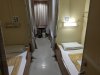



The hotel in Tomakomai when I arrived.

View from the window. The flat roof on the left is the train station.

And the room. I miss the $20 rooms in China which are so much bigger and better than the $120 rooms in Japan!