Chlidonias Goes To Asia, part seven: 2024-2025

Izumi (Kyushu) again


Before going to the Ogasawara Islands I had checked out my options for getting to Kyushu from Tokyo when I returned. I had already used my Osaka time earlier, so wanted to just skip straight over to Izumi.

It only takes about an hour to fly from Tokyo to Kagoshima so that was the obvious first choice, but because it was just a week or so away there were no cheap flights. The cheapest was 29,000 Yen. I had a look at the trains and found that the shinkansen (bullet train) from Tokyo to Izumi was 30,000 Yen, so basically the same price.

The flight itself might be an hour, but I'd have to be at the airport an hour beforehand, so that's two hours. It would be at least an hour to get to the airport in the first place, so that takes it up to three hours. Then the Kagoshima Airport is 1.5 hours by bus from Izumi, so now it was 4.5 hours, plus waiting time for that bus - at least five hours total travel. Plus I'd be paying more money for that bus, and I'd have to stay in Tokyo the night I got back on the ferry.

The bullet train was seven hours, not a lot of difference, and it had the benefit of not needing to be booked ahead, not needing all the going-through-security hassles, and I could just go straight there from the ferry.

There was also the option of going by night bus, but because it is such a long way the "night bus" is really more of a "multiple night and day buses" - the buses don't move at quite the speed of a bullet train!

The ferry was scheduled to arrive back in Tokyo at 3pm. There was a bullet train from Shinagawa Station at 3.45pm which would arrive in Izumi at 10.15pm (via a connecting train at Hakata on Kyushu at 9pm). It would be tight but it could possibly work - it was about ten minutes to walk from the ferry terminal to the nearest metro station, and then less than ten minutes from there to Shinagawa. The next set of trains between 4.07pm and 4.37pm all connected to a 9.45pm train in Hakata - and that was the last one of the evening. If I missed that one I'd be stuck in Hakata for the night.

I didn't get the 3.45pm bullet train. The ferry didn't arrive until 3.45pm. I made it to the shinkansen ticket office at Shinagawa at 4.20pm, and got to the platform for the train at 4.35pm. Just made it! I arrived in Izumi at 11.33pm.


When first came to Japan I was lamenting having to stay in such an expensive place as the Wing Hotel in Izumi - after two months in the country it now just seems like a fairly low-priced hotel. I hate what I have become. Although to be fair (um, to myself, I guess), the price I was paying for a room there when booked in advance from New Zealand through booking. com was 7050 Yen, whereas booking it now through Trip a few days before with last-minute discounts meant I was paying about 5600 Yen per night.

Izumi is my favourite place in Japan. I think must be best birding location as well, or at least well up there. There is a patch of lawn between the train station and the hotel, and one morning I saw eight species of birds on it at the same time (Tree Sparrow, Oriental Greenfinch, Japanese Grosbeak, Dusky Thrush, Daurian Redstart, Brown-eared Bulbul, Carrion Crow, and White Wagtail), and at other times I have seen White-cheeked Starlings and Feral Pigeons there as well. On my first day I walked my "regular" route from the hotel, along the river to Kogawa Dam and back again, and saw 46 species of birds.

PXL_20250321_052407992.jpg
The bird lawn outside the hotel


I wasn't expecting to see many "new" birds while back in Izumi. My reason for coming here was solely that it was probably going to be my last chance for Copper Pheasant, which I knew was to be found in the forests surrounding Kogawa Dam.

Compared to last time I was here (in January) it was noticeably warmer and there were lots of different butterflies around, including a pretty little purple one. There were fewer ducks along the river however. There were still a number of Falcated Ducks but not as many as before, and there were no Baikal Teal at all to be seen on the dam, whereas in January I saw literally hundreds of them. However there were loads of White-bellied Green Pigeons at the dam (I didn't see any in January), although they were very flighty and I saw them much better when in Osaka. I also saw a Japanese Green Woodpecker, and much better than the one I saw at Karuizawa, although because it was against the sky in a leafless tree the photos were not worth posting.

I picked up a new mammal for my Japanese list as well, with several Wild Pigs seen in the forest along the Olle Trail before reaching the dam. The first two I saw I thought were juveniles because they were so small - indeed, I was looking around for their mother in case she was twitchy about protecting her offspring - but I saw others later and all were the same size, and some had manes so they definitely seemed to be adults. I knew the Ryukyu Wild Pigs were very small, but not the "mainland" Japanese ones - if the Ryukyu pigs are smaller than the Kyushu ones, as they are supposed to be, they must be like rabbits! I will look forward to seeing how big they are. Confusing matters a little is that just after this I saw a Kyushu Wild Pig at Hirakawa Zoo in Kagoshima and it was quite a bit bigger than the ones I'd seen at Izumi, so I guess they were juveniles? I don't know. (And, jumping ahead, I did see Ryukyu Wild Pigs later, and they were about the same size as the ones I saw here, so I even more don't know!).

full

Kyushu Wild Pig


Perhaps surprising, or perhaps not, but on the first day back at the dam I came across a Japanese Badger, in the daytime, foraging around in the open. This was the fourth badger I have seen there (two together on my first day in January, and another different one on my second day in January). Today's one was at the far end of the reservoir, so all three days the badgers were as far apart as possible to get, so (almost)-definitely they were four different animals. The next day I was back at the dam and found a badger again - fourth time in a row. This one must have been the same animal as the one I saw on my second day (in January) because it was in basically the same place. Kogawa Dam is definitely the place to look for badgers!

full

Japanese Badger


I did come across a Copper Pheasant on my first day back here, but I couldn't count it because I didn't actually see it. I just saw a rush of movement and heard the characteristic sound of pheasant wings as it flushed from near the top of the rise above the road as I walked along. This was on a sort of U-bend in the road, so I ran back round to the other side of the hill to see if the pheasant could be seen, but no luck.

I did get a different lifer this day though. The river through town is lined with long grass which is alive with buntings of multiple species. They are a devil to see because they fly out as you pass, only to land back in the grass further along. They only way to get a good look at them is to hope they pause on a stem or branch before dropping down out of sight. And thus I managed to see my first Chestnut-eared Bunting while walking back to the hotel.

The second day I was back at Kogawa Dam, and while I saw fewer species overall than the day before (36 species versus yesterday's 46), one of the species was Copper Pheasant so that's all good. It wasn't a male unfortunately but beggars can't be choosers (I'll put a photo below of a male at Inokashira Park Zoo so you can see what they look like). I'd already done a circuit of the dam - it's between one and two hours walk, depending on how much you're stopping for birds - and was going round again when two female pheasants flushed from rank grass right beside the road. I saw them well enough to identify them but, like the Green Pheasants at Nagano, wish I could have seen them better. Nevertheless, they were seen. I waited a little further along the road for ages, thinking they might cross over to get back to the forest on the uphill side of the road, but they didn't.

full

This is a male Copper Pheasant which I photographed at the Inokashira Park Zoo in Tokyo.


With the pheasants ticked off the list (or ticked onto the list?) for the third day I decided to go to the wintering grounds of the cranes to see what was around in late March. In January there were thousands of Hooded and White-naped Cranes here, and I saw a couple of Sandhill Cranes and a Common Crane as well. I knew they would mostly be gone now (which is why I had started Japan in Izumi) but there are always other birds to see.

Last time I was in Izumi there was no bus out to the Crane Observation Center because it was a weekend, but this time I found out which bus to take. It leaves from the bus station (which is outside the railway station), and doesn't have a number or English route name but it is the one bound for Kuranomoto Port. It only runs five times a day, with the first bus at 9am. The closest stop to the Crane Observation Center is on the main road (third stop from the railway station, about 18 minutes ride) and is still about an hour's walk away because it is on the "wrong" side of the river, but that just means you pass by the wintering fields (on the east side of the river) before crossing over to the observatory side, and you're walking through fields and other birdy habitats the entire way.

full

Little Ringed Plovers

There were Skylarks singing in the sky everywhere, which there hadn't been in January. Lots of Rooks still present, feeding in the fields. The fields themselves, now that the cranes had mostly left, were being ploughed up for planting (they are left fallow over winter for the cranes to utilise). There were still quite a lot of Hooded Cranes about - small groups were flying or soaring, honking like geese, and were scattered about on fields. I didn't deliberately approach any (unless I had to pass along a road they were near) because I didn't want to disturb them when they were feeding up before migration.

full

Rooks

The observatory was all closed up - even the toilet building outside was locked - and the car park was empty. This area was still where most of the remaining Hooded Cranes were gathered, probably a couple of hundred of them still, and I saw a Black-faced Spoonbill flying by as well.

On the walk back to the bus stop I saw a group of cranes ahead in a field I had to pass. One of them was pale grey and stood out from the Hooded Cranes. I had a look through my binoculars and saw it was a Common Crane.

full

Hooded Cranes and Common Crane
 

Attachments

  • PXL_20250321_052407992.jpg
    PXL_20250321_052407992.jpg
    210.9 KB · Views: 121
Last edited:
Kagoshima


Just south of Izumi is Kyushu's main city, Kagoshima. It's actually closer than I expected. The Kagoshima airport is about half way between Izumi and Kagoshima, and the bus from the airport to Izumi takes about 1.5 hours, so I was thinking it would take a very long time to get all the way between the two cities. But by train it is only 24 minutes!

I was really only going to Kagoshima in order to get to the offshore island of Yakushima. There is a zoo and aquarium in the city, so I would be visiting them, but the island was the main reason. It hadn't been on any of my original plans, but when I was at Inokashira Park Zoo in Tokyo I saw the Yakushima Sika, which is a dwarf island form with short legs, and I had to go see that one in the wild.

The island also has an endemic subspecies of macaque - the Yakushima Macaque Macaca fuscata yakui - and endemic subspecies of some of the birds like the Varied Tit and Eurasian Jay. I had also found out that the Izu Thrush and Izu Warbler were found here, and likewise the Ryukyu Robin.


I spent a couple of days in Kagoshima to go to the Kagoshima City Aquarium (on the day I arrived there) and the Hirakawa Zoo (on the second day), and then had to stay an additional day because it turned out that accommodation on Yakushima is all very expensive (at least on the booking site I have to use) so I had to play around with dates to get somewhere affordable. I did get a room at the Rakusa Hotel for around 7000 Yen per night, which is an average price, but most places were considerably higher than this when I was looking. This meant that I only had two nights on the island which translates as one full day and two part days either side. This would be (in theory) more than enough time for the sika and macaque because both were "very common" on the island.


The Kagoshima City Aquarium is a great facility. It was a little bit confusing on arrival because the sign on the street appeared to be pointing to the building opposite, which is a ferry terminal and which looks more like an Aquarium than the Aquarium does! There is a combined ticket for both the zoo and aquarium which saves a bit of money and can be bought at the counter.

Several Aquariums I have been to have an opening tank which is reached by stairs or an escalator, so it gives a nice reveal as you rise towards it. At Sumida Aquarium, for example, the opening tank is an Amano aquascape tank. At Kagoshima the very first tank you see has a Whale Shark in it! At the Osaka Aquarium I had been saddened by the Whale Sharks looking cramped in their tank, but the one here did not give the same impression even though the tank was smaller. I think the reason is that, firstly, the shark itself was smaller (although still large) but more importantly I think, the tank is a basic rectangle so there is ample swimming and turning room for the shark whereas the Osaka tank is a bad cross-shape design so it has all these angles which the sharks can't navigate properly because they are too big.

full


One of the other levels has a similar situation but with Arapaima:
full


Sea Snakes:
full


And there is an entire room full of nudibranchs (sea slugs) in all the colours of the 'bow man.
full


Some in tanks like this:
full


And some like this:
full


More photos from the Aquarium here: Kagoshima Aquarium - ZooChat


The Hirakawa Zoo is easy to reach by public transport. I had read some websites saying that you need to take a train and then walk for half an hour, but the number 2 bus goes directly there from the city centre (the zoo is the terminal stop), and handily the stop for that bus was just a couple of minutes walk from my hotel.

The zoo is one of the best zoos I have visited in Japan. The grounds are extensive and very "garden-y" with forest, and it only opened in 1972 so it is mostly devoid of the sort of horrible cages at places like Ueno Zoo. The row of monkey cages is really awful and the bear enclosures are way too small, but you could imagine that in the early 1970s the latter would have been seen as fantastic - especially if compared to other Japanese zoos of the time. Most of the other enclosures and cages are fine, and there are some really good ones too like the primate islands and the two big walk-through aviaries.

full

This is the first exhibit seen at the zoo.

full

Polar Bear

I have put a review and species list for the zoo here: Hirakawa Zoo (Kagoshima): visit and species list, March 2025


I didn't have a good start at the zoo though. I knew they had an Amami Rabbit on display in their nocturnal house, and I thought I recalled that the lights remained on in there for a period of time after opening which might allow for photography of said rabbit. I would be going to Amami after Yakushima, but obviously I didn't know if I would manage to see any wild Amami Rabbits so I wanted to make sure of seeing the one here.

Normally when I visit zoos I just work my way around them in a sensible manner, even if I am wanting to see a specific animal. The animal will still be there when I reach that enclosure after all. In this case I wanted to get to the nocturnal house first thing, and I made a real hash of it. The nocturnal house is at the far end of the zoo, which is larger than it appears, and while the map might look simple finding my way through all the paths turned out to not be. Three times I ended up back at the same Fallow Deer yard, getting more and more infuriated with myself wondering how I possibly managed to keep doing this. It took me almost an hour to get to the nocturnal house and of course the lights were off. However the rabbit was out and about, and easily viewable.

full

Amami Rabbit, looking like a cartoon rabbit.
 
Yakushima, day 1


Yakushima is two hours by jet-foil ferry from Kagoshima. If you just wanted to visit the island and see the sites it could be done as day-trip, which would give you six hours there, but considering the cost of the return ferry is 22,300 Yen it is better to stay.

The island is circular and extremely mountainous, with a coastal road running all the way around the perimeter. There are a few more roads snaking into the interior but basically the entire island is still covered in forest. There are infrequent buses on the main coast road and to some of the tourist sites in the mountains. Most visitors rent cars to get around.

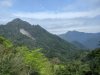
The island is really big, much bigger than I had expected, and the mountains are very high! The tallest is Mt Miyanoura at 1936m. There are about 40 other peaks higher than 1000m, and all of them are cloaked in thick forest. It really is amazing. Driving through them you feel like you're in the middle of China or somewhere, not on an island.

There are two ports on the island. Miyanoura Port, where I came in, is on the north coast, and Anbo Port is on the east cast. These are also the only two proper towns on the island and there are regular ferries to both from Kagoshima so you could come into one and leave from the other to maximise time, especially if doing it as a day-trip. The airport is about halfway between the two ports. The bus between Miyanoura and Anbo is the most frequent service. The Rakusa Hotel where I was staying is right beside the airport. There isn't much choice in food places nearby unfortunately, but they include breakfast in the price so that's something.


I arrived at Miyanoura Port at 9.45am on the first ferry. I had left my main pack at the hotel in Kagoshima so I just had my small day-pack for overnight essentials and my shoulder bag for carrying my camera etc. This meant that I didn't need to waste time going to the hotel here first to drop my pack, or leave it in a locker at the port, I could just get straight onto a bus up to the mountains in the middle of the island.

I had checked out some maps of the island's roads and trails, and the bus schedules, to see the best plan of attack. The deer and macaques were said to be most easily seen on the Seibu-Rindo forest road which is on the south-west coast. This section of road marks a 20km gap in the bus route, although you are allowed to drive it in your own car. Because I would need to do quite a bit of walking to get there from the closest bus stop I would be going there on my second day. For my first day I would be going to the Shiratani Unsuikyo Ravine in the centre of the island, because there was a bus directly there from the port which worked well with the ferry arrival time.

The saying for the island goes that it rains 35 days a month here, but luckily today was fine and mostly clear.

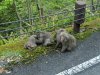
I saw my first macaques from the bus on the way through the mountains, and then when it reached the final stop there were more there as well so I could get photos. They are much smaller than the mainland Japanese Macaques, with thicker fur and they look more attractive because they are cuddlier. Not that you're allowed to cuddle them but if you were then they would certainly be cuddlier, apart for the biting.

full


full


There turned out to be an entry fee to the ravine, of 500 Yen. The forest is thick and green - almost literally everything is green because of all the moss which covers every surface inside due to the high rainfall.

Most people come to Shiratani Unsuikyo for the "Moss-covered Forest" which is (presumably) a particularly mossy place and one which inspired a Ghibli anime called Princess Mononoke. The spot is a long walk from the entrance and closures of some paths meant that to get there required using a torturous hill track. I gave up halfway because I wasn't seeing any birds and I don't need to see a moss-covered forest which is slightly more moss-covered than all the rest of the moss-covered forest. I mean, I'm from New Zealand - we invented moss-covered forests.

Instead I stayed on the trails nearer the entrance. It was extremely difficult to find any birds - I could hear plenty but I couldn't see any, even when the singing was coming from trees right next to me! Finally I saw a Varied Tit, one of the birds which is an endemic Yakushima subspecies, and even got photos.

full


Right after that, a little bird shot up a creek amongst the mossy boulders. I got my binoculars on it as it popped into view and was delighted and astonished - delonished, if you will - to see a male Japanese Robin. This was a bird I didn't think I'd see. It is a breeding migrant which returns to Japan in late March and early April, which is now, but trip reports all have it as a bird you see on the Izu Islands. I know I'm looking for two other Izu birds here (the thrush and warbler), but when looking up about Yakushima only the Ryukyu Robin was mentioned on the sites I looked at so the Japanese Robin was a pleasant surprise.

And right after that, a call drew my attention to a little brown bird hopping along a moss-covered fallen trunk, which turned out to be a Common Wren - the first one I've seen in Japan, and a subspecies (ogawae) only found on these offshore islands.

full


And then ... nothing. For the rest of the day I saw maybe three more Varied Tits, and some Brown-eared Bulbuls (which are of a local Yakushima subspecies as well, H. amaurotis matchiae).
 
Yakushima, day 2


In the night there was a terrific storm, with lightning and thunder crashing directly over the hotel. In the morning my phone told me there was a typhoon warning. I didn't want to waste the one full day I had on the island but I also didn't want to go out in a typhoon. After breakfast the rain was still coming down but it didn't seem that bad. I decided to stick with my plan of catching the bus to the last stop on the other side of the island (at Nagata) and then walking further around the coast road to the Seibu-Rindo forest road where the macaques and deer were supposed to be easy to see.

I hummed and hawed about taking my camera - if it really was going to be a typhoon I didn't want it to get ruined - but decided to take it. Just as well, because while the weather alternated between no rain and all the rain during the bus journey, for 95% of the time I was walking there was no rain. It was mostly just very overcast, although sometimes extremely blustery.

I didn't have a lot of luck with the birds. I did end up seeing twenty species overall but most of them were in the fields by Nagata, and the only which was one new for the trip was an Eastern Reef Egret seen back in Nagata's port when returning for the bus - in Japan this species is found only in the southern islands.

Initially on the walk, before reaching the forest, I kept seeing thrushes but they were all Pale Thrushes not Izu Thrushes.


In the forest, almost all the birds were Varied Tits and Brown-eared Bulbuls. If a bird was calling, it was one of those two. If a small bird was flitting through the tree canopy, it was a Varied Tit.

Green pigeons were pretty common though. Both the Ryukyu Green Pigeon and the White-bellied Green Pigeon are on Yakushima. Most of the time with green pigeons you only see them when you startle them, so your view is of birds flying very rapidly away through the trees. I saw lots of those views. One bird from a group of four was perched inside a tree where I could see it, but it had its back to me so I couldn't tell which it was - it looked like a Ryukyu Green Pigeon based on being very green and not yellowy, but I didn't really know. I saw the same little flock just along the road a bit, but they flew before I could get onto them. A little bit further again I re-found them, and one bird was perched in the open, front facing me, and it was a definite White-bellied Green Pigeon.

full

Forest along the Seibu-Rindo forest road.


It took much longer than expected but I eventually found some Yakushima Sika Deer. The first one was up a slope in the forest - I took some photos but it was quite dark. This was the best one:

full


The second deer was right beside the road and would have been perfect but it was wearing a big red radio-tracking collar so it looked like a pet deer. The third deer was better. It was blind in one eye, so I chose shots which didn't show that side!

full


I also found a big group of macaques grooming each other while sitting on rocks and logs down the slope below the road.

full


full


I had walked for three hours. The bus back was in another three hours. I had seen and photographed the macaques and deer, so I headed back. Maybe I'd see some of the birds I was after on the return walk. It only took me 1.5 hours to get back to the bus stop. I think it was probably because I was walking downhill, or maybe I had just been stopping for longer than I thought while walking in. It was a bit annoying because now I had over an hour to wait for the bus which I could have used back in the forest. But it was raining and very windy at the bus stop, so I just sat in the shelter until the bus arrived.
 
Yakushima, day 3


The next day there was no rain and the ferry back to Kagoshima was at 4.10pm. I had checked the bus schedules to make a plan for the day. Yakusugi Land worked best time-wise from where my hotel was, and sounded like it might be good for birds - despite the amusement-park-like name it is part of the island's national park and is a network of trails to specific big cedar trees in the forest. The road to get there goes from Anbo and on a map it is situated in the mountains just south of Shiratani Unsuikyo which I had visited on my first day.

I had about an hour to wait in Anbo for the bus to Yakusugi Land. I walked along the road and across the bridge. There were Coots on the water, a Japanese Cormorant perched on a rock at the river mouth, and Barn Swallows zipping everywhere. There was a little road leading off to the left on the other side of the bridge, around the port, and I saw a green pigeon fly across up ahead. I noted the tree where it seemed to have landed and headed down that way. Carefully I skirted around the tree, trying to see the pigeon before it saw me. Like the one yesterday it had its back to me, but with some manoeuvering I got into a position where I could get a proper look at it - it was a Ryuyku Green Pigeon. As I left, three or four more pigeons which I hadn't even seen flew out of the same tree.

From Anbo to Yakusugi Land was a winding single lane road. Any time the bus met a car coming the other way, the car had to reverse backwards until it could find a space to pull over and let the bus past. Some macaques were seen on the road there and back, but the only deer were two seen on way back. There are only two buses a day to and from Yakusugi Land, and because I had to catch the ferry I had only an hour there before I had to catch a bus back. Like Shiratani Unsuikyo from the first day there is an entry fee of 500 Yen, but that ticket had come with a 200 Yen discount voucher for the other, so entry today cost me 300 Yen.

The forest here is fantastic, much nicer than at Shiratani Unsuikyo. I could have stayed there all day. In the time I had the only birds that I saw were some Varied Tits, one of which was collecting beakfuls of moss.

full


I had another hour or so in Anbo waiting for the bus back to the hotel, nothing different there either. However there were loads of Brown Boobies and shearwaters (unidentifiable from the jet-foil ferry) seen on the way back to Kagoshima.


The macaques and deer did indeed prove easy to see on Yakushima, although if I had done the island as a day-trip (as initially it seemed I might have to, with the cost of the available hotels) I may not have seen them. Trying to do the Seibu-Rindo forest road by bus-and-walking is possible on a day-trip but there's no way to know how far along you'd have to go before seeing either species so it might end up being a wasted day. Shiratani Unsuikyo or Yakusugi Land would be the better options, because both are directly accessible by bus from the ferry terminals. I think you'd definitely see the macaques at both, but you might not see the deer.

Land crabs were common on the Seibu-Rindo forest road:
full


And I also came across this unfortunately-deceased Burrowing Rat Snake on the side of the road there:
full


I didn't see either the Izu Thrush or the Izu Warbler. Interestingly there are no records at all on eBird that I could see for either species on Yakushima. I know they are there though - the thrush has even been postulated as its own subspecies so it's not just a few random birds turning up now and then from another island. Maybe they just don't occur around the tourist sites.
 
In the mountains on the way to Yakusugi Land

PXL_20250328_022432425.MP.jpg

PXL_20250328_022232373.jpg

PXL_20250328_023137312.jpg


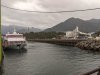
The ferry before leaving the island.
PXL_20250328_064743149.jpg


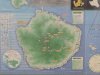
And I should have put this one near the start, but it's a map of Yakushima. The two squares are Miyanoura near the top, and Anbo on the east side.
PXL_20250328_064715455.jpg
 

Attachments

  • PXL_20250328_064715455.jpg
    PXL_20250328_064715455.jpg
    200.8 KB · Views: 109
  • PXL_20250328_022432425.MP.jpg
    PXL_20250328_022432425.MP.jpg
    174.6 KB · Views: 102
  • PXL_20250328_022232373.jpg
    PXL_20250328_022232373.jpg
    140.5 KB · Views: 106
  • PXL_20250328_064743149.jpg
    PXL_20250328_064743149.jpg
    147.8 KB · Views: 109
  • PXL_20250328_023137312.jpg
    PXL_20250328_023137312.jpg
    327.8 KB · Views: 110
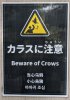
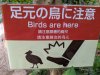
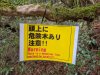
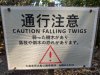
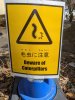
As a little stop-gap until I get the posts from the Ryukyu Islands done, here are some warning signs I saw around the "main" parts of Japan.


PXL_20250228_045034368.jpg
If you see a crow in Tokyo, you have to punch it. It's the law.

PXL_20250303_045322891.jpg
In fact birds of any kind - if birds are here then you should kick them.

PXL_20250328_013018452.jpg
On Yakushima some of the trees are actually Ents, and they will get you.

PXL_20250310_031804313.jpg
It's not just full-size trees that people need to be warned about. This sign might be for baby Ents, I'm not sure. Definitely be wary of those little twigs though.

PXL_20250309_034214324.jpg
Scared of baby butterflies? Don't worry, Japan has you covered.
 

Attachments

  • PXL_20250228_045034368.jpg
    PXL_20250228_045034368.jpg
    111 KB · Views: 97
  • PXL_20250303_045322891.jpg
    PXL_20250303_045322891.jpg
    132.7 KB · Views: 93
  • PXL_20250328_013018452.jpg
    PXL_20250328_013018452.jpg
    211.3 KB · Views: 96
  • PXL_20250310_031804313.jpg
    PXL_20250310_031804313.jpg
    185.9 KB · Views: 98
  • PXL_20250309_034214324.jpg
    PXL_20250309_034214324.jpg
    102 KB · Views: 97
As a little stop-gap until I get the posts from the Ryukyu Islands done, here are some warning signs I saw around the "main" parts of Japan.


View attachment 787497
If you see a crow in Tokyo, you have to punch it. It's the law.

View attachment 787498
In fact birds of any kind - if birds are here then you should kick them.

View attachment 787499
On Yakushima some of the trees are actually Ents, and they will get you.

View attachment 787500
It's not just full-size trees that people need to be warned about. This sign might be for baby Ents, I'm not sure. Definitely be wary of those little twigs though.

View attachment 787501
Scared of baby butterflies? Don't worry, Japan has you covered.

I thought something bad might have happened to you as your posts/blog stopped coming for a while. Glad to hear all is well and you got to see the dwarf Sika deer and the rather cute-looking island macaques- which seem to lack the red faces of the mainland ones? The jagged line on these first two warning signs seems to signify 'contact' (blat!) I guess.
 
Amami


After Yakushima I spent the night back in Kagoshima, and then the next day headed off to the airport, an hour away by bus, for my afternoon flight to Amami.

I was now leaving the "main" islands of Japan and entering the Ryukyu Islands which stretch between Kyushu and Taiwan. Yakushima is part of the northern Ryukyus, so I had actually already entered but it is so close to the Kyushu mainland that it doesn't feel like being there. The Ryukyus are all subtropical to tropical, and hence there is a range of different birds than are found in the temperate islands further north.

The islands I would be visiting were firstly Amami, home to the previously mentioned Amami Rabbit and with endemic birds including the Lidth's Jay, Owston's Woodpecker, and Amami Thrush; then Okinawa, home to the Okinawa Woodpecker, Okinawa Rail, and Okinawa Robin; and lastly Ishigaki and Iriomote. These latter two islands are very small and have just one endemic bird between them (the Iriomote Tit, which is a split from the Varied Tit), but there is also the Iriomote Cat which (spoiler alert) I did not see.

There is a ferry between Kagoshima and Amami but it is an overnight ferry so no seabird-watching along the way, whereas the flight is about the same price and only takes an hour without any of the discomfort. Between Amami and Okinawa I did take the ferry because it is during the day. There are no longer any ferries between Okinawa and Ishigaki, so that section I had to fly. Between Ishigaki and Iriomote is a fast-ferry which takes an hour. Originally, after visiting Iriomote, I was going to fly from Ishigaki to Taiwan but when it came to planning the trip properly it turned out that there are no longer any direct flights, they all go via Okinawa, so I just got a flight back there and then a separate flight to Taiwan a few days afterwards.


Itt was pouring down when the plane landed in Amami. There was a bus from the airport to town at 6.17pm but I waited for the 6.47pm instead because that one stopped directly opposite my hotel. The earlier bus stopped quite close - maybe ten minutes walk from the hotel - but it was raining so hard I chose to just wait half a hour.

The Amami Port Tower Hotel is right beside the port, so the ferry terminal for Okinawa is just a couple of minutes walk away, and it is at the north end of town and therefore close to the start of the track I wanted into the forest. However it is a bit inconvenient for food options. They have their own restaurant up on the tenth floor and I ate there the first night because it was late, but the rest of the time I walked to the nearest convenience store (about ten minutes away) for food.


It was still raining the next morning. I went out anyway and for the next seventeen hours was walking in heavy rain almost continuously. The forest track I spent my days on is called the Supa-Rindo which extends halfway down the north of the island to and through the Kinsakubaru Virgin Forest. From the hotel it was maybe twenty minutes walk up a steep hill to a three-way junction where I took the left-hand road, then an hour's walk along that road (which is itself through forest) to the start of the unpaved track, an hour up that track to another junction where a paved road connects from the side, and maybe another hour to the end of the track itself (well, not the end, but to where it met another couple of roads and there was a sign saying no entry without a guide, so I only went that far).

The very first bird seen after that first three-way junction was a Lidth's Jay! I only saw it accidentally because it was completely silent. I stopped to look at something else, turned around the way I had come, and saw the jay foraging in a tree I'd just passed. It flew away as soon as it saw my camera.

full

Lidth's Jay - I saw them every day in and around the forest but this was the best photo I could get.

A series of non-endemic birds followed, including the Ryukyu Minivet which I had seen one individual of in Osaka but here saw in flocks, and many common birds but of Ryukyu subspecies like Brown-eared Bulbul (ogawae), Oriental Turtle Dove (stimpsoni), Japanese White-eye (loochooensis), Japanese Tit (amamiensis), Varied Tit (amamii), and Japanese Pigmy Woodpecker (amamii).

full

Varied Tit, of the Ryukyu subspecies amamii.


Well along the track deep into the forest I heard woodpeckers drumming which sounded too loud to be the Pigmy Woodpeckers. I always find woodpeckers surprisingly difficult to track down when drumming, even though they sound so close and should be easy. Luckily I did manage to find these ones (or one of them at least - I could hear its mate but couldn't see it) and it proved to be the endemic Owston's Woodpecker. It was at the top of a bare tree so the photos I tried to take were just silhouettes.

I also saw a couple of Ryukyu Wild Pigs, although they bolted as soon as they saw me so no photos at all were taken. They were small, but not as small as I thought they might be after having seen the wild pigs on Kyushu which were the same size.

I stayed out until nightfall and spent several hours walking along the trail in the rain to look for nocturnal mammals without any luck. As well as the rabbits there are two forest-dwelling rats here, the Amami Spiny Rat which is found only on Amami and the Long-tailed Giant Rat which is also found on Okinawa. From trip reports all three of these mammals are common and easily seen along this trail. I thought the rain might be to blame, because it was very heavy.

There were lots of Northern Boobooks calling but they remained just as unseen as the rabbits and rats. I did, however, see an Amami Woodcock on the track, which was the one night animal I thought I probably wouldn't see. These are (technically) shorebirds - they are related to snipe and so forth - but they live inside forest instead of in wetlands, and they only come out at night.


I had been out really late the previous night so skipped morning birding on the second day. It was raining all day again. I went back up along the trail in the afternoon. There was still nothing seen at night except woodcocks - they were very common at least! I also discovered that the harsh call I'd been hearing in the trees at night was them and not woken-up bulbuls, when I had one fly over my head making the call. I checked it afterwards on eBird to make sure. The calls all seemed to come from the trees though, and twice I saw woodcocks take flight from the trees above me.


The third day was another late start but I never even made it to the forest. It was only drizzling to start with when I went up the road to get food, and I side-tracked with a little walk along the "river" to the port, seeing some common town birds like Pale and Brown-headed Thrushes and the like. Then it started pouring down again, so I just went back to the hotel - I was a bit sick of walking in the rain. I suspected the rabbits wouldn't be out in heavy rain anyway, and that's why I wasn't seeing any.

full

Blue Rock Thrush, seen along the town river which is more like a canal.


I booked another two nights at the hotel to cover my weather-related failures, and at reception organised a night tour for the rabbits for tomorrow - the price was 8000 Yen, but if it was tonight it would be 12,000 Yen because nobody else was booked. And also, of course, it was still pouring down with rain which I figured would make the excursion pointless.

There were three different companies' pamphlets in the hotel's tourist rack, all about the same price. I chose the one which just advertised night tours for wildlife because it seemed more specific - the other pamphlets were advertising a bunch of other touristy things in addition. The pamphlet was all in Japanese but from their website (amamism. com) the English name is Amami Sun Moon Adventures. On the reservation confirmation they sent through to the hotel for me, the tour is called "Amamino Black Rabbit Exploration Night Tour". I recommend this tour if going to Amami.


The next morning (day four) was still raining but the forecast was for it to clear, which it did in fact do during the day, fortunately for the upcoming night tour! Today was a good amphibian day - I found no fewer than seven Amami Sword-tailed Newts. The first one I almost stepped on but saw it just in time. I was thinking this was a really lucky find, but I saw two on the paved road through the forest, two in puddles on the forest track, one on the track further along, then coming back I found another two on the paved road (plus one of the ones in the puddle still there from earlier).

Still no Amami Thrushes or Ryukyu Robins, which were the birds I was missing.

full


full


The rain had finally cleared during the day. This was good news because the night tour involved cruising along slowly in a car with open windows. The other customers were a mother with two kids from Osaka, so they sat in the back and I sat in the front. The roof of the car opens up so everybody could get good views.

The tour went from 7 to 10pm, and is along roads through the Kinsakubaru Virgin Forest. We saw ten rabbits - the first one within about thirty seconds of starting up the road into the reserve! I see now why people just pay others to drive them around and point out the animals instead of going out looking for themselves. I'm clearly an idiot.

Four Northern Boobooks were seen catching moths from powerlines. Surprisingly, no woodcocks were seen, and very unfortunately no rats either!

I asked the guy taking the tour about the rabbits and rain. He said they don't come out in heavy rain, so at least I felt better about not having seen any when walking the forest track by myself.

full

This was actually the very first rabbit seen on the tour, and the one of which I got the best photo.


On my final day there was (finally!) good weather. I still hadn't seen the Amami Thrush or Ryukyu Robin (and I never did), so on the way to the forest I decided to try out Akasaki Park which was signposted for one of the other roads at the three-way junction. Not the best idea. It was nice enough and I saw Lidth's Jays there but it wasn't real forest and I don't know if Amami Thrushes would be there. Then I walked back to my regular track where I managed to get photos of the Owston's Woodpecker which I was pleased about.

I wasn't expecting any of the photos to show anything. The birds were right back in the forest and weren't actively moving around, just edging about on a couple of tree trunks, and I could only see them from certain angles through the branches. They can barely even be seen in the uncropped photos.

full


full


The Owston's Woodpecker is variously treated as either a subspecies of the widespread White-backed Woodpecker or as a full species endemic to Amami. It is so different in appearance that I am taking it as a full species.
 
Amami


After Yakushima I spent the night back in Kagoshima, and then the next day headed off to the airport, an hour away by bus, for my afternoon flight to Amami.

I was now leaving the "main" islands of Japan and entering the Ryukyu Islands which stretch between Kyushu and Taiwan. Yakushima is part of the northern Ryukyus, so I had actually already entered but it is so close to the Kyushu mainland that it doesn't feel like being there. The Ryukyus are all subtropical to tropical, and hence there is a range of different birds than are found in the temperate islands further north.

The islands I would be visiting were firstly Amami, home to the previously mentioned Amami Rabbit and with endemic birds including the Lidth's Jay, Owston's Woodpecker, and Amami Thrush; then Okinawa, home to the Okinawa Woodpecker, Okinawa Rail, and Okinawa Robin; and lastly Ishigaki and Iriomote. These latter two islands are very small and have just one endemic bird between them (the Iriomote Tit, which is a split from the Varied Tit), but there is also the Iriomote Cat which (spoiler alert) I did not see.

There is a ferry between Kagoshima and Amami but it is an overnight ferry so no seabird-watching along the way, whereas the flight is about the same price and only takes an hour without any of the discomfort. Between Amami and Okinawa I did take the ferry because it is during the day. There are no longer any ferries between Okinawa and Ishigaki, so that section I had to fly. Between Ishigaki and Iriomote is a fast-ferry which takes an hour. Originally, after visiting Iriomote, I was going to fly from Ishigaki to Taiwan but when it came to planning the trip properly it turned out that there are no longer any direct flights, they all go via Okinawa, so I just got a flight back there and then a separate flight to Taiwan a few days afterwards.


Itt was pouring down when the plane landed in Amami. There was a bus from the airport to town at 6.17pm but I waited for the 6.47pm instead because that one stopped directly opposite my hotel. The earlier bus stopped quite close - maybe ten minutes walk from the hotel - but it was raining so hard I chose to just wait half a hour.

The Amami Port Tower Hotel is right beside the port, so the ferry terminal for Okinawa is just a couple of minutes walk away, and it is at the north end of town and therefore close to the start of the track I wanted into the forest. However it is a bit inconvenient for food options. They have their own restaurant up on the tenth floor and I ate there the first night because it was late, but the rest of the time I walked to the nearest convenience store (about ten minutes away) for food.


It was still raining the next morning. I went out anyway and for the next seventeen hours was walking in heavy rain almost continuously. The forest track I spent my days on is called the Supa-Rindo which extends halfway down the north of the island to and through the Kinsakubaru Virgin Forest. From the hotel it was maybe twenty minutes walk up a steep hill to a three-way junction where I took the left-hand road, then an hour's walk along that road (which is itself through forest) to the start of the unpaved track, an hour up that track to another junction where a paved road connects from the side, and maybe another hour to the end of the track itself (well, not the end, but to where it met another couple of roads and there was a sign saying no entry without a guide, so I only went that far).

The very first bird seen after that first three-way junction was a Lidth's Jay! I only saw it accidentally because it was completely silent. I stopped to look at something else, turned around the way I had come, and saw the jay foraging in a tree I'd just passed. It flew away as soon as it saw my camera.

full

Lidth's Jay - I saw them every day in and around the forest but this was the best photo I could get.

A series of non-endemic birds followed, including the Ryukyu Minivet which I had seen one individual of in Osaka but here saw in flocks, and many common birds but of Ryukyu subspecies like Brown-eared Bulbul (ogawae), Oriental Turtle Dove (stimpsoni), Japanese White-eye (loochooensis), Japanese Tit (amamiensis), Varied Tit (amamii), and Japanese Pigmy Woodpecker (amamii).

full

Varied Tit, of the Ryukyu subspecies amamii.


Well along the track deep into the forest I heard woodpeckers drumming which sounded too loud to be the Pigmy Woodpeckers. I always find woodpeckers surprisingly difficult to track down when drumming, even though they sound so close and should be easy. Luckily I did manage to find these ones (or one of them at least - I could hear its mate but couldn't see it) and it proved to be the endemic Owston's Woodpecker. It was at the top of a bare tree so the photos I tried to take were just silhouettes.

I also saw a couple of Ryukyu Wild Pigs, although they bolted as soon as they saw me so no photos at all were taken. They were small, but not as small as I thought they might be after having seen the wild pigs on Kyushu which were the same size.

I stayed out until nightfall and spent several hours walking along the trail in the rain to look for nocturnal mammals without any luck. As well as the rabbits there are two forest-dwelling rats here, the Amami Spiny Rat which is found only on Amami and the Long-tailed Giant Rat which is also found on Okinawa. From trip reports all three of these mammals are common and easily seen along this trail. I thought the rain might be to blame, because it was very heavy.

There were lots of Northern Boobooks calling but they remained just as unseen as the rabbits and rats. I did, however, see an Amami Woodcock on the track, which was the one night animal I thought I probably wouldn't see. These are (technically) shorebirds - they are related to snipe and so forth - but they live inside forest instead of in wetlands, and they only come out at night.


I had been out really late the previous night so skipped morning birding on the second day. It was raining all day again. I went back up along the trail in the afternoon. There was still nothing seen at night except woodcocks - they were very common at least! I also discovered that the harsh call I'd been hearing in the trees at night was them and not woken-up bulbuls, when I had one fly over my head making the call. I checked it afterwards on eBird to make sure. The calls all seemed to come from the trees though, and twice I saw woodcocks take flight from the trees above me.


The third day was another late start but I never even made it to the forest. It was only drizzling to start with when I went up the road to get food, and I side-tracked with a little walk along the "river" to the port, seeing some common town birds like Pale and Brown-headed Thrushes and the like. Then it started pouring down again, so I just went back to the hotel - I was a bit sick of walking in the rain. I suspected the rabbits wouldn't be out in heavy rain anyway, and that's why I wasn't seeing any.

full

Blue Rock Thrush, seen along the town river which is more like a canal.


I booked another two nights at the hotel to cover my weather-related failures, and at reception organised a night tour for the rabbits for tomorrow - the price was 8000 Yen, but if it was tonight it would be 12,000 Yen because nobody else was booked. And also, of course, it was still pouring down with rain which I figured would make the excursion pointless.

There were three different companies' pamphlets in the hotel's tourist rack, all about the same price. I chose the one which just advertised night tours for wildlife because it seemed more specific - the other pamphlets were advertising a bunch of other touristy things in addition. The pamphlet was all in Japanese but from their website (amamism. com) the English name is Amami Sun Moon Adventures. On the reservation confirmation they sent through to the hotel for me, the tour is called "Amamino Black Rabbit Exploration Night Tour". I recommend this tour if going to Amami.


The next morning (day four) was still raining but the forecast was for it to clear, which it did in fact do during the day, fortunately for the upcoming night tour! Today was a good amphibian day - I found no fewer than seven Amami Sword-tailed Newts. The first one I almost stepped on but saw it just in time. I was thinking this was a really lucky find, but I saw two on the paved road through the forest, two in puddles on the forest track, one on the track further along, then coming back I found another two on the paved road (plus one of the ones in the puddle still there from earlier).

Still no Amami Thrushes or Ryukyu Robins, which were the birds I was missing.

full


full


The rain had finally cleared during the day. This was good news because the night tour involved cruising along slowly in a car with open windows. The other customers were a mother with two kids from Osaka, so they sat in the back and I sat in the front. The roof of the car opens up so everybody could get good views.

The tour went from 7 to 10pm, and is along roads through the Kinsakubaru Virgin Forest. We saw ten rabbits - the first one within about thirty seconds of starting up the road into the reserve! I see now why people just pay others to drive them around and point out the animals instead of going out looking for themselves. I'm clearly an idiot.

Four Northern Boobooks were seen catching moths from powerlines. Surprisingly, no woodcocks were seen, and very unfortunately no rats either!

I asked the guy taking the tour about the rabbits and rain. He said they don't come out in heavy rain, so at least I felt better about not having seen any when walking the forest track by myself.

full

This was actually the very first rabbit seen on the tour, and the one of which I got the best photo.


On my final day there was (finally!) good weather. I still hadn't seen the Amami Thrush or Ryukyu Robin (and I never did), so on the way to the forest I decided to try out Akasaki Park which was signposted for one of the other roads at the three-way junction. Not the best idea. It was nice enough and I saw Lidth's Jays there but it wasn't real forest and I don't know if Amami Thrushes would be there. Then I walked back to my regular track where I managed to get photos of the Owston's Woodpecker which I was pleased about.

I wasn't expecting any of the photos to show anything. The birds were right back in the forest and weren't actively moving around, just edging about on a couple of tree trunks, and I could only see them from certain angles through the branches. They can barely even be seen in the uncropped photos.

full


full


The Owston's Woodpecker is variously treated as either a subspecies of the widespread White-backed Woodpecker or as a full species endemic to Amami. It is so different in appearance that I am taking it as a full species.
Amami Rabbits look fun and worth the effort. Where guided tours score is they can save a lot of time in that they know the best/most likely places for success, but apart from the extra cost you have to sometimes put up with less than ideal company. Do you think Woodcock were actually perched up in the trees? In UK they are woodland ground dwellers but during spring they have a display flight-' roding'- where they fly around their territory on a regular 'beat'. At the same time every so often they call- a strange sort of 3 syllable noise- 'oink, twisik'. Familiar at all?
 
Do you think Woodcock were actually perched up in the trees? In UK they are woodland ground dwellers but during spring they have a display flight-' roding'- where they fly around their territory on a regular 'beat'. At the same time every so often they call- a strange sort of 3 syllable noise- 'oink, twisik'. Familiar at all?
Certainly New Guinea Woodcocks perch in trees; from personal experience!
I certainly wasn't expecting them to be in the trees (hence why I originally thought the calls were bulbuls disturbed at roost), and I tried looking up about whether they should be in the trees but the sites I looked at all just said they are ground-dwellers.
 
Okinawa


The ticket counter at the Naze ferry terminal in Amami is only open in the very early morning, closing at some time after the ferry departs at 5.50am. I had, of course, only discovered this when I went in there during the day to try and buy a ticket. I went back early the next morning on the way to the forest, and then discovered that only one ticket counter is open each morning (there are two ferry companies which alternate the days), so the "wrong" counter was open - i.e. I couldn't buy a ticket for the next morning because that ticket counter wouldn't be open until the next morning. Luckily the previous morning I had randomly passed the Amami Tourist Service when walking between the ferry terminal and the road to the forest track, so I went there later that afternoon and got my ticket from them. There would have been no problem getting it on the morning of departure but I wanted to make sure I definitely had it before booking a hotel.

The ferry comes from Kagoshima, leaving there at 6pm and travelling overnight to Amami where it arrives at 5am, and then sailing on to Okinawa during the day, arriving there at 4.40pm. There are three stops between Amami and Okinawa, at the small islands of Tokunoshima, Okinoerabu and Yoronjima. On Okinawa it stops first at Motobu Port in the north and then Naha Port in the south. All three of Okinawa's endemic birds are restricted to the forests in the north of the island (the south of the island is now mostly covered in city), so I disembarked at Motobu and took a bus from there to the town of Nago.

It was a perfect sort of day for sailing - no clouds, no rain, flat sea - but that isn't the perfect sort of day for seabirds. The only ones I saw were some shearwaters which were too distant for ID.


There are three endemic birds on Okinawa - a rail, a woodpecker, and a robin. The last one is a fairly recent split from the Ryukyu Robin which breeds on the islands further north. The Ryukyu Robin is a short-distance migrant, sending winter in the southern Ryukyus and returning in spring to breed in the northern Ryukyus, whereas the Okinawa Robin is sedentary. Both species can therefore be seen on Okinawa, depending on the time of year.

All three of these endemic birds are now found only in the north of the island, in the mountain forests of the Yanbaru National Park (or Yambaru - the name is variably spelled). The south of the island is basically one big city now - when I was going to the zoo in Naha (a bit later in the trip) I was travelling by bus for an hour to get there, and it was through the city the entire way. Not only are the birds threatened by habitat loss - the woodpecker in particular needs old-growth forest and is critically-endangered - but the island is also infested with mongooses and cats. Amami has successfully eradicated its mongooses (apparently the largest island this has been accomplished on) and are now working on their feral cats. Okinawa has not managed this - in fact I saw a mongoose while I was there (at the zoo).

Despite being restricted to just one part of the island there is, handily for birdwatchers if not for the birds themselves, a road which cuts right through the middle of that forest. Less handily, for non-driving birdwatchers there is little in the way of public transport in Okinawa. In fact, if you read some websites it is impossible to visit Okinawa without hiring a car. This is, of course, total nonsense, so long as you don't mind some walking here and there.

It's easy enough to get a bus from Nago north to Hentona, but then some walking is required. There are a couple of bus routes heading north from Hentona - including right along the road I wanted to be on - but they only run into Hentona in the morning, and out of Hentona in the late afternoon, so the reverse of what I needed.

Instead it looked like I would have to catch the first bus from Nago at 7.35am, getting to Hentona at 8.35am, then continue on foot from there to Yona, c.4km north, then turn onto the cross-island road and walk up that into the hills for c.6km to a side-road which is good for the endemic birds. Not ideal, and a later start than would be preferred, but I do what I can.


The bus from Nago costs 1210 Yen to Hentona, and takes an hour. I saw a Chinese Bulbul on the way to Hentona - it was a bit startling to see after months of only seeing Brown-eared Bulbuls.

I got to Hentona at 8.35am and found that there was a local minivan (the village bus) leaving across the island at 10am. It was a little bit of a wait but it would still be quicker than walking. I took it to Fungawa Dam which is c.11.5km from Yona, because that was easier to explain than where a random side-road was, and it cost 400 Yen.

The road from Hentona to Yona is all flat, runs beside the sea, and it has a footpath the whole way so it's a very easy walk when there is no bus. The road up into the hills has no footpath, so you need to just walk on the side of the road itself but it is perfectly safe - there is a lot of room and the road isn't busy.

I got dropped at Fungawa Dam at 10.15am. The dam and the nearby bridge is a recommended site for both the rail and woodpecker, although for the first one you need to be there in the early morning. Woodpeckers are active all the time, so I spent time scanning all the trees from the bridge, but without seeing or hearing anything other than the usual birds (Brown-eared Bulbuls, Japanese White-eyes, Japanese Bush Warblers, etc).

full

Japanese White-eye


I headed back up the road and after an hour a car pulled up with some birders in it, going towards Yona. They asked where I was parked and seemed a little flabbergasted that I was just walking. They said they had seen the woodpecker by the dam just now.

There was nothing for it but to walk back to the dam again - it was all downhill so only took about half an hour. No sign of any woodpeckers. I walked up and down that stretch of road for an hour without even a hint of a woodpecker. Eventually I gave up on that and re-continued on up to the side-road at the 7.5km mark.

The good thing with having been able to get the bus all the way to the dam was that I had seen where all these locations were along the way and by the landmarks knew roughly how far between each one it was. I quickly abandoned this particular side-road however, because it immediately started going steeply downhill and I didn't want to walk back up it, and instead carried on to the 6km side-road which had been my initial plan anyway. These two side-roads (the 7.5km one and the 6km one) are around the crest of the road, so it would be all downhill back to Yona. Both of these roads are also clearly marked as birding routes, each having a big Okinawa Woodpecker sign at the entrance.

It was 3pm by the time I reached the 6km side-road, and I still hadn't seen any of my target birds.


About 100 metres along the road, a dark bird flew up from the ground just inside the forest. There were lots of Brown-eared Bulbuls calling and flying all about but this didn't seem like one, and being on the ground inside the forest was not a characteristic of them. I got my binoculars on it and saw an Okinawa Woodpecker! I got a decent look at it as it moved up a slanting log, but as soon as I tried to take a photo it flew back into the forest. Any photos wouldn't have been much good anyway - the log was about ten metres in, and the forest was so thick it made Cambodia look like Kansas. As soon as it flew I lost sight of it. I hung around there for a while but eventually moved on.

Further up the road, I saw ferns moving on the forest floor and thought that had to be a rail. But instead another woodpecker popped out of them and climbed a sapling - this one I got some photos of.

full


I ended up seeing four woodpeckers pretty well, plus a few others not at all well which I had to assume were woodpeckers, and all of them were either on the ground or on the bases of trees. Not what I expected! In two cases I could here them foraging through the leaf-litter and (again) thought it must be rails, until they flew up and away.

I looked this up afterwards and it turns out that they typically forage on the ground, especially on trapdoor spiders, and often have their beaks covered in dirt from digging. No wonder I hadn't seen any when scanning tree canopies!

full


I had a habit of checking out all the gullies and little streams when passing, because those were the favoured haunts of the robins, and that paid off with an Okinawa Robin. I was genuinely not expecting to see one at all, because everything I read said that if you didn't see them early morning then you wouldn't see them at all. This one I saw at about 4pm. I didn't even attempt a photo because it was a very small bird in a dim gully in a thick rainforest. I'd encourage you to Google a photo of one though.

No rails were seen.

I wasn't sure how long it would take me to walk back to Hentona, and I didn't want to miss the last bus to Nago (at 7.20pm), so left earlier than I should have done. It turned out it took about exactly as long as expected - an hour for the 6km to Yona, and 40 minutes for the 4km to Hentona. Annoyingly, I arrived at the bus stop at 6.10pm, missing a bus by 4 minutes. I got some food from the 7-eleven up the road and waited an hour for the next bus.


....................................................


It had started drizzling when on that return bus, and during the night it started pouring down. The next morning it was still raining - not extremely heavily but persistently, and walking into the hills would be unpleasant. I checked the weather forecast and it said that tomorrow would be fine. So I made today the aquarium day (I had been going to leave it for when I came back through Okinawa after Ishigaki and Iriomote). The aquarium is actually quite close to Nago, and quite far from Naha (the capital city in the south of the island), and there is a bus directly there from Nago, so going here now made most sense anyway.

The Okinawa Churaumi Aquarium was easily the best aquarium I've been to in Japan. It has excellent signage, with lots of information about the scientific research the aquarium does. This isn't just a "look at the pretty fish" aquarium.

There is a Whale Shark here - the third Aquarium I've been to with this species. It is a big specimen which has been here for thirty years! The tank it is in has, according to the sign, over seventy species of fish in it, including two species each of manta and devilfish. Even though I had visited the shark-filled Aquarium at Oarai in Honshu which had almost forty species on display, there were still a number of sharks here which were new for me - Blacktip Shark, Silvertip Shark, Sandbar Shark, Silky Shark, and Spot-tailed Shark.

full

Kuroshio Sea tank

full

Silky Shark

full

Silvertip Shark

full

Spot-tailed Shark


There is a great display of little tanks for deepsea invertebrates, and another for interesting little inhabitants of coral reefs which included the inch-long Pigmy Squid. At the end is an exhibit dedicated to endemic and invasive species of Okinawa.

full

Some of the deepsea invertebrates. That spiky thing in the middle is a worm! The thing on the right is a coral!

full

Northern Pigmy Squids, the smallest squid in the world.

full

And then there is this, not a snake but a sea cucumber. It is, cleverly enough, called a Snake Sea Cucumber.


Interestingly, the pools for manatees, sea turtles, Bottlenose Dolphins and False Killer Whales are all outside in the public park so anybody can see all of those for free. According to their signage they breed several species of sea turtles every year and release the babies. They had five or so of the False Killer Whales, the first I've ever seen. They are such peculiar-looking beasts!

full

False Killer Whales


After almost four hours at the aquarium I looked at my watch and it was 12.15pm. The bus, I thought, was at 12.30 so I better get going. Just as I reached the short path to the bus stop, a bus went past. It looked like a tour bus rather than passenger bus. But when I looked at the timetable at the stop it said 12.23. It was now 12.25. Just missed it! It was over an hour to the next one. I was about to go back to the aquarium - there were food stands in the park there - but then I considered that the road was lined up with cars for the aquarium so, despite the punctuality of Japan's public transport systems, maybe the bus was just held up. I waited a few minutes and sure enough along it came.


At the end of the day I was walking to the 7-eleven to get some food, and I heard the screech of a fruit bat from across the road. I waited and one came flying out of a low fig tree, across the road, and then past me flying in the direction I was heading. Round the bend ahead were a few very low trees by the roadside, and there were a couple of Ryukyu Flying Foxes hanging in them. Annoyingly, because I was just going to the shop, I didn't have my camera. I took some photos zoomed in with my phone which meant they were awful.


....................................................


The next morning was clear - not a cloud in the sky. I still needed to see the Okinawa Rail, and this was the last day I had (when coming back from Ishigaki I would be staying in the south of the island in Naha for my last couple of days in Japan, and as I had found out the infrequent bus schedules would not allow a return to Yanbaru very easily).

I checked the trees by the road near the bus station where I had seen the bats the evening before but, as suspected, they were too low to be day-roost trees and there were no bats to be seen.

I got the bus up to Hentona and then walked to Yona and on up the cross-island road. The village minibus passed me at 11am when I was almost at the forest road at the 6km mark, so I think it probably does go every "morning" in that direction, but not at regular times. Walking up the road took about 50% longer than coming down. It was quite hot as well, with no clouds to keep the sun at bay.

It was a very quiet day. I saw two woodpeckers but with no photos. Even though one posed very nicely it was just too dark inside the forest where it was.

I spent most of the time along the 6km road, imagining that around each bend I would see a rail walking across. That's one of the annoying things with looking for an animal which is regularly reported - you can imagine exactly what it would look like in this spot, but you just keep on not seeing any.

Finally I had to call defeat and head back to Hentona. I was still keeping an eye out all the way down the road, because there were rail road-signs all the way down so they must be around. And, at about the 3km mark (ish) a rail suddenly bolted from out of the aroids by the roadside. It was an absolutely terrible sighting, about the worst possible, but I'm taking it.

I had expected the rails to be more like Weka in New Zealand - a flightless rail on an island with no natural predators, so not bothered by humans - or even like the Banded Rails on Pacific islands where they walk about through village gardens like chickens. However it seems they are just as secretive and skittish as mainland rails. Most sightings do appear to be of birds just running across the road, hence (I guess) why early morning is the suggested time to try and see them, which would be before there was much traffic going along there.


Back in Nago I had a look in the trees by the side of the street where I'd seen the bats yesterday, and found one hanging there. I generally don't use flash on nocturnal animals (it varies with the animal and the specific situation), but this was a city bat which must be used to bright light and noise, so I took a couple of photos and then left it to its devices.

full
 
PXL_20250404_083046738.jpg

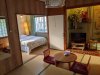
Okinawa doesn't really do "attractive" when it comes to buildings. Everything is concrete to withstand cyclones. The place I stayed in Nago was called the Shirahama Hotel. When I arrived the room keys were just sitting on the reception desk with a list matching guest names to the room key numbers. I didn't see any staff until the following evening. I went up to my room, looked at the concrete surrounds and sheet-metal door and thought "this is going to be a bad room" - and then opened the door to see this amazing sight! It was like Dorothy opening the door to Oz.


PXL_20250404_082926344.jpg
 

Attachments

  • PXL_20250404_083046738.jpg
    PXL_20250404_083046738.jpg
    115.2 KB · Views: 77
  • PXL_20250404_082926344.jpg
    PXL_20250404_082926344.jpg
    141.9 KB · Views: 78
PXL_20250405_004930825.jpg

The mini-van which runs along the roads north of Hentona, emblazoned with endemic wildlife!


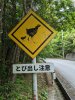
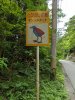
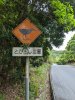
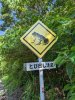
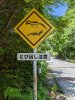
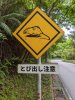
There is a wide variety of Okinawa Rail road signs along the cross-island route:

PXL_20250405_041227108.jpg
PXL_20250405_080750707.jpg
PXL_20250405_014559576.jpg
PXL_20250405_021436213.jpg
PXL_20250405_015640010.jpg
 

Attachments

  • PXL_20250405_004930825.jpg
    PXL_20250405_004930825.jpg
    205.4 KB · Views: 80
  • PXL_20250405_041227108.jpg
    PXL_20250405_041227108.jpg
    181.9 KB · Views: 83
  • PXL_20250405_080750707.jpg
    PXL_20250405_080750707.jpg
    170.7 KB · Views: 81
  • PXL_20250405_014559576.jpg
    PXL_20250405_014559576.jpg
    176.3 KB · Views: 81
  • PXL_20250405_021436213.jpg
    PXL_20250405_021436213.jpg
    150.7 KB · Views: 77
  • PXL_20250405_015640010.jpg
    PXL_20250405_015640010.jpg
    361.5 KB · Views: 83
PXL_20250405_015029391.jpg
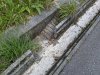
There are little escape stairs spaced regularly along the roadside gutters for any wildlife that falls in.


PXL_20250407_021600940.jpg
One of the Okinawa Woodpecker signs marking the birding spots - this is the one at the 6km side-road.


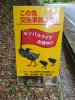
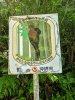
It's not just rails on the road-signs warning people to slow down:

PXL_20250407_012506146.jpg
PXL_20250407_011424820.jpg
PXL_20250405_074225644.jpg
 

Attachments

  • PXL_20250407_012506146.jpg
    PXL_20250407_012506146.jpg
    185.8 KB · Views: 82
  • PXL_20250407_011424820.jpg
    PXL_20250407_011424820.jpg
    171.6 KB · Views: 78
  • PXL_20250407_021600940.jpg
    PXL_20250407_021600940.jpg
    164.7 KB · Views: 75
  • PXL_20250405_074225644.jpg
    PXL_20250405_074225644.jpg
    163.1 KB · Views: 78
  • PXL_20250405_015029391.jpg
    PXL_20250405_015029391.jpg
    342.3 KB · Views: 81
Back
Top