Pukaha National Wildlife Center (Mount Bruce)
Set within nearly 1,000 hectares of protected forest, Mount Bruce was conceived in 1958 to primary act as a rearing center for the (at the time) recently rediscovered South Island takahe. It's since branched out to be a breeding center for a variety of endemic wildlife as well as a sanctuary for wild birds who are regularly released into the area. Think of it as a forest preserve hiking trail that’s filled with aviaries and other exhibits making for a brilliant setting overall. This was one of my post anticipated stops of the trip and it did not disappoint. We spent several hours here, first doing a guided tour through a bulk of the facility, then attending some lectures about predator trapping and other local conservation efforts, followed by another hour or two to explore the trails as we pleased.
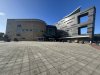
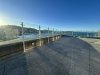
The main entry building provides a strong first impression. Inside is an exhibition room that provides a look at New Zealand's natural history before the country was ravaged by invasive mammals and farming, complete with video screens, interactive displays and taxidermied specimens. The only animals in the hall are a few juvenile tuatara who went unseen. Another prominent feature of the center is Kaka Cafe, a dining area that’s accessible even without entering the main facility. The interior is already nice, but what really elevates things is the lovely patio terrace that overlooks a gorgeous enclosure for a pair of takahe. While I was having a small lunch here there were also wild kakas and wood pigeons passing by overhead, as well as a fantail who seemed eager for attention. Sipping tea while watching rare birds; doesn’t get any better!
Kaka Cafe patio terrace
Takahe pair lounging in the sun
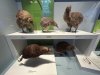
Numerous aviaries are scattered throughout the main trails holding breeding pairs of kaka, tieke, and kakariki (both yellow-crowned and red-crowned). Some patience is required when searching for the smaller birds as the enclosures are so well planted that I was able to clearly hear them, but unable to locate some. One aviary is currently empty following the passing of a particularly notable resident, the last kokako in captivity, who died in 2023 – something I was not privy to prior to visiting and was a little disappointing to learn. There are apparently some wild ones that live in the area that are possible to see/hear, but I had no such luck. If another one ends up in captivity though this will probably be the place. All of these aviaries are great, although some more variety among the inhabitants them would go a long way.
Example of the breeding aviaries -- pretty sure this one had kakarikis
The walkthrough aviary located in a more isolated part of the grounds is superb. Only a handful of species (bellbird, tui, whio, wood pigeon), but in a beautiful densely planted setting meant to emulate a bushwalk. Immediately upon entering you are greeted with to-scale sculptures of the extinct moa and Haast’s eagle – the latter of which was being used as a perch by one of the wood pigeons. There was also a stand-alone terrarium within the aviary, but it appeared to be unoccupied at the moment. Nearby are a series of semi-off-show aviaries that are more industrial in appearance which hold additional whio for those who were unable to find them in the walkthrough such as myself.
Walkthrough Aviary w/ unsigned terrarium
Just like at the national aquarium, I once again had a kiwi house all to myself for a while. There are two large enclosures connected by a shute that was open which gave the residents access to both spaces. Mount Bruce was once home to a famous white kiwi named Manukura who gained international attention. She passed away several years ago, but one of her siblings is still present off-show and while I wasn't able to see him, I did see one of his offspring who had an eye-catching white marking around his head. An effort was made to get a decent photo, but he was too busy getting chased around by his exhibit mate for me to get a clear shot. Other residents of the kiwi house include herps such as tuatara, rough gecko and Auckland green gecko. My luck with endemic lizards has been low until now, so it was a treat to admire these tiny little geckos up-close.
One of two kiwi exhibits
Auckland green gecko
Attending the two main feeding presentations should be a priority for anyone visiting the center. First was the longfin eel feeding, which has completely changed my perspective on these guys. Technically these are wild specimens who are loosely managed by the center. I’ve seen them several times over the last week and each time they were about as active as a rotting long – often drifting motionless in the water. When it’s feeding time however, that couldn't be further from the truth. After hearing our footsteps from above they emerged and swarmed the bottom of the stairs leading to the pond. It was feeding frenzy with the eels launching themselves over one another to get to the keeper holding out a spoonful of venison. It was awesome.
Eel feeding frenzy
The other can’t miss presentation is the kaka feeding. Similar to eels, there’s a large population of wild kaka that are managed by the center to an extent, basically just to keep them from harassing visitors for food. It was an absolute spectacle to watch as at least 20 kaka descended from the canopy to fight for positioning at the feeders. I felt a strong breeze as several flew directly over my head. Many of these individuals were actually captively bred at Mount Bruce and while some were released elsewhere on the north island, a number of them chose to return and routinely visit their parents in the breeding aviaries. Knowing there is only one elderly kaka left in the western world, it was especially remarkable to be surrounded by such a sizable flock. That’s something that’s been in the back of my mind when observing most of the endemic species during this trip.
North Island kaka directly above me
Mount Bruce is a terrific place and in my opinion a must-visit for anyone eager to see New Zealand wildlife in action. As a specialist breeding facility, the collection isn't the most comprehensive, but still very good with some select species rarely found elsewhere. The rarest of them all however aren’t on public view, that being the shore plovers which are the only ones of their kind in captivity. My efforts to sweet talk my way behind-the-scenes to see them were unsuccessful, but it sounds like they’ve experienced great breeding success with them in recent years. Regardless, the experience as a whole is amazing and if you have some time to kill it's worth checking out the hiking trails at the back of the grounds as well as the large redwoods which ended up here as a result of a short-lived forestry experiment.
One other thing that needs to be mentioned. For some reason the center has a massive giant weta sculpture which was used at Burning Man some years back that can shoot fire out its tusks. Just when you think you’ve seen it all…