The Aotearoa Adventure: Pachyderm Pro Goes to New Zealand

I had been waiting for this thread, so when I finally made a search to check if it had slipped through my notifications, I was pleasantly surprised to see the thread off to a great start! Those are certainly some very nice endemic species you've seen so far.

I hope the rest of your trip goes well, and I look forward to reading about it!
 
Last edited:
Napier Kiwi Crèche (Save the Kiwi)

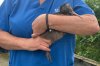
Many locals will probably be familiar with Save the Kiwi. As an organization they’ve developed numerous facilities across New Zealand dedicated to breeding, rearing, and releasing Northern brown kiwi into predator-free sanctuaries – achieving a survival rate of 99%. Just within the last year alone they’ve introduced more than 200 individuals and the role they’ve played in revitalizing the population cannot be understated. Through this abroad program, I was able to visit one of the kiwi crèches (rearing facility) that I believe opened only a few years ago in the Hawke’s Bay area. The staff were incredibly hospitable and provided some great insight into how a facility like this operates.

The set-up is essentially a single unassuming building with a bunch of kiwi pens, some connected to form larger enclosures depending on the occupants' needs. Naturally none of the kiwi were out during the day on their own terms, but we came to observe health checks for four kiwi chicks preparing for quarantine (and their subsequent release in the near future). Some of the kiwi were remarkably calm, while others were squirming and eager to get back in their nest boxes. Seeing kiwi chicks that are just a few months old was amazing itself, but to get so close and view them during the day was truly once in a lifetime. It has to be acknowledged how lucky I am to have witnessed something most will never get to experience. The round shadow I saw at Auckland Zoo earlier on did not convey how wonderfully bizarre these birds are.

This is a highly secretive facility not open to the general public, so while we were able to take photos it was requested that we don’t post them on social media. However, I contacted the organization after the fact and was given the greenlight to share one as long as it was only of the kiwi itself and did not reveal specifics about the location or design of the enclosures. Greatly appreciate their flexibility! So here’s a rambunctious little ratite who goes by the name Pebbles:

Kiwi.jpg
 

Attachments

  • Kiwi.jpg
    Kiwi.jpg
    115.2 KB · Views: 81
National Aquarium of New Zealand

Located in the seaside city of Napier, New Zealand’s National Aquarium opened in its current iteration in 1976. Napier has long had a history of aquatic attractions including an original aquarium much smaller than the current one, as well as a marine park that kept mammals such as common dolphin and New Zealand fur seal among others. Both of those facilities are long gone and mammals are entirely absent from the aquarium today. The name makes it sound like a major facility, which I suppose it is, but it’s nowhere near as large as the most notable aquariums in the U.S. or Europe. In fact, I was there for two hours and managed to see the entire place three times over, even while lingering at the more interesting bits. Just by looking at the building from the outside you can tell it isn't gonna be a showstopper, but it doesn't need to be, because it's simply a very good aquarium from top to bottom (literally).

Nearly all of the exhibits can be found across a cylindrical two-floor hall that starts guests out at the top and gradually descends downward. The first exhibits on the top floor include a series of flooded forest tanks with pacu, cichlids and a variety of other rainforest fish. Each are nicely done and flow together visually as one large space. That was followed by an unusual display for goldfish and koi that I think was meant to represent a bathroom or something. Maybe commentary about people flushing their pet fish once they get too big? I don't know but it was different. Numerous larger exhibits follow including a spacious water dragon display, a lengthy freshwater tank with an emphasis on red-eared sliders, and a handful of reef tanks. There was also a massive tuatara substantially larger than the others I’ve seen so far – I didn't realise how long it takes for these guys to be fully grown and they are quite impressive.

full

Flooded Forest Tanks

full

Goldfish and Koi Bathroom(?) Exhibits

full

Warmer Waters Tank

Arriving at the ground level I was greeted with another dose of kiwi complimenting my time at the kiwi crèche an hour beforehand, this time two adults actively exploring their nocturnal enclosure. Whereas Auckland Zoo’s nocturnal house was a bit too overwhelming and crowded with other visitors for me to really appreciate them, here it was just me and the birds. I watched them scurry around their enclosure for about 20 minutes in search of food buried in the mulch substrate. Such a treat to have them to myself for a bit! Other exhibits on the ground floor include a rocky shores display that can be viewed from both levels, yet another open-topped longfin eel exhibit (considerably smaller than the others I've seen), and assorted exhibits for some reasonably common species like hawksbill sea turtle, moray eel and pot-bellied seahorse. Also here are a couple southern bell frogs, only kept at five facilities worldwide all in Australasia.

full

Kiwi Exhibit

full

Rocky Shores Exhibit from the second floor.

Around the bend is a covered outdoor enclosure home to the aquarium's pride and joy, a colony of 16 little blue penguins. It’s an excellent exhibit complete with wave machines to keep things in constant motion, probably the highlight of the place overall. A feeding was taking place which enabled me to get a really good look at this species for the first time. Every time I’ve seen them before elsewhere they were huddled away at the back of their enclosures, but the ones here were energetic and really put on a show. This particular colony gained international notoriety on social media a few years back for having a good and naughty penguin of the month. This month's good penguin goes by the name of Flip; she earned this distinct honor by reclaiming her mate and burrow after another penguin attempted to move in. Well done to her!

full

Little Blue Penguin Exhibit

full

The Blue Bird Group

Finishing off the aquarium is the Oceanarium. Highly reminiscent of Kelly Tarlton’s, it’s a large reef tank (or perhaps two split in half by an acrylic panel) with a walkthrough underwater tunnel. You get the jist. The aquarium recently decided to go out of sharks so the short-tail stingrays are the only headliners, although I’d argue the real star of the show was a charismatic pufferfish who was stealing the hearts of his admiring onlookers. What else is there to say other than it’s another very good underwater tunnel exhibit which seems like something every aquarium is mandated to have these days. Should also mention the preserved giant squid specimen by the main window -– very cool!

full

Oceanarium Tunnel

Now that I’ve seen every major aquarium in New Zealand (all two of them) I can safely say the National Aquarium surpasses Kelly Tarlton’s. It’s far more professional in appearance even if Kelly Tarlton's arguably does a few things better: slightly cooler tunnel I guess, better eel display, maybe penguins but that's up to preference. There’s also kiwi which always helps. Even with only 20 or so exhibits the atmosphere of the place overall is lovely and as a piece of architecture it's really appealing. Amazing views of the ocean from an education/event room on the top floor as well. I’d love to come back one day even if there aren't any notable changes; the city itself is also beautiful with it's art-deco architecture and it's somewhere worth spending some quality time. Unfortunately I only had an hour to walk around and grab lunch at a charming little bakery just a hop, skip, and jump away from the aquarium.
 
That was followed by an unusual display for goldfish and koi that I think was meant to represent a bathroom or something. Maybe commentary about people flushing their pet fish once they get too big? I don't know but it was different. Numerous larger exhibits follow including a spacious water dragon display, a lengthy freshwater tank with an emphasis on red-eared sliders, and a handful of reef tanks.
The goldfish area is supposed to be a sort of Chinese temple area (the fish are all Asian carp species) but it does just look like a bathroom.

The Red-eared Slider tank was originally for a Saltwater Crocodile, and then American Alligators. All the sliders are rescue animals I think, which is why there are so many of them. Did you see the huge old Tinfoil Barbs in there? (Edit: I guess you did - there's one in your photo).
 
The Red-eared Slider tank was originally for a Saltwater Crocodile, and then American Alligators. All the sliders are rescue animals I think, which is why there are so many of them. Did you see the huge old Tinfoil Barbs in there? (Edit: I guess you did - there's one in your photo).
Well that’s certainly a downgrade. With both large crocodilians and sharks now gone, the aquarium does feel like it’s missing a large predator as a headlining species. That tank in particular felt almost comically large for sliders and I was somewhat baffled as to why they are given such a focus, although the large barbs were pretty neat.
 
Finishing off the aquarium is the Oceanarium. Highly reminiscent of Kelly Tarlton’s, it’s a large reef tank (or perhaps two split in half by an acrylic panel) with a walkthrough underwater tunnel.
I missed this bit. It is two tanks. The flat viewing window by the tunnel entrances, called the Pania Reef Tank, is a separate tank for smaller fish, while the main tank for larger fish (where the sharks were) is behind that. You can see the junction as you go through the tunnel, but from the front it looks like viewing into a single big tank so it's quite effective.
 
Pukaha National Wildlife Center (Mount Bruce)

Set within nearly 1,000 hectares of protected forest, Mount Bruce was conceived in 1958 to primary act as a rearing center for the (at the time) recently rediscovered South Island takahe. It's since branched out to be a breeding center for a variety of endemic wildlife as well as a sanctuary for wild birds who are regularly released into the area. Think of it as a forest preserve hiking trail that’s filled with aviaries and other exhibits making for a brilliant setting overall. This was one of my post anticipated stops of the trip and it did not disappoint. We spent several hours here, first doing a guided tour through a bulk of the facility, then attending some lectures about predator trapping and other local conservation efforts, followed by another hour or two to explore the trails as we pleased.

The main entry building provides a strong first impression. Inside is an exhibition room that provides a look at New Zealand's natural history before the country was ravaged by invasive mammals and farming, complete with video screens, interactive displays and taxidermied specimens. The only animals in the hall are a few juvenile tuatara who went unseen. Another prominent feature of the center is Kaka Cafe, a dining area that’s accessible even without entering the main facility. The interior is already nice, but what really elevates things is the lovely patio terrace that overlooks a gorgeous enclosure for a pair of takahe. While I was having a small lunch here there were also wild kakas and wood pigeons passing by overhead, as well as a fantail who seemed eager for attention. Sipping tea while watching rare birds; doesn’t get any better!

full

Kaka Cafe patio terrace

full

Takahe pair lounging in the sun

Numerous aviaries are scattered throughout the main trails holding breeding pairs of kaka, tieke, and kakariki (both yellow-crowned and red-crowned). Some patience is required when searching for the smaller birds as the enclosures are so well planted that I was able to clearly hear them, but unable to locate some. One aviary is currently empty following the passing of a particularly notable resident, the last kokako in captivity, who died in 2023 – something I was not privy to prior to visiting and was a little disappointing to learn. There are apparently some wild ones that live in the area that are possible to see/hear, but I had no such luck. If another one ends up in captivity though this will probably be the place. All of these aviaries are great, although some more variety among the inhabitants them would go a long way.

full

Example of the breeding aviaries -- pretty sure this one had kakarikis

The walkthrough aviary located in a more isolated part of the grounds is superb. Only a handful of species (bellbird, tui, whio, wood pigeon), but in a beautiful densely planted setting meant to emulate a bushwalk. Immediately upon entering you are greeted with to-scale sculptures of the extinct moa and Haast’s eagle – the latter of which was being used as a perch by one of the wood pigeons. There was also a stand-alone terrarium within the aviary, but it appeared to be unoccupied at the moment. Nearby are a series of semi-off-show aviaries that are more industrial in appearance which hold additional whio for those who were unable to find them in the walkthrough such as myself.

full

Walkthrough Aviary w/ unsigned terrarium

Just like at the national aquarium, I once again had a kiwi house all to myself for a while. There are two large enclosures connected by a shute that was open which gave the residents access to both spaces. Mount Bruce was once home to a famous white kiwi named Manukura who gained international attention. She passed away several years ago, but one of her siblings is still present off-show and while I wasn't able to see him, I did see one of his offspring who had an eye-catching white marking around his head. An effort was made to get a decent photo, but he was too busy getting chased around by his exhibit mate for me to get a clear shot. Other residents of the kiwi house include herps such as tuatara, rough gecko and Auckland green gecko. My luck with endemic lizards has been low until now, so it was a treat to admire these tiny little geckos up-close.

full

One of two kiwi exhibits

full

Auckland green gecko

Attending the two main feeding presentations should be a priority for anyone visiting the center. First was the longfin eel feeding, which has completely changed my perspective on these guys. Technically these are wild specimens who are loosely managed by the center. I’ve seen them several times over the last week and each time they were about as active as a rotting long – often drifting motionless in the water. When it’s feeding time however, that couldn't be further from the truth. After hearing our footsteps from above they emerged and swarmed the bottom of the stairs leading to the pond. It was feeding frenzy with the eels launching themselves over one another to get to the keeper holding out a spoonful of venison. It was awesome.

full

Eel feeding frenzy

The other can’t miss presentation is the kaka feeding. Similar to eels, there’s a large population of wild kaka that are managed by the center to an extent, basically just to keep them from harassing visitors for food. It was an absolute spectacle to watch as at least 20 kaka descended from the canopy to fight for positioning at the feeders. I felt a strong breeze as several flew directly over my head. Many of these individuals were actually captively bred at Mount Bruce and while some were released elsewhere on the north island, a number of them chose to return and routinely visit their parents in the breeding aviaries. Knowing there is only one elderly kaka left in the western world, it was especially remarkable to be surrounded by such a sizable flock. That’s something that’s been in the back of my mind when observing most of the endemic species during this trip.

full

North Island kaka directly above me

Mount Bruce is a terrific place and in my opinion a must-visit for anyone eager to see New Zealand wildlife in action. As a specialist breeding facility, the collection isn't the most comprehensive, but still very good with some select species rarely found elsewhere. The rarest of them all however aren’t on public view, that being the shore plovers which are the only ones of their kind in captivity. My efforts to sweet talk my way behind-the-scenes to see them were unsuccessful, but it sounds like they’ve experienced great breeding success with them in recent years. Regardless, the experience as a whole is amazing and if you have some time to kill it's worth checking out the hiking trails at the back of the grounds as well as the large redwoods which ended up here as a result of a short-lived forestry experiment.

One other thing that needs to be mentioned. For some reason the center has a massive giant weta sculpture which was used at Burning Man some years back that can shoot fire out its tusks. Just when you think you’ve seen it all…

full
 
I’d love to come back one day even if there aren't any notable changes; the city itself is also beautiful with it's art-deco architecture and it's somewhere worth spending some quality time.
Also, just for interest's sake you should have a quick read about the 1931 Napier earthquake. There was a 2.7 metre uplift, so a lot of what you see there now used to be the seabed. Most of Napier and Hastings were destroyed and 256 people died, but this is the reason for all the Art Deco buildings because they had to rebuild basically the entire town.
 
The rarest of them all however aren’t on public view, that being the shore plovers which are the only ones of their kind in captivity. My efforts to sweet talk my way behind-the-scenes to see them were unsuccessful, but it sounds like they’ve experienced great breeding success with them in recent years.
In case anyone reading this thread is interested in seeing this species in the future, they're quite easy to see on Motutapu Island at West Point Beach, a reintroduced population (history of thems a bit weird, unsure about initial but for a time all birds were taken off the island because of a stoat ~2021, they're back now and have been breeding for some time, but high chance you'll ran into captive released birds), interestingly when I submitted bands of a pair of birds at the start of last year both were captive bred at Isaac Conservation & Wildlife Trust in Christchurch, I believe they are still being bred there, with the DOC website implying Cape Sanctuary may also have aviaries (as they're also listed under captive-breeding).
 

Attachments

  • Screenshot 2025-05-30 at 4.56.25 PM.png
    Screenshot 2025-05-30 at 4.56.25 PM.png
    264 KB · Views: 4
This is a wonderful thread and I've been very much enjoying it and it's great to compare and contrast the facilities. You always have a great touch for this stuff. The National Aquarium and Pukaha National Wildlife Center on the newest page look very impressive and I love the look of the aquarium's Kiwi exhibit!
 
I’ve officially arrived in Wellington for the third and final leg of this trip with several places still left on the docket. On the way to the capital city hour however, we took a brief detour to a premiere wildlife watching spot only 40 minutes away. This visit was highly weather dependent and I wasn't sure if it would work out given the recent rainfall, but things cleared up at just the right time which allowed for an immensely exhausting, humbling, and rewarding day.

Kapiti Island

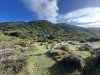
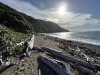
New Zealand has experimented with two primary types of protected sanctuaries for their most critically endangered species: large forests surrounded by a predator-proof fence (more on that tomorrow) and restored off-shore islands inaccessible to mammals. Today I visited one of the most famous of these off-shore islands located off the southwest corner of the North Island. Kapiti Island was designated as a marine reserve in 1992 and is located about three miles off the coast acting as a safe haven for endemic birds who live without risk of predation. To ensure we weren't accidentally bringing over something that may harm the island residents, bags are inspected before stepping aboard the boat. Even something as seemingly insignificant as a single red ant could derail the work gone into this place. Upon arrival we were greeted by a pair of wild gannets who are apparently rarely seen in the area according to our guide, alongside a motley of other seabirds. The landscape is absolutely jaw-dropping and photos aren't able to convey the sheer size of these mountains. One of the most beautiful places I’ve been to without question.

IMG_1098.jpg

IMG_1100.jpg

Priority number one was to see the takahe pair that lived on this side of the island. My guide disappeared before I could ask her where they could reliably be seen, so I went off on my own to locate them. After traversing pretty much the entirety of the lower island I remained baffled as to where they could be, only to find they were right around the corner from the visitor center which is quite literally the last place I checked. Safe to say at this point that these guys are my favorite New Zealand endemic bird. They are highly impressive yet endearing at the same time with beautiful colorations. I stopped by again just before leaving and they were still in the same spot with one standing guard as the other ate from the feeder. Just a side note, but this had me thinking about how many people overvalue enclosure size in captive settings for some species – these guys have access to pretty much this entire reserve yet choose to spend most of their time in this small little area where food can reliably be found.

full


Numerous other birds were plentiful around the lower portion of the island in the more wooded areas: tui, bellbird, red-crowned kakariki, tieke, weka, North Island robin and others were all seen throughout most of the area. The wekas in particular do exceptionally well here – perhaps a little too well. Conversations are being had about to handle their overabundance which is harming the other bird populations in the area. They’re bold little guys who had no problem strolling right around people, with one coming just a couple feet away completely unbothered.

My faculty advisors had forewarned us that we would probably only have time to either explore the bottom of the island or take the hike to the summit at the top of the island, but not both. After traversing the lower portion in its entirety, I figured I’d see how far I could get on the summit hike before needing to turn around. Within a heavily forested valley were some larger birds like kaka and wood pigeon who flew throughout the canopy. About halfway to the summit is where the stitchbird feeders are located and I was delighted to see this incredibly rare species… or so I thought. Turns out what I had been marveling at was actually just an abundance of bellbirds that were misidentified in the moment. You haven't made a birder out of me yet!

Originally I was just going to turn around at the stitchbird feeders, thinking I wouldn't have enough time to reach the summit before the last boat left. And yet I persisted forward, knowing I would leave unsatisfied if I didn't give it a go. They doubted me, but they didn't know they were talking to a former high school cross country captain. By kicking it up a notch I reached the summit drenched in sweat with time to spare. Visibility wasn't great, but I was still able to catch a view of the South Island and revel in the pride of going the distance. Immensely satisfying to conquer the steep trails weighed down by a backpack and camera bag. The way back down however felt like competing in a cheese roll. I was tumbling down the steep downhill trails at a rapid pace focusing on not getting my foot caught on a tree root or falling off a cliffside. Roughly two hours is what it took to reach the summit, but I somehow was able to get back down off the mountain in just over 30 minutes. I finished up the final switchback right where I started and celebrated finishing the trail… then I immediately tripped over a rock and completely wiped out. Life is a mystery.

IMG_1201.jpg

As I’m typing this every part of my body is sore beyond belief. No rest for the wicked however; I’m back at it tomorrow at another protected wildlife sanctuary.
 

Attachments

  • IMG_1098.jpg
    IMG_1098.jpg
    273.8 KB · Views: 66
  • IMG_1100.jpg
    IMG_1100.jpg
    232.2 KB · Views: 64
  • IMG_1201.jpg
    IMG_1201.jpg
    130.2 KB · Views: 69
Zealandia

While off-shore islands have a natural barrier in the form of several miles of ocean, inland sanctuaries have also taken off across New Zealand alongside the invention of the predator-proof fence. Zealandia was the first of these eco-sanctuaires when it opened in 1999 and is basically a massive forested valley at the heart of Wellington that’s completely enclosed. The goal is to recreate what New Zealand would still be like without farming, invasive mammals, and industrialization. It's played a pivotal role in the reintroduction of multiple species to the region such as kaka and tui, as well as little spotted kiwi which they recently passed a major milestone with. Just last week 15 kiwi were transported to another sanctuary in Hawke’s Bay after they reached capacity – a testament to how impactful Zealandia has been.

We first arrived in the afternoon to linger around at our own pace and take in the views in the daylight, which as expected were spectacular; especially from the top of the upper dam. There’s a magnificent entrance building that’s incredibly modern and attractive both inside and out. An exhibition hall inside is highly impressive, like a better version of the one at Mount Bruce. The video they had playing was really well done, showcasing the natural history of New Zealand brilliantly by recreating scenes from hundreds of years ago to illustrate the extinction of moa, Haast’s eagle, huia, etc. Along with preserved specimens of the extant birds found in the sanctuary, there were also life-sized moa and Haat’s eagle models. Such a shame these incredible animals are gone for good. Imagine an alternate timeline where you’re walking around Zealandia in search of 12 foot tall ratites and mega raptors.

full

Entrance Building

full

Exhibition Room

Once outside I immediately stumbled upon a rarity in the form of a pied shag who was hanging out underneath the Valve Tower boardwalk. There are several shag species that took up residence around the main reservoir and it was super cool to have one that close. From there I saw a number of birds which I’ve become well acquainted with over these last two weeks: kaka, wood pigeon, tui, bellbird, fantail, and North Island robin were all plentiful. Missed out once again on stitchbirds, but I did nab one more bird I hadn't seen prior; a pair of silvereye/tauhou. The kaka were once again a highlight with a large flock making a real show at one of the feeders. Apparently 2,000 have been born in Zealandia since its inception. Sadly the last takahe died recently so they are without my favorite endemic species for the moment, but according to staff they are working on getting new ones as they become available.

full

Kaka feeder -- not sure what the big man on top is doing.

full

Pied Shag by Valve Tower

full

Silvereye

The only residents of the sanctuary who aren't technically wild are approximately 200 tuatara who live in a sizable pen near the middle of the sanctuary for research purposes. Zealandia was the first to research the relationship between kiwi and tuatara, who both utilize similar environments, ultimately concluding that the two don’t seem to mind each other.

full

Tuatara Enclosure

The main event however was the night tour which lasted about two hours. This was a thrilling experience and one that was slightly surreal. The main goal was to find little spotted kiwi, but alas, we were unsuccessful. I heard plenty of them though, with males calling throughout the night in an effort to claim newly available territory following the recent departures. Instead the highlight ended up being another brown terrestrial bird; the pātake. We first saw a trio (female and two chicks) scurrying on by in rather comical fashion without acknowledging our presence. About 10 minutes later we saw a singleton feeding on scraps at one of the kaka feeding stations. They may just look like a generic duck, but behaviorally are so weird and kinda goofy. Surprisingly we also saw several tuatara in their massive enclosure, as well as both cave and tree weta. The glow worms were also amazing, almost mesmerizing although there weren't as many as you’d find in a cave (which I won’t be able to do this time around). So although I was unsuccessful at locating a wild kiwi, the experience was still amazing and something I highly recommend. Plus, I actually did see a little spotted kiwi last week somewhere else. I’ll elaborate on that once this trip wraps up.

full

A glorious view from the upper dam.
 
Last edited:
If you were informed that Zealandia does not currently have any Takahē, then that is incorrect. There is a non-breeding pair of Takahē named Waitaa and Bendigo at Zealandia, but they are allowed to roam most of the sanctuary rather than being kept in the now-empty Takahē enclosure.
 
If you were informed that Zealandia does not currently have any Takahē, then that is incorrect. There is a non-breeding pair of Takahē named Waitaa and Bendigo at Zealandia, but they are allowed to roam most of the sanctuary rather than being kept in the now-empty Takahē enclosure.
That is what staff told us, but I’m happy to hear it’s incorrect. Where was that enclosure located anyway?
 
That is what staff told us, but I’m happy to hear it’s incorrect. Where was that enclosure located anyway?
The Takahē enclosure encompassed an area of land that was on the eastern shore of the lower dam; if you saw the metal staircase that leads down to a short bridge that lies directly above the lower dam, the Takahē enclosure was just beyond there. The Takahē had feeding stations on and near a small lawn that was in their enclosure, and the Takahē were easiest to see while they used the feeders. The enclosure was large and was bordered by a few gates that visitors were supposed to close behind themselves, but there was actually no barrier between the enclosure and the shore of the lower dam; presumably because Takahē rarely swim even though they are able to.
 
I’ve officially wrapped up my time in New Zealand and am in route back to Chicago as we speak. Yesterday we went out with a bang visiting two major attractions: Wellington Zoo in the morning and Te Papa in the afternoon. While I went to the zoo first, I’m gonna review it last so this thread ends on a more appropriate note. First the museum! I may be somewhat brief here compared to some other posts.

Te Papa (Museum of New Zealand)

Full disclosure; I’m not much of a museum guy, or at least I thought I wasn't. My mentality has always been along the lines of “why bother seeing dead animals when I can see live ones?” as zoos are very much living museums. This has led to me taking for granted the fact that I live near one of the world’s finest natural history museums and haven’t visited it since I was in the single digits. After a couple hours at Te Papa, I’ve all of a sudden had a change of heart and am itching to go back. It’s a brilliant place and looks gigantic from the outside, serving as a glorious centerpiece of Wellington near the waterfront.

IMG_1229.jpg
Museum Exterior

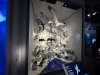
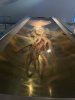
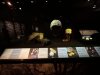
First was the Nature Hall which was of course going to be the highlight. Inside is about as holistic of a collection of preserved New Zealand wildlife as you could possibly imagine. Really loved the display showcasing all five species of kiwi, as well as the display of various dolphin and whale skulls. There’s a room called the nest which showcases calls of both extant and extinct bird species that was neat. This hall was also my introduction to the antipodean albatross which is the most absurd seabird I never knew existed -- I need to see one of these things. Arguably the most prized possession of the museum is the massive colossal squid specimen, the only one of its kind displayed anywhere. Can’t believe this is a real animal that exists. One other thing of note is Bush City which is basically an outdoor garden that spans across two floors and is quite nice.

IMG_1450.jpg
The Five Kiwi of the World

IMG_1426.jpg
Seabird Display

IMG_1429.jpg
Colossal Squid -- no picture can do the size of this thing justice.


Directly above is a natural history hall exploring the relationship between the land and people. Here I learned that governor George Grey created his own zoo on his private island while in office, where he conducted experiments with different species. Lots of other cool models, the highlight here however was the kakapo display. There are several specimens throughout the museum, but this gallery features a few extra items relating to the species’ conservation efforts. If you’re familiar with Sirocco, the famed kakapo who shagged conservationist Mark Carwardine, you may be aware of the birds' habits of attempting to mate with anything but their own species. This revelation made conservationists design a helmet that could be worn by people with the function of collecting kakapo sperm. A robotic female kakapo was also designed to be a mating lure which would serve a similar purpose. Ultimately both of these creative/hilarious efforts were unsuccessful and are now displayed here.

IMG_1439.jpg
Kakapo Sperm Collectors -- an effort was made.

Naturally the wildlife halls were the most interesting to me (and probably most of you), but I’ll briefly mention the other exhibitions as well. The Gallipoli exhibition showcases real stories and artifacts from New Zealand’s involvement in the first world war – powerful stuff. Inside are these massive super-sized models of soldiers and the detailing on these is jaw-droppingly amazing. You need to see it in person to fully appreciate just how realistic they appear. The maori exhibition was also of interest (with limited photography opportunities for cultural reasons) with lots of fascinating displays showcasing how tribes lived. Other exhibitions include halls dedicated to the Treaty of Waitangi (the agreement between English settlers and the Maori tribes), immigrant stories, and earthquake breakers, as well as a Toi Art exhibition that opens later this month.

IMG_1431.jpg
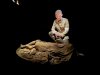
Super-sized WWI Soldiers

There’s also an observation deck at the top of the museum overlooking the harbor. Unlike Chicago, Wellington’s nickname as the windy city is meant in the literal sense and nowhere was that better felt than right here. Still was a great view that made for a place of calm reflection.

IMG_1448.jpg
Observation Deck
 

Attachments

  • IMG_1229.jpg
    IMG_1229.jpg
    189.3 KB · Views: 56
  • IMG_1426.jpg
    IMG_1426.jpg
    120.4 KB · Views: 54
  • IMG_1429.jpg
    IMG_1429.jpg
    50.5 KB · Views: 62
  • IMG_1431.jpg
    IMG_1431.jpg
    55.3 KB · Views: 53
  • IMG_1439.jpg
    IMG_1439.jpg
    97.2 KB · Views: 52
  • IMG_1448.jpg
    IMG_1448.jpg
    167.7 KB · Views: 53
  • IMG_1450.jpg
    IMG_1450.jpg
    114.2 KB · Views: 51
Zealandia sounds utterly fascinating!

The only residents of the sanctuary who aren't technically wild are approximately 200 tuatara who live in a sizable pen near the middle of the sanctuary for research purposes. Zealandia was the first to research the relationship between kiwi and tuatara, who both utilize similar environments, ultimately concluding that the two don’t seem to mind each other.
I may be overthinking this, but does this suggest a mixed exhibit display between these species could be theoretically possible? I assume it would not be attempted outside New Zealand as they are both sensitive species in few numbers, but it'd be an interesting mix.

Full disclosure; I’m not much of a museum guy, or at least I thought I wasn't. My mentality has always been along the lines of “why bother seeing dead animals when I can see live ones?” as zoos are very much living museums. This has led to me taking for granted the fact that I live near one of the world’s finest natural history museums and haven’t visited it since I was in the single digits. After a couple hours at Te Papa, I’ve all of a sudden had a change of heart and am itching to go back.
I can definitely understand this and felt similarly for a long time (though my love of prehistoric species did help balance me) but I'm glad visiting a different museum reinvigorated you and definitely recommend heading back to the Field when you can! I feel I appreciate it really different as an adult - the stories behind the specimens for one thing (I imagine you know some of these already) as a historian, but also I do like personally to focus on the species that can't be seen in captivity. The passenger pigeon display is one of my favorite at the Field for example. ;)

Sounds like a fantastic museum and between my history nut and wildlife nerd, I'd love to visit if I'm ever in New Zealand myself.
 
Happy to see your trip is going well, and enjoying reading about the endemic bird species.

Full disclosure; I’m not much of a museum guy, or at least I thought I wasn't. My mentality has always been along the lines of “why bother seeing dead animals when I can see live ones?” as zoos are very much living museums. This has led to me taking for granted the fact that I live near one of the world’s finest natural history museums and haven’t visited it since I was in the single digits. After a couple hours at Te Papa, I’ve all of a sudden had a change of heart and am itching to go back. It’s a brilliant place and looks gigantic from the outside, serving as a glorious centerpiece of Wellington near the waterfront.
I made a return to the Field Museum after many years myself last summer, and after learning much more about the natural world, it was an excellent visit like never before. I'm sure you'll have a newfound appreciation if you return yourself, it's full of spectacular specimens, although not too many of those NZ endemics, IIRC.
 
Back
Top