Snowleopard's 2024 Road Trip: Thailand, Malaysia, Singapore & Indonesia

The last time I see this the giraffe exhibit was completely swarmed by a herd of common eland. Like it is a breeding place for them I have never saw that amount of elands within a single place.
Yes, the elands are still there in quite a large number. The nearby Chapman's zebras are still for some reason held in a separate area with wired fences (Which is near, I believe, the zoo's passerines breeding facility).

Since last year, the area now also hosted a smaller group of chital and blackbuck, as well several Kafue lechwe that ventured from their area located across the anoas, wisents, and babirusas.
 
it opened in 1981 on 136 acres/55 hectares.
When the park opened is suprisingly an inconsistent information. 1980 (And this is the first time I heard of 1981) are often being cited as the zoo's opening date, but the son of one of the founder of Taman Safari Indonesia (Who's now managing Aviary Park, a bird park and insectarium located just outside of Jakarta) mentioned to being first opened in 1984, with the 1980 date being cited as the first time the park began construction.

I've seen Giant Pandas at 11 zoos (plus the temporarily empty Giant Panda complex at Chiang Mai Zoo in Thailand) and nobody does pandas like Bogor. This place even tops Ouwehands Zoo in the Netherlands in terms of theming. There is only one way to see the pandas and that is to walk through the grounds to the upper left-hand side of the zoo map, then board a bus that drives visitors up a long and winding road into the chilly Indonesian mountains. Here, lying in wait, is an amazing area where the pandas are the showcase species. They arrived in 2017, in the shape of 'Hu Chun' and 'Cai Tao', and you can bet this whole area cost a fortune to build.
The general warm bilateral relationship between the Chinese and Indonesian government and their businesses, as well as the novel idea of bringing the very popular giant pandas to Indonesia, contributed to the very grand design of the Panda Palace. Located the park's highest geographic point, Taman Safari Bogor really try to make their giant panda experience, the first ever in Indonesia, to be as impressionable as possible, knowing how popular pandas are.

Some reasons why one need to use the park's bus ride service (to some might be a scary experience due to the extreme road) is that to avoid intensive noises from visitors cars and others, as well as to have the pandas and other animals in a more natural enviroment as possible. The exhibit being located in a chilly hill-side was done to fulfill that purpose.

First announced in 2013 to celebrate that year's 63rd anniversary of the China-Indonesia relationship, Hu Chun and Cai Tao originated from the Bifengxia Giant Panda Base in Sichuan and arrived in Indonesia on September of 2017, later on displayed after two months of habituation.
  • Hu Chun is a female giant panda, born on September 8, 2010. Her parents are Wu Gang (M) and Ye Ye (F). Hu Chun apparently have a personality trait of hating rain and wet weather condition, so she's the panda you will often see in the indoor exhibit.
  • Cai Tao is a male giant panda, born on August 4, 2010. His parents are Yuan Yuan (M) and Na Na (F). He's the giant panda you'll see in the exhibit next to the restaurant.
There have been three attempts to breed the pair, including also via artificial insemination, as a birth of a baby has been mentioned to be one of the park's main objective with the pandas. The zoo has also build their own bamboo plantations that is around 10 hectares in size. Both Hu Chun and Cai Tao, as part of the so-called "panda diplomacy", are present in Indonesia as a way to cement and symbolize the bilateral relationship between China and Indonesia.

Hu Chun and Cai Tao will live on the park for 10 years after their arrival to Indonesia, so their first loan agreement might expire in 2027. Though, there potentially be attempts later on to renew the contract, especially considering the popularity the giant pandas bring to Taman Safari Bogor.

During a visit by the Chinese ambassador to Indonesia in February of this year, both Taman Safari Indonesia and the Chinese government agree for talks about cooperation in wildlife conservation and research. Both side also have plans for potentialy bringing in golden snub-nosed monkeys to Indonesia in the future, further increasing the quality of the already fine 'Panda Palace'.

This is the view all around the Giant Panda complex and it's breathtaking.
Both the Panda Palace and the entire park are located in the slope of the Gede-Pangrango mountain range, a group of dormant volcanos. The area that is now Taman Safari Bogor used to be an abandoned tea leaves plantation (Cisarua have many of these).

Being surrounded by montane rainforest, seeing wild animals are very common (A trend in Southeast Asian zoos as you had mentioned :D). Crab-eating macaques and plantain squirrels are the most common, though you might see Javan mongoose and Javan langurs as well. At night, it was reported that Javan leopards might wander around some parts of the Park.

The whole complex has a lot of educational material and signs, including one corner that's a 'village market'.

full
The Village Market is a corner dedicated for the diet of giant pandas. Other displays include the biology of the panda and some (Outdated) history of the "panda diplomacy".

I spent an hour there and we even ordered some sushi and a couple of drinks and we sat back and let it all soak in.
Just for future references for readers interested in visiting there, I recommend getting a duck lamian (Noodle) in the Panda Palace's food court! A very delicious thick noodle soup, handcrafted directly by the chefs, with eggs, vegetables, seaweed, and some roasted duck breasts, as well as chili oil if you want to.

I know that sounds like a promotion, but trust me it's that good and I always order one during each visit there.

upload_2025-5-26_14-24-42.jpeg
 

Attachments

  • upload_2025-5-26_14-24-42.jpeg
    upload_2025-5-26_14-24-42.jpeg
    33.2 KB · Views: 133
The general warm bilateral relationship between the Chinese and Indonesian government and their businesses, as well as the novel idea of bringing the very popular giant pandas to Indonesia, contributed to the very grand design of the Panda Palace. Located the park's highest geographic point, Taman Safari Bogor really try to make their giant panda experience, the first ever in Indonesia, to be as impressionable as possible, knowing how popular pandas are.

Some reasons why one need to use the park's bus ride service (to some might be a scary experience due to the extreme road) is that to avoid intensive noises from visitors cars and others, as well as to have the pandas and other animals in a more natural enviroment as possible. The exhibit being located in a chilly hill-side was done to fulfill that purpose.

First announced in 2013 to celebrate that year's 63rd anniversary of the China-Indonesia relationship, Hu Chun and Cai Tao originated from the Bifengxia Giant Panda Base in Sichuan and arrived in Indonesia on September of 2017, later on displayed after two months of habituation.
  • Hu Chun is a female giant panda, born on September 8, 2010. Her parents are Wu Gang (M) and Ye Ye (F). Hu Chun apparently have a personality trait of hating rain and wet weather condition, so she's the panda you will often see in the indoor exhibit.
  • Cai Tao is a male giant panda, born on August 4, 2010. His parents are Yuan Yuan (M) and Na Na (F). He's the giant panda you'll see in the exhibit next to the restaurant.
There have been three attempts to breed the pair, including also via artificial insemination, as a birth of a baby has been mentioned to be one of the park's main objective with the pandas. The zoo has also build their own bamboo plantations that is around 10 hectares in size. Both Hu Chun and Cai Tao, as part of the so-called "panda diplomacy", are present in Indonesia as a way to cement and symbolize the bilateral relationship between China and Indonesia.

Hu Chun and Cai Tao will live on the park for 10 years after their arrival to Indonesia, so their first loan agreement might expire in 2027. Though, there potentially be attempts later on to renew the contract, especially considering the popularity the giant pandas bring to Taman Safari Bogor.

During a visit by the Chinese ambassador to Indonesia in February of this year, both Taman Safari Indonesia and the Chinese government agree for talks about cooperation in wildlife conservation and research. Both side also have plans for potentialy bringing in golden snub-nosed monkeys to Indonesia in the future, further increasing the quality of the already fine 'Panda Palace'.
Regarding the origin of the other species held in the Panda Palace, they're much more varied. Animals like the golden pheasant (A pair that has been there since the exhibit's opening in 2017) and large bamboo rat (Since 2019), most likely came from domestic captive sources, especially since pheasant-keeping community are quite large in Indonesia. Animals like the Bactrian camels, Indian peafowl, and Chinese goose are animals transfered from another exhibits. Same goes for the Shetland ponies and donkey. Their recent inhabitant, which are several white stork, have their origin unspecified.

Their Mishmi takins, the first in Indonesia, reportedly came from Germany, which consist of four takins. In 2021, additional four takins arrived from the Czech Republic. Regarding their red pandas, in which Cisarua have both the nominate and Chinese subspecies, came from a unspecified facility in Guangzhou, a province in southern China. The park have made succesful breeding efforts of both the takins and red pandas only a couple of years after their arrivals, an takin named Bhirma in 2019 and an unnamed red panda also in 2019. Both are the first to be born in Indonesia.

This is actually not the first time that Taman Safari Bogor has held red pandas, in fact Taman Safari Prigen also reportedly had red pandas, which both parks held them in their "Baby Zoo". Between 1997-99, around 14 red pandas came from China to Indonesia, with 2 additional red pandas from Japan in 1997. The rather large numbers of red pandas imported might suggest that there were failed attempts to fully habituated them that might results in unfortunate deaths.

The original red panda exhibit of Cisarua in the Baby Zoo, which was demolished in around 2022 to become a smooth-coated otter and binturong exhibit as well as a cormorant and other water bird exhibit, had the red pandas on-display until 2014, which later on replaced by Sunda porcupines until 2022. The record for the red pandas in Prigen are extremely spotty, with the only thing that I could find to confirm their record being a YouTube video dated to 2007, which have a direction marker to a "red panda exhibit".

Pierre de Chabannes had photographed one of the original late-90's red panda and are available in his old gallery.
upload_2025-5-27_18-23-43.jpeg

Photo of the old exhibit, YouTube screenshot.
Screenshot_2025-05-27-18-26-10-05.png
 

Attachments

  • upload_2025-5-27_18-23-43.jpeg
    upload_2025-5-27_18-23-43.jpeg
    35.8 KB · Views: 130
  • Screenshot_2025-05-27-18-26-10-05.png
    Screenshot_2025-05-27-18-26-10-05.png
    523.7 KB · Views: 136
DAY 18: Monday, August 19th

In the first part of my review I analyzed the Giant Panda Complex and the Safari tour. I'll now look at two more sections of the zoo: the Primate Centre (15 species) and the Reptile Tunnel & Nocturnal House (a total of 40 exhibits).

Zoo/Aquarium #47: Taman Safari I Bogor (Bogor, Indonesia) - Part 2

This major zoo has a substantial primate collection in above-average exhibits. The zoo's map is not very helpful, with a tiny icon saying Primate Centre, but in truth this is a major area and Konstantin and I probably spent an hour looking at apes and monkeys. Approximately 15 out of the zoo's 19 or 20 primate species are found in this one section.

There are Sumatran Orangutans in an exhibit that has a prominent Gorilla statue right next to it, which is fascinating. It appears that nobody can 100% confirm that Taman Safari I Bogor had a Gorilla at one point in time.

full


full


Bornean Orangutans can be viewed through large windows at the base of the Rumoh Aceh House.

full


There's a second huge Bornean Orangutan exhibit, filled with substantial climbing frames and plenty of ropes.

full


There's even Chimpanzees in a deep enclosure that contains a lot of those mushroom-roof type shelters that are favoured by the Taman Safari Indonesia company.

full


There's Siamangs, Muller's Gibbons and Kloss's Gibbons in modern exhibits. The backdrop to this spectacular area is all thick jungle, with the occasional Javan Leopard roaming through the zoo forcing keepers to be on the lookout during evening patrols. Bogor is situated high up in a montane forest environment, especially where the Giant Pandas are at the high point of the zoo's grounds.

Kloss's Gibbon exhibit:

full


This next section of the Primate Centre held particular interest to Konstantin and I and we spent a long time here. There's a whole row of very tall exhibits and you can see all the signs one after the other at each enclosure in my photo below. It was truly wonderful to stroll around, looking at active, ultra-rare primates on the bottom level. Then there's the opportunity to go up to the top level, where the reddish roof hangs over, to see the same row of exhibits via canopy views. These primate enclosures are not fantastic for their inhabitants, but they are decent enough and offer up a great deal of height.

And what species there are! Troops of East Javan Langurs, Proboscis Monkeys, Siberut Macaques, Sulawesi Crested Macaques, Silvery Lutungs, Mitered Surilis and Javan Surilis. Half of those are found nowhere in any North American zoos and I saw plenty of all the monkeys in a short period of time. As a zoo nerd, this area is brilliant. From the top level, it's also possible to look out at the previously mentioned gibbon exhibits and one can even seen the various great apes off in the distance.

full


A half-dozen Proboscis Monkeys were here, seen via the canopy level of their tall enclosure.

full


Javan Surili:

full


Mitered Surili:

full


Not far away is a second, genuinely stunning Proboscis Monkey exhibit. A further half-dozen of these rare primates can be seen in this substantial enclosure.

full


Not every primate exhibit is a gem, as there's a rather heavily themed Japanese Macaque enclosure that doesn't offer up a lot of space for its inhabitants.

full


There's also a Mandrill exhibit in the general vicinity, plus the Primate Centre has a series of wire-fronted cages that are now all closed down and empty. According to @Rizz Carlton these enclosures used to hold species such as Sunda Pangolin, Javan Slow Loris, Sunda Slow Loris, Horsfield's Tarsier, Spectral Tarsier and Prevost's Squirrel (all at different times) over the years. What a rich assortment of animals that would have been to cap off a fantastic section of the zoo. Perhaps one day these enclosures will be open for business again...

full


Directly next to the outstanding Primate Centre zone, which honestly could take an hour of one's time if you are into apes and monkeys, is the Reptile Tunnel & Nocturnal House. Yet more treasures await intrepid zoo nerds.

Going into Lorong Reptil and Binatang Malam, we didn't know what to expect.

full


In truth, the Nocturnal House has some amazing species but as is the case with these type of buildings at zoos everywhere, the space given to the animals is never large enough. I counted NINE exhibits in this stretch of what is essentially a long, very dark hallway.

Konstantin and I saw the exact same lineup of species that @Rizz Carlton produced and if you are a zoo nerd who likes civets then you will be in paradise here.
  • Javan Palm Civet (Paradoxurus hermaphroditus javanus) - labeled as Common Palm Civet
  • Javan Small-toothed Palm Civet (Arctogalidia trivirgata trilineata)
  • Balinese Palm Civet (Paradoxurus hermaphroditus balicus) - labeled as Wet Zone Common Palm Civet
  • Sumatran Masked Palm Civet (Paguma larvata leucomystax)
  • Gunung Muria Small Civet (Viverricula indica muriavensis)
  • Four-toed Hedgehog (Atelerix albiventris)
  • Buffy Fish Owl (Ketupa ketupu ketupu)
  • Papuan Sugar Glider (Petaurus breviceps papuanus)
  • Empty exhibit

full


After the 9 Nocturnal House exhibits (and civets galore!), there's a really impressive, huge Aquarium section. I can't remember if this is a single massive underwater habitat, but there are 4 large viewing windows and next to zero signage in terms of what species are within. It certainly looks amazing in person.

full


This really is an extraordinary tunnel, as it's so crazy narrow. Just past the Aquarium is a long row of reptile terrariums and everything slopes uphill.

full


The tunnel then becomes a Reptile House and I counted 20 standard-size terrariums all in a lengthy row. Again, it's rather dimly-lit and the hallway remains extremely narrow.

full


There's then 10 large-sized terrariums to end off the tunnel experience. Some of the exhibits clearly lack much in the way of natural substrate.

full


King Cobra exhibit:

full


Reptile Tunnel species list (24 species): False Gharial, Yellow Anaconda, Reticulated Python, Burmese Python, Boa Constrictor, White-lipped Python, Brown Water Python, Olive Python, Ball Python, Green Tree Python, King Cobra, Indian Cobra, Javan Spitting Cobra, Banded Krait, Flat-nosed Pit Viper, Milk Snake, Corn Snake, Sunbeam Snake, Asian Water Monitor, Blue Tree Monitor, Green Tree Monitor, Weber’s Sailfin Lizard, Blue-tongue Skink and Indian Star Tortoise.

In summary, the Reptile Tunnel & Nocturnal House has 9 nocturnal exhibits, one big Aquarium, 20 regular-sized reptile terrariums and 10 large-sized reptile terrariums for a grand total of exactly 40 exhibits. It's a unique zoo-going experience.

Up next: So far, I think that all readers would be quite impressed with what Taman Safari I Bogor has to offer zoo nerds. The Giant Panda Complex, Safari tour, Primate Centre and Reptile Tunnel & Nocturnal House are FOUR zones within the zoo's grounds that each have fantastic species and a number of high-quality exhibits. Stay tuned for Part 3.
 
Last edited:
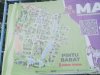
The zoo's map is not very helpful, with a tiny icon saying Primate Centre, but in truth this is a major area and Konstantin and I probably spent an hour looking at apes and monkeys.
The day Taman Safari Indonesia have actually accurate maps is the day that the sun rise from the west! In a serious note, I have no clue why, as time progresses, the map became more and more minimalistic and focus more on being stylish, or in the case of Prigen being outdated. The map from the 2000's (A physical board map is present at the first parking lot just after the Safari ride) appears to be far more informative and complete. It also seems like Kampung Papua, in my opinion the park's most interesting exhibit, never even shown in any versions of the maps that have been produced.

There are Sumatran Orangutans in an exhibit that has a prominent Gorilla statue right next to it, which is fascinating. It appears that nobody can 100% confirm that Taman Safari I Bogor had a Gorilla at one point in time.
Who knows if it turns out to be wild-goose chase, gorillas are popular enough to warrant their own statue in a great ape exhibit despite not ever being there.

The interestingly lack of any record are telling. Even some people seems to atleast remember that Surabaya Zoo once had an gorilla in the 70'-80's, why not Taman Safari Bogor which should've arguably better medias or record-keeping (Private or public ones) due to their status as a large company.

Though, a interesting move by the management of Taman Safari Indonesia on learning about the management of gorillas in German zoos last year might be a little clue.

Bornean Orangutans can be viewed through large windows at the base of the Rumoh Aceh House.
It's a view to the Sumatran orangutan exhibit that was previously mentioned.

Rumoh Aceh (Aceh House) is a building themed around the culture of Aceh, located on the northernmost region of Sumatra, as well as containing displays and informations about Aceh and animals (sub)species like the Sumatran tigers. The decision to make an Aceh House might be to show how that region currently hosted the largest remaining population of Sumatran orangutan in the wild.

There's a second huge Bornean Orangutan exhibit, filled with substantial climbing frames and plenty of ropes.
As seen in the photo, the exhibit have a quite a elevated ground. Back in the day, the exhibit are flatter with lower elevation and have the Bornean orangutans mixed with multiple other species, such as agile gibbon and even an sambar deer. The mix I think last until the late-2010's.

And what species there are! Troops of East Javan Langurs, Proboscis Monkeys, Siberut Macaques, Sulawesi Crested Macaques, Silvery Lutungs, Mitered Surilis and Javan Surilis. Half of those are found nowhere in any North American zoos and I saw plenty of all the monkeys in a short period of time. As a zoo nerd, this area is brilliant. From the top level, it's also possible to look out at the previously mentioned gibbon exhibits and one can even seen the various great apes off in the distance.
I'm not sure if the still have the silvery lutung there on-display, I believe that the langur might be a male East Javan langurs or West Javan langurs. The signages in a lot of the enclosures are very innacurate.

What makes it more interesting is that the Javan surili is the subspecies from Central Java, presbytis comata fredericae. They have a lot darker fur compared to the nominate West Javan subspecies.

Taman Safari Bogor appears to have succesfuly breed their Siberut macaques, as shown with them having two exhibits as well as the presence of babies over the year. This is part of Taman Safari Indonesia's project in the Mentawai Islands, the native habitat of these macaques and also the Kloss's gibbon, which might explain how they got them for so long.

Not every primate exhibit is a gem, as there's a rather heavily themed Japanese Macaque enclosure that doesn't offer up a lot of space for its inhabitants.
This is a classic show of prefering aesthetic than the actual housing needs of the animals. Japanese macaques, being one of the cultural icons of Japan, might inspired Cisarua to made the exhibit this way. They have been here since the 2000's, which consist of two large troops directly from Japan (The Japanese macaques being quite widespread in Indonesian zoos is quite a phenomenon, similar to the pygmy hippos).

There's also a Mandrill exhibit in the general vicinity
Don't forget to mention the nearby meerkats exhibit, Taman Safari Bogor had them before it was popular to get one in Indonesia :)

In around the 2000's, the mandrills and meerkats are added as a soft-promotion to the Disney's Lion King movies, in which cardboat cutouts of the respective named characters of those two species are shown nearby. They also have an stuffed warthog in one of the hut there, which is a bit of a unrecorded history of it's own as well (Like the gorilla previously).

plus the Primate Centre has a series of wire-fronted cages that are now all closed down and empty. According to @Rizz Carlton these enclosures used to hold species such as Sunda Pangolin, Javan Slow Loris, Sunda Slow Loris, Horsfield's Tarsier, Spectral Tarsier and Prevost's Squirrel (all at different times) over the years. What a rich assortment of animals that would have been to cap off a fantastic section of the zoo. Perhaps one day these enclosures will be open for business again...
Seems unlikely sadly for them to put to much attention there, the exhibits themselves are located in a far corner of the Primate Centre and from observations are never visited by general guests. A very missed opportunity, even the slow loris house in Prigen have a much better accomodation and are even shown in their map.

I never have luck seeing the animals there, though presumebly the Prevost's squirrel that is now at Jakarta Aquarium are the one that was in these exhibits in 2020. The Sunda pangolins appears to be there quite briefly, the Javan slow loris, I think, have been there and signed for a long time.

Konstantin and I saw the exact same lineup of species that @Rizz Carlton produced and if you are a zoo nerd who likes civets then you will be in paradise here.
  • Javan Palm Civet (Paradoxurus hermaphroditus javanus) - labeled as Common Palm Civet
  • Javan Small-toothed Palm Civet (Arctogalidia trivirgata trilineata)
  • Balinese Palm Civet (Paradoxurus hermaphroditus balicus) - labeled as Wet Zone Common Palm Civet
  • Sumatran Masked Palm Civet (Paguma larvata leucomystax)
  • Gunung Muria Small Civet (Viverricula indica muriavensis)
  • Four-toed Hedgehog (Atelerix albiventris)
  • Buffy Fish Owl (Ketupa ketupu ketupu)
  • Papuan Sugar Glider (Petaurus breviceps papuanus)
  • Empty exhibit
The empty exhibit once held a pair of Sulawesi dwarf cuscus. No idea what happened to them, potentialy for breeding perhaps due to the rather sudden absent and the exhibit having the "under construction" sign.

The same exhibit once house Sulawesi bear cuscus, with other former additions include large flying fox, barn owl, red giant flying squirrel, and even reportedly Sulawesi palm civet. Other than that the collection remains unchanged.

After the 9 Nocturnal House exhibits (and civets galore!), there's a really impressive, huge Aquarium section. I can't remember if this is a single massive underwater habitat, but there are 4 large viewing windows and next to zero signage in terms of what species are within. It certainly looks amazing in person.
The aquarium houses the usual, like alligator gars and some other large fishes, as well as turtles like the red-eared slider, New Guinea snapping turtle, pig-nosed turtle, and Malaysian giant turtle. The aquarium once housed an arapaima for years, but was gone after a brief maintenance in 2022.

Reptile Tunnel species list (24 species): False Gharial, Yellow Anaconda, Reticulated Python, Burmese Python, Boa Constrictor, White-lipped Python, Brown Water Python, Olive Python, Ball Python, Green Tree Python, King Cobra, Indian Cobra, Javan Spitting Cobra, Banded Krait, Flat-nosed Pit Viper, Milk Snake, Corn Snake, Sunbeam Snake, Asian Water Monitor, Blue Tree Monitor, Green Tree Monitor, Weber’s Sailfin Lizard, Blue-tongue Skink and Indian Star Tortoise.
They don't have "Indian cobra", it was an Javan spitting cobra, same with the "Weber's sailfin turtle" that in reality are two different species (hydrosaurus celebensis and hydrosaurus microlophus).

The Reptile Tunnel for years has always been quite a dissapointment in some areas, with bare or small exhibits for the inhabitants to having the same species with multiple exhibits. In recent years, most of the exhibits contain two Burmese python exhibit, three spitting cobra exhibit, and around 4-5 reticulated pythons exhibit, with the only justifications by the Park and some content creators that these are "different morphs".
 
Last edited:
DAY 18: Monday, August 19th

Part 1 was the Giant Panda Complex and Safari tour, Part 2 was the Primate Centre and the Reptile Tunnel & Nocturnal House, and here we go with Part 3...

Zoo/Aquarium #47: Taman Safari I Bogor (Bogor, Indonesia) - Part 3 of 4

Now I'll look at the Papuan Complex, a host of water-based animal exhibits, and elephants.

Yet another terrific section of the zoo is Kampung Papua, with a range of different species set in dense woodland. This is a zoo nerd's paradise.

full


I have a close-up photo of one of the individuals in this enclosure, which was easily the best Grizzled Tree Kangaroo exhibit we saw on the whole trip.

full


There's ultra-rare Javan Mongooses (the Sumatran subspecies) found here as well.

full


There's also some Dusky Pademelons and even Brown Dorcopsis in the Papuan zone. It's a feast of rarities for zoo nerds.

full


@twilighter

There is an aviary for Wreathed Hornbills and also this very tall Papuan Hornbill aviary:

full


This used to be a Komodo Dragon exhibit, under a massive roof, but now it's home to Cassowaries. Don't worry, the zoo has a half-dozen dragon exhibits nearby.

full


Next to the Papuan Complex is a pinniped area and we saw Steller's Sea Lions during our visit.

full


There's daily performances with California Sea Lions, as well as Harbour Seals off-show.

full


An old Polar Bear grotto has been converted into a Humboldt Penguin exhibit.

full


The zoo's now deceased Polar Bears, named Bjurn and Tasha, are memorialized via a glass-fronted taxidermy case next to their former exhibit.

full


The stuffed Polar Bears and lots of penguin statues and information is all located inside a giant ship, which looks out at the penguin enclosure. It's Disney-style theming at its best.

full


There is a neat blue igloo visitor area that allows close views of the Humboldt Penguins.

full


Sticking with the water-based theme, there's an entire waterpark situated in the jungle forests of Taman Safari I Bogor. Incredible!!! It's right in the middle of the zoo, just as was the case with Taman Safari II Prigen. There used to be a Globe of Death motorcycle show, which ended a couple of years ago, but there's still a Wild Wild West Cowboy show that runs daily. Some families book the resort hotel for several nights as Bogor is enormous and there's a lot to see and do at Indonesia's best zoo.

full


full


There's loads of stuff in this general area, from animal exhibits to shows, to juvenile Tigers on leashes (we saw two of them) to the waterpark and lots of informative signs.

full


Come and swim with Indo-Pacific Bottlenose Dolphins! Dolphins in the jungle...weird.

full


Dolphin Stadium:

full


Along with my comment about seeing a couple of young Tigers on leashes, near the Safari Resort area Konstantin and I saw an Asian Elephant that had zero staff members around for a few minutes. Just a random elephant chilling and eating food and it looked like it was a wild specimen except there aren't any wild elephants on the island of Java. After a period of time, when people went up to it and took photos, finally a couple of workers arrived but the nonchalance of having an elephant mingling with the public was amazing. We also saw a worker riding an elephant bareback by the Primate Center, and a couple more elephants with saddles were in a ring waiting to give rides to visitors. Asian Elephants are also seen via the Safari tour and are everywhere here, including a feeding station near the restaurant. How many does the zoo even have? Maybe 20 or more? Indonesians love elephants, but they treat them as if they are pet dogs and at a couple of zoos it seems as if there is a tragic accident just waiting to happen.

full


full


full


Up next: The 4th and final part of my review of Taman Safari I Bogor.
 
Sticking with the water-based theme, there's an entire waterpark situated in the jungle forests of Taman Safari I Bogor. Incredible!!! It's right in the middle of the zoo, just as was the case with Taman Safari II Prigen.
The park claimed that the water there are sourced from the montane water systems around the park, including the curug jaksa (Jaksa waterfall) which photos of them are present in the galerry. Though realisticly TSI have the ability to spend a plenty of money to support having a water park in their many facilities, it's not impossible to build the filter machines or get any other items into a montane area if you get the money and the right people to do so.

but there's still a Wild Wild West Cowboy show that runs daily.
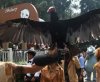
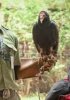
If lucky, in the area around the show, there might be chances for you to see an turkey vulture being used for photo opportunity. The single bird might also be put on-show for certain events held by the zoo. It spend most of its time off-display.

IMG_20250529_011219.jpg

IMG_20250529_011238.jpg

juvenile Tigers on leashes (we saw two of them

How many does the zoo even have? Maybe 20 or more? Indonesians love elephants, but they treat them as if they are pet dogs and at a couple of zoos it seems as if there is a tragic accident just waiting to happen.
As of 2021, Taman Safari Bogor have around 51 elephants. Overall, as of 2019, Taman Safari Indonesia overall have 113 elephants in their parks.

Despite of that large numbers and over 30 recorded births, their treatment of elephants are two-faced. While there's no denying that the elephant might get decent treatment, atleast compared to other Indonesian zoos, the elephants that are put for roaming and interactions have awful fate. From personal experience, the staffs will often shout towards the elephants as a disciplinary tactic, just for them to behave for photos with the elephants. Steel sticks are also in use to control the elephant heads for rides.

While we can all praise Taman Safari Indonesia for what they can bring as Indonesia's top zoos and aquarias, they have a long-history of abuses and other inadequate living conditions, which is a long story of it's own.
 

Attachments

  • IMG_20250529_011219.jpg
    IMG_20250529_011219.jpg
    128.7 KB · Views: 119
  • IMG_20250529_011238.jpg
    IMG_20250529_011238.jpg
    34.3 KB · Views: 126
DAY 18: Monday, August 19th

Part 1 was the Giant Panda Complex and Safari tour, Part 2 was the Primate Centre and the Reptile Tunnel & Nocturnal House, Part 3 was the Papuan Complex, water-themed exhibits and elephants, and here is the last part of my review...

Zoo/Aquarium #47: Taman Safari I Bogor (Bogor, Indonesia) - Part 4 of 4

The zoo has a stunning entrance archway that leads to a long road that segues into a hiking trail through the jungle and there's the gorgeous Jaksa Waterfall at the end. Konstantin and I decided to check it out and it's a lengthy walk that's almost all uphill, with a worker at the entrance of the jungle trail and apparently it's common to see wild primates in the area. We didn't see any animals, but it was an enjoyable trek to the waterfall nonetheless.

full


full


There's a row of Birds of Prey aviaries that are old-fashioned, quite narrow, and probably due to eventually meet a bulldozer. They aren't terrible, just slightly mediocre. We saw the same old species that we saw everywhere, which meant the 10 or so aviaries (including some empty ones) had species such as Javan Hawk Eagle, Changeable Hawk Eagle and Crested Serpent Eagle, but the Grey-headed Fish Eagles were possibly the only ones we saw on the entire trip.

full


Much better is what I'll call the Komodo Dragon Complex, a superb network of SIX dragon exhibits. The number of enclosures for this species throughout Southeast Asian zoos is staggering and the setup at Bogor is superb.

Workers painting the design around one of the half-dozen Komodo Dragon exhibits.

full


There's a cave-themed hallway with dragon enclosures everywhere. There's also small terrariums for species such as Reticulated Python, Boa Constrictor, White-lipped Python, Eastern Rat Snake, Corn Snake and Indian Star Tortoise. This is mock-rock heaven.

full


Komodo Dragon exhibit (one of many):

full


Near the dragons are some spacious, outdoor Saltwater Crocodile exhibits, another super common sight in Southeast Asian zoos. Between the dragons and the crocs, this is an elite section of Taman Safari I Bogor.

full


There's also a 'Baby Zoo', with a wide assortment of species and a crazy looking Orangutan statue at the entrance.

full


A real highlight of the 'Baby Zoo' is a huge walk-through aviary, proving yet again that these mammoth structures are common in Asian zoos. There's a cave area with free-flying Large Flying Foxes, a couple of Buffy Fish Owls and Barred Eagle Owls (tethered to perches), then free-flying are species such as Lesser Bird of Paradise (which we got very close to), Red Bird of Paradise, Great Argus, Little Black Cormorant, Papuan Hornbill (side aviary), Oriental Pied Hornbill (side aviary), Lineated Barbet, amongst others. It's a major aviary that's very impressive.

full


full


Just outside, there's an ornate, decorative, smaller aviary with Large Flying Foxes (shown in this photo), Bali Mynas and Whistling Ducks.

full


We already saw some Siberut Macaques (for the first time in my life) in an exhibit in the excellent Primate Centre, and the 'Baby Zoo' has a second troop of the species.

full


@twilighter

Smooth-coated Otters (the sign says Hairy-nosed Otters just like it did at Lembang Park & Zoo) and Binturongs are in a mixed-species exhibit in this zone.

full


There's the zoo's 5th and 6th Pygmy Hippo exhibits (the first 4 are all seen via the Safari tour), as well as a lavish looking Sumatran Orangutan enclosure. Apparently there's possibly at least one Pygmy Hippo in the pool as well.

full


A truly poor White Tiger exhibit is overshadowed by a mini replica of the Taj Mahal. You can see a slumbering Tiger and how little space the big cat has to roam, although this was a super popular area for photos.

full


Another small carnivore exhibit has White Lions inside.

full


The 'Baby Zoo' actually has a number of cats, many found in a long row of glass-fronted exhibits. Besides the already mentioned Tigers and Lions, there's also Jaguars, Javan Leopards, Cougars, Caracals, Sunda Leopard Cats (hidden away near a restaurant) and even Asiatic Golden Cats. That makes it 8 feline species here, plus Cheetahs and Servals elsewhere in the zoo to give Bogor 10 cat species.

full


This ex-Snow Leopard exhibit now houses Cougars.

full


Asiatic Golden Cat:

full


A large walk-through has a whole range of random species inside, some of which are listed on the entrance sign.

full


Mammal species list (65 species): Asian Elephant, White Rhino, Common Hippo, Pygmy Hippo, Giraffe, Plains Zebra, Lowland Anoa, Wisent, Aoudad, Mishmi Takin, Impala, Blackbuck, Scimitar-horned Oryx, Banteng, Nilgai, Nyala, Waterbuck, Sitatunga, Common Eland, Kafue Lechwe, Blue Wildebeest, Javan Rusa Deer, Axis Deer, Hog Deer, Southern Red Muntjac, Malayan Tapir, Watusi, Bactrian Camel, Babirusa, Tiger, Lion, Jaguar, Javan Leopard, Cheetah, Cougar, Caracal, Asiatic Golden Cat, Serval, Sunda Leopard Cat, Giant Panda, Brown Bear, Small-clawed Otter, Smooth-coated Otter, Red Panda, Binturong, Javan Mongoose, Grizzled Tree Kangaroo, Eastern Grey Kangaroo, Dusky Pademelon, Brown Dorcopsis, Meerkat, Common/Javan Palm Civet, Balinese Palm Civet, Small Indian Civet, Sumatran Masked Palm Civet, Javan Small-toothed Palm Civet, Papuan Sugar Glider, Four-toed Hedgehog, Indo-Malayan Bamboo Rat, Capybara, Mara, Large Flying Fox, Indo-Pacific Bottlenose Dolphin, Steller Sea Lion, California Sea Lion and Harbour Seal.

Primate species list (18 species): Bornean Orangutan, Sumatran Orangutan, Chimpanzee, Siamang, Kloss’s Gibbon, Muller’s/Southern Grey Gibbon, Mandrill, Proboscis Monkey, Javan Surili, Mitered Surili, Sulawesi Crested Macaque, Siberut Macaque, Japanese Macaque, Silvery Lutung, East Javan Langur, Squirrel Monkey, Ring-tailed Lemur and Black-and-white Ruffed Lemur.

Summary:

Taman Safari I Bogor
is what Konstantin and I think is the best zoo in Indonesia and we toured 25 Indonesian zoos on the trip. There are some flaws, which I will get to soon enough, but overall our perspective is of a massive zoo with a lot to see. The Giant Panda Complex, high up in the chilly mountains and away from the main zoo, was one of the best experiences of the whole trip. The Safari tour is lengthy and has close-up, intimate encounters as at times it goes into the animal exhibits. We loved the Primate Centre and spent a long time there, and the Reptile Tunnel & Nocturnal House was enjoyable to tour.

The Papuan area is fantastic, the Komodo Dragon Complex is amazing, the big croc pools are always great to see, there's penguins and dolphins and pinnipeds in a water-themed zone that's a little hit and miss, and the 'Baby Zoo' has a terrific walk-through aviary and many carnivore exhibits. Any zoo with approximately 85 mammal species in mostly above-average exhibits, plus a large number of birds and reptiles, is exciting to zoo nerds and Bogor exceeded our expectations. Families spend days at this zoo, as there is a waterpark, a jungle waterfall hike, various shows, lots of photo opportunities and we spent 7 hours there with not stopping hardly at all. I can't recall if we even had anything to eat! There's even more animal exhibits (Javan Rusa Deer, Siamangs, lots of waterfowl) by the resort's restaurant.

The flaws would be the situation with Asian Elephants, as if Bogor truly has more than 50 elephants then where are they housing them all? Perhaps there are chained elephants in tiny, off-show sites, but there's certainly not vast paddocks with free-roaming elephants. The treatment of elephants in Southeast Asian zoos is something I've come back to time and time again and I personally find it difficult as a western outsider to make critical comments on what is a cultural thing. Besides the elephants, there are obviously some detrimental exhibits at Bogor, such as the dolphin pools, some of the feline exhibits and the raptor aviaries. But, overall, Taman Safari I Bogor is overwhelmingly an enjoyable zoo to visit and it far surpasses literally hundreds of zoos I've toured around the world.

Up next: A very small zoo a 15-minute drive from Bogor. It was puny but zoo #599 for me!
 
Last edited:
The zoo has a stunning entrance archway that leads to a long road that segues into a hiking trail through the jungle and there's the gorgeous Jaksa Waterfall at the end. Konstantin and I decided to check it out and it's a lengthy walk that's almost all uphill, with a worker at the entrance of the jungle trail and apparently it's common to see wild primates in the area. We didn't see any animals, but it was an enjoyable trek to the waterfall nonetheless.
It's very nice that some zoos put efforts in highlighting the natural or historically-significant objects in or around their facility. Aside from that, the park's jungle trek/walk program also include touring an old Dutch East Indies-era house located near the park.

If lucky, visitors can spot wild Javan langurs and even Javan surilis in this part of the park, but crab-eating macaques appears to have highest chance to be spotted.

There's a row of Birds of Prey aviaries that are old-fashioned, quite narrow, and probably due to eventually meet a bulldozer. They aren't terrible, just slightly mediocre. We saw the same old species that we saw everywhere, which meant the 10 or so aviaries (including some empty ones) had species such as Javan Hawk Eagle, Changeable Hawk Eagle and Crested Serpent Eagle, but the Grey-headed Fish Eagles were possibly the only ones we saw on the entire trip.
I definitely recall that this are have a much more varied collection in 2019. Aside from those mentioned, there were white-bellied sea eagle, Brahminy kite, buffy-fish owl, and barred eagle-owl. Apparently in the past, the area also had spotted wood owl and even Blyth's hawk-eagle. It seems like the consensus for them is to display some raptors that aren't used for the show here.

They have around 10 or more aviaries here, so it's very possible to add a diverse array of raptors here, which is mind boggling because they have tons of those. Aside from those mentioned (Except the Blyth's hawk-eagle), they have Sunda barn owl, whistling kite, Eurasian griffon vulture, turkey vulture, and even an bald eagle, which are either used exclusively for the show or are off-display. From the look of it, imminent revitalization is possible.

Also, it's possible that you saw an grey-headed fish eagle in Bandung Zoo or Ragunan Zoo, physicaly they're unworthy (Not in a mean way!) so you might've missed it.

Much better is what I'll call the Komodo Dragon Complex, a superb network of SIX dragon exhibits. The number of enclosures for this species throughout Southeast Asian zoos is staggering and the setup at Bogor is superb.
Hands down the best Komodo dragon exhibit in Indonesian zoos, these are (I believe) built in 2012. I might forget the true detail, but accurately there are four exhibits; two very large exhibit for the adults, one for the semi-adult in the entrance, and one for the babies on the second floor.

Near the dragons are some spacious, outdoor Saltwater Crocodile exhibits, another super common sight in Southeast Asian zoos. Between the dragons and the crocs, this is an elite section of Taman Safari I Bogor.
Again, this used to be a bit varied, with species including an false gharial and even African dwarf crocodiles. They were taken off-display in 2019 I think, both later on used for breeding purposes, which appears to be succesful.

There's apparently a succesful hatcling in around early 2020 for the dwarf crocodile.

There's a cave area with free-flying Large Flying Foxes, a couple of Buffy Fish Owls and Barred Eagle Owls (tethered to perches), then free-flying are species such as Lesser Bird of Paradise (which we got very close to), Red Bird of Paradise, Great Argus, Little Black Cormorant, Papuan Hornbill (side aviary), Oriental Pied Hornbill (side aviary), Lineated Barbet, amongst others. It's a major aviary that's very impressive.
The cave area doesn't actually have large flying foxes in there anymore, it's an old signage that appears to now be used for general information on nocturnal animals.

The side aviaries also have eleonora cockatoo, salmon-crested cockatoo, and Javan rhinoceros hornbill.

Other free-roaming birds, from what I remember are, aside from some domestic ducks and chickens:
  • Fire-tufted barbet
  • Eastern hill myna
  • Bali myna
  • Red lory
  • Red-breasted black-capped lory
  • Yellow-backed lory
  • Indian ring-necked parakeet
  • Grand eclectus
  • Vosmaer's eclectus
  • Pied imperial pigeon
  • Pinon's imperial pigeon
  • Victoria crowned pigeon
  • Wreathed hornbill
  • Java peafowl
  • Wandering whistling duck
  • Little black cormorant
  • Australian pelican
  • Black-backed swamphen
  • Black-crowned night heron
  • Eastern cattle egret
  • Eastern purple heron
  • Lesser adjutant
  • Large flying fox

Another small carnivore exhibit has White Lions inside.
It appears that this is an rotating exhibit, which it occasionaly also have a pair of striped hyenas.

Originally holding Sumatran tigers in a now-demolished exhibit, the exhibit at first housed an male liger named Nala from 2013 to 2018, the first in Indonesian zoos. He was confiscated from a private collection in Sukaraja (Near Cisarua). Allegedly Nala is part of an illegal commercial breeding program. Nala was later on sent to Taman Safari Bogor and briefly used for photo opportunities. When the white lions came from Canada in 2018, he's seemingly gone for good, though here true fate remained unconfirmed.

Nala even have a place in the photo ark of Joel Sartore.
https://www.joelsartore.com/ani105-00101/?context=Liger&index=3

Taman Safari Zoo Liger in Indonesia

Sunda Leopard Cats (hidden away near a restaurant)
To be more precise, they're inside the chicken store :p
 
Last edited:
Originally holding Sumatran tigers in a now-demolished exhibit, the exhibit at first housed an male liger named Nala from 2013 to 2018, the first in Indonesian zoos. He was confiscated from a private collection in Sukaraja (Near Cisarua). Allegedly Nala is part of an illegal commercial breeding program. Nala was later on sent to Taman Safari Bogor and briefly used for photo opportunities. When the white lions came from Canada in 2018, he's seemingly gone for good, though here true fate remained unconfirmed.
Hello, do you know from what facility in Canada the white lion came from?
 
Thank you for your response. This will be my last question: How many white lions arrived in 2018(males and females)?
There were seven in total, two males and five females, those numbers has increased since then with a number of breeding. There were plans by Taman Safari Indonesia to eventually spread these white lions to other Indonesian zoos, though a lot of newer lions are apparently imported directly from South Africa (Where private farms are available).

Names that I'm aware are Link (Male), Ghost (Female), and Locky (Female).
 
DAY 18: Monday, August 19th

After an epic 7 hours at Taman Safari I Bogor, Konstantin and I took an Uber/Grab 15 minutes down the road...

Zoo/Aquarium #48: Royal Safari Garden Resort (Bogor, Indonesia)

Zoo #599 all-time

This is yet another business owned and run by Taman Safari Indonesia, so technically it was the 5th zoo we toured on the trip with the same management. We arrived later than expected, due to our exertions at Taman Safari I Bogor, and so when we told the valet drivers that we were there not to check into the hotel but to tour the zoo then Indonesian hospitality kicked into high gear. They summoned someone on their walkie-talkie and a vehicle that looked like a large golf-cart arrived and we were driven the relatively short distance to the zoo at the back of the hotel.

Pulling up outside, via an insanely congested road, we were greeted by a large-scale hotel that contains a pair of enormous fake tusks that literally go through the roof.

full


The lobby is very impressive, with a golden tree statue and a circular fish tank at its base.

full


The view from the restaurant looks out at Meerkat and Plains Zebra exhibits.

full


Meerkat exhibit from the main zoo path:

full


The map of the grounds is quite deceiving. The big hotel is in the bottom left-hand corner, but there is various other accommodation zones all across the acreage with names and icons such as Tiger Ballroom, Hotel Panda, Hotel Leopard and Bungalow Dolphin, but this mini-zoo doesn't actually have any of those animals.

full


The zoo's entrance arch with yet more tusks:

full


On the right is the Plains Zebra exhibit and the aviary-like structure is actually a walk-through Ring-tailed Lemur exhibit. Plus there's an elephant statue in the ditch!

full


One minor disappointment was not being able to enter the Bird Aviary, which is a substantial structure, as it closed at 4:00 and even though we asked a couple of people to let us in, the fantastic Indonesian hospitality only stretched so far!

full


Here is an Agile Wallaby exhibit, with Shetland Pony rides next door.

full


A very tiny Mara enclosure had one Mara huddled in a corner at the back.

full


There's a small lake with Common Hippo sculptures and some waterfowl.

full


Seeing an exhibit for Nyala was a surprise.

full


A Giraffe Feeding Station is heavily advertised and we saw a few Giraffes and at least one Ostrich in a paddock behind the station.

full


As has been the trend at many Southeast Asian zoos, there are large-scale animal statues scattered all over the place.

full


There's a mini-golf course with yet more animal statues, not far away from an area where there are daily elephant rides and even Bactrian Camel rides. We didn't see an Asian Elephant, and there's not any kind of exhibit, but the signs were up and apparently the zoo has a couple of elephants that give rides for a few hours each day. There must be a small barn off-show somewhere.

full


A bench promoting the local aquarium:

full


The zoo is happy to announce that their next project is the Petting Zoo & Royal Safari Farm.

full


Mammal species list (9 species): Asian Elephant (rides only), Giraffe, Plains Zebra, Nyala, Watusi Cattle, Bactrian Camel, Agile Wallaby, Meerkat and Mara.

Summary:

Royal Safari Garden Resort
is a small zoo attached to a famous hotel that contains two restaurants, one serving traditional Indonesian food and the other serving a mixture of Asian and western cuisine. We were happy to add this zoo onto our itinerary, as it meant that #600 for me would be a big one (Ragunan Zoo the next morning) and we had an enjoyable ramble around the Royal Safari Garden Resort. The downside is that the big aviary was closed and we could only press our faces to the outside, and the reptile park area was also closed for the day. This is a a facility that shuts down at 4:00 and has very limited hours, but the workers were excited that a barnyard/domestic zone would be opening soon and some large tortoises would be included in that area.

Up next: The most walking on the trip was at Ragunan Zoo, the Berlin Tierpark of Southeast Asia. I clocked 24,000 steps at the zoo and 30,000 steps for the day and it was an epic moment to hit zoo #600 there. It's just too bad that Ragunan Zoo has tons of outdated sections and needs a lot of work. The one fantastic zone charges an additional fee (we spent two full hours inside the fantastic Schmutzer Primate Center). But in terms of size, the zoo is enormous and has an absolutely jaw-dropping number of repeated exhibits. I counted 18 Tiger enclosures and 15 Sun Bear enclosures. Insanity. There's even 9 separate Orangutan exhibits! Stay tuned for a multi-part review and it was the last huge zoo of the trip before we ended off with a number of smaller establishments.
 
Pulling up outside, via an insanely congested road, we were greeted by a large-scale hotel that contains a pair of enormous fake tusks that literally go through the roof.
I'm suprised you didn't mentioned the road before in the Taman Safari Bogor reviews lmao, massive congestion and Cisarua are a classic pair.

These large fake tusks arc are one of Taman Safari Indonesia's icon, with the arc in Cisarua is arguably one of the most iconic and recognizable object in the park.

On the right is the Plains Zebra exhibit and the aviary-like structure is actually a walk-through Ring-tailed Lemur exhibit. Plus there's an elephant statue in the ditch!
Guests can pay a couple Rupiah to feed and interact with meerkat, dusky pademelon, Chapman's zebra, llama, a ring-tailed lemur walkthrough aviary, as well as another area on the other side of the aviary with Indian peafowls, Patagonian maras, and llamas.

One minor disappointment was not being able to enter the Bird Aviary, which is a substantial structure, as it closed at 4:00 and even though we asked a couple of people to let us in, the fantastic Indonesian hospitality only stretched so far!
It's a group of around three walkthrough aviaries and several separate aviaries in it's own walking pathway. I can't say which species are in there since I haven't been there since 2024 (In which I don't got the chance to go the Bird Park), but I recall that this part of the resort have rarities like Amboina king parrot and grosbeak starling, some species that aren't present in the main park (Taman Safari Bogor). There's also an animal show right next to the entrance and after the exit of the Bird Park.

Also, you missed the Reptile Island, located in a rather quiet part of the resort and are surrounded by water moat, which are used for fishing.

Seeing an exhibit for Nyala was a surprise.
Nyala are some extraordinary antelope in which Taman Safari Indonesia is the current holder in Indonesia (Batu Secret Zoo have three female nyalas off-display), and they sent them to a small exhibit in a resort o_O

They have nyalas for quite a while I believe, probably from around the 2000's, in which Cisarua was at a peak in their antelope collection; common eland, blue wildebeest, nyala, defassa waterbuck, Kafue lechwe, common impala, blackbuck, nilgai, scimitar oryx, and formerly also include addax, roan antelope, and even greater kudu, which no visual record of this species has ever been found at the Cisarua (Though this species was mentioned in an old physical map board at the park, located in what is now an area near the cheetah).
 
DAY 19: Tuesday, August 20th

This review will be the last really big one of the trip, with multiple parts to it, as the remaining 10 zoos and aquariums are all on the smaller side.

Zoo/Aquarium #49: Ragunan Zoo (Ragunan, Indonesia) - Part 1

Zoo #600 all-time

This day was a big moment for me, to visit my 600th different zoo all-time. Back home, my wife ordered special t-shirts for our 4 kids congratulating me and since I love stats and numbers, it was a really cool day overall. My 100th zoo was the world-class North Carolina Zoo in 2010, although I didn't know it at the time. My 200th zoo was the obscure Hemker Park & Zoo (Minnesota) in 2014, and my 300th zoo was another obscure place in Texas called Abilene Zoo in 2015. Yes, I really did add on 100 zoos between 2014 and 2015! :eek:

At the time, I had no idea when I hit my 100th, 200th and 300th zoos as I hadn't ever sat down and calculated them all in a lengthy word document, but I was well aware of my 400th when I toured the roadside Critchlow Alligator Sanctuary (Michigan) in 2018. I deliberately made adjustments to my itinerary and chopped and changed things around to ensure that Tierpark Hagenbeck was my 500th zoo in 2019, a fitting attraction for such a personal honour. This time around, I spent months planning the schedule for the trip and the "National Zoo of Indonesia" seemed a great fit to be my 600th zoo, a full 6 years after my day at Hagenbeck.

full


For the first time on the trip I was genuinely nervous and it was a weird morning. Konstantin was very patient with me and the nerves dissipated after we began strolling around the huge Ragunan Zoo, but before that things were chaotic. It was odd that for the only time on the entire trip, I left my Calgary Zoo hat behind at the hotel and so while Konstantin was at McDonald's having breakfast, I had to walk all the way back just to get my hat. Then on the return leg to him, I wasn't paying attention and walked right past the restaurant and was temporarily lost. After figuring out the situation, we set off for the zoo and took some photos of me holding a "#600" sign outside. Except the pen markings weren't dark enough to show up in the photo and so we had to go to a store and ask to borrow a black felt-tip pen to go over the numbers on the sign with someone who spoke zero English. To top it all off, the zoo's entrance desk would only accept cash even though there was a credit card machine sitting right there on the counter! Nope, it had to be cash or we weren't allowed into the zoo and it was so laughable that we just shrugged and went back down the street again in search of a bank machine. Once there, my Canadian card wouldn't work at any of the machines and Konstantin ended up taking out the cash. We hiked our way back to the zoo and paid in cash, which they probably immediately pocketed, and proceeded into the zoo. Oh yeah, crossing the street back and forth from Ragunan Zoo to the small convenience store and the bank was by far the scariest couple of moments of the entire 23-day trip. We literally took our life in our hands with cars speeding in all directions and no one giving a damn about a couple of backpack carrying zoo nerds. Our whole holiday was so spectacularly fantastic and ran smoothly for weeks, but on this one morning there was an hour and a half of a long list of minor calamities and looking back it's all rather amusing to me.

So, what to make of Ragunan Zoo? It's a place that is proud of its history, having been founded in 1864 and therefore it is one of the oldest zoos on the planet. It's been at its current location since 1966, on an enormous amount of land that covers 350 acres/140 hectares and it takes at least 8 hours of non-stop walking to see everything and for many people would be a two-day zoo. It has signs up proclaiming its status as the 'National Zoo of Indonesia' and there's a proud heritage here. The city of Jakarta is so gargantuan that it's divided up into North, East, South and West, with Ragunan Zoo in South Jakarta and the metropolitan population of all 4 mini-cities is circa 30 million people. On one day in 2015, Ragunan Zoo had 186,000 visitors in the zoo, but this place is huge and so even when we were there we never felt any congestion as visitors spread out everywhere across the vast grounds. It really is the Berlin Tierpark of Southeast Asia, with occasional long treks between exhibit complexes and tons of empty space in all directions.

Loads of pelicans, and even a couple of partially obscured elephant statues, greet visitors near the main entrance.

full


My first impression of Ragunan Zoo was not a good one, with an empty old grotto, some chain-link yards and here is one of the zoo's THREE Binturong exhibits. This must obviously be an original 1966 grotto that once held a larger species.

full


Signs for an Aquarium seemed promising, but in fact the building is very old, with visitors going around the outside looking at grimy, dark tanks that often held only one or two fish. I don't think for a second that the species list is 100% accurate, but I did take photos of all the signs.

Aquarium species list (11 species): San Francisco Piranha, Black Ghost Knifefish, Green Arowana, Super Red Arowana, Banjar Arowana, Silver Asian Arowana, Red-tailed Catfish, Tiger Catfish, Pangasius, Tinfoil Barb and Red Snakehead.

full


Similar to the urban zoo in Surabaya, amongst other places, Ragunan Zoo has rows and rows of food sellers in a couple of areas. There will be 12 little convenience store type establishments all in a row and later in the day we bought some drinks and potato chips while vendors were calling out to us to buy food. These all appear to perhaps be small family-run businesses.

full


Ragunan Zoo has TWO open-air Reptile Houses, both open to the elements at each end and looking quite similar in terms of having terrariums down each side.

Here's an example of some of the species held in Reptile House #1, but keep in mind that this zoo loves having multiple exhibits for the same species. For example, I think they had at least 3 Reticulated Python enclosures.

Reptile House #1 (7 species): Saltwater Crocodile, New Guinea Crocodile, False Gharial, Reticulated Python, Indian Python, King Cobra and Gold-ringed Cat Snake.

full


In truth, reptiles do well here and the terrariums are large in size. You can see a King Cobra in my photo below and the enclosure goes back a long way. I also like the rockwork along the walls and reptiles are a strength of Ragunan Zoo.

full


What was shocking to see was the primate collection in naff cages that must be 1966 originals. There can be found at least THREE blocks of these prison-like structures, with scandalously small areas for the primates to move. Tiled floors, cement walls, bars on the front...ugh.

full


I saw so many great Proboscis Monkey exhibits on the trip, but here in Ragunan the cages are pitiful. The 'holding areas' are at the bottom at the very back, only maybe 5 feet across and like mini dog cages that you'd see in a public kennel.

full


The two Muller's Gibbons hanging around at the back of their cage have a single rope and two sticks and that's it.

full


These hellholes have some ultra-rare, spectacular species, but I struggled to linger as the accommodation is truly awful.

Primate species list for blocks of cages (14 species):
Siamang, Silvery Gibbon, Agile Gibbon, Muller’s Gibbon, Proboscis Monkey, East Javan Langur, West Javan Langur, Silvery Lutung, Javan Surili, White-thighed Surili, Heck’s Macaque, Tonkean Macaque, Gorontalo Macaque and Southern Pig-tailed Macaque. Some of these species have multiple small cages and there's primates by the dozen in this part of the zoo.

While it was exciting to see a new species (Gorontalo Macaque), the conditions are horrendous for these primates and I'd rather have not seen the rarities at all. The irony with the situation is that Ragunan Zoo also has the Schmutzer Primate Center and that zoo-within-a-zoo opened in 2002 and is arguably world-class. Primates are kept in a series of modern, at times fantastic exhibits, and yet the blocks of cages elsewhere are horrendous and as bad as probably anything I've ever seen for primates. It's quite the stunning contrast.

Gorontalo Macaque:

full


@twilighter

I added at least 6 new macaque species on my Southeast Asian trek. What's the definitive number of macaque species these days? Has anyone reading this seen every type of macaque?

My all-time list of macaques now consists of 18 species:

26 zoos with Japanese
26 zoos with Lion-tailed
22 zoos with Sulawesi Crested
16 zoos with Barbary
16 zoos with Southern Pig-tailed
14 zoos with Crab-eating
12 zoos with Rhesus
8 zoos with Stump-tailed
5 zoos with Bonnet
3 zoos with Moor
3 zoos with Tonkean
2 zoos with Assam
2 zoos with Heck’s
2 zoos with Toque
1 zoo with Booted
1 zoo with Gorontalo
1 zoo with Northern Pig-tailed
1 zoo with Siberut

Siamangs with nowhere to go:

full


Moving on from the horrible primate conditions, there's a gigantic Snake Pit that houses a few Reticulated Pythons. It's probably at least double the size of what is shown in my photo and fully open-topped. I doubt that the signage is correct as 4 species are listed and we only saw the pythons.

Snake Pit (4 species): Reticulated Python, Gold-ringed Cat Snake, Keeled Rat Snake and Radiated Rat Snake.

full


I'm not joking when I say that Ragunan Zoo is massive and it's a real shame that there aren't any paper maps. Konstantin thought ahead and he did print off some online maps for a few zoos on the trip, but at Ragunan animals get moved around and so even the online map isn't great. For instance, there's a small primate icon that turns out to be 14 species, or there's a bird icon and it turns out that the zoo has an enormous, shed-like structure with rows upon rows of aviaries.

I'll call this Bird House #1 (there's an almost identical building elsewhere in the zoo!) and I didn't make an exhaustive list of species. Indian Peafowl, Silver Pheasant, New Guinea Bronzewing, African Grey Parrot and Maleo are all present here, but signage is a serious issue at Ragunan Zoo and some aviaries have multiple species and literally no signs anywhere. At times, the zoo is a bit overwhelming due to its huge size and repetitive species.

full


As is the case at seemingly every single Southeast Asian zoo, there are tons and tons of hippos everywhere. The zoo has several exhibits for Common Hippos that have a lot of water and a lot of land to roam. How did Southeast Asian zoos end up with so many dang hippos? Breeding gone out of control?

full


It's tough to tell with all the pools and lakes everywhere, but my best guess is that the zoo has a minimum of THREE Common Hippo exhibits and they are all huge.

full


There's also a minimum of THREE Pygmy Hippo exhibits, not quite as many as the SIX at Taman Safari I Bogor the day before, but still a heck of a lot. Hippos by the dozen!

full


At this point, and after seeing a couple of enormous, wild Asian Water Monitors roaming the grounds and waterways, we found an upper level of the zoo that was blocked off with big barriers. We dallied for a while until a keeper came along and he gave us permission to quickly run around in that area that is now technically an off-show part of Ragunan Zoo.

Off-show mammal species list (8 species): Plains Zebra, Javan Rusa Deer, Bawean Deer, Malayan Sambar Deer, Lowland Anoa, Mountain Anoa, Babirusa and Capybara.

There's at least 3 Lowland Anoa paddocks, another for Mountain Anoa, and multiple enclosures for most of the species in what seems like an off-show ungulate breeding area. However, this whole zone has always been on the zoo's map so perhaps it's open now and is once again a regular part of a zoo visit. Does anyone know? I could see a lot of visitors skipping the area, as it's in a slightly elevated section and has species that might not be of much interest to Muggles. Does a non-zoo nerd even care about looking at a Mountain Anoa? ;)

Bawean Deer exhibit:

full


A gorgeous Javan Rusa Deer exhibit:

full


I saw a single Mountain Anoa at Krefeld Zoo (Germany) in 2019 and here we saw one (and possibly two) Mountain Anoas.

full


@twilighter

Up next: Part two of my Ragunan Zoo review.
 
Last edited:
To top it all off, the zoo's entrance desk would only accept cash even though there was a credit card machine sitting right there on the counter! Nope, it had to be cash or we weren't allowed into the zoo and it was so laughable that we just shrugged and went back down the street again in search of a bank machine.
That's odd, but for everyone's information Ragunan don't have the regular printed ticket. So, guests will need to buy a entry card (Around 50,000 Rupiah) that you can still always use and refill for future trips. So, my guess is probably due to technical issues, especially when we don't really serve a lot of foreign credit/debit cards in many places.

We literally took our life in our hands with cars speeding in all directions and no one giving a damn about a couple of backpack carrying zoo nerds.
I almost say that this is typical Jakarta, but this happens a lot in other Indonesian cities. So many drivers straight up use emotion to power their vehicles, like for example honking just because they felt "offended" (I.e got honked or just couldn't stand slow drivers) are common place here.

It's been at its current location since 1966, on an enormous amount of land that covers 350 acres/140 hectares and it takes at least 8 hours of non-stop walking to see everything and for many people would be a two-day zoo.
The current location was opened in 1973, formerly a government-owned silviculture facility, to be more precise, as one of a series of modernization projects of Jakarta post-Sukarno in the late-60's and 70's.

The original ground is located in what is now Taman Ismail Marzuki, a public park and educational hub in Central Jakarta.

I don't think for a second that the species list is 100% accurate, but I did take photos of all the signs.

Aquarium species list (11 species): San Francisco Piranha, Black Ghost Knifefish, Green Arowana, Super Red Arowana, Banjar Arowana, Silver Asian Arowana, Red-tailed Catfish, Tiger Catfish, Pangasius, Tinfoil Barb and Red Snakehead.
There's absolutely zero chance that the piranha are that species :p, they're obviously red-bellied piranhas. "Red snakehead" is the giant snakehead (Channa micropeltes) and the "tiger catfish" is some species of pseudoplatystoma.

All of their fish collection, maybe with exception of the arapaimas, are derived from common fish store collections it appears.

Reptile House #1 (7 species): Saltwater Crocodile, New Guinea Crocodile, False Gharial, Reticulated Python, Indian Python, King Cobra and Gold-ringed Cat Snake.
The "Indian python" are Burmese python, with them having the largest non-white python that I ever saw. There's a separate, outdoor crocodile complex with larger exhibits and large crocodiles. It's interesting how the zoo's false gharials and New Guinea crocodiles can only be seen in this reptile house, which aren't great to house multiple crocs in the same small space with minimal access to water.

The gold-ringed cat snake share their exhibit with a bunch of ptyas korros or the Indo-Chinese rat snake, in which the zoo both display as their collection and farm to be used to feed their king cobras.

What was shocking to see was the primate collection in naff cages that must be 1966 originals. There can be found at least THREE blocks of these prison-like structures, with scandalously small areas for the primates to move. Tiled floors, cement walls, bars on the front...ugh.
And to think that there's no call to action about this obvious horrid conditions.

These cages, aside from the things you mentioned, doesn't even provide much to the primates aside from a few climbing opportunities. It's hard to me to think the logic of keeping this prison complex around when there's already the Schmutzer Primate Centre. Is it because they still want to attract guests (Who might not want to pay extra for the Schmutzer Primate Centre) with the primates? Especially with how popular this primate complex are with general guests.

Primate species list for blocks of cages (14 species): Siamang, Silvery Gibbon, Agile Gibbon, Muller’s Gibbon, Proboscis Monkey, East Javan Langur, West Javan Langur, Silvery Lutung, Javan Surili, White-thighed Surili, Heck’s Macaque, Tonkean Macaque, Gorontalo Macaque and Southern Pig-tailed Macaque. Some of these species have multiple small cages and there's primates by the dozen in this part of the zoo.
The "white-thighed surili" of Ragunan is a different species, the Natuna Islands surili, which has been separated from the white-thighed surili for a while.

I count each of the 4 primate complex to have around 10 or less exhibits each, and the zoo didn't even put a lot of efforts with the collection there (As seen with the repetitive species). This is where Surabaya Zoo is suprisingly ahead of Ragunan, with a open-air complex for the primates and larger exhibits with tons of access to enrichments, though Ragunan still lead with their primate collection.

I'm not joking when I say that Ragunan Zoo is massive and it's a real shame that there aren't any paper maps. Konstantin thought ahead and he did print off some online maps for a few zoos on the trip, but at Ragunan animals get moved around and so even the online map isn't great. For instance, there's a small primate icon that turns out to be 14 species, or there's a bird icon and it turns out that the zoo has an enormous, shed-like structure with rows upon rows of aviaries.
The map present in the zoo ground, though haven't been updated again since 2024, are accurate to navigate certain areas and to pinpoint some exhibits (Not individual species) that you might seek.
IMG20240718112944.jpg

I'll call this Bird House #1 (there's an almost identical building elsewhere in the zoo!) and I didn't make an exhaustive list of species. Indian Peafowl, Silver Pheasant, New Guinea Bronzewing, African Grey Parrot and Maleo are all present here, but signage is a serious issue at Ragunan Zoo and some aviaries have multiple species and literally no signs anywhere. At times, the zoo is a bit overwhelming due to its huge size and repetitive species.
This "Bird House #1" is where the zoo houses their eastern Indonesian birds (I.e Sulawesi and West Papua), as well as pheasants and parrots in general. This include notable species like maleo, New Guinea bronzewing, citron-crested cockatoo, and the almost complete collection of crowned pigeon. The second "Bird House" is focused on birds from western Indonesia (I.e Sumatra and Java), as well as birds-of-prey and an wetland mix aviary that include an greater flamingo and a pair of lesser flamingo.

As is the case at seemingly every single Southeast Asian zoo, there are tons and tons of hippos everywhere. The zoo has several exhibits for Common Hippos that have a lot of water and a lot of land to roam. How did Southeast Asian zoos end up with so many dang hippos? Breeding gone out of control?
Hippos are very, very popular in larger Indonesian zoos. In Surabaya, people flocked around the 3-4 pygmy hippo exhibits and the common hippo exhibit. Taman Safari Bogor allows guests to feed them, making them more popular in recent years. Gombloh, probably one of the oldest known captive hippo, have a bit of a reputation in Yogyakarta. As I think @Emanuel Theodorus put it out in an old thread, unlike western zoos, Indonesian zoos tend to have both common and pygmy hippos where a lot of foreign zoos tend to only have only one between the two.

That popularity seems to be going on for years now, and Indonesia once saw dozens of import from Europe in the 70's to 90's. Surabaya Zoo I think was considered a supplier of hippos in Indonesian zoos for years, with Taman Safari Bogor having probably the largest population. Though, in some smaller city zoos, certain facilities only have one or two hippos, like in the case of Bandung, Surakarta, and Yogyakarta.

At this point, and after seeing a couple of enormous, wild Asian Water Monitors roaming the grounds and waterways, we found an upper level of the zoo that was blocked off with big barriers. We dallied for a while until a keeper came along and he gave us permission to quickly run around in that area that is now technically an off-show part of Ragunan Zoo.

Off-show mammal species list (8 species): Plains Zebra, Javan Rusa Deer, Bawean Deer, Malayan Sambar Deer, Lowland Anoa, Mountain Anoa, Babirusa and Capybara.

There's at least 3 Lowland Anoa paddocks, another for Mountain Anoa, and multiple enclosures for most of the species in what seems like an off-show ungulate breeding area. However, this whole zone has always been on the zoo's map so perhaps it's open now and is once again a regular part of a zoo visit. Does anyone know? I could see a lot of visitors skipping the area, as it's in a slightly elevated section and has species that might not be of much interest to Muggles. Does a non-zoo nerd even care about looking at a Mountain Anoa? ;)
These are never a "off-display area" if I'm correct and are still a public part of their collection. I can't tell much about the "big barrier" you mentioned since I'm not aware of that one. Only the Malayan tapirs are off-reach, despite being labelled on the map for some reason.

These are just a somewhat obscure part of the zoo which saw very little visit from other guests. Since guests prefer to flock the carnivores or the more crowded central portion of the zoo instead of the "lame" ungulate amirite?

Even more obscure is the nearby cassowary complex, which it seems you missed. Located at the very southwestern corner of the zoo, the new cassowary complex (Likely built in the 2010's) hosted an emu, dozens of southern cassowaries, and a pair of red-necked cassowaries in either wired and even glassed exhibits. Nearby is some empty exhibits which are the old cassowary complex.
 

Attachments

  • IMG20240718112944.jpg
    IMG20240718112944.jpg
    149.9 KB · Views: 109
That's odd, but for everyone's information Ragunan don't have the regular printed ticket. So, guests will need to buy a entry card (Around 50,000 Rupiah) that you can still always use and refill for future trips.

I've never heard of a zoo having an entry card before instead of a regular ticket and that perhaps explains why the admissions booth would only accept cash. It must be a major pain for a foreigner, but I'm guessing that there aren't many Canadians and Bulgarians touring Ragunan Zoo anyway! ;)

The current location was opened in 1973, formerly a government-owned silviculture facility, to be more precise, as one of a series of modernization projects of Jakarta post-Sukarno in the late-60's and 70's.

The original ground is located in what is now Taman Ismail Marzuki, a public park and educational hub in Central Jakarta.

It's interesting that you mention 1973 as the date when Ragunan Zoo opened, as online it says 1966 on multiple sites.

Also, you were surprised when I typed in my review that Taman Safari I Bogor opened in 1981, but that's what it says on the zoo's actual website. It's amusing that so much of the animal signage in Indonesian zoos is inaccurate, and it's even difficult to pinpoint the exact year when a particular zoo opened. Crazy!

This "Bird House #1" is where the zoo houses their eastern Indonesian birds (I.e Sulawesi and West Papua), as well as pheasants and parrots in general. This include notable species like maleo, New Guinea bronzewing, citron-crested cockatoo, and the almost complete collection of crowned pigeon. The second "Bird House" is focused on birds from western Indonesia (I.e Sumatra and Java), as well as birds-of-prey and an wetland mix aviary that include an greater flamingo and a pair of lesser flamingo.

Thanks for differentiating between the "Bird Houses", which remind me of massive sheds with rows of aviaries down both sides. Many of the enclosures are too small and almost seem as if they are off-show breeding aviaries. The collection is very nice though.

These are never a "off-display area" if I'm correct and are still a public part of their collection. I can't tell much about the "big barrier" you mentioned since I'm not aware of that one. Only the Malayan tapirs are off-reach, despite being labelled on the map for some reason.

The barrier blocking visitors from reaching the upper regions of the zoo, with exhibits for Lowland Anoa, Mountain Anoa, Javan Rusa Deer, Bawean Deer, Babirusa, etc., was a huge cement block that took over the entire pathway. There was also fencing around it and for Konstantin and I to go around was kind of sketchy as we swung our legs along the side and pulled ourselves around the structure while avoiding falling down the embankment. The barrier was large enough that it would need a crane or dump-truck to move it in the future.

Even more obscure is the nearby cassowary complex, which it seems you missed. Located at the very southwestern corner of the zoo, the new cassowary complex (Likely built in the 2010's) hosted an emu, dozens of southern cassowaries, and a pair of red-necked cassowaries in either wired and even glassed exhibits. Nearby is some empty exhibits which are the old cassowary complex.

This is really puzzling for us. I messaged Konstantin twice and he went through all of his photos, and I went through my approximately 800 photos from Ragunan Zoo, and both of us have images of what appears to be an old Cassowary complex near the hippo pools. There's no animals and just a few empty exhibits. Construction was underway on a set of toilets in that area and I wonder if the 'Cassowary Complex' that you mention was blocked off last August? Konstantin and I are extremely thorough zoo nerds and we walked around past the hippos on the zoo map and all the way up the other side, but for neither of us to have any photos of Cassowaries or Emus is downright bizarre. We saw those two species at tons of zoos on our trip, but definitely not at Ragunan in that corner of the park.
 
It's interesting that you mention 1973 as the date when Ragunan Zoo opened, as online it says 1966 on multiple sites.

Also, you were surprised when I typed in my review that Taman Safari I Bogor opened in 1981, but that's what it says on the zoo's actual website. It's amusing that so much of the animal signage in Indonesian zoos is inaccurate, and it's even difficult to pinpoint the exact year when a particular zoo opened. Crazy!
That's what I meant by saying that Taman Safari Bogor's opening (And now, Ragunan Zoo) have inconsistent informations.

One of the management member of the Taman Safari Indonesia corporation and son of one of the founder, Michael Sumampau, said in a podcast that 1980-81 was when the park began construction, with 1984 being the date they actually opened according to him. It's really confusing, perhaps 1981 was the date when Taman Safari Indonesia was established as an company (Before the main parks opened)? Either way the fact that there's inconsistent informations even coming from the company themselves is interesting.

As for Ragunan, the 1973 date was the year given by the government of Jakarta themselves in their historical archive account (Ragunan Zoo is managed by the city government). Though, reading the Ragunan Zoo book (1993) again, 1966 is also cited as when the zoo's reopened after being moved from their current location two years before.

I think these simply stems from misinterpretations from the various managements and stakeholder of these zoos.

This is really puzzling for us. I messaged Konstantin twice and he went through all of his photos, and I went through my approximately 800 photos from Ragunan Zoo, and both of us have images of what appears to be an old Cassowary complex near the hippo pools. There's no animals and just a few empty exhibits. Construction was underway on a set of toilets in that area and I wonder if the 'Cassowary Complex' that you mention was blocked off last August? Konstantin and I are extremely thorough zoo nerds and we walked around past the hippos on the zoo map and all the way up the other side, but for neither of us to have any photos of Cassowaries or Emus is downright bizarre. We saw those two species at tons of zoos on our trip, but definitely not at Ragunan in that corner of the park.
There is indeed a cassowary complex near the hippos, including the old cassowary complex you mentioned. If you went from the old complex, going to the left immediately goes to the new cassowary complex.

I was there a month before in July 2024, and it was pretty much open to public. There are no barriers to the cassowaries, anoas, and the general herbivores in the eastern part of the zoo when I visited again in February 2025. There's maybe some kind of brief closure in this part of the zoo during yours and Konstantin time there, but these are very much open to the public most of the time.

This is what the new cassowary complex looks like (Skip into 2 minutes to avoid the intro).
 
DAY 19: Tuesday, August 20th

I discussed the small Aquarium, endless primate cages, Reptile House #1, Bird House #1, all the hippo pools, and I even included a photo of a Mountain Anoa in part one. Time for part two...

Zoo/Aquarium #49: Ragunan Zoo (Ragunan, Indonesia) - Part 2

The amount of Saltwater Crocodile exhibits that Konstantin and I saw in Southeast Asian zoos must have been a staggering number, and here we saw yet another bunch of outdoor enclosures for big 'salties'. Crocs are arguably more popular than hippos in SEA!

full


We have reached the point in this thread where things become a little surreal, as at Ragunan Zoo there is a whopping total of EIGHTEEN Tiger exhibits. I'm not talking about a row of cages filled with pacing Tigers like I saw at the 'Tiger King's' now closed Oklahoma roadside trashy zoo in the USA, but 18 grottoes for Tigers in several carnivore themed areas at Ragunan Zoo.

Some of the enclosures don't have a lot of space, unless you include the enormous water moat and the sloping cement embankment.

full


All of the signs listed the Tigers as either 'Bengal' or 'Sumatran'. Another grotto-like Tiger enclosure:

full


This was one of the larger Tiger exhibits and altogether the 18 enclosures take up an enormous amount of space in the zoo. I seem to recall just about every single one of the 18 exhibits having a single Tiger inside.

full


It was a tight competition for a while, but Sun Bears fell to second place with only FIFTEEN exhibits. Insanity....and again with basically every enclosure having a single Sun Bear.

Some of the Sun Bear exhibits have a bright green backdrop and remind me of photos of Madrid Zoo with cement in all directions.

full


Loads of them have concrete stairs:

full


And, in truth, very few of the 15 Sun Bear exhibits are anything but mediocre. Why are there so many Tigers and Sun Bears here? Are some ex-pets? Are they bred for other zoos?

full


Shockingly, after seeing endless rows of Tiger and Sun Bear exhibits (33 grottoes for just those two species!!!!), it was a great pleasure to come across a sleeping American Black Bear in a modern, nice-looking exhibit. Apparently the zoo currently has a Sloth Bear somewhere, but we didn't see any Sloth Bears when we toured the zoo last August.

full


The lions at the zoo are listed as Masai Lions, which I believe might be unique in Indonesian collections.

full


Shame on you, Ragunan Zoo, for only having TWO Lion exhibits. Why not 15 or 18? ;)

full


Sri Lankan Leopards and even a Jaguar (see below) can also be seen at the zoo, in rather dire, old-fashioned cages.

full


The zoo has a large building that is the Quarantine Complex and it was the loudest part of the park as the hooting and hollering that emerged created a cacophony of noise. There must be a LOT of off-show primates here, all in very small cages and creating a big racket.

full


It's all rather dismal, and reminiscent of the god-awful primate cages I reviewed in part one. This whole area is not accessible to the public, but it's very easy to take photos from the surrounding fence. Rows of gibbon cages, loads of macaques, and apparently a whole bunch of Tarsiers off-show as well. Zero signage anywhere.

full


One never knows what they will see here, as for example we saw a Kloss's Gibbon. I'd never seen this species in my life and then at Bogor and Ragunan I saw two in 24 hours.

full


Ragunan Zoo must have hundreds upon hundreds of individual primates, a simply staggering number everywhere you look. For example, the zoo has NINE Orangutan exhibits.

Those range from the very small, such as this Bornean Orangutan enclosure:

full


To the world-class, like the one in the Schmutzer Primate Center that I will get to later, or the large one like this particular Bornean Orangutan exhibit.

full


Again, it's sort of jaw-dropping to see the HUGE amount of space given over to relatively few species. Ragunan Zoo having 18 Tiger exhibits, 15 Sun Bear exhibits and 9 Orangutan exhibits, adds up to a staggering 42 exhibits for those animals. That's a whole zoo by itself! :eek:

full


Remember when I said that Ragunan Zoo takes 8 hours to see and that's pretty much non-stop walking the entire time? It literally is the Berlin Tierpark of Indonesia, with so many repetitive exhibits that even though there's around 60 mammal species, there could be so many more if there was a greater variety of species. All those Tiger, Sun Bear and Orangutan (both Bornean and Sumatran) exhibits take up a lot of space. On top of those, by my count the zoo technically has FIVE Asian Elephant exhibits.

It's remarkable to see the Elephant Barns in Southeast Asian zoos, as they are partially open to the elements and rather small everywhere you go. Perhaps the elephants have 24/7 access to their outdoor enclosures at some of the zoos, and the exhibit below is a decent size for the two elephants residing there.

full


Here's another Asian Elephant exhibit elsewhere in this massive zoo, again with a steep drop-off at the edge of the paddock.

full


This next one would appear to have been built at least a half-century ago, but apparently it's only around 25 years old. Asian Elephants are a dime a dozen in Southeast Asian zoos, with Bogor apparently having 50+ elephants all on its own. One positive is that Ragunan Zoo has phased out its elephant rides completely.

full


Up next: Part 3 of my Ragunan Zoo review.
 
Back
Top