Chlidonias Goes To Asia, part seven: 2024-2025

Hengchun: day three


For my last day in Hengchun I went back to Longluan Lake. The last of my three animals was the Taiwan Hwamei which trip reports said were common at the lake. Rather than go all the way round to the Nature Center on the other side of the lake I'd found a road on Google Maps which looked like it reached the lake on the eastern side, which would be a much shorter walk.

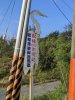
When I got to the turn-off from Hengnan Road (just beside a go-kart track, with some very barky unchained dogs) I saw an old sign in the shape of an egret saying that this was a bird-watching area! This is just a narrow road and isn't even labelled with a name on Google Maps. The road goes past a few fields, in one of which I saw an Oriental Pratincole, and at a sharp right-hand turn there was a little barbed wire barrier and beyond that a big rusty sign announcing the birding site.

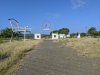
I think this must actually be the nature center site mentioned in older trip reports because it obviously used to be one, but the whole place is now deserted and overgrown with all the facilities rusting and abandoned. I stepped over the barbed wire and walked up the path to the ponds. There was an old visitor centre building, all closed up but with the displays still inside. I guess they opened the new one on the other side of the lake and then just left this one to fall apart. It's weird because this is a much better site! The new Nature Center was closed when I got there the other day, but it is just a two-storey building from which you can scope the lake for birds. This old site doesn't actually have a view of the lake itself, but it is surrounded by weedy ponds which are much better for bird diversity than open water. It's a shame they didn't maintain both sites for birders.

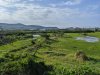
I saw about 25 species of birds here, although they were mostly just the standard open-country birds of Taiwan. By going up on top of the building there was a wide view of the surrounding ponds and canals which made it easy to pick out the waterbirds amongst the plants. The site seems good for Cinnamon Bitterns, of which I saw several flying back and forth, and I saw a Yellow Bittern as well.

Still no Taiwan Hwamei though!

I followed the road around a bit more to where there were more abandoned buildings and some diggers. There was a dead Masked Palm Civet on the track which I guess must have been killed by a stray dog.


full

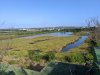
Feral Peahen photographed at the lake.
 
Egret-shaped sign at the start of the road.

PXL_20250502_224244619.jpg


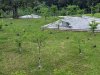
The abandoned nature reserve.

PXL_20250502_234459886.jpg


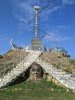
The visitor centre, where at this end you can go to the top of the building and use it as a viewing platform.

PXL_20250502_234027691.jpg


Views from the top.

PXL_20250502_231723253.jpg

PXL_20250502_231757080.jpg
 

Attachments

  • PXL_20250502_224244619.jpg
    PXL_20250502_224244619.jpg
    150.3 KB · Views: 105
  • PXL_20250502_234459886.jpg
    PXL_20250502_234459886.jpg
    194.9 KB · Views: 111
  • PXL_20250502_234027691.jpg
    PXL_20250502_234027691.jpg
    130.8 KB · Views: 107
  • PXL_20250502_231723253.jpg
    PXL_20250502_231723253.jpg
    224.7 KB · Views: 109
  • PXL_20250502_231757080.jpg
    PXL_20250502_231757080.jpg
    187 KB · Views: 111
You did not mention in your review if you sat in the giant chair or tried on the giant sunglasses. How could you not do those things?
 
You did not mention in your review if you sat in the giant chair or tried on the giant sunglasses. How could you not do those things?
The chair is actually giant. You'd need mountain-climbing gear to scale the legs.

I have no idea why there were so many giant and weird objects all around this place. The oddest one was inside the visitor centre building there was part where you could come down stairs from the roof (the main parts of the building either side were locked) and in this area was a tree growing up out the top, and around the base of it was a low wall forming an enclosure, with little runways going up around the tree trunk and also out through the wall to a similarly-low-walled enclosure outside the building, with signage for "NASA mice". I could hear rustling in the leaves covering the ground inside the enclosure (the indoors one) which turned out to be land hermits. I haven't a clue what the "NASA mouse" was or why there was an enclosure here for it.
 
Fenqihu


Leaving Hengchun on my way to Alishan I stopped overnight in the city of Tainan. It is a long way from Hengchun to Chiayi, the city I needed to reach in order to get a bus or train into the mountains, so Tainan not only made a good stop mid-way but there are lots of wetland areas there which would bulk out my Taiwan bird list and hopefully I might see something I hadn't seen yet like a Painted Snipe.

However it took so long to get a bus out of Hengchun that I didn't arrive in Tainan until late afternoon, and it didn't seem worth trying to get to the wetlands then. Still, I was at least close to Chiayi.

I was actually stopping for another night on the way as well, in the little village of Fenqihu, because it was mid-altitude and I thought I'd be able to see some additional birds before getting to the higher site at Alishan. The more monetary reason was that there was nowhere in Alishan for that night which wasn't ridiculously expensive.

The hotels charge different rates for different days. Friday and Saturday nights are often two (or more) times more expensive than weekdays, and the different days during the week often have varying prices as well. The room I got in Fenqihu wasn't cheap at all (my bank says I paid NZ$126 for it!), but it was much cheaper - by hundreds of dollars - than anything in Alishan for that night, and it was also the cheapest place listed for Fenqihu.

You can take either a train or a bus from Chiayi to Fenqihu, although there are only two of each per day.

There are ten buses a day from Chiayi to Alishan, between 6.05am and 2.10pm, but only two of them go via Fenqihu (leaving Chiayi at 9.40am and 12.10pm). In the other direction the two going via Fenqihu leave Alishan at 9.10am and 12.10pm.

The Alishan Forest Train leaves Chiayi at 9am and 10am. Both trains stop at Fenqihu, but only the 10am one goes all the way to Alishan.

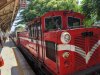
The train cost me 384 TWD. The bus is cheaper by about 100 TWD (which is about NZ$5), but I took the train because it looks like a red tin toy train. Leaving Chiayi I saw a Malayan Night Heron fly up from beside the train track.

The train is remarkably juddery so it wasn't as much fun as I thought it might be, but I guess that's what it was like in the old days when toys rode trains. The next morning I took the bus the rest of the way to Alishan and the train was actually better!

I stayed at the Fenchihu Hotel, which was really overpriced but it was nice enough. The q in Fenqihu is pronounced like a ch - so the hotel name is spelled the way you say it.

Fenqihu is just a tiny village next to the train track, and is surrounded by forest. There are trails and boardwalks all through the forest directly around the village which is nothing if not convenient.

I spent the afternoon trying to find, well, anything. White-eared Sibias and Steere's Liocichlas were calling but unlike Xitou, where they were very easily seen, here they were mostly invisible. Xitou remained my favourite place in Taiwan! I'm glad I went there first. However I saw Taiwan Barwings much better here than at Xitou where not only had I seen just a single individual but it was wet and in shade so not presented at its best.

I went out at night and found a Taiwan Toad sitting on the track, and a Mountain Scops Owl.

full


I thought maybe the poor showing of birds was just because it was the afternoon, but in the morning I had a wander along the boardwalks before I left for Alishan and it was even less birdy than the previous day. I saw a female White-tailed Robin as the first bird, then the usual sibias, liocichlas, barwings and yuhinas, and then a Rufous-faced Warbler as the final bird.

I think if I hadn't been to Xitou then I'd have been happy enough with Fenqihu. Even if it was difficult actually getting to see the birds most of them would have been new for me, but as it is I could have easily skipped it. Staying in Chiayi for that night would have certainly been cheaper, or even a second night in Tainan which would have allowed me to visit the wetlands. The only saving grace for Fenqihu was the Mountain Scops Owl which was a lifer.
 
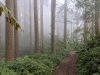
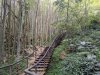
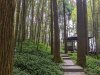
Forest at Fenqihu.

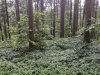
This is why birding is so difficult in the Taiwan forests. Apart from fog, the forest floor is invariably covered in dense undergrowth from ankle to waist height, and a lot of the birds - especially the endemics you most want to see - spend all their time hidden inside it with little need to emerge.

PXL_20250505_065305933.jpg PXL_20250505_052408023.jpg PXL_20250505_052418142.jpg PXL_20250505_060839257.jpg
 

Attachments

  • PXL_20250505_065305933.jpg
    PXL_20250505_065305933.jpg
    222.3 KB · Views: 75
  • PXL_20250505_052408023.jpg
    PXL_20250505_052408023.jpg
    345.2 KB · Views: 72
  • PXL_20250505_052418142.jpg
    PXL_20250505_052418142.jpg
    294 KB · Views: 66
  • PXL_20250505_060839257.jpg
    PXL_20250505_060839257.jpg
    317.6 KB · Views: 73
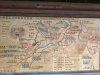
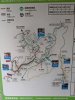
The next few posts will be about Alishan, so here are a couple of map boards of the area. Once you've been around the place the maps make a lot more sense. Trying to figure them out without any context not so much.

What they label as "trails" are almost all boardwalks.

PXL_20250506_031211147.jpg PXL_20250506_031418735.jpg
 

Attachments

  • PXL_20250506_031211147.jpg
    PXL_20250506_031211147.jpg
    209.9 KB · Views: 67
  • PXL_20250506_031418735.jpg
    PXL_20250506_031418735.jpg
    92.4 KB · Views: 63
Last edited:
Alishan, day one


The schedule for the Alishan Forest Train from Fenqihu to Alishan wasn't helpful for me. The only train was at 1.20pm and I wanted to get to Alishan as early as possible to make the most of birding time, so I caught a bus instead. The bus times aren't that much better. There are lots of buses throughout the day between Chiayi and Alishan, but only two of them go via Fenqihu and the first one wasn't until 11.30am. I was told at the reception desk of the Fenchihu Hotel that the best option was to get the 9am bus heading down towards Chiayi but to get off at the junction town of Shizhuo, ten minutes down the mountain, and from there catch one of the frequent Chiayi-to-Alishan buses.

Shizhuo is also spelled Shizhao (always an annoying thing, because you're not sure if you are at the right place or if there genuinely are two different places with almost the same name). I got there at 9.15am. I think I might have just missed a bus to Alishan - the next one didn't arrive until 9.55am. Really I only saved about an hour, or maybe an hour and a half, than if I'd just caught the 11.30am bus from Fenqihu, but there was a real possibility that the 11.30am bus may not have even had any seats so going via Shizhuo was a safer bet.

I didn't like Alishan on arrival but by the end of the day it had grown on me, once I'd figured out where everything was and how to get there, and by the time I left it was my second favourite place in Taiwan after Xitou. I saw 35 species of birds while there, which doesn't sound like many but looking at the eBird checklists I think it probably is. Nine of the birds were lifers. I saw six species of mammals of which three were lifers.

full

Taiwan Yuhina - one of the most common endemics so I have lots of photos of them!


Arrival was, as is often the case for me when I arrive anywhere, confusing. The Gau Shan Ching Hotel was supposed to be about a minute's walk from the bus station. The only thing where the bus stopped was the entrance gate to the Alishan National Forest Recreation Area which, as far as I had gathered from looking at maps, was beyond the hotel and village area. I asked a guard at the stop where the hotel was and he said I had to go through the gates where you pay to enter. I thought there was a translation error but he insisted I had to pay to get to the hotel. I went up to the gate where they said the same thing. It turned out the whole village area is inside the Forest Recreation Area and you have to pay. I mean, I would have been paying to go into the park anyway, but it seemed weird having to pay to just get to the hotel. Although obviously it does mean you're not paying an entry fee every day, because you're already inside.

As for the hotel being a minute's walk, it might be a minute's walk from the bus stop in a straight line, but in real life it was more like fifteen or twenty minutes because I had to walk up the entrance road and all the way through the tourist village - asking people along the way for directions - and then down a steep set of narrow stone steps before getting there.

The hotel was the cheapest one on Trip, and it was still costing me NZ$147 per night (after transaction fees etc added on to the booking). The staff at reception were lacking in any sort of charm or enthusiasm, the room was tiny and (at best) adequate, the hotel itself was old and noisy. Not good first impressions of Alishan at all!

I left my pack at the reception and went for a wander to try and suss out the layout of the area. The whole place struck me as just a tourist village, with expensive restaurants and manicured gardens. I mean, it is a tourist village, that's literally what they call it, but it did not seem at all like the great birding destination that trip reports made it out to be. I went to the tourist office for information and found that, unlike what I had thought, there wasn't really any way to make day-trips from here to other parts of the mountains because no buses had usable schedules. To get to Tataka, for example (where Yellow-throated Martens were said to be reliable at the viewpoint car-park) there was only one bus a day, which left Alishan in the afternoon and came back from Tataka at 8am in the morning, so completely useless.

I tried to work out what the map of Alishan was showing me and it didn't look promising. There were shuttles which did runs to a couple of viewing points higher up but they either left really early (for people to watch the sunrise) or too late into the morning, and it was difficult to get a sense of scale for distances. I decided to just go walking and see where I found myself.

Most of the "trails" on the map are actually boardwalks running alongside the roads, on the downhill side so the slope drops away below the boardwalk, but they are in effect sidewalks rather than trails. The slopes are covered in forest, which is mostly cypress, so you can bird from them, but most of the birds I was seeing were the same common species I'd seen at Xitou and Fenqihu, the White-eared Sibias and Steere's Liocichlas and so forth. I wasn't "feeling it", as they say, and was grumbling away internally about how rubbish the place was.

After walking for a distance along the initial boardwalk from the village I took an over-bridge which led on to Zhaoping Park, and when I got there I saw there was a stone-paved trail cutting up the hill, an actual trail through forest and not a boardwalk following a road. This was the Sunrise Trail (or Zhushan Footpath, depending on which map or sign you're looking at) which basically cuts out half the walk up the road if on the way up to Zhushan lookout. I didn't ever see anything on this trail as it happens - the trees were immensely tall and it just seemed remarkably birdless any time I was on it - and at the top I just kept walking up the road.

Just a little way further on the road doubled back on itself in an abrupt U-bend and right there, on the uphill side of the bend by a 4km marker sign, I suddenly found a whole lot of birds, including three endemics which were lifers - the Flamecrest, the White-whiskered Laughing Thrush and the Collared Bush-Robin - along with Taiwan Yuhinas, Morrison's Fulvettas, Taiwan Barwings, Green-backed Tits, Black-throated Tits, and even a Coal Tit (which in Asia have a pointy crest unlike the crestless European ones). I went up this road every day I was at Alishan and there were loads of birds at this spot every time except on the very last morning.

full

White-whiskered Laughing Thrush

full

Taiwan Barwing


The Flamecrest is a relative of the Goldcrest and is only found in the mountain forests of Taiwan. It is a really cute little bird with a bright yellow belly and a cartoony white face with black stripes.

full


The flame in its crest isn't obvious - most of the time it just looks black and white - but when it is displaying or threatening another Flamecrest it somehow reveals a blazing orange mohawk from nowhere. It's extraordinary. I saw two birds fly into the same tree and suddenly their heads looked like they had caught fire.

full


I carried on walking, and around the next bend in the road was a road-sign with a Mikado Pheasant on it. There are two endemic pheasants in Taiwan, the Swinhoe's Pheasant of lower altitudes and the Mikado Pheasant of the mountains. I think the Swinhoe's is the easier one to see, but this is probably just because it is more widespread. That's the bird I most associate with Taiwan, but (spoiler alert) I never saw one the whole time I was in Taiwan.

Mikado Pheasants are regularly reported from Alishan so I had my hopes up, but at the same time pheasants are tricky beasts (except when they're not!). Pheasants are odd birds - they are sneaky most of the time but then randomly they will just walk out in front of you as if they are a domestic chicken. But no, I did not see a Mikado Pheasant today.

At the top of the road is the Zhushan Viewing Point, which has a train station for the Alishan Forest Train in the morning, and a path from here leads further on to the Mt. Ogasawara Viewing Point. Part way along this path is the small Alpine Botanical Garden. Just past here is a raised boardwalk to the viewing platform. There were some birds in the bushes along the walkway but they were ones I'd already seen today.

full

Taiwan Yuhina

More interesting was a Taiwan Striped Squirrel, deep inside one of the small trees. This ended up being the only one I saw in Taiwan, which was disappointing, but at least I saw it well even if I couldn't photograph it.

This area also seemed to be a good spot to see the Taiwan Yellow-bellied Bush Warbler. Normally bush warblers are secretive, creeping around in thickets and trying not to be visible, but up here I saw them frequently.

On the way back to the tourist village I came across a huge troop of Taiwan Macaques feeding on grass in Zhaoping Park.


While in Taipei I hadn't had any luck finding the "easy and reliable" Taiwan Red Giant Flying Squirrels at Fuyang Eco Park. In the mountain forests there is another endemic species which is also supposed to be "common" and "easy to see" at Alishan (and at Dasyueshan), which goes by the long-winded name of Taiwan Red & White Giant Flying Squirrel. Both these species are splits from more widespread species of the Chinese mainland (the first from the Philippine Giant Flying Squirrel and the second from the Red & White Giant Flying Squirrel). Apparently they are easy to see at Alishan because of the boardwalks which mean you can be looking across into the trees rather than up at them from the ground. However that was also supposed to be the case at Fuyang Eco Park and it didn't help me at all!

To my surprise, it turned out to be true! I went out in the evening and in no time at all I was looking at a Taiwan Red & White Giant Flying Squirrel!

full


I have some doubts that they are really as common as they are said to be. On the boardwalk I only saw them at one spot (every night), and I saw one elsewhere and heard a couple, but it felt like there were just some individuals which happened to live by the boardwalk at that spot and were used to people and lights, so the impression is that they are common because those particular animals are very visible. Nevertheless, even if that's the case, it still means they are "easy to see" at Alishan.

full
 
Mikado Pheasant road-sign.
PXL_20250506_053221284.jpg


Taiwan Macaques feeding on the lawns in Zhaoping Park.
PXL_20250506_082934907.jpg


Also, no striding is allowed! I'm so used to striding that it just felt weird mincing through the forest.

PXL_20250506_042655766.jpg
 

Attachments

  • PXL_20250506_082934907.jpg
    PXL_20250506_082934907.jpg
    352 KB · Views: 64
  • PXL_20250506_042655766.jpg
    PXL_20250506_042655766.jpg
    254.9 KB · Views: 64
  • PXL_20250506_053221284.jpg
    PXL_20250506_053221284.jpg
    110.9 KB · Views: 69
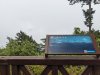
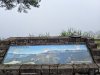
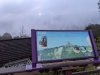
The viewing lookouts all have signboards naming the surrounding peaks which were not even slightly visible today. Well, no, actually in that last image they are slightly visible.

PXL_20250506_054906735.jpg PXL_20250506_073809872.jpg PXL_20250506_102108572.jpg
 

Attachments

  • PXL_20250506_054906735.jpg
    PXL_20250506_054906735.jpg
    136 KB · Views: 64
  • PXL_20250506_073809872.jpg
    PXL_20250506_073809872.jpg
    169.7 KB · Views: 70
  • PXL_20250506_102108572.jpg
    PXL_20250506_102108572.jpg
    117.3 KB · Views: 68
Alishan, day two


I spent today walking back up to Zhushan, same as yesterday. Just past the overbridge before Zhaoping Park there is a sign about how old tree stumps are useful for wildlife, and there is a Serow and a Mikado Pheasant pictured on the sign. As I was coming up towards that sign there was a group of people coming down from watching the sunrise at the Zhushan lookout, who had stopped at the sign, and I heard one say "I'm really glad we got to see the pheasant".

I didn't see many birds on the way up. There was a Taiwan Whistling Thrush by the overbridge, a Large-billed Crow fly-over, a Eurasian Nuthatch at the start of the Sunrise Trail, and a Green-backed Tit at the top of the trail.

full

Green-backed Tit


It was really foggy on the upper stretch of the road this morning making it basically impossible to tell what any of the birds in the trees were. It was so foggy that I almost didn't register that there was a male Mikado Pheasant just walking along the side of the road up ahead!

Whenever you're looking for one particular kind of animal, you know exactly how it would look if you came around a bend in the road or trail and saw the animal standing there. You can imagine it so clearly that it is disappointing when that doesn't happen. But every so often exactly that thing does happen!

I took some photos from where I was, knowing they wouldn't be any good but they might be the only ones I got, then walked slowly towards him. This turned out to be one of those situations where the shy pheasant doesn't immediately scream and run away, but simply ignores you. The photos still weren't great because it was very foggy after all, but at least I got some.

full

This would have been a much better photo without the fog. Note that this isn't a cropped photo - the pheasant was actually really close and not bothered by me at all!


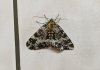
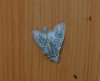
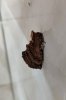
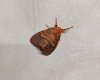
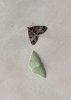
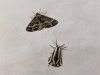
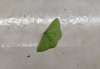
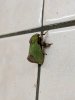
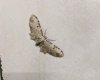
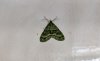
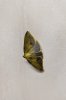
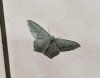
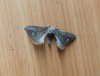
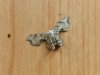
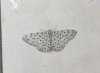
At the top of the road, where the shuttles stop, there is a toilet block which apparently has its lights on all night because when I went in there I found literally hundreds of moths all over the walls. Not only boring brown moths, but just every colour imaginable. I'll attach photos in the next post because I took them all on my phone.

I made a pass through the Alpine Botanical Garden where I saw some Eurasian Jays, and as I was continuing on up the road a Reeves' Muntjac trotted across the road, in no hurry in the fog. This was the first one I'd seen in Taiwan, although I had seen the same subspecies on Oshima Island in Japan where they have been introduced.

The only other species of note on this road today (as in, one I've not already seen here) was a Southern Nutcracker. I saw it fly across the sky, and thought it was a jay. Luckily it landed on a treetop in literally the only spot where I could still see it through the trees. I've seen nutcrackers before (the Northern one in Russia and the Southern one in China) but it is so few times that I am still shocked by how big they are. I think it's because they look kind of like a Common Starling and so my brain assumes that's the size they are, but they are about the size of a jay.


When I came down I took a detour via the nearby Zhaoping Station (just near the bottom of the Sunrise Trail) where there were a couple of food stalls, and on to the Sister Ponds. There are boardwalks and paths around the ponds and each one has a resident Taiwan Whistling Thrush, so this is the place if anyone visiting needs to see one of these. A Ferruginous Flycatcher making sallies from a branch over one of the ponds, and a Snowy-browed Flycatcher elsewhere were both new for the trip.

full

Taiwan Whistling Thrush


Right next to the Sister Ponds is the start of the trail to the Tashan Viewing Area. I only did this one because it has a sign with a Swinhoe's Pheasant on it as one of the birds which can be seen there.

The trail wasn't much fun because it's all quite steep, and I didn't see any birds I hadn't already seen. I only went as far as the fork in the rail track. The trail continues on from there to the viewing point. There is an abandoned rail track here as well, being reclaimed by the forest. Rather than retracing the trail, I just walked back along the rail track because it was all flat. There are signs saying you're not allowed on the track but other people were doing the same thing and the track is only used by the train in the morning anyway.

From there I completed the loop back around to the junction on the boardwalks where the overbridge is to Zhaoping Park, going past the extravagant Shouzhen Temple where there is a whole "village" of food stalls and which is also the entrance to the Giant Trees Boardwalk to which I would return the next day.

full

And here's another Taiwan Yuhina
 
Toilet moths!

PXL_20250507_005539121~2.jpg PXL_20250507_010107226~2.jpg PXL_20250507_005315684~2.jpg PXL_20250507_010036287~2.jpg PXL_20250507_005655119~2.jpg PXL_20250507_010009907~2.jpg PXL_20250507_005014010~2.jpg PXL_20250507_005306204~2.jpg PXL_20250507_005851491~2.jpg PXL_20250507_005002679~2.jpg
 

Attachments

  • PXL_20250507_005539121~2.jpg
    PXL_20250507_005539121~2.jpg
    118.9 KB · Views: 59
  • PXL_20250507_010107226~2.jpg
    PXL_20250507_010107226~2.jpg
    140.4 KB · Views: 60
  • PXL_20250507_005315684~2.jpg
    PXL_20250507_005315684~2.jpg
    36.2 KB · Views: 59
  • PXL_20250507_010036287~2.jpg
    PXL_20250507_010036287~2.jpg
    111.4 KB · Views: 62
  • PXL_20250507_005655119~2.jpg
    PXL_20250507_005655119~2.jpg
    73.3 KB · Views: 59
  • PXL_20250507_010009907~2.jpg
    PXL_20250507_010009907~2.jpg
    114.2 KB · Views: 58
  • PXL_20250507_005014010~2.jpg
    PXL_20250507_005014010~2.jpg
    138.3 KB · Views: 62
  • PXL_20250507_005306204~2.jpg
    PXL_20250507_005306204~2.jpg
    48 KB · Views: 62
  • PXL_20250507_005851491~2.jpg
    PXL_20250507_005851491~2.jpg
    69.2 KB · Views: 62
  • PXL_20250507_005002679~2.jpg
    PXL_20250507_005002679~2.jpg
    54.2 KB · Views: 59
And more Toilet Moths...

PXL_20250507_010127057~2.jpg PXL_20250507_010351472~2.jpg PXL_20250507_010218548~2.jpg PXL_20250507_010210980~2.jpg PXL_20250507_010317579~2.jpg PXL_20250507_010306693~2.jpg PXL_20250507_010156451~2.jpg PXL_20250507_010146880~2.jpg PXL_20250507_010253234~2.jpg PXL_20250507_010239946~2.jpg
 

Attachments

  • PXL_20250507_010127057~2.jpg
    PXL_20250507_010127057~2.jpg
    95 KB · Views: 60
  • PXL_20250507_010351472~2.jpg
    PXL_20250507_010351472~2.jpg
    85.5 KB · Views: 62
  • PXL_20250507_010218548~2.jpg
    PXL_20250507_010218548~2.jpg
    46 KB · Views: 62
  • PXL_20250507_010210980~2.jpg
    PXL_20250507_010210980~2.jpg
    116.6 KB · Views: 62
  • PXL_20250507_010317579~2.jpg
    PXL_20250507_010317579~2.jpg
    208.1 KB · Views: 56
  • PXL_20250507_010306693~2.jpg
    PXL_20250507_010306693~2.jpg
    193.4 KB · Views: 62
  • PXL_20250507_010156451~2.jpg
    PXL_20250507_010156451~2.jpg
    113.1 KB · Views: 61
  • PXL_20250507_010146880~2.jpg
    PXL_20250507_010146880~2.jpg
    112.7 KB · Views: 61
  • PXL_20250507_010253234~2.jpg
    PXL_20250507_010253234~2.jpg
    177 KB · Views: 63
  • PXL_20250507_010239946~2.jpg
    PXL_20250507_010239946~2.jpg
    109.5 KB · Views: 57
And in a break from Toilet Moths, some forest photos. There are loads of giant stumps left after the logging, which don't rot for probably centuries.

PXL_20250507_062835840.jpg

PXL_20250507_074546108.jpg


The abandoned rail track.

PXL_20250507_065401341.jpg
 

Attachments

  • PXL_20250507_062835840.jpg
    PXL_20250507_062835840.jpg
    312.4 KB · Views: 58
  • PXL_20250507_065401341.jpg
    PXL_20250507_065401341.jpg
    234.4 KB · Views: 64
  • PXL_20250507_074546108.jpg
    PXL_20250507_074546108.jpg
    367.7 KB · Views: 62
And back to toilets. In Taiwan the sewage system isn't designed for toilet paper so it goes in a bin beside the toilet, so I get that being on the sign. But where are you supposed to put your socks and underwear if not in the toilet?

PXL_20250507_043531847.jpg
 

Attachments

  • PXL_20250507_043531847.jpg
    PXL_20250507_043531847.jpg
    57.5 KB · Views: 59
These are quite interesting, a few are quite similar to species I occasionally see around here. A lot more green moths than I would have expected. Have you figured out species for any of them or not really a point of interest?
No, I wasn't going to bother. I just took photos of the ones I thought were interesting to look at.
 
Back
Top