Chlidonias Goes To Asia, part eight: East Timor 2025

Chlidonias

Moderator
Staff member
15+ year member
What is this? A sudden Chlidonias Goes To Asia thread just appearing out of nowhere?

I’m currently undertaking a Bustralia trip but have dropped East Timor in the middle of it because there are daily flights there from Darwin, so it seemed silly not to utilise the opportunity. However it also seemed a bit silly to put a whole section about East Timor in the middle of an Australian thread, so here we are. You can never have too many CGTA threads, after all.

The Bustralia thread is here: Chlidonias presents: Bustralia


Darwin to East Timor

There is no direct airport bus from the centre of Darwin. Instead you catch a bus to the Casuarina Interchange, and then catch the #3 which stops close to the airport (about five minutes walk). All the buses in Darwin are free at the moment, but the problem with the #3 is that it only runs every few hours. My flight to Dili was at 1.25pm but the only #3 buses in the morning were at 8.02am and 12.30pm. I wasn’t going to pay for a taxi when there is a free bus, obviously, so I caught the earlier bus which got me to the airport at about 8.20am and then waited for five hours. There is free Wifi at the airport though.

When I return to Darwin my flight lands at 5.25pm which is too late for the #3 bus. It is still running but the section of the route which passes the airport isn’t covered on the later runs, so I’m going to have to either walk a lot further to get to a bus stop (about 2km) or get a taxi. I’ll be in a different hotel, though, which is only five minutes away by car in Nightcliff (or over an hour by bus!) rather than in the main part of town so I’ll probably just use a taxi.


The flight from Darwin to Dili (the capital of East Timor) is only about 1.5 hours, and the airport is right beside the town. It isn’t actually that far from there to the Casa Minha Backpackers where I was booked, it’s maybe 3km or so, totally walkable but it was really hot and my pack was heavy. The taxi drivers wanted US$15 for the ride – I knew it should be “only” US$10 – so I started walking out to the main road where the microlets are. Microlets are the equivalent of public buses here, but instead of buses they are tiny vans crammed full of people, and they cost 25 cents. Ten dollars versus twenty-five cents.

Entry into the country is easy enough (at least for me, and probably most other Westerners) with a US$30 visa-on-arrival. You have to fill out an online declaration beforehand which supplies you with a QR code which you need at immigration.

When you get off the plane you queue at a window where the guard takes your passport and the US$30 (cash only), then you move to the next window where that guard gives you a receipt form, and then to the next window where the visa is stuck into your passport and gets handed back to you. Then you move to the next set of immigration booths where they stamp the visa and ask the usual questions. Then you can collect your luggage. But you’re still not done! Once you have your bags you go to the X-ray machine, but you need to join another queue first because this is where that QR code is required.

It’s fortunate that there were only twenty people on the plane!


East Timor - or to use its official name, Timor-Leste - is one half of the island of Timor, the western half of which still belongs to Indonesia. When Timor-Leste gained its independence they needed their own currency and decided it was easier to just adopt the US Dollar instead of creating their own. Almost everything is therefore much more expensive than in neighbouring West Timor.

If you look on booking. com for hotels in Dili many of them are hundreds of dollars per night. The Casa Minha is much cheaper than that. My single room was US$14. It is very basic, but cheap is good. I went out on the street in the afternoon after arrival and bought fried chicken for 75 cents. So long as food remains cheap then things should be fine.

I was planning to spend a lot of my time on Atauro Island where the homestays are supposed to be US$25 per night including meals (whereas the better-known Barry’s Place is US$60 and others are up to US$100). However all the information regarding the ferry schedules online is contradictory, and the organisation which deals with the homestays never replied to my emails, so nothing was booked in advance other than the first three nights at Casa Minha. Coincidentally I would be checking out of the Casa Minha on the Saturday, and the owner tells me that the Atauro ferry runs on Saturdays and Tuesdays. I’ll see how the accommodation situation resolves itself when I get there.


This is my first time in East Timor. I was in West Timor in 2009 and 2011, so I have actually seen most of the endemics of the island already. There are a handful I still need to find, some of which I thought should be definites and some of which I expected I would still not see (as it turned out, it was mostly the latter).

The ones which I didn’t see in West Timor were the Timor Green Pigeon (largely wiped out by hunting on the West side, even back in 2009, but apparently still common in the East), the Timor Black Pigeon, the Timor Oriole, and the skulky Buff-banded Thicket-Warbler and Spot-breasted Darkeye. There are some “new” species as well, which have been split since I visited, like the Timor Flowerpecker, Cuckoo-Dove and Boobook, and the Marigold Lorikeet; and there’s also the Timor Nightjar, described only in 2024.

Not all my “missing” birds are found on Atauro Island but some of them are, including the Green Pigeon, and because East Timor is so little-visited and so difficult to get around in by bus there are very few trip reports and few known bird sites on the “mainland”. I was therefore going to visit a couple of locations in Dili, then spend a week or so on Atauro where it sounded like I could just go out walking directly up into forest from the port village Beloi, and then I’d see where I was with which birds were still “needed” afterwards. There are even some birds on Atauro which aren’t found on the mainland, namely the Wetar Oriole and the Island Monarch.


The only birds seen on my first afternoon in East Timor were Tree Sparrows at the airport, and Drab Swiftlets over the streets when I was getting food. Not the most invigorating start!
 
Tasi Tolu lakes (Dili)


Drab Swiftlets, White-nest Swiftlets, Tree Sparrows and Sooty-headed Bulbuls were around the hostel in the morning. Breakfast was included with the room but it wasn’t until 7.30am and was just a fried-omelette-style egg on bread so not very satisfying. It was much cooler in the morning, but I couldn’t take advantage of that to go out walking somewhere because I was waiting for this American birder I’d met the evening before in the hostel. He had said he was planning on going to Dare today but wasn’t sure how to get there. We parted company before sorting anything out but I was going to see if he wanted to share a taxi up there to save us both some time and money.

Dare is in the low hills just behind Dili, at about 500m elevation I think (the internet gives me various elevations which differ by hundreds of metres!), and there are several of the endemic birds in the forest there. I had been going to walk (it would take two or three hours), or taxi up and then walk back, but I’d have to leave early while it was still cool. Now I was just sitting around waiting.

There were two bird sites I knew of around Dili, one being Dare and the other being a small lake area called Tasi Tolu back past the airport. I had two days, so if today didn’t work for Dare then I’d just use it for Tasi Tolu instead and do Dare tomorrow. Heat doesn’t make much difference to water birds the way it does to forest birds, so going to Tasi Tolu in the middle of the day was fine.

When the American eventually arose, after 8am sometime, he wasn’t going to Dare today after all. So Tasi Tolu it was.


Getting there (a few hours later, because the timing wasn’t important), I caught a #9 microlet from the hostel to the main road by Timor Plaza, and then switched to a #10 microlet which runs west and ends right by Tasi Tolu.

Microlets don’t have set stops. Each number (e.g. #9 or #10) has a fixed route and there seem to be certain places where people wait by tradition, but literally anywhere along the route you can flag one down and hop in. Then where-ever you want to get out, you just rap your coin on something metal and the driver will stop right there.


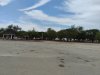
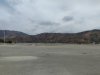
The area by the Tasi Tolu lakes is called Peace Park. Neither the park nor the lake were as I imagined. The whole area by the road is currently under construction so there is dust and sand blowing everywhere, then there is the “park” which is a short stretch of dry grass and trees which bird-wise is mostly filled with Tree Sparrows, then there is a very large area of concrete and gravel, and then eventually there is the lake – in front of which they are building a great big wall!

There are two lakes, but with just a sand bar separating them the effect is more like one big lake which has half-evaporated (there is also a third lake but I didn’t see that one). Most of the lake shores are surrounded by shacks but you can walk along the sand at the edge of the water and along the sand bar between them.

Looking over the wall – only partially built still – I could see a Great Egret and Little Egret and a little flock of Pied Stilts, and out on the water was a good-sized raft of Australian Little Grebes. To the right I could see a collection of Little Pied Cormorants perched on dead branches at the water’s edge.

full

Little Pied Cormorants and Little Egrets


Then a huge bird came flying in from over the lake – an Australian Pelican! Not something I expected to be seeing! On the far side of the lake there was a great flock of birds spread along the water, composed largely of hundreds of Little Black Cormorants and dozens of pelicans and egrets.

full

Part of the cormorant and pelican flock


The Great and Little Egret I’d seen first had been joined by another strange-looking egret, like a Little Egret but with grey wings and back which proved to be an intermediate morph of Eastern Reef Egret. They come in a white phase and a dark grey phase, but I’ve never seen a mixed-colour one before.

full

Great Egret and intermediate morph of Eastern Reef Egret


As I walked between the lakes towards the big flock I started seeing small waders along the edges. Red-necked Stints, Red-capped Dotterels, Sharp-tailed Sandpipers, Common Greenshank, a Common Sandpiper, and then there were also various terns either sitting or flying – Great Crested, Australian Gull-billed, and White-winged. With my binoculars I searched through the giant mass of cormorants and pelicans for any other birds, but just found a Marsh Sandpiper and one solitary Bar-tailed Godwit.

full


full


Tasi Tolu has been described as a “wetland” which is a little misleading. There are some mangrove trees scattered along bits of the shore, but basically it is three lakes surrounded by sand and construction. I saw 18 species there though, and I think repeated visits (if you lived in Dili, say) would probably be worthwhile.

I spent a little time amongst the trees in Peace Park on the walk back to the road to catch a microlet. Tree Sparrows were the dominant bird here, but I saw some White-shouldered Trillers and a Barred Dove as well.


Bird total for today was 25 species: Australian Little Grebe, Great Egret, Little Egret, Eastern Reef Egret, Red-necked Stint, Red-capped Dotterel, Bar-tailed Godwit, Common Greenshank, Sharp-tailed Sandpiper, Marsh Sandpiper, Common Sandpiper, Pied Stilt, Great Crested Tern, Australian Gull-billed Tern, White-winged Black Tern, Australian Pelican, Little Pied Cormorant, Little Black Cormorant, Feral Pigeon, Barred Dove, Drab Swiftlet, White-nest Swiftlet, Sooty-headed Bulbul, White-shouldered Triller, Tree Sparrow.
 
Some views of Peace Park (top), towards the lakes (middle photo - but you can't see the lakes because they are building a wall in front), and over-the-wall view (last photo):

IMG20251009134043.jpg IMG20251009134050.jpg IMG20251009134416.jpg
 

Attachments

  • IMG20251009134043.jpg
    IMG20251009134043.jpg
    148.6 KB · Views: 71
  • IMG20251009134050.jpg
    IMG20251009134050.jpg
    107.5 KB · Views: 73
  • IMG20251009134416.jpg
    IMG20251009134416.jpg
    183.6 KB · Views: 75
To Dare in Dili


Dare is in the low hills just behind Dili, and there are several of the endemic birds in the forest there. Because it is so close to town it is easily accessible if you have a car. I’d saved a walking route on Google Maps before I left Australia (I didn’t have internet at all while in East Timor), which said it would take about 2.5 hours from the Casa Minha hostel.

It is a long and winding road, going upwards of course because the altitude above sea-level is around 500m. I think the uphill bit from the edge of town is about 8km, and from the hostel to that point is about 4km. I had various ideas in mind for how to get there, the cheapest being walking there and back, and the quickest being a taxi. I had asked the owner how much a taxi would cost and he (clearly guessing) said between US$20 and $50!

Luckily I found a way which did not cost anywhere close to that, but was still relatively quick. I had seen that the #9 microlet (the one which goes past the hostel, and also past the ferry terminal handily) had the Santa Cruz Cemetery on its route and that is near the turn-off for Dare. This would cut the first 4km off the walk.

The microlets start running at around 6am. During the day they are going by every thirty seconds it seems like, but a bit less frequently right at the start of the morning. I got one at 6.15am and was by the cemetery at about 6.40am. This cost 25 cents (anywhere in town by microlet is 25 cents). Then I walked a few minutes up the road to a big roundabout with a main road going left to the Taibessi bus station while to the right is the road which goes to Dare.

This was where I had been going to walk from, but there was a row of motorbikes sitting there and a driver called me over and asked where I was going. To Dare would be $5 he says, I said no I’ll walk, he said $4, I said no, he said $3 and I said okay. I feel like even this is higher than the actual rate, but $3 is still “almost free” and instead of taking two hours walking uphill I was there by 7am.

After we had set off I suddenly had a terrible feeling that he had meant $30 and not $3 – in many parts of southeast Asia I’ve found that the zeros routinely get dropped when expressing numbers (because the currency is often in thousands), and you’re supposed to just somehow know which number is being discussed. It gets confusing not just for foreigners but even the locals. In this case we had been using fingers – he held up five fingers to signify what I’d thought meant $5, for instance. Just to be sure, I got the driver to pull over and took out three dollars and he said yes that was right.

(Just as an aside, while East Timor uses American Dollars, they have their own coins. The smallest note is a US$5, below that they have 200 cents, 100 cents, 50 cents, 25 cents, ten cents, and five cents, all of which are East Timorese coins and not American coins).


At the point that Dare is labelled on the map there is just a bend in the (always bendy) road, where there is the Dare Memorial (for WW2) and a cafe. There is nothing else there, but this bend is also the junction for a narrow side-road called Rua de Dare which runs from off here for just under a kilometre to what I’d thought from the map marker was a Catholic Church but is actually a school.

This road is lined with trees – not exactly forest, but forest-ish – and is where all the birds are. The motorbike driver actually took me all the way up this road to the church/school, which was handy.


full

Bees. I thought the right-hand comb must be an old one but later in the morning it too was covered in bees.


For the next two hours I just walked up and down this stretch of road – I mean, only twice each way, but it took a long time because I was trying (almost entirely unsuccessfully) to photograph honeyeaters.

I saw all the species of honeyeaters found on Timor along this road. The Streak-breasted Honeyeater was the commonest by far, and the only one of which I got some (awful) photos, and I saw maybe ten Timor Friarbirds. I saw a few Indonesian and Yellow-eared Honeyeaters (the former is mostly coastal and the latter is more common at higher elevations), and just one each of the Helmeted Friarbird and Black-chested Myzomela.

full

Streak-breasted Honeyeater


The road is on a hillside, so invariably the honeyeaters (or any other birds) were either extremely high up if on the uphill side because the tree-tops were much higher than if they had been on flat ground, or on the downhill side I was looking directly across at them a lot of the time, which was better for viewing, but they were still too far back for photos.

None of the honeyeaters were lifers – I had seen them all in West Timor already, I just wanted to get photos – but some of the other birds were. The “main” one I wanted to see here, because it is supposed to be common (!), is the Timor Oriole. This is an odd bird. The males look like orioles, but the females look like friarbirds. It’s entirely possible I may have seen females in West Timor and thought they were friarbirds, but who’s to say? Fortunately today I saw a male so that’s taken care of!

I had been hearing lorikeets calling regularly, and after a while got a fly-over of a Marigold Lorikeet. Good enough for a tick “but needs better”. They sound the same as Rainbow Lorikeets to me, but look quite distinct. When I was in West Timor they were still lumped in with Rainbows, and I didn’t see them then so it was now a lifer. Not too long afterwards a pair flew across the road into some trees where I managed to see one of them quite well.

Back at the church / school later, there were more lorikeets, these ones being a flock of eight Olive-headed Lorikeets. They were feeding in trees just above the road but all the photos were rubbish. The two below were the best of the bunch.

full


full


Lots of other birds were around too. The sky was full of wheeling White-breasted Woodswallows, Tree Martins, and Drab and White-nest Swiftlets; and I saw a few Northern Fantails, an Emerald Dove, Fawn-breasted Whistlers, Red-chested Flowerpeckers, and Pied and Timor Chats.

full

Female Timor Chat. I didn’t actually know what this was at the time – I had seen males today which are readily identifiable, but this one had me stumped until I got back to Australia and could go through pictures of the Timorese birds.


By 9am it was extremely hot and, while there were still birds around, they were very reduced in number and activity. I went into the cafe by the Dare Memorial – it’s not well signed and you have to go down several sets of steps. It is known for its pizza, being specifically marked as a pizza place on some online maps, which are US$6 for a medium size. I wasn’t in the mood for that, instead getting a toasted sandwich containing Portuguese chourizo for $3, a bowl of fries for $2, and a mango milkshake for $2.50. More expensive than the usual meals I was eating in the restaurant by the hostel, where a bowl of bakso is $1.50 and fried chicken is 25 cents per piece, but it was worth it. I’ll probably return to Dare later in the trip, and I might try the pizza then.

After eating, and having a look off their balcony with my binoculars, I did another walk on the gravel road. Very hot indeed, but I managed to add a male Spectacled Monarch and a Wallacean Drongo to the day’s list.

full

Streak-breasted Honeyeater, taken from the deck of the Dare Cafe.


Getting back to Dili was even easier and cheaper than coming up. I walked back to the junction where the cafe was and a passenger-truck came by as I arrived, so I flagged it down and got off at the big roundabout where I’d got the motorbike when coming up, and it cost me $1.


It was a pretty successful day (seeing all the honeyeaters in one go!), with the bird total being 26 species with two lifers (the Timor Oriole and the Marigold Lorikeet):

Feral Pigeon, Pacific Emerald Dove, Barred Dove, Marigold Lorikeet, Olive-headed Lorikeet, Drab Swiftlet, White-nest Swiftlet, Tree Martin, Sooty-headed Bulbul, White-shouldered Triller, Northern Fantail, Fawn-breasted Whistler, Pied Chat, Timor Chat, Spectacled Monarch, White-breasted Woodswallow, Red-chested Flowerpecker, Streak-breasted Honeyeater, Indonesian Honeyeater, Yellow-eared Honeyeater, Black-breasted Myzomela, Timor Friarbird, Helmeted Friarbird, Timor Oriole, Tree Sparrow, Wallacean Drongo.
 
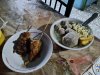
The meal above cost US$7.50 - below is bakso from a street restaurant which is US$1.50 and the chicken is 25 cents per piece. It does taste a lot better than it probably looks in the photo. The big "meatball" is actually a hard-boiled egg wrapped in sausage meat - usually it is just a plain egg.

IMG20251010180248.jpg
 

Attachments

  • IMG20251010180248.jpg
    IMG20251010180248.jpg
    144.8 KB · Views: 73
Are there any mammals of note to see in East Timor?
There are mammals on Timor, including fruit bats and some endemic rodents. East Timor is best known (in terms of mammals) for whales and dolphins which can be seen from the ferries to Atauro island.

I did see a few mammals while there, but literally every one of them remained unidentified.
 
Dili to Atauro Island


Atauro Island lies just north of Dili. It is close to the island of Wetar which is Indonesian, but Atauro belongs to Timor-Leste so visiting there is no problem (visa-wise). Several bird trip reports I’d read (of the few I’d found) mentioned Atauro as a good site for many Timorese birds, and access seemed to simply be walking up the road from the main village of Beloi into the hills. Most birders stay at Barry’s Place which caters mainly to divers (which are the main visitors to Atauro). At US$60 a night, including meals, this isn’t cheap but at least that’s all your costs when on the island if not diving.

I looked further than the bird reports though, and discovered that there are several homestays in Beloi (and elsewhere on the island) which are only US$25 a night including meals. There are no real restaurants or cafes on the island so all the accommodations include meals in their price. There was a market at the port when I arrived which was selling food but that was because it was Saturday (so I was told, but I think it is really there every day for the ferry day-trippers). There are also a few little shops there for buying water and snacks if need be.

Information online regarding the Atauro ferries is mixed, but I can say now that there are currently ferries every day but Sunday. There are three different boats, going on different days. The “fast ferry” is the twice-weekly Dragonboat which costs US$10 each way and takes one hour (supposedly). The other two ferries, the Berlin Nakroma and the Success, are the slow ones (two hours) and cost US$4. They leave Dili at 8am and return from Atauro at about 2pm.


Being a Saturday when I went, both the Dragonboat and the Berlin Nakroma were going to Atauro. Both were leaving at 8am. I had been to the dock the other day after going to Tasi Tolu, to make sure I knew where it was and to see if I needed to buy a ticket in advance. Luckily, because it took me ages to find where the tickets would be sold (I didn’t need to buy one in advance though) and getting there this morning was a mess. Nothing to do with me being useless, though, instead it was because Dili sprang a marathon on me!

I had gone out in the morning well before I needed. The ferry boarding wasn’t until 7.30am and they had told me I didn’t need to arrive until then to buy a ticket, but I wanted to make sure I would be able to get a microlet that wasn’t already full because I had my pack with me. So I went out at 6.30am, the American birder was with me because he was going up to Dare using my travel directions from yesterday, and we got an almost-empty microlet. At the first corner the street was blocked by police for the marathon. The microlet turned around and circled through some streets, and was blocked again. This continued for the next half an hour. The American was in the front seat watching the marker on his phone’s map. After forty minutes we were just a few streets away from the port, so I jumped out and walked – which is where my pre-visit the other day came in handy because I knew exactly where to go once I reached the main road there.

There were a surprising number of white people on the Dragonboat. For a country which is said to be little-visited there sure are a lot of tourists! A lot of them were day-trippers to the island but some were going to various “resorts”. The ferry has 250 seats and most were full. Even the Prime Minister was on board. That’s not a joke either. The Prime Minister of Timor-Leste was on the ferry going to Atauro. Later I found out that his visit was because the very day I arrived was the day that Atauro got 24/7 electricity. Before that they had it only during the day. It’s really hot here of course, so that was good news in terms of having a working fan to keep me cool!


The ride was smooth and uneventful. Some dolphins were seen, but I don’t know which species. I think I saw a Sooty Tern as well. Getting from the ferry onto Atauro was not so efficient. It was low tide and there is nowhere to actually dock, so the passengers were transferred by a single dinghy with an outboard motor, about twenty at a time (i.e. at least ten trips back and forth!), which they had to climb down a ladder to get into. I was on the second-to-last boat – I wasn’t in any rush, and the two ladies I had been sitting next to weren’t in their younger years and had big suitcases, so I gallantly stayed back to make sure they were okay.

The dinghy didn’t “land” as such, it neared the beach and everyone had to wade the rest of the way to shore. Anyone with luggage had to get it to the beach by themselves. By the time everyone was off the fast ferry, the slow ferry was already arriving. I guess that one would have to just sit and wait for high tide because there were vehicles on it.

I didn’t have anywhere booked to stay on the island. I had emailed the Atauro homestay organisation a month or so earlier and never got a reply, so had decided to just turn up and see what happened. The homestays have their WhatsApp numbers online, but I didn’t know which days I would be on the island (because I didn’t know the ferry schedules) and I didn’t have internet while there anyway, so decided to wing it. I’d figured the worst that could happen is that either I’d end up staying at a more expensive place like the aforementioned Barry’s Place, or the very worst is that I just get the return ferry back to Dili. However things were very easily sorted. I walked over to the market stalls and asked where there was a homestay, and a girl led me a short distance through the village to Estevao’s Homestay. Easy as that.

Estevao speaks really good English as well as, obviously, the three main languages of Timor-Leste – Portuguese, Tetum, and Bahasa Indonesia. I learned a few words of Portuguese while there (enough to say thank-you, yes, no, and hello at different times of the day) but no Tetum (the local language). However I know some Indonesian (not as much as I used to!) and I can speak some English as well. I never actually had any trouble in East Timor with language. English is used a lot. Not everyone knows it, but many know at least some. It was weird when I went into the mall called Timor Plaza in Dili, where literally every sign on all the shops was just in English.

Estevao’s Homestay is US$25 a night including three meals, he has three rooms (with fans), and he has seventeen cows. That last thing isn’t important for visitor information but I like Bali Cattle. They are a domestic form of Banteng and thus are much more beautiful than Western cows. He also has nine dogs, seventeen goats, and two pigs. The dogs are around the homestay, at least some of them, but the village livestock are managed communally and identified individually by ear notches.

There are eight homestays in the village and all are the same price, so I don’t think there would ever be issues with getting somewhere to stay there.


After sorting out a room I went back to the beach to get some lunch (a whole grilled fish and rice for US$2). There were Rainbow Bee-eaters in the trees above the market. Coming back through the village I paused for a bit at a shaded spot where there was a lot of bird-song. I couldn’t see many of the birds themselves – Ashy-bellied White-eyes, Pied Chats, and some Barred Doves were what I did see – but I’m thinking that early morning was likely going to be quite birdy.

full

Barred Dove


I also saw a big tree skink of some kind in the tree overhead. It was doing that thing where it was climbing but on the other side of the branches from where I was, so I could see it but I couldn’t see it. I knew it was a skink, but I couldn’t get any ID points on it, not even its patterning, so it remained unidentifiable.

Back at the homestay I washed some clothes and then sat by a fan writing this. I’d be on the island for a good number of days, so today was the arrival-and-chill-out day.


Some very casual birding in the late afternoon (i.e. standing outside my room in the garden) added a couple more birds for the day-list, notably a flock of Olive-headed Lorikeets in one of the garden trees, an Indonesian Honeyeater of which I got photos, and a Helmeted Friarbird in a tree across the way.

full

Indonesian Honeyeater


A pair of Supertramp Fantails were new for the trip- and year-list. These are a split from the Arafura Fantail, but I saw them in West Timor (pre-split) so not brand new for me. However when I see the Arafura Fantail in Australia that will now be a lifer instead! I do have to note that the Supertramp Fantail is, sadly, not named after the band.


Very few birds were seen today, with just thirteen species:

Feral Pigeon, Barred Dove, Olive-headed Lorikeet, Rainbow Bee-eater, Drab Swiftlet, White-nest Swiftlet, Pacific Swallow, Supertramp Fantail, Pied Chat, Ashy-bellied White-eye, Indonesian Honeyeater, Helmeted Friarbird, Tree Sparrow.


full


Male Pied Chat on Atauro. These are really variable in how much white they show on the wings, so sometimes can look almost entirely black which is confusing. Compare to the photo below of another male which was taken at Maubisse:


full


And this is what a female Pied Chat looks like:

full
 
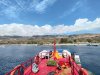
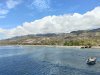
First views of Beloi port on Atauro from the Dragonboat ferry. That little dinghy is what the passengers were transferred to the island in.

IMG20251011101601.jpg IMG20251011101544.jpg IMG_20251011_071955.jpg
 

Attachments

  • IMG20251011101601.jpg
    IMG20251011101601.jpg
    173.5 KB · Views: 59
  • IMG20251011101544.jpg
    IMG20251011101544.jpg
    168 KB · Views: 61
  • IMG_20251011_071955.jpg
    IMG_20251011_071955.jpg
    170.5 KB · Views: 59
Atauro Island, second day


The meals at the homestay are breakfast at 7am, lunch around noon, and dinner around 7pm. It starts getting light at 6am, and so I went for a wander through the village to see what birds I might see before breakfast. Despite thinking that the morning would be very productive, based on yesterday afternoon being quite filled with birdsong, there wasn’t actually much around.

Tree Sparrows and Indonesian Brown Honeyeaters are the dominant birds in the trees here. I was looking out for Wetar Orioles, which one trip report had said were common around the village, but I didn’t see any. I did see the first Plain Gerygones of this trip, an endemic of Timor island (I had heard them at Dare but not laid eyes upon them).

I found the road which leads up into the hills – I mean, it’s not hard to find, it’s at the end of the village – but I found a shortcut where if you walk left along the village road when exiting the homestay, at the end is a T-junction. The right track leads to the main road (which runs along the shore) and to where the road into the hills starts, but directly ahead is a little foot-track which leads up past a corral to that road at a higher point. The track is literally a goat-track – it’s where the village goats go up the hill to graze in the morning.


After breakfast I returned to that road. An old report had said there were Timor Green Pigeons up there. I’m kind of doubtful now.

It was extremely hot. Even by 6.30am it was blazing. In Dili it would be cooler overnight and a comfortable temperature for the first two hours or so of the morning, before the sun got up properly. Here it was just constantly hot. The night was not noticeably cooler, and the fan basically just moved hot air around inside the room. Walking up the hill road it didn’t take long before I was drenched with sweat.

The road itself wasn’t nice to walk on. Rather than a gravel or rocky road like I’d anticipated, it was instead a sand road, with scattered stones to be sure, but mostly just sand. And not nice beach-type sand either, but thick dusty sand, the kind which billows up in a little cloud with each step as if walking on ash. You can imagine the effect if a vehicle goes past. Luckily on the way up there was just a goat stampede (I simply waited until they had all finished charging across the road and then let the dust settle) and one truck (and when that one went past I was well off the road anyway, trying to photograph Helmeted Friarbirds). Coming back down there was the same truck and a few motorbikes, and I moved away from the road when I heard them coming.

full

Helmeted Friarbird, showing the knob on the bill which gives them their name of “Helmeted” even if it is only a very tiny helmet. Their scientific name buceroides means “like a hornbill” for the same reason.


Coming back down was actually worse than going up. It’s a fairly steep road, so you might think coming downhill would be easier, but where the sand is thick it is slippery and your shoes can’t get any traction in it so they slide out from under you.

My shoes are the Chinese ones incidentally, still going strong. They had been red from walking around Broome, but after today they became white. Not because they were clean but because they were covered in dust.

Another interesting facet of walking up this road is the disconcertingly loud buzzing coming from the coils on the powerlines!


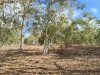
The vegetation around the village is thick, mostly palms and mango trees, and then on the lower slopes of the hills it is a sparse spiky-branched scrub with a few palms and trees here and there. Higher up there are a lot more trees, but there is no thick forest on the hills. It is all open eucalyptus woodland – scattered trees above grass. These are native Timor eucalyptus, not introductions from Australia. Some look like typical eucalyptus but others have unusual broad leaves which look quite out of place with the white eucalyptus trunk. Some gullies have other trees in them, and palm trees are dotted about (with Tokay Geckos calling from them, even in the middle of the day), but it just doesn’t seem like habitat that Green Pigeons would be found in. If anything, I’d expect them around the village because that is where all the good leaves and fruit are. Later I asked Estevao, and he didn’t know of any green pigeons here.

I walked all the way up to where there is a junction. The right-hand road leads north to the village of Arlo and then loops back to the coast and back down to Beloi, while the left-hand road leads (eventually) to Anartuto in the far south of the island. The road towards Anartuto was paved, to my surprise, so that was the way I went.

It had taken me about 1.5 hours to get to the junction, not because it is a very long way but because I was stopping for birds all the time. There was a big flock of Timor Zebra Finches (a species seen multiple times through the day), Collared Kingfishers on the powerlines, a Spotted Kestrel, a Flame-breasted Sunbird, several Wallacean Cuckoo-Shrikes, and various birds I’d seen either yesterday or earlier this morning.

full

Timor Zebra Finch


The paved road I was now on went downwards for a short while and then wound uphill. I didn’t get to the highest hills but I could see for a long way, and every higher hill just seemed to be the same scattered woodland or grass. Maybe Timor Green Pigeons are found in this habitat, maybe not, but I doubt they’d be feeding on eucalyptus trees. I heard Timor Red-winged Parrots calling somewhere nearby but couldn’t find them. I did manage to successfully photograph the endemic Plain Gerygone while on this section of road though.

full

Plain Gerygone


Birds in Timor are not easy to get photos of! You can rarely get close to them, and they disappear as soon as you even think about touching your camera! This is probably why I barely got any photos of birds from West Timor either.


Bird-wise it was a fair day given how hot it was, with 21 species seen:

Spotted Kestrel, Spotted Dove, Barred Dove, Olive-headed Lorikeet, Collared Kingfisher, Rainbow Bee-eater, Drab Swiftlet, White-nest Swiftlet, Wallacean Cuckoo-Shrike, White-shouldered Triller, Zitting Cisticola, Plain Gerygone, Supertramp Fantail, Pied Chat, White-breasted Woodswallow, Ashy-bellied White-eye, Flame-breasted Sunbird, Indonesian Honeyeater, Helmeted Friarbird, Timor Zebra Finch, Tree Sparrow.
 
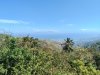
Some scenery from the road up into the hills. The dark green "forest" on the left in the first photo is the village area.

IMG20251012080246.jpg IMG20251012064152.jpg IMG20251012082321.jpg IMG20251012091441.jpg
 

Attachments

  • IMG20251012080246.jpg
    IMG20251012080246.jpg
    208.6 KB · Views: 53
  • IMG20251012064152.jpg
    IMG20251012064152.jpg
    188.6 KB · Views: 55
  • IMG20251012082321.jpg
    IMG20251012082321.jpg
    200.3 KB · Views: 50
  • IMG20251012091441.jpg
    IMG20251012091441.jpg
    236.6 KB · Views: 56
The paved road towards Anartuto, looking just like Australia.

IMG20251012094929.jpg


This is one of the broad-leaved eucalyptus here. Close up it's obviously one, but from not very far away it doesn't look like one at all (except for the white trunk) because the leaves look so green and tasty.

IMG20251012102232.jpg
 

Attachments

  • IMG20251012094929.jpg
    IMG20251012094929.jpg
    225.8 KB · Views: 52
  • IMG20251012102232.jpg
    IMG20251012102232.jpg
    234.8 KB · Views: 53
Atauro Island, third day


This day was a non-starter. When I’d arrived Estevao had said that from that day the island now had electricity 24/7 and the Prime Minister was over here as a sort of official “now you have electricity” visit. All Saturday night there was electricity so the room was tolerable with the fan going. It wasn’t exactly cool but it wasn’t too hot.

Sunday night – at some point in the night the power went off. I woke up around midnight and there was just silence. No fan running, the light outside the window in the garden was out. Maybe it was just a short lapse? Nope. No power for the rest of the night.

The houses here are built like concrete boxes, and even with the window slats open there is no air movement because they are covered in mosquito mesh and there is no breeze in the village. The outside temperatures are in at least the mid- to high-thirties; inside they are higher. It was awful. I didn’t sleep at all for the rest of the night because it was so hot. I was just lying there in misery with sweat running off me in torrents.

At 6am the power suddenly kicked back in, right when the sun was rising. I was really tired and had a bad headache now, so just went and had a shower and then stayed at the homestay all day instead of going walking. After lunch I tried to get some sleep, and eventually did, but it was difficult in the heat.

I asked Estevao about the power and in a puzzled tone he said he didn’t know what had happened – maybe it was only 24/7 on the day the Prime Minister was here!


There’s barely any point in listing the birds for today because it was just the ones around the homestay and only totalled seven species, plus Olive-headed Lorikeets heard but not seen (these are common on Atauro and I saw them every day except this one; Estevao said they get the Marigold Lorikeets as well but I didn’t see any):

Spotted Dove, Rainbow Bee-eater, Supertramp Fantail, Pied Chat, Ashy-bellied White-eye, Indonesian Honeyeater, Tree Sparrow.


full

Here’s another Indonesian Honeyeater, taken at the beach by the markets.
 
Atauro Island, fourth day


There was no power again in the night. I think the idea that the electricity was only on 24/7 when the Prime Minister was on the island was correct. I mean, nobody else needs electricity at night, right?

I was mentally prepared this time. The fan went off at midnight and I went outside into the dark with my torch. I’d had the idea of hanging my own mosquito net up somewhere and sleeping out there where it would be cooler. East Timor was declared malaria-free earlier this year but there are other diseases around and, regardless, I didn’t want to be covered in mosquito bites. However I did an easier thing and simply opened the door to my room (it opened to the outside) and after a bit the hot air in the room was replaced with the cooler night air, and I just left it open all night.

It feels weird as a Westerner, even from somewhere relatively safe like New Zealand, to be sleeping with the door wide open but everyone in the village knows each other so the chances of anything being stolen is minimal. Nevertheless I put my smaller bag with my laptop and camera and things like that under the mosquito net on the bed next to me.

I thus had a good enough night’s sleep, the only thing a bit unnerving was waking every so often and the shadows in the open doorway being interpreted by my half-awake brain as a person standing there.

The night was quite a bit louder with the door open. I think most of the livestock is corralled at night but at least some continue to roam free, with the cows being very noisy as they crash through the bushes outside. Then there are the dogs barking at all hours. And then all the roosters start crowing at about 1am and keep going until dawn.


At 3am there was a heavy downpour which lasted an hour or so. This worked out quite well for me, because all the dust on the roads was tamped down. In the morning I walked back up the hill road but not all the way up to the junction, just until I reached some of the eucalyptus woodland. This was where there had been a lot of friarbirds the other day so I figured it was as good a place as any to just spend the morning looking for orioles.

I think I might have heard orioles calling, but it could have been friarbirds which make a lot of weird noises. The only out-of-the-ordinary bird seen was a Singing Bushlark (not singing) on the way back down the road.

full

Helmeted Friarbird


There were more guests arriving at the homestay today. They were coming in on a slow ferry so they didn’t arrive until after I was back (the fast ferry is only twice a week). Two were Polish and the other two were Sri Lankan and Singaporean friends. From them I found out about a village called Maubisse which is in the mountains south of Dili. I hadn’t been seeing as many birds on Atauro as I had thought I would, so had been thinking about going back to Dili and taking a bus into the mountains, even just as a day-trip to see what I could find – but now I had an actual destination. The Polish couple were going there next, and the Sri Lankan had already been there. Maubisse, they said, had forest and all sorts of hiking trails in the surrounding area. Sounded promising.


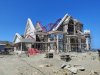
After lunch I had another wander around the village area, going further along its back roads than before. There is a huge church being built on the hill behind the village – it is visible from the ferry and from the road into the hills. Estevao told me it was costing US$2 million. I’d have thought the residents would have referred that amount of money being spent on getting 24/7 electricity for the island than on building a church big enough to hold the village population several times over, but what do I know?

I was still looking for the Wetar Oriole and the Island Monarch, neither of which were interested in showing up. Both are supposed to be common around the village and I wanted to see them because neither are found on the main island. But wanting and getting are not the same thing.

I was in luck with another bird though, one which I wasn’t thinking about even though it was a lifer. Whenever I see little birds moving in bushes I get my binoculars on them in case they are something other than the ubiquitous Ashy-bellied White-eyes or Tree Sparrows. This bird I saw was something small and green, but bright green not the dull green of a white-eye. I just saw it for an instant then it vanished amongst the leaves of the bush. Trying to relocate it, an Indonesian Honeyeater came out. Had I just seen the olive of that bird’s wings and got confused? No, the green bird reappeared and this time I saw it had bright red on it as well. It was only a quick glimpse, but enough to see that it was a Tricoloured Parrotfinch. It then came out again, this time for long enough to actually get a proper look at it. The bush was on the other side of a patch of waste-ground, and I lost it when crossing to try and get a closer look. I saw two small birds fly off as I was on my way, and I think that was them. The Tricoloured Parrotfinch is endemic to the region (not just to Timor) but I’ve never had much success with parrotfinches so seeing one was a nice surprise.


There were 21 birds seen today: Spotted Dove, Barred Dove, Olive-headed Lorikeet, Collared Kingfisher, Rainbow Bee-eater, Drab Swiftlet, White-nest Swiftlet, Singing Bushlark, Wallacean Cuckoo-Shrike, White-shouldered Triller, Zitting Cisticola, Fawn-breasted Whistler, Supertramp Fantail, Pied Chat, Ashy-bellied White-eye, Indonesian Honeyeater, Helmeted Friarbird, Nutmeg Finch, Timor Zebra Finch, Tricoloured Parrotfinch, Tree Sparrow.
 
Inside the eucalyptus woodland on the hills where I was looking for orioles and friarbirds:

IMG20251014082611.jpg


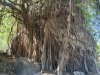
And a strangler fig growing over giant boulders in the village:

IMG20251014153726.jpg


This is the church being built in Beloi village. For a sense of scale, look where the red arches are going in the roof, and there are a couple of workmen up there:

IMG20251014143605.jpg
 

Attachments

  • IMG20251014082611.jpg
    IMG20251014082611.jpg
    401 KB · Views: 40
  • IMG20251014153726.jpg
    IMG20251014153726.jpg
    310.6 KB · Views: 44
  • IMG20251014143605.jpg
    IMG20251014143605.jpg
    223 KB · Views: 48
Back
Top