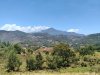
Chlidonias Goes To Asia, part eight: East Timor 2025

Leaving Atauro Island


I slept with my room door open again, but on this night it made no difference at all! The previous night had been noticeably cooler than the day but I think that must have been due to the rain, because tonight was exactly as hot as if the door had remained closed!

I was leaving Atauro today, on the Berlin Nakroma ferry at 2pm. I liked Atauro a lot but it was so hot and the birding was not as I had imagined.

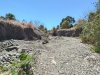
After breakfast I went for a walk around the village, still hoping a Wetar Oriole would show itself. The road which went up behind the village to where they were building the giant church had been quite good yesterday (that’s where I saw the Tricoloured Parrotfinch) so I was on my way back there but I got side-tracked, quite literally in that I decided to go down a track off the side of the road. This track was kind of like a dug-out gravel channel rather than a simple foot-track. Yesterday I had thought it led to someone’s house so didn’t try it out, but this morning I found that it came out into a dry riverbed.

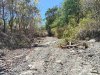
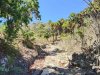
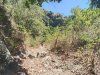
Atauro is bone-dry, so such a wide deep river channel as I found myself in seemed very unusual. Even in the rainy season there couldn’t be that much water coming down from the mountains. It looked promising as a place to explore for birds though, with thick vegetation lining the banks, so I started walking up it. Soon it became apparent that the size of the river-bed wasn’t natural. It had been dug out, probably over many years, for gravel for construction. Higher up the channel became narrower and narrower, turning into more of a rocky stream bed, much more what you might expect on the island.

I wish I’d discovered this channel earlier in my stay. It is much easier walking than the road into the hills (because it is not so steep and it is all rocks so is not dusty), and I saw most of the same birds and then some. Flame-breasted Sunbirds in particular seemed very common along here. The vegetation is all delicious broadleaf bushes and trees as well, rather than leathery toxic eucalyptus leaves – if anywhere on the island was going to have green pigeons and orioles then this seemed like the place.

Most birds seen on Atauro are small ones – things like Ashy-bellied White-eyes and Indonesian Honeyeaters – so when a big bird goes by you notice it. Usually it is a Helmeted Friarbird (I only saw two species of honeyeater anywhere on the island – the Indonesian Honeyeater and the Helmeted Friarbird) or occasionally a Wallacean Cuckoo-Shrike or Spotted Dove.

While I was walking up the river-bed a big bird flew into a tree up the bank. It would be either a friarbird or an oriole. I was expecting the former but hoping for the latter. I knew where it was but there were leaves in the way, and I was standing there for several minutes with my binoculars trained on the spot until a head eventually poked out. But not the head of a friarbird or an oriole. It was a pure white head, and then lower down a black breast-band – it was a Black-backed Fruit Dove!

It was high up but I took some photos anyway. There was a second one there as well, sitting in the open so I had missed it by concentrating on the one I’d seen fly in. The photos of both were equally bad.

full

Black-backed Fruit Dove


I went up the creek-bed until it got quite narrow and a bit scrambly, and then came back down. Around the area where I’d seen the Black-backed Fruit Doves I saw two largish birds in the top of a leafless tree. They were pigeons, but not the Black-backed Fruit Doves. Judging the size of birds on Atauro was squiffy – even small birds like the honeyeaters seemed larger than they really were when they were perched without any other birds or leaves for scale. I thought these pigeons might be imperial pigeons (which would have made them Pink-headed Imperials) but “luckily” one was sitting facing in my direction and the sun shining on it showed the yellow breast and orange vent well. They were Rose-crowned Fruit Doves. The photos of these were much worse than those of the Black-backed Fruit Doves, almost silhouettes, but they still (just) showed the colours.

full

Rose-crowned Fruit Doves


I put “luckily” in quotation marks above because it was lucky I could get a good ID on them against the sky, but I have already seen both the Black-backed Fruit Dove and the Rose-crowned Fruit Dove in West Timor whereas I haven’t seen the Pink-headed Imperial Pigeon at all and thus that would have been a better bird for me to see.

It was interesting I’d seen two species of fruit doves here though. It made it seem much more likely that Timor Green Pigeons were here as well. But I left the island without seeing them, or the Wetar Oriole, or the Island Monarch – basically, the three main birds I came to the island for! I did see the Tricoloured Parrotfinch which I wasn’t expecting and that was both a lifer and a regional endemic, so that was good.


The ferry I had come to Atauro on was the Dragonboat which is a small ferry, and it had arrived at low tide and been disembarked via dinghy. The Berlin Nakroma is a big vehicle ferry and it docks at high tide at the concrete jetty. I’d been told it leaves at 3pm but Estevao said maybe 2pm and to get there at 1 or 1.30pm. It’s probably variable, but today it boarded at 2pm and left at about 2.30pm.

The crossing is said to be good for cetaceans. Coming across the other day there had been some unidentifiable dolphins in the distance. Going back today there was another unidentified dolphin (very briefly) and also a whale spouting which was also unidentifiable by me. There were terns as well, maybe Sooty Terns (but maybe Bridled Terns) and some Crested Terns which were likely to be Greater because that’s what I saw at Tasi Tolu. In other words, nothing which got identified was seen from either ferry crossing.


I didn’t have anywhere pre-booked to stay in Dili because I hadn’t known how long I’d be on Atauro for, but the Polish guy at Estevao’s said the Chong Ti Hotel was maybe ten minutes walking distance from the ferry dock and, although it was US$30, they had lots of rooms so would definitely have availability and it would save me having to walk around trying at different small guesthouses.

The fan-room I’d had at the Casa Minha was US$14 but that was the cheapest in town I think, and even there an A/C room was US$25 (and they only have one fan-room so it probably wouldn’t have been available anyway). Generally, the cheap hotels are all around the US$25-30 mark.

It wasn’t until I was about two-thirds of the way walking to the Chong Ti that I realised the street the hotel was on was on the route of the #9 microlet so I could have caught one from the dock. Still, I saved 25 cents.

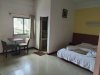
The Chong Ti was fine. The room looks much better in the photo than in real life, but it wasn’t bad. It was big, had A/C, it’s own bathroom, and also importantly it was quite close to the Taibessi Market from where the passenger-trucks leave for Maubisse, and the #4 microlet (which goes to that market) goes past the hotel.


There were 22 birds seen today, only one more than yesterday but with some slight differences (and also including Sooty-headed Bulbul in Dili, a bird I didn’t see on Atauro at all):

Black-banded Fruit Dove, Rose-crowned Fruit Dove, Pacific Emerald Dove, Spotted Dove, Barred Dove, Olive-headed Lorikeet, Rainbow Bee-eater, Drab Swiftlet, White-nest Swiftlet, Sooty-headed Bulbul, Wallacean Cuckoo-Shrike, White-shouldered Triller, Fawn-breasted Whistler, Supertramp Fantail, Pied Chat, Ashy-bellied White-eye, Flame-breasted Sunbird, Red-chested Flowerpecker, Indonesian Honeyeater, Helmeted Friarbird, Timor Zebra Finch, Tree Sparrow.
 
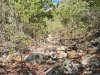
The dry riverbed, from the widened lower stretches to the upper section:

IMG20251015105057.jpg IMG20251015104912.jpg IMG20251015103124.jpg IMG20251015100041.jpg IMG20251015102658.jpg
 

Attachments

  • IMG20251015105057.jpg
    IMG20251015105057.jpg
    298.1 KB · Views: 40
  • IMG20251015104912.jpg
    IMG20251015104912.jpg
    400.1 KB · Views: 41
  • IMG20251015103124.jpg
    IMG20251015103124.jpg
    343.1 KB · Views: 37
  • IMG20251015100041.jpg
    IMG20251015100041.jpg
    384 KB · Views: 39
  • IMG20251015102658.jpg
    IMG20251015102658.jpg
    424.7 KB · Views: 42
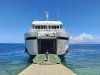
Going into the belly of that steel beast. Boarding the Berlin Nakroma.

IMG20251015135359.jpg


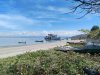
The Berlin Nakroma at dock. The island along the horizon is Timor:

IMG20251012145141.jpg


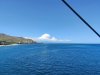
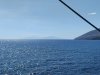
Leaving Atauro, the island under the cloud on the horizon in this shot is Wetar:

IMG20251015140153.jpg


And in this shot below the distant island is Alor. Wetar and Alor are Indonesian islands, and these photos show how close islands can be to one another in this area, even though there are invariably endemic birds on each of them.

IMG20251015150726.jpg
 

Attachments

  • IMG20251015135359.jpg
    IMG20251015135359.jpg
    122.5 KB · Views: 41
  • IMG20251012145141.jpg
    IMG20251012145141.jpg
    232 KB · Views: 37
  • IMG20251015140153.jpg
    IMG20251015140153.jpg
    141.2 KB · Views: 41
  • IMG20251015150726.jpg
    IMG20251015150726.jpg
    188.5 KB · Views: 41
FOOD AT ESTEVAO’S HOMESTAY:


All the food here was amazing, so I have compiled a full menu of what I ate below.


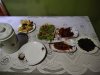
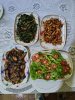
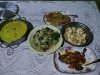
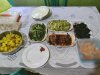
Day one: this was the day I arrived of course, so I only had dinner here. It’s difficult to tell what it is because of the lighting which somehow makes the food look simultaneously both darker and more luridly-coloured, but on the right is a vegetable called kanko which I think is the same as kangkong (water spinach), the next two plates are a fish and chicken, and on the left is just lettuce and tomato. There is rice in the white container.

IMG20251011182033.jpg


Day two:

Breakfast: in the blue container are banana fritters, above those are little buns like dampers (I think made from just flour and water, but they are really good), and on the plate is a stuffed omelette. And there are always bananas on the table.

IMG20251012070323.jpg


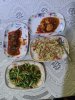
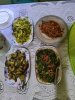
Lunch: top left is kanko, next I think was tofu (the orangey one), then lettuce and tomato, then fried eggplant. For any lunch or dinner photo which doesn’t include the rice container, just assume it is out of frame.

IMG20251012123317.jpg


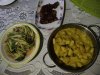
Dinner: fried chicken, curried potatoes, and vegetables.

IMG20251012180728.jpg


Day three:

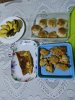
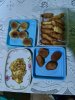
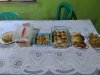
Breakfast: stuffed omelette at the bottom with the little buns above that, and other two containers have fried dough items, the longer ones being made from banana while the round potato-looking ones are made from coconut and sugar and are kind of like doughnuts.

IMG20251013065444.jpg


Lunch: at top the round things are eggs, tuna salad below, vegetables at the bottom, and a fish at the side.

IMG20251013115415.jpg


Dinner: at the left side is curried potatoes and carrots, in the middle is Maggi noodles at top and vegetables at bottom, and on the right are shrimp crackers and a fish. The fish was a parrotfish, which was the nicest fish I’ve ever had, the flesh was really soft and delicate.

IMG20251013180249.jpg
 

Attachments

  • IMG20251011182033.jpg
    IMG20251011182033.jpg
    144.7 KB · Views: 39
  • IMG20251012070323.jpg
    IMG20251012070323.jpg
    122.8 KB · Views: 42
  • IMG20251012123317.jpg
    IMG20251012123317.jpg
    127.9 KB · Views: 38
  • IMG20251012180728.jpg
    IMG20251012180728.jpg
    195.8 KB · Views: 37
  • IMG20251013065444.jpg
    IMG20251013065444.jpg
    93.1 KB · Views: 35
  • IMG20251013115415.jpg
    IMG20251013115415.jpg
    150 KB · Views: 39
  • IMG20251013180249.jpg
    IMG20251013180249.jpg
    217.5 KB · Views: 34
Last edited:
Day four:

Breakfast: similar to the day before, stuffed omelettes (but two of them), buns and the banana pastry things.

IMG20251014065023.jpg


Lunch: at the top are curried papaya (not to my liking) and a fish, and at the bottom are marrows and vegetables.

IMG20251014113212.jpg


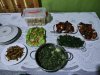
Dinner: this was the night there were several other guests here, so there’s a bit more food. From the left, there are fried potato chips, then lettuce and tomato, then cassava leaves, then kanko, and the two dishes of meat are chicken and fish. The container with the lid is shrimp crackers.

IMG20251014184651.jpg


Day five: this was the day I left Atauro.

Breakfast: all the breakfasts were much the same – stuffed omelettes, buns and banana fritters.

IMG20251015065357.jpg


Lunch: curried potato and carrots (on the left), various dishes of green vegetables, and parrot fish. In the blue container is mango.

IMG20251015111649.jpg
 

Attachments

  • IMG20251014065023.jpg
    IMG20251014065023.jpg
    165.6 KB · Views: 44
  • IMG20251014113212.jpg
    IMG20251014113212.jpg
    124.3 KB · Views: 43
  • IMG20251014184651.jpg
    IMG20251014184651.jpg
    172.2 KB · Views: 41
  • IMG20251015065357.jpg
    IMG20251015065357.jpg
    177.2 KB · Views: 39
  • IMG20251015111649.jpg
    IMG20251015111649.jpg
    156.6 KB · Views: 43
Last edited:
Dili to Maubisse


The “buses” to Maubisse are small trucks with a canopy above the deck and a seat along each side. They aren’t uncomfortable, but you’d probably want to avoid travelling on a day when it’s going to rain because the sides are open!

At the Casa Minha hostel where I’d stayed first in Dili, there was a big map on the wall with information on the various transport routes. This had given the departure time of the bus to Maubisse as “6.30am to 7.30am”. In reality they go all day, plus Maubisse is along the way to other villages which have trucks leaving from the same market so you don’t even need to take the specific Maubisse truck. I didn’t know what the timings really were, so got there quite early (at about 6.30am) and was pointed in the direction of a Maubisse truck which would be leaving at 7am.

There are little food stands dotted around the market amongst the trucks, but they all sell the same thing – buns, pop mie (cup noodles), and coffee. I got some of each for US$1 at the stand next to my truck. Only after getting it did I see that the coffee cup was a communal coffee cup – anyone who gets coffee has that cup and then it gets used again for whoever wants one next. At least I’ve had all my shots.


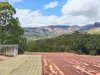
The road to Maubisse is paved the whole way and is in really good condition. There are a few bumps and holes here and there, but apart for one short bit before Dare which has slumped it’s all smooth. The ride is about three hours in total, and there was what looked like good forest almost the entire stretch from outside Dili to Aileu two hours later. The calls of lorikeet flocks were almost constant. I was really surprised how much forest there still was covering the hills in every direction, although the road itself isn’t really in forest because it runs around the hillsides with a steep bank above and a quick drop below, and there are little dwellings scattered along the sides where there is room.

When I walked the road a few days later there were more non-forested stretches than I thought (walking-speed versus driving-speed makes a difference to perception!) but there is still lots of forest remaining.

From Aileu there was just cleared land for a long way, then after that the hills had the same sort of scattered eucalyptus woodland which covered Atauro Island, turning higher up to pine trees.

The Sri Lankan at Estevao’s Homestay on Atauro had said that Maubisse was in the forest and had lots of nice walks around it. I’d been imagining something not exactly like Bukit Fraser or the Cameron Highlands in Malaysia, but “similar”. It turns out it isn’t in the forest at all. There are scattered small patches of what could be called forest, but mostly it is lots of clustered trees which from above (or the side, looking across at hills) might look like “forest” but those trees are all around houses and small roads, and the roads are the standard dust roads with constant motorbikes and trucks running along them.


The truck stopped at the market at the south end of the village and the driver pointed in the direction I should walk to find accommodation. I’d seen two guesthouses on Google Maps, one at either end of what was marked as Maubisse, but after leaving the truck a policeman had indicated I should go along the right-hand road at the market junction, and thus I inattentively walked past the main place (the Sara Guesthouse and Restaurant, which is at that junction and just a minute or two from where I’d left the truck). Instead I ended up a couple of minutes further on at a guesthouse called Bensa Au Ama which is US$25 with breakfast, although the breakfast is just coffee and buns. I had lunch at Sara in the afternoon and their rooms are US$30, so I saved a little bit.

The lady who owns Bensa Au Ama doesn’t speak any English so we used Bahasa Indonesia to communicate, which even if I’m rusty is still easier than my non-existent Portuguese. In general it seems like everyone over thirty-odd can speak Indonesian but younger people can’t because they don’t teach it in schools here any more. I understand why this is, but at the same time East Timor is a little country entirely surrounded by Indonesia so being able to speak the language would probably still be an advantage.

Because Maubisse is high in the hills the temperature is relatively cool, and there are no fans in the rooms. It’s still hot walking around in the sun but not uncomfortably so like in Dili and Atauro, and I wasn’t ending up with every piece of clothing soaked through with sweat after a few minutes! There are no mosquitoes here either, so you can sit in your room with the windows wide open to let in the breeze. That’s probably the nicest thing!


Just along from my guesthouse the road leads to the Pousada, which is what the policeman had been saying. This appears to be a hotel as well (my Google Translate says it means an inn) but I don’t know what it would cost to stay there. It looks very nice though, at the top of the hill and set in a nice formal garden (a sort of “informal formal garden” because it is a bit unkempt).

I walked up there, seeing a Yellow-eared Honeyeater on the way. I didn’t see these on Atauro at all; apparently they are more common at higher elevations whereas the Indonesian Honeyeater which was common on Atauro is mainly a coastal bird.

There was a Large-billed Crow flying over the Pousada. This is the only crow in East Timor and, while widespread elsewhere in Asia, is not common here.

The garden isn’t large, but I spent maybe two hours here. It’s not that there were a lot of birds here, it’s that on one side of the garden the bank below the low edging wall was covered in convolvulus and this was attracting that Yellow-eared Honeyeater (I think it was just one bird) and Black-chested Myzomelas which I was trying to photograph.

The problem (for me) was that the convolvulus was growing through scrubby canes, so the birds were coming for the flowers but I would just be seeing them as glimpses as they darted in and out of the thickets.


The Yellow-eared Honeyeater I only saw in the open when it perched in a tree down the hill between visits to the flowers – I took lots of photos but they were all so distant that they weren’t much good.

full


full


I got really good views of the Black-chested Myzomelas, one male in particular was very active, but they move so fast and continuously that all the photos were terrible. This was the “best” one:

full


I decided I would come back in the morning and see if I could get better results then. Being on top of a hill, I thought it also might be a good vantage point for seeing pigeons or other birds.


A paltry ten birds were seen today:

Drab Swiftlet, Sooty-headed Bulbul, Fawn-breasted Whistler, Pied Chat, Ashy-bellied White-eye, Yellow-eared Honeyeater, Black-chested Myzomela, Tree Sparrow, Large-billed Crow.
 
My room at Bensa Au Ama. The tiles on the walls make it look like a bathroom in the photo but in real life it didn't because the tiles had a "woven mat" pattern on them.

IMG20251016102718.jpg

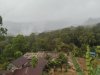
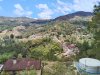
View from the room window. The second photo is from a different window on a rainy morning, but in the same direction. You can see how it looks like there is forest everywhere, but it actually isn't.

IMG20251016102727.jpg IMG20251018063758.jpg

And the puppy who also lives there:

IMG20251021170034.jpg
 

Attachments

  • IMG20251016102718.jpg
    IMG20251016102718.jpg
    140.9 KB · Views: 35
  • IMG20251016102727.jpg
    IMG20251016102727.jpg
    200.5 KB · Views: 36
  • IMG20251018063758.jpg
    IMG20251018063758.jpg
    144.4 KB · Views: 36
  • IMG20251021170034.jpg
    IMG20251021170034.jpg
    87.6 KB · Views: 33
Last edited:
View from the Pousada. The first shot is looking towards the "town". The second one was taken the next morning hence the change in lighting.

IMG20251016120337.jpg IMG20251017062632.jpg


This is a tree at the Pousada. I don't understand the purpose of the ladder - it is halfway up the tree!

IMG20251016114628.jpg
 

Attachments

  • IMG20251016120337.jpg
    IMG20251016120337.jpg
    274 KB · Views: 34
  • IMG20251017062632.jpg
    IMG20251017062632.jpg
    93.8 KB · Views: 36
  • IMG20251016114628.jpg
    IMG20251016114628.jpg
    178.9 KB · Views: 35
Maubisse: riverbed man walking


Before breakfast I took a walk up to the Pousada. From my window I had heard birdsong everywhere as the sun came up but when I was actually out there I couldn’t really see any birds anywhere.

I had thought morning would be a good time to try and get photos of honeyeaters at the convolvulus, but I discovered that convolvulus close their flowers at night! All the flowers were wrapped up as purple tubes and there were no honeyeaters there.

From the vantage of the hill-top I checked out where the village roads below went, to see which might have enough trees along them to be worth walking, and I saw what looked like a dry riverbed running through the trees a short walk away. That seemed promising after the dry riverbed on Atauro.


After breakfast I walked in that direction, taking the dirt road a few metres along from my guesthouse which branches off steeply downhill from the paved road which leads up to the Pousada. I had seen from the hill-top that this road also became paved at some point but I wasn’t sure how far down that happened. Luckily it was just after the first bend, which was good because I got there before any motorbikes went by and covered me in dust!

After a couple of bends another dirt road turned off to the right and I took this one, then cut across the hillside on a foot-track (or a cattle track) until I reached the dry riverbed. Like the one on Atauro this was a rocky channel which had been considerably widened and deepened along much of its length by extraction of gravel.

I spent around four hours in this area, going first in an easterly direction until I came to a digger gouging up gravel, then went all the way back and continued west-ish until it became a rocky valley which required more clambering than walking. Most of it was a dry channel, but there was a small rocky stream at either end where I walked – I don’t know if it was two different streams or if it diverted somewhere in the middle or was maybe underground.

By “a small stream” I mean one maybe a foot wide and just a few inches deep. The stream at the eastern end had shoals of tiny fish, swarms of small silver-coloured whirligig beetles on the surface, a few water striders and water boatmen, while the stream at the other end (mostly in barely-connected pools rather than a continuous stream) had large black whirligig beetles, diving beetles, and lots of small tadpoles which I think must be from Asian Black-spined Toads because I saw adult ones squashed on the roads many times.

I also saw a skink – the only reptile I’ve seen on Timor which I have a hope of identifying because I got its photo!

full


The riverbed was bounded by trees, you might call it forest I guess, but it was not much good for birds. The majority of the trees were needle-bearing, I think some kind of cypress, and the understorey was almost all coffee plants.

One of the first birds I saw in there was a surprise though. I saw it fly into a tree and could see its silhouette but had to wait for it to move again. I figured it was a Timor Friarbird, which reach up to 2400 metres altitude, and when it did eventually fly to a more open branch that’s what it seemed to be – until it turned its head and I saw it had an oriole beak and not a friarbird beak. Earlier I wrote that it’s feasible I saw female Timor Orioles in West Timor but mistook them for friarbirds because the books say they are so similar – now I don’t think I would have unless it was a fleeting glimpse because the beaks of the two birds are very different.

However, I didn’t think Timor Orioles would be up here because I thought they were very much lowland birds. I don’t have a field guide with me on this trip (and, as mentioned, no internet while here) but when in West Timor I’d had the field guide to Wallacea which is a great big door-stop of a book. Because it is so heavy what I had done was write out annotated bird lists for each of the islands I would be visiting at that time, and I would just carry the relevant list with me when out birding and leave the book back in my room to consult in the evening if needed.

For this trip I just printed out my pre-existing bird list for West Timor and brought that with me.

(Just as an aside, the American birder I met in Dili had the Wallacea field guide with him – but he had ripped out all the text pages and just left the picture pages to make it lighter. I can’t even imagine desecrating a book like that, especially one as expensive as that field guide! Holding that mutilated book was like holding a puppy with no legs or tail).

Anyway, where I was going with the story of having just the bird list for West Timor with me, was that as well as ID points for species written in there I also had the altitude ranges for some of them as given in the Wallacea field guide. I had been told that Maubisse is at 1500m, although I have just looked that up and the first page of Google gives me altitudes of 1392 metres, 1432 metres, and 1532 metres! In any case this is higher than the ranges of many of the birds I’m still wanting to see according to the Wallacea field guide, but I think I can ignore that now. Today I had seen White-shouldered Trillers (altitude given in my list as “up to 500m” - and a couple of days later I saw them even higher than Maubisse, at about 2000m on the road towards Mt Ramelau) and many Fawn-breasted Whistlers (“up to 1200m”), and for the Timor Oriole my list says “up to 300m”.

I’m not sure if this is due to insufficient knowledge when the guide was written (many Indonesian birds are poorly known), if there are genuine differences between West and East Timor, or if it is just because West Timor is so deforested that the altitude ranges are artifacts of where birds are left.


full

Black-chested Myzomela – a better photo than I managed the day before but still not very good.


The bird total was again very low today (just fifteen species), but there were two which were new for my visit. Without any pictures (e.g. an actual field guide!) I had to wait until I got back to Australia and could look them up online to check whether I definitely had them correct or not.

The first was a bird all bluish above and all orange below, so I couldn’t think what else it could be except Timor Blue Flycatcher. I saw this one in several spots in the coffee along the riverbed but my list said it should be bright blue with a blue throat. The ones I was seeing were more greyish- or brownish-blue with a blue tail, and the entire underparts were orange. I managed to get one photo, where most of the bird was hidden behind leaves but it showed the rear half of the body and I could see that it was a female bird, hence the duller colouration. Later I also saw males and females consorting, so knew I had it right.

full

This is a male Timor Blue Flycatcher, taken on a different day.


The other bird I was initially hoping would be the Buff-banded Thicket-Warbler, which is one of the endemics I haven’t seen. I saw several birds over the morning, but just quick looks – parts of the tail or the back, never a proper look at the whole bird because they are so skulking. I could see they were some kind of bush-warbler but otherwise just that they were brown and had an eyebrow-stripe. The Buff-banded Thicket-Warbler is supposed to have buff-coloured underparts but I didn’t know how it “actually” looked in real life. Fortunately, or unfortunately as the case may be, I eventually got a series of photos of one bird which showed different bits in different photos, and I could deduce that it was in fact a Sunda Bush-Warbler instead, which was not a lifer but was at least a year-bird.


Fifteen birds were seen today:

Drab Swiftlet, White-shouldered Triller, Sooty-headed Bulbul, Fawn-breasted Whistler, Timor Blue Flycatcher, Supertramp Fantail, Sunda Bush-Warbler, Pied Chat, Ashy-bellied White-eye, Yellow-eared Honeyeater, Black-chested Myzomela, Timor Friarbird, Timor Oriole, Tree Sparrow, Large-billed Crow.
 
Maubisse: riverbed man walking


Before breakfast I took a walk up to the Pousada. From my window I had heard birdsong everywhere as the sun came up but when I was actually out there I couldn’t really see any birds anywhere.

I had thought morning would be a good time to try and get photos of honeyeaters at the convolvulus, but I discovered that convolvulus close their flowers at night! All the flowers were wrapped up as purple tubes and there were no honeyeaters there.

From the vantage of the hill-top I checked out where the village roads below went, to see which might have enough trees along them to be worth walking, and I saw what looked like a dry riverbed running through the trees a short walk away. That seemed promising after the dry riverbed on Atauro.


After breakfast I walked in that direction, taking the dirt road a few metres along from my guesthouse which branches off steeply downhill from the paved road which leads up to the Pousada. I had seen from the hill-top that this road also became paved at some point but I wasn’t sure how far down that happened. Luckily it was just after the first bend, which was good because I got there before any motorbikes went by and covered me in dust!

After a couple of bends another dirt road turned off to the right and I took this one, then cut across the hillside on a foot-track (or a cattle track) until I reached the dry riverbed. Like the one on Atauro this was a rocky channel which had been considerably widened and deepened along much of its length by extraction of gravel.

I spent around four hours in this area, going first in an easterly direction until I came to a digger gouging up gravel, then went all the way back and continued west-ish until it became a rocky valley which required more clambering than walking. Most of it was a dry channel, but there was a small rocky stream at either end where I walked – I don’t know if it was two different streams or if it diverted somewhere in the middle or was maybe underground.

By “a small stream” I mean one maybe a foot wide and just a few inches deep. The stream at the eastern end had shoals of tiny fish, swarms of small silver-coloured whirligig beetles on the surface, a few water striders and water boatmen, while the stream at the other end (mostly in barely-connected pools rather than a continuous stream) had large black whirligig beetles, diving beetles, and lots of small tadpoles which I think must be from Asian Black-spined Toads because I saw adult ones squashed on the roads many times.

I also saw a skink – the only reptile I’ve seen on Timor which I have a hope of identifying because I got its photo!

full


The riverbed was bounded by trees, you might call it forest I guess, but it was not much good for birds. The majority of the trees were needle-bearing, I think some kind of cypress, and the understorey was almost all coffee plants.

One of the first birds I saw in there was a surprise though. I saw it fly into a tree and could see its silhouette but had to wait for it to move again. I figured it was a Timor Friarbird, which reach up to 2400 metres altitude, and when it did eventually fly to a more open branch that’s what it seemed to be – until it turned its head and I saw it had an oriole beak and not a friarbird beak. Earlier I wrote that it’s feasible I saw female Timor Orioles in West Timor but mistook them for friarbirds because the books say they are so similar – now I don’t think I would have unless it was a fleeting glimpse because the beaks of the two birds are very different.

However, I didn’t think Timor Orioles would be up here because I thought they were very much lowland birds. I don’t have a field guide with me on this trip (and, as mentioned, no internet while here) but when in West Timor I’d had the field guide to Wallacea which is a great big door-stop of a book. Because it is so heavy what I had done was write out annotated bird lists for each of the islands I would be visiting at that time, and I would just carry the relevant list with me when out birding and leave the book back in my room to consult in the evening if needed.

For this trip I just printed out my pre-existing bird list for West Timor and brought that with me.

(Just as an aside, the American birder I met in Dili had the Wallacea field guide with him – but he had ripped out all the text pages and just left the picture pages to make it lighter. I can’t even imagine desecrating a book like that, especially one as expensive as that field guide! Holding that mutilated book was like holding a puppy with no legs or tail).

Anyway, where I was going with the story of having just the bird list for West Timor with me, was that as well as ID points for species written in there I also had the altitude ranges for some of them as given in the Wallacea field guide. I had been told that Maubisse is at 1500m, although I have just looked that up and the first page of Google gives me altitudes of 1392 metres, 1432 metres, and 1532 metres! In any case this is higher than the ranges of many of the birds I’m still wanting to see according to the Wallacea field guide, but I think I can ignore that now. Today I had seen White-shouldered Trillers (altitude given in my list as “up to 500m” - and a couple of days later I saw them even higher than Maubisse, at about 2000m on the road towards Mt Ramelau) and many Fawn-breasted Whistlers (“up to 1200m”), and for the Timor Oriole my list says “up to 300m”.

I’m not sure if this is due to insufficient knowledge when the guide was written (many Indonesian birds are poorly known), if there are genuine differences between West and East Timor, or if it is just because West Timor is so deforested that the altitude ranges are artifacts of where birds are left.


full

Black-chested Myzomela – a better photo than I managed the day before but still not very good.


The bird total was again very low today (just fifteen species), but there were two which were new for my visit. Without any pictures (e.g. an actual field guide!) I had to wait until I got back to Australia and could look them up online to check whether I definitely had them correct or not.

The first was a bird all bluish above and all orange below, so I couldn’t think what else it could be except Timor Blue Flycatcher. I saw this one in several spots in the coffee along the riverbed but my list said it should be bright blue with a blue throat. The ones I was seeing were more greyish- or brownish-blue with a blue tail, and the entire underparts were orange. I managed to get one photo, where most of the bird was hidden behind leaves but it showed the rear half of the body and I could see that it was a female bird, hence the duller colouration. Later I also saw males and females consorting, so knew I had it right.

full

This is a male Timor Blue Flycatcher, taken on a different day.


The other bird I was initially hoping would be the Buff-banded Thicket-Warbler, which is one of the endemics I haven’t seen. I saw several birds over the morning, but just quick looks – parts of the tail or the back, never a proper look at the whole bird because they are so skulking. I could see they were some kind of bush-warbler but otherwise just that they were brown and had an eyebrow-stripe. The Buff-banded Thicket-Warbler is supposed to have buff-coloured underparts but I didn’t know how it “actually” looked in real life. Fortunately, or unfortunately as the case may be, I eventually got a series of photos of one bird which showed different bits in different photos, and I could deduce that it was in fact a Sunda Bush-Warbler instead, which was not a lifer but was at least a year-bird.


Fifteen birds were seen today:

Drab Swiftlet, White-shouldered Triller, Sooty-headed Bulbul, Fawn-breasted Whistler, Timor Blue Flycatcher, Supertramp Fantail, Sunda Bush-Warbler, Pied Chat, Ashy-bellied White-eye, Yellow-eared Honeyeater, Black-chested Myzomela, Timor Friarbird, Timor Oriole, Tree Sparrow, Large-billed Crow.
I was once given a copy of a birds of Ecuador guide where someone had cut out the plates, giving me just the text! I can't imagine doing that, I feel like it makes both worse.
 
I was once given a copy of a birds of Ecuador guide where someone had cut out the plates, giving me just the text! I can't imagine doing that, I feel like it makes both worse.
In the days when colour plates were rare and expensive, that was quite common in secondhand books. I've even come across books (not bird books) where all the black and white plates have been cut out.

Cutting out the text is weird, though.
 
Last edited:
Maubisse: rain day


There was a huge rainstorm during the night which knocked out the power to the village. It didn’t come back on until 2.30pm in the afternoon. The rain continued all day, ranging from short periods of no rain and looking as if it was done, to more heavy rain. I stayed at the guesthouse all day, only going out for lunch and dinner at the Sara Restaurant up the road (both times during no-rain spells luckily).


The sum total for today’s birds was Drab Swiftlet, Ashy-bellied White-eye, and Tree Sparrow. Even from the nice view of trees from my window there were just no other birds.


full

Here’s another Yellow-eared Honeyeater picture, taken at the Pousada on the day I arrived in Maubisse.
 
Maubisse: walking the road to Dili


With the immediate surrounds of Maubisse not seeming spectacular for birds, the plan for my last few days in the country was to remain in the village (because the climate was agreeable to me) but catch a truck each day either north or south until I saw some good-looking forest and then just walk along the road birding. I knew there was good forest to the north because I’d seen it when coming in from Dili, and for the south I’d see what I could find.

This morning after breakfast I went to the market and caught the next truck heading for Dili.

On the way from Dili to Maubisse I had seen that there was forest most of the way up until Aileu and after that it was a bit patchy. Going in the other direction I thus waited until the truck had passed through Aileu and got out north of there at the junction for the road towards Gleno, which is around an hour from Maubisse. From this point it’s about 30km to Dili, and I walked about halfway down before catching a truck back up to Maubisse again.

The forest wasn’t as continuous as it had seemed when driving, but there was still lots of it covering the hills. The most productive sections were the mixed broadleaf forest with giant samtuco trees (Falcataria falcata) intermingled with smaller trees, with a coffee understorey. Lower down there was more eucalyptus than broadleaf. It wasn’t as early a start as would have been ideal, but the higher areas were still pretty birdy. Lower down the hills there were long stretches with no birds, because it was the middle of the day by then, but whenever I thought about giving up a new bird for the list would suddenly pop out and keep me moving.

The two best spots were both at the top of the road from where I started walking. Likely this was a combination of it still being fairly early and these sections being mixed forest which would have richer feeding than the eucalyptus forest further down.

These mixed forests may not be predominantly native but they provide good bird habitat and will remain here because coffee grows in shade and therefore requires forest cover.


The first stretch of broadleaf forest ran directly from the Gleno junction to the Manleuana junction (about a kilometre). The very first bird I saw there was a new one for the trip, a male Little Pied Flycatcher, which is a small black and white bird but with the distinctive feature of having a very large white “eyebrow” which makes it look quite unlike any other black and white bird here.

There were Yellow-eared Honeyeaters and Supertramp Fantails zipping about and I realised they were mobbing a larger bird which proved to be a Sunda Cuckoo, of which I got some photos, and then also managed a quick photo of a Black-chested Myzomela which was better than any of my previous efforts (although still nothing to praise!). Ashy-bellied White-eyes, Timor Blue Flycatchers, a Timor Friarbird and a Large-billed Crow were also all seen here.

full

Sunda Cuckoo

full

Black-chested Myzomela – the best photo I got of this species.


The next stretch of broadleaf forest was even better. When reaching the Manleuana/Dili junction the road to Dili is the one on the right heading uphill (the road to Manleuana goes downhill) and around the next bend just after a group of houses the road levels out a bit and the new stretch of broadleaf forest begins. It runs for some distance when walking, about two kilometres, and is broken in the middle by some more houses (as in, the forest is continuous along the hillside but from the point of view of walking along the road there is a break in it). This section of forest started off almost immediately with Timor Red-winged Parrots. I heard these on Atauro Island but didn’t see them there. Today I saw several flocks of them, at one point accompanied by a flock of Iris Lorikeets.

The birds here are so frustrating to try and photograph though. You can see them well enough with the binoculars but they are invariably out of good camera range. I saw no evidence of hunting, I didn’t see any birds being sold or kept as pets, but they just don’t like people being anywhere near them! I don’t think I got a good photo of any bird while here. The very best ones were still no better than “acceptable” because they almost all had to be cropped from dots amongst leaves, and most of them were just rubbish.

I mean, look at these photos of a pair of Timor Red-winged Parrots and an Iris Lorikeet. These were the best I could manage today and they’re awful!

full

Timor Red-winged Parrots

full

Iris Lorikeet


Both these parrots were common, being seen in flocks along the higher parts of this road where-ever there was forest. I had heard lorikeets calling all the time when in the morning truck from Dili to Maubisse (although only as far as Aileu, and there were no lorikeets around Maubisse itself). Today I only saw the Iris Lorikeets during the morning, and heard lots more which could have been other species as well, but then no other lorikeets in the afternoon until I saw one pair of Olive-headed Lorikeets much further down. I guess they are just more active through the morning.

Another bird from this section of forest was a pair of Little Bronze Cuckoos. These and the Sunda Cuckoo from earlier were the only cuckoos I saw in East Timor.


With fewer and fewer birds being seen the lower down the hills I walked (only Tenggara Whistler and Paddyfield Pipit being “new” for the trip during the afternoon), at around 2.30pm I called it quits and waited for a truck heading back up to Maubisse. This turned out to be quite fortunate, because it wasn’t long after this that it started to rain quite heavily, continuing for the rest of the day. I was surprised that despite the sides of the trucks being open, not much rain gets in and you just get a little wet on your side or back.


full

Technically the best photo I got of a Yellow-eared Honeyeater but it’s not a very good shot of the bird itself!


There were 23 species of birds seen today:

Timor Red-winged Parrot, Olive-headed Lorikeet, Iris Lorikeet, Sunda Cuckoo, Little Bronze Cuckoo, Drab Swiftlet, Tree Martin, Wallacean Cuckoo-Shrike, White-shouldered Triller, Paddyfield Pipit, Sooty-headed Bulbul, Fawn-breasted Whistler, Tenggara Whistler, Little Pied Flycatcher, Timor Blue Flycatcher, Supertramp Fantail, Pied Chat, Ashy-bellied White-eye, Yellow-eared Honeyeater, Black-chested Myzomela, Timor Friarbird, Tree Sparrow, Large-billed Crow.
 
Some shots of the forest along the road today:

IMG20251019094057.jpg IMG20251019095556.jpg IMG20251019102623.jpg IMG20251019114340.jpg IMG20251019132710_BURST000_COVER.jpg
 

Attachments

  • IMG20251019094057.jpg
    IMG20251019094057.jpg
    341.7 KB · Views: 29
  • IMG20251019095556.jpg
    IMG20251019095556.jpg
    427.7 KB · Views: 30
  • IMG20251019102623.jpg
    IMG20251019102623.jpg
    322.4 KB · Views: 33
  • IMG20251019114340.jpg
    IMG20251019114340.jpg
    305 KB · Views: 33
  • IMG20251019132710_BURST000_COVER.jpg
    IMG20251019132710_BURST000_COVER.jpg
    222.3 KB · Views: 31
Maubisse: walking the road to Mt. Ramelau


Yesterday I walked in the direction of Dili: today I was trying the other direction.

I had a Google Map of East Timor saved on my phone as an offline version (which I had discovered on Atauro Island still has a moving tracker to show your location in real time, even with no internet, and also can still provide a travel route from X to X location). It is the basic map and not the satellite map so I couldn’t use it to see where forest was – that’s one thing having internet would have been useful for – but I had looked at the villages and icons to see where might be a good place to head.

I knew there were trucks which went from Dili through Maubisse to a village called Hato Builico, so I located this on the map and found it was on a long side-road heading west. Not far past the turn-off for Hato Builico, maybe one or two kilometres further on, were some camera icons with names based around Fleixa or Fleicha, and then a side-road heading east to a transmitter station. That seemed like a good area to try. My plan was therefore to take a truck south to the turn-off for Hato Builico, and then walk along the road to see what I could find.

Going northwards from Maubisse is easy. There are trucks to Dili leaving from early in the morning and all through the day. You just go to the market and can catch a truck with very little waiting time. Going southwards from Maubisse ... not so much.

The problem here is that while there are loads of Maubisse to Dili trucks there are no trucks which just go from Maubisse to Hato Builico – they all come from Dili. Technically I did know that because the destination names are written on the trucks (e.g. “Hato Builico – Dili” or “Turiscai – Dili” or “Maubisse – Dili”) but it hadn’t really registered because before I had only been going to and from Maubisse. It was only when I was standing at the market in the morning that I realised that any truck going to Hato Builico has to come all the way from Dili, which is three hours away. In other words, it’s definitely not an early morning thing.

At 8.30am, after 1.5 hours of waiting and one offer to drive me to Hato Builico for US$100 (that’s one hundred American dollars in case you thought I had mistakenly added a zero) I found a truck labelled as Hato Builico but which was actually going to Fleixa. That happened to be where I would have been walking to anyway if I’d stuck with my plan, but I still asked to be dropped at the turn-off because I wanted to see whether the Hato Builico road was in forest. I had already discovered that the “transmitter station” on the map wasn’t in forest because I could see the towers on the top of the far mountain from where I was standing in the market! And that mountain was very bare.

There were actually a few areas of forest going south from Maubisse, but it was all the same needle-leaf forest as was scattered around the village. It wasn’t far in driving-time to the Hato Builico turn-off, only half an hour. In actual distance it is about 10km and I could maybe have even walked there in the time I’d been waiting for a truck, but the whole road is quite steeply uphill so maybe not in reality.

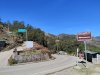
When I got out of the truck I saw a big sign with an arrow pointing up the Hato Builico road, saying that this was the way to Mt Ramelau. I knew Ramelau was around here somewhere but it wasn’t marked on my Google map so I hadn’t known it was on the same road. The road itself was steep but had trees, so I went that way instead of continuing along the main road as had been my original plan.

The Hato Builico road was made of rocks – I actually wondered if the trucks did come up here or if they stopped at the turn-off all the time, but I saw some while I was walking so they do go all the way up, even though it must be a really uncomfortable ride. After the initial steep entry the road levelled out a bit and then sort of wound up and down and around the hills, never really steep but always rising. The initial trees immediately disappeared as well and I was walking through open fields. This didn’t seem at all promising but I wanted to see what Mt Ramelau would be like – I was hoping it would be like Gunung Mutis in West Timor which has montane forest filled with endemic birds.

It was maybe a couple of kilometres of road through farmland (but a winding road so not that far in a straight-line distance), and then the road was suddenly in eucalyptus woodland. There was a pair of Bonelli’s Eagles perched on a dead tree at the edge of the forest, so if nothing else I had a lifer for the day!

The bird total today turned out to be only slightly lower than yesterday (20 species versus 23) but it seemed much lower during the course of the day, I think because I wasn’t seeing many individual birds and they were more spread over the day whereas yesterday I had been seeing lots of individual birds (e.g. flocks of parrots).

Northern Fantails were a surprise up here. The only other place I’d seen them in East Timor was at Dare just above Dili, but they seemed to be common up here. White-shouldered Trillers were also seen (as noted earlier, well above the altitude range in the Wallacea field guide). Yellow-eared Honeyeaters were common, as might be expected, but I only saw one Olive-headed Lorikeet.

I thought I’d finally got a photo of a Timor Friarbird – the last of the Timorese honeyeaters for me to photograph – but when I examined the photos it turned out to be a Helmeted Friarbird with a very small beak-horn (the Timor Friarbird lacks the beak-horn entirely). The Wallacea field guide has the Helmeted Friarbird as “up to 700m”, about a third of the altitude where I was now. I did see a few “real” Timor Friarbirds later in the day but not where I could photograph them.

I went as far as Hato Builico, which is about 6km from the main road, continuing through to the other side of the village until I could see Mt Ramelau. It was still some distance away but with my binoculars I could see that the forest on its flanks looked like the same sort of eucalyptus forest as I’d been walking in already. No need to continue walking all the way to the mountain then!

On the way back to the main road I saw two extra birds for the trip list, firstly a Long-tailed Shrike and then a Timor Leaf-Warbler. Both of these are common Timorese birds so a little surprising I hadn’t seen them in East Timor yet.


There were 20 species of birds seen today (for none of which did I get any usable photos):

Bonelli’s Eagle, Spotted Dove, Olive-headed Lorikeet, Drab Swiftlet, Tree Martin, Long-tailed Shrike, Wallacean Cuckoo-Shrike, White-shouldered Triller, Paddyfield Pipit, Timor Leaf-Warbler, Timor Blue Flycatcher, Northern Fantail, Pied Chat, Ashy-bellied White-eye, White-breasted Woodswallow, Plain Gerygone, Yellow-eared Honeyeater, Helmeted Friarbird, Timor Friarbird, Tree Sparrow.
 
The turn-off to Hato Builico and Mt Ramelau:

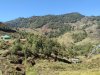
IMG20251020090055.jpg


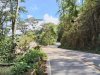
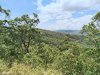
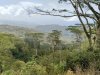
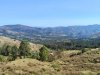
And some scenery shots from along the road:

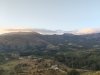
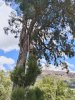
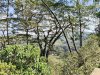
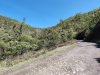
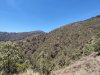
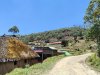
IMG20251020091331.jpg IMG20251020093631.jpg IMG20251020094728.jpg IMG20251020110037.jpg
 

Attachments

  • IMG20251020090055.jpg
    IMG20251020090055.jpg
    185.7 KB · Views: 25
  • IMG20251020091331.jpg
    IMG20251020091331.jpg
    203.4 KB · Views: 25
  • IMG20251020093631.jpg
    IMG20251020093631.jpg
    281.9 KB · Views: 26
  • IMG20251020094728.jpg
    IMG20251020094728.jpg
    253.6 KB · Views: 25
  • IMG20251020110037.jpg
    IMG20251020110037.jpg
    265.3 KB · Views: 24
Back
Top