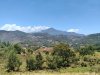
Leaving Atauro Island
I slept with my room door open again, but on this night it made no difference at all! The previous night had been noticeably cooler than the day but I think that must have been due to the rain, because tonight was exactly as hot as if the door had remained closed!
I was leaving Atauro today, on the Berlin Nakroma ferry at 2pm. I liked Atauro a lot but it was so hot and the birding was not as I had imagined.
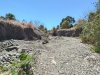
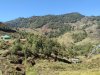
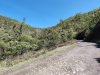
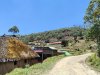
After breakfast I went for a walk around the village, still hoping a Wetar Oriole would show itself. The road which went up behind the village to where they were building the giant church had been quite good yesterday (that’s where I saw the Tricoloured Parrotfinch) so I was on my way back there but I got side-tracked, quite literally in that I decided to go down a track off the side of the road. This track was kind of like a dug-out gravel channel rather than a simple foot-track. Yesterday I had thought it led to someone’s house so didn’t try it out, but this morning I found that it came out into a dry riverbed.
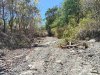
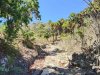
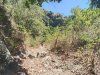
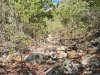
Atauro is bone-dry, so such a wide deep river channel as I found myself in seemed very unusual. Even in the rainy season there couldn’t be that much water coming down from the mountains. It looked promising as a place to explore for birds though, with thick vegetation lining the banks, so I started walking up it. Soon it became apparent that the size of the river-bed wasn’t natural. It had been dug out, probably over many years, for gravel for construction. Higher up the channel became narrower and narrower, turning into more of a rocky stream bed, much more what you might expect on the island.
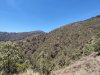
I wish I’d discovered this channel earlier in my stay. It is much easier walking than the road into the hills (because it is not so steep and it is all rocks so is not dusty), and I saw most of the same birds and then some. Flame-breasted Sunbirds in particular seemed very common along here. The vegetation is all delicious broadleaf bushes and trees as well, rather than leathery toxic eucalyptus leaves – if anywhere on the island was going to have green pigeons and orioles then this seemed like the place.
Most birds seen on Atauro are small ones – things like Ashy-bellied White-eyes and Indonesian Honeyeaters – so when a big bird goes by you notice it. Usually it is a Helmeted Friarbird (I only saw two species of honeyeater anywhere on the island – the Indonesian Honeyeater and the Helmeted Friarbird) or occasionally a Wallacean Cuckoo-Shrike or Spotted Dove.
While I was walking up the river-bed a big bird flew into a tree up the bank. It would be either a friarbird or an oriole. I was expecting the former but hoping for the latter. I knew where it was but there were leaves in the way, and I was standing there for several minutes with my binoculars trained on the spot until a head eventually poked out. But not the head of a friarbird or an oriole. It was a pure white head, and then lower down a black breast-band – it was a Black-backed Fruit Dove!
It was high up but I took some photos anyway. There was a second one there as well, sitting in the open so I had missed it by concentrating on the one I’d seen fly in. The photos of both were equally bad.

Black-backed Fruit Dove
I went up the creek-bed until it got quite narrow and a bit scrambly, and then came back down. Around the area where I’d seen the Black-backed Fruit Doves I saw two largish birds in the top of a leafless tree. They were pigeons, but not the Black-backed Fruit Doves. Judging the size of birds on Atauro was squiffy – even small birds like the honeyeaters seemed larger than they really were when they were perched without any other birds or leaves for scale. I thought these pigeons might be imperial pigeons (which would have made them Pink-headed Imperials) but “luckily” one was sitting facing in my direction and the sun shining on it showed the yellow breast and orange vent well. They were Rose-crowned Fruit Doves. The photos of these were much worse than those of the Black-backed Fruit Doves, almost silhouettes, but they still (just) showed the colours.

Rose-crowned Fruit Doves
I put “luckily” in quotation marks above because it was lucky I could get a good ID on them against the sky, but I have already seen both the Black-backed Fruit Dove and the Rose-crowned Fruit Dove in West Timor whereas I haven’t seen the Pink-headed Imperial Pigeon at all and thus that would have been a better bird for me to see.
It was interesting I’d seen two species of fruit doves here though. It made it seem much more likely that Timor Green Pigeons were here as well. But I left the island without seeing them, or the Wetar Oriole, or the Island Monarch – basically, the three main birds I came to the island for! I did see the Tricoloured Parrotfinch which I wasn’t expecting and that was both a lifer and a regional endemic, so that was good.
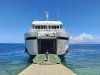
The ferry I had come to Atauro on was the Dragonboat which is a small ferry, and it had arrived at low tide and been disembarked via dinghy. The Berlin Nakroma is a big vehicle ferry and it docks at high tide at the concrete jetty. I’d been told it leaves at 3pm but Estevao said maybe 2pm and to get there at 1 or 1.30pm. It’s probably variable, but today it boarded at 2pm and left at about 2.30pm.
The crossing is said to be good for cetaceans. Coming across the other day there had been some unidentifiable dolphins in the distance. Going back today there was another unidentified dolphin (very briefly) and also a whale spouting which was also unidentifiable by me. There were terns as well, maybe Sooty Terns (but maybe Bridled Terns) and some Crested Terns which were likely to be Greater because that’s what I saw at Tasi Tolu. In other words, nothing which got identified was seen from either ferry crossing.
I didn’t have anywhere pre-booked to stay in Dili because I hadn’t known how long I’d be on Atauro for, but the Polish guy at Estevao’s said the Chong Ti Hotel was maybe ten minutes walking distance from the ferry dock and, although it was US$30, they had lots of rooms so would definitely have availability and it would save me having to walk around trying at different small guesthouses.
The fan-room I’d had at the Casa Minha was US$14 but that was the cheapest in town I think, and even there an A/C room was US$25 (and they only have one fan-room so it probably wouldn’t have been available anyway). Generally, the cheap hotels are all around the US$25-30 mark.
It wasn’t until I was about two-thirds of the way walking to the Chong Ti that I realised the street the hotel was on was on the route of the #9 microlet so I could have caught one from the dock. Still, I saved 25 cents.
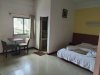
The Chong Ti was fine. The room looks much better in the photo than in real life, but it wasn’t bad. It was big, had A/C, it’s own bathroom, and also importantly it was quite close to the Taibessi Market from where the passenger-trucks leave for Maubisse, and the #4 microlet (which goes to that market) goes past the hotel.
There were 22 birds seen today, only one more than yesterday but with some slight differences (and also including Sooty-headed Bulbul in Dili, a bird I didn’t see on Atauro at all):
Black-banded Fruit Dove, Rose-crowned Fruit Dove, Pacific Emerald Dove, Spotted Dove, Barred Dove, Olive-headed Lorikeet, Rainbow Bee-eater, Drab Swiftlet, White-nest Swiftlet, Sooty-headed Bulbul, Wallacean Cuckoo-Shrike, White-shouldered Triller, Fawn-breasted Whistler, Supertramp Fantail, Pied Chat, Ashy-bellied White-eye, Flame-breasted Sunbird, Red-chested Flowerpecker, Indonesian Honeyeater, Helmeted Friarbird, Timor Zebra Finch, Tree Sparrow.
I slept with my room door open again, but on this night it made no difference at all! The previous night had been noticeably cooler than the day but I think that must have been due to the rain, because tonight was exactly as hot as if the door had remained closed!
I was leaving Atauro today, on the Berlin Nakroma ferry at 2pm. I liked Atauro a lot but it was so hot and the birding was not as I had imagined.
After breakfast I went for a walk around the village, still hoping a Wetar Oriole would show itself. The road which went up behind the village to where they were building the giant church had been quite good yesterday (that’s where I saw the Tricoloured Parrotfinch) so I was on my way back there but I got side-tracked, quite literally in that I decided to go down a track off the side of the road. This track was kind of like a dug-out gravel channel rather than a simple foot-track. Yesterday I had thought it led to someone’s house so didn’t try it out, but this morning I found that it came out into a dry riverbed.
Atauro is bone-dry, so such a wide deep river channel as I found myself in seemed very unusual. Even in the rainy season there couldn’t be that much water coming down from the mountains. It looked promising as a place to explore for birds though, with thick vegetation lining the banks, so I started walking up it. Soon it became apparent that the size of the river-bed wasn’t natural. It had been dug out, probably over many years, for gravel for construction. Higher up the channel became narrower and narrower, turning into more of a rocky stream bed, much more what you might expect on the island.
I wish I’d discovered this channel earlier in my stay. It is much easier walking than the road into the hills (because it is not so steep and it is all rocks so is not dusty), and I saw most of the same birds and then some. Flame-breasted Sunbirds in particular seemed very common along here. The vegetation is all delicious broadleaf bushes and trees as well, rather than leathery toxic eucalyptus leaves – if anywhere on the island was going to have green pigeons and orioles then this seemed like the place.
Most birds seen on Atauro are small ones – things like Ashy-bellied White-eyes and Indonesian Honeyeaters – so when a big bird goes by you notice it. Usually it is a Helmeted Friarbird (I only saw two species of honeyeater anywhere on the island – the Indonesian Honeyeater and the Helmeted Friarbird) or occasionally a Wallacean Cuckoo-Shrike or Spotted Dove.
While I was walking up the river-bed a big bird flew into a tree up the bank. It would be either a friarbird or an oriole. I was expecting the former but hoping for the latter. I knew where it was but there were leaves in the way, and I was standing there for several minutes with my binoculars trained on the spot until a head eventually poked out. But not the head of a friarbird or an oriole. It was a pure white head, and then lower down a black breast-band – it was a Black-backed Fruit Dove!
It was high up but I took some photos anyway. There was a second one there as well, sitting in the open so I had missed it by concentrating on the one I’d seen fly in. The photos of both were equally bad.
Black-backed Fruit Dove
I went up the creek-bed until it got quite narrow and a bit scrambly, and then came back down. Around the area where I’d seen the Black-backed Fruit Doves I saw two largish birds in the top of a leafless tree. They were pigeons, but not the Black-backed Fruit Doves. Judging the size of birds on Atauro was squiffy – even small birds like the honeyeaters seemed larger than they really were when they were perched without any other birds or leaves for scale. I thought these pigeons might be imperial pigeons (which would have made them Pink-headed Imperials) but “luckily” one was sitting facing in my direction and the sun shining on it showed the yellow breast and orange vent well. They were Rose-crowned Fruit Doves. The photos of these were much worse than those of the Black-backed Fruit Doves, almost silhouettes, but they still (just) showed the colours.
Rose-crowned Fruit Doves
I put “luckily” in quotation marks above because it was lucky I could get a good ID on them against the sky, but I have already seen both the Black-backed Fruit Dove and the Rose-crowned Fruit Dove in West Timor whereas I haven’t seen the Pink-headed Imperial Pigeon at all and thus that would have been a better bird for me to see.
It was interesting I’d seen two species of fruit doves here though. It made it seem much more likely that Timor Green Pigeons were here as well. But I left the island without seeing them, or the Wetar Oriole, or the Island Monarch – basically, the three main birds I came to the island for! I did see the Tricoloured Parrotfinch which I wasn’t expecting and that was both a lifer and a regional endemic, so that was good.
The ferry I had come to Atauro on was the Dragonboat which is a small ferry, and it had arrived at low tide and been disembarked via dinghy. The Berlin Nakroma is a big vehicle ferry and it docks at high tide at the concrete jetty. I’d been told it leaves at 3pm but Estevao said maybe 2pm and to get there at 1 or 1.30pm. It’s probably variable, but today it boarded at 2pm and left at about 2.30pm.
The crossing is said to be good for cetaceans. Coming across the other day there had been some unidentifiable dolphins in the distance. Going back today there was another unidentified dolphin (very briefly) and also a whale spouting which was also unidentifiable by me. There were terns as well, maybe Sooty Terns (but maybe Bridled Terns) and some Crested Terns which were likely to be Greater because that’s what I saw at Tasi Tolu. In other words, nothing which got identified was seen from either ferry crossing.
I didn’t have anywhere pre-booked to stay in Dili because I hadn’t known how long I’d be on Atauro for, but the Polish guy at Estevao’s said the Chong Ti Hotel was maybe ten minutes walking distance from the ferry dock and, although it was US$30, they had lots of rooms so would definitely have availability and it would save me having to walk around trying at different small guesthouses.
The fan-room I’d had at the Casa Minha was US$14 but that was the cheapest in town I think, and even there an A/C room was US$25 (and they only have one fan-room so it probably wouldn’t have been available anyway). Generally, the cheap hotels are all around the US$25-30 mark.
It wasn’t until I was about two-thirds of the way walking to the Chong Ti that I realised the street the hotel was on was on the route of the #9 microlet so I could have caught one from the dock. Still, I saved 25 cents.
The Chong Ti was fine. The room looks much better in the photo than in real life, but it wasn’t bad. It was big, had A/C, it’s own bathroom, and also importantly it was quite close to the Taibessi Market from where the passenger-trucks leave for Maubisse, and the #4 microlet (which goes to that market) goes past the hotel.
There were 22 birds seen today, only one more than yesterday but with some slight differences (and also including Sooty-headed Bulbul in Dili, a bird I didn’t see on Atauro at all):
Black-banded Fruit Dove, Rose-crowned Fruit Dove, Pacific Emerald Dove, Spotted Dove, Barred Dove, Olive-headed Lorikeet, Rainbow Bee-eater, Drab Swiftlet, White-nest Swiftlet, Sooty-headed Bulbul, Wallacean Cuckoo-Shrike, White-shouldered Triller, Fawn-breasted Whistler, Supertramp Fantail, Pied Chat, Ashy-bellied White-eye, Flame-breasted Sunbird, Red-chested Flowerpecker, Indonesian Honeyeater, Helmeted Friarbird, Timor Zebra Finch, Tree Sparrow.