Chlidonias Goes To Asia, part seven: 2024-2025

Did you not see spotted seal in Vladivostok?

Also, it's a bit funny seeing -10 C considered frigid cold. When you are already a bit miserable and it's blowing hard, it feels cold, yes, but that's only 14 degrees Fahrenheit.

That being said, the aesthetic of being on the tip of an island off the tip of an island off the northern end of an island chain on the eastern edge of a continent is quite something. Congratulations on those mammals you found in Wakkanai! Are you on Honshu now?
I was in Vladivostok in summer when most of the seals have left. I think the number of resident seals has increased a lot since I was there as well. In any case, I didn't see any seals there.

Minus 10 degrees is literally frigid - it is below zero. I guess it would depend on where a person comes from as to whether it is considered cold or not. The "type" of cold is also different on a continent versus an island, which sounds a bit weird but the same temperature will feel very different. When I was in the Himalayas in mid-winter on another trip it was well below freezing and I had ice in my beard but I didn't feel cold most of the time, but on Hokkaido in below-freezing temperatures it was a different story.

I'm on Honshu, right now in Osaka.
 
Also, it's a bit funny seeing -10 C considered frigid cold. When you are already a bit miserable and it's blowing hard, it feels cold, yes, but that's only 14 degrees Fahrenheit.

I'm with Chlidonias on this one, that's frigid. Even during snowstorms and cold snaps I don't think I've ever been in temperatures quite that low, only to about 17°F and that's plenty cold for me!

The "type" of cold is also different on a continent versus an island, which sounds a bit weird but the same temperature will feel very different. When I was in the Himalayas in mid-winter on another trip it was well below freezing and I had ice in my beard but I didn't feel cold most of the time, but on Hokkaido in below-freezing temperatures it was a different story.

I've noticed this as well when over in Newfoundland, there's a distinct difference in how temperature feels. The humidity affects it a great deal in my opinion, a humid wet cold like on an island feels a lot colder than a dry cold.
 
Personally, I wouldn't consider temperatures cold until it drops below 0 fahrenheit. Even then if there isn't a breeze blowing then sometimes barely feels cold.
 
  • Like
Reactions: CMP
I'm with Chlidonias on this one, that's frigid. Even during snowstorms and cold snaps I don't think I've ever been in temperatures quite that low, only to about 17°F and that's plenty cold for me!


I've noticed this as well when over in Newfoundland, there's a distinct difference in how temperature feels. The humidity affects it a great deal in my opinion, a humid wet cold like on an island feels a lot colder than a dry cold.
minus 5 degrees but feels like minus 10 degrees

I think it's underestimated how cold the midwest and other interior regions of North America get, it's not uncommon for me to have to walk to class in the cold spells of winter with the actual temperature to be below -13C real with a feels-like closer to -20C. I know Birdsandbats has it a good deal colder still, in Central WI.

That's why I comment on it, part of the fun of how temperature feels to a person is it is all relative and very dependent on where you are from, so it's fun to see others reactions and what feels 'cold' to them.
 
Last edited:
I think it's underestimated how cold the midwest and other interior regions of North America get, it's not uncommon for me to have to walk to class in the cold spells of winter with the actual temperature to be below -13C real with a feels-like closer to -20C.
I second this. Me and CMP go to the same school and the first day of the semester was about -17C. It's horrible. Luckily we're now in what I call false spring, where midwestern Mother Nature gives you hope by having a few days of beautiful weather before the temperature gets cut in half overnight.
 
Nagano

I'm having real trouble with keeping up with the blog entries this trip! Last time that I was posting in the thread I was two weeks behind so took a day off to write and post all my remaining Hokkaido entries. That just left the posts for Nagano and Karuizawa to do, and I thought that would be me all sorted. Instead I am now three weeks behind on posts! There just aren't enough hours in the days.


From Hokkaido I flew to Haneda Airport in Tokyo. My hotel in Sapporo (in Hokkaido) was only seven minutes walk from one of the stops for the airport bus. Fortunately it wasn't snowing this morning because the stop was just on the street with no cover, and it also turned out that the buses only take about ten people from each stop. I therefore got onto the following bus from the one I was aiming for, and it then took 1.5 hours to get to the airport rather than the one hour it was scheduled for. I arrived only one hour before departure time and, given that this was Japan and Japan is a heavily-populated country, I was expecting a very tight check-in. Instead there was nobody queueing at the desks and I was through to the departure gate in fifteen minutes, no problem.

Landing in Tokyo it was a balmy 6 degrees and I wondered what tropical wonderland I had wandered into. I caught a bus from Haneda Airport to the Shinjuku Bus Terminal in the city, and from there took a four hour bus to Nagano, arriving at 6pm.

It started snowing just as I got off the bus in Nagano. It seems to snow everywhere I go now. I think I might be like Ruby Sunday, except without the lame dead-end storyline that contradicts everything set up for me beforehand.

The hotel I was at had breakfast included in the price, which started at 6.30am. In the morning I went down to the dining area at 6.30am to avoid too many people, but there were already twenty other guests there waiting! Japanese tourists (i.e. the local tourists as opposed to the foreign tourists) do seem to be early risers.

The main reason I had come to Nagano was to see Japanese Macaques. I figured I would likely see them "just around" in other parts of Japan, but Nagano is famous as the place where the macaques bathe in hot springs during the winter, earning them their alternative name of Snow Monkeys.

The hot springs are at a town called Kanbayashi Onsen, about 35km from Nagano, and it is very easy to get there either by a train-bus combination, or by bus the whole way. Both methods are covered by the Snow Monkey Pass which costs 4000 Yen and includes entry to the Snow Monkey Park where the hot springs are. The pass also lasts for two days so you can use it the next day for free rides on that train or bus (although you can only use it for one entry to the Snow Monkey Park).

I had checked the bus schedule the previous night and although it seemed like the first bus at 8.15am was only on Saturdays that wasn't explicitly clear (or, rather, information seemed a bit contradictory), and since my hotel was just a few minutes walk from the station I thought it's not going to hurt to go to the bus stop for that time just in case. Sure enough there was a line of tourists all waiting at the stop, so I joined the line. At 8.15am a staff member who had been hanging around the area for a while made an announcement that the 8.15am bus was only a Saturday bus - the first weekday bus was at 8.50am. Why he waited until 8.15am to make that announcement instead of letting us know earlier, who knows.

From the bus stop to the entrance of the Snow Monkey Park was about a 2km walk up a snow- and ice-covered road, and then there is a further walk of a couple of kilometres along a track through the forest. I thought I was done with Ice Japan when I left Hokkaido, but there was a lot of snow here. It was like a fairytale forest. Northern Hemisphereans are probably always saying "I don't like snow, it's wet and cold and irritating and it gets everywhere", but I don't come from somewhere with snow so to me it looks magical. It was extremely cold though - there were literal icicles hanging in my beard.

I was keeping an eye out along the way for Serow which are sometimes seen here. There are even signboards along the track which mention them. I didn't see any.

Just before you reach the entrance to the Snow Monkey Park itself, you come to an area of hot springs which includes a small geyser. There were macaques around here, huddling by little pockets of escaping steam from underground, so you could see them without paying to enter the park itself but then you'd miss the proper spectacle of them sitting in the hot pools as below...

There were mummy monkeys
full


There were baby monkeys
full


There were cuddly monkeys
full


There were cold monkeys
full


There were really cold monkeys
full


There was even a monkey catching snowflakes in its mouth like people do
full
 
Last edited:
What it looks like from photos:

PXL_20250219_014709660.NIGHT.jpg

PXL_20250219_014654470.NIGHT.jpg


What it looks like in reality:

PXL_20250219_020458304.NIGHT.jpg

PXL_20250219_014525248.NIGHT.jpg
 

Attachments

  • PXL_20250219_014709660.NIGHT.jpg
    PXL_20250219_014709660.NIGHT.jpg
    170.1 KB · Views: 133
  • PXL_20250219_014654470.NIGHT.jpg
    PXL_20250219_014654470.NIGHT.jpg
    163.7 KB · Views: 138
  • PXL_20250219_020458304.NIGHT.jpg
    PXL_20250219_020458304.NIGHT.jpg
    200.3 KB · Views: 142
  • PXL_20250219_014525248.NIGHT.jpg
    PXL_20250219_014525248.NIGHT.jpg
    199.5 KB · Views: 148
The car park area:
PXL_20250219_005219596.jpg

Walking to the start of the forest track:
PXL_20250219_013005628.jpg
PXL_20250219_005557058.jpg
PXL_20250219_010109163.jpg

The track through the forest:
PXL_20250219_030720929.NIGHT.jpg
PXL_20250219_010346779.jpg
PXL_20250219_011631762.jpg
PXL_20250219_010401122.jpg
 

Attachments

  • PXL_20250219_013005628.jpg
    PXL_20250219_013005628.jpg
    261.3 KB · Views: 130
  • PXL_20250219_010109163.jpg
    PXL_20250219_010109163.jpg
    192.3 KB · Views: 132
  • PXL_20250219_010401122.jpg
    PXL_20250219_010401122.jpg
    301.5 KB · Views: 133
  • PXL_20250219_010346779.jpg
    PXL_20250219_010346779.jpg
    236.3 KB · Views: 135
  • PXL_20250219_005219596.jpg
    PXL_20250219_005219596.jpg
    108.4 KB · Views: 137
  • PXL_20250219_005557058.jpg
    PXL_20250219_005557058.jpg
    195.8 KB · Views: 148
  • PXL_20250219_030720929.NIGHT.jpg
    PXL_20250219_030720929.NIGHT.jpg
    83 KB · Views: 137
  • PXL_20250219_011631762.jpg
    PXL_20250219_011631762.jpg
    319.2 KB · Views: 135
Last edited:
Nagano

I'm having real trouble with keeping up with the blog entries this trip! Last time that I was posting in the thread I was two weeks behind so took a day off to write and post all my remaining Hokkaido entries. That just left the posts for Nagano and Karuizawa to do, and I thought that would be me all sorted. Instead I am now three weeks behind on posts! There just aren't enough hours in the days.


From Hokkaido I flew to Haneda Airport in Tokyo. My hotel in Sapporo (in Hokkaido) was only seven minutes walk from one of the stops for the airport bus. Fortunately it wasn't snowing this morning because the stop was just on the street with no cover, and it also turned out that the buses only take about ten people from each stop. I therefore got onto the following bus from the one I was aiming for, and it then took 1.5 hours to get to the airport rather than the one hour it was scheduled for. I arrived only one hour before departure time and, given that this was Japan and Japan is a heavily-populated country, I was expecting a very tight check-in. Instead there was nobody queueing at the desks and I was through to the departure gate in fifteen minutes, no problem.

Landing in Tokyo it was a balmy 6 degrees and I wondered what tropical wonderland I had wandered into. I caught a bus from Haneda Airport to the Shinjuku Bus Terminal in the city, and from there took a four hour bus to Nagano, arriving at 6pm.

It started snowing just as I got off the bus in Nagano. It seems to snow everywhere I go now. I think I might be like Ruby Rose, except without the lame dead-end storyline that contradicts everything set up for me beforehand.

The hotel I was at had breakfast included in the price, which started at 6.30am. In the morning I went down to the dining area at 6.30am to avoid too many people, but there were already twenty other guests there waiting! Japanese tourists (i.e. the local tourists as opposed to the foreign tourists) do seem to be early risers.

The main reason I had come to Nagano was to see Japanese Macaques. I figured I would likely see them "just around" in other parts of Japan, but Nagano is famous as the place where the macaques bathe in hot springs during the winter, earning them their alternative name of Snow Monkeys.

The hot springs are at a town called Kanbayashi Onsen, about 35km from Nagano, and it is very easy to get there either by a train-bus combination, or by bus the whole way. Both methods are covered by the Snow Monkey Pass which costs 4000 Yen and includes entry to the Snow Monkey Park where the hot springs are. The pass also lasts for two days so you can use it the next day for free rides on that train or bus (although you can only use it for one entry to the Snow Monkey Park).

I had checked the bus schedule the previous night and although it seemed like the first bus at 8.15am was only on Saturdays that wasn't explicitly clear (or, rather, information seemed a bit contradictory), and since my hotel was just a few minutes walk from the station I thought it's not going to hurt to go to the bus stop for that time just in case. Sure enough there was a line of tourists all waiting at the stop, so I joined the line. At 8.15am a staff member who had been hanging around the area for a while made an announcement that the 8.15am bus was only a Saturday bus - the first weekday bus was at 8.50am. Why he waited until 8.15am to make that announcement instead of letting us know earlier, who knows.

From the bus stop to the entrance of the Snow Monkey Park was about a 2km walk up a snow- and ice-covered road, and then there is a further walk of a couple of kilometres along a track through the forest. I thought I was done with Ice Japan when I left Hokkaido, but there was a lot of snow here. It was like a fairytale forest. Northern Hemisphereans are probably always saying "I don't like snow, it's wet and cold and irritating and it gets everywhere", but I don't come from somewhere with snow so to me it looks magical. It was extremely cold though - there were literal icicles hanging in my beard.

I was keeping an eye out along the way for Serow which are sometimes seen here. There are even signboards along the track which mention them. I didn't see any.

Just before you reach the entrance to the Snow Monkey Park itself, you come to an area of hot springs which includes a small geyser. There were macaques around here, huddling by little pockets of escaping steam from underground, so you could see them without paying to enter the park itself but then you'd miss the proper spectacle of them sitting in the hot pools as below...

There were mummy monkeys
full


There were baby monkeys
full


There were cuddly monkeys
full


There were cold monkeys
full


There were really cold monkeys
full


There was even a monkey catching snowflakes in its mouth like people do
full

That's lovely. Something I remember seeing with Attenborough narrating over the top! Excellent pictures and must have been a great moment.
 
Back in Nagano that afternoon I took a walk along the river which runs through the town. It was weird having a shallow rocky river with no forktails, redstarts or dippers along it - in China there would be one or more of those every few tens of metres, here there were just a few ducks. However I ended up seeing 18 species of birds on the walk.

full


full

Pintails


The following morning I spent the first half of the day along the river and saw 33 bird species including Brambling, Meadow Bunting, Japanese Wagtail, Japanese Bush Warbler, and Long-tailed Rosefinch. Rustic Buntings were a lifer for me, and I accidentally flushed a trio of Green Pheasants which (as a Japanese endemic) were also a lifer. Two female pheasants flew first, and I wouldn't have counted them just in case they were Ring-necked Pheasants (which have been introduced to parts of Japan), but then the male went sailing past along the river bank between the trees and I saw him well enough to know what he was - not an ideal sighting, but I'll take it.


There are a couple of zoos in Nagano. The Chausuyama Zoo is supposed to be good but also seemed complicated to get to, so I went to the Joyama Zoo instead. It is free to enter, can be reached on the train for free with the Snow Monkey Pass from the day before, and is only small so wouldn't take long to visit.

The zoo opened in 1961 and is now aimed mainly at children. It includes amusement rides and a petting zoo (with rabbits, guinea pigs, and a miniature horse). As might be expected for a sixty year old Japanese zoo the cages are mostly very small, the sealion pool especially so. The row of monkey and pheasant cages are also not exactly large. However there are a couple of large aviaries for birds and Japanese Squirrels, and the pelicans also have a large pen. If they got rid of the sealions entirely, and built some larger monkey cages then the zoo would be fine.
Joyama Zoo (Nagano, Japan), species list February 2025


I had a wander at night at the park by the river but nothing was seen.


PXL_20250220_014859997.jpg
The river which flows through Nagano

PXL_20250220_012110864.jpg
Some additional scenery from by the river (this is a golf-course, which I thought might be good for Japanese Hares at night, but I didn't find anything)
 

Attachments

  • PXL_20250220_014859997.jpg
    PXL_20250220_014859997.jpg
    188.1 KB · Views: 139
  • PXL_20250220_012110864.jpg
    PXL_20250220_012110864.jpg
    179.7 KB · Views: 137
Last edited:
Even as someone who sees snow for much of the year, I have to agree with you that snow - especially freshly fallen snow - looks magical and wonderful. I love the winter for that reason, even if the winter birding around here is kind of difficult.

The ice formations on the geyser are awesome!
 
Karuizawa


Karuizawa is in the Japanese Alps, within easy reach of Tokyo - you could even do it as a day-trip with the high-speed trains - and is a major birding destination in Japan. I was expecting this to be one of the highlights of my trip, but it turned out to be my least favourite place in Japan so far.

In my head I was thinking it would be more wilderness - kind of like Bukit Fraser, a little central hub but with other residences and hotels scattered through forest - but it is a town and is all built up. More importantly, the forest felt dead and empty. Pretty much the only good results I got were in the last few hours of the last day. To give an idea of how quiet it was there, on my morning walk along the river in Nagano the day before going to Karuizawa I saw 33 species of birds. My total number of birds seen at Karuizawa over four days was also just 33 species.

Most of the birding locations I had seen referenced were nearest to Naka-Karuizawa Station (which is roughly 4km from Karuizawa Station), and the hotel I had booked was closest to there as well, so I caught a train from Nagano to that station.

I had booked the cheapest hotel listed on Trip, the fancily-named Resort Villa Shiozawasanso Karuizawa, which was 6210 Yen per night - all others were in the tens of thousands of Yen per night! I didn't want to risk winging this one given the cost of all other listed accommodations there! It is in an inconvenient location though, being 2.5km from the station and on the wrong side of the tracks - all the bird sites are about 2km from the station but in the other direction, so almost 5km walk each way. (There are buses but they don't start running early enough in the morning and they usually had already stopped running when I was coming back in the evening).

I popped into the information centre at the Naka-Karuizawa station when I arrived to check on bus timetables and get some maps. There I found out that there is a bus from Karuizawa Station which goes right by the hotel, so it would have been easier to go there after all! Today there was no bus from Naka-Karuizawa which went that close. Instead I caught a bus to the closest stop, which was 1.3km away but with a downhill walk.

The hotel looks really run-down from the outside, but the room was fine and I could check in right away instead of having to wait for the actual check-in time. When I got back to the hotel in the evening I couldn't work the heating and there was no-one at reception so I had none that night. On the second night I worked out the controls for the heat-pump but there were frequent power outages so I ended up with no heat anyway for the whole stay.

Somehow it was much colder here than in Hokkaido. I don't know what the temperature was on any of the days (apart for the morning I left for Tokyo, when it was minus seven degrees) but on my first morning, literally as soon as I walked out the door, frost starting forming on my beard from my breath. On the third day there was ice in my water bottle, which was inside my bag! I had to wear on an extra layer which I hadn't needed in Hokkaido.

It was snowing on and off on the first day after arrival, and quite windy at times; clear and still on my second full day; clear and warmer (but still very cold) on the third day - this day was the only one where my beard wasn't stiff with ice all day. There were really random changes in temperature as well, depending on where you are - on the Kose Forest Road some parts would be completely free of any snow whatsoever, then you come round the bend and suddenly the road would be a just a thick sheet of ice with the surrounding hills covered in snow.

On the first afternoon after checking in to the hotel, I then walked back to station and on to the Wild Bird Sanctuary, which took almost an hour. It's a confusing area when first trying to find your way around - it's easy once you know where everything is, but when you've just got there and only know the sites from written reports, it seems very difficult. It also turned out that most of the sites people mention ("the Hoshino area", "the Stone Church", "the Wild Bird Sanctuary", "the Forest Road") are actually all in roughly the same place - the Hoshino area is where those other places are, the road up to the Stone Church and the entrance area for the Wild Bird Sanctuary are basically on opposite sides of the road from one another, and the Kose Forest Road runs off the same road as the Wild Bird Sanctuary.

This first afternoon was more of a recce, so the only place I visited properly was the Stone Church which was built in 1988 and was not some ancient relic as I had expected. This particular spot is supposed to be good for Japanese Green Woodpecker and Green Pheasant, but I saw no birds there at all (I have eight birds listed today for Karuizawa, but all were just on the walk from the hotel). There were burrows in the forested bank opposite the church, some of which had fresh soil outside and presumably were made by either badgers or raccoon dogs, and there were roosting-boxes for Giant Flying Squirrels in the trees in the car park. I waited until after dark but saw nothing - I didn't have my torch or night-vision camera with me, so didn't wait too long once it got dark. There is a nature tour company here called Picchio who do night tours for the flying squirrels but obviously I wanted to avoid paying money for something which I can (in theory) do myself.

The whole of the second day was spent at the Wild Bird Sanctuary and along the Kose Forest Road. It was two hours before I saw my first bird! Then I saw a bunch of birds all in one spot, including a Coal Tit, Willow Tits, Great Spotted and Japanese Pigmy Woodpeckers, a Red-flanked Bluetail, and also a Japanese Squirrel. This squirrel was scampering about on the forest floor and didn't hang around long. It turned out to be the only Japanese Squirrel I saw in Japan! Only four additional birds were seen along the Forest Road, the best of which was a Brown Dipper. Total birds for the day was only 16 species. My torch failed at night so again no flying squirrels were seen.

The third day was spent along the Kose Forest Road again. It was a bit better than yesterday, with 19 species of birds seen, but nothing out of the ordinary. I was looking out for Serow the whole time. I felt like they should be here, but when I'd tried googling about it the results were invariably about Mount Asama (which is where Picchio does their Serow tours). However I found what I'm sure were Serow tracks through the snow - I had seen deer tracks in snow almost every day in Hokkaido so I was familiar with how they looked, and these were not the same.

More exciting, because they seemed more fresh, were marten tracks. I actually smelled the marten first, and while following my nose trying to pinpoint where it might be, I saw the tracks in the snow below the road. I traced the line of them and found that they came up onto the road itself - but the road was covered in ice so the tracks disappeared as soon as they left the snow. I couldn't find any on the opposite side, so I think the marten had probably run along the road and gone off the side somewhere else.

By my last day I was done with Karuizawa. I wasn't seeing anything, it was really cold all the time, and I was sick of walking the 10km return every day between the hotel and Hoshino. On this morning I started the day instead by catching a bus over to Kumoba Pond which is near the Karuizawa Station. I had been told this was a good spot for the Japanese Green Woodpecker and Japanese Accentor, both of which I still hadn't seen, and for Japanese Squirrel, of which I wanted to see more. From the pond itself, where there were Little Grebes and various ducks (and a nice male Red-flanked Bluetail), there is a grid of straight roads which lead through old gardens with large trees. I saw some Eurasian Jays, Goldcrest, Coal Tit, Nuthatches, and suchlike, but no Green Woodpeckers or accentors.

For the remainder of the afternoon I caught the bus from Karuizawa station back over to Hoshino. I finally found the Picchio Nature Tours office (it is at the counter for the ice skating pond) where I asked them about their night tours for the Giant Flying Squirrels, only to find that they don't do them in winter because it is too cold, and they also don't monitor the roost-boxes when they aren't doing tours so they couldn't even tell me which ones were occupied.

I headed up the Kose Forest Road on the lookout for Copper Pheasant, a male of which had been seen here this very morning. A little flock of Long-tailed Rosefinches were the first I'd seen at Karuizawa (I had seen them recently at Nagano), and I managed a passable photo of one of them.

full

Long-tailed Rosefinch


Where the Copper Pheasant had been seen there was a trail heading up a valley. I followed that for a bit, then had a sit-and-wait session on a likely-looking patch of hill. Still nothing, and (as of writing this) I haven't yet managed to see a wild Copper Pheasant. I came back down the valley, and just as I was almost back on the Forest Road I happened to look up to one side and saw a big old tree stump which, to the unwary and in certain circumstances, could have resembled a Serow. Hang on, that actually was a Serow!

full

Japanese Serow

I snapped a few photos even though the animal was mostly obscured by the bushes. It was on top of a bank, but there was a track leading up that bank a little to the side. If I could get up behind then I might be able to get a clear shot. In hindsight I should have just waited for the Serow to move but generally animals don't move into the open after they have seen you, they tend to do the opposite thing. By the time I got up there - with the Serow watching me the whole time - I discovered that the bushes were too thick to see across to where it was, and in the meantime it had snuck away and vanished.

full

Japanese Serow, watching me trying to sneak up behind it.


I had perused a few of the flying squirrel roost-boxes which are dotted along the Forest Road and, without actually knowing which ones were and weren't occupied, had chosen one which had a lot of fresh-looking gnaw-marks around the opening. Almost all the boxes had gnaw-marks, but the amount on this box made it look like it was a preferred box. The only thing I could do now was wait for dark and see if a squirrel emerged.

The box was situated right by the entrance to one of the Wild Bird Sanctuary trails. While I was standing there waiting, some small birds darting through the undergrowth by the roadside drew my attention - Japanese Accentors! Finally. It is only technically not a Japanese endemic because it is found also on Sakhalin Island which is right next to Japan (off the north of Hokkaido) but which politically belongs to Russia.

The accentors had moved on, but some other bird was calling noisily on the other side of the road. What was that? I thought it was going to be a thrush of some sort, but then a woodpecker flew out and landed on a tree trunk. A Japanese Green Woodpecker! Both the birds I had been looking for that morning at Kumoba Pond I was now seeing while waiting for a squirrel.

Dusk came and went. No wonder Picchio doesn't do night tours in winter - standing in one spot in these freezing temperatures was not fun! It was black now. What was I looking at? Could I see something white at the entrance of the roost-box? I turned on my torch (with a red filter on it) and two glowing eyes were staring back at me. I switched on my night-vision camera. The squirrel had climbed out of the hole and was perched on top of the box. I've seen giant flying squirrels before, of several species, but it still never fails to amaze how big they actually are. The squirrel didn't hang around long, running quickly up to the very top of its very tall tree. I waited for a while to see it fly, but it was so cold that eventually I gave up.

I had rolled my foot on a stone yesterday and for some reason my shoe had started rubbing the back of my ankle so that foot also had a sore there, making the long walk back to the hotel a painful chore. I didn't mind though - the last three hours of this final day were the best part of the entire four days combined!
 
Last edited:
PXL_20250221_224552138.jpg
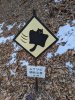
Flying Squirrel road sign at Karuizawa.

PXL_20250222_222232219.jpg
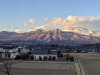
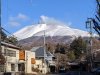
Mount Asama, which I thought was just a regular mountain until the first clear day and I realised it is an active volcano!

PXL_20250222_215920273.jpg
This is the house the cats live in at Karuizawa.
 

Attachments

  • PXL_20250221_224552138.jpg
    PXL_20250221_224552138.jpg
    188.5 KB · Views: 105
  • PXL_20250222_222232219.jpg
    PXL_20250222_222232219.jpg
    180.2 KB · Views: 102
  • PXL_20250222_215920273.jpg
    PXL_20250222_215920273.jpg
    165.8 KB · Views: 106
One of the most important parts of my Japan trip was a visit to the Ogasawara Islands, which lie 1000km to the south of the main islands. They are also known as the Bonin Islands, which is what I have always called them (and what the endemic animals have attached to their names) but I have since switched to Ogasawara because otherwise nobody in Japan knew what I meant. Ogasawara is the name of the apparently-fictitious Japanese man credited with discovering them hundreds of years ago, while Bonin is a French mistranslation of a Japanese description of the islands. It's a bit confusing. But Ogasawara has a nice flow to it, much better than Bonin.

The only way to reach the islands is via an overnight ferry, which only runs on a six-day cycle (two days at sea to get there, two days at the islands, and then two days at sea back to Tokyo), and it can only be booked 60 days in advance which meant I couldn't do that before leaving New Zealand. And then having my bank card stolen meant that I couldn't book it later either (because I can't book anything online except through the Chinese travel app Trip). So when I got back into Tokyo after Karuizawa I went straight to the ferry terminal to get my tickets for the next sailing time a few days hence (on the 1st of March).

The problem I then ran into was that I needed to have accommodation already booked on the islands before I could buy a ferry ticket. I knew this was the case during holiday periods, but didn't think that was now - but apparently "we are now in Spring and that is the busy season". Luckily the National Land office is upstairs in the ferry terminal and they can arrange packages of ferry and hotel together. Less luckily, because it was now "the busy season" there were no hotels unbooked for the coming week. I had planned to stay on Hahajima, because that island has all the endemics, but there are only three hotels on that island and all were booked for the entirety of March. On Chichijima there was one hotel free during March, but only from the 13th, and it cost 30,000 Yen per night (i.e. after removing the 56,500 Yen return fare for the ferry, 90,000 was left which was for three nights accommodation on the island). I rather suspect that rate is not the "actual" hotel rate, but what it costs with their package, because it was an ordinary hotel and that price didn't include meals either. However I didn't have a choice really, so I paid in cash what amounted to about NZ$1700 for the ferry and hotel. It was for six days overall though, which breaks down to about NZ$280 per day. Still expensive (for me) but it sounds better than saying $1700.

I now had almost three weeks to fill before the Ogasawaras, so I rearranged my travel plans a bit to spend it in Tokyo and Osaka, and then when I came back from the islands I could head straight to Kyushu to continue southwards to the Ryukyu Islands. (Originally I had been going to spend a few days in Tokyo, go to the Ogasawaras, and then go to Osaka on my way south - it was just changing the order of things really, although with longer than I would have probably otherwise given myself).


I should hopefully be able to just breeze through those next three weeks of posts because a number of days were zoo or aquarium days where I can just link to a review if I have done one. These are the collections I visited during those days:

1) Tokyo Sea Life Park (Tokyo)
2) Ueno Zoo (Tokyo)
3) Tennoji Zoo (Osaka)
4) Osaka Aquarium Kaiyukan (Osaka)
5) Kobe Animal Kingdom (Kobe)
6) Minoh Park Insect Museum (Osaka)
7) Tama Zoo (Tokyo)
8) Oshima Park Zoo (Izu Islands)
9) Sunshine Aquarium (Tokyo)
10) Saitama Childrens Zoo (Tokyo)

I've already uploaded photos and posted species lists/reviews for Ueno Zoo, Tennoji Zoo, Kobe Animal Kingdom, Minoh Park Insect Museum, and Oshima Park Zoo. I uploaded photos from the Tokyo Sea Life Park and Osaka Aquarium today but I won't bother doing reviews of them. I haven't found the time for Tama Zoo, Saitama Childrens Zoo, or the Sunshine Aquarium yet.


Right now I'm in Izumi (on Kyushu), tomorrow I'm going to Kagoshima and I managed to book a room which wasn't exorbitantly expensive on Yakushima so I'll be spending a couple of days on that island looking for deer and macaques and birds, and then after that I have a flight to the island of Amami. And, fingers crossed, finding time amongst all of that to continue with posting in this thread!
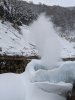

In the meantime, here's a photo of where I was in Nagano about a month ago compared to a photo of where I was last week in the Ogasawaras.

PXL_20250219_010346779.jpg

PXL_20250314_041937221.jpg
 

Attachments

  • PXL_20250314_041937221.jpg
    PXL_20250314_041937221.jpg
    229.1 KB · Views: 82
  • PXL_20250219_010346779.jpg
    PXL_20250219_010346779.jpg
    236.3 KB · Views: 71
Tokyo


One of the places on my Tokyo itinerary was Kasai Rinkai Park which is a well-known birding site in the city, and which also happens to be the location of the Tokyo Sea Life Park (not actually a SeaLife as seen in other parts of the world!). I wasn't intending to go there first but then @Dr. Wolverine posted in the Big Year thread that Raccoon Dogs can be seen there, so naturally it instantly became the place to go first.

I spent the morning in the park looking for birds, seeing 36 species altogether. Most days now my bird lists are full of the "regular" Japanese birds with only a few "new" birds here and there. Today my lifer bird was the Brown-headed Thrush, which is a particularly nice-looking thrush, as can be seen in the photo below.

full

Brown-headed Thrush

full

Dusky Thrush


When I first arrived at the park I had waited for a bit at one of the hides overlooking some reed-beds where the Raccoon Dogs were often seen. No joy was to be had there, so I tried a few other similar spots. It turned out that I didn't need to be so selective. Walking along one of the roads between the "good" areas, I came across a Raccoon Dog just hanging out right beside the road in the sun. Passersby were stopping to take photos with their phones and the dog was just like "yeah, that's fine". I came back around that way a couple of hours later at about 10am and he was still there. A much easier and better sighting than I would have ever expected.

full


full


The Tokyo Sea Life Park is probably the best aquarium in Tokyo. I visited Sumida Aquarium previously (when I came briefly through Tokyo at the start of the trip) and did not like it much at all. A bit later after this I would visit the Sunshine Aquarium which I liked a lot where the aquarium side of things was concerned but not where the marine mammals came into it. The Tokyo Sea Life Park doesn't have any marine mammals in little boxes so is already winning, and their penguins are kept in a big outdoors enclosure.

I'm not going to write any proper review threads for the aquariums because, while I really like aquariums, they do tend to be quite similar to one another in general and when you visit several in reasonable proximity to one another they sort of blur together. Individual things do stand out, for example at the Tokyo Sea Life Park they have a tuna tank as a showcase rather than a shark tank. The main attractions at aquariums for me though are the little bizarre creatures.


full

I mean, look at this thing - a Proboscis Worm Parborlasia corrugatus...

full

Or these - they might look like delicious crustaceans for eating but they are called Sea Roaches and are actually littoral woodlice (possibly literal woodlice as well, I'm not sure).

full

Or this thing, which is called a Plunderfish!

full

As if a shark isn't scary enough - this one has a saw attached to its face!

full

I've always wanted to see a Nurseryfish. The male fish (the one at the top in this photo) carries the eggs on his head, which is what that knob is for. I had imagined Nurseryfish would be small, like a Glassfish (Ambassis), but they are actually big hefty fish.

full

One of the neat things with Japanese aquariums is the range of extraordinary soft toys they sell in their gift shops. Frilled Sharks, Coelacanths, Dumbo Octopus, Giant Isopods, Tuna, Squid, Arapaima - stuff you'd likely never see in a Western aquarium's gift shop.


More photos in the gallery: Tokyo Sea Life Park - ZooChat


.............................................................


The next day was Ueno Zoo day. While waiting for it to open I had a wander around Ueno Park with my binoculars, seeing 20 species of birds including a Black-tailed Gull which was the first one I've seen in Japan despite it apparently being one of the commonest gulls in the country.

Ueno Zoo is one of the major Japanese zoos which everybody visits. It is a fairly big zoo, divided by a road into two sections (West Garden and East Garden). It has a large and varied collection of animals - just in the mammal and bird departments I probably saw two dozen species I hadn't seen before - but it is also a very old zoo and has a lot of very poor enclosures.

It does have good points. The Vivarium in particular is very good indeed, and I spent an hour in there, and the Japanese Bird House is great. But there are far too many cages which are simply too small, amongst the worst being the line of extremely small pens for megafauna (the rhinos and hippos, and giraffes to a lesser extent). Sadly, for me, the Small Mammal House which should have been one of the highlights was one of the lowlights. The collection of species in this house is amazing, but their living conditions are not - almost all enclosures are far too small, in some cases abhorrently so, and several animals were stereotyping. The Aye-Ayes, in their own special nocturnal house, were similar - absolutely amazing creatures which I have always wanted to see, but most of them were stereotyping in too-small enclosures.

I have put a small review and a current species list here: Ueno Zoo - visit and species list: February 2025 [Ueno Zoo]


full

This is the Vivarium at Ueno Zoo

full

And this is a Tropical Girdled Lizard from within the Vivarium. It is believed by many of today's top scientists that the wearing of hats by people is simply an evolutionary throw-back to when our reptile forebears carried crickets on their heads as combined rain-protection and snack-for-later.


.............................................................


Final day in Tokyo (for now). I would be taking an overnight bus to Osaka in the evening, as the cheapest option for getting there because not only does it cost less than the train but also saves a night's accommodation. I left my pack in the luggage room at the hotel for the day, and headed off to the Tokyo Port Wild Bird Park, formerly known as the Oi Bird Park which is a preferable name because it is shorter and quicker.

It is an easy park to reach. From the Hamamatsucho metro station you take the Tokyo monorail for ten minutes to the Ryutsu Center station. Outside the station you turn right and then just keep walking in a straight line for about 15 minutes until you reach the gate. Entry fee is 300 Yen and they gave me a badge which has a Dusky Thrush on it.

I didn't get there as early as I would have preferred - I'd had to go to the bus station first to buy a ticket for tonight's bus (or, rather, I'd gone to one bus station where I could catch the bus but they couldn't sell me a ticket, and then gone to the main bus station where I could buy a ticket but only for that station not for the one near to my hotel) - so I didn't see a great deal, but it is definitely a prime location for Reed Buntings which were today's lifer. It is also a good place if you want to see invasive Red-eared Sliders - they were everywhere. Some stretches of water were just a mass of little black heads poking out of the water.


full

Reed Bunting
 
Back
Top