Chlidonias Goes To Asia, part seven: 2024-2025

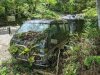
The overgrown van:

PXL_20250422_022352582.jpg


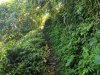
The initial narrow foot-track which I took:

PXL_20250422_004544348.jpg


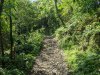
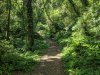
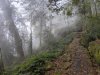
The actual path to the top:

PXL_20250422_005608605.jpg

PXL_20250422_010431842.jpg


And the tea field at the top:

PXL_20250422_014242021.jpg
 

Attachments

  • PXL_20250422_022352582.jpg
    PXL_20250422_022352582.jpg
    345.5 KB · Views: 110
  • PXL_20250422_004544348.jpg
    PXL_20250422_004544348.jpg
    355 KB · Views: 118
  • PXL_20250422_005608605.jpg
    PXL_20250422_005608605.jpg
    385.7 KB · Views: 114
  • PXL_20250422_010431842.jpg
    PXL_20250422_010431842.jpg
    358.1 KB · Views: 109
  • PXL_20250422_014242021.jpg
    PXL_20250422_014242021.jpg
    291.5 KB · Views: 120
Fuyang Eco Park (Taipei)


This one will just be a short entry.

The Fuyang Eco Park is a recommended place in Taipei to try and see Taiwan Red Giant Flying Squirrels (Petaurista grandis, a split from the widespread P. philippensis). Flying squirrels are nocturnal of course, so an evening visit is required. It is an easy park to get to - just take the metro to Linguang station and the park is less than ten minutes walk away.

It is just a small park, and there are boardwalks along the hillsides in a few places so you can be at mid-tree level, even tree-top level in some spots where the trees are shorter.

I went here twice but did not see - or even hear - any flying squirrels, although they are supposed to be "easy" and "reliable" here. I suspect that there are only a few individuals living here because it's not a large area, so they would be easy and reliable if they decide to feed in a nicely-viewable spot, but not if they decide to feed in one of the places not by a boardwalk.

Luck, basically.

I'll be going back there when I return to Taipei though, so hopefully I'll have some success then.


I did see a few Pallas' Squirrels there on my first visit before it got dark (I'd also seen one earlier in the day at the Erbazi Botanic Gardens), and my second Taiwanese mammal was seen on the second visit to the park. On the first night I had seen "something" sizeable rushing through the canopy of a tree but got no eye-shine and then it vanished. I thought it was probably a civet rather than a flying squirrel, and on the second night I went back to that spot. I wasn't too surprised that I couldn't find anything up there but I hung around under the same trees hoping whatever it was might pass by again.

While waiting I heard movement in the leaf litter on the ground nearby, and sweeping the torch got me a pair of eyes in the dark. I hoped it would come out to be identified, and luckily it did, trotting through the undergrowth and fallen branches right past me - well, not right past me, but "quite close" past me, back in the forest a bit. I could see it perfectly well though, even getting a look at it through the binoculars under the torchlight.

It was a Taiwan Ferret-Badger.

I knew they were here, in the general area at least, but I didn't expect to actually see one here and it definitely wasn't what I expected the first endemic mammal I saw on the island to be!


full


This is the sort of terror I have to submit myself to when spotlighting! Is a Taiwan Ferret-Badger worth it? Fifty-fifty.
 
Last edited:
Datongshan (Taipei)


Just outside Taipei, on the way to the hot-springs village of Wulai - itself a well-known birding spot - is a place called Datongshan which was brought to my attention by @CMP. The area is titled on eBird as "Xindian Shikanshui (WBST Birdwatching Route". There are a number of endemics found here, including Swinhoe's Pheasant, so it seemed like a good location to visit.

There is a free bus from Xindian metro station to the top which showed up on Google's map directions. It doesn't have a number or English name so I wasn't sure how I'd find it so I got to the station early. I looked at all the bus timetables on the boards and couldn't see it, and the bus station is really just a place where the buses stop, there doesn't seem to be an office or anyone to ask. I went to the metro station's counter and asked them. They were confused as well, until I said it was the Guishan Line and then the guy was like "oh, I know" and he left the counter to take me outside and down the street to the stop, which is not where all the regular buses stop and is only marked with a little sign so I never would have found it on my own.

The bus only runs a few times a day, with the first one at 7.50am. It was late - buses in Taiwan are not as punctual as in Japan! - and so I wasn't even sure it was the right bus when it arrived at 8am. I asked one of the other people getting on (I had put Datongshan into my phone's translation app to show them), and she said no. I thought I better double-check with the driver, who didn't seem to know, and there was a bit of discussion amongst the passengers. One guy said yes this is the bus, so I sat down and the bus left.

Then the guy wanted to check my phone again, and said that no this wasn't the right bus. I was getting stressed out now because there wasn't another bus until something like 10.30am and I was getting further and further away from the bus stop. I showed him the map on the phone and he looked at it carefully, and then declared that this was the correct bus after all, and that the last stop was Datongshan, which sounded right. The Alien Tracker on my map was already moving along the road out of town towards Datongshan, so I decided to see how it played out.

Luckily the bus was the right one. It passes through the village of Guishan which is at a junction by a bridge, and continues on the other side of that bridge up an extremely narrow - almost single lane - road up the mountain. At the last stop, about half an hour from Xindian metro station, there is a little side-road marked for "Mt Datong" (shan means mountain). From here you can either walk up to the end of that track (and back down), or just walk straight back down the road to Guishan which I think is about three or four kilometres.


The alternative way to do this trip is to catch the #849 bus from Xindian metro station. This also doesn't stop where the other buses stop, but it is easier to find because it is just on the other side of the plaza by the stairs (i.e. behind you if facing the main bus stops) and it has a proper sign with a number. This is a much more regular service, running every 15 to 20 minutes through the day, starting at 5.30am. You would catch this bus to Guishan, getting off at the Taipower Company Training Center and then walking across the bridge and up the mountain road. The #849, incidentally, is the same bus which runs on to Wulai.


On this day I combined the two - catching the free bus to the top, walking up the Datongshan track, and then back down and all the way to Guishan, and then catching the #849 bus back to Xindian station. This has the advantage that you start at the top and are walking downhill, but it is a late start and I saw almost no birds (it was extremely hot), so probably the best idea is to use the #849 both ways so you can start really early.


When I got off the bus one of the other passengers told me that if I was walking to the top to make sure I took the left path further ahead and not the right, because that one leads to a farm. So when I came to a fork, which had a van sitting there overgrown with ferns, I took the left path which ended a minute later at someone's gate. But beside that was a narrow foot-track, so I thought this must be it. I went up the track and after a couple of minutes it joined onto a rough path which was the actual path to the top. Coming back down later I just followed that path all the way down to the van. I think the fork she meant was the one just after the van, where the left path is fairly obviously the correct track so I wouldn't have gone the wrong way anyway.

full

Dung Beetle on the track


There was a lot of bird noise coming from the forest right beside the path, where the narrow foot-track joined to it, but I couldn't see anything. This happened repeatedly. A couple of times there were birds calling which must have literally been a couple of feet from me and I couldn't see them at all because the undergrowth was so dense. I wasted a lot of time on these invisible birds.

It was almost an hour before I actually saw any birds, firstly a Grey-faced Buzzard and then just after that a Morrison's Fulvetta, which is another one of the endemic birds. Just one. Not a pair, not a flock, not a bird-wave, just one single bird. I hung around that spot for a bit, thinking where there was one bird there must be others, but all that showed up were a pair of Black Bulbuls.

full

Morrison's Fulvetta


I continued on, and the path suddenly came out into the open at a tea field. I thought it must keep going on the other side but no, this appeared to be the end of the track. I saw a Grey Treepie up here, and fly-overs from Large-billed Crow and Black Kite. On the way back down I passed a fellow walking up who asked if I had seen the "tea garden", so I guess that really is the point of the track. Although it took me over an hour to go up the track - spending so much time trying to see birds which refused to be seen - it isn't really very long. Coming down took almost no time at all.

Then I walked back down to Guishan, again seeing very little. At the river I was surprised to see an Osprey bathing, and even more surprised to see a very late Arctic Warbler.

I saw a few other birds either in the forest or along the road on the way down (Blue Magpies and White-bellied Erpornis were the main ones of note), but the Morrison's Fulvetta turned out to be the only "new" bird seen today. I blame the weather. Both yesterday at Erbazi and today were mid- to high-30s which in the tropics with the high humidity feels much hotter than 30s in a dry climate. Even the bulbuls and barbets I saw were often just sitting on branches with their beaks open trying to cool down.

The hot weather was good for reptiles though. There were a lot of lizards by the roads, although most were too nippy to even see before they disappeared let alone photograph. My favourite one of the day was the Taiwan Japalure which looks like a little dragon.

full

Taiwan Japalure

full

Indian Forest Skink
A lot changes in a few months! There were no lizards and the weather was cool and very wet back in January! I'll have to post my account soon, it's a bit embarrassing you got to it first. For what it's worth, I had a similar experience at Fuyang, although no Giant Huntsman spiders were out.
 
Fuyang Eco Park (Taipei)


This one will just be a short entry.

The Fuyang Eco Park is a recommended place in Taipei to try and see Taiwan Red Giant Flying Squirrels (Petaurista grandis, a split from the widespread P. philippensis). Flying squirrels are nocturnal of course, so an evening visit is required. It is an easy park to get to - just take the metro to Linguang station and the park is less than ten minutes walk away.

It is just a small park, and there are boardwalks along the hillsides in a few places so you can be at mid-tree level, even tree-top level in some spots where the trees are shorter.

I went here twice but did not see - or even hear - any flying squirrels, although they are supposed to be "easy" and "reliable" here. I suspect that there are only a few individuals living here because it's not a large area, so they would be easy and reliable if they decide to feed in a nicely-viewable spot, but not if they decide to feed in one of the places not by a boardwalk.

Luck, basically.

I'll be going back there when I return to Taipei though, so hopefully I'll have some success then.


I did see a few Pallas' Squirrels there on my first visit before it got dark (I'd also seen one earlier in the day at the Erbazi Botanic Gardens), and my second Taiwanese mammal was seen on the second visit to the park. On the first night I had seen "something" sizeable rushing through the canopy of a tree but got no eye-shine and then it vanished. I thought it was probably a civet rather than a flying squirrel, and on the second night I went back to that spot. I wasn't too surprised that I couldn't find anything up there but I hung around under the same trees hoping whatever it was might pass by again.

While waiting I heard movement in the leaf litter on the ground nearby, and sweeping the torch got me a pair of eyes in the dark. I hoped it would come out to be identified, and luckily it did, trotting through the undergrowth and fallen branches right past me - well, not right past me, but "quite close" past me, back in the forest a bit. I could see it perfectly well though, even getting a look at it through the binoculars under the torchlight.

It was a Taiwan Ferret-Badger.

I knew they were here, in the general area at least, but I didn't expect to actually see one here and it definitely wasn't what I expected the first endemic mammal I saw on the island to be!


full


This is the sort of terror I have to submit myself to when spotlighting! Is a Taiwan Ferret-Badger worth it? Fifty-fifty.

While I've spent time in China and done a lot of reading on Japan, Taiwan is a novelty to me so this is an adventure. The birds and squirrels look great in your lovely gallery pics, but on balance, the spider would scare the hell out of me (even though they are fairly peaceable if left alone as I understand it), so the badgers would go unseen!
 
Taichung


My first destination city after Taipei was Taichung, just down the west coast. As previously mentioned, my "main" site for Taiwan was supposed to be Dasyueshan in the central mountains because almost all the endemic birds and mammals are found there. However I couldn't get any accommodation there (all the lodges were closed until August!), so Alishan a bit further south became my back-up mountain site. Alishan will be coming along later because I had to wait a little bit before going there due to accommodation-price-related reasons.

I had given myself four days in Taichung. One day was for the Xitou Nature Education Area, which I had initially found in a 2016 trip report by public-transport-taking birders. Another day was for the Baxianshan Forest Recreation Area, which had been brought to my attention by @CMP as a site for Chestnut-bellied Tits (a split from the Varied Tit). And then two days were for day-trips to Dasyueshan which were going to be problematic, until @CMP sent me a link for a bus which goes up there on weekdays (I had only known of a weekend bus). All of these sites were well outside Taichung - between two and three hours by bus - so all required entire days and early starts. In the end one day got rained out, and I decided not to go to Dasyueshan at all. Pre-booking the bus got too fiddly because I couldn't get anyone who spoke English, so I just made a return visit to Xitou which I do not regret.


I took the train from Taipei to Taichung because that seemed easier than a bus. When it comes to trains there's the Taiwan High Speed Rail (THSR) and there's the regular train (TRA), although the regular train still goes at 125kph so it's not exactly slow! The THSR takes about 40 or 50 minutes between Taipei and Taichung, and the TRA takes just under two hours so it's only about twice as long. The regular train cost me 356 TWD - the THSR would have been 750 TWD.

My hotel was "near Taichung Station", actually about half an hour walk. I took one of the city buses to get there. The use of these in Taichung is straight-forward - once you can figure out where to catch them. There isn't a single bus depot at the train station, instead there are stops scattered all over the surrounding blocks. So a bus which "leaves from Taichung Station" might in fact be two or three blocks away from the station. They also aren't very punctual because of the traffic so you're never sure if one is still coming or you missed it or it has been cancelled. And they also don't stop unless you actually wave them down. It's no good just being there, you need to make them stop for you.

The train had left Taipei at 10am, arriving in Taichung at 11.50am. My birding locations for the next few days were all long bus rides out of the city, so for this first afternoon I had found a likely-looking place within the city on eBird, the Taichung Metropolitan Park which had recent records of Taiwan Hwamei and Japanese Paradise Flycatcher, two birds which would be lifers for me. I had expected to go to the hotel, drop my pack there, and be at the park by 1pm or so. Nope.

First I went into the tourist office at the station for information, then it took a little while to find the right bus stop in order to get to the hotel. By the time I got there it was already almost 1pm. I got some food at a nearby 7-eleven, then got another bus back to the train station. Then I went to find the bus stop (called Gancheng Station) for bus number 6883 which I would need the following day to get to the Xitou Nature Education Area. I would have to be catching this bus quite early (the first bus is at 6.40am, and it's a two-hour ride) and I didn't want to be wandering around for ages in the morning trying to find where it was - which I definitely would have been doing if I hadn't found out today where it was!

With that accomplished, I walked all the way to another bus stop several blocks away so I could finally get to the Taichung Metropolitan Park. For this you catch bus number 324 which runs every half an hour, and takes 47 minutes. The park is the terminus stop so you can't miss it when you arrive. The bus was quite late, so in the end I didn't get to the park until about 3pm.


The park is really nice, sort of a mix of gardens and lakes and forest. There is a visitor centre with nature displays, including photos of the species found there. Apparently Taiwan Hares and Bandicoot Rats are common, although I didn't see any. It became a bit rainy in the afternoon today, but it was on and off so not bad.

I didn't see either of the birds I was specifically after, but I saw no fewer than three Malayan Night Herons. These really are absurdly easy to see in Taiwan. You don't even need to go to any particular park - if it has grass and trees there will almost certainly be Malayan Night Herons there. They just stand out in the open as well. If you see them they freeze and pretend they aren't really there even though they are standing right in plain sight. Only if you get too close will they fly off reluctantly.

full

Malayan Night Heron


Some other common birds were also new for my Taiwan list - Black-naped Monarch, White-rumped Shama, and Swinhoe's White-eye.

full

White-rumped Shama


Invasive Red-eared Sliders in the park's lake were my second turtle species for the day because while looking for the stop for bus 6883 I had walked along a little canal-creek which had native Chinese Stripe-necked Turtles sunning themselves on the rocks.

full

Chinese Stripe-necked Turtle
 
My hotel in Taichung.

PXL_20250425_052601400.jpg


The corridors looked like twin little girls on tricycles should be riding along them...

PXL_20250425_120008793.jpg


But I was pleasantly surprised by how nice the room was!

PXL_20250425_120022985.jpg
 

Attachments

  • PXL_20250425_052601400.jpg
    PXL_20250425_052601400.jpg
    85.1 KB · Views: 82
  • PXL_20250425_120008793.jpg
    PXL_20250425_120008793.jpg
    79.9 KB · Views: 84
  • PXL_20250425_120022985.jpg
    PXL_20250425_120022985.jpg
    111.8 KB · Views: 92
The little stream with the Stripe-necked Turtles - there are some visible in the photo.

PXL_20250425_055108593.jpg


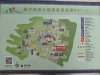
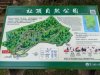
Map of the Taichung Metropolitan Park.

PXL_20250425_073700096.jpg


Some of the signage in the visitor centre at the park.

PXL_20250425_074043693.jpg

PXL_20250425_074037513.jpg
 

Attachments

  • PXL_20250425_055108593.jpg
    PXL_20250425_055108593.jpg
    306.5 KB · Views: 86
  • PXL_20250425_073700096.jpg
    PXL_20250425_073700096.jpg
    142.1 KB · Views: 90
  • PXL_20250425_074043693.jpg
    PXL_20250425_074043693.jpg
    144 KB · Views: 90
  • PXL_20250425_074037513.jpg
    PXL_20250425_074037513.jpg
    233.3 KB · Views: 91
Xitou Nature Education Area


For Xitou Nature Education Area you can get there directly from Taichung on bus number 6883 which leaves from a row of bus stops called Gancheng Station, a couple of blocks away from the Taichung Train Station. The first bus is at 6.40am and then they go regularly throughout the day. The trip takes two hours.

At the information desk at the train station I had been told that you can't book the bus, you just turn up, take a numbered ticket and join the queue until you can get on a bus, and then you pay on the bus with an EasyCard (or I assume with cash if necessary). So I got there are 6am. There was already a line of people, but all of them had QR codes ready on their phones to get their pre-booked tickets! I joined the line and got to the counter only to find that the giving out of numbered tickets doesn't start until 6.20am. When I got my numbered ticket I was told that I would be on the 7am bus. At least it was only twenty minutes later than the first bus.

Everyone on my 7am bus had the numbered tickets, and they were all old people. I mean, older than me, so pretty old! The bus was almost empty, but as it travelled through the city it kept stopping to pick up people (they all seemed to have pre-booked QR codes for scanning) until the bus was full.

Today was a Saturday, I should point out. I thought that on weekdays there would be no trouble getting on the first bus but in fact I went back on Monday and it was even busier (although I still got on the 7am bus then as well). Because everyone taking the bus seemed to be retired, maybe they mostly go on weekdays to avoid weekend crowds?

For the first 45 minutes or so the bus was in the city, then it got onto a raised motorway and went through kind-of-rural areas with rice fields and big-city-looking buildings intermingled. At about 8.15am the road started going upwards and soon entered forest. Just as a side-note, many of the road-signs along the way spelled Xitou as Sitou.

When the bus arrived at the car park for Xitou everyone getting off the bus immediately joined a queue at a counter, so I did the same. This turned out to be for getting your return "ticket" - you just tell them what time bus you want to catch back and they give you a slip with that time and a number on it. I had been a bit worried about the bus back in case they were full, but this made it easy. I chose the last bus (at 5.20pm), but I got back there a bit early and asked if I could catch the 4.50pm bus and there was no problem with that (it was almost empty). As before, you just pay on the bus using an EasyCard.

It's worth noting that there is accommodation up here, both inside the park itself (the rooms looked quite fancy, and a quick look on Google suggests they are about 2000 TWD per night) and there is at least one hotel not far down the road. There is also a campsite just by the car-park. With the benefit of hindsight, if I had known about this - Xitou was a bit of a last-minute addition - I would have just stayed there for a few days instead of down in Taichung.

There is also a little food market area just below the car-park which I only saw on leaving. The bus pulls up to the ticket area, but when leaving it goes through the car-park and onto a loop back to the main road down the mountain, and the food area is along that loop. There were quite a few little restaurants there and several fruit stalls.


There is an entry fee of 220 TWD. But even before entering the park I saw a new bird - the car-park was full of White-eared Sibias which is an endemic babbler. I spent a bit of time trying to get photos. They proved to be the most common bird here by far, outnumbering any other bird I saw by about fifty to one.

full

White-eared Sibia


The next two most common birds were also endemics, the Steere's Liocichla (another babbler, similar to a laughing thrush) and the Taiwan Yuhina. I felt like I was seeing loads of birds today, but after a while it became apparent that most of them were those three species. In fact for the first couple of hours it was only those three, plus Oriental Turtle Dove and Morrison's Fulvetta (which is also an endemic but that one I had already seen the other day).

full

Steere's Liocichla


Xitou is an old forestry area so it is a mix of pines and broadleaf trees, and the undergrowth is really thick. It is frustrating seeing the plants moving and not being able to see the bird at all. Is it a Steere's Liocichla (almost certainly) or is it something else? Most of the time I would never know.

I didn't take much care in where I wandered. There were quite a lot of people about (it was a Saturday, as I said) but most of them were sticking to the wider paved roads and I mostly stuck to the smaller trails. I headed first along the Cobblestone Trail which joined onto the Riverside Trail, and at the top of that I walked left along the road until I reached the Bird-watching Trail and went down that.

The day was cloudy and cool, with banks of fog drifting through in the higher areas, and it was quite drizzly but not enough to need an umbrella.

Over the day more birds got winkled out of the forest. It was slow going but I saw fourteen species there. It isn't a lot, and probably 90% of the individual birds were White-eared Sibias, but that's okay. I had a look at checklists on eBird and that number of species actually seems about average which was surprising. There are higher lists, around 20 to 30 species, but then there are also heaps of lists of under 10 species.


On the Riverside Trail I saw a party of Black-throated Tits which were a pair with juveniles. I kept getting views of the juveniles first and wasn't sure what they were because they lacked the bib and most of the colour, but as soon as I managed to see one of the adults everything became clear.

There was a Plumbeous Water Redstart on a stream and a Eurasian Nuthatch along one of the main roads, but most of the other birds were seen along the Bird-watching Trail which is an unpaved trail just over 2km long. I went down from the top which is probably the best idea - it can be very steep. The steepest section has a long series of rock steps which are very narrow and difficult to navigate in some spots, with some of the steps being only as wide as my foot (as in, the width of my foot, not the length). I saw several people going down them backwards to save themselves from falling!

The first bit from the top is also steep (going up initially) but has wooden steps and some platforms. It was along here that I saw my only bird-wave of the day, although it was mostly around one tree rather than travelling, so more of a bird-standing-wave I guess. First bird seen was Morrison's Fulvetta, which I had seen several of already today, then a couple of Rufous-faced Warblers popped out. There were White-eared Sibias and Steere's Liocichla of course, and I got a quick look at a Rufous-capped Babbler as it paused on the tree base before disappearing back into the undergrowth. I'm certain there were some other species as well, but if they weren't on the tree they were as good as invisible in the undergrowth.

Further down the trail I found a pair of Taiwan Niltava (a vibrantly-bright flycatcher), and then finally saw Taiwan Macaques. There was too much gloom to allow for any photos, but I had at least seen them. Grey-capped Pigmy Woodpecker completed the birds I saw along the trail.

At the bottom of the trail was a shelter, so I sat in here out of the rain and ate my lunch. A tall dead tree nearby had an Oriental Turtle Dove perched at the top. After a while I heard the calls of White-bellied Green Pigeons, and by shifting my position slightly I realised there were four of them perched in that same tree. And in another nearby tree, while looking at some White-eared Sibias, I spotted a Taiwan Scimitar-Babbler searching through a birds-nest fern.

full

White-bellied Green Pigeons


The sun came out not long after this but no further bird species were seen before I left to catch the bus. However, the sun did allow me to get better photos of a Steere's Liocichla.

full

Steere's Liocichla


I also managed to get photos of the macaques - they are still wet from the rain:

full


full


full


So far Xitou Nature Education Area had been my favourite place in Taiwan, and (having now basically finished my stay in Taiwan) it remains my favourite place overall.
 
Was seeing black bears in Taiwan ever a possibility? Or are they in really remote and inaccessible areas?
 
Was seeing black bears in Taiwan ever a possibility? Or are they in really remote and inaccessible areas?
It's possible but they have (at least until recently) been quite scarce. With rare exceptions (e.g. the Brown Bear tours in Hokkaido) seeing bears in Asia isn't like in North America. Here they typically live in deep forest, are shy due to hunting pressure (either currently or historically, depending on country), and are encountered randomly. So you can go to where bears live, but seeing them would usually be a matter of luck rather than planning.

Here's a very recent news article abut the increasing population in Taiwan though: Increased sightings indicate Formosan black bear population growth - Focus Taiwan
 
Baxianshan Forest Recreation Area


Baxianshan Forest Recreation Area is a site for Chestnut-bellied Tits (a split from the Varied Tit). Looking at eBird checklists it seems like everybody sees it there no problem, so you'd think it would be a shoe-in. Not only did I not see it, I literally only saw three species in the forest itself (Grey-chinned Minivet, Black Bulbul, and Swinhoe's White-eye), with maybe six or seven individuals total, plus Pacific and Red-rumped Swallows at the bridge on the way up, and Taiwan Barbet and Plumbeous Water Redstart lower down the road before entering. It was incredibly empty of birds for me and frankly was probably my least-favourite place in Taiwan. It was doubly frustrating in that the eBird checklists from the days immediately around my visit all recorded the Chestnut-bellied Tit.
full

This is a Taiwan Barbet, not a Chestnut-bellied Tit, and is the only bird I photographed today.


To get to Baxianshan I took bus #850 heading to Guguan, which left conveniently from a stop right around the corner from my hotel, with the first one passing there at 6.18am. Google had told me it was a three hour trip, with the bus getting to the Jiabaotai stop at 9.07am. In fact it got there at 8.07am. If I hadn't been paying attention I would have missed it. Luckily I had previously checked the location on Google Street View so I knew there was a red bridge, with the Jiabaotai stop directly after the bridge and with the road to Baxianshan also right beside the bridge (it follows the river upstream). As the bus passed over the bridge I thought this looked exactly like the images from Google, and just at that moment the stop sign on the bus changed from Chinese to English and I knew I was here. The next stop is Guguan itself, which is only a kilometre further on, so it wouldn't be the end of the world if I'd been asleep, it would have just been a little further to walk.

The road to Baxianshan is 4.6km long but is through forest the whole way. The "Baxianshan tollbooth", which is where you pay (150 TWD on weekends, 100 TWD on weekdays), is not far along and then the road goes up a steep series of zigzags until it reaches the car-parks and visitor centre.

Before getting to the top I came to a trail off the road, so I took that instead. It joined onto various other trails through the forest - a mix of pines, broadleaf, and bamboo - and all of them were quite steep. All the trails converge on the visitor centre area eventually. There were a lot of people on the trails. It was a Sunday, the trails are the main thing to do here, and there had been a lot of tour buses coming and going along the entry road. It was also fairly hot, but not humid.

I saw troops of macaques twice but almost no birds.

After four hours I gave up. If I'd been seeing other birds then that'd be one thing, but seeing no birds was really irritating me. There was also an overabundance of mosquitoes and blackflies in my face constantly.

I knew there was a bus back from the visitor centre to Taichung at 1.15pm so I just went to catch that back. This bus only runs once a day in either direction, leaving Taichung's THSR station at 9.35am. This is an easy way to get all the way up here if you don't have a car, but it does get there much later than the #850 bus which I caught. The #850 bus, incidentally, runs every hour or so. Return times from Jiabaotai for the #850 bus are at 1.16pm, 2.46pm, 4.36pm, 5.11pm and 7pm, so there are many opportunities to get back at the end of the day.
 
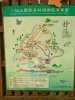
Here's a map of Baxianshan, should anyone wish to visit.

PXL_20250427_003722671.jpg


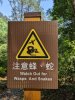
They have real warning signs in the forest in Taiwan, for snakes and hornets, not like the Japanese signs for twigs and baby butterflies.

PXL_20250427_023158065.jpg


Bat boxes at Baxianshan - I checked them all but they were all empty and cobwebby.

PXL_20250427_033629293.jpg

PXL_20250427_033644863.jpg


And a space rabbit begging for loose change in Taichung...

PXL_20250426_222720254.jpg
 

Attachments

  • PXL_20250427_003722671.jpg
    PXL_20250427_003722671.jpg
    105.7 KB · Views: 80
  • PXL_20250427_023158065.jpg
    PXL_20250427_023158065.jpg
    150.6 KB · Views: 76
  • PXL_20250427_033629293.jpg
    PXL_20250427_033629293.jpg
    245.7 KB · Views: 73
  • PXL_20250427_033644863.jpg
    PXL_20250427_033644863.jpg
    192.4 KB · Views: 73
  • PXL_20250426_222720254.jpg
    PXL_20250426_222720254.jpg
    142.2 KB · Views: 84
Xitou Nature Education Area again


I skipped a day due to heavy rain, and then for my fourth and final day in Taiuchung I went back to Xitou rather than to Dayueshan (so I never went to the latter in the end).

I took some different paths today, heading first to the University Pond which I never found (is it surprising I can't find birds when I can't even find a pond?) and then taking all sorts of trails until ending up back at the Bird-watching Trail which I had taken on the first day.

Things started pretty slowly - as before there were loads of White-eared Sibias and Steere's Liocichlas calling but they proved more difficult to see than last visit. I mean, I still saw lots of them, just not as many. Halfway along the University Pond trail I saw a male Taiwan Niltava, and then the first of the "new" birds for the day with a quick look at a Rusty Laughing Thrush dashing across the path - it was brief but it is a distinctively-coloured bird.

full

White-eared Sibia


On another trail I thought I heard more laughing thrushes and tracked the call down to a particular patch of undergrowth which was moving. There was a little waiting game, and then a Black-necklaced Scimitar-Babbler popped out. I saw two of them several times as they jumped about amongst the plants, and even got a couple of photos although they were wildly out of focus.

By a fallen tree called Giant Tree there is an outdoor eating area ("Giant Tree Scenic Platform" on the map). As I was coming down the path towards that spot, a Crab-eating Mongoose scampered across in front of me, like a small animated carpet - too quick for me to react with a photo!

I stopped at the tables to have some lunch, hoping the mongoose might come out to scavenge but it didn't. There were a lot of people eating here today, and White-eared Sibias, Steere's Liocichlas, and maybe a dozen or more Pallas' Squirrels were busy darting about from table to table grabbing fallen bits of food.

full

White-eared Sibia

full

Steere's Liocichla

full

Pallas' Squirrel


I was taking a few photos of them when I noticed a smaller squirrel, looking a little like a tree shrew. It was an Owston's Long-nosed Squirrel. I had literally just been thinking that there wouldn't be any of those squirrels here - I thought I would only see them at higher altitudes. This particular individual became the only one I saw anywhere in Taiwan.

full


full

Owston's Long-nosed Squirrel


I later came across a big troop of Taiwan Macaques as I was going down the Bird-watching Trail, making a four mammal day.


At the bottom of the Bird-watching Trail I found a little pool overhung with vegetation, with a party of Taiwan Yuhinas bathing in it. As I was trying to get some photos (mostly unsuccessfully because there were too many plant stems in the way and it was too shaded), a larger bird suddenly dropped into the water. I couldn't work out what it was at first because it was all wet, but it turned out to be another "new" endemic for me, a Taiwan Barwing, which I think are common at Xitou judging by eBird lists but this was the only one I saw here.

full

Taiwan Yuhina


On the way back to the bus stop I saw a Malayan Night Heron casually hunting worms along the side of the road. I still had half an hour to wait, so I went along the Riverside Trail again and found a nice male White-tailed Robin, and some White-bellied Green Pigeons feeding in a low bush.

full

White-bellied Green Pigeon
 
Formosan Golden Bat's Home (Beigang)


Some mammal-watchers really like bats and rats, or as they are also probably known, the list-padding mammals. I like giant rats because they're cool, but I don't go out of my way to see most rats or mice. Similarly, I like flying foxes but otherwise I don't chase after most bats. However there is one particular little bat in Taiwan which is not only attractive and interesting, but also readily viewable and identifiable.

The Formosan Golden Bat Myotis formosus flavus is, despite its name, not an endemic species of Taiwan (although at one point the Taiwanese subspecies flavus was treated as distinct). Instead it is a widespread bat, found from Central Asia and northern India across China to Taiwan. In most of its range it is called the Hodgson's Bat or the Black-and-Orange Myotis (for it's strikingly-patterned wings). It wasn't even originally described from Taiwan, as it's scientific name might imply, but rather from Nepal - formosus in this context just means "beautiful".

In Taiwan the species is a seasonal migrant. They spend the winters in caves in the mountains above 2000 metres, and in April they move to the lowlands to breed. Over the summer they roost in trees, and nowadays most of these roosts are in parks and schoolyards. Fortunately bats are quite readily accepted as guests in Taiwan, unlike in most countries where there would be panic and people would be crying "won't somebody please think of the children!?"


The famous site for the bats - it gets 15 to 20 thousand visitors a year! - is the Formosan Golden Bat's Home, which is in the grounds of a little school in Shulin Township which is just near the larger town of Beigang, which itself is quite near the big city of Chiayi.

I was heading southwards from Taichung to Hengchun which is in the far south of Taiwan, and then doubling back up to go to Alishan when there were cheaper rooms there. Chiayi is not exactly halfway between Taichung and Hengchun, but it is on the way, about a third of the way there, so I thought it made sense to stop off on the way to try and see the Golden Bats because that would give me the chance to return there after Alishan later, if it should happen that I couldn't see any bats on the first attempt.


I had looked up the local bus timetables for how to get there and, as usual, they were infrequent - although in this case there were a few choices of infrequent buses, as opposed to there just being a single infrequent bus. I had been going to stay in Beigang, because obviously that would be closer, but there was nothing on the booking site so I got a hotel right by the Chiayi train station called the Yes Hotel. It was an okay hotel, a bit old but the rooms are clean. Oddly, they parked cars inside the foyer in the evening, backing them in through the doors.

I left my pack at the hotel reception and went back to the bus station, which is basically just the street outside the train station. From here I could catch the #7325 bus at 11.41am to the Beigang bus station, arriving there at 12.30pm which was just in time to catch the #7220 bus at 12.40pm which has a stop (called the Beimen stop) 1.7km from the Formosan Golden Bat's Home.

The different buses in the area all have only a few runs each, so how close you can get to the school where the bats roost depends on what time you can get to Chiayi or Beigang to start with. There is one bus (the Y03) which stops directly outside the school, for example, but only has two runs a day. The other option from Beigang bus station is the #7221 bus for which the closest stop is Haoshou at 3km from the school (the Beimen stop is the next one after the Haoshou stop, but the 7220 and 7221 buses go down different roads after Haoshou).

It's only 15 minutes ride from the Beigang bus station to the Beimen stop, and then you just walk straight through the rice fields to the school. This was a nice walk because although the rice was quite high I did see a few extra birds for the year with Lesser Coucal and Plain Prinia.


There was no difficulty in seeing the bats when I arrived. There was a huddle of them in the tree right above the gate, and there was a scope set up for people to look through.

full


A guy came out and took me into the school ground to show me the other roosts. One was another little colony and the other two were bats roosting individually. They had only arrived back at the school recently from their winter caves. I was told that if I'd been here two weeks earlier I wouldn't have seen any.

full


full


I wasn't actually sure if any of the photos would even turn out - they all looked like rubbish on the back of my camera. The problem was that while the bats weren't high up, they were quite small and they have sort of fuzzy faces, so when looking through the camera lens I couldn't really tell if they were in focus or not. I just took loads of shots to try and get one or two that might be okay!

full

This is my favourite photo, with some of the bats yawning.


I walked the 3km back to the Haoshou stop for the #7221 bus. On the way I saw a little flock of Indian Silverbills which have been introduced to Taiwan. I had missed the bus by ten minutes so had almost an hour to wait. Luckily there is a 7-eleven beside the bus stop so I could get some coffee and food.
 
Formosan Golden Bat's Home (Beigang)


Some mammal-watchers really like bats and rats, or as they are also probably known, the list-padding mammals. I like giant rats because they're cool, but I don't go out of my way to see most rats or mice. Similarly, I like flying foxes but otherwise I don't chase after most bats. However there is one particular little bat in Taiwan which is not only attractive and interesting, but also readily viewable and identifiable.

The Formosan Golden Bat Myotis formosus flavus is, despite its name, not an endemic species of Taiwan (although at one point the Taiwanese subspecies flavus was treated as distinct). Instead it is a widespread bat, found from Central Asia and northern India across China to Taiwan. In most of its range it is called the Hodgson's Bat or the Black-and-Orange Myotis (for it's strikingly-patterned wings). It wasn't even originally described from Taiwan, as it's scientific name might imply, but rather from Nepal - formosus in this context just means "beautiful".

In Taiwan the species is a seasonal migrant. They spend the winters in caves in the mountains above 2000 metres, and in April they move to the lowlands to breed. Over the summer they roost in trees, and nowadays most of these roosts are in parks and schoolyards. Fortunately bats are quite readily accepted as guests in Taiwan, unlike in most countries where there would be panic and people would be crying "won't somebody please think of the children!?"


The famous site for the bats - it gets 15 to 20 thousand visitors a year! - is the Formosan Golden Bat's Home, which is in the grounds of a little school in Shulin Township which is just near the larger town of Beigang, which itself is quite near the big city of Chiayi.

I was heading southwards from Taichung to Hengchun which is in the far south of Taiwan, and then doubling back up to go to Alishan when there were cheaper rooms there. Chiayi is not exactly halfway between Taichung and Hengchun, but it is on the way, about a third of the way there, so I thought it made sense to stop off on the way to try and see the Golden Bats because that would give me the chance to return there after Alishan later, if it should happen that I couldn't see any bats on the first attempt.


I had looked up the local bus timetables for how to get there and, as usual, they were infrequent - although in this case there were a few choices of infrequent buses, as opposed to there just being a single infrequent bus. I had been going to stay in Beigang, because obviously that would be closer, but there was nothing on the booking site so I got a hotel right by the Chiayi train station called the Yes Hotel. It was an okay hotel, a bit old but the rooms are clean. Oddly, they parked cars inside the foyer in the evening, backing them in through the doors.

I left my pack at the hotel reception and went back to the bus station, which is basically just the street outside the train station. From here I could catch the #7325 bus at 11.41am to the Beigang bus station, arriving there at 12.30pm which was just in time to catch the #7220 bus at 12.40pm which has a stop (called the Beimen stop) 1.7km from the Formosan Golden Bat's Home.

The different buses in the area all have only a few runs each, so how close you can get to the school where the bats roost depends on what time you can get to Chiayi or Beigang to start with. There is one bus (the Y03) which stops directly outside the school, for example, but only has two runs a day. The other option from Beigang bus station is the #7221 bus for which the closest stop is Haoshou at 3km from the school (the Beimen stop is the next one after the Haoshou stop, but the 7220 and 7221 buses go down different roads after Haoshou).

It's only 15 minutes ride from the Beigang bus station to the Beimen stop, and then you just walk straight through the rice fields to the school. This was a nice walk because although the rice was quite high I did see a few extra birds for the year with Lesser Coucal and Plain Prinia.


There was no difficulty in seeing the bats when I arrived. There was a huddle of them in the tree right above the gate, and there was a scope set up for people to look through.

full


A guy came out and took me into the school ground to show me the other roosts. One was another little colony and the other two were bats roosting individually. They had only arrived back at the school recently from their winter caves. I was told that if I'd been here two weeks earlier I wouldn't have seen any.

full


full


I wasn't actually sure if any of the photos would even turn out - they all looked like rubbish on the back of my camera. The problem was that while the bats weren't high up, they were quite small and they have sort of fuzzy faces, so when looking through the camera lens I couldn't really tell if they were in focus or not. I just took loads of shots to try and get one or two that might be okay!

full

This is my favourite photo, with some of the bats yawning.


I walked the 3km back to the Haoshou stop for the #7221 bus. On the way I saw a little flock of Indian Silverbills which have been introduced to Taiwan. I had missed the bus by ten minutes so had almost an hour to wait. Luckily there is a 7-eleven beside the bus stop so I could get some coffee and food.

That's a real wow and they look wonderful (the shots came out so well); must have been amazing to see.
 
Hengchun: day one


Just as a brief recap of what I've said earlier, rather than going straight to Alishan from Chiayi, which would be the logical progression, I had to leave that for a few days due to lack of hotel availability - or to be more precise, affordable availability. I had to go to Alishan during the week because the weekend hotel prices were far too expensive there. So instead I was first going from Chiayi to Hengchun down at the very bottom of Taiwan, then coming back up to Alishan, and then going south again to end up at Taitung on the south-east coast.


Hengchun doesn't have any train connections, so I took the train from Chiayi only part of the way to Xinzhouying Station, which is just spelled Zhouying on Google's direction finder, and apparently is also the same station as Khaosiung even though that is (also?) the next station. It's a little confusing. Then from there it was a bus to Hengchun.

The train was straightforward of course, but the system for the bus not so much. Going south from Xinzhouying Station was okay because that is the start point - there is a ticket booth inside the train station and they give you a ticket for a specific bus time and you pay on the bus with your EasyCard. Coming back from Hengchun, not so easy. Most tourists are staying at the end of the line in Kenting, so when the bus arrives in Hengchun it is already full. You can't book a seat in advance, you just get a numbered ticket from the counter in the bus station and then hope you can get on a bus. The bus will arrive, there will be twenty or thirty people waiting, but there will only be three or four empty seats. Same for the next bus. And the next bus. On my return trip I was waiting two hours in Hengchun before I got on a bus.

Basically, if you are catching the bus at any point between the start and end of the line you may be waiting a while. This also goes for the southwards trip - you want to start at Xinzhouying and not do what Google says and catch the train from Chiayi to Fangliao, because that is in the middle of the bus route and you'll probably not have much luck getting on any bus. If you have a flight or need to make a specific connection, then you'd also better give yourself several hours leeway just in case.


There were three animals in particular I was wanting to see in Hengchun. Two were endemic birds: the Styan's Bulbul which is mainly found in the south, and the Taiwan Hwamei which is a laughing thrush found all over Taiwan but which seems to be most easily seen down here. Both were said to be readily seen at Longluan Lake on the edge of town. The third animal was the Taiwan subspecies of Sika Deer which was almost wiped out through overhunting, and has been reintroduced from zoo stock to reserves in the south. Apparently they could be easily seen around the HQ of the Kenting National Park which is just outside Hengchun.

The Styan's Bulbul was supposed to be "common" in the Hengchun/Kenting area, but I didn't know if that was common as in "common but still difficult to find" or "common and easy to find". However I didn't expect it to be a street bird! They were everywhere. When I checked into my hotel, I went out on the balcony at the end of the corridor and in a tree right beside it was a pair of the bulbuls!


full

Styan's Bulbuls. These ones were photographed a bit later while walking to Longluan Lake. The red spot by the bill is diagnostic, but can't really be seen in person - I only noticed it in the photos I took, not while actually looking at the birds!


After checking in at the hotel - called the Mu Yu B&B although it was not a B&B and was difficult to find because there were no English signs outside - I went back to the bus station (which was just a couple of minutes walk away) to have a look at the bus timetables to work out a plan.

There are buses going past the Longluan Lake Nature Center, which is on the opposite side of the lake to the town, but there was an hour to wait until the next one so I decided to just walk it. On the map it looks like a long way but it's not really, and it's quite straightforward. Just walk south through town along Hengnan Road, then turn right onto Longluan Road and follow that around until you reach the Nature Center's entrance road.

The route is mainly through rice fields and villages, so it was quite birdy although nothing I hadn't seen already. There were lots of dogs along the way. The loose ones ignored me, but the ones on chains went nuts and if they hadn't been restrained would have been attacking me I'm sure. It was pretty unnerving, especially because it meant that I was then worried about every free-roaming dog I saw in case it was also aggressive.

The Nature Center was closed by the time I got there (at 5pm), and the only view of the lake was through a short bit of fence beside the building. I could see some Grey Herons and egrets, Spot-billed and Tufted Ducks, and not much else. I wandered around the grounds a bit, then back to bus stop and caught a bus back to town. I didn't see any Taiwan Hwamei but I had seen the Styan's Bulbul so I was a third of the way there for my Hengchun animals.
 
Hengchun: day two


The next morning I took the 6.10am bus to Kenting National Forest Recreation Area. From Hengchun it's about 10km to the turn-off from the main road, and then 4.5km to the park gate. The buses to the park are very infrequent - only at 6.10am, 4.15pm, and 5.25pm, with the return times about 30-40 minutes later (it's about 20 minutes from Hengchun to the park stop).

I arrived at 6.30am - and found that the park doesn't open until 8am! Why have the only morning bus getting there at 6.30am?! There is a gate so you can't get in before opening (there is also an entry fee), and the surrounding is just a big car park so there's not even any forest outside the gate.

Luckily I already knew that the Sheding Nature Park was somewhere nearby and that it was also a release site for Taiwan Sika, and I'd seen a sign for it pointing up the road when I was arriving on the bus. I had a look at a map on my phone to see how far it was, and it was really close, less than ten minutes walk. Google said it also didn't open until 9am but when I got there I found there was no gate and it was a free park.

Sheding is an interesting place. It's not big but it has a lot of signage about the history and the paths are well-maintained. Some of the tracks go through narrow clefts between high limestone rock faces.

It's really hot in the south of Taiwan at this time of year - even hotter than Taipei had been when I arrived in the country. Even this early in the morning it was blazing hot. Birds were scarce. When a pair of babblers flew across the track I thought I'd found some Taiwan Hwamei but they turned out to be Taiwan Scimitar-Babblers instead. I saw a couple of other endemics (Taiwan Barbets, and of course more Styan's Bulbuls, as well as the non-bird endemic Taiwan Macaques) and some other common non-endemic birds. Richard's Pipit was new for the trip list.


Sika was what I was really wanting to see here though. The Hwamei can be seen elsewhere but the only good chance for Sika is in this part of Taiwan. And I did manage to see one Sika, a female. Coming down a set of steps I saw a brightly-coloured animal walking parallel between the outcrops and bamboo. It sounds crazy but my first instinctive thought was that it looked like a spotted cat like a Serval, because I just didn't expect a Sika to be that bright. I'd seen a lot of Sika in Japan where they are dull-coloured animals. The Taiwanese Sika, in contrast, is bright orange with abundant white spots. I didn't get a photo of this Sika - it seemingly just vanished amongst the rocks - so below is a photo of one I took a bit later at the Taipei Zoo.

full


When I had arrived I had seen at the bus stop a timetable for a different bus, which had a departure from there at about 9.30am. Because I had seen a Sika already, rather than paying to get into the other park to not see any birds I just went back to the bus stop and caught that bus back to town (although it was actually a car rather than a bus).


I still had most of the day free, so I went to the National Museum of Marine Biology & Aquarium. This is up the coast a bit and can be reached from Hengchun with bus #101, which stops directly outside.

I didn't like this Aquarium.

The entry fee is quite expensive, at 450 TWD, and it is irritatingly-confusing to find your way around in or to even find the animals in. There are two main buildings, one with two wings (Waters of Taiwan and Coral Kingdom), and then a separate building called Waters of the World. There are gift shops and food outlets everywhere. I think there literally are more merchandise areas than animal areas here.

Something I quickly realised is that even though this is has "museum" in the forefront of its name, the education attempts here are mostly really shallow. Most tanks have zero identification signs on them, or it is at the most basic of levels simply saying "Sea Cucumbers" or "Lobster", or at the opposite extreme they have too many identification signs for all sorts of species which aren't even in the tanks. The Open Ocean tank, for example, has no fewer than seventeen shark species on its signs, but there was just one shark in the tank. Amongst the signed species were Great White Shark and multiple Thresher Sharks.

For most of the way around the facility, you've either got no information, or you have walls of information - sometimes you're walking through rooms with no tanks and the walls will be covered in masses of text that nobody will read, and almost all of it is really superficial.

I gave up trying to make the best of the Aquarium when I got to the Waters of the World building because it is themed around not having live animals. One of the videos playing boasted of it being a "no water" Aquarium. The major parts of this building are long winding corridors of mock-rock with 3D videos of deepsea fish or prehistoric animals playing on wall-sized screens. I skimmed through all of this very quickly to the parts with live "living fossils" (including Zebra Bullhead Sharks, Freshwater Stingrays, Longnose Gars, Asian Arowana, etc), but even here there was a tank holding fake Nautilus hanging on strings and a tank with a fake Coelacanth lurking at the back.

full

Coelacanth

Overall I found the whole place really disappointing and I wouldn't visit it again if I was back in Taiwan. I have put a longer review of the Aquarium here: National Museum of Marine Biology & Aquarium: May 2025 visit [National Museum of Marine Biology and Aquarium]

Photo gallery here: National Museum of Marine Biology and Aquarium - ZooChat


full

Coral Reef tanks

full

Open Ocean tank

full

The best exhibit overall is this "Kelp Forest". The seven strands of kelp may be fake but the tank looks amazing, with a viewing window of 10x10 metres and a water volume of 180,000 gallons. The fact that it can be viewed from two levels aids in the appeal immensely. Just from these photos one would imagine that the Aquarium would be fantastic, but unfortunately they are more the exception there than the rule.
 
Map of Kenting National Forest Recreation Area (which I didn't visit)

PXL_20250501_223609670.jpg


Map of Sheding Nature Park

PXL_20250501_230546454.jpg


Path going through rock cleft at Sheding Nature Park

PXL_20250501_231756461.jpg
 

Attachments

  • PXL_20250501_223609670.jpg
    PXL_20250501_223609670.jpg
    124.6 KB · Views: 50
  • PXL_20250501_230546454.jpg
    PXL_20250501_230546454.jpg
    209.4 KB · Views: 52
  • PXL_20250501_231756461.jpg
    PXL_20250501_231756461.jpg
    187.3 KB · Views: 54
Back
Top