NUMBER THIRTY-NINE: If it looked like a mosasaur and behaved like a mosasaur, it's apparently not a mosasaur
- Animal: Basilosaurus
- Species: B. cetoides (type) and B. isis
- Name Pronunciation: Ba-sil-oh-sore-us
- Name Meaning: "King lizard"
- Named By: Richard Harlan - 1847
- Classification: Life, Eukaryota, Animalia, hordata, Vertebrata, Gnathostomata, Osteichthyes, Sarcopterygii, Tetrapodomorpha, Tetrapoda, Reptiliomorpha, Amniota, Synapsida, Therapsida, Mammalia, Placentilia, Boreoeutheria, Ungulata, Artiodactyla, Whippomorpha, Cetacea, Archaeoceti, Basilosauridae
- When: ~ 40,000,000 B.C.E. to 35,000,000 B.C.E. (Eocene epoch)
- Where: Africa (Egypt), Asia (Jordan and Pakistan), North America (United States)
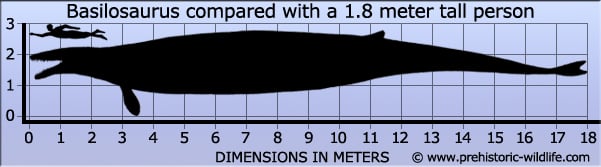
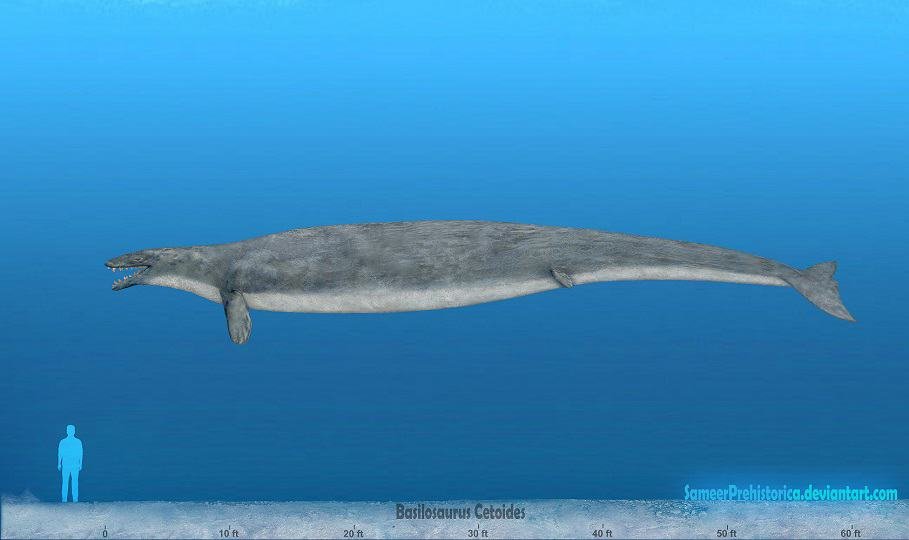
- Size: 49 to 59 feet (14.94 to 17.98 meters) long
- Diet: Carnivore
Richard Harlan incorrectly believed
Basilosaurus was a marine lizard, hence the generic name. It wasn't until famous English paleontologist Richard Owen studied the holotype remains that it was realized this was a cetacean. Thus Owen proposed that
Basilosaurus should be renamed
Zeuglodon ("Yoke teeth"), but because
Basilosaurus was the officially registered name, it could not be changed, so
Zeuglodon became a synonym instead of a replacement.
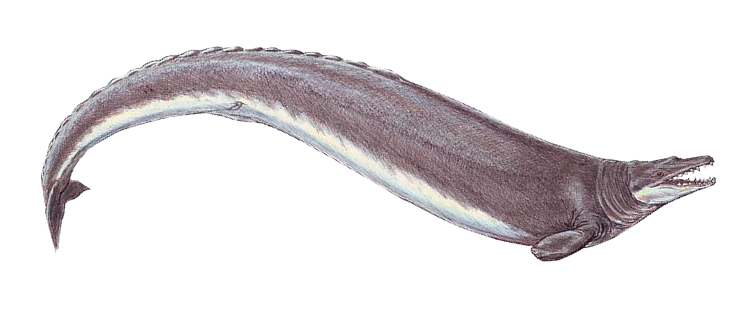
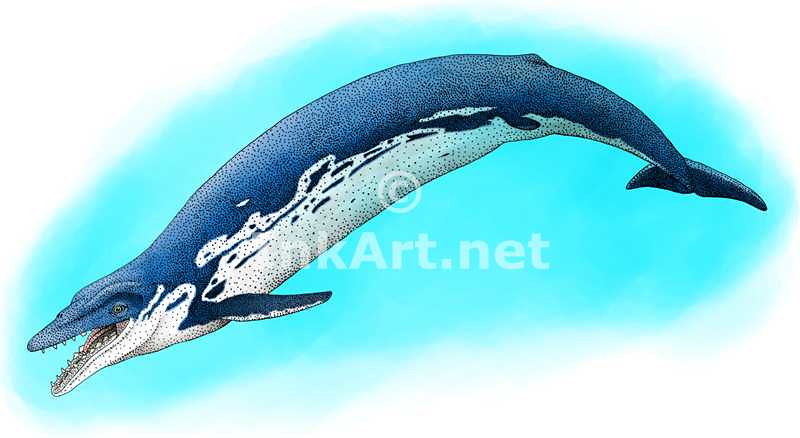
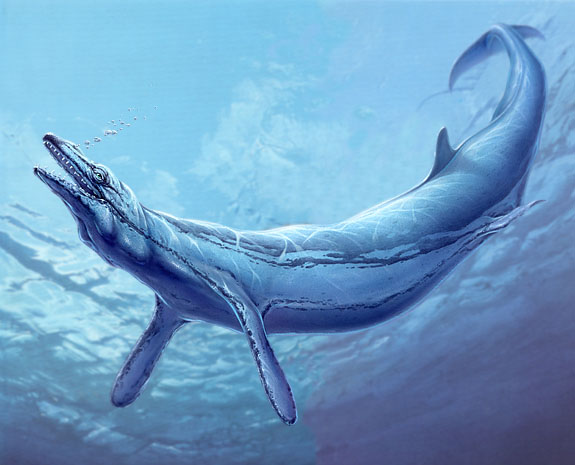
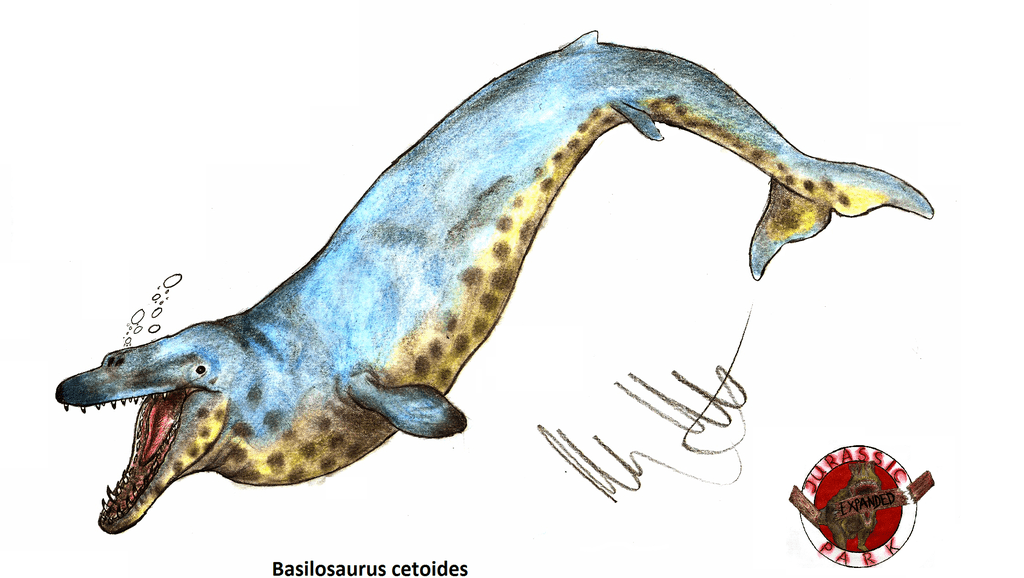
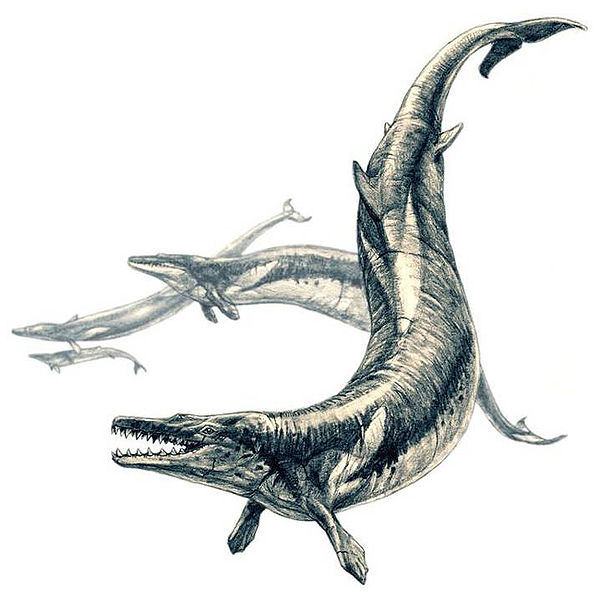
Basilosaurus skulls superficially resembled the skulls of the marine lizards known as mosasaurs that swam the oceans tens of millions of years earlier. It is partly for this reason that
Basilosaurus was misidentified as a reptile. Unlike modern cetaceans, the hind limbs of
Basilosaurus were still visible. It is believed that they may have been used to help hold onto mates during "sexy time." Analyses of the stomach contents of
B. cetoides has shown that this species fed exclusively on bony fishes and sharks, while bite marks on the skulls of juvenile
Dorudon (Door-oo-don) have been matched with the dentition of
B. isis, suggesting a dietary difference between the two species, similar to that found in different populations of modern orcas (
Orcinus orca). It was probably an active predator rather than a scavenger. The discovery of juvenile
Dorudon at Wadi Al Hitan (a formation in Egypt) bearing distinctive bite marks on their skulls indicates that
B. isis would have aimed for the skulls of its victims to kill its prey, then subsequently tore its meals apart, based on the disarticulated remains of the
Dorudon skeletons. The finding further cements theories that
B. isis was an apex predator that may have hunted newborn and juvenile
Dorudon at Wadi Al Hitan when mothers of the latter came to give birth. Scientists were able to estimate the bite force of
Basilosaurus by analyzing the scarred skull bones of
Dorudon specimens and concluded they could bite with a force of 3,600 pounds per square inch (1,632.93 kilograms per 2.54 centimeters) (to put that in perspective, that is only slightly less than the max. bite force of the modern saltwater crocodile (
Crocodylus porosus), which has the strongest bite of any extant animal). Studies of
Basilosaurus skeletons have revealed that it was quite restricted in terms of movement. Muscle attachments along the spine imply that
Basilosaurus had relatively weak muscles and could neither dive deep nor swim for extended periods, at least at what may have been pursuit speed for prey. This guy's vertebrae were hollow and likely filled with fluid, unlike modern whales which have solid vertebrae. This is not an adaptation for a deep sea creature, as pressure imbalance between the fluid in the hollow vertebrae and stronger pressure of deep water outside could in theory cause spinal injury with the vertebrae being crushed if the pressure became too much. Together, these all point to an animal that only swam and hunted in waters near the surface.
(Below: a
B. isis fossil in Wadi Al Hitan)
(Below: what we originally thought
Basilosaurus looked like)
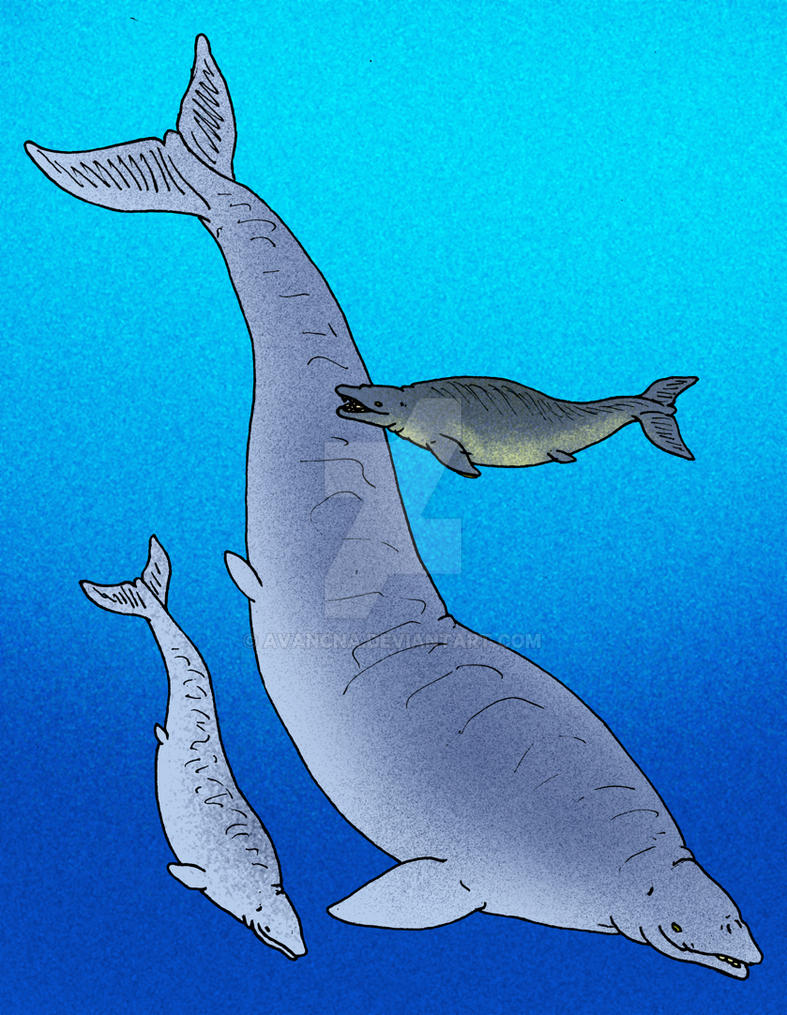
(Below:
Dorudon)
Picture and Source Information:
If you ever have some free time, I recommend checking out this BBC documentary. It focuses of
Basilosaurus until about 16:10 when it starts talking about megalodon (
Carcharocles megalodon). It is hosted by naturalist Nigel Marven.









 I can think of one or two myself.


 your other guess is incorrect, however - that species isn't known from this region, it's found further to the south in the Whitby Formation. I've got at least a dozen of the buggers in a drawer somewhere, along with a lot of other fossils from that area.
 as the Wisconsinan Glaciation destroyed what little bedrock existed from that time period (the whole of New England underwent net erosion rather than deposition during the Palaeocene), so there is a big gap from late-Jurassic to mid-Pleistocene sediments. Best that could be done is
