Hipporex's Guide to Interesting and Unique Prehistoric Fauna

Tell me this lad isn't an absolute unit.
It is an incredibly l o n g e boi.

I know I'm not a mod but I'd like to respectfully ask that you please stop with this "meme speech" you post all over the forum. The joke threads are one thing, but these read off as no less than spam throughout the rest of the forum. They can be very hard to read at times (and that's coming from someone young enough to fully understand the "language", I can't imagine how some of the older members might feel), they devalue your own posts, and pollute the rest of the conversation surrounding them. I'm sure you're only trying to be funny but to be quite blunt it's more annoying than anything.

~Thylo
 
NUMBER THIRTY-NINE: If it looked like a mosasaur and behaved like a mosasaur, it's apparently not a mosasaur

Basilosaurus_cropped.png


  • Animal: Basilosaurus
  • Species: B.‭ ‬cetoides‭ (‬type‭) and ‬B.‭ ‬isis
  • Name Pronunciation: Ba-sil-oh-sore-us
  • Name Meaning: "King lizard"
  • Named By: Richard Harlan‭ ‬-‭ ‬1847
  • Classification: Life, Eukaryota, Animalia, hordata, Vertebrata, Gnathostomata, Osteichthyes, Sarcopterygii, Tetrapodomorpha, Tetrapoda, Reptiliomorpha, Amniota, Synapsida, Therapsida, Mammalia, Placentilia, Boreoeutheria, Ungulata, Artiodactyla, Whippomorpha, Cetacea, Archaeoceti, Basilosauridae
  • When: ~ 40,000,000 B.C.E. to 35,000,000 B.C.E. (Eocene epoch)
  • Where: Africa (Egypt), Asia (Jordan and Pakistan), North America (United States)
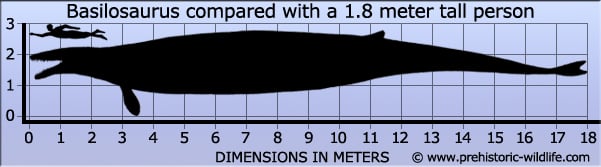
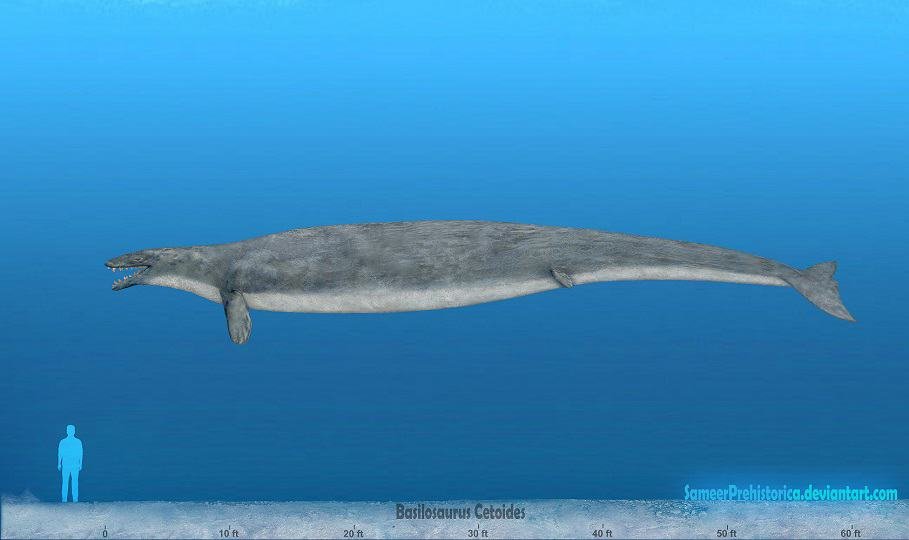
  • Size: 49 to 59 feet (14.94 to 17.98 meters) long
  • Diet: Carnivore
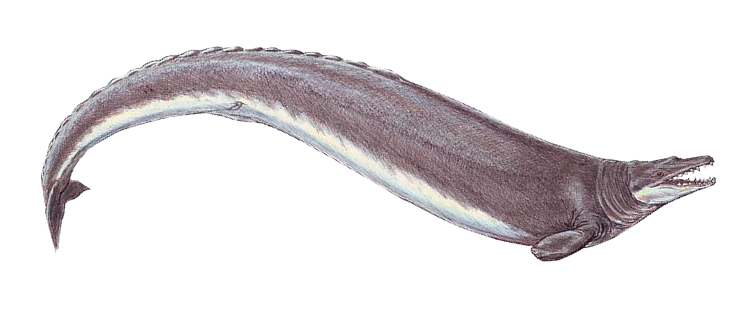
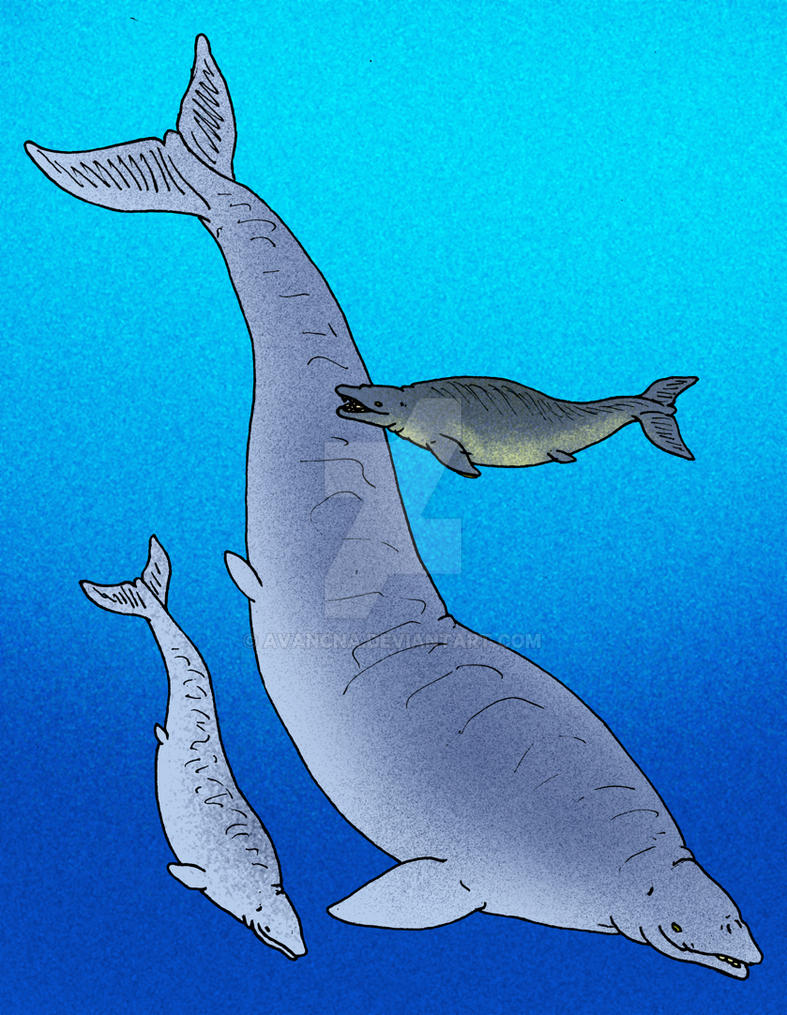
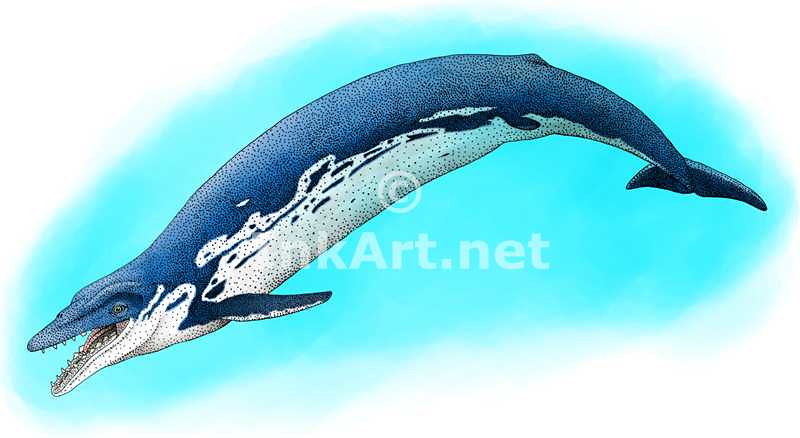
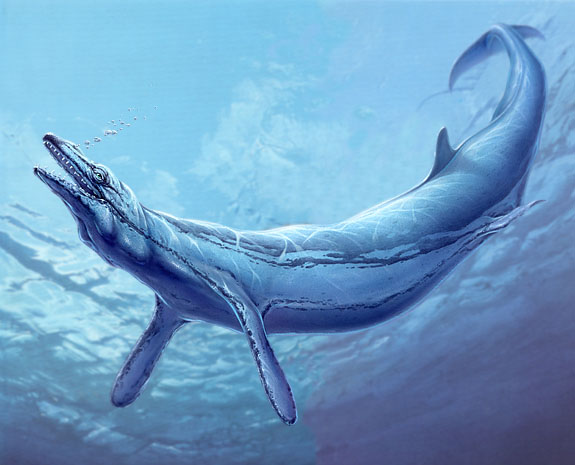
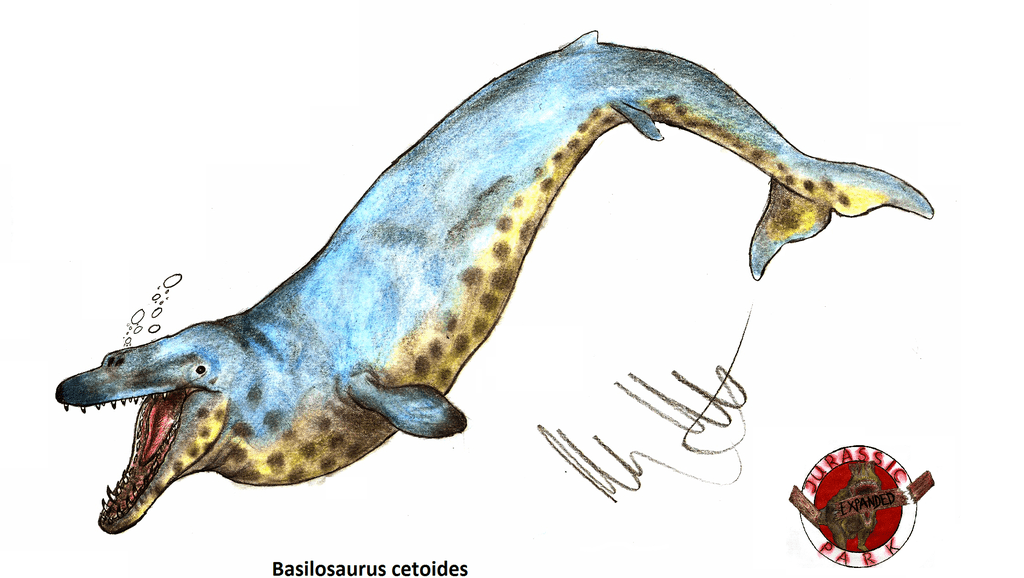
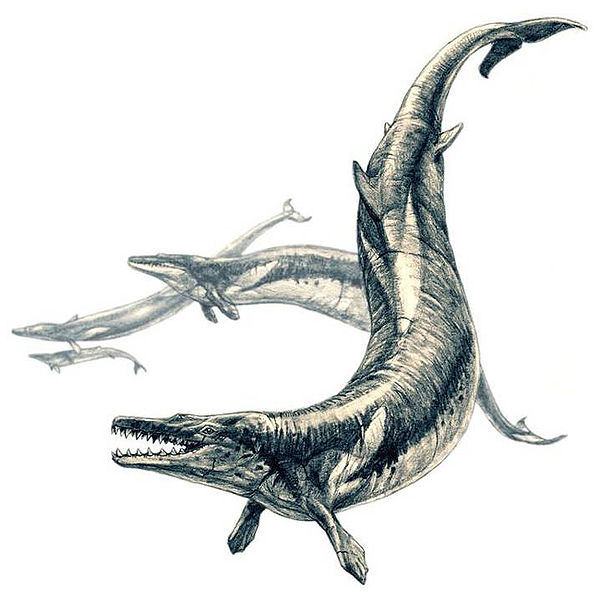
Richard Harlan incorrectly believed Basilosaurus was a marine lizard, hence the generic name. It wasn't until famous English paleontologist Richard Owen studied the holotype remains that it was realized this was a cetacean. Thus Owen proposed that Basilosaurus should be renamed Zeuglodon‭ (‬"Yoke teeth"‭)‬,‭ ‬but because Basilosaurus was the officially registered name,‭ ‬it could not be changed,‭ ‬so Zeuglodon became a synonym instead of a replacement. Basilosaurus skulls superficially resembled the skulls of the marine lizards known as mosasaurs that swam the oceans tens of millions of years earlier.‭ ‬It is partly for this reason that Basilosaurus was misidentified as a reptile.‭ Unlike modern cetaceans, the hind limbs of Basilosaurus were still visible. It is believed that they may have been used to help hold onto mates during "sexy time." Analyses of the stomach contents of B. cetoides has shown that this species fed exclusively on bony fishes and sharks, while bite marks on the skulls of juvenile Dorudon (Door-oo-don) have been matched with the dentition of B. isis, suggesting a dietary difference between the two species, similar to that found in different populations of modern orcas (Orcinus orca). It was probably an active predator rather than a scavenger. The discovery of juvenile Dorudon at Wadi Al Hitan (a formation in Egypt) bearing distinctive bite marks on their skulls indicates that B. isis would have aimed for the skulls of its victims to kill its prey, then subsequently tore its meals apart, based on the disarticulated remains of the Dorudon skeletons. The finding further cements theories that B. isis was an apex predator that may have hunted newborn and juvenile Dorudon at Wadi Al Hitan when mothers of the latter came to give birth. Scientists were able to estimate the bite force of Basilosaurus by analyzing the scarred skull bones of Dorudon specimens and concluded they could bite with a force of 3,600 pounds per square inch (1,632.93 kilograms per 2.54 centimeters) (to put that in perspective, that is only slightly less than the max. bite force of the modern saltwater crocodile (Crocodylus porosus), which has the strongest bite of any extant animal). Studies of Basilosaurus skeletons ‬have revealed that it was quite ‬restricted in terms of movement.‭ ‬Muscle attachments along the spine imply that Basilosaurus had relatively weak muscles and could neither ‬dive deep nor swim for extended periods,‭ ‬at least at what may have been pursuit speed for prey.‭ ‬This guy's vertebrae ‬were hollow and likely filled with fluid, unlike ‬modern whales which have solid vertebrae.‭ ‬This is not an adaptation for a deep sea creature,‭ ‬as pressure imbalance between the fluid in the hollow vertebrae and stronger pressure of deep water outside could in theory cause spinal injury with the vertebrae being crushed if the pressure became too much.‭ ‬Together,‭ ‬these all point to an animal that only swam and hunted in waters near the surface.

basilosaurus-size.jpg

1166_basilosaurus_sameerprehistorica.jpg

1024px-Basilosaurus-1070368.jpg

1280px-Basilosaurus_isis_fossil_Nantes_History_Museum_02-1024x768.jpg

(Below: a B. isis fossil in Wadi Al Hitan)
800px-Wadi_Al-Hitan.jpg

(Below: what we originally thought Basilosaurus looked like)
pr00208.jpg

basilosaurus_cetoides_by_avancna-dybscz.jpg

8237823951_a39129cd35_c.jpg

basilosaurus_lucas-lima.jpg

basilo.jpg

Basilosaurus.jpg

latest

basilosaurus_andrey-atuchin.jpg

DbPkpQHXUAAaXYu.jpg

1169_basilosaurus_robinson_kunz.png

al-state-fossil-basilosaurus.jpg

(Below: Dorudon)
latest


Picture and Source Information:

If you ever have some free time, I recommend checking out this BBC documentary. It focuses of Basilosaurus until about 16:10 when it starts talking about megalodon (Carcharocles megalodon). It is hosted by naturalist Nigel Marven.
 
I know I'm not a mod but I'd like to respectfully ask that you please stop with this "meme speech" you post all over the forum. The joke threads are one thing, but these read off as no less than spam throughout the rest of the forum. They can be very hard to read at times (and that's coming from someone young enough to fully understand the "language", I can't imagine how some of the older members might feel), they devalue your own posts, and pollute the rest of the conversation surrounding them. I'm sure you're only trying to be funny but to be quite blunt it's more annoying than anything.

~Thylo

This was embarrassing but it was necessary.
 
Sue: I am the biggest T. rex ever
Scotty: Hold my beer
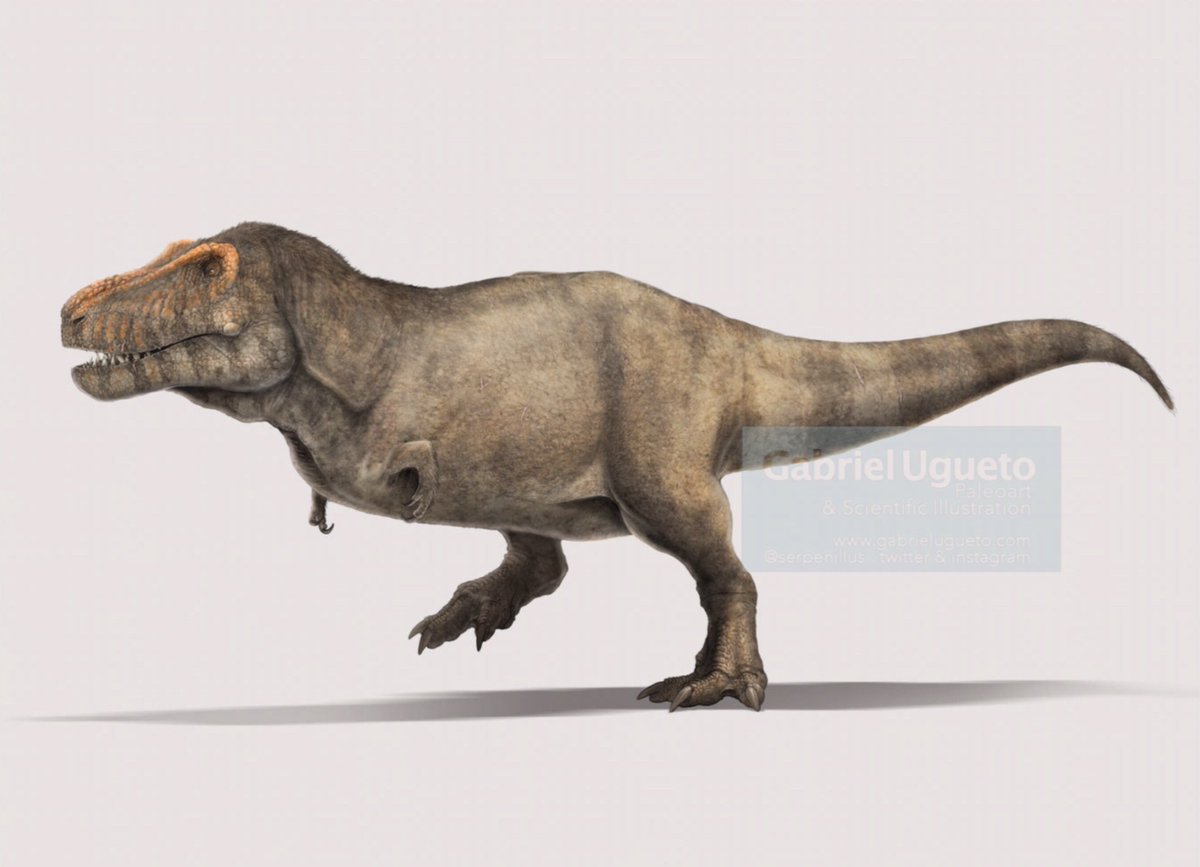
Canadian scientists have discovered Scotty. At 42.65 feet (13 meters) long, Scotty is the largest T. rex ever (as far as current science is aware).
D1uBfAMXcAAJMWD.jpg

(above: Scientifically probable T. rex; picture by paleoartist Gabriel N. U.‏)
 
I want to make the next *insert unknown number* creature profiles about creatures that lived where the people that read this thread live. So feel free to comment your state, country, territory, providence, etc. and I'll do profile on an animal that lived there *insert unknown number* years ago.
 
Last edited:
In that case, bonus marks if you can find an interesting extinct species which was found in Northumberland, rather than merely the UK ;) I can think of one or two myself.
 
I can think of some as well: such as the amphibian Anthracosaurus russeli

anthracosaurus-russeli.jpeg


and the ammonite Dactylioceras commune

266px-Dactylioceras_NT.jpg


You didn't think you were gonna pull a fast one on me, did you? *insert famous Ian Malcolm laugh*
 
In that case, bonus marks if you can find an interesting extinct species which was found in Northumberland, rather than merely the UK ;) I can think of one or two myself.

I can think of some as well: such as the amphibian Anthracosaurus russeli

anthracosaurus-russeli.jpeg


and the ammonite Dactylioceras commune

266px-Dactylioceras_NT.jpg


You didn't think you were gonna pull a fast one on me, did you? *insert famous Ian Malcolm laugh*
Were these the animals you were looking for? Or did you have something else in mind?
 
I'd like to see a profile done on an interesting post-Cretaceous but pre-Quaternary Period species from Connecticut. I don't have anything in mind so go nuts!

~Thylo
 
I can think of some as well: such as the amphibian Anthracosaurus russeli

I was hoping you'd thinking of this one :p your other guess is incorrect, however - that species isn't known from this region, it's found further to the south in the Whitby Formation. I've got at least a dozen of the buggers in a drawer somewhere, along with a lot of other fossils from that area.

The other one I was hoping you'd pick up on is the Great Auk - the Farne Islands were the last place in England where the species was recorded, in the mid-1760s, and were probably one of their last breeding sites in the British Isles sometime prior to this.
 
I'd like to see a profile done on an interesting post-Cretaceous but pre-Quaternary Period species from Connecticut. I don't have anything in mind so go nuts!

~Thylo

I can tell you now that there won't be anything :( as the Wisconsinan Glaciation destroyed what little bedrock existed from that time period (the whole of New England underwent net erosion rather than deposition during the Palaeocene), so there is a big gap from late-Jurassic to mid-Pleistocene sediments. Best that could be done is @Hipporex making an educated guess or two based on the species found further to the south in the timespan in question.
 
I can tell you now that there won't be anything :( as the Wisconsinan Glaciation destroyed what little bedrock existed from that time period (the whole of New England underwent net erosion rather than deposition during the Palaeocene), so there is a big gap from late-Jurassic to mid-Pleistocene sediments. Best that could be done is @Hipporex making an educated guess or two based on the species found further to the south in the timespan in question.

Well that explains why I don't know much about this timespan... I knew the state was bad for fossils but didn't realize we were this bad.

Hit me with something pre-Mesozoic then @Hipporex.

~Thylo
 
Very interesting thread so far, especially the marine sloths!

I believe there are quite some prehistoric species from Souss-Massa, Morocco but if there was a rather obscure one I could discover, I'd be very interested. :)
 
I was hoping you'd thinking of this one :p your other guess is incorrect, however - that species isn't known from this region, it's found further to the south in the Whitby Formation. I've got at least a dozen of the buggers in a drawer somewhere, along with a lot of other fossils from that area.

The other one I was hoping you'd pick up on is the Great Auk - the Farne Islands were the last place in England where the species was recorded, in the mid-1760s, and were probably one of their last breeding sites in the British Isles sometime prior to this.
Ah yes the great auk, dang it, I should of got that one. Did you get your ammonite fossils from a rock shop or did actually get your from the formation itself?
 
Back
Top