London Zoo 1904

ralphthestick

Well-Known Member
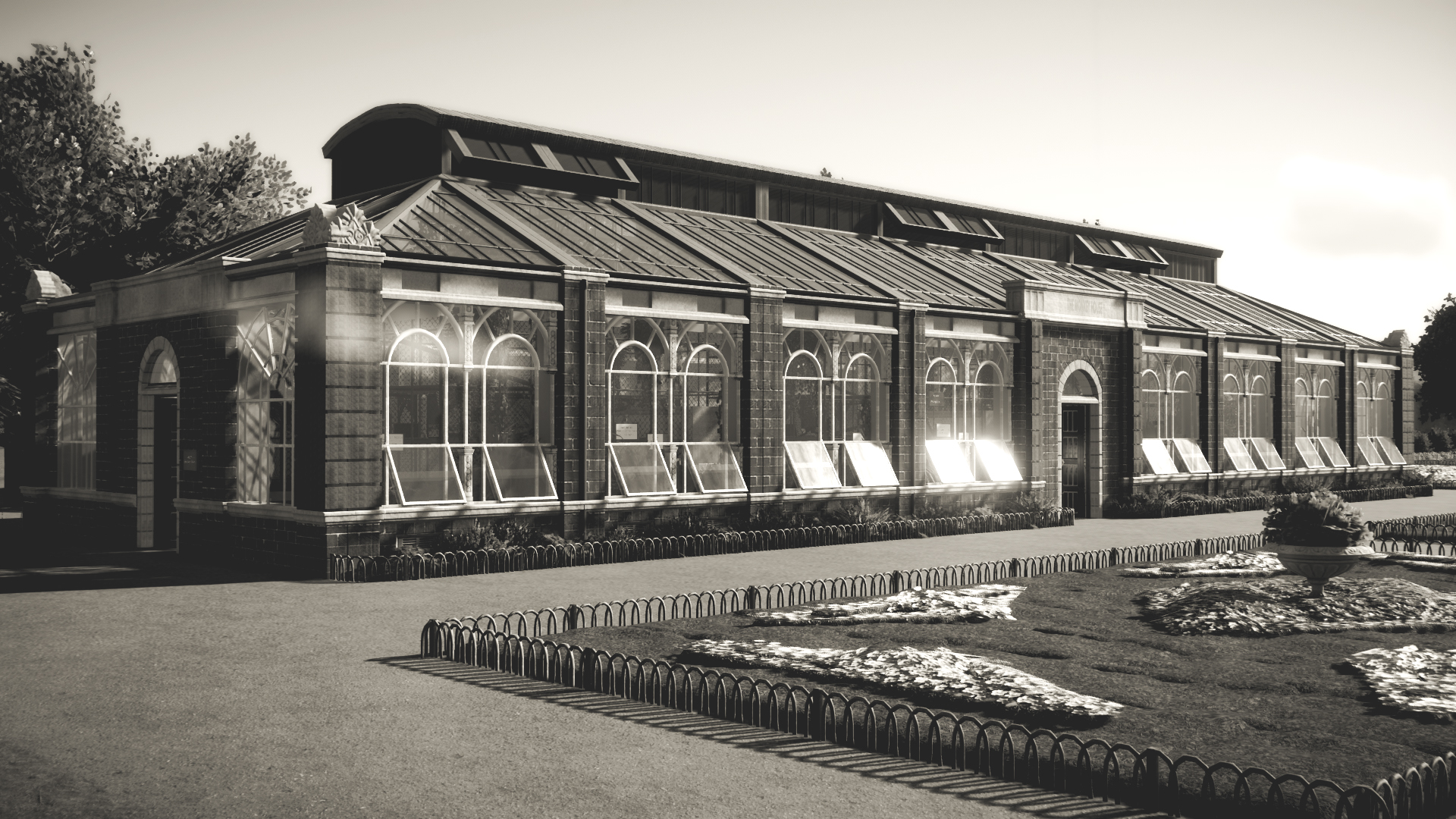
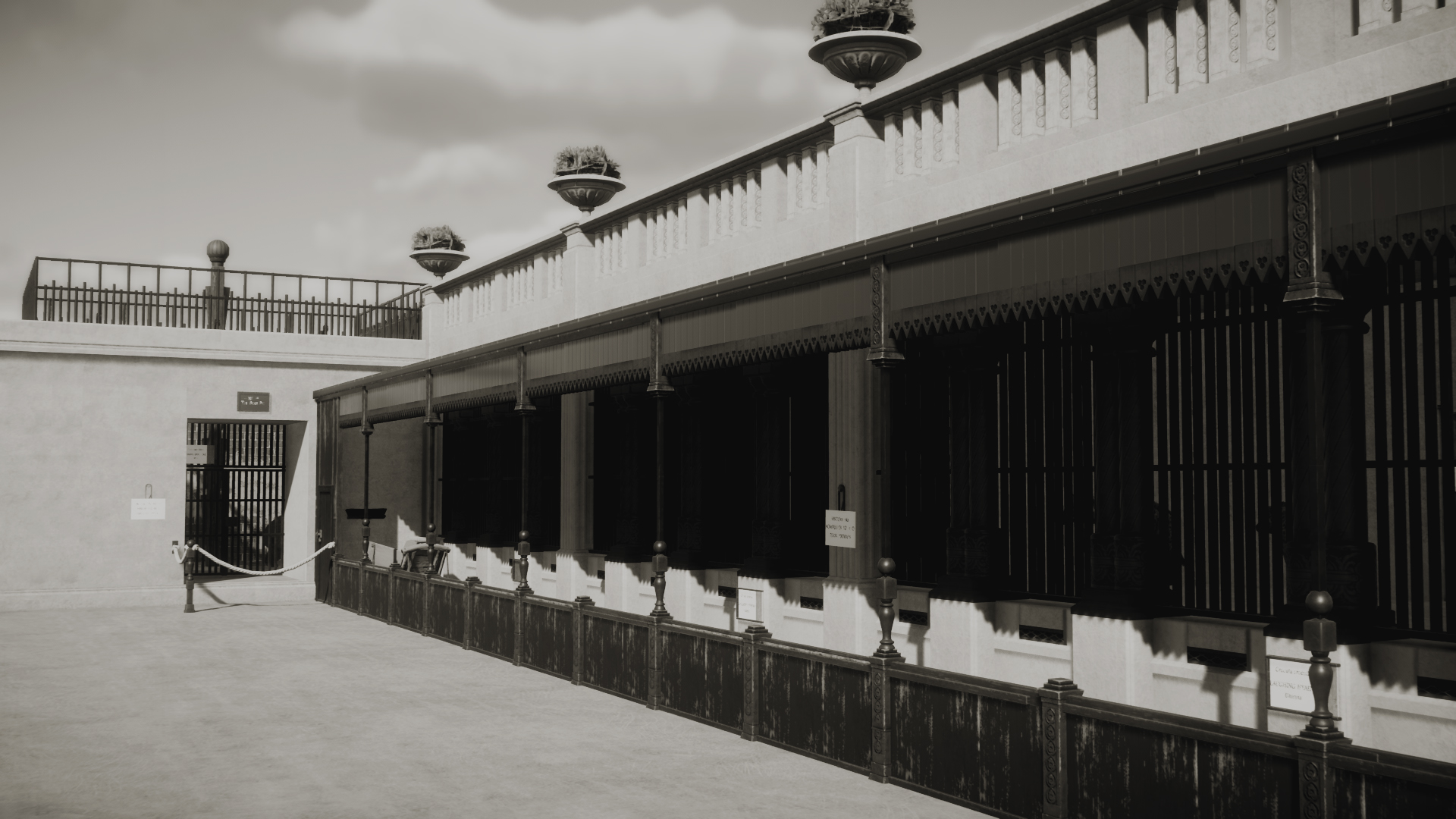
Hi everyone, I am currently working on a digital recreation of London Zoo as it existed in 1904 in Planet Zoo (you can see my current progress here if it is of any interest, but I've put the main images below). Currently, I've built the 1876 lion house, the carnivore terrace, and the 1864 monkey house, all of which have a decent number of widely-available reference images of the exterior and interior, but am starting to think about tackling buildings which are much less well-photographed (or, if they were, the photos aren't available anywhere I can find), so it seems like this would be a sensible source to turn to!

Currently, I'm referencing:

Both editions of London Zoo From Old Photographs (though my first edition seems to be missing pages 202, 203, 206 and 207, so if there are any useful gems on those pages, I don't have them!)
Golden Days
Quite a few guidebooks (including one from 1904, luckily enough), though these are more useful for species lists and the occasional titbit of information rather than images of buildings.
I'm also trying to work out bits and pieces from context in books like London Zoo: A Sketch of its Foundations etc. by Henry Scherren ("The civet house used to be the crescent aviary? Eureka!"), and Animals in Captivity by A.D. Bartlett, as well as the occasionally getting lucky with a Google Images search.

I was wondering if anyone had any recommendations for other sources of information/images, or if anyone would be able to talk to me about their memories of some of the now-demolished buildings which were still around in living memory (particularly interiors, as it seems like no one has ever been interesting in photographing these)?

planet-zoo-screenshot-2022-06-27-18-25-10-39-png.312420
carnivore-terrace-1-jpg.313586
monkey-house-4-jpg.321970
 
A couple of comments on the Lion House;

1. Between the large domed outdoor cages there were two(?) smaller oblong outdoor cages also. These may have been later additions to the house rather than in the original design but I don't know. In the 1960's a pair of Jaguars lived in one of them pretty much permanently.

2. Also in the wall to the right of the entrance door there was a recessed indoor/outdoor cage, in the 1960's this held Snow Leopard. Again I don't know if this was in the original design or not.
 
Last edited:
A couple of comments on the Lion House;

1. Between the large domed outdoor cages there were two(?) smaller oblong outdoor cages also. These may have been later additions to the house rather than in the original design but I don't know. In the 1960's a pair of Jaguars lived in one of them pretty much permanently.

2. Also in the wall to the right of the entrance door there was a recessed indoor/outdoor cage, in the 1960's this held Snow Leopard. Again I don't know if this was in the original design or not.

Thanks for the notes!

I did have a minor heart attack when I noticed the additional cages in some reference images, but I am pretty certain these were added afterwards - one of the guides I've got mentions additional outdoor dens 'suitable for breeding' being added in 1924 - presumably these linked two of the outer domed cages, to give a breeding group some more space, or to allow a male and female to access and get away from each other as needed?

The snow leopard cage is definitely an interesting one, as I've not seen a hint of that anywhere - are you saying it was on the opposite wall to the other dens? Whatever the case, I would be pretty confident that that's a later addition too - they seemed to have no issue with spreading the cats among various houses other than the lion house, so it seems very odd to 'spoil' the design just to add one more cage (not that it's stopped them before or since, to be fair!) I know that there was a snow leopard in the zoo in 1904, but it was kept in the 'small mammals cages' near the kangaroo paddock, for example.
 
Thanks for the notes!

I did have a minor heart attack when I noticed the additional cages in some reference images, but I am pretty certain these were added afterwards - one of the guides I've got mentions additional outdoor dens 'suitable for breeding' being added in 1924 - presumably these linked two of the outer domed cages, to give a breeding group some more space, or to allow a male and female to access and get away from each other as needed?

The snow leopard cage is definitely an interesting one, as I've not seen a hint of that anywhere - are you saying it was on the opposite wall to the other dens? Whatever the case, I would be pretty confident that that's a later addition too - they seemed to have no issue with spreading the cats among various houses other than the lion house, so it seems very odd to 'spoil' the design just to add one more cage (not that it's stopped them before or since, to be fair!) I know that there was a snow leopard in the zoo in 1904, but it was kept in the 'small mammals cages' near the kangaroo paddock, for example.

From memory the oblong outdoor cages weren't connected to the domed cages, they were 'stand alones' that stood between them but were smaller and less deep. As I've mentioned elsewhere, in its latter years the Lion House had become very overcrowded with the various species and numbers. By the 1960's the same felines rarely used both the indoor and outdoor cages. Those that were exhibited in the outdoor cages had access to dens indoors. Those that were on exhibit in the indoor exhibit cages also had access to smaller dens at the rear of those cages. There was rarely any movement of animals between the two areas.


The outside 'snow leopard' cage I referred to was either set in the blank wall on the right of the entry door, or just beyond that.(can't remember) It faced the Cattle Sheds opposite the Lion House. It was a conventional covered barred-type cage, but set into the side of the building.
 
Last edited:
Those that were on exhibit in the indoor exhibit cages also had access to smaller dens at the rear of those cages.

That's reminded me, I need to factor those dens into the service corridor somewhere. Unless I've got something very wrong, those must have been really, really small sleeping quarters, right?

The outside 'snow leopard' cage I referred to was either set in the blank wall on the right of the entry door, or just beyond that.(can't remember) It faced the Cattle Sheds opposite the Lion House. It was a conventional covered barred-type cage, but set into the side of the building.

Aha, ok, in that case, that's definitely a later addition - one of the reference images I've got is the lion house from the East in 1905 (so must have been taken from just in front of the cattle yards), and there's no additional cage there. Interesting though, I wonder when they added that...
 
Additionally, I was wondering if anyone could help me solve a couple of mysteries I've come across during my searching - I've found a few images which may or may not be useful to me, but I can't work out what areas they are:

Frederick_William_Bond_-_The_King_of_Italy_Victor_Emmanuel_III_visiting_London_Zoo_in_1924_-_%28MeisterDrucke-392699%29.jpg

Now that I'm looking at this again, I wonder if that's the western aviary in the background, making this the exhibition house or experimental monkey house? Either way, after 1904.
Frederick%20William%20Bond%20-%20A%20Black%20Leopard%20being%20transported%20in%20a%20cage%20by%20keepers%20at%20Lo%20-%20%28MeisterDrucke-228743%29.jpg

Am I right in thinking this is the eastern side of the deer and cattle sheds?
Frederick_William_Bond_-_Sir_Peter_Chalmers_Mitchell_with_Ethiopian_Regent_Haile_Selassie_and_his_entoura_-_(MeisterDrucke-392701).jpg

Can't work this one out at all.
Frederick_William_Bond_-_Keeper_Arthur_Chandler_sweeps_the_Walrus_pool_London_Zoo_1924_-_%28MeisterDrucke-394134%29.jpg
Frederick_William_Bond_-_A_young_Elephant_Seal_reaching_backwards_London_Zoo_-_%28MeisterDrucke-1050849%29.jpg
Frederick_William_Bond_-_Six_King_Penguins_walking_beside_their_pool_at_London_Zoo_in_1927_-_(MeisterDrucke-377051).jpg

The fencing in these three is quite distinctive and unusual, but like nothing else in any of my other references, which makes me assume it's from a later period (or perhaps a temporary exhibition?), but I just thought I'd double check.
 
(though my first edition seems to be missing pages 202, 203, 206 and 207, so if there are any useful gems on those pages, I don't have them!)

202: A photograph of an Eagle Aviary taken c.1852 - this aviary is stated to have been demolished in 1866
203: A photograph of a Black-necked Stork taken c.1852; a photograph of a Bennett's Cassowary taken in 1864
204: A photograph of a pair of Hawaiian Goose taken in c.1870
205: A photograph of a keeper with a White Pelican taken in c.1870; a photograph of a Haast's Kiwi taken in c.1895.
206: A photograph of an Eagle Aviary taken c.1905
207: A photograph of the North Bank of the Regent's Canal taken c.1905; a photograph of the Canal Bank Aviary located on the South Bank of the Regent's Canal taken c.1905.
 
202: A photograph of an Eagle Aviary taken c.1852 - this aviary is stated to have been demolished in 1866
203: A photograph of a Black-necked Stork taken c.1852; a photograph of a Bennett's Cassowary taken in 1864
204: A photograph of a pair of Hawaiian Goose taken in c.1870
205: A photograph of a keeper with a White Pelican taken in c.1870; a photograph of a Haast's Kiwi taken in c.1895.
206: A photograph of an Eagle Aviary taken c.1905
207: A photograph of the North Bank of the Regent's Canal taken c.1905; a photograph of the Canal Bank Aviary located on the South Bank of the Regent's Canal taken c.1905.

Thank you so much for this, that's really helpful. Looks like all of these are repeated in the second edition, so good to know I've not missed out on anything!
 
That's reminded me, I need to factor those dens into the service corridor somewhere. Unless I've got something very wrong, those must have been really, really small sleeping quarters, right?


Aha, ok, in that case, that's definitely a later addition - one of the reference images I've got is the lion house from the East in 1905 (so must have been taken from just in front of the cattle yards), and there's no additional cage there. Interesting though, I wonder when they added that...

The dens behind the indoor exhibition cages were obviously small, but the scale of the house itself was pretty big so maybe not quite as tiny as you might imagine...
 
Additionally, I was wondering if anyone could help me solve a couple of mysteries I've come across during my searching - I've found a few images which may or may not be useful to me, but I can't work out what areas they are:

Frederick_William_Bond_-_The_King_of_Italy_Victor_Emmanuel_III_visiting_London_Zoo_in_1924_-_%28MeisterDrucke-392699%29.jpg

Now that I'm looking at this again, I wonder if that's the western aviary in the background, making this the exhibition house or experimental monkey house? Either way, after 1904.
Frederick%20William%20Bond%20-%20A%20Black%20Leopard%20being%20transported%20in%20a%20cage%20by%20keepers%20at%20Lo%20-%20%28MeisterDrucke-228743%29.jpg

Am I right in thinking this is the eastern side of the deer and cattle sheds?
Frederick_William_Bond_-_Sir_Peter_Chalmers_Mitchell_with_Ethiopian_Regent_Haile_Selassie_and_his_entoura_-_(MeisterDrucke-392701).jpg

Can't work this one out at all.
Frederick_William_Bond_-_Keeper_Arthur_Chandler_sweeps_the_Walrus_pool_London_Zoo_1924_-_%28MeisterDrucke-394134%29.jpg
Frederick_William_Bond_-_A_young_Elephant_Seal_reaching_backwards_London_Zoo_-_%28MeisterDrucke-1050849%29.jpg
Frederick_William_Bond_-_Six_King_Penguins_walking_beside_their_pool_at_London_Zoo_in_1927_-_(MeisterDrucke-377051).jpg

The fencing in these three is quite distinctive and unusual, but like nothing else in any of my other references, which makes me assume it's from a later period (or perhaps a temporary exhibition?), but I just thought I'd double check.

Top one could it be the old Parrot House?
 
Top one could it be the old Parrot House?
The one in the middle garden, next to the elephant house? If so, I haven't really been able to work out how that building is put together, so that might be useful. Less so if it's the one by the main lawn that was originally a refreshment building, as that was converted after 1904 - though I think this photo is from the 20s and the building was converted in the 30s.
 
The one in the middle garden, next to the elephant house? If so, I haven't really been able to work out how that building is put together, so that might be useful. Less so if it's the one by the main lawn that was originally a refreshment building, as that was converted after 1904 - though I think this photo is from the 20s and the building was converted in the 30s.
I only know one Parrot House- the one that was near where the Penguins are now. It was demolished some years ago now but a few outside aviaries still remain. The mesh in the photo looks like it might be designed for birds but I'm really not sure what building it is.
 
Additionally, I was wondering if anyone could help me solve a couple of mysteries I've come across during my searching - I've found a few images which may or may not be useful to me, but I can't work out what areas they are:

Frederick_William_Bond_-_The_King_of_Italy_Victor_Emmanuel_III_visiting_London_Zoo_in_1924_-_%28MeisterDrucke-392699%29.jpg

Now that I'm looking at this again, I wonder if that's the western aviary in the background, making this the exhibition house or experimental monkey house? Either way, after 1904.
Frederick%20William%20Bond%20-%20A%20Black%20Leopard%20being%20transported%20in%20a%20cage%20by%20keepers%20at%20Lo%20-%20%28MeisterDrucke-228743%29.jpg

Am I right in thinking this is the eastern side of the deer and cattle sheds?
Frederick_William_Bond_-_Sir_Peter_Chalmers_Mitchell_with_Ethiopian_Regent_Haile_Selassie_and_his_entoura_-_(MeisterDrucke-392701).jpg

Can't work this one out at all.
Frederick_William_Bond_-_Keeper_Arthur_Chandler_sweeps_the_Walrus_pool_London_Zoo_1924_-_%28MeisterDrucke-394134%29.jpg
Frederick_William_Bond_-_A_young_Elephant_Seal_reaching_backwards_London_Zoo_-_%28MeisterDrucke-1050849%29.jpg
Frederick_William_Bond_-_Six_King_Penguins_walking_beside_their_pool_at_London_Zoo_in_1927_-_(MeisterDrucke-377051).jpg

The fencing in these three is quite distinctive and unusual, but like nothing else in any of my other references, which makes me assume it's from a later period (or perhaps a temporary exhibition?), but I just thought I'd double check.
An impressive project you are undertaking, and some intriguing photographs which are a challenge to firmly identify. Do you have dates for any of these?
The second image, showing keepers with a caged animal, may be in front of the Northern Stables that was the end building in the north-west corner of the zoo. Unfortunately, I do not have a plan for 1904, but it is shown in the 1905 guide; this building was demolished a few years later. If the elephant seal is the one obtained in 1911 and mentioned in the 1912 guidebook, it was located "...in a small pond near the Waders' Aviary" but the pond does not look the same.
In 1904 and 1905, at least, the extreme north-west corner of the zoo to the south of the outer circle was not part of the public area of the zoo, the structure furthest west being the Western Aviary. By 1909 the guide map shows that it has been extended with the addition of the "Western Paddock" and a "Reserve Space " Paddock" and, by 1912 the greater part of this area was occupied by a new enclosure for Polar Bears and a temporary exhibit for "The King's Nepal Collection". I do wonder if other animals were accommodated in this temporary area before/after the King's collection that used the simple picket fencing shown?
 
An impressive project you are undertaking, and some intriguing photographs which are a challenge to firmly identify. Do you have dates for any of these?
The second image, showing keepers with a caged animal, may be in front of the Northern Stables that was the end building in the north-west corner of the zoo. Unfortunately, I do not have a plan for 1904, but it is shown in the 1905 guide; this building was demolished a few years later. If the elephant seal is the one obtained in 1911 and mentioned in the 1912 guidebook, it was located "...in a small pond near the Waders' Aviary" but the pond does not look the same.
In 1904 and 1905, at least, the extreme north-west corner of the zoo to the south of the outer circle was not part of the public area of the zoo, the structure furthest west being the Western Aviary. By 1909 the guide map shows that it has been extended with the addition of the "Western Paddock" and a "Reserve Space " Paddock" and, by 1912 the greater part of this area was occupied by a new enclosure for Polar Bears and a temporary exhibit for "The King's Nepal Collection". I do wonder if other animals were accommodated in this temporary area before/after the King's collection that used the simple picket fencing shown?

Looks like images 1 and 3 (visiting dignitaries) are 1924, and image 2 (transporting animal) is 1922. I've not got dates on the seals and penguins, but all the images seem to be by the same photographer, so I would be pretty confident assuming they're also early 20s.
The Northern Stables were around in 1904, and used for their collection of equines (which does raise the question of what was in The Old Zebra House at this point, as it wasn't labeled as The Wild Asses House just yet, and the guide just skips over it - I reckon I'm just going to stick horses in it anyway) - though they are described in there as a "light, wooden structure". Since posting these, I've managed to get my hands on A Walk Through The Zoological Gardens, and the little glimpse of the deer sheds does look like a slightly taller building than the one here, so I'm not sure.
I'm definitely confused by the seals and penguins - the fencing really does look like the sort of simple picket you'd put around a temporary collection, but the pools look solid and permanent - I wonder if it's utilising a disused old enclosure or something, though I don't see the logical place that would be - The Southern Pools were covered by The Wader's Aviary, and the Seal Ponds were covered by The Sea Lion Pond. Did the Mappin Terraces ever have fencing like this on the lower levels, perhaps?
 
The fencing in these three is quite distinctive and unusual, but like nothing else in any of my other references, which makes me assume it's from a later period (or perhaps a temporary exhibition?), but I just thought I'd double check.
Did the Mappin Terraces ever have fencing like this on the lower levels, perhaps?

I'm sure that exhibit with the "distinctive and unusual" fencing is from a later period than 1904 and I'm also sure it's not from the Mappin Terraces.

I haven't yet had time to do an exhaustive check but, searching through some of my old London Zoo guides, the 1925 guide features a photo of a walrus in that exhibit whilst the guides for 1928, 1929, 1930 and 1931 all feature photos of king penguins in that exhibit. I've also got a guide that features an elephant seal in that exhibit but I've mislaid the guide so cannot confirm the exact date.
 
Last edited:
I've also got a guide that features an elephant seal in that exhibit but I've mislaid the guide so cannot confirm the exact date.

I'll check my copies from 1919 onwards later tonight to see if I can find the guidebook in question :)
 
I'm sure that exhibit with the "distinctive and unusual" fencing is from a later period than 1904 and I'm also sure it's not from the Mappin Terraces.

I haven't yet had time to do an exhaustive check but, searching through some of my old London Zoo guides, the 1925 guide features a photo of a walrus in that exhibit whilst the guides for 1928, 1929, 1930 and 1931 all feature photos of king penguins in that exhibit. I've also got a guide that features an elephant seal in that exhibit but I've mislaid the guide so cannot confirm the exact date.
The walrus, illustrated in the 1924 guide. appears to have been initially kept in the Sea-Lion's Pond but the animal's caption reads "The walrus will be placed in the Pavilion Pond (No. 30) in 1924." The same text is repeated in the 1925 guide (a good reminder not to rely on the accuracy of these guides even though they are infinitely superior to most modern guides) but there is a new photograph and in it the palings are shown; I suspect this is the Pavilion Pond. In the 1931 guide, as Tim May says, the palings are to be seen in both the photographs of the elephant seal (a similar picture to that shown in this thread) and that of the king penguins. The text suggests the king penguins are (on the lower level) of the Mappin Terraces. The elephant seal was listed as being at "18a. Sea-Elephant's Pond" and the text says "In an enclosure opposite the Wolves' Dens a Pond has been made for a giant seal from the South Atlantic..." so this must have been in one of the Park Paddocks. It does, therefore, seem that temporary paling fences was used around the zoo.
 
I appreciate everyone looking through their guides to help out! If it's possible that the pond (or at least, one of those ponds) is the pavilion pond, or somewhat representative of what it could have looked like, that's another useful clue - I've only been able to find one reference for that, and it's from before it actually became the pavilion pond.
 
Back
Top