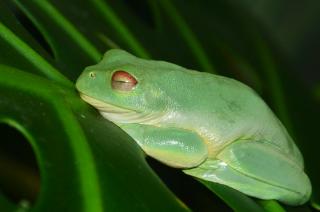
Myrtle Beach Zoological Park - A 'New' Project

Media Roundup: Ruang Reptil Part One
full

Possible Look of Mossy Frog Exhibit
Image Credit -> @ro6ca66
full

Vietnamese Mossy Frog
Image Credit -> @RatioTile
full

Possible Look of Flying Frog Exhibit
Image Credit -> @Philipine eagle
full

Wallace's Flying Frog
Image Credit -> @ralph
full

Possible Look of Climbing Toad Exhibit
Image Credit -> @Moebelle
full

Yellow-spotted Climbing Toad
Image Credit -> @ro6ca66
full

Possible Look of Eared Frog Exhibit
Image Credit -> @Dhole dude
full

Borneo Eared Frog
Image Credit -> @DannySG
full

Possible Look of Horned Frog Exhibit
Image Credit -> @KevinB
full

Long-nosed Horned Frog
Image Credit -> @Javan Rhino
full

full

Top: Possible Look of Banded Bullfrog Exhibit
Bottom: Banded Bullfrog
Image Credit -> @vogelcommando
 
Media Roundup: Ruang Reptil Part 2
full

Possible Look of Tree Skink Exhibit
Image Credit -> @merlin
full

Emerald Tree Skink
Image Credit -> @ro6ca66
full

Possible Look of Tokay Gecko Exhibit
Image Credit -> @Philipine eagle
full

Tokay Gecko
Image Credit -> @Zooish
full

Possible Look of Python Exhibit
Image Credit -> @pachyderm pro
full

Timor Python
Image Credit -> @RatioTile
full

Possible Look of Spitting Cobra Exhibit
Image Credit -> @TinoPup
full

Javan Spitting Cobra
Image Credit -> @snowleopard
full

Possible Look of Mangrove Snake Exhibit
Image Credit -> @Mr.Weasel
full

Mangrove Snake
Image Credit -> @hmb_zoo
full

Possible Look of Ratsnake Exhibit
Image Credit -> @Philipine eagle
full

Blue Beauty Ratsnake
Image Credit -> @Sicarius
 
Media Roundup: Ruang Reptil Part Three
full

Possible Look of Flying Snake Exhibit
Image Credit -> @Benosaurus
full

Paradise Flying Snake
Image Credit -> @RatioTile
full

Possible Look of Leaf Turtle Exhibit
Image Credit -> @felis silvestris
full

Black-breasted Leaf Turtle
Image Credit -> @RatioTile
full

Possible Look of Katydid Exhibit
Image Credit -> @Zooish
full

Dragon-headed Katydid
Image Credit -> @Moebelle
full

Possible Look of Jungle Nymph Exhibit
Image Credit -> @Bengal Tiger
full

Malayan Jungle Nymph
Image Credit -> @DesertTortoise
full

Possible Look of Domino Roach Exhibit
Image Credit -> @TinoPup
medium.jpg

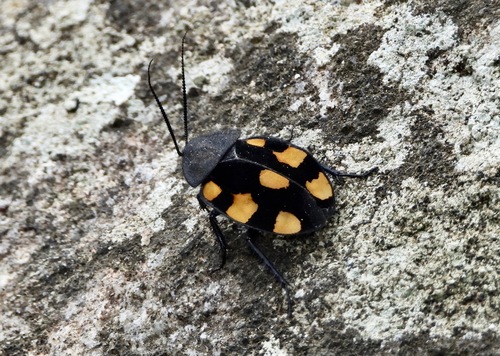
Orange Domino Roach
Image Source -> iNaturalist
full

Possible Look of Tarantula Exhibit
Image Credit -> @ralph
full

Peacock Tarantula
Image Credit -> @Ituri
 
Media Roundup: Ruang Reptil Part Four
full

Possible Look of Mixed Aquarium
Image Credit -> @merlin
full

Harlequin Rasbora
Image Credit -> @vogelcommando
Danio-erythromicron-Querstreifen-Zwergbaerbling-HannoverHTM2015Feb15-133-BioLib.JPG

Emerald Dwarf Danio
Image Source -> ZooTierListe
full

Chinese Mystery Snail
Image Credit -> @CheeseChameleon1945
full

Possible Look of Tentacled Snake Exhibit
Image Credit -> @Dhole dude
full

Tentacled Snake
Image Credit -> @ro6ca66

full

Possible Look of Crocodile Newt Exhibit
Image Credit -> @lintworm
full

Anderson's Crocodile Newt
Image Credit -> @Goura
full

Possible Look of Sword-tailed Newt Exhibit
Image Credit -> @KevinB
full

Okinawa Sword-tailed Newt
Image Credit -> @DesertTortoise
full

Possible Look of Snake-necked Turtle Exhibit
Image Credit -> @Coelacanth18
full

Roti Island Snake-necked Turtle
Image Credit -> @RatioTile
full

Possible Look of Crab Exhibit
Image Credit -> @MennoPebesma
250px-Geosesarma_dennerle.png

Vampire Crab
Image Source -> Wikipedia

Note: the promised post regarding Rumah Pulau's fourth and final atrium will be pushed back to tomorrow.
 
Okay, now we can finally venture through the final atrium, after a wait which ended up being a bit longer than planned.
This atrium restores the dense jungle feeling which came with the many aviaries seen in the first and second spaces, however the walkthrough aviary atmosphere does not return. While not having any free-roamers, this atrium brings visitors some of Southeast Asia's largest and most iconic inhabitants. That said, the atrium begins and ends on the smaller side.
The first and last habitats in the area are built on the same 150 sq. meter and 2.5m skeleton, but slightly differing in appearance. At the entrance to the atrium, the more arboreally-oriented of the two stands to your left, and plays host to a breeding pair of Northern Treeshrew Tupaia belangeri (1.1), while at the exit you can find a space more oriented toward the forest floor on your right, home to a small flock of Sunda Hooded Pitta Pitta sordida mulleri (2.4).

full

Possible Look of Treeshrew and Pitta Habitats
Image Credit -> @Gavial
full

Northern Treeshrew
Image Credit -> @Semioptera
full

Sunda Hooded Pitta
Image Credit -> @ronnienl

While we won't be officially passing by the pittas just yet, our journey through will now bring us past the treeshrews. A short walk past this opening habitat provides views into two habitats. The first, and smaller of the two, is a 300 sq. meter habitat also to the left side of the visitor path. The habitat is, despite the climbing abilities of the inhabitants, not meshed over, merely contained by sheer false-rock walls on three sides, and a steep dry moat in front of the visitor viewing area. With a series of tall trees and man-made climbing structures, the arboreal antics of our trio of Palawan Binturong Arctictis binturong whitei (3.0) are on full display, including the use of their prehensile tails, a trait they and the kinkajou share as a unique trait compared to other carnivoran mammals.
While many an eye may be caught by the bearcats, directly across the path from their habitat is the viewing area into a much larger habitat. Three-quarters of an acre, to be precise. The flooring is made up of a soft, mulchy substrate, a feature quite common in indoor holding areas for ungulates. A few larger trees and rocks break up the landscape, and the trees themselves are guarded to prevent any damage to them. Hay racks are built on either side of a large doorway which leads to the 1-and-1/4 acre outdoor space accessible to the space's two inhabiting species, but not the visitors. Standing out in the crowd is our female Malayan Tapir Tapirus indicus (0.1), who has a male counterpart off-display under quarantine. For the moment, she alone shares the space with our herd of Visayan Spotted Deer Rusa alfredi (2.10).

full

Possible Look of Binturong Habitat
Image Credit -> @KevinB
full

Palawan Binturong
Image Credit -> @MagpieGoose
full

Ideal Look of Southeast Asian Ungulate Indoor Habitat
Image Credit -> @Gil
full

Malayan Tapir
Image Credit -> @USZOOfan42
full

Visayan Spotted Deer
Image Credit -> @ro6ca66

As visitors pass by these two habitats, a simple wooden sign says "HEADS UP" in white painted letters, starkly contrasting the grey-brown of the wood. While the reaction to such a warning may vary from person to person, the general consensus is hopefully to look up, given the situational context. At this moment, as soon as you pass that sign, you are walking between two halves of a 1.5-acre primate complex. Yes, between. Overhead are a criss-cross of branches, reinforced vines, and other manner of climbing structures, which allow passage between the two 3/4-acre halves of this display. While walking between these spaces is cool, an alternative path branches off on either side, around the well-hidden habitat barriers, and up into "treetop" viewing areas at the back of both habitats, bringing you (sometimes) to an eye-to-eye experience with our two primates, the Bornean Orangutan Pongo pygmaeus (3.10) and Moloch Gibbon Hylobates moloch (2.2). Plus, this little sidetrack won't take you out of the way of any other attractions, as the pathway back simply brings you to the point where the habitats end. Much like the tapir and deer mixed habitat, this space does have a roughly 3/4-acre outdoor area attached, though it is also not visible to guests.

full

Possible Look of Primate Indoor Habitat
Image Credit -> @ralph
full

Bornean Orangutan
Image Credit -> @Kaelio
full

Moloch Gibbon
Image Credit -> @RatioTile

Whether you've decided to take to the treetop viewing, or you were content to stay beneath the primate crossing, your path culminates in the same spot. Once you've officially passed by the habitat, two aviary displays can be seen to either side of the path. No, we haven't yet arrived at the pittas mentioned earlier. On your left is a 100 sq. meter aviary dedicated to a pair of more intriguing species, though the ground-dwelling member of the pair is quite difficult to spot among the undergrowth. Overhead, visitors can spot a small group of Blue-crowned Hanging Parrot Loriculus galgulus (1.4), while the elusive Barred Buttonquail Turnix suscitator (3.2) inhabits the underbrush.
On the opposite side of the path, a 300 sq. meter aviary stands. Keeping the same dense undergrowth and high-spanning canopy, another pair of avian species can be found in this space. More than likely, the eye-catcher of the group is the Chestnut-breasted Malkoha Phaenicophaeus curvirostris (1.1), roosting among the higher branches of the aviary. Meanwhile, down below, an all-female group of Malaysian Great Argus Argusianus argus argus (0.4) can be found, while their two male counterparts are kept off-display, though when breeding is attempted, the zoo swaps one of these males for two of the females.

full

Possible Look of Parrot/Buttonquail Aviary
Image Credit -> @felis silvestris
full

Blue-crowned Hanging Parrot
Image Credit -> @Lafone
full

Barred Buttonquail
Image Credit -> @gentle lemur
full

full

Top: Possible Look of Malkoha/Argus Aviary
Bottom: Female Malaysian Great Argus
Image Credit -> @KevinB
full

Chestnut-breasted Malkoha
Image Credit -> @red river hog

Once these aviaries again fade into the dense plant life around you, now you will finally see the aforementioned Sunda Hooded Pitta aviary, off to the right and almost directly adjacent to the exit. Just a little ways before that, however, comes the indoor viewing window to a habitat which, combining to cover 1 and 1/4 acres of space, spans both indoors and outdoors. And unlike both the tapir/deer and orangutan/gibbon habitats, this space will be the first thing visible upon exiting Rumah Pulau. For now, our attention will stay on the indoor space, which visitors view from about 1m above the level of the habitat's floor. At half an acre, the space is dominated by false trees, interconnected by a seemingly unorganized array of ropes, vines, fire hoses, and other climbing enrichment. Meanwhile, the floor is a simplistic mulch floor, with a mud pit built into it. While the floor is where our breeding pair of North Sulawesi Babirusa Babyrousa celebensis (1.1) can be found, it is up above where a large amount of the inhabitants can be found, in our troop of East Javan Langur Trachypithecus auratus (3.11). As expected, both species have unhindered access to both the indoor and outdoor spaces, though should inclement weather arise, the access door is closed, ensuring they remain safely indoors.

full

Possible Look of Babirusa/Langur Habitat
Image Credit -> @snowleopard
full

North Sulawesi Babirusa
Image Credit -> @Dr. Wolverine
full

East Javan Langur
Image Credit -> @MennoPebesma

And with that (and one final look at those pittas ;)), visitors can exit Rumah Pulau, and feel the sunshine on their skin once more. While our journey through the Indo-Malay Archipelagos has not yet come to its conclusion, we are quite near to ending the fourth of our five continental trails.
That said, there will be two or three posts tomorrow (depending on how long these last two bits of Indo-Malay Archipelagos go, we will see the Trail Roundup and updated totals post made as well), and then we will begin the Oceania Trail on Monday (well earlier than I had anticipated) with the beginnings of Papua New Guinea.
For now, I leave you, so stay tuned and enjoy!
 
Another unplanned pushback on the schedule today (all cuz my NFL team got a late game today). Regardless, rather than the planned posts for today, I’d just like to provide a more up-to-date schedule from here out.

Tomorrow (December 1): last two posts of Indo-Malay Archipelagos; Eurasian-Oriental Trail Roundup and species total update
Wednesday (December 3): Papua New Guinea
Friday (December 5): Mainland Australia Parts 1+2
Saturday (December 6): Mainland Australia Parts 3+4
Sunday (December 7): Great Barrier Reef Parts 1+2 (and Media Roundup)
Monday (December 8): Great Barrier Reef Part 3
Wednesday (December 10): Melanesia, Micronesia, and Polynesia
Friday (December 12): Oceania Trail Roundup and Final Species Count Update

Beyond that, it will likely just be some tweaks and the posting of the final species list spreadsheet, as well as some additional data (list of unique species, other requested pieces of information) or more detailing toward the staff portion of things leading up to the New Year, in which I will begin my new project.

Yes, this means we are nearing the end of this project, and it will not be getting a continuation in the near future, though perhaps further down the road it will get a facelift.
 
Very, very nice design (can’t say it enough ;) ), but I just want to give a bit help for the group numbers:
8,8 or 9,9

1,1 or 1,2

1,1

1,1
Feels weird seeing more males of an avian species being added, but I feel I should have made the realization that Rollulus rouloul does better in more balanced groups given that is the only way I’ve seen them kept.
Honestly thought that in a larger space, I’d be able to get away with more of the peacock-pheasants. Guess not :oops:
Honestly, the pitta was kind of last-minute, and I made a guess that they’d be a flocking species, though a little further research (after the post, of course) revealed they are not.
My rationale for the buttonquails was that it was a family group.
 
Okay, before we venture into the outdoor portion of Indo-Malay Archipelagos, a few modifications to species populations in their on-display spaces. Firstly, our population of Crested Wood Partridge Rollulus rouloul has been shifted to a more balanced male:female ratio, going from 5.12 individuals to 9.9 individuals, all remaining on-display.
From here, no populations will be altered in the grand scheme of zoo-managed individuals, but individuals from our groups of Palawan Peacock-Pheasant Polyplectron napoliensis, Sunda Hooded Pitta Pitta sordida mulleri, and Barred Buttonquail Turnix suscitator have been moved off-display, leaving the species at 1.2, 1.1, and 1.1 individuals on-display respectively.
To sum all that up:
R. rouloul: sex balancing, population increase to 9.9 individuals (from 5.12)
P. napoliensis: on-display individuals decrease to 1.2 (from 2.6, remaining 1.4 kept off-display)
P. sordida mulleri: on-display individuals decrease to 1.1 (from 2.4, remaining 1.3 kept off-display)
T. suscitator: on-display individuals decrease to 1.1 (from 3.2, remaining 2.1 {juveniles} kept off-display)
All these numbers are supplied by @Paul.Haerle, to whom many thanks have been due over the course of this thread.
Now, back to your usual scheduled tour.

Okay, with that slight extension to our planned post, we find ourselves outside Rumah Pulau at long last. To the left immediately comes that outdoor habitat I mentioned earlier, for the North Sulawesi Babirusa Babyrousa celebensis pair and East Javan Langur Trachypithecus auratus troop. While more a peninsula than an island, the 1/2-acre outdoor habitat is surrounded almost completely by water, save for that little piece that allows the animals to pass between the indoor and outdoor spaces (moreso the babirusa than the langurs, but that's irrelevant). The space itself varies little from your typical primate island display: lush foliage, natural trees contrasting man-made climbing frames, and plenty of lower-lying plant life to encourage the primates to stay up above (this rule does not apply to the babirusa).

full

Possible Look of Outdoor Babirusa/Langur Habitat
Image Credit -> @Mr Gharial

While the primate peninsula may get a lot of the attention, directly ahead comes an attraction chock-full of species we haven't seen yet. This habitat forces visitors to pick a side, though the choice really doesn't impact much. The culprit? A 250 sq. meter habitat, roughly 1/5 aquatic space. Given this space's similarity, in both design and inhabitants, to other habitats in which guests were allowed to touch the animals, a sign directly tells visitors not to touch any of this space's inhabitants.
A large shelter covers the back third of the land area, ensuring all three species can remain sheltered without too much conflict. The aquatic space isn't all that deep, but it is deep enough for our group of Sulawesi Forest Turtle Leucocephalon yuwonoi (3.3) to fully submerge and swim around. While these turtles take full advantage of their aquatic room, the other two inhabitants, being the McCord's Box Turtle Cuora mccordi (3.4) and Southern Brown Tortoise Manouria emys emys (2.1), are less eager to join in, though the former will take to the shallows on occasion.

full

Possible Look of Testudine Mixed Habitat
Image Credit -> @gulogulogulo
full

Sulawesi Forest Turtle
Image Credit -> @RatioTile
full

McCord's Box Turtle
Image Credit -> @Lucas Lang
full

Southern Brown Tortoise
Image Credit -> @KevinB

As the paths rejoin one another on the opposite end of the testudine habitat, the trees open up on the right side to reveal two habitats, the first being a 1,500 sq. meter replication of the coastal mangroves. With a glass front to this mesh-enclosed habitat allowing for a split underwater and above-water view, visitors might notice a number of live crustaceans milling about in the mud. These aquatic organisms are stocked in the waters as extra behavioral and dietary enrichment for this space's inhabitants, a troop of Long-tailed or Crab-eating Macaque Macaca fascicularis (7.16).
The aquatic portion of the macaque habitat actually flows directly into the second of the habitats mentioned, a 4m-high and 2,750 sq. meter wetland aviary. While the trees remain dense around the perimeter, reeds and sweetflag grass dominate the middle and front of the space where the water doesn't reach. High above the floor, reaching similar heights to the highest trees, a number of nesting platforms can be found, and these often directly provide the optimal views of our flock of Storm's Stork Ciconia stormii (3.3). Meanwhile, on the water, two duck species can be found, being the Philippine Duck Anas luzonica (4.8) and Mandarin Duck Aix galericulata (2.10), and a small flock of Javan Pond Heron Ardeola speciosa (1.5) can be found wading among the reeds in the shallows of the marsh.

full

Possible Look of Macaque Habitat
Image Credit -> @Tigergal
full

Long-tailed Macaque
Image Credit -> @Nadchew_
full

Possible Look of Southeast Asian Wetland Aviary
Image Credit -> @KevinB
full

Storm's Stork
Image Credit -> @Brayden Delashmutt
full

Philippine Duck
Image Credit -> @SivatheriumGuy
full

Mandarin Duck
Image Credit -> @WhistlingKite24
full

Javan Pond Heron
Image Credit -> @Therabu

From here, the path does not end, but will continue on toward the end of the Indo-Malay Archipelagos, and with it, the Eurasian-Oriental Trail.
Stay tuned, for we return momentarily!
 
The time has come.
Now, we conclude the Indo-Malay Archipelagos, as well as the Eurasian-Oriental Trail.
We continue onward from the macaque habitat and wetland aviary, and the pathway quite sharply begins to form a half-circle of sorts. This isn't simply a design choice, but brings visitors directly into the main viewing area for the next habitat, a 2,500 sq. meter space which is lowered nearly 1.5m into the ground from the visitor perspective. But before we bring our attention here, one might notice the odd guest take a peek into a strategically-manicured break in the treeline to the right. This break allows for viewing into a simplistic 200 sq. meter habitat. The space itself is mesh-enclosed, with larger trees allowing for climbing space while reinforced burrows provide privacy to our pair of Javan Mongoose Urva javanicus (1.1).
Now, back to that larger habitat. The space itself is quite well-planted around the perimeter, though only a few larger trees venture further into the centre and front of the habitat. This dense forest is actually made entirely inaccessible to the inhabitants by a sheer stone retaining wall which spans up just beyond the reaching capabilities of the inhabiting Malayan Sun Bear Helarctos malayanus malayanus (1.1), a rotating pair only held together when breeding is attempted. The space also features areas intended for the bears to climb, as well as several small pools for bathing and swimming.

full

Possible Look of Mongoose Habitat
Image Credit -> @molinea
full

Javan Mongoose
Image Credit -> @Toki
full

Possible Look of Sun Bear Habitat
Image Credit -> @NNM.
full

Malayan Sun Bear
Image Credit -> @Austin the Sengi

As the path winds away from the mongoose and bear habitats, the end draws nearer, but not before a 600 sq. meter habitat emerges to the left of the path upon the bear habitat being totally out of view. The paddock itself is quite generic, with a smattering of low-lying foliage and rocks providing options for hides, while the indoor holding building for our herd of Reeves' Muntjac Muntiacus reevesi (1.4) is visible through the back of the habitat.
As visitors officially near the end, it doesn't come quite yet, as we arrive at a small plaza, centred around three aviaries. Okay, maybe centred isn't the way to say it. Focalized is a more accurate term. The plaza is circular, with an aviary in the middle, and one to either side of that. The central aviary is slightly larger than the two outer ones (400 sq. meters as opposed to the respective 350 sq. meters), but is, for all intents and purposes, near-identical in terms of internal layout. Dense plant life around the perimeter gives way to mulch around the base of a large central tree, with several of the tree's branches providing front-and-centre perches for the inhabitants. In the central aviary, visitors can find a pair of Bali Myna Leucopsar rothschildi (1.1) in the spotlight, while a flock of Luzon Bleeding-heart Gallicolumba luzonica (6.6) can be found both on the mulchy floor and in the lower branches. As mentioned, the internal layout remains the same for the two 350 sq. meter aviaries, however the central perching branches are a bit... sturdier. This allows further structural support when holding the likes of Wreathed Rhabdotorrhinus corrugatus (1.1) and Rufous Hornbill Buceros hydrocorax (1.1).

full

Possible Look of Muntjac Habitat
Image Credit -> @Cichlid
full

Reeves' Muntjac
Image Credit -> @merlin
full

Possible Look of Myna/Bleeding-heart Aviary
Image Credit -> @KevinB
full

Bali Myna
Image Credit -> @Julio C Castro
full

Luzon Bleeding-heart
Image Credit -> @WhistlingKite24
full

Possible Look of Hornbill Aviaries
Image Credit -> @pachyderm pro
full

Wrinkled Hornbill
Image Credit -> @KevinB
full

Rufous Hornbill
Image Credit -> @YuanChang

*side note before I go on... how many of the species am I gonna find have inaccurate scientific names in my notes... example being the Wrinkled Hornbill, which I had labelled as Aceros corrugatus only to find out as I write this that it is now Rhabodotorrhinus. That and the Javan Mongoose being moved from Herpestes to Urva, which I promise was NOT a thing when I first made the species list.

*
sigh* With that rant out of the way, we finally complete the Eurasian-Oriental Trail as we pass by the hornbills. This means there is just one continental trail standing between us and being totally done touring what has been a truly expansive park, to say the least. But before I officially close the book on the Eurasian-Oriental Trail, let's officially provide the Trail Roundup and updated zoo-wide species total.

Updated GRAND TOTALS
Total Species
: 619
Amphibians: 52
Birds: 185
Fish: 67
Invertebrates: 57
Mammals: 136
Reptiles: 122

Mediterranean Shores: 19 total species; 5 birds, 9 fish, 2 invertebrates, 1 mammal, 2 reptiles
Eurasia's Divide: 32 total species; 4 amphibians, 17 birds, 6 mammals, 5 reptiles
Indian Subcontinent: 32 total species; 1 amphibian, 8 birds, 3 invertebrates, 12 mammals, 8 reptiles
Asian Mountain Ranges: 25 total species; 2 amphibians, 8 birds, 12 mammals, 3 reptiles
Indo-Malay Archipelagos: 99 total species; 8 amphibians, 24 birds, 14 fish, 11 invertebrates, 18 mammals, 24 reptiles
+1 bird (Steller's Sea Eagle)
EURASIAN-ORIENTAL TRAIL: 208 total species; 15 amphibians, 63 birds, 23 fish, 16 invertebrates, 49 mammals, 42 reptiles

GRAND TOTAL (updated)
Total Species: 827
Amphibians: 67
Birds: 248
Fish: 90
Invertebrates: 73
Mammals: 185
Reptiles: 164

Now stay tuned, for on Wednesday we begin our journey into the final continental trail of the zoo... the Oceania Trail.

full

As if the last two hornbills weren't enough...
Image Credit -> @MonkeyBat

Enjoy!
 
I return, and welcome you all to the fifth and final continental trail of the Myrtle Beach Zoological Park: the Oceania Trail!
But before we get to the animals, let's get ourselves situated at the Oceania Entry Plaza.
This volcanic-rock-tiled plaza comes with the same general appearance of the others we've seen previously, with two Maori-inspired wood-and-thatch buildings located behind a central garden which also displays the Oceania Trail name among the plants and the four statues within the garden, the respective Matschie's Tree-kangaroo, Tasmanian Devil, Blacktip Reef Shark, and Kea representing each of the four zones along this trail.
And now... some animals.

Our journey begins in Papua New Guinea, directly outside the Papua House, a hyper-modernistic building which implements Maori-inspired accents to at least somewhat blend it with the theming around it. However, before we step inside the building, a small wood-and-thatch shaded structure stands to the path's left. With a slight step up into the structure, visitors are given the lone unobstructed view of a 1,000 sq. meter habitat. The space itself is quite well-planted, and the barrier of the habitat is not directly joined onto the viewing structure, ensuring that visitors' hands remain out of the reach of our solitary male or female pair of Southern Cassowary Casuarius casuarius (1.2), whichever is on display at the given time, as the male and females rotate.

full

Possible Look of Cassowary Habitat
Image Credit -> @merlin
full

Southern Cassowary
Image Credit -> @Gab_1

From the viewing shelter, visitors are welcomed into the Papua House with signage prompting all visitors to keep noise to an absolute minimum. This prompt is in place due to the echoey nature of this atrium, as well as the sensitivity of the inhabiting species. The habitat in question is, after navigating the small entry area of the building, off to the right of the path in the first true animal display atrium. At 750 sq. meters, the space pairs man-made climbing frames and climbable trees with loose soil along the floor, together perfectly suiting the behaviors of both our pair of Matschie's Tree-kangaroo Dendrolagus matschiei (1.1) and our on-display pair of Short-beaked Echidna Tachyglossus aculeatus (1.1, second 1.1 pair off-display).

full

Possible Look of Tree-kangaroo/Echidna Habitat
Image Credit -> @animalman0341
full

Matschie's Tree-kangaroo
Image Credit -> @RatioTile
full

Short-beaked Echidna
Image Credit -> @WhistlingKite24

Through a double set of doors, visitors go from an echoey atrium to a densely-planted, half-acre free flight hall. Well... mostly free flight. The exception is located directly to the left of the entry door, coming in the form of a 150 sq. meter floor-to-ceiling aviary. The plant life remains dense within the aviary, and a series of elevated perch points allow for an unobstructed(ish) view of Papua New Guinea's national bird, the Raggiana Bird-of-Paradise Paradisaea raggiana (1.1). Their isolation from the remainder of the space is not without reason, however, as another bird-of-paradise species, being the Red Bird-of-Paradise Paradisaea rubra (1.1) has full access to the hall. As such, the aviary is actually totally blocked off on its right-hand face (the one not against the walls or directly parallel to the visitor pathway) to limit any potential conflict between the two species.

full

Possible Look of Raggiana Bird-of-Paradise Aviary
Image Credit -> @merlin
full

Raggiana Bird-of-Paradise
Image Credit -> @FoxBat
full

Red Bird-of-Paradise
Image Credit -> @Rizz Carlton

As you continue through the space, a number of small, shallow pools can be seen on the right-hand side of the pathway, where our flock of Spotted Whistling-duck Dendrocygna guttata (2.4) can be found most often. Of course, the thick forest is well-occupied, with the higher branches suiting the previously mentioned bird-of-paradise, as well as both the Pesquet's Parrot Psittrichas fulgidus (2.1) and Black-capped Lory Lorius lory (3.7), while the floor and lower branches are more to the liking of our flock of Victoria Crowned Pigeon Goura victoria (1.4). All the while, two much smaller flying species can be found amongst the flowers which line the edges of the path, being the Cairns' Birdwing Ornithoptera euphorion (0.0.10) and Golden Birdwing Troides aeacus (0.0.10).

full

Possible Look of Free-Flight Hall
Image Credit -> @Daniel Sörensen
full

Spotted Whistling-duck
Image Credit -> @Dr. Wolverine
full

Pesquet's Parrot
Image Credit -> @MonkeyBat
full

Black-capped Lory
Image Credit -> @WhistlingKite24
full

Victoria Crowned Pigeon
Image Credit -> @TheGerenuk
full

Cairns' Birdwing
Image Credit -> @twyndham
full

Golden Birdwing
Image Credit -> @Swampy

Our journey will conclude just a short walk further, immediately to the right upon entering the third and final atrium in the building. This right turn brings us into an unlit alcove, where the final two exhibits on the portion of the tour can be found. The first of these species comes from the lone source of any light in the alcove, in a 4ft-long, 2ft-high, and 1ft-deep tank which curves along the right-hand wall of this alcove. The space is well-planted, though the majority of said plants are artificial. The floor of the tank is sandy, and a single branch of driftwood lies across the middle of the tank. Overall, a tank well-suited to the needs of the school of Peacock Gudgeon Tateurndina ocellicauda (0.0.8) which call the space home.
Directly opposite the school of gudgeon, visitors can view a much larger red-lit habitat, though still not all that large. At 10 sq. meters and 2m high, visitors are given a look into the densely-planted and vertically-oriented home for the zoo's pair of New Guinea Ground Cuscus Phalanger gymnotis leucippus (1.1), a name which doesn't necessarily paint a wholly accurate picture of their lifestyle, as they frequent the trees as well as living in burrows on the floor.

full

Possible Look of Gudgeon Tank
Image Credit -> @HOMIN96
full

Peacock Gudgeon
Image Credit -> @Birdsage
full

Possible Look of Ground Cuscus Habitat
Image Credit -> @British explorer
full

New Guinea Ground Cuscus
Image Credit -> @Rhino00

As we exit the little alcove, our journey will end for the day, though sometime tomorrow we will be venturing head-long forward into the space off to the left of the atrium entrance, before concluding the tour of the Papua House and the entirety of the Papua New Guinea region!

Also, side note, that Papuan Hornbill image I used as a "spoiler" in my last post was... frankly, inaccurate (much to my own surprise). The species is not in the collection, so I do apologize for the mixup.

full

Not every day you hear someone say their dogs can sing...
Image Credit -> @Julio C Castro

Stay tuned, and enjoy!
 
We continue our journey through the Papua House essentially right where we left off: just inside the entrance to the third and final atrium. This position allows three different options in terms of where to go. Of course, we've already ventured to the right into the darker alcove, where we found the ground cuscus and gudgeon. That leaves us two options: left, or straight ahead. We will begin this portion by heading to the left, onto a pathway covered over by a rock tunnel, here for nothing but aesthetical purposes and keeping the focus on the seven smaller exhibits visible within the tunnel.
The first display in the row is also the lone paludarium display of the seven, with a 4 sq. meter wetland space providing a home to our Branderhorst's Snapping Turtle Elseya branderhorsti (0.1), currently alone but hoping for the arrival of a mate in the near future.
Next in line comes an exhibit with a significant amount more vertical space, at 1.5m high, and being narrowed to just 2ft long and 1ft wide. Among the thick leaves and climbing vines, visitors may be able to spot some of our White-lipped Tree Frog Nyctimystes infrafrenatus (9.9) across the spanning height of the tank.

full

full

Top: Possible Look of Snapping Turtle Exhibit
Bottom: Branderhorst's Snapping Turtle
Image Credit -> @KevinB
full

Possible Look of Tree Frog Exhibit
Image Credit -> @Philipine eagle
full

White-lipped Tree Frog
Image Credit -> @DaLilFishie

The row ventures to a trio of serpentine inhabitants across the next three exhibits. At 2 sq. meters and 2m high, the first and third of these is densely planted, with an array of branches criss-crossing at different heights, while a ledge in the backdrop allows a stable elevated perspective for the respective inhabitants, being the Bismarck Ringed Python Bothrochilus boa (0.3) in the first, and the Amethystine Python Simalia amethestina (1.2) in the third. Sandwiched between the two python displays is a less planted display, in a more arid setting suited to the rotating male and female Papuan Taipan Oxyuranus scutellatus canni (1.1) which inhabit this space.
Passing by the amethystine python's exhibit, the ecosystem forms a median between the python displays and the taipan display, though the elevated branches and ledges remain constant. Sharing the dimensions of the snake exhibits, visitors will find a species from the other side of the squamate family tree, and an object of inspiration for Jurassic Park's Dilophosaurus depiction, in the Frilled Lizard Chlamydosaurus kingii (1.1). Living between the frilled lizard and the end of the tunnel, visitors will find a much smaller species, living in a 1mx1mx1ft tank planted lushly with low-lying plants. Hidden among the plants is our resident pair of Red-eyed Crocodile Skink Tribolonotus gracilis (1.1).

full

Possible Look of Python Exhibits (yes, I did take the exact same image as for the tree frogs :p)
Image Credit -> @Philipine eagle
full

Bismarck Ringed Python
Image Credit -> @snowleopard
full

Amethystine Python
Image Credit -> @jayjds2
full

Possible Look of Taipan Exhibit
Image Credit -> @WhistlingKite24
full

Papuan Taipan
Image Credit -> @Pelon
full

Possible Look of Frilled Lizard Exhibit
Image Credit -> @merlin
full

Frilled Lizard
Image Credit -> @ro6ca66
full

Possible Look of Skink Exhibit
Image Credit -> @MClaeys
full

Red-eyed Crocodile Skink
Image Credit -> @FoxBat

Once you pass the crocodile skink by, the pathway turns sharply to the right, and out of that little covered pathway we just walked. Now, we're on the far left side of the atrium, directly in front of the viewing window to a mesh-enclosed 150 sq. meter habitat. The view through the window is one which is split between an underwater view and an above-water view. This aquatic space spans back to roughly the halfway point of the exhibit floor, with the other half dominated by a number of trees with branches overhanging the water. This allows the inhabiting pair of Crocodile Monitor Varanus salvadorii (1.1) to go straight from their arboreal lifestyle to their aquatic lifestyle, all directly in the eyeline of the visitors.
These monitors are not, shockingly, the stars of the atrium. That title is taken by the species on the opposite side. See, if we'd gone straight ahead from the atrium's entrance, we'd have come to the first of three viewing areas for the next habitat, a 950 sq. meter indoor display for New Guinea Crocodile Crocodylus novaeguineae (1.3). The first view, directly ahead from the atrium entrance, is a split-viewing window, with a small ramp to your right giving an unobstructed view into the land portion of the indoor space, while around the end of the habitat and directly across from the monitor viewing is a full underwater viewing window. Furthermore, these crocs have an outdoor space which we will view momentarily, as this underwater window is also directly adjacent to the Papua House's exit.

full

Possible Look of Monitor Habitat
Image Credit -> @merlin
full

Crocodile Monitor
Image Credit -> @Mr. Bobcat
full

Possible Look of Indoor Crocodile Habitat
Image Credit -> @pachyderm pro
full

New Guinea Crocodile
Image Credit -> @WhistlingKite24

As we exit the Papua House, a look to the right will grant a view into that outdoor habitat for the crocodiles mentioned moments ago. Unlike the indoor space, this 1,400 sq. meter habitat does not feature underwater viewing, though it is where these crocs are most likely to be spotted on good weather days.
The final habitat of the Papua New Guinea region comes out of the trees along the left side of the pathway. The view into this 2,500 sq. meter habitat comes from a 4x2m log-trimmed viewing window, with a number of benches situated in front of it. The space is rather well-planted, suiting the shy nature of the inhabiting New Guinea Singing Dog Canis lupus hallstromi (1.3), a near relative to the better-known dingo of Australia.

full

Possible Look of Outdoor Croc Habitat
Image Credit -> @Moebelle
full

Possible Look of Singing Dog Habitat
Image Credit -> @merlin
full

New Guinea Singing Dog
Image Credit -> @Julio C Castro

And with that, the Papua New Guinea portion of the Oceania Trail reaches its conclusion. Next on the tour, we will begin the trip through Mainland Australia.
Until tomorrow, stay tuned, and enjoy!
 
Our venture into Mainland Australia begins with a display which has, at this point, become painfully synonymous, yet always popular, with Australian sections in zoos: the wallaby walkthrough. The space which visitors have just entered is a 1.5-acre landscape of rolling hills, with a number of shade trees dotted throughout the space, while the perimeter of the habitat is well-planted. Off to the right-hand side, a decently-sized cliff face replaces the forest, providing an ideal climbing space for the first of this habitat's four inhabitants, the Brush-tailed Rock-wallaby Petrogale pencillata (1.7). While they remain on or around the rock face, the other three species can often be found across the space. The largest of the inhabitants, also being the only bird, is one which requires little introduction: the Emu Dromaius novaehollandiae (4.1), represented by a breeding pair and a trio of unrelated sub-adult males, who will likely be moved off-display into an ambassador role in the near future. Meanwhile, alongside the ratites visitors can also spot two more macropod species, being the Swamp Wallabia bicolor (3.9) and Parma Wallaby Notamacropus parma (2.10).

full

Possible Look of Wallaby/Emu Walkthrough
Image Credit -> @gulogulogulo
full

Brush-tailed Rock-wallaby
Image Credit -> @DaLilFishie
full

Emu
Image Credit -> @JigerofLemuria
full

Swamp Wallaby
Image Credit -> @KevinB
full

Parma Wallaby
Image Credit -> @RatioTile

As visitors exit the walkthrough, a gradual bend in the path brings us alongside the curved viewing windows into twin 500 sq. meter habitats. The spaces are each quite simplistic, with patches of longer grass concealing parts of the large logs which sit in the middle of each habitat. Much like the other individuals of this species present in American captivity, our pairs of Tasmanian Devil Sarcophilus harrisii (2.2) are not kept for breeding purposes. The males and females rotate onto the two habitats, with the rotation happening once a day, meaning that if you memorize the rotation schedule (or come on back-to-back days), you can ensure you see all of our devils.

full

Possible Look of Tasmanian Devil Habitats
Image Credit -> @SivatheriumGuy
full

Tasmanian Devil
Image Credit -> @USZOOfan42

Our ventures bring us from the island of Tasmania to the northern reaches of Australia, near but not directly along the coastal regions. Here, visitors find themselves atop a concrete retaining wall, facing a scenic waterfall head-on as it splits the land area of the space in two. This 2,500 sq. meter habitat is roughly half land and half water, with a large portion of the water body running right up against the concrete wall we currently stand on. This position not only gives a grand view of the whole habitat, but also makes it that much more likely to find even one of our group of Freshwater Crocodile Crocodylus johnstoni (1.4), a species much smaller and lesser-known than their saltwater cousins.

full

Possible Look of Crocodile Habitat
Image Credit -> @WhistlingKite24
full

Freshwater Crocodile
Image Credit -> @JigerofLemuria

Our pathway returns to the ground, and we ourselves are transported back to the more temperate regions of Australia. Amid the gum trees, the pathway winds between a pair of 650 sq. meter habitats constructed to follow the curvature of the path. Both habitats feature the same pair of species, each kept in hopeful breeding pairs, so if you forget there are two habitats, it really isn't a cause for concern unless you insist on seeing every habitat. Regardless, the barrier of the habitat itself is quite low, only to about the base of the average person's ribcage. The barrier, a glass panel sandwiched between a pair of rectangular wooden beams, is built into a concrete foundation which is intended to contain the more terrestrial of the two species. The presence (and odor) of eucalyptus likely gives away the first inhabitant, of course being the Queensland Koala Phascolarctos cinereus cinereus (2.2), while their more terrestrial roommate is also one of their closer relatives, being the Southern Hairy-nosed Wombat Lasiorhinus latifrons (2.2).
Up ahead, visitors can just begin to make out the Australia Conservatory, the ultra-modern construction of the building concealed by a variety of climbing plants. Just before the entrance, however, come a pair of aviaries, one situated to either side of the path. These 150 sq. meter aviaries make up a display contrasting the two largest kingfisher species in world, being the Blue-winged Kookaburra Dacelo leachii (1.1) to the left, and the Laughing Kookaburra Dacelo novaeguineae (1.1) to the right. While the kooks get to be the star of the show, a smaller species roams the floor of each aviary. On the left is a pair of females, while on the right is a breeding pair, altogether forming our group of Western Brush-tailed Bettong Bettongia pencillata ogilbyi (1.3).

full

Possible Look of Koala/Wombat Habitats
Image Credit -> @KevinB
full

Queensland Koala
Image Credit -> @Zoological Point
full

Southern Hairy-nosed Wombat
Image Credit -> yours truly, @Van Beal
full

Possible Look of Kookaburra/Bettong Aviaries
Image Credit -> @merlin
full

Blue-winged Kookaburra
Image Credit -> @Therabu
full

Laughing Kookaburra
Image Credit -> yours truly, @Van Beal

From here, we enter the Australia Conservatory, and venture into the first atrium, one of sleek modern woodwork and plenty of smaller critters to admire. That, however, will be awaiting you all a little later on. For now I leave you, but will return soon enough.
Stay tuned, and enjoy!
 
Our entry into the Australia Conservatory brings us right into the first atrium, with a series of eight terrarium displays built into the left hand wall, while a large paludarium acts as the centerpiece to it all. This paludarium is where we will begin. At 25 sq. meters, and contained by 2.5m-high glass walls, the space features about 1m of aquatic depth, and 1.5m of spanning branches to the display's ceiling. The majority of this paludarium's inhabitants spend much of their time in the water, but one such species plays the exception to that statement. Up above among the climbing branches, visitors can spot our Eastern Water Dragon Intellagama lesueurii lesueurii (1.3) above the others, though they aren't opposed to taking a swim every now and again. Also a split frequenter of the land and water, a species more likely to be spotted on the flat rocks which transition the aquatic space to the land, our group of Red-bellied Short-necked Turtle Emydura subglobosa (2.8) are often taking the time to bask in the bulbs overhead. Meanwhile, in the aquatic portion, the remaining species thrive. Of course, most notable in the water is our lone Fly River Turtle Carretochelys insculpta (0.1), swimming alongside schools of Empire Gudgeon Hypseleotris compressa (0.0.40) and Banded Archerfish Toxotes jaculatrix (0.0.3), as well as a male-female pair of Australian Lungfish Neoceratodus forsteri (1.1).

full

Possible Look of Australian Paludarium
Image Credit -> @Coelacanth18
full

Eastern Water Dragon
Image Credit -> @Zoofan15
full

Red-bellied Short-necked Turtle
Image Credit -> @Ding Lingwei
full

Fly River Turtle
Image Credit -> @Northwest_FIsh_Keeping
full

full

Top: Empire Gudgeon
Bottom: Banded Archerfish
Image Credit -> @DaLilFishie
full

Australian Lungfish
Image Credit -> @Prochilodus246

While this paludarium can clearly be labelled as the focal point of this atrium, along the left-hand wall are the eight terrarium displays previously mentioned. For the most part, the habitats share similar dimensions (four of the eight have floor spaces of 2 sq. meters, and three have floor spaces of 1 sq. meter), but it is in the environments within that they differ. Listed below are the details of each display, as well as their inhabitants, beginning with the space closest to the building's entrance, and moving down the line.
First in the row comes the largest tank, and the lone one whose dimensions were not directly disclosed above. The space is 6 sq. meters, with a roughly 1.5m height. The arid landscape within the tank provides rather limited hiding options, though the backdrop of overlapping rocks provides that nonetheless. Living amongst the rocks is one of the world's deadliest snakes, the Inland Taipan Oxyuranus microlepidus (1.1), with the male and female cycling on and off display.

full

Possible Look of Taipan Exhibit
Image Credit -> @Zoofan15
full

Inland Taipan
Image Credit -> @Therabu

Next in the row come the three 1 sq. meter displays. Each spanning roughly the same height as the taipan exhibit next door, the environment shifts drastically to the more tropical forests of the Cape York Peninsula. Among the spanning vines and leaves, visitors can find respective groups of Australian Red-eyed Ranoidea chloris and Magnificent Tree Frog Ranoidea splendida (3.9 each) in the first two, and a pair of Australian Golden-tailed Gecko Strophurus taenicauda (1.1) in the third.
Beyond these are a pair of 2 sq. meter displays which share the ecosystem and 0.5m height. The first display hosts our group of Macleay's Spectre Extatosoma tiaratum (0.0.40), while the second houses a group of Giant Burrowing Cockroach Macropanthesia rhinoceros (0.0.20).

full

Possible Look of Tree Frog/Gecko Exhibits
Image Credit -> @merlin
Litoria%20chloris.JPG

Australian Red-eyed Tree Frog
Image Source -> ZooTierListe
full

Magnificent Tree Frog
Image Credit -> @RatioTile
full

Australian Golden-tailed Gecko
Image Credit -> @WhistlingKite24
full

Possible Look of Invertebrate Exhibits
Image Credit -> @WhistlingKite24
full

Macleay's Spectre
Image Credit -> @Javan Rhino
full

Giant Burrowing Cockroach
Image Credit -> @Sicarius

Our final pair tanks in the row each display a species of lizard. They each return to the arid landscape and height shared by the taipan, and keep the floor space dimensions of the invertebrate tanks. Coming first is a unique species to the continent, in the Thorny Devil Moloch horridus (1.1). Neighboring them is a relative of the iconic blue-tongued skink, being the Shingleback Skink Tiliqua rugosa (1.1).

full

Possible Look of Larger Lizard Exhibits
Image Credit -> @Philipine eagle
full

Thorny Devil
Image Credit -> @Jakub
full

Shingleback Skink
Image Credit -> @Brayden Delashmutt

Past the shingleback, visitors will find themselves at the door to the Conservatory's second atrium, one which will be covered in the next part of our tour. However, I will be leaving you for now, as we await the wonders of the Australia Conservatory's later atria.

Stay tuned, and enjoy!
 
We trade the sleek, modern-style atmosphere of the first atrium for the naturalistic environment of the second. Concrete walls concealed by false rock formations, which are in turn concealed by climbing plants, run the length of this 2.5-acre free-flight aviary. Up above, a glass dome lined with mesh protrudes roughly 1.5m above the level of the 4m-high main ceiling. In the first half of the space, these rock faces are further concealed by an abundance of dense forest, while the trees thin as you progress further into the aviary, trading the forest for a marshy landscape.
A total of eight avian species can be found throughout the expansive aviary, ranging from more terrestrial species to those who spend their time high above. Likely the first to be spotted, our flock of Australian Brush-Turkey Alectura lathami (3.11) wanders the floor, looking for any fruits that may fall from the fruit trees growing in the aviary. Progressing up, the personable Galah Eolophus roseicapilla (1.1) spend their time on the lower branches of the trees, a flash of pink among the greenery. And lastly, much higher above the floor, two species spend most of their time. The first, being the Eastern Rosella Platycercus eximius (2.5), is much easier to spot thanks to their more flashy plumage. On the other hand, the other of these canopy-dwellers, being the Tawny Frogmouth Podargus strigoides (1.1) is better-suited for blending into the trunks of the trees.

full

Possible Look of Rainforest Half of Walkthrough
Image Credit -> @JigerofLemuria
full

Australian Brush-Turkey
Image Credit -> @Hix
full

Galah
Image Credit -> @Panthera9
full

Eastern Rosella
Image Credit -> @Père Damian's Deer
full

Tawny Frogmouth
Image Credit -> @captain alligator

As we transition into the wetlands, the species you're more likely to see shift. Of course, you could very well find any of these four species wandering the more forested regions, or the previous four may make their way into the wetlands. For the most part, the four species above are the ones you can more expect among the forest, while the four upcoming are more likely to be seen among the many pools and stands of reeds in the back half of this free-flight hall.
For the most part, the opportunity for viewing these four species is about 50/50 in terms of whether they'll be on the ground or up above in the few trees which have crept into these wetlands. Perched on one particular branch hanging above the largest and deepest body of water in the atrium are our flock of Little Pied Cormorant Microcarbo melanoleucos (2.2), poised and ready to take a dive at a moment's notice. Also frequenting the trees, though more often the hollowed-out trunks of now-dead trees, is our flock of Australian Wood Duck Chenonetta jubata (3.9), not to be confused by name with North America's wood duck. Along the lower reaches of the wetlands, visitors will likely spot our Moluccan Radjah Shelduck Radjah radjah radjah (2.7) paddling along the surface of the water, though when they nest, they take to the trees.
Now you might be wondering, where is the last species? Well, frankly, more often than not our flock of Northern Masked Lapwing Vanellus miles miles (5*.3) can be found among the reed stands previously mentioned, or opting for the opposite shore from the pathway, as far from the visitors as they can get.

full

Possible Look of Wetland Half of Walkthrough
Image Credit -> @WhistlingKite24
full

Little Pied Cormorant
Image Credit -> @Dianamonkey
full

Australian Wood Duck
Image Credit -> @Andrew_NZP
full

Moluccan Radjah Shelduck
Image Credit -> @Mo Hassan
full

Northern Masked Lapwing
Image Credit -> @Terry Thomas

Quicker update today for now, though the second half of the scheduled posting will be taking place later this evening by way of my cell phone. For now, I leave you all at the entrance to the third atrium, where a rarity lies waiting...

Stay tuned, and enjoy!

full

A pelt so odd, science thought it was fake...
Image Credit -> @WhistlingKite24
 
The third atrium actually acts as the conclusion to the Mainland Australia portion of the trail, but not the building.
This L-shaped third atrium begins with visitors standing before an education board explaining why many Australian species are absent from captivity in North America, as well as in the rest of the world. With a left turn, visitors find themselves in a dimly-lit hallway which displays five tanks. Four of these displays are terrestrial, while the middle tank in the row is an aquatic display.
The first two displays in this hallway are each 6 sq meters in floor area, and similar in overall layout to the display for the inland taipan in the first atrium. The major difference in layout is only present in the second display, with a large dead tree allowing for some manner of arboreal enrichment. Living in the first of the two displays, among fallen logs and rocks, is a breeding pair of Rough-scaled Death Adder Acanthophis rugosus (1.1), while the second display hosts another pair, this time of Black-headed Python Aspidites melanocephalus (1.1).

full

Possible Look of Adder Exhibit
Image Credit -> @akasha
full

Rough-scaled Death Adder
Image Credit -> @jayjds2
full

Possible Look of Python Exhibit
Image Credit -> @WhistlingKite24
full

Black-headed Python
Image Credit -> @Mr. Bobcat

Neighboring the pair of snake exhibits, visitors find the lone aquatic display of the five. The space is 0.6m in length, and 0.5m in both depth and height. With plenty of rock hides atop a gravel substrate, but limited planting, visitors likely won’t have a terribly hard time spotting our group of Red-claw Yabby Cherax quadricarinatus (0.0.25).
The last two displays in the row vary in terms of floor space but are the same height-wise and in terms of the internal environment. First of the two is a 1 sq meter display while the other is a 2 sq meter display, and both stand roughly 1.5m high. The internal environment replicates the more tropical regions of the continent once more, though the smaller of the two displays has a large rotted-away log directly facing the visitors. It is on the rotted side facing the glass where visitors can often find several of our Thorny Devil Stick Insect Eurycantha calcarata (0.0.60) hiding away. Meanwhile, their neighbors are the zoo’s third and final Ranoidea species, being the White’s Tree Frog Ranoidea caerulea (9.9), in a space without the large rotting tree.

full

full

Top: Possible Look of Yabby Tank
Bottom: Red-claw Yabby
Image Credit -> @KevinB
full

Possible Look of Stick Insect Exhibit
Image Credit -> @merlin
full

Thorny Devil Stick Insect
Image Credit -> @bugboiben
full

Possible Look of Tree Frog Exhibit
Image Credit -> @NNM.
full

White’s Tree Frog
Image Credit -> @Eric

Upon viewing the tree frog display, visitors are directed to turn to the right, out of the hallway. This suggestion also says “Once-in-a-Lifetime Sighting at left” so upon exiting the hallway, a look to your left is warranted. And that look over should (hopefully) be rewarded. Two glass panels, angled inward at a very gentle angle, allow split viewing into twin 150 sq meter habitats for one of Australia’s most iconic oddities: the Platypus Ornithorhynchus anatinus (2.2). Each of the two spaces rotates between a male and a female on display, but it is never both individuals of the same sex on their respective habitats. The spaces themselves seem continuous, but a stone wall ensures the two on-display individuals do not have any kind of interactions with one another. Along the bottom of the underwater viewing, visitors may notice a more soil-based substrate, and the occasional worm or small invertebrate moving among the soil. These critters are kept in the soil to provide dietary enrichment for the monotremes outside of their usual diet.

full

Possible Look of Platypus Habitats
Image Credit -> @akasha
full

Platypus
Image Credit -> @WhistlingKite24

While the platypus display forms a bit of an alcove, a pair of habitats are viewable on the opposite side of visitor area, as well as a large viewing window into an outdoor display on the same wall as the platypi. The window gives a slightly elevated view out onto a 1-acre habitat housing our pack of Dingo Canis lupus dingo (3.9), though this is not the best view nor the last view we will be getting on this habitat, so we’ll save the details for later. On that opposite wall, a pair of habitats of different sizes stand, and a short walk beyond that is the entrance to the Great Barrier Reef portion of the trail. Before we head down there, we view these last two displays. The two are separated by a solid barrier for the safety of the Australian Little Buttonquail Turnix velox (1.1), kept in a well-planted 50 sq. meter aviary which, despite being small, is well-designed to ensure they can get away from the visitors. Now, what are they being protected from, you might ask? The solid barrier along the base of the aviary ensures that the rotating male and female Lace Monitor Varanus varius (1.1) in the 250 sq. meter habitat next door aren’t able to make a quick snack out of the buttonquails.

full

Possible Look of Dingo Habitat
Image Credit -> @Zoofan15
*dingo image provided when we see them again*
full

Possible Look of Buttonquail Habitat
Image Credit -> @KevinB
full

Australian Little Buttonquail
Image Credit -> @WhistlingKite24
full

Possible Look of Monitor Habitat
Image Credit -> @pachyderm pro
full

Lace Monitor
Image Credit -> @Zoofan15

And with that, our trip through Mainland Australia has concluded, and we head a little further into this atrium to face, along the same wall as the buttonquail and monitor habitats, the false-coral surrounded double doors which lead to the Great Barrier Reef.
But for now, I leave you. Tomorrow is another day, and another in which we will delve closer and closer to the end of this zoo tour.
Stay tuned, and enjoy!
 
Back
Top