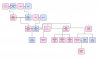
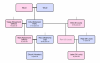
We unfortunately saw a span of EEHV related deaths in a very short amount of time which did likely amount to the apparant stall in breeding. Truthfully (as far as the Asian population goes) the number of births per year has remained fairly constant as of recently with an average of 3-4 births per year (with the amount of surviving calves close to that number) so imo there hasn't been any "improvements" to cause this sudden spike in pregnancy announcements. We just had a "dry" year with 2023 only having one announced birth of the three lol.
I think you are right not to make too much of the current number of announcements.
Truthfully, I do think that the African elephant population is slowly moving out of the darker woods ...! Even so, the African Elephant SSP needs to be careful to keep up the momentum and slowly look at expansion of the number of zoos focussing solely on African elephant. There are still a good number of US/Canada zoos required to expand the African elephant population and set up new matriarchal lineage breeding groups and new bachelor herds and those solely devoted to elderly and non-reproductive individuals.
For Asiatic elephant I am much less enthousiastic to say the least. I feel there is a very long battle uphill ahead to expand the number of breeding groups in US zoos in order to attain some status quo situation and some hope for long term sustainability. It will be interesting to know what AZA Elephant TAG long term vision and focus is for separating into Asiatics and Africans separately.
In my POV there also needs to be more focus:
A) on natural reproduction over AI and invasive reproductive technology (the latter only in case of more longer term "issues" why do our elephants not get pregnant or are mated but nothing ensues...);
B) on vet and animal husbandry and care within the AZA community in terms of health concerns like EEHV, preventative medicine over curative vet intervention, development of vaccination and antibiotica for common elephant health concerns and development of treatment/surgery procedures for colic/arthritis/bone disease/ broken bones - very challenging the latter - et cetera) as well as more focus on research and publishing net results for treatment of health issues in elephants;
C) on creating and developing more natural social structured herds, perhaps with larger facilities even having multiple roles on their site - matriarchal breeding group, breeding bull, bachelor herd and perhaps even an elderly group. I am not advocating for all facilities to do so, just a bare minimum for pilot and the majority focussing on either matriarchal breeding group and a bull facility on site or bachelor group facility or elderly/non-reproductive facility.
For part ... even though I do have my serious reservations given the stance taken by most of these institutions - I think it is an AZA own goal issue - some sanctuaries play that role for now. However, an increasing number of institutions presently as yet still maintain non-reproductive elephants in both mid range and elderly age classes. Quite a number of the latter are presently in the age classes over 40-70 age range (quite a few facilities .... I just cite Cleveland, Colorado, Milwaukee and Rochester) and can only over time become either a new breeding group location or bachelor herd facility.
Another observation I would like to make in terms of the African elephant SSP is that all current facilities with reproductively evaluated as cycling cows should have a breeding bull on site and a facility able to provide separate accomodation and an introduction exclosure available to breed their cycling cow elephants (examples that come to mind here are Louisville and Toledo).