Philippine eagle spotted above Poland and Eastern Germany

Can you specify better a little bit more? Actually i really enjoyed Opole and thought that only very few exhibits are too small (mainly the old bird house)

It felt a bit cramped here and there in the classic area of the zoo: Monkey house, although I loved the atmosphere and brickery of the indoor enclosures, Vivarium, some aviaries, the European roller in Kraina Biorόznorodności (But it might have access to the large avairy on the outside of the building), both gibbon species indoor, the second ocelot enclosure (near the pampa).

But nothing really dramatically bad and most birds and mammals are shown in spacious aviaries and enclosures. Opole certainly is a good and modern zoo. No doubt I wil return there.
 
Day 17. #30 Tierpark Cottbus

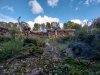
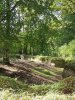
Cottbus Zoo, founded in 1954, is also known as the waterfowl zoo, so it aptly has the Red-breasted goose as a symbol. And waterfowl are ubiquitous on the water features and in large aviaries. Its 25 hectares are part of the 620-hectare Branitzer Park, an English landscape garden dating back to 1847 and located on the outskirts of the city.

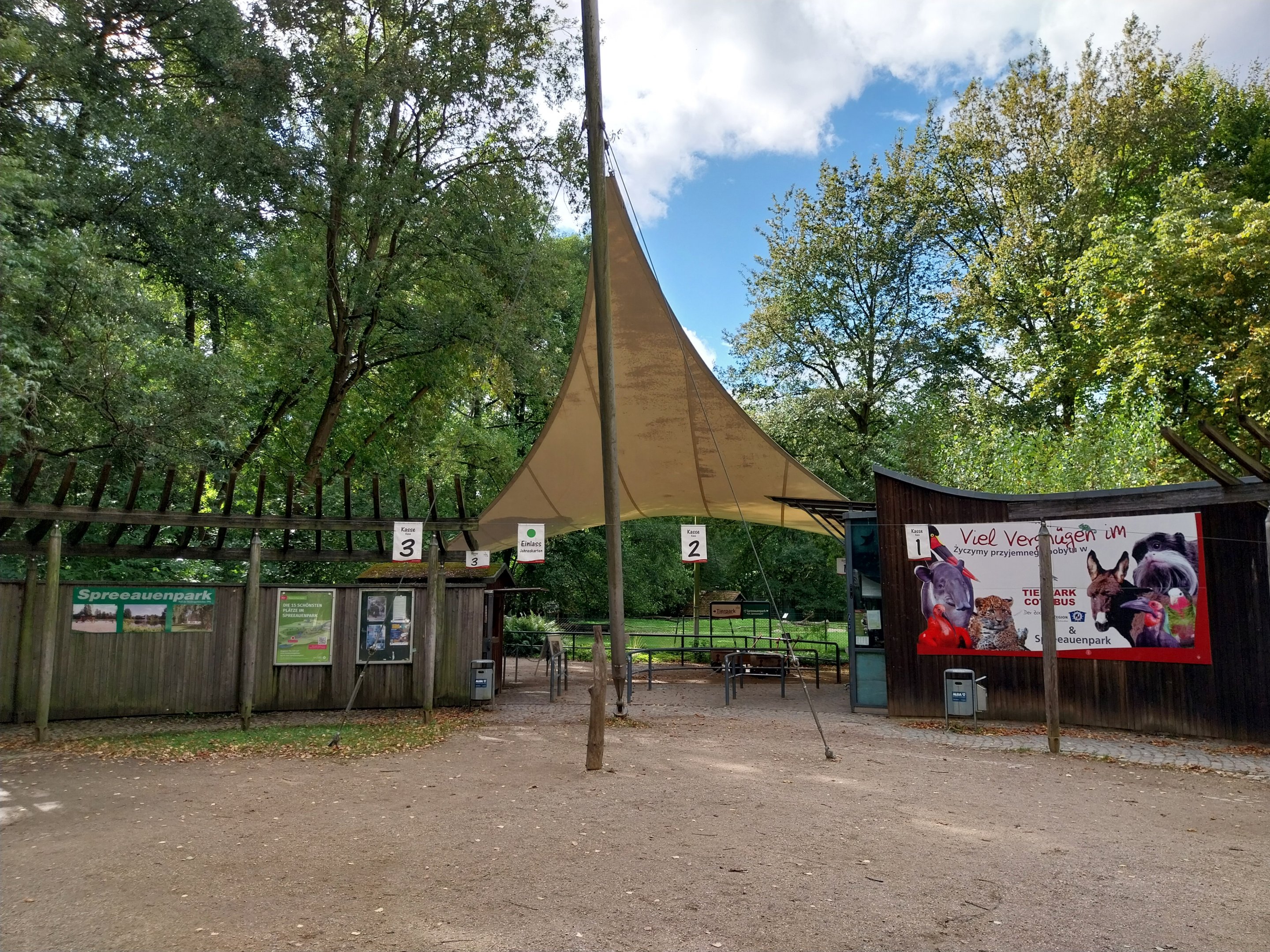
There is a large car park and a modest entrance building. The zoo is bordered by the Spree, which also provides the garden with plenty of water via tributary streams, not surprisingly for a zoo focusing on waterfowl.


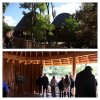
The tour starts modestly with Bennett’s wallaby, Manchurian cranes and a spacious enclosure for Bactrian camels, but the tone is immediately set : a wooded park with large aviaries, spacious hoofed animal enclosures and a few accessible buildings.

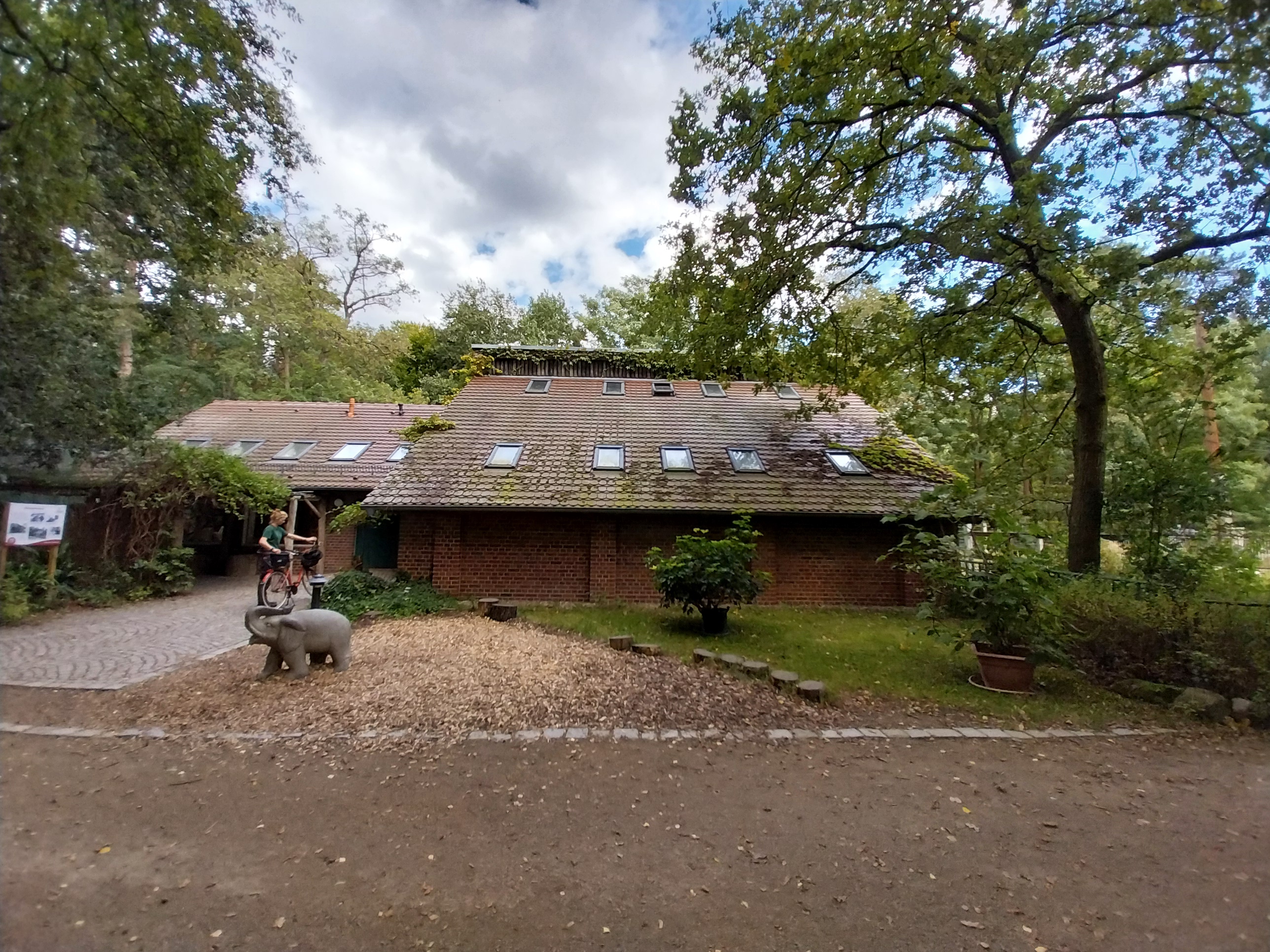
I doubt many visitors will be impressed by the former elephant house but I myself always find it interesting to visit such structures. It starts with a walk-through enclosure for Yellow-spotted rock hyrax, Cape ground squirrel and African Spurred tortoises.

upload_2025-3-17_18-56-53.jpeg

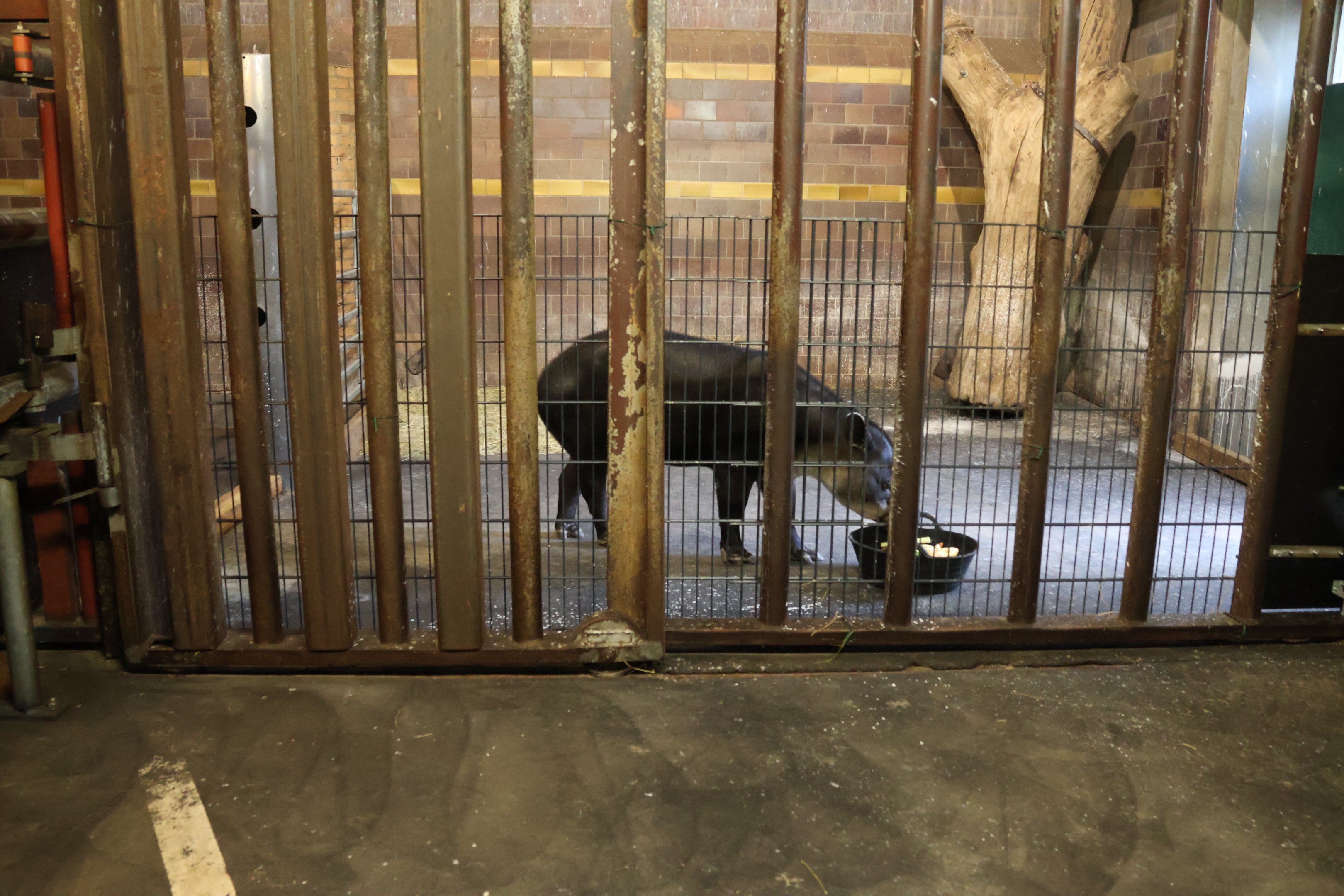
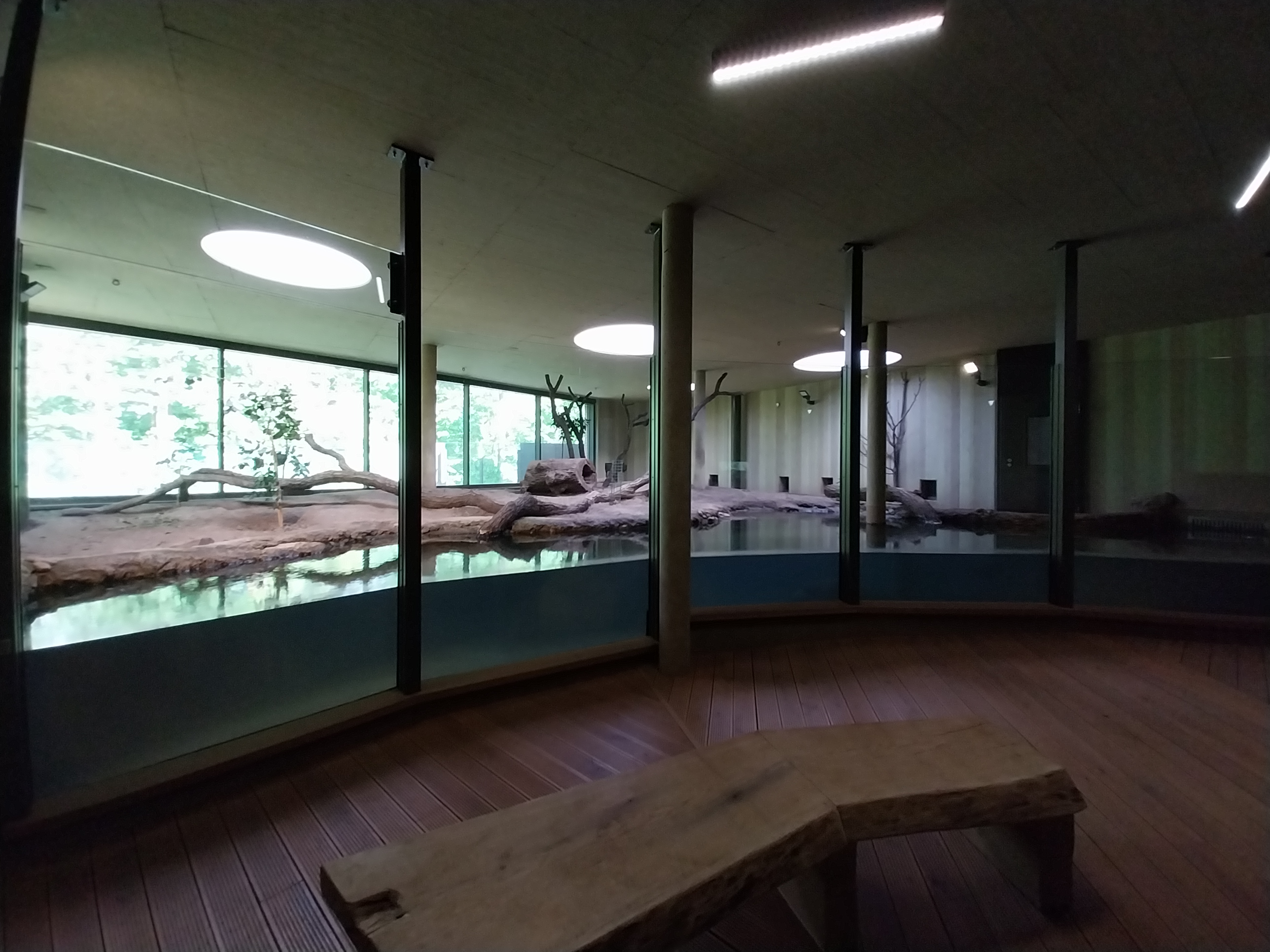
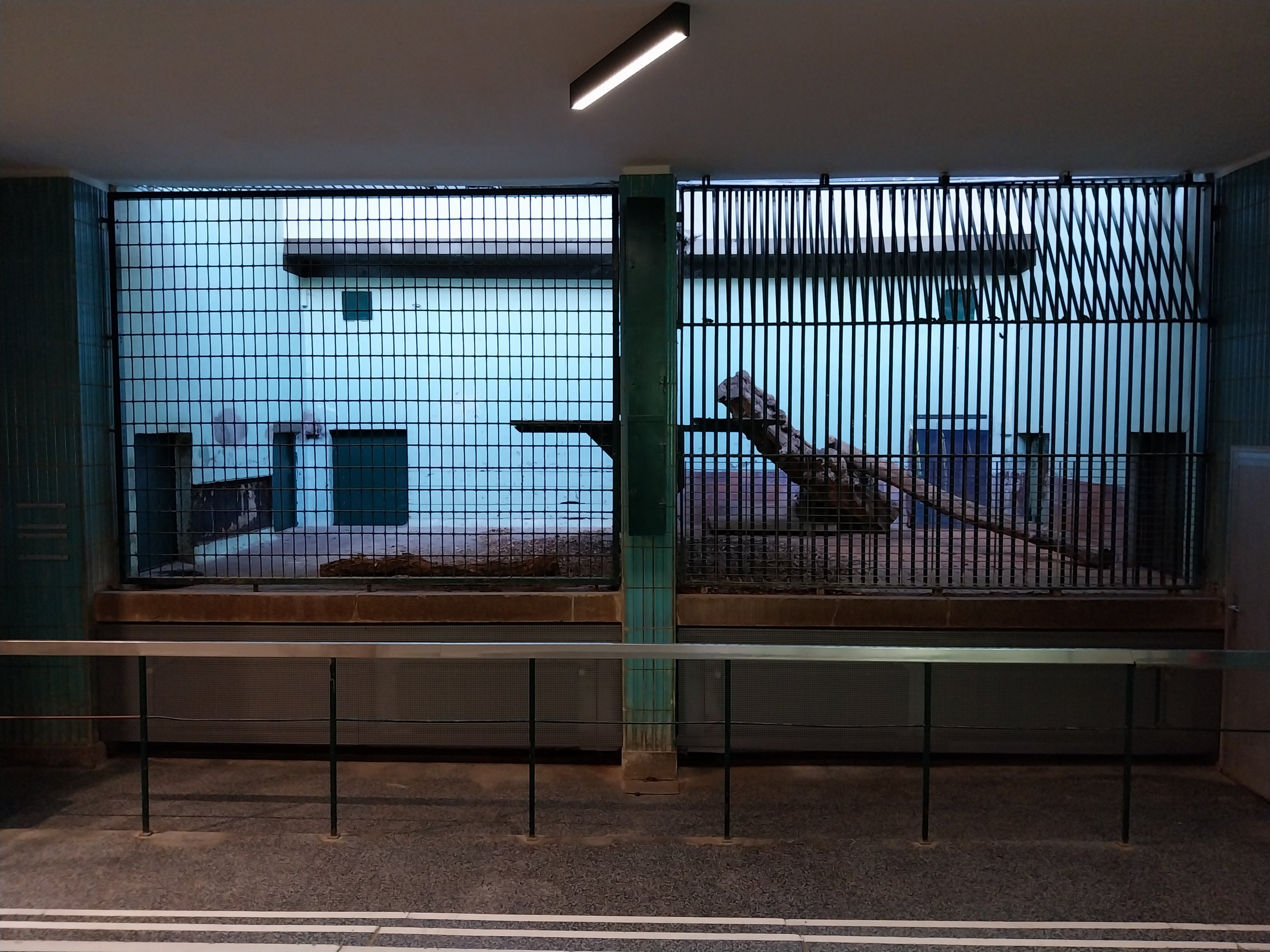
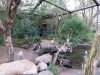
This spacious enclosure is well-structured, and it could actually support a bird species as well. Inside, however, it is a bit too confined and it may have to wait for the other resident to leave before a solution can be worked out. That other resident is a Bairdt tapir, one of three remaining in Europe. Barbary striped grass mouse are also kept here. Furthermore, it is incredible that elephants were ever kept in this building.


Close-by is the Tapir House. At the entrance is a beautifull enclosure for a family group of Bearded emperor tamarin, which have a small but tall exhibit inside the building.

upload_2025-3-17_18-58-12.jpeg
Bearded Emperor Tamarin kingdom

upload_2025-3-17_18-59-16.jpeg

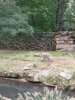
There’s only 1 tapir enclosure inside but outdoors 2 large wooded enclosures provide enough space for the pair of Baird's tapir. Both animals did enjoy the water feature.

upload_2025-3-17_18-59-36.jpeg

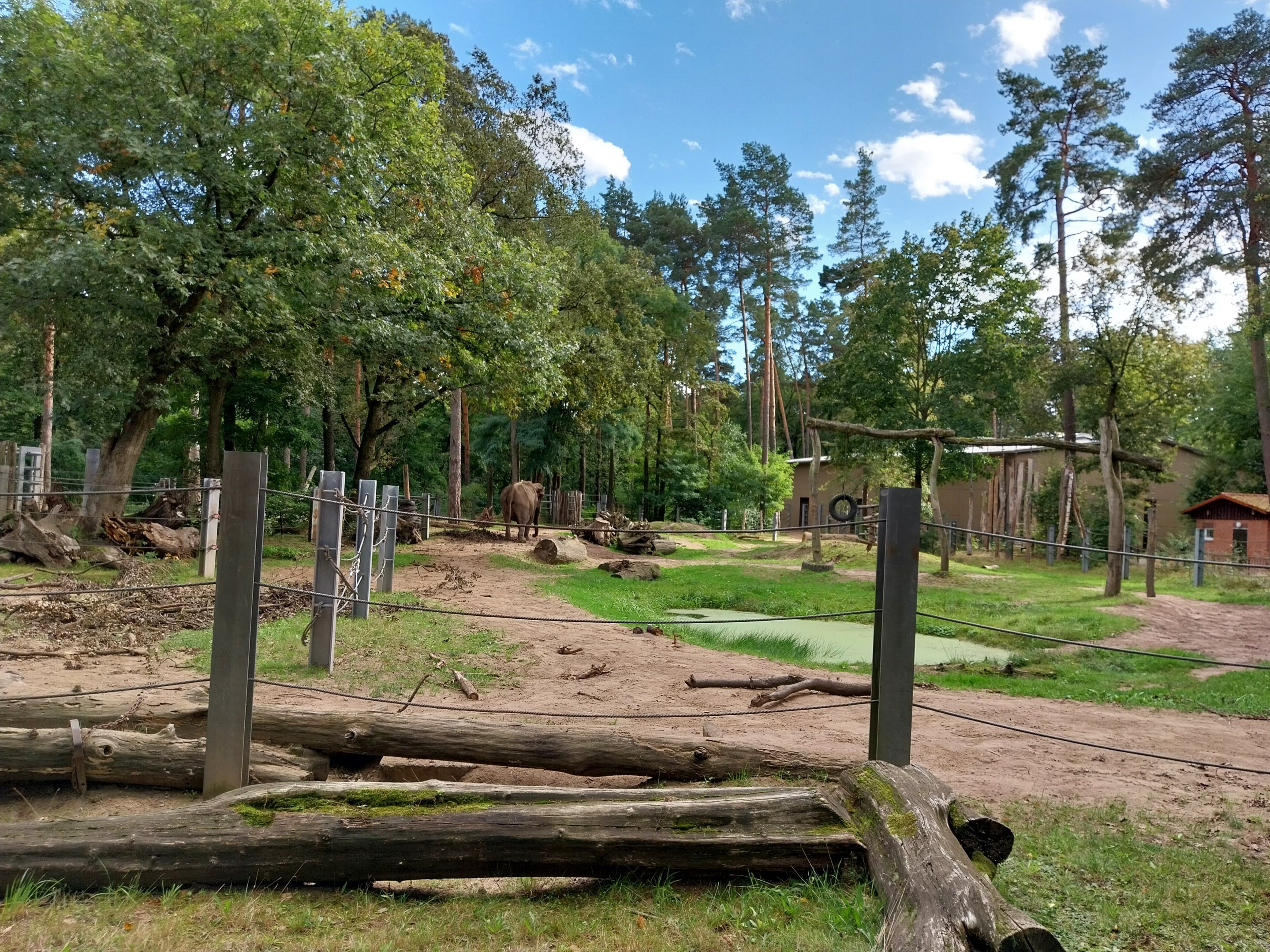
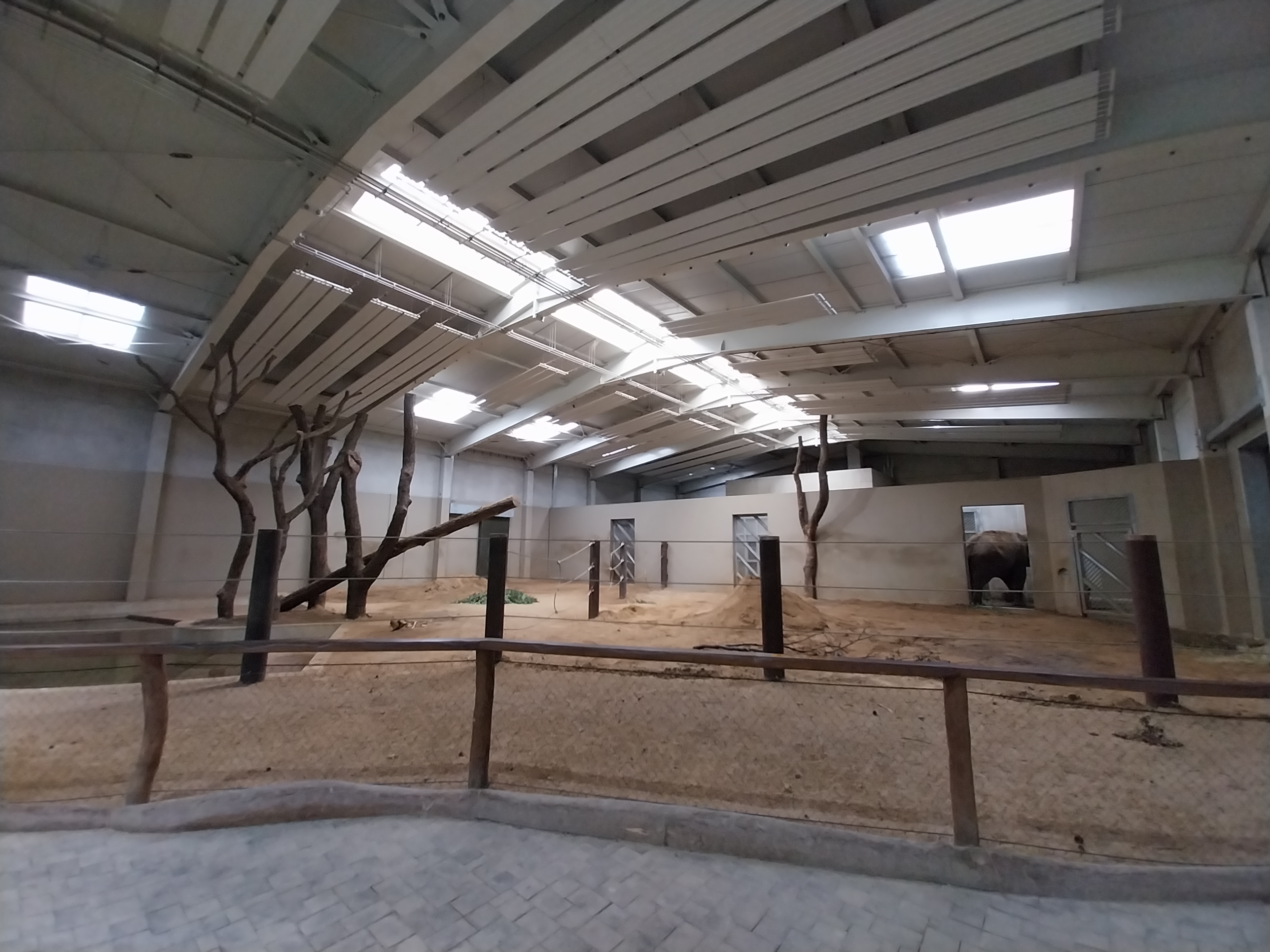
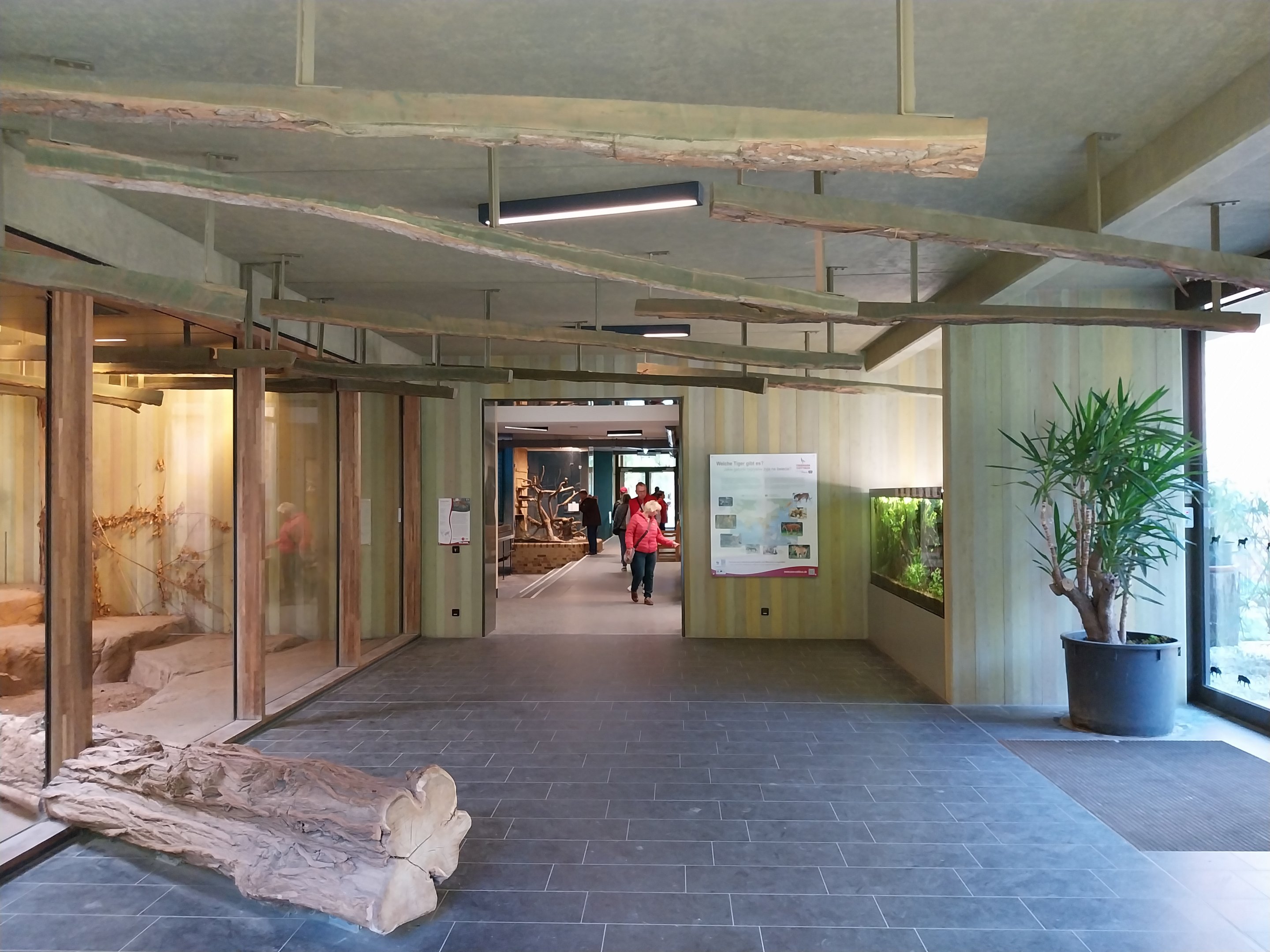
At the backside of the building is the new Elephant House for the zoo’s 2 South East Asian elephant, which have a large outside enclosure. The building is a straightforward industrial hangar without many frills but with everything the animals need : sand floor, water basin, trees to rub against and 4 off show boxes.


Cottbus's Carnivore house is a great example of how medium-sized zoos can still impress: it is large, varied in both enclosures and species, and all this in a very attractive layout. You can walk around the building or cross it inside. Outside are 2 large cages for North Chinese leopards, 1 tiger enclosure, another one for Giant river otter and a cage for Père David rock squirrel. All the enclosures are well laid out according to the needs of the species and although the area is not large, you have to do some searching. The otter enclosure is intersected by a running stream so fresh water (and fish) is guaranteed at all times. The original plans also showed an outdoor enclosure for the mongoose and Fishing cat, and I do not know whether they will realised at a latter stage.

upload_2025-3-17_19-44-32.jpeg

Starting at the main entrance there is a large indoor enclosure with a water feature for the otters. These also have back stage rooms, some of which can be viewed from outside. An aquarium for Four-eyed fish is still under construction. To the right are 4 very classic cages for leopards, which also used to house the tigers. In the middle is a rather barren terrarium for Boa constrictor.


To the left is an enclosure for Ring-tailed mongoose, unfortunately at this moment these do not have outdoor access.


The Sumatran tiger live in the new extension; the building has a number of off-show boxes but for visitors there is an attractive on-show exhibit.

upload_2025-3-17_19-9-25.jpeg

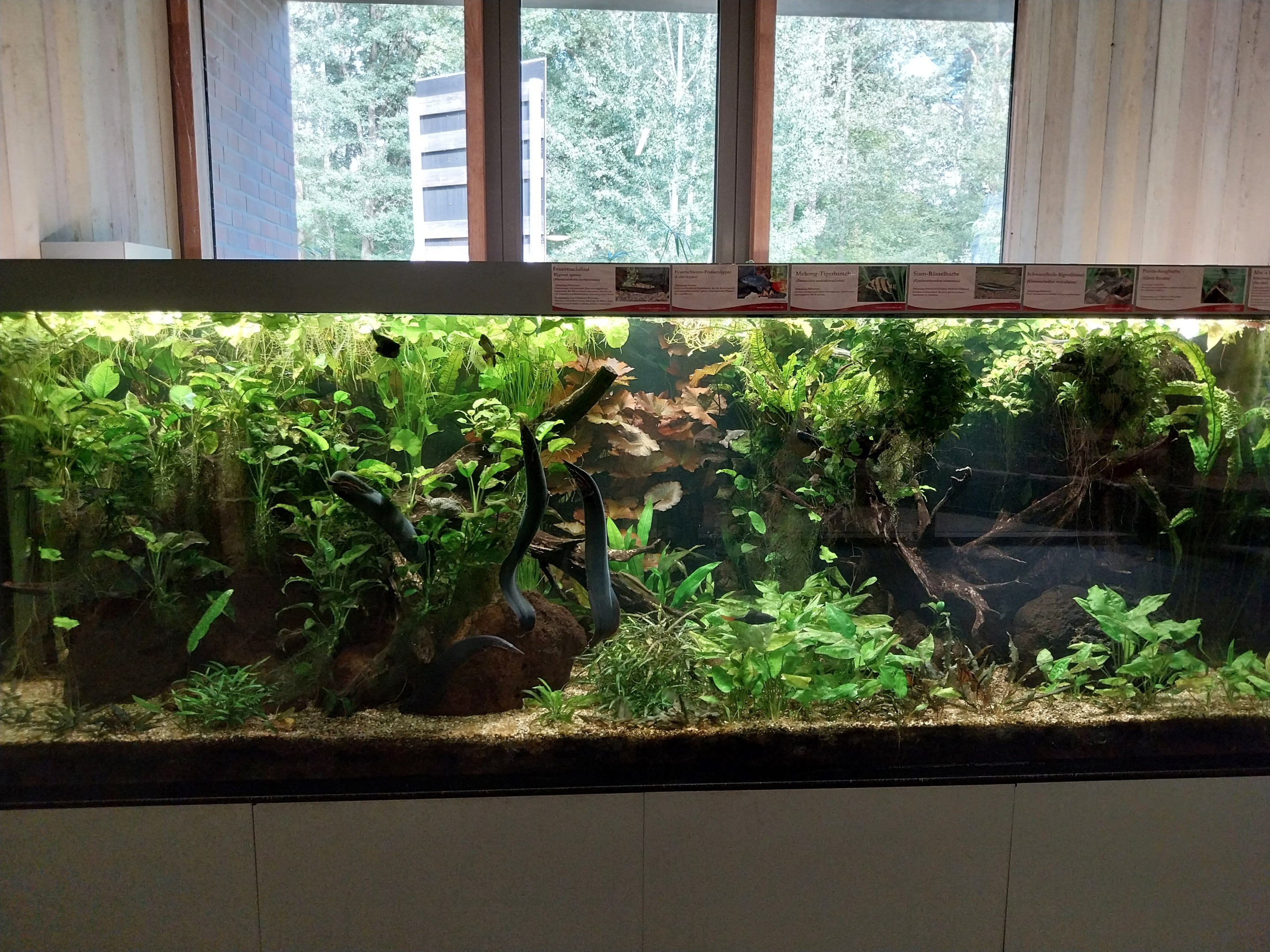
Other exhibits include a terrarium for Cornsnake, an enclosure for Pére David's rock squirrel and a stunning aquarium with Red-tailed black shark, Silver flying fox, Panda garra, Mekong tiger perch, Abe’s pufferfish, Gray flying fox and 4 beautifull Fire eel. It’s an absolute outstanding tank and one of only 2 in the zoo (the other is in the zoo’s restaurant).


Cottbus has a long tradition in storks. Nowadays Saddle-billed stork, Marabou and Oriental stork are the 3 species on show but Asian woollyneck can be watched with a bit of luck in their off-show aviary. Marabou can be seen in several aviaries spread out through the park.

upload_2025-3-17_19-1-33.jpeg

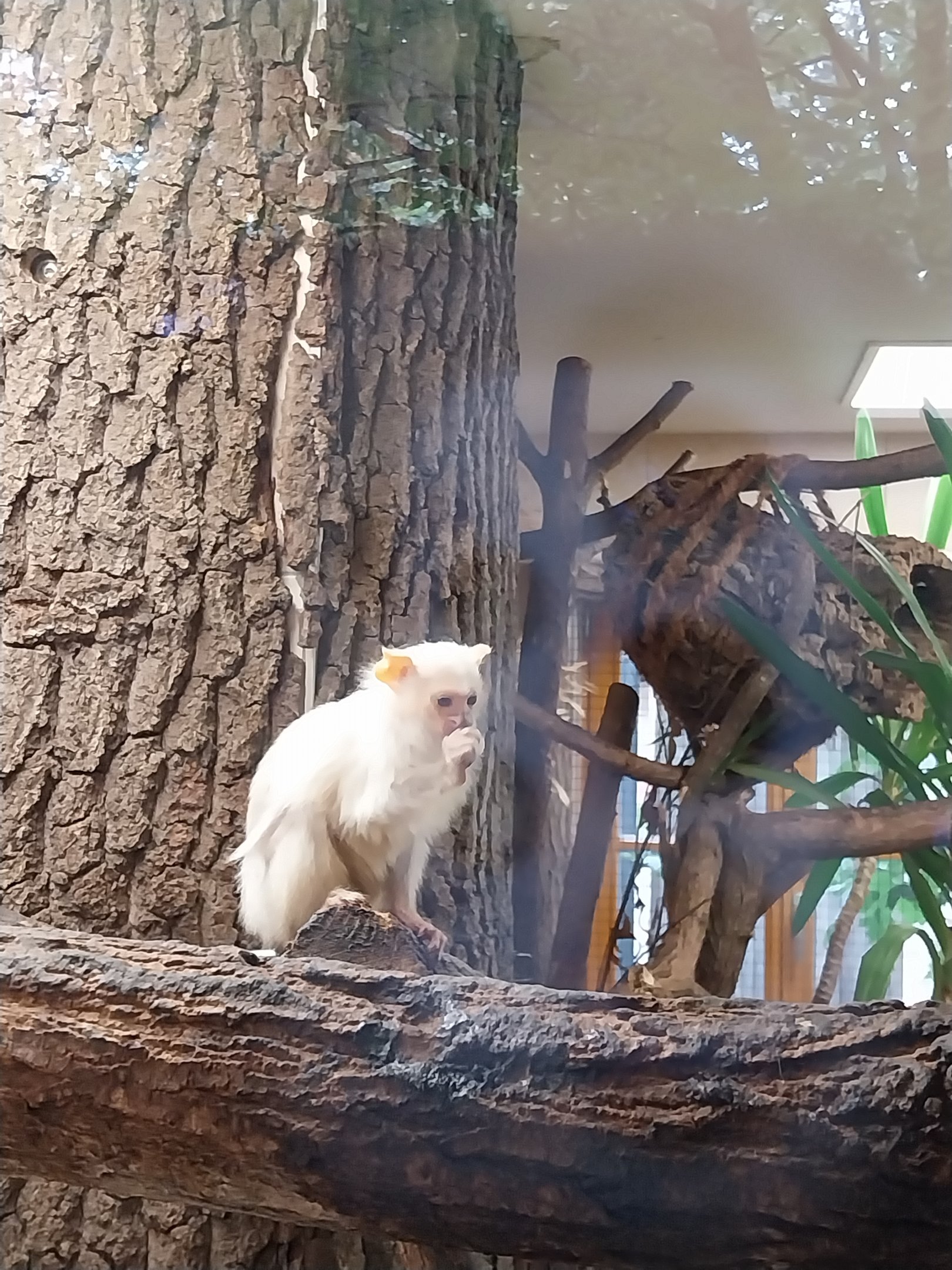
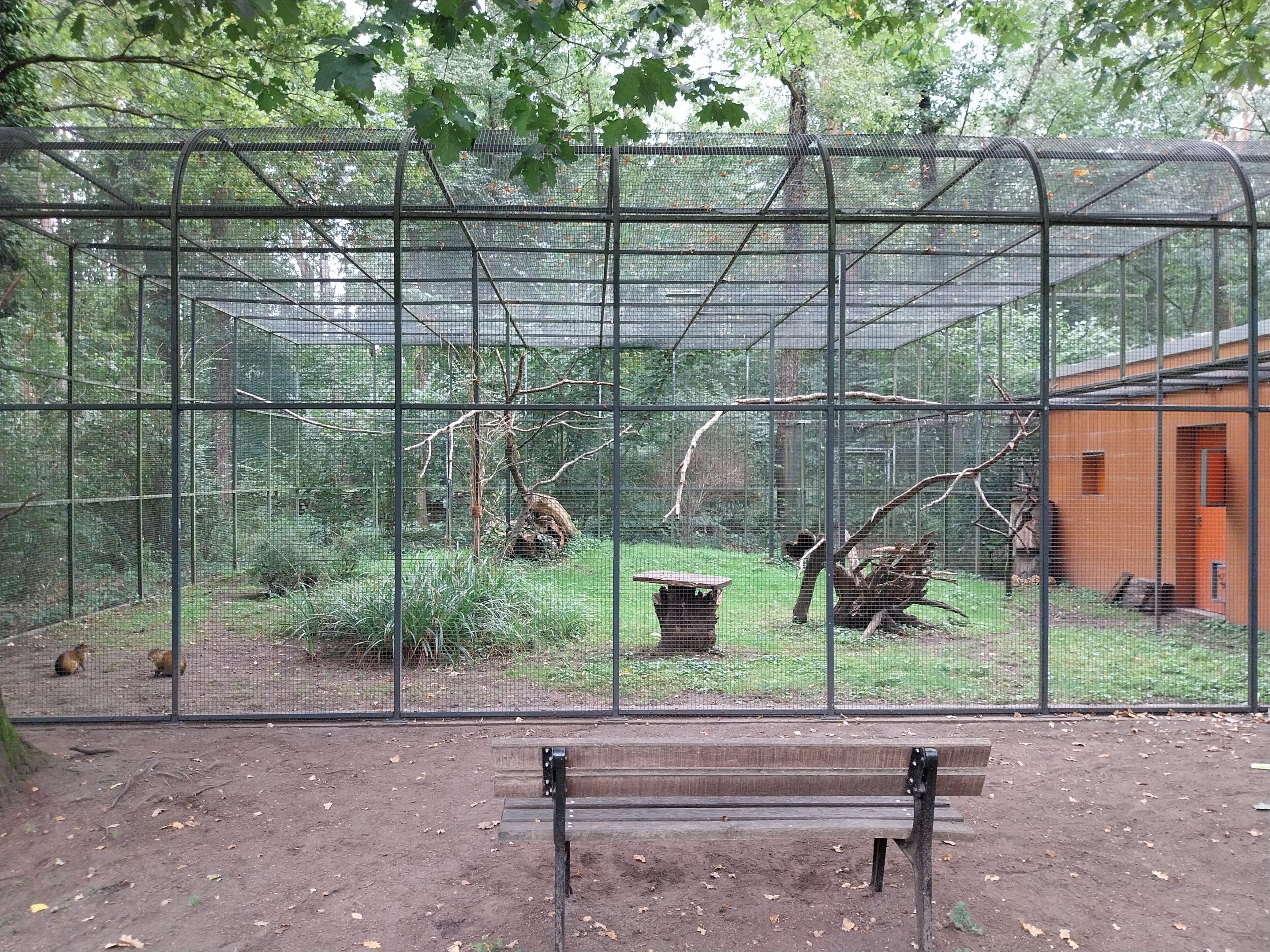
There’s a large Children Farm Zoo which starts with a large densely planted aviary for Silvery marmoset and Lowland paca, and both can also be watched in their winter quarter. The rest of this area consist mostly of farmyard animals but next to the Tierpark Kiosk stands a large aviary for Ararauna and Black-rumped agouti, and an enclosure for Water buffalo.


A loop leads through a huge walk-through enclosure for Patagonian mara and 2 aviaries for Marabu and White-winged wood duck. The zoo has several pairs of the latter. Then follows an absolutely stunning free-flight aviary for American flamingo and several duck species, and 2 old side aviaries for Kookaburra and the largest group of Southern boat-billed heron I have ever seen.

upload_2025-3-17_19-2-38.jpeg

Another large aviary has a single Oriental stork, Comb duck, White-winged wood duck, Baikal teal and Eastern spot-billed duck. It’s ducks everywhere: left and right, front and back.

Nice enclosures for Ring-tailed lemur and Northern lynx lead to an empty one that easily could be a very good Pygmy hippo exhibit and aviaries for King vulture and Striated caracara.

This side of the zoo is the home for some large groups of ungulates, starting with domestic Reindeer and Yak. But the absolute top notch exhibit is the large enclosure for an impressive herd of 11 Javan banteng, including several young, and Axis deer. I have a soft spot for wild bovids and it was great to see such a large herd of banteng. It is actually incredible that so few zoos are interested in this species. The quite cold east of Germany is of course very far from the magnificent jungle backdrops that @snowleopard has seen at the banteng enclosures in Thailand and Malaysia. No matter how good it is in Cottbus, it cannot compete with those overthere.

upload_2025-3-17_19-3-18.jpeg

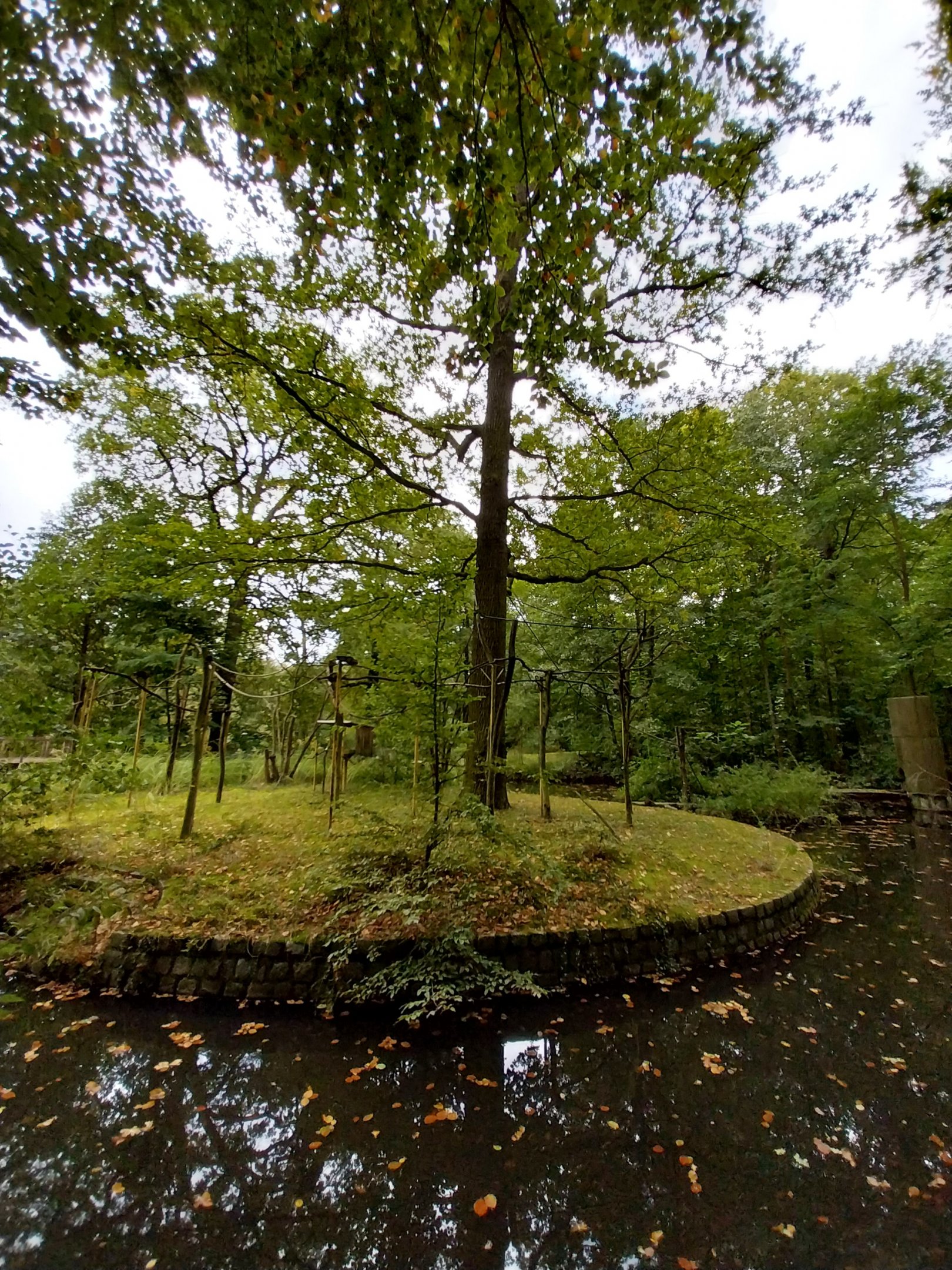
The very modest Gibbon House gives access to a small island with a tall deciduous tree to which the animals have full access. Far preferable to the sometimes stereotypical climbing poles and ropes.


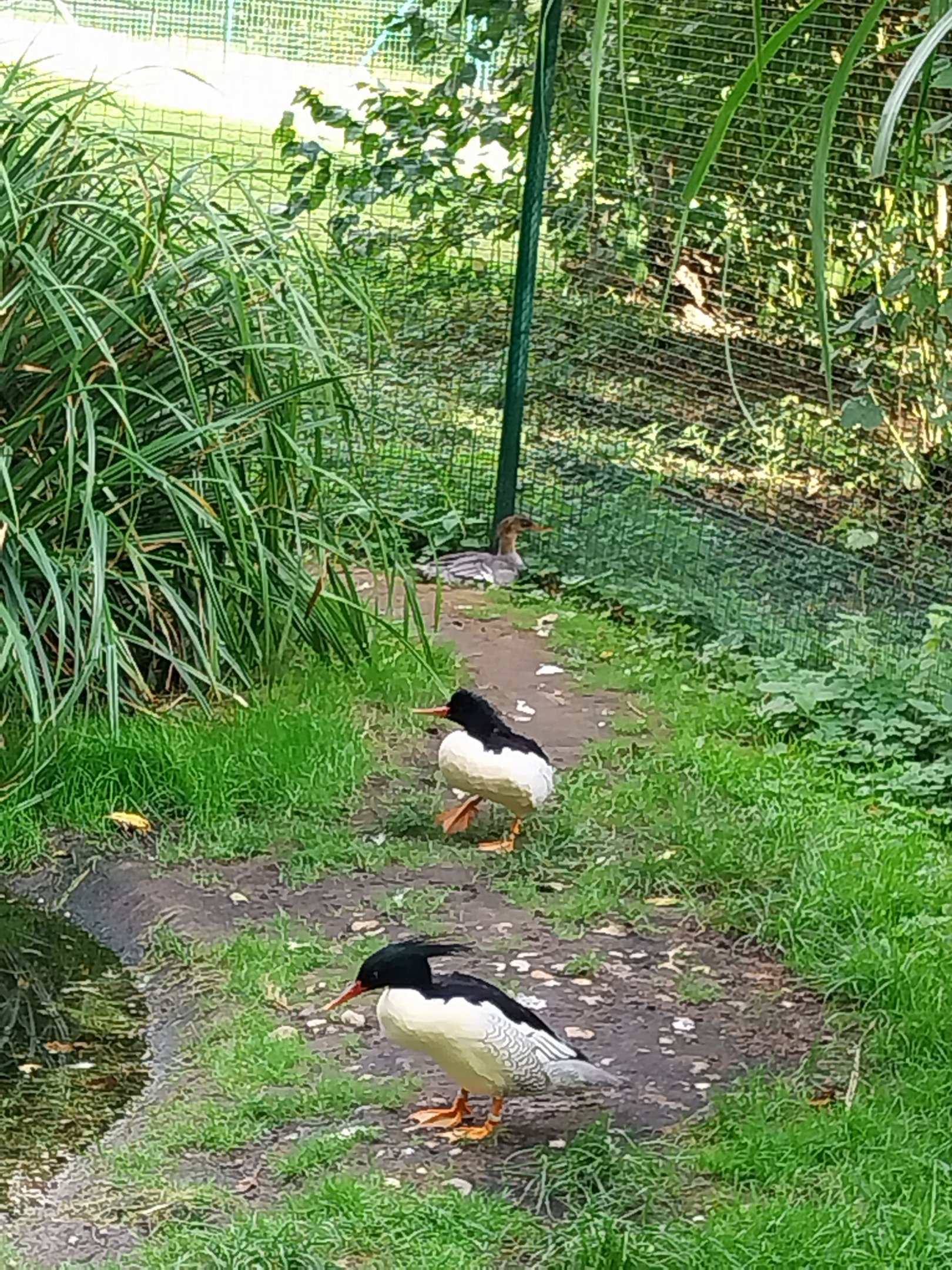
Other species in this area include Quiller, rarely shown Australian and widespread American white pelican and a goose meadow with Emperor, Hawaiian, Black brand goose. A couple of aviarias show Marabou, Scaly-sided merganser, Baikal teal, Bear’s pochard and Ruddy-headed goose.


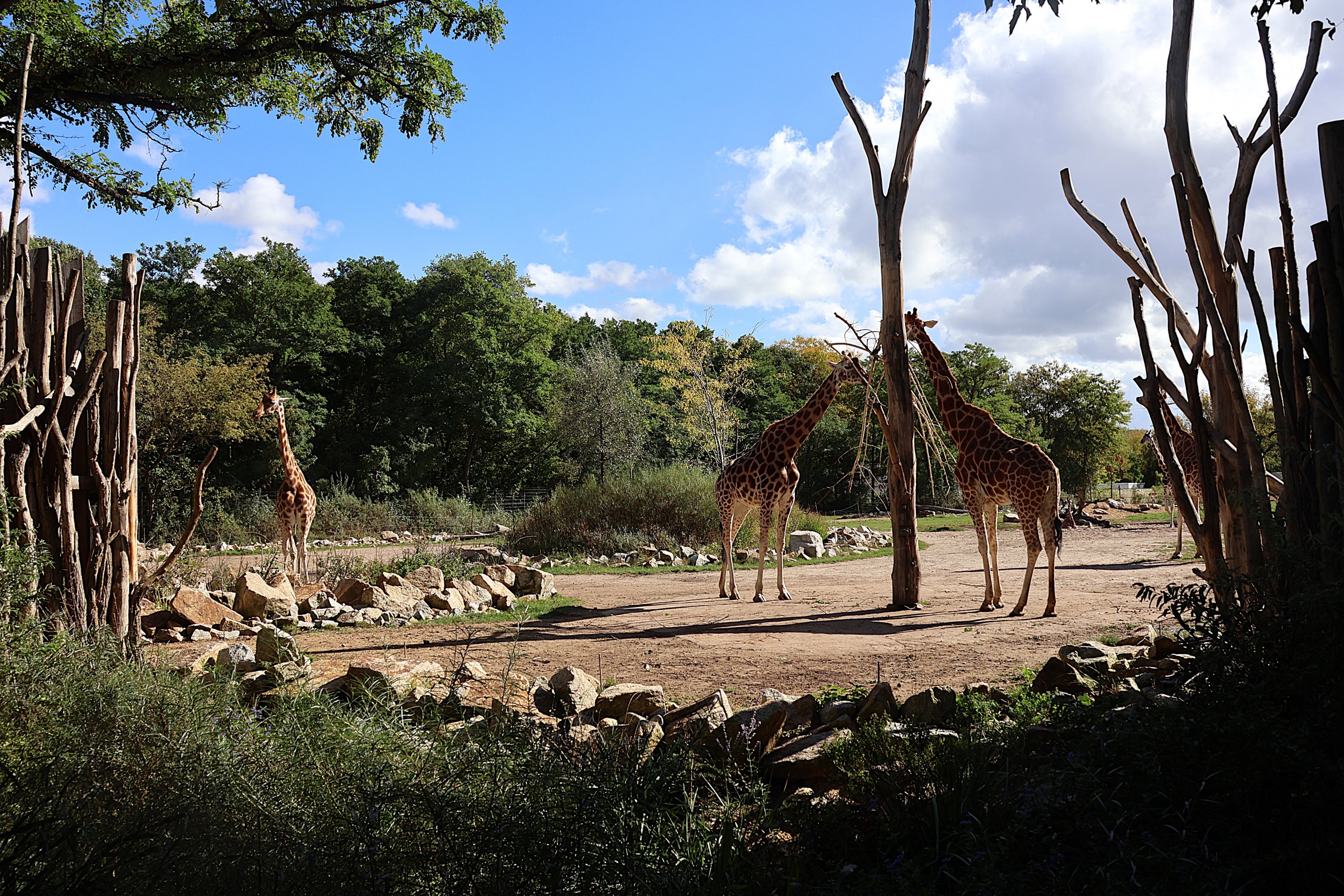
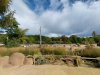
A vast African savannah blends seamlessly into its surroundings, and with the exception of a water moat, there are hardly any barriers. Great White Pelican, Common eland and Grant's zebra live here, while European bison and Przewalski’s horse live nearby in equally spacious enclosures.

upload_2025-3-17_19-7-55.jpeg

Conclusion

I liked Cottbus a lot. It might be a bit boring at first sight, but it’s full of charm and has a surprisingly good species line-up. While it obviously cannot compete with the giants in Berlin, Leipzig and even Dresden, it is still an interesting zoo with a distinctive look. And although waterbirds appeal to me very little, I must confess that I enjoyed the collection. Although the mammal collection is limited, there is plenty in there for those of us who want to see some more unusual species.

Tomorrow: another zoo with neither turaco nor hornbill. That might get boring.
 

Attachments

  • upload_2025-3-17_18-56-53.jpeg
    upload_2025-3-17_18-56-53.jpeg
    251 KB · Views: 168
  • upload_2025-3-17_18-58-12.jpeg
    upload_2025-3-17_18-58-12.jpeg
    311.9 KB · Views: 158
  • upload_2025-3-17_18-59-16.jpeg
    upload_2025-3-17_18-59-16.jpeg
    189.8 KB · Views: 161
  • upload_2025-3-17_18-59-36.jpeg
    upload_2025-3-17_18-59-36.jpeg
    225.7 KB · Views: 155
  • upload_2025-3-17_19-1-33.jpeg
    upload_2025-3-17_19-1-33.jpeg
    356.3 KB · Views: 157
  • upload_2025-3-17_19-2-38.jpeg
    upload_2025-3-17_19-2-38.jpeg
    251.5 KB · Views: 151
  • upload_2025-3-17_19-3-18.jpeg
    upload_2025-3-17_19-3-18.jpeg
    335.5 KB · Views: 170
  • upload_2025-3-17_19-7-55.jpeg
    upload_2025-3-17_19-7-55.jpeg
    170.4 KB · Views: 164
  • upload_2025-3-17_19-9-25.jpeg
    upload_2025-3-17_19-9-25.jpeg
    174.9 KB · Views: 158
  • upload_2025-3-17_19-44-32.jpeg
    upload_2025-3-17_19-44-32.jpeg
    231.6 KB · Views: 162
I'll be visiting Cottbus next month (along with Dresden, Chemnitz, Gorlitz, Erfurt and a few others) and your review made me look forward to it even more!
 
I'll be visiting Cottbus next month (along with Dresden, Chemnitz, Gorlitz, Erfurt and a few others) and your review made me look forward to it even more!

I have no doubt you will enjoy this one (and the others) Ralph.

If you want to get a glimpse of the Asian Woollyneck stork, you should take a look behind the scenes at the Saddle-billed stork aviary
 
I really like Cottbus, the setting is lovely and it shows how much can be reached with a low budget, while still providing attractive enclosures. Nothing too much out of the ordinary and some fantastic DDR architecture, but just a lovely place to go for a stroll.

Tomorrow: another zoo with neither turaco nor hornbill. That might get boring.

Somehow sounds like Tierpark Berlin :p
 
I have no doubt you will enjoy this one (and the others) Ralph.

If you want to get a glimpse of the Asian Woollyneck stork, you should take a look behind the scenes at the Saddle-billed stork aviary

Thanks for the tip. I should see some woollynecks in Berlin and Leipzig as well as I will be revisiting those zoo on this trip.

I'm glad to see some benches in front of the saddlebill aviary. I love this species so it seems like a good place for a short break.
 
Day 18. #31 Tierpark Friedrichsfelde

I had only 1 day in Berlin and decided to visit the Tierpark as my last visit there dates back from 2011.

The Tierpark was only founded in 1955, making it Europe's youngest giant except for the new kids Beauval and Pairi Daiza. That was a result of the post-war partition of Europe which meant that a counterpart to the famous zoo in West Berlin had to be created. The location chosen was the Schlosspark Friedrichtsfelde, whose early-classical Rosenfelde Castle dates back to 1685 and whose site was expropriated in1945. Stately avenues, wooded areas and large open expanses characterize the 160 ha park, and in between, large landscaped and rocky enclosures were created for ungulates and carnivores. To this day, that is how most visitors experience the Tierpark.

upload_2025-3-27_18-23-15.jpeg
Classic park view

Part I. Of pheasants and lemurs

Unlike all my previous visits, this time I started at the Schloss entrance, and visited the Pheasantry first. With no other visitors, it would hopefully give me a chance to see all the birds. I was not disappointed, spite a hyperactive noisy toddler who ran from one aviary to another. Sadly I missed the Red-bellied leiothrix and the Scarlet-faced liocichla, although I patiently waited and screened both whole aviaries several times. But I have seen all other species, be it sometimes after long waiting. It starts with 4 parrot aviaries (2000) and followed by 24 aviaries for Phasianidae, laughingthrushes and allies. The Tierpark has a great tradition in the latter and at this day 13 species are present.

Species list (bold = seen)

1. Berniers teal and Red-fronted macaw
2. Congo grey parrot
3. Empty
4. Buffon’s macaw
5. Temmink tragopan and White-crested laughing-thrush
6. White-eared pheasant and Eastern spotted dove
7. Vietnam pheasant
8. Blue-eared pheasant and Chinese hwamei
9. Blue-eared pheasant and White-crested laughing-thrush
10. Cabbot’s tragopan

upload_2025-3-27_18-24-50.jpeg
Cabot's Tragopan (Tragopan caboti)
11. Black-necked crane
12. Red-crowned crane
13. Collared hill partridge
14. Bali myna
15. Chinese hwamei
16. Cheer pheasant and Red-tailed laughing-thrush
17. Cheer pheasant
18. Mikado pheasant

19. Emei Shan liocichla
20. Vietnam pheasant and Red-billed leiothrix
21. Vietnam pheasant and Asian asure-winged magpie
22. Himalayan monal and Black-breasted thrush
23. Elliot’s pheasant and Black-breasted thrush
24. Reeve’s pheasant
25. Vietnam pheasant and White-browed laughing-thrush
26. Red-billed blue magpie
27. Cheer pheasant

28. Berlioz silver pheasant, Chestnut-winged laughingthrush and Scarlet-faced liocichla

I stupidly missed the most southern part of the Karl Foerster Garten, with the Brown eared pheasant and, worse, the Red-and-White giant squirrel.

It seems to me that the number of pheasant species has dropped significantly anyway, I can't recall seeing that many Vietnam, Cheer and Blue-eared pheasant in the past (I should check my notes from the early 2000s again). Compared to previous visits in the years 2007-2011, the decrease includes Blyth's tragopan, partridges (Arabian, Daurian, Philby’s rock), Ijima copper pheasant, Himalayan snowcock, as well as the number of laughingthrushes and allies. Completely gone, however, are the other songbirds: Indian jungle myna, Black-tailed hawfinch, Japanese waxwing, Collared grosbeak, Desert finch, Chinese babax, Rosy starling, Bearded parrotbill, Long-tailed rosefinch, Blue & White flycatcher, Black-collared starling, Eurasian bullfinch, Long-tailed sibia. In its 70 years of existence, the Tierpark kept 51 species of tangare and currently this has been reduced to none. Isn't that tragic?

upload_2025-3-27_18-35-13.jpeg
Chestnut-winged Laughingthrush - Chinese Spotted Dove - White-browed Laughingthrush

While it remains one of my favorite parts of the Tierpark, the deterioration is undeniable, not only in terms of the collection, but also the aviaries themselves: that green latticework is quietly going out of style. On their own, they are still sufficant, being large enough and nicely planted and perfect for the species in which the Tierpark has a long tradition. But they, like the part of the park in which they are located, seem to be getting a bit forgotten.

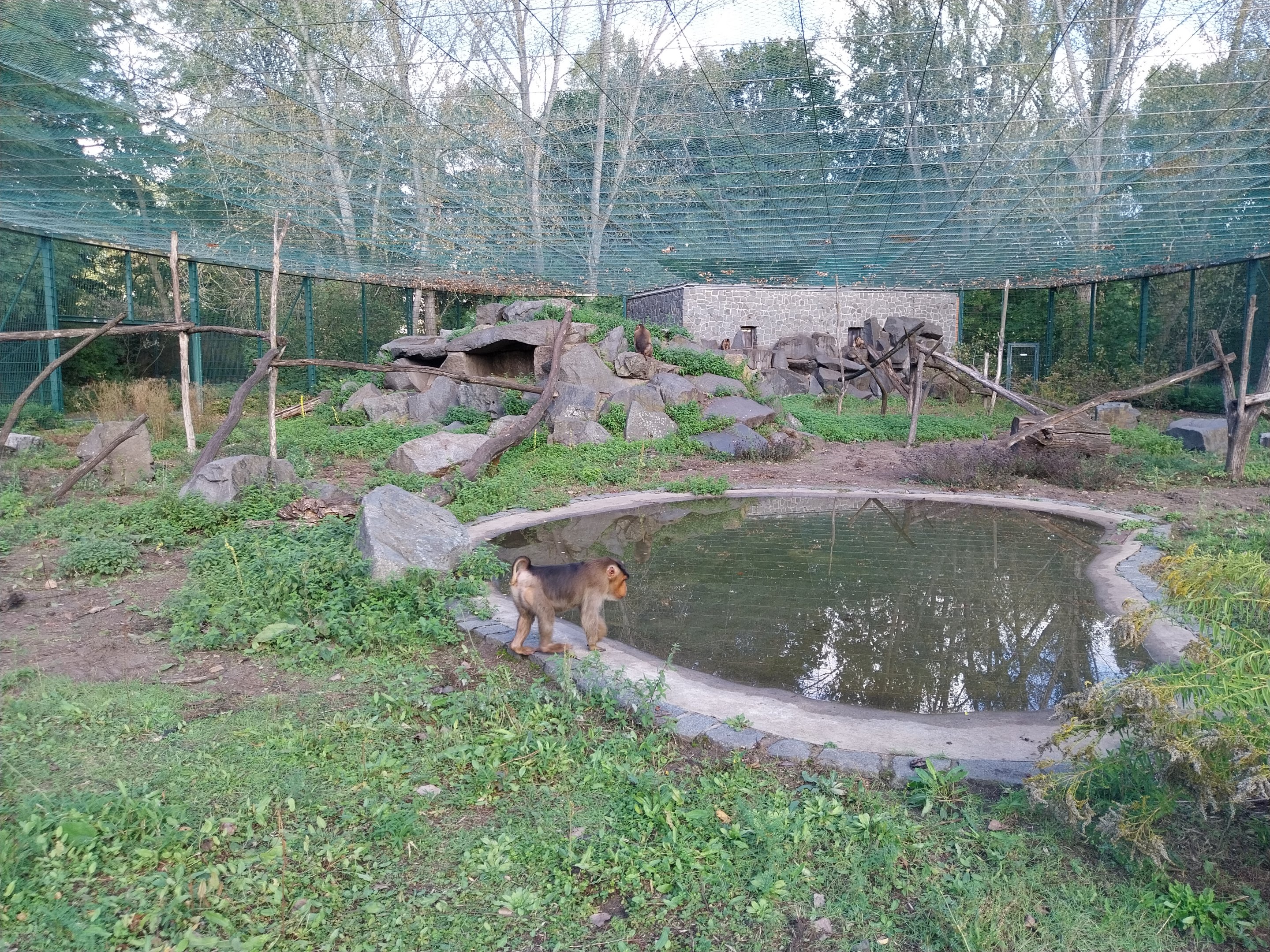
The large exhibit at the Karl-Foerster Garden, named after the German gardener-writer-philosopher, hold a bachelor group of Sunda Pig-tailed macaque (2003, original with Japanese macaque).


The road to the monkey house is the Tierpark at its best: very spacious enclosures for mostly Asiatic ungulates surrounded by greenery. Not much has changed here, with breeding herds of Milu, Prezwalski horses, Barren Ground Musk ox, Mitshmi takin and Kulan, kept in large landscape enclosures.

upload_2025-3-27_18-27-37.jpeg
Taiga Musk Deer - Milu - Przewalski's horse - Eastern Kiang

Among the real rarities are the Siberian Musk Deer (along with White-necked Cranes) and Snow Goats. Other species in this area : Lar gibbon, Ring-tailed lemur, a lonely Eastern Kiang and herds of Kerabau, Cape and Red Forest buffalo, and Red river hog.

upload_2025-3-27_18-27-0.jpeg
Rocky Mountain Goat (Oreamnos americanus)

After the closure of the Schlangenfarm (1956-2017) and the Crocodile House (1987-2021), the Tierpark has surprisingly few accessible buildings for a zoo of this size. Only in 2000 did it get a Monkey house, and given its location near the African bovids, it was initially given an African interpretation: Debrazza & Common mona guenon, Patas monkey and Cherry-crowned mangabey.

It is surrounded on all sides by large enclosures and cages, and it is getting better with each visit. The Gelada baboons are the only original species and inhabit spacious islands connected by logs.

upload_2025-3-27_18-33-39.jpeg
Gelada Baboon (Theropithecus gelada)

At the front of the building are 2 very huge exhibits that looked very bare in 2000, but anno 2025 the first is the perfect abode for a group of Roloway guenon (which were at the time of my visit kept at the other side of the garden).

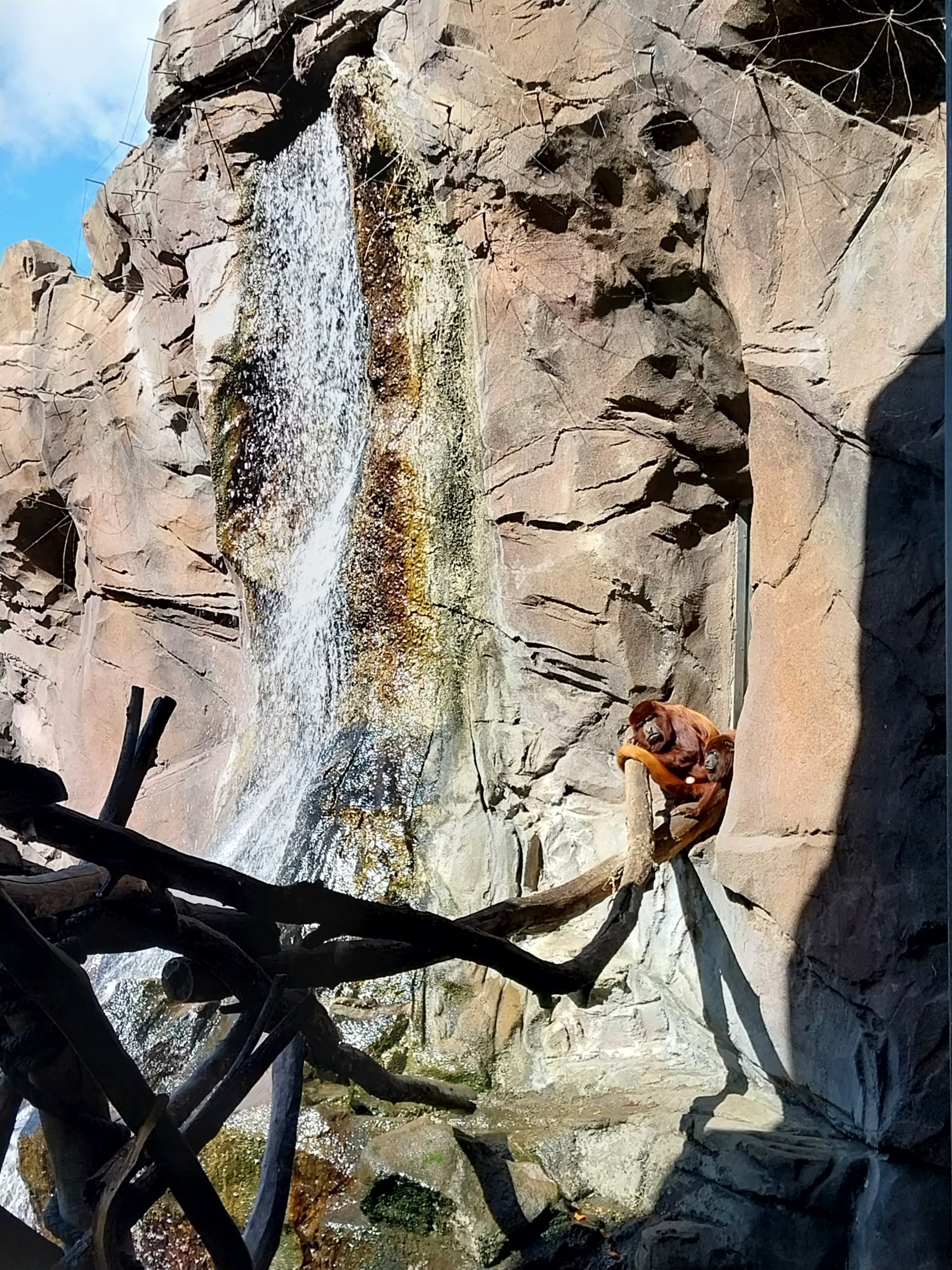
The largest is given a completely South American interpretation with Yellow-breasted capuchin, Red Howler monkey, Guinean bearded Saki, White-bearded Saki and Lowland paca.

upload_2025-3-27_18-26-31.jpeg
South America exhibit


All of these can also be viewed inside the building, which otherwise presents itself more and more like a real Madagascar building.

That already starts outside near the entrance with a magnificent enclosure for Radiated tortoise, Collared, Red-bellied and Red ruffed vari. It has a bit of a Mediterranean look in terms of vegetation and I am not sure if all lemur species have common access to it, but it is a stunning exhibit.

upload_2025-3-27_18-25-56.jpeg
Madagascar mixed species exhibit


Inside, lemurs can be seen in 2 enclosures, immediately followed by other bamboo-decorated exhibits for 2 pairs of Coquerel's sifaka. Viewing windows also give a glimpse into the outdoor enclosure.

upload_2025-3-27_18-26-13.jpeg
Coquerel's Sifaka (Propithecus coquereli)


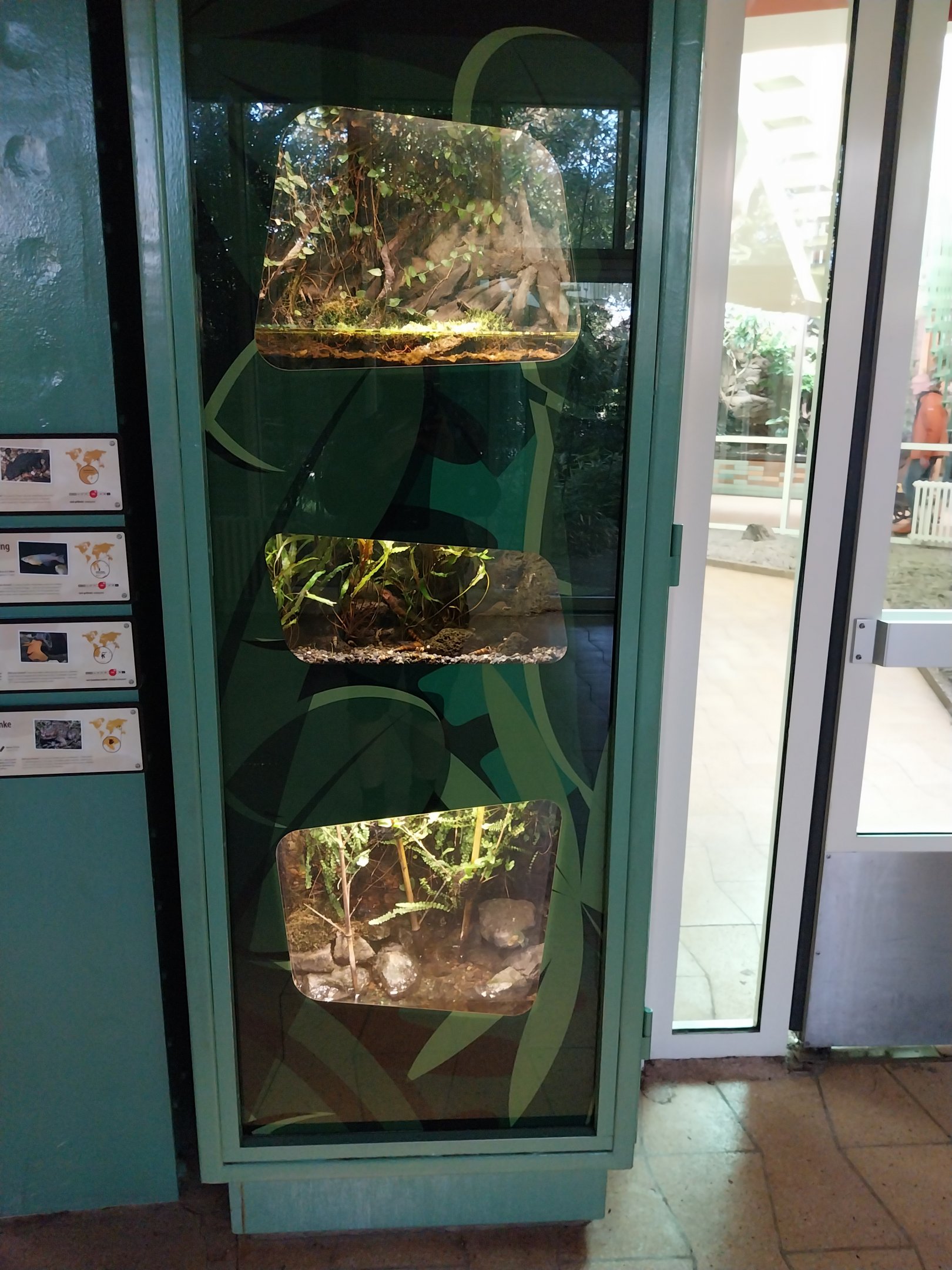
In the middle are several terrariums with Maranon poison frog, Golden mantella, Yellow-headed day gecko and Common Madagascar Fire-millipede.


At the time of my visit, part of the building was closed because of the arrival of a spectacular newcomer: Aye-aye, besides Frankfurt only seen here in continental Europe.

upload_2025-3-27_18-28-19.jpeg
Guinean Bearded Saki (Chiropotes sagulatus)

The revamped monkey house proves that the direction the Tierpark wants to take does not consist only of easy choices and that many species will remain or be added that are also of interest for the Zoochatter connoisseur. Not everyone likes the building but I am a fan of it by all means. It is correct that there is a lot of public space inside and some of that could have been better spent on larger indoor enclosures. The evolution toward a Madagascar house is interesting, and so it seems that the conversion to a building with an Asian infill envisioned in the master plan is not for the immediate future.
 

Attachments

  • upload_2025-3-27_18-23-15.jpeg
    upload_2025-3-27_18-23-15.jpeg
    169.6 KB · Views: 127
  • upload_2025-3-27_18-24-50.jpeg
    upload_2025-3-27_18-24-50.jpeg
    263.8 KB · Views: 125
  • upload_2025-3-27_18-25-56.jpeg
    upload_2025-3-27_18-25-56.jpeg
    214.2 KB · Views: 139
  • upload_2025-3-27_18-26-13.jpeg
    upload_2025-3-27_18-26-13.jpeg
    183.2 KB · Views: 126
  • upload_2025-3-27_18-26-31.jpeg
    upload_2025-3-27_18-26-31.jpeg
    195.6 KB · Views: 133
  • upload_2025-3-27_18-27-0.jpeg
    upload_2025-3-27_18-27-0.jpeg
    261.7 KB · Views: 132
  • upload_2025-3-27_18-27-37.jpeg
    upload_2025-3-27_18-27-37.jpeg
    231.8 KB · Views: 135
  • upload_2025-3-27_18-28-19.jpeg
    upload_2025-3-27_18-28-19.jpeg
    155.7 KB · Views: 134
  • upload_2025-3-27_18-33-39.jpeg
    upload_2025-3-27_18-33-39.jpeg
    287.1 KB · Views: 133
  • upload_2025-3-27_18-35-13.jpeg
    upload_2025-3-27_18-35-13.jpeg
    178.8 KB · Views: 124
Day 18. #31 Tierpark Friedrichsfelde

I had only 1 day in Berlin and decided to visit the Tierpark as my last visit there dates back from 2011.

The Tierpark was only founded in 1955, making it Europe's youngest giant except for the new kids Beauval and Pairi Daiza. That was a result of the post-war partition of Europe which meant that a counterpart to the famous zoo in West Berlin had to be created. The location chosen was the Schlosspark Friedrichtsfelde, whose early-classical Rosenfelde Castle dates back to 1685 and whose site was expropriated in1945. Stately avenues, wooded areas and large open expanses characterize the 160 ha park, and in between, large landscaped and rocky enclosures were created for ungulates and carnivores. To this day, that is how most visitors experience the Tierpark.

View attachment 779245
Classic park view

Part I. Of pheasants and lemurs

Unlike all my previous visits, this time I started at the Schloss entrance, and visited the Pheasantry first. With no other visitors, it would hopefully give me a chance to see all the birds. I was not disappointed, spite a hyperactive noisy toddler who ran from one aviary to another. Sadly I missed the Red-bellied leiothrix and the Scarlet-faced liocichla, although I patiently waited and screened both whole aviaries several times. But I have seen all other species, be it sometimes after long waiting. It starts with 4 parrot aviaries (2000) and followed by 24 aviaries for Phasianidae, laughingthrushes and allies. The Tierpark has a great tradition in the latter and at this day 13 species are present.

Species list (bold = seen)

1. Berniers teal and Red-fronted macaw
2. Congo grey parrot
3. Empty
4. Buffon’s macaw
5. Temmink tragopan and White-crested laughing-thrush
6. White-eared pheasant and Eastern spotted dove
7. Vietnam pheasant
8. Blue-eared pheasant and Chinese hwamei
9. Blue-eared pheasant and White-crested laughing-thrush
10. Cabbot’s tragopan

View attachment 779246
Cabot's Tragopan (Tragopan caboti)
11. Black-necked crane
12. Red-crowned crane
13. Collared hill partridge
14. Bali myna
15. Chinese hwamei
16. Cheer pheasant and Red-tailed laughing-thrush
17. Cheer pheasant
18. Mikado pheasant

19. Emei Shan liocichla
20. Vietnam pheasant and Red-billed leiothrix
21. Vietnam pheasant and Asian asure-winged magpie
22. Himalayan monal and Black-breasted thrush
23. Elliot’s pheasant and Black-breasted thrush
24. Reeve’s pheasant
25. Vietnam pheasant and White-browed laughing-thrush
26. Red-billed blue magpie
27. Cheer pheasant

28. Berlioz silver pheasant, Chestnut-winged laughingthrush and Scarlet-faced liocichla

I stupidly missed the most southern part of the Karl Foerster Garten, with the Brown eared pheasant and, worse, the Red-and-White giant squirrel.

It seems to me that the number of pheasant species has dropped significantly anyway, I can't recall seeing that many Vietnam, Cheer and Blue-eared pheasant in the past (I should check my notes from the early 2000s again). Compared to previous visits in the years 2007-2011, the decrease includes Blyth's tragopan, partridges (Arabian, Daurian, Philby’s rock), Ijima copper pheasant, Himalayan snowcock, as well as the number of laughingthrushes and allies. Completely gone, however, are the other songbirds: Indian jungle myna, Black-tailed hawfinch, Japanese waxwing, Collared grosbeak, Desert finch, Chinese babax, Rosy starling, Bearded parrotbill, Long-tailed rosefinch, Blue & White flycatcher, Black-collared starling, Eurasian bullfinch, Long-tailed sibia. In its 70 years of existence, the Tierpark kept 51 species of tangare and currently this has been reduced to none. Isn't that tragic?

View attachment 779255
Chestnut-winged Laughingthrush - Chinese Spotted Dove - White-browed Laughingthrush

While it remains one of my favorite parts of the Tierpark, the deterioration is undeniable, not only in terms of the collection, but also the aviaries themselves: that green latticework is quietly going out of style. On their own, they are still sufficant, being large enough and nicely planted and perfect for the species in which the Tierpark has a long tradition. But they, like the part of the park in which they are located, seem to be getting a bit forgotten.

The large exhibit at the Karl-Foerster Garden, named after the German gardener-writer-philosopher, hold a bachelor group of Sunda Pig-tailed macaque (2003, original with Japanese macaque).


The road to the monkey house is the Tierpark at its best: very spacious enclosures for mostly Asiatic ungulates surrounded by greenery. Not much has changed here, with breeding herds of Milu, Prezwalski horses, Barren Ground Musk ox, Mitshmi takin and Kulan, kept in large landscape enclosures.

View attachment 779251
Taiga Musk Deer - Milu - Przewalski's horse - Eastern Kiang

Among the real rarities are the Siberian Musk Deer (along with White-necked Cranes) and Snow Goats. Other species in this area : Lar gibbon, Ring-tailed lemur, a lonely Eastern Kiang and herds of Kerabau, Cape and Red Forest buffalo, and Red river hog.

View attachment 779250
Rocky Mountain Goat (Oreamnos americanus)

After the closure of the Schlangenfarm (1956-2017) and the Crocodile House (1987-2021), the Tierpark has surprisingly few accessible buildings for a zoo of this size. Only in 2000 did it get a Monkey house, and given its location near the African bovids, it was initially given an African interpretation: Debrazza & Common mona guenon, Patas monkey and Cherry-crowned mangabey.

It is surrounded on all sides by large enclosures and cages, and it is getting better with each visit. The Gelada baboons are the only original species and inhabit spacious islands connected by logs.

View attachment 779253
Gelada Baboon (Theropithecus gelada)

At the front of the building are 2 very huge exhibits that looked very bare in 2000, but anno 2025 the first is the perfect abode for a group of Roloway guenon (which were at the time of my visit kept at the other side of the garden).

The largest is given a completely South American interpretation with Yellow-breasted capuchin, Red Howler monkey, Guinean bearded Saki, White-bearded Saki and Lowland paca.

View attachment 779249
South America exhibit


All of these can also be viewed inside the building, which otherwise presents itself more and more like a real Madagascar building.

That already starts outside near the entrance with a magnificent enclosure for Radiated tortoise, Collared, Red-bellied and Red ruffed vari. It has a bit of a Mediterranean look in terms of vegetation and I am not sure if all lemur species have common access to it, but it is a stunning exhibit.

View attachment 779247
Madagascar mixed species exhibit


Inside, lemurs can be seen in 2 enclosures, immediately followed by other bamboo-decorated exhibits for 2 pairs of Coquerel's sifaka. Viewing windows also give a glimpse into the outdoor enclosure.

View attachment 779248
Coquerel's Sifaka (Propithecus coquereli)


In the middle are several terrariums with Maranon poison frog, Golden mantella, Yellow-headed day gecko and Common Madagascar Fire-millipede.


At the time of my visit, part of the building was closed because of the arrival of a spectacular newcomer: Aye-aye, besides Frankfurt only seen here in continental Europe.

View attachment 779252
Guinean Bearded Saki (Chiropotes sagulatus)

The revamped monkey house proves that the direction the Tierpark wants to take does not consist only of easy choices and that many species will remain or be added that are also of interest for the Zoochatter connoisseur. Not everyone likes the building but I am a fan of it by all means. It is correct that there is a lot of public space inside and some of that could have been better spent on larger indoor enclosures. The evolution toward a Madagascar house is interesting, and so it seems that the conversion to a building with an Asian infill envisioned in the master plan is not for the immediate future.
This building has also burried itself into my mind. Not only does it have stunning exhibits for its
animals (south american part is probably my favourite monkey exhibit I've seen so far), but the education part is also very well executed.
 
Last edited:
No more Taiwan liocichla (Liocichla steerii) in the Pheasantery? They were no-shows on my previou visit and I was hoping for another shot next month.
 
No more Taiwan liocichla (Liocichla steerii) in the Pheasantery? They were no-shows on my previou visit and I was hoping for another shot next month.

Nope, seen nor signed. The mix with Swinhoe Pheasant and Black-headed Greenfinch doesn't exist anymore and none of these species were still to be seen anywhere.
 
Hm, when I wrote this I thought there would be someone with other suggestions. :D

Having checked all the lists of zoos by date of establishment, I am curious as to which one you are thinking of?
 
Day 18. #31 Tierpark Friedrichsfede - Part II. Himalaya

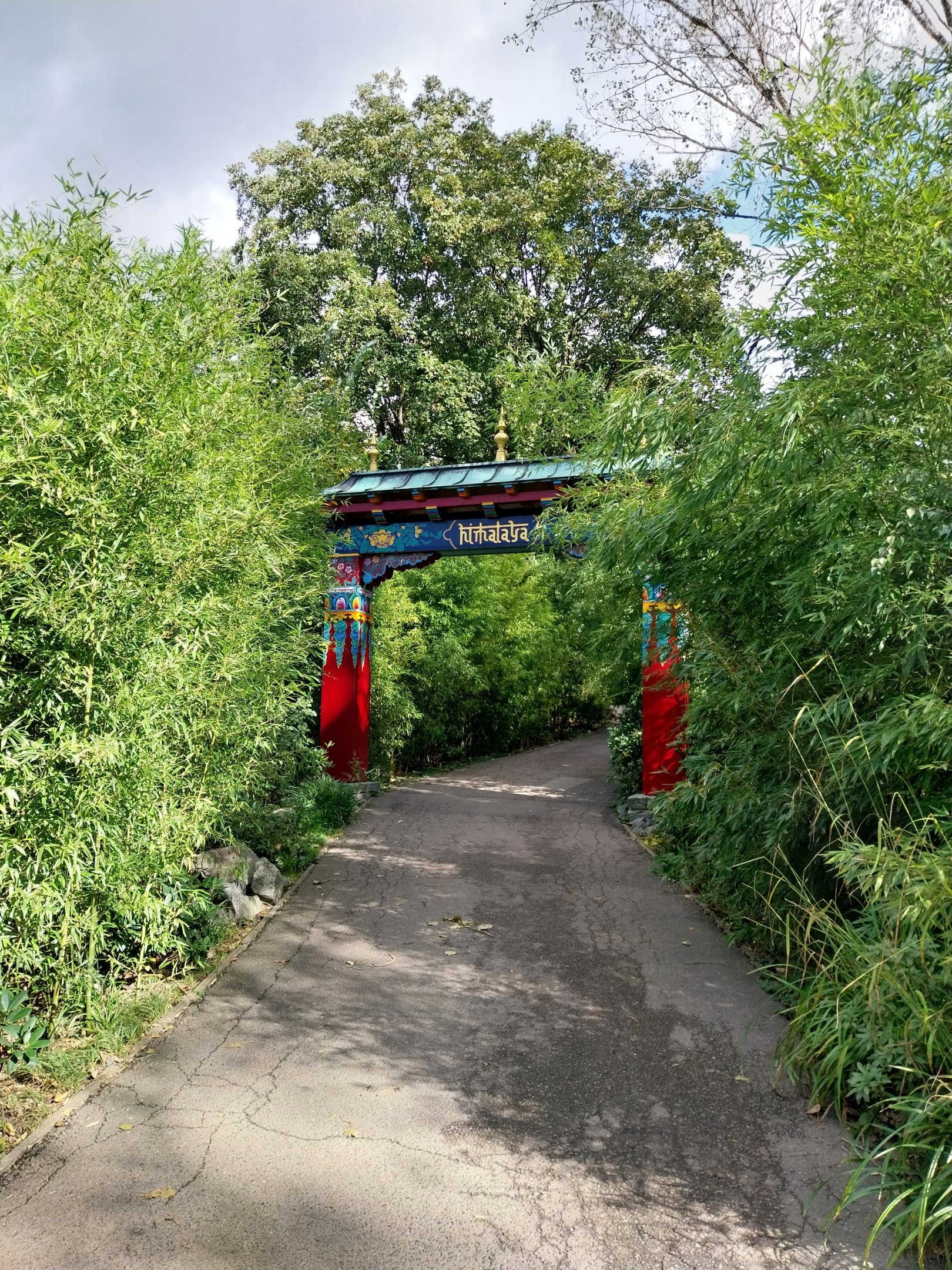
Many will have been surprised to learn in 2018 that the Tierpark would be tackling the exhibits on the Trümmerberg. That area already had enough quality and most of us might have thought of other priorities.

It occurred to me that the Tierpark did not put too much effort into upgrading certain enclosures. That’s a clever thing because with relatively few costs great (visitor) improvements have been made. So the Tierpark’s modernisation not always means complete make-overs of existing enclosures.

Nowhere is this more evident than in the Himalayan themed section, a realignment or revamp of the Asian and European mountain themed exhibits that came about in 2002 and 2004, respectively. Some species changed enclosure, some have been mixed, others disappeared, and the overall theme is more specific.


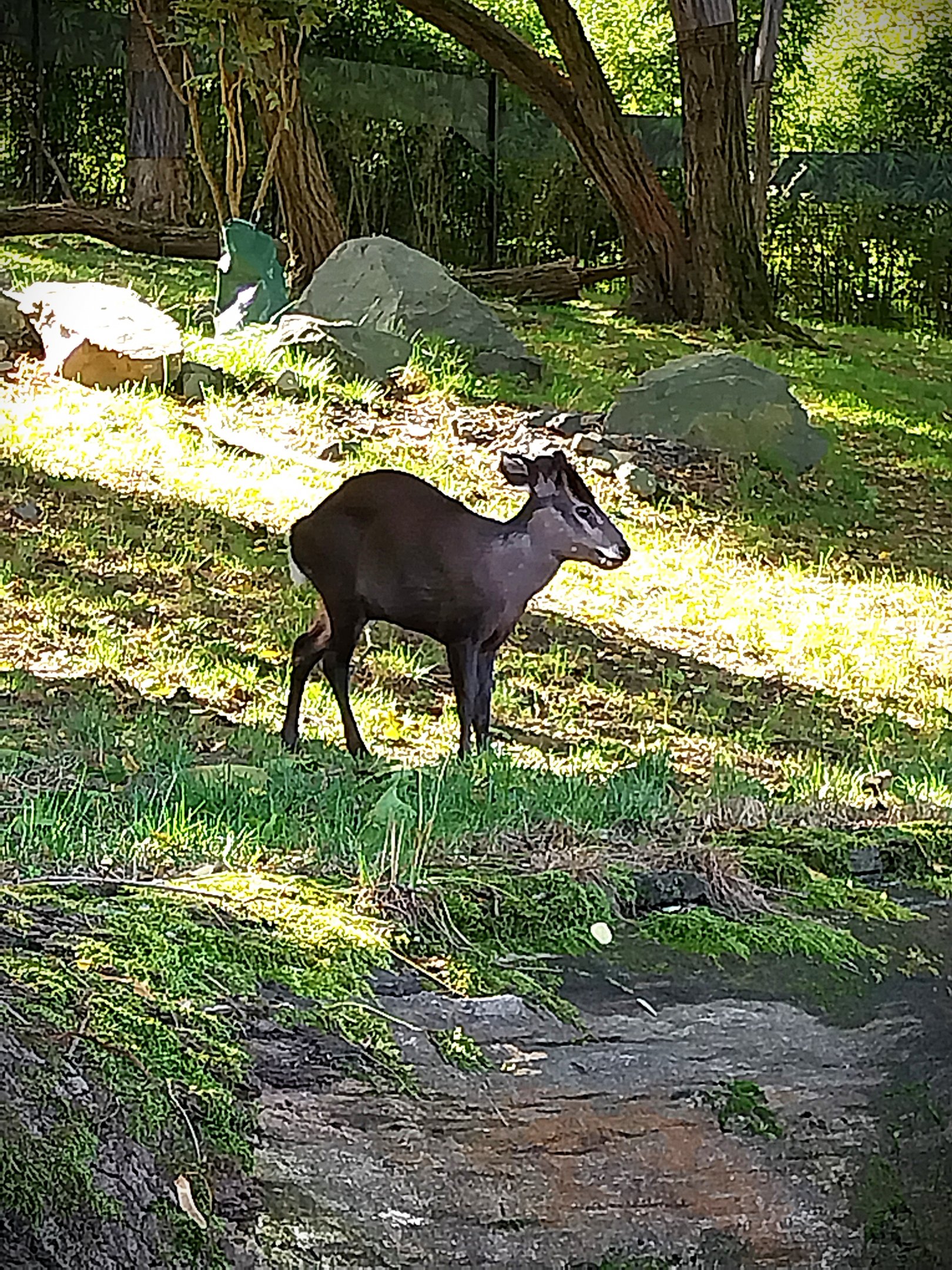
There are hardly any really new exhibits to be found, although the former Blue sheep pen really did get a thorough update. It now consists of a stunning spacious forested mountainside, where with Nepalese red panda and Michie's tufted deer 2 not even that big animals have found a home.

upload_2025-3-29_12-5-46.jpeg
Nepalese Red Panda and Michie's Tufted Deer


It pleases me to see 3 aviaries in this section, as the Tierpark’s collection of birds from that region is significant. Satyr tragopan are mixed with Omei Shan liocichla and Silver-eared mesia, which I all could find here very easy, while another large aviary shows Bearded vultures and Tibetan white eared-pheasants (with a side-exhibit for Père David rock squirrels).

upload_2025-3-29_12-4-32.jpeg
Satyr Tragopan aviary

The third aviary, near the turnoff to the summit, used to hold snowy owls and is now inhabited by Himalayan monal. The visitor area is given a beautiful but at the same time austere design and the aviary is decorated according to the habitat of the monal. The only thing I would add here is a laughingthrush.

upload_2025-3-29_12-8-4.jpeg
Himalayan Monal aviary


I like the addition of a primate, François langur, who inhabit the former Steller’s sea eagle aviary. Did this aviary get a new shell? I can't remember the old one but at least the rock seemed to me to be a relic of the past. Surely the decor here could have been a little better, it is currently rather boring.

upload_2025-3-29_12-3-52.jpeg
François Leaf Langur

The entire area is themed but not excessively so. A certain restraint in that area almost always means a qualitative bonus.

upload_2025-3-29_12-11-59.jpeg

The valley of the Takins has enclosures for Shensi (or golden) takin (mixed with Central-Chinese goral) and Sichuan takin, while Siberian ibex and Tajik markhor inhabit the former European mouflon steep hillside enclosure.

upload_2025-3-29_12-12-40.jpeg
Sichuan Takin enclosure

Unfortunately the steep mid-section trail was closed at the time of my visit, and that specifically made it difficult for the Marco Polo argali and Himalayan blue sheep to see them. I believe I saw 1 of each from the top viewing point and I understand that currently the Marco Polo sheep are behind the scenes and the Blue sheep are no longer in the collection. Very unfortunate, because this is one of the most attractive enclosures in this area, and both are/were key species for the Tierpark.

upload_2025-3-29_12-10-24.jpeg
Himalayan Blue Sheep and Transcaspian Urial enclosure

A large herd of Eastern kiang inhabit the former moose enclosure and with White-lipped deer as next neighbours.

upload_2025-3-29_12-9-18.jpeg
Eastern Kiang enclosure

A steep path then takes you from the monal aviary to the literal roof of the Tierpark, at 67m on top of the Trümmerberg (which is basically an overgrown rubble mountain of World War II debris), and the world. From this austerely dressed rock summit, there are beautiful views of the enclosures for kiang, wild sheep and Siberian ibex, as well as further views of the zoo and the wider surroundings. The tight cold wind during my visit suited this picture perfectly.

upload_2025-3-29_12-14-46.jpeg


At the top is a beautiful dome for Siberian Pallas’ cat and a little lower we find the enclosure for the Snow leopard. Too bad they did not provide a second enclosure for both species but both are, though a little on the small side, beautifully decorated.

upload_2025-3-29_12-7-24.jpeg
Snow leopard enclosure


Overall, the mountain section of the Tierpark already was one of it’s best parts, and that hasn’t changed. It has retained the same layout as before, albeit that the detour along the former enclosures for white-lipped deer, markhor and goral, which were then in place, is now closed.
 

Attachments

  • upload_2025-3-29_12-3-52.jpeg
    upload_2025-3-29_12-3-52.jpeg
    201.8 KB · Views: 119
  • upload_2025-3-29_12-4-32.jpeg
    upload_2025-3-29_12-4-32.jpeg
    358.3 KB · Views: 117
  • upload_2025-3-29_12-5-46.jpeg
    upload_2025-3-29_12-5-46.jpeg
    401.1 KB · Views: 120
  • upload_2025-3-29_12-7-24.jpeg
    upload_2025-3-29_12-7-24.jpeg
    249.5 KB · Views: 115
  • upload_2025-3-29_12-8-4.jpeg
    upload_2025-3-29_12-8-4.jpeg
    160.3 KB · Views: 114
  • upload_2025-3-29_12-9-18.jpeg
    upload_2025-3-29_12-9-18.jpeg
    154.4 KB · Views: 109
  • upload_2025-3-29_12-10-24.jpeg
    upload_2025-3-29_12-10-24.jpeg
    294.1 KB · Views: 121
  • upload_2025-3-29_12-11-59.jpeg
    upload_2025-3-29_12-11-59.jpeg
    221.6 KB · Views: 124
  • upload_2025-3-29_12-12-40.jpeg
    upload_2025-3-29_12-12-40.jpeg
    279.7 KB · Views: 111
  • upload_2025-3-29_12-14-46.jpeg
    upload_2025-3-29_12-14-46.jpeg
    238.7 KB · Views: 118
Part III. Patagona, African ungulates, Australian marsupials and Asiatic carnivores

While fish are certainly not a Tierpark specialty - there is no point in competing with the Berlin-Aquarium -, they are present in the collection.

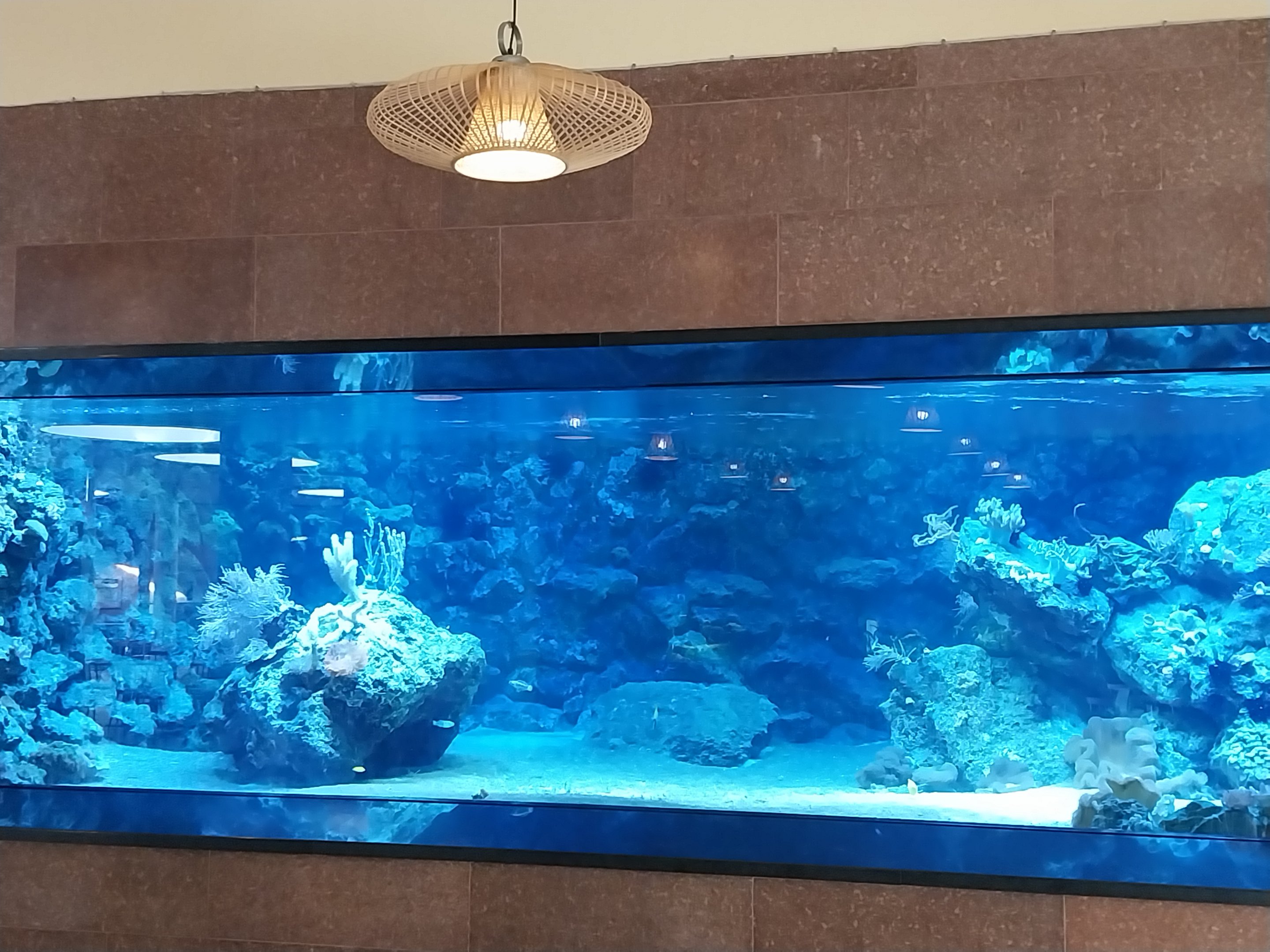
They can be found in the Zoo restaurant Patagona (1963) and you have to make some effort to navigate between the eating and drinking crowd. It is somewhat uncomfortable staring across a crowded table at an aquarium. There are 10 of them, both freshwater and saltwater. Eye-catchers are 2 reef aquariums of 25,000 and 6,000 liters, respectively.

The largest of those seemed to me reshaped and it looked like a bit barren. However, there were lots of corals (Kenya tree coral, Mushroom leather coral, Finger leather coral and Giant slit-pore sea rod) and other invertebrates: Long-spined urchin, Rock-boring urchin, Bubble tip anemone and Giant Mushroom anemone. And lots of coral fish: Chocolate surgeonfish, Flame Hawkfish, Blotched foxface, Copperband Butterflyfish, Bluestreak Cleaner wrasse, Canary wrasse, Sleeper Banded goby, White-freckled surgeonfish, Jewelled bleny and Six-line wrasse.


The most beautifull tank however was the smallest of the two. Large shoals of Blue green damselfish and Yellow tang swim through the reef, and in between there are other species as well: Elegant firefish, Flame angel, Golden-headed sleeper goby, Orange anemonefish, Paletto surgeonfish, Red-thoothed triggerfish, Sunburst butterflyfish. It is a stunning tank that actually deserves a more prominent place.

upload_2025-3-31_17-18-50.jpeg

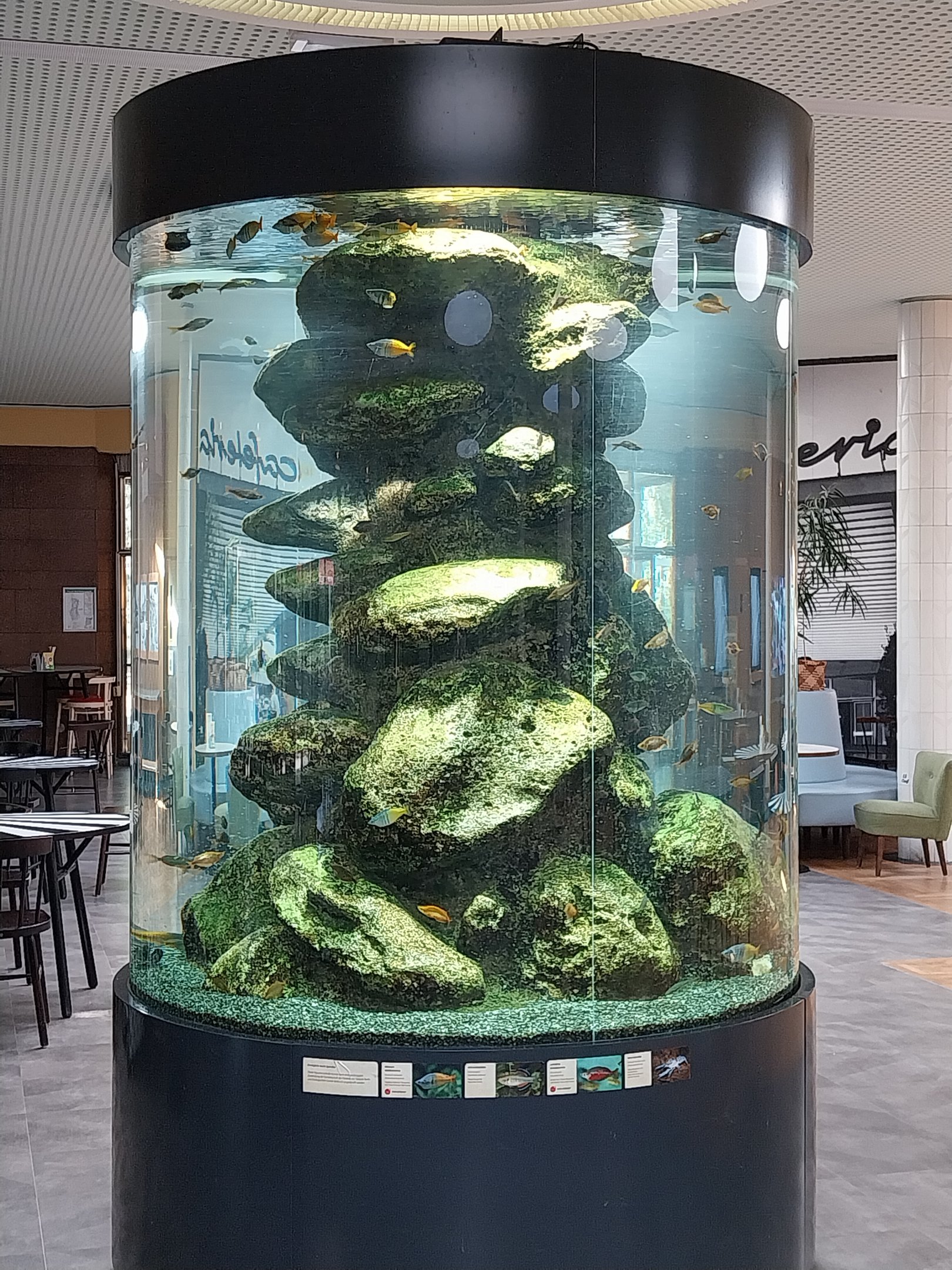
Two cylinder-shaped aquarium stand in the middle of the restaurant. One shows a South American community with Cardinal tetra, Whiptail catfish, Golden otocinclus and the rarely shown Slant-bar corydoras. The other focus on New Guinea with Boeseman’s and Red rainbow fish, Freshwater blue-clawed crayfish and Empire gudgeon.


Real treasures can be found in 3 wall-side smaller tanks: CR Lake Kuromai rainbowfish, EW Monterrey platyfish and EW Golden saw-finned goodeid, and a third with EN Red Madagascar Panchax and EN Red-tailed silverside. Better than a Goldfish, right?

A surly looking big guy no doubt wondered why I was staring at his wife when I wanted nothing more than to discover the killi fish in the aquarium behind her back. I wisely decided not to stir things up and leave the fish for what it was. A black eye is nice as long as it's not mine.

A row of 3 saltwater tanks starts with Yellowtail Tang, Orchid Dottyback, Clown anemone fish and Banded Coral shrimp. A second one shows 2 stunning members of the Scorpaenidae, the Leaf scorpionfish and the Twospot turkeyfish, together with Green brittle star. The last aquarium shows Cherubfish, Royal gramma, Northern Neon Goby, Yellowline arrow crab and a species of Cake urchin.

The quality of the aquariums at the Tierpark is generally very high, both in terms of design and the species on display.

Outside again and opposite the Kerabau is the new Otter-Insel or a Southeast Asian mixed species exhibit (2024) with Sulawesi babirusa, Asian small-clawed otter and Crested black macaque. It consists of a piece of land that had not yet been used, with several viewing points, a large pond, streams and sophisticated planting. The night quarters are tucked away behind the same kind of rocks seen at the South America enclosure at the monkey house. The use of deep sight lines, large boulders, fallen tree trunks and other props make it look a lot bigger than it really is. This is an absolute asset to the Tierpark and the quality is in the same line as previously found at the Monkey House or in Himalaya.

upload_2025-3-31_17-19-20.jpeg
Otter-Insel (Sulawesi Babirusa, Crested Black Macaque, Asian Small-clawed Otter

The aviaries for Birds of prey and macaws are a classic at the Tierpark, grouped around 2 clusters of 12 and 9 aviaries, respectively. In the first one you can see owls (Philippine scops owl, different species of eagle owls) but also very rare Harpy eagle and Red-eared vultures, and macaws (Hyacinth, Military, Blue-throated, Green-winged).

In the 2nd set, 6 not so large aviaries grouped around a grassy field show Bateleur, Eastern imperial eagle, American bald eagle, Eurasian Black vulture and Steller's sea eagle.


A small complex with 3 aviaries has some nice owls: Oriental Bay Owl from Indonesia, Southern White-faced Scops Owls from Africa and Rusty-barred Owls from Brazil. None of these are common in continental Europe. Overall, I would say that I love this area, although the aviaries themselves are often substandard. A Bateleur-Eagle-owl aviary attached to the elephant house would have been nice.
upload_2025-3-31_17-19-46.jpeg


That is certainly not true for the magnificent long-standing Ibis aviary : it is always a pleasure to see the group of highly attractive Little pied cormorant, in the company of Straw-necked ibis, Australian wood duck, White-faced heron and Plumed whistling duck. A little further, the Egret aviary show Bear’s pochard, Madagascar sacred ibis, Javan Pond-heron and Western Madagascar crested ibis. Both ibis species are a recent addition and further evidence of the ever-increasing focus on Madagascar.

upload_2025-3-31_17-20-32.jpeg
Ibis Aviary

Afrikanum II (1997) saw some highly attractive new-comers with Southern gerenuk in 2013 and Okapi in 2024, the former in 2 family groups, the – very unexpected - latter with a single specimen.


Mhor gazelle, Adax and Southern mountain reedbuck all lead to the Giraffe House (1995) & Trail. The building remained unchanged, albeit the rodents disappeared. The giraffe trail along the 7500sqm outdoor area should eventually lead to the African savannah, but so far the construction of the new elephant house isn’t finished. The trail is good, partially covered and elevated, although I was surprised that you don't have a view of the Giraffe House from the log cabins. That said, this was already a very crowded area where it took some pulling and pushing to find a good spot; no casualties however.

upload_2025-3-31_17-20-56.jpeg
Giraffe Trail

While primates are not immediately considered part of the Tierpark's specialty (wrongly, and that feeling may be due to the absence of hominids), lemurs certainly are. 9 species are present now, half of which are in the monkey house. In addition, 4 can be seen in the Vari-Wald (2005). This used to consist of an island where Black and White Ruffed Vari and Mongozmaki can still be found today, and the former can also be seen in the lemur walk-through area with further Red Ruffed Vari and Belt Vari. Not nearly as good as e.g. Augsburg, here they quickly installed a heras fence around an area with lots of shrubs.

The bulk of the hyena-canine-small cats are in this area. Spotted hyena were lazy as ever, Arabian striped hyena were running back and forth. Northern yellow-throated marten and Siberian Pallas’ cat are the current resident of the small carnivore gorge, and as in Dresden, I had the impression that the group of Chinese dhole had thinned out considerably.

upload_2025-3-31_17-21-20.jpeg
Arabian Striped Hyena (Hyaena hyaena sultana)

The key development at this moment is ofcourse the new Pachyderm House and African savannah landscape. The latter is in sharp (but good) contrast with the former equid paddocks. Hartman mountain zebra live in a rather rocky landscape while the mixed species savannah (Grèvy zebra, Thompson gazelle, Red-necked ostrich, Beisa and Eastern white-bearded wildebeest) is a very impressive improvement that can compete with Europe’s top-notched zoos.

upload_2025-3-31_17-23-42.jpeg
African Savanna (Grevy zebra, Beisa, White-bearded wildebeest, Thompson gazelle, Red-necked ostrich

At a certain point you can watch two types of zebra at one sight, separated only by rock-barriers or hidden moats.


But overall, the entire area cannot be seen in 1 eye turn, although the new elephant building may include vantage points. From the giraffes, and between the elephants and the savanna animals, visitors will be able to walk along an adventurous path to the ABH.

upload_2025-3-31_17-24-2.jpeg
Eastern White-bearded Wildebeest (Connochaetes taurinus albojubatus) and Grevy Zebra (Equus grevyi)
upload_2025-3-31_17-24-47.jpeg
Beisa Oryx (Oryx beisa beisa)

Once the elephant building will be finished, an impressive visualisation of the African exhibits will be the case, with views on all sides to elephant, giraffes and other savannah animals.

upload_2025-3-31_17-21-55.jpeg

What pleases my most is that the Tierpark choose consequently for interesting species, so I hope that the opening of the pachyderm building also will gives more smaller species. Already announced to date: Honey badger, Yellow-spotted Rock Hyrax, weaver birds, reptiles (including venomous snakes, Spider and Pancake tortoises) and Short-eared elephant shrew. Hello there, turaco and hornbill, anyone?
 

Attachments

  • upload_2025-3-31_17-18-50.jpeg
    upload_2025-3-31_17-18-50.jpeg
    192.8 KB · Views: 102
  • upload_2025-3-31_17-19-20.jpeg
    upload_2025-3-31_17-19-20.jpeg
    160.1 KB · Views: 100
  • upload_2025-3-31_17-19-46.jpeg
    upload_2025-3-31_17-19-46.jpeg
    266.7 KB · Views: 101
  • upload_2025-3-31_17-20-56.jpeg
    upload_2025-3-31_17-20-56.jpeg
    169.9 KB · Views: 99
  • upload_2025-3-31_17-20-32.jpeg
    upload_2025-3-31_17-20-32.jpeg
    322.5 KB · Views: 108
  • upload_2025-3-31_17-21-20.jpeg
    upload_2025-3-31_17-21-20.jpeg
    185.2 KB · Views: 107
  • upload_2025-3-31_17-21-55.jpeg
    upload_2025-3-31_17-21-55.jpeg
    141.2 KB · Views: 101
  • upload_2025-3-31_17-23-42.jpeg
    upload_2025-3-31_17-23-42.jpeg
    156.8 KB · Views: 108
  • upload_2025-3-31_17-24-2.jpeg
    upload_2025-3-31_17-24-2.jpeg
    252.7 KB · Views: 109
  • upload_2025-3-31_17-24-47.jpeg
    upload_2025-3-31_17-24-47.jpeg
    220 KB · Views: 101
Part IV. Alfred Brehm Haus

The Alfred Brehmhaus has perhaps always been the Tierpark's showpiece: it is monstrously large, has always displayed a very rich and varied collection and is of historical-architectural importance. It’s one of those iconic zoo buidings, like Vienna’s Kaisers Pavilion, Antwerp’s Egyptian temple, the Big Rock in Vincennes or the World of Birds in the Bronx zoo. The building, with its distinctive indoor rock terraces and 14 outdoor cages for big felids, was from the beginning one of the largest animal houses in the world. Needless to say, what was then considered a paragon for keeping carnivores became completely obsolete over the years, even to the extent that the building received modifications in 1996, when particular the outdoor cages were enlarged. That hardly brought improvement, but the building enjoys protection as a monument, and so it was not until the 2010-2020s that consideration could be given to another (in fact 2, 2015 and 2020), more extensive renovation.

upload_2025-4-2_18-5-10.jpeg
Main entrance

It opened in 1963 as a carnivore house but also displayed other species. The 5300sqm Y-shaped complex has a tropical rainforest in the middle. The 2 wings each end with a large sandstone moated terrace for lion and tiger. It is a bombastic yet quite elegant building, and typical of the “cold war” zeitgeist in which the East aimed to match, and if possible, surpass the West.

In the widest part, with the 1,100-square-meter tropical rainforest that visitors can view from two floors, there are large display cases between the cat cages where in the beginning mainly tropical birds were shown. Concrete, glass and tiles dominated the view, and it has remained so. The building underwent some minor modifications in the intervening years and by 2020 was thoroughly renovated, made more climate proof and the number of species reduced.

upload_2025-4-2_18-14-2.jpeg
Entrance area

With the renovation, it also got a new function, from carnivore house to a Southeast Asian rainforest building although carnivores have remained a strong point. The (very small) bird cases were transformed into beautiful landscape terrariums, and the building gained some spectacular inhabitants, but fortunately nothing was changed about the ground structure and appearance. The outdoor enclosures were merged and enlarged, and visitors no longer walk from cage to cage in a straight line, as in the past, but rather along a winding path among dense planting and where large viewing windows were installed here and there.


If there is one winner, it’s the Tierpark’s bamboo supplier .

So what is there to see nowadays?

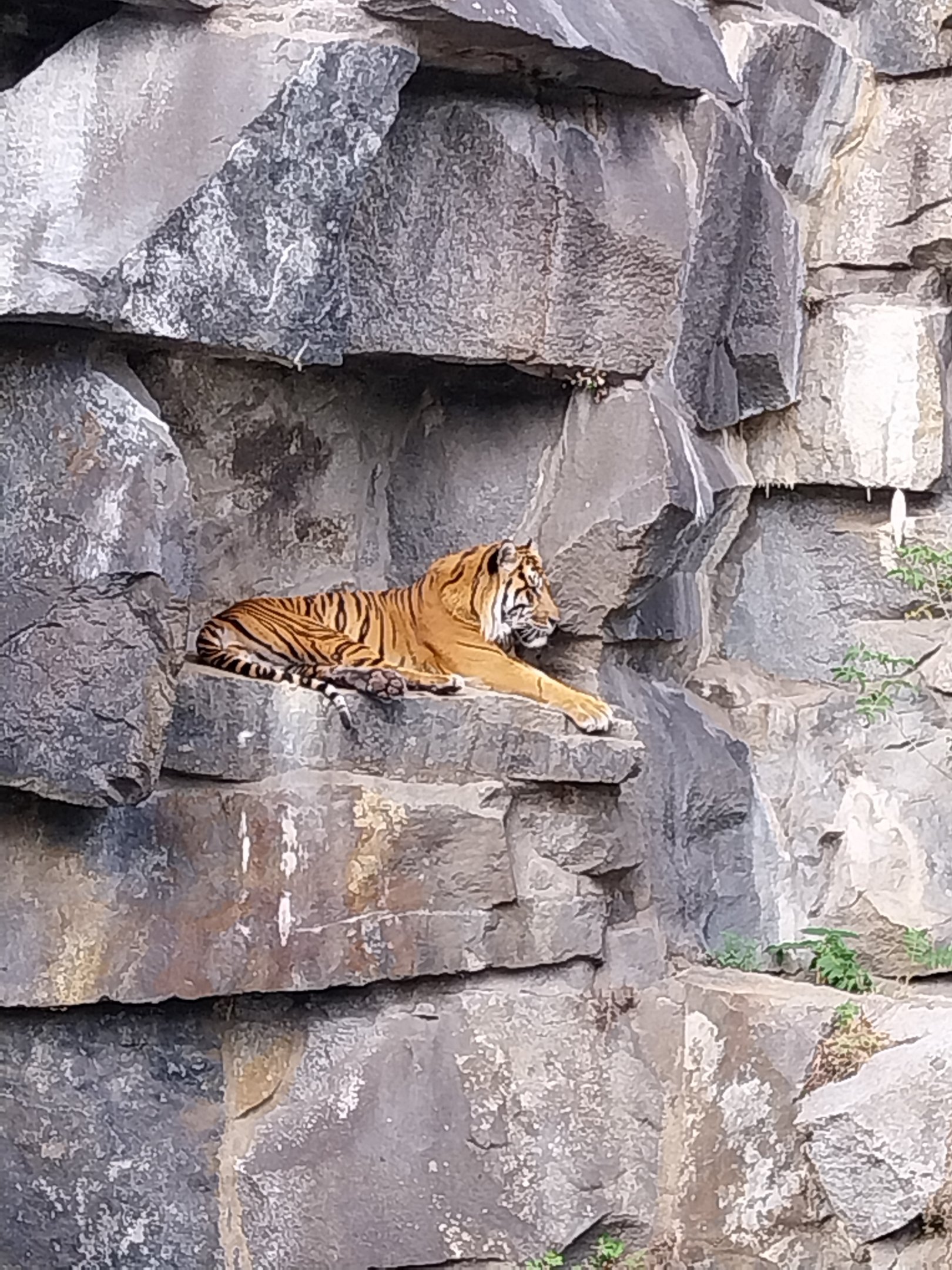
Both large indoor rocky terraces have been enlarged by filling in the moats while large windows now form the barrier. These enclosures are now holding Malayan sunbear and Sumatran tiger.

upload_2025-4-2_18-18-30.jpeg
Sun Bear (Helarctos malayanus malayanus)

The bears got a large outdoor enclosure, but the tigers remain confined to the 2 existing small rocky terraces on either side of their inner courtyard. It is unfortunate that the patio in the fork of the Y was not included to create larger tiger enclosures. Perhaps it is not allowed because of the monumental status of the building, or there were not enough financial resources. In any case, outdoors tiger accommodation is very substandard.

upload_2025-4-2_18-11-12.jpeg
Sun Bear (Helarctos malayanus malayanus)


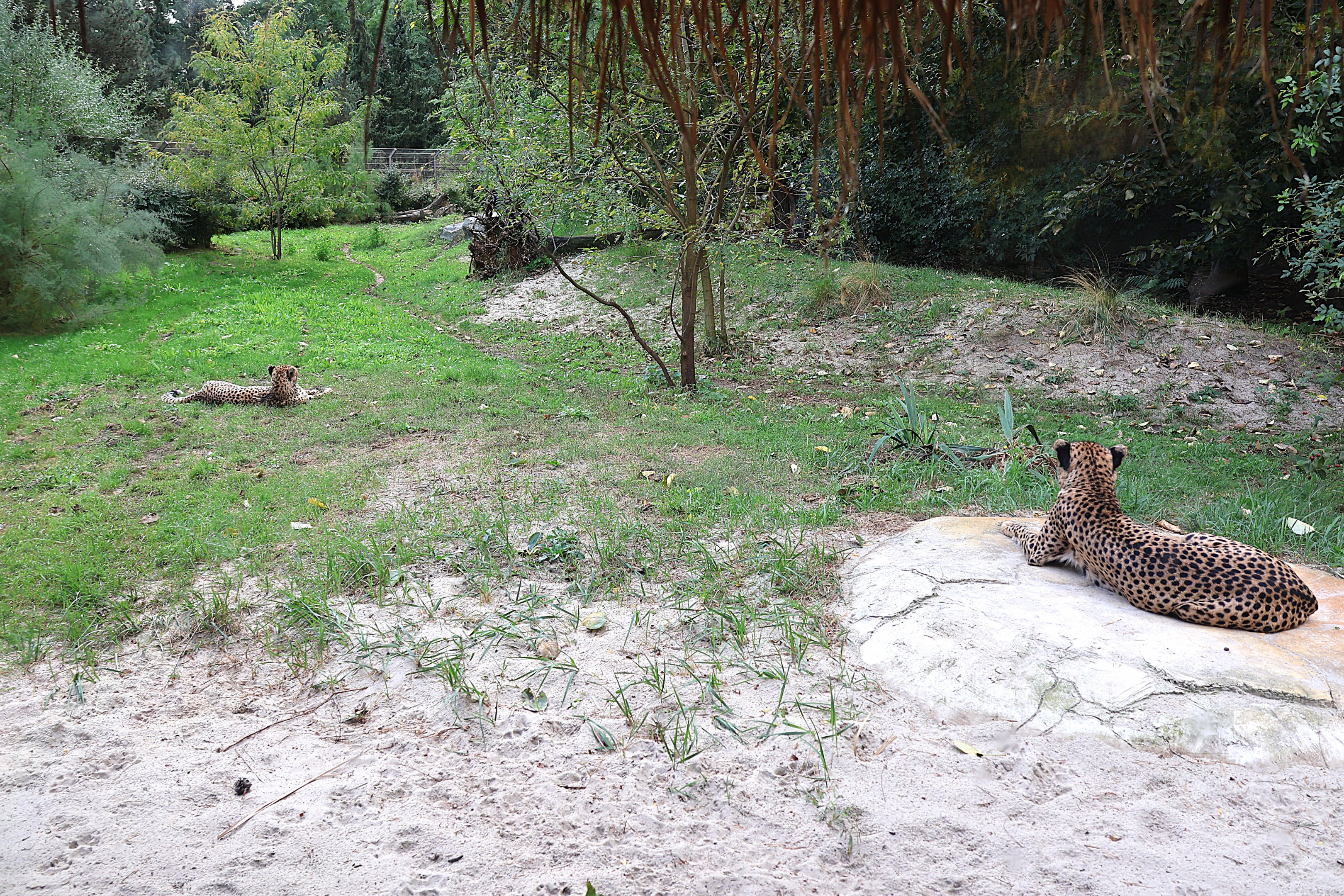
Snowleopards moved to the Himalaya area and the North African Cheetah kept their enclosure.


At the back, the vulture aviary (1965) remains a phenomenal showpiece and, as far as I'm concerned, it wouldn't have been at all necessary for you to be able to peek in now. Exciting though it is and the aviary is now very nicely planted and decorated and you can spend hours looking at the many inhabitants. The Yellow-headed Vultures seem to have disappeared, but with White-backed, White-headed, Rueppels and Himalayan Vultures, among others, there are plenty of goodies left. The raptors have been joined by Grey Crowned Cranes, I wonder to what extent that is permanent or if we will encounter them later around the savannah.


upload_2025-4-2_18-7-18.jpeg
Vulture aviary


The former ‘leopard’ cages all are enlarged and are now holding Javan Leopard, Asiatic Golden Cat (I only saw a glimpse inside), Bear Cuscus, Goodfellow’s tree kangaroo, Indochinese clouded leopard, Dusky pademelon and Binturong. The felids have a lot of off show boxes and you need some luck to catch a glimpse of them.

upload_2025-4-2_18-10-39.jpeg
Javan Leopard (Panthera pardus melas)


All these can be watched again inside the building, where certainly the Clouded leopard and Bear cuscus are shown in very attractive enclosures. The others are more off sight by using bamboo, shrines and wood panels, but not impossible to catch a glimpse.

upload_2025-4-2_18-13-34.jpeg
Bear Cuscus (Ailurops ursinus)

In the middle of the main entrance is a very attractive King cobra exhibit and on the cuscus side there’s a mixed enclosure for Northern Threeshrew and Burmese Star Tortoise.

upload_2025-4-2_18-14-26.jpeg
King Cobra (Ophiophagus hannah)


The base of the Y is dominated by the centrally positioned tropical rainforest walk-through. It’s main inhabitants are False Gharial which can be seen in two pools and accompanied by Painted Terrapin and Asian Leaf Turtle, resp. Elongated Tortoise and Yellow-headed Temple Turtle. A short walk through the rainforest leads along an aviary with Seram Eclectus, Elongated Tortoise and Southern Brown Tortoise, while a number of free roamers can be seen from this path or from the balconies: Himalayn Black and Red-whiskered Bulbul, Crested Partridge, Sclaters Crowned and Nicobar pigeon, Asian Fairy-bluebird, Blue-crowned laughingthrush, White-rumped Shama, Mindanao Bleeding-heart, Palawan Peacock-pheasant, Bali mynah, Blue-crowned Hanging Parrot (the only species I didn’t see) and 2 mammals: Balabac chevrotain and Indian Flying Fox. Gharials pools are very nicely done, otherwise the area is a bit small for a real rainforest feeling.

upload_2025-4-2_18-11-42.jpeg
False Gharial (Tomistoma schlegelii)


The former bird display cases have now been replaced on each side of the rainforest by six spacious, immersive terrarium. In them a selection of reptiles and amphibians, and I am pleased to see a number of species from the closed Snake Farm and Crocodile House back here.


I’m pleased to see the ABH shining again and that it kept it’s status as a ‘zoo-in-the-zoo’, packed with interesting species, all in well-designed but still not very spacious exhibits.

Species list on 28 september 2024

Starting from the main entrance and clockwise

1. King Cobra (Ophiophagus hannah)
2. Northern Treeshrew (Tupaia belangeri) and Burmese Star Tortoise (Geochelone platynota)
3. Bear Cuscus (Ailurops ursinus)

Row terrarium between Bear Cuscus and Malayan Sunbear

4. Pitviper (Protobothrops mangshanensis)
5. Black Tree Monitor (Varanus beccarii)
A. Asiatic Golden Cat (Catopuma temminckii)
6. Beauty Ratsnake (Elaphe taeniura), Moellendorff’s Ratsnake (Elaphe moellendorffi) and Zhou’s Box Turtle (Cuora zhoui)
7. Oriental Garden Lizard (Calotes versicolor)
B. Javan Leopard (Panthera pardus melas)
8. Rhinoceros Snake (Gonyosoma boulengeri), Mandarin Trinketsnake (Euprepiophis mandarinus) and Central Vietnamese Flowerback or Bourret’s Box Turtle (Cuora bourreti)
9. Chinese Crocodile Lizard (Shinisaurus crocodilurus) and Black-breasted Leaf Turtle Geoemyda spenleri)

Row terrarium between Sumatran tiger and Main Entrance

10. Goodfellow’s Tree Kangaroo (Dendrolagus goodfellowi buergersi)
11. Green Tree Python (Morelia viridis) and White-lipped Tree Frog (Nyctimystes infrafrenatus)
12. Brongersma or Red Blood Python (Python brongersmai) and Tokeh Gecko (Gekko gecko)
13. Emerald Tree Skink (Lamprolegis smaragdina), Soloman Island Eyelash Frog or Guether’s Triangle Frog (Cornufer guentheri)
14. Blue-spotted Tree Monitor (Varanus macraei)


15. Cane Toad (Rhinella marina) and Fiji Banded Iguana (Brachylophus fasciatus)
16. Banded Mangrove Snake (Boiga dendrophila melanota)
17. Indochinese Clouded Leopard (Neofelis nebulosa nebulosa)

upload_2025-4-2_18-12-8.jpeg
Indochinese Clouded Leopard (Neofelis nebulosa nebulosa)

Midsection and Tropical rainforest

18. Bavay’s Giant Gecko (Mniarogekko chahoua)
19. Aviary: Grand Eclectus Parrot (Eclectus roratus roratus), Elongated Tortoise (Indotestudo elongata) and Asian Forest Tortoise (Manouria emys emys)


20. Rainforest walk-through : Himalayan Black Bulbul (Hypsipetes leucocephalus), Crested Partridge (Rollulus roulroul), Mindanao Bleeding-heart (Gallicolumba crinigera), Nicobar Pigeon (Caloenas nicobarica), White-rumped Shama (Copsychus malabaricus), Red-whiskered Bulbul (Pycnonotus jocosus), Asian Fairy-bluebird (Irena puella), Sclaters Crowned Pigeon (Goura sclateri), Blue-crowned Hanging-Parrot (Loriculus galgulus), Blue-crowned Laughingthrush (Pterorhinus courtoisi), Bali Myna (Leucopsar rothschildi), Palawan Peacock-pheasant (Polyplectron napolensis), Balabac Chevrotain (Tragulus nigricans) and Indian Flying Fox (Pteropus medius)
21. False Gharial (Tomistoma schlegelii), Malaysian Painted River Turtle (Batagur borneoensis) and Asian Leaf Turtle (Cyclemys dentata)
22. False Gharial (Tomistoma schlegelii), Elongated Tortoise (Indotestudo elongata), Yellow-headed Temple Turtle (Heosemys annandalii)


23. Vietnamese Crocodile Newt (Tylototriton vietnamensis)
24. Daisy’s Ricefish (Oryzias woworae)
25. Orange Rock Snail (Tylomelania sp.)
26. Giant Fire-bellied Toad (Bombina maxima)

Outside

1. Empty (possible for the Asiatic golden cat)
2. Javan Leopard (Panthera pardus melas)
3. Malayan sunbear (Helarctos malayanus malayanus) and Malayan Binturong (Arctictis binturong binturong)
4. Empty (courtyard)
5. Sumatran tiger (Panthera tigris sumatrae) (courtyard)
6. Vulture aviary
7. Sudan Cheetah (Acinonyx jubatus soemmeringii)


8. Sumatran tiger (Panthera tigris sumatrae)


9. Dusky Pademelon (Thylogale brunii) and Goodfellow’s Tree Kangaroo (Dendrolagus goodfellowi buergersi)
10. Indochinese Clouded Leopard (Neofelis nebulosa nebulosa)
 

Attachments

  • upload_2025-4-2_18-5-10.jpeg
    upload_2025-4-2_18-5-10.jpeg
    191.3 KB · Views: 98
  • upload_2025-4-2_18-7-18.jpeg
    upload_2025-4-2_18-7-18.jpeg
    265.7 KB · Views: 98
  • upload_2025-4-2_18-10-39.jpeg
    upload_2025-4-2_18-10-39.jpeg
    220.9 KB · Views: 95
  • upload_2025-4-2_18-11-12.jpeg
    upload_2025-4-2_18-11-12.jpeg
    325.7 KB · Views: 90
  • upload_2025-4-2_18-11-42.jpeg
    upload_2025-4-2_18-11-42.jpeg
    195.6 KB · Views: 99
  • upload_2025-4-2_18-12-8.jpeg
    upload_2025-4-2_18-12-8.jpeg
    185.5 KB · Views: 92
  • upload_2025-4-2_18-13-34.jpeg
    upload_2025-4-2_18-13-34.jpeg
    250 KB · Views: 95
  • upload_2025-4-2_18-14-2.jpeg
    upload_2025-4-2_18-14-2.jpeg
    141.3 KB · Views: 94
  • upload_2025-4-2_18-14-26.jpeg
    upload_2025-4-2_18-14-26.jpeg
    226.8 KB · Views: 97
  • upload_2025-4-2_18-18-30.jpeg
    upload_2025-4-2_18-18-30.jpeg
    241.9 KB · Views: 95
Part V. And further

It is 5 am, the zoo closes at 6 am, and I need to see stork and gull dome aviaries, bear enclosures and the whole ungulate western section of the zoo.

In the African Aviary Goliath heron are replaced by colourfull Saddle-billed stork, and furtheron Yellow-billed storks, Hamerkop and Abdim’s storks and one of my favourite ibis species, the beautifully coloured Hadaba ibis. With Meller's duck and African pochard, there are also 2 rather rarely seen ducks on display, in addition to the red-bellied teal.

upload_2025-4-5_10-57-48.jpeg

upload_2025-4-5_10-58-7.jpeg

Somehow the Gull Aviary has always been my least favorite of both dome aviaries, a bit unfair ofcourse, as it is quite unique and it seems to keep aging nicely.


upload_2025-4-5_10-58-20.jpeg

Not all visitors will take the dead-end path behind the gull dome. The former pig-tailed macaque enclosure was now inhabited by the Roloway guenon, but these now probably returned to the Monkey House. Seen or signed in this area were Unstriped tamandua, a subspecies of the Southern tamandua, and Azare’s agouti.

upload_2025-4-5_10-58-39.jpeg
Roloway Guenon (Cercopithecus roloway)

Between the aviaries and the bears, a couple of owl aviaries remain one of the strong points in this area, and certainly the one for Ural owl is a very impressive structure.

upload_2025-4-5_10-58-53.jpeg
Ura Owl (Strix uralensis)
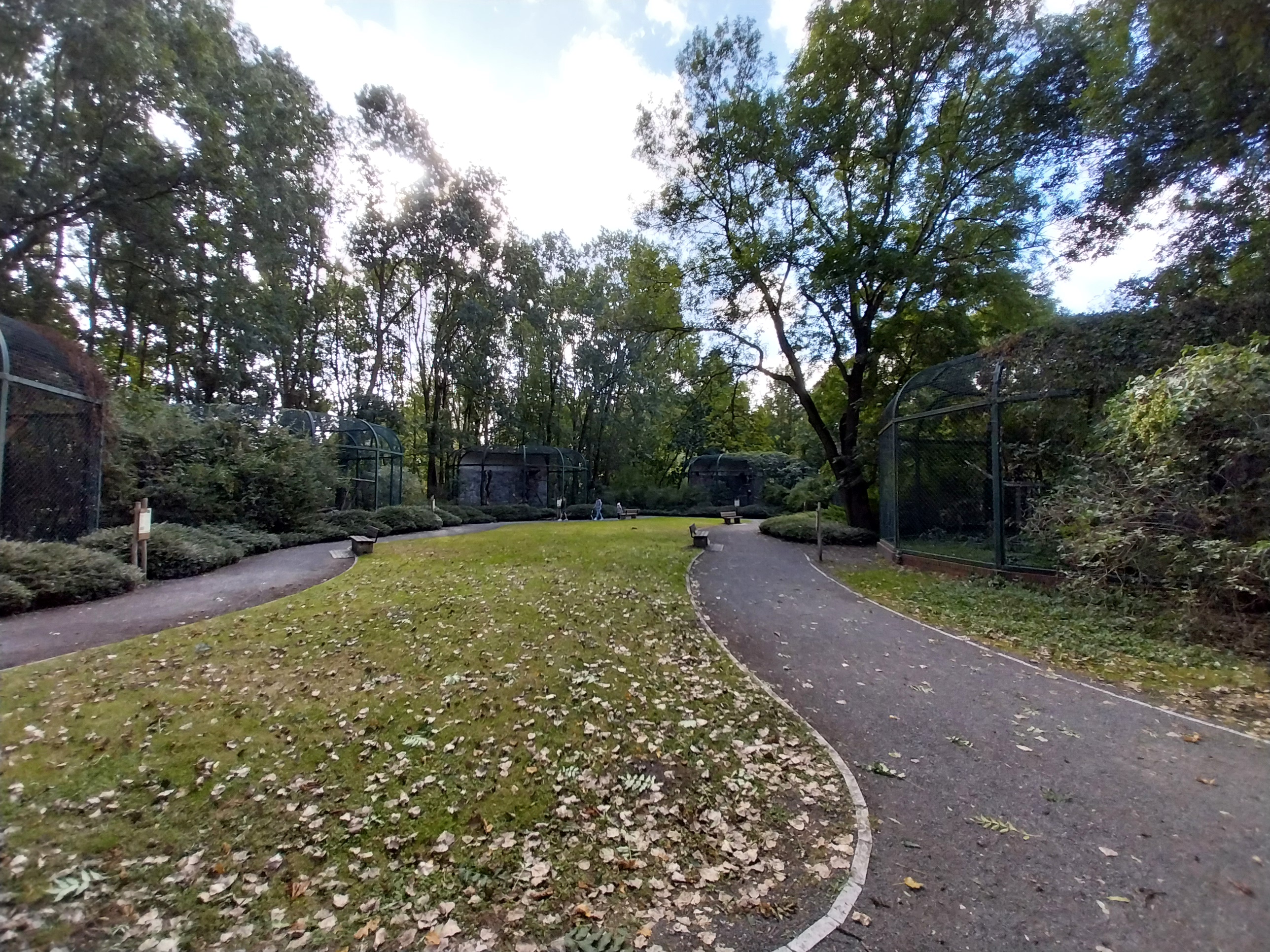
If I was very impressed with the novelties elsewhere in the garden, that was certainly not the case for the Bärenschlucht for Spectacled bear and Bush dog. Again, interventions were limited to redesigning the enclosure within the existing area, but the latter is precisely the major flaw: it is far too small for multiple bears and Bush dogs.

upload_2025-4-5_10-59-5.jpeg
Bärenschlucht - Spectacled bear (Tremarctos ornatus)

“Too small” is not something that immediately comes to mind when you see the Polar bear enclosure, but it actually is according to the latest findings. But the rocks and concrete does not fit at all with the bears' habitat, although the 2000m³ of water may offer one of the better swimming opportunities. Should this be the Tierpark’s next project? There is certainly plenty of space in the immediate area. But as the Tierpark has already announced, a rhino park will first be built near the African buffalo.

I was lucky I see all deer species in the area near the Kakadu Café and for those who know the Tierpark, this meant a lot of stepping back and forth in the meanwhile falling darkness.

I had exactly 10 minutes left and again rushed to the Pheasantry hoping to see the Scarlet-faced liocichla this time, in vain. While again, I completely forgot the nearby Red-and-White giant squirrel. That couldn't spoil the fun, this was an excellent revisit of a garden that is clearly in top condition.

upload_2025-4-5_11-0-39.jpeg
Schloss entrance

Conclusion

Taking into account the limited september hours (though, 9 a.m. to 6 p.m. ), it still proves difficult to see the entire zoo, especially if you want to take a little more time here and there to search every species. Moreover, unlike in other zoos, I only did 1 tour here, except for the ABH.

In the old days, with the Krokodilenhaus, SchlangenFarm and the Pachyderm Building, it is now a mystery to me how I managed that.

There were again sections I skipped. In fact, after 8 visits I don't think I've ever done the path between the deer and camelids: pigs, dino exhibit, cranes. On my next passage to Berlin, I plan 2 days for the Tierpark and that will be the opportunity to really explore every corner of the park.

Without lions, elephants, manatees, great apes and rhinos, the Tierpark currently has to do without a lot of crowd-pleasers. Even turacos and hornbills are absent, which is, of course, an ultimate shame, as these normally draw dense crowds. It was a rather cold autumn day and yet there were quite a lot of visitors, and especially in the Monkey House-Giraffes-ABH area it was pleasantly crowded.

Overal the Tierpark is ridiculously cheap for the cheer quality you get. I think and hope it has a bright future.
 

Attachments

  • upload_2025-4-5_10-57-48.jpeg
    upload_2025-4-5_10-57-48.jpeg
    127.9 KB · Views: 84
  • upload_2025-4-5_10-58-7.jpeg
    upload_2025-4-5_10-58-7.jpeg
    213.8 KB · Views: 82
  • upload_2025-4-5_10-58-20.jpeg
    upload_2025-4-5_10-58-20.jpeg
    174.4 KB · Views: 89
  • upload_2025-4-5_10-58-39.jpeg
    upload_2025-4-5_10-58-39.jpeg
    281.2 KB · Views: 83
  • upload_2025-4-5_10-58-53.jpeg
    upload_2025-4-5_10-58-53.jpeg
    283.3 KB · Views: 86
  • upload_2025-4-5_10-59-5.jpeg
    upload_2025-4-5_10-59-5.jpeg
    144.1 KB · Views: 89
  • upload_2025-4-5_11-0-39.jpeg
    upload_2025-4-5_11-0-39.jpeg
    125.4 KB · Views: 86
back and forth in the meanwhile falling darkness.

I remember Tierpark from its heyday, and they didn't really enforce closing hours of the park, although they close the animal houses.

Evening was a magical time, because wolves, cats, mustelids and owls became active and very interesting to watch. I saw wolves playing and chasing each other, Siberian weasels climbing like monkeys on the mesh of their aviary, eagle owls courting each other and so on. Plus surprising variety of wild animals living on the zoo grounds.
 
No more Taiwan liocichla (Liocichla steerii) in the Pheasantery? They were no-shows on my previou visit and I was hoping for another shot next month.

Nope, seen nor signed. The mix with Swinhoe Pheasant and Black-headed Greenfinch doesn't exist anymore and none of these species were still to be seen anywhere.

I visited today and the species is still present. Seen and signed. :)

Also, despite multiple attemps I did not see the giant flying squirrel (nor did I see clouded leopard, golden cat and some others)
 
Back
Top