You are using an out of date browser. It may not display this or other websites correctly.
You should upgrade or use an alternative browser.
You should upgrade or use an alternative browser.
Popular Zoo Mammals and Their Best Exhibits
- Thread starter 15399
- Start date

Houston’s barns have sand floors with the exception of one stall per barn used for bathing/hosing.Today's post is the twentieth animal covered in this thread, and it's a big one (literally), Asian Elephants! The smaller of the two elephant species, Asian elephants are also the longer-lived species. Elephants in zoos, and the management techniques used with them, has been under strict scrutiny over the past decade or two. As a result, many zoos have thankfully built new, state-of-the-art facilities for elephants.
The criteria used in this post are:
The exhibits chosen for this post are:
- Space: Elephants are big animals, and ones that walk across long distances in the wild. As such, maximizing the space available to them should be prioritized in any elephant exhibit.
- Enrichment/Exhibit Furnishings: Elephants are also very intelligent animals, and as such it's important to build habitats that provide an enriching home. Unfortunately, many zoos historically kept elephants in more barren exhibits due to their destructive nature, but a good elephant exhibit should involve finding ways to safely add a variety of enriching components to the exhibit.
- Social Structure: Elephants are social creatures, who in the wild live in multi-generational, matriarchal herds, or alternatively bachelor male groups. Unfortunately, zoos have historically housed elephants either alone or in small same-age groups, not replicating this natural social structure- which is a priority for this post.
- Flexibility: While social, not all elephants will always get along. As such, zoos should have the flexibility of multiple yards for their elephants, as this not only allows flexible social groups but also allows elephants more enriching opportunities.
- Water Feature: Elephants are great swimmers, and any good elephant exhibit should include a pool large enough for the elephants to swim in.
- Natural Substrate: Both the indoor and outdoor portions of an elephant exhibit should incorporate some sort of natural substrate (e.g. sand, grass, dirt), as traditional hard floors can make elephants prone to foot problems/arthritis. This is especially true in northern zoos where the elephants have to spend a good portion of time inside.
- Houston Zoo (now only the third zoo to be featured four times in this thread) not only has the best track record of breeding Asian elephants, but is also home to one of the most impressive elephant complexes in the country. The multi-acre McNair Asian Elephant Habitat contains multiple yards for the zoo's large herd to rotate through, each filled with plenty of enriching opportunities for the elephants. With thirteen elephants, Houston Zoo also has the largest Asian elephant herd visible to the public in the US. While unfortunately the indoor barn does not feature a natural substrate, at least Houston is in an ideal climate for the elephants to be outside year-round:
Photo by: @Moebelle
Photo by: @Moebelle
Photo by: @Moebelle
Photo by: @Moebelle
- The only bachelor herd of Asian elephants in the US can be found in Denver Zoo's Elephant Passage exhibit. This exhibit rotates with rhinos and tapirs as well, creating an excellent complex for Asian pachyderms. Uniquely, the Denver Zoo employs Zoo360-style overpasses as part of this rotation, meaning the elephants are able to walk right over the visitor path. There are five male elephants at the Denver Zoo, which makes for an excellent, impressive display. The day room of this exhibit has sand floors, which is a commendable move by the Denver Zoo as well:
Photo by: @Pleistohorse
Photo by: @MGolka
Photo by: @MGolka
Photo by: @Ituri
- Deciding to go all in on elephants, the Smithsonian National Zoo phased out giraffes, rhinos, and pygmy hippos in order to build an impressive, state-of-the-art elephant complex. Elephant Trails is currently home to seven Asian elephants, including a mother-daughter pair recently imported from Europe. This exhibit features an impressive large day room (including sand floors!), as well as a long trail for the elephants to walk, replicating their natural behaviors of walking long distances in the wild:
Photo by: @red river hog
Photo by: @AmbikaFan
Photo by: @Moebelle
Photo by: @Moebelle
- Sanctuary Asia at the Oklahoma City Zoo is another very impressive exhibit for Asian elephants, which similar to Denver Zoo rotate between multiple exhibits with greater one-horned rhinos. Oklahoma City Zoo currently has eight Asian elephants, and display them in multiple large exhibits with plenty of enrichment opportunities. While it appears the viewing opportunities for the indoor portion is awkward, there is a sand stall to allow elephants a natural substrate even when indoors:
Photo by: @Coelacanth18
Photo by: @Coelacanth18
Photo by: @Coelacanth18
Photo by: @Drew
- Nine Asian elephants reside in Saint Louis Zoo's River's Edge exhibit. This complex features three different habitats for the large elephant herd, allowing their elephants access to an impressive, large naturalistic exhibit, which happens to be one of the largest Asian elephant complexes in the United States, and arguably the most naturalistic:
Photo by: @pachyderm pro
Photo by: @pachyderm pro
Photo by: @pachyderm pro
Photo by: @pachyderm pro

When this thread first started I thought of numerous candidates for this species. All five choices are really good and I think few will disagree. A few others that could have gotten a nod are Oregon, Fort Worth and Rosamond Gifford (based on your avatar I'm a little surprised that last one wasn't includedToday's post is the twentieth animal covered in this thread, and it's a big one (literally), Asian Elephants! The smaller of the two elephant species, Asian elephants are also the longer-lived species. Elephants in zoos, and the management techniques used with them, has been under strict scrutiny over the past decade or two. As a result, many zoos have thankfully built new, state-of-the-art facilities for elephants.
The criteria used in this post are:
The exhibits chosen for this post are:
- Space: Elephants are big animals, and ones that walk across long distances in the wild. As such, maximizing the space available to them should be prioritized in any elephant exhibit.
- Enrichment/Exhibit Furnishings: Elephants are also very intelligent animals, and as such it's important to build habitats that provide an enriching home. Unfortunately, many zoos historically kept elephants in more barren exhibits due to their destructive nature, but a good elephant exhibit should involve finding ways to safely add a variety of enriching components to the exhibit.
- Social Structure: Elephants are social creatures, who in the wild live in multi-generational, matriarchal herds, or alternatively bachelor male groups. Unfortunately, zoos have historically housed elephants either alone or in small same-age groups, not replicating this natural social structure- which is a priority for this post.
- Flexibility: While social, not all elephants will always get along. As such, zoos should have the flexibility of multiple yards for their elephants, as this not only allows flexible social groups but also allows elephants more enriching opportunities.
- Water Feature: Elephants are great swimmers, and any good elephant exhibit should include a pool large enough for the elephants to swim in.
- Natural Substrate: Both the indoor and outdoor portions of an elephant exhibit should incorporate some sort of natural substrate (e.g. sand, grass, dirt), as traditional hard floors can make elephants prone to foot problems/arthritis. This is especially true in northern zoos where the elephants have to spend a good portion of time inside.
- Houston Zoo (now only the third zoo to be featured four times in this thread) not only has the best track record of breeding Asian elephants, but is also home to one of the most impressive elephant complexes in the country. The multi-acre McNair Asian Elephant Habitat contains multiple yards for the zoo's large herd to rotate through, each filled with plenty of enriching opportunities for the elephants. With thirteen elephants, Houston Zoo also has the largest Asian elephant herd visible to the public in the US. While unfortunately the indoor barn does not feature a natural substrate, at least Houston is in an ideal climate for the elephants to be outside year-round:
Photo by: @Moebelle
Photo by: @Moebelle
Photo by: @Moebelle
Photo by: @Moebelle
- The only bachelor herd of Asian elephants in the US can be found in Denver Zoo's Elephant Passage exhibit. This exhibit rotates with rhinos and tapirs as well, creating an excellent complex for Asian pachyderms. Uniquely, the Denver Zoo employs Zoo360-style overpasses as part of this rotation, meaning the elephants are able to walk right over the visitor path. There are five male elephants at the Denver Zoo, which makes for an excellent, impressive display. The day room of this exhibit has sand floors, which is a commendable move by the Denver Zoo as well:
Photo by: @Pleistohorse
Photo by: @MGolka
Photo by: @MGolka
Photo by: @Ituri
- Deciding to go all in on elephants, the Smithsonian National Zoo phased out giraffes, rhinos, and pygmy hippos in order to build an impressive, state-of-the-art elephant complex. Elephant Trails is currently home to seven Asian elephants, including a mother-daughter pair recently imported from Europe. This exhibit features an impressive large day room (including sand floors!), as well as a long trail for the elephants to walk, replicating their natural behaviors of walking long distances in the wild:
Photo by: @red river hog
Photo by: @AmbikaFan
Photo by: @Moebelle
Photo by: @Moebelle
- Sanctuary Asia at the Oklahoma City Zoo is another very impressive exhibit for Asian elephants, which similar to Denver Zoo rotate between multiple exhibits with greater one-horned rhinos. Oklahoma City Zoo currently has eight Asian elephants, and display them in multiple large exhibits with plenty of enrichment opportunities. While it appears the viewing opportunities for the indoor portion is awkward, there is a sand stall to allow elephants a natural substrate even when indoors:
Photo by: @Coelacanth18
Photo by: @Coelacanth18
Photo by: @Coelacanth18
Photo by: @Drew
- Nine Asian elephants reside in Saint Louis Zoo's River's Edge exhibit. This complex features three different habitats for the large elephant herd, allowing their elephants access to an impressive, large naturalistic exhibit, which happens to be one of the largest Asian elephant complexes in the United States, and arguably the most naturalistic:
Photo by: @pachyderm pro
Photo by: @pachyderm pro
Photo by: @pachyderm pro
Photo by: @pachyderm pro
 ). Cincinnati and Tulsa are both unveiling massive new complexes next year that could outshine some of the entires mentioned here, so it looks like the future is bright for this species in the US.
I genuinely almost put Rosamond Gifford (and Oregon was considered as well). Ultimately, I decided against Rosamond Gifford mainly because the barn lacks natural substrate, which is a bit of a problem when located in a cold climate. Other than that one problem though, it likely would've been an easy choice for the list. If I was to choose six Elephant exhibits though, that would've been the sixth.When this thread first started I thought of numerous candidates for this species. All five choices are really good and I think few will disagree. A few others that could have gotten a nod are Oregon, Fort Worth and Rosamond Gifford (based on your avatar I'm a little surprised that last one wasn't included
Happy Caturday! Today's post is going to be dedicated to a cat that goes by many names, Puma Concolor, also known as the Mountain Lion, Puma, Cougar, Panther, and more. Personally, I prefer the name cougar so will be using that throughout the post.
The criteria for this post are:
 Photo by: @snowleopard
 Photo by: @snowleopard
 Photo by: @snowleopard
 Photo by: @snowleopard
 Photo by: @snowleopard
 Photo by: @Hipporex
 Photo by: @Coelacanth18
 Photo by: @snowleopard
 Photo by: @snowleopard
 Photo by: @snowleopard
 Photo by: @Arizona Docent
 Photo by: @Pleistohorse
 Photo by: @Ituri
 Photo by: @snowleopard
 Photo by: @snowleopard
 Photo by: @snowleopard
The criteria for this post are:
- Space: Exhibits for felids of this size are often way smaller than these large residents deserve. As such, one of the major criteria is the exhibit's size and that enough room is provided for the cougars.
- Climbing Opportunities: Cougars are big, agile cats, and in many ways have similar exhibit needs to leopards. As such, climbing opportunities, either through live trees, wooden platforms, and/or rock work is essential for a good cougar exhibit. This also factors into exhibit size- a tall exhibit, with lots of climbing opportunities, may be selected over an exhibit with a larger footprint. The exact nature of this climbing opportunities isn't a top priority, since the cougar has a large range including both forested and mountainous regions.
- Illinois' Wildlife Prairie Park was already featured for bobcats, but that exhibit isn't the most impressive cat exhibit at the site. Their multi-acre cougar exhibit provides a densely planted home for these cats, including a number of live trees they have access to. This exhibit is fairly unique in terms of US cougar exhibits in that it is open-topped. Three cougars reside in this large exhibit, which unfortunately is only represented in the gallery by photos from a single zoochatter's visit almost a decade ago:
- Oakland Zoo has an impressive tall exhibit for cougars located on their California Trail. This exhibit also includes multiple large trees for climbing, making for an impressive home for these native cats. As of their most recent USDA inspection, four cougars reside at the Oakland Zoo:
- Becoming the first zoo to be featured five times in this thread, it shouldn't surprise anyone that Northwest Trek Wildlife Park has an impressive exhibit for cougars. This exhibit was featured in @pachyderm pro's 100 Must-See Exhibits, along with the park's other cat exhibits. This is another open-topped exhibit, and similar to the other two featured so far has a number of live trees for climbing. This is the most densely planted cougar exhibit I could find in a US Zoo, and truly makes for an impressive, naturalistic exhibit for the resident cougar:
- One particularly notable population of cougars is the Florida Panther, which is kept by a number of zoos in Florida. One of them is the Tallahassee Museum, which has a particularly impressive, naturalistic exhibit for these cats. This exhibit amounts to little more than a sectioned-off piece of forest, but sometimes that is all that's necessary to get an excellent exhibit, which in this case houses three Florida panthers. Unfortunately, there is only one photo of this exhibit in the zoochat gallery:
- Making their first appearance on this thread, Oregon Zoo has an impressive exhibit for cougars, located as part of their Great Northwest complex. This is a tall exhibit, and features both rockwork along the back and wooden climbing structures throughout to give plenty of space, both in terms of square feet and height, for their cougars. As of the most recent USDA inspection, two cougars lived at the Oregon Zoo:

My favorite Cougar exhibit would be one that unfortunately no longer holds Cougars, at DeYoung Family Zoo:


(photos from @snowleopard)
After it's stint holding Cougars ended after years, it became a Domestic Turkey exhibit for a while for some reason, before ultimately becoming a Spotted Hyena exhibit, which it remains as.
(photos from @snowleopard)
After it's stint holding Cougars ended after years, it became a Domestic Turkey exhibit for a while for some reason, before ultimately becoming a Spotted Hyena exhibit, which it remains as.
Loving the thread so far. I really appreciate that you've been laying out your criteria clearly in each post, and explaining why these standards are there, before going into the top exhibits, and I appreciate that you clarified you're hoping to spotlight some less-discussed exhibits for variety, as a lot of 'best of' threads here feel like they end up at the same fewer zoos. I also like the things I'm learning via your discussions with other users about which exhibits are better or worse. I appreciate your frankness that sometimes there simply are not five 'best' exhibits in the country. One thing I love about projects like this, trip threads, and must-see zoo threads is that even when we try to be objective, you still learn more about the zoochatter writing them.
Sorry to backtrack to this animal again, I did want to ask if Denver was under consideration for orangutan. It is by far the best of the three orangutan exhibits I've seen in person, though it's not hard to beat the other two I've seen. I think I know why Denver was skipped but still thought I'd ask.
The bear exhibits are all roughly what I expected; but while a lot of megafauna have some discussion of best exhibits previously, the anteater and earlier mandrill profiles interested me a lot as those aren't animals I feel zoochat discusses exhibit standards around nearly as often.
The cougar exhibits look great. Oregon and Oakland are on my list for next year and beyond so will hopefully be able to see both. I still need to look into Wildlife Prairie Park, which is looking impressive here!
Sorry to backtrack to this animal again, I did want to ask if Denver was under consideration for orangutan. It is by far the best of the three orangutan exhibits I've seen in person, though it's not hard to beat the other two I've seen. I think I know why Denver was skipped but still thought I'd ask.
The bear exhibits are all roughly what I expected; but while a lot of megafauna have some discussion of best exhibits previously, the anteater and earlier mandrill profiles interested me a lot as those aren't animals I feel zoochat discusses exhibit standards around nearly as often.
The cougar exhibits look great. Oregon and Oakland are on my list for next year and beyond so will hopefully be able to see both. I still need to look into Wildlife Prairie Park, which is looking impressive here!
The Denver exhibit wasn't even on my radar for orangutans. There are no recent photos of the exhibit, so in my research I didn't come across it. However, it does look like an impressive exhibit and had I seen photos prior to the post there's a fair chance I would've included it.Sorry to backtrack to this animal again, I did want to ask if Denver was under consideration for orangutan. It is by far the best of the three orangutan exhibits I've seen in person, though it's not hard to beat the other two I've seen. I think I know why Denver was skipped but still thought I'd ask.

I'll be waiting for my absolute favorite animal to appear here, because I already knew the exact top 5 exhibits off my head alone.
Today's post will be dedicated to an interesting genus of primates, the Spider Monkeys! Iconic for their long arms and their long, prehensile tail, there are multiple species of spider monkeys present in US Zoos. AZA Zoos manage three different populations of spider monkeys: Mexican Spider Monkeys (Ateles geoffroyi vellerosus), Colombian Spider Monkey (Ateles fusciceps rufiventris), and generic Geoffroy's Spider Monkeys (Ateles geoffroyi). The latter population primarily exists due to the ever-changing spider monkey taxonomy. Like other posts in this thread, the specific species of spider monkey is irrelevant to determining which zoos get mentioned.
The criteria for spider monkeys are:
 Photo by: @pachyderm pro
 Photo by: @pachyderm pro
 Photo by: @pachyderm pro
 Photo by: @Zooplantman
 Photo by: @SusScrofa
 Photo by: @Pleistohorse
 Photo by: @Moebelle
 Photo by: @snowleopard
 Photo by: @pachyderm pro
 Photo by: @geomorph
 Photo by: @Pleistohorse
 Photo by: @Pleistohorse
 Photo by: @GraysonDP
 Photo by: @TinoPup
 Photo by: @TinoPup
 Photo by: @ThylacineAlive
 Photo by: @ThylacineAlive
The criteria for spider monkeys are:
- Climbing Opportunities: Spider monkeys are almost entirely arboreal, and as such the best exhibits for them are loaded with climbing opportunities. While these could be either trees or man-made climbing structures, they should be designed specifically with spider monkeys in mind, as their methods of locomotion are in many ways more similar to brachiation than how other monkeys move around.
- Exhibit Height: Similar to climbing opportunities, spider monkeys are a species known to live in the rainforest canopies. In addition to having opportunities to climb, the ideal spider monkey exhibit should be vertically-oriented to allow them to reach higher heights.
- Social Structure: Spider monkeys, like many primates, are social creatures. Spider monkeys live in groups that tend to number 15-25, however the social bonds in these groups tend to be fairly loose. As such, the ideal spider monkey exhibit will house more than a single pair of spider monkeys, in order to replicate their natural social structures as best as possible.
- Nashville Zoo had by far the best spider monkey exhibit I could find. This exhibit is located on the zoo's Bamboo Trail, and houses Mexican spider monkeys. This is a very tall exhibit, with impressive viewing opportunities for guests along with an expertly crafted climbing structure, comprised of two large artificial trees connected by a multitude of ropes. Being a mesh-topped exhibit instead of an island also allows the zoo to maximize climbing opportunities, in fact multiple of the photos in the gallery show spider monkeys climbing on the mesh. Five spider monkeys share this impressive exhibit as of the zoo's most recent USDA inspection report:
- Brevard Zoo houses Geoffroy's Spider Monkeys in their Rainforest Revealed exhibit, and as of their most recent USDA inspection report had an impressive ten individuals! Multiple of the spider monkeys here were border confiscations by USFWS, so it's great to see a zoo providing a good, long-term home for individual animals that need it. While not the most aesthetically pleasing exhibit, the social grouping here is impressive, and the exhibit does have a number of climbing opportunities available:
- While any time Brookfield Zoo's Tropic World is mentioned on this site it tends to be controversial, much of this controversy tends to be in regards to the great ape exhibits. However, the South America portion of Tropic World provides an excellent, mixed-species exhibit for a number of South American primate species, including four Mexican spider monkeys. This exhibit is very large and tall, with an impressive array of climbing structures available to the monkeys. Unfortunately it's far from the most naturalistic of spider monkey exhibits, but that doesn't detract from the fact it's an impressively large home for the primate residents filled with climbing opportunities:
- Five Colombian Spider Monkeys share an impressive island home at Zoo Miami, complete with a number of tall trees for the monkeys to climb. Unfortunately, it appears as though this exhibit favors ground locomotion over using the climbing structures, however this is made up for by the exhibit's large size and the height of the live trees:
- An impressive spider monkey exhibit doesn't necessarily require a gigantic footprint, and this is shown by the indoor-outdoor exhibit at Connecticut's Beardsley Zoo. This exhibit is home to four Geoffroy's Spider Monkeys, and contains a significant number of ropes and other climbing opportunities to create a great, albeit non-naturalistic, home for the monkeys. The outdoor exhibit is by far the more impressive of the two here, but at least there is an indoor component to ensure the monkeys are visible year-round:
Yeah, I just noticed if I used on-site search, no photos even came up, oddly, although the gallery contains two images by @snowleopard of the exhibit here and here which you probably already have found since I asked. I found a few dayroom images from @Pleistohorse and felt this one best. I also have multiple images of the dayroom which is filled with climbing structures, and in my case had up to three orangutans using it. (I have no personal images of the exterior.) This is the only one that I can share, as the other two contain visible guests.The Denver exhibit wasn't even on my radar for orangutans. There are no recent photos of the exhibit, so in my research I didn't come across it. However, it does look like an impressive exhibit and had I seen photos prior to the post there's a fair chance I would've included it.
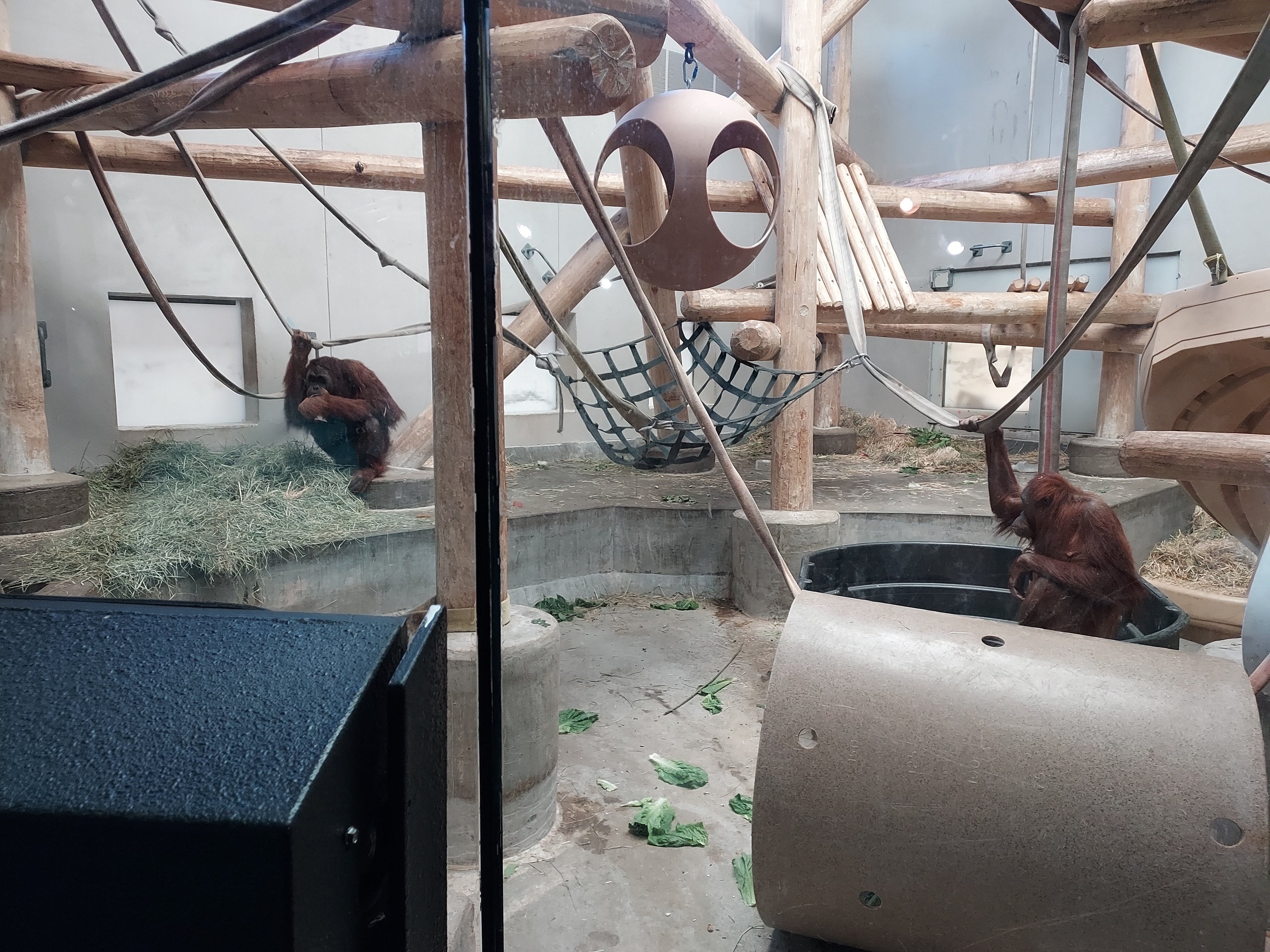
(I wonder if I should add to the gallery? I thought it was too low-quality)
In addition, here is the spider monkey habitat the same facility, which is only visible on zoochat when it held a different primate. I don't think it should replace any of the exhibits you listed, just felt relevant.
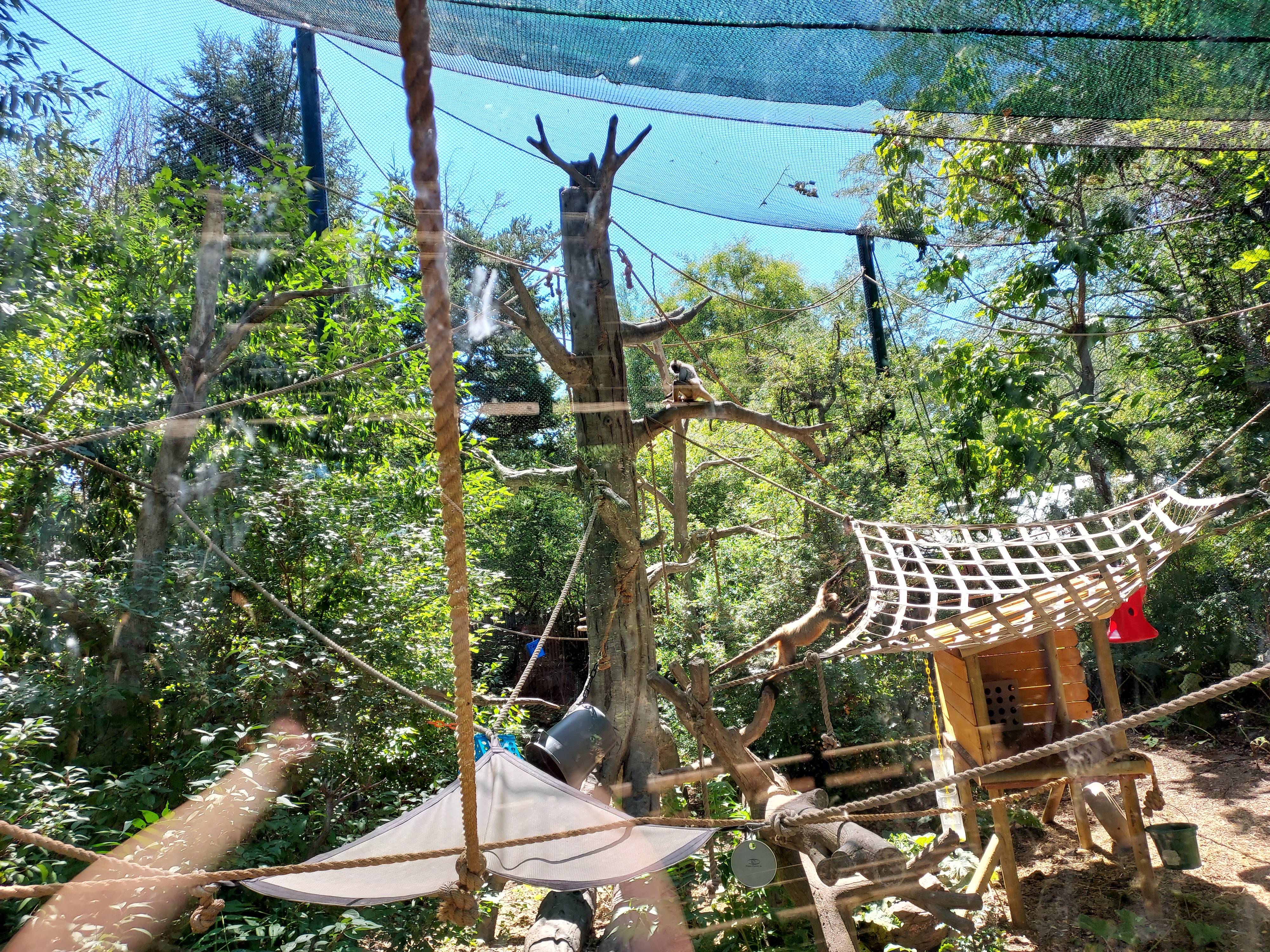
I'm especially impressed with Nashville's exhibit, which looks absolutely gorgeous!
Sorry to double post. The images in my previous post are not working, so attached here are two images of the spider monkey exhibit at Denver and three of the indoor orangutan exhibit. The orangutan exhibits were sloppily retouched to remove a visible guest in accordance with rules, sorry for how distracting is, I did not want to lose the floor detail by cropping.
If a mod wants to merge these posts, fine by me!
.


If a mod wants to merge these posts, fine by me!
.
Attachments




In today's post we are going to hop on down under to look at some great exhibits for Kangaroos! There are three species of kangaroo present in US Zoos, and this post will look at all three indiscriminately. The most common, and largest, is the Red Kangaroo, while also present are the Eastern and Western Grey Kangaroos.
The criteria for this post include:
 Photo by: @Julio C Castro
 Photo by: @Anteaterman
 Photo by: @Anteaterman
 Photo by: @Julio C Castro
 Photo by: @TinoPup
 Photo by: @TinoPup
 Photo by: @Moebelle
 Photo by: @Moebelle
 Photo by: @Grizzly Hound
 Photo by: @Moebelle
 Photo by: @Quicksand
 Photo by: @snowleopard
 Photo by: @TinoPup
 Photo by: @Moebelle
 Photo by: @Moebelle
 Photo by: @Moebelle
 Photo by: @pachyderm pro
 Photo by: @TinoPup
 Photo by: @Zooplantman
 Photo by: @Coelacanth18
The criteria for this post include:
- Space: Kangaroos use lots of room to hop around, and can generally be a very active species (at least during certain times of day). As such, they are a species I'd expect a larger exhibit for than many similarly sized mammals.
- Social Structure: Kangaroos are often found in large mobs in the wild. While compared to some other species US Zoos have done fairly well in terms of kangaroo social housing, it still stands true that it is important to maintain an appropriate social grouping for any species (in this case groups of four or more, ideally closer to ten).
- Opportunities to Escape Visitors: Many facilities house kangaroos in a walk-through setting, which while it makes for an impressive display, can also be stressful for the animals unless areas to rest away from visitors are provided. This doesn't necessarily need to be off-exhibit space, but areas far enough from the path to allow a lower-stress environment are essential.
- An impressive mob of twelve Western Grey Kangaroos are featured in the Walkabout Australia exhibit at the San Diego Zoo Safari Park. This exhibit is a very large walk-through area, and allows a number of naturalistic spots for the kangaroos to escape from visitors. This area also includes a number of different substrates, shade levels, and more to allow the kangaroos choice and control over their environment:
- Making their first appearance on this list, Columbus Zoo has a very impressive kangaroo walk-through exhibit. This exhibit houses both eastern grey and red kangaroos (three and seven, respectively, as of their most recent USDA inspection), and provides a large, nicely planted home for these animals. This exhibit has plenty of space for the kangaroos, including areas away from visitor paths, while also designing the exhibit in a way that encourages the kangaroos to come closer to the visitor areas:
- Twelve Eastern Grey Kangaroos are exhibited in Fort Wayne Children's Zoo's impressive Australia exhibit. This is another walk-through kangaroo exhibit, and similarly allows the kangaroos plenty of areas away from the visitor path. This is a fairly standard kangaroo walk-through, however it stands out due to the large mob size and the fact the walk-through is fairly spacious as well:
- Many on this site get frustrated by the Roo Valley at Cincinnati Zoo, mainly due to what it replaced, however that does not detract from the fact it's an impressive exhibit for kangaroos in its own right. This exhibit is home to six western grey kangaroos and three red kangaroos, and is uniquely designed due to its aesthetically pleasing rockwork and its very long configuration:
- Nashville Zoo's Bamboo Trail has been a repeated feature on this site, and the kangaroo exhibit is no exception. This is now only the fourth zoo to be featured four times on the list. The kangaroo exhibit at Nashville Zoo is home to the largest mob on this list, with a total of eighteen red kangaroos. The exhibit here is very large and spacious, with plenty of areas for the kangaroos to escape from visitors. As far as visitors are concerned, this is a unique exhibit in that the zoo allows visitors to pet the kangaroos when they are near the path:

One of my favorite kangaroo walkabouts is Walkabout Creek at Racine Zoo. By having a variety of bushes, this exhibit feels like much more than just "a lawn with some trees", and one some days some effort (but not an excessive amount) is required to find the animals. It contains Red and Western Gray Kangaroos, as well as Common Wallaroo and Emu:


(photo credits @pachyderm pro)
Blank Park has a very similar walkabout (with a pond) that I also really like, although it only contains Black Swan and Bennett's Wallaby (no kangaroos):


(photo credits @Dhole dude)
The best kangaroo walkabout on the continent no longer exists, however. That would go to Kangaroo Crossing, a former exhibit at Minnesota Zoo. This massive walkabout was complete with tall prairie grasses, a massive space, and a very large mob of Red Kangaroos. This one image is the only image I could find in the gallery, which does not capture the exhibit well unfortunately:

(photo credit @m30t)
(photo credits @pachyderm pro)
Blank Park has a very similar walkabout (with a pond) that I also really like, although it only contains Black Swan and Bennett's Wallaby (no kangaroos):
(photo credits @Dhole dude)
The best kangaroo walkabout on the continent no longer exists, however. That would go to Kangaroo Crossing, a former exhibit at Minnesota Zoo. This massive walkabout was complete with tall prairie grasses, a massive space, and a very large mob of Red Kangaroos. This one image is the only image I could find in the gallery, which does not capture the exhibit well unfortunately:
(photo credit @m30t)

A great list for kangaroos, but there are two zoos that I remember having spectacular roo exhibits and perhaps the competition was too fierce for them to be included.
Kansas City Zoo has a wonderful exhibit and Detroit Zoo has around a dozen macropods in a two-acre habitat. I'm pretty sure that Detroit has the largest kangaroo walk-through in North America, or it must be right near the top. Maybe it's too large?
Kansas City Zoo has a wonderful exhibit and Detroit Zoo has around a dozen macropods in a two-acre habitat. I'm pretty sure that Detroit has the largest kangaroo walk-through in North America, or it must be right near the top. Maybe it's too large?
This was a species that there was a lot of competition for. Looking at the 23 species so far, the ones with the most competition were kangaroos, Asian elephants, giraffes, and grey wolves: all with well over five impressive exhibits that could've easily qualified. Conversely, some species like orangutans, takin, capybara, giant anteater, and North American porcupine had much lower standards in order to qualify for the thread.A great list for kangaroos, but there are two zoos that I remember having spectacular roo exhibits and perhaps the competition was too fierce for them to be included.
Kansas City Zoo has a wonderful exhibit and Detroit Zoo has around a dozen macropods in a two-acre habitat. I'm pretty sure that Detroit has the largest kangaroo walk-through in North America, or it must be right near the top. Maybe it's too large?

DesertTortoise
Well-Known Member
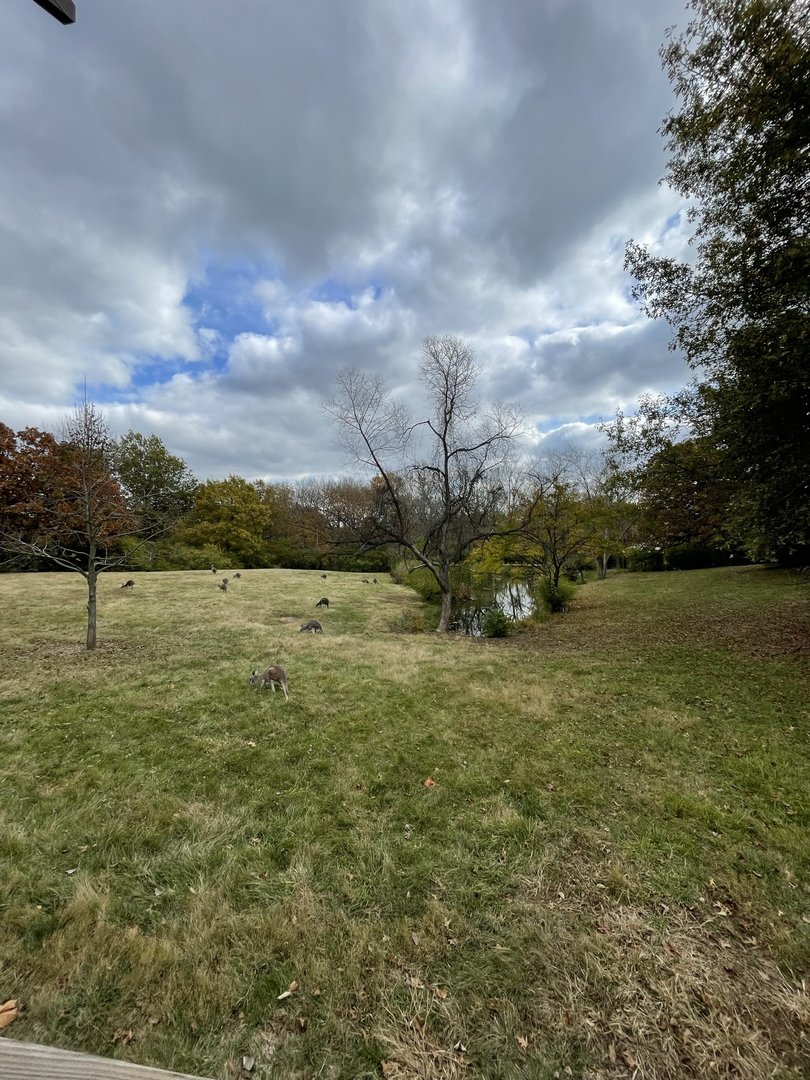
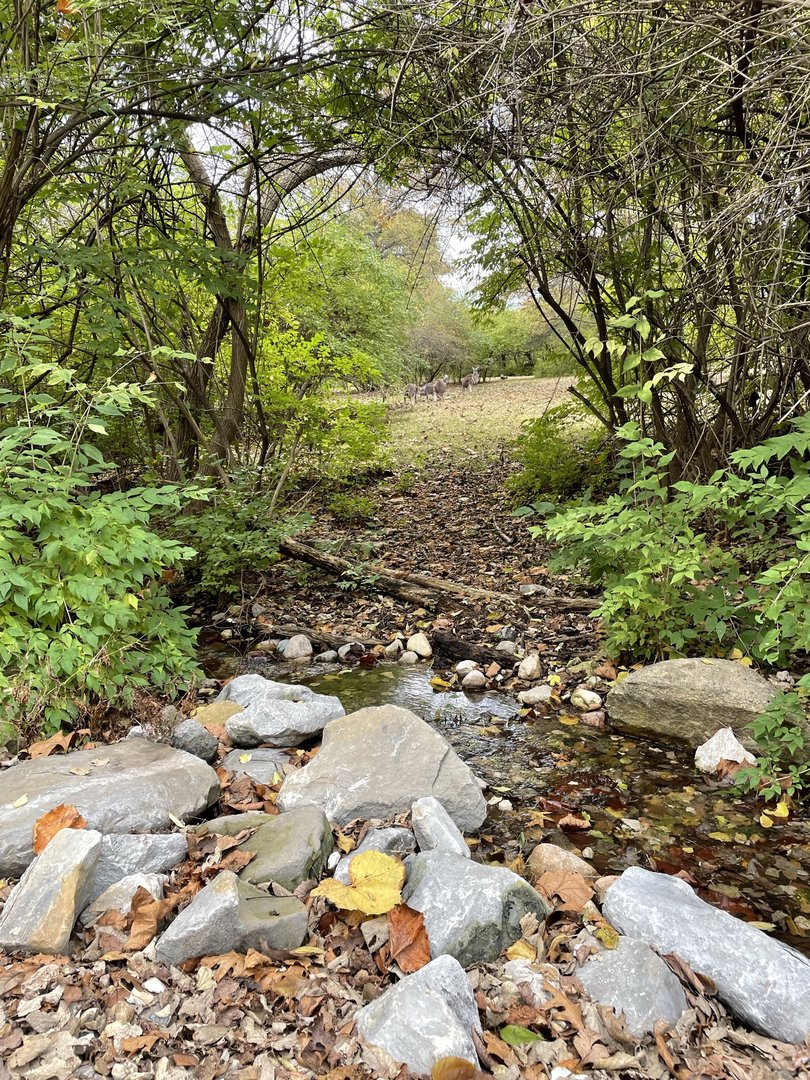
Kansas City Zoo’s entire Australian zone is one large walk-through exhibit for red kangaroos. There are also several exhibits for smaller species built along the outside of the path. The visitor pathway is set along the edge of a forest and completely encircles a large space where the kangaroos typically reside. The exhibit includes a large field, several forested areas, as well as a pond. I believe there are 14 individuals currently in the mob.
Last edited:
Earlier in this thread, the grey wolf was featured. Today, the post will be dedicated to their more endangered relative, the Red Wolves! Red wolves can only be found in the wild in the double digits, all of them in North Carolina. This is due to the results of a (formerly) successful re-introduction program run by the USFWS, but the population has unfortunately stared to decline.
The criteria for this post will be identical to those of the grey wolf:
 Photo by: @Pleistohorse
 Photo by: @Moebelle
 Photo by: @Coelacanth18
 Photo by: @ZooNerd
 Photo by: @CuseZoofan
 Photo by: @CuseZoofan
 Photo by: @CuseZoofan
 Photo by: @geomorph
 Photo by: @geomorph
 Photo by: @geomorph
 Photo by: @geomorph
 Photo by: @geomorph
 Photo by: @Coelacanth18
 Photo by: @Coelacanth18
 Photo by: @Chili
 Photo by: @Chili
 Photo by: @Moebelle
 Photo by: @Moebelle
 Photo by: @TigerValley98
 Photo by: @blospz
The criteria for this post will be identical to those of the grey wolf:
- Size: Wolves are fairly large animals that in the wild will live across large territories. This can best be replicated in captivity through giving extremely large enclosures, even more so than what should be given to other, similarly sized species. In fact, I'm pretty certain every exhibit on this list is at least an acre large!
- Social Structure: Wolves are pack species. While many zoos have traditionally (and even to this day) kept wolves in pairs, many of the better exhibits for wolves are those that display larger packs of wolves.
- Plants: Wolves typically live in dense, forested areas. Due to this, exhibits that are more densely planted were prioritized for this thread.
- Hiding Opportunities: While size and plants partially accounts for this, it warrants additional mention that wolves are shy, timid creatures. The best exhibits for them account for this by giving the wolves plenty of spaces to hide. One way this is achieved is by ensuring exhibits are properly deep (allowing areas far from the visitor path) rather than building long, yet narrow, exhibits.
- Given their native range, it shouldn't come as much of a surprise that the North Carolina Zoo, known for its extensive North American exhibit, has an excellent exhibit for the species. The facility is home to an impressive number of thirty two red wolves, more than what can be found in the wild even, however not all of these animals are on exhibit at all times. This is a spacious complex for the wolves, and is also very well-forested to provide a great home, particularly for wolves that may some day be released into the wild:
- While unfortunately this exhibit currently has only one animal (failing the social structure requirement), the Wolf Woods at Binghamton, New York's Ross Park Zoo exceeds at all the other criteria in order to score a spot on this list. This zoo has two large exhibits available to the wolf, meaning the zoo is hopefully committed to adding a larger pack wolves to its collection moving forward. These are well-planted, naturalistic exhibits that make up a significant portion of this smaller zoo. This exhibit is paired with an interpretive area that seems impressive:
- While the species may be native to North Carolina, the country's largest collection of red wolves is on the complete other side of the country, at Tacoma's Point Defiance Zoo. Home to 45 red wolves, the Red Wolf Woods includes multiple different exhibits for the red wolves, each of which is very spacious. These exhibits are also very naturalistic, and the large number of wolves means it's much more likely to see wolves, while still providing hiding opportunities for the wolves to utilize:
- While North Carolina Zoo certainly has an impressive red wolf exhibit, it is far from the only impressive wolf exhibit in the state of North Carolina. The Western North Carolina Nature Center exhibits their pair of red wolves in a large, spacious, heavily planted enclosure, which allows the visitors up-close looks at the wolf inhabitants through the non-obstructive invisible mesh:
- While more of an open, grassy field than many of the other exhibits on this list, four red wolves share a spacious home as part of Akron Zoo's Grizzly Ridge. This exhibit does have a number of trees around the perimeter to allow the wolves some hiding opportunities and more naturalistic areas, however much of the exhibit is made up of a large field with a rocky ledge running through the middle:

Red wolves are a tricky one, because of the current reintroduction program. Rosamond Gifford's is excellent, for example, but from a visitor perspective it can be really hard to see the animals, by design. Oglebay has two large exhibits that are wonderful. I liked the one at Roger Williams as well, lots of hiding. They're mostly kept in pairs for breeding purposes.