Exhibit 4.5: Northeastern Australia (Top Floor)
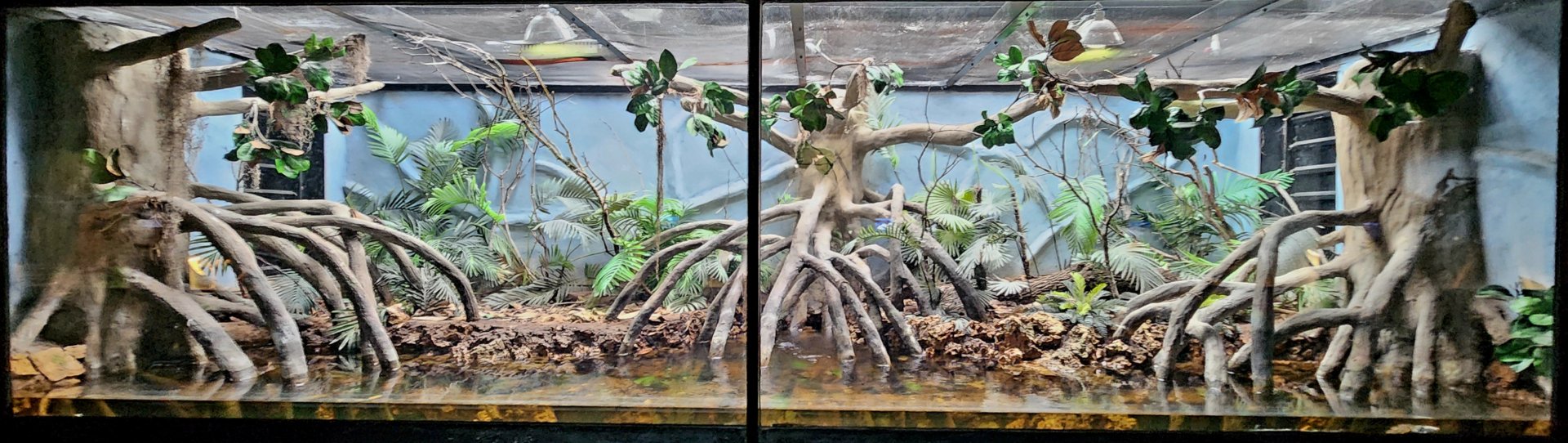
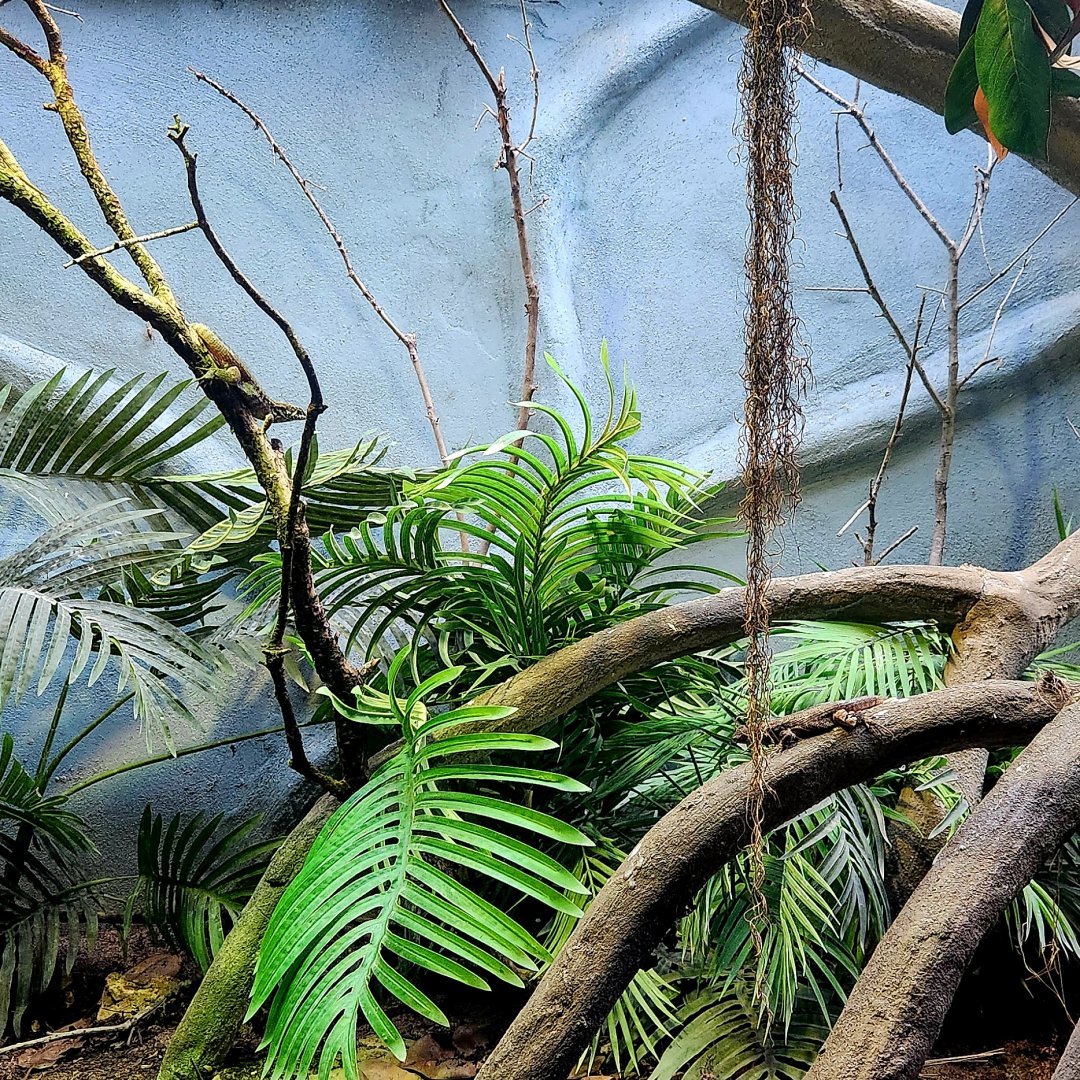
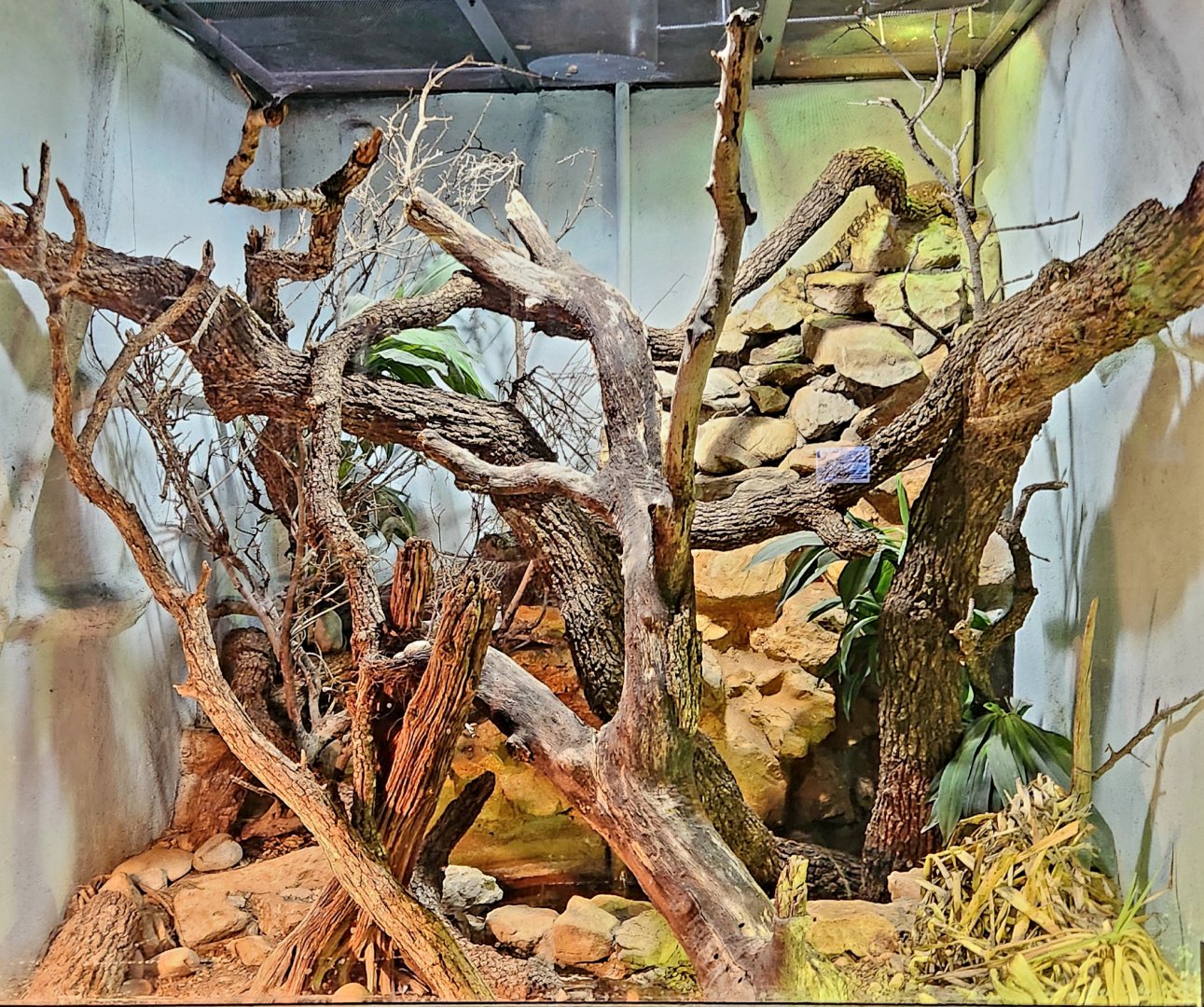
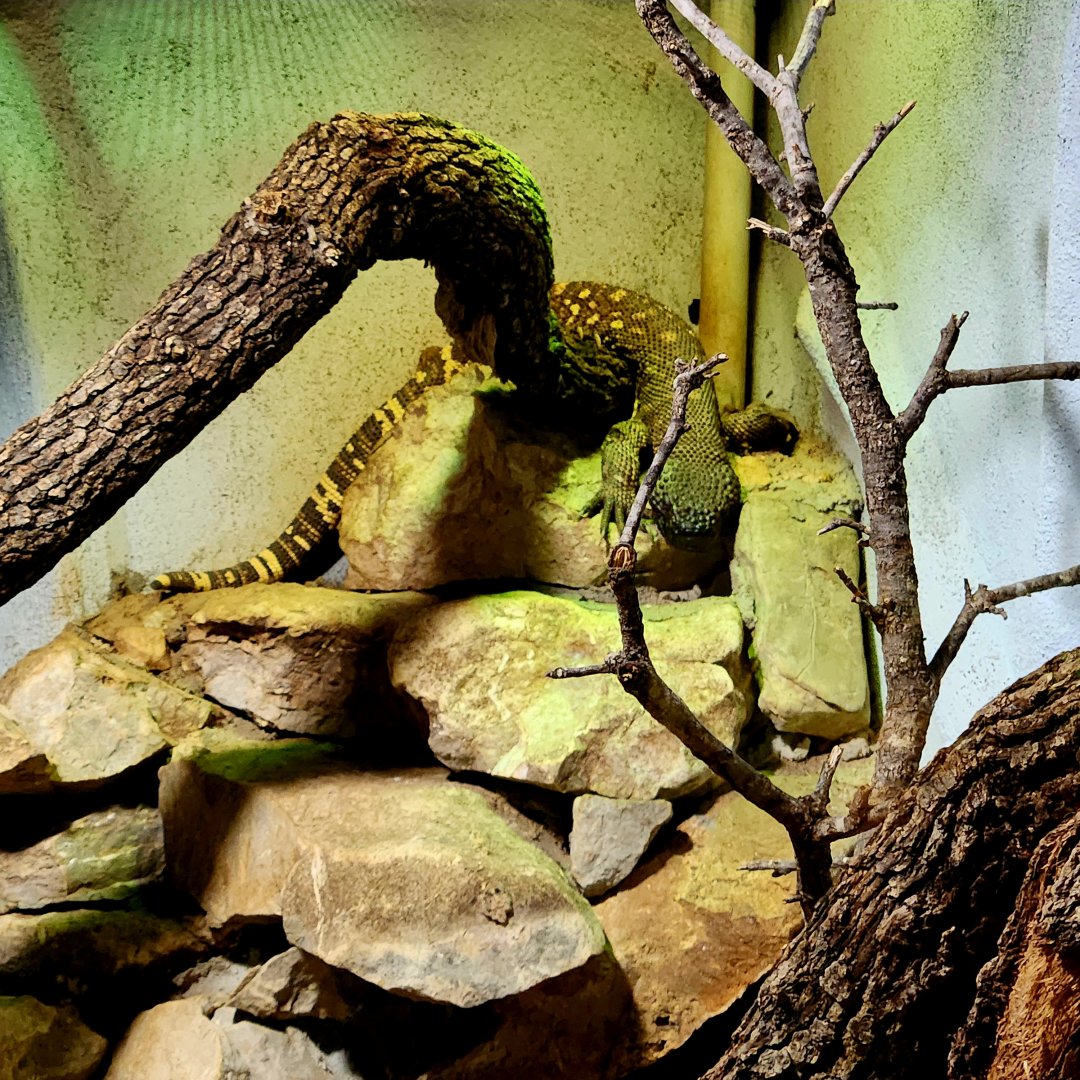
The upper floor of the Northeast Australian exhibit is lush with artificial ferns, and I'll take the opportunity here to say that whoever chose the artificial plants did a great job - lots of exhibits in here have had mixed live and artificial or completely artificial plants, and I'd be willing to bet a lot of people didn't notice until now. The branches up here are nicely-done, although the blending of the branch on the back could be better with all the others (again, these are my perfectionist nitpicks, I still regard this facility as top-notch!) I never saw the Water Dragons (Intellagama lesueurii lesueurii) make their way up this high, but on the contrary I never saw the Mertens' Water Monitors (Varanus mertensi) leave the upper canopy.
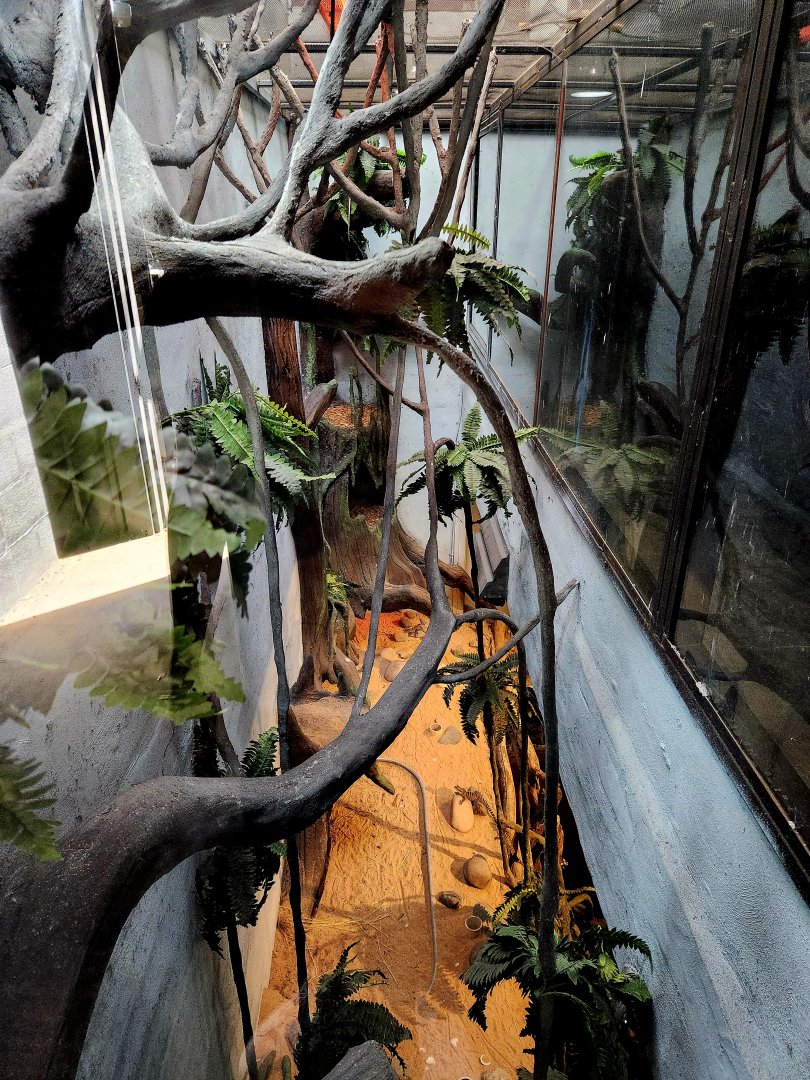
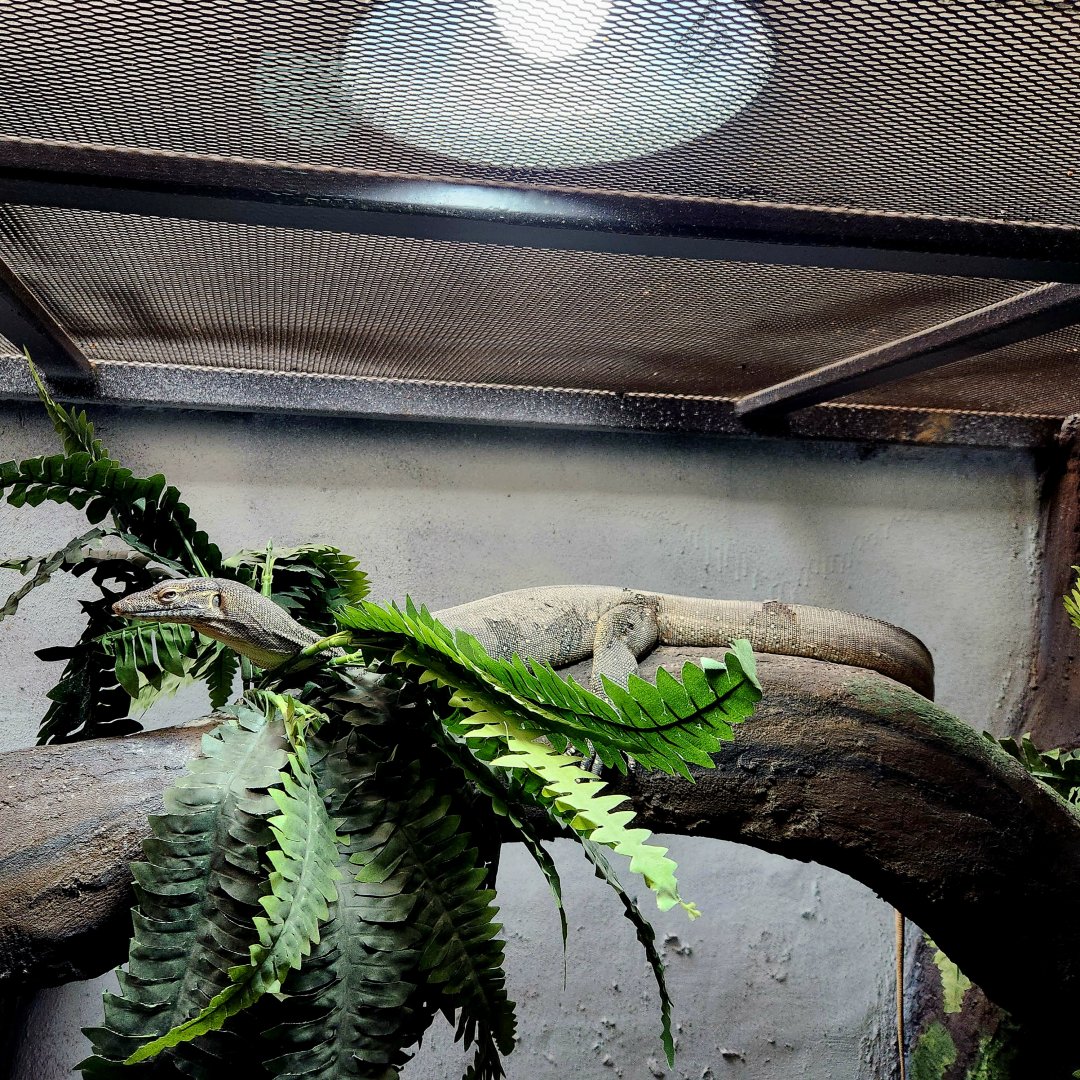
Exhibit 5.5: Amazon Rainforest (Top Floor)
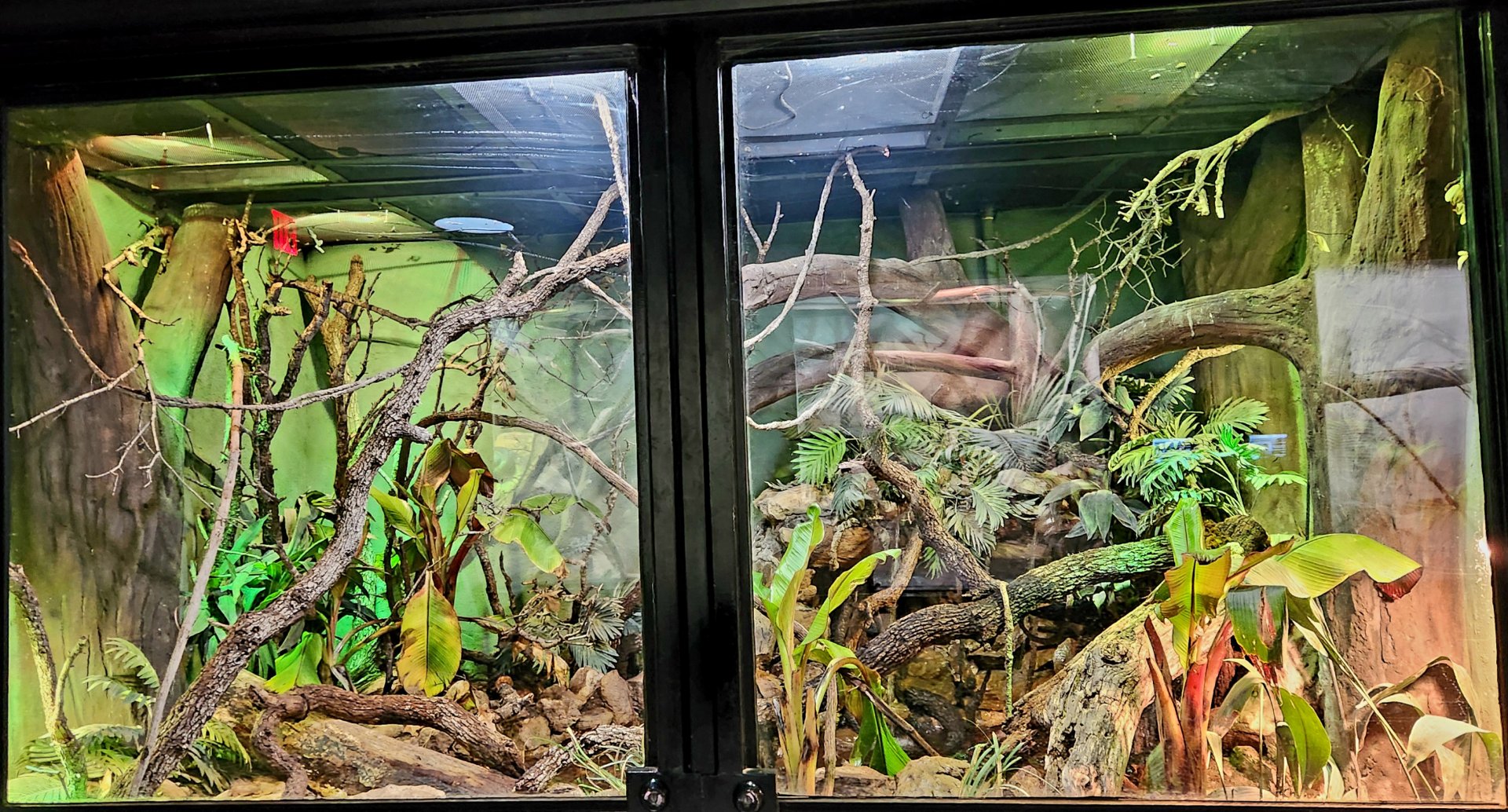
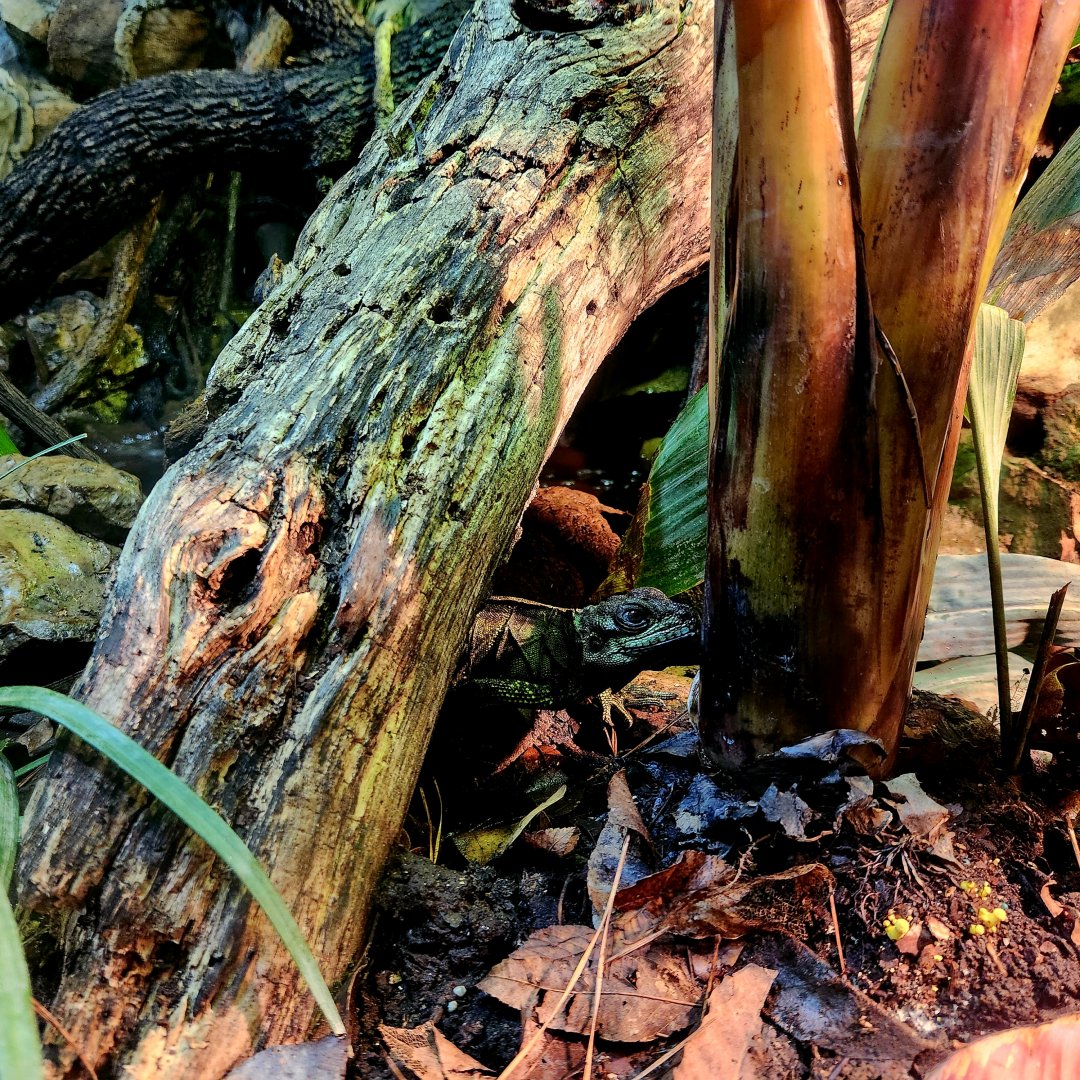
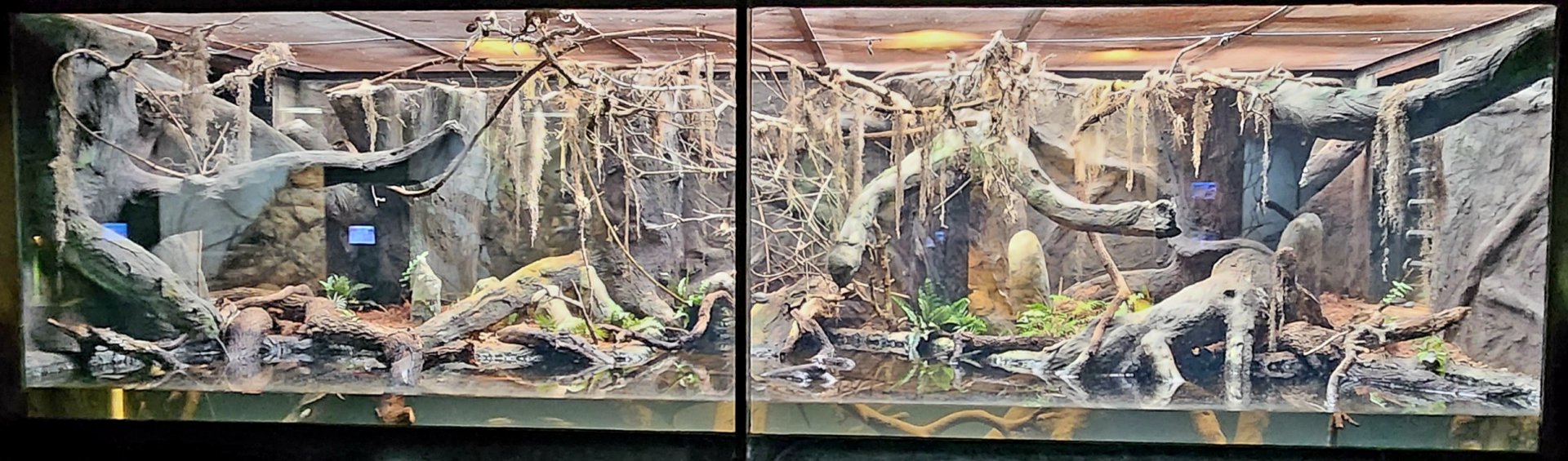
Not too much to report here, as the Basilisks (Basiliscus plumifrons) are the only species that can access this portion right now, and they don't typically hang out this high. Still, the view down is impressive, and I'm excited to see Caiman Lizards (Dracaenea guianensis) use the full height of these trees eventually - makes me wonder if they will jump into the water like the Crocodile Monitors. Speaking of, the trees in here look great, very similar to the Crocodile Monitor Kingdom.
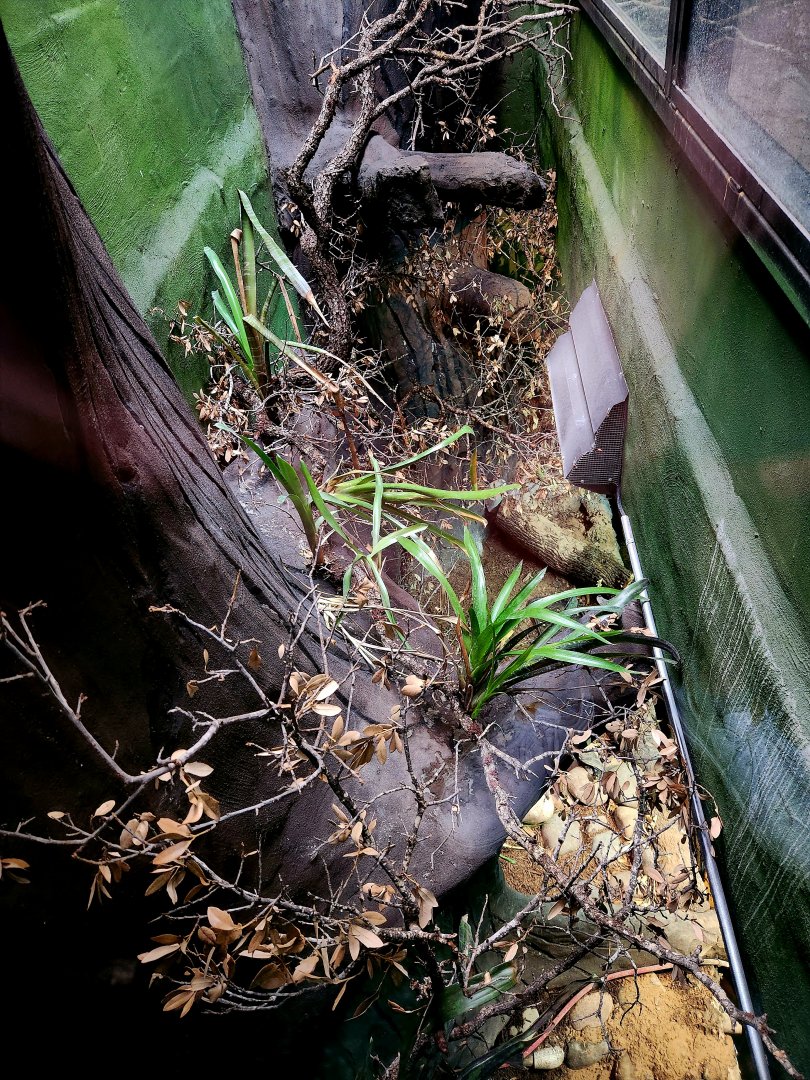
Exhibit 6.5: Batanta (Top Floor)
This is typically where the Blue Tree Monitors (Varanus macraei) in this exhibit hang out, given their arboreal nature. I saw at least one in here throughout the day, who was primarily napping or chasing Dubia Roaches around the entire 30' height of the enclosure. Not a whole lot I would add here, but some plants draping down over the walls might make the blue appear more like the intended skyline and less jarring.
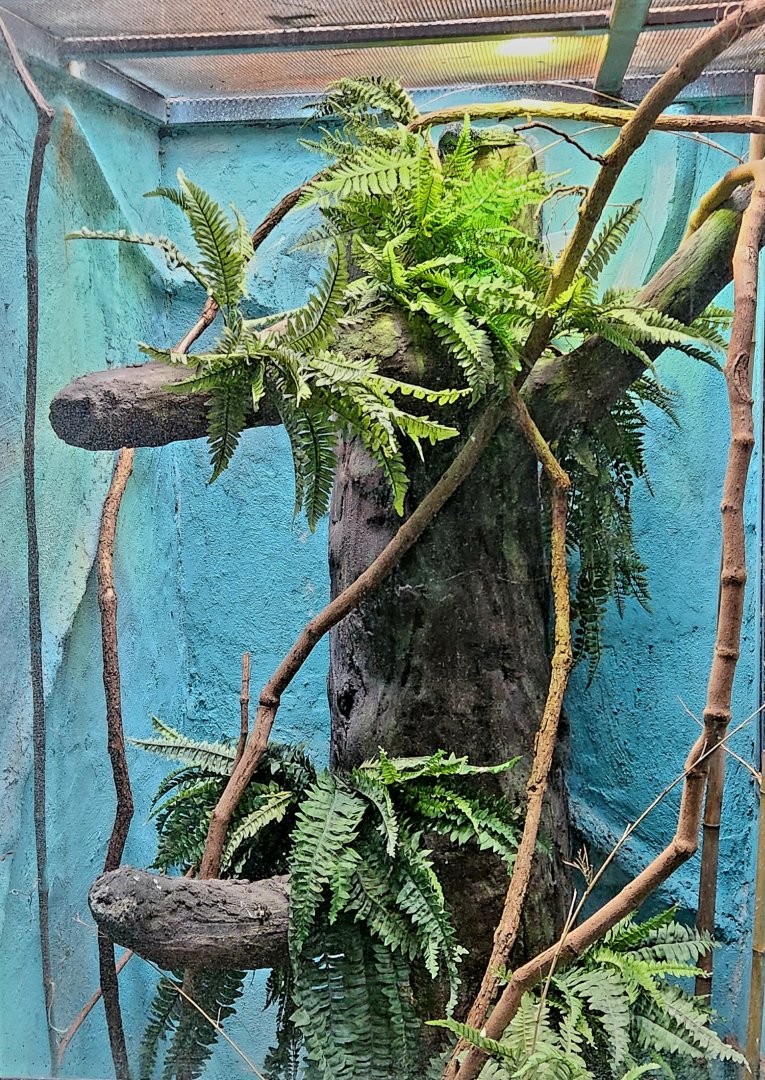
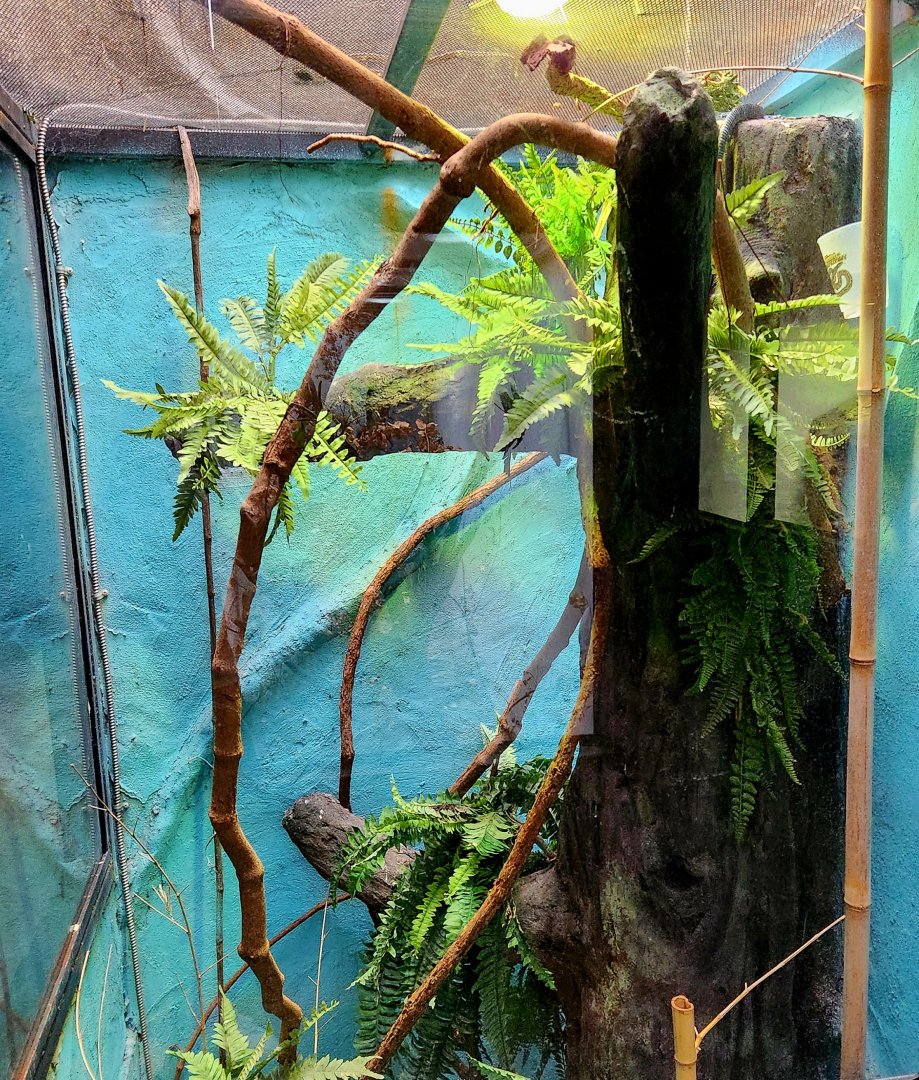
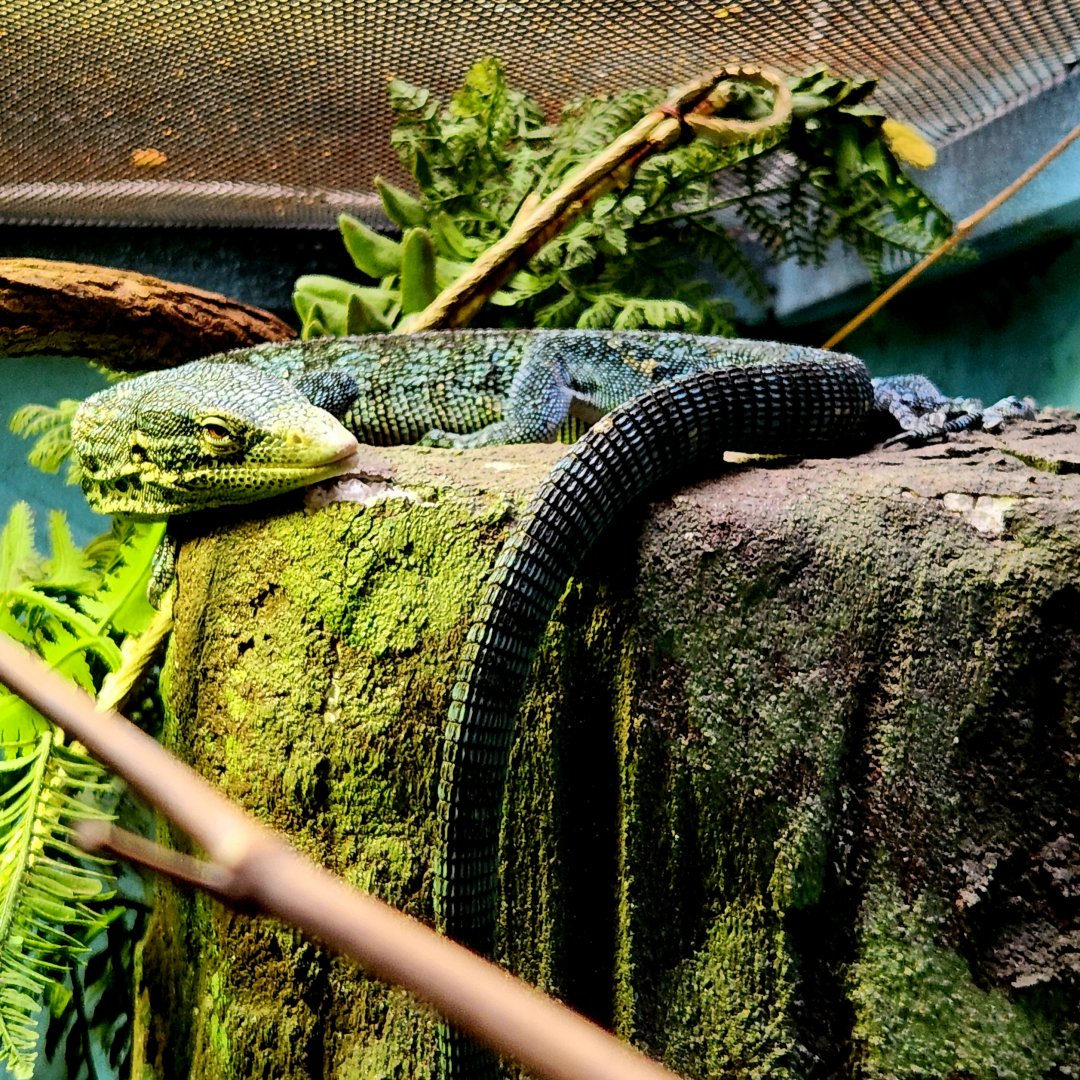
Exhibit 7.5: Cuba (Top Floor)
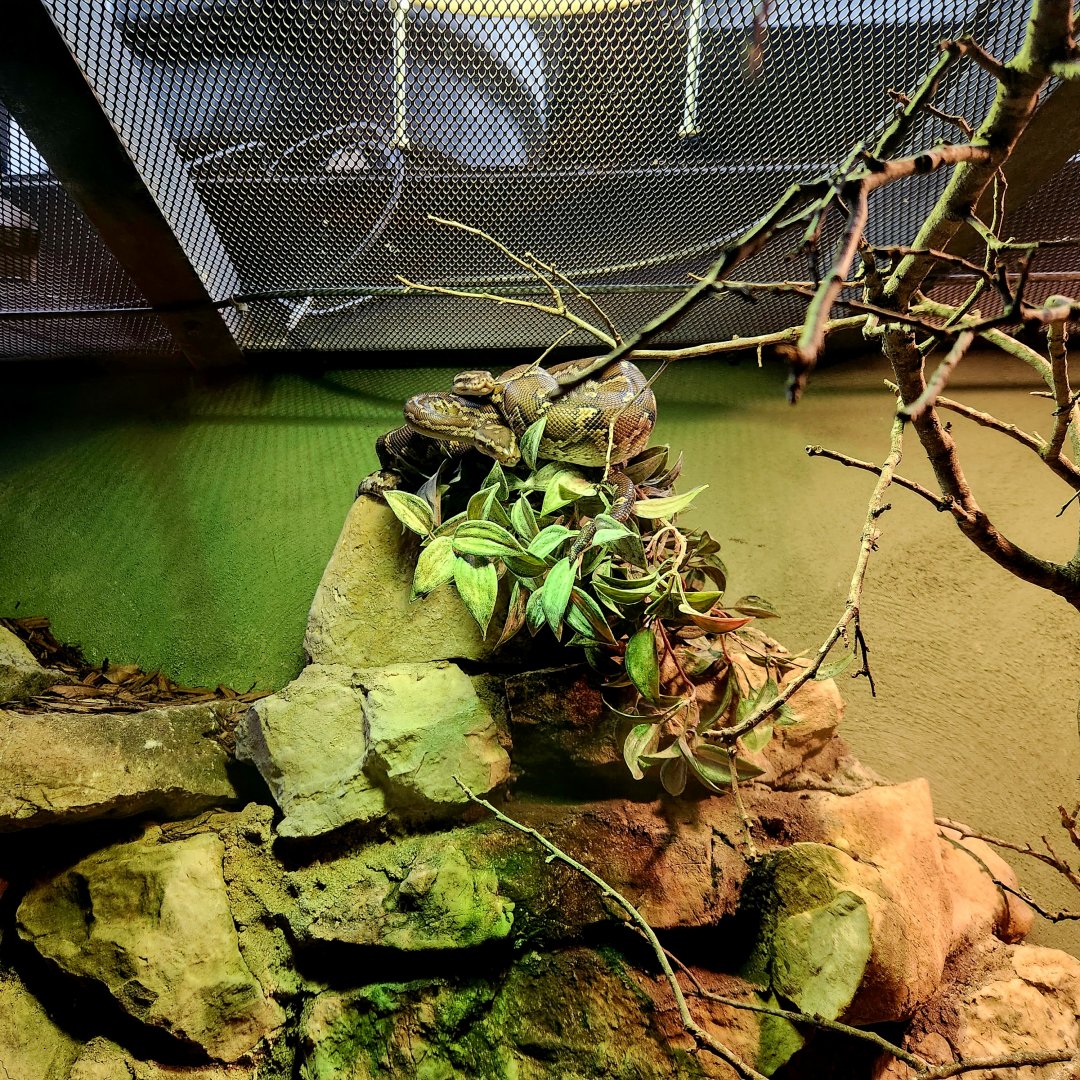
This is one of the more exciting upper story exhibits, with the male Rock Iguana (Cyclura nubila) spending a good portion of the day basking atop the rock pile. He's quick to give a quick two or three little head bobs to say hello, and is clearly a well-socialized animal. Also visible up here are the Smallwood's Anoles (Anolis smallwoodi), another member of the equestris species complex represented here. Make no mistake, these are no Knight Anoles (A. equestris). They are far more brilliantly patterned, with a bright teal hue that makes them very attractive. The combination of artificial trees, live bromeliads, and natural shrubbery up here make this exhibit one of the top floor's stars, and I'd be excited to see the aforementioned Northern Curly-Tailed Lizards (Leiocephalus carinatus) use the full height as well.
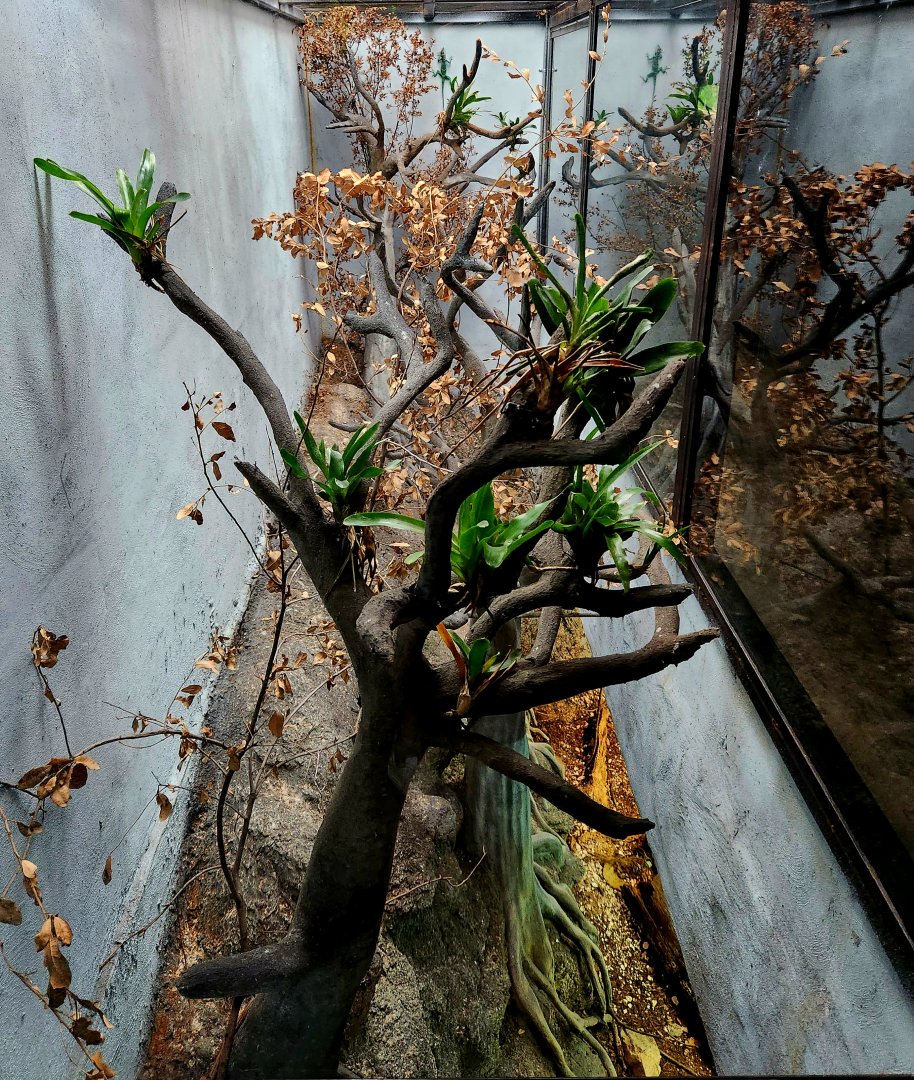
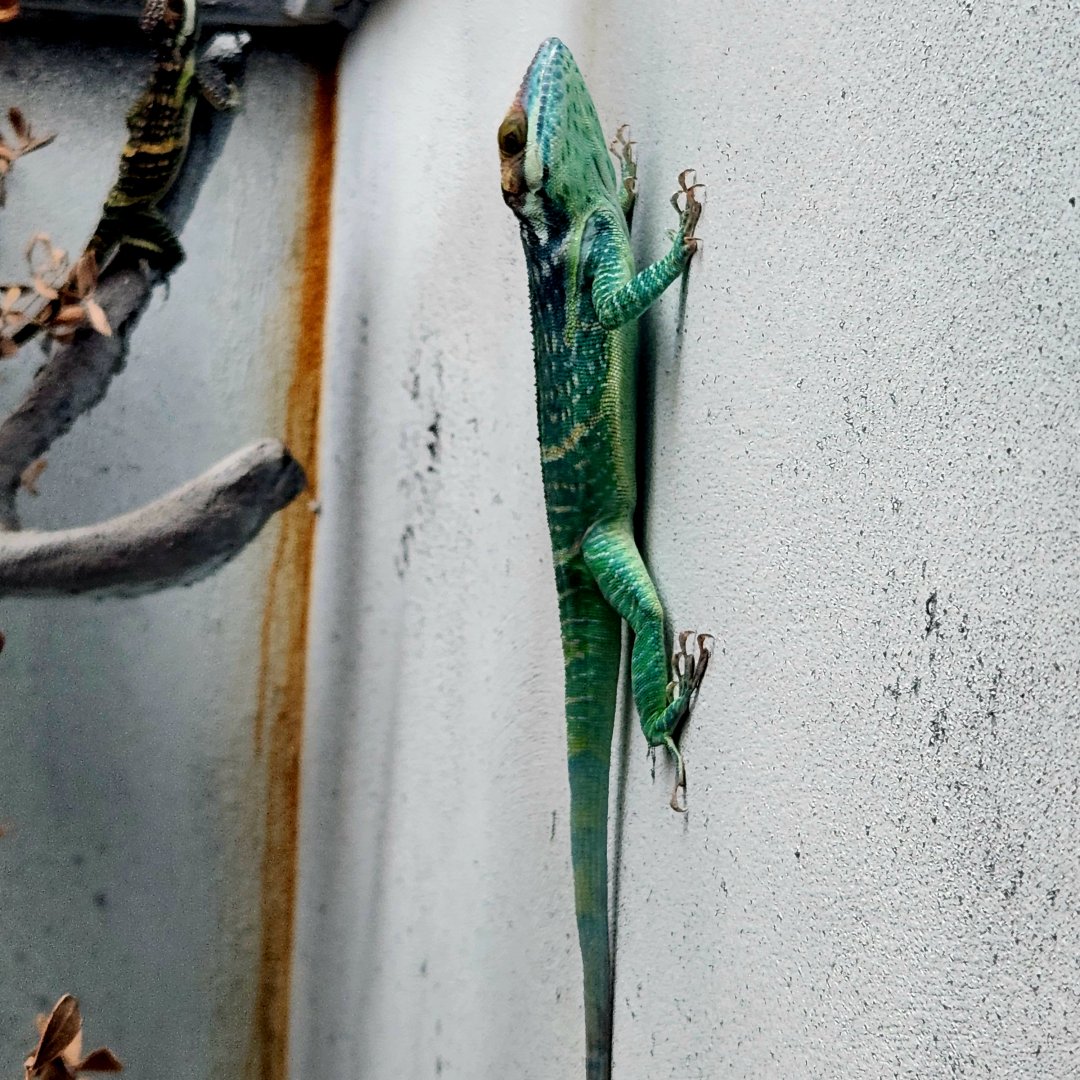
Exhibit 8.5: Aru Islands (Top Floor)
Nothing here yet, but I will add that I like this exhibit better than the previous Tree Monitor exhibit. The plants look especially nice in here, and the vines have a more natural look as well. As with the previous enclosure, adding some more plants draping down over the walls could make the blue appear more like a skyline and less jarring.
Exhibit 9.5: Tsingy Peaks (Top Floor)
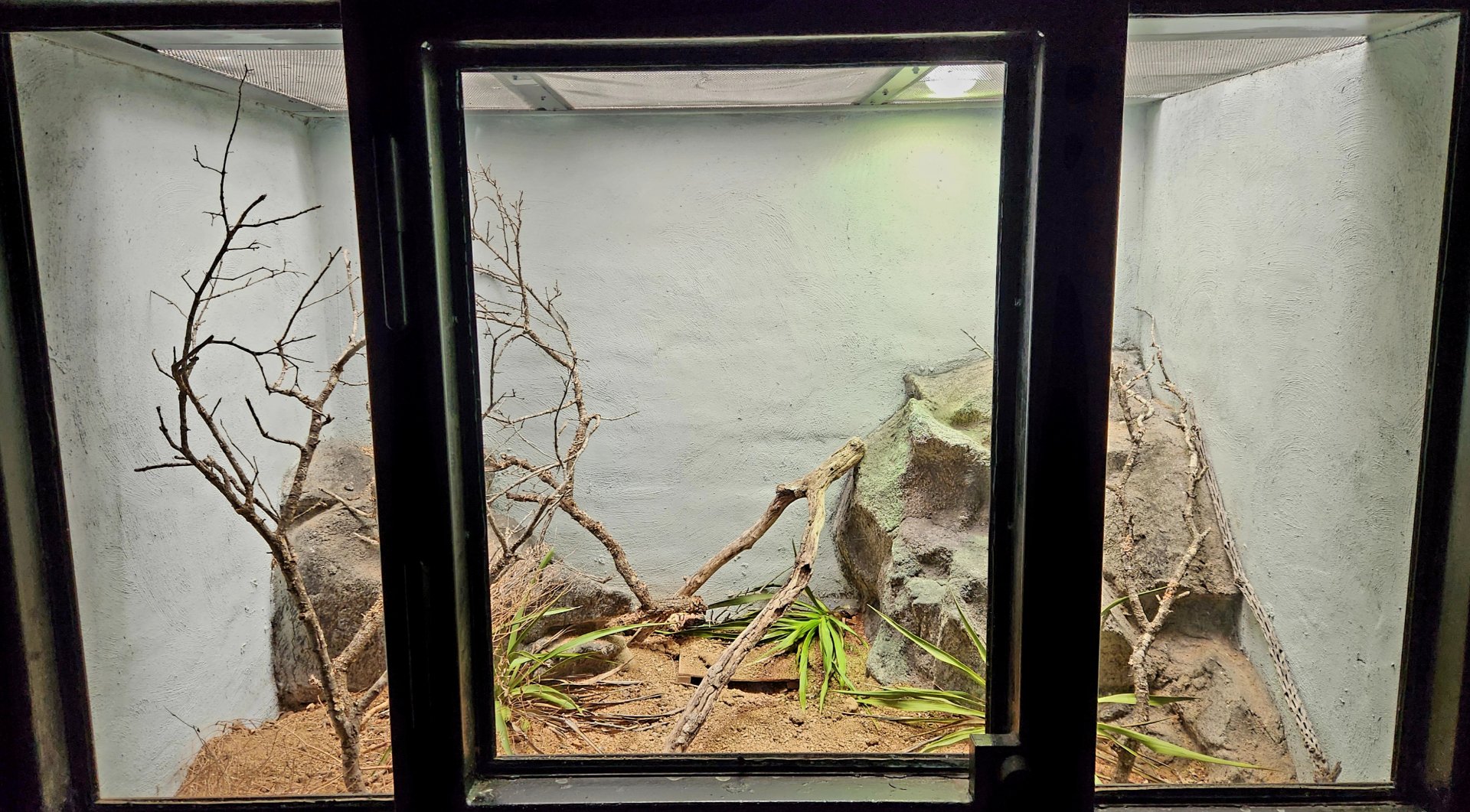
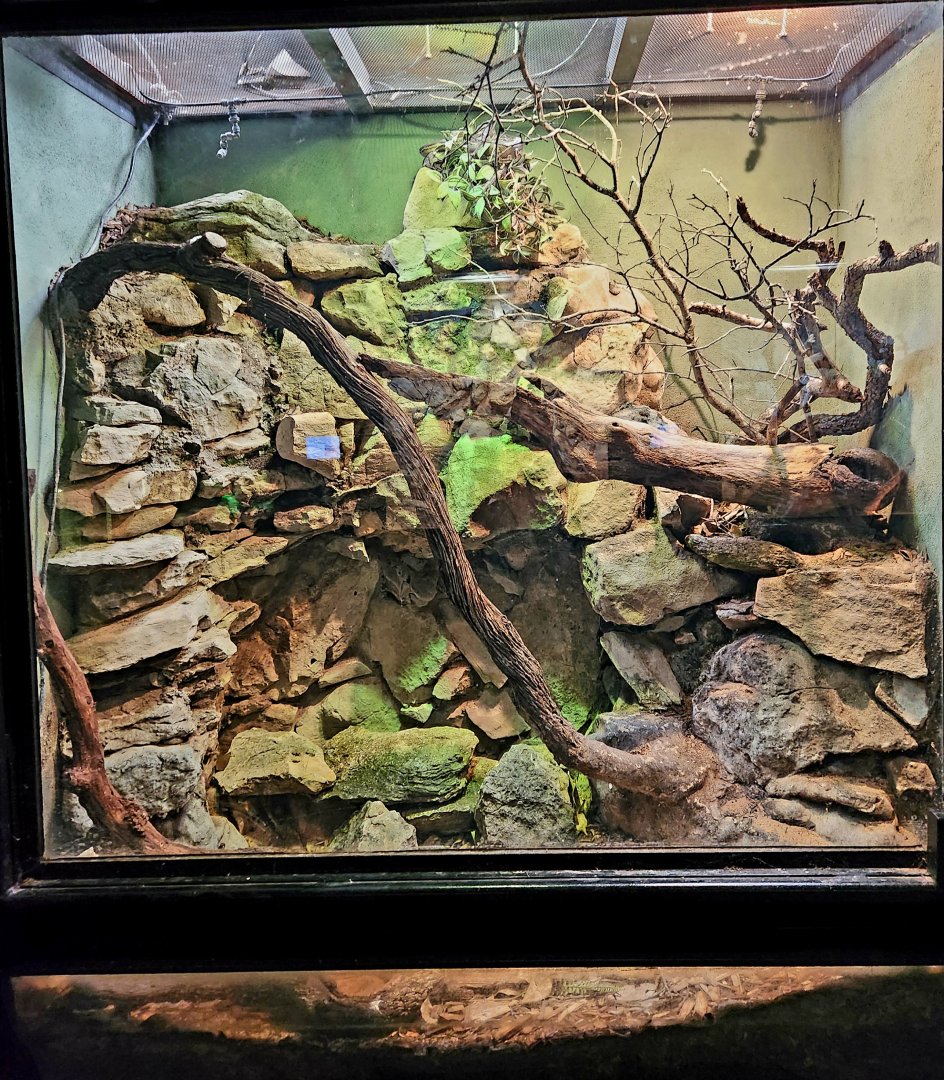
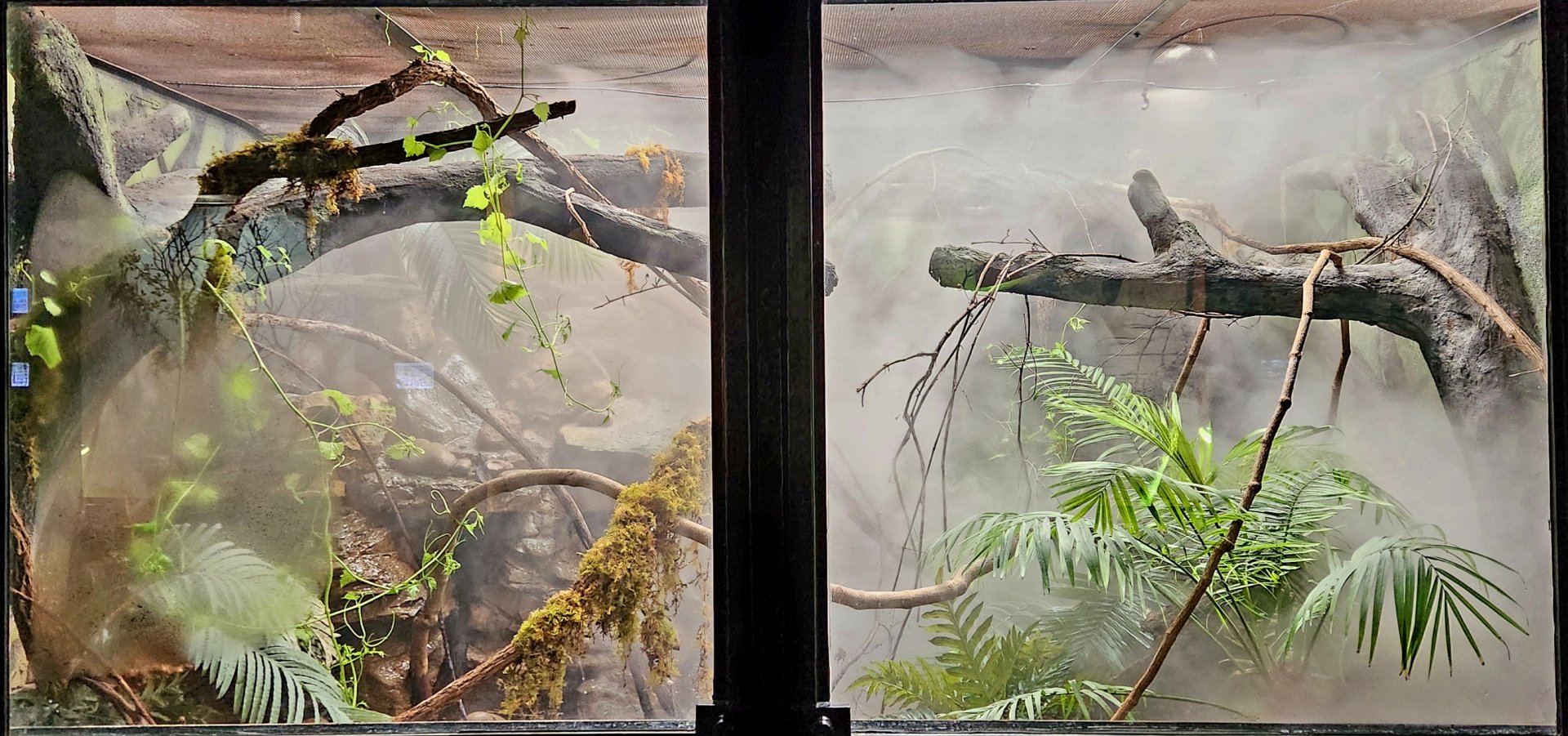
This was another attractive exhibit from the top floor, with the peaks of northwestern Madagascar near-perfectly represented. I'm happy with how nicely the photos of this exhibit came out, I was worried they wouldn't capture the beauty of it. I do think the exhibit would benefit from a larger lizard population, especially of the Day Geckos (Phelsuma sp.) as I only saw one for a brief second. A number of chameleons would probably do quite well in here, as they have a bit of floorspace at the top there and they'd be relatively undisturbed. While Oustalet's Chameleons (Furcifer oustaleti) are probably the most common in Tsingy, Green Chameleons (Furcifer viridis) are also known from the area. Appropriate geckos might include P. abbotti or P. kochi, and Western Girdled Lizards (Zonosaurus laticaudatus) would make another great addition.
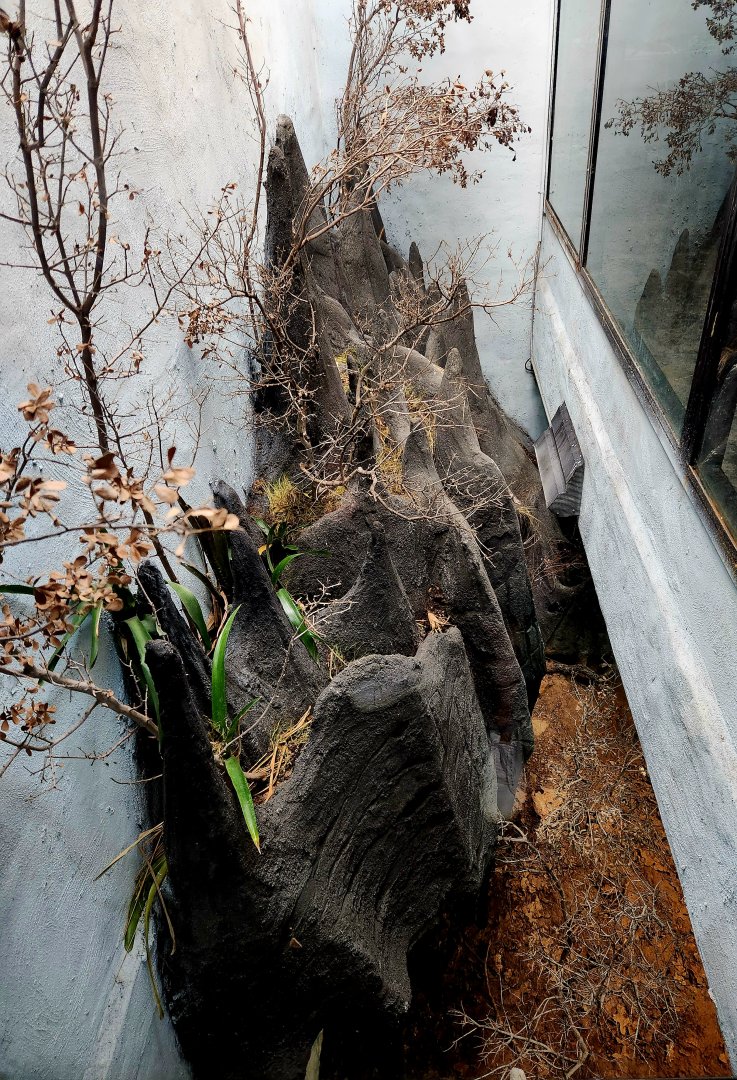
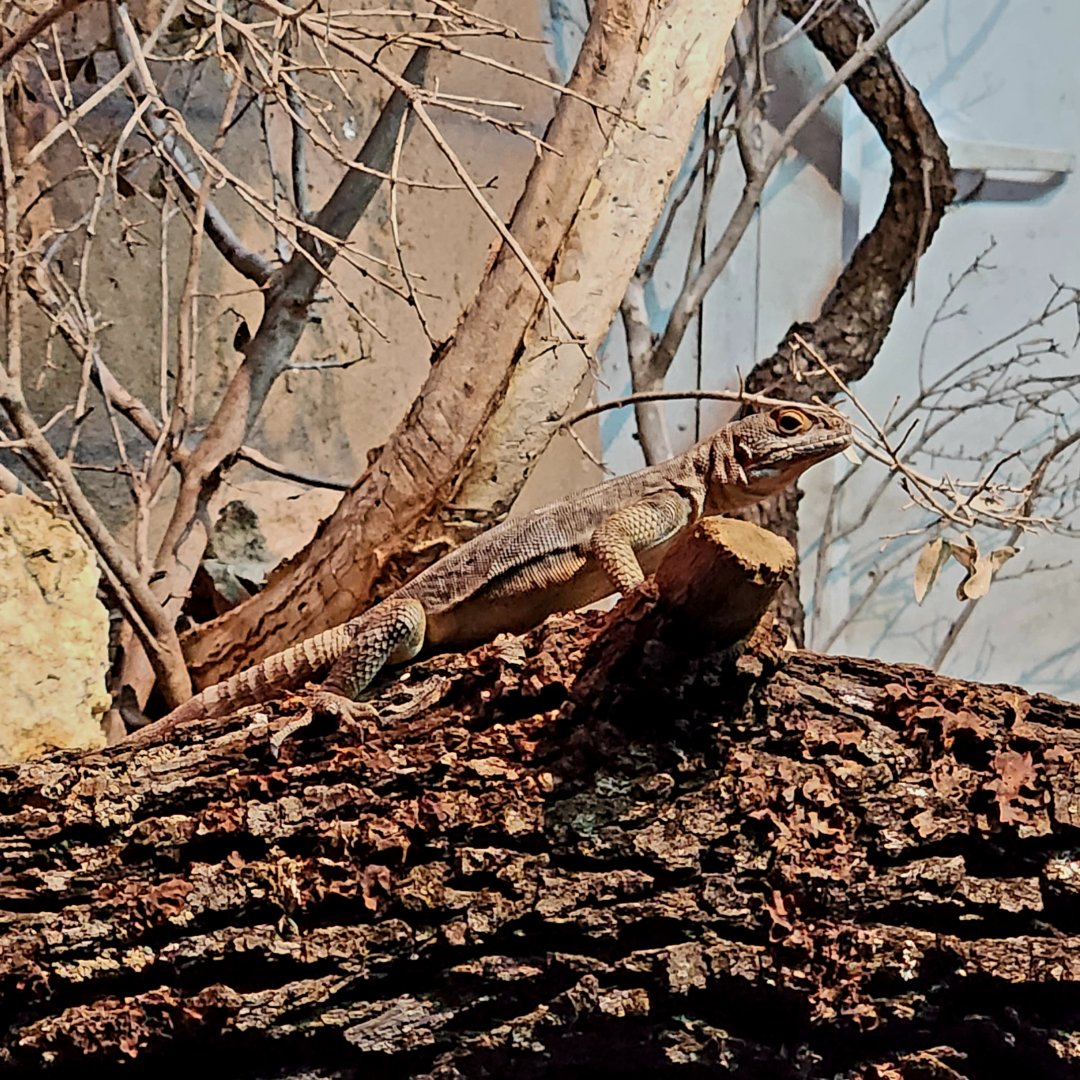
Exhibit 10.5: New Guinea (Top Floor)
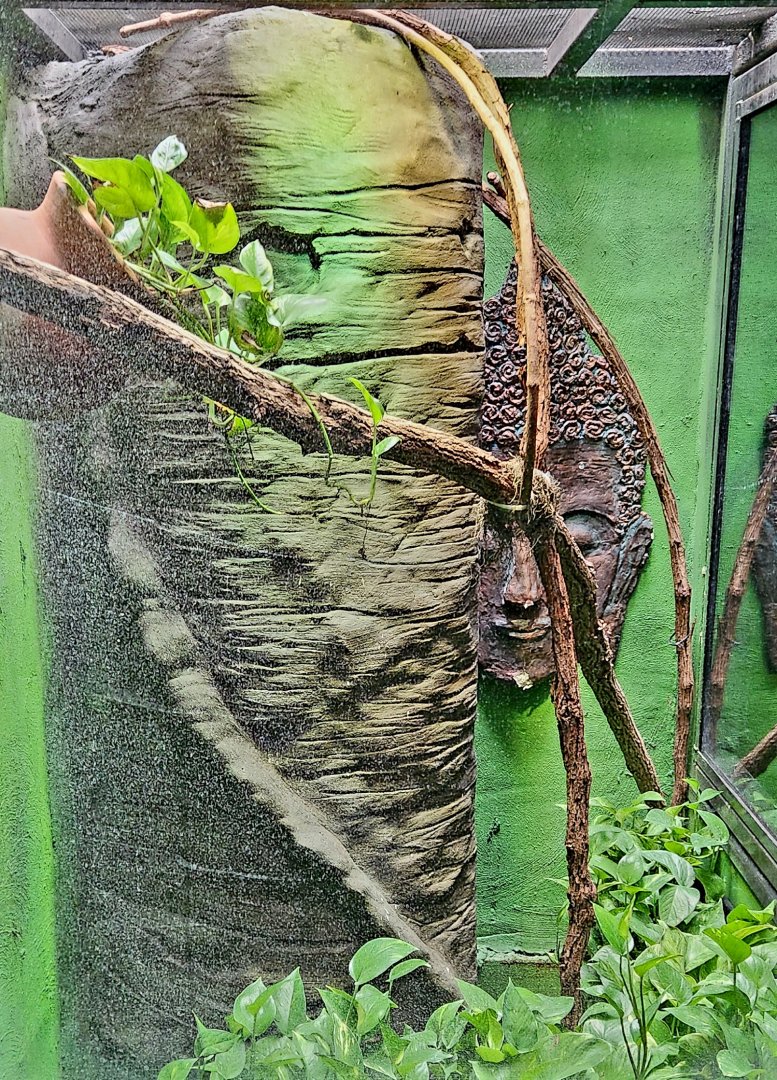
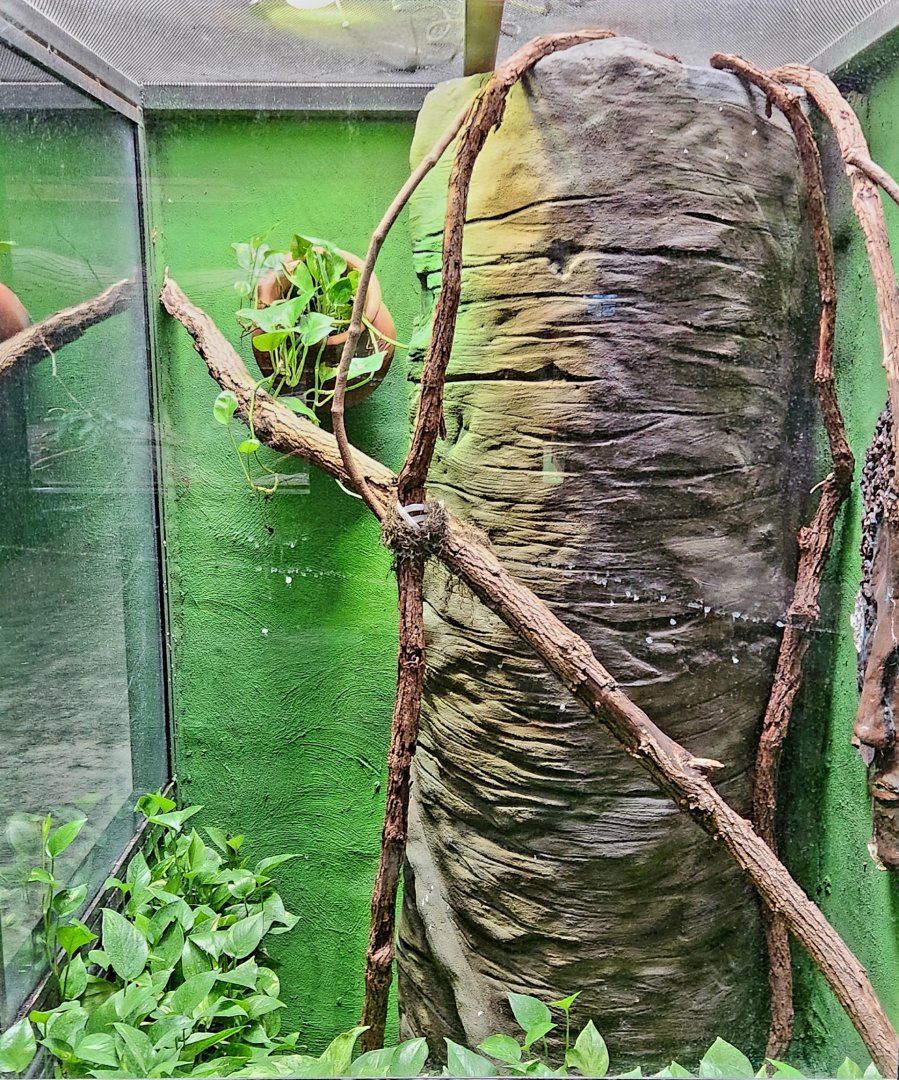
Not too much to report on here animal-wise, this was signed for the Angle-Headed Forest Dragons (Hypsilurus magnus) but I'm not sure they were on display during my visit. I really like the tree in here, and as I mentioned earlier I'd love to see the Blue Tree Monitors (Varanus macraei) moved over here as they are the largest of the Tree Monitors. The planter boxes with live Pothos near the windows are a great touch as well. The mask and potted plant are going to illicit mixed opinions - I won't comment either way.
The upper floor of the Northeast Australian exhibit is lush with artificial ferns, and I'll take the opportunity here to say that whoever chose the artificial plants did a great job - lots of exhibits in here have had mixed live and artificial or completely artificial plants, and I'd be willing to bet a lot of people didn't notice until now. The branches up here are nicely-done, although the blending of the branch on the back could be better with all the others (again, these are my perfectionist nitpicks, I still regard this facility as top-notch!) I never saw the Water Dragons (Intellagama lesueurii lesueurii) make their way up this high, but on the contrary I never saw the Mertens' Water Monitors (Varanus mertensi) leave the upper canopy.
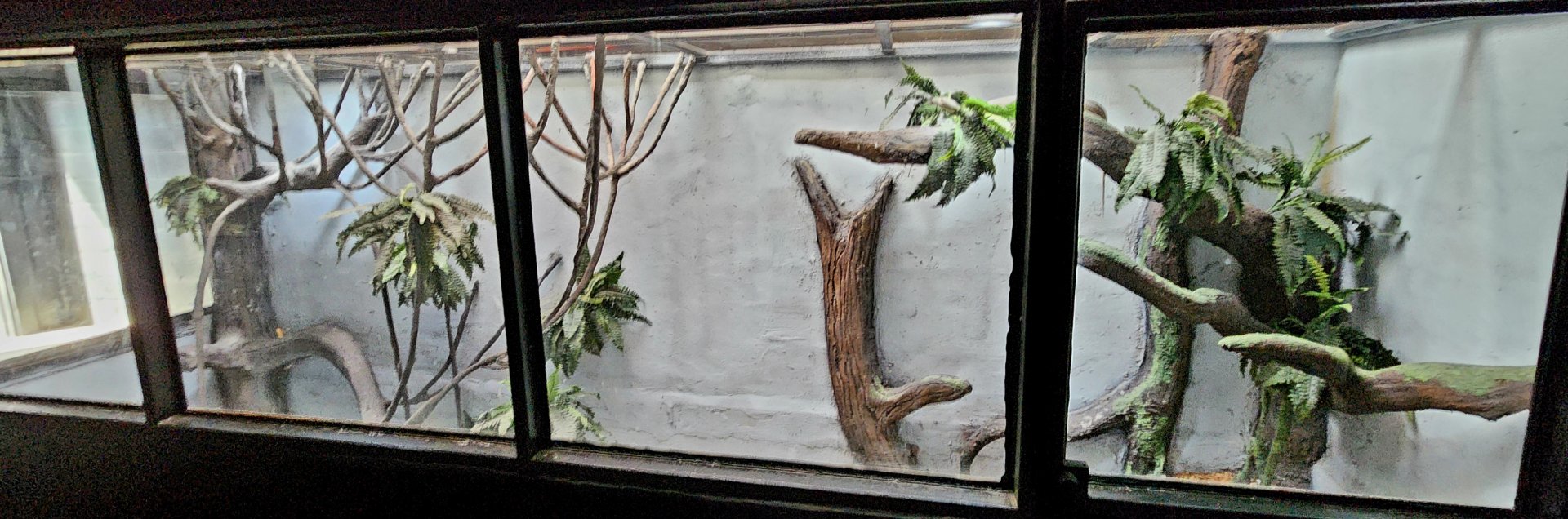
Exhibit 5.5: Amazon Rainforest (Top Floor)
Not too much to report here, as the Basilisks (Basiliscus plumifrons) are the only species that can access this portion right now, and they don't typically hang out this high. Still, the view down is impressive, and I'm excited to see Caiman Lizards (Dracaenea guianensis) use the full height of these trees eventually - makes me wonder if they will jump into the water like the Crocodile Monitors. Speaking of, the trees in here look great, very similar to the Crocodile Monitor Kingdom.
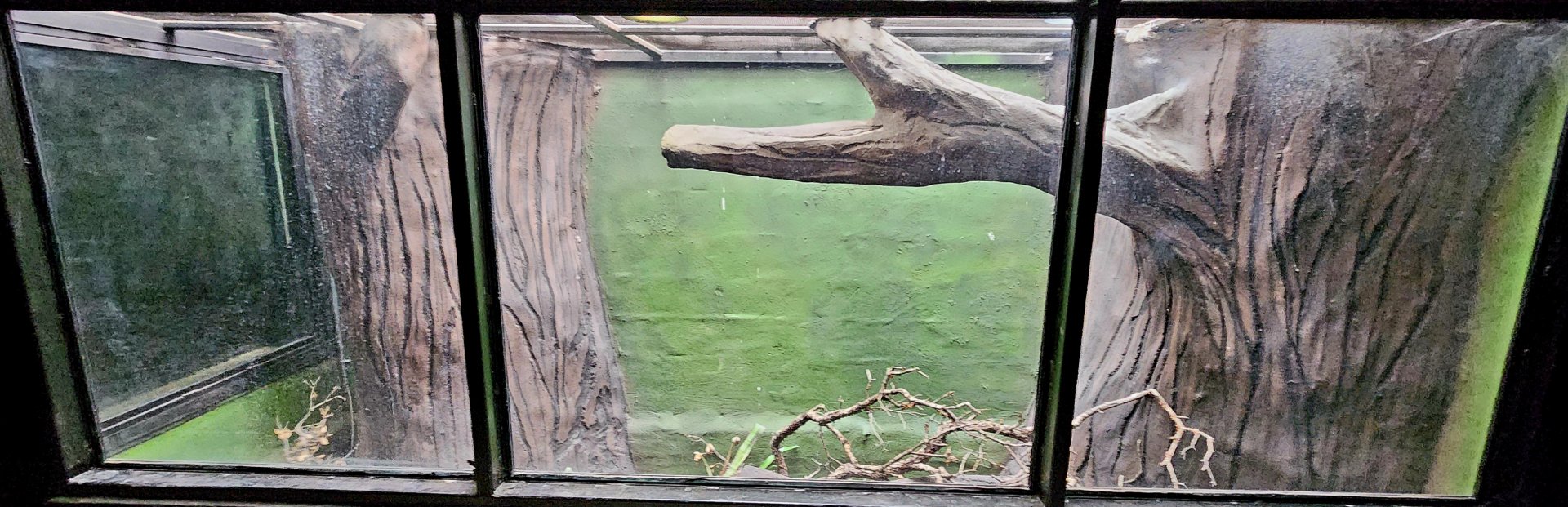
Exhibit 6.5: Batanta (Top Floor)
This is typically where the Blue Tree Monitors (Varanus macraei) in this exhibit hang out, given their arboreal nature. I saw at least one in here throughout the day, who was primarily napping or chasing Dubia Roaches around the entire 30' height of the enclosure. Not a whole lot I would add here, but some plants draping down over the walls might make the blue appear more like the intended skyline and less jarring.
Exhibit 7.5: Cuba (Top Floor)
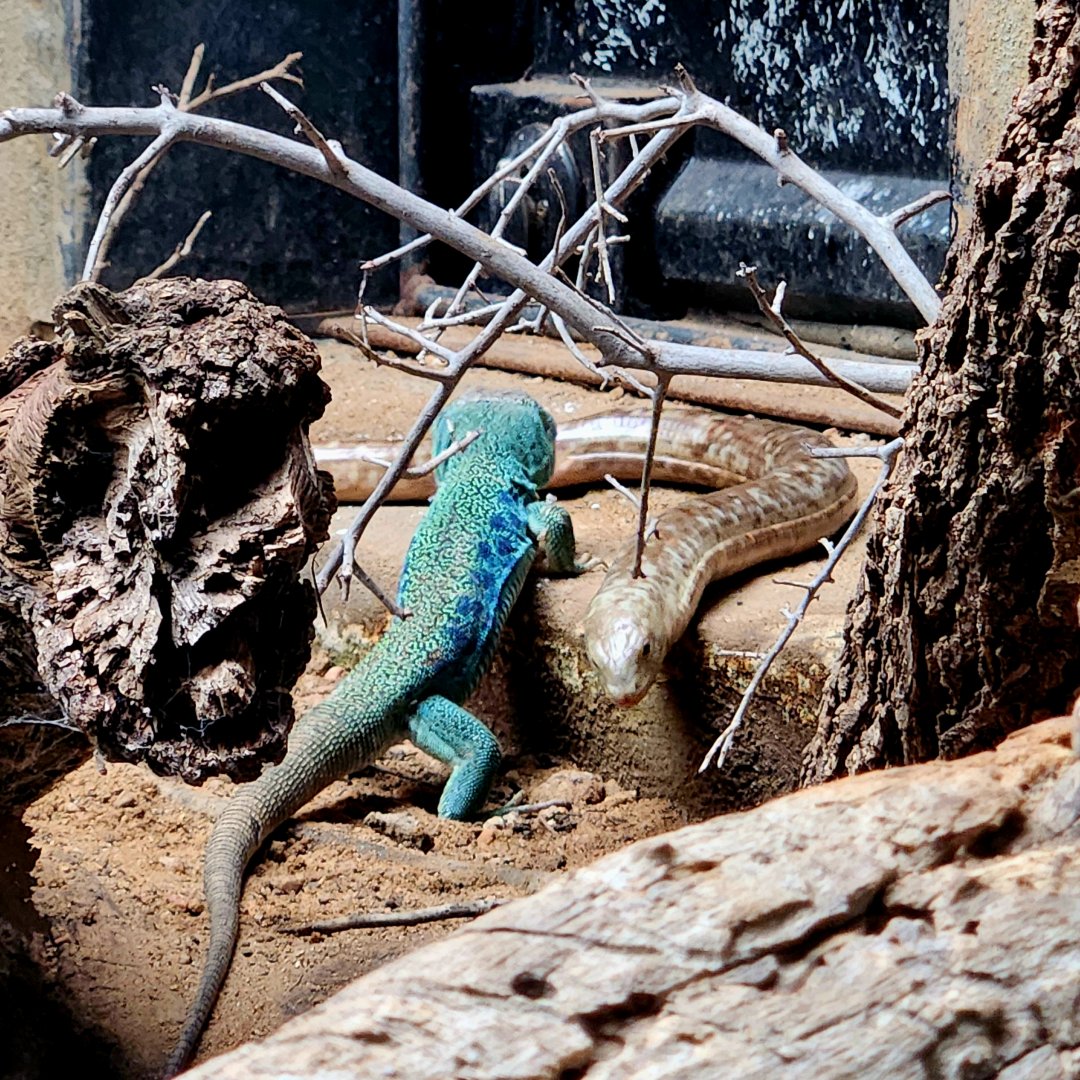
This is one of the more exciting upper story exhibits, with the male Rock Iguana (Cyclura nubila) spending a good portion of the day basking atop the rock pile. He's quick to give a quick two or three little head bobs to say hello, and is clearly a well-socialized animal. Also visible up here are the Smallwood's Anoles (Anolis smallwoodi), another member of the equestris species complex represented here. Make no mistake, these are no Knight Anoles (A. equestris). They are far more brilliantly patterned, with a bright teal hue that makes them very attractive. The combination of artificial trees, live bromeliads, and natural shrubbery up here make this exhibit one of the top floor's stars, and I'd be excited to see the aforementioned Northern Curly-Tailed Lizards (Leiocephalus carinatus) use the full height as well.
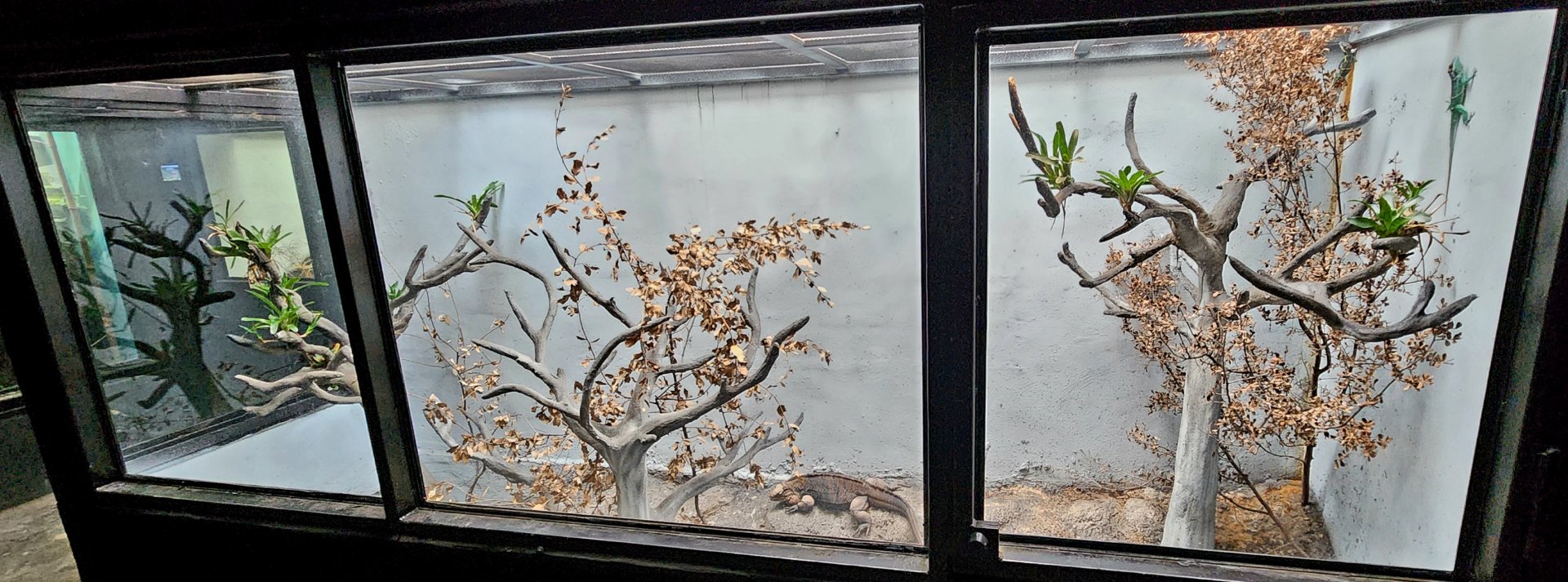
Exhibit 8.5: Aru Islands (Top Floor)
Nothing here yet, but I will add that I like this exhibit better than the previous Tree Monitor exhibit. The plants look especially nice in here, and the vines have a more natural look as well. As with the previous enclosure, adding some more plants draping down over the walls could make the blue appear more like a skyline and less jarring.
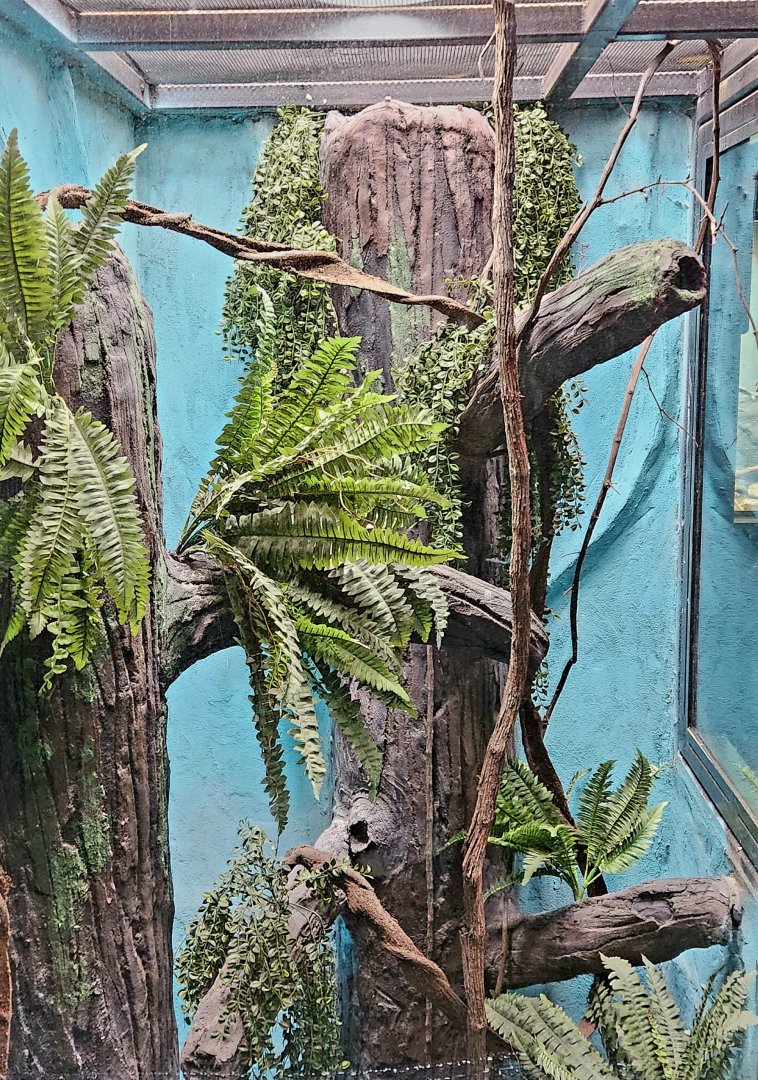
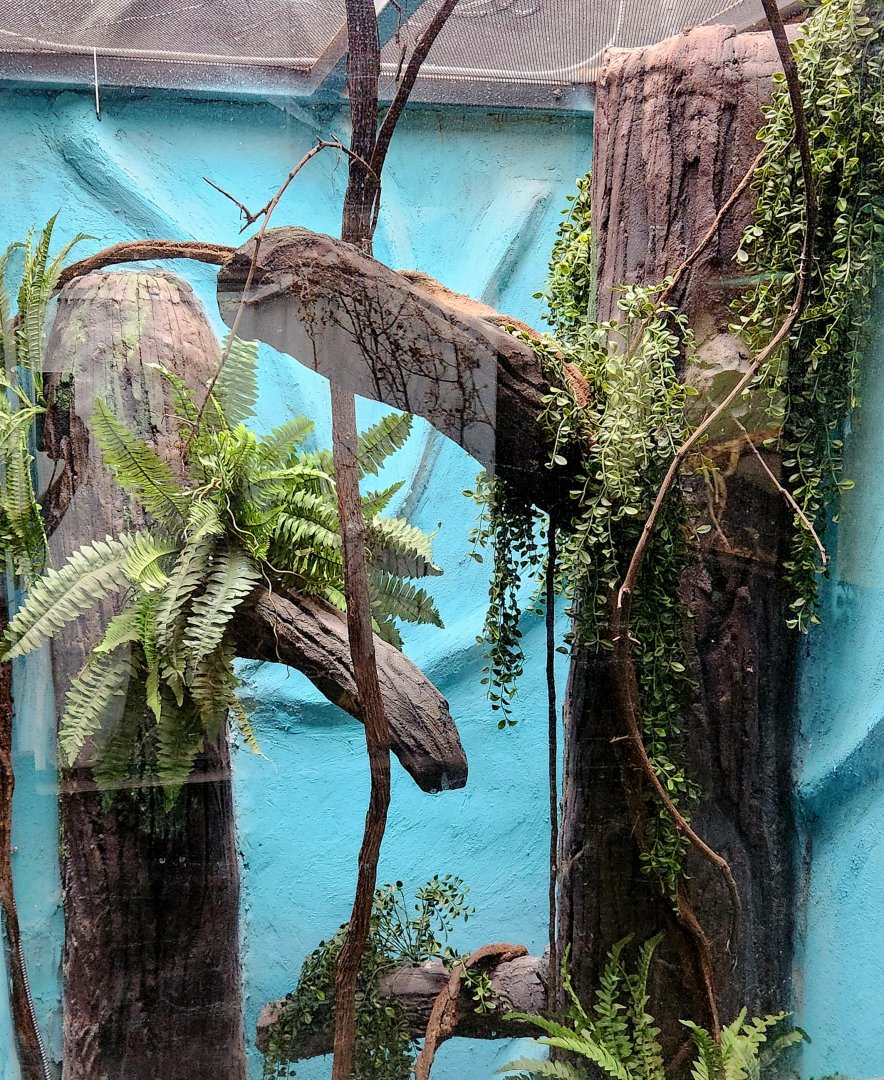
Exhibit 9.5: Tsingy Peaks (Top Floor)
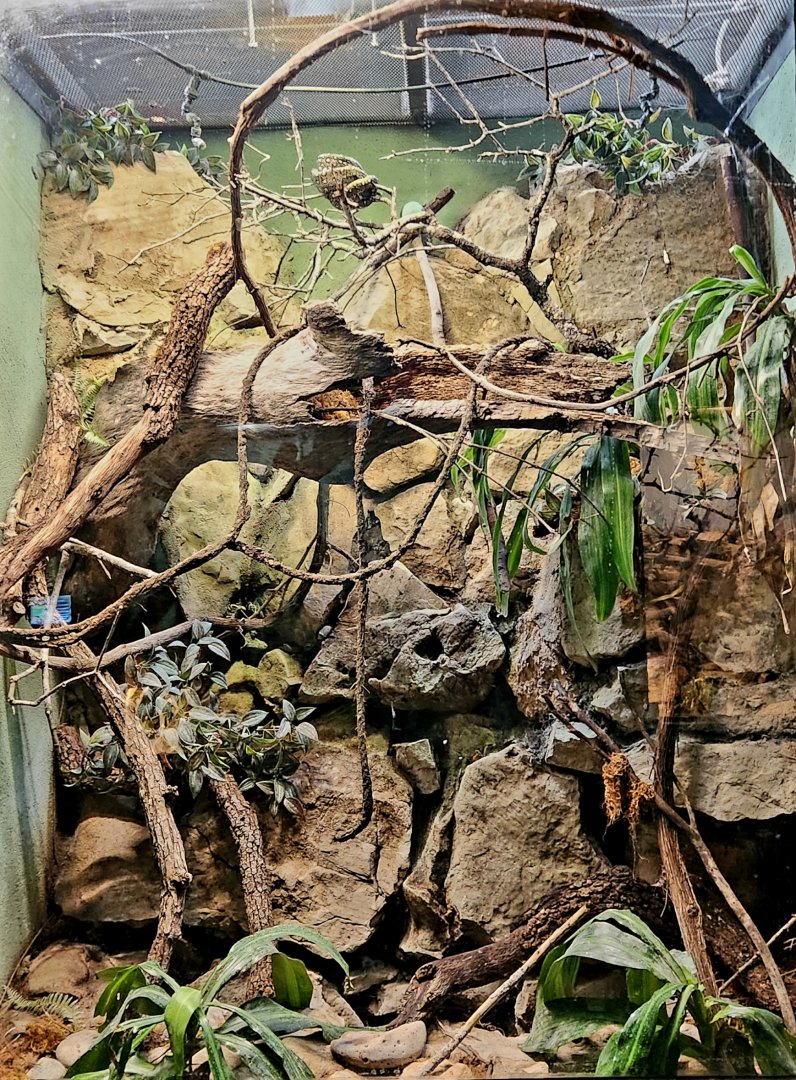
This was another attractive exhibit from the top floor, with the peaks of northwestern Madagascar near-perfectly represented. I'm happy with how nicely the photos of this exhibit came out, I was worried they wouldn't capture the beauty of it. I do think the exhibit would benefit from a larger lizard population, especially of the Day Geckos (Phelsuma sp.) as I only saw one for a brief second. A number of chameleons would probably do quite well in here, as they have a bit of floorspace at the top there and they'd be relatively undisturbed. While Oustalet's Chameleons (Furcifer oustaleti) are probably the most common in Tsingy, Green Chameleons (Furcifer viridis) are also known from the area. Appropriate geckos might include P. abbotti or P. kochi, and Western Girdled Lizards (Zonosaurus laticaudatus) would make another great addition.
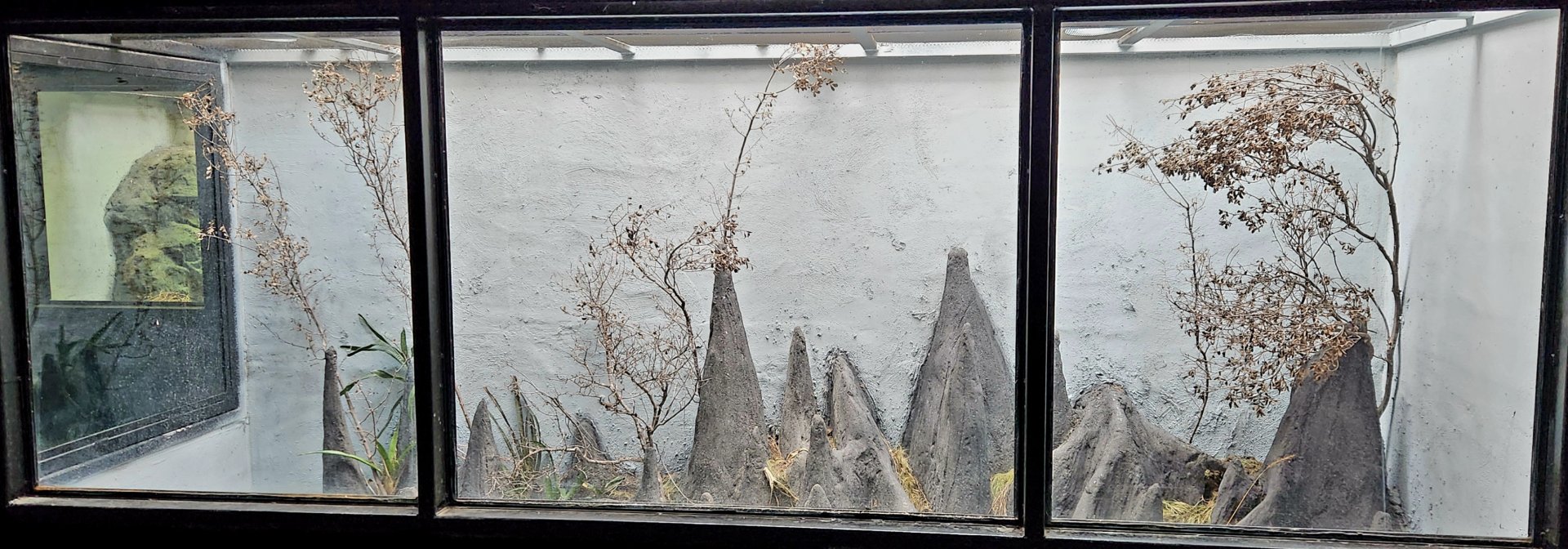
Exhibit 10.5: New Guinea (Top Floor)
Not too much to report on here animal-wise, this was signed for the Angle-Headed Forest Dragons (Hypsilurus magnus) but I'm not sure they were on display during my visit. I really like the tree in here, and as I mentioned earlier I'd love to see the Blue Tree Monitors (Varanus macraei) moved over here as they are the largest of the Tree Monitors. The planter boxes with live Pothos near the windows are a great touch as well. The mask and potted plant are going to illicit mixed opinions - I won't comment either way.

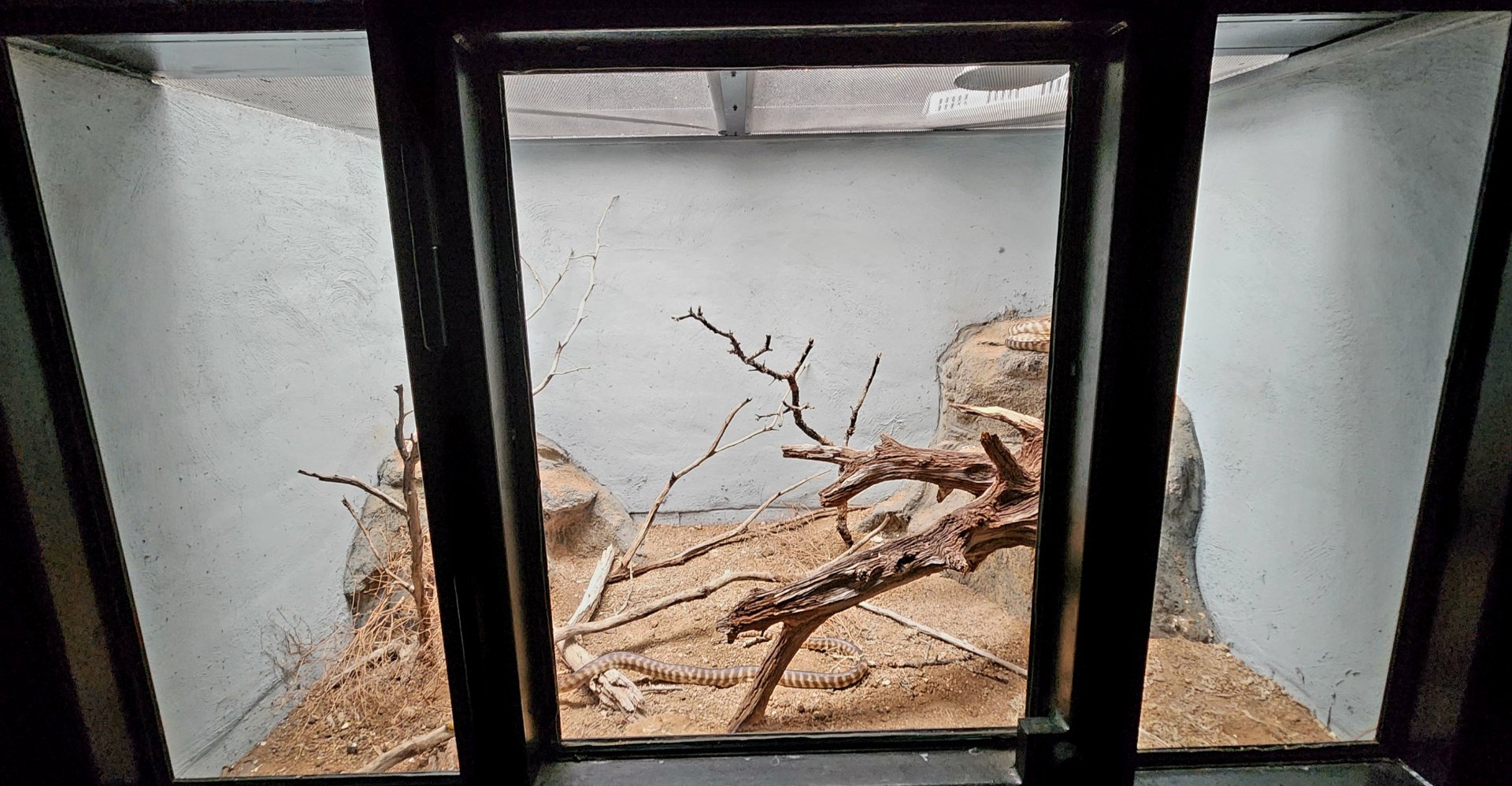
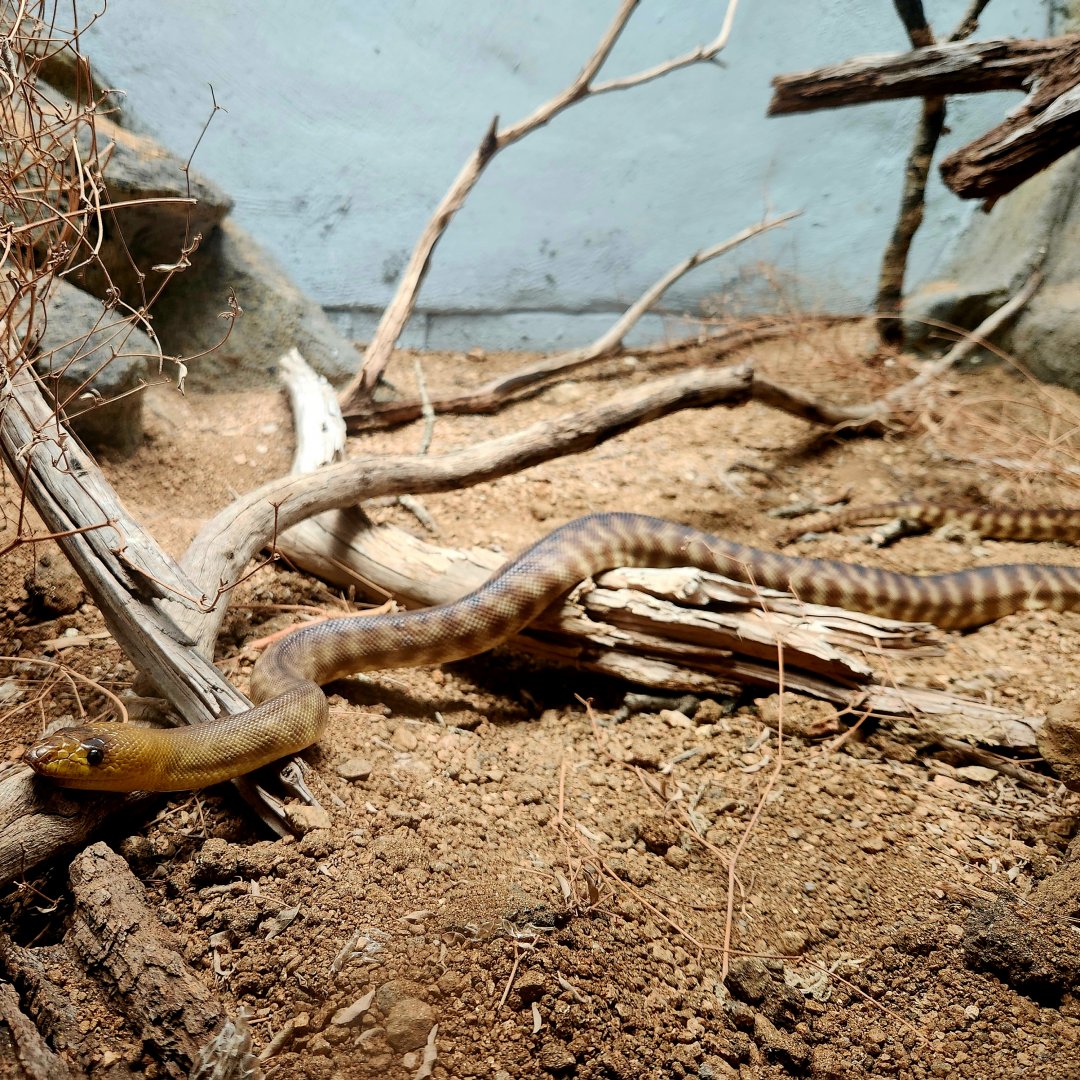

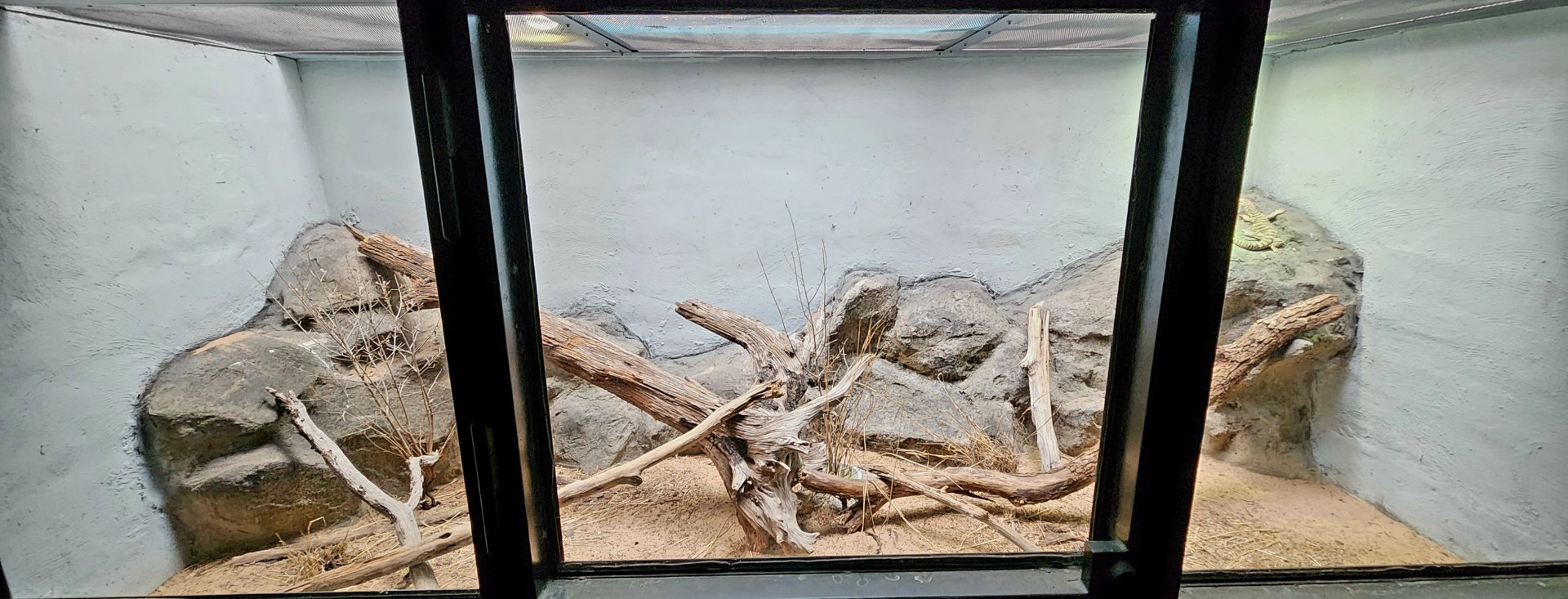
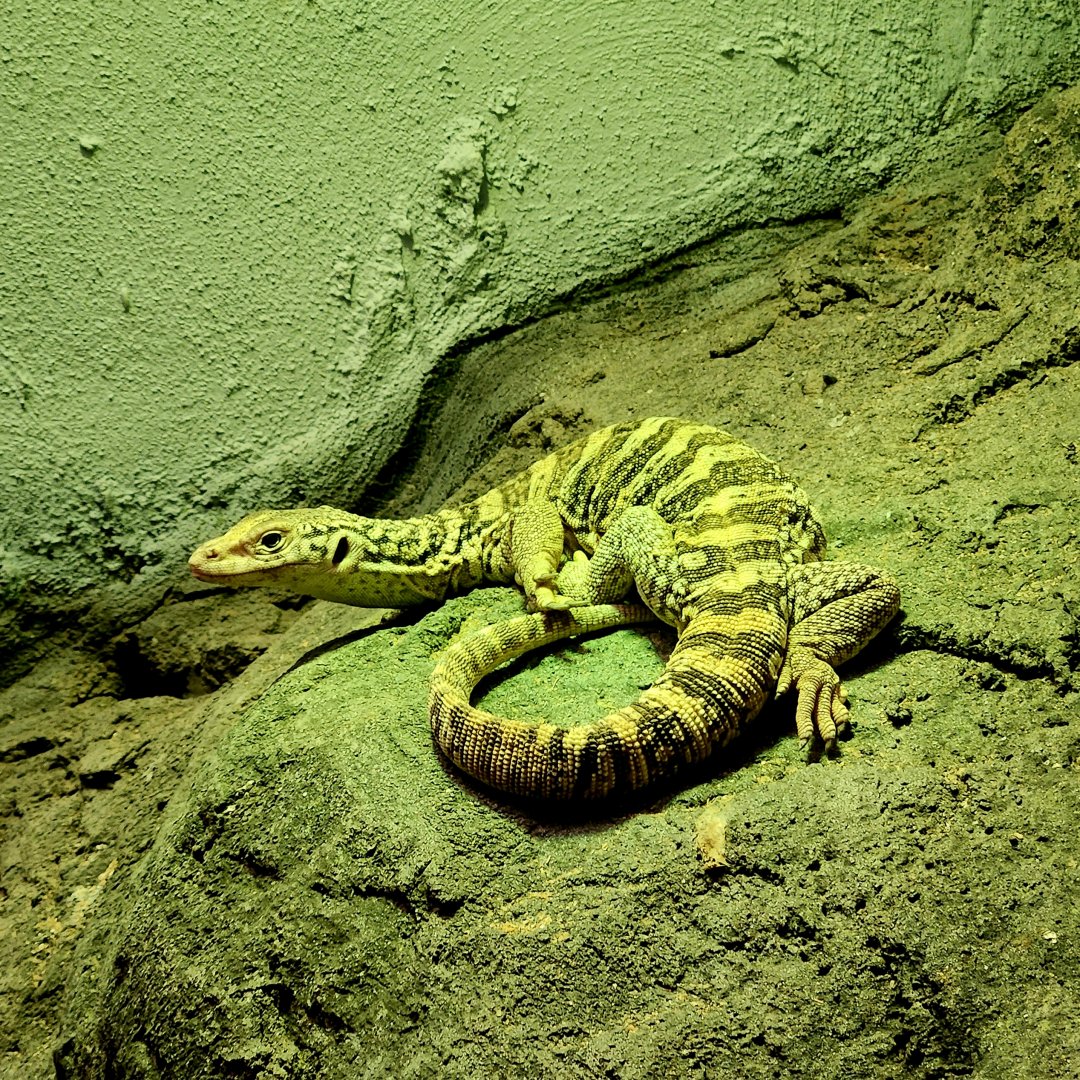
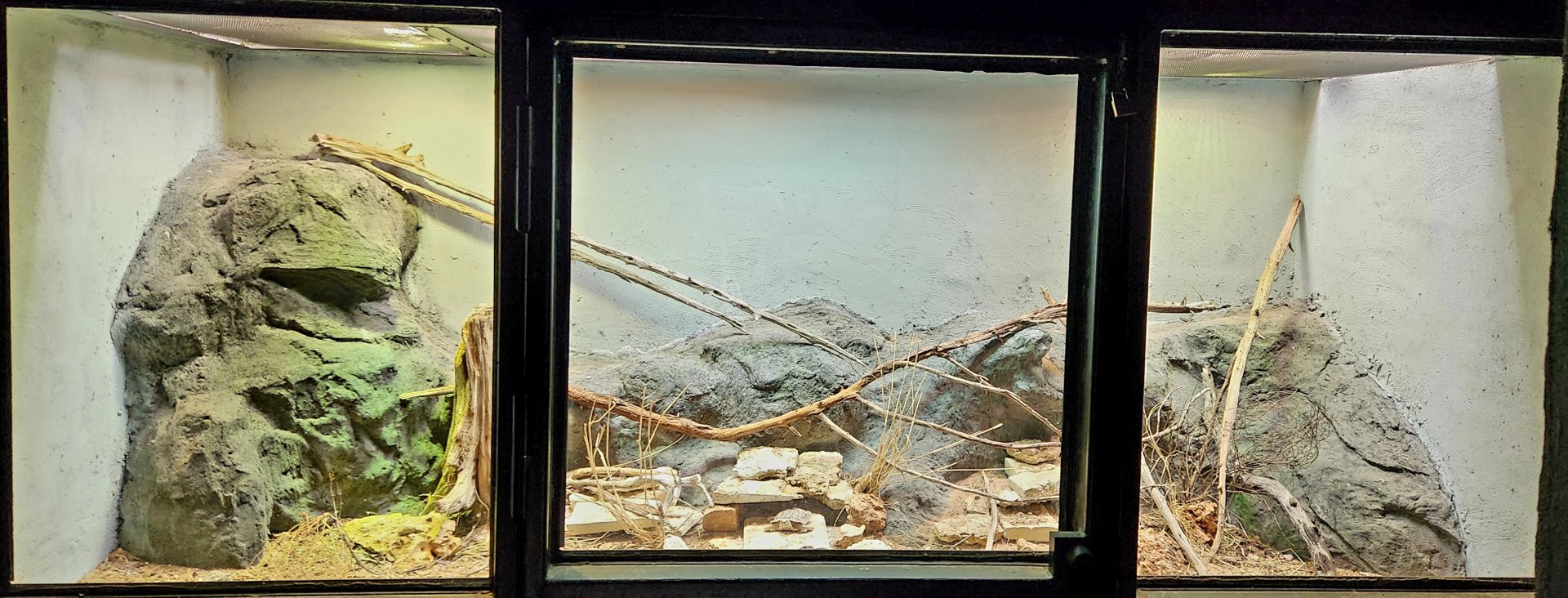
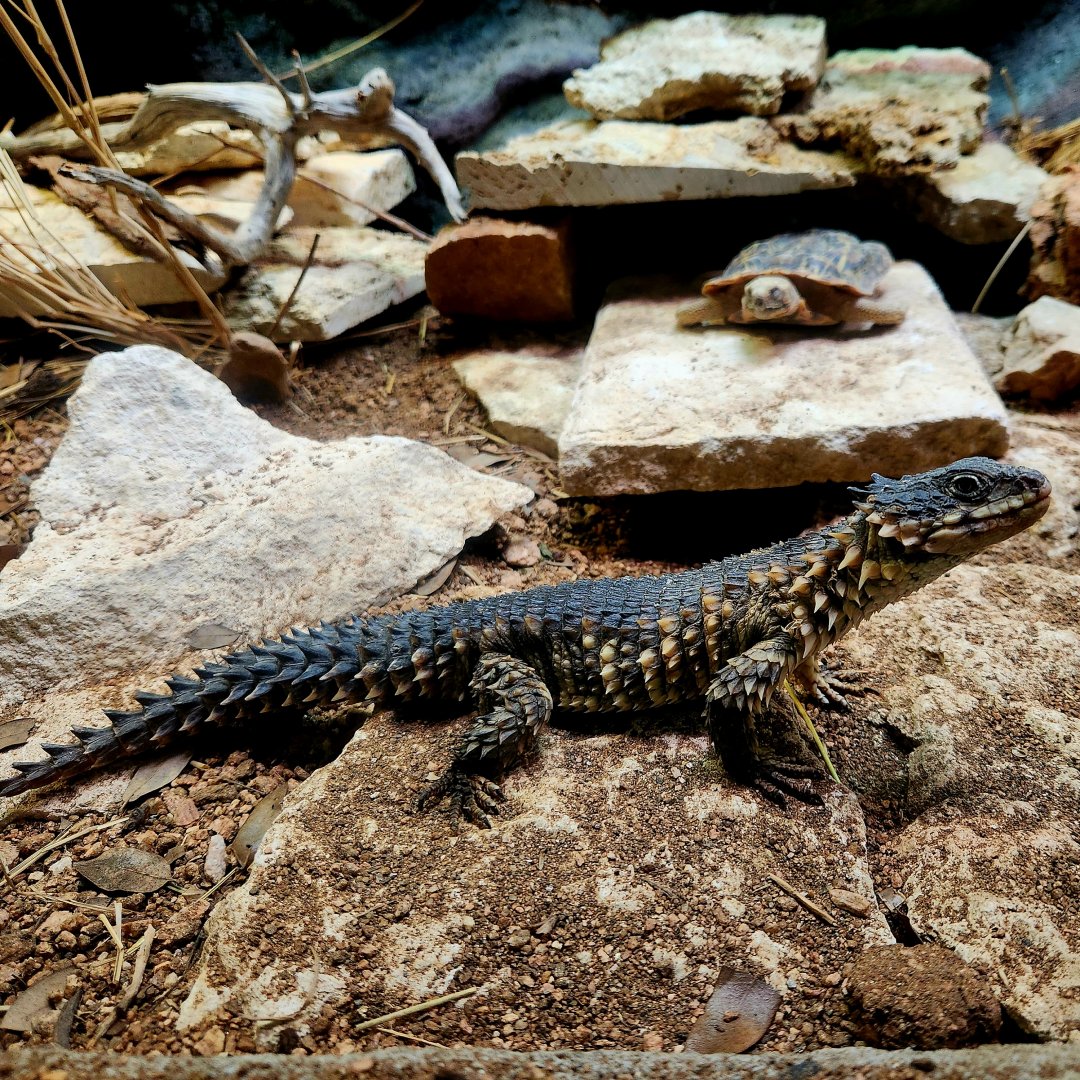
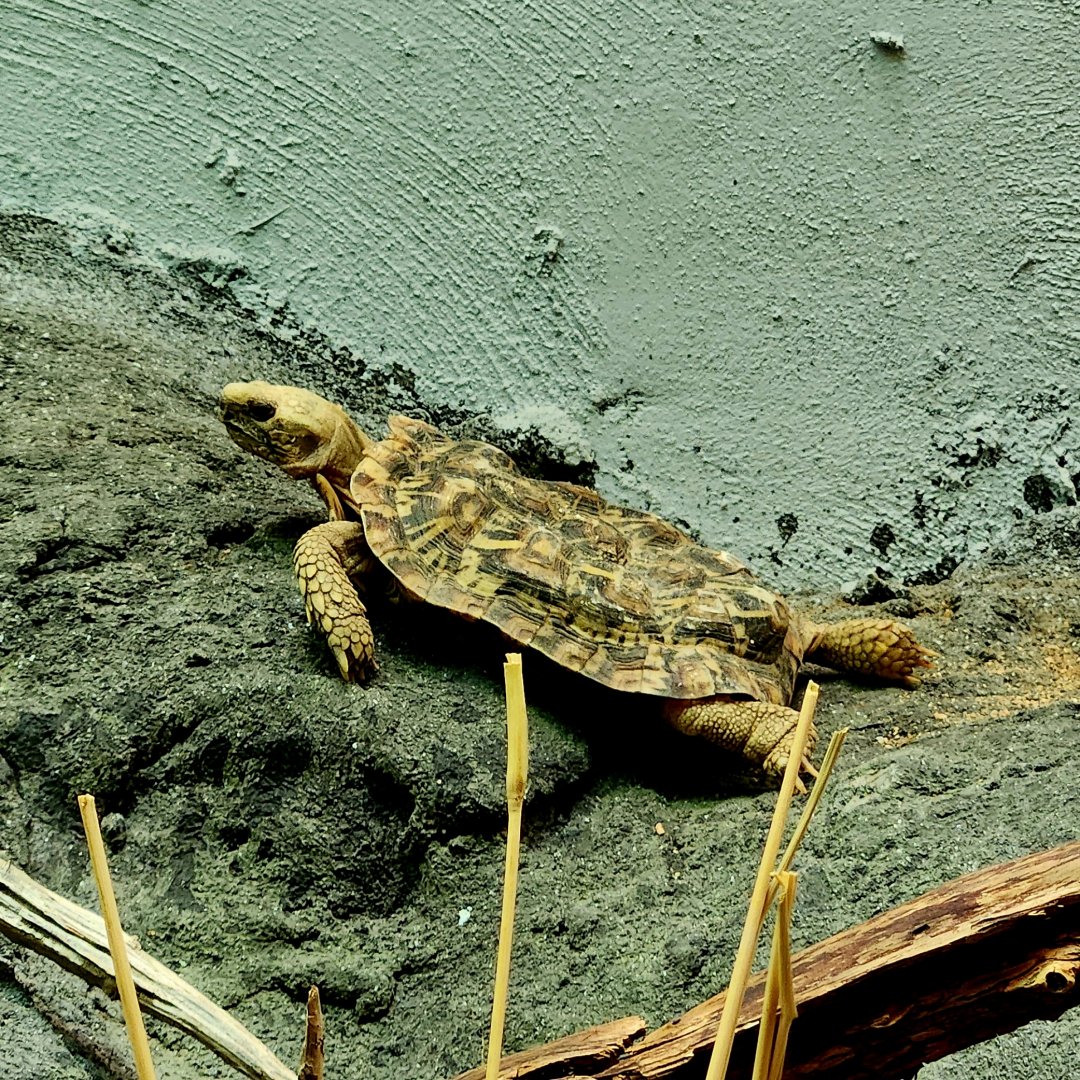
 . The rock wall is great for the same reasons as the Spencer's exhibit, and while this exhibit isn't the most attractive, it's functional for its rapidly-growing inhabitant. I'll be excited to see what inhabits this in the future when he outgrows it, and what his eventual enclosure will look like in adulthood.
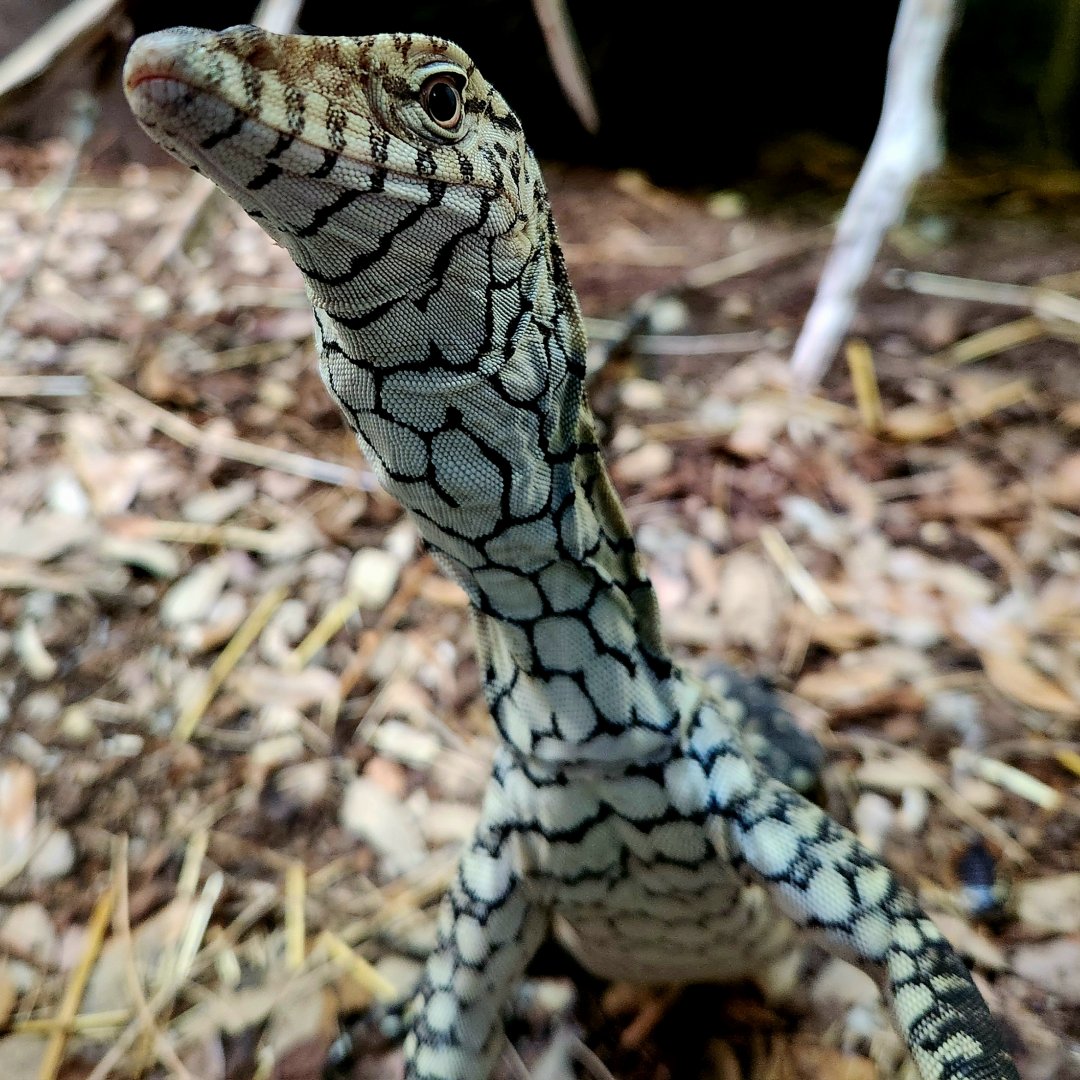
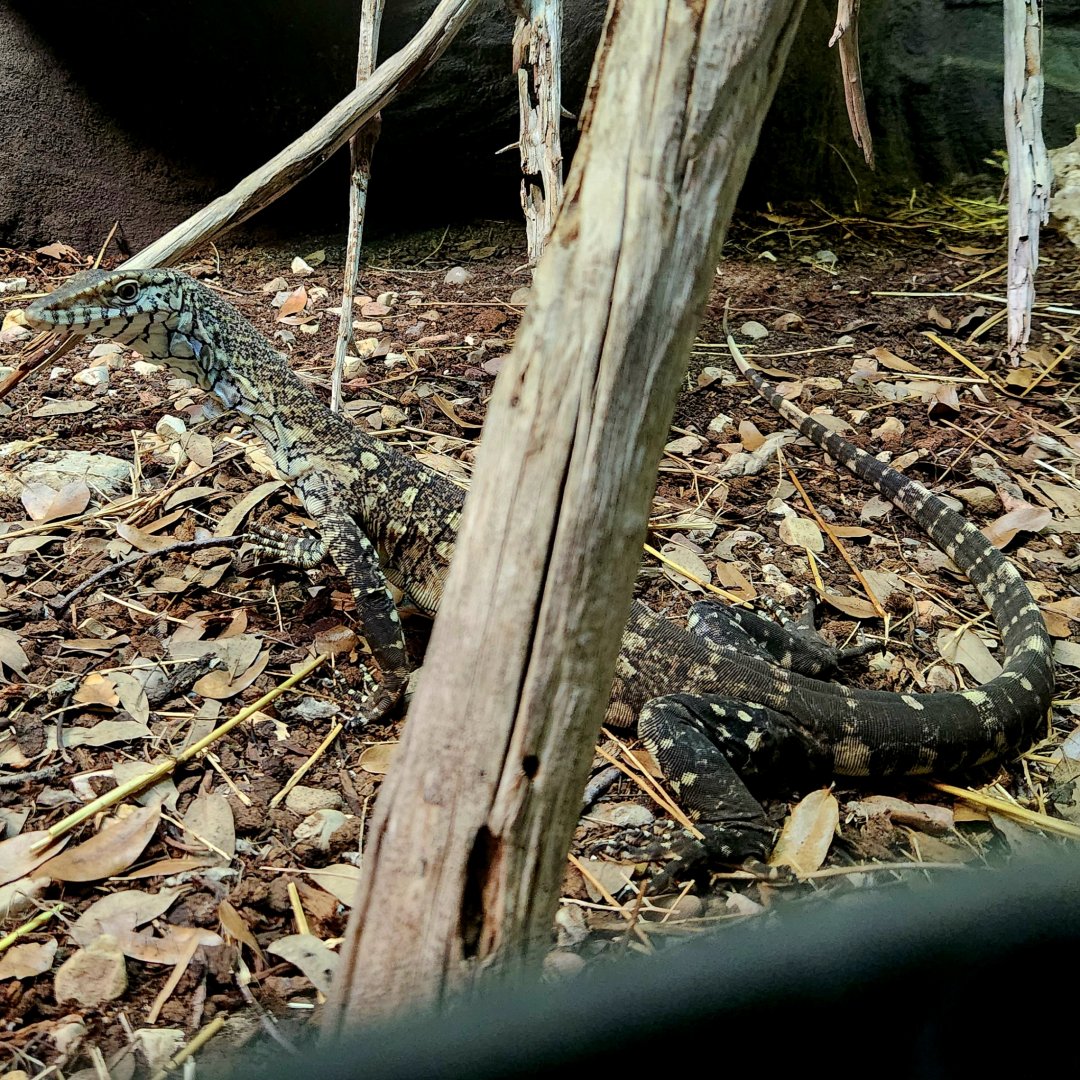

 As
As 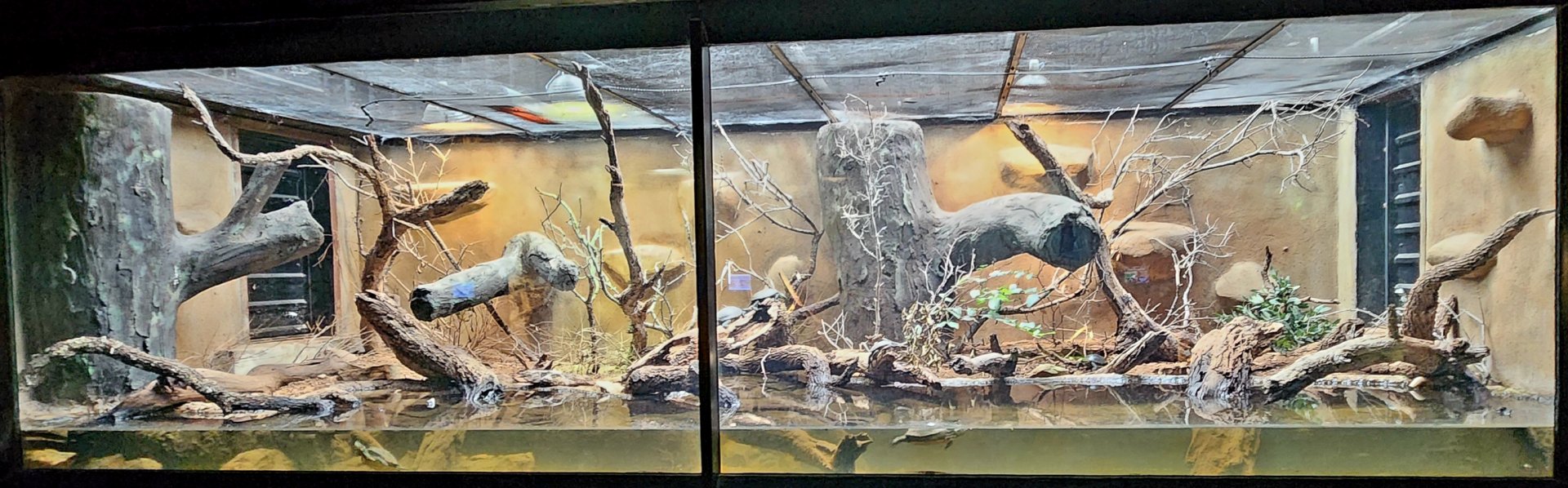
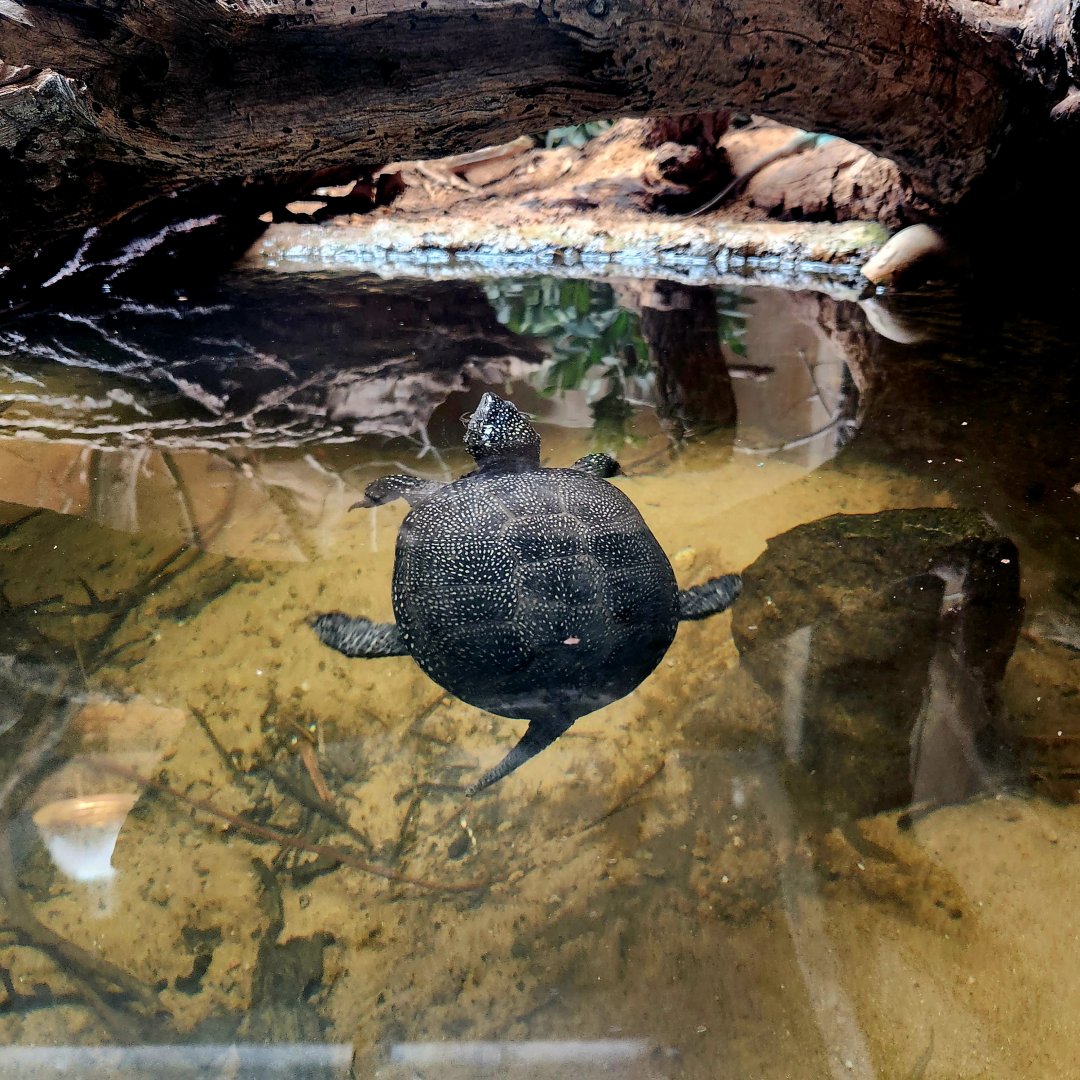
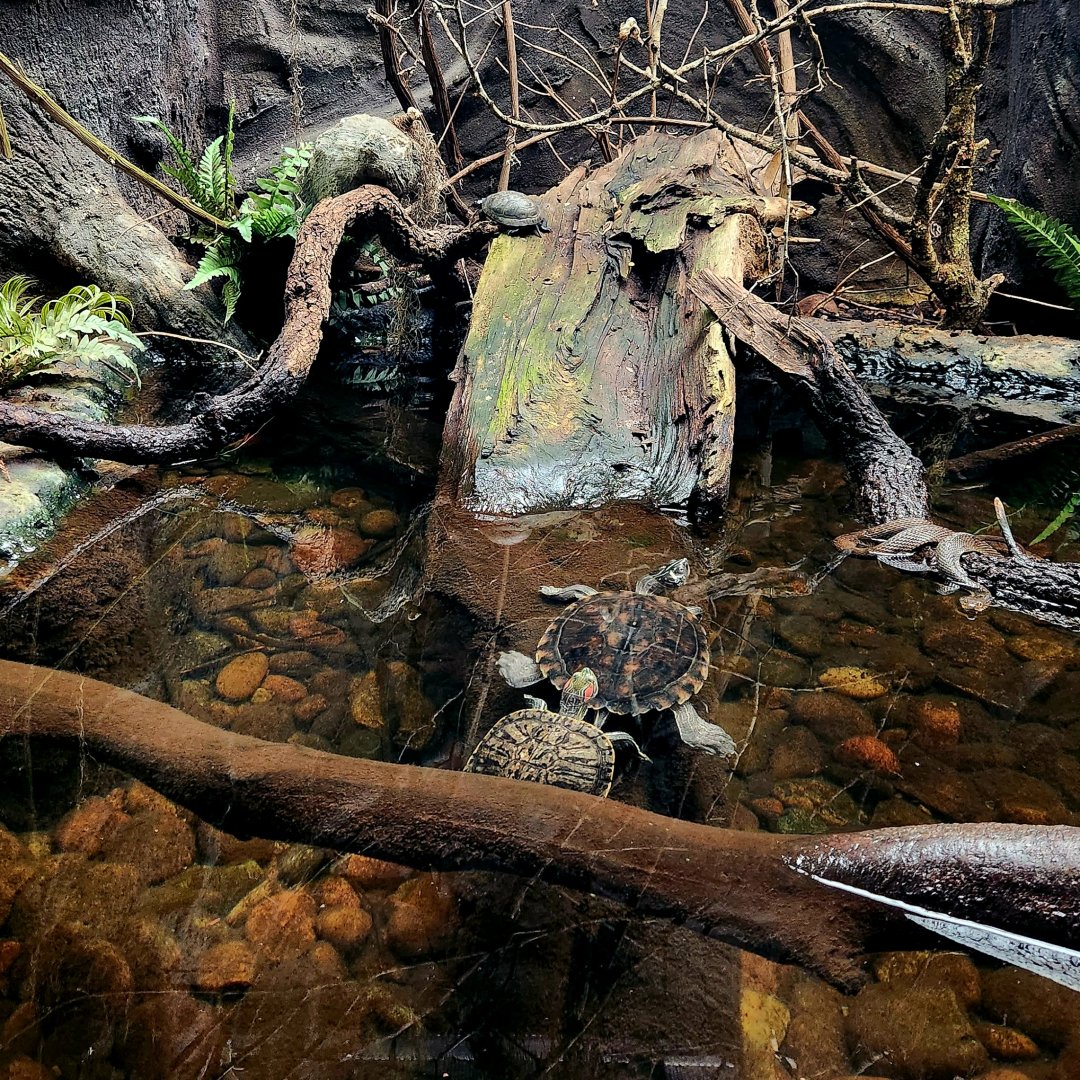

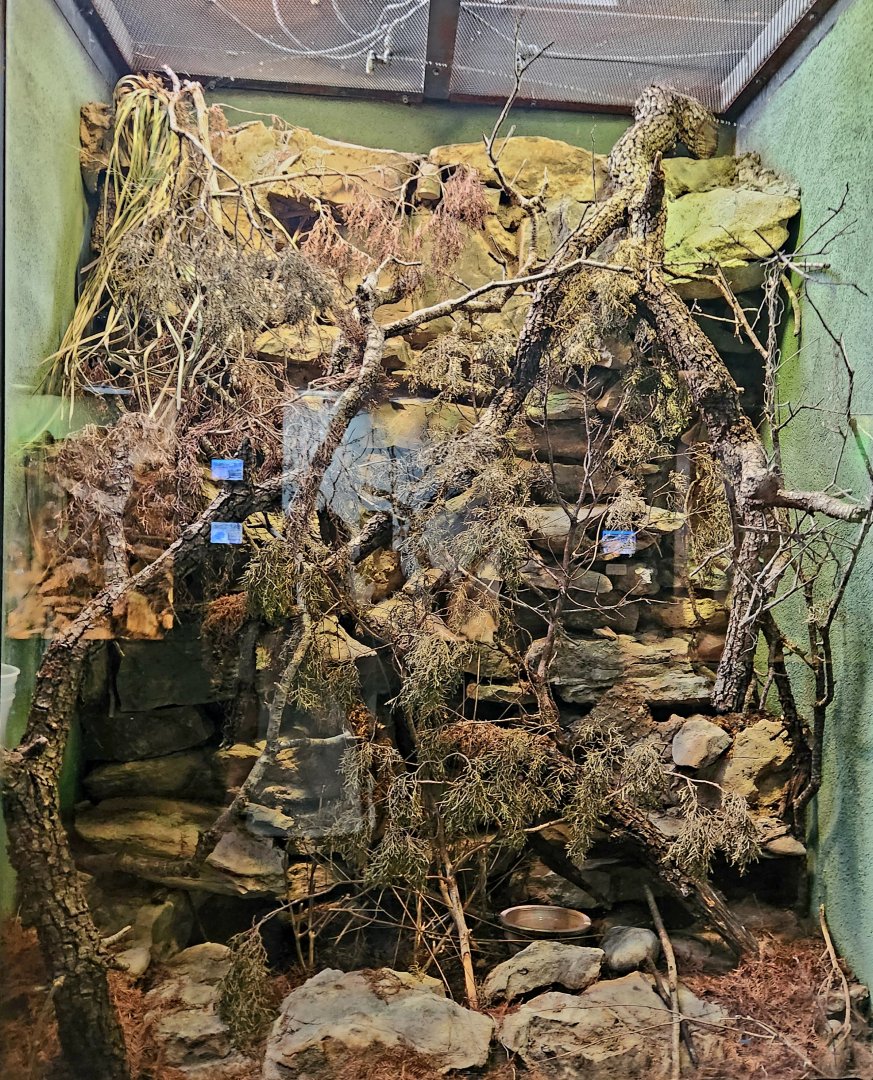

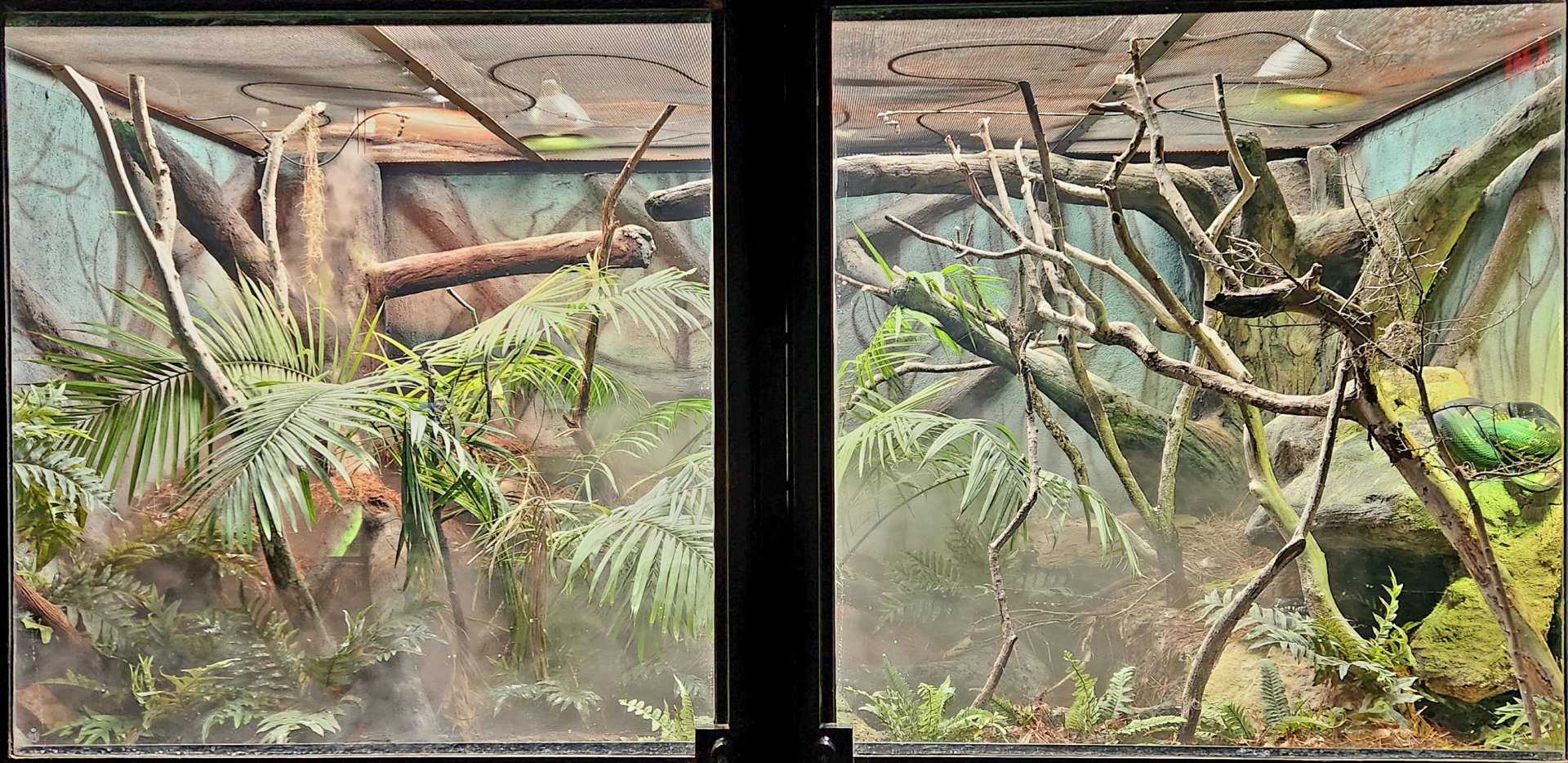
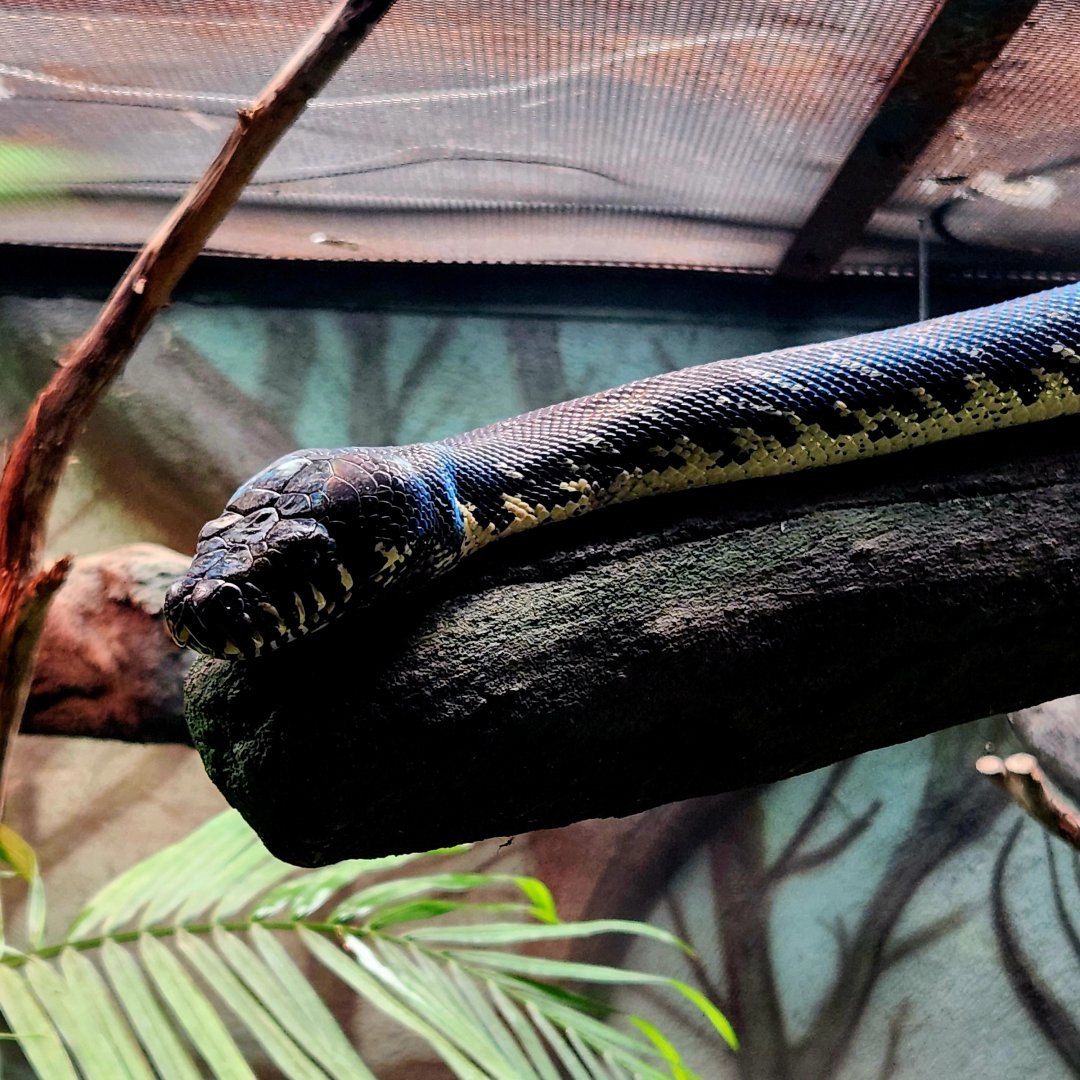
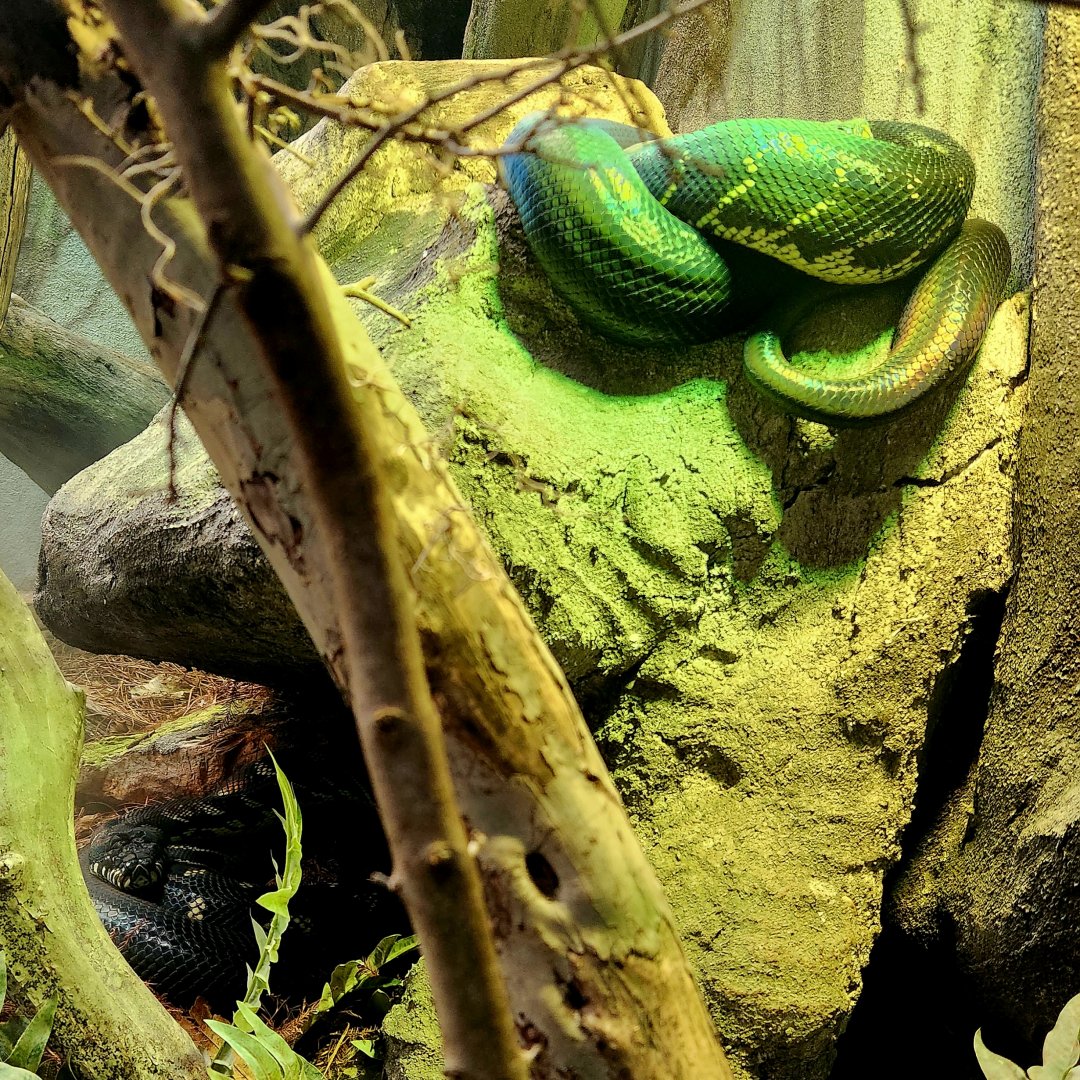
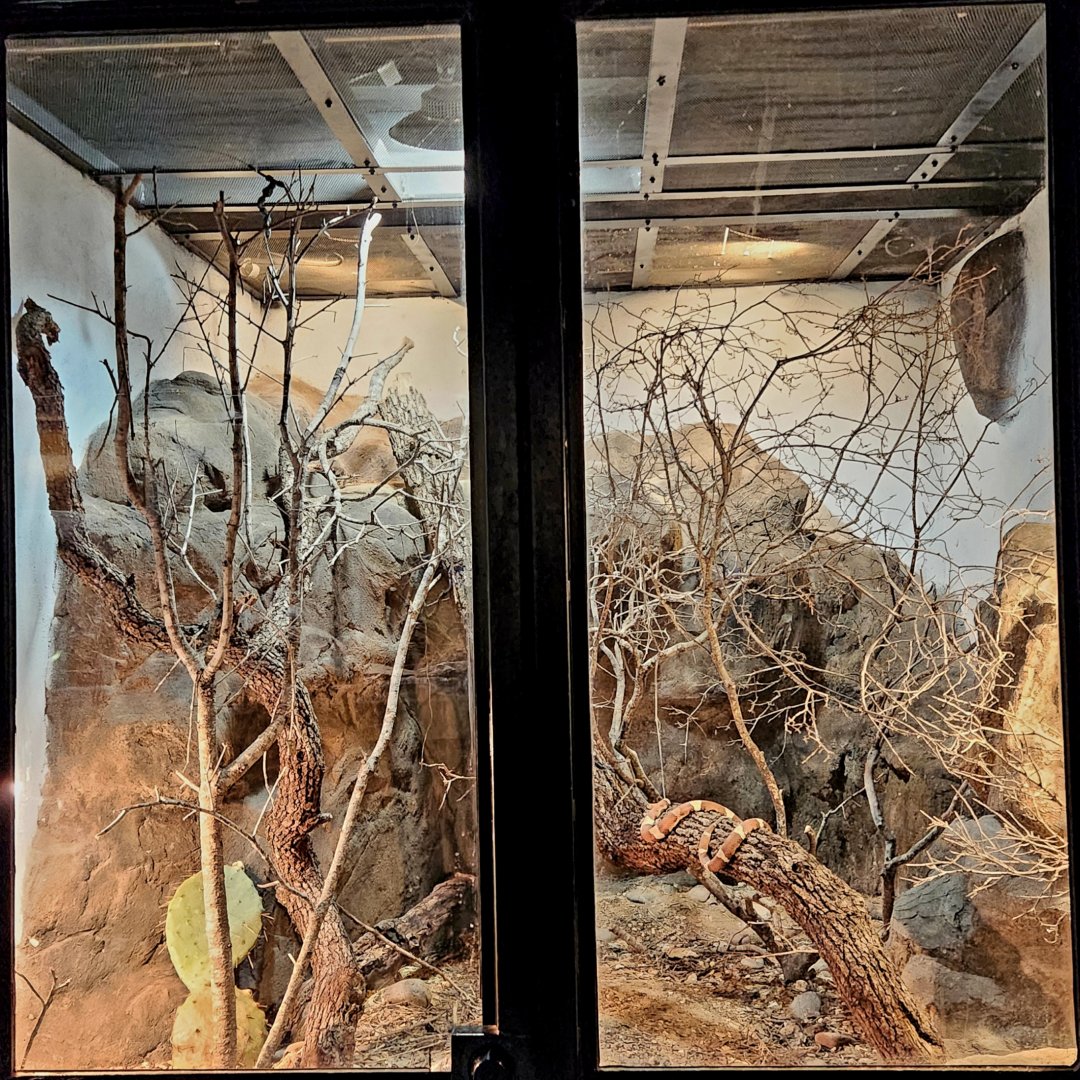
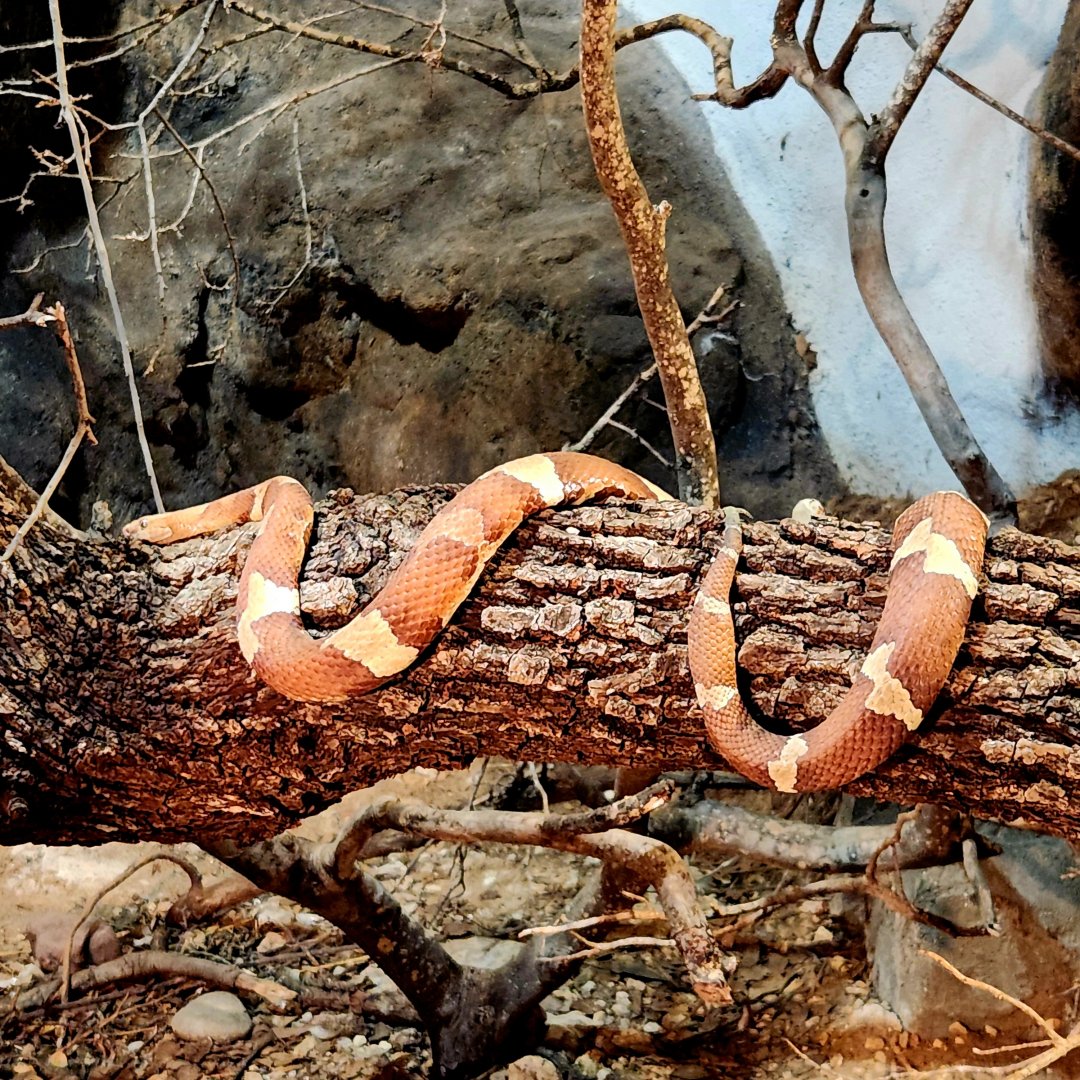
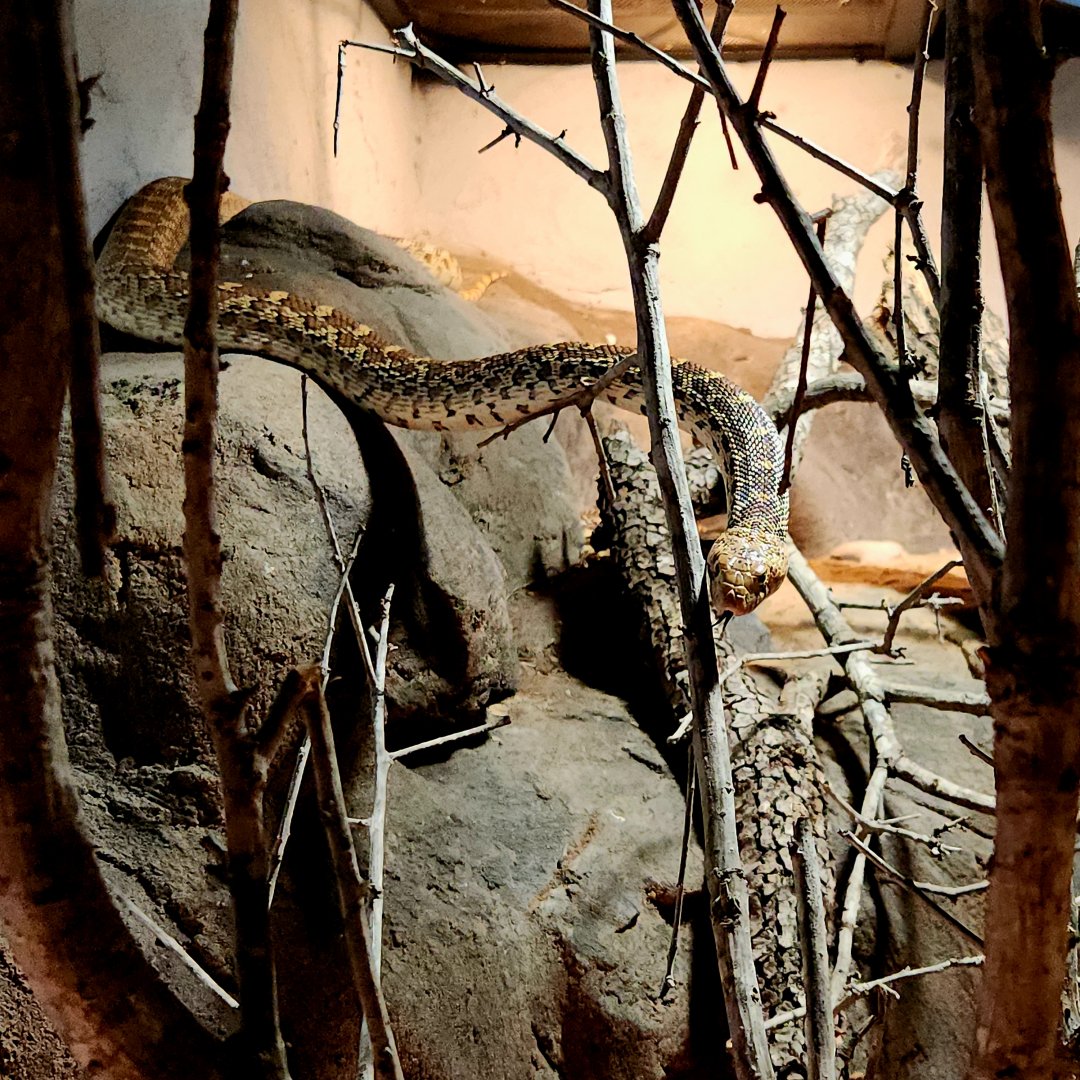
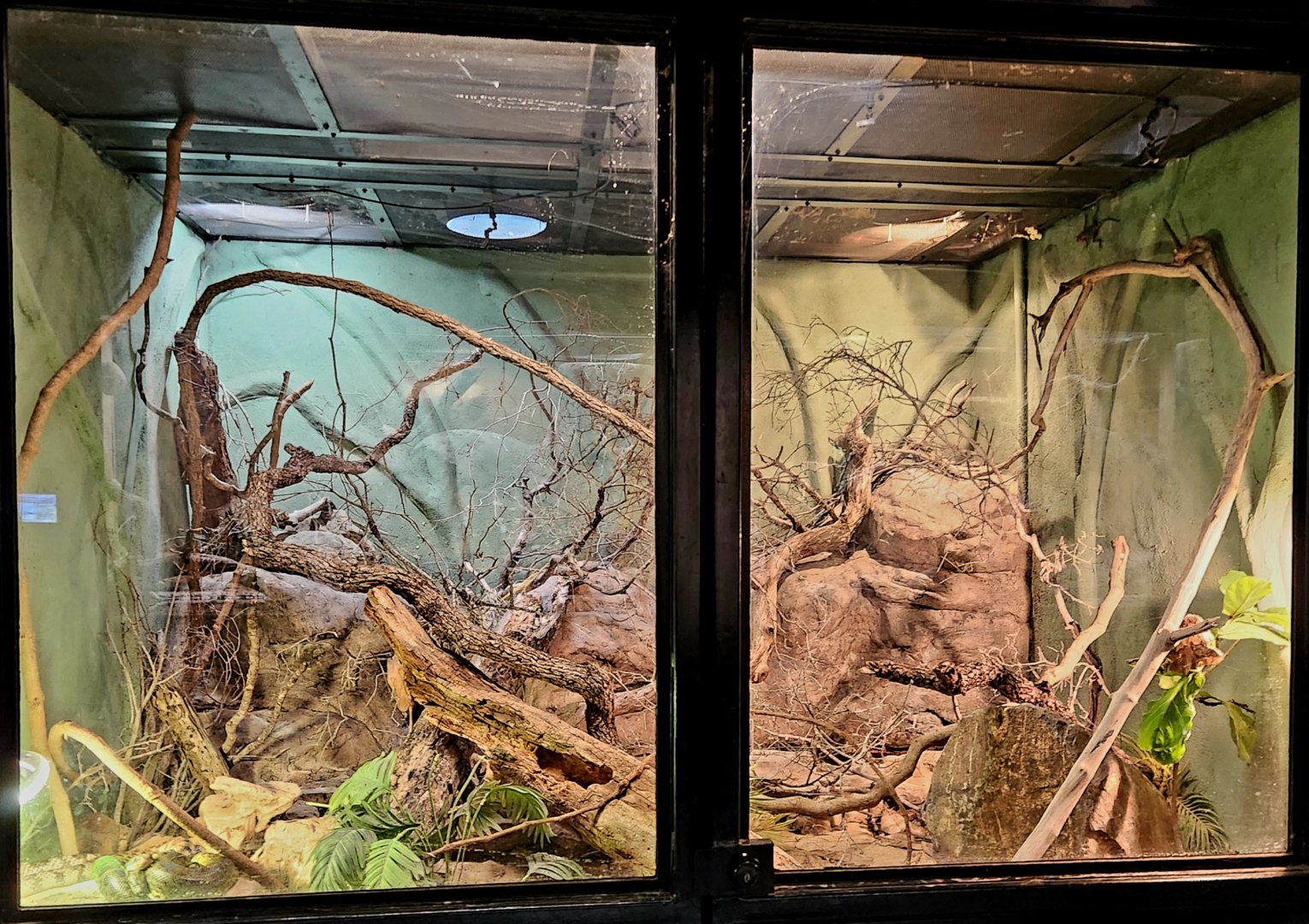
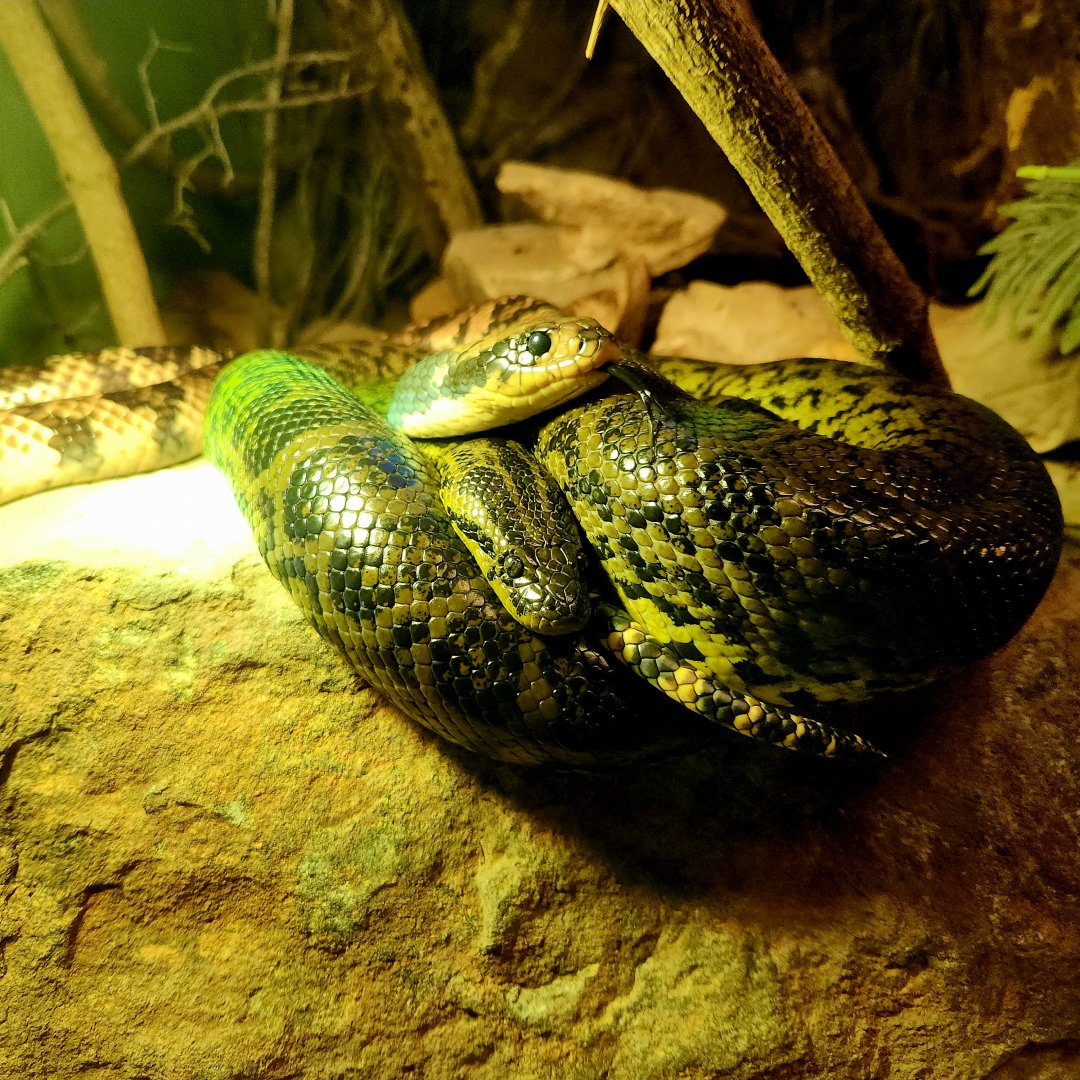

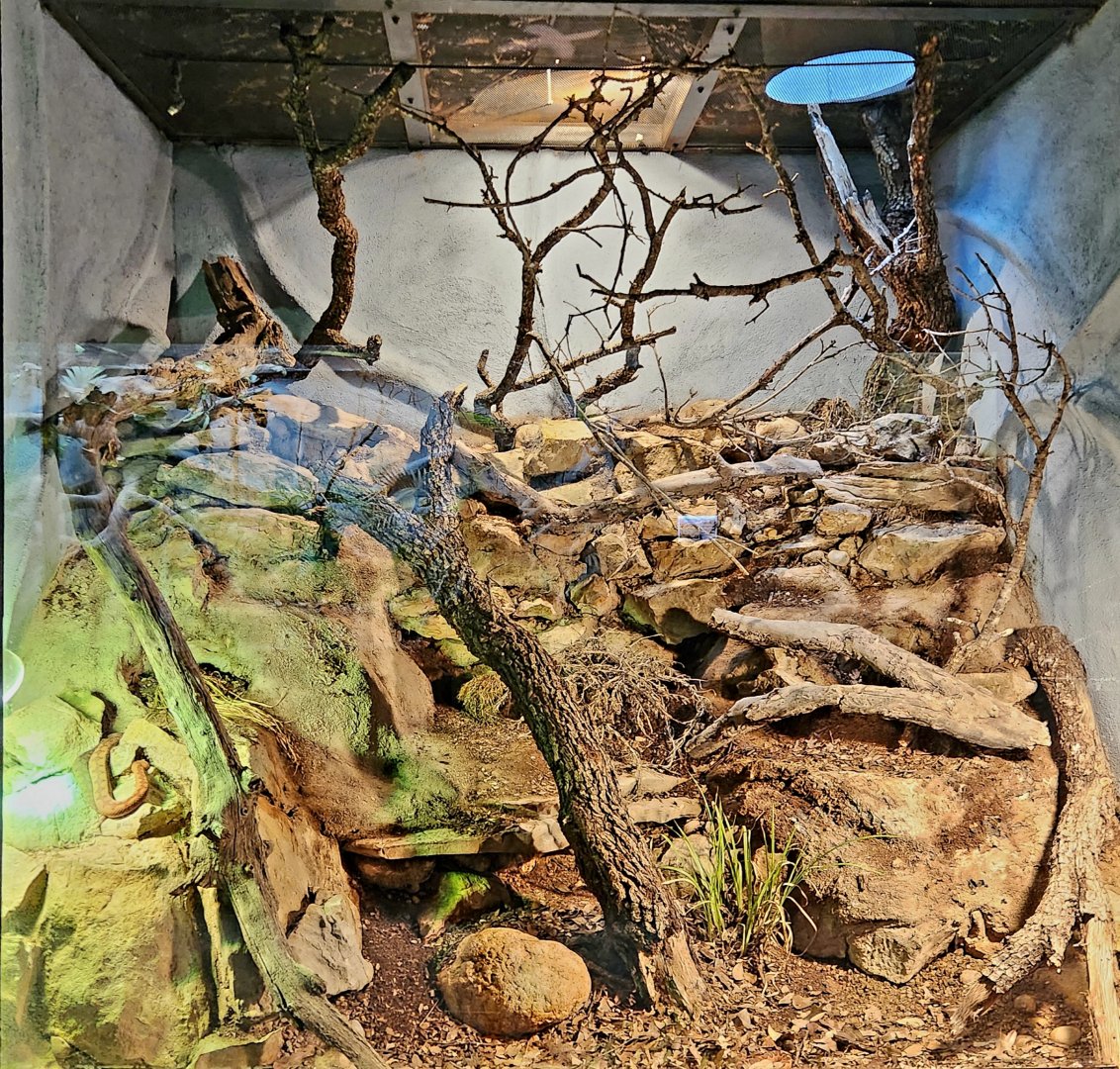
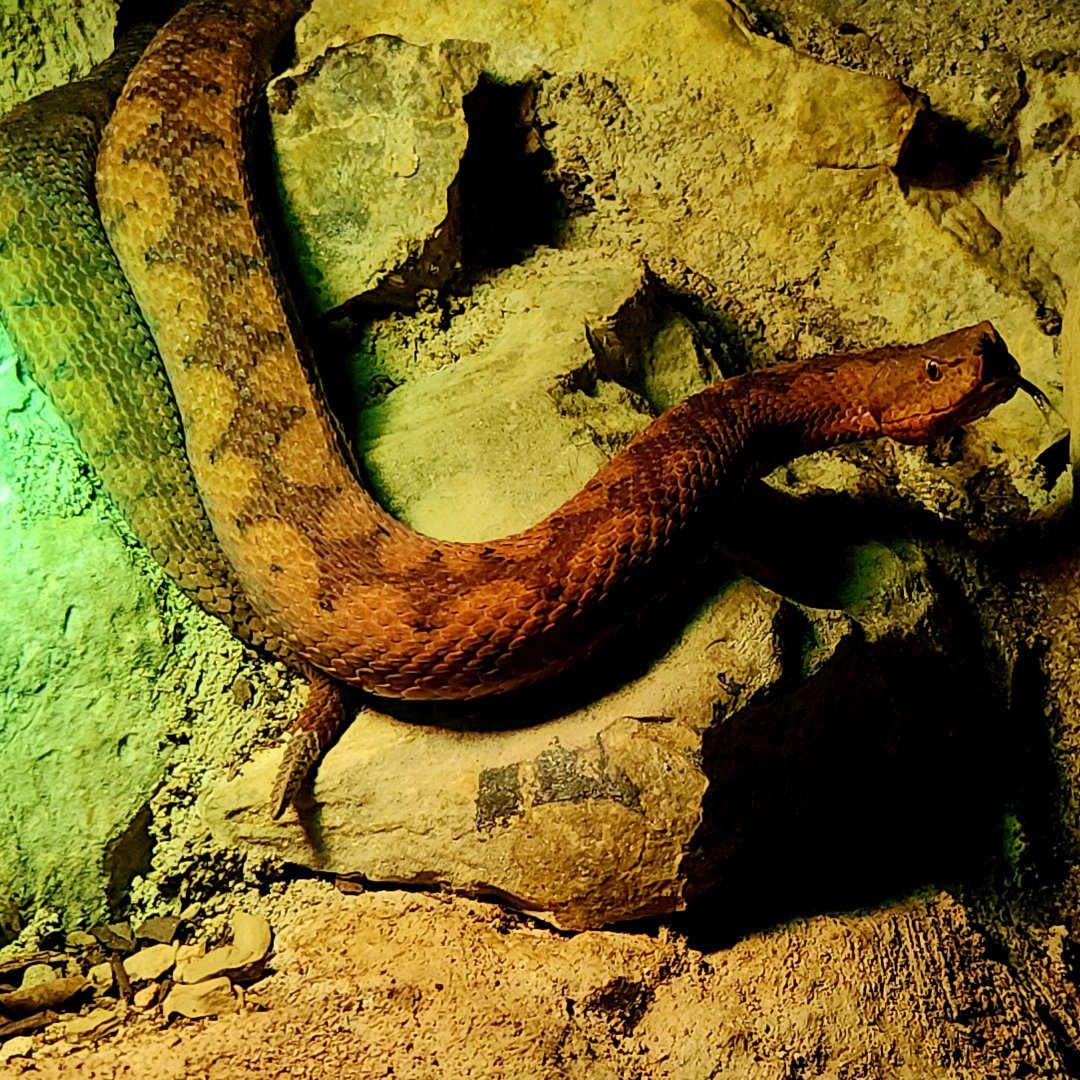
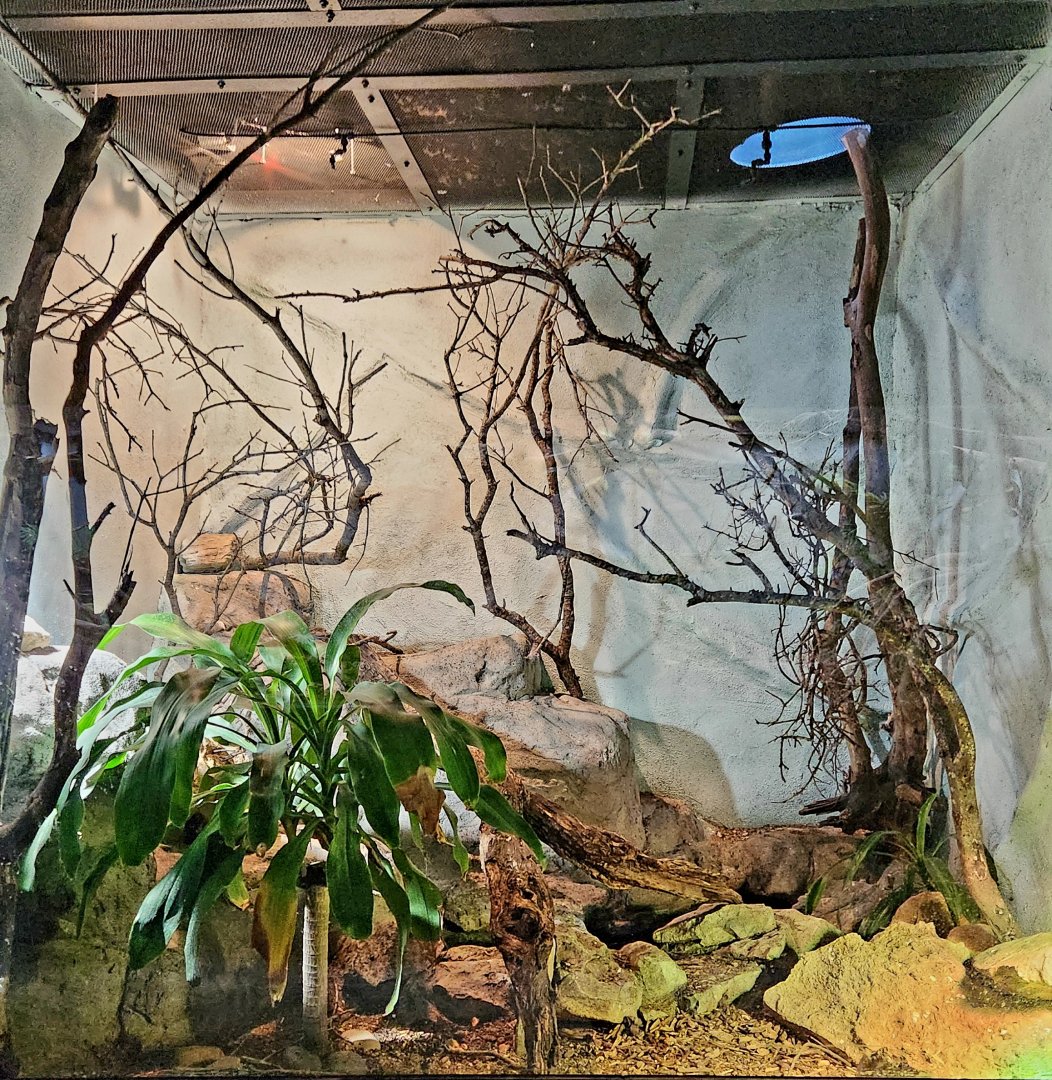
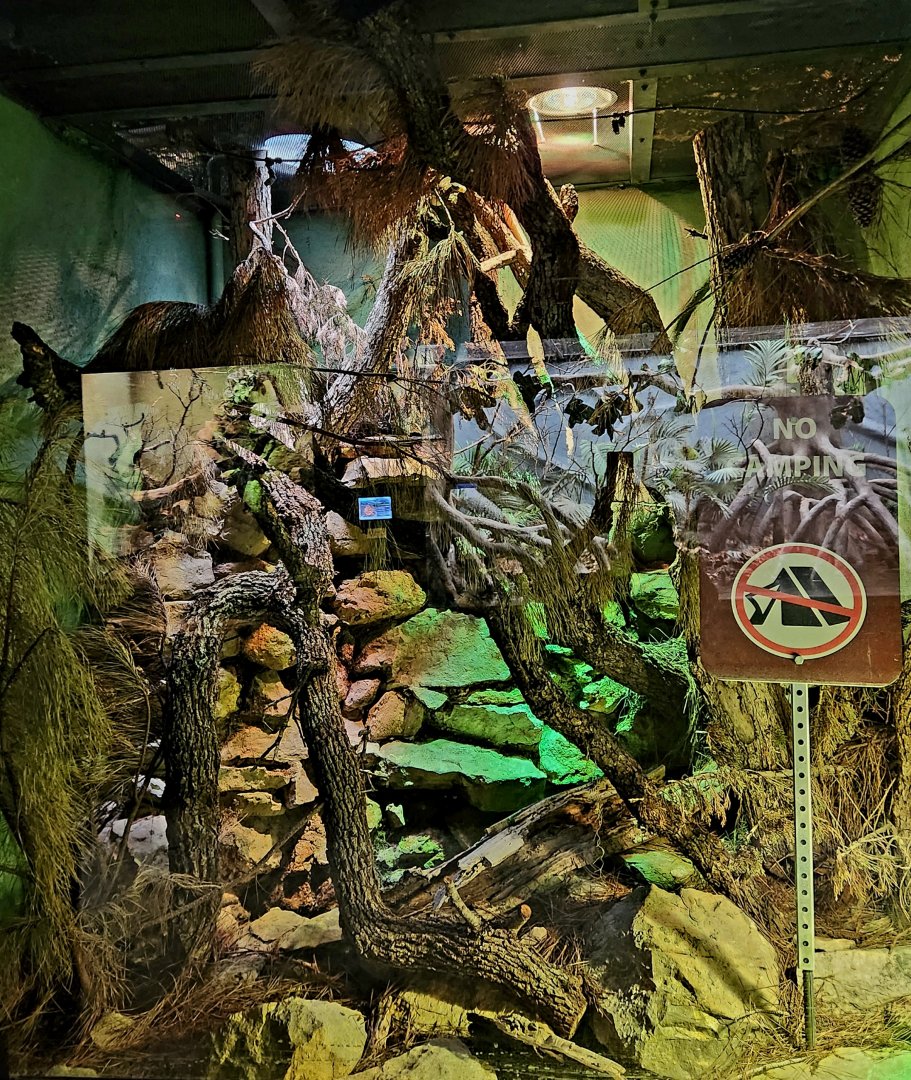
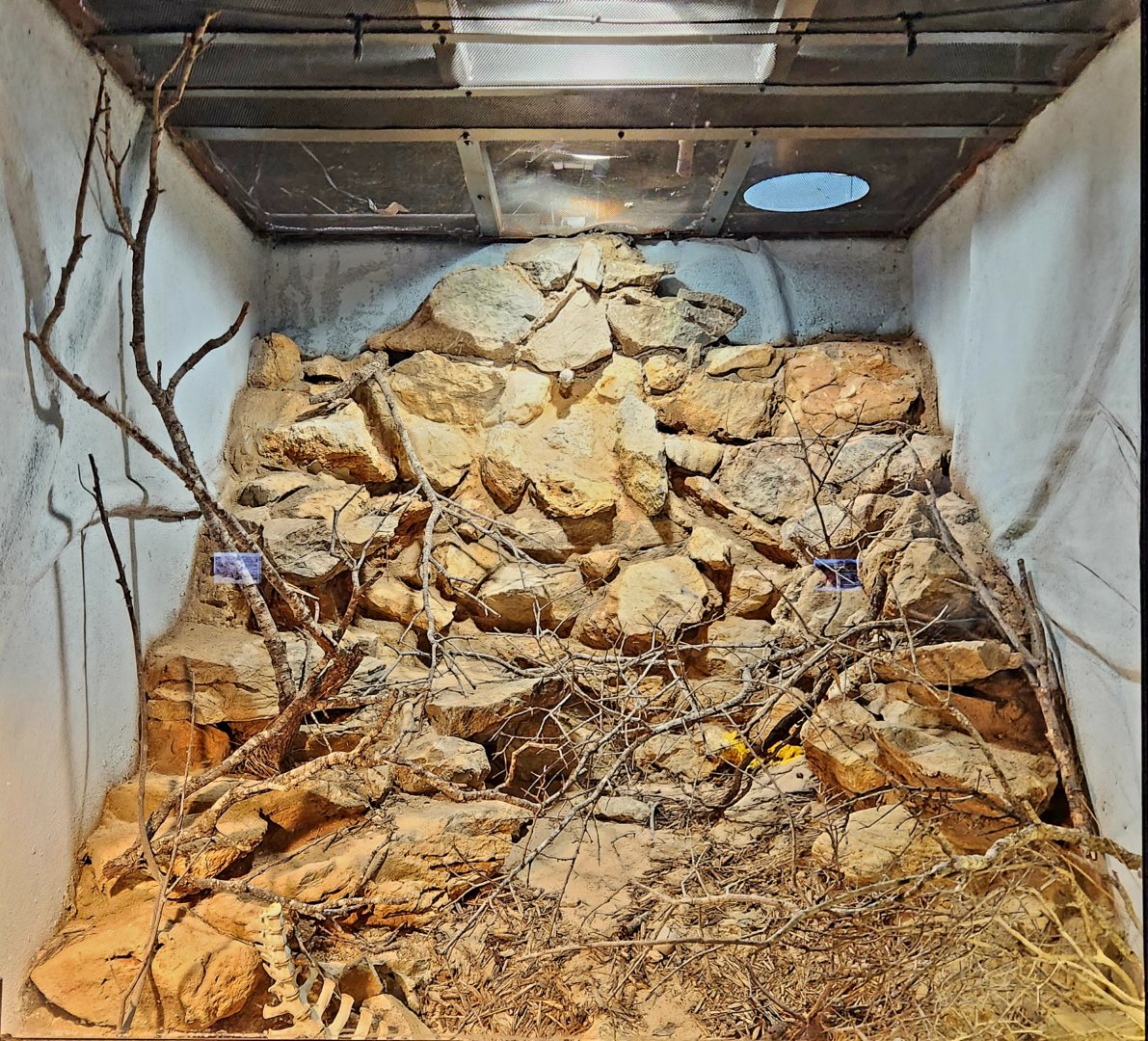
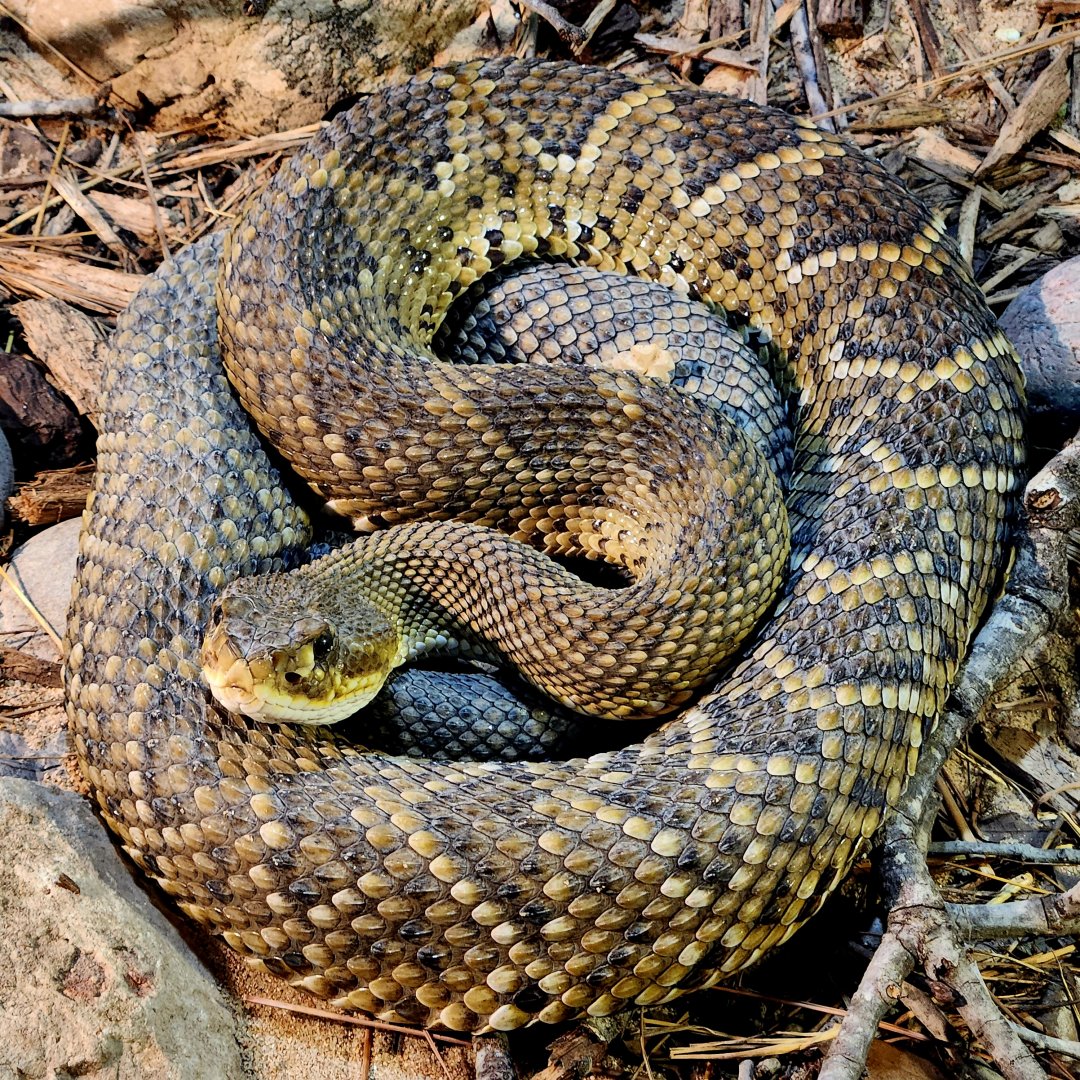
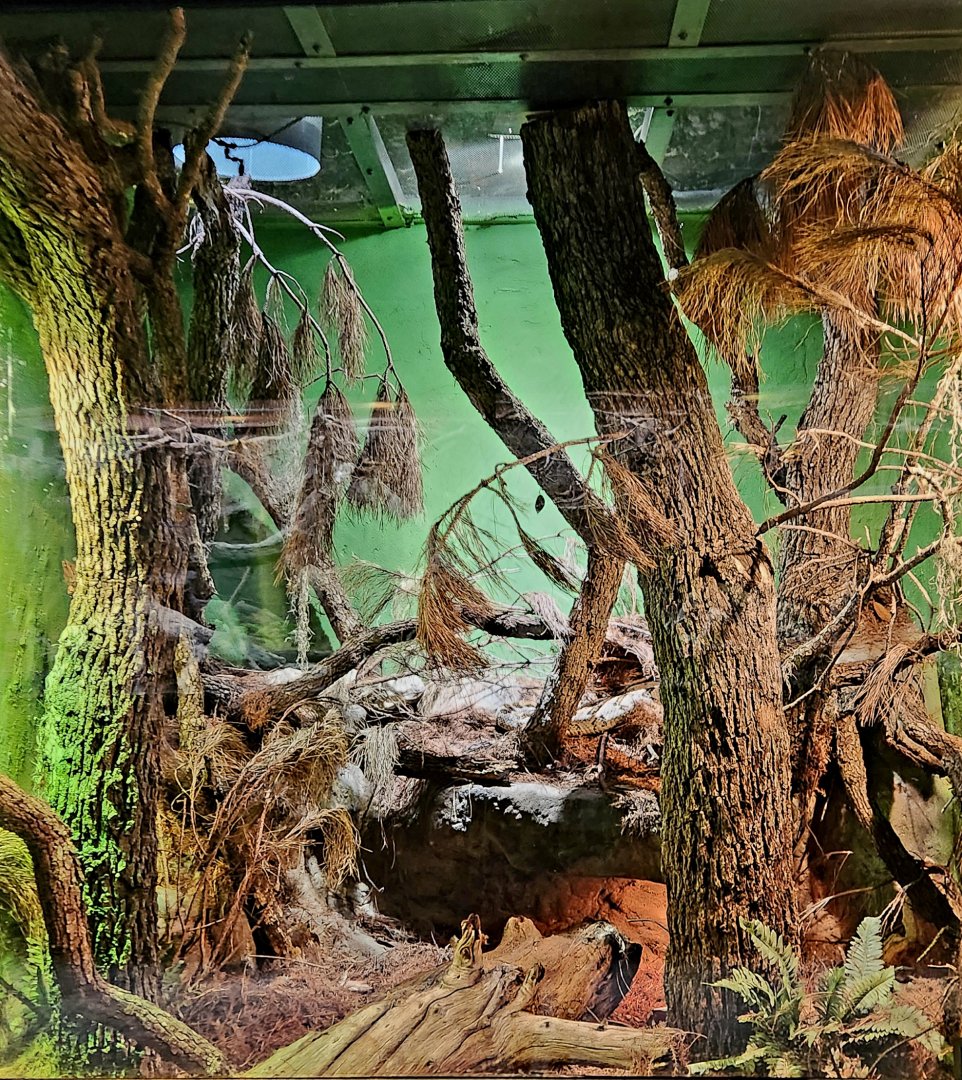
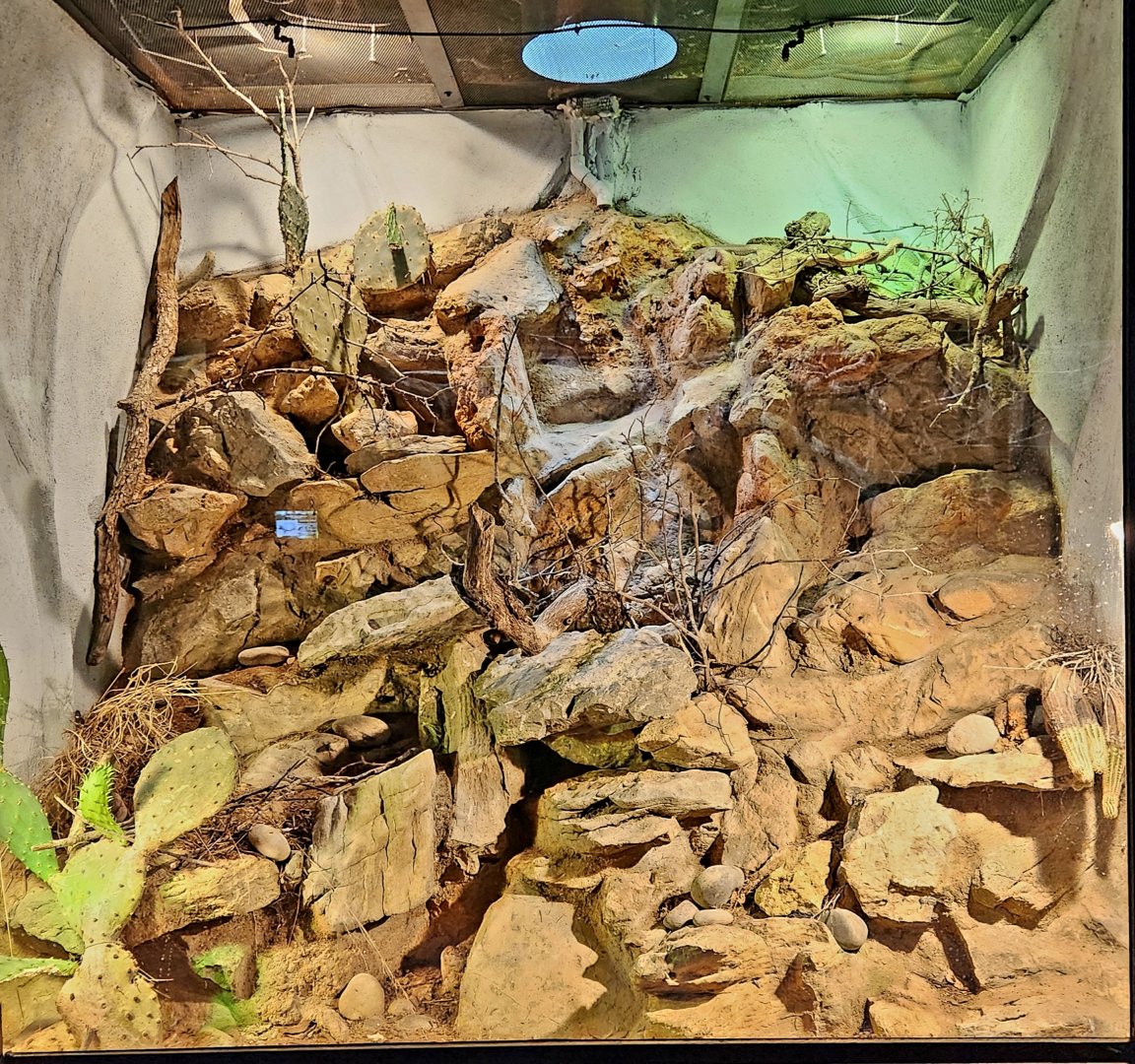
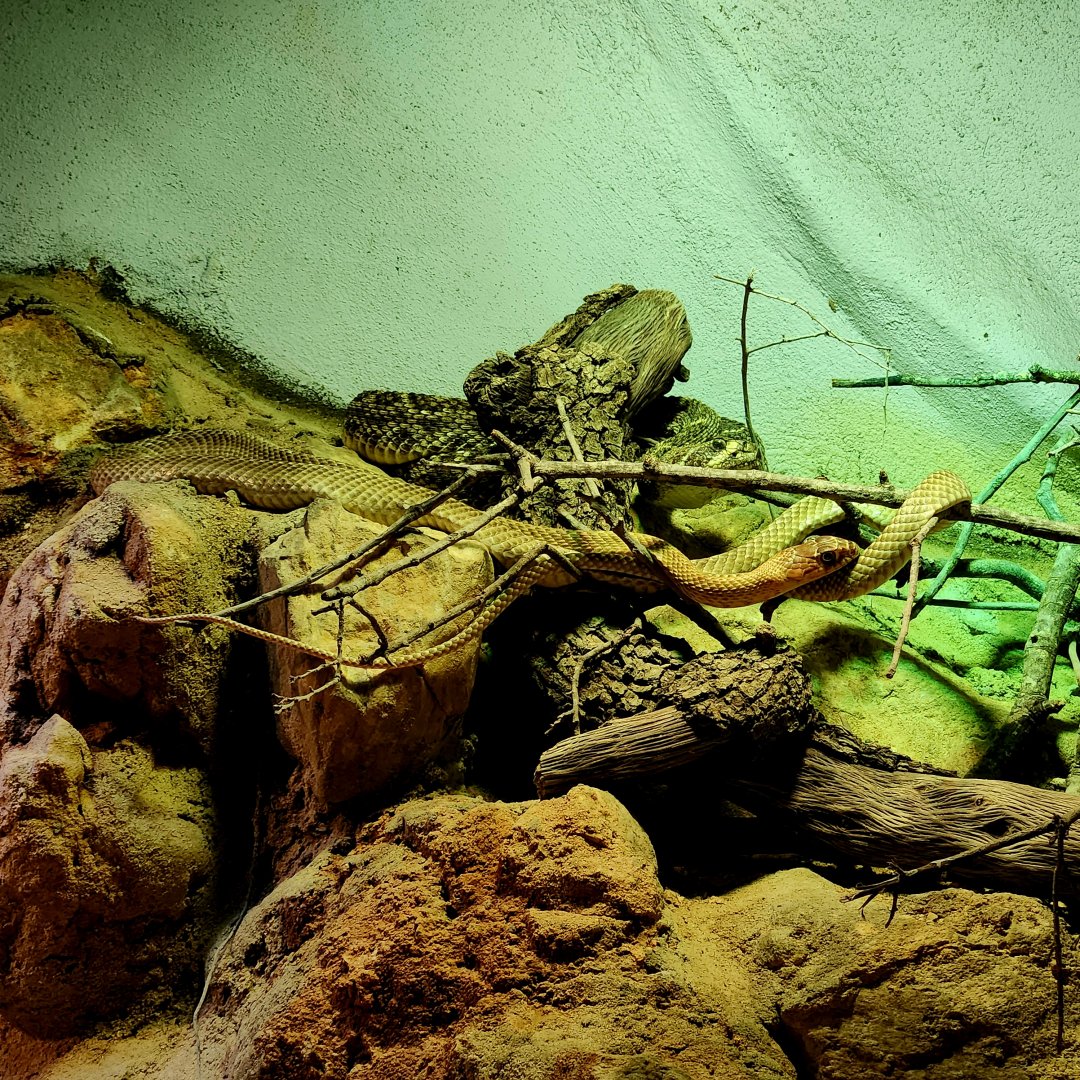
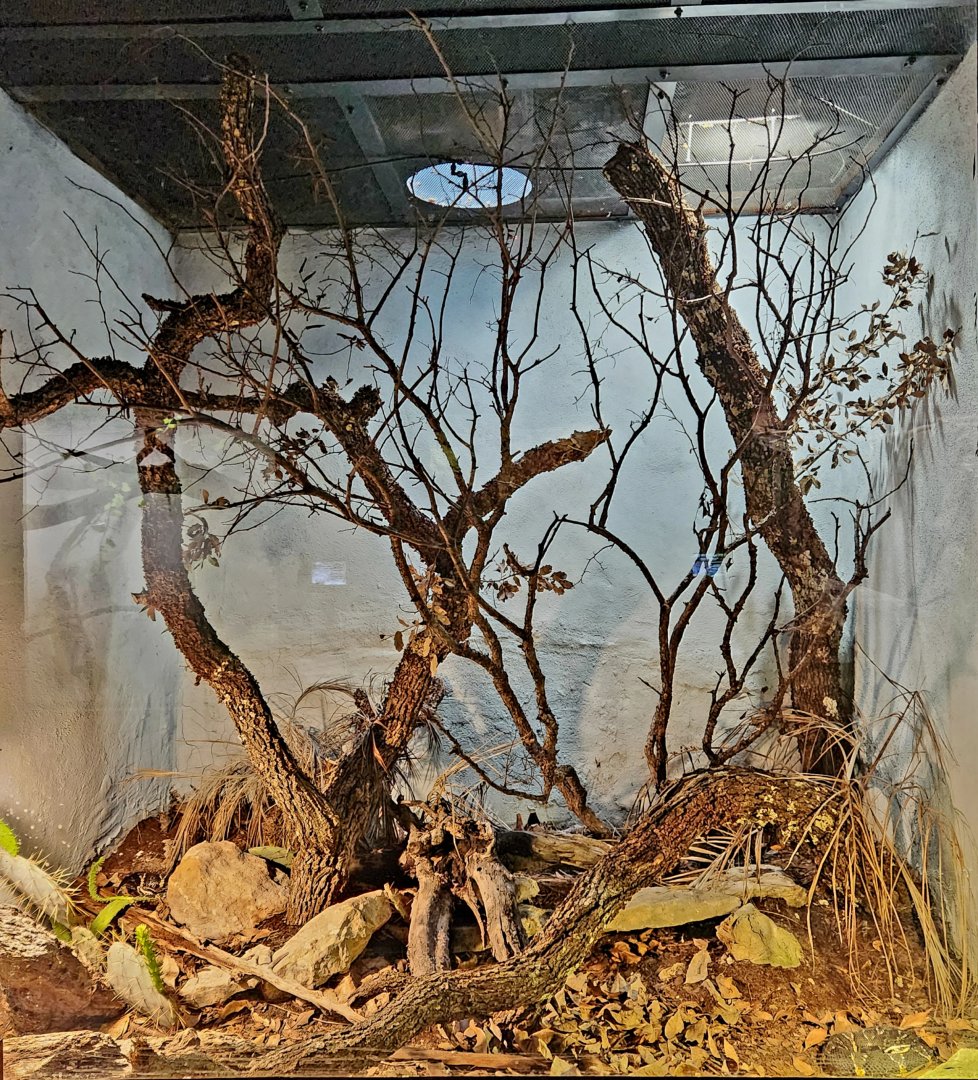
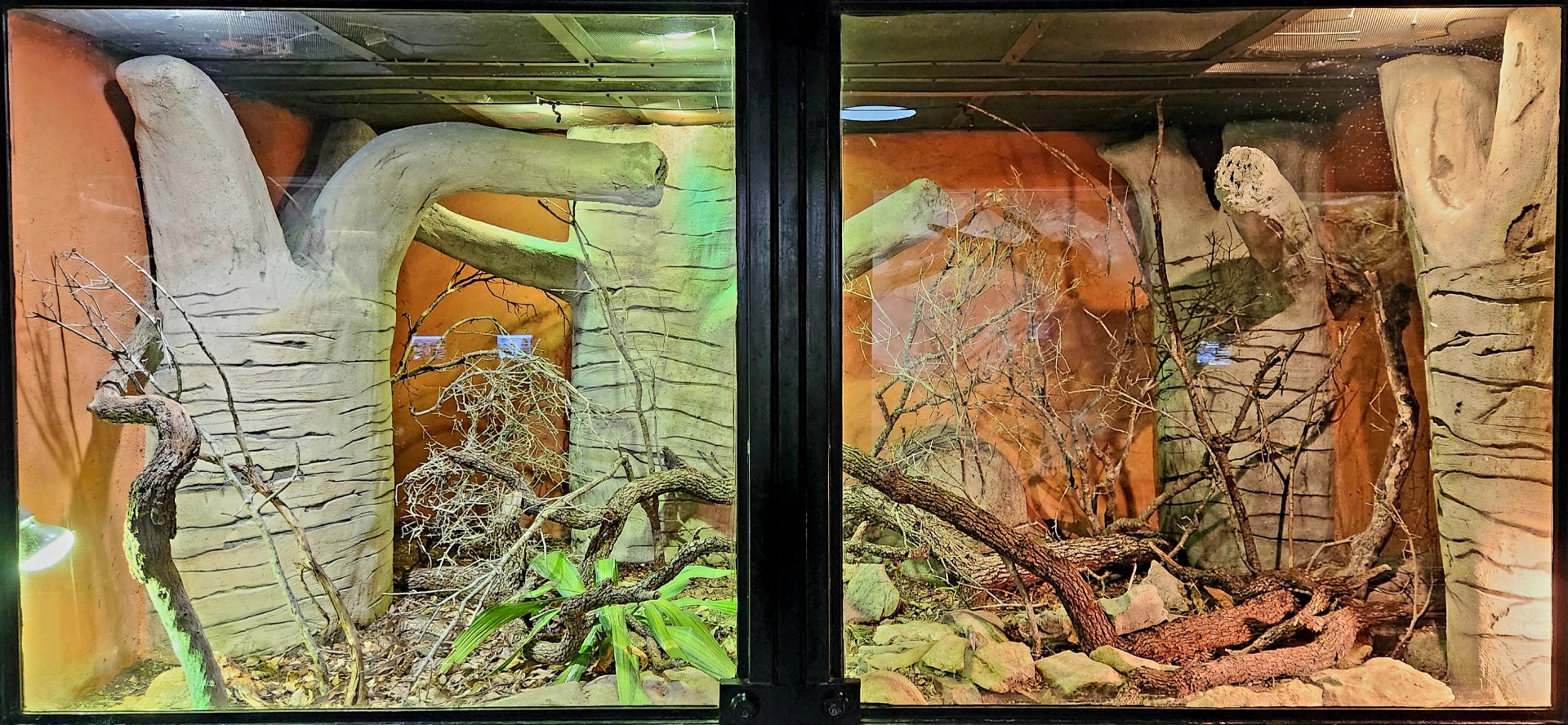
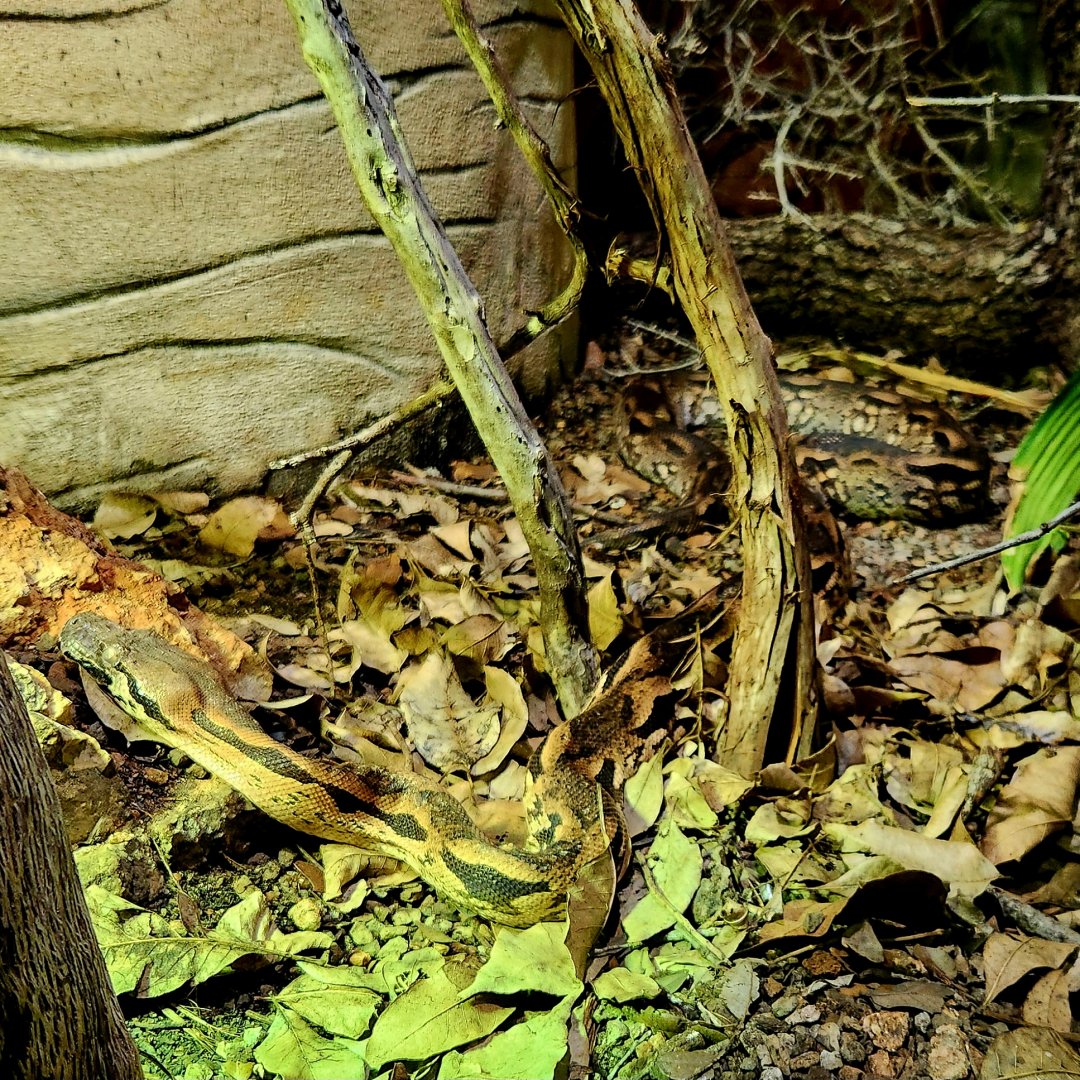
 ), the Ifaty Spiny Forest exhibit at Reptilandia is another of the larger exhibits along this wall, measuring probably 8 to 10 feet long and the same 6 feet wide and tall. The mock Baobab trees look good, although they don't necessarily invoke the idea of "spiny" with their rounded/flat ends. The brushy hardscape throughout the exhibit looks great, and I would love to see about three times as much brought in for the sake of providing even more usable cover. The plant life could be a bit better distributed, rather than a single large plant front and center, but the emphasis in this exhibit should remain on the brush rather than the vegetation. Again, these are all minor nitpicks really, but the pine branches are somewhat noticeably reused from previous exhibits (90, 93, etc) and might be better replaced by a different type. I'll end the exhibit comments by stating that I really like the orange background on this one, and I wish it was used more extensively throughout both buildings - I could see the Tsingy Peaks and various Australian exhibits looking quite nice with this color palette. As far as species, the main attraction on my visit was a pair of Dumeril's Boas (Acrantophis dumerili), while Oustalet's Chameleons (Furcifer oustaleti) and Merrem's Madagascar Swifts (Oplurus cyclurus) were signed but unseen. The Chameleons might do well in the Tsingy Peaks exhibit as mentioned earlier, and they would fit that biotope better than this one. Species like the Warty (F. verrucosus) or Antimena Chameleon (F. antimena) would fit more closely, while Three-Eyed Lizards (Chalarodon madagascariensis) and Standing's Day Geckos (Phelsuma standingi) would also be appropriate. The size of this exhibit and the locale it represents means that Spider Tortoises (Pyxis arachnoides) would be perfect, but there have been issues reported between Acrantophis and Tortoises, so caution would be required if both species are to be housed.