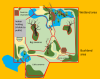
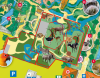
Speculative Burger's zoo project

A first start to the new Outback area:

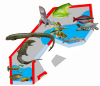
Burgers Outback - New Guinea house 2.0
View attachment 549270
Though the design is mostly the same, the size increased with the removal of the Solomon islands house with an outside area for the Cassowaries (now in two rotational exhibits), as well as the increased size of the outside area for the tree kangaroo walkthrough.

The parrots and cockatoos have been released into the hall, and their aviary is now occupied by the Echidnas, with added Birds-of-paradise and Blue-faced parrotfinch.

A group of smaller fish and turtles have been released into the water of the cassowaries (where they can get to both exhibits, as well as a cassowary-free area), as well as into the new Crocodile monitor paludarium.

The rest of Outback will follow soon!

View attachment 549269
Wouldn't the reptiles eat the birds' eggs?
 
Wouldn't the reptiles eat the birds' eggs?

Good question!

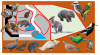
Crocodile skinks eat only insects such as roaches and worms, and Sail-finned lizards are omnivorous but eat mostly plants. Both reptiles will also have some difficulty getting into the tree kangaroo or the cassowary areas, where there are plenty of nesting opportunities for the birds
 
I always knew my original Tasmania house design was pretty bad, so I'm actually glad this relic got a do-over! Also: first truly 'new' area of Burgers Outback 2.0

Burgers Outback - Tasmania house 2.0
Burgers Outback - Tasmania house 2.0.png

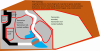
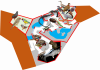
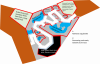
You enter in a small nocturnal section with three enclosures; one for Long-nosed potoroo and Brushtail possum, One for Tawny frogmouth and Barn owl, and one for Eastern quolls.

The Potoroos and Frogmouths can also be found free-roaming in the small greenhouse area, along with an array of other birds, including Tasmanian white-backed magpies, Green rosellas and Laughing kookaburras.

The entire greenhouse is themed after the Tasmanian semi-tropical forests, after exiting the nocturnal area (marked by the black path) you walk through an area with no exhibits, where you can probably best see the birds. After that, you walk between two lowered enclosures (also forested, though more open than the rest of the greenhouse), both for Tasmanian wombats and Tasmanian red-necked wallabies.

Similar to the Cassowaries, one enclosure is fully inside, and the other has access to a large outside yard. The separated groups (One with breeding wombats and non-breeding wallabies, one vice-versa) can rotate between the inside and outside exhibits.

Burgers Outback - Tasmania house 2.0 (Commersial version).png

That's it for the Outback 2.0 for today, good night tri-state area!
 

Attachments

  • Burgers Outback - Tasmania house 2.0 (Commersial version).png
    Burgers Outback - Tasmania house 2.0 (Commersial version).png
    653.4 KB · Views: 182
  • Burgers Outback - Tasmania house 2.0.png
    Burgers Outback - Tasmania house 2.0.png
    344.6 KB · Views: 175
Last edited:
A first start to the new Outback area:

Burgers Outback - New Guinea house 2.0
View attachment 549270
Though the design is mostly the same, the size increased with the removal of the Solomon islands house with an outside area for the Cassowaries (now in two rotational exhibits), as well as the increased size of the outside area for the tree kangaroo walkthrough.

The parrots and cockatoos have been released into the hall, and their aviary is now occupied by the Echidnas, with added Birds-of-paradise and Blue-faced parrotfinch.

A group of smaller fish and turtles have been released into the water of the cassowaries (where they can get to both exhibits, as well as a cassowary-free area), as well as into the new Crocodile monitor paludarium.

The rest of Outback will follow soon!

View attachment 549269
Isn't it too risky to let the reptiles roam freely?
They should eat the eggs/clutches, escape and/or be stolen by some visitors. Additionnally they should be elusive and hard to see.
I know very few cases of free-ranging reptiles in zoos, most frequently very common species (Green Iguanas, Red-eyed Sliders, maybe some Basilisks and Chameleons).
 
Isn't it too risky to let the reptiles roam freely?
They should eat the eggs/clutches, escape and/or be stolen by some visitors. Additionnally they should be elusive and hard to see.
I know very few cases of free-ranging reptiles in zoos, most frequently very common species (Green Iguanas, Red-eyed Sliders, maybe some Basilisks and Chameleons).

The sail-finned lizards are quite similar in behaviour, size and diet to iguanas, though a little more carnivorous. But The green ones are not the only ones held free-roaming! (Like the slightly more carnivorous Black spiny-tailed iguanas that safely roam free in Papiliorama Kerzers).

The crocodile skinks would be a new addition to the world's list of free-roaming animals, but I think they have enough similarities to the Chinese water dragons (another species that is held free-roaming semi-commonly) to be considered safe!
 
Last edited:
Burgers Outback - Reptile house
Burgers Outback - Reptile house.png

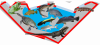
Found on the opposite side of the Tasmania house (the wombat enclosure has been sized down a bit since my last post), the Australian reptile house is home to a mixture of frogs, snakes, monitor lizards, skinks, fish, inverts and nocturnals. As well as two side aviaries for finches and other smaller birds.

Three large enclosures are the real stars of the show here. A large nocturnal enclosure for Sugar gliders, Bush thick-knees and Western woylies represent West Australia, and two huge paludariums represent North and East Australia

North Australia paludarium species:
Land herps:
White-lipped tree frog, Spiny-tailed monitor, Frilled lizard, Major skink
Small aquatic area:
Red-clawed crawfish, Empire gudgeon, Chequered rainbowfish
Large aquatic area:
Fly river turtle, Banded rainbowfish, Threadfin rainbowfish, Mouth almighty, Silver cobbler

East Australia paludarium species:
Land herps:
Eastern water dragon, Australian green tree frog, Eastern long-necked turtle, Shingleback skink, Eastern blue-tongued skink
Aquatic area:
Australian lungfish, Spangled perch, Sooty grunter, Blue salmon catfish, Barramundi


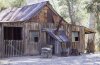
The outside is themed as an old / abandoned barn that can be found in the outback, built with sun-bleached wood and metal plates.
Outback.jpg


All terrariums are decorated to be highly naturalistic, with a mixture of fake tree trunks, natural soil and rockwork, as well as small bushes, herbal plants and live grasses such as spinifex.


Burgers Outback - Reptile house (Commersial version).png Burgers Outback - Reptile house Northern paludarium (Commersial version).png Burgers Outback - Reptile house Eastern paludarium (Commersial version).png

This is the last separated area for Outback, I hope to upload the full area today as well
 

Attachments

  • Burgers Outback - Reptile house (Commersial version).png
    Burgers Outback - Reptile house (Commersial version).png
    510.6 KB · Views: 173
  • Burgers Outback - Reptile house Eastern paludarium (Commersial version).png
    Burgers Outback - Reptile house Eastern paludarium (Commersial version).png
    442.8 KB · Views: 182
  • Burgers Outback - Reptile house Northern paludarium (Commersial version).png
    Burgers Outback - Reptile house Northern paludarium (Commersial version).png
    667.1 KB · Views: 180
  • Burgers Outback - Reptile house.png
    Burgers Outback - Reptile house.png
    367.3 KB · Views: 180
  • Outback.jpg
    Outback.jpg
    45.7 KB · Views: 8
Last edited:
Burgers Outback 2.0!
Burgers Outback 2.0.png

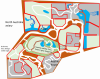
I've already shown the separate areas (New Guinea house, New Zealand house, Tasmania house and Reptile house), leaving only five outside enclosures.

The North Australia aviary holds:
Brolga crane, masked lapwing, Diamond dove, Peaceful dove, Eastern Superb fruit dove, Rufous night-heron, Magpie goose and Plumed whistling-duck

The East Australia aviary (with a lowered enclosure for Grey kangaroo, Swamp wallaby and Emu) holds:
Chestnut teal, Australian wood duck, Australian shelduck, Black swan, Straw-necked ibis, Bush stone-curlew, Tawny frogmouth, Laughing kookaburra, Crested pigeon, Wonga pigeon, Galah, Australian brush-turkey, Blue-faced honeyeater and Rufous bettong.

Most enclosures are fairly simple, except for the Wedge-tailed eagle/Brahminy kite aviary, which is similar to the Vulture aviary in Ouwehands. Not fully walkthrough, but having a netted/mesh tunnel going through it.

The Macropod enclosure in the East Australia aviary isn't lowered very deeply into the ground, as the boardwalk over it is only about 1m above the ground for most of the exhibit. Only around the water area is it low enough for the emus to be able to get under and to the other side.

Burgers Outback 2.0 (Commersial version).png
 

Attachments

  • Burgers Outback 2.0.png
    Burgers Outback 2.0.png
    546.9 KB · Views: 177
  • Burgers Outback 2.0 (Commersial version).png
    Burgers Outback 2.0 (Commersial version).png
    653.8 KB · Views: 170
Burgers Outback 2.0!
View attachment 550202

I've already shown the separate areas (New Guinea house, New Zealand house, Tasmania house and Reptile house), leaving only five outside enclosures.

The North Australia aviary holds:
Brolga crane, masked lapwing, Diamond dove, Peaceful dove, Eastern Superb fruit dove, Rufous night-heron, Magpie goose and Plumed whistling-duck

The East Australia aviary (with a lowered enclosure for Grey kangaroo, Swamp wallaby and Emu) holds:
Chestnut teal, Australian wood duck, Australian shelduck, Black swan, Straw-necked ibis, Bush stone-curlew, Tawny frogmouth, Laughing kookaburra, Crested pigeon, Wonga pigeon, Galah, Australian brush-turkey, Blue-faced honeyeater and Rufous bettong.

Most enclosures are fairly simple, except for the Wedge-tailed eagle/Brahminy kite aviary, which is similar to the Vulture aviary in Ouwehands. Not fully walkthrough, but having a netted/mesh tunnel going through it.

The Macropod enclosure in the East Australia aviary isn't lowered very deeply into the ground, as the boardwalk over it is only about 1m above the ground for most of the exhibit. Only around the water area is it low enough for the emus to be able to get under and to the other side.

View attachment 550242
Impressive Australian exhibit.
Do you know if all these species exist in European collections (I think especially to the herps and fish, I don't know a lot of species) ?
 
Impressive Australian exhibit.
Do you know if all these species exist in European collections (I think especially to the herps and fish, I don't know a lot of species) ?

All species are available in Europe except for most of the fish. But I only used fish present in American collections (meaning they could probably be shipped)
 
I'm probably going to take a big hiatus from the BZ project and focus on my Zoo Guides for a while. I don't really have a lot of ideas for the remaining areas, so I'm probably going to wait for another sudden slap in the face of inspiration like I recently got for Outback and Wad. I'll probably be back again in a long while, hopefully for Arctic or Congo, possibly for an African islands remaster.

For now: so long!
 
I'm probably going to take a big hiatus from the BZ project and focus on my Zoo Guides for a while. I don't really have a lot of ideas for the remaining areas, so I'm probably going to wait for another sudden slap in the face of inspiration like I recently got for Outback and Wad. I'll probably be back again in a long while, hopefully for Arctic or Congo, possibly for an African islands remaster.

For now: so long!
A large zone dedicated to African Islands would be very interesting, especially if you count all the islands around Africa, and their neighbouring marine habitats : Canary Islands, Cabo Verde, Bijagos, Sao Tomé, Bioko, Robben Island, Madagascar, Comoros, Réunion, Mauritius, Seychelles, Zanzibar, Pemba, Socotra (I may have forgotten some interesting islands)
And such a theme is extremely rare, if not unknown, in worldwide zoos.
 
Last edited:
A large zone dedicated to African Islands would be very interesting, especially if you count all the islands around Africa, and their neighbouring marine habitats : Canary Islands, Cabo Verde, Bijagos, Sao Tomé, Bioko, Robben Island, Madagascar, Comoros, Réunion, Mauritius, Seychelles, Zanzibar, Pemba, Socotra (I may have forgotten some interesting islands)
And such a theme is extremely rare, if not unknown, in worldwide zoos.

Well, it's only a small area, focused mostly on Madagascar and the Seychelles. Versions can be found earlier in the thread, but I'm planning on making it a little larger.
 
The sail-finned lizards are quite similar in behaviour, size and diet to iguanas, though a little more carnivorous.

Just remembered that there was an institution that successfully held sail-finned lizards free-roaming with birds: Burgers' Zoo itself! They had them with catbirds, fruit doves, parrots, ducks and others in the old mangrove hall!
 
Little sneak peak to a non-BZ project I'm working on. I'll be posting it here as a little in-between

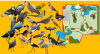
If yesterday was the teaser, here's the full trailer:
Avifauna (Alt).png

It's still not finished, but I'll be leaving to Avifauna tomorrow (hence the new side project) so I won't be able to upload in a little bit

(Side note: if anyone has any other ideas for Avifauna, feel free to tell me. As I'm already out of ideas and I want to fill in a few other areas)
 

Attachments

  • Avifauna (Alt).png
    Avifauna (Alt).png
    809.3 KB · Views: 156
If yesterday was the teaser, here's the full trailer:
View attachment 563860

It's still not finished, but I'll be leaving to Avifauna tomorrow (hence the new side project) so I won't be able to upload in a little bit

(Side note: if anyone has any other ideas for Avifauna, feel free to tell me. As I'm already out of ideas and I want to fill in a few other areas)

Perhaps something with seabirds or coastal wader birds would be nice, Avifauna doesn't yet have something like that. Not sure where you would put it though, perhaps somewhere around the lake?
 
Perhaps something with seabirds or coastal wader birds would be nice, Avifauna doesn't yet have something like that. Not sure where you would put it though, perhaps somewhere around the lake?

The beach life project takes care of that! With Curlews, oystercatchers, spoonbills and some others. Indeed by the lake
 
The Avifauna project isn't finished yet but I do want to make a little start uploading some of it so

Avifauna project - Night Safari expansion
Avifauna project - Night safari.png
The new Night Safari is separated into four areas; three continental free-roaming areas and one central viewing hut with some aquariums.

The South American side is the first area you enter, a wooden bridge sits right above the jungle floor to keep the Armadillos off the path

The central "viewing hut" has a nice, wooden interior with three nocturnal aquariums, one South American and two Central African. There is also a viewing window into the Australian side

The African area is more Savanna themes, with dead trees, tall grass and Tree euphorbias (Sadly, all fake). There is also a separated enclosure for Verreaux's eagle owls (This enclosure might be too small, but there is room to expand this)

The Australian side is slightly larger than the current night safari and the layout is essentially the same, with a glass-surrounded Kiwi enclosure that the free-roaming birds cannot get into. Rufous night herons and Tawny frogmouths have been added as free-roamers and the barn owls will either leave the zoo or join the Steller's sea eagle aviary
 

Attachments

  • Avifauna project - Night safari.png
    Avifauna project - Night safari.png
    404.9 KB · Views: 153
Avifauna - "Megaproject Savanna"

The actual trigger for me to make an Avifauna project! Avifauna themselves created a masterplan that is clearly not going to happen (remind you of anyone?). A giant aviary going over the entire rosarium, with a separate island for a Lemur and Meerkat walkthrough, a large savanna with Giraffes, ostriches and zebras. As well as free-flying secretary birds, ground hornbills, vultures, pelicans, flamingos, Cranes, Storks, Ibises and many others (a species mix that would definitely not work). So I decided to make a toned down version (while still sticking to the original idea)

Original concept art:
Avifauna (OG).jpg Avifauna (OG.2).png Avifauna (OG.3).png
This would go over the new cerrado enclosure, monkey island and night safari

Toned down version:
Avifauna project - Megaproject Savanna (layout).png

Megaproject savanna is made as a large upgrade to the Vulture aviaries (they really need that upgrade), as well as providing new space for the Ostriches. Keeping in theme for both the North African Ostrich and the Rüppels griffon vultures, all the animals and free-roaming birds are from the plains of Sub-Saharan North Africa.

The whole aviary is covered in plants, with some pockets of larger bushes and trees, as well as flat plains with scattered areas of heath plants and hairgrass, as well as some winter-hardy palms and cactus-like plants. The little Savanna area is more sandy and empty in front, but has more foliage in the back.

Four large fake dead trees provide perching spots for the vultures, and a large wetland area (with lots of reeds!) provide foraging opportunities for multiple wading birds. The Big Savanna enclosure is at the same ground level at the sides, but lowers down near the central path area not only to prevent viewing issues with a fence, but also to allow them to walk under the path to the second half of the big savanna.

You begin at a nice viewing area over the Savanna's watering hole, walk over a short boardwalk over the wetland area, then the "heightened" path between the two areas of the Big Savanna. There's a short bushland area for watching the birds, as well as a birdwatching tower with viewing over the whole aviary. Near that is also a Hyrax and Porcupine enclosure. From there, you walk past the Little Savanna enclosure, which is bordered by a fairly simple wooden fence, and on to the stables. From here is another viewing point (this time at ground level, separated by mesh) as well as an enclosure for African Spurred tortoises, which also have a same-sized indoor enclosure for the winter. There's another small swamp area, which is more forested, and finally a bridge to the exit/entrance to parakeet paradise. (A lot of these design elements can already be seen on the original concept art).

In the back of the Separation enclosure, an extra viewing platform is added, for people who might be scared of vultures, or even to be used during bird flu. This one is heightened above ground level and accessible via a typical winding wheelchair-ramp (if that makes sense) which goes through a very small bushland area

The big savanna holds 1.1 North African ostrich, 1.3 Nile lechwe or 1.4 Impala and 2.2 Barbary sheep (isn't this cool, I've never done these numbers before!). Only one antelope species is allowed on the Big Savanna at a time, so it's either the Nile lechwe with the Ostriches and Barbary sheep, and the Impala in the separation or vice versa. The little savanna holds 1.1 Somali wild ass and 1.2 Northern warthog. (All species are kept in smaller numbers as the enclosures are not that big). The hyrax enclosure holds 4.4 Rock Hyrax and 1.1 Crested Porcupine.In some areas (hidden by foliage) exist "dikdik doors" to allow for Kirk's dikdik, as well as some ground birds, to have access to the Big Savanna and the visitor area.

That would look something like this in comparison with the pre-existing park (Also parakeet paradise):
Avifauna project - Megaproject Savanna.png

Inside the Savanna aviary are a LOT of free-roamers:
Avifauna project - Megaproject Savanna (Free-roaming).png

Free-roaming species list:
African openbill
Saddlebill stork
Abdim’s stork
Yellow-billed stork
Hamerkop
African spoonbill
Western black-crowned crane
Western cattle egret
Egyptian plover
Glossy ibis
Purple heron

Rueppel’s griffon vulture
White-headed vulture
Hooded vulture

African comb duck
Ferruginous Duck
White-faced whistling duck

Vulturine guineafowl

Laughing dove
Speckled pigeon
Namaqua dove

White-cheeked turaco
Von Der Decken’s hornbill
Wattled starling
Northern carmine bee-eater
Green woodhoopoe
Nyasa lovebird

Kirk’s dikdik
 

Attachments

  • Avifauna (OG).jpg
    Avifauna (OG).jpg
    239.6 KB · Views: 24
  • Avifauna (OG.2).png
    Avifauna (OG.2).png
    1.3 MB · Views: 23
  • Avifauna (OG.3).png
    Avifauna (OG.3).png
    1.1 MB · Views: 21
  • Avifauna project - Megaproject Savanna (Free-roaming).png
    Avifauna project - Megaproject Savanna (Free-roaming).png
    573.4 KB · Views: 147
  • Avifauna project - Megaproject Savanna (layout).png
    Avifauna project - Megaproject Savanna (layout).png
    662.6 KB · Views: 153
  • Avifauna project - Megaproject Savanna.png
    Avifauna project - Megaproject Savanna.png
    1.2 MB · Views: 147
Last edited:
I think that with the space there is IRL I would only do warthogs and not keep wild asses with them, would serve the space much more rightful.

very cool idea although I wonder if some of these birds would be a match together.

Some species are more aggressive then others
 
Back
Top