
Part IX: Snakes and Crocodiles
Before we entered the reptile house generally known as the "Snake Farm", we first visited a small greenhouse-like enclosure which contained a mix of Aldabra Giant Tortoise (Aldabrachelys gigantea) and African Spurred Tortoise (Geochelone sulcata) - both rather nice species but seeming rather insignificant when compared with some of the taxa I was about to see. The area immediately surrounding the snake farm also contains a large complex of offshow breeding aviaries; these, I believe, are largely intended for the excellent array of species held in the various enclosures of the Tierpark pheasantry. Some of the inhabitants of these aviaries were, I found, visible from the path next to the snake farm, mostly comprising species I saw later that afternoon in the aforementioned pheasantry. However, I spotted one species which I believe is currently not on-show in any fashion, this being the Philby's Rock Partridge (Alectoris philbyi), and as such I would suggest having a look at these enclosures turned out to have been a worthwhile use of a little spare time.
We then entered the snake farm itself; an area of the Tierpark I had rather been looking forward to visiting. I already knew that the range of reptiles held in the house was said to be of a high quality, but the facet which excited me the most was the number of snake taxa held within the house; most of all the number of venomous taxa. This was, of course, due in large part to the fact that although there are still a wide range of venomous snake taxa held in private hands within the United Kingdom, in recent years the range of "hot" taxa held in public zoological collections has rather declined. As such, prior to my visit to the Tierpark I had only seen something like a dozen venomous species in my life - although I did not know exactly how many species were on display, assuming that some of the taxa held at the Tierpark would be offshow, I did know I was likely to almost double this number in the snake farm alone, before setting foot in any of the other collections planned for this trip.
At the time of my visit, the following species (with snakes listed separately for ease of reference) were displayed onshow in the "snake farm" - as I rather suspect that the venomous collection will be, as it was for me, of particular interest to many reading this review, I will draw particular focus to these species with an asterisk.
Veiled Chameleon (Chamaeleo calyptratus)
Sambava Tomato Frog (Dyscophus guineti)
Mission Golden-eyed Tree Frog (Trachycephalus resinifictrix)
Chinese Stripe-necked Turtle (Mauremys sinensis)
Hilaire’s Side-necked Turtle (Phrynops hilarii)
Taiwan Yellow-margined Box Turtle (Cistoclemmys flavomarginata flavomarginata)
Borneo Skink (Apterygodon vittatus)
New Caledonia Bumpy Gecko (Rhacodactylus auriculatus)
Standing's Day Gecko (Phelsuma standingi)
South-east Asian Box Turtle (Cuora amboinensis)
Dwarf Crocodile (Osteolaemus tetraspis)
Elongated Tortoise (Indotestudo elongata)
Red-footed Tortoise (Chelonoidis carbonaria)
Yellow-footed Tortoise (Chelonoidis denticulata)
Leopard Tortoise (Stigmochelys pardalis)
Red-bellied Short-necked Turtle (Emydura subglobosa)
Mata-Mata (Chelus fimbriatus)
Red-cheeked Mud Turtle (Kinosternon cruentatum)
Eastern Box Turtle (Terrapene carolina)
Egyptian Tortoise (Testudo kleinmanni)
Rainbow Mabuya (Trachylepis quinquetaeniata)
Blue Spiny Lizard (Sceloporus cyanogenys)
Gidgee Skink (Egernia stokesii)
European Legless Lizard (Pseudopus apodus)
Axolotl (Ambystoma mexicanum)
Morrocan Spiny-tailed Lizard (Uromastyx nigriventris)
Pancake Tortoise (Malacochersus tornieri)
Spiny-tailed Monitor (Varanus acanthurus)
Sahara Mastigure (Uromastyx geyri)
Gila Monster (Heloderma suspectum)
---
East African Gaboon Viper (Bitis gabonica)*
Green Tree Python (Morelia viridis)
West African Gaboon Viper (Bitis rhinoceros)*
Spectacled Cobra (Naja naja)*
Cape Cobra (Naja nivea)*
Malaysian Blood Python (Python brongersmai)
Red Spitting Cobra (Naja pallida)*
Black Mamba (Dendroaspis polylepis)*
Banded Mangrove Snake (Boiga dendrophila melanota)*
Bismark Ringed Python (Bothrochilus boa)
Moroccan Cobra (Naja haje legionis)*
Forest Cobra (Naja melanoleuca)*
Arizona Mountain Kingsnake (Lampropeltis pyromelana pyromelana)
Aesculapian Snake (Zamenis longissimus)
Common Black Ratsnake (Pantherophis obsoletus)
Dumeril's Boa (Acrantophis dumerili)
White-lipped Pitviper (Trimeresurus albolabris)*
Northern Copperhead (Agkistrodon contortrix mokasen)*
Cane-brake Rattlesnake (Crotalus horridus atricaudatus)*
Uracoan Rattlesnake (Crotalus vegrandis)*
South American Rattlesnake (Crotalus durissus durissus)*
Red-tailed Ratsnake (Gonyosoma oxycephalum)
Royal Python (Python regius)
Amazon Tree Boa (Corallus hortulanus)
It bears noting that even when one temporarily disregards the extensive snake collection in this house, a large number of the other taxa held in the snake farm are unusual, in some cases with Tierpark Berlin being their only captive public holding. As such, I quite literally obtained dozens of lifeticks in this house, including a large number of venomous taxa. I rather suspect that many members of the public either are unaware of the snake farm, or stay away from it, as I got the distinct impression that the house was rather less often visited when compared with other areas of the Tierpark; certainly Hel, Markus and myself were more or less the only visitors to the house at the point in time when we visited. This is a shame, as this small house represents the kind of diversity and depth of taxa which I feel is become more and more scarce in reptile collections - and as such I believe it should be appreciated more than I believe it may be.
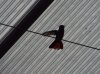
After exiting the snake farm, we walked across to the Crocodile House opposite. This house comprises two seperate areas; the first a large walk-through aviary with a variety of turtle species and a number of rather excellent bird taxa viewable from a raised walkway, whilst the second comprised a number of enclosures containing a variety of monitor lizards and crocodilians. Both portions of the house were thickly planted and looked very visually appealing whilst at the same time seeming to be rather good for the species held within; the walkthrough aviary was especially good in this regard, providing as it did a large amount of space for the taxa it held, and a great deal of scope for birds to hide away if they so desired. We spent a long time in this first portion of the house as a result, watching various species and searching for others. The two most elusive species held in this area, of course, were the Andean Cock-of-the-Rock (Rupicola peruvianus peruvianus) and the Ruby-topaz Hummingbird (Chrysolampis mosquitus), although to be more accurate the latter of these was not incredibly difficult to spot; rather, the difficulty lay in observing the animal for any length of time and attempting to photograph it, so active and fast-moving it transpired to be. It seemed quite confident being held in an aviary with so many larger birds; in point of fact, on a number of occasions we observed it attacking the larger birds when they ventured too close to it. Conversely, the Cock-of-the-Rock was almost invisible even when we searched for it at length, making itself clear purely by coincidence when it ventured into the open briefly after 25 minutes or so.
The crocodile portion of the house was no less well-recieved by Hel and myself; of the three species of crocodilian held within, both the Sunda Gharial (Tomistoma schlegelii) and the Chinese Alligator (Alligator sinensis) are relatively unusual within the UK, and we had certainly never been able to observe either species at such length previously. We were also rather pleased to be able to observe the Sunda Gharial so soon before we were to hopefully see the "true" or Ganges Gharial at the Zoo Aquarium the following day, as this meant we would have the ability to compare the two in our minds with clarity. Another oddity held in this area was the Blue-tailed Monitor (Varanus doreanus), a taxon which although not uncommon in private hands is quite unusual in public collections within Europe.
We exited the crocodile house, with the plan to next visit the nearby pheasantry enclosures before filling in a few final gaps before the day was out.
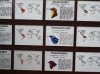
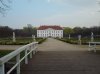
Attached are an example of signage from the snake farm, an example of signage from the crocodile house, a shot of the Ruby-topaz, and a view of Schloss Friedrichsfelde from near the exit to the Crocodile House.
Before we entered the reptile house generally known as the "Snake Farm", we first visited a small greenhouse-like enclosure which contained a mix of Aldabra Giant Tortoise (Aldabrachelys gigantea) and African Spurred Tortoise (Geochelone sulcata) - both rather nice species but seeming rather insignificant when compared with some of the taxa I was about to see. The area immediately surrounding the snake farm also contains a large complex of offshow breeding aviaries; these, I believe, are largely intended for the excellent array of species held in the various enclosures of the Tierpark pheasantry. Some of the inhabitants of these aviaries were, I found, visible from the path next to the snake farm, mostly comprising species I saw later that afternoon in the aforementioned pheasantry. However, I spotted one species which I believe is currently not on-show in any fashion, this being the Philby's Rock Partridge (Alectoris philbyi), and as such I would suggest having a look at these enclosures turned out to have been a worthwhile use of a little spare time.
We then entered the snake farm itself; an area of the Tierpark I had rather been looking forward to visiting. I already knew that the range of reptiles held in the house was said to be of a high quality, but the facet which excited me the most was the number of snake taxa held within the house; most of all the number of venomous taxa. This was, of course, due in large part to the fact that although there are still a wide range of venomous snake taxa held in private hands within the United Kingdom, in recent years the range of "hot" taxa held in public zoological collections has rather declined. As such, prior to my visit to the Tierpark I had only seen something like a dozen venomous species in my life - although I did not know exactly how many species were on display, assuming that some of the taxa held at the Tierpark would be offshow, I did know I was likely to almost double this number in the snake farm alone, before setting foot in any of the other collections planned for this trip.
At the time of my visit, the following species (with snakes listed separately for ease of reference) were displayed onshow in the "snake farm" - as I rather suspect that the venomous collection will be, as it was for me, of particular interest to many reading this review, I will draw particular focus to these species with an asterisk.
Veiled Chameleon (Chamaeleo calyptratus)
Sambava Tomato Frog (Dyscophus guineti)
Mission Golden-eyed Tree Frog (Trachycephalus resinifictrix)
Chinese Stripe-necked Turtle (Mauremys sinensis)
Hilaire’s Side-necked Turtle (Phrynops hilarii)
Taiwan Yellow-margined Box Turtle (Cistoclemmys flavomarginata flavomarginata)
Borneo Skink (Apterygodon vittatus)
New Caledonia Bumpy Gecko (Rhacodactylus auriculatus)
Standing's Day Gecko (Phelsuma standingi)
South-east Asian Box Turtle (Cuora amboinensis)
Dwarf Crocodile (Osteolaemus tetraspis)
Elongated Tortoise (Indotestudo elongata)
Red-footed Tortoise (Chelonoidis carbonaria)
Yellow-footed Tortoise (Chelonoidis denticulata)
Leopard Tortoise (Stigmochelys pardalis)
Red-bellied Short-necked Turtle (Emydura subglobosa)
Mata-Mata (Chelus fimbriatus)
Red-cheeked Mud Turtle (Kinosternon cruentatum)
Eastern Box Turtle (Terrapene carolina)
Egyptian Tortoise (Testudo kleinmanni)
Rainbow Mabuya (Trachylepis quinquetaeniata)
Blue Spiny Lizard (Sceloporus cyanogenys)
Gidgee Skink (Egernia stokesii)
European Legless Lizard (Pseudopus apodus)
Axolotl (Ambystoma mexicanum)
Morrocan Spiny-tailed Lizard (Uromastyx nigriventris)
Pancake Tortoise (Malacochersus tornieri)
Spiny-tailed Monitor (Varanus acanthurus)
Sahara Mastigure (Uromastyx geyri)
Gila Monster (Heloderma suspectum)
---
East African Gaboon Viper (Bitis gabonica)*
Green Tree Python (Morelia viridis)
West African Gaboon Viper (Bitis rhinoceros)*
Spectacled Cobra (Naja naja)*
Cape Cobra (Naja nivea)*
Malaysian Blood Python (Python brongersmai)
Red Spitting Cobra (Naja pallida)*
Black Mamba (Dendroaspis polylepis)*
Banded Mangrove Snake (Boiga dendrophila melanota)*
Bismark Ringed Python (Bothrochilus boa)
Moroccan Cobra (Naja haje legionis)*
Forest Cobra (Naja melanoleuca)*
Arizona Mountain Kingsnake (Lampropeltis pyromelana pyromelana)
Aesculapian Snake (Zamenis longissimus)
Common Black Ratsnake (Pantherophis obsoletus)
Dumeril's Boa (Acrantophis dumerili)
White-lipped Pitviper (Trimeresurus albolabris)*
Northern Copperhead (Agkistrodon contortrix mokasen)*
Cane-brake Rattlesnake (Crotalus horridus atricaudatus)*
Uracoan Rattlesnake (Crotalus vegrandis)*
South American Rattlesnake (Crotalus durissus durissus)*
Red-tailed Ratsnake (Gonyosoma oxycephalum)
Royal Python (Python regius)
Amazon Tree Boa (Corallus hortulanus)
It bears noting that even when one temporarily disregards the extensive snake collection in this house, a large number of the other taxa held in the snake farm are unusual, in some cases with Tierpark Berlin being their only captive public holding. As such, I quite literally obtained dozens of lifeticks in this house, including a large number of venomous taxa. I rather suspect that many members of the public either are unaware of the snake farm, or stay away from it, as I got the distinct impression that the house was rather less often visited when compared with other areas of the Tierpark; certainly Hel, Markus and myself were more or less the only visitors to the house at the point in time when we visited. This is a shame, as this small house represents the kind of diversity and depth of taxa which I feel is become more and more scarce in reptile collections - and as such I believe it should be appreciated more than I believe it may be.
After exiting the snake farm, we walked across to the Crocodile House opposite. This house comprises two seperate areas; the first a large walk-through aviary with a variety of turtle species and a number of rather excellent bird taxa viewable from a raised walkway, whilst the second comprised a number of enclosures containing a variety of monitor lizards and crocodilians. Both portions of the house were thickly planted and looked very visually appealing whilst at the same time seeming to be rather good for the species held within; the walkthrough aviary was especially good in this regard, providing as it did a large amount of space for the taxa it held, and a great deal of scope for birds to hide away if they so desired. We spent a long time in this first portion of the house as a result, watching various species and searching for others. The two most elusive species held in this area, of course, were the Andean Cock-of-the-Rock (Rupicola peruvianus peruvianus) and the Ruby-topaz Hummingbird (Chrysolampis mosquitus), although to be more accurate the latter of these was not incredibly difficult to spot; rather, the difficulty lay in observing the animal for any length of time and attempting to photograph it, so active and fast-moving it transpired to be. It seemed quite confident being held in an aviary with so many larger birds; in point of fact, on a number of occasions we observed it attacking the larger birds when they ventured too close to it. Conversely, the Cock-of-the-Rock was almost invisible even when we searched for it at length, making itself clear purely by coincidence when it ventured into the open briefly after 25 minutes or so.
The crocodile portion of the house was no less well-recieved by Hel and myself; of the three species of crocodilian held within, both the Sunda Gharial (Tomistoma schlegelii) and the Chinese Alligator (Alligator sinensis) are relatively unusual within the UK, and we had certainly never been able to observe either species at such length previously. We were also rather pleased to be able to observe the Sunda Gharial so soon before we were to hopefully see the "true" or Ganges Gharial at the Zoo Aquarium the following day, as this meant we would have the ability to compare the two in our minds with clarity. Another oddity held in this area was the Blue-tailed Monitor (Varanus doreanus), a taxon which although not uncommon in private hands is quite unusual in public collections within Europe.
We exited the crocodile house, with the plan to next visit the nearby pheasantry enclosures before filling in a few final gaps before the day was out.
Attached are an example of signage from the snake farm, an example of signage from the crocodile house, a shot of the Ruby-topaz, and a view of Schloss Friedrichsfelde from near the exit to the Crocodile House.
Attachments
Last edited:


