Again, I'm not commenting on the quality of this exhibit, and it's a shame if it is a weaker exhibit/not well-executed, but I still am a little surprised theming is the direction @MGolka criticized it from, even more so if there was probably more important reasons it's a weak exhibit (i.e mediocre exhibit quality, as you put it).

Oh for sure there are great exhibit animals in Urban Jungle with Masai Giraffe, cheetah, and up until the hippo exhibit refurb, Indian Rhino. Most of the time, a lack of a theme doesn’t distract me (otherwise I’d be disappointed at every small zoo), but when compared with the rest of the zoo that almost all of them have a distinct focus, this one stands out for that reason. I still like this area of the zoo due to what it contains, but you can tell it has been a revolving door of species for a long time, also reading the history books of the zoo it comes across this way.
 
While I've never been to San Diego, I find it interesting this is the angle you criticized this exhibit (which I know very little about).
I still am a little surprised theming is the direction @MGolka criticized it from

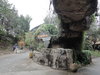
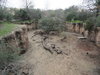
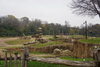
I'm surprised that you're surprised? Seems like every person who's been to San Diego voices pretty much the same opinion as @MGolka; I also think it's a weak area. Much of the zoo is very well-landscaped, verdant, and places barriers well for photography and viewing. Meanwhile, UJ is mostly devoid of plants or landscaping; consists of mostly standard cages and stark dirt yards; and has a lot of industrial-style fencing and cage material.

While I don't know what's in the Urban Jungle, I'd gather that there's probably at least a few really cool species in it that are great exhibit animals.

Not really? Giraffes and cheetahs are over there, and rhinos used to be; none of their enclosures are noteworthy, and the other species in that area are actually more generic than San Diego's collection overall. There's two species lists from earlier this year you can reference, btw.

Another area near the Parker Area that I feel doesn't get talked about enough here is the Aviary Trail with tons of bird exhibits for various Birds-of-Paradise, Bali Mynah, and others. It seems that this area is never busy as I've usually been alone in this portion of the zoo, which is hard to do at a zoo that has huge attendance almost every day.

Very true! That area is a bird rarity paradise - most of the birds I saw there were lifers for me, actually. The lack of visitors makes it nice for listening to the birds when they call... or talking back to the cockatoos :p

Another part of this area that is super extensive is the Spineless Marvels building, but as my wife and I are not really big on insects and other arthropods, we were fairly indifferent to this exhibit as well.

I'm not really into insects either, but I actually really liked the building; the species on display are pretty cool, the multi-story leafcutter ant tree and cross-section of an active beehive are very cool, and it has a Coconut Crab!

The weirdest thing to me about Wildlife Explorers Basecamp is that the buildings have multiple floors, but aren't laid out as cohesive exhibits - I kept entering on one floor, walking back outside, then sort of wandering around before realizing where the door to a different floor was so I could walk back in.
 
Again, I'm not commenting on the quality of this exhibit, and it's a shame if it is a weaker exhibit/not well-executed, but I still am a little surprised theming is the direction @MGolka criticized it from, even more so if there was probably more important reasons it's a weak exhibit (i.e mediocre exhibit quality, as you put it).

The "Urban Jungle" area is formerly known as Elephant Mesa and is made up of several exhibits from the 1950s including the old elephant and rhino exhibits and a cluster of awful cages. The giraffes were crammed in here in a small exhibit as a holding action when Elephant Odyssey took over their old exhibit space (which was also from the 1950s). This is one of the last parts of San Diego Zoo that needs to be modernized, and hopefully will be a priority.
 
Last edited:
Stop Ten - Sea World San Diego

Despite being in San Diego a lot over the years, one place I had not yet visited was Sea World. And similarly, being in Orlando a decent amount in my life, I've never been to Sea World in Orlando either. So this was my first venture to any Sea World park ever. Sea World is one of those places you read a lot about in the news for various reasons, and living in the middle of the country, most of what you know about the place is what you gather from what you hear in the news, for better or worse. I'm firmly in the camp of, "If I haven't been somewhere, I can't judge it," therefore I never really knew what to expect on my first visit to Sea World. I will say though, after visiting, I enjoyed my visit tremendously.

My wife has had a Sea World visit on her bucket list for quite a long time, wanting to see Orcas in the flesh rather than the numerous documentaries we've watched about them, and I'm a huge rollercoaster fanatic, so we finally made the time to visit. I've long been aware of the various coasters at Sea World, also the new coaster Emperor was high on my to-do list, as well as getting to glimpse the eponymous largest penguins that can only be found here on the continent. Honestly, there were quite a few species here I wanted to see and was successful in seeing almost all of them. I do rather wish I visited in my younger years to see some other rare things that I don't think are in captivity in the US anymore.

We entered the park as soon as we could, mainly because from our Disney experiences, if we wanted to do the rides and shows we wanted while seeing all the aquariums on offer, we knew we would need the entire day (and we made good on that, being two of the last few people in the park at the end of the day). The entrance plaza, which seems to have been updated within the last decade, is full of touch tanks for various species, most notably Horseshoe Crab, and is a big hit with families entering the park. You could tell this area soaks up a lot of people right off the bat and engages them instantly. While this is great for a casual visitor to get them interested in the rest of the day, it helps people that know where they want to go at rope drop.

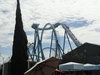
We were instantly able to knock out a couple coasters off the bat, Electric Eel and Emperor, with little to no wait. Electric Eel is a simple launch coaster with inline twists and multiple passes through the station. Nothing really to write home about, and I know most on this site do not care for theme park rides. Before I settled on roadway engineering for a career, I studied a couple years in structural engineering to be a ride designer at a theme park, but once I found out how limited the job market is for that trade, I quickly studied a field that I liked just as much as theme park design (hence why I'm bigger on theming elements than maybe more people). However, the other coaster we rode right away, Emperor, was very much worth it, granted we walked onto the ride with no wait.

24 Emperor Rollercoaster.JPG

This floorless rollercoaster holds you just as you creep over the edge of the drop, letting you gaze almost straight down, for a period of around 5 to 10 seconds before you plunge down the drop and through a couple inversions. One added benefit of this coaster is that at the top of the lift hill, you get a great view of the surrounding bays, which you could get from the Skytower as well, albeit at a much less thrilling vantage.

BUT THIS IS A ZOO WEBSITE, NOT A THEME PARK WEBSITE! And yes, now we get into my thoughts on the animal exhibits scattered throughout the grounds. The first group of exhibits that we explored were the Octopus, Spider Crab, and California Moray Eel exhibits found between the entrance plaza and the Electric Eel rollercoaster. I did enjoy the Octopus building theming giving off a vibe of a deep ocean container. Inside, you will find Giant Pacific Octopus and Spider Crab in a couple exhibits, separated from each other. This space is set up like a mini nocturnal house for the most part. The California Moray Eel exhibit just outside of this building is better viewed at night, as the sun can create a lot of glare on the glass depending on your angle, but at night, the tank gives off an awesome blue hue and the colors of the coral inserts pop, making the exhibit very attractive for over a dozen eels.

03 Octopus Building.JPG

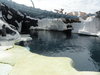
The next part we hit up was the mostly excellent Wild Arctic. I would've loved to see this exhibit day one, as it seems part of the experience has gone by the wayside a la The Living Seas at EPCOT discarding the theater portion with a video on how oceans formed and whatnot. Now when you begin Wild Arctic, you pass through some doorways which seemed to be a pre-show set up from a bygone era and immediately into an awesome overlook of the Beluga Whale exhibit. Despite being heavy on the faux rockwork and ice floes, these features are well done and definitely give off an arctic vibe. The Belugas were super active at the surface, and we spent at least 10 minutes here watching them gracefully move about this space before moving on.

39 Beluga Whale Exhibit.JPG

The second exhibit, one that used to be for Polar Bears, is now home to at least four Sea Otters, and it is comically large for the four of them. While this exhibit may have been small for the bear inhabitant, the pool is extremely pretty deep, it is massive for the otters that now reside here. Moving along, the third exhibit is one that I circled on the map when I looked at it, I had never seen a Walrus before this day, and they didn't disappoint. It just happened to be feeding time on our pass-through of Wild Arctic, and not sure who has seen a walrus feeding frenzy, but it got crazy after the keepers dumped the remains from their fish buckets in the shallows of the exhibit. Fortunately, this was at the glass of the exhibit, giving us a front row to get up close with these massive mammals.

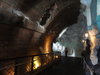
From this point, you pass through an awesomely themed shipwreck hull to the below water viewing for the sea otters and belugas. This level of theming is certainly top notch and is of the quality that you would find at Disney or Universal. While belugas and walrus stand alone in how interesting they are, this level of immersion just puts this complex in an upper tier for me. While it was amusing to see the sea otters dive to the bottom of their pool, watching the belugas come out from the shadows of their exhibit up to the glass was another spot you could hang for quite a while.

95 Wild Arctic Themeing.JPG

Sitting nearly adjacent to Wild Arctic, is the Penguin Encounter, home of tons of species of penguins, including the aforementioned Emperors. I really liked this building as it gave off huge EPCOT vibes in its backlit signage and moving sidewalk to propel guests along the glass. Not wanting to be ushered along, I'm happy there is an area behind that lets you either sit or view at your own pace. The penguin exhibit is quite large and is filled to the brim with birds. There were probably just above a dozen Emperor Penguins that waddled around the exhibit, and while the glass was heavy with condensation making most photography impossible, we were able to get some clear glimpses of most all the different species of penguins. The adjacent exhibit with Atlantic and Tufted Puffins, and Common Murre was also spacious, and with the gift shop and exit between the two exhibits, not many people ventured back to the puffin space.

By this point in the day, we headed over to catch one of the Orca shows, which was the highlight of the day for my wife. With our cameras, I convinced her to NOT sit in the lower sections of the amphitheater labeled "The Splash Zone", to which we thought the back rows of these sections were a decent way from the tank itself and were probably safe. Well, I'm glad we took our perch in the front row, almost center of the upper section. While I understand that shows use to be mainly for entertainment purposes, the show that is now ongoing at Sea World is much more educational as a focus, due to the obvious reasons surrounding Sea World in general. I liked that the show focused a fair amount on natural behaviors, those that we had seen in the various orca documentaries we had watched prior. While showcasing these behaviors, the show also talked about the various populations of orcas all over the world and showed how these various groups hunt to their environment. Of course there were still some breathtaking breaches, but they were fairly few and showed off the awesome power of these animals. And I'd be remiss not to warn you, if you sit pretty much anywhere in the lower "Splash Zone" sections, YOU WILL GET SOAKED!

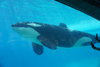
The Orca side exhibit is definitely only for a couple individuals, not their entire pod, but their backstage tank seems fairly large and deep from what you can gather from sitting in the amphitheater. When there is an orca in the side exhibit for viewing outside of the show, it can get pretty packed with people. If you do manage to be there at a time that isn't chock full of guests, you can get some great photos and perspective of the size and speed of an orca.

274 Orca.JPG

Two areas of Sea World I was less enthused about were the Rocky Point dolphin pools (along with a sea otter side exhibit) and the Harbor Seal and California Sea Lion exhibits. The pinniped exhibits were quite rocky, but the pool areas seemed rather small, granted these exhibits were probably built a long time ago. And the dolphin pools were tough to really get a full appreciation of the cetaceans within with viewing from mostly above. The pool near the sea otters offered limited shallower water underwater viewing, but that was about it. I very well could have missed additional underwater viewing at Rocky Point, but I could not find it, nor did it seem well advertised on our visit.

Another set of fantastic aquariums was the Turtle Reef and Shark Encounter. Turtle Reef is a nice long tank that features Green, Hawksbill, and Loggerhead Sea Turtles, along with numerous fish. This area also provides a great spot to sit and cool off under the comforting presence of the many sea turtles that slowly make their way around their tank. There is a portion of the tank that is pretty much a half tunnel area that is a nice touch that makes it feel like you are in the tank yourself, much better than those half globes that appear in various aquariums and zoos around the country.

Shark Encounter was another favorite exhibit of mine, I really enjoyed the portion of the area above the shark tank. I have been above numerous shark tanks at a number of facilities, but as someone that is terrified of being over or near open water, I loved the way this was presented. I feel partially that my fear is from growing up watching James Bond movies that had numerous shark tanks, and of course, the movie that traumatized a generation from learning to swim, Jaws (side note: I love the movie Jaws). At least there is a nice rail and barrier near the edge of this tank, unlike the time I got to go above the Shark Tunnel tank at the Scott Aquarium in Omaha (standing close enough to get me fairly nervous). And at least nothing like going out on the catwalk over the whale shark tank at the Okinawa Aquarium that was both terrifying yet exhilarating for me. I think the thing I like the most about Sea World's "shark room" is the coastal beach feel of the upper portion. I know there are a few aquariums that have some decorated areas above their larger tanks, but I feel like not as many are this detailed. From researching Sea World, it seems this may have been a manatee exhibit previously? Which would add to why this area is the way it is. The highlight species-wise here for me was seeing the Lemon Shark quickly moving about the main shark tank, this was a first for me seeing this species that I can recall.

357 Shark Encounter Interior.JPG

There were various other touch tanks scattered throughout the grounds, some for rays near the Manta coaster that is much better for those who want a thrill but can't do heights. The rocky outcroppings and Polynesian theming in this area are pretty good. There is a sturgeon tank in the queue for the coaster as well a massive flock of flamingo just outside the ride. Another touch tank for starfish appears in the Shipwreck Island section of the park, which is another highly themed area I was impressed by. In and around the water rapids ride are some bird exhibits and an outdoor sea turtle pool that has underwater viewing from within the ride itself. I'll admit, we didn't hunt down all the various bird exhibits throughout the grounds, they don't really show up on the map, and signage is non-existent for the most part. Most of the bird exhibits we did see however were made up of standard wire-mesh aviaries that you can find at any small zoo.

Near the Journey to Atlantis water coaster, one of which I highly approve of (like the story behind the ride), is an aquarium tank themed to fit in with the ride's theme. While there is really nothing that truly stands out here, it was once the home to Commerson's Dolphin. Again, one of those moments I had researching the place that I wished I visited sooner than 2022.

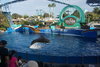
As the end of the day was looming, we went to take in the Dolphin Adventures show, and to much of the chagrin of the audience that thought they were going to see dolphins, we got a pair of stubborn Short-finned Pilot Whales that didn't want to leave the main show tank. While most of the crowd was a little upset, not I, these pilot whales were the true reason I wanted to get inside the dolphin stadium! Not only were the whales not relinquishing the tank to the dolphins, we got a "bonus show" featuring the pilot whales themselves! I'm glad that the trainers were able to adapt to the situation and showcased the last two remaining individuals in the United States. We did come back later for the last show and was able to see the dolphin show, but I'm glad we got to experience this impromptu pilot whale show!

415 Short Finned Pilot Whale.JPG

I believe there were still a handful of aquariums closed while we were there, we did not see the Amazon aquarium that seems to be somewhere on campus. But all in all, it was a really fun full day here. If you are here strictly for animals, you still could be here for most of the day and most of the exhibits are of high quality. While yes, there is still a lot of commercialization here and the focus is seemingly headed towards that of rides and less animal attractions, Sea World still does promote a ton of the rescue and conservation work that they do. Again, prior to visiting, Sea World in general has been one of the most scrutinized places in our media, and I was a little unsure of how I was going to feel coming away from here. Everyone has their own opinion of Sea World, and I'm not out to sway anyone one way or the other, you are entitled to your own opinion, but my experience here was very positive and I would definitely return given the chance.
 

Attachments

  • 24 Emperor Rollercoaster.JPG
    24 Emperor Rollercoaster.JPG
    122.7 KB · Views: 52
  • 03 Octopus Building.JPG
    03 Octopus Building.JPG
    180.9 KB · Views: 52
  • 39 Beluga Whale Exhibit.JPG
    39 Beluga Whale Exhibit.JPG
    155.4 KB · Views: 53
  • 95 Wild Arctic Themeing.JPG
    95 Wild Arctic Themeing.JPG
    127.3 KB · Views: 51
  • 274 Orca.JPG
    274 Orca.JPG
    76.8 KB · Views: 52
  • 357 Shark Encounter Interior.JPG
    357 Shark Encounter Interior.JPG
    112.3 KB · Views: 52
  • 415 Short Finned Pilot Whale.JPG
    415 Short Finned Pilot Whale.JPG
    193.8 KB · Views: 45
Having been to both San Diego and Orlando Seaworld recently, San Diego is by far the superior park. I wish I knew they had a lemon Shark but signage can be tricky at these facilities (if a keeper friend of mine didn't tell me a great hammerhead was in the Shark Encounter at Orlando I might have skipped it all together).

Another thing about SWSD, there is an excellent whale watch tour just 5 minutes from the park (takes a little over 3 hours from launch to redock). On my tour I saw humpback, gray and minke whale along with a large pod of common longnose dolphins and tons of sea lions. In the summers blue and fin whales are a common sighting. If your going to SWSD for purely animals I highly recommend pairing the whale watch with your visit
 
Having been to both San Diego and Orlando Seaworld recently, San Diego is by far the superior park. I wish I knew they had a lemon Shark but signage can be tricky at these facilities (if a keeper friend of mine didn't tell me a great hammerhead was in the Shark Encounter at Orlando I might have skipped it all together).

Another thing about SWSD, there is an excellent whale watch tour just 5 minutes from the park (takes a little over 3 hours from launch to redock). On my tour I saw humpback, gray and minke whale along with a large pod of common longnose dolphins and tons of sea lions. In the summers blue and fin whales are a common sighting. If your going to SWSD for purely animals I highly recommend pairing the whale watch with your visit
We looked into to doing a whale watch on this visit, but the timing just didn't work out for us on our free day. We did a whale watch in Boston and was really enjoyable, but the heavy temptation of the chance to see Blue Whales was why we were a little bummed to not make it work to do a San Diego one.
 
Sitting nearly adjacent to Wild Arctic, is the Penguin Encounter, home of tons of species of penguins, including the aforementioned Emperors.
There were probably just above a dozen Emperor Penguins that waddled around the exhibit, and while the glass was heavy with condensation making most photography impossible, we were able to get some clear glimpses of most all the different species of penguins.

This is still the biggest carrot for me to bite the bullet and finally visit SWSD, which I've put off for a long time because of the cost and crowds. I know I'd probably kick myself one day for not seeing them when I live nearby! A shame to hear that the condensation ruins photography though, as I was really hoping I could get great photos of them too.

I'll admit, we didn't hunt down all the various bird exhibits throughout the grounds, they don't really show up on the map, and signage is non-existent for the most part. Most of the bird exhibits we did see however were made up of standard wire-mesh aviaries that you can find at any small zoo.

I knew SeaWorld had a lot of birds, but it's annoying to hear they are randomly scattered around everywhere with minimal signage. That being said, I'm not a roller coaster person myself - so finding all of them could be an activity all by itself!

I didn't realize the extent of SW's fish collection either; the Amazon aquarium, shark encounter, sturgeons and small nocturnal aquarium were all off my radar. Congrats @MGolka, you put me a bit closer to forking over a Benjamin one day :p
 
@MGolka I hear you about the blue whale. I too went on a whale watch in the Boston area about 3 months prior to the SD one and was instantly hooked. I'm going back this summer (probably both areas) but SD in particular for the purpose of largest animal ever
 
I enjoyed reading the review of SeaWorld San Diego and it is a huge park (circa 200 acres) that receives millions of annual visitors. It's definitely worth seeing for both families and zoo nerds, with a little bit of everything, and it can be a full day out. If someone likes rides and coasters, then it's a brilliant park. When it comes to exhibits, the 300,000 gallon Turtle Reef (which had more than 60 turtles when I visited in 2011!), Shark Encounter, the legendary Penguin Encounter, Wild Arctic (better now that Polar Bears are gone) and smaller aquarium areas are all genuinely impressive. I'm not personally a big fan of cetaceans in captivity, but the SeaWorld tanks are enormous compared to many other facilities.

There is clearly a reek of commercialism everywhere, from the many entertaining shows to the countless gift shops. However, I gained a new perspective of the SeaWorld franchise when co-writing my zoo book a few years ago and emailing back and forth with employees. There has been approximately 35,000 marine animals rescued by the organization over the decades, perhaps more than any other zoological facility on the planet. Many small zoos have a handful of conservation projects, but I was stunned to find out that the trio of SeaWorld parks have more than 1,200 conservation projects. Again, probably the most in the world. Plus, there has been $17 million donated to conservation, perhaps because SeaWorld has enough money just from parking fees to be able to donate such vast sums! :p

Anyway, SeaWorld has always been a zoological facility worth debating here on ZooChat. With its superior exhibits, extensive animal collection, and admirable conservation donations, it's a real pity that the rides have become the focus in the past decade.
 
Stop Ten - Sea World San Diego


As the end of the day was looming, we went to take in the Dolphin Adventures show, and to much of the chagrin of the audience that thought they were going to see dolphins, we got a pair of stubborn Short-finned Pilot Whales that didn't want to leave the main show tank. While most of the crowd was a little upset, not I, these pilot whales were the true reason I wanted to get inside the dolphin stadium! Not only were the whales not relinquishing the tank to the dolphins, we got a "bonus show" featuring the pilot whales themselves! I'm glad that the trainers were able to adapt to the situation and showcased the last two remaining individuals in the United States. We did come back later for the last show and was able to see the dolphin show, but I'm glad we got to experience this impromptu pilot whale show!

View attachment 599927
Wow! I wish this would happen when I was at the park! The last time I was there, they pilot whales were not even part of the show. And I always hope to see the last 2 of the species in the US every time I visit! #jealous
 
Stop Eleven - San Diego Zoo Safari Park

As noted in the San Diego Zoo post, with our membership running out in 2022, one last visit as a member to the Safari Park was in order, except this visit would be a little special. With my membership, it allowed for 50% off of a guided experience, in which we were going to do one of the safaris offered by the Safari Park. With this discount, we were for sure going to go see the Asian savannah habitat as an absolute must since you can really only experience this exhibit by one of these paid add-ons.

So months before our visit over Labor Day weekend, I called to set up our experience to get the member discount and requested to do the Asian Cart safari as the website was a little unclear as to if the Asian savannah was guaranteed on the Deluxe Wildlife Safari option. The salesperson on the call convinced me otherwise, that a Deluxe Wildlife Safari would take us into the Asian habitat so therefore I booked this option and was excited to get to experience this habitat fully as it wasn't something I had done in any of my previous visits to the park.

As mentioned, this wasn't me or my wife's first visit to the Safari Park, and it is covered quite a bit on this site as well, so I won't go into a full-on review of the park, but at least mention things I like about it and some thoughts about other items.

First off, the first time I visited the Safari Park years ago, like many on here, I instantly fell in love with the place. Living in the middle of the country, and prior to being active on this site, I wasn't fully aware of the Safari Park, and can tell you that most people around Omaha wouldn't even know it exists as it is overshadowed by its sister facility in Balboa Park. I think that helps with the allure here though, it makes the Safari Park feel like the hidden gem to the locals. I can honestly say that I've never been to the Safari Park when it has been busy, and I've visited over a holiday weekend multiple times. Due to how it is laid out, you can feel isolated from a lot of people throughout and it always feels like there is less than a hundred people here. I always chuckle at the long queue set up for the Africa Tram, but I've never had to wait more than one tram to get on. I would love to hear the perspective of locals here, or anyone for that matter that has experienced this park really busy.

Again, this zoo has an awesome entry complex that just screams "safari" with its thatched roofs, but also the great Wings of the World Aviary just inside the entrance. While not on the same scale as its counterparts at the main zoo, it still holds its own. Another thing that strikes me as more unique here is the architecture of the park's main gift shops and the Mombasa Cooker restaurant. I'm a sucker for good architecture, and these buildings are just different in that the glass walls are angular and are kind of like multiple octagons mashed together. These aren't typical rectangular buildings, and it's subtle, but different and I immediately took a liking to them. This is somewhat of a precursor for the whole zoo in particular, the architecture here is super on point.

I really enjoy the whole Mombasa Lagoon area. Serving essentially as the hub for the zoo, the various exhibits dotted around the edges of the lagoon are fun to explore and great for their inhabitants, and the Nairobi Station area provides some terrariums for zoo-goers to get a dash of smaller animals. The restaurants around the lagoon are a great place to cool off and relax, especially as this is a zoo that can take your energy away quite quickly. The last two visits I've been here over Labor Day weekend have seen temperatures at around 110 degrees Fahrenheit, and one of those times we were required to wear masks! (It is a dry heat though!)

143 Mombasa Lagoon.JPG

There are honestly many things that I greatly enjoy at this park. As noted by many others, the Tiger Trail has some of the best, if not the best Sumatran Tiger exhibits in the country, and I love the Sambutan Longhouse architecture and is yet another great place to cool off and relax. Walkabout Australia is also another awesome complex, granted that walkabouts are becoming the thing, this I feel is the best in incorporating habitats for Cassowary and Matschie's Tree Kangaroos, and I can't not mention the only Platypus outside of Australia. Granted, your platypus viewing can be hit or miss, and good luck with photography without high end gear. We honestly used a cellphone to take video and screenshot the video as those little buggers are very fast swimmers!

A couple other high-quality exhibits are Condor Ridge, as mentioned in @pachyderm pro's 100 Must-See Exhibits, and definitely the views up there are phenomenal; the Lion Camp exhibit is a nice spacious and well themed exhibit, and despite some awkward viewing angles, I'm quite high on African Woods.

A couple areas that are done well enough, but I'm not as high on them are Gorilla Forest and Elephant Valley. Elephant Valley is obviously changing, for the better and I'm quite excited for how it will turn out. Everyone on here is pretty aware that the viewing areas were extremely limited, partially due to the amphitheater that was present, but not used for over two decades. In regard to Gorilla Forest, it's a fine exhibit, but compared to a lot of other gorilla exhibits in the country, I'm not sure it would rank in my top ten if I sat down and actually ranked exhibits.

One of my absolute favorite places in the zoo though is taking a nice relaxing break at the Kijamii Overlook. My only problem with this psuedo-restaurant/bar is that their hours are very tough to know if they are open or not. I would later find out that they like to close shortly after lunch depending on the crowds, of which I noted earlier that I've seen this place busy. This place is off the main paths and provides a nice and quiet atmosphere, with a seemingly gutted out tree as the bar, but fantastic views into the African field exhibits. This is easily my go-to place for a bit of quiet and grabbing a beverage while enjoying seeing tons of animals make their way around the little slice of Africa without sitting in a tram.

281(1) Kijamii Overlook Bar.JPG

272 Kijamii Overlook.JPG

Now about the guided safari experience...

As noted above, we specifically booked our Deluxe Safari so we could see the Asian savannah and take in all the glorious rare hoofstock that you can only get by these special tours. Well imagine my shock when we boarded our tour (9:45 am) and our guide told us we were visiting two of the African savannahs, both of which you can see from the African tram. After some inner turmoil of the drive from the loading area down to entering the savannah, it was still a great experience, however. We got up close to pretty much every species in the South Africa and East Africa field exhibits including Roan Antelope and Uganda Kob.

After missing out on the Asian savannah on our safari, we ended up going and booking an Asian Cart Safari, the last one out on the day so that we were 100% guaranteed to go to the savannah. This ended up being a blessing in disguise for the most part, as late in the day we were the only two people on the cart, and our guide has been at the park for over 16 years and is one of the directors of the education department. With two well-traveled zoo-goers on this tour, we had a great chat with our guide, and we skipped a lot of the things that he would normally stop to point out that most tourists would probably not know. He basically took us where we wanted to go to make the best use of our time, mainly spending all of the time at the far reaches of the Asian savannah. The Asian Cart Safari will take you around the East Africa field exhibit, but we had him speed around it since you can see a lot of it from the tram. We were able to make it all the way around, he says they usually only make it so far around the Asian savannah before they have to turn around and go back due to time. There is a section where you are able to get out of the cart, back near where the White-Lipped Deer exhibit on the hill outside the Asian field. Since it was the end of the day, he ended up taking us all the way to the Przewalski's Horse yard before turning around and seeing the Asian savannah and everything a second time back around. While we didn't get as close to the animals as you do with a Deluxe Safari, this was still a great experience to see a bunch of these species that may not be at this park for much longer. Also, again, since it was the end of the day, and we were the only two people on the cart, he offered to drop us off at the front entrance rather than where we boarded near the Cheetah exhibit to which we greatly took advantage of (those of you who have been here know that the terrain here can be steep!). While heading back to the entrance we got a little bit extra of a tour behind the scenes, some of this you will see on any Wildlife Safari tour, but our guide gave us a little bit extra over that.

218 Asia Cart Safari Card.JPG

Again, this is one of the very best zoos in the country, and one I feel that most non-zoo enthusiasts and non-locals aren't that aware of making it seem like a secret to those who have been. I will note though, that if you are more of an ectotherm person, this may not be the place for you since the focus here for sure is on mammals and birds. But for a person who is big into mammals, and especially hoofstock (like me), then this place pretty much puts you into a fever dream.
 

Attachments

  • 143 Mombasa Lagoon.JPG
    143 Mombasa Lagoon.JPG
    212.8 KB · Views: 50
  • 281(1) Kijamii Overlook Bar.JPG
    281(1) Kijamii Overlook Bar.JPG
    145.6 KB · Views: 46
  • 272 Kijamii Overlook.JPG
    272 Kijamii Overlook.JPG
    141.7 KB · Views: 47
  • 218 Asia Cart Safari Card.JPG
    218 Asia Cart Safari Card.JPG
    135.4 KB · Views: 51
that people were pretty engaged in actually seeing the various reptiles, instead as in other zoos where most people give up looking for said reptiles after a few seconds of looking at dense foliage or super rocky terrain.
I wonder how the reptiles feel about that scenario
 
Last edited:
Stop Twelve - An unplanned Trip to the South - Dallas World Aquarium

With my wife's birthday usually on or near Labor Day, we have begun to make extended trips during that holiday weekend, and my wife wanted me to try and do that for my birthday weekend, which is in early December. Having a December birthday, I've never been one that has done much for it, even going back to my childhood. Well, this year my wife finally convinced me to want to go to Miami, a place where two of my favorite Pro Sports teams are from, but also, I've been dying to go to Zoo Miami for a couple years now. After San Diego, I thought we were done traveling for the year, but alas, one more trip couldn't hurt!

Well fate intervened, for once I wanted to go somewhere, and started looking at flights for Miami, when the very next day we receive a wedding invitation from my wife's cousin for the day after my birthday, and in Lake Kiowa, Texas. So in essence, my birthday trip made a vast detour from South Florida to North Texas. While I was bummed not to make it to Miami, I was actually excited for this slight change of plans as we would be able to see four new establishments that neither of us had been to before. After working out the logistics surrounding the weekend, and the wedding, we decided to drive down to Texas from Omaha, since having our own car would help us in getting to the small-gated community of Lake Kiowa about 20 miles southeast of Gainesville, or about 40 minutes north of Dallas.

Our first stop of the weekend was the notorious Dallas World Aquarium. I have to admit, prior to going to Dallas, I was always torn if I wanted to visit this establishment, I have read the exposé piece that was written about the facility, and some of the opinions on this site about the place, but I did find the place intriguing. However, getting the chance to see some species that no other place in the country, if not the world, holds was too much of a lure. While yes, some of these animals were acquired in shady ways, I do also know that I'm not the only one on here who has visited to specifically see these animals while they are still there, because let's be honest, once they are gone, they might not ever be present in captivity in the United States ever again.

Before coming here, as mentioned, I read some of the reviews and opinions on this site, and glanced over the field guide online. I felt some trepidation that I would not get to see some of the stuff of lore judging from the reports that this place can be tricky to navigate, but now having been, it is pretty straightforward. The only part that is missing from the field guide is the Cloud Forest Trek area, which is on the same level as the Orinoco Canopy on level 3, and is pretty much the only area you may miss out on from strictly going off the guide book. Otherwise, the guide book was still fairly close, except for the location of the Three Toed Sloth (now in the Cloud Forest Trek). Once you take the left fork on the third level (right fork goes to Cloud Forest Trek), you are pretty much on a path that will take you through the whole place per the guide book.

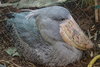
Any trepidation that I had about coming to this place instantly vanished as soon as we started the trek along the heavily vegetated entrance to the facility. As others have mentioned, there are a bunch of exhibits outside of the place that you technically do not need to pay admission for. There are some interesting species out here as well, with Blyth's Hornbill definitely being a highlight. Your free tour comes to an end just before the Matschie's Tree Kangaroo exhibit as you come to the ticket window. I guess technically you could see this exhibit, and the Shoebill exhibit for free as well (the shoebill could almost be seen from street level too), but it feels weird to pass the ticket desk without paying in my opinion. Speaking of the Shoebill exhibit, we got a nice up-close encounter with the individual on exhibit at the time!

39 Shoebill.JPG

After passing through the entrance doors, you get a glimpse into what you will find throughout this facility, exhibits fit into unusual places, and a place packed to the brim with animals and species. While some of these exhibits work really well, some are probably fine, and some are the absolute bare minimum, you will find things tucked away everywhere. There is not a lot of wasted space here at all. For example, right next to the entrance is a unique Little Blue Penguin exhibit, long, but narrow, and is actually outdoors in the open air. The picture below is most of the exhibit, but there are additional rocky areas to the immediate right in this photo where one of the penguins was hanging out.

43 Little Blue Penguin Exhibit.JPG

After ascending to the third floor, you more or less "officially" start your visit here in the Orinoco Rainforest Canopy. Walking into this part definitely gave off Lied Jungle vibes upon entry, and reading that article mentioned earlier, it was noted that the owner visited Omaha courtesy of Doc Simmons after Simmons paid a visit to DWA in its infancy, you could tell he brought some of that feel here. From the high immersion and mock rock, but also items from the early incarnation of the Lied Jungle that had "experience" exhibits that were primarily for guests, not animals. Hence the tons of exhibits packed in here. For me anyway, my excitement level rose significantly once I stepped in here as it was honestly like I was on sensory overload. In each of the two indoor rain forest sections, you are immediately drawn to looking for all of the free flight specimens, and for all the various animals in the field guide.

The first two exhibits you see are Jungle Jewels (various colorful small birds) and Jungle Junction, which is home to a Helmeted Curassow, various Toucans, and an apparently very shy Giant Anteater (to which we did not see). It wasn't until later when we were in the Mundo Maya section of this place that we were able to see the Boat Billed Heron high atop in the Jungle Junction exhibit. That is another thing with a lot of the exhibits in these two "rain forests", some of these have tremendous height, all the way to the roof of the warehouses these jungles are built into.

After Jungle Junction, you pass by Monkey Island, in which a White Faced Saki was climbing about the canopy, a Pied Tamarin exhibit, and upper viewing to the Giant Otter exhibit. One thing to note inside these warehouses that have natural light that comes in, although muffled by the cloudiness of the material covering the outer layers of these rooms, it makes some photography a little difficult (as does the mesh everywhere). My camera had a hard time adjusting, almost trying to go into a low light mode the entire time and couldn't tell if I was indoors or outdoors. Again, I don't have a super fancy camera, just a regular digital camera, so just a note for those of you who are in the same boat.

At this point you go right or left as mentioned above, right takes you to the Cloud Forest Trek area, which is fairly new. While entering the Cloud Forest Trek, you pass by a couple of exhibits that are in the guide book, the Rapids exhibit with some various waterfowl, and the LEK featuring Andean Cock-of-the-Rock. Cloud Forest Trek is a little bit different from the rest of the place, it features a wide open plaza with a wall of various frogs, a Cotton Top Tamarin exhibit, a ton of climbing opportunities for the Three-Toed Sloth, a tall aviary above the LEK that has Black & White Hawk Eagle, and probably my least favorite exhibit in the place, a Southern Pudu exhibit behind a wall of vegetation. My biggest gripe with this exhibit is that the Pudu doesn't have access to the vegetation, it is enclosed on the concrete floor strip against the wall (which is a giant video screen that simulates a day/night cycle).

118 Southern Pudu Exhibit.JPG

While all of the frog terrariums are very lush, and very difficult to spot some of the inhabitants, I want to echo that the signing here is almost completely non-existent. Yes, the guide book covers a lot of the species and is still pretty current, and you can scan the QR codes or go to the website, but for someone who does not like constantly being on a phone to look at this info (that person being me), it makes it really hard to identify a fair number of animals here if you have never seen them before (frogs most notably). This is especially true of this new area that is not in the guidebook, and seemingly does not have all of the species listed on the website.

After going through Cloud Forest Trek, you have to backtrack to get back on the path as outlined in the guide book, and you pass Toucan Encounter, in which various Aracari species have nested in the columns of this area, and another seemingly small exhibit for Pygmy Marmosets. While the viewing glass area is small, this is another exhibit that extends up just a bit for the miniscule mammals.

While it was lunch time, and us coming in hot off the road from Oklahoma City on this day, we were focused on the snack bar ahead of us at this juncture and I quickly learned that you have to continually look all around you at this place or you will miss something. While looking at the guide over lunch in the little room to the side of the Cotinga Corner exhibit (we had a nice lunch with our Guianan Cock-of-the-Rock and Capuchin bird friends sitting by the glass next to us), I saw that I didn't notice the Red Howler Monkey exhibit directly above the snack bar. Going back to see it, it definitely is an exhibit that can be easily missed. Fairly hidden and not very many good viewing areas (if at all, I think people around me were confused what I was looking at). For instance, my picture below is seemingly one of the better places to observe this exhibit.

146 Howler Heights Exhibit, Red Howler Monkey.JPG

Continuing down the path, you pass by an exhibit for Emperor Tamarin and Many-Banded Aracari, with the tamarin seemingly obsessed with something below it, and we will find out later what, this is where we started to realize just how many exhibits were on top of exhibits in this place. Rounding the corner above the awesome Orinoco Crocodile exhibit, is the aforementioned Cotinga Corner, home to the species I identified earlier, but also another Saki and a first for me, Long-wattled Umbrellabird! With as many rare birds from South America that is found in this place, I'm surprised the owner hasn't tried to capture the rare and elusive Aracuan!

The pair of Orinoco Crocodiles below you at this point was hard not to stop and watch them from above for quite a bit. The male is huge, and the two were pretty active. Continuing on you will pass by the ground level viewing of the Giant Otter, and then continue to descend to the floor level of the Orinoco Rainforest, with a couple of herp and bird exhibits, Lizard Cove and Hidden Treasure. The main draw in the Hidden Treasure exhibits is the Wattled Guan.

After passing through a small cave with some more herp and bird exhibits, you get to a smaller plaza featuring the River's Edge, Bats and Bugs, Crocodile Cove, and Flooded Forest exhibits. The River's Edge is the lower portion of the aforementioned Emperor Tamarin exhibit, and we found out why the tamarin was so concerned with what was below it, it is the Green Anaconda exhibit. Talk about a predator/prey set up! And yes, they are separated exhibits by mesh. The Bats and Bugs area has some invert exhibits, a Vampire bat exhibit, and a smaller Cuvier's Dwarf Caiman exhibit. Crocodile Cove is the Orinoco Crocodile exhibit, in which part of it is a smaller pool that has some Red Bellied Piranha in it, one of the more unique combinations I've seen. Flooded Forest consists of a smaller pool for turtles and stingrays, and then side aquariums for Electric Eel and Caecilian.

At this point you start to go into some caves and before you go down to the aquarium portion, you see the above viewing of the lagoon around Monkey Island and a couple of side bird exhibits with Elegant Crested Tinamou, Toco Toucans, Hawk Headed Parrot, Spot Billed Toucanet, Razor Billed Curassow, and one of my favorites, Gray Winged Trumpeters. As you go down the stairs here below one of the two, Two-Toed Sloth exhibits, you come to one of the two massive aquarium underwater views, that of The River tank. Home to tons of Amazon fish, stingrays, turtles, and the Antillean Manatee. My wife who knew nothing about DWA before stepping foot in there was shocked to see the manatee, as from above you can't really tell that there is one in the lagoon. For example, here is the lagoon from above.

226 The River Exhibit from Above.JPG

After this point, you enter the aquarium portion, and is such a far cry from the rest of the facility. It definitely shows that this was how DWA started, and I actually kind of liked the museum style aquariums that list the part of the world that each aquarium is supposed to represent. It does give off an art gallery vibe. Another great thing about this area is the original gift shop has been turned into a bookstore. I'm quite fond of zoos that have a dedicated bookstore, and found this one charming and had a great selection of books. If one was so inclined, you could get almost the whole collections of the Lynx Editions of Mammals and Birds of the Wild!

254 Southern Australia, Lord Howe Island Tanks.JPG

Outside the bookstore, you can go outside into in an area representing the Cape of Good Hope with African Penguins under the walkways, similar to the Babirusa exhibits at San Diego Zoo, and a Madagascar area featuring reptiles, birds, and amphibians rather than including lemurs of any kind. From this pseudo-courtyard area, you can glimpse the Shoebill exhibit up above and again illustrates the exhibits on top of exhibits ethos this place has.

Going back into the aquarium portion, there is a small tunnel tank highlighting the Continental Shelf before you enter the first portions of the Mundo Maya warehouse. The first part of this area is River Delta, Fishes of the Cenote, and Los Petenes. These exhibits have various reptiles, amphibians, fish, and Burrowing and Screech Owls, along with Desert Cottontail. While the theming in the Orinoco part of DWA is more of natural immersion with plants and mock rock and some basic thatch structures, Mundo Maya starts to go full Mayan theming from the start. Stucco walls line most of the area, and as you get further along, more and more murals depicting Mayan culture adorn the area.

After an aquarium with Lionfish and a unique tank full (and I mean FULL) of Axolotl, you come to the Cenote tank, a tunnel path through shark and Largetooth Sawfish. The highlight of this tunnel for me was one of the Sawfish decided to just up and take a rest right on top of the tunnel for quite a time allowing us to fully appreciate this intriguing fish.

328 Largetooth Sawfish.JPG

Following the Cenote tunnel, the last trio of exhibits on the lower level of Mundo Maya are Marine Creatures, Serpent's Den, and House of Zotz. These areas are similar to the exhibits prior to the tunnel tank, full of fish and reptiles (most notably Fer-de-lance), a Seba's Short-tailed Bat exhibit, and an exhibit for a Barred Owl. One of the more interesting exhibits in Serpent's Den is the Beaded Lizard/Neotropical Rattlesnake exhibits that look like they are one but separated by a pane of glass in between the two. This is not the typical side-by-side kind, but of a more unique front/back set up.

As you make your way out of the caves and into the Mundo Maya jungle proper, you pass by a Painted Wood Turtle exhibit as well as a small pool for a Morelet's Crocodile. Along this winding path is also a circular tank filled with Lesser Devil Rays and other Caribbean fish. Continuing on, you come to two exhibits that are striking for different reasons. The first is the Mayan Temple exhibit housing an Ocelot that is heavily themed, while providing a fair amount of climbing opportunities within. Adjacent to this exhibit is the Birds of El Triunfo exhibit that houses Harpy Eagle and this exhibit is a warehouse that is lush and is a pretty large aviary room for them. The Birds of El Triunfo is nowhere near as themed on the inside as the Ocelot one, that's not a bad thing, but it provides a great example of the different ends of the spectrum some of the exhibits at this facility can provide. Granted, the Harpy Eagle exhibit is most likely a different warehouse that was expanded into, hence why the stark difference.

Rounding out the last couple of exhibits of DWA is the American Flamingo exhibit, right next to above viewing of the Cenote tunnel tank, and Pelican Reef housing Brown Pelican. One exhibit that is not on the main trail, but just a short jaunt up the stairs is the Selva Maya that has Occellated Turkey and Great Tinamou. After this area, it puts you next to the gift shop and the Little Blue Penguin exhibit where you essentially start, so you can make another loop if you so desire.

Now having experienced this unique collection, it blew my expectations out of the water. I was a little unsure of how I would receive this place, hence why I try not to look at a ton of photos before visiting a place I've never been (to influence my opinion one way or another), but after visiting, I would definitely come back if I ever have the chance. Granted, I recognize the some of the shortfalls of the place as mentioned at the start of this post. It will be interesting to see this place as some species die out and what they do to fill in some of those exhibits. For better or worse, this place is very reminiscent of a time where zoos had a great diversity in their collections, and this place is not shy about letting its visitors know about that.
 

Attachments

  • 39 Shoebill.JPG
    39 Shoebill.JPG
    179 KB · Views: 45
  • 43 Little Blue Penguin Exhibit.JPG
    43 Little Blue Penguin Exhibit.JPG
    193.1 KB · Views: 43
  • 118 Southern Pudu Exhibit.JPG
    118 Southern Pudu Exhibit.JPG
    233.3 KB · Views: 47
  • 146 Howler Heights Exhibit, Red Howler Monkey.JPG
    146 Howler Heights Exhibit, Red Howler Monkey.JPG
    208.1 KB · Views: 47
  • 226 The River Exhibit from Above.JPG
    226 The River Exhibit from Above.JPG
    210.3 KB · Views: 46
  • 254 Southern Australia, Lord Howe Island Tanks.JPG
    254 Southern Australia, Lord Howe Island Tanks.JPG
    103.5 KB · Views: 44
  • 328 Largetooth Sawfish.JPG
    328 Largetooth Sawfish.JPG
    155.7 KB · Views: 47
Thanks for the review @MGolka. It's especially interesting to read people's thoughts on the DWA; I came out thinking it does some things better than any other American facility, and it does other things that are maddeningly frustrating!

I actually kind of liked the museum style aquariums that list the part of the world that each aquarium is supposed to represent. It does give off an art gallery vibe.

I also really liked the feel of the actual aquarium tank section. I wouldn't have minded at all if they had another couple rooms of those tanks; I would have taken that over a Madagascar room that has almost no Malagasy species in it, for instance!

Pelican Reef housing Brown Pelican.

But once held the country's only Jabiru storks, now gone :( an early example of a species DWA had that "might not ever be present in captivity in the United States ever again."
 
a Madagascar room that has almost no Malagasy species in it, for instance!

I noticed this too, albeit all but three exhibits down in this area were devoid of any species on my visit. Most of the terrariums had the dreaded "Animal Off Display" sign in them.
 
Stop Thirteen - Dallas Zoo

A day after we stopped at DWA, we hit up the Dallas Zoo to celebrate my birthday, and it truly felt like a tale of two different zoos. For those that have been there, you will know what I mean. We were one of the very first people in the zoo on a fairly drizzly Friday that I think most locals would deem too cold (About 55 degrees on our visit which was very pleasant for us Nebraskans in December). For this being a pretty well-known zoo in a heavily populated area, there were many times that we felt like we were the only people in the zoo!

While the zoo is split into two parts, Zoo North and Africa (Wilds of Africa and Giants of the Savanna), I like there is essentially a "gateway" in between the two that has most of the visitor amenities and serves as a good welcome spot. The only exhibit in this middle area is a lemur island with Black & White Ruffed Lemurs, Collareds, Ring-taileds, and Aldabra Tortoises.

We decided to hit up Zoo North first and save the newer portion for last. Heading toward Zoo North, you pass through what I presume was the original entrance of the zoo before it expanded southward. The architecture screams mid-century, and I'm glad that they keep it around instead of bulldozing it. I like when zoo's continue to keep older structures with striking architecture to give you a glimpse into the past. And boy does Zoo North give you a glimpse into the past.

07 Dallas Zoo old Entrance, Zoo North Gateway.JPG
(Sorry for the slightly blurry photo, didn't realize it came out this way)

After passing over the Flamingo Bridge, we went through the Children's Zoo first, and honestly didn't spend much time here. I'm not too big on farmyards, the walkthrough aviary in there was closed, but we did go into the Underzone portion that had exhibits for Emperor Tamarins with Red Rumped Agoutis, Naked Mole Rats, Ball Python, and Corn Snake.

Heading back out of the Children's Zoo, you can't miss the massive waterfowl pond that you essentially arrive at crossing the Flamingo Bridge. This pond has tons of species of waterfowl from the Americas, with 12 species signed here ranging from Caribbean Flamingos to Orinoco Geese to Crested Screamer. There is one non-Americas species here and is Africa's Spur-Winged Goose. This pond is also adjacent to the spacious Prime Meridian Cafe, where we ended up later eating lunch (and having a great chat with the cashier who gave me a free dessert for my birthday!)

Passing to the right side of the Prime Meridian Cafe, you will pass by the Tamarin Treetops exhibit that has another exhibit for Emperor Tamarins and White Faced Saki. This is one of the first signs of the older generation of zoo exhibits at Dallas. This pair of exhibits are on the outside of an older building and it really gave me vibes of something I would see at Omaha in the 90s. These exhibits are extremely functional for their inhabitants though, and I'll admit I did feel a little bit of nostalgia seeing these.

49 Tamarin Treetops.JPG

Immediately right up the hill from Tamarin Treetops is an Brown Forest Tortoise exhibit, and then you start the string of exhibits called Primate Place that have become of interest lately, that features the rare Spectacled Langurs, DeBrazza's Monkeys, White Cheeked Gibbon, Guereza Colobus, and ... Clouded Leopard. I understand the DeBrazza's Monkey exhibit used to be for a different species (Mandrill?), this exhibit size I feel could have been better used swapping the Clouded Leopards into. These exhibits all provide ample climbing opportunities in all of them, the wire mesh also adding to that climbing space for the primate inhabitants.

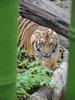
Getting to the top of the hill, you will be directed into Tiger exhibit area that starts with a couple of crane exhibits, one for White Naped Crane, and the other, which the best viewing is from a classroom that was closed, for Red Crowned Crane. Continuing along the boardwalk, you come to the Tiger Viewing Building, with loose Southeast Asian style theming that provides a view from one of the two ends of the elongated exhibit. I must admit, I was impressed with this Sumatran Tiger exhibit. It seems as if it is a little underrated, it doesn't get a lot of pub on this site, but it is quite a large exhibit, heavily planted with a forest of bamboo occupying a large chunk of the exhibit, and has multiple pools. Sure, the viewing can be awkward at times, since perhaps the best views are on the two short ends of the exhibit and one long side is completely blocked by a wall of vegetation.

It seems we got a bit of a treat on this day, as there were two very energetic tigers that would sprint in and out of the dense bamboo thickets, and to the delight of the few zoo-goers on the day. We consistently heard from others that the tigers are rarely visible, and most didn't know the zoo had more than one. I also had a first for me, I got stalked by one of the two tigers after I made direct eye contact. I'm not sure if it was the bright red shirt I had on that day, but as I was walking along the boardwalk, I could hear rustling behind me, so I would turn and see the tiger silently following me, head low to the ground, and when I would turn to look, it would stop just like the ghosts in Super Mario. My wife got a video of this tiger doing this, and I'm glad that we have that video to show others.

97 Sumatran Tiger.JPG

After spending a good 45 minutes at this one enclosure alone, we proceeded along the path, passing by a pretty spacious Asian Small-Clawed Otter exhibit that is one of the seemingly more modern spaces on this side of the zoo. At this point, you are back to large area known as Picnic Ridge and The Grove, some of the oldest parts of zoo.

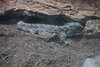
We headed up to the Herpetarium building, which I was super excited for to catch a glimpse of a first for me, the Tuatara. I absolutely loved this building. Not only do I love the 1966 era architecture, but I liked the museum-style wings chock full of reptiles and amphibians in a lot of high-quality terrariums that vary in size. While it may not be as modern as some other herp houses in the country, I'm glad that this building still exists giving a glimpse to the past. We first went through Crocodile Cove, housing various snakes but a decent sized pool for a pair of Tomistoma. The main atrium has five tall terrariums with various lizards as well as a Chinese Alligator exhibit that honestly feels a little out of place but is still great.
I think I spent a good almost hour in this building photographing everything with how many terrariums there are. As my wife is not a fan of snakes (scared to death of them), she was able to spend a lot of time near the pretty large iguana, turtle, monitor exhibits that are to be found throughout the building. Our goal of seeing the Tuatara was perfectly timed, it happened to be feeding time while we were here which brought out the pair so we could see them in their full glory.

275 Tuatara.JPG

After the Herpetarium, we continued around the Picnic Ridge loop that is the start of some South American focused exhibits, with a Maned Wolf habitat getting the finishing touches put on it, a Giant Anteater yard, a good sized yard for Galapagos Tortoises, and some older wire mesh enclosures for Keel-billed Toucan, Bolivian Grey Titi Monkeys, and a Linne's two-toed sloth. This area is fine, but not anything too special.

Closing out Zoo North for us was Wings of Wonder, a string of some pretty good raptor exhibits with a really good species list. Andean Condor, Ruppell's Griffon Vulture, King Vulture, Harpy Eagle, Spectacled Owl, Red-legged Seriema, and an unsigned Maguari Stork! While not the biggest or most striking raptor exhibits on this trip (more to come), these are all well done. And I'm not sure what it was with my red shirt that day, but the Harpy Eagle also seemed drawn to it and when my back was turned my wife got a video of it flying towards me to the front of the exhibit. There is one more exhibit in Zoo North that we popped into quickly to see the interior, there is a one room invertebrate house called Bug U! It is also nestled into an old historic looking house, but is pretty small and you could easily pass it without knowing.

At this point we then headed to the Wilds of Africa side of the zoo, walking along the long tunnel under East Clarendon Drive. And once you emerge into this side of the zoo, it's hard not to notice how different from Zoo North it is. Dallas is seemingly a perfect dichotomy of the history of zoos in general, the classical-style that is Zoo North, and the new modern immersive design that is Wilds of Africa.

455 Wilds of Africa Sign.JPG

You first encounter African Penguin and Cheetah exhibits that are enclosed by massive walls of mock-rock, which provides the backdrop of a lot of the exhibits this side of the zoo. We decided to a right at the junction after these two exhibits which heads to Simmons Hippo Outpost, so we could see Giants of the Savanna last. After your right turn, you will find Wilds of Africa Plaza which provides various guest amenities, as well as the remains of the station of the old monorail that is now sadly closed. I really wish I could have gotten a chance to ride this before it closed, and we still haven't gotten to ride a monorail at any zoo yet, and now there is only one left (Bronx).

Upon reaching the hippo exhibit, I found it pretty good, with minimal underwater viewing, it is definitely not like most modern hippo exhibits with huge underwater glass viewing. I really liked the illusion that could be created with the densely vegetated Okapi exhibit behind the hippo exhibit, but sadly the Okapi was in the small side yard.

Throughout the trail around this area you will find various smaller exhibits and aviaries featuring
Saddle Billed Stork, Hooded Vultures, White Backed Vultures, Lesser Flamingo, and Lappet-faced Vulture (not sure how many are left, if any). You will also find some Kopje exhibits with Cape Porcupine and Klipspringer, which certainly served as inspiration to the Kopje exhibits in Omaha. The one exhibit in this area that didn't do anything for me was the Kopje Aviary, as the glass was full of condensation, and it seems that was the only viewing window. There was also not a true sign stating the species, so I have no idea what we missed here. I looked for other viewing areas but it seems that window was it. Did I miss a different angle here?

Rounding the path after the kopje exhibits is Chimpanzee Forest, and while this exhibit is a spacious, well-planted yard with a lot of elevation change, after seeing Kansas City's it just seems fine. It is still probably one of the better chimpanzee exhibits in the country, but here it feels overshadowed by its neighboring great ape exhibit. Before I get ahead of myself, you pass by a Nile Crocodile exhibit that has some awkward viewing, a Wattled Crane exhibit, and the Forest Aviary, a good-sized walkthrough aviary that was seemingly short on species on my exhibit. Aside from four waterfowl species, the only other species on exhibit on my visit was Hooded Vulture.

Finishing out this trail from where we started is the fantastic Gorilla Research Station. From the kopje exhibits, it seems as if there is only one gorilla yard, but there are two, one for a bachelor group and one for a family group. Both are well planted and have varied terrain, and multiple different viewing angles. My favorite feature of this exhibit though might be the "Research" building nestled in between the two yards that is quite cozy and provides guests the opportunity to see both yards at the same time if one so chooses.

544 Gorilla Indoor Viewing.JPG

Finishing out the zoo, we wanted to end on Giants of the Savanna, the newest complex at the zoo, and one that is well regarded in the industry, and it didn't disappoint. Giants of the Savanna is one of those exhibits that you hear about a ton, so you can get the feeling you might not be as impressed with it when you finally get to see it, but I was not disappointed at all.

As noted quite often on this site, all of the exhibits are very high quality, the elephant yards are large and there are tons of combinations of mixed species and side yards that can be occupied. One of the elephant keepers told us that there are 13 different spaces (I think that was the number) the elephants have access to at various points of the day. While they were not mixed with the giraffes of other species in the adjacent yard, it still is impressive seeing that many elephants on exhibit at the same time. It was also great to see some of the other elephants that came over with the herd I get to see at Omaha on a regular basis.

The Red River Hog and Warthog exhibits that are in an "eroded" channel are very well done, complete with bridges over the tops of transfer gates that can allow these species to swap spaces every so often.

613 Common Warthog Exhibit.JPG

I think what makes these smaller exhibits and the massive giraffe/hoofstock/elephants yards look great is how they have been engineered and contoured for varied views. While the rockwork is obviously fake in a lot of places, we still use the term "naturalistic" due to it is creating a facade that normally only nature can make over a long period of time. While also creating a very specific look, it is also going to stay that way and not erode that could fail over time creating a hazard for the animals within. And again, yes, a lot of it is fake, but as Tinopup alluded to in the America's 100 Must See Exhibits thread, these exhibits are designed to make you feel like you are somewhere else. Looking at these exhibits with the eroded contours and banks is not like anything you see anywhere around the City of Dallas (or in any City of another zoo that now incorporates this design). It is jarring to see these engineered landscapes whether or not you know they are real or not, and that is the point. Take for instance my earlier post on the Rolling Hills Zoo in the Kansas countryside, where those exhibits are simply open fields and are completely natural. My feeling there was not the same as looking upon an exhibit like Giants of the Savanna. I felt like I was in Kansas, whereas looking at Giants of the Savanna, I definitely didn't feel like I was in Dallas or Texas for that matter, and whether or not it is really something you can find in Africa, that's not entirely the point.

587 African Elephant.JPG

Rounding out Giants of the Savanna is a pair of African Predators exhibits for African Painted Dog and Lion, and both are fine. I wasn't as impressed with the Lion exhibit however, but my experience was hampered by the closure of the Serengeti Grill due to a refurbishment, so I didn't get to see the view from inside the restaurant. The lions liked to hang out by this viewing window that was inaccessible on our visit, so it created some awkward viewing from the chain-link side of this exhibit. I do like that the mound in the middle of the lion yard would block out cross-views into the restaurant, but with the restaurant closed it was hard to gauge this exhibit in full.

All in all, Dallas Zoo is still a really good zoo, and I feel one of the more interesting things about it is the difference between the two halves. I'm interested to see what becomes of the rumors of the old monorail loop exhibits, and to see a continued refurbishment of Zoo North as time goes on.
 

Attachments

  • 07 Dallas Zoo old Entrance, Zoo North Gateway.JPG
    07 Dallas Zoo old Entrance, Zoo North Gateway.JPG
    102.6 KB · Views: 41
  • 49 Tamarin Treetops.JPG
    49 Tamarin Treetops.JPG
    249 KB · Views: 41
  • 97 Sumatran Tiger.JPG
    97 Sumatran Tiger.JPG
    121.8 KB · Views: 44
  • 275 Tuatara.JPG
    275 Tuatara.JPG
    175.6 KB · Views: 41
  • 455 Wilds of Africa Sign.JPG
    455 Wilds of Africa Sign.JPG
    217.1 KB · Views: 43
  • 544 Gorilla Indoor Viewing.JPG
    544 Gorilla Indoor Viewing.JPG
    139.7 KB · Views: 44
  • 613 Common Warthog Exhibit.JPG
    613 Common Warthog Exhibit.JPG
    229.6 KB · Views: 43
  • 587 African Elephant.JPG
    587 African Elephant.JPG
    181.2 KB · Views: 44
After the past month of seemingly never-ending misery for this zoo, it's nice to hear a positive report about Dallas. It's high on my bucket list of zoos to visit and is probably one of the greatest American zoos for African animals there is. Does the gorilla research center still have regular couches for guests to sit and watch the apes? I always thought something about that was really funny and I'd honestly be a little disappointed if they were removed. :p

I think there was a time when Dallas was widely considered the best zoo in Texas, but I'd be curious to hear if that is still the case. There's very little that's poor, but it hasn't seen the investment other Texas facilities have in recent years and the more recent loss of the monorail was very unfortunate. Houston and Fort Worth have spent millions over the last few years completely rebuilding enormous portions of their grounds and in general are some of the most rapidly improving zoos in the country, so how does Dallas stack up by comparison? I guess I'll have to wait for your Fort Worth review to hear your thoughts.

Lappet-faced Vulture (not sure how many are left, if any
Based on reports that came out following the recent incident, there should still be three.
 
Does the gorilla research center still have regular couches for guests to sit and watch the apes? I always thought something about that was really funny and I'd honestly be a little disappointed if they were removed. :p

It sure does! You can see them on the edges of the photo I had in my post. They are quite comfy too!

I have two reviews left, a smaller lesser known place, and the one you mention and I will for sure compare the two.
 
After the past month of seemingly never-ending misery for this zoo, it's nice to hear a positive report about Dallas. It's high on my bucket list of zoos to visit and is probably one of the greatest American zoos for African animals there is. Does the gorilla research center still have regular couches for guests to sit and watch the apes? I always thought something about that was really funny and I'd honestly be a little disappointed if they were removed. :p

I think there was a time when Dallas was widely considered the best zoo in Texas, but I'd be curious to hear if that is still the case. There's very little that's poor, but it hasn't seen the investment other Texas facilities have in recent years and the more recent loss of the monorail was very unfortunate. Houston and Fort Worth have spent millions over the last few years completely rebuilding enormous portions of their grounds and in general are some of the most rapidly improving zoos in the country, so how does Dallas stack up by comparison? I guess I'll have to wait for your Fort Worth review to hear your thoughts.


Based on reports that came out following the recent incident, there should still be three.


Echoing @pachyderm pro great trip report.

Honestly Dallas is number 3 on my Texas Zoo list. Houston and Fort Worth are close but Fort Worth is probably my current fave. Mainly due to the elephant complex, savanna, and MOLA (although Texas Wild is really an interesting complex but the exhibits are uneven). An exciting year for both zoos though with major new additions with even more coming soon (orangutans, okapis, and more rainforest animals for FW).
 
Back
Top