Stop Twelve - An unplanned Trip to the South - Dallas World Aquarium
With my wife's birthday usually on or near Labor Day, we have begun to make extended trips during that holiday weekend, and my wife wanted me to try and do that for my birthday weekend, which is in early December. Having a December birthday, I've never been one that has done much for it, even going back to my childhood. Well, this year my wife finally convinced me to want to go to Miami, a place where two of my favorite Pro Sports teams are from, but also, I've been dying to go to Zoo Miami for a couple years now. After San Diego, I thought we were done traveling for the year, but alas, one more trip couldn't hurt!
Well fate intervened, for once I wanted to go somewhere, and started looking at flights for Miami, when the very next day we receive a wedding invitation from my wife's cousin for the day after my birthday, and in Lake Kiowa, Texas. So in essence, my birthday trip made a vast detour from South Florida to North Texas. While I was bummed not to make it to Miami, I was actually excited for this slight change of plans as we would be able to see four new establishments that neither of us had been to before. After working out the logistics surrounding the weekend, and the wedding, we decided to drive down to Texas from Omaha, since having our own car would help us in getting to the small-gated community of Lake Kiowa about 20 miles southeast of Gainesville, or about 40 minutes north of Dallas.
Our first stop of the weekend was the notorious Dallas World Aquarium. I have to admit, prior to going to Dallas, I was always torn if I wanted to visit this establishment, I have read the exposé piece that was written about the facility, and some of the opinions on this site about the place, but I did find the place intriguing. However, getting the chance to see some species that no other place in the country, if not the world, holds was too much of a lure. While yes, some of these animals were acquired in shady ways, I do also know that I'm not the only one on here who has visited to specifically see these animals while they are still there, because let's be honest, once they are gone, they might not ever be present in captivity in the United States ever again.
Before coming here, as mentioned, I read some of the reviews and opinions on this site, and glanced over the field guide online. I felt some trepidation that I would not get to see some of the stuff of lore judging from the reports that this place can be tricky to navigate, but now having been, it is pretty straightforward. The only part that is missing from the field guide is the Cloud Forest Trek area, which is on the same level as the Orinoco Canopy on level 3, and is pretty much the only area you may miss out on from strictly going off the guide book. Otherwise, the guide book was still fairly close, except for the location of the Three Toed Sloth (now in the Cloud Forest Trek). Once you take the left fork on the third level (right fork goes to Cloud Forest Trek), you are pretty much on a path that will take you through the whole place per the guide book.
Any trepidation that I had about coming to this place instantly vanished as soon as we started the trek along the heavily vegetated entrance to the facility. As others have mentioned, there are a bunch of exhibits outside of the place that you technically do not need to pay admission for. There are some interesting species out here as well, with Blyth's Hornbill definitely being a highlight. Your free tour comes to an end just before the Matschie's Tree Kangaroo exhibit as you come to the ticket window. I guess technically you could see this exhibit, and the Shoebill exhibit for free as well (the shoebill could almost be seen from street level too), but it feels weird to pass the ticket desk without paying in my opinion. Speaking of the Shoebill exhibit, we got a nice up-close encounter with the individual on exhibit at the time!

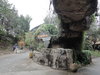
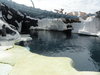
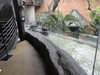
After passing through the entrance doors, you get a glimpse into what you will find throughout this facility, exhibits fit into unusual places, and a place packed to the brim with animals and species. While some of these exhibits work really well, some are probably fine, and some are the absolute bare minimum, you will find things tucked away everywhere. There is not a lot of wasted space here at all. For example, right next to the entrance is a unique Little Blue Penguin exhibit, long, but narrow, and is actually outdoors in the open air. The picture below is most of the exhibit, but there are additional rocky areas to the immediate right in this photo where one of the penguins was hanging out.

After ascending to the third floor, you more or less "officially" start your visit here in the Orinoco Rainforest Canopy. Walking into this part definitely gave off Lied Jungle vibes upon entry, and reading that article mentioned earlier, it was noted that the owner visited Omaha courtesy of Doc Simmons after Simmons paid a visit to DWA in its infancy, you could tell he brought some of that feel here. From the high immersion and mock rock, but also items from the early incarnation of the Lied Jungle that had "experience" exhibits that were primarily for guests, not animals. Hence the tons of exhibits packed in here. For me anyway, my excitement level rose significantly once I stepped in here as it was honestly like I was on sensory overload. In each of the two indoor rain forest sections, you are immediately drawn to looking for all of the free flight specimens, and for all the various animals in the field guide.
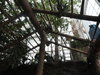
The first two exhibits you see are Jungle Jewels (various colorful small birds) and Jungle Junction, which is home to a Helmeted Curassow, various Toucans, and an apparently very shy Giant Anteater (to which we did not see). It wasn't until later when we were in the Mundo Maya section of this place that we were able to see the Boat Billed Heron high atop in the Jungle Junction exhibit. That is another thing with a lot of the exhibits in these two "rain forests", some of these have tremendous height, all the way to the roof of the warehouses these jungles are built into.
After Jungle Junction, you pass by Monkey Island, in which a White Faced Saki was climbing about the canopy, a Pied Tamarin exhibit, and upper viewing to the Giant Otter exhibit. One thing to note inside these warehouses that have natural light that comes in, although muffled by the cloudiness of the material covering the outer layers of these rooms, it makes some photography a little difficult (as does the mesh everywhere). My camera had a hard time adjusting, almost trying to go into a low light mode the entire time and couldn't tell if I was indoors or outdoors. Again, I don't have a super fancy camera, just a regular digital camera, so just a note for those of you who are in the same boat.
At this point you go right or left as mentioned above, right takes you to the Cloud Forest Trek area, which is fairly new. While entering the Cloud Forest Trek, you pass by a couple of exhibits that are in the guide book, the Rapids exhibit with some various waterfowl, and the LEK featuring Andean Cock-of-the-Rock. Cloud Forest Trek is a little bit different from the rest of the place, it features a wide open plaza with a wall of various frogs, a Cotton Top Tamarin exhibit, a ton of climbing opportunities for the Three-Toed Sloth, a tall aviary above the LEK that has Black & White Hawk Eagle, and probably my least favorite exhibit in the place, a Southern Pudu exhibit behind a wall of vegetation. My biggest gripe with this exhibit is that the Pudu doesn't have access to the vegetation, it is enclosed on the concrete floor strip against the wall (which is a giant video screen that simulates a day/night cycle).

While all of the frog terrariums are very lush, and very difficult to spot some of the inhabitants, I want to echo that the signing here is almost completely non-existent. Yes, the guide book covers a lot of the species and is still pretty current, and you can scan the QR codes or go to the website, but for someone who does not like constantly being on a phone to look at this info (that person being me), it makes it really hard to identify a fair number of animals here if you have never seen them before (frogs most notably). This is especially true of this new area that is not in the guidebook, and seemingly does not have all of the species listed on the website.
After going through Cloud Forest Trek, you have to backtrack to get back on the path as outlined in the guide book, and you pass Toucan Encounter, in which various Aracari species have nested in the columns of this area, and another seemingly small exhibit for Pygmy Marmosets. While the viewing glass area is small, this is another exhibit that extends up just a bit for the miniscule mammals.
While it was lunch time, and us coming in hot off the road from Oklahoma City on this day, we were focused on the snack bar ahead of us at this juncture and I quickly learned that you have to continually look all around you at this place or you will miss something. While looking at the guide over lunch in the little room to the side of the Cotinga Corner exhibit (we had a nice lunch with our Guianan Cock-of-the-Rock and Capuchin bird friends sitting by the glass next to us), I saw that I didn't notice the Red Howler Monkey exhibit directly above the snack bar. Going back to see it, it definitely is an exhibit that can be easily missed. Fairly hidden and not very many good viewing areas (if at all, I think people around me were confused what I was looking at). For instance, my picture below is seemingly one of the
better places to observe this exhibit.

Continuing down the path, you pass by an exhibit for Emperor Tamarin and Many-Banded Aracari, with the tamarin seemingly obsessed with something below it, and we will find out later what, this is where we started to realize just how many exhibits were on top of exhibits in this place. Rounding the corner above the awesome Orinoco Crocodile exhibit, is the aforementioned Cotinga Corner, home to the species I identified earlier, but also another Saki and a first for me, Long-wattled Umbrellabird! With as many rare birds from South America that is found in this place, I'm surprised the owner hasn't tried to capture the rare and elusive
Aracuan!
The pair of Orinoco Crocodiles below you at this point was hard not to stop and watch them from above for quite a bit. The male is huge, and the two were pretty active. Continuing on you will pass by the ground level viewing of the Giant Otter, and then continue to descend to the floor level of the Orinoco Rainforest, with a couple of herp and bird exhibits, Lizard Cove and Hidden Treasure. The main draw in the Hidden Treasure exhibits is the Wattled Guan.
After passing through a small cave with some more herp and bird exhibits, you get to a smaller plaza featuring the River's Edge, Bats and Bugs, Crocodile Cove, and Flooded Forest exhibits. The River's Edge is the lower portion of the aforementioned Emperor Tamarin exhibit, and we found out why the tamarin was so concerned with what was below it, it is the Green Anaconda exhibit. Talk about a predator/prey set up! And yes, they are separated exhibits by mesh. The Bats and Bugs area has some invert exhibits, a Vampire bat exhibit, and a smaller Cuvier's Dwarf Caiman exhibit. Crocodile Cove is the Orinoco Crocodile exhibit, in which part of it is a smaller pool that has some Red Bellied Piranha in it, one of the more unique combinations I've seen. Flooded Forest consists of a smaller pool for turtles and stingrays, and then side aquariums for Electric Eel and Caecilian.
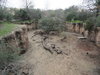
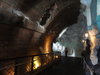
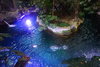
At this point you start to go into some caves and before you go down to the aquarium portion, you see the above viewing of the lagoon around Monkey Island and a couple of side bird exhibits with Elegant Crested Tinamou, Toco Toucans, Hawk Headed Parrot, Spot Billed Toucanet, Razor Billed Curassow, and one of my favorites, Gray Winged Trumpeters. As you go down the stairs here below one of the two, Two-Toed Sloth exhibits, you come to one of the two massive aquarium underwater views, that of The River tank. Home to tons of Amazon fish, stingrays, turtles, and the Antillean Manatee. My wife who knew nothing about DWA before stepping foot in there was shocked to see the manatee, as from above you can't really tell that there is one in the lagoon. For example, here is the lagoon from above.

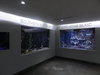
After this point, you enter the aquarium portion, and is such a far cry from the rest of the facility. It definitely shows that this was how DWA started, and I actually kind of liked the museum style aquariums that list the part of the world that each aquarium is supposed to represent. It does give off an art gallery vibe. Another great thing about this area is the original gift shop has been turned into a bookstore. I'm quite fond of zoos that have a dedicated bookstore, and found this one charming and had a great selection of books. If one was so inclined, you could get almost the whole collections of the Lynx Editions of Mammals and Birds of the Wild!

Outside the bookstore, you can go outside into in an area representing the Cape of Good Hope with African Penguins under the walkways, similar to the Babirusa exhibits at San Diego Zoo, and a Madagascar area featuring reptiles, birds, and amphibians rather than including lemurs of any kind. From this pseudo-courtyard area, you can glimpse the Shoebill exhibit up above and again illustrates the exhibits on top of exhibits ethos this place has.
Going back into the aquarium portion, there is a small tunnel tank highlighting the Continental Shelf before you enter the first portions of the Mundo Maya warehouse. The first part of this area is River Delta, Fishes of the Cenote, and Los Petenes. These exhibits have various reptiles, amphibians, fish, and Burrowing and Screech Owls, along with Desert Cottontail. While the theming in the Orinoco part of DWA is more of natural immersion with plants and mock rock and some basic thatch structures, Mundo Maya starts to go full Mayan theming from the start. Stucco walls line most of the area, and as you get further along, more and more murals depicting Mayan culture adorn the area.
After an aquarium with Lionfish and a unique tank full (and I mean FULL) of Axolotl, you come to the Cenote tank, a tunnel path through shark and Largetooth Sawfish. The highlight of this tunnel for me was one of the Sawfish decided to just up and take a rest right on top of the tunnel for quite a time allowing us to fully appreciate this intriguing fish.

Following the Cenote tunnel, the last trio of exhibits on the lower level of Mundo Maya are Marine Creatures, Serpent's Den, and House of Zotz. These areas are similar to the exhibits prior to the tunnel tank, full of fish and reptiles (most notably Fer-de-lance), a Seba's Short-tailed Bat exhibit, and an exhibit for a Barred Owl. One of the more interesting exhibits in Serpent's Den is the Beaded Lizard/Neotropical Rattlesnake exhibits that look like they are one but separated by a pane of glass in between the two. This is not the typical side-by-side kind, but of a more unique front/back set up.
As you make your way out of the caves and into the Mundo Maya jungle proper, you pass by a Painted Wood Turtle exhibit as well as a small pool for a Morelet's Crocodile. Along this winding path is also a circular tank filled with Lesser Devil Rays and other Caribbean fish. Continuing on, you come to two exhibits that are striking for different reasons. The first is the Mayan Temple exhibit housing an Ocelot that is heavily themed, while providing a fair amount of climbing opportunities within. Adjacent to this exhibit is the Birds of El Triunfo exhibit that houses Harpy Eagle and this exhibit is a warehouse that is lush and is a pretty large aviary room for them. The Birds of El Triunfo is nowhere near as themed on the inside as the Ocelot one, that's not a bad thing, but it provides a great example of the different ends of the spectrum some of the exhibits at this facility can provide. Granted, the Harpy Eagle exhibit is most likely a different warehouse that was expanded into, hence why the stark difference.
Rounding out the last couple of exhibits of DWA is the American Flamingo exhibit, right next to above viewing of the Cenote tunnel tank, and Pelican Reef housing Brown Pelican. One exhibit that is not on the main trail, but just a short jaunt up the stairs is the Selva Maya that has Occellated Turkey and Great Tinamou. After this area, it puts you next to the gift shop and the Little Blue Penguin exhibit where you essentially start, so you can make another loop if you so desire.
Now having experienced this unique collection, it blew my expectations out of the water. I was a little unsure of how I would receive this place, hence why I try not to look at a ton of photos before visiting a place I've never been (to influence my opinion one way or another), but after visiting, I would definitely come back if I ever have the chance. Granted, I recognize the some of the shortfalls of the place as mentioned at the start of this post. It will be interesting to see this place as some species die out and what they do to fill in some of those exhibits. For better or worse, this place is very reminiscent of a time where zoos had a great diversity in their collections, and this place is not shy about letting its visitors know about that.


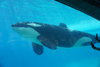



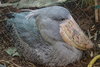

 an early example of a species DWA had that "might not ever be present in captivity in the United States ever again."