ZooBinh’s Journey West: California Chronicles and other Adventures

ZooBinh

Well-Known Member
Premium Member
5+ year member
If an American high schooler is to find themself so lucky after graduation, they’ll be honored with the duty to plan their very own summer vacation as a reward for years of hard work and dedication. For me, in the midst of my pomp and circumstance, this only meant one thing: zoos.

California wasn’t my first choice. That honor belongs to Germany and the Czech Republic, as the likes of the two Berlins, Prague, Plzen, and Walsrode have long been on my bucket list. Japan was also high on the list, boasting not just great zoos but phenomenal cuisine and culture. Part of me was even drawn to exploring the rainforests of somewhere down South in the Americas, though that trip would more likely than not exclude zoos.

Ultimately, matters were settled domestically when my parents revealed they were planning a trip abroad in the near future. So then begged the question…where in the US?

California was the clear winner. Far enough to feel “new” enough, full of world-class institutions, plenty outside of zoos to explore, and most importantly: I had unfinished business there.

And so this past July, my father and I embarked on a nine-day trek from San Francisco to San Diego, visiting 11 zoological institutions along the way. My report will span three parts, include the expected zoo reviews, links to species lists, and the other fun details that made my trip memorable.

Expect the following:

Part 1: A Tale of Two Bays

July 5 - Travel to SFO
July 6 - California Academy of Sciences & San Francisco Zoo
July 7 - Monterey Bay Aquarium

Part 2: Coconut Smoothies and Coachella Valley

July 8 - Travel to LAX/ Los Angeles Zoo
July 9 - The Living Desert

Part 3: The Redemption Tour

July 10 - Santa Ana Zoo, Orange County Zoo, and San Diego Zoo
July 11 - Birch Aquarium & SeaWorld San Diego
July 12 - San Diego Zoo Safari Park
July 13 - San Diego Zoo/Travel Home

Yes, it was exhausting. Fun, but exhausting. This was my first long-haul zoo trip, and hopefully not the last. So, come with me to the Golden Coast, grab a drink, lay back, and see for yourself a ZooChatter’s version of California dreamin’.

P.S. You’re gonna have to excuse my sad attempts at creativity throughout the length of the thread. :p
 
I'm looking forward to this thread. You'll be covering some very well-known zoos (but no Oakland!!), but it's always great to gain a new perspective on the famous California zoological institutions.
 
Part 1: A Tale of Two Bays

Day 1 - Friday, July 5 - No Zoos Today

6:45am - In a Car

Normally, the ride to the airport isn’t a story worth telling. But what trip is memorable without a hectic Uber experience?? Immediately, we were greeted by the reek of the Devil’s Lettuce and quickly got to know our driver as she struggled to find a way out of our neighborhood. If the smell wasn’t bad enough, we also had to sit through uncomfortable conversation. Stories about speeding violations and how she was never at fault, self-proclamations that she didn’t drink or use substances (which…if you have to say it). The highlight of the drive came when we were pulled over because our driver was…speeding. Shocker, I know. And again, it wasn’t her fault.

At least we made it to the airport on time.

4:00pm (PST!!) - San Francisco

After two flights, many Friends episodes, and a run-through of the Barbie movie, we made it to California! Our “home base” for the weekend would be in San Jose, so we made our way out of SFO (which, for the record, is a really cool airport) and headed South.

6:00pm - Dinner

I had lots of fun food on this trip, so I thought I’d share my thoughts if anyone is searching for restaurant recommendations while in California.

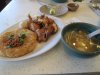
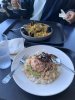
Our first stop was a popular Vietnamese joint in San Jose, Pho Hanoi. I had crispy sticky rice with roasted chicken, which isn’t a common find where I’m from, so I was glad to find it here. It’s a fun combination of textures— chewy, crispy, sweet, umami.

IMG_6262.jpeg

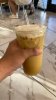
Fresh sugarcane juice is a must-try. Maybe one of the most refreshing things on the planet. Personally, I recommend having it plain or with a splash of calamansi juice. Other additives, such as the passion fruit I had, overpower the flavor of sugarcane, which isn’t ideal for such an expensive drink.

IMG_4272.jpeg
Drink of the Day: Passion Fruit Sugarcane Juice - 7/10

Yeah, no zoos today, but if you’re ever in San Jose, make sure to check out all the Vietnamese cuisine! The food there is arguably better than Orange County’s— the other Vietnamese diasporic hub in California— depending on who you ask.
 

Attachments

  • IMG_6262.jpeg
    IMG_6262.jpeg
    122.2 KB · Views: 173
  • IMG_4272.jpeg
    IMG_4272.jpeg
    49.4 KB · Views: 163
If an American high schooler is to find themself so lucky after graduation, they’ll be honored with the duty to plan their very own summer vacation as a reward for years of hard work and dedication. For me, in the midst of my pomp and circumstance, this only meant one thing: zoos.

California wasn’t my first choice. That honor belongs to Germany and the Czech Republic, as the likes of the two Berlins, Prague, Plzen, and Walsrode have long been on my bucket list. Japan was also high on the list, boasting not just great zoos but phenomenal cuisine and culture. Part of me was even drawn to exploring the rainforests of somewhere down South in the Americas, though that trip would more likely than not exclude zoos.

Ultimately, matters were settled domestically when my parents revealed they were planning a trip abroad in the near future. So then begged the question…where in the US?

California was the clear winner. Far enough to feel “new” enough, full of world-class institutions, plenty outside of zoos to explore, and most importantly: I had unfinished business there.

And so this past July, my father and I embarked on a nine-day trek from San Francisco to San Diego, visiting 11 zoological institutions along the way. My report will span three parts, include the expected zoo reviews, links to species lists, and the other fun details that made my trip memorable.

Expect the following:

Part 1: A Tale of Two Bays

July 5 - Travel to SFO
July 6 - California Academy of Sciences & San Francisco Zoo
July 7 - Monterey Bay Aquarium

Part 2: Coconut Smoothies and Coachella Valley

July 8 - Travel to LAX/ Los Angeles Zoo
July 9 - The Living Desert

Part 3: The Redemption Tour

July 10 - Santa Ana Zoo, Orange County Zoo, and San Diego Zoo
July 11 - Birch Aquarium & SeaWorld San Diego
July 12 - San Diego Zoo Safari Park
July 13 - San Diego Zoo/Travel Home

Yes, it was exhausting. Fun, but exhausting. This was my first long-haul zoo trip, and hopefully not the last. So, come with me to the Golden Coast, grab a drink, lay back, and see for yourself a ZooChatter’s version of California dreamin’.

P.S. You’re gonna have to excuse my sad attempts at creativity throughout the length of the thread. :p
It's really going to be exciting to hear about you visiting some of the best zoos in the country!
 
Part 1: A Tale of Two Bays

Day 1 - Friday, July 5 - No Zoos Today

6:45am - In a Car

Normally, the ride to the airport isn’t a story worth telling. But what trip is memorable without a hectic Uber experience?? Immediately, we were greeted by the reek of the Devil’s Lettuce and quickly got to know our driver as she struggled to find a way out of our neighborhood. If the smell wasn’t bad enough, we also had to sit through uncomfortable conversation. Stories about speeding violations and how she was never at fault, self-proclamations that she didn’t drink or use substances (which…if you have to say it). The highlight of the drive came when we were pulled over because our driver was…speeding. Shocker, I know. And again, it wasn’t her fault.

At least we made it to the airport on time.

4:00pm (PST!!) - San Francisco

After two flights, many Friends episodes, and a run-through of the Barbie movie, we made it to California! Our “home base” for the weekend would be in San Jose, so we made our way out of SFO (which, for the record, is a really cool airport) and headed South.

6:00pm - Dinner

I had lots of fun food on this trip, so I thought I’d share my thoughts if anyone is searching for restaurant recommendations while in California.

Our first stop was a popular Vietnamese joint in San Jose, Pho Hanoi. I had crispy sticky rice with roasted chicken, which isn’t a common find where I’m from, so I was glad to find it here. It’s a fun combination of textures— chewy, crispy, sweet, umami.

View attachment 727223

Fresh sugarcane juice is a must-try. Maybe one of the most refreshing things on the planet. Personally, I recommend having it plain or with a splash of calamansi juice. Other additives, such as the passion fruit I had, overpower the flavor of sugarcane, which isn’t ideal for such an expensive drink.

View attachment 727224
Drink of the Day: Passion Fruit Sugarcane Juice - 7/10

Yeah, no zoos today, but if you’re ever in San Jose, make sure to check out all the Vietnamese cuisine! The food there is arguably better than Orange County’s— the other Vietnamese diasporic hub in California— depending on who you ask.
Can't wait to read this thread! As someone who eats in that area pretty frequently great choice on Pho Ha Noi! I would also recommend eating at Pho Ga Nha if you get the chance, their com ga roti is absolutely spectacular with their orange rice and sauce. Surprised you didn't go to Happy Hollow which is about a 10-minute walk from Pho Ha Noi, though in terms of animal species and exhibits, there is nothing really worth taking a detour for, and I believe every single species is represented by the zoos you went to.
 
Last edited:
Surprised you didn't go to Happy Hollow which is about a 10-minute walk from Pho Ha Noi, though in terms of animal species and exhibits, there is nothing really worth taking a detour for, and I believe every single species is represented by the zoos you went to.
I really wanted to! Especially for the parma wallabies, which I missed out on at San Diego :(. But we landed late to even think about making it there on time, and the itineraries for the rest of that weekend also wouldn't have allowed for that.

And thanks for the recommendation! I'll have to try it out whenever I'm in San Jose next.
 
Day 2 - Saturday, July 5 - San Francisco Bay

8:30am - Sunset Bakery (San Francisco)

Before any zoo-visiting was to occur, I had one objective: to procure a freshly baked Chinese egg tart.

While waiting for the bakery’s first batch of the day to come out, I found a coffee shop a few doors down for my drink of the day, a very good vanilla latte (8/10), and an interesting pastry: a blueberry calamansi cruffin (think croissant dough in a muffin shape). I recommend a stop by Snowbird Coffee if it’s ever convenient.

IMG_4277.jpeg
Drink of the day (not pictured): Vanilla latte. Basic, but very good quality. 9/10. Here’s a look at that cruffin.

Alas, my tarts were ready. Indulgent, sweet, steamy, custardy goodness. Never ignore a freshly baked egg tart if it ever crosses your path.

IMG_4278.jpeg

9:30am - California Academy of Sciences

I’m here to make a case for the Academy— at the very least as San Francisco’s premier zoological attraction. I’m sure most of ZooChat already views the Academy as a solid facility, but I’m here to tell you it’s worthy of the hype that Monterey or San Diego have as the must-sees of the West Coast.

Upon entering, my first stop was the upper level viewing of the Philippine reef tank. The display a mangrove lagoon with rays with a boarded walkway extended to a direct viewing into the reef below. Immediately, I found some nice lifers: Indian pompano and flapnose ray. I really did appreciate how they curated such a focused biotope exhibit— I’ll comment more on that later.

IMG_6288.jpeg

The strong start continued into the African Hall, which not only has some great diorama displays, but impressively boasts the original (or as close to the original) styles and detailings of the old African Hall in the Academy’s prior building. I did find, however, their penguin exhibit to be a bit underwhelming in size for such a great institution (similar to Monterey, really), but it’s placement in the hall was a nice touch. I mean, how often does one see African penguins mere feet away from a stuffed bushbuck?

IMG_6282.jpeg
Aforementioned bushbuck.

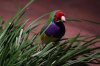
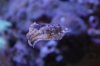
I made my way to “Color of Life” next, consisting of vivid and interactive displays on the role of coloration in nature. To me, this exhibit really showcased the creativity in the Academy’s design. Specieswise, it was a real treat too— dwarf cuttlefish (Sepia bandesis), Riggenbach’s reed frogs (Hyperolius riggenbachi), and Gouldian finches (Erythrura gouldiae) were the highlights here. I enjoyed the Academy’s smaller-scaled exhibits such as this one, though I’ll admit I didn’t make the effort to see most of them in the interest of making it to the San Francisco Zoo later that day.

IMG_2609.jpeg
Gouldian Finch (Erythrura gouldiae)
IMG_2576.jpeg
Dwarf Cuttlefish (Sepia bandera)

Next up was the esteemed Osher Rainforest. I had read that the queue was long, and to line up first thing when visiting the Academy. Of course, I ignored such advice, and so I waited a good 30-40 minutes to enter the dome. The wait wasn’t dreadful, however, as the line wrapped around an open-topped view into the rocky coast aquarium.

It’s a massive exhibit. The sheer scale of it wasn’t obvious to me from the outside, but I realized quickly it was no joke as I made my way up from the forest floor to the canopy. On the round up to the second floor is a very creative exhibit concept: orb weavers (Nephiles clavipes) in open air. They were strung a few feet back from the railing, but close enough for me to get the heebie-jeebies just looking at those huge spiders. The Academy isn’t the only place to have such a display— San Diego’s invertebrate house has a similar exhibit. Each story featured a series of terrariums, filled with an intriguing collection of herps and more. There were some misses for me (Allison’s anole, some frogs) but also some worthy lifers (glass frogs, lovely poison dart frog).

IMG_2669.jpeg
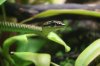
Paradise Tree Snake (Chrysopelea paradisi)
IMG_2688.jpeg
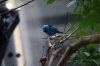
Blue Dacnis (Dacnis cayana)

As I moved into the upper levels of the dome, I began to encounter what I consider the highlight of the exhibit: birds! And butterflies, too. There were the more obvious individuals, red-crested turacos and beautiful fruit doves, but most of the smaller birds were hidden out of view among the trees. My only luck was in a particular corner by a food dish, where I spotted glimpses of a silver-beaked tanager and blue dacnis (new species for me). I would’ve loved to stay longer and search for birds, but the top level was the most congested. Thus, I quickly moved past the butterfly nursery and made my way into the elevator, which led me down into the Academy’s largest exhibit…
 

Attachments

  • IMG_4277.jpeg
    IMG_4277.jpeg
    74.3 KB · Views: 142
  • IMG_4278.jpeg
    IMG_4278.jpeg
    53.8 KB · Views: 140
  • IMG_6288.jpeg
    IMG_6288.jpeg
    190 KB · Views: 136
  • IMG_6282.jpeg
    IMG_6282.jpeg
    143.1 KB · Views: 137
  • IMG_2669.jpeg
    IMG_2669.jpeg
    62.6 KB · Views: 138
  • IMG_2609.jpeg
    IMG_2609.jpeg
    94.5 KB · Views: 136
  • IMG_2688.jpeg
    IMG_2688.jpeg
    67.8 KB · Views: 137
  • IMG_2576.jpeg
    IMG_2576.jpeg
    58.7 KB · Views: 145
The famed Steinhart Aquarium! A quick scroll through the interwebs will show you Steinhart is a significant portion of not just the Academy’s history, but aquarium history as well. Steinhart opened in 1923, and has spent the last century pioneering aquatic zookeeping. Some of their achievements include the first roundabout tank designed for pelagic species, the first great white shark to be displayed/released in captivity, and more recently the first aquarium to patent a portable decompression chamber designed for collecting live fish from the depths of the twilight zone.

Steinhart is big. It’s no gargantuan like Monterey or Georgia, but it’s many times the size of your average SEALIFE and could easily be marketed as its own attraction. I personally underestimated its scale, so I was continually impressed throughout my visit.

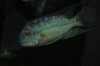
From the Osher Rainforest, you descend into Steinhart’s first gallery: the Amazon Flooded Forest. I found this portion quite nice, your typical Amazonian displays with electric eels, tetras, cichlids, etc. At its center was a large tank which can be viewed from above the surface in the Osher Rainforest or from below through a tunnel. The tunnel was stocked with the typical river monsters (arapaima, redtail catfish, etc.) and some intriguing smaller inhabitants, including a special lifer for me: the true parrot cichlid (Hoplarchus psittacus). I’ve only ever seen the hybrid blood parrots before, so this was a real treat.

IMG_2721.jpeg
True Parrot Cichlid (Hoplarchus psittacus)

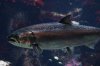
Moving on from the flooded forest is the California Coast. The collections and displays are what you would expect from such an exhibit, very Monterey-esque lineups. The main tank, all 100,000 gallons of it, spans the length of the gallery, dotted with round windows to peer through before approaching the main viewing window. Here, you’re immersed into a scene from the Gulf of the Farallones National Marine Sanctuary. Through the glass, you can watch a rocky scape teeming with rockfish, seaperch, and my personal favorite in the tank: Chinook Salmon (Onchorhynchus tshawytscha). Up above, as I mentioned earlier, you can watch as the water gently laps into a salt marsh or frothily rushes against the rocky walls of the aquarium.

IMG_2753.jpeg
Blue Rockfish (Sebastes mystinus)
IMG_2847.jpeg
Chinook Salmon (Onchorhynchus tshawytscha)

Also worth mentioning in the California Coast is the Rocky Reef exhibit. I found a very “I-Spy” feel to the aquarium as I looked through bushes of anemones to find well-camouflaged painted greenlings. The feather-duster worms present were also a nice surprise, as I’d never seen one before.

Before I moved on to the next gallery, I dashed over to look at the lower-level viewing of the Swamp exhibit. Here lives Claude, a white alligator who’s garnered quite a following in my corner of the social media algorithm. With him are a myriad of sunfish and other freshwater fishes, and around the exhibit are various terrariums and another large tank with alligator gar and cichlids.

The next gallery I entered, Coral Reefs of the World, started off rather unimpressive. Nothing too special here, a long wall with a series of small reef aquariums showcasing a range of corals, anemones, and small fishes. What came next, however, would not disappoint.

IMG_2884.jpeg
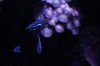
Redspot Cardinalfish (Ostorhinchus parvulus)

Note: Out of respect for Steinhart’s no-photo policy in the next two exhibits, I do not have any to share with you all.

The Philippine Coral Reef, Steinhart’s largest tank at 212,000 gallons, is also one of the world’s largest living reef displays. One of the few exhibits at the Academy I knew about prior, I admired that not only is this a stunning aquarium, but (in their words) a living laboratory, where the Academy conduct research with the same technologies that they could in wild reefs across the world. I’d also like to elaborate on my earlier comment on my appreciation of the Academy’s biotope exhibits, committing themselves to recreate environments from such specific geographic locations such as the Philippine reefs or the Gulf of the Farallones. I recall reading some years back on the forum that some members would like to see an exhibit complex dedicated to wildlife from The Philippines such as warty pigs, Philippine eagles, and tarsiers. Well, Steinhart here has done a wonderful job of giving us an exhibit showcasing the various depths (literally) of a Philippine ecosystem.

My personal favorite at Steinhart was the Twilight Zone. If you regularly dive to the mesophotic zone looking for fish, this won’t be special. But ZooChatters, if you’re looking for something truly one-of-a-kind that can’t be seen elsewhere, this is your exhibit. This gallery is a living glimpse into the Academy’s contributions to our understanding of the ocean. I recommend you look through their website, because some of that work is truly fascinating. The species list in the Twilight Zone is insanely impressive, aside from just the Peppermint Angelfish that’s famously known as the only one on public display in the world. Other rarities such as the Neptune Grouper and Haraguchi’s Butterflyfish, in which the latter individual (through what I’ve heard) may be the only representative of its species in captivity anywhere! Some of their species are so unique to public display, in fact, that they may even be undescribed. While the exhibit featuring an undescribed species of chromis was boarded off, it was amazing to witness directly just how new some of the Academy’s research was. Though now, I suspect that the species has been since described as Chromis tingting, but I’m not positive about that.

Venom and Water Planet were the remaining two portions of Steinhart. I rushed through the former, as it was extremely crowded and I didn’t want to linger too long. The latter was pretty cool, but I also hurried through, as it seemed very tame in comparison to the exhibits I’d just gone through. Water Planet is located in the middle of Steinhart, and you can sort of see all of galleries coincide here. Here was where I really noticed how much I liked the design of the aquarium. It’s very flowy, smooth, designed with lots of curves. Sure, this may not be unique to Steinhart, but it’s nice to see both elements of older, neoclassical architecture (e.g. African Hall) in homage to the old Academy building as well as the modern architecture of the current Academy, which only opened in 2008.

IMG_2977.jpeg
Spiny Brittle Star (Ophiopoca paucigranulata)
IMG_2969.jpeg
Convict Tang (Acanthurus triostegus)

Closing notes on my visit: I wish I had more time to spend there, as I would’ve explored more than just the animal exhibits at the Academy. I would’ve loved to make my up to the Living Roof. But after having a quick Caesar salad from the cafe and a little stop in the gift shop for a keychain and a postcard, I left the Academy to make my way to the zoo.
 

Attachments

  • IMG_2721.jpeg
    IMG_2721.jpeg
    44 KB · Views: 137
  • IMG_2753.jpeg
    IMG_2753.jpeg
    52.5 KB · Views: 140
  • IMG_2847.jpeg
    IMG_2847.jpeg
    87.9 KB · Views: 137
  • IMG_2884.jpeg
    IMG_2884.jpeg
    39.1 KB · Views: 146
  • IMG_2977.jpeg
    IMG_2977.jpeg
    89.1 KB · Views: 144
  • IMG_2969.jpeg
    IMG_2969.jpeg
    57.9 KB · Views: 140
Last edited:
I really wanted to! Especially for the parma wallabies, which I missed out on at San Diego :(. But we landed late to even think about making it there on time, and the itineraries for the rest of that weekend also wouldn't have allowed for that.
Don’t worry, you will have a good chance to see then if (or when) you ever have a zoo tour in Europe.
 
The famed Steinhart Aquarium! A quick scroll through the interwebs will show you Steinhart is a significant portion of not just the Academy’s history, but aquarium history as well. Steinhart opened in 1923, and has spent the last century pioneering aquatic zookeeping. Some of their achievements include the first roundabout tank designed for pelagic species, the first great white shark to be displayed/released in captivity, and more recently the first aquarium to patent a portable decompression chamber designed for collecting live fish from the depths of the twilight zone.

Steinhart is big. It’s no gargantuan like Monterey or Georgia, but it’s many times the size of your average SEALIFE and could easily be marketed as its own attraction. I personally underestimated its scale, so I was continually impressed throughout my visit.

From the Osher Rainforest, you descend into Steinhart’s first gallery: the Amazon Flooded Forest. I found this portion quite nice, your typical Amazonian displays with electric eels, tetras, cichlids, etc. At its center was a large tank which can be viewed from above the surface in the Osher Rainforest or from below through a tunnel. The tunnel was stocked with the typical river monsters (arapaima, redtail catfish, etc.) and some intriguing smaller inhabitants, including a special lifer for me: the true parrot cichlid (Hoplarchus psittacus). I’ve only ever seen the hybrid blood parrots before, so this was a real treat.

View attachment 728696
True Parrot Cichlid (Hoplarchus psittacus)

Moving on from the flooded forest is the California Coast. The collections and displays are what you would expect from such an exhibit, very Monterey-esque lineups. The main tank, all 100,000 gallons of it, spans the length of the gallery, dotted with round windows to peer through before approaching the main viewing window. Here, you’re immersed into a scene from the Gulf of the Farallones National Marine Sanctuary. Through the glass, you can watch a rocky scape teeming with rockfish, seaperch, and my personal favorite in the tank: Chinook Salmon (Onchorhynchus tshawytscha). Up above, as I mentioned earlier, you can watch as the water gently laps into a salt marsh or frothily rushes against the rocky walls of the aquarium.

View attachment 728697
Blue Rockfish (Sebastes mystinus)
View attachment 728698
Chinook Salmon (Onchorhynchus tshawytscha)

Also worth mentioning in the California Coast is the Rocky Reef exhibit. I found a very “I-Spy” feel to the aquarium as I looked through bushes of anemones to find well-camouflaged painted greenlings. The feather-duster worms present were also a nice surprise, as I’d never seen one before.

Before I moved on to the next gallery, I dashed over to look at the lower-level viewing of the Swamp exhibit. Here lives Claude, a white alligator who’s garnered quite a following in my corner of the social media algorithm. With him are a myriad of sunfish and other freshwater fishes, and around the exhibit are various terrariums and another large tank with alligator gar and cichlids.

The next gallery I entered, Coral Reefs of the World, started off rather unimpressive. Nothing too special here, a long wall with a series of small reef aquariums showcasing a range of corals, anemones, and small fishes. What came next, however, would not disappoint.

View attachment 728699
Redspot Cardinalfish (Ostorhinchus parvulus)

Note: Out of respect for Steinhart’s no-photo policy in the next two exhibits, I do not have any to share with you all.

The Philippine Coral Reef, Steinhart’s largest tank at 212,000 gallons, is also one of the world’s largest living reef displays. One of the few exhibits at the Academy I knew about prior, I admired that not only is this a stunning aquarium, but (in their words) a living laboratory, where the Academy conduct research with the same technologies that they could in wild reefs across the world. I’d also like to elaborate on my earlier comment on my appreciation of the Academy’s biotope exhibits, committing themselves to recreate environments from such specific geographic locations such as the Philippine reefs or the Gulf of the Farallones. I recall reading some years back on the forum that some members would like to see an exhibit complex dedicated to wildlife from The Philippines such as warty pigs, Philippine eagles, and tarsiers. Well, Steinhart here has done a wonderful job of giving us an exhibit showcasing the various depths (literally) of a Philippine ecosystem.

My personal favorite at Steinhart was the Twilight Zone. If you regularly dive to the mesophotic zone looking for fish, this won’t be special. But ZooChatters, if you’re looking for something truly one-of-a-kind that can’t be seen elsewhere, this is your exhibit. This gallery is a living glimpse into the Academy’s contributions to our understanding of the ocean. I recommend you look through their website, because some of that work is truly fascinating. The species list in the Twilight Zone is insanely impressive, aside from just the Peppermint Angelfish that’s famously known as the only one on public display in the world. Other rarities such as the Neptune Grouper and Haraguchi’s Butterflyfish, in which the latter individual (through what I’ve heard) may be the only representative of its species in captivity anywhere! Some of their species are so unique to public display, in fact, that they may even be undescribed. While the exhibit featuring an undescribed species of chromis was boarded off, it was amazing to witness directly just how new some of the Academy’s research was. Though now, I suspect that the species has been since described as Chromis tingting, but I’m not positive about that.

Venom and Water Planet were the remaining two portions of Steinhart. I rushed through the former, as it was extremely crowded and I didn’t want to linger too long. The latter was pretty cool, but I also hurried through, as it seemed very tame in comparison to the exhibits I’d just gone through. Water Planet is located in the middle of Steinhart, and you can sort of see all of galleries coincide here. Here was where I really noticed how much I liked the design of the aquarium. It’s very flowy, smooth, designed with lots of curves. Sure, this may not be unique to Steinhart, but it’s nice to see both elements of older, neoclassical architecture (e.g. African Hall) in homage to the old Academy building as well as the modern architecture of the current Academy, which only opened in 2008.

View attachment 728700
Spiny Brittle Star (Ophiopoca paucigranulata)
View attachment 728701
Convict Tang (Acanthurus triostegus)

Closing notes on my visit: I wish I had more time to spend there, as I would’ve explored more than just the animal exhibits at the Academy. I would’ve loved to make my up to the Living Roof. But after having a quick Caesar salad from the cafe and a little stop in the gift shop for a keychain and a postcard, I left the Academy to make my way to the zoo.
How long would you it takes to see all of CAS?
 
How long would you it takes to see all of CAS?
I think at least 4 hours. I spent 5 hours there, but a lot of the time I spent making lists and hunting for smaller species could have easily been reallocated to sitting and watching the bigger displays, seeing the non-animal exhibits.
 
Love you throwing in your food experiences as you go. Makes me feel nostalgic, can't really put my finger on why :p

Fully agree with your assessment on the Academy. It was actually my friend's idea to visit rather than mine, yet I came out feeling very pleasantly surprised. It is one of the best natural history museums in the country, and IMO fits the bill perfectly as a "scientific aquarium/vivarium"-type zoo.

Also glad to see your photography has been turning out well! That photo of the flying snake is fantastic.

Especially for the parma wallabies, which I missed out on at San Diego :(

I don't think anybody sees them at San Diego, sorry you got your hopes up :p it's one of those "do they even really count as having them" kind of situations.

Here lives Claude, a white alligator who’s garnered quite a following in my corner of the social media algorithm. With him are a myriad of sunfish and other freshwater fishes, and around the exhibit are various terrariums and another large tank with alligator gar and cichlids.

Do they still have an Alligator Snapping Turtle in there too?

Well, Steinhart here has done a wonderful job of giving us an exhibit showcasing the various depths (literally) of a Philippine ecosystem.

Coincidentally or not, Shedd's coral reef exhibit - which IMO is also one of the best in the country - is also based on a Philippine reef.

How long would you it takes to see all of CAS?
I think at least 4 hours. I spent 5 hours there, but a lot of the time I spent making lists and hunting for smaller species could have easily been reallocated to sitting and watching the bigger displays, seeing the non-animal exhibits.

It only took me 3 hours to see the live animal displays, but I would have preferred 4 or 5 so I could've had time to see the other sections, as well as spend more time species-hunting in the bigger enclosures.
 
The famed Steinhart Aquarium! A quick scroll through the interwebs will show you Steinhart is a significant portion of not just the Academy’s history, but aquarium history as well. Steinhart opened in 1923, and has spent the last century pioneering aquatic zookeeping. Some of their achievements include the first roundabout tank designed for pelagic species, the first great white shark to be displayed/released in captivity, and more recently the first aquarium to patent a portable decompression chamber designed for collecting live fish from the depths of the twilight zone.

Steinhart is big. It’s no gargantuan like Monterey or Georgia, but it’s many times the size of your average SEALIFE and could easily be marketed as its own attraction. I personally underestimated its scale, so I was continually impressed throughout my visit.

From the Osher Rainforest, you descend into Steinhart’s first gallery: the Amazon Flooded Forest. I found this portion quite nice, your typical Amazonian displays with electric eels, tetras, cichlids, etc. At its center was a large tank which can be viewed from above the surface in the Osher Rainforest or from below through a tunnel. The tunnel was stocked with the typical river monsters (arapaima, redtail catfish, etc.) and some intriguing smaller inhabitants, including a special lifer for me: the true parrot cichlid (Hoplarchus psittacus). I’ve only ever seen the hybrid blood parrots before, so this was a real treat.

View attachment 728696
True Parrot Cichlid (Hoplarchus psittacus)

Moving on from the flooded forest is the California Coast. The collections and displays are what you would expect from such an exhibit, very Monterey-esque lineups. The main tank, all 100,000 gallons of it, spans the length of the gallery, dotted with round windows to peer through before approaching the main viewing window. Here, you’re immersed into a scene from the Gulf of the Farallones National Marine Sanctuary. Through the glass, you can watch a rocky scape teeming with rockfish, seaperch, and my personal favorite in the tank: Chinook Salmon (Onchorhynchus tshawytscha). Up above, as I mentioned earlier, you can watch as the water gently laps into a salt marsh or frothily rushes against the rocky walls of the aquarium.

View attachment 728697
Blue Rockfish (Sebastes mystinus)
View attachment 728698
Chinook Salmon (Onchorhynchus tshawytscha)

Also worth mentioning in the California Coast is the Rocky Reef exhibit. I found a very “I-Spy” feel to the aquarium as I looked through bushes of anemones to find well-camouflaged painted greenlings. The feather-duster worms present were also a nice surprise, as I’d never seen one before.

Before I moved on to the next gallery, I dashed over to look at the lower-level viewing of the Swamp exhibit. Here lives Claude, a white alligator who’s garnered quite a following in my corner of the social media algorithm. With him are a myriad of sunfish and other freshwater fishes, and around the exhibit are various terrariums and another large tank with alligator gar and cichlids.

The next gallery I entered, Coral Reefs of the World, started off rather unimpressive. Nothing too special here, a long wall with a series of small reef aquariums showcasing a range of corals, anemones, and small fishes. What came next, however, would not disappoint.

View attachment 728699
Redspot Cardinalfish (Ostorhinchus parvulus)

Note: Out of respect for Steinhart’s no-photo policy in the next two exhibits, I do not have any to share with you all.

The Philippine Coral Reef, Steinhart’s largest tank at 212,000 gallons, is also one of the world’s largest living reef displays. One of the few exhibits at the Academy I knew about prior, I admired that not only is this a stunning aquarium, but (in their words) a living laboratory, where the Academy conduct research with the same technologies that they could in wild reefs across the world. I’d also like to elaborate on my earlier comment on my appreciation of the Academy’s biotope exhibits, committing themselves to recreate environments from such specific geographic locations such as the Philippine reefs or the Gulf of the Farallones. I recall reading some years back on the forum that some members would like to see an exhibit complex dedicated to wildlife from The Philippines such as warty pigs, Philippine eagles, and tarsiers. Well, Steinhart here has done a wonderful job of giving us an exhibit showcasing the various depths (literally) of a Philippine ecosystem.

My personal favorite at Steinhart was the Twilight Zone. If you regularly dive to the mesophotic zone looking for fish, this won’t be special. But ZooChatters, if you’re looking for something truly one-of-a-kind that can’t be seen elsewhere, this is your exhibit. This gallery is a living glimpse into the Academy’s contributions to our understanding of the ocean. I recommend you look through their website, because some of that work is truly fascinating. The species list in the Twilight Zone is insanely impressive, aside from just the Peppermint Angelfish that’s famously known as the only one on public display in the world. Other rarities such as the Neptune Grouper and Haraguchi’s Butterflyfish, in which the latter individual (through what I’ve heard) may be the only representative of its species in captivity anywhere! Some of their species are so unique to public display, in fact, that they may even be undescribed. While the exhibit featuring an undescribed species of chromis was boarded off, it was amazing to witness directly just how new some of the Academy’s research was. Though now, I suspect that the species has been since described as Chromis tingting, but I’m not positive about that.

Venom and Water Planet were the remaining two portions of Steinhart. I rushed through the former, as it was extremely crowded and I didn’t want to linger too long. The latter was pretty cool, but I also hurried through, as it seemed very tame in comparison to the exhibits I’d just gone through. Water Planet is located in the middle of Steinhart, and you can sort of see all of galleries coincide here. Here was where I really noticed how much I liked the design of the aquarium. It’s very flowy, smooth, designed with lots of curves. Sure, this may not be unique to Steinhart, but it’s nice to see both elements of older, neoclassical architecture (e.g. African Hall) in homage to the old Academy building as well as the modern architecture of the current Academy, which only opened in 2008.

View attachment 728700
Spiny Brittle Star (Ophiopoca paucigranulata)
View attachment 728701
Convict Tang (Acanthurus triostegus)

Closing notes on my visit: I wish I had more time to spend there, as I would’ve explored more than just the animal exhibits at the Academy. I would’ve loved to make my up to the Living Roof. But after having a quick Caesar salad from the cafe and a little stop in the gift shop for a keychain and a postcard, I left the Academy to make my way to the zoo.
Great to hear that you enjoyed the Academy and one of the many awesome spots to get egg tarts! You are super lucky to get that shot of the paradise tree snake, on many of my visits the snake was completely invisible or only had parts of the tail showing. Shame you didn't get to see some of the nonliving displays, the gems and minerals are pretty impressive and the other exhibits have some gems like Galapagos specimens, Audobon's "The Birds of America", Xerces blue butterflies, shark tooth weapons, specimens of newly discovered species found by the Academy, as well as Monarch, who was the last California grizzly bear in captivity.
I'm surprised that there was a no photo policy on the Philippine reef, I don't remember there being one on my visits, and most species don't really strike me as being photo sensitive. I'm pretty sure the no photo policy in the deep reef exhibit is just an extra precaution to avoid any accidental flash as some people do not know how to turn off their flash. The Haraguchi's butterfly was the only one in captivity for a while, but a Japanese facility recently acquired one. Didn't know the chromis tank got walled off, but by now the entire exhibit has been closed for renovation I believe. Chromis tingting looks quite different from the undescribed chromis on display, having an extra blue dot near its eyes, a different body color overall, and yellow markings on it's dorsal, tail, and anal fin. Water planet also has the distinction of exhibiting the current oldest living aquarium fish, Methuselah the 93 year old Australian lungfish, who arrived at Steinhart 15 years after it was created.
 
Love you throwing in your food experiences as you go. Makes me feel nostalgic, can't really put my finger on why :p
Thanks for the inspiration :p. Especially for my daily coffee review (some fun ones to come)!

Also glad to see your photography has been turning out well! That photo of the flying snake is fantastic.
Thank you!! The new camera has exceeded all my expectations :).

I don't think anybody sees them at San Diego, sorry you got your hopes up :p it's one of those "do they even really count as having them" kind of situations.
Clearly not! It’s cruel for them to taunt us by not having just one, but two exhibits for them :p.

Do they still have an Alligator Snapping Turtle in there too?
Yes! I’ll get my species list posted up soon. :)

Coincidentally or not, Shedd's coral reef exhibit - which IMO is also one of the best in the country - is also based on a Philippine reef.
This is true, and it even features a mangrove portion! So the Academy’s exhibit wasn’t the only one like I thought lol.
 
Shame you didn't get to see some of the nonliving displays, the gems and minerals are pretty impressive and the other exhibits have some gems like Galapagos specimens, Audobon's "The Birds of America", Xerces blue butterflies, shark tooth weapons, specimens of newly discovered species found by the Academy, as well as Monarch, who was the last California grizzly bear in captivity.
Nice! I really need to return. Perhaps this thread will be an annual occurrence who knows :P

I'm surprised that there was a no photo policy on the Philippine reef, I don't remember there being one on my visits, and most species don't really strike me as being photo sensitive.
Yeah, it was on the digital species slideshow. I didn’t notice until I’d snapped a few pics and was looking for the point of making my species list.

I'm pretty sure the no photo policy in the deep reef exhibit is just an extra precaution to avoid any accidental flash as some people do not know how to turn off their flash.
Yes, I’ve seen the same. Wonder if red eye is harmful to animals like flash is? That was a risk I was avoiding with my camera.

The Haraguchi's butterfly was the only one in captivity for a while, but a Japanese facility recently acquired one. Didn't know the chromis tank got walled off, but by now the entire exhibit has been closed for renovation I believe. Chromis tingting looks quite different from the undescribed chromis on display, having an extra blue dot near its eyes, a different body color overall, and yellow markings on it's dorsal, tail, and anal fin.
Thanks for the corrections. Chromis tingting seems like it also was discovered very recently. New species are just flying through their displays :P.

Water planet also has the distinction of exhibiting the current oldest living aquarium fish, Methuselah the 93 year old Australian lungfish, who arrived at Steinhart 15 years after it was created.
Do you know which she was? I saw two lungfish exhibits.
 
Nice! I really need to return. Perhaps this thread will be an annual occurrence who knows :p


Yeah, it was on the digital species slideshow. I didn’t notice until I’d snapped a few pics and was looking for the point of making my species list.


Yes, I’ve seen the same. Wonder if red eye is harmful to animals like flash is? That was a risk I was avoiding with my camera.


Thanks for the corrections. Chromis tingting seems like it also was discovered very recently. New species are just flying through their displays :p.


Do you know which she was? I saw two lungfish exhibits.
I bet a lot of zoochatters wouldn't oppose of this thread happening every year :p

Generally, I believe that red light is less harmful to deep water species and many invertebrates, since most of them can't actually see it, since red is the first color to be absorbed by water.

There are quite a few other undescribed and new species that are on display or used to be on display at the Academy, a few other undescribed fish used to be in the deep reef exhibits, and several of the fish like the rose-veiled fairy wrasse Cirrhilabrus finifenmaa have only recently been described, and some species have been described by the Academy itself such as Roa rumsfeldi which is off display currently. There is an undescribed pistol shrimp in Water Planet I believe, and the reef lobster kept with the undescribed chromis also isn't signed to a specific species. In the nonliving exhibits there are a few newly described specimens by the Academy's scientists who often discover hundreds each year.

The smaller lungfish exhibit which contains only one lungfish that has lighter colored patterns has Methuselah. Her tank contains different species of goby and rainbowfish than the other one if I remember correctly, and is the one closer to the beaded lizards and alligator gar. The tank is a smaller size as they do not want to risk moving her more.
 
The smaller lungfish exhibit which contains only one lungfish that has lighter colored patterns has Methuselah. Her tank contains different species of goby and rainbowfish than the other one if I remember correctly, and is the one closer to the beaded lizards and alligator gar. The tank is a smaller size as they do not want to risk moving her more
Definitely saw her, then. According to my list, both exhibits have rainbowfish/gobies, but yes I definitely remember which exhibit now. If there was any signage detailing her age (probably was) I definitely missed it as I was really focused on the rainbowfish there :p!
 
3:00pm - San Francisco Zoo

I’m not here to make a case for the San Francisco Zoo. It’s about as mediocre as mediocre can get for a large zoo, if you can even call it that. I enjoyed my visit, but it was apparent that there’s much the zoo needs to update (or is taking a hell of a long time to).

Looking through ZooChat or elsewhere can show you the highlights of San Francisco’s issues. And boy, are there lots. Nevertheless, I won’t be unnecessarily harsh here. After all, I did have a good time.

Walking into the zoo accompanied by a coastal breeze and the smell of the sea while grey clouds loomed above was pleasant. I enjoyed the cool weather during my week in California, as it’s been incredibly hot and humid back home these past few summers. In fact, I never even realized how unbearable my home climate was until I experienced how amazing it was to be in a pleasant one. And mind you, this was in the midst of a California heat wave.

From outside the zoo, there’s a viewing into the zebra/ostrich yard in the African Region, which I found a nice touch. The African Region as a whole I remember to be nice. Exhibit sizes were adequate, and the theming/foliage around the paths and enclosures were aesthetically pleasing and well-placed. The aviary in the African Region was my highlight. Though I didn’t see the African openbill, there was an even better surprise in the form of a Madagascar crested ibis, which was unsigned and thus unexpected. I’d wished to see this species at Omaha back in June, but missed my chance due to renovations/closures throughout the Madagascar exhibit.

Lemur Forest! This was the highlight of my visit, and probably the only thing San Francisco had that attracted me to them over, say, Oakland. To elaborate on that, since I know @snowleopard mentioned it earlier, I really did try to fit in Oakland as well with an early flight on Friday…but flight prices changed and that couldn’t happen, so Oakland was cut from the itinerary. But yes, the last red-bellied lemur in the U.S.! I’d heard that he would be hard to see, however, so I kept my hopes down. By the time I made it past the main lemur exhibits and to the sifaka enclosure, I got to talking to a keeper about their sifakas. The conversation led to me asking her what time their red-bellied lemur liked to be out on exhibit, and she told me that if he decided to (which is rarely) it would happen a bit after feeding (around 4:30 or so). Coincidentally, she was about to go feed him and left for that, after telling me she was shocked by my interest in the animals, especially with me not being a local, since most visitors wouldn’t think to ask such a question. I thanked her for her help and went about my way. After a few steps, she called me back and offered to take me back with her while she fed Eno (the lemur’s name)! This was so unexpected, but such an exciting opportunity so I obviously could not pass it up. We went under the elevated walkway and into an off-show hallway. There, I was able to see Eno and the zoo’s two red-fronted brown lemurs. She told me that these were their oldest lemurs and that they’d been there for decades— as long as she’s been working there! But after a quick visit, she led me out and we both went about our business. Unforgettable experience, really made a good day a great one.

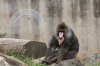
IMG_3054.jpeg
Mandrill (Mandrillus sphinx)
IMG_3071.jpeg
Black and White Ruffed Lemur (Varecia variegata)


So yes, San Francisco does have a sour reputation and bad publicity amongst zoo enthusiasts. But, I think it’s important to remember that despite the wonky administration, there’s a team of really dedicated and passionate keepers who are providing for the animals and sharing their love with visitors in any way they can. :) Yeah, that was a lil cheesy and cliche, but I felt I needed to share that :p.

From there, I headed towards the back of the zoo to see the larger animals since they supposedly went back in at 4:30. Cat Kingdom was where I really got to see how…interesting San Francisco got. It’s an odd mix of species. A nice mix, lots of species that I love and were glad to see, but definitely wasn’t a mix of purely cats! They’ve got a good few of the big cats— snow leopard, jaguar, lion (and formerly, tiger…). But here, you can also find Indian rhinos, bongos, black rhinos, Pygmy hippos, and penguins! Penguins! Maybe I’m the only one thinking this way, but the design of the exhibit and its placement as a rectangular pool smack dab in the middle of a plaza directly across from ocelots and Indian rhinos was so incredibly amusing to me. I did enjoy the inclusion of pachyderms in Cat Kingdom, but that’s just my bias for one of my favorite groups of animals :p.

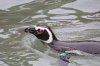
IMG_3094.jpeg
Magellanic Penguin (Spheniscus magellanicus)

Bear Country, nothing special to comment on here. I liked seeing hoofstock as always (Przewalski’s horse and peccaries), thought the pelican pond was nice. I didn’t think the grizzly bear exhibit was half bad either really.

After finishing Bear Country, I made it to the South American house right before it closed at 4. Small for your standard tropical house (or not, I’m just used to the bigger dome-style buildings) with a pretty decent array of birds (highlight being blue-headed macaw, though I missed those). Saw my first curl-crested aracari, but other than that I rushed my way past the herps (I was a little zoo-fatigued at this point after going to the Academy and now the zoo).

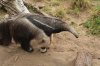
I spent my last 20-30 minutes at the zoo quickly going through Outback Trail (honorable mention to the wallaroo, we should have more of those in zoos!) and Exploration Zone, before backtracking because I realized I missed Puente del Sur. Made it in time to catch a glimpse of a tapir’s rump heading in for the night!

IMG_3277.jpeg
Giant Anteater (Myrmecophaga tridactyla)

Anywho, I ended my visit at the gift shop. This is where I’d like to share my biggest complaint about San Francisco. For context, I try to buy postcards and a keychain at every zoo I visit, depending on if they have those in stock. Most zoos I visit do a good job at having original designs on some if not all their merchandise, but this was not the case for San Francisco. Not only were all the keychains obviously unoriginal, but many of the postcards don’t even feature animals they have at the zoo! And I’m pretty sure all those pictures were stock photos— not photos of their animals. I still got myself a keychain and some postcards featuring animals they had at the zoo…but I’m not too happy about it :p.

Closing notes: I had a good time, mainly because of my lemur experience, but the issues with the zoo are big and apparent. There are committed keepers there and a solid animal collection, however, so I really hope some hearts change in the administration to give such a historical institution some well-deserved TLC in the future. It needs it.

7:00pm - San Jose (dinner)

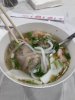
Dinner tonight wasn’t at a restaurant, but rather at a family member’s house. My grandma (dad’s mom) has many siblings in this part of the country, so we had a bit of a mini family reunion for the few days that my dad and I were in town. It was the typical conversation for most of the night, questions about school, the trip, etc. On the menu that night was a Vietnamese noodle soup called bánh canh. The rice noodles are thick, almost udon-like, and they’re served in a clear pork bone broth and topped with pork, sliced squid, fish cake, and shrimp. When made right (which can only be homemade :p ), the broth is rich and sweet, the noodles have a nice bounce and chew, and the toppings are perfectly cooked, accompanied with the refreshment of herbs. After dinner, I joined some of my great-aunts in baking a pandan honeycomb cake. Made with tapioca flour, it comes out fragrant with a chewy texture, and if made right, it’s “not too sweet”— the best result for Asian desserts. And after dessert, I had myself a jar of homemade yogurt, which was absolutely delicious and one of my favorites. Vietnamese yogurt was fashioned from rations in war times when fresh milk was scarce, so sweetened condensed milk is one of the main ingredients in the treat. ‘Twas a good day with good zoos and equally good food :).

IMG_4282.jpeg
 

Attachments

  • IMG_3054.jpeg
    IMG_3054.jpeg
    118.4 KB · Views: 131
  • IMG_3071.jpeg
    IMG_3071.jpeg
    91.7 KB · Views: 136
  • IMG_3094.jpeg
    IMG_3094.jpeg
    120.4 KB · Views: 130
  • IMG_4282.jpeg
    IMG_4282.jpeg
    77.2 KB · Views: 133
  • IMG_3277.jpeg
    IMG_3277.jpeg
    215.8 KB · Views: 136
Last edited:
Day 2 - Sunday, July 6 - Monterey Bay

7:00am - San Jose

Early start to the morning today. We headed to 7:30 mass at a local Vietnamese congregation in order to make it to Monterey in time. But of course, I couldn’t leave for the aquarium without finding myself a nice cup of coffee first…

I found a very new-wave, quirky, creative coffee shop a few blocks from the church called “dr.ink”. There, I had probably my favorite coffee of the trip: a blueberry latte. A simple latte topped with a blueberry cold foam. I’m no coffee purist, so I personally enjoy the wacky drinks that my fellow young people do. I’m also a sucker for anything blueberry. But yes, the latte was great— well presented and not-too-sweet.

IMG_4283.jpeg
Drink of the day: solid 9.5/10

10:00am - Monterey Bay

It’s no surprise to us ZooChatters that the Monterey Bay Aquarium is undoubtedly one of the best in the United States, if not the world. Many of us would be willing to brave long lines just to get in— which is exactly what I did today. The line to get in stretched down just past the corner of the block, but it wasn’t too horrible, seeing that I was taking my first photos around 10:20 or so.

I followed the same route that I did my last time at the aquarium five years ago (you can find that review here, if you truly have time to waste), starting with the popular sea otter exhibit…where the stars of the show unfortunately decided to no-show. So I moved on quickly, as much as I love sea otters, since my attention was focused elsewhere for the day.

The famous (well, what’s not famous here, let’s be honest) Kelp Forest! Definitely one of my absolute favorite tanks in this, or really any, aquarium. For those unfamiliar with this marvel, it’s 28-foot view into an underwater world, where you’ll see schools of anchovies balling around, leopard sharks gliding past, rockfish creeping around, and their huge giant sea bass making its rounds. Not only is it just an impressive view to look up at a stalk of kelp many times taller than you are, but it’s just an incredibly beautiful tank too. The way it’s designed, I personally feel as if I’m standing in a glass elevator that’s taking me down into the waters below. As one of the first exhibits to catch your eye upon entry, Kelp Forest is a warm invitation into the aquarium, but far from the last of the surprises you’ll find there.

Opened in 1984 (their 40th anniversary just passed recently!) in the shell of an old cannery, the Monterey Bay Aquarium focuses on exhibiting species and displaying ecosystems native to the waters on the other side of its walls. For the main gallery of “smaller” exhibits, it does just that. Making your way through, you get a detailed look through just about every aspect of the bay. In the rocky crevices, you’ll see giant pacific octopus and wolf-eels, accompanied by a squad of invertebrates (especially the strawberry anemone) ubiquitous across the entire aquarium. One of my personal highlights in this section is the rockfish tank, which on my visit held eight species, showcasing the vivid colorations of rockfish aside from the dull blue, black, and brown many are familiar with.

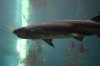
My favorite aquarium in the gallery is the large shark(?) tank, which is viewable throughout the gallery at a few different windows. Here, you’ll find some rarities such as the broadnose sevengill shark, which is a pleasure to watch, and the Pacific angel shark (which I could not find). Their exhibits are very well designed to showcase the natural scapes of the bay, and I really enjoy the larger, panoramic examples such as this.

IMG_3421.jpegBroadnose Sevengill Shark (Notorynchus cepedianus)

The middle portion of the gallery focuses on the sandy floors of the bay, and it was here that I haparticularly fun moments: first, I became familiar with the longspine combfish (which was unsigned) which I felt was particularly noteworthy because its a crazy cool-looking species in general. Second, I finally was able to see the blackeye goby, a species which evaded me at the Cal Academy as well as multiple previous tanks at Monterey…but nonetheless I prevailed :D.

Exiting the gallery, we work our way out of the depths to the shores, where there’s some interesting species such as the fat innkeeper worm, bay pipefish, and tube-snout. There’s also some particularly fun tidal displays, namely a tank for reef surfperch where guests can spin a wheel to change the direction of the current. While it is educational to see how the fish adapt to the changes, I do wonder whether this is particularly bothersome to the animals or not— though this is probably how rough their natural habitat is anyway.

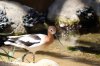
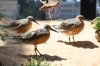
Now, onto the aviary!! This is my absolute favorite of the Monterey Bay Habitats, and it totally has nothing to do with my affinity for birds :p. I easily spent the longest time looking and photographing here (30 minutes or so), and was lucky enough to catch a feeding demonstration in that time. The birds, shy at first, darted around the exhibit wary of the keeper when she entered. But, upon realization this intruder carried food with her, the birds quickly let down their guard and became rather greedy menaces. Highlights here included the red-necked phalarope and the American avocet— one of my personal favorites.

IMG_3791.jpeg
Red Knot (Calidris canutus)
IMG_3695.jpeg
American Avocet (Recurvirostra americana)

The next few sections of the aquarium are ones I tend to gloss over, due to my combined general disinterest in its inhabitants and the congestion. As such, my reflection will be rather short. The exhibits include the rest of the Monterey Bay Habitats (touch pools and freshwater exhibits, though I’d like to honorably mention the wave tunnel, that’s always fun to walk through), Coral Kingdom, the Penguin exhibit, and the Enchanted Kelp Forest. If this journal hasn’t bored you already, any account of mine for these exhibits will definitely do the job. I do have some pictures, though:

Lion's Mane Nudibranch (4)_Original.jpeg
Lion’s Mane Nudibranch (Melibe leonina)
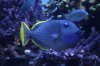
Blue-Throat Butterflyfish (4)_Original.jpeg
Bluethroat Triggerfish (Sufflamen albicaudatum)

Somewhere in the blur of time in between my stop at the aviary and the Open Ocean, two major moments happened. Firstly, a majorly disappointing moment when Makana, one of the resident Laysan albatrosses, decided she would not be participating in the day’s encounter. Probably one of the bigger gut punches of the trip, but the blow was softened knowing I’d already seen her on my last visit in 2019. Some nicer pictures would have been appreciated, though :(. The other moment was a bit more exciting, however. Monterey, in my opinion, ranks up there in terms of zoo food (there’s a thread on that somewhere, no?). Though a bit on the pricier side, (or not, this is California) my dad and I shared some seafood paella and king salmon poke. Their focus on sustainable seafood led to some rather commendable culinary choices, specifically the red seaweed salad that came with the poke. Not sure what kind of seaweed it was, but I’m assuming it was locally collected? Whatever it was, it was good. Oh! And the meal was made even better with our view out into the bay, where we watched a seal lounge and some birds float by.

IMG_4285.jpeg Harbor Seal (4)_Original.jpeg
 

Attachments

  • IMG_4283.jpeg
    IMG_4283.jpeg
    44.4 KB · Views: 99
  • IMG_3421.jpeg
    IMG_3421.jpeg
    55.6 KB · Views: 93
  • IMG_3695.jpeg
    IMG_3695.jpeg
    96.7 KB · Views: 94
  • IMG_3791.jpeg
    IMG_3791.jpeg
    127.3 KB · Views: 96
  • Lion's Mane Nudibranch (4)_Original.jpeg
    Lion's Mane Nudibranch (4)_Original.jpeg
    48.6 KB · Views: 93
  • IMG_4285.jpeg
    IMG_4285.jpeg
    90.1 KB · Views: 98
  • Blue-Throat Butterflyfish (4)_Original.jpeg
    Blue-Throat Butterflyfish (4)_Original.jpeg
    86.1 KB · Views: 91
  • Harbor Seal (4)_Original.jpeg
    Harbor Seal (4)_Original.jpeg
    181.3 KB · Views: 94
The Open Ocean. You’ve all heard of it. It’s likely the first exhibit that comes to mind at the mention of the aquarium, and deservedly so. Every detail of the gallery is unique and stunning, starting with the impressionable Pacific sardine rotunda cycling above you upon entry. Impressionable, I say, because it’s this exhibit and its memory that still hold fresh in my mind many years since my first visit as a young child. No less amazing is the jellyfish gallery, which provided me with great photo opportunities and even greater species.

IMG_4286.jpeg
Sardine rotunda
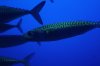
Pacific Mackerel (5)_Original.jpeg
Pacific Mackerel (Scomber japonicus)
Pacific Sea Nettle (10)_Original.jpeg
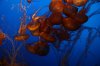
Pacific Sea Nettle (Chrysaora fuscescens)

Of course, the star of the show is the 1.2-million gallon tank housing a variety of pelagic species. Its window, several dozen feet long, provides a wonderful view to the massive schools of sardines and tuna. In its past, great white sharks and ocean sunfish have called the aquarium home, but on my visit the exhibit held ‘just’ hammerheads, tuna, mahi-mahi, stingrays, and sea turtles. I could easily spend hours watching the exhibits’ inhabitants glide by— there’s just something so calming about the vast image of the open ocean, illuminated by the few columns of light that slice into the depths.

Yellowfin Tuna (4)_Original.jpeg
Yellowfin Tuna (Thunnus albacares) - very much aware this picture isn’t great, but I want to make it known that I tried!!
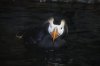
Tufted Puffin (5)_Original.jpeg
Tufted Puffin (Fratercula cirrhata)

Now, the part of Monterey we’ve all been waiting for— Into the Deep! Since the exhibit’s announcement however long back, it’s been on my mind to make a return back to the aquarium. And man, was it stunning. I really had no idea what I was expecting, but I definitely was not expecting the exhibition to be as large and extensive as it was. Into the Deep is organized into five sections, beginning with your descent into the ocean’s depths. Once there, you’re met with another, lower view into the Open Ocean tank— an addition I enjoyed when it was incorporated into previous temporary exhibition on my last visit.

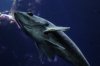
Animals first appear in midwater gallery, featuring a series of jelly tanks. It’s rare that I (and I’d assume the most of us) see any jellies beyond the usual three: moon jellies, sea nettles, and upside-down jellies. So, to be in a room filled with siphonophores, crown jellies, and comb jellies (very, very many of them) was definitely something else. Specifically, I remember having a little out-of-this-world moment watching their display of an undescribed comb jelly species. How surreal is it to be able to witness a species so new to science that it’s yet to be named? Like the jelly, my feelings were indescribable. The seafloor gallery was equally mesmerizing. While the tanks aren’t stocked with giant squids, oarfish, or whatever behemoths we first associate the deep sea with, the focus on various wild-looking sea stars, corals, sea cucumbers, etc. opened up a new appreciation for these overlooked species I hadn’t had before. There’s a fair share of larger animals too, though. Giant isopods and lumpsuckers, as well as an impressive whale fall exhibit that includes spider crabs, various fish, and my personal highlight: the Australian ghostshark. After missing out on a chimaera sighting earlier in the summer at Omaha, I was glad to have that chance here.

Tower Jelly (2)_Original.jpeg
Tower Jelly
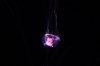
Undescribed Jellyfish (6)_Original.jpeg
Red X Comb Jelly
IMG_4212.jpeg
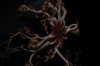
Basket Star (Gorgonocephalus eucnemis)

With a quick honorable mention to the beautiful scenery surrounding the aquarium and their great deck and outside exhibits that capture the beauty of Monterey Bay, I conclude my totally honest review of the Monterey Bay Aquarium. Oh, and the species list can be found here.

8:00pm - San Jose

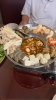
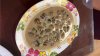
Before wrapping up this first leg of the trip, we stopped for dinner at a seafood hotpot restaurant in San Jose— “Lẩu Hải Sản.” We enjoyed a Thai-style broth with various shellfish, fish cakes, and veggies to cook. As good as that was, my attention was drawn towards one of my favorite Vietnamese dishes— ốc len xào dừa, or “snails sautéed in coconut milk.” The snails are complemented with salty and sweet, nutty coconut sauce and Vietnamese coriander leave, and are plenty of fun to eat. I definitely recommend trying this dish if you ever get the chance.

IMG_4301.jpeg IMG_4302.jpeg
 

Attachments

  • Pacific Mackerel (5)_Original.jpeg
    Pacific Mackerel (5)_Original.jpeg
    43.6 KB · Views: 95
  • Yellowfin Tuna (4)_Original.jpeg
    Yellowfin Tuna (4)_Original.jpeg
    21.1 KB · Views: 96
  • Tufted Puffin (5)_Original.jpeg
    Tufted Puffin (5)_Original.jpeg
    49.8 KB · Views: 92
  • Tower Jelly (2)_Original.jpeg
    Tower Jelly (2)_Original.jpeg
    29.6 KB · Views: 96
  • IMG_4212.jpeg
    IMG_4212.jpeg
    49.4 KB · Views: 95
  • IMG_4286.jpeg
    IMG_4286.jpeg
    47.1 KB · Views: 95
  • Undescribed Jellyfish (6)_Original.jpeg
    Undescribed Jellyfish (6)_Original.jpeg
    16 KB · Views: 95
  • Pacific Sea Nettle (10)_Original.jpeg
    Pacific Sea Nettle (10)_Original.jpeg
    104.7 KB · Views: 91
  • IMG_4301.jpeg
    IMG_4301.jpeg
    65.1 KB · Views: 91
  • IMG_4302.jpeg
    IMG_4302.jpeg
    103 KB · Views: 97
Back
Top