ZSL Whipsnade Zoo ZSL Whipsnade Zoo News 2024

Thanks for the lovely write up.

Have to agree the Anoa enclosure seems a bit open. Like Bongo (and to an extent Okapi), I feel that they rarely get enclosures which truly represent the habitats they live in - dense forest with lots and lots of planting. This hasn't seemed to be a major problem for them in zoos, however.

The thing is a lot of species just have to tolerate the more open enclosures they find themselves in in zoos. At Whipsnade I've found the Bongo are usually using either the small wooded area along the perimeter fence of their enclosure or, perhaps more usually, in the inside stables. At Howletts/PL I have rarely seen the Bongo over many years, they seem invisible and I suspect are resting directly behind the shed/shelter where they are out of view of visitors. So 'secretive' species like this may actually benefit far more (and perhaps show themselves better) from more extra cover than is usually available.
 
The thing is a lot of species just have to tolerate the more open enclosures they find themselves in in zoos. At Whipsnade I've found the Bongo are usually using either the small wooded area along the perimeter fence of their enclosure or, perhaps more usually, in the inside stables. At Howletts/PL I have rarely seen the Bongo over many years, they seem invisible and I suspect are resting directly behind the shed/shelter where they are out of view of visitors. So 'secretive' species like this may actually benefit far more (and perhaps show themselves better) from more extra cover than is usually available.

Makes sense to me. I always think of the Bongo at Marwell, who (iirc) just have an open field without even a tree. They seem to tolerate it fine but it's hardly the ideal.

Of course, it's difficult to truly reflect these habitats in zoos, especially those in cities or open sites like Whipsnade has with little woodland. It isn't, however, difficult to plant a few more trees!
 
Thank you for that excellent writeup, @Dr. Loxodonta ! It is brilliant to see such positivity, especially regarding Monkey Forest which I am yet to see, but is a very good excuse to return to my favourite zoo at some point this year. The benches being made from recycled water bottles is a brilliant touch - I believe Whipsnade also do this with some of their benches near the elephants, although I may be imagining that, and it is something that I would love for ZSL to apply to London.

Regarding the aardvarks, I too was amazed by the size of their enclosure (it formerly held Red River Hogs, and was designed for, I believe, antelope, hence its large size), and on earlier visits was disappointed by the size of the Meerkat enclosure. However, on more recent visits, the Meerkat enclosure seemed to have been combined with that for the Aardvarks; is this no longer the case?

Nice to know that the female anoa will move to Monkey Forest soon and that the Victoria Crowned Pigeons are now in the Butterfly House. Visitors mistaking the pigeons for peacocks is a very common occurrence - I visit London Zoo regularly and spend much of my visits in Blackburn Pavilion, where, during busier hours, it is not uncommon to hear people excited by seeing peacocks two or three times per visit!
 
Thank you for that excellent writeup, @Dr. Loxodonta ! It is brilliant to see such positivity, especially regarding Monkey Forest which I am yet to see, but is a very good excuse to return to my favourite zoo at some point this year. The benches being made from recycled water bottles is a brilliant touch - I believe Whipsnade also do this with some of their benches near the elephants, although I may be imagining that, and it is something that I would love for ZSL to apply to London.

Regarding the aardvarks, I too was amazed by the size of their enclosure (it formerly held Red River Hogs, and was designed for, I believe, antelope, hence its large size), and on earlier visits was disappointed by the size of the Meerkat enclosure. However, on more recent visits, the Meerkat enclosure seemed to have been combined with that for the Aardvarks; is this no longer the case?

Nice to know that the female anoa will move to Monkey Forest soon and that the Victoria Crowned Pigeons are now in the Butterfly House. Visitors mistaking the pigeons for peacocks is a very common occurrence - I visit London Zoo regularly and spend much of my visits in Blackburn Pavilion, where, during busier hours, it is not uncommon to hear people excited by seeing peacocks two or three times per visit!

I love watching the aardvarks use the enclosure, always so active when I’ve seen them. The meerkats and porcupines share one enclosure and the aardvarks the other, the ability to let them all use each enclosure is there and I have seen the meerkats use the aardvark enclosure.

From my memory the meerkat/porcupine area was antelope and what is the aardvark enclosure used to have vultures
 
Thank you for that excellent writeup, @Dr. Loxodonta ! It is brilliant to see such positivity, especially regarding Monkey Forest which I am yet to see, but is a very good excuse to return to my favourite zoo at some point this year. The benches being made from recycled water bottles is a brilliant touch - I believe Whipsnade also do this with some of their benches near the elephants, although I may be imagining that, and it is something that I would love for ZSL to apply to London.

Regarding the aardvarks, I too was amazed by the size of their enclosure (it formerly held Red River Hogs, and was designed for, I believe, antelope, hence its large size), and on earlier visits was disappointed by the size of the Meerkat enclosure. However, on more recent visits, the Meerkat enclosure seemed to have been combined with that for the Aardvarks; is this no longer the case?

Nice to know that the female anoa will move to Monkey Forest soon and that the Victoria Crowned Pigeons are now in the Butterfly House. Visitors mistaking the pigeons for peacocks is a very common occurrence - I visit London Zoo regularly and spend much of my visits in Blackburn Pavilion, where, during busier hours, it is not uncommon to hear people excited by seeing peacocks two or three times per visit!

Whipsnade have replaced most of the benches around the park with the ones made from recycled plastic including around the elephants and on the top near the cafe though there are a few wooden ones still around the majority have switched. A nice touch and they have information stencilled on them about the origin.
 
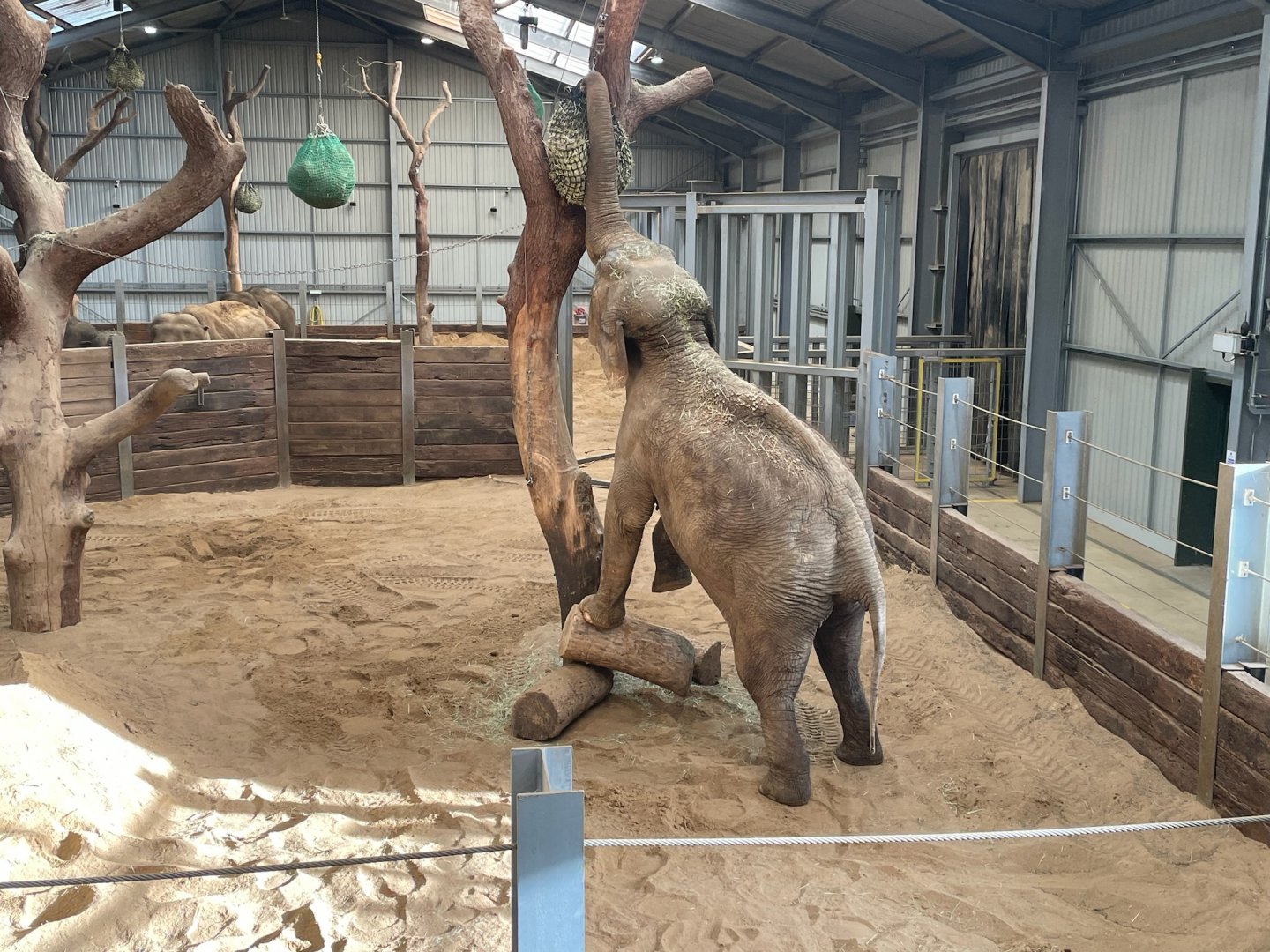
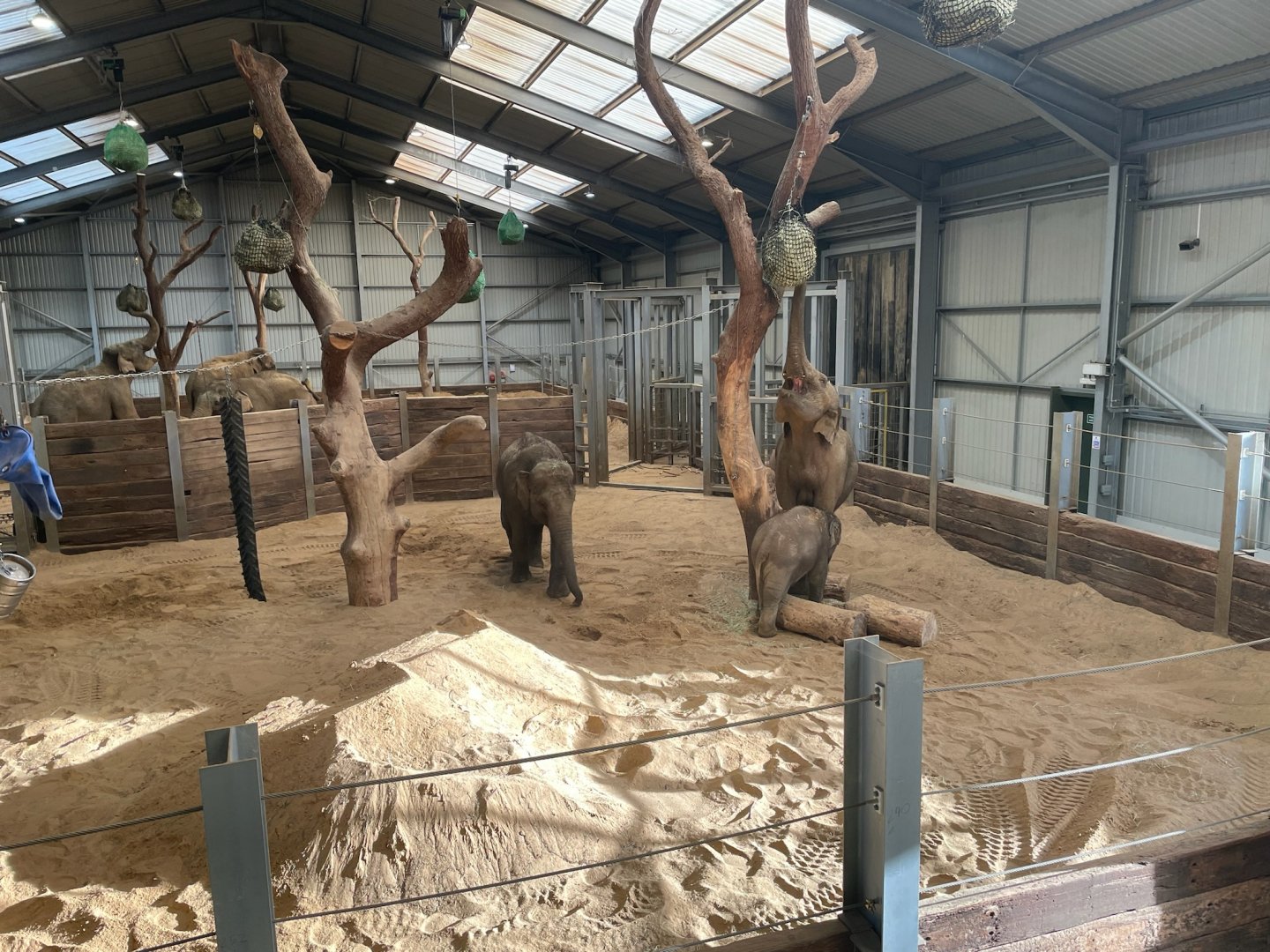
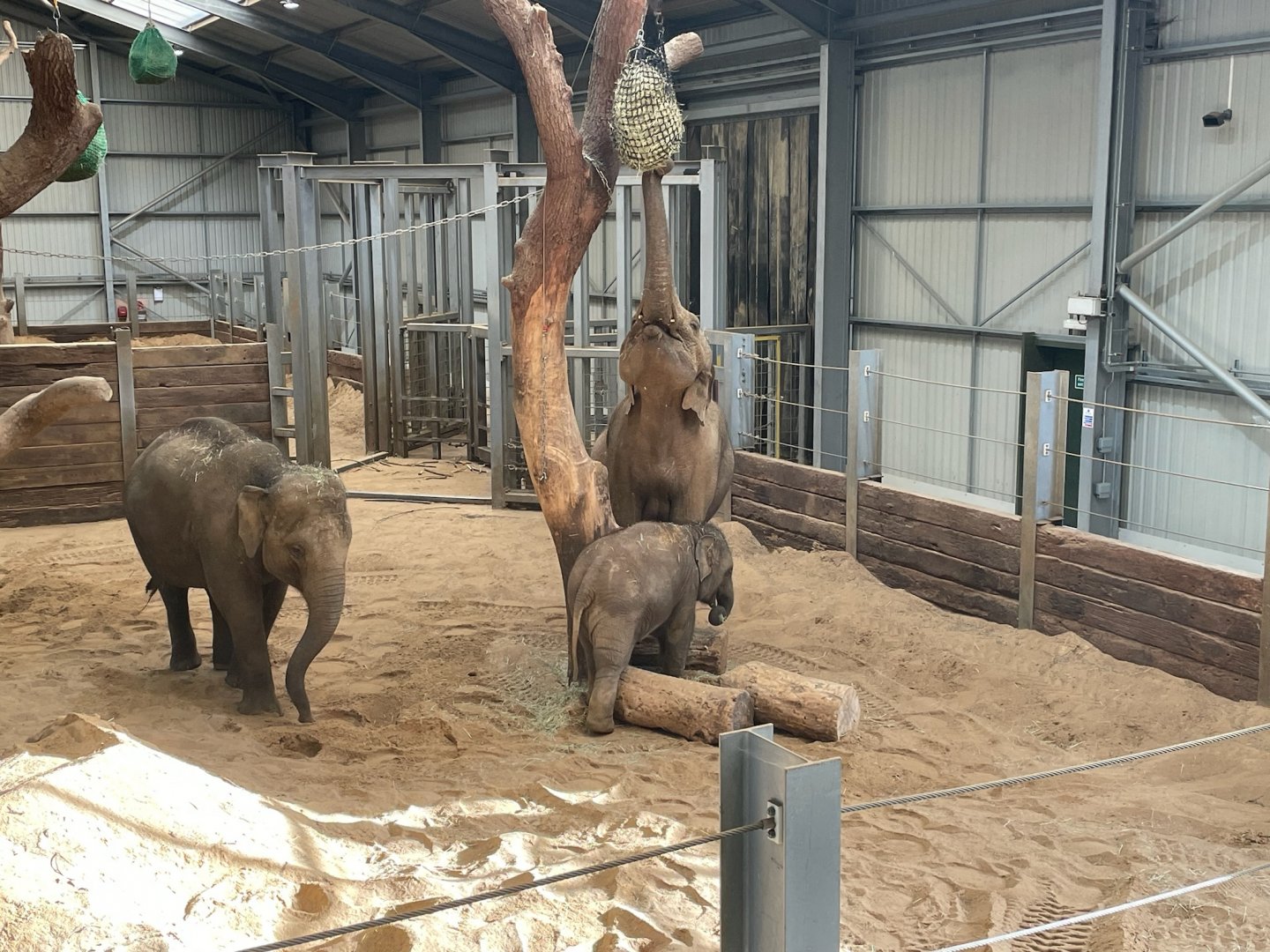
Then it was off to the elephants. The Asian Elephant herd was inside, feeding although one female could not reach the bale of hay. She then pulled a log over and attempted to stand on this to reach the hay. Lastly she resorted to leading over the young calf, Nang Phaya, and used her as a step! The poor little calf than watched as an older female dug up some treats, the calf gave it a go but instead ended up hitting itself with its trunk! The resident bull, Ming Jung, was resting in his enclosure.
Next I finished off the area of Asia that I had missed to reach Monkey Forest. At the bridge, over the Greater one-horned Rhinoceros paddock, there was a sign announcing that if one was searching for the baby rhino I calf, they should turn around to Africa :p.
A young yak calf was running around the field as I crossed over to the indoor quarters of the babirusa and langur (which I had previously missed).

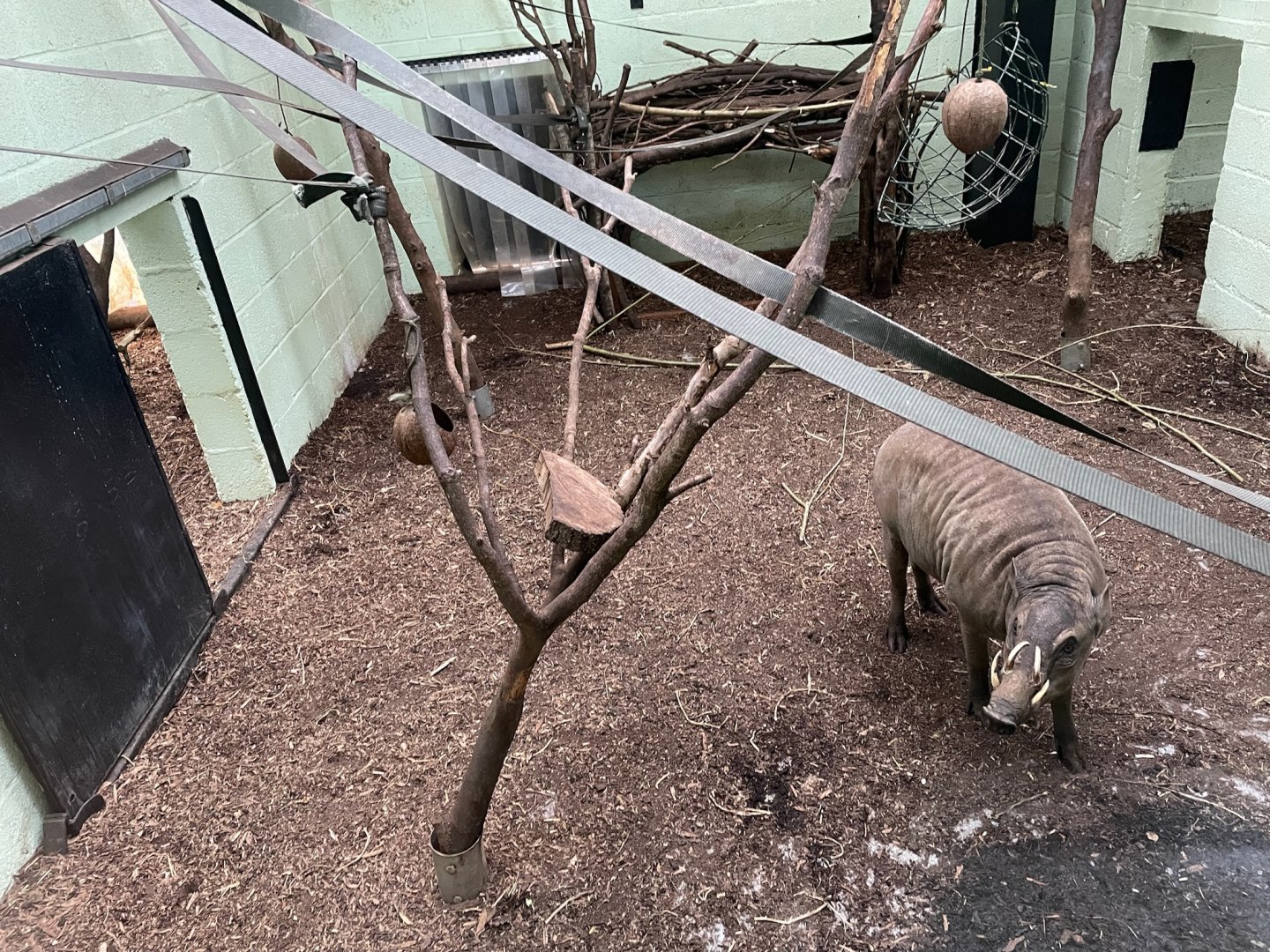
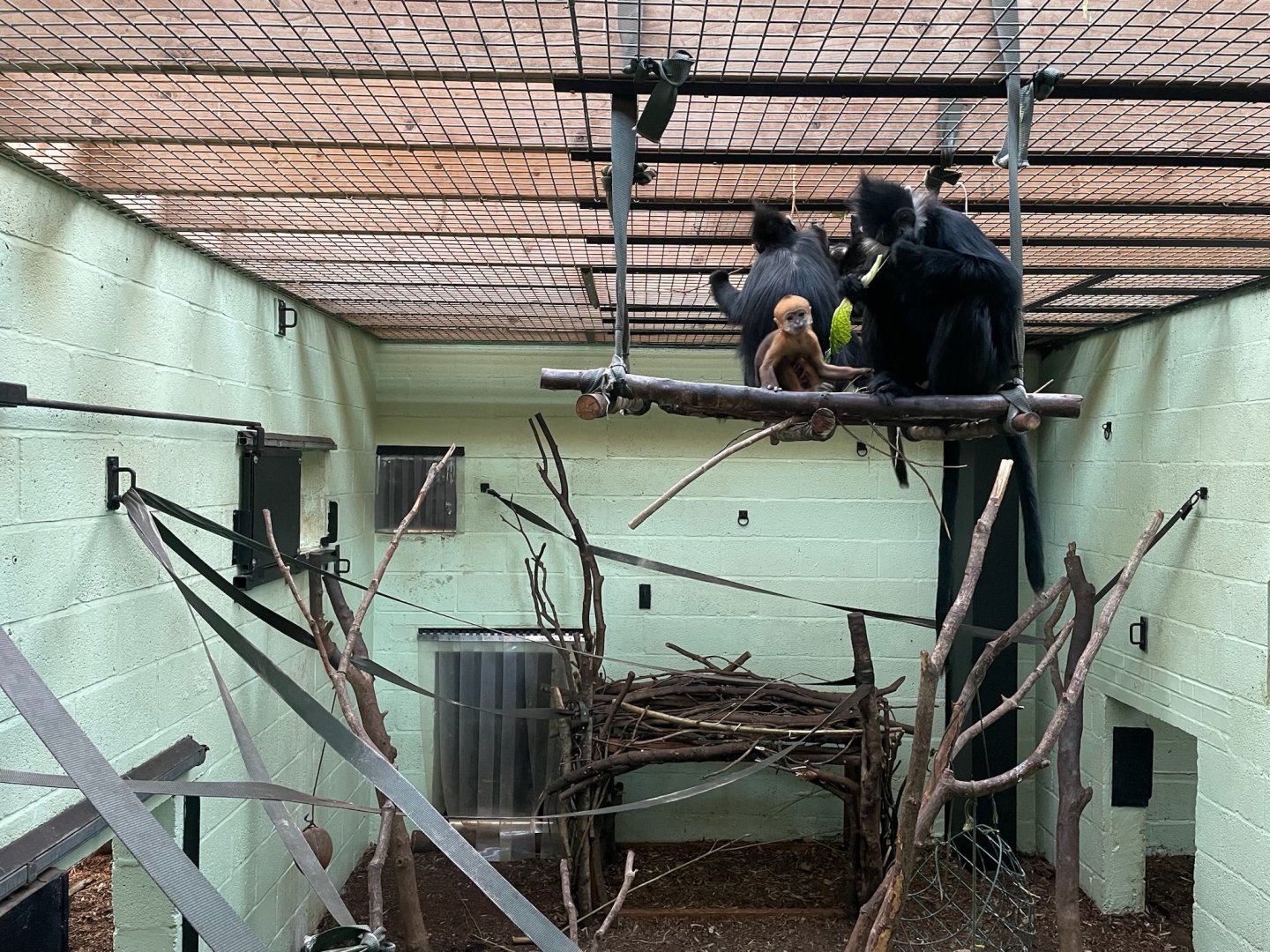
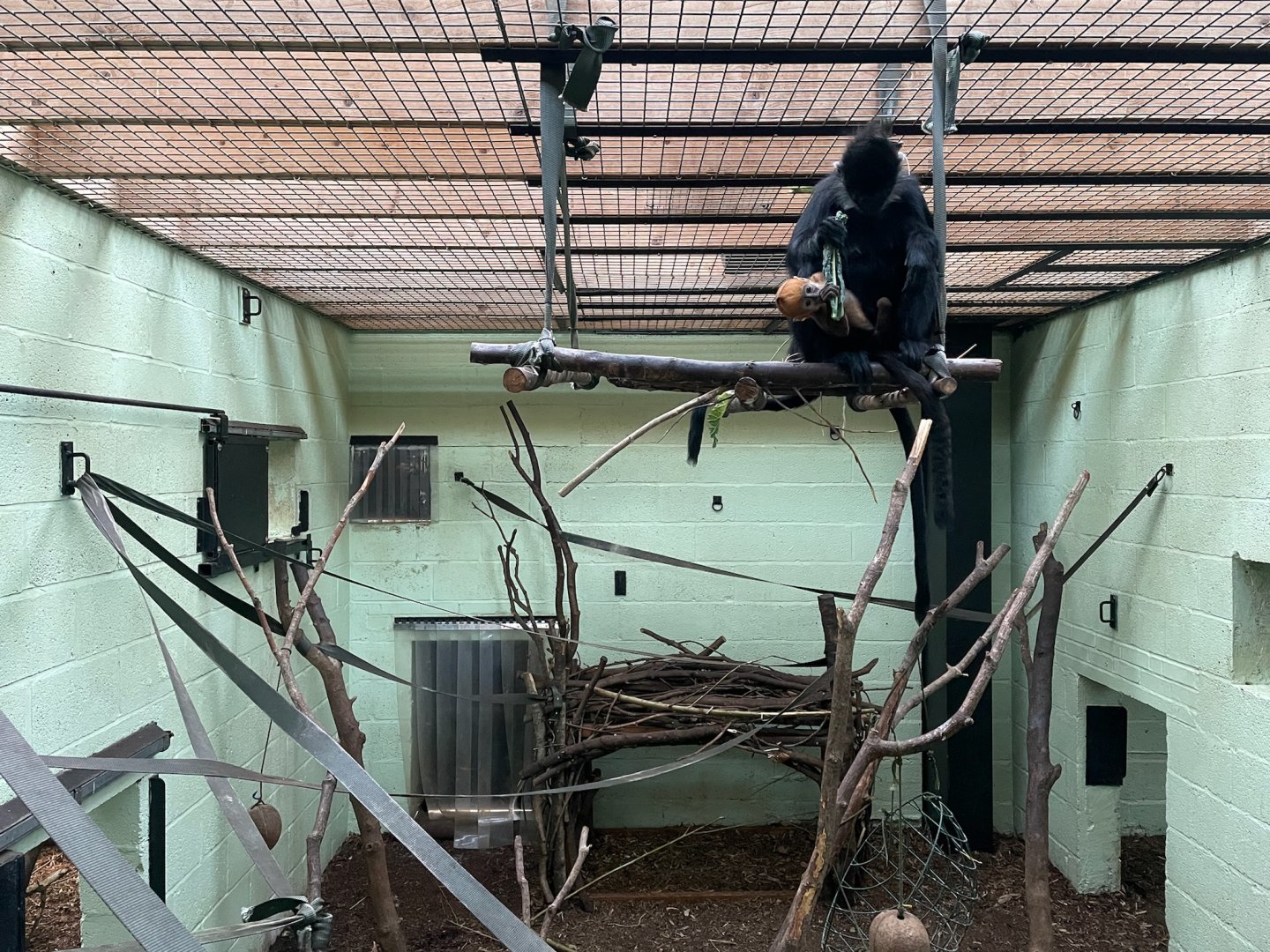
The babirusa/langur quarters were inside the original Sloth Bear building, with the walkway seemingly original. The babirusa were on the ground,scratching at the trees in which the Francois Langur resided. Then, a large female crawled through into the room, a strange orange shape on her chest. The youngster was adorable, trying to snatch a pice of cabbage from its mother :D.
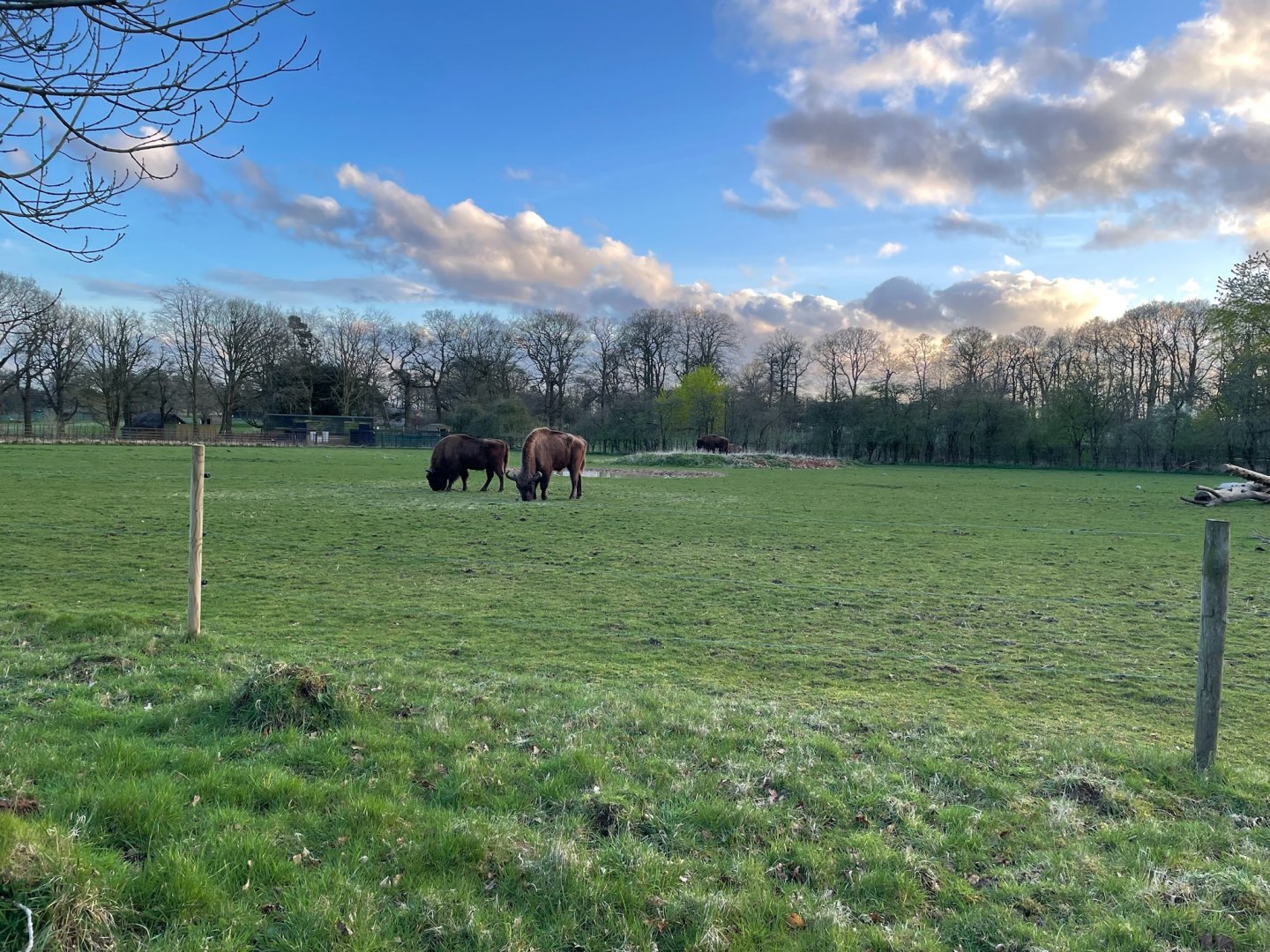
I lastly headed up to the Hippo House, where Tapon, the Pygmy Hippo splashed. Outside, Lola and Hodor were grazing before they were called inside where I could properly see their size. There was no sign of the Cheetah. Lastly I went through the Painted Wolf walkthrough where the Wattled Cranes were strutting about and out via the Eurasian Bison.
Thank you for reading and as always I hope this information was helpful.
The photos of the elephant finding unique ways of reaching the hay were amazing, thank you
 
The thing is a lot of species just have to tolerate the more open enclosures they find themselves in in zoos. At Whipsnade I've found the Bongo are usually using either the small wooded area along the perimeter fence of their enclosure or, perhaps more usually, in the inside stables. At Howletts/PL I have rarely seen the Bongo over many years, they seem invisible and I suspect are resting directly behind the shed/shelter where they are out of view of visitors. So 'secretive' species like this may actually benefit far more (and perhaps show themselves better) from more extra cover than is usually available.
I was at a "safari park" just recently and bongo and eland were both tucked into the wooded areas. Tho hard to see they were seemed very comfortable. Bongo didn't surprise me but eland? They could not have been more discreetly hidden or apparently relaxed.
 
I was at a "safari park" just recently and bongo and eland were both tucked into the wooded areas. Tho hard to see they were seemed very comfortable. Bongo didn't surprise me but eland? They could not have been more discreetly hidden or apparently relaxed.
Longleat used to have their eland and bongo held like this (before the latter all recently passed). Theoretically both had access to most of the safari park, but the bongo kept to the woodland while the eland tended to wander further. However given the breeding success of bongo in more standard enclosures - especially Marwell - it doesn't seem to affect them too much. It's a similar story with okapi. But every time I've seen the bongo at Whipsnade he's stayed rather close to the house. Perhaps he just doesn't like sitatunga
 
The thing with bongo is that not only are they just more secretive by nature, they are also largely nocturnal. I have worked with bongo across several facilities, all of which exhibited them in large, forested/private enclosures, and they all almost always spent their days tucked away in the furthest, darkest, most secluded parts of their exhibits -- really only coming out for food. You would see tracks and feces throughout the exhibits to show that they were using the space, but they were just using the space at night. It was always fun to have overnight watches or evening events because then you would actually see them out and about.
 
The thing with bongo is that not only are they just more secretive by nature, they are also largely nocturnal. I have worked with bongo across several facilities, all of which exhibited them in large, forested/private enclosures, and they all almost always spent their days tucked away in the furthest, darkest, most secluded parts of their exhibits -- really only coming out for food. You would see tracks and feces throughout the exhibits to show that they were using the space, but they were just using the space at night. It was always fun to have overnight watches or evening events because then you would actually see them out and about.
Indeed, the best views which I have ever had of the bongos at Whipsnade were on the two occasions in which I did the zoo’s overnight experience, ‘Lookout Lodge,’ which involved feeding the bongos as sunset, but returning there later on in the night also offered a decent view. I was rather surprised to see a nocturnal or even crepuscular antelope species, but this does seem to be the trend with bongo.

Personally, I have never had all that much of a problem with Whipsnade’s bongo enclosure. I have always had decent views of the animals, only that (barring the aforementioned instances during Lookout Lodge) they weren’t very active, resting in the long grass that surrounds the occasional live trees in their enclosure. While not perfect, it seemed to offer sufficient enough privacy, and the fact that some of the indoor stalls were offshow certainly helped with this. For me, it is one of the very best enclosures that I have ever seen for the species, although I do understand the criticisms regarding privacy.

To be honest, the only enclosures I have seen for bongos in the UK which offer sufficient foliage for privacy are Paignton and Woburn, and in both instances this has made viewing just about impossible, with only brief glimpses of bongo stripes among the bushes on three visits to Paignton, and only seeing the head of one peering out of their stables at Woburn. For me, Whipsnade strikes the perfect balance, and while animal welfare should always come before visitor viewing, it doesn’t seem to me that animal welfare is really compromised at Whipsnade (the example given by @cerperal about Marwell’s breeding success proves this).
 
Thanks for the lovely write up.

Have to agree the Anoa enclosure seems a bit open. Like Bongo (and to an extent Okapi), I feel that they rarely get enclosures which truly represent the habitats they live in - dense forest with lots and lots of planting. This hasn't seemed to be a major problem for them in zoos, however.
Hopefully, the horticulture Department will start work on this.
 
Spent the afternoon up at Whipsnade and having said all week it would be dry, unfortunately the weather turned it into a bit of a damp squib. Still really nice to visit though.

The main focus was of course Monkey Forest and I think its a fantastic new exhibit with great spaces for both species. The indoor spaces offer such great views as well. The Macaques were feeding inside and the male Anoa was exploring his lovely paddock.

The work at the exit to the passage through asia is progressing with the Camels now having a hard standing area and the horses area being worked on.

Didnt see the Kookaburras in the old Saki monkey enclosure but its a good use of the enclosure. The monkey bridge connecting to the old discovery centre has now gone and the old marmoset aviary has also gone.
 
Didnt see the Kookaburras in the old Saki monkey enclosure but its a good use of the enclosure. The monkey bridge connecting to the old discovery centre has now gone and the old marmoset aviary has also gone.

When I was there the other week, I saw the Kookaburras being put into travel boxes towards the end of the day around, so it seems they don't spend all their time in the aviary (instead in the old Bird Garden for the night/rest of the time?). One went into it's box just fine, the other wasn't too keen, even with the offer of half a mouse!
 
When I was there the other week, I saw the Kookaburras being put into travel boxes towards the end of the day around, so it seems they don't spend all their time in the aviary (instead in the old Bird Garden for the night/rest of the time?). One went into it's box just fine, the other wasn't too keen, even with the offer of half a mouse!

Ah ok interesting, there was a new house structure so I assumed they were hiding in there
 
Back
Top