A Guidebook Library: TLD's year-long randomised walkthrough of zoo guides

Day 103: Milwaukee County Zoo (1967) - Gorilla eating grapes

full

full


Page count: 64 pages
Photographs: 140 photographs (18 in colour)
Illustrations/diagrams: Two; a diagram of a haha moat, and plans for a future reptile house.
Layout: General introduction, followed by walkthrough account of collection divided into discussion of the central geographic zones, and the stand-alone houses and exhibits.
Map: Two; an overall plan of the zoo, and close-up map of central geographic zones.


This guidebook, the first of two requests from @birdsandbats which I will be discussing within this thread in the coming days, represents one of the more interesting and higher-quality North American items within my personal collection; certainly once one has discounted the "big hitters" at Bronx and San Diego. It came into my possession a year or so ago, when an eBay seller who had previously lived in North America for some time returned home to the UK and started to sell off their collection of US zoo guidebooks; as one can imagine, this represented an influx of usually-scarce items into the European secondary market, and I was not the only collector to purchase several nice little oddities!

full


The guidebook opens with several introductory pages covering a variety of key points for visitors such as opening hours and feeding times, the amenities and services available at the zoo itself, and emergency contact information, before moving into a more general discussion of the intended purpose of the guidebook as a whole; here it is noted that the general intention was to provide a reference aid and resource which could be used over the course of a visit to Milwaukee County Zoo in order to provide a walkthrough guide through the collection. This is, of course, one of the primary purposes of many zoological guidebooks - however, as I shall discuss anon I feel that this guidebook manages to fulfil this aim rather more effectively than is usually the case.

The first segment of the walkthrough accounts discusses the various geographically-themed panorama exhibits located within the collection at the time of publication; these appear to have been very much in the same vein as those found within (and pioneered by) Tierpark Hagenbeck, comprising several distinct paddocks and enclosures separated by dry moats, hahas and other "invisible" barriers. Each account contains a detailed description of the overall panoramic effect being achieved, followed by discussion of the individual species and paddocks located within the geographic zone in question. The detail and quality within these individual species accounts reaches a consistently high level, containing information about the habitat, diet and behaviour of the species in the wild, details of their morphology, and other items of trivia relating to the species in question. It is here worth noting that the guidebook is lushly-illustrated with a wide range of photographs, both colour and black-and-white, depicting the various exhibits and species discussed within the text itself; several of these present full-page images of the geographic panoramas within the zoo, making it even clearer how much these exhibits owe to Hagenbeck in terms of their concept, design and contents.

full

full


The second major segment of the walkthrough account comprises lengthy and detailed discussions relating to the dedicated animal houses and exhibits located throughout the collection, above and beyond the geographic panorama exhibits. These are as follows; the Aviary or Bird House, containing a Penguin Hall, an Aquatic Hall, a Rainforest Hall, and a Shorebird Hall; the Primate House and associated Monkey Island exhibit, with a dedicated segment relating specifically to "Samson", the Western Lowland Gorilla located at Milwaukee County Zoo at the time of publication; the Small Mammal House, which is divided into a diurnal and nocturnal exhibit; the Feline House; and the Pachyderm House. Each of these exhibits are discussed in a high amount of detail, in some cases covering several pages in total, and with species accounts relating to the key inhabitants. These meet the same high standard exhibited within the aforementioned geographical exhibits, with the portion dedicated to the nocturnal exhibits within the small mammal house providing a number of points which I suspect would be of particular interest to those reading this thread given the extreme rarity of the species concerned.

Beyond here, a number of concluding pages discuss a variety of supplementary points relating to the collection in question, most pertinently the plans for a reptile house to be constructed within the zoo at some point subsequent to the publication of this guidebook; given the fact I am only vaguely familiar with the collection in question, with the majority of my knowledge deriving directly from this guidebook, I do not know whether these plans eventually bore fruit. The final double-page spread of the guidebook contains a general potted history of Milwaukee Country Zoo, the council authority responsible for the management of the collection, and key information relating to the senior membership of the zoo management.

full

full


Here, it is worth briefly discussing the pair of maps located within the introductory segment of the guidebook; as one will have noticed over the course of the last few months, I have a particular liking for aesthetically-striking and attractive maps where they occur within a zoological guidebook, and feel that they strongly increase the overall quality of the guidebook within which they are located. In this case, both of the maps in question - one depicting the entirety of the zoo, whilst the second focuses on the central geographically-defined exhibits and those animal houses and enclosures located in their immediate proximity - are attractively-presented, easy to reference and well-labelled, with the second map providing a particular highlight in my opinion given the fact that it depicts the overall design and layout of the panoramic exhibits and paddocks in relation to one another.

full


Overall, then, this is an attractive and well-formatted guidebook, and one which displays a high level of production quality; one of the few issues I have with the guidebook as a whole, however, happens to be a minor point relating to the production of this guidebook - to wit the choice to produce it in a large format slightly larger than A4, as this is somewhat counter-intuitive given the stated purpose of the guidebook requires ease of use whilst walking around the collection. In terms of overall design and presentation, however, this guidebook is excellent - the quality and quantity of the text is pleasingly-high, and the use of photographic images to both break up the text and illustrate the exhibit accounts themselves produces an attractive and aesthetically-pleading impression.

There is, it goes without saying, a vast amount of information which I have omitted or glossed over within this guidebook; as such, I am as happy as ever to answer whatever questions may arise... and of course, general comments and remarks would be much appreciated! I would be particularly interested to hear more about what the collection in question was like in more recent years, from those Zoochatters who have been fortunate enough to visit in person.
Thanks so much! The most interesting aspect of this guidebook is how little this zoo has changed since this was published! The panorama exhibits, pachyderm house, small mammal house and aviary all still exist today nearly unchanged from the 1960s. The primate house is also still around, just heavily renovated. That reptile house did get built and is also there today.
 
Last edited:
That reptile house did get built and is also there today.

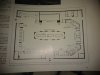
Interesting; I've quickly snapped the following image from the segment discussing the planned construction of the reptile house, and would be interested to hear how closely it matches the current status-quo.

291361499_587520909607754_814710735698774053_n.jpg
 

Attachments

  • 291361499_587520909607754_814710735698774053_n.jpg
    291361499_587520909607754_814710735698774053_n.jpg
    82.9 KB · Views: 53
Interesting; I've quickly snapped the following image from the segment discussing the planned construction of the reptile house, and would be interested to hear how closely it matches the current status-quo.

View attachment 555084

Am I the only one who had to read ''porpoise tank'' twice only to be left thinking... why a porpoise tank in a room with various amphibians, reptiles and freshwater fish
 
Am I the only one who had to read ''porpoise tank'' twice only to be left thinking... why a porpoise tank in a room with various amphibians, reptiles and freshwater fish

To add to the confusion, I am fairly sure from the accompanying text that the "freshwater porpoises" alluded to were actually river dolphins!
 
Am I the only one who had to read ''porpoise tank'' twice only to be left thinking... why a porpoise tank in a room with various amphibians, reptiles and freshwater fish
To add to the confusion, I am fairly sure from the accompanying text that the "freshwater porpoises" alluded to were actually river dolphins!
Yes, it was a 50,000 gallon tank for Amazon River Dolphin, shared with Pacu.

Here's an article with photos, originally published in 1978 when the dolphin died: Who doesn't love dolphins? These guys, apparently
 
Interesting; I've quickly snapped the following image from the segment discussing the planned construction of the reptile house, and would be interested to hear how closely it matches the current status-quo.

View attachment 555084
That floorplan is nearly identical to the what can be seen at the zoo today. The building is still arranged with a native fish tank in the center and a variety of tanks and terrariums along the perimeter. The "porpoise tank" (which held an Amazon River Dolphin for a few years after the house opened) is now an Amazon River tank, and the area labeled as the Amazon tank on that map is now for Rift Valley cichlids. That large lizard terrarium at the bottom left is now a Pacific kelp forest tank. Otherwise this is still accurate to what's there today.
 
Well, they haven't produced guidebooks in 15 years, with the last true guidebook being published in 2008; from what I recall being told, the decision there is allegedly due to it being seen as economically infeasible - along with a belief that the zoo's mobile phone app provides everything that a guidebook could, and that guidebooks are out-of-date before they even go on sale. All nonsense, in my opinion :p in latter years, I believe suggestions that guidebooks should be resumed have been met with an additional response, that ceasing or severely reducing the publication of printed material is the responsible thing to do for conservation purposes. This latter reason is also why, from the end of this year, the member's magazine is going digital-only.

As for the production of maps, I suspect they were temporarily ceased during the height of the restrictions as a means of reducing the amount of interpersonal contact as the maps were always given out directly at the entrance booths - @MRJ can presumably verify whether or not that was also the line of thought at Moonlight - and that the fact they have not been resumed plays more into the aforementioned "reduction in printed material" initiative.
Yes indeed it was the interpersonal contact and the fact paper cannot be "cleaned". We replaced it with QR codes people could use to download the map onto their phones. When the time came to consider it again we decided against it because most people were quite happy with the downloads, and the fact the paper maps were by far the most numerous litter items on the property when we did offer them. We still provide a photocopied map to those very few people who can't download it if they want one.

It is a shame as I think we had a very attractive map brochure which I hoped people would keep as a souvenir.
 
The numbering corresponds to numbering used within the species/exhibit accounts (for instance the scan of the page discussing the primate house shows that this was number 8 :) completely forgot to mention that, as I was close to falling asleep when writing/posting the review, so thanks for flagging it up!
I visited Milwaukee Zoo in March 2016. The basic layout was very much as per the map you have included. We were shown around by a Curator who took us primarily to areas that interested me, the small mammal house, the bird house and the Australian house. However I'm not sure where the bird or mammal house were on this map, so if you can, it would be appreciated if you could identify their numbers.

There was a lot of construction underway at the time. I remember even the bird house was closed for renovation. It was a nice opportunity to go through it without any public. We were also taken under the African hoofstock area where their winter stalls are located. Many animals were still in their stalls as it was still very early in Spring.
 
and the fact the paper maps were by far the most numerous litter items on the property when we did offer them. We still provide a photocopied map to those very few people who can't download it if they want one.

It is a shame as I think we had a very attractive map brochure which I hoped people would keep as a souvenir.

Coincidence or not, I think I have never seen a discarded map on the ground at any zoological collection where the maps have to be paid for, even if it only costs a relative pittance, for instance at Zoo Wroclaw where the zoo map is obtained via vending machines and costs 5 zloty, or about £1. Probably a psychological sunk-cost thing, if I am not merely imagining it.

Something to perhaps consider at some point down the line - you could even add extra explanatory text and split the difference between a map and a guide!

However I'm not sure where the bird or mammal house were on this map, so if you can, it would be appreciated if you could identify their numbers.

The Aviary is 6, and the Small Mammal house is 12 :)
 
  • Like
Reactions: MRJ
Coincidence or not, I think I have never seen a discarded map on the ground at any zoological collection where the maps have to be paid for, even if it only costs a relative pittance, for instance at Zoo Wroclaw where the zoo map is obtained via vending machines and costs 5 zloty, or about £1. Probably a psychological sunk-cost thing, if I am not merely imagining it.

Something to perhaps consider at some point down the line - you could even add extra explanatory text and split the difference between a map and a guide!

You are right, people do value what they pay for and not so much what they get for free. As an example, when it comes to zoos and museums, research shows the most likely repeat visitors are those who pay full price, while the bigger the discount the less likely they are to return, and people who get free entry are the least likely to return of all.

Yes, something to think about.

The Aviary is 6, and the Small Mammal house is 12 :)

Thanks that makes it a bit clearer in my mind. Looks like I did a full circuit of the zoo although it did not seem that way on the day.
 
Day 104: Shedd Aquarium (1960) - Guide to the John G. Shedd Aquarium

full


Page count: 236 pages
Photographs: c.255 photos (12 in colour)
Illustrations/diagrams: c.10 full-page plates showing watercolour paintings of species in collection.
Layout: General introduction discussing history of the aquarium, the classification of species in the animal collection, and explaining how to cross-reference information within the guidebook and the exhibit signage within the aquarium, followed by a comprehensive species-by-species walkthrough of the aquarium divided into fish, reptiles and amphibians, invertebrates, and aquatic birds and mammals.
Map: Located towards rear of guidebook alongside technical information.


We shall now take a look at a rather chunky guidebook from Shedd Aquarium, again at the request of @birdsandbats ; this is one of two items from the aquarium within my personal collection, but I have elected to discuss this particular guidebook due to the fact that - although age and wear have rendered it somewhat fragile and tricky to handle - the general format and page layout is *significantly* more conductive to the adequate scanning of sample pages than is the case for the more recent guidebook in my possession. Both were obtained around a year ago, albeit independently from one another, and represent the fairly rare occasion that I have actively sought out material from a given collection beyond my ongoing completionist search for material from Berlin, London and Walsrode. In this particular case, I decided that given the prominent status of Shedd Aquarium within the North American zoological landscape, and my relatively low level of any knowledge about the collection, it would be useful to seek out guidebook material to fill a major gap in my zoological education.

As noted, this guidebook is fairly fragile - it has obviously been very well-read over the years, with extremely dog-eared covers, a fraying spine and numerous pages which are in the process of coming loose. As such, despite the fact that the main body of the text is extremely lengthy and comprehensive, providing a massive range of information, I have been relatively frugal where the scanning of example pages is concerned. Hopefully I will nonetheless be able to demonstrate the scope and depth of this guidebook to an adequate level.

full


The guidebook opens with several pages discussing the history of the Shedd Aquarium, and providing a general overview of the various architectural features apparent throughout the collection, the various tanks and exhibits which the visitor to the collection would encounter, and technical details relating to the dimensions and construction of these exhibits, along with information on their operation and the means by which species were transported from the location of their collection to the aquarium itself. This section is accompanied by several photographs showing some of the architectural features visible within the visitor areas of the aquarium, along with the behind-the-scenes pumping systems and keeper areas, and an attractive colour painting depicting a Blue Angelfish; this is one of several such paintings which occur throughout the main body of the guidebook, and which are credited to one Norman Erickson. I have not been able to ascertain anything further about the artist in question, unfortunately. It is here worth noting that the guidebook is densely-packed not only with the aforementioned watercolour paintings, but also a high number of photographs showing the species held within the collection and - in some cases - the exhibits within which they were located.

The guidebook proceeds to discuss the way in which species have been classified within both the main body of the text and on the various items of educational signage within the collection itself, citing the sources used within the guidebook to ensure the most current and up-to-date taxonomic nomenclature possible, and giving a general overview of how numbering found within the main body of the guidebook corresponds to numbering located on the tanks and exhibits themselves. To that end, and as can be seen below, the guidebook provides a section displaying the general format and presentation of the educational signage found throughout the aquarium, and explaining how the design, colour-coding and contents correspond to the natural habitat and range of the species in question. This is precisely the sort of information which enhances the ability of a zoological guidebook to serve as a true "guide" to the collection, rather than a mere souvenir to perhaps be consulted in retrospect, and which I rather wish could be found within a greater number of such guidebooks.

full

full


Beyond here, the bulk of the guidebook comprises a comprehensive and detailed walkthrough account of the animal collection at the time of publication, with the general caveat provided that given the poor captive longevity of certain species, any given species may or may not be temporarily absent when visiting the collection. Where fish species are concerned - which naturally comprises the vast majority of the species accounts - they are listed in rough taxonomic order, with those taxa located within a given family all discussed alongside one another, and with the family, scientific name and common name of each species listed. As previously noted, these accounts are comprehensively illustrated with photographs depicting given species - each photograph is numbered according to the species it depicts, but moreover each number provided within the species accounts corresponds directly to a similar number provided on the signage for each exhibit/enclosure within the aquarium. In total, this section covers approximately 180 pages, comprising the vast majority of the whole; all but the final twenty of these follow the general numbered walkthrough pattern described above, with the remainder covering a more general discussion of tropical aquaculture, those species most commonplace in the private trade and which are located within the collection, and a brief discussion of the recent influx of tropical coral reef species into the trade, and those species likely to be obtained by Shedd Aquarium as a result.

As noted, given the fragility of the guidebook as a whole, and the fact that in terms of general design and quality, the contents of the species accounts are pretty consistent and as such any given account broadly-speaking resembles another, I have elected to only scan a pair of double-page spreads from this segment of the guidebook in the hope that they will adequately convey a sense of the quality found within - although of course, I will happily provide further images on request!

full

full


Beyond the walkthrough accounts pertaining to fish, a handful of briefer and more generalised accounts - containing the same level of detail regarding the species discussed, but not attempting to achieve the same level of comprehensive coverage seen within the main body of the guidebook - cover three distinct categories displayed within the Aquarium at the time of publication; reptiles and amphibians; marine invertebrates; and aquatic birds and mammals. Frustratingly, these sections have been particularly impacted by the age and wear which has affected the guidebook as a whole, with a number of missing pages within the invertebrate section of my personal copy, although fortunately more than enough remain for me to appreciate and understand the overall scope and scale of the collection described within.

Again, I have elected to select a pair of double-page scans in order to provide a general sense of the overall style, presentation and content found within these portions of the guidebook, whilst also avoiding the temptation to scan whole swathes of text. One will note that the section scanned below - pertaining to the small handful of aquatic birds and mammals within the animal collection - cites a species which will likely be of extreme interest to the modern-day zoo enthusiast, Galapagos Penguin. This species, although held in a small number of North American collections throughout the first half of the 20th century, never established itself in the same way that its congeners did - and naturally, given the restrictions which Ecuador has now placed on exports from the Galapagos, it is more or less certain never to occur within an ex-situ zoological collection in the future. As far as I know, the small group at Shedd were among the last in captivity - but were already absent from the collection at the time of publication. It will be noted that, as can be seen in the scan of the introductory pages, this particular guidebook represents a reprint of an older edition and therefore the contents cannot be truly relied-upon as a record of the animal collection as of 1960!

full


The guidebook concludes with a comprehensive index of species cited within the main body of the guidebook, both in terms of common name and taxonomic name; however, prior to this point a final concluding double-page spread conveys a wide amount of highly-informative technical information about the Aquarium as a whole, including the total number of tanks and exhibits, the volume of water held within these exhibits, and various points relating to the manpower and financial expense required for the collection to successfully operate. This section of the guidebook is accompanied by a detailed diagram of the collection; unfortunately, this is very obviously provided for the purposes of illustration rather than reference, and is likely reproduced from a larger stand-alone map. Unfortunately, the fine details within this map - exhibit numbering, layout and so forth - are all-but impossible to read satisfactorily, even when one is sat at home and can examine the map at leisure rather than consulting the guidebook during the course of a visit to the Aquarium as is the intention for this item as a whole.

full


Overall, then, this is a highly-detailed and interesting item, one-part zoological guidebook and one-part textbook on the major species and families within the wider radiation of fish species, accompanied by a wide range of information on the collection to which it pertains and copious photographic and artistic illustrations. The Shedd Aquarium is, I know, now all-but unrecognisable from these days; as such, this guidebook also represents an important historical record of the zoological past.

As always, feedback, questions and other remarks - particularly from those familiar with the collection - are more than welcome!
 
What a great find with the Shedd Aquarium guidebook! Thanks to you @TeaLovingDave for writing it up and posting it, and to @birdsandbats for the request.

You're right that it's significant within the North American zoological world, Dave; actually, from a historical context it holds a fairly important place in the history of aquariums and aquatic husbandry globally as well. The bit about the Galapagos Penguins is interesting... how did you know that they had already left the collection by the time this was published?

As far as suggestions and requests go: I haven't been keeping up with this thread quite as well lately (partially my Internet prevents the media embeds from loading well, partially just busy with IRL stuff) but when I do catch up I find a lot of interesting things. I personally like 1) a lot of the older, more historical guidebooks since there's more to contrast with the modern day, and 2) guidebooks of collections you haven't already shown, since it covers new ground. As an American I'd be interested in seeing more of your American guidebooks, but I'm enjoying reading about a lot of the other ones as well!

Also, if these guidebooks have any interesting tidbits about species, exhibit design, husbandry techniques, or animal acquisition those would all be fascinating details to learn about :)
 
As an example, when it comes to zoos and museums, research shows the most likely repeat visitors are those who pay full price, while the bigger the discount the less likely they are to return, and people who get free entry are the least likely to return of all.
In the UK most major theme parks, and some large zoos like Twycross, have aggressive, widespread discounting in place, to the point where one wonders exactly who (if anyone!) actually pays the full price.
 
In the UK most major theme parks, and some large zoos like Twycross, have aggressive, widespread discounting in place, to the point where one wonders exactly who (if anyone!) actually pays the full price.
The problem with this is it can educate your visitors to expect a discount, we found this when we became involved in the Groupon/Scoopon boom last decade. People would contact us asking where they could find discount tickets on the internet. Eventually the normal price is the discounted price. Amusement parks have always been very flexible about price but I wonder if there are not risks for zoos. In tourism, people look for value for their time as much as for their money, and use price as a measure of what they will get out of the attraction in terms of time spent. A high priced attraction must be more interesting to visit than a cheap or free attraction. Lastly discounting represents a lost marketing opportunity. You still have to spend time and money promoting the discount, resources that could have been used telling people why you are worth visiting at full price. In my opinion, discounting devalues an attraction.
 
Day 105: Highland Wildlife Park (2012) - The "Go Wild" Guide for Drive-Around and Walk-Around Explorers

full

full


Page count: 28 pages
Photographs: 30 colour photographs
Illustrations/diagrams: N/A.
Layout: A pair of large fold-out sheets, one for the Drive-Around reserve and one for the Walk-Around Reserve, each containing a walkthrough account of the species within the collection and a map of the reserve in question
Map: Two, located on the reverse of each large foldout sheet.


Today, we will discuss the first of two guides I have picked out to meet the request from @MRJ for "good guidebooks from small or specialist collections" and also - in this particular case - to showcase the potential inherent in a guidebook formatted in the style of a traditional fold-out map book given the conversations which have taken place within this thread in recent days; unfortunately, for reasons I will relate anon, the binding and cover of this guidebook is somewhat fragile and has sustained significant water damage. However, given the fact that the damage is part of the overall "story" of the guidebook and the way it entered my possession, I don't actually mind all that much... particularly given the high quality and attractive presentation of the overall item.

full


I purchased this guidebook in 2012, when visiting Highland Wildlife Park for the first time in over two decades - my one and only previous visit having taken place as a small child, as I have discussed previously. We have also discussed the thorny question of when a fold-out item such as this one (comprising a pair of fold-out sheets bound within a front and rear cover) can be classified as a true guide rather than an augmented map or a pamphlet, and the difference between a zoo guide and a zoo guidebook, on a number of occasions both within this thread and elsewhere on the forum.... and to be honest, this particular item played a fairly substantial role in shaping my thoughts on the matter. The key deciding points in this case are as follows; firstly, when I visited the collection this item was being sold under the explicit status of a "guidebook" as the price sticker and bar code still attached to the cover note; secondly, a stand-alone map of the collection was also available at the time, being explicitly referred to as the park map. These two points, when taken in combination with the content and quality present within the item itself, would themselves suffice for the status of "zoo guide" to be fairly confidently assigned; however, one additional point means that in this case I feel that the more precisely-defined and limited status of "guidebook" is merited, to wit the fact that the two fold-out sheets within are attached to a central card sheet forming front and rear covers, and a spine.

However, the conclusion to my visit to Highland Wildlife Park has a distinct bearing on the overall "story" of this guidebook; having arrived at the collection via a long-distance bus from Edinburgh, at the end of the day we had to wait at the same unmarked (and unsheltered) bus stop for our return journey. This meant that, when a thunderstorm we had heard from afar throughout the day finally dropped down from the Cairngorms and hit the area as we waited, we were drenched to our skin.... even our raincoats and waterproof backpacks did not hold out long. Among the damage, my MP3 player (stored in a pouch within my backpack) was utterly destroyed, and both copies of the guidebook which we had purchased were soaked to the point of falling apart. Through carefully unfolding and drying the guidebook, we were able to return both of our copies to a state in which they could be safely handled with care. I have elected to scan the copy which fared better overall, but the other copy does remain in my possession.

full


We shall first discuss the "guide for drive-around explorers". As can be seen above and below, when unfolded one entire side comprises a general walkthrough of the various species visible within the drive-through reserve at Highland Wildlife Park, with a brief but attractively-presented segment on each species providing a range of information, including details relating to their wild habitat and diet, conservation status, and the animals held within HWP itself. Moreover, further items of general information about the drive-through reserve itself, the Cairngorms and the history of human habitation within the area are scattered across the fold-out sheet. For the purposes of ease-of-scanning I have selected key segments of the text, rather than attempting to scan this side of the "drive-around" sheet in its entirety, but have hopefully nonetheless provided sufficient information to make the quality of this section of the guidebook clear.

full

full


I have however, taken photographs showing the entirety of the accompanying map of the drive-through reserve, along with the counterpart map within the section of the guidebook pertaining to the walk-around reserve. As can be seen, these are fairly simplified - especially in comparison to the "true" collection map distributed at the same time - but nonetheless present the general footprint of the collection, and the paths and roads flowing throughout, in a clear and easy-to-interpret fashion. Moreover, the maps are annotated with attractive silhouette illustrations of the species displayed within each of the two reserves, along with further remarks and points of information about Highland Wildlife Park, its location and inhabitants; I would tend to argue that the quantity and quality of the text presented here exceeds that found on even the most lavishly-annotated map or pamphlet, and further strengthens my argument that this is indeed a true zoo guidebook. One will note, incidentally, that due to the fact that the walk-around reserve contains rather more species than is the case within the drive-through reserve, the detailed species accounts for said portion of the guidebook extend overleaf onto the map side of the relevant sheet!

full

full


Again, these species accounts are brief but informative, being presented in a simple, attractive and accessible fashion and augmented by colour photographs and silhouette illustrations of the taxa under discussion; as with the previously-discussed section of the guidebook I have selected key segments of the text rather than attempting to depict the whole.

full


Overall, then, this is a highly-attractive and interesting guidebook to one of the best zoological collections in the UK - and, I would argue, Europe as a whole. Unfortunately, to the best of my knowledge it is also the final such item published by Highland Wildlife Park - certainly when I visited the collection four years later with @ThylacineAlive they no longer sold anything of this sort. This is a massive shame in my opinion, given the quality of the material which Highland Wildlife Park regularly published over the decades.... and even more of a shame when one considers that it is currently the 50th anniversary of the collection first opening, which I would view as an ideal opportunity for *some* form of commemoration, whether a guidebook, a "glorified map" as some may regard this item, or even a book on the history of HWP.

Two interesting little postscripts about the 2012 visit to Highland Wildlife Park, and the damaged guidebooks, are worth mentioning in conclusion. Firstly, when the time came to leave the collection and return to the bus stop, we discovered that the staff member who usually gave on-foot visitors a lift back to the ticket kiosks (these being the days prior to a foot bridge being constructed through the entrance drive-through reserve) had gone home early, as the number of on-foot visitors had been miscounted. However, whilst we were stood in the collection shop waiting for another staff member to become available - which we were told could take up to half an hour - a passing keeper who had overheard events on the radio volunteered their services. It was not until some days later that we realised that we had been given a lift by Doug Richardson - the Head of Living Collections, and one of the most experienced zoo professionals in the business - himself! Secondly, due to the damage which the guidebooks purchased on the day sustained, I kept my eyes peeled for any copies in good condition appearing on the secondary market - on finally finding and purchasing such an item a year ago, I found that it was in fact an earlier edition with several differences within the text, and therefore a bonus addition to my personal collection!

As for why I have not scanned that particular edition for discussion given the fact it is in pristine condition.... well, the story isn't as interesting, is it? ;)
 
The problem with this is it can educate your visitors to expect a discount, we found this when we became involved in the Groupon/Scoopon boom last decade. People would contact us asking where they could find discount tickets on the internet. Eventually the normal price is the discounted price. Amusement parks have always been very flexible about price but I wonder if there are not risks for zoos. In tourism, people look for value for their time as much as for their money, and use price as a measure of what they will get out of the attraction in terms of time spent. A high priced attraction must be more interesting to visit than a cheap or free attraction. Lastly discounting represents a lost marketing opportunity. You still have to spend time and money promoting the discount, resources that could have been used telling people why you are worth visiting at full price. In my opinion, discounting devalues an attraction.
I am absolutely sure you are right, and agree completely. From what I am told, pretty much the commonest question of Twycross' social media pages, is 'where and when can I find the biggest discount'. In their case I guess time will tell... I'm not sure that other UK zoos are taking the same route, at least not as aggressively.
 
  • Like
Reactions: MRJ
Day 106: Alpenzoo Innsbruck (1975) - Alpenzoo Alpentiere

full


Page count: 96 pages
Photographs: 20 colour photographs, 15 black-and-white photographs
Illustrations/diagrams: N/A.
Layout: General walkthrough account of collection, supplemented by various essays on the history of zoological collections in Austria, free-roaming species within the zoo, the importance of zoological collections in the conservation of native fauna, and other related subjects; multi-lingual species accounts occur throughout guidebook.
Map: Fold-out map located within interior rear cover.


Today, we shall take a look at the second guidebook I have picked out to meet the request by @MRJ to see more high-quality material from smaller or more specialist collections; as I shall discuss anon, there is also a decent amount of crossover with the desire expressed by @Coelacanth18 for material containing information of historical note. As those reading this thread likely know, Alpenzoo Innsbruck is a collection which I hold in particularly high regard, and which I had a strong desire to see for myself long before I ever started to visit zoological collections on the continent. As such, when I attended the Zoohistorica event at Bristol Zoo in 2013 - the point at which, as I have discussed previously, my collection of zoological guidebooks and other such items can truly be said to have started in earnest - I made a distinct point of picking up a number of guidebooks from Alpenzoo with a view to gaining more insight on the collection, including the item we shall be taking a look at here. In the event, it took only another 18 months or so before I finally visited the collection for the first time.... although due to the fact a return visit in 2020 was thwarted by the global pandemic, I have yet to return despite very much wishing to do so!

As I will discuss at greater length throughout this post - and hope to adequately demonstrate to the satisfaction of those reading this thread - this is perhaps one of the most interesting guidebooks in my personal collection, certainly when one discounts those items from the "main" zoological institutions represented; not only does it contain a large amount of interesting and detailed information about the zoological collection to which it pertains, but it is also perhaps the guidebook which places the most focus and importance on the history of zoological collections as a whole of any I have encountered. Instead of following the "usual" format found within many of the guidebooks discussed thus far, with each portion being clearly divided from one another, this item follows a somewhat more scattergun approach, with segments pertaining to the species and exhibits within the collection interspersed with essays discussing wider subjects, some having been reproduced from outside publications. Given the somewhat unusual layout of the various elements within this guidebook, this post will divert somewhat from my usual habit of describing the contents in chronological order; instead, I shall discuss the guidebook in two distinct subject-based sections. First, I will discuss the general walkthrough account of the collection, and the various species discussions scattered throughout the guidebook. Then, I shall discuss the various essays and speech transcripts which are present throughout the guidebook both before and after the walkthrough account, and which deal with wider subjects of zoological history, the environment in which Alpenzoo Innsbruck is located, and other such topics.

full

full


Although, at 16 pages in total, the walkthrough account detailing the various species and exhibits located within Alpenzoo Innsbruck at the time of publication is relatively brief when one considers the overall length of the guidebook, it is nonetheless rather detailed and provides a large amount of information about an equally-wide range of information. The account opens with general discussion of the reasons behind the creation of the collection, and some of the difficulties which arose during the construction process (largely revolving around the physical constraints presented by the mountainside site) before providing a variety of visitor rules and regulations, beyond which the main body of the walkthrough account begins. Much of this focuses on the design choices made in order to ensure each exhibit is well-suited to the inhabitants, describing not only the design of the enclosures and aviaries, but also the wild behaviour, diet and habitat of the species located within, and - where appropriate - the conservation threats facing them and details of any relevant captive-breeding programmes which Alpenzoo was involved in. Moreover, the majority of the species mentioned within the text are accompanied by page references; these can be cross-referenced to dedicated species accounts which are scattered throughout the guidebook as a whole, of which I shall speak anon. Overall, the walkthrough account of the collection is comprehensive, highly-informative and (as best I can discern given my slow and halting grasp of the German language) appealingly-presented.

As noted previously, and can be seen via the example images I have selected above and below, dozens of dedicated accounts pertaining to some of the most notable species within the Alpenzoo collection at the time of publication are present throughout the guidebook; these occur not only during the walkthrough account, but also prior to this point, and throughout the various segments of the guidebook which follow. All are illustrated by a variety of colour and black-and-white photographs, and comprise a handful of sentences apiece providing further information about the taxa in question ; interestingly, despite the fact that the text within the main body of the guidebook is universally presented in German-language alone, these accounts are presented in four languages - German, French, Italian and English. As such, even the casual reader unable to understand German would be able to gain a reasonably-large amount of value from this guidebook, assuming of course that they were fluent in one of the other languages concerned. As one can imagine, it was rather difficult to select which particular species accounts to highlight for the purposes of this thread; in the end, I could do nothing more than select species on the basis of personal taste!

full

full


Despite the high quality of these segments, perhaps the main aspect of this guidebook which elevates it above the general "canon" of zoological publications is the rich and diverse assortment of supplementary essays, speech transcripts, book excerpts and other such material which makes up the bulk of the whole; these, as I will briefly discuss, contain a large amount of information which is highly-relevant to the subject of zoo history in Austria, along with much else of note, and it is entirely possible that some of the information presented here has yet to be formally published within an English-language medium.

full


It seems most sensible to briefly summarise the various items of note within the guidebook:

  • A collection of various remarks made by luminaries of the zoological landscape - including Heini Hediger, Katharina Heinroth, Bernhard Grzimek and Heinrich Dathe - on the subject of Alpenzoo.
  • A historical account of zoological collections, imperial menageries and other animal collections in Innsbruck and surrounding regions of the Tyrol.
  • A list of notable animal breedings in the year prior to the publication of this guidebook.
  • A lengthy essay written by the long-time director of Tiergarten Schönbrunn in Vienna, on the history of zoological collections in Austria from 1452 to 1959, focusing particularly on those located in Vienna - including Schönbrunn itself, Schloss Neugebäude, and Schloss Belvedere.
  • A discussion of the day-to-day activities undertaken by the keepers at the collection.
  • A discussion of the pressures placed on the collection by members of the public attempting to deposit unwanted exotic pets there, the majority of which were unsuitable for the collection both in terms of zoological scope and husbandry needs.
  • A transcript of a lecture given as part of a radio/television programme aired in Munich, discussing and promoting Alpenzoo.
  • An essay discussing the various species of Alpine native wildlife occurring within the grounds of the zoo, making note of their preferred habitats, seasonal occurrence, diet and other such points.
  • An essay discussing various invasive and introduced species present in Innsbruck and surrounding areas of Tyrol.
  • An extract from a speech by the zoologist and ethologist Konrad Lorenz about the need to conserve Alpine wildlife.

As one can imagine, given my oft-discussed interest in zoological history, and my deeply-held belief that it is incredibly important to preserve and share information of this sort for future generations, I find a vast amount of value in these assorted writings... even if my grasp of German is far too faltering to allow me to fully appreciate them. To that end, the pair of lengthy essays on zoological history presented within this guidebook are among those German-language texts which I hope to translate at some future point for the benefit of the forum, in a similar fashion to the essay located within the opening pages of the 1952 Zoo Berlin guidebook on the subject of the impact WWII had on said collection, and which I have translated elsewhere on the forum. This is a task which is limited only by time and the mental energy reserves which life, autism and the vagaries of the world allow me, and as such should hopefully be achieved rather sooner than the translation of those historical accounts located in early-20th century Berlin guidebooks.

As a brief side-note, I think it worth noting that - although my main reason for starting this thread in the first place was the perhaps-naïve hope that it would provide a rich source of discussion for the members of this forum and revitalise the community, my main reason for continuing this thread is very much connected to the factors I have mentioned here; there is a vast amount of historically-significant information within the myriad guidebooks, maps, annual reports and other publications issued by an equally-innumerable number of zoological collections, much of which risks being lost or forgotten if an interest in such material is not passed onto younger generations of zoo enthusiasts. When I recently visited Zoo Wroclaw and met up with Dr Leszek Solski, of whom I have spoken several times within this thread, the fact that precious-few young enthusiasts have an interest in zoological history was a notable subject of our conversation; the depressing point was made that many of the most knowledgeable individuals both in the enthusiast and professional sectors are aging, with all their accumulated knowledge and reference material at risk of being lost.

As such, if this thread inspires even a mere handful of individuals younger than I to pick up the baton alongside me, I will have done my part.

full


The guidebook concludes with a fairly simple, but nonetheless attractive and easy-to-interpret, map of the collection; it perhaps pales in comparison to the strength of the guidebook which preceded it, but would be a definite highlight were it located in a more prosaic volume. In my experience, this is one area in which Alpenzoo Innsbruck have most certainly improved over the decades, incidentally; more recent maps of the collection have been significantly more attractive and detailed!

full


In conclusion; this is an interesting, attractively-designed and informative guidebook to Alpenzoo Innsbruck, providing everything which one would desire from such an item, but moreover represents a rich collection of zoo-historical resources and essays. As such, the value present within this guidebook is significantly higher than one might initially expect on first impressions, and I definitely recommend that anyone interested in the subjects covered within seek a copy out!

In the meantime, the floor is open (as always) to comments, questions and feedback on anything/everything I have said :)
 
Your efforts are much appreciated @TeaLovingDave. I wish I had more to add, but just simply don't have much to contribute to this project. However, you are doing a fantastic job with these write-ups and it just so happens you recently covered two facilities I am very familiar with. I apologize for being slightly behind, but I have a few comments about Milwaukee and Shedd Aquarium.

I have a similar guidebook from Milwaukee that dates back to a few years after the one in your collection. I'm not sure if there's any other zoo in America or perhaps the world that looks as similar now as it did six decades ago. The layout shown in the map provided is almost identical to the Milwaukee County Zoo of today. Even the reptile house (which doubles as an aquarium as I'm sure everyone can infer based on layout and suggested species) built shortly after this book was published is still exactly the same design as the diagram suggests. The only major alterations that have occurred since 1967 (numbers on the map key in brackets) are the additions of a building for gorillas and bonobos adjacent to primate house (8), a secondary entrance and otter enclosure on the upper left hand side of the map (13), and a complex for elephants and antelope replacing the moose enclosure (14) and Australia house (18). Obviously there have been smaller changes and renovations through the years, but those additions are the only parts of the zoos structure that has been altered after all this time. It's worth noting that the now badly outdated pachyderm house (24) and the surrounding yards are being demolished next year and will be replaced by a new rhino and hippo building. As this book shows, change has moved at a snails pace for Milwaukee and only recently has any significant progress been made.

The collection was back then was quite incredible however, particularly in primates and small mammals. Some of the highlights include: proboscis monkey, Barbary ape, red uakari, giant pangolin, ferret badger, masked palm civet and grison.

This is my first time learning about the Galapagos penguins at Shedd, and it's fascinating to know they were in two Chicago collections at one point. Are you aware of how long they were present? It is indeed one of the world's most historically important aquariums and the original layout shown in the guidebook is still mostly the same. You say at the end of your profile that Shedd is, "now all-but unrecognizable from these days." What exactly do you mean by that? If your referring to the collection I'm afraid you are mistaken, as Shedd has perhaps the most diverse collection of any institution on the planet.

And if you're taking requests, Los Angeles would definitely be one of interest for myself. Similar to Milwaukee (albeit to a much lesser extent), progress has been slow and much of the original zoo still exists today. The collection was also quite remarkable back then. I'll try to contribute more if I'm more familiar with the collections being discussed.

Keep it up. :)
 
I apologize for being slightly behind, but I have a few comments about Milwaukee and Shedd Aquarium.

Always happy to receive comments, feedback and remarks on *any* of the guidebooks discussed, no matter how long ago they were originally covered :) this being an opportune time to remind people that a comprehensive index of guidebooks covered is being constantly updated and added-to in the opening posts of the thread!

The collection was back then was quite incredible however, particularly in primates and small mammals. Some of the highlights include: proboscis monkey, Barbary ape, red uakari, giant pangolin, ferret badger, masked palm civet and grison.

I think it speak volumes about how relatively-starved North American collections are of macaque species that you mention something as relatively prosaic as Barbary Macaque among taxa such as Giant Pangolin, Ferret Badger and Red Uakari!

The bit about the Galapagos Penguins is interesting... how did you know that they had already left the collection by the time this was published?

This is my first time learning about the Galapagos penguins at Shedd, and it's fascinating to know they were in two Chicago collections at one point. Are you aware of how long they were present?

I don't actually know precisely how long they were at the collection, and my assumption that they had left by 1960 is nothing more or less than that - an assumption, based on the fact that they were imported in 1934 and I was fairly sure nowhere had held the species for anything like the 26 years this would require!

What exactly do you mean by that? If your referring to the collection I'm afraid you are mistaken, as Shedd has perhaps the most diverse collection of any institution on the planet.

Judging from the photographs provided within the guidebook, and the general overview of the collection located within the opening pages, Shedd Aquarium has changed a *lot* since the publication of the guidebook - the species collection is far more diverse now, covers a significantly larger area (due in part to significant structural extensions) and is housed in very different conditions. In other words, it is unrecognisable because it has grown and developed, not (as I think you assumed) because I think it has dwindled or declined.

And if you're taking requests, Los Angeles would definitely be one of interest for myself.

I can definitely pop that onto the docket, as I do have a guidebook from said collection :)
 
This is my first time learning about the Galapagos penguins at Shedd, and it's fascinating to know they were in two Chicago collections at one point. Are you aware of how long they were present?
I don't actually know precisely how long they were at the collection, and my assumption that they had left by 1960 is nothing more or less than that - an assumption, based on the fact that they were imported in 1934 and I was fairly sure nowhere had held the species for anything like the 26 years this would require!
I found a 1944 newspaper article the other day which specified they only had one Galapagos Penguin left.
 
Back
Top