
Thanks so much! The most interesting aspect of this guidebook is how little this zoo has changed since this was published! The panorama exhibits, pachyderm house, small mammal house and aviary all still exist today nearly unchanged from the 1960s. The primate house is also still around, just heavily renovated. That reptile house did get built and is also there today.Day 103: Milwaukee County Zoo (1967) - Gorilla eating grapes


Page count: 64 pages
Photographs: 140 photographs (18 in colour)
Illustrations/diagrams: Two; a diagram of a haha moat, and plans for a future reptile house.
Layout: General introduction, followed by walkthrough account of collection divided into discussion of the central geographic zones, and the stand-alone houses and exhibits.
Map: Two; an overall plan of the zoo, and close-up map of central geographic zones.
This guidebook, the first of two requests from @birdsandbats which I will be discussing within this thread in the coming days, represents one of the more interesting and higher-quality North American items within my personal collection; certainly once one has discounted the "big hitters" at Bronx and San Diego. It came into my possession a year or so ago, when an eBay seller who had previously lived in North America for some time returned home to the UK and started to sell off their collection of US zoo guidebooks; as one can imagine, this represented an influx of usually-scarce items into the European secondary market, and I was not the only collector to purchase several nice little oddities!

The guidebook opens with several introductory pages covering a variety of key points for visitors such as opening hours and feeding times, the amenities and services available at the zoo itself, and emergency contact information, before moving into a more general discussion of the intended purpose of the guidebook as a whole; here it is noted that the general intention was to provide a reference aid and resource which could be used over the course of a visit to Milwaukee County Zoo in order to provide a walkthrough guide through the collection. This is, of course, one of the primary purposes of many zoological guidebooks - however, as I shall discuss anon I feel that this guidebook manages to fulfil this aim rather more effectively than is usually the case.
The first segment of the walkthrough accounts discusses the various geographically-themed panorama exhibits located within the collection at the time of publication; these appear to have been very much in the same vein as those found within (and pioneered by) Tierpark Hagenbeck, comprising several distinct paddocks and enclosures separated by dry moats, hahas and other "invisible" barriers. Each account contains a detailed description of the overall panoramic effect being achieved, followed by discussion of the individual species and paddocks located within the geographic zone in question. The detail and quality within these individual species accounts reaches a consistently high level, containing information about the habitat, diet and behaviour of the species in the wild, details of their morphology, and other items of trivia relating to the species in question. It is here worth noting that the guidebook is lushly-illustrated with a wide range of photographs, both colour and black-and-white, depicting the various exhibits and species discussed within the text itself; several of these present full-page images of the geographic panoramas within the zoo, making it even clearer how much these exhibits owe to Hagenbeck in terms of their concept, design and contents.


The second major segment of the walkthrough account comprises lengthy and detailed discussions relating to the dedicated animal houses and exhibits located throughout the collection, above and beyond the geographic panorama exhibits. These are as follows; the Aviary or Bird House, containing a Penguin Hall, an Aquatic Hall, a Rainforest Hall, and a Shorebird Hall; the Primate House and associated Monkey Island exhibit, with a dedicated segment relating specifically to "Samson", the Western Lowland Gorilla located at Milwaukee County Zoo at the time of publication; the Small Mammal House, which is divided into a diurnal and nocturnal exhibit; the Feline House; and the Pachyderm House. Each of these exhibits are discussed in a high amount of detail, in some cases covering several pages in total, and with species accounts relating to the key inhabitants. These meet the same high standard exhibited within the aforementioned geographical exhibits, with the portion dedicated to the nocturnal exhibits within the small mammal house providing a number of points which I suspect would be of particular interest to those reading this thread given the extreme rarity of the species concerned.
Beyond here, a number of concluding pages discuss a variety of supplementary points relating to the collection in question, most pertinently the plans for a reptile house to be constructed within the zoo at some point subsequent to the publication of this guidebook; given the fact I am only vaguely familiar with the collection in question, with the majority of my knowledge deriving directly from this guidebook, I do not know whether these plans eventually bore fruit. The final double-page spread of the guidebook contains a general potted history of Milwaukee Country Zoo, the council authority responsible for the management of the collection, and key information relating to the senior membership of the zoo management.


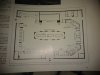
Here, it is worth briefly discussing the pair of maps located within the introductory segment of the guidebook; as one will have noticed over the course of the last few months, I have a particular liking for aesthetically-striking and attractive maps where they occur within a zoological guidebook, and feel that they strongly increase the overall quality of the guidebook within which they are located. In this case, both of the maps in question - one depicting the entirety of the zoo, whilst the second focuses on the central geographically-defined exhibits and those animal houses and enclosures located in their immediate proximity - are attractively-presented, easy to reference and well-labelled, with the second map providing a particular highlight in my opinion given the fact that it depicts the overall design and layout of the panoramic exhibits and paddocks in relation to one another.

Overall, then, this is an attractive and well-formatted guidebook, and one which displays a high level of production quality; one of the few issues I have with the guidebook as a whole, however, happens to be a minor point relating to the production of this guidebook - to wit the choice to produce it in a large format slightly larger than A4, as this is somewhat counter-intuitive given the stated purpose of the guidebook requires ease of use whilst walking around the collection. In terms of overall design and presentation, however, this guidebook is excellent - the quality and quantity of the text is pleasingly-high, and the use of photographic images to both break up the text and illustrate the exhibit accounts themselves produces an attractive and aesthetically-pleading impression.
There is, it goes without saying, a vast amount of information which I have omitted or glossed over within this guidebook; as such, I am as happy as ever to answer whatever questions may arise... and of course, general comments and remarks would be much appreciated! I would be particularly interested to hear more about what the collection in question was like in more recent years, from those Zoochatters who have been fortunate enough to visit in person.
Last edited:




 in latter years, I believe suggestions that guidebooks should be resumed have been met with an additional response, that ceasing or severely reducing the publication of printed material is the responsible thing to do for conservation purposes. This latter reason is also why, from the end of this year, the member's magazine is going digital-only.
 completely forgot to mention that, as I was close to falling asleep when writing/posting the review, so thanks for flagging it up!


