Philippine eagle spotted above Poland and Eastern Germany

Day 4. #6 Wroclaw Zoo – The Afrykarium (part 2)

So, what about the Afrykarium (2014)?

This massive 160x60m black box is plopped down like an outsized shopping mall in the middle of the zoo. It is a cheeky and modern construction, certainly not ugly in itself but because no effort has been made to integrate it in the garden, it’s very ubiquitous. There are already at least a few points that bother me on the outside. When rain is pouring down and you’re at the wrong side, don’t think about quickly fleeing into the building. In fact, the designer liked the idea of creating an elongated modern pond in front of the building with no bridge, forcing visitors to the side, only to return tot the entrance located in the middle. Sounds a bit theatrical of course, but when you've already visited the entire garden, have tired feet and are in danger of getting soaking wet, you curse a bit . At the back, two sublime large pools for Cape fur seals and African penguin can be found, separated by a ship-shaped protrusion that houses restaurants, cold-water aquariums and underwater views.

View attachment 757704
At the back of the Afrykarium - Cape Fur seal pool

Inside, it’s the same feeling: it's more like stepping into a theatre or concert hall, a kind of lounge-like space with some plant compartments that eventually contain animals (turtles, but e.g. just ducks too). Lots of concrete, glass and a wooden roof construction. The tour starts (and ends) here, then goes down for a while and reappears at the back of the lounge, where you walk from one part to the other through a bizarrely narrow passageway. I don't quite understand why this was built this way and how 1.7 million visitors are supposed to pass through here.

Anyway, just like the sublime Burgers' Ocean, visitors start at the "beach", which is a turtle enclosure here, and then dive into the sea past a large aquarium dedicated to the Red Sea. Unfortunately, the many viewpoints are placed in such a way that cross-viewing is inevitable, this is certainly not well thought out here. Why spend so much money and make such a crucial mistake is beyond me.

View attachment 757695
Red Sea tank

Then you go to the hippo underwater view where everyone stands endlessly waiting for a hippo to swim by. If you are really lucky, it gives the purification plant some extra work.

View attachment 757696

After that it getting much better, although the first reservation on seeing the aardvarks' underground lair is that it is quite small. Rounding the corner two impressive meters high Tanganiyka and Malawi tanks are very good, although they clearly need to develop furtheron.

View attachment 757697

Lake Malawi (left) and Lake Tanganiyka (right)

Staircase or lift brings everyone into the large hippo enclosure. You can argue endlessly about whether these animals need an outdoor enclosure or not (it could still get there), but this enclosure is already very large, with plenty of both swimming and land area. But I liked much more the other stuff here: Kirk dikdik's, for example, in a rather too open enclosure, Cape ground squirrel and a large open hole, which is the entrance to the previous seen aardvark den. And you can have a very enjoyable search for birds in this spacious hall. There are a lot of them: European golden oriole, yellow-necked francolin, African openbill, cattle egret, hammerhead, Hadada ibis, white-faced whistling duck, marbled duck, Cape teal, African pochard, African spoonbill, laughing dove, red-billed quella, yellow-crowned bishop, white-headed buffleback weaver and black faced go-away-bird. I can't figure out why people stand for 10 minutes staring at a lazy sack of bacon splashing some turds in the water every other hour, while all around this place was bustling with bird life.

View attachment 757698

View attachment 757703
Red-billed quelea

After the hippos it’s back to the sea. The Mozambique Channel shark tank is the largest inside the Afrykarium and is focusing on sharks, sea turtle, guitarfish and other . They did a better job here as cross-sights are less present.

Then all of a sudden visitors are back in the Atrium and walk around the back of stairs and lift shafts to the other side. Under those stairs is a kind of papyrus swamp representing the Okavango marshlands, with fish and Hottentot ducks. Upstairs is a nice coffee bar, restaurans and observation decks. There is a sort of shipwreck extension at the back of the building. This separates the Cape fur seals and the African penguins. Both have absolutely state-of-the-art basins, imo these are the best parts of the Afrykarium. Downstairs there’re excellent views of swimming penguins and fur seals and a couple of saltwater tanks.

The other side of the Afrykarium is dedicated to the rainforest. The tour starts on the forest floor along two large pools for Nile crocodiles and then dive into a hall with large connected pools for (Antillean) manatees. This is very nicely done with large underwater viewings and it’s quite spectacular seeing a herd of these majestic animals swimming on or above eye-level.

View attachment 757701

View attachment 757699

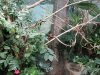
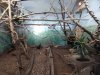
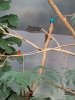
A staircase or a mini elevator brings everyone to the top floor of the Congo rainforest. Here too everything is well executed, especially when the walls will be completely covered with plants. The hall has some nice surprises: a large enclosure for black-and-rufous sengi, and a separate bottom-top aviary for Congo peacock, Bruce green pigeon and Schalow turaco. Freeroamers are difficult to find but I did see a pair of green woodhoopoe, and blue-bellied roller, spotted mousebird, African grey hornbill, Amethyst starling, common little bittern and golden oriole. Only the golden breasted starling I couldn’t find.

View attachment 757700

View attachment 757702
Narrow passage to the Congo exhibit. Little Bittern. Green wood hoopoe. Black and rufous sengi

It is not entirely clear to me to what extent disabled visitors in a large wheelchair can visit the Afrykarium. Some passages are extremely narrow, there are many stairs and tiny lifts.

There is no doubt that the Afrykarium has given Wroclaw a definite boost and this is clearly reflected in visitor numbers. It is an attraction you can spend several hours in and has taken the zoo to the next level. Moreover, the new lion enclosure also shows that Wroclaw has big plans for the future.

Wroclaw is obviously an extremely interesting zoo, but like elsewhere, it has its downsides and flawns. I was certainly not particularly fond of the way the big Asian cats and bears are kept.

If you really want to see every species, 1 day may not be enough. I saw everything in 9.5 hours, and did the Afrykarium, the European faune and the Birdhouse twice. But I certainly could have spent an hour longer in the Reptile house and I barely stopped in the Aquarium, walked at a brisk pace through the Odrarium and the Pheasantry and didn’t pay any attention to the flamingos, children’s zoo, the Ranch and the South American faune.
You have to take into consideration that bears and lioness located next to the Panthers are very old animals and I think they I'll come up with something interesting in the area after their passing. Some bigger Sun Bear / Bintu enclosure would be really great imo. Lioness (Okavango) is actually occupying a half of tiger habitat as she was sent there due to the construction of new pavilion. There were also plans for Pachyderm House to be changed into Orangutan-Malayan Tapir house. Pygmy Hippos would then be moved to the green building (the one with meerkats, prvost squirrels and prerrie dogs).
 
Day 8. #14 Wojciechow Zoo

My next stop is about a 1hr30 drive from Zamocs, almost entirely on brand new highways. But the final location did not go well with gps, luckily Google maps took me there. It is a brisk drive over narrow country roads, sometimes unpaved, to reach the car park. I turned out to be the only visitor.

Wojciechow Zoo is perhaps the world's longest zoo compared to its width: just under 900m long and not much more than 50 m at it’s widest. It was established in 2011 and today is about 4 ha in size.

upload_2025-1-14_12-24-15.jpeg

The ticket booth was unmanned but I met a very friendly zoo keeper at the other end of the zoo who sold me a ticket.

I had very low expectations about this place: it is very remote and attendance is probably very low, even during weekends or holiday season. But on the contrary, it turned out to be very neat with spacious enclosures and almost no weak points. Do not expect large buildings or impressive enclosures full of immersion, but large fenced paddocks and fairly spacious cages instead.

The visit starts with a long row of hoofed animal enclosures all neatly on grass. Primarily, these are domesticated species but more central into the zoo, white-tailed wildebeest, Kafue lechwe and Chapman zebra can also be found. Contrary to what I was allowed to observe elsewhere, there were no loners.

upload_2025-1-14_12-31-47.jpeg

Then the trail leads between trees and past large cages for primates. I saw small groups of Mandrill, Debrazza guenon, Black-and-white ruffed lemur, Ring-tailed lemur and Japanese macaque. There’s nothing wrong with keeping primates in cages, as long as these are of substantial size and have good enrichtments and climbing structures, which was certainly the case here. Aesthetically these are no price winners but it workes for the animals.

upload_2025-1-14_12-24-39.jpeg
Mandrill enclosure

upload_2025-1-14_12-27-44.jpeg
Japanese Macaque (Macaca fuscata)

Perhaps the Red-fronted lemurs got the worst of it, as their cage was quite small and completely out of the sunlight.

At the turning point is a building with aviaries for macaws, Cotton-top tamarin, Tawny owls and White-fronted lemur.

At the widest point of the zoo lies a large pond but I saved my interest in waterfowl until a yet-to-be visited zoo on this trip.

The zoo has a boisterous collection of felids: Amur leopard cat, Jaguarudi, Northern lynx, Southeast African lion, Leopard, Cougar, Serval and Caracal.

upload_2025-1-14_12-25-12.jpeg
Serval (Leptailurus serval)

All these are in decent enclosures and I could only criticise the fact that most species only have 1 enclosure, with exception of some of the smaller species and the lions. However, in such a small and remote place, I was very pleased with the quality of the cages, I have seen many of these species in much bigger zoos in equal or worse circumstances.

upload_2025-1-14_12-25-43.jpeg
Caracal enclosure

upload_2025-1-14_12-29-35.jpeg
Enclosure for Transvaal lion (Panthera leo krugeri)

Bird wise there’s little to pick up : I saw my daily portion of Green-winged macaw and Araruna, a pair of Grey crowned cranes, Golden pheasant, Black swan, Mandarin Duck and Tawny owls.

upload_2025-1-14_12-26-21.jpeg
Green-winged macaw (Ara chloropterus)

Wojciechow zoo is a small privately run, remote place that is probably not worth a diversion, but could serve as a model for many similar zoos in terms of animal welfare. It has a fairly interesting collection of primates and felines, all in decent and spacious cages. To my surprise there were no severely outdated things here. I did not regret my visit and was happy to see that when I left, two other visitors had turned up.

Then it's off to the capital, where I will stay for 2 nights. I had reserved a spot in my hotel's tiny underground car park, curious to see if it would work this time without theatrical shouting (it didn’t :) ).

It was a balmy, warm evening and I decided to finally eat something decent after a week. It is almost inevitable that I will be dreaming about Javanese banded pittas this night.
 

Attachments

  • upload_2025-1-14_12-24-15.jpeg
    upload_2025-1-14_12-24-15.jpeg
    183.2 KB · Views: 155
  • upload_2025-1-14_12-24-39.jpeg
    upload_2025-1-14_12-24-39.jpeg
    257.4 KB · Views: 161
  • upload_2025-1-14_12-25-12.jpeg
    upload_2025-1-14_12-25-12.jpeg
    258.5 KB · Views: 167
  • upload_2025-1-14_12-25-43.jpeg
    upload_2025-1-14_12-25-43.jpeg
    254.9 KB · Views: 158
  • upload_2025-1-14_12-26-21.jpeg
    upload_2025-1-14_12-26-21.jpeg
    301.7 KB · Views: 160
  • upload_2025-1-14_12-27-44.jpeg
    upload_2025-1-14_12-27-44.jpeg
    216.9 KB · Views: 157
  • upload_2025-1-14_12-29-35.jpeg
    upload_2025-1-14_12-29-35.jpeg
    227.8 KB · Views: 154
  • upload_2025-1-14_12-31-47.jpeg
    upload_2025-1-14_12-31-47.jpeg
    150.3 KB · Views: 171
Last edited:
You have to take into consideration that bears and lioness located next to the Panthers are very old animals and I think they I'll come up with something interesting in the area after their passing. Some bigger Sun Bear / Bintu enclosure would be really great imo. Lioness (Okavango) is actually occupying a half of tiger habitat as she was sent there due to the construction of new pavilion. There were also plans for Pachyderm House to be changed into Orangutan-Malayan Tapir house. Pygmy Hippos would then be moved to the green building (the one with meerkats, prvost squirrels and prerrie dogs).

No doubt this is a major reason for the relative stagnation in that zone. But I don't think both tiger enclosures are particularly good, apart from the fact that one is now , and quite understandably, serving as a shelter for an old lioness. And the snow leopard enclosure does seem to me to have been deliberately created/renovated for that species, they could easily have opted for 2 enclosures for clouded leopards.

I thought the pachyderm building was definitely worth seeing and glad to read that it will be preserved. Would they consider not keeping any more elephants in Wroclaw, or is there still space available next to the zoo for a new enclosure?
 
No doubt this is a major reason for the relative stagnation in that zone. But I don't think both tiger enclosures are particularly good, apart from the fact that one is now , and quite understandably, serving as a shelter for an old lioness. And the snow leopard enclosure does seem to me to have been deliberately created/renovated for that species, they could easily have opted for 2 enclosures for clouded leopards.

I thought the pachyderm building was definitely worth seeing and glad to read that it will be preserved. Would they consider not keeping any more elephants in Wroclaw, or is there still space available next to the zoo for a new enclosure?
Well I think that Tigers exhibit is just OK. Serves its purpose tho as the tigers have just recently had their second litter.
I am not too big of a fan of the snow leopard enclosure as well, but as previously, it serves its purpose as they are producing litter after litter.
About Pachyderm building and elephants. There has been a change on the Director seat recently. Current Director is Tomasz Jóźwik - one of the people responsible for Orientarium and reinessance of Lodz Zoo. In an interview he stated that he would like to continue breeding elephants in Wroclaw, as this zoo has a long history with that. They are basically looking for an opportunity and an idea on how to do it within the zoo boundries. There has also been ongoing talks for like 10 years about acquiring the terrain next to the zoo. Ratajszczak wanted to build an African Elephant exhibit in that place. However some developer bought the ground and the city is too poorly to managed striking a deal with him. Anyway, I am waiting for the next entries in this thread as it's really interesting to see how people from abroad react to zoos, that I've been to so many times :).
 
I'm just not entirely sure that breeding is a good criterion to judge animal housing.

Looking at @snowleopard's thread about Bangkok's Pata Zoo, I see the same comment appear there, even though the enclosures are clearly well below average. By which, of course, I mean no comparison with the tiger enclosures in Wroclaw (which I certainly find ok, like you say, but no more than that).

It will certainly be interesting with the new director, and given what he accomplished in Lodz, it seems he has no qualms about flipping a lot for new enclosures and structures.
 
Well you're right that it's not the best criterion. To back up my claim about general well-being of those animals I have to say that as a frequent visitor (I am at the zoo every week or so) I don't see too much of pacing, stereotypic behaviours and so on. Not to say that there isn't a room for impeovement.
Have you been to Lodz? I am really interested in your opinion about this garden, as mine are rather mixed.
 
Day 9 Brodka - Varsovie (Official Video)

A particularly diligent young man in the breakfast room regularly came to ask if everything was OK. Now, I do like some expression of hospitality, but it should not be exaggerated. He unwittingly managed to make things much worse, because when I told him, on his question, that I was from Belgium, he proudly straightened his chest (he really did) and said ‘Vlaanderen(Flanders)’, and when I nodded, immediately ‘Bonjour’. Now language is indeed an issue for some people where I live, and when I kindly and with mild ironie told him that in my country he would be quartered for that by some people, he turned blood red, apologised (unnecessarily imo) a thousand times (certainly unnecessarily because meanwhile half the room was looking at my table) and said ‘goeiedag’. A bit overzealous if you ask me, but perhaps he was so startled that he would be a bit less pushy the next morning (unfortunately he wasn’t).

#15 Warsaw Zoo

At the banks of the Vistula river lies the 1928 established and 40 ha Warsaw Zoo.

From within the adjacent Praski Park the Kazimierz Lisiecki Avenue leads to the zoo's main entrance and then continues as a dead straight almost parade-like 1 km long avenue to the other entrance of the zoo. It cuts the zoo into two non-equal halves, with all buildings on the largest, right side. The sight of it causes confusion in my mind, but at the same time I feel it would be a great location for a fancy-fair or other zoo-related activities on warm summer evenings.

Like all Polish zoos, the entrance is not impressive. I followed the guided tour on the map, but kept in mind that 1 important aviary and 1 historical enclosure isn’t mentioned on the map. And it’s a real pain to navigate here and the zoo map doesn’t help a lot.

Chilean flamingo to start and then an old Andes condor aviary is followed by a row of 7 aviaries with the zoo’s main breeding pairs of Bali myna, Arabian partridge, Collared hill-partridge, Patagonian conure, Crested partridge and Eurasian stone-curlew.

Hidden among the greenery is a modernist gem, the Zabinski villa, built in 1931 as a residence for zoo director Jan Zabinski. It provided a refuge for hundreds of Jewish people to escape persecution during WWII. It is now a museum with its own section on the zoo's website : History - Żabiński Villa - Warsaw Zoo.

The tour leads through the rosarium to the zoo’s Aquarium (2014), a modern building with only 5 tanks. All of these are exceptionally well designed, but are a bit hard to watch as the visitor area is small and the lay out of the building makes it difficult to fully enjoy any of these tanks. For the complete species list, I refer to my next post. The first tank is a rather large coral reef with +20 mostly very common Pacific Ocean fish.

It is followed by a (very) large top-notch Amazon tank which took the full lenght of the room. It’s very well designed and full of hundreds if not thousands tetra fish. It is the second time that I can admire a stunning Dutch-style aquarium (after the Southeast Asian-themed aquarium in Gliwice). The tank has everything such a style requires: lots of light, brilliant plant groups in green and red colours and with different leaf styles, vistas and carefully placed driftwood. I would not want to bear the cost of such a tank, but it is an endless pleasure to look at this.

upload_2025-1-17_19-4-12.jpeg
Amazon Characinae aquarium

It is followed by a densely populated Red Piranha tank and a small coral tank for Ocelarris Clownfish, Blue Tang and an unidentified (surgeon?) black fish. The last aquarium shows Razorfish.

Next to the Aquarium is the old-fashioned Monkeyhouse which has no indoor public space. It consists of 6 enclosures and starts with 2 small cages for Common Squirrel Monkey and the last Allen’s Swamp monkey in Europe. It’s followed by cages for Yellow-cheeked gibbon and Diana guenon, and ends with a rocky outcrop for Hamadryan baboon. Nearby are good enclosures for Vietnamese Sikadeer and Nepalese Red Panda. The latter are difficult to find as they have very tall trees to climb.

upload_2025-1-17_19-5-3.jpeg
Hamadryas baboon rock

Nearby are the great apes (2008), with typical islands for Western lowland gorilla and Common/Western chimpansees. Inside the building some of the communal rooms are visible to the public.

upload_2025-1-17_19-5-19.jpeg
Inside the Great Ape House - Chimpanzee (Pan troglodytes)

The Elephant House (2003) doesn’t look that impressive on the outside. It has large enclosures for its 3 animals. Inside the building is very elegant, with attractive greenery with palm trees, and an astonishing roof structure. There is 1 other enclosure, for Common rock hyrax. I counted 12 animals at least, which is a pleasant surprise considering that you usually see these animals in very small family groups.

upload_2025-1-17_19-5-31.jpeg
Elephant House interior

The Rhino House was closed and so was the Pheasantry. The latter was a downer as I was keen to see the Koklass pheasant and Malay Crestless Fireback. Later that afternoon I saw 1 one-horned rhinos in the enclosure.

Past enclosures for Sichuan takin and Central Chinese goral it goes straight to the Reptile House (1997), another one of the country's reptile collections that looks like a warehouse. It has collections of turtle, tortoises and snakes on one side of the building, lizards at the back and crocodiles on the other side. A second floor is dedicated to amphibians.

upload_2025-1-17_19-5-55.jpeg
Reptile House

The right wing of the ground floor has a row of terraria on the right side for various endangered turtles and tortoises. All of these are in rather small but nicely designed enclosures. Lizards and snakes are mostly very common species, with the exception of two species of ratsnake, mandarin and radiated, that are rather uncommon in Europe.

For the species list, I refer to my next post.

On my way to the Giraffe building past Giant anteater and Serval, the building turned out to be closed. Outside are netted enclosures for Cotton-top tamarin and Red-bellied tamarin but nearby, at the back of the Amur leopard enclosure, is a far more interesting place: Warsaw’s Insect House. It has a very attractive lay-out with small set-ups in a lush tropical vegetation, with a large spider collection, and even a nocturnal section. It is easily one of the best exhibits of the zoo. For the species list, I refer to my next post.

upload_2025-1-17_19-10-51.jpeg
Inside the Insect House - Tarantula displays

Once outside, a huge wall dominates the next area. At the back is a large enclosure for Eastern bongos and then the Hippo House (2010) appears. Inside are two large pools for Common hippos with fish like the Tanganyika Tilapia, and what I think are Black pacu, which is then a strange combination. It gets even more mysterious behind a wall with a large but very dull shark tank. It has Brown-banded bamboosharks, Ocellated eagle rays and Silver moonfish. I do not know the past history of the aquarium in Warsaw, perhaps the large marine fish there had to give way during modernisation and a new aquarium was quickly built in the Hippo House. However, I do not find it succesfull.
upload_2025-1-17_19-6-10.jpeg
Hippo House

At the top end of the zoo is the zoo’s off-show breeding station. As the wide avenue rises here a bit, you get a great view of the whole area. Here, even more than at the main entrance, you get the sense that this avenue could serve for parades, parties and celebrations of all kinds.

Looking back along this avenue, most of the enclosures on the right are large and full of greenery. This is where most of the zoo’s ungulates have a home: lots of equids (Prezwalski, Somali wild ass, Hartman Mountain zebra), deer, Yak, Bactrian Camel, antelopes (Scimitar-horned oryx, Sichuan takin, wisent, and even South African Cheetah and Maned wolf. Not bad but nothing to get excited about.

Centrally at the top of the zoo it starts more interesting, not in terms of species (African lion, snow leopard and Siberian tiger), but the lion-tiger enclosure itself caught my attention: two or three large and densely planted enclosures with a tall mock rock background. It is almost a bit of a shame that there is so much vegetation that the animals are barely visible but these terraced enclosures offer many hiding and scratching opportunities. The new Snowleopard enclosures are obviously more recent, and among the better ones at this zoo. Because of the really dense vegetation they are a bit atypical for this species but that might make them also suitable for another leopard species. These enclosures could be bigger, but are certainly better than the barren ones I saw eaerlier on this trip in Dresden.

upload_2025-1-17_19-15-37.jpeg
Cat Mountain - African lion enclosure

Anyway, it is quite pleasant to stroll here, occasionally taking a side path to have a look at something, and enjoying an ice cream on the terrace just in front of the cat terraces.

Further towards the main entrance, a large tree-covered aviary appears. It is not indicated on the zoo map, but hides some real treasures : Javan and Madagascar pond-heron, with 11 and 6 zoos in Europe respectively, two rather rare species, both the result of Plzen's many breeding successes. On the first visit, both species were absent from the outdoor aviary, but there is a side path that gives some view of 2 of the indoor enclosures. Here I saw both species, but moments later I had better luck, when 3 Javan pond herons stepped into the outdoor aviary, and moreover together with 2 white-winged wood duck, a species I had missed before in some zoos.

upload_2025-1-17_19-6-29.jpeg
Javan and Madagascar Pond-heron, White-winged Wood Duck aviary

The rest of the enclosures along the avenue are mediocre at best, and sometimes just old and poor. Ring-tailed lemur and Southern yellow-cheecked crested gibbon live on nice islands, while Markhor, Red kangaroo and smaller carnivores (Serval, Eastern Ring-tailed vontsira) can be found across the central part of the zoo. The owl aviaries are very small, unlike the giant seal pool. The latter is part of an area consisting of artificial rocks and a lot of concrete, all in a dilapidated state. It is clearly the oldest part of the zoo and it is entirely appropriate that the polar bears left here recently. Their place has been taken by penguins. But this whole area is in such a state, and doesn’t seem to me of great historical value, that it could better be bulldozed.

upload_2025-1-17_19-6-51.jpeg
Seal pool

Speaking of bears, somewhere hidden among the greenery is another outrageous piece of historic bear cage, but I suspect and hope it is no longer in use, as the brown bears have a separate enclosure outside the zoo, on Solidarity Avenue. At least I thought so,
but I read after my visit the enclosure was shut down because of several drunk idiots who climbed in.
 

Attachments

  • upload_2025-1-17_19-4-12.jpeg
    upload_2025-1-17_19-4-12.jpeg
    128.3 KB · Views: 140
  • upload_2025-1-17_19-5-3.jpeg
    upload_2025-1-17_19-5-3.jpeg
    186.2 KB · Views: 150
  • upload_2025-1-17_19-5-19.jpeg
    upload_2025-1-17_19-5-19.jpeg
    190 KB · Views: 130
  • upload_2025-1-17_19-5-31.jpeg
    upload_2025-1-17_19-5-31.jpeg
    217.2 KB · Views: 135
  • upload_2025-1-17_19-5-55.jpeg
    upload_2025-1-17_19-5-55.jpeg
    156.5 KB · Views: 136
  • upload_2025-1-17_19-6-10.jpeg
    upload_2025-1-17_19-6-10.jpeg
    264.7 KB · Views: 133
  • upload_2025-1-17_19-6-29.jpeg
    upload_2025-1-17_19-6-29.jpeg
    298.3 KB · Views: 133
  • upload_2025-1-17_19-6-51.jpeg
    upload_2025-1-17_19-6-51.jpeg
    213.1 KB · Views: 130
  • upload_2025-1-17_19-10-51.jpeg
    upload_2025-1-17_19-10-51.jpeg
    168.3 KB · Views: 149
  • upload_2025-1-17_19-15-37.jpeg
    upload_2025-1-17_19-15-37.jpeg
    155.8 KB · Views: 130
think are Black pacu, which is then a strange combination.
Yes they are. I was also surprised when I saw them. However Zoo Director Andrzej Kruszewicz has his own radio audition in which he talked about it. Apparently the Pacus are there to help with the hippo dung, which is rather interesting take if you ask me
The latter is part of an area consisting of artificial rocks and a lot of concrete, all in a dilapidated state. It is clearly the oldest part of the zoo and it is entirely appropriate that the polar bears left here recently. Their place has been taken by penguins. But this whole area is in such a state, and doesn’t seem to me of great historical value, that it could better be bulldozed.
And it will be bulldozed soon enough. As the Zoo is approaching its 100th birthday they announced like 4-5 different project. New Polar Bear habitat is going to be built in this place. They will also build new Lion-Tiger enclosures, new Monkey house, new Penguin habitat and bigger savannah.
Some links to get you the idea and style of new buildings:
Polar Bear ZOO Habitat Design | Warsaw ZOO | Hazkoba.com
Lion & Tiger Habitat Concept Design for Warsaw ZOO | Hazkoba
Warszawskie ZOO on Instagram: " Nowy wybieg naszych pingwinów przylądkowych coraz bliżej! Do 4 grudnia Stołeczny Zarząd Rozbudowy Miasta przyjmuje oferty na wykonanie robót budowlanych. ‍♂️ W komentarzu na Facebooku i w relacji udostępniamy link dla Wykonawców zainteresowanych zrealizowaniem tego wspaniałego projektu. Posiadłość pingwinów będzie wyposażona m.in. w dostępny przez cały rok basen zewnętrzny z podglądem na ptaki pływające pod wodą, filtrację wody i rozległe zaplecze hodowlane. Nasi mieszkańcy zyskają dużo komfortu, a sam wybieg będzie jednym z najnowocześniejszych takich obiektów w Polsce! ✨ Krok po kroku odhaczamy kolejne punkty realizacji projektu, teraz czas na oferty Wykonawców. Mamy nadzieję, że wszystkie elementy tej układanki uda się złożyć w zakładanych terminach i wybieg zostanie otwarty zgodnie z planem w przyszłym roku. Trzymajcie kciuki, będziemy Was informować o postępach prac! Building of our Cape penguins' new enclosure is getting closer! Until December 4th, the Capital Board of City Development is waiting for construction offers. ‍♂️ We're providing a link in the comment on Facebook and in the instastory for Contractors interested in completing this great project. The penguin enclosure will be equipped with, among other things, a year-round accessible outdoor pool with viewing of the birds swimming underwater, water filtration and extensive breeding facilities. Our residents will gain a lot of comfort and the enclosure itself will be one of the most modern such enclosures in Poland! ✨ Step by step we are finishing the next points of the project implementation. Now it's time for the Contractors' bids. We hope that all the pieces of this puzzle can be put together within the expected timeframe and the enclosure will be opened as planned next year. Keep your fingers crossed, we'll keep you updated on the progress of the work! nr 1 Paulina Chmielnicka-Tkaczyk, @p_chmielnicka #pingwin #penguin #wybieg #nowy #warszawa #rozwój #inwestycja #wykonawca #warszawskiezoo #warsaw #warsawzoo #warszawazoo #zoowarszawa #zoo #zoowarsaw #warsaw_zoo #warszawa_zoo #animalsofinstagram #animals"
Powstanie nowy wybieg afrykański w warszawskim ZOO - Infrastruktura - NowaWarszawa.pl
Cool thing about lions exhibit is that the glass dome on which they are often resting is actually a roof of a former arena that was underneath the enclosure. You can see it here:
Lwiarnia - 95-lecie Warszawskiego ZOO - O nas - Zoo Warszawa
All in all it is high time for the zoo to change and modernize. It's a Capital Zoo after all, and when you compare it to Prague and Berlin it really falls short.
 
Bonus post #15 Warsawa Zoo Birdhouse and species lists

And there it is, Warsaw’s thrilling hightlight, hardly visible between the trees and other greenery. The Birdhouse looks form the outside a bit scruffy and neglected, but inside it’s aviaries are bright, shining and simply briljant. It’s an old building and it has nothing of Wroclaw’s architectural details and high window panels, and it also exudes none of the history so typical of Vienna’s famous Birdhouse, but it’s packed with rare and interesting species in extremely well designed enclosures.

upload_2025-1-18_12-2-54.jpeg


It’s start outdoors with a couple of aviaries for European roller, Eurasian curlew and European Thick-knee and the very little shown but adorable Collared pratincole. Inside it starts with a corridor along 3 aviaries : wading birds (Ruff, Blackwinged Stilt, Common Redshank and the very rarely displayed Eurasian Golden Plover), a cosy garden aviary (Rosy starling and Eurasian Hoopoe) and a final one for African Pygmy-falcon. Good already, but it can be better.

After that follows a room with 5 aviaries and an entrance to the free-flight hall. The single non bird species to be found in this section are Black-and-rufous elephant shrew, which could easily be accompanied by one or more birds. The 4 other aviaries lie in a straight line:

1. Pink-headed fruit-dove, Blue-crowned Hanging parrot, White-rumped Shama

2. Wompoo Fruit-dove, Cinnamon Ground-dove

upload_2025-1-18_12-15-24.jpeg
Wompoo Fruit-dove (Ptilinopus magnificus)

3. Guira cuckoo and Elegant crested tinamou

4. Kea

None of these are very large but certainly those for the fruit-doves are well designed with detailed attention to plant life.

Not a bad section, but it gets even better. A corridor leads past 7 other aviaries:

1. Collared trogon

upload_2025-1-18_12-3-27.jpeg
Pair of Collared trogon (Trogon collaris)

2. Blue-headed quail dove, Turquoise tanager, Yellow-billed cardinal, Spangled cotinga, red siskin and Cuban grassquit

upload_2025-1-18_12-9-33.jpeg
Yellow-billed Cardinal (Paroaria capitata) and Blue-headed Quail-dove (Starnoenas cyanocephala)

3. Grey-winged trumpeter

4. Congo peafowl, Bruce green pigeon and Golden-breasted Starling

5. Visayan hornbill, Tataupa tinamou and Southern 3-banded armadillo

6. Crimson-rumped toucanet, Linnaeus’ two-toed sloth and Southern 3-banded armadillo

upload_2025-1-18_12-4-25.jpeg
Crimson-rumped toucanet (Aulacorhynchus haematopygus) and Linnaeus' Two-toed sloth (Choloepus didactylus)

7. Java Banded pitta, Yellow-breasted fruit-dove and Java Mouse deer

upload_2025-1-18_12-6-16.jpeg
Javan Banded Pitta (Hydrornis guajanus) and Javan Chevrotain (Tragulus javanicus)

I have seen every species indicated, although it took me 2 visits. The decoration of each of these aviaries is of very high quality. Sometimes this is simply done by appropriate planting and occasionally there is a subtle temple-themed addition. These seven aviaries alone contain eight species that can be seen in fewer than 10 European zoos, and of these, the specimen of the pitta and the cardinals are even the only representatives.

upload_2025-1-18_12-7-58.jpeg
Red Siskin (Spinus cucullatus) and Spangled Cotinga (Cotinga cayana)

It is often very surprising to what extent birds (or other animals) can hide in aviaries that are not even that big. Especially when, as here in Warsaw, they are very well planted, it takes patience and some luck to find each species. This is certainly the case for the last section of the birdhouse, a vibrant walk-through tropical rainforest, with dense mature planting. I think I spent about an hour in this hall and as time went on, it was incredible how many more species could be found compared to when I walked through the first time.

upload_2025-1-18_12-11-54.jpeg
Birdhouse - Rainforest walk-through

Most of these species were not signed, so there could be more, but this is what I saw (bold = signed):

Violet turaco, Victoria crowned-pigeon, Green-naped pheasant-dove, Nicobar pigeon, Red Fody, Red-whiskered bulbul, Bearded barbet, Gray-capped emerald dove, Spangled cotinga, Sunbittern, Chestnut-naped Imperial-pigeon, Pied Imperial-pigeon, Eurasian golden oriole, Brahminy starling, Cinnamon Groud-dove, Malay Peacock-pheasant, Superb Fruit-dove, Black-faced go-away bird and Bluebacked grassquit.

upload_2025-1-18_12-12-51.jpeg
Birdhouse - Rainforest Walk-through - Sunbittern (Eurypyga helias) watching out for Zoochatters - Spangled Cotinga (Cotinga cayana)

As some of you remember from my previous trip report, rainforests are my favourite type of zoo exhibit, especially when many species of birds thrive in them. Give me a rainforest, keep the predictable white-bearded saki out, and you will definitely see me passing by.

upload_2025-1-18_12-32-16.jpeg
Green-naped Pheasant-pigeon (Otidiphaps nobilis)

Waw, the birdhouse in Warsaw is as good as all the Zoochatters have described before. The visitor areas could indeed use a refresh, it looks (and smells) a bit like the past there. But the aviaries themselves are of extraordinary beauty. And walking through the dense rainforest with its mature trees is an exciting experience for those who like to take their time looking for all those birds hidden in this hall. It is exactly what I would love to see at my favourite Belgian (Antwerp) zoo with its stately historical winter garden.

To conclude: Warsaw Zoo is a very average zoo: there is nothing really dramatically bad, but the general feeling is still that it should be able to do better. I certainly enjoyed Warsaw’s vast zoo grounds, the felid terraces, the aquarium, insect house and the Elephant house, that stately avenue and the terrific birdhouse. If enough funding is found, it could grow into an excellent city zoo. It has all the space and enough mature trees to create large multi-species enclosures and combining this with a lot of interesting accessible buildings. Many of the enclosures for ungulates are already the right size and just need a little tlc. Nothing stands out here, which is a bit of a shame for the capital zoo. I personally feel that it lags a bit behind compared to the modern, vibrant and beautiful city that is Warsaw. But if you love birds, this is your premier destination in Poland: the Bird House is one of the best in Europe and there are also many interesting species hidden elsewhere in the garden.

Species lists as of september 2024

Species list Insect House

1. Chilean Rose tarantula (Grammostola rosea)

2. Mexican Red rump tarantula (Brachypelma vagans)

3. Wessel’s tiger ornamental tarantula (Poecilotheria tigrinawesseli)

4. Mexican redknee tarantula (Brachypelma hamorii)

5. Curlyhair tarantula (Tliltocatl albopilosus)

6. Brazilian Salmon Pink Bird-eating tarantula (Lasiodora parahybana)

7. Indian Ornamental tree spider (Poecilotheria regalis)

8. Unknown and unsigned, completely covered in web

9. Hispanolian tarantula sp. (Phormictopus atrichomatus)

10. Mexican Fireleg tarantula (Brachypelma boehmei)

11. Trinidad Chevron tarantula (Psalmopoeus cambridgei)

12. Red-legged golden orb-weaver spider (Trichonephila inaurata)

13. Pink-winged Stick Insect (Sipyloidea sipylus)

14. Thorny Devil Stick insect (Eurycantha calcarata)

15. Giant African Oliva millipede (Telodeinopus aoutii)

16. Phasmids genus stick insect (Phaenopharos khaoyaiensis)

17. Two-spotted assassin bug (Platymeris biguttatus)

18. Turkestan cockroach (Periplaneta lateralis)

19. Giant African mantis (Sphodromantis viridis)

20. Black Beauty Stick Insect (Peruphasma schultei)

21. Giant Prickly Stick Insect (Extatosoma tiaratum)

22. Jungle Nymph (Heteropteryx dilatata)

23. Peppered cockroach (Archimandrita tessellata)

24. Six-spotted cockroach (Eublaberus distanti)

25. Death’s head cockroach (Blaberus craniifer)

26. Warty Glowspot cockroach (Lucihormetica verrucosa)

27. Australian red claw crayfish (Cherax quadricarinatus)

28. Pomacea sp.

Species list Reptile House

Turtle section

1. Roti Island Snake-necked turtle (Chelodina mccordi)

2. Southeast Asian Box turtle (signed as Amboina box turtle) (Cuora amboinensis)

3. Red-bellied Short-necked turtle (Emydura subglobosa)

4. Annam leaf turtle (Mauremys annamensis)

5. Chinese pond turtle (Mauremus reevisii)

6. Empty

7. Red-footed tortoise (Chelonoidis carbonarius)

8. 2 seen but unlabled

9. 1 seen but unlabled

Snake section

10. Radiated Ratsnake (Coelognathus radiatus)

11. Mandarin Ratsnake (Eurprepiophis mandarinus)

12. Amazon Tree boa (Corallus hortulana)

13. Green tree boa (Morelia viridis)

14. Vampire crab (Geosesarma dennerle)

15. Carpet python (Morelia spilota)


Lizard section

17. Gila monster (Heloderma suspectum)

18. Dumirell’s boa (Acranthopis dumerili)

19. Fiji Iguana (Brachylophus bulabula)

20. North-African mastigure (Uromastyx acanthinura)

21. Sudan Plated lizard (Broadleysaurus major) and Leopard tortoise (Stigmochelis pardalis)

22. Empty

23. Cuban tree boa (Chilabothrus angulifer)

24. Yellow anaconda (Eunectes notaeus)


Crocodile section

25. Spectacled caiman Caiman crocodilus)

26. Dwarf crocodile (Osteolaemus tetraspis tetraspis)

27. Siamese crocodile (Crocodylus siamensis)

28. Cuban crocodile (Crocodylys rhombifer)


Second floor amphibian section

29. Golfodulcean poison dart frog (Phyllobates vittatus)

30. Vietnamese or Tonkin bug-eyed frog (Theloderma corticale)

31. Yellow-banded poison dart frog (Dendrobates leucomelas)

32. Green pricklenape (Acanthosaura capra) and Oriental file-bellied toad (Bombina orientalis)

33. Cane toad (Rhinella marina)

34. Australian Green tree frog (Ranoidea caerulea)

35. Empty

36. File-eared tree frog (Polypedates otilophus) and HongKong whipping frog (Polypedates megacephalus)

37. Sambava tomato frog (Dyscophus guineti) and Standing day gecko (Phesulma standingi)

Species list Aquarium

1. Coral reef tank

Pajama Cardinalfish (Spheararnia nematoptera)

Giant clam (Tridacna maxima)

Common surgeon or Blue tang (Paracanthurus hepatus)

Powder-blue, Chocolate, Striped Surgeon fish (Acanthurus leucosternon/pyroferus/lineatus)

Purple, Yellow and Sailfin Tang (Zebrasoma xanthurum/flavesens/velifer)

Copperband Butterflyfish (Chelmon rostratus)

Flame-tailed Blenny (Encheylurus flavipes)

Royal Dotterback (Pictichromis paccagnellorum)

Neon and Yellowtail Damselfish (Pomacentrus coelestris and Chrysiptera parasema)

Picturesque Dragonet (Synchiropus picturatus)

Bristletail Filefish (Acreichthys tomentosus)

Sea Goldie (Pseudanthias squamipinnis)

Tomato Clownfish (Amphiprion frenatus)

Yellow Coral Goby (Gobiodon okinawea)

Lamarck’s Angelfish (Genicanthus lamarck)

Six Line Wrasse (Pseudocheilinus hexataenia)

2. Amazon tank

Emperor, Glowlight, Rummynose Tetra (Nematobrycon palmeri/ Hemigrammus erythrozonus /Petitella rhodostomus)

Common Hatchetfish

Whiptail Catfish (Farlowella acus)

Golden Otocinclus (Otocinclus affinis)

Black Phantom, Flame, Bentos, Lemon, Red Phantom, Ember, Red Minor and Black Neon Tetra

(Hyphessobrycon megalopterus, Hyphessobrycon flammeus, Hyphessobrycon bentosi, Hyphessobrycon pulchripinnis, Hyphessobrycon sweglesi, Hyphessobrycon amandaeis, Hyphessobrycon eques, Hyphessobrycon herbertaxelrodi)

Hockeystick Pencilfish (Nannostomus eques)

Blackline Penguinfish (Thayeria boehlkei)

Glass Bloodfin Tetra (Prionobrama filigera)

Sterbai’s corydoras (Corydoras sterbai)

Loricaria ssp (armored catfish)

Silvertip Tetra (Hasemania nana, wrongly signed as Hemmigrammus nanus)

Agassiz’ Dwarf Cichlid (Apistogramma agassizii)

X-ray Tetra (Pristella maxillaris)

3. Piranha tank

Red-bellied piranha (Pygocentrus nattereri)

4. Coral reef

Ocelarris Clownfish (Amphiprion ocellaris)

Blue Tang (Paracanthurus hepatus)

unidentified (surgeon?) black fish

5. Razor fish tank

Jointed razor-fish (Aeoliscus strigatus)
 

Attachments

  • upload_2025-1-18_12-2-54.jpeg
    upload_2025-1-18_12-2-54.jpeg
    293.2 KB · Views: 123
  • upload_2025-1-18_12-3-27.jpeg
    upload_2025-1-18_12-3-27.jpeg
    246.1 KB · Views: 130
  • upload_2025-1-18_12-4-25.jpeg
    upload_2025-1-18_12-4-25.jpeg
    182 KB · Views: 135
  • upload_2025-1-18_12-6-16.jpeg
    upload_2025-1-18_12-6-16.jpeg
    190.9 KB · Views: 131
  • upload_2025-1-18_12-7-58.jpeg
    upload_2025-1-18_12-7-58.jpeg
    93.5 KB · Views: 122
  • upload_2025-1-18_12-9-33.jpeg
    upload_2025-1-18_12-9-33.jpeg
    205.1 KB · Views: 122
  • upload_2025-1-18_12-11-54.jpeg
    upload_2025-1-18_12-11-54.jpeg
    230.5 KB · Views: 127
  • upload_2025-1-18_12-12-51.jpeg
    upload_2025-1-18_12-12-51.jpeg
    144.7 KB · Views: 130
  • upload_2025-1-18_12-15-24.jpeg
    upload_2025-1-18_12-15-24.jpeg
    236 KB · Views: 135
  • upload_2025-1-18_12-32-16.jpeg
    upload_2025-1-18_12-32-16.jpeg
    123 KB · Views: 137
Day 10 On the banks of the Vistula

The Vistula is the country's longest river and it carries Polish culture and identity like no other. It connects the royal cities of Cracow and Warsaw with the port of Gdansk. It is a shallow river so shipping and industrial development have passed it by. That makes it flow through the Polish lowlands like a wide ribbon of riverbanks and riparian forests. She passes by a pleiade of old towns with beautiful city centres, and a zoo.

Leaving Warsaw on its northern S7 highway I got myself stucked into endless roadworks, closed exits, indistinctly marked diversions and a not helpfull car gps. On the way to my next destination I saw the landscape suddenly change from open farmland to large woodland tracks, something which didn’t change by driving further north next days.

#16 Plock Zoo

Perched high on the riverbank and adjacent to the historic centre is Plock Zoo. Like most Polish zoos, it is a relatively young zoo that originated in 1919 from a private initiative of a (biology) teacher who wanted to create a natural garden. However, it took another two decades before the city bought 10 ha of land, and it was not untill 1948, after an agricultural and horticultural exhibition, that the go-ahead was given to establish a regional zoo, which finally opened its doors in 1951.

The 1960s saw rapid growth with the construction of an aquarium, reptile house, elephant/monkey/giraffe house and aviaries. The first elephant, a young female named Petra, arrived from the Netherlands in 1961. Since the late 1990s, many of the buildings have been extensively modernised, but it’s not hard to imagine that this is needed again.

At the entrance, I was greeted by someone who mostly shrugged her shoulders and gave a perfect Carol Beer impersonation, so I just bought a ticket from the vending machine. It is sometimes said that the first sight is the most important, and if that is true, this is not a good start.

Right next to the entrance is the Primate building with a rather nice range of species: the ever adorable Pied tamarin (with Southern three-banded armadillo), Golden lion tamarin, White-faced saki, Goeldi’s monkey and Cotton-top tamarin. Senegal galago were also signed, but I did not see them, and I hope they are no longer present here, as their enclosure was very small. All species have small outdoor cages, quite well designed and planted, while 2 more species occur here: Red vari and Agile gibbon. The latter two have very poor enclosures.

upload_2025-1-20_19-27-19.jpeg
Pied tamarin (Saguinus bicolor)

The Birdhouse isn’t in a good condition with macaws and wreathed hornbill in small all-indoor aviaries. Outdoor space is however available and certainly in a better state. I saw European roller, Edwards’ pheasant, Von der Decken hornbill, Red-billed blue magpie and Himalayan monal.

upload_2025-1-20_19-44-40.jpeg
Birdhouse

The main zoo building is a combination of a reptile house on the ground floor and an aquarium in the basement, often called an ‘Egzotarium’. There are also pygmee marmoset on show and a small walkthrough ‘rainforest’ full of uninteresting domestic species. The visitor area is very spacious, but also rather old-fashioned and somewhat cluttered.

upload_2025-1-20_19-36-48.jpeg
Egoztarium - Reptile section

The collection is quite large but unfortunately the terrariums are very limited of space. There’s a strong focus on constrictor and some nice toad species, with the Sabana Surinam toad being the most interesting.

This is the species list:

1. Sinolan Milksnake
2. Taiwan Beauty snake
3. Rhinoceros snake
4. Sabana Surinam toad
5. Snapping turtle
6. Empty
7. Pacific boa
8. Madagascar giant day gecko
9. Malaysian Giant turtle and Green iguana
10. Mississippi aligator
11. Marbled tree frog and Chinese flying frog
12. Red-tailed ratsnake
13. File-eared tree frog and Giant West-African snail
14. Madagascar day gecko, Madagascar tomato frog and Sharp-ribbed salamander
15. Sword-tailed newt
16. Spot-legged tree frog and Oriental fire-bellied toad
17. Sun beetle
18. Giant Thorny Stick insect
19. Empty
20. In renovation (the largest of all, probably for the alligator)
21. Yellow-headed poison frog
22. Green and Black poison arrow frog and Phantamal poison frog

Other side

23. Brown basilisk and Giant marine toad
24. Pine snake
25. Cuban boa
26. Ball python
27. Carpet python
28. Boa constrictor
29. Chinese shoftshell turtle
30. White’s tree frog
31. Madagascar tree boa
32. North African ocelated lizard and Dwarf bearded dragon
33. Macklott’s python
34. Dumerills boa
35. Mountain chicken
36. Mangrove monitor
37. New Guinea red-bellied short-necked turtle, painted wood turtle, brown basilisk, Northern map turtle and Asian water dragon
38. South American red-footed tortoise and Asian water dragon
39. Green anaconda
40. Colorado river toad and Beaded lizard
41. Radiated tortoise and leopard tortoise

A staircase leads down to the aquarium and it is in stark contrast to the reptile section: all the tanks are quite large, well designed and maintained, and with a good species list, including the critically endangered and rarely shown Otjikoto tilapia. But while this is not a crowded zoo, the visitor area is far too small, even to the point of being uncomfortable. The corridor is so narrow that you can’t actually get a good look at the aquariums, and taking photos there is almost impossible. I understand that they wanted to make the best use of the existing spaces, but somewhere I feel that they could have decided differently: fewer aquariums and species and a visitor path that consists of showing aquariums on only 1 side. Not opting for a smaller species range is something that would come back later in the garden. Nevertheless, the aquarium is certainly the zoo's most modern facility and was a pleasant surprise.

upload_2025-1-20_19-23-54.jpeg
Egzotarium - Aquarium

The tour starts with aquariums for native freshwater fish and then embarks a small world tour through freshwater systems (Amazon, North America, Malawi, Tangany, Congo, Asia and rainbow fish) and marine water (coral reefs, Bamboo sharks and finally a tank for Blacktip reef sharks).

Once outside it is quite pleasant walking through the forest past moderate and neglected enclosures for Humboldt penguin, Rothschildt’s giraffe and South African ostrich. The row of owl aviaries seemed more recent: Great grey owl, Ural owl, Barn owl, Snowy owl, Eurasian scops-owl and Eurasian long-eard owl. One was empty, probably European Tengmalm’s owl.

There’s a sympathic walk-through aviary with Scarlet ibis, an enclosure for Red panda, a bassin with Eastern Atlantic harbour seals (from Antwerp zoo) and 1 segregated Baltic Sea Grey seal and some very average if not bad raptor aviaries: Stellers’ Sea eagle, European eagle-owl and Bearded vulture. The tour continues along fenced enclosures for Hartman mountain zebra, Scimitar-horned oryx and Somali wild ass.

upload_2025-1-20_19-53-33.jpeg
Scimitar-horned oryx (Oryx dammah)

The Pheasantry has a pair of Western capercaillie and a flock of Golden pheasant. These aviaries are long but narrow, so hiding isn’t easy for these shy birds.

After an old-fashioned raptor aviary with Andes condor the first of 2 Carnivore exhibits appears. Both are a perfect example of poor choice: instead of 4 species, 2 would be much better. The first building has Lion and Persian leopard. The former is more or less ok, I’ve seen them kept smaller, but the 2 leopard cages for the 3 animals are far too small. As these facilities looked quite new, not much change is to be expected.

upload_2025-1-20_19-33-15.jpeg
(both) Persian leopard enclosures

A long loop leads to a small valley. A few renovated aviaries await new residents, while another well-structured aviary for Western capercaillie could easily be the zoo’s best enclosure.

upload_2025-1-20_19-24-53.jpeg
Western Capercaillie (Tetrao urogallus)

It’s followed by a small aviary for Black grouse, a species rarely found in European zoos but it is the ugly prison-wall-looking structure that draws attention. It’s the zoo second Carnivore building, with enclosures for Snowleopard and Siberian tiger. While the former looks reasonable, the latter is definitely too small. I don’t know the zoo’s exact plans for these species, but if these are non-breeding enclosures for rather old specimen, then they are fine. But otherwise, snowleopard but even better Persian leopard would find a good home here.

upload_2025-1-20_19-25-34.jpeg
Snowleopard (left) and Siberian tiger (right)

Along a steeply sloping path, a small loop passes a spacious Japanese macaques and a pond-with-island for Great white pelicans and Pileated gibbon, before returning back to the tiger section. The latter has another large adjacent enclosure for Giant red kangaroo and at that point I thought this could be a zoo without Bennett’s.

upload_2025-1-20_19-25-51.jpeg
Pileated Gibbon (Hylobates pileatus)

One of the most delicate species in the zoo is the Malayan tapir which can be found in a rather dull but large enclosure, opposite a steep scenic valley for Eurasian Forest reindeer and Common fallow deer. Passing an aviary for Manchurian crane it goes to the exit and the zoo’s biggest crowd-puller, 2 (Southeast) Asian elephants in a very poor and outdated enclosure.

upload_2025-1-20_19-26-7.jpeg
Malayan Tapir (Tapirus indicus)

Pock zoo is a very mediocre zoo with basically no highlights when it comes to exhibitry. Still, it does have something to offer, hundreds of ectotherm species e.g., and a well-maintained park. Without having large financial resources, it will have to make a lot of decisions in the near future. New enclosures for Persian leopard, Agile gibbon, hornbills and macaws are most urgent, but the Egzotarium probably already has a good solid structure that just needs some attention and inspiration: it could easily be expaned with two mixed callithridae enclosures at the entrance, an extended and better tropical rainforest, larger reptile enclosures and, why not, a nocturnal section for those species that need it. It would be better to get rid of the elephants (and tigers), a zoo can survive just fine without these grey giants, although I don't know if people in Poland feel the same way.

It was a 1:5 hour drive to my next destination where I could check into my hotel before visiting the next zoo.
 

Attachments

  • upload_2025-1-20_19-23-54.jpeg
    upload_2025-1-20_19-23-54.jpeg
    83.7 KB · Views: 117
  • upload_2025-1-20_19-24-53.jpeg
    upload_2025-1-20_19-24-53.jpeg
    261.8 KB · Views: 124
  • upload_2025-1-20_19-25-34.jpeg
    upload_2025-1-20_19-25-34.jpeg
    182.6 KB · Views: 109
  • upload_2025-1-20_19-25-51.jpeg
    upload_2025-1-20_19-25-51.jpeg
    240.5 KB · Views: 113
  • upload_2025-1-20_19-26-7.jpeg
    upload_2025-1-20_19-26-7.jpeg
    264.1 KB · Views: 116
  • upload_2025-1-20_19-27-19.jpeg
    upload_2025-1-20_19-27-19.jpeg
    187.5 KB · Views: 127
  • upload_2025-1-20_19-33-15.jpeg
    upload_2025-1-20_19-33-15.jpeg
    293.6 KB · Views: 124
  • upload_2025-1-20_19-36-48.jpeg
    upload_2025-1-20_19-36-48.jpeg
    108.2 KB · Views: 117
  • upload_2025-1-20_19-44-40.jpeg
    upload_2025-1-20_19-44-40.jpeg
    135.9 KB · Views: 122
  • upload_2025-1-20_19-53-33.jpeg
    upload_2025-1-20_19-53-33.jpeg
    161.5 KB · Views: 109
Day 10. #17 Torun Zoo & Botanical Garden

This tiny zoo, covering less than 4 hectares, is one of the oldest in Poland: it started in 1797 as a botanical garden, to which some aviaries were soon added. But it was not until 1964 that larger animals came: yaks, llamas and parrots, and it was not until 1970 that the site was opened to the public.

In between, the site mainly went through long periods of decay and, as is often the case in Poland, the garden was partly saved through the intervention of a (natural geography) teacher who initially revalued the neglected plant collections, restored walkways and planted new trees. The park came into the hands of the city and from 2010 came bigger investment with a modern enclosure for Asiatic black bears and, in 2012, a netted complex for small carnivores.

upload_2025-1-24_12-51-1.jpeg

Anno 2025, bears are among the zoo's most important species. Having served as a botanical garden for several centuries, the grounds now comprise a beautiful collection of old trees and the park is otherwise preserved as a 19th-century landscape garden with pavilions, benches and fencing in that style. Although I certainly dare to doubt that some of the structures carry the style of that period.

An old-fashioned Pheasantry is the first stop and it consist of 8 spacious and well planted aviaries:

1. Mikado pheasant

2. Temminck tragopan and Azure-winged magpie

3. Cheer pheasant

4. Blue-eared pheasant

5. Swinhoe pheasant

6. Himalayan monal and mandarin duck

7. Himalayan monal and red-billed blue magpie

8. Common peafowl and red-billed blue magpie

For some unknown reason, Indian peacocks are a thing in this country. On none of my previous trips did I see so many aviaries for these birds. In my country, on the other hand, this is at most a bird that can roam freely through the zoo grounds. While in Poland, sometimes the best aviaries are reserved for peacocks.

The zoo’s carnivores section starts with 2 densely planted enclosures for Fishing cat (caming from Munich after the start of the Dschungelwelt renovation).
upload_2025-1-24_13-5-36.jpeg

It is followed by an enclosure for Carpathian lynx with good climbing trees and a large enclosure for a lone Asiatic black bear. The situation of this species, like that of most other bear species, does not seem bright to me. All animals in Poland are females and elsewhere I count large imbalances and hardly any breeding (apart from Sigean and possibly Fasano). I wonder whether Gorlitz is aiming for the subspecies from Manchuria or the nominate form as seen in Torun.

upload_2025-1-24_12-51-29.jpeg
Asiatic Black Bear (Ursus Thibetanus)

The small tropical house possible partially function as a shelter for animals confiscated from private individuals. This then explains the very poor housing of most species. It cries out for renovation and the construction of outdoor aviaries. There are strange combination like Bali myna and Von der Decken tocks in almost birdcage-like cages, and completely hidden ‘rooms’ for White-cockatoo and Blue-eared starling (the latter along with red-billed leiothrix, white-headed buffalo weaver, Gould’s amadine and Brahminy starling) that can be viewed through small window openings.

upload_2025-1-24_12-58-57.jpeg

For the second time today I see large birds in small completely indoor aviaries:

upload_2025-1-24_13-0-18.jpeg

1. Kookaburra
2. Buffon macaw
3. Red-crested turaco
4. Green turaco, Pink-headed imperial pigeon, Common Emerald dove and Victoria crowned pigeon

What I did enjoy where the big posters with parrots on the walls. While preparing for this trip, I learnt that Poland is famous for its poster culture. This was certainly reflected in the many excellent information boards and species, even in the smallest zoos, .

The mid section of the park is dominated by a classic and visually pleasing island for ringtailed lemur and black-and-white ruffed vari, both with a viewing panel to their night quarters. 2 new owl aviaries (great grey owl and what I think is a Viriginia eagle-owl), Suricate, Patagonian mara, Herman’s tortoise and an aviary for parakeets are the other exhibits.

upload_2025-1-24_12-59-41.jpeg

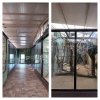
A low, seemingly dilapidated building nevertheless houses a surprise inside with a stately hall , which probably refers to the zoo’s past history, and is now used as an exhibition room.
upload_2025-1-24_12-56-18.jpeg

Next is the Herpetarium, a small reptile house with also 2 mammal enclosures: pygmy marmoset on one side and a community enclosure for emperor and cotton-top tamarin, northern toupaja and armadillo on the other. Finally, reptiles can be found in two small rooms, mainly the standard species (bearded dragons, yellow anaconda, etc.) but also the Mangrove monitor which is not wide-spread outside Poland. Holguin anolis, mentioned on ZTL, was absent. Poland is the only country with this species, but it was absent on most places. But the real surprise was Varanus tristis orientalis or the Freckled monitor, a subspecies of the Black-headed monitor, seen in only 6 european zoos.

upload_2025-1-24_12-52-17.jpeg

The building is small and consist of 12 exhibits, some stacked in pairs:

1. Yellow anaconda (Eunectes notaeus)
2. Rio Fuerto beaded lizard (Heloderma horridum exasperatum)
3. Malagasy ground boa( (Acrantophis madagascariensis)
4. Cotton-top tamarin (Saguinis oedipus), emperor tamarin (Saguinis imperator (subgrisescens), northern threeshrew (Tupaia belangeri) and southern 3-banded armadillo (Tolypeutes matacus)
5. Pygmee marmoset (Cebuella pygmaea)
6. Malagasy tree boa (Sanzinia madagascariensis) and Malagasy ground boa (Acrantophis madagascariensis)
7. Black-tailed ratsnake (Crotalus molossus)
8. Green keel-bellied lizard (Gastropholis prasina) and Sinolan Milk snake (Lampropeltis triangulum sinaloae)
9. Veilled Chameleon (Chamaeleo calyptratus)
10. Pacific boa (Candoia carinata)
11. Dwarf Bearded dragon (Pogona henrylawsoni)
12. Black-headed monitor (Varanus tristis orientalis)
13. Mangrove monitor (Varanus indicus)

Outside, there is a Mountain section with Barbary sheep, Mishmi takin, Tasjik markhor and Central Chinese goral. We’re far away from Prague’s impressive rocky outcrops, but still descent enough in a place like this.

upload_2025-1-24_12-53-21.jpeg
Tajik Markhor (Capra falconeri heptneri) enclosure

It seemed to me that this zoo is really supported by the local community: not only where there many families with small children, but here and there in the garden there were sales and info points run by volunteers, even on this week day.

I would not detour for this zoo, but as an evening stop, this was a nice way to end the day, especially since there is more than enough time left after closing time to visit the historic city centre, which is classified as a Unesco World Heritage Site and is almost right next to the zoo. There was a Fantasy festival going on in the city, so it was teeming with aliens, wookies and young Skywalker. I even saw a Roland Deschain, kudos to that young man from this old King fan.

Tomorrow I pass through here. I hope none of you readers get nightmares.

upload_2025-1-24_12-54-48.jpeg
 

Attachments

  • upload_2025-1-24_12-51-1.jpeg
    upload_2025-1-24_12-51-1.jpeg
    273.2 KB · Views: 107
  • upload_2025-1-24_12-51-29.jpeg
    upload_2025-1-24_12-51-29.jpeg
    177.4 KB · Views: 108
  • upload_2025-1-24_12-52-17.jpeg
    upload_2025-1-24_12-52-17.jpeg
    117.5 KB · Views: 105
  • upload_2025-1-24_12-53-21.jpeg
    upload_2025-1-24_12-53-21.jpeg
    145.2 KB · Views: 101
  • upload_2025-1-24_12-54-48.jpeg
    upload_2025-1-24_12-54-48.jpeg
    107.6 KB · Views: 98
  • upload_2025-1-24_12-56-18.jpeg
    upload_2025-1-24_12-56-18.jpeg
    171.9 KB · Views: 107
  • upload_2025-1-24_12-58-57.jpeg
    upload_2025-1-24_12-58-57.jpeg
    126.1 KB · Views: 107
  • upload_2025-1-24_12-59-41.jpeg
    upload_2025-1-24_12-59-41.jpeg
    324.1 KB · Views: 111
  • upload_2025-1-24_13-0-18.jpeg
    upload_2025-1-24_13-0-18.jpeg
    106.8 KB · Views: 106
  • upload_2025-1-24_13-5-36.jpeg
    upload_2025-1-24_13-5-36.jpeg
    175.2 KB · Views: 100
Back
Top