Chlidonias Goes To Asia, part seven: 2024-2025

I confirm the mistletoe identification, looks identical to the British one.

I just looked it up - the Japanese Mistletoe is the same species as the European one, Viscum album, but of the East Asian subspecies coloratum (treated as a distinct species in some sources).

Interestingly, I believe the East Asian/Japanese mistletoe (often called Korean Mistletoe) has reddish/orange fruits, unlike the classic white ones we see in Europe.

Very much enjoying the thread @Chlidonias !
 
Have you had any more rooms with Terminator Toilets that have tried to cook you with overheated toilet seats?
Most (all?) of the toilets I have encountered in Japanese hotels are of this ilk, but they must be better designed than the Chinese one. The seats are not super-heated, just heated, and they do not look evil - they just look like regular toilets.

Also they behave themselves better, being Japanese. The Chinese one had an automatic seat and lid which would raise and lower on their own, usually when it was inappropriate to do so - for example, the lid would try to close while you were in the process of sitting down on the toilet. I assumed it was trying to devour me, but who really knows.
 
Hokkaido plan

So now I'm in Hokkaido. My plans for the island were as follows:

1) Arrive via ferry to Tomakomai. I had found a nature reserve at Lake Utonai just outside town, so had reserved a day for that.

2) Next to Kushiro, which is where you go in winter to see Red-crowned Cranes.

3) East of Kushiro is the Nemuro Peninsula, where I planned to stay in the town of Nemuro for a few days to visit Cape Nosappu (seabirds), Cape Ochiishi (Sea Otters), and Lake Furen (general birding). Between Kushiro and Nemuro were Lake Akkeshi (water birds) and Cape Kiritappu (Sea Otter back-up), but I hadn't decided if I would stay at each or do them as day-trips from Kushiro. I rejigged this whole section when I was in Kushiro because I couldn't book a hotel in Nemuro - instead I visited Kiritappu and Nosappu Capes as day-trips from Kushiro, and dropped Ochiishi because I'd already seen the Sea Otters at the other two capes. I also dropped Lake Furen and Lake Akkeshi because I'm not seeing a lot of birds anyway (it being the dead of winter). I'm coming back to Kushiro though, so I may visit them anyway later.

4) Then to Odaita, and on up to Rausu (Steller's Sea Eagles, Blakiston's Fish Owl, and marine mammals). Odaita was mainly in the plan because it is a wintering ground for Whooper Swans, but I've been seeing them almost every place I go in Hokkaido so I have skipped that as well. I am currently in Rausu as I write this - Steller's Sea Eagles and Blakiston's Fish Owl were a go, but marine mammals were a no.

5) Kawayu Onsen (woodpeckers and other general birding). I had been going to stay there, but it is only about two hours by train from Kushiro, so instead I'm just going to go straight back to Kushiro from Rausu, and then do Kawayu Onsen as a day-trip because that will save on messing around with extra hotels.

6) Then fly out from Kushiro back to Honshu. This isn't set yet, so it depends on what options I can find for getting to Honshu - it might be another ferry, or I might add in more places in Hokkaido. I'll decide as I go.


Lake Utonai (outside Tomakomai)

Because the ferry from Honshu arrived at Tomakomai I had looked into what sort of local reserves or parks were readily accessible by bus in winter. The one I choose was Lake Utonai which on eBird has a bird list of 135 species, although almost none of them were listed for February so I wasn't expecting great results.

I had found the bus schedule online before leaving New Zealand, which said the bus left from outside the train station at fifty minutes past each hour starting at 5.50am, but I didn't know if this was current or accurate. (Basically, almost every bus schedule for Japan I found online turned out to be accurate, like most other information I had found out, and totally unlike almost every case in China!). I had a bit of a late start the next morning though because I had slept on the ferry during the day so couldn't get to sleep in Tomakomai until about 2am. The 7.50am and earlier buses were therefore missed.

I had breakfast (which was buffet-style and included in the cost of the room), and then missed the 8.50am bus as well because I had asked the girl at reception to write down the name of the lake in Japanese to show the driver (in case the phone translation wasn't accurate), she said to wait and then went out back. I waited but she never returned - I don't know if she was actually getting something or was just scared because she didn't speak English and went and hid - but as I left the hotel after getting my bag I saw the 8.50 bus leaving.

Even with the phone's translation app I couldn't understand the timetable at the bus stop, so I asked another driver and he showed me which bus on the board I was after and confirmed the next departure time as 9.50am.

Catching the bus in Hokkaido is really easy (so long as you know which bus to catch). You board through the back door, take a numbered ticket from the machine there, and when you get off you put the ticket into another machine at the front door which tells you the fare. At the front of bus there is also a digital display showing the fare increases as the bus travels from stop to stop, so you know how much change to have ready. The local trains here have the same system.

Getting from the train station to Lake Utonai took 55 minutes and cost 530 Yen. The stop you want is called "Nachursenta Iriguchi" (i.e. Nature Centre Iriguchi), although the previous stop at Utonai-ko (ko means "lake", so Utonai Lake) works just as well. Both stops have nature centre buildings and there is a track/boardwalk running between them. Going back to Tomakomai I caught the bus from the Utonai-ko stop and it cost me 510 Yen.


There was a lot of snow out here. In Tomakomai itself there had been some snow about but not a lot, and mostly in piles where it had been swept off the roads and pavements. Here it was reasonably thick in places, and was covered everywhere with fox and deer footprints. It was surprising seeing dwarf bamboo all through the forest, poking out of the snow. It shouldn't really be surprising but I tend to associate bamboo with the tropics not Ice Japan.

There were precious few birds around. Brown-eared Bulbuls were common, as were Large-billed and Carrion Crows, but the only other birds I saw on the trails around the Nature Centre were a Bull-headed Shrike, a Great Egret, and a large flock of unidentifiable geese. The lake itself was mostly frozen, so the open water was quite some distance away.

After walking around the shorter trails here, I took the longer trail which leads to the second Nature Centre. Along the way I saw a Great Spotted Woodpecker, and at one point where there was a small river flowing out into the lake there was a pair of Whooper Swans.

full

Whooper Swans and Great Egret


Near the end of the trail things got more interesting, with a lot of activity from small tree-hugging birds - Japanese Pigmy Woodpeckers, Eurasian Nuthatches, and a Eurasian Treecreeper.

full

Japanese Pigmy Wooodpeckers, which are about the size of sparrows.

full

Eurasian Nuthatch


full

Eurasian Treecreepers forage vertically on the tree trunks...

full

...while Eurasian Nuthatches forage upside-down.
 
Last edited:
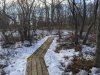
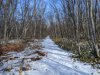
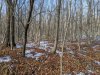
Lake Utonai Sanctuary forest. Anything sort of greenish in the photos is bamboo.

PXL_20250201_021346135.jpg

PXL_20250201_021800465.jpg

PXL_20250201_021640119.jpg

PXL_20250201_021331640.jpg

PXL_20250201_034210096.jpg
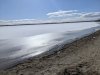
Lake Utonai - you can't really see it in the photo but the snow over the lake is covered in fox tracks.
 

Attachments

  • PXL_20250201_021346135.jpg
    PXL_20250201_021346135.jpg
    321.3 KB · Views: 98
  • PXL_20250201_021800465.jpg
    PXL_20250201_021800465.jpg
    313.8 KB · Views: 97
  • PXL_20250201_021640119.jpg
    PXL_20250201_021640119.jpg
    368.4 KB · Views: 101
  • PXL_20250201_034210096.jpg
    PXL_20250201_034210096.jpg
    178.2 KB · Views: 103
  • PXL_20250201_021331640.jpg
    PXL_20250201_021331640.jpg
    360 KB · Views: 104
Kushiro

My main bird site for Kushiro (well, my only bird site for Kushiro itself) was the Akan International Crane Center, where Red-crowned Cranes gather in winter. You can see this species all year round in Hokkaido - the local population is resident whereas the mainland Asia population is migratory - but in winter most birds gather in specific locations such as around Kushiro.

The Japanese population was actually thought to have become extinct by the start of the 1900s but in 1924 a few birds were rediscovered at Kushiro. Local protection and winter feeding enabled the recovery of the birds so now there are 1800 of them on the island.


I took the train from Tomakomai to Kushiro. The train is more expensive than the bus but only by about $20 or so, and it is only half the travel-time at four hours rather than the eight hours of the bus. Also for the bus I'd have to go to Sapporo first I think, and then catch a second bus from there, whereas with the train I took a local train to Oiwake and then a fast train the rest of the way so it was much easier.

Thick snow covered everything the whole way between Tomakomai and Oiwake, but then it mostly disappeared and until Kushiro the scenery varied between pretty snowy to no snow at all. Overall there was very little snow until reaching Kushiro, and then it all reappeared.

I saw a Red-crowned Crane from the train - a train crane if you will - and also a couple of fields covered in swans which were probably Whoopers.

The train and bus stations in Kushiro are right next to each other. My hotel, the Hotel Crown Hills Kushiro, was directly opposite the bus station and cost about 6000 Yen (NZ$70) per night. There was only one cheaper place on the booking sites but it was 6km from the stations so was much less convenient for me given that all my sites are reached by train or bus.


I arrived in Kushiro at about 1pm. Before going to the hotel I checked out the train schedules I needed and stopped at the info centre (also inside the train station) to find out about the bus to the Akan International Crane Center.

Surprisingly for such a tourist attraction, there are only two buses a day to the Crane Center, at 10.10am and 2.50pm. This isn't even a dedicated bus, just a local bus which has this as one of its stops. And there is only one bus back, at 4.58pm. It is just over an hour to the centre, so the second bus gets there at 4pm and the centre closes at 5pm.

There was still time for me today to catch the second bus, and I figured even with only an hour able to be spent there before catching the return bus that must be enough time or they wouldn't have the timetable like that.

On the way there I was watching the sun getting lower and lower towards the horizon. Eventually I checked on my phone what time sunset was in Kushiro - 4.36pm! So I would have only half an hour of light left by the time I arrived. Not ideal! I reasoned that at least I'd be able to get photos of the cranes in the sunset.

The bus stop is outside a cluster of buildings including a restaurant which I assumed was the entrance area for the Crane Center, but it is actually on the other side of road. I hurried as quickly as I could over the ice and snow to the centre, paid my entrance fee of 480 Yen, and went straight to the window ahead.

The centre isn't exactly what I was imagining. There is basically a big building with viewing windows over a field where the cranes are fed, there is a pathway outside alongside that field, there are a few pens for captive cranes, and that's it. I actually thought this was where the cranes came to roost (as at the observatory at Arasaki) but it is just a feeding area.

There was a flock of cranes in the field when I arrived. Ten minutes later they all flew off. Their day was done.

full

This is a phone photo which I uploaded without any editing, so those colours are what it really looked like!

full

Cranes departing


I think I'm safe in saying that if you have the choice, do not take the 2.50pm bus to visit the Crane Center. It worked out for me - just - but I think I could easily have got there and not seen anything. When I was leaving to catch the bus back to Kushiro, a party from a tour bus had just arrived and they definitely weren't going to be seeing any wild cranes there.

However, it was a good thing I did go that first afternoon because I lost two days in Kushiro afterwards due to a snowstorm. Also, while I like taking photos of the animals that I see, I'm not actually a "real" photographer, so six hours would be too long for me to spend there (if catching the first bus in the morning and then waiting all day for the return bus). I imagine a proper photographer could do so, waiting for the right light and interactions between the cranes, but I would get twitchy and need to go look for other birds, and there isn't really anywhere else to do that here. You could take a taxi of course, to manage your own time, but given that even the bus is 1480 Yen (about NZ$17) I'd hate to think what a taxi would cost.


full


full
 
PXL_20250202_001456838.jpg
The local train to Oiwake

PXL_20250202_001708825.jpg
Waiting at Oiwake station.

PXL_20250202_003912776.MP.jpg
The next train to Kushiro pulling into the station. It was coming originally from Sapporo.
 

Attachments

  • PXL_20250202_001708825.jpg
    PXL_20250202_001708825.jpg
    123.4 KB · Views: 96
  • PXL_20250202_001456838.jpg
    PXL_20250202_001456838.jpg
    148.9 KB · Views: 96
  • PXL_20250202_003912776.MP.jpg
    PXL_20250202_003912776.MP.jpg
    159 KB · Views: 95
Kushiro

My main bird site for Kushiro (well, my only bird site for Kushiro itself) was the Akan International Crane Center, where Red-crowned Cranes gather in winter. You can see this species all year round in Hokkaido - the local population is resident whereas the mainland Asia population is migratory - but in winter most birds gather in specific locations such as around Kushiro.

The Japanese population was actually thought to have become extinct by the start of the 1900s but in 1924 a few birds were rediscovered at Kushiro. Local protection and winter feeding enabled the recovery of the birds so now there are 1800 of them on the island.


I took the train from Tomakomai to Kushiro. The train is more expensive than the bus but only by about $20 or so, and it is only half the travel-time at four hours rather than the eight hours of the bus. Also for the bus I'd have to go to Sapporo first I think, and then catch a second bus from there, whereas with the train I took a local train to Oiwake and then a fast train the rest of the way so it was much easier.

Thick snow covered everything the whole way between Tomakomai and Oiwake, but then it mostly disappeared and until Kushiro the scenery varied between pretty snowy to no snow at all. Overall there was very little snow until reaching Kushiro, and then it all reappeared.

I saw a Red-crowned Crane from the train - a train crane if you will - and also a couple of fields covered in swans which were probably Whoopers.

The train and bus stations in Kushiro are right next to each other. My hotel, the Hotel Crown Hills Kushiro, was directly opposite the bus station and cost about 6000 Yen (NZ$70) per night. There was only one cheaper place on the booking sites but it was 6km from the stations so was much less convenient for me given that all my sites are reached by train or bus.


I arrived in Kushiro at about 1pm. Before going to the hotel I checked out the train schedules I needed and stopped at the info centre (also inside the train station) to find out about the bus to the Akan International Crane Center.

Surprisingly for such a tourist attraction, there are only two buses a day to the Crane Center, at 10.10am and 2.50pm. This isn't even a dedicated bus, just a local bus which has this as one of its stops. And there is only one bus back, at 4.58pm. It is just over an hour to the centre, so the second bus gets there at 4pm and the centre closes at 5pm.

There was still time for me today to catch the second bus, and I figured even with only an hour able to be spent there before catching the return bus that must be enough time or they wouldn't have the timetable like that.

On the way there I was watching the sun getting lower and lower towards the horizon. Eventually I checked on my phone what time sunset was in Kushiro - 4.36pm! So I would have only half an hour of light left by the time I arrived. Not ideal! I reasoned that at least I'd be able to get photos of the cranes in the sunset.

The bus stop is outside a cluster of buildings including a restaurant which I assumed was the entrance area for the Crane Center, but it is actually on the other side of road. I hurried as quickly as I could over the ice and snow to the centre, paid my entrance fee of 480 Yen, and went straight to the window ahead.

The centre isn't exactly what I was imagining. There is basically a big building with viewing windows over a field where the cranes are fed, there is a pathway outside alongside that field, there are a few pens for captive cranes, and that's it. I actually thought this was where the cranes came to roost (as at the observatory at Arasaki) but it is just a feeding area.

There was a flock of cranes in the field when I arrived. Ten minutes later they all flew off. Their day was done.

full

This is a phone photo which I uploaded without any editing, so those colours are what it really looked like!

full

Cranes departing


I think I'm safe in saying that if you have the choice, do not take the 2.50pm bus to visit the Crane Center. It worked out for me - just - but I think I could easily have got there and not seen anything. When I was leaving to catch the bus back to Kushiro, a party from a tour bus had just arrived and they definitely weren't going to be seeing any wild cranes there.

However, it was a good thing I did go that first afternoon because I lost two days in Kushiro afterwards due to a snowstorm. Also, while I like taking photos of the animals that I see, I'm not actually a "real" photographer, so six hours would be too long for me to spend there (if catching the first bus in the morning and then waiting all day for the return bus). I imagine a proper photographer could do so, waiting for the right light and interactions between the cranes, but I would get twitchy and need to go look for other birds, and there isn't really anywhere else to do that here. You could take a taxi of course, to manage your own time, but given that even the bus is 1480 Yen (about NZ$17) I'd hate to think what a taxi would cost.


full


full

The colours are lovely. Fantastic to see the Red crowned cranes and the juvenile. Must have been great to see them all take off. Those pygmy woodpeckers are really nice too, so tiny!
 
1. I didn't know that you could see sea otters in Japan. You already spoiled that you saw them, so when do we get to the part about the sea otters?

2. Are Japanese dwarf flying squirrels on your agenda?

3. All of these birds are fine, but when do we get to the snow monkeys? There are going to be snow monkeys, right?
 
1. I didn't know that you could see sea otters in Japan. You already spoiled that you saw them, so when do we get to the part about the sea otters?
Sea Otters will be in the very next post in fact.

2. Are Japanese dwarf flying squirrels on your agenda?
Not specifically. All the flying squirrels are nocturnal and therefore I cannot find them. I will be happy if I see one, but the chances are I will not.

3. All of these birds are fine, but when do we get to the snow monkeys? There are going to be snow monkeys, right?
When I leave Hokkaido, the next place I'll be going is Nagano on Honshu, and that is where the snow monkeys come in.
 
The colours are lovely. Fantastic to see the Red crowned cranes and the juvenile. Must have been great to see them all take off. Those pygmy woodpeckers are really nice too, so tiny!

The Cranes are brilliant aren't they. I'm surprised about the bus timetable to get there though- you either get the whole day which, as Chlidonias said, if you are not a photographer would be too long, or just a brief hour at the end of it when the Cranes are likely to be soon leaving or even left already.

The woodpeckers look similar to our Lesser Spotted in UK, about the same size...
 
Last edited:
Sea Otters will be in the very next post in fact.


Not specifically. All the flying squirrels are nocturnal and therefore I cannot find them. I will be happy if I see one, but the chances are I will not.


When I leave Hokkaido, the next place I'll be going is Nagano on Honshu, and that is where the snow monkeys come in.

Glad to see you use the proper term in the phrase 'became extinct'. So many people say gone extinct nowadays, even in print. It really jars on me.
 
Hokkaido plan

Catching the bus in Hokkaido is really easy (so long as you know which bus to catch). You board through the back door, take a numbered ticket from the machine there, and when you get off you put the ticket into another machine at the front door which tells you the fare. At the front of bus there is also a digital display showing the fare increases as the bus travels from stop to stop, so you know how much change to have ready. The local trains here have the same system.

Doesn't that take an awful lot of time if a lot of people want to get off at certain stops?
 
Doesn't that take an awful lot of time if a lot of people want to get off at certain stops?
It can do, especially if one of the people is a foreign guy who doesn't know which coins are which. But generally the locals already have their fare ready or have bus cards which they just show the driver, so there aren't generally a lot of hold-ups.
 
Cape Kiritappu

One of my primary "target" mammals in Hokkaido was the Sea Otter. They were heavily hunted in the past for their fur and had consequently been rendered extinct in Japan by the start of the 1900s. In the early 1980s individual otters started being seen at certain spots around the Nemuro Peninsula, especially at Cape Ochiishi and Cape Kiritappu, having drifted over from "nearby" Russian islands. They are now breeding around the peninsula and are not such a rare sight any more, although it is still not a large population. There are estimated to be about fifty animals living off Hokkaido.

Cape Ochiishi was intended to be my main site to look for them, with Cape Kiritappu a back-up if I failed there, but because the latter cape seemed like it would be a good option as a day-trip from Kushiro - being less than 1.5 hours by train - I went there first.


The train from Kushiro to Nemuro (the main town on the Nemuro Peninsula) stops at the stations of Akkeshi (for Lake Akkeshi, which I never visited in the end) and Chanai (for Cape Kiritappu) and also Ochiishi (for Cape Ochiishi). It leaves Kushiro at 5.35am, then 8.21am, and then the next one not until 11.15am. I knew I wouldn't get the 5.35am one so went for the 8.21am which reaches Chanai at 9.41am.

There were snowy landscapes all the way. Lots of Sika Deer as well. I took this train several times to different towns, and every ride there were dozens of Sika seen. They are very common here. After a number of attempts I gave up trying to photograph them from the moving train because it just wasn't working.

Not far before Chanai I saw my first Steller's Sea Eagle - what a gigantic bird! I knew they would be big, but seeing one perched in a small tree is like seeing a gorilla sitting on a child's swing set. Then immediately after, about ten more of them all sitting in a loose group in trees by the track.

At Chanai Station there is a royal blue mini-bus which meets the train's arrival and for 200 Yen goes to Kiritappu town. My train arrived at 9.41am and the bus left at 9.45am. It reached the terminus stop, 3km from the cape, at 10.20am. The return times at 2pm, 4.50pm, and 7.45pm, are likewise timed to be able to catch the train going back to Kushiro.

I was expecting to be walking to the cape through snowdrifts but there is a road with a pavement alongside all the way to a parking lot just near the lighthouse, and in fact there wasn't really much snow lying out here anyway.

The snow had been coming and going on the train ride, but it decided to set in properly once I got off the bus. It wasn't heavy snow, although it was very persistent, so it was more or less melting as soon as it hit the ground. However because I was walking towards the cape the wind was coming straight at me off the ocean, and so for the whole walk the snow was being driven horizontally into my face like shards of ice (well, I guess it literally was shards of ice!).

There aren't a lot of passerines and other small birds around Hokkaido in the winter - or at least not in the places I'm at - so when I saw a big flock of sparrowy-looking things near a house on the way to the cape I had to stop to investigate. They were very flighty, so I had to stand some way back and try to avoid scaring them, but even then any sudden movement would cause the whole flock to take off and go swirling around above the fields before returning to the bushes by the house. They proved to be Asian Rosy Finches, with black fronts, pink flanks, and distinctive golden napes. Very much more attractive than their photos on eBird!

Just before reaching the end of the road was a viewing area above the cliffs with a glass-sided shelter - a welcome respite from the freezing wind, although you couldn't see anything when inside it. Standing on the edge of the cliffs scanning for Sea Otters, with the razor-snow pelting my face, I saw a pair of Harlequin Ducks floating on the ocean below. What a spectacular bird the male Harlequin Duck is, if I can say that without sounding sexist. I'd earlier mentioned the Falcated Ducks and Baikal Teal as my most-wanted ducks in Japan, but the Harlequin Duck was my real most-wanted duck. I just didn't want to jinx it. It seemed like such a fabulous almost-mythical bird to me that I didn't really expect to see any, but they turned out to be common all around the coastlines of eastern Hokkaido.

That wasn't the only new bird seen from the cliffs, albeit none coming anywhere near close to being as superb as the Harlequin Ducks. There were Slaty-backed Gulls gliding about, and down on the sea with the Harlequin Ducks were Red-necked Grebes and Red-breasted Mergansers.

Then I saw a Kuril Seal. Such a weird beastie. It points its nose skywards and floats with just the top of its face above the water, so you're wondering what you're even looking at. Then it pops its head right out to look around, before pointing its nose upwards again and just sinking straight downwards and disappearing. No roll and dive, just reverse.


I continued on to the end of the cape. From the car parking area there is a track along a narrow peninsula - sort of a peninsula off the peninsula, which itself is off a peninsula (and so on, like fleas). It was very cold out there! Then I saw a pair of Sea Otters. They are huge! Like the Steller's Sea Eagles I knew they would be big but I had no idea they would be that big! I had been checking out every dark shape on the ocean, which were all ducks and grebes and cormorants, but it turned out that the otters are so big that there's no mistaking what they are, even from the cliffs.

I had imagined they would just be floating about on their backs and when swimming they would do it like a normal otter, but they seem to use their tail and hind feet to propel themselves backwards across the surface. Really fast too, like they have outboard motors, which I guess they sort of do with that tail.

I couldn't photograph these first animals from where I was because the wind was driving sleet-like snow straight into my face and my camera lens would have been instantly iced up. Later I managed to find a position where I could have my back to the wind to take some photos. The water was a fair distance below me and I couldn't actually see through the snow to tell whether anything was in focus, so I just hoped for the best. You can't even really see the snow in the photos though.

full


full


I think I saw three Sea Otters. First a pair, then a single animal on the other side of the little peninsula which was definitely a different animal, and then what was probably the same pair again - these are the ones of which I got the "better" photos (the single otter was too far out so the photos were more like a black blob than an otter). There are apparently only about ten animals at this location.
 
Last edited:
Looking across from the first viewing area (where I saw the Harlequin Ducks) to Cape Kiritappu where I saw the Sea Otters. It was even colder than it looks because of the wind, and again the snow doesn't really show up on the photo. The white on the cliff face to the right is ice.

You can just see the lighthouse in the distance, and can also see the height of the cliffs from which I took the photos of the otters!

PXL_20250203_020425611.MP.jpg
 

Attachments

  • PXL_20250203_020425611.MP.jpg
    PXL_20250203_020425611.MP.jpg
    194 KB · Views: 72
Back
Top