Philippine eagle spotted above Poland and Eastern Germany

Elephants have come up a few times in this thread and I see, via Zootierliste, that Gdansk, Poznan and Warsaw keep African Elephants, while Chorzow, Gdansk, Krakow, Lodz, Plock and Wroclaw all maintain Asian Elephants in their collections. That adds up to 8 different Polish zoos with elephants and are there any others? I'm curious as to how many of those elephant exhibits are modern and acceptable and how many are outdated, because it's a cold nation and some of these elephant exhibits look to be quite disappointing. I know that Poznan and Lodz have fairly new exhibits and so would those two be the best that Poland has to offer in terms of elephant accommodation?
 
Besides the zoos you already mentioned, according to ZTL, there was only 1 other zoo that also kept elephants in the past, and that was Poznan Stare.

Very good elephant enclosures can also be found in Poland. Because of my travel schedule, these will be covered in the following posts.

Of the ones already described, I personally thought Gdansk and Plock to be the worst, especially in terms of the indoor enclosure, which as you also point out, the animals may spend considerable time in in winter.

Warsaw is pretty ok: reasonably large outdoor enclosure, and the building is beautiful to look at and seemed to me to have been recently renovated. It is just perhaps too small and not adequate enough to house a breeding herd.

upload_2025-2-9_12-59-7.jpeg
part of Warschaus enclosure

Wroclaw has all the hallmarks of a traditional city zoo: the outdoor enclosure is altogether too small, the building however is of great architectural value in itself, but needs major renovation.

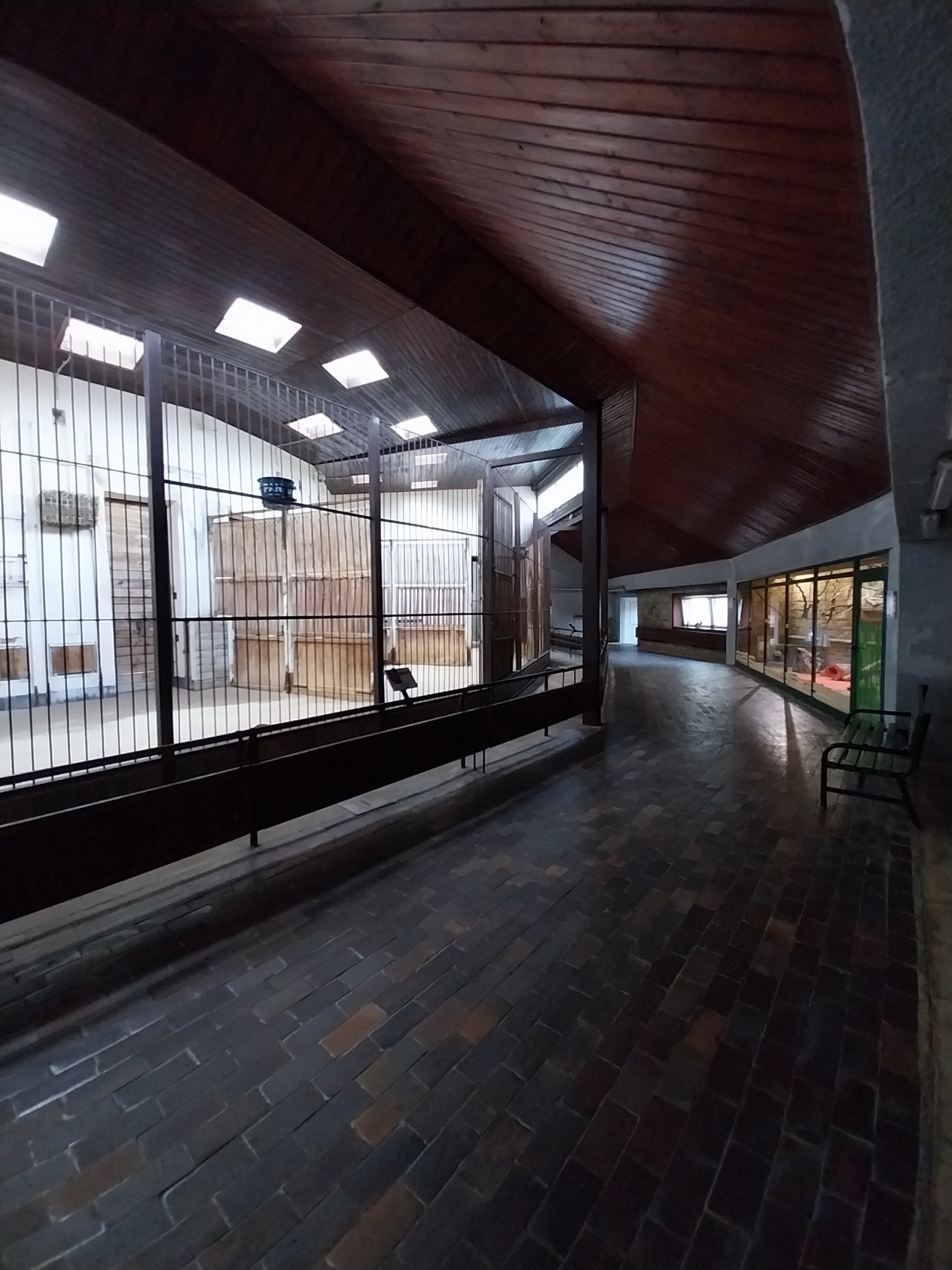
Chorzow is a bit different : the exterior is very barren (with a few small trees and no shade except from the building itself) and it seemed to me it has only hard surface. I would definitely keep the building, I do have a fondness for old buildings with a distinctive style, but I don't see how they could ever turn this into a modern elephant holding : the structure of the building doesn't allow for the creation of a large community space inside.

upload_2025-2-9_12-56-3.jpeg
Chorzow elephant holding
 

Attachments

  • upload_2025-2-9_12-56-3.jpeg
    upload_2025-2-9_12-56-3.jpeg
    92.8 KB · Views: 185
  • upload_2025-2-9_12-59-7.jpeg
    upload_2025-2-9_12-59-7.jpeg
    204.1 KB · Views: 169
I have just gotten around to reading the first entries of this thread - very good so far!

I will be visting Dresden and Chemnitz myself for the first time in april, so it's interesting to read your review of those zoos in particular

This bit concers me a little though


The Vivarium is, obviously, one of my main reasons for visiting this zoo. Do you, or does anyone else, know the extend of these renovations and how much of it will still be underway in april?
It would be quite disappointing to miss out on part of their huge amphibian collection.

I just got a message from Chemnitz saying that all renovation work was finished and the Vivarium is fully open.
 
Day 14. Poland's most modern zoo

#24 Lodz Zoo & Orientarium – Part 1. The (classic) zoo

A lenghty review of what may be Poland's most modern zoo.

My arrival started, how could it be otherwise, with an incident at the barrier of the zoo's car park. As I was about to take a ticket, a man stormed towards my car and immediately started a tirade, of which I obviously did not understand anything. I have no idea what it was about, perhaps he wanted to make it clear to me that this was a pay car park from now on (I had already seen during trip preparation that the barrier system was new). This strange stalemate lasted for about 1 minute and then I had had enough. I pointed at the automat, took a ticket, said ‘parking zoo ticket’, he replied deadpan ‘yes’ and walked away. It was annoying and funny at the same time.

Lodz Zoo started in 1938 as a garden specialising in European species but although it came through WWII reasonably unscathed, it took until well into the 1950s for the zoo to develop further.

Zoo Lodz has by far the most modern entrance of any zoo in Poland and it is equipped with all modern conveniences.


Right after the entrance, there is a building with Pileated gibbon and Ring-tailed lemurs. Would that be the zoo’s former baboon rock, @Kranich29 ? The gibbon have a cage that seems inadequate both in space and height. At the front, the lemurs live on an adorable plateau with grass, lots of rocks and climbing trees.

upload_2025-2-13_18-55-52.jpeg

This sets the tone for this zoo: not overly large enclosures, but neatly maintained and restored.

But it is the Night World building that particularly caught my interest here. As it only opens an hour later, I took a little walk around first, but punctually at 10am I was the first visitor. Night animal houses simply have to be visited very early or very late.

It is surrounded by aviaries (it started as a Birdhouse in 2004) and the best is a beautiful aviary for Silvery-cheeked hornbills. It is always a real pleasure to watch these birds fly and hear the so distinctive sound of their wings. Next to the entrance are aviaries for Kea and a mix of different species (Silvery-cheeked hornbill, Himalayan monal, Nicobar pigeon and Goffin's corella).

upload_2025-2-13_19-12-38.jpeg
Silvery-cheeked Hornbill (Bycanistes brevis)

night-world-silvery-cheeked-hornbill-bycanistes-brevis-aviary.784060

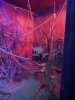
Inside, there are no more than 5 enclosures. The largest of these houses a colony of Seba’s short-tailed bats, followed by an enclosure with Brush-tail possum and Western brush-tailed bettong. The other side starts with an enclosure for Northern Luzon giant cloud rats and Philippine porcupines, followed by a squalid enclosure for Senegal bushbaby, Egyptian fruit bats and African brushtailed porcupines. With so many bats stinking up everything, this does not strike me as a holiday resort for the very active galagos. The last enclosure has Binturong. Back outside, there are aviaries for Red-billed blue magpie and Red-legged seriemas. I noticed that sometimes red and sometimes blue light was used in the different enclosures, does anyone know the reason for this?

upload_2025-2-13_18-56-52.jpeg

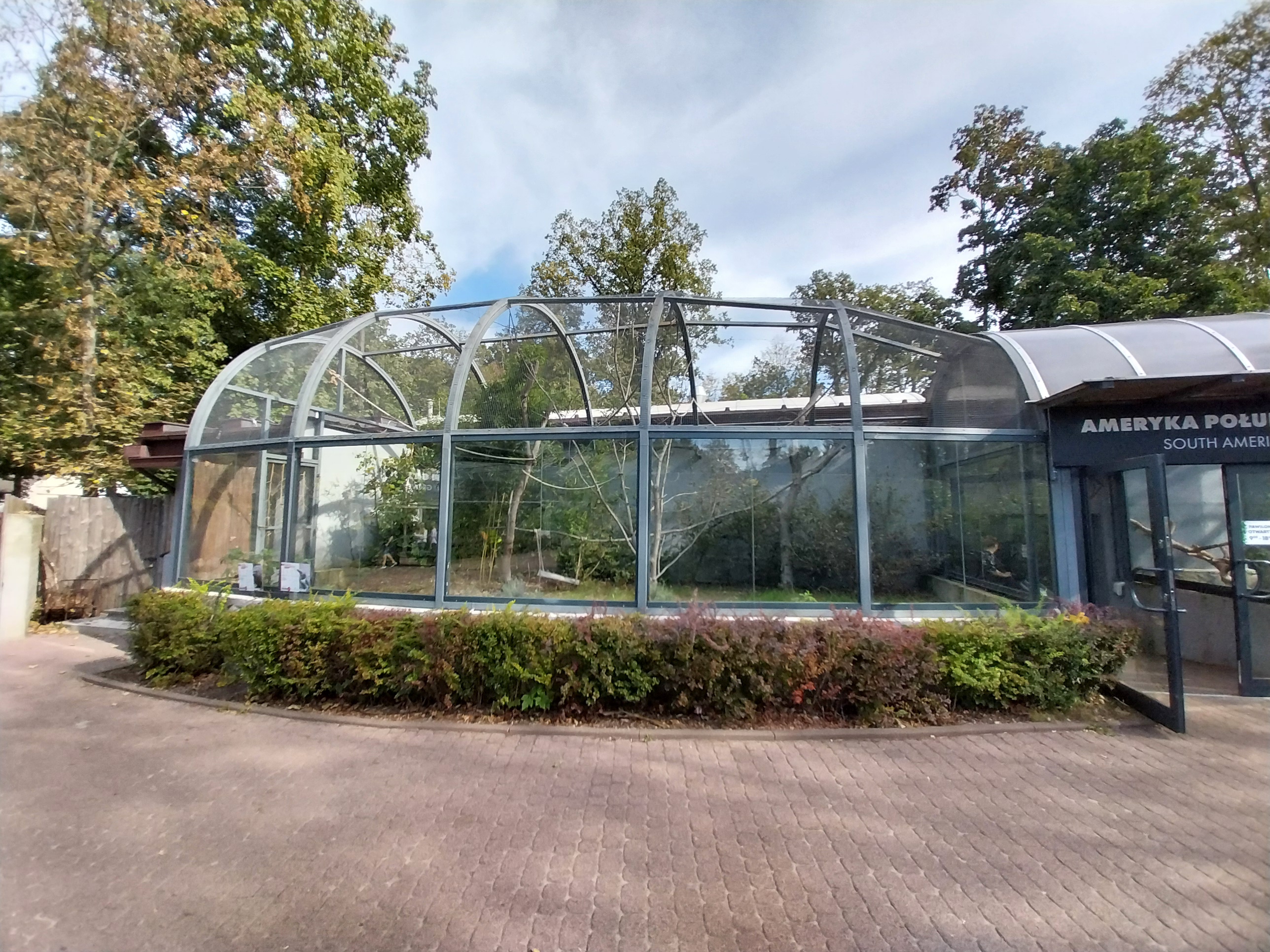
Apart from Mongolian tawny eagles and a few (European) owls, this zone is entirely dedicated to South America, with Guanacos and Patagonian rock parakeets as a start and then the South America house appears, surrounded from front to back with enclosures and aviaries. At the back Bush dog and Giant river otter, both in mostly functional enclosures. At the front are aviaries whose inhabitants can also be seen inside : Southern tamandua, Cotton-top tamarin, Southern three-banded armadillo, Two-toed sloth and Common squirrel monkey. The building itself has an attractive lay-out and I was glad to see Golden poison frogs and Green aracari to fill up the place but overall it lacks more interesting species.

upload_2025-2-13_19-10-3.jpeg
Giant river otter (Pteronura brasiliensis)
Aviary for Green aracari (Pteroglossus viridis) and Brazilian procupine (Coendou prehensilis)

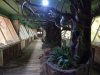
At the back of the zoo is the old Monkey House, and it looks a bit misleading, more like an office building. Still, it is particularly atmospheric inside, as visitors walk on a planked floor past manmade trees and tropical planting. On either side are very small enclosures, which are doable for the Callitrichidae, but absolutely not for the Javan lutung, Lion-tailed macaque, Mantled colobus, White-faced saki and Black-capped capuchin monkeys. The larger monkeys all have small outdoor cages at the back but only for this works only for the capuchin monkeys. On a side note: I have rarely seen so many mice and rats in a zoo as in this building. All callitrichidae are kept quite decent and having outdoor enclosures: Bearded emperor tamarin, Cotton-top tamarin (with Big hairy armadillo and Two-toed sloth), Golden lion and Golden-headed lion tamarin, Pied tamarin, Pygmy marmoset and Red-bellied marmoset, that’s not bad.

upload_2025-2-13_19-3-40.jpeg


Next to the Monkey House is the Aquarium. The entrance resembles that of a subway station and half underground is a hall filled with small aquariums. There is the almost daily dose of familiar (aquarium) fish: tetras, loaches, South American cichlids, botias, puffer fish, catfish, etc. The aquaria were all neat but without anything breathtaking. A Congo aquarium included Congo tetra, and untraceable Tapirfish and Butterflyfish. Now I highly doubt the latter 2 are in it: the former was labelled as Peters' Elephantfish (Gnathonemus petersii) which needs a much larger aquarium and can be particularly aggressive towards other fish, while the latter is a very distinctive fish scanning the surface and that is therefor hard to see over. This is not even a big deal, as the Congo tetra are an extremely attractive species that I once kept myself (and whose beauty is only truly expressed in a tank with subdued light). The most interesting species probably is the Burmese mud loach (Botia histrionica), as no more than 4 zoos in the world have these.

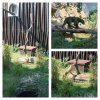
GALLERY=media, 784009]Aquarium by Philipine eagle posted 13 Feb 2025 at 1:24 PM[/GALLERY]

An off-shoot of the main route goes past an enclosure for Chapman’s zebra and to a somewhat hidden aviary for Stellers' sea eagle. The building seen from the Scimitar-horned oryx enclosure is the Africa House that used to have pygmy hippos as inhabitants. It is a place to my taste as it shows a hodgepodge of species. At the front, there are 2 densely planted aviaries for (again) Silvery-cheeked hornbill, Violet turaco, Guinea speckled pigeon and Von der Decken’s hornbill. These can also be found indoors in small aviaries. The Kirk dikdik's and Meerkat replaced the hippos but the layout of the building was retained: each species got 1 hippo box. Above the antelopes live pairs of Senegal turacos and Purple glossy-starlings. Outside again, both dikdik and Lesser kudu have a large paddock.

upload_2025-2-13_19-2-33.jpeg
Inside the Africa House - Buffon's green turaco - towards the Steller's sea eagle aviary

The Giraffe House is old and lacklustre, and it has 4 small boxes, along with a rather odd meerkat exhibit, which also have outdoor enclosures at the back. The zoo is dreaming of a savannah complex, so the whole area might become obsolete sooner or later.


giraffe-building.784041


In contrast of that, the Cat House is although not freely accessible a smash hit. It consists of 2 large enclosures for a small pride of Asiatic lions and a lone Siberian tiger. Certainly the lion enclosure looks a bit strange at first glance: it is quite large but because it is completely overnet at low height, the proportions are a bit skewed. But it is well designed and it has lots of grass and shrubs where the animals can hide well, and furthermore rocks, tree trunks and water pools. The tiger enclosure has the same set-up only another plane crash happened there. The number of crashed vehicles and planes in our zoos is unbelievable, would there be someone who have a business in this? Between the two big felids there are two other species: Fishing cat and Sri Lankan rusty-spotted cat, with 2 enclosures each, not super big but adequate. Especially the latter is a species I am very fond of, and I don't really understand why more zoos don't display them. Since this tiny feline hardly takes up any space, this cannot be the issue.


full

full

Asiatic Lion enclosure and Sri Lanka Rusty-spotted cat cages

The area in the southwestern corner is marked on the zoo's map as ‘Australia’. It has a large enclosure for Red kangaroos and Cape Barren goose, and a building with indoor aviaries viewable through windows. I saw Bali myna and Papuan Hornbill there, while Lowland anoa, Southern cassowary and Emu sit nearby . This is an old part of the zoo and there is little consistency in the exhibits: an old-fashioned aviary for Oriental stork, another for Eurasian great cormorant and Red-crowned crane and furtheron also Red panda and Bactrian camels.

The Vivarium is an elegant building stuffed with terraria. There are some very nice species, such as Disco vampire crabs (Geosesarma tiomanicum) and Indonesian hermit crab (Coenobita brevimanus), 2 species that I would expected in the Orientarium, where there is plenty of space left. There are also nice reptiles like the Cambells milk snake, Solomon Islands giant skink (together with the beautifully coloured Fernand's skink or True fire skink), Fidji banded iguana ( with Twist-necked turtle), the critically endangered West Indian iguana, etc. 3 slightly larger show Mata-mata and White-rumped Shama, and the others Panther chameleon and Spectacled caiman. The facility is not large, but well maintained and the terrariums are of excellent quality.

upload_2025-2-13_19-8-34.jpeg
Prehensile-tailed skink and Fernand's Fire skink

The Pygmy Hippo Building is a modern structure with indoor two separate enclosures and a visitors' area. The latter also gives access to an adjacent aviary with a number of African birds: African spoonbill, Hammerkop, Cattle egret and Sacred ibis. The visitor path winds through the aviary and provides a number of vantage points on the hippo enclosures where the 3 animals find plenty of water and grass and are kept out of the visitor area via tree trunks. This aviary is tall which allows the hamerkop to build its impressive nest and it could easily also a home for one of the turaco species from the Africa house.

upload_2025-2-13_18-55-12.jpeg

Between the pygmy hippos and the Orientarium is another South American zone whose enclosures are grouped around the Tapir House. There is a large open aviary that includes Scarlet ibis, Giant wood rail and Capybara. And a large adjacent enclosure for South American tapir, Vicunha and Lesser rhea. At the back of the building you can look into the tapir pen where also Southern screamer and White-winged wood duck occur. There are also some very small macaw aviaries with very common species (ararauna, green-winged, Mexican military) and a pair of Northern helmeted curassow. Too bad all these cannot join the scarlet ibis at the front of the building.

upload_2025-2-13_19-14-26.jpeg

The very last enclosure before re-entering the orientarium, is a modern enclosure for African penguin.

upload_2025-2-13_18-53-23.jpeg

Conclusion

Everything in the zoo is visually appealing, but nothing really stands out. Although it is very neatly maintained throughout, there is no building or enclosure that will stick in my memory as truly exceptional. But the quality is good throughout and (apart from the Monkey House) there is nothing to bring it down.
 

Attachments

  • upload_2025-2-13_18-53-23.jpeg
    upload_2025-2-13_18-53-23.jpeg
    217.1 KB · Views: 150
  • upload_2025-2-13_18-55-12.jpeg
    upload_2025-2-13_18-55-12.jpeg
    234.1 KB · Views: 165
  • upload_2025-2-13_18-55-52.jpeg
    upload_2025-2-13_18-55-52.jpeg
    324.5 KB · Views: 150
  • upload_2025-2-13_18-56-52.jpeg
    upload_2025-2-13_18-56-52.jpeg
    112 KB · Views: 144
  • upload_2025-2-13_19-2-33.jpeg
    upload_2025-2-13_19-2-33.jpeg
    173.3 KB · Views: 137
  • upload_2025-2-13_19-3-40.jpeg
    upload_2025-2-13_19-3-40.jpeg
    164.3 KB · Views: 161
  • upload_2025-2-13_19-8-34.jpeg
    upload_2025-2-13_19-8-34.jpeg
    170.2 KB · Views: 149
  • upload_2025-2-13_19-10-3.jpeg
    upload_2025-2-13_19-10-3.jpeg
    180.3 KB · Views: 151
  • upload_2025-2-13_19-12-38.jpeg
    upload_2025-2-13_19-12-38.jpeg
    357.9 KB · Views: 147
  • upload_2025-2-13_19-14-26.jpeg
    upload_2025-2-13_19-14-26.jpeg
    190.9 KB · Views: 165
Thanks for another excellent review and it will be interesting to see where Lodz ends up when you finish this thread and rank all the zoos. ;) I always think that the Orientarium in Lodz is comparable (and was surely inspired by) the Afrykarium at Wroclaw Zoo.

Also, I'm guessing that you will have a species list for the Vivarium in Lodz when you are done, right?
 
Thanks for another excellent review and it will be interesting to see where Lodz ends up when you finish this thread and rank all the zoos. ;) I always think that the Orientarium in Lodz is comparable (and was surely inspired by) the Afrykarium at Wroclaw Zoo.

Also, I'm guessing that you will have a species list for the Vivarium in Lodz when you are done, right?

I'll try to make up a species list from the vivarium, perhaps after the weekend (I have some renovation chores to do in a log cabin I'm afraid - I'm trying not to lose any fingers :)), but I wasn't very consistent in taking notes or photos that day.

There are certainly some similarities to be made between both complexes in Lodz and Wroclaw, on the good and the bad side.
 
Had a lot of fun looking for that info. It had in fact been a baboon rock, up until 2009 when the animals were sent to Ukraine, 29 animals in total. After that they started housing Lion-Tailed Macaques there, which currently reside at the worst exhibit in Orientarium (the foot is absurdly stupid)

Thank you @Kranich29 , that information is much appreciated. It was quite difficult to find info regarding the date of origin of many buildings.
 
This southnaerican aviary has such huge potential, a bit more planting, and more of the species, and that would be a top exhibit, but now it looks like a old parkingspot with a big pothole
 
There are certainly some similarities to be made between both complexes in Lodz and Wroclaw, on the good and the bad side.

Well the reason might be that Afrykarium was built during Radosław Ratajszczak time at Wroclaw Zoo, and after that he was also a consultant during the building of Orientarium.
He still cooperates with two zoos in Poland - Lodz and Poznan, and some more around the world e.g. Taipei.
That reminds me of his lecture that I attended during which he said that they would try to bring Pangolins to Lodz, however nothing has happened so far.
 
This southnaerican aviary has such huge potential, a bit more planting, and more of the species, and that would be a top exhibit, but now it looks like a old parkingspot with a big pothole

True. But I think this area is in use for the tapir as well (the trap doors of their night shelter are visible in the picture). But I agree it could be far better designed.
 
Nice to see a solid (part 1) review of my local zoo. The whole thread is really, really great.
As a regular visitor, let me mention a few things.

Olive baboons indeed were sent to Ukraine, to Yalta zoo. That was a really huge animal transport. Besides baboons, for example group of crab-eating macaques and sooty mangabeys also were sent in the same transport.

First(male) pileated gibbon lived in Orientarium, however it could only be seen in the outdoor enclosure. And that was available for a really short time. According to the zookeeper, there was a risk of escaping gibbon from this enclosure. Now in this enclosure you probably saw group of gray langurs.

About Nocturnal House. In enclosure with Seba’s short-tailed bats, you can find only few of them. 90-95% bats in this enclosure are actually Egyptian fruit bats. Males only. According to the zookeper, there were some issues with Seba Bats. In last few months i saw maybe 1, 2, max 3 individuals. When the Night World debuted, there were a lot of them(+/- 40 Seba bats).

Monkey House. I have been visiting the Łódź Zoo for 30 years, and unfortunately I've never seen a rodent problem like this before. Many visitors think that rats are part of the exhibitions. I remember times(20-25 yerars ago) when inside of this pavilion you could met 1-2 cats. They hunted and scared away rodents. Mostly the second thing.

Aquarium. Funny thing that Congo aquarium is my all of time favorite display in this building. It is also the longest lasting arrangement. Themes and the compositions of the other tanks change regularly. Hovewer here time has stopped(14-15 years). I think that there should be still 1 butterflyfish. Maybe the same one as the one in my photo from Zoo Lodz gallery. Interesting thing is that in Tomistoma pool, In Orientarium, you can see the fish that were in Aquarium house before. For example clown loaches.

Africa House. I'm sorry but this place was never inhabited by hippos. This building was opened in 2004 and from the beginning was inhabited only by ungulates. 1 box was always for dikdik's, the second one, well it's complicated. For the start, one thing. Both boxes were behind glass. The first plan for Africa House was that the second box could be for zebras. This and non public exhibit behind. Stable for them. Hovewer, the zebras didn't accept this enclosure and broke the separating glass. From this moment in the second box you could meet here another dikdik's, dikdik's with silvery-cheeked hornbills, duikers(i'm sorry, i don't remeber which one), butterflies(!), orphaned blackbuck and sitatunga and for short time few red kangooros. That's all.
Also, there was in this building episode with kudungs(final product of mixed exhibit with lesser kudus and sitatungas, however I've only heard and read about it. Zero observations.


And I think that's all from me.

Can't wait for another reviews and for review of Orientarium.
 
I finally read up on this thread, I enjoyed it a lot.

I have personally visit 5 zoos in Poland, those being Wroclaw, Poznan, Opole, Krakow and Warshaw. After reading your reports, I feel like there's still plenty to explore in Poland. Perhaps in a few years I will return.
 
Nice to see a solid (part 1) review of my local zoo. The whole thread is really, really great.
As a regular visitor, let me mention a few things.

..
Africa House. I'm sorry but this place was never inhabited by hippos. This building was opened in 2004 and from the beginning was inhabited only by ungulates. 1 box was always for dikdik's, the second one, well it's complicated. For the start, one thing. Both boxes were behind glass. The first plan for Africa House was that the second box could be for zebras. This and non public exhibit behind. Stable for them. Hovewer, the zebras didn't accept this enclosure and broke the separating glass. From this moment in the second box you could meet here another dikdik's, dikdik's with silvery-cheeked hornbills, duikers(i'm sorry, i don't remeber which one), butterflies(!), orphaned blackbuck and sitatunga and for short time few red kangooros. That's all.
Also, there was in this building episode with kudungs(final product of mixed exhibit with lesser kudus and sitatungas, however I've only heard and read about it. Zero observations.


And I think that's all from me.

Can't wait for another reviews and for review of Orientarium.

Thank you Peter for your detailed additions to my post regarding Lodz, these are much appreciated.

As for your explanation at the Africa House: fantastic info. Although I'm still very surprised that there were never any pygmy hippo in there: the entire layout of those two boxes seemed almost perfectly made (for 2004 anyway) for this species. Since their current exhibit is fairly recent, I unwittingly made that assumption. I can very well imagine the zebras didn't like it.

upload_2025-2-17_17-50-57.jpeg
upload_2025-2-17_17-51-14.jpeg
 

Attachments

  • upload_2025-2-17_17-50-57.jpeg
    upload_2025-2-17_17-50-57.jpeg
    122.5 KB · Views: 147
  • upload_2025-2-17_17-51-14.jpeg
    upload_2025-2-17_17-51-14.jpeg
    120.3 KB · Views: 134
Warsaw is pretty ok: reasonably large outdoor enclosure, and the building is beautiful to look at and seemed to me to have been recently renovated. It is just perhaps too small and not adequate enough to house a breeding herd.

Elephant house in Warsaw is much bigger than it seems. Outside the central hexagonal piece there is a sizable backside area which can be used by elephants.

An interesting trivia: this elephant house was planned over 50 years ago, and designed to have several triangular piece-of-cake exhibits for elephants and a pool for elephant seals. Yep, this would be totally unique in the zoo world. After several decades, the death of the original architect and the fall of communism, the Warsaw zoo finally got funds for a new elephant house. They dusted off the plans, completely changed the indoor layout and built the current one.
 
Bonuspost #24 Lodz Zoo & Orientarium - Vivarium - Species list - 24/09/2024

Starting from the entrance and going counter-clockwise:

West Indian Iguana (= Lesser Antilian Iguana) (Iguana delicatissima)

Indonesian Hermit Crab (Coenobita brevimanus)

Golfodulcean Poison Frog (Phyllobates vittatus) + Dyeing Poison Frog (Dendrobates tinctorius tinctorius)

Yellow-headed Day Gecko (Phelsuma klemmeri)

Insects : Ramulus nematodes Blue + Lonchodiodes sp. Ilocos + Phyllium philippinicum

Disco Vampire Crab (Geosesarma tiomanicum)

Mexican Beaded Lizard (Heloderma horridum) + Rough-scaled Plated Lizard (Broadleysaurus major) + Campbell’s Milk Snake (Lampropeltis triangulum campbelli)

Green Tree Python (Morelia viridis) + Spot-legged Tree Frog (= Hong Kong Whipping Frog) (Polypedates megacephalus) + File-eared Tree Frog (= Bornean Eared Frog (Polypedates otilophus)

Standing’s Day Gecko (Phelsuma standingi) + Panther Chameleon (Furcifer pardalis) + Malagasy Ground Boa (Acrantophis madagascariensis)

Mata-mata (Chelus fimbriata) + White-rumped Shama (Copsychus malabaricus)

Yellow-banded poison dart frog (Dendrobates leucomelas) + Blue poison dart frog (Dendrobates tinctorius var. “Azureus”

Chinese gliding tree frog (Zhangixalus dennysi = Rhacophorus dennysii)

Solomon island Prehensile-tailed skink (Corucia zebrata) + Fernand’s skink (Lepidothyris fernandi)

Fiji Banded Iguana (= Lau Banded Iguana) (Brachylophus fasciatus) + Western Twist-necked turtle (Platemys platycephala)

Panther Chameleon (Furcifer pardalis)

Colombia Spectacled Caiman (Caiman crocodilus crocodilus) + Giant Asian Pond Turtle (Heosemys grandis)

Malagasy Ground Boa (Acrantophis madagascariensis) + Malagasy Tree Boa (Sanzinia madagascariensis)

Jamacain Boa (Chilabothrus subflavus)

European Pond Turtle (Emys orbicularis)

Emerald Monitor (= Green Tree Monitor (Varanus prasinus)

Rhinoceros Snake (Gonyosoma boulengeri)
 
Day 14 #24 Lodz Zoo & Orientarium – Part 2. The Orientarium

You cannot miss the Orientarium: after all, it dominates the entire entrance area of the zoo.

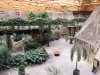
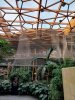
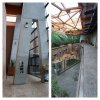
It opened its doors in 2022 after seven years of construction and it is the zoo's biggest ever investment. Covering an area of 33,000m² spread over three floors, it showcases the fauna of Southeast Asia. This includes many species that for Poland can only be seen here in Lodz. To the front and sides lie 10 spacious enclosures for mammals. It consists of 4 different parts: an elephant house, a temple hall (on the zoo’s website tagged as ‘Celebes’), an aquarium and a jungle hall. All areas except for the aquarium can be visited on two different levels which benefits the sight on the canopy dwellers. On the roof is a translucent membrane that can also convert sunlight into energy, and under which hangs a wooden latticework after the shape of Plumeria flower (a plant genus from the Apocynaceae family that, by the way, is found only in America).

Behind the Orientarium is a food street, where you can have various kinds of food in different restaurants and eateries. It remains standard zoo food, but I like this idea: easy in terms of delivery and you can keep the rest of the garden free for animals. But it might result in less sales, because not everyone will walk half the garden to have a drink.

Northern Lynx (left) and Siberian Wildcat (right) - ZooChat

Right next to this area are a few enclosures for Northern Eurasian species. There’s this Northern Lynx – Siberian Pallas’ Cat complex which looked pretty good be it that there’s only 1 exhibit for each species. Between the restaurants and the felids there is a large cage for Swinhoe’s striped squirrel and all this is followed by a large aviary for a mix of mainly Eurasian birds: Black Stork, Marbled Teal, Knob-billed duck, Bar-headed goose, Masked lapwing, Glossy ibis and Black-crowned night heron. Last exhibit is the zoo’s Butterfly House (2011).

The Orientarium itself has 3 distinct entrances and I start the tour nearby the zoo’s entrance.

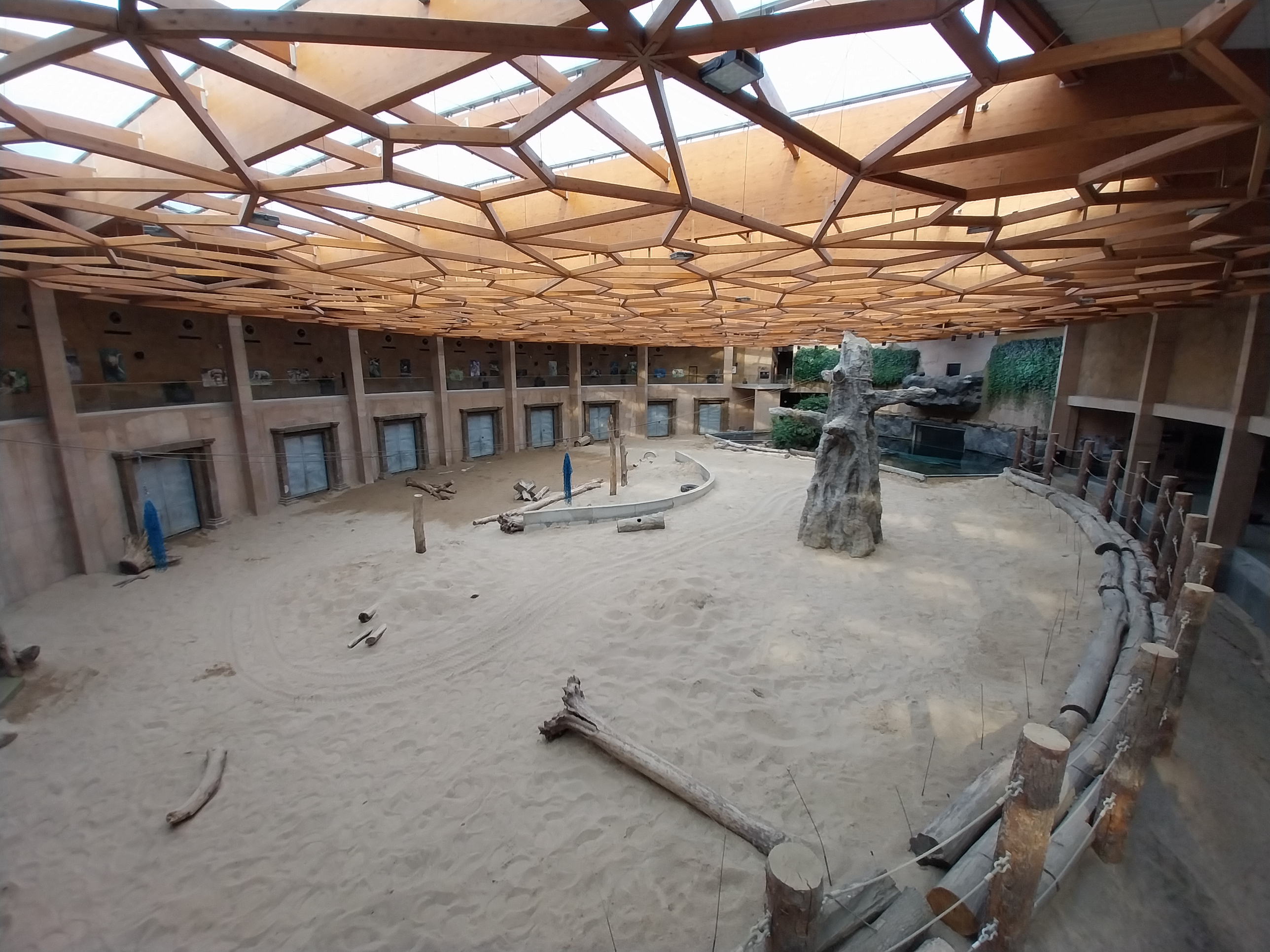
The first section is the Elephant house housing Asian elephants. At this time only males live here but the zoo intends to establish a breeding herd. The building has a 2000m² communal area with lots of sand, a swimming pool (with Giant gourami), trunks and a manmade tree. Visitors can take the stairs and under those is a large enclosure for presumably Brown tortoises (Manouria emys). Before going to the next section, it is wise to take the route past the swimming pool to an elevated dead-end walkway that brings visitors right into the outdoor enclosure.


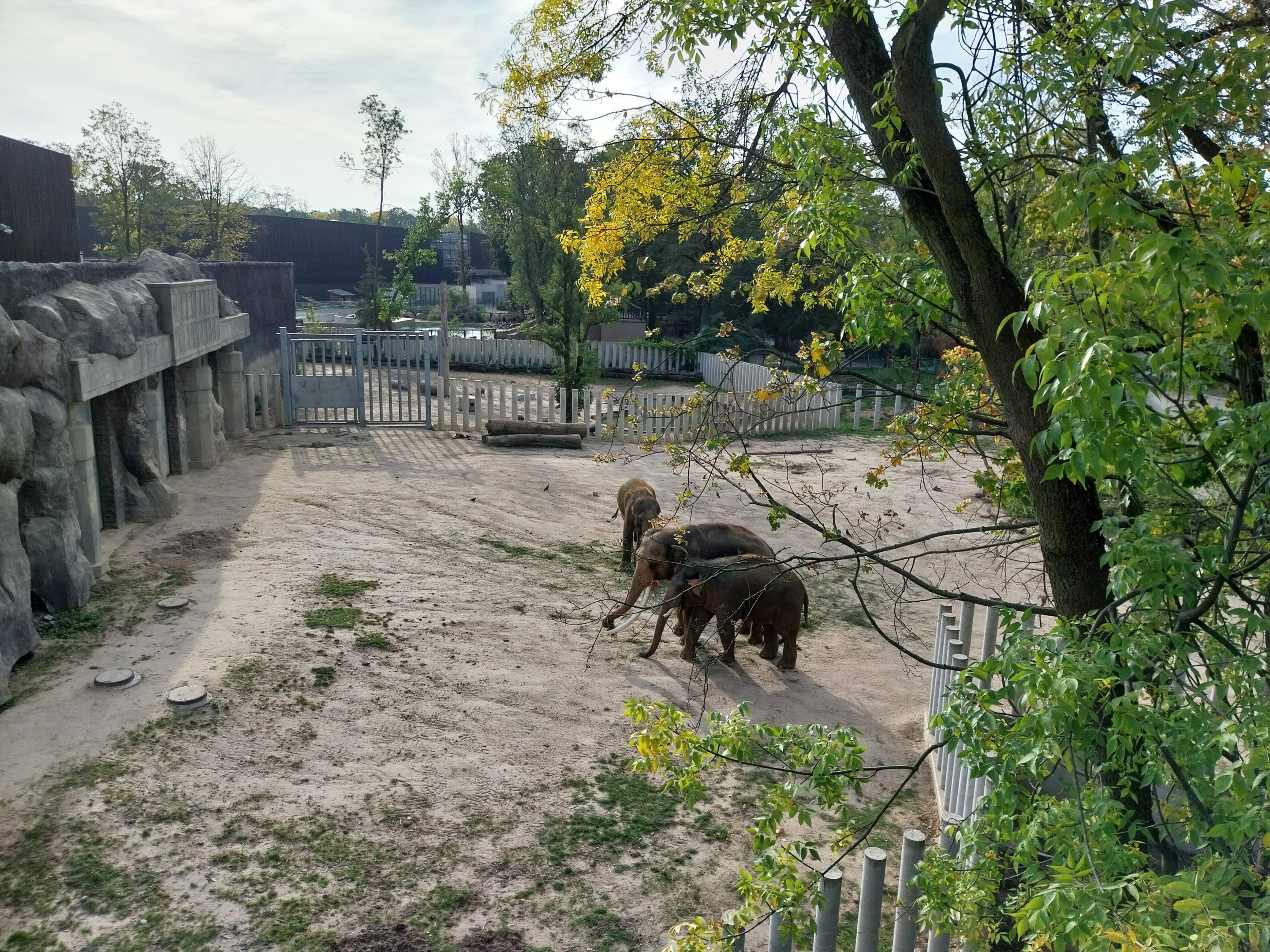
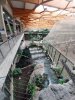
The latter is well structured with tall trees, a waterfall, ponds, etc, and can be sectioned into 3 parts. The panoramic route goes straight through the enclosure so you can watch the animals from above. The main residents are accompanied by a family group of Negros warty pig having fully access to the whole enclosure. Whether it is Poland’s best or not, I don’t know, but is certainly a welcome sight after all those bad elephant exhibits I saw during this trip.


Asian Elephant enclosure with foraging Negros Warty Pig

Before entering the next section, first a word about the very formal almost congress-hall like corridor that connects everything: it leads visitors along the entire length through doors and sluices from one area to another, and that’s not very appealing: everything that fascinates is on the same side, so there is little chance to be immersed in the Southeast Asian theme. It is a bit too sterile for me, efficient certainly, but at no point is it really part of the exhibits. A few pictures and murals on the walls can't change that. Just a few faint curves and some small exhibits for rodents or reptiles would create a completely different picture, as e.g. the Tembea building in Basel proves.


Whether you stay on the ground floor or take the stairs, which I did, the next section of the Orientarium, is called the Temple hall.

This is the point where it becomes confusing: on the zoo’s website this section is tagged as ‘Sulawesi’. That is strange because the Buddhist temple which is shown here is almost not existing on the island, as are the 3 species on show. It is a detail and if you’re not consulting the website, you only see a Southeast-asian themed hall with 2 enclosures. Even stranger is that on the website, the zoo makes it seem like the Lion-tailed macaques effectively live on Celebes. While in reality there is a 5000 km gap between the primates real habitat, the Western Ghats and the island. Presumably the zoo first intended to show Crested macaques here and later changed that plan (just as the anoa were replaced by tapirs). But it is a bit sloppy, with such a new complex that the zoo is rightly so proud of.

The difference between the dark temple wall in the macaque enclosure and the bright greenery on the tapir’s side, stands out (too) strongly for me seen from the first level. This is not so noticeable at ground level, because the temple theme has been continued at both enclosures. These are not bad: the macaques have ample access to high elevation by climbing structures and they can also use part of the temple walls. The Malayan tapir and Asian small-clawed otter have an equally large enclosure although I think the water feature is too small as both species like to use it.

upload_2025-2-23_13-34-37.jpeg
Lion-tailed macaque (Macaca silenus)

Moving further and passing above the Aquarium to the Jungle hall of the Orientarium.


Yes there’s a jungle, but it’s one of bottom-to-top meshed structures, while tropical vegetation is rather scarce with only a few planted sections, and most of them are in pots, and there are only a few m² of vegetation with some trees. There is a lot going on with concrete walls, paths and tall window panels, as this area is literally filled-up with enclosures. Most animals benefit the height so they can fully use their climbing abilities. An elevated walkway leads visitors right through the area and it's completely covered by one of those rampant plants that pop up after a forest clearcut.

upload_2025-2-23_13-37-7.jpeg

There are only a few birds: Flying meerkat aka Nicobar pigeon, Crested partridge and Red-whiskered Bulbul and certainly the latter can easily dive between the mesh structures. Within a few years, this place will be looking better as the few trees have grown, but it will never be a real jungle. Two enclosures for Sumatran orangutan seem very ok and further-on there is one each for Javan lutung, Red-cheeked gibbon and Binturong. The one for the latter is very spacious but the primates are locked up high like in a birdcage and there’s literally nothing to forage.

upload_2025-2-23_13-37-48.jpeg
Javan Lutung (Trachypithecus auratus)

Another one is/was designed for Malayan sunbear but at the time of my visit Javan lutung were kept there (so the zoo has 3 different groups of this enigmatic species).

upload_2025-2-23_13-38-37.jpeg
False Gharial pool and Sumatran Orangutan (Pongo abelii) enclosures

A large pool with underwater viewing for False gharial, including a +5m male is a real highlight. The reptiles are accompanied by Moonlight gourami, Bala shark, Tinfoil and Blackspot barbs and few other fish. Another aquarium highlight large Asian freshwater fish like Indian Knifefish, Fire eel, Asian arowana, Mekong tiger fish, Emperor snakehead and Indonesian tigerfish. I thought both water features are very good and a nice addition to the mammals.

upload_2025-2-23_13-39-34.jpeg
False Gharial (Tomistoma schlegelii) pool

A glass-covered path takes visitors to the front of the Orientarium and past outdoor enclosures for Malayan sunbear, European golden jackal, a mixed enclosure for Siberian ibex and Western Eurasion griffon vulture and another mixed enclosure for Hanuman langur and Indian porcupine.


upload_2025-2-23_13-41-24.jpeg
Sun Bear (Helarctos malayanus malayanus) and European Golden Jackal (Canis aureus moreotica)

While moving to the mid-section entrance there are enclosures for gibbon, orangutan and a spacious but rather dull temple-themed enclosure for Japanese macaques. Malayan tapir have a too open paddock near the entrance and if the Negros warty hogs have retreated in their separation area, you can see them here. Although all the outdoor enclosures are mostly straightforward, large squares often surrounded by concrete walls, they are still a very good addition for (most) of the mammals of the Orientarium, very spacious and offering plenty of climbing opportunities, hiding places and greenery.

upload_2025-2-23_13-42-21.jpeg
Japanese Macaque (Macaca fuscata) temple-themed enclosure

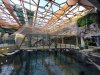
The mid-section entrance leads into the temple-themed hall, right between the tapir and macaques and straight into the last part of the Orientarium: the aquarium. Collection-wise this is the species-richest section, with more than 170 saltwater fish species. It starts with a cave-like front portal room with some terrariums for invertebrates (spiders and stick insects). There is a lot of space wasted that could easily be filled with some reptiles from the Vivarium. A first look can be taken into the large ocean tank and “well hello there”, immediately the construction flaws of this building rise up as you look right into the eyes of other visitors.


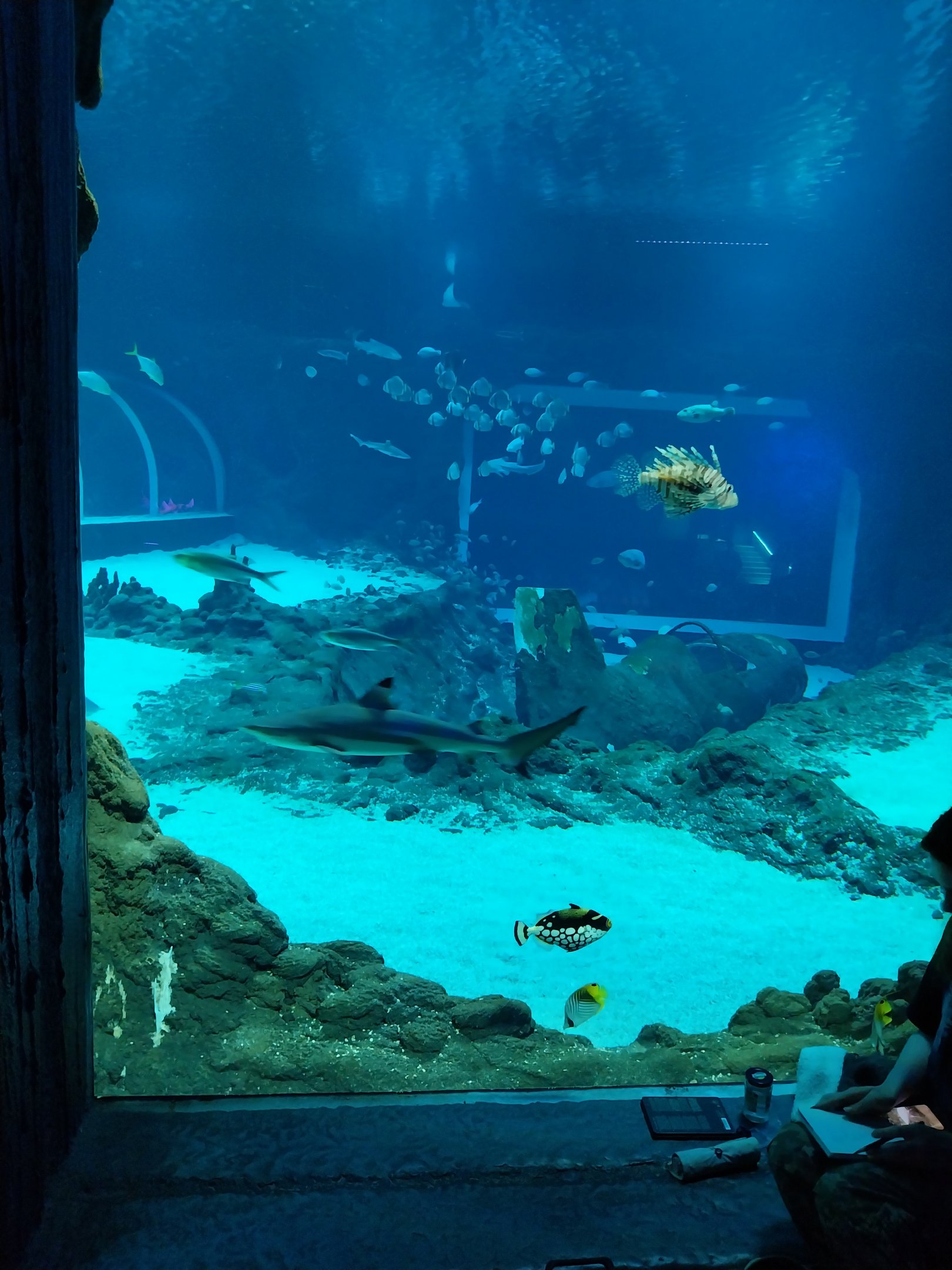
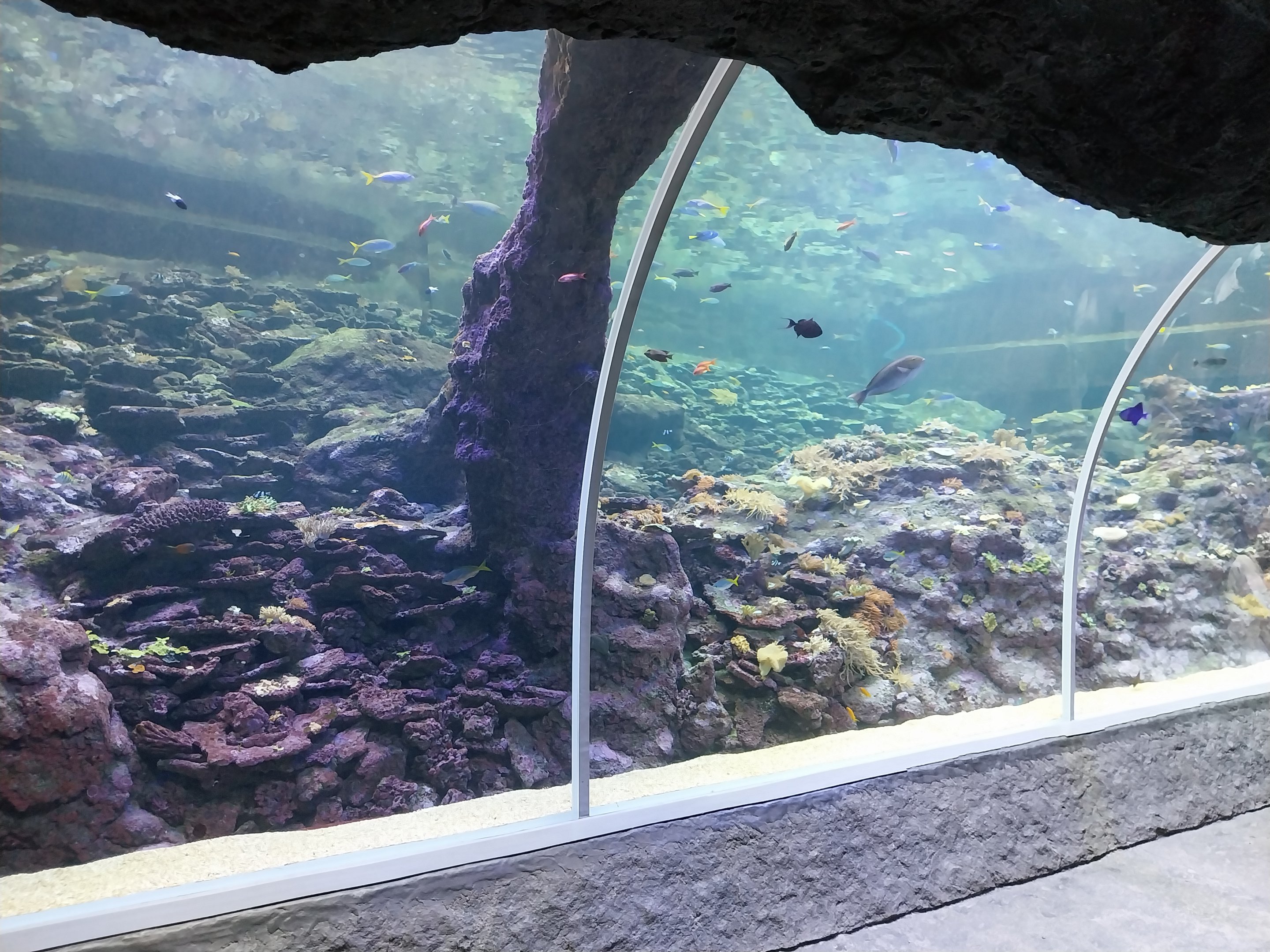
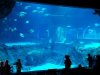
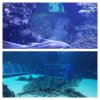
That said, it is a good sized tank, with a crashed Mitsubishi J2M bomber aircraft replica from WWII on the bottom and furtheron sparcely decorated. Walking through the tunnel you realise that the fish on the left are in a different tank, focusing on the higher regions of the coral reef and containing hundreds of smaller fish. A very good solution and I hope to see this tank evolve with more delicate corals to flourish.


After that there is a large dark grottoe, filled with aquariums and a sort of staffed attraction. The zoo map leaves nothing to suggest what this would be, perhaps something with AI glasses as there were seats.

upload_2025-2-23_13-49-17.jpeg
Hall with several tanks, an attraction and a shark tank viewing point

A third and largest viewing pannel offers very good sights to other visitors, the crashed plane and fish. There are beach chairs to enjoy it but on my first tour there was a large group of school children and these little monsters did what they always do: running around and making as much noise as possible. This tank has quite a nice species line up: Guitarfish, Ocellated eagle ray, Giant grouper, Sandbar and Zebra shark, Indo-pacific tarpon, Great barracuda, Yellowmargin triggerfish, Blacktip reef shark, Shark ray, Stellate puffer, Harlequin sweetlip and Orbicular batfish. There are a few other aquariums here, all a bit barren but time will heel this. The one with Razorfish and Valentines Sharpnosed puffer stood out, as does a circular tank with Banggai cardinalfish, Saddleback clownfish and others.

upload_2025-2-23_13-43-56.jpeg
3 viewing points at once

Conclusion


The Orientarium is an impressive structure with a fine collection of mostly mammals and fish, catapulting Lodz Zoo straight into modernity. However, like any project, it also has its flaws and downsides that could have been avoided if better design had been in place. The long corridor that connects all the sections is not immediately inviting, and limits the view of animals to one side, so there is no real Southeast Asian experience anywhere. I don't think the Orientarium has this intention, although the zoo's website makes it seem that way, but that you should rather see it as a (long) row of successive animal enclosures brought together under the same roof. So I would describe the Orientarium as an excellent mammal house, but original or immersive it is not. But each enclosure in itself is among the most spacious you will encounter in Europe, there are natural floors everywhere, plenty of climbing opportunities and most species also have access to spacious outdoor enclosures.

For once, the visitor areas are spacious, benches are provided throughout and it is nice that you can view the building on different levels. The colors and materials used are sober but I didn't get a real Southeast Asian feeling anywhere. For a new building, it is unfortunate that two years after opening they are already showing animals from other areas - if you have a good idea, stick to it -and that the zoo's website remains sloppy (perhaps purely due to the fact that in the initial plans they did want to show species from Celebes in the temple hall - crested macaques and anoas).

But it is incomprehensible that this building won the SHARP award for best contemporary construction in 2023, when faced with the terrible sightlines that completely disrupt the visitor experience.

If you think of the Orientarium as a big building full of mammal enclosures and aquariums with species that all more or less call Southeast Asia home, this place is absolutely fine. Because that’s exactly what is is: a number of spacious enclosures all under the same roof. However, it you see the Orientarium as an immersive introspective on Southeast Asian fauna and their tropical rainforest habitat, then you will be disappointed. Because it’s not.

So it depends on you

Coming up next : Some thoughts on Poland’s two major zoo complexes and then: Out of Africa! Or something like that.
 

Attachments

  • upload_2025-2-23_13-34-37.jpeg
    upload_2025-2-23_13-34-37.jpeg
    128.7 KB · Views: 112
  • upload_2025-2-23_13-36-5.jpeg
    upload_2025-2-23_13-36-5.jpeg
    259.9 KB · Views: 4
  • upload_2025-2-23_13-37-7.jpeg
    upload_2025-2-23_13-37-7.jpeg
    265.1 KB · Views: 113
  • upload_2025-2-23_13-37-48.jpeg
    upload_2025-2-23_13-37-48.jpeg
    154.1 KB · Views: 114
  • upload_2025-2-23_13-38-37.jpeg
    upload_2025-2-23_13-38-37.jpeg
    213.6 KB · Views: 106
  • upload_2025-2-23_13-39-34.jpeg
    upload_2025-2-23_13-39-34.jpeg
    131.9 KB · Views: 101
  • upload_2025-2-23_13-41-24.jpeg
    upload_2025-2-23_13-41-24.jpeg
    236 KB · Views: 114
  • upload_2025-2-23_13-42-21.jpeg
    upload_2025-2-23_13-42-21.jpeg
    257 KB · Views: 111
  • upload_2025-2-23_13-43-56.jpeg
    upload_2025-2-23_13-43-56.jpeg
    100.4 KB · Views: 116
  • upload_2025-2-23_13-49-17.jpeg
    upload_2025-2-23_13-49-17.jpeg
    130.7 KB · Views: 114
Last edited:
Bonus post : The Orientarium in Lodz compared to the Afrykanium in Wroclaw.

Comparing is almost inevitable on a roadtrip, and when in Poland, you certainly do so for both the giga complexes in Lodz and Wroclaw.

To get right to the point, my preference is Wroclaw.

upload_2025-2-25_18-28-48.jpeg

There were disappointments there too, but rather in slightly less important matters: some very narrow passages, a bit claustrophobic with many visitors, or the woeful sightlines in the Red Sea tank. But then again, it scores well in the areas I care about: immersion, a better-developed concept (aquatic life in Africa), a more adventurous course, the presence of many birds and smaller animals, etc.

In Lodz, however, all of this is less good: birds and small animals are almost absent and the sightlines in the main tank are even worse. On top of that, there is something wrong with both the concept and the visitor experience: I was expecting a rainforest vibe since that is the ecosystem I most associate with Southeast Asia, and that long straight corridor makes the visit very predictable.

Both the Orientarium and the Afrykarium are the showpiece of their respective zoo and are so in the entire country. They are very interesting and impressive additions to 2 already very good zoos. They do have some similarities: lots of species, contemporary constructions using high-tech and eco-friendly techniques, with more or less the same premise: to provide a varied overview of the fauna from a certain area. They have another point in common in the person of Radoslaw Ratajszczak, who was director in Wroclaw when the Afrykarium was built, and later worked as a consultant in the construction of Orientarium.

upload_2025-2-25_18-26-16.jpeg
Wroclaw's black monolith versus Lodz's versatile construction

In doing so, they both had the challenge of being able to overcome Poland's harsh winters, so the focus was rightly on an indoor complex. The Afrykarium extended that much more rigorously as only 2 outdoor enclosures were created, and for species that can withstand the cold relatively well. The Orientarium, on the other hand, is a complex where most species also have large outdoor enclosures, ecncircling the building on three sides. Given the focus on larger mammals, this is an appropriate decision.

The choice of species was perhaps partly determined by this: the Afrykarium counts hardly any animals too large to be kept inside alone, except for the hippos. But it has a larger variety on smaller species with Aardvark, Hammerhead bat, Cape ground squirrel, Kirk dikdik and lots of birds. In Lodz it is a lot less: a ‘lost’ tortoise under a staircase, some invertebrates in a dark room and a few birds in the jungle hall. It is fair to note, however, that the Orientarium is a lot younger, and a few more birds may eventually appear.

upload_2025-2-25_18-14-2.jpeg
Smaller animals (Wroclaw) versus primates and bears (Lodz)

Both also show species that are not part of the targeted area. That seems to me in Wroclaw a deliberate choice (as African manatee are harder to obtain) while in Lodz it may have been rather a sudden change in concept (Japanese macaques, Siberian ibexes, Griffon vultures). Lodz is strong in primates but both are poor in carnivores. They have similar facilities for crocodilians, but Wroclaw has more aquariums, and I personally think that these are larger and of better quality, showing a far larger variety of warm and cold water species. But if there weren’t those terrible cross-views in Lodz, I would pick up that tank as the better, showcasing a remarkle variety of species.

Both complexes have their construction flaws, first and foremost the terrible sightlines to which some of the aquariums in both Wroclaw and Lodz are subject. Actually incomprehensible considering the multi-million euro investement. The sometimes too narrow passages in Wroclaw contrast sharply with the spacious visitor areas in Lodz.

upload_2025-2-25_18-15-25.jpeg
Red Sea coral reef (Wroclaw) versus Shark tank (Lodz)

upload_2025-2-25_18-19-34.jpeg
Narrow passages (Wroclaw) versus long straight but spacious visitor space (Lodz)

In terms of concept, besides the choice of region (Southeast Asia versus aquatic ecosystems of Africa), there is certainly 1 striking observation: in Wroclaw they do try to immerse the visitor in a certain ecosystem, with a new surprise lurking around every corner, while that feeling is completely absent in Lodz. Wroclaw gives the visitor a realistic depiction of a riverbank and a rainforest, with many birds and even more animals, in separate enclosures or living freely. Overall I found the biogeographic realm much less carried through in Lodz.

upload_2025-2-25_18-16-31.jpeg
Hippos (Wroclaw) versus Elephants (Lodz)

Considering visitor experience, Lodz offers more comfort by giving visitors a lot of space, but the visit in Wroclaw is more exciting, and therefor more fun. The former has not many facilities, a souvenir shop and an attraction in the aquarium. For food and drinks you have to make a detour to the food street behind the Orientarium. Wroclaw on the other hand, has a real visitor’s lobby with a checkroom, a real souvenir store, a large restaurant and an excellent cafeteria, all this centrally located. So in bad weather conditions you are better off in Wroclaw, although I do not know whether the covered walkway in the photo below is just for conference attendees or also for regular visitors.

upload_2025-2-25_18-17-23.jpeg
Visitors' lobby (Wroclaw) versus Food street & conference rooms (Lodz)

One can argue about outdoors: can you keep large mammals inside continuously? Such is the case for Wroclaw's hippos while in Lodz things are far better because most species have access to outdoor enclosures, even if these are often, although spacious, a bit dull , stucked to the building and enclosed by concrete walls. In contrast, I believe Wroclaw’s penguin and Cape fur seal enclosures are 2 state-of-the-art exhibits, much better than those in Lodz in terms of attention to detail and level of finish.

upload_2025-2-25_18-18-37.jpeg
Cape fur seal (Wroclaw) versus Hanuman langur (Lodz)

Should this be a Zoochat Cup match: all things considered 3:2 for the Afrykarium.
 

Attachments

  • upload_2025-2-25_18-14-2.jpeg
    upload_2025-2-25_18-14-2.jpeg
    174.7 KB · Views: 99
  • upload_2025-2-25_18-15-25.jpeg
    upload_2025-2-25_18-15-25.jpeg
    107.9 KB · Views: 97
  • upload_2025-2-25_18-16-31.jpeg
    upload_2025-2-25_18-16-31.jpeg
    163.3 KB · Views: 100
  • upload_2025-2-25_18-17-23.jpeg
    upload_2025-2-25_18-17-23.jpeg
    146 KB · Views: 102
  • upload_2025-2-25_18-18-37.jpeg
    upload_2025-2-25_18-18-37.jpeg
    163.2 KB · Views: 100
  • upload_2025-2-25_18-19-34.jpeg
    upload_2025-2-25_18-19-34.jpeg
    129.4 KB · Views: 96
  • upload_2025-2-25_18-26-16.jpeg
    upload_2025-2-25_18-26-16.jpeg
    161.2 KB · Views: 102
  • upload_2025-2-25_18-28-48.jpeg
    upload_2025-2-25_18-28-48.jpeg
    167.4 KB · Views: 102
  • upload_2025-2-25_18-32-49.jpeg
    upload_2025-2-25_18-32-49.jpeg
    167.4 KB · Views: 1
Day 15. #25 Borysew Safari

Between the giants in Lodz and Poznan lies Zoo Safari Borysew, a zoo established only in 2008, It now covers 26 hectares and includes more than 120 species. My expectations were low, as most safaris are pretty boring and the focus on white animals causes me some uneasiness.

In fact it’s not really a safari park and it never was. The only safari like thing is the ‘Zoo Kolejka’, a train which takes visitors throughout the garden. The zoo’s website quotes “The ride will allow you to observe wild animals even in unfavourable weather conditions, and the voice of the narrator - guide will provide an interesting commentary on the species of wild animals being viewed. You will learn not only their names and habits, but also many funny anecdotes from the life of our zoo.” . Hm.

It’s a a very commercial place, nothing wrong with that, with some flaws, a horribly bad Egzotarium, but also with often very spacious enclosures for exotic and domestic ungulates. The organic growth of the zoo is evident from the zoo's ground plan : it consists of 3 large pieces of land developed in succession. The landscape is open with few tall trees. The enclosures are mostly spacious but with little decoration and if there is any, it’s often kitschy.

upload_2025-2-27_18-18-12.jpeg

There’s a charming entrance building with a large but overcrowded macaw avairy on the parking lot. Clearly there were hybrids between the Green-winged, Araruna and Hyacinth macaw, not sure if these are confiscated birds or zoo breed.

Two spacious enclosures with breeding groups of Chapman zebra and Watutsi cattle, and others with Scimitar-horned oryx, Collared peccary and Patagonian mara are the first encounters. A dead end leads past 2 spacious enclosures for white tiger and lion. The zoo is very proud of the tiger pool where apparentely animals dive for food. In fact it’s nothing more than an elevated small swimming pool.

The path leads to the Egzotarium, the zoo’s only accessible building, and it is not a good one. Inside the felid’s night quarters can be watched, while a narrow corridor leads past the zoo’s most precious species and the very reason for my visit: a pair of Sykes’ guenon, the genuine highlight of this place. Unfortunately, the animals were not given a prominent place in the zoo: they are continuously confined indoors in two small pens with a few climbing poles and a small window overlooking a courtyard. I was happy to see this species for the first time in my life, but the conditions were nothing short of terrible.

upload_2025-2-27_18-19-26.jpeg
White-throated guenon (Cercopithecus albogularis)

The same fate befell the Capuchin monkeys. But nothing amazed me more than a walk-through room in which terrariums are set up and in which, according to the zoo, 400 exotic breeds of gouldian finch, canaries , etc fly around. Fortunately, the actual number is much lower. But surely the kitschy way in which this room was decorated, quite recently, does not befit its status as a zoo. Bright green fake grass and white fences, really? How could that have ever seemed like a good idea.

upload_2025-2-27_18-20-24.jpeg
Egzotarium - Domestic cat - Walk-through

An impressive +20 Nile crocodile outside on a palm tree island are certainly the most exotic part of the Egzotarium, which has furtheron Brazilian tapir and lama. Crocs can be watched inside the building too, but don’t expect Gamgoas part 2.

upload_2025-2-27_18-19-44.jpeg
Egzotarium - Nile crocodile (Crocodylus niloticus)

Rather bizar is a large pond which has on one side some waterfowl and on the other a lonely Baltic grey seal. Not bad as there’s a plenty of swimming space. But the building next to this pond has some very bizar combinations. All 5 exhibits are excluded from outdoor space and they can be viewed through panoramic windows. It show Recticulated python, Golden handed tamarin, Squirrel monkeys and Green iguana in awfull decorated exhibits. Another one got Ringtailed lemur, Argentine black-and-white tegu, Alligator snapping turtle and Yellow-footed tortoise, all in a far too small room. The lemurs are probably overstock animals (as there’re 2 other enclosures with this species).

upload_2025-2-27_18-20-7.jpeg

A bridge leads to a second development area with a carnivore and an ungulates section. The latter has very spacious green enclosures for Bactrian camel, Red river hog (certainly one of the largest I have ever seen for this species), Dromedary and Lechwe.

upload_2025-2-27_18-27-3.jpeg
Red river hog (Potamochoerus porcus)

The carnivore section has two very spacious enclosures for, again, white tiger and lion. Again these are pretty boring designed: short grassland, fence, a platform providing shade. This could have been so much better provided some inspiration. A row of enclosures and poorly designed cages for Dingo, non subspecific white wolf, North Chinese leopard, Japanese macaque, African porcupine, Serval and Cougar all very substandard. I read on the zoo’s website they received a new pair of (black) leopard and I hope these will not be located here (although I cannot remember a construction site).

upload_2025-2-27_18-25-47.jpeg
White tiger (Panthera tigris)

Crossing another bridge brought me to the zoo’s newest expansion. It’s almost entirely dedicated to domestic species (yak, Bactrian camel, goats, donkeys and water buffalo). A family of White-handed gibbon is the most interesting species. A lot of species mentioned on ZTL are certainly no longer present: Black wildebeest, Grèvy zebra, Kulan, Mantled colobus, Patas monkey, Red forrest buffalo, Western sitatunga, Roan antelope and Southern white rhino.

upload_2025-2-27_18-22-9.jpeg
No, you are not in @snowleopard Soutehast Asian thread

The zoo's newest attraction is Water World, a series of islands in an artificial water reservoir that can be visited on foot and by pedal boats. The islands are very small and a lot of enclosures were empty. I saw 1 Collared mangabey, 2 groups of Ringtailed lemur (one with no outdoors access), 1 Capybara and a handfull of American alligator and Great white pelican.

upload_2025-2-27_18-21-37.jpeg
Water World - Both Ring-tailed lemur exhibits

There are a lot of kitschery fountains and waterfalls, and some live palm trees in a desparate effort to create a tropical atmosphere. Obviously the trees and bushes will still grow and animals will be added (why not the Brazilian tapir and the Sykes guenon from the Egzotarium), but this area is already a few years old and it was pretty disappointing.

upload_2025-2-27_18-28-58.jpeg
Water World - Collard mangabey island

If expectations are not too high, Boryssew Zoo Safari isn’t a bad place. Hoofed animals, Nile crocs and American alligator, tigers and lions are kept in spacious enclosures, but a lot of other species are hold in mediocre to bad holdings. If the zoo scrapped its kitschy props, that would certainly be a plus for me, but of course that is purely a personal opinion.

My next and last overnight stop is Poznan, one of the oldest Polish cities and the fourth historical capital of mediaval Poland (after Warsawa, Krakau and Plock) that I’ve visited. It’s a beautifull old city full of Gothic, Renaissance, Baroque, modernist and contemporary buildings. Again, I was struck by how safe and quiet Polish cities are: even after dark, woman sit alone on benches in squares and parks quietly reading their mobile phone messages. Nobody bothered them. Pity unfortunately, but for me that was remarkable.
 

Attachments

  • upload_2025-2-27_18-18-12.jpeg
    upload_2025-2-27_18-18-12.jpeg
    155.2 KB · Views: 93
  • upload_2025-2-27_18-19-26.jpeg
    upload_2025-2-27_18-19-26.jpeg
    142.8 KB · Views: 93
  • upload_2025-2-27_18-19-44.jpeg
    upload_2025-2-27_18-19-44.jpeg
    173.3 KB · Views: 94
  • upload_2025-2-27_18-20-7.jpeg
    upload_2025-2-27_18-20-7.jpeg
    167.9 KB · Views: 90
  • upload_2025-2-27_18-20-24.jpeg
    upload_2025-2-27_18-20-24.jpeg
    170.4 KB · Views: 100
  • upload_2025-2-27_18-21-37.jpeg
    upload_2025-2-27_18-21-37.jpeg
    130.5 KB · Views: 96
  • upload_2025-2-27_18-22-9.jpeg
    upload_2025-2-27_18-22-9.jpeg
    205.7 KB · Views: 88
  • upload_2025-2-27_18-25-47.jpeg
    upload_2025-2-27_18-25-47.jpeg
    194.7 KB · Views: 93
  • upload_2025-2-27_18-27-3.jpeg
    upload_2025-2-27_18-27-3.jpeg
    158.9 KB · Views: 95
  • upload_2025-2-27_18-28-58.jpeg
    upload_2025-2-27_18-28-58.jpeg
    162.6 KB · Views: 99
Day 15. #26 Stare Zoo Poznan

I am trying to speed up posting a bit this week as I am hiking through the Ardennes forests in about ten days. Carefully scouting around for local wildlife there will be little time to post anymore. That said, here is the first of 7 more to go.

This zoo is probably the second oldest of the country, established in 1871 as a menagerie. It was not immediately impressive in those early days, as the animals were hold in the courtyard of the railway station buffet. As the collection continued to grow, a real zoo was installed in 1874. The rich history of the zoo is well documented through this site : CYRYL - Local Digital Repository. The wiki page mentions the arrival of (African) golden cats in 1928 but I couldn’t find any further information on that. But apparently, with 700,000 visitors, the zoo was incredibly popular in those days.

With the opening of Poznan Nowe in 1974, more and more large species left for the new zoo. Although it has become a public park since 2009 and it saw a major new attraction in 2012 with the Pavilion for Cold-blooded Animals or the Vivarium, the zoo began to quietly fade away anyway.
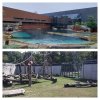
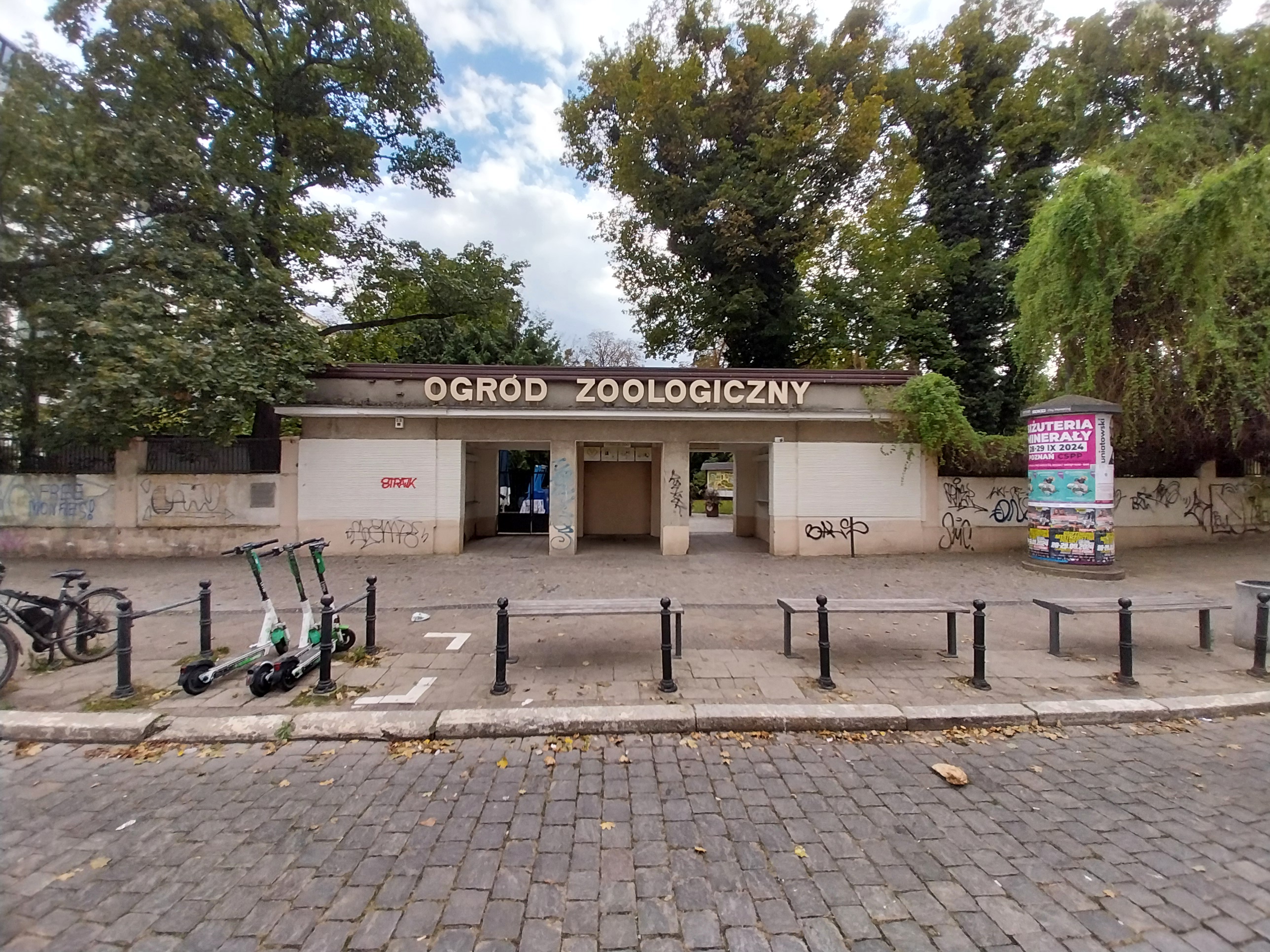
Entrance

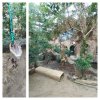
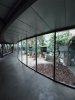
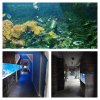
Nowadays, the latter still is the main attraction. The zoo is free, the Vivarium excluded but I was happy to pay for the latter. The first part of the building has a row of aquaria and a herps section, with in between crocodiles. the three parts are connected by a transverse corridor.

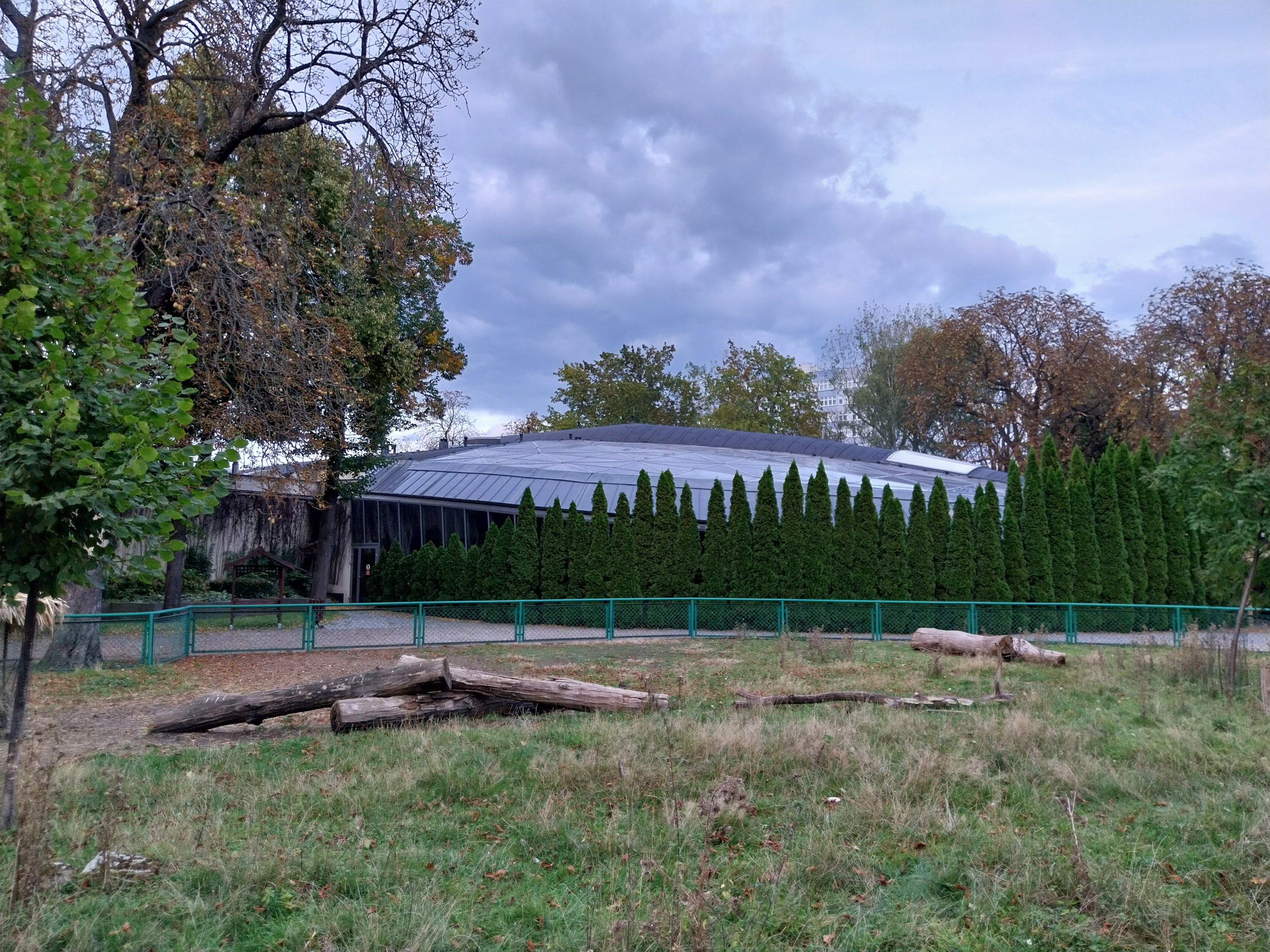
Vivarium (2012)

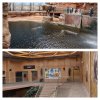
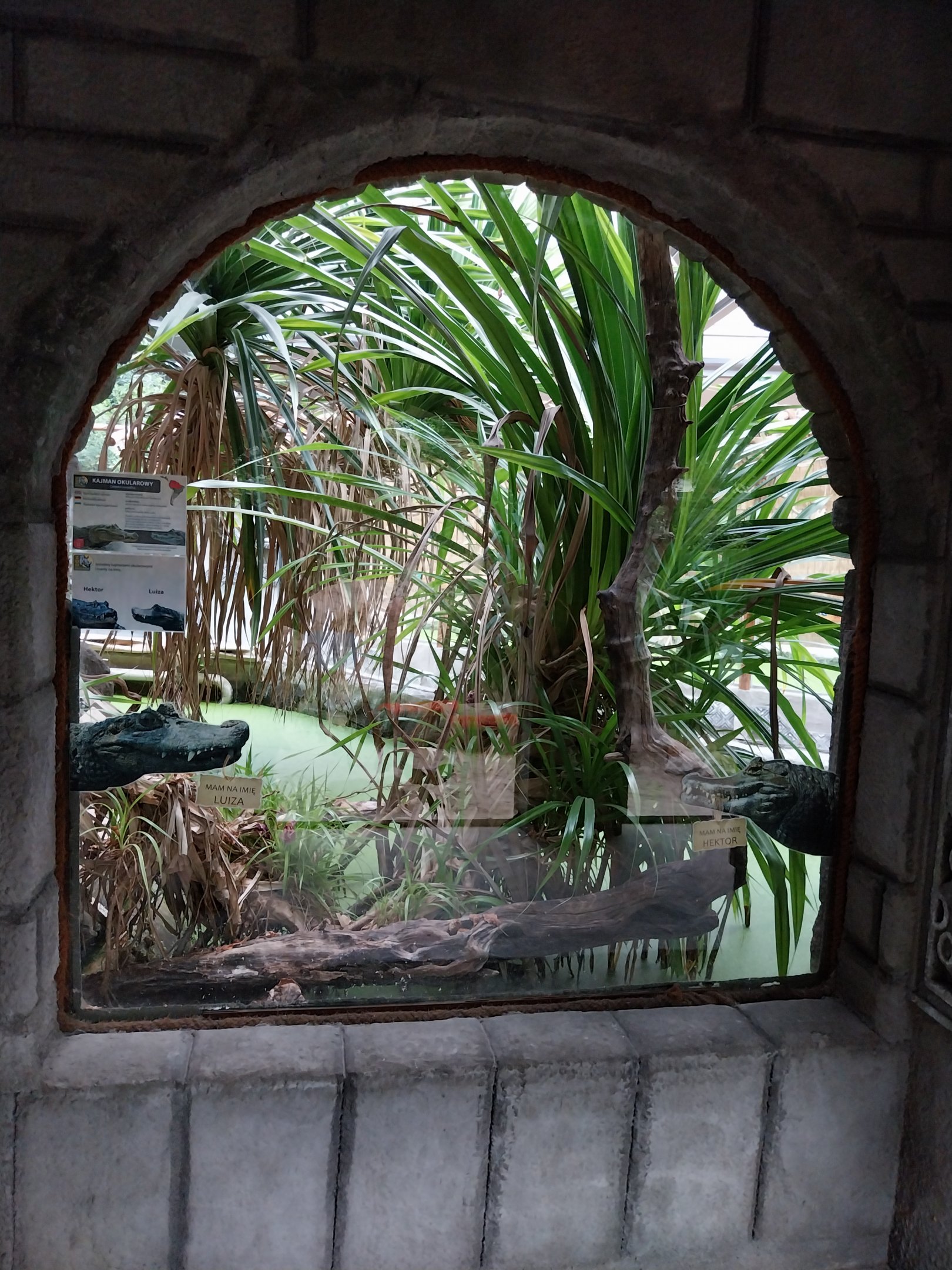
The row of saltwater aquaria isn’t impressive, with small tanks uninspirantly designed. But things are rapidly getting better in the Meso-American temple-themed traverse corridor. It has 2 small exhibits for Black caiman, a few aquaria and gives access to a central area bathed in sunlight through a large glass roof. Inhere are two larger pools for Nile crocodile and Columbian spectacled caiman.

upload_2025-3-3_19-24-39.jpeg
Vivarium - Saltwater section and traverse

Black Caiman (Caiman crocrodilus crocodilus exhibit

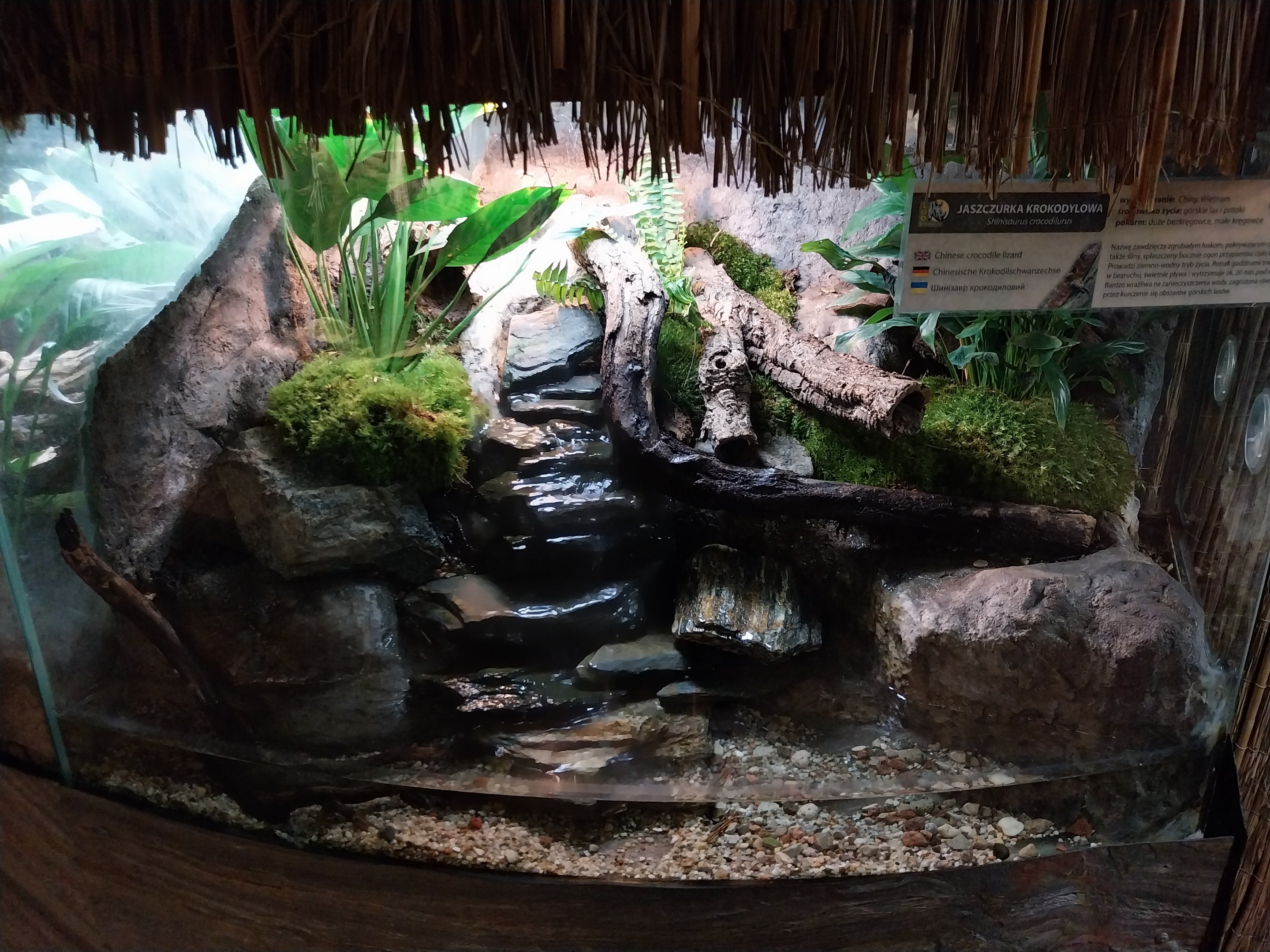
The herps section has Chinese crocodile lizard, 4-eyed fish and mainly a good selection of frogs: Argentine horned and African bullfrog, Sambava Tomato frog and several species of poison dart and tree frogs.

Chinese Crocodile Lizard (Shinisaurus crocodilurus)

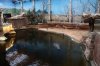
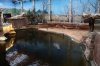
A newer wing of the building starts with 2 freshwater aquaria : White spotted cichlids and a Southeastasian mixed species aquarium with Three-spotted and Pearl gourami, Glass catfish and Red-tailed black shark. But it’s a stunning Komodo dragon exhibit that draws everyone’s attention. It’s bright, spacious, densely planted and it has been decorated with tree trunks, pools and shelters. With a goat carcass hanging on a rope, it’s a masterpiece. But the best was followed almost immediately by the Vivarium's worst enclosure: a two-metre bare tank for a large Pig-nosed turtle and a lone ciclid pushed into the corner : not sure if this is a temporary shelter (part of the croc area was closed for renovation) because the aquarium is far too small and besides, this is a species that also comes ashore from time to time.

upload_2025-3-3_19-21-51.jpeg
upload_2025-3-3_19-21-18.jpeg
Komodo dragon (Varanus komodiensis) exhibit

A couple of other poorly designed tanks for cichlids and Red piranha prelude the start of the last section of the building. I saw Chinese water dragon, Indian black turtle, Philippine Sailfin lizard, Recticulated python, Yellow and Green anaconda, Cuban and Rhinoceros iguana, Eastern Mud turtle, Pancake tortoise, Savannah monitor, Sonoran Desert toad, Mexican Beaded lizard, Rough-scaled Plated Lizard and North African mastigure. That’s a very nice list of species, all in rather spacious and nicely decorated terrariums, in a tropical setting among which the adventurous visitor path winds. It would be a shame if this building would close.

upload_2025-3-3_19-13-33.jpeg
Reptiles of the tropics

With the Vivarium behind, there’s isn’t much of interest left in the zoo. The Carnivore Building has a certain beauty and there is a terrific old skool 14m tall free-flight aviary (1924) adjacent to the Birdhouse. The latter has a large heated room for Trumpeter hornbill. I saw only one but this exhibit has access to the large aviary, so there could be possible more. The other aviary of the Birdhouse is a mixed species aviary for Victoria crowned pigeon, Livingstone turaco and Purple glossy-starling. I only saw the pigeon, in a very small winter quarter and as the other rooms were dark and the aviary stood open, I’m not sure the other species are still present. The large aviary had hamerkop, Malaysian great argus, scarlet ibis and a lot of ducks (watch my photos for the species list).

upload_2025-3-3_19-12-9.jpeg
Former Carnivore building
upload_2025-3-3_19-17-52.jpeg

upload_2025-3-3_19-16-27.jpeg
Birdhouse - Free Flight aviary (1924)

The Monkeyhouse (1927) is a rather sad and dark place. There’s a lonely Northern talapoin guenon and a Guinean weeper capuchin accompagnied by a couple of Black-capped capuchin. A darkned room shows Southern three-banded armadillo and the rarely seen Pale spear-nosed bat. There’s also a large enclosure for both CR Giant Asian Pond Turtle and Malaysian giant pond turtle. At the back of the house are some tall outdoor cages of which the one for the capuchin appears to have a connection to a larger one. I’m not sure it’s still in use.
upload_2025-3-3_19-16-49.jpeg
Monkey House (1927) - Northern Talapoin monkey (Miopithecus ogouensis)

Nearby the Monkeyhouse are the historic bear grottoes also a Crocodile House with 1 Nile crocodile waiting on its prey,

Crocodile House

I was hoping that the former Pheasantry Building (1888), currently in use as a Callitrithidae House was offering more, but almost every exhibit in the building appeared to be empty. I saw one lonely Cotton-top tamarin and as there was food on the table, there should be at least 1 Golden-handed tamarin and Common marmoset. I was hoping for the Black tufted-eared marmoset but the cages indoors and outdoors were empty and seemed abandonded, with no species sign. It is a pity that this elegant building currently has so little to offer, because it is a charming place, beautifully restored, bright and green, and perfect for callitrichids.
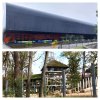

upload_2025-3-3_19-17-16.jpeg
Pheasantry - Callitrichidae House (1888)

In the far corner of the zoo is a small building for Ring-tailed and Red-bellied lemur that has connection with a large island.

The Sloniarnia or Elephant House is quite remarkable given the fact that this small building once was the home for elephants, giraffes and even Common hippo. Nowadays it’s housing Red river hog and domestic yak.

upload_2025-3-3_19-11-43.jpeg

The newest building in the zoo is a breeding station for tortoises: Elongated, Yellow-footed, Radiated, Leopard and African spurred tortoise. With 22 species, turtles and tortoises are clearly a focal point of this zoo.

Conclusion

Poznan Zoo Stare is especially worth a visit because of its excellent vivarium. If you are interested in old zoo architecture, then it's also worthwile here, but it is no Antwerp or Vienna. Given the latest rumors, a closure is imminent, and that would be a shame because this place deserves much better.

Tomorrow: tired feet!
 

Attachments

  • upload_2025-3-3_19-11-43.jpeg
    upload_2025-3-3_19-11-43.jpeg
    220.1 KB · Views: 76
  • upload_2025-3-3_19-12-9.jpeg
    upload_2025-3-3_19-12-9.jpeg
    286.4 KB · Views: 80
  • upload_2025-3-3_19-13-33.jpeg
    upload_2025-3-3_19-13-33.jpeg
    167.1 KB · Views: 75
  • upload_2025-3-3_19-16-27.jpeg
    upload_2025-3-3_19-16-27.jpeg
    203 KB · Views: 78
  • upload_2025-3-3_19-16-49.jpeg
    upload_2025-3-3_19-16-49.jpeg
    116.9 KB · Views: 75
  • upload_2025-3-3_19-17-16.jpeg
    upload_2025-3-3_19-17-16.jpeg
    221.2 KB · Views: 77
  • upload_2025-3-3_19-17-52.jpeg
    upload_2025-3-3_19-17-52.jpeg
    191.3 KB · Views: 75
  • upload_2025-3-3_19-21-18.jpeg
    upload_2025-3-3_19-21-18.jpeg
    180.9 KB · Views: 78
  • upload_2025-3-3_19-21-51.jpeg
    upload_2025-3-3_19-21-51.jpeg
    88.9 KB · Views: 73
  • upload_2025-3-3_19-24-39.jpeg
    upload_2025-3-3_19-24-39.jpeg
    154.3 KB · Views: 78
Last edited:
Back
Top