Day 14 #24 Lodz Zoo & Orientarium – Part 2. The Orientarium
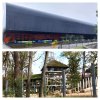
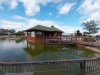
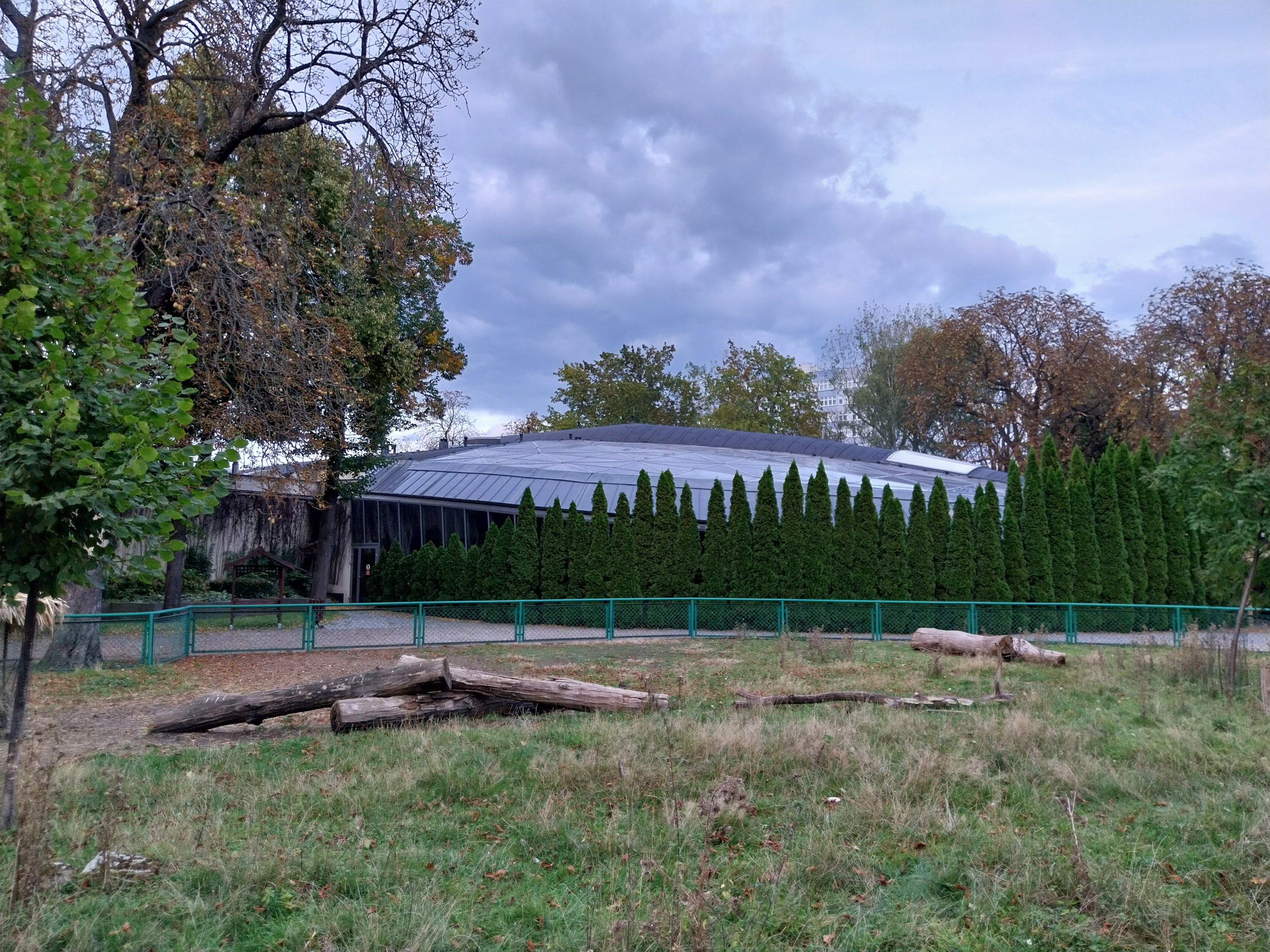
You cannot miss the Orientarium: after all, it dominates the entire entrance area of the zoo.
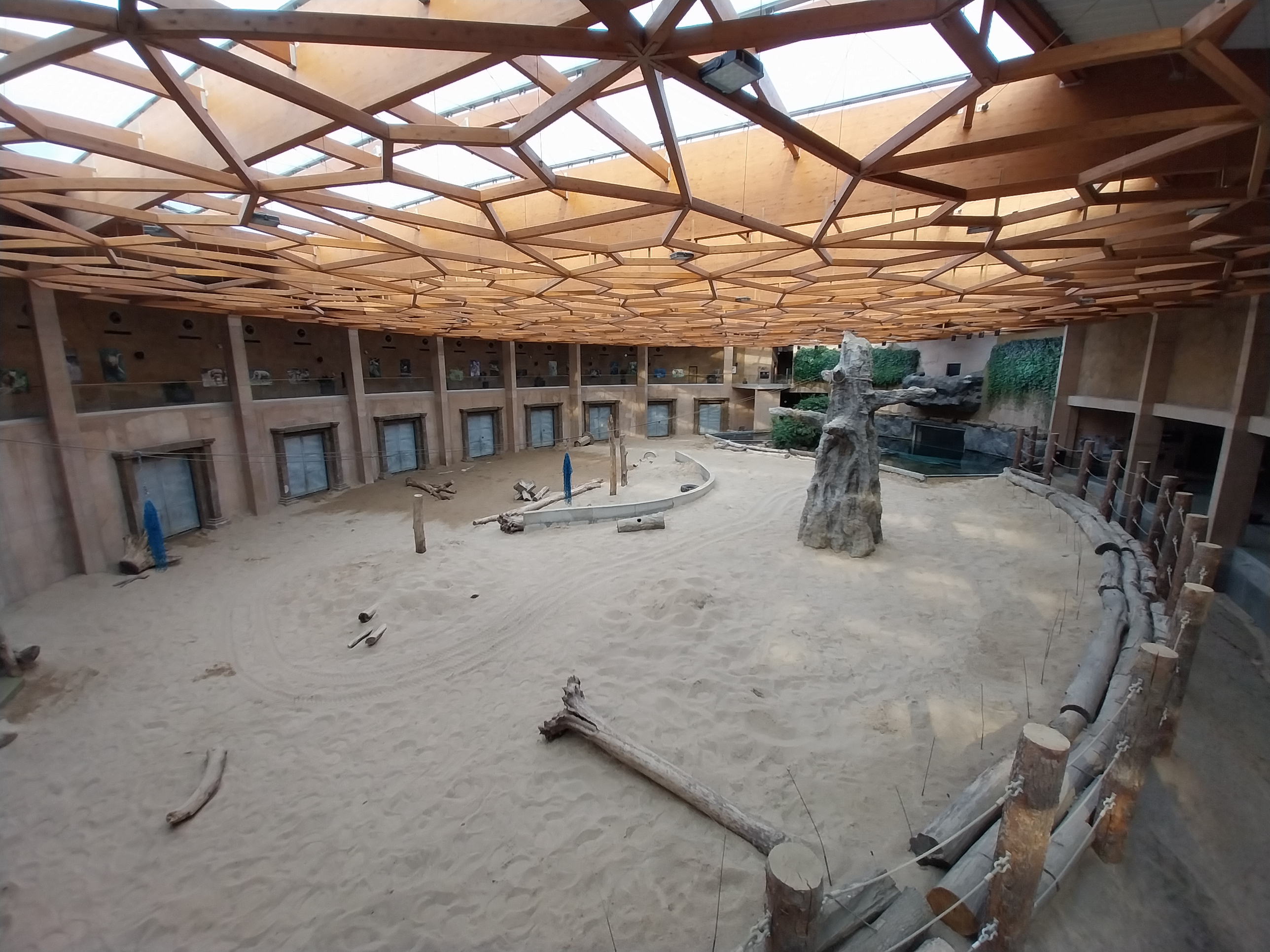
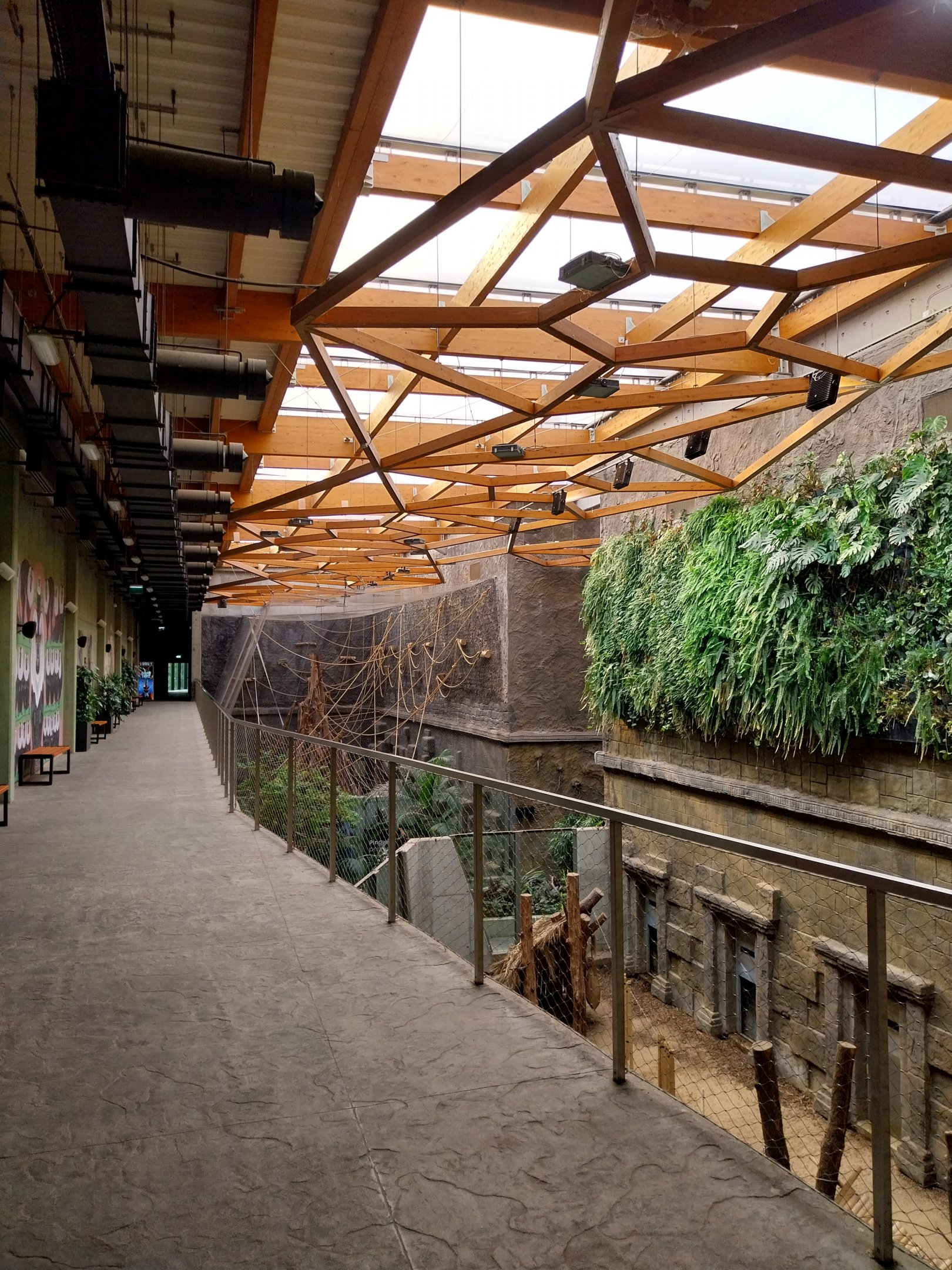
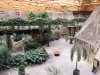
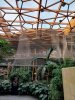
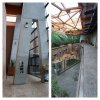
It opened its doors in 2022 after seven years of construction and it is the zoo's biggest ever investment. Covering an area of 33,000m² spread over three floors, it showcases the fauna of Southeast Asia. This includes many species that for Poland can only be seen here in Lodz. To the front and sides lie 10 spacious enclosures for mammals. It consists of 4 different parts: an elephant house, a temple hall (on the zoo’s website tagged as ‘Celebes’), an aquarium and a jungle hall. All areas except for the aquarium can be visited on two different levels which benefits the sight on the canopy dwellers. On the roof is a translucent membrane that can also convert sunlight into energy, and under which hangs a wooden latticework after the shape of Plumeria flower (a plant genus from the Apocynaceae family that, by the way, is found only in America).
Behind the Orientarium is a food street, where you can have various kinds of food in different restaurants and eateries. It remains standard zoo food, but I like this idea: easy in terms of delivery and you can keep the rest of the garden free for animals. But it might result in less sales, because not everyone will walk half the garden to have a drink.
Northern Lynx (left) and Siberian Wildcat (right) - ZooChat
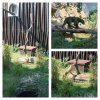
Right next to this area are a few enclosures for Northern Eurasian species. There’s this Northern Lynx – Siberian Pallas’ Cat complex which looked pretty good be it that there’s only 1 exhibit for each species. Between the restaurants and the felids there is a large cage for Swinhoe’s striped squirrel and all this is followed by a large aviary for a mix of mainly Eurasian birds: Black Stork, Marbled Teal, Knob-billed duck, Bar-headed goose, Masked lapwing, Glossy ibis and Black-crowned night heron. Last exhibit is the zoo’s Butterfly House (2011).
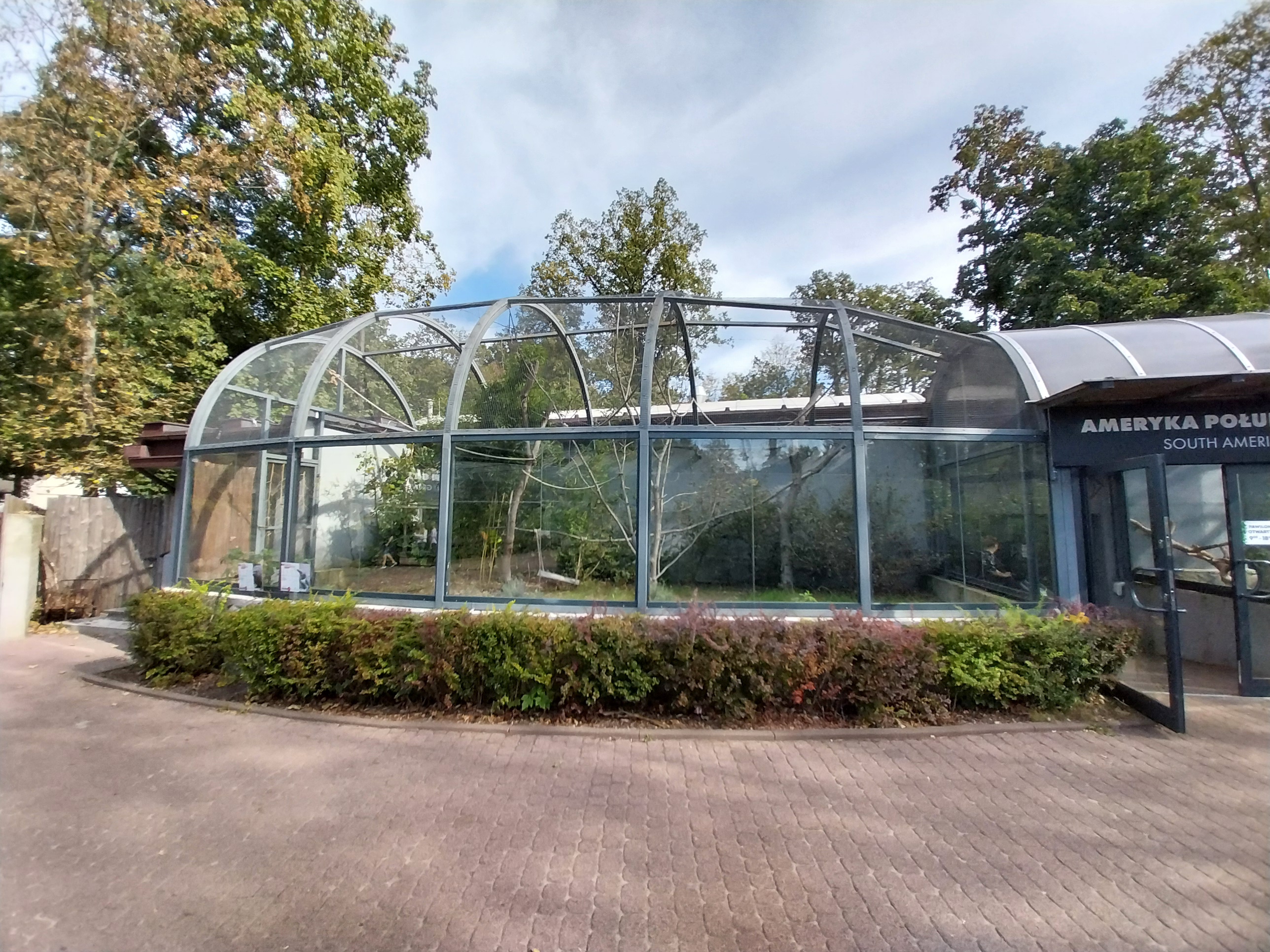
The Orientarium itself has 3 distinct entrances and I start the tour nearby the zoo’s entrance.
The first section is the
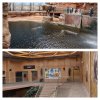
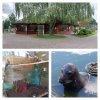
Elephant house housing Asian elephants. At this time only males live here but the zoo intends to establish a breeding herd. The building has a 2000m² communal area with lots of sand, a swimming pool (with Giant gourami), trunks and a manmade tree. Visitors can take the stairs and under those is a large enclosure for presumably Brown tortoises (Manouria emys). Before going to the next section, it is wise to take the route past the swimming pool to an elevated dead-end walkway that brings visitors right into the outdoor enclosure.
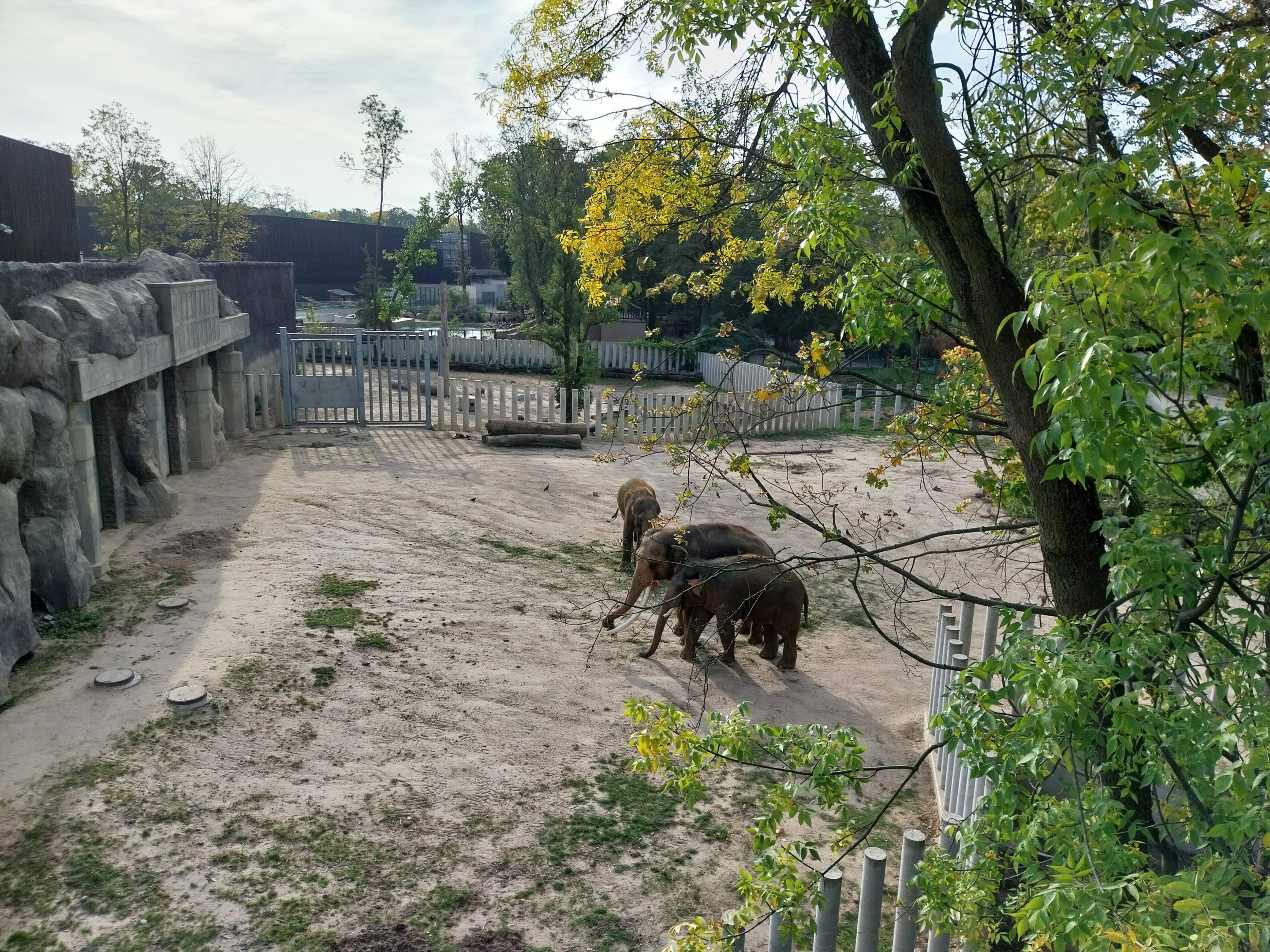
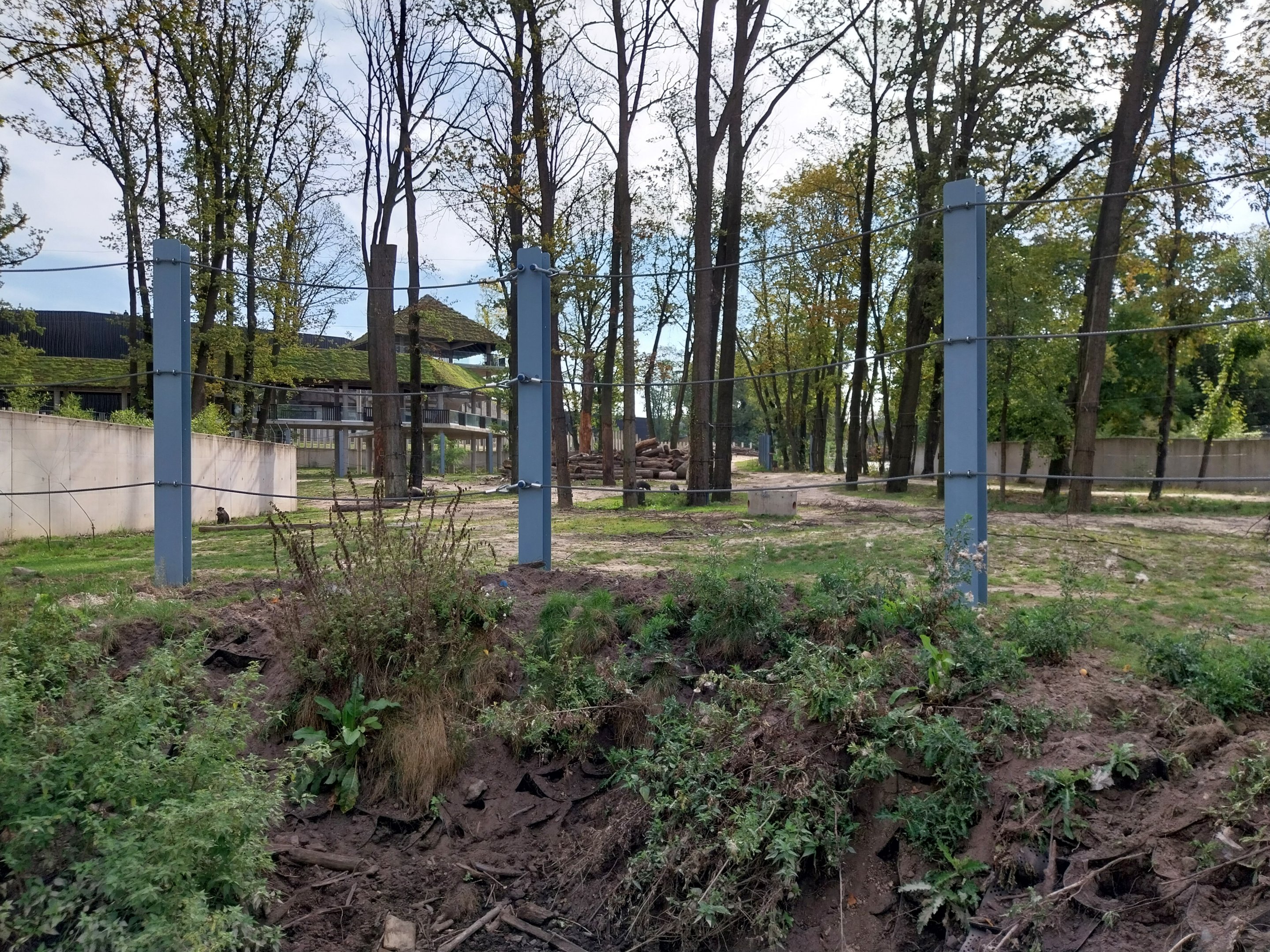
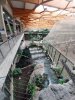
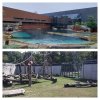
The latter is well structured with tall trees, a waterfall, ponds, etc, and can be sectioned into 3 parts. The panoramic route goes straight through the enclosure so you can watch the animals from above. The main residents are accompanied by a family group of Negros warty pig having fully access to the whole enclosure. Whether it is Poland’s best or not, I don’t know, but is certainly a welcome sight after all those bad elephant exhibits I saw during this trip.
Asian Elephant enclosure with foraging Negros Warty Pig
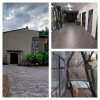
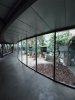
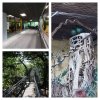
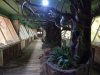
Before entering the next section, first a word about the very formal almost congress-hall like corridor that connects everything: it leads visitors along the entire length through doors and sluices from one area to another, and that’s not very appealing: everything that fascinates is on the same side, so there is little chance to be immersed in the Southeast Asian theme. It is a bit too sterile for me, efficient certainly, but at no point is it really part of the exhibits. A few pictures and murals on the walls can't change that. Just a few faint curves and some small exhibits for rodents or reptiles would create a completely different picture, as e.g. the Tembea building in Basel proves.
Whether you stay on the ground floor or take the stairs, which I did, the next section of the Orientarium, is called the
Temple hall.
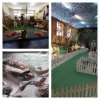
This is the point where it becomes confusing: on the zoo’s website this section is tagged as ‘Sulawesi’. That is strange because the Buddhist temple which is shown here is almost not existing on the island, as are the 3 species on show. It is a detail and if you’re not consulting the website, you only see a Southeast-asian themed hall with 2 enclosures. Even stranger is that on the website, the zoo makes it seem like the Lion-tailed macaques effectively live on Celebes. While in reality there is a 5000 km gap between the primates real habitat, the Western Ghats and the island. Presumably the zoo first intended to show Crested macaques here and later changed that plan (just as the anoa were replaced by tapirs). But it is a bit sloppy, with such a new complex that the zoo is rightly so proud of.
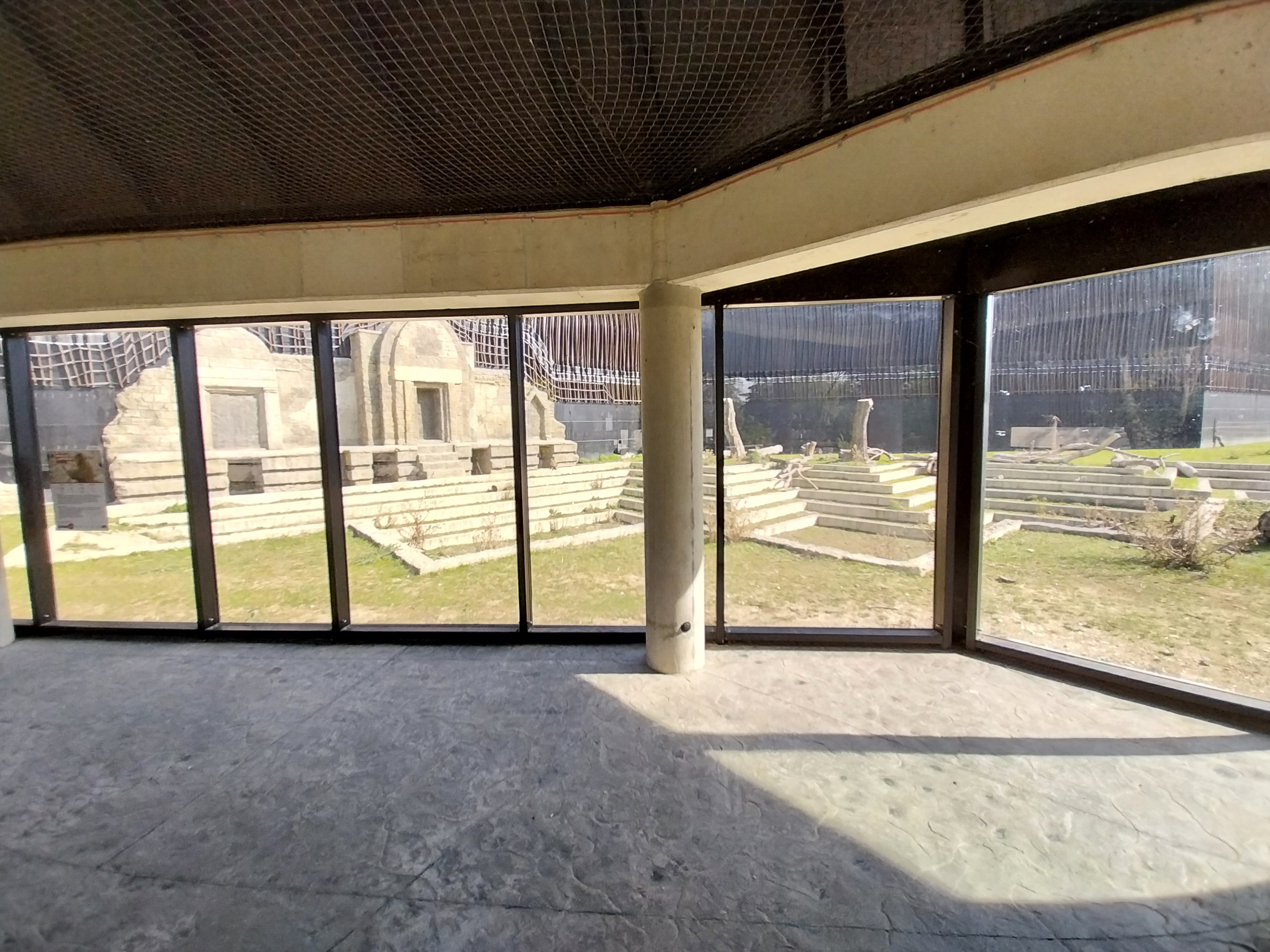
The difference between the dark temple wall in the macaque enclosure and the bright greenery on the tapir’s side, stands out (too) strongly for me seen from the first level. This is not so noticeable at ground level, because the temple theme has been continued at both enclosures. These are not bad: the macaques have ample access to high elevation by climbing structures and they can also use part of the temple walls. The Malayan tapir and Asian small-clawed otter have an equally large enclosure although I think the water feature is too small as both species like to use it.
 Lion-tailed macaque (Macaca silenus)
Moving further and passing above the Aquarium to the
Jungle hall of the Orientarium.
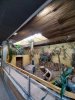
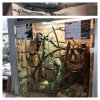
Yes there’s a jungle, but it’s one of bottom-to-top meshed structures, while tropical vegetation is rather scarce with only a few planted sections, and most of them are in pots, and there are only a few m² of vegetation with some trees. There is a lot going on with concrete walls, paths and tall window panels, as this area is literally filled-up with enclosures. Most animals benefit the height so they can fully use their climbing abilities. An elevated walkway leads visitors right through the area and it's completely covered by one of those rampant plants that pop up after a forest clearcut.

There are only a few birds: Flying meerkat aka Nicobar pigeon, Crested partridge and Red-whiskered Bulbul and certainly the latter can easily dive between the mesh structures. Within a few years, this place will be looking better as the few trees have grown, but it will never be a real jungle. Two enclosures for Sumatran orangutan seem very ok and further-on there is one each for Javan lutung, Red-cheeked gibbon and Binturong. The one for the latter is very spacious but the primates are locked up high like in a birdcage and there’s literally nothing to forage.
 Javan Lutung (Trachypithecus auratus)
Another one is/was designed for Malayan sunbear but at the time of my visit Javan lutung were kept there (so the zoo has 3 different groups of this enigmatic species).
 False Gharial pool and Sumatran Orangutan (Pongo abelii) enclosures
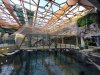
A large pool with underwater viewing for False gharial, including a +5m male is a real highlight. The reptiles are accompanied by Moonlight gourami, Bala shark, Tinfoil and Blackspot barbs and few other fish. Another aquarium highlight large Asian freshwater fish like Indian Knifefish, Fire eel, Asian arowana, Mekong tiger fish, Emperor snakehead and Indonesian tigerfish. I thought both water features are very good and a nice addition to the mammals.
 False Gharial (Tomistoma schlegelii) pool
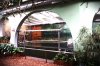
A glass-covered path takes visitors to the front of the Orientarium and past
outdoor enclosures for Malayan sunbear, European golden jackal, a mixed enclosure for Siberian ibex and Western Eurasion griffon vulture and another mixed enclosure for Hanuman langur and Indian porcupine.
 Sun Bear (Helarctos malayanus malayanus) and European Golden Jackal (Canis aureus moreotica)
While moving to the mid-section entrance there are enclosures for gibbon, orangutan and a spacious but rather dull temple-themed enclosure for Japanese macaques. Malayan tapir have a too open paddock near the entrance and if the Negros warty hogs have retreated in their separation area, you can see them here. Although all the outdoor enclosures are mostly straightforward, large squares often surrounded by concrete walls, they are still a very good addition for (most) of the mammals of the Orientarium, very spacious and offering plenty of climbing opportunities, hiding places and greenery.
 Japanese Macaque (Macaca fuscata) temple-themed enclosure
The mid-section entrance leads into the temple-themed hall, right between the tapir and macaques and straight into the last part of the Orientarium: the
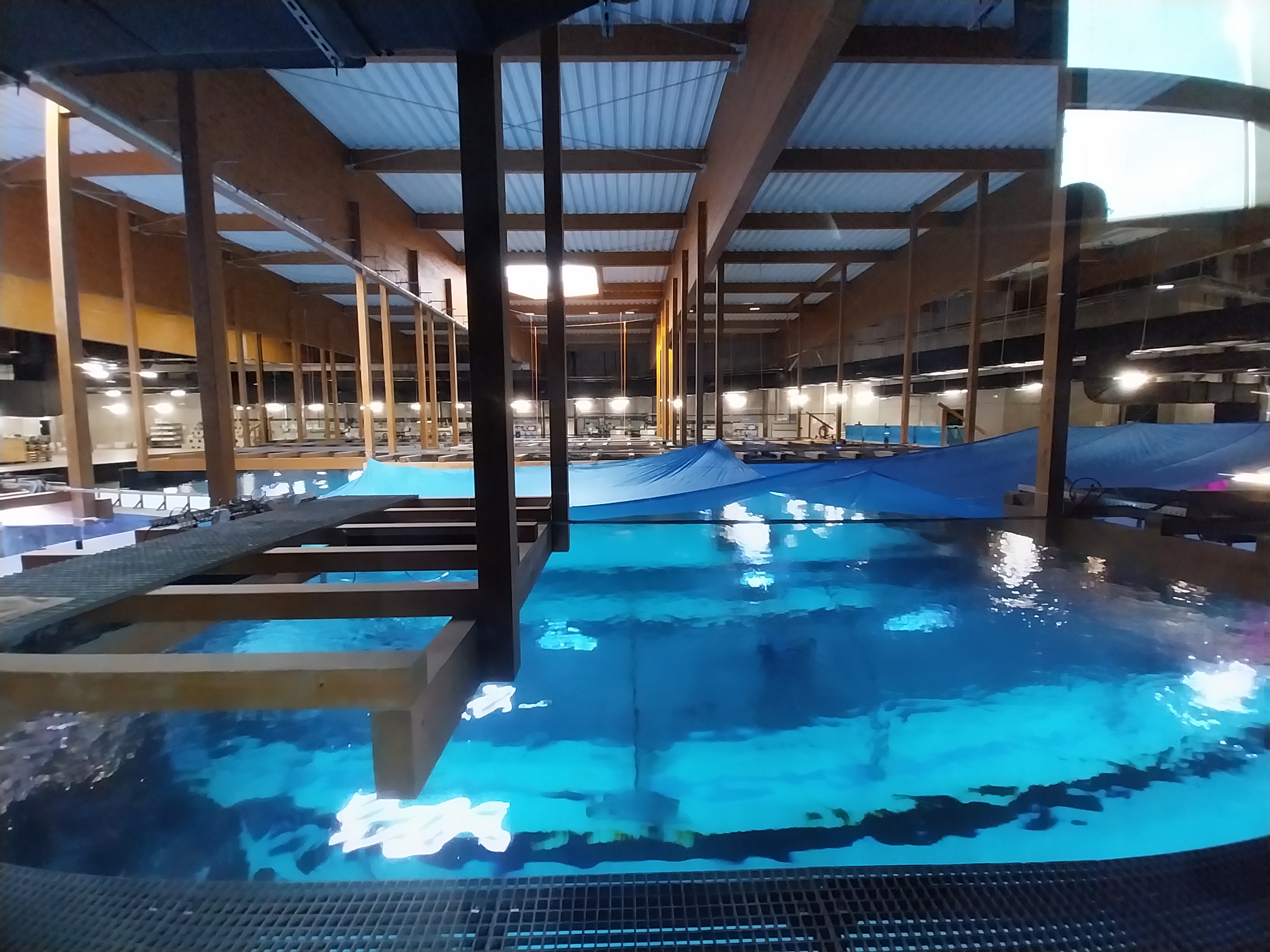
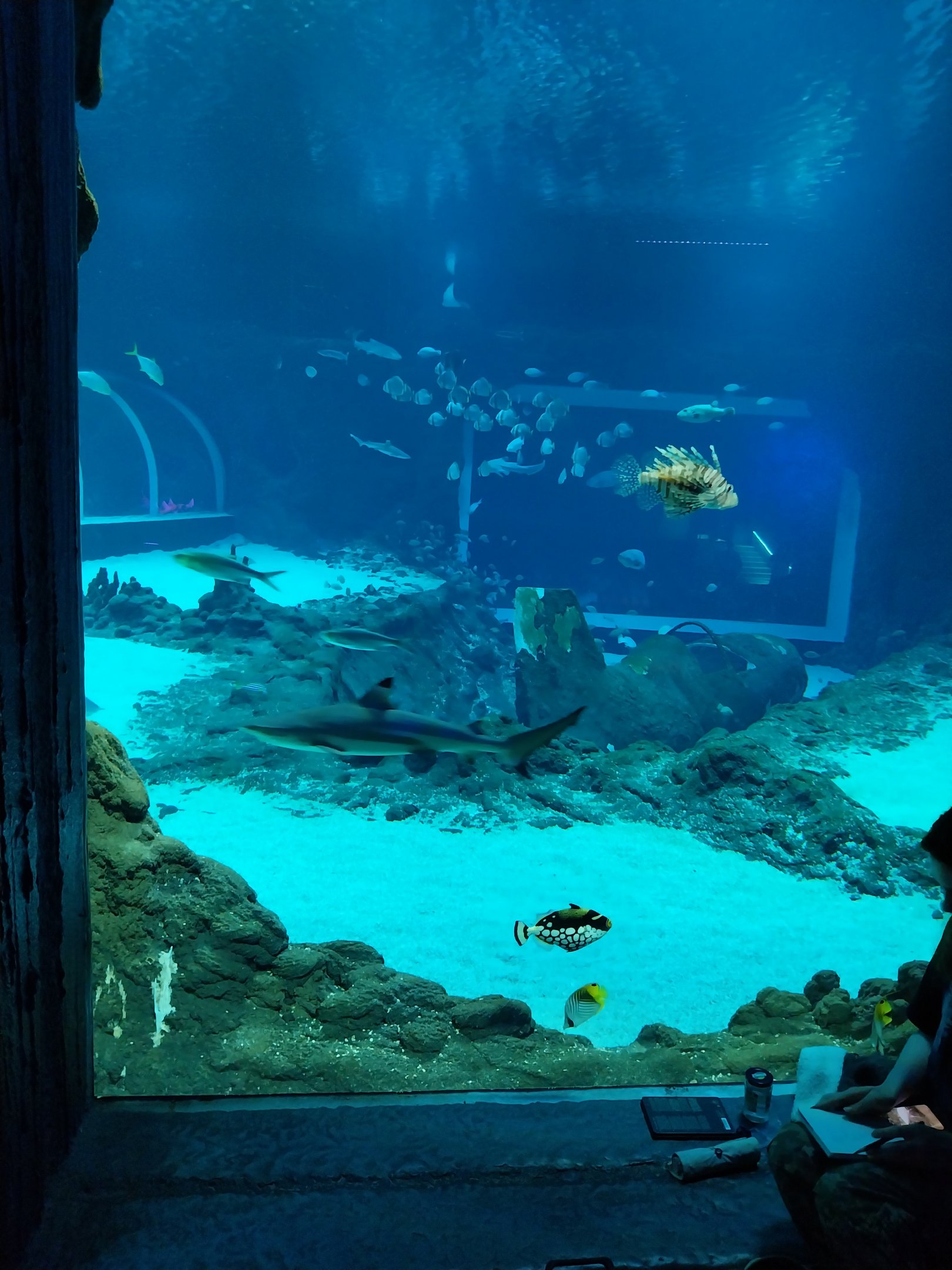
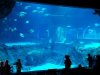
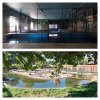
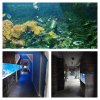
aquarium. Collection-wise this is the species-richest section, with more than 170 saltwater fish species. It starts with a cave-like front portal room with some terrariums for invertebrates (spiders and stick insects). There is a lot of space wasted that could easily be filled with some reptiles from the Vivarium. A first look can be taken into the large ocean tank and “well hello there”, immediately the construction flaws of this building rise up as you look right into the eyes of other visitors.
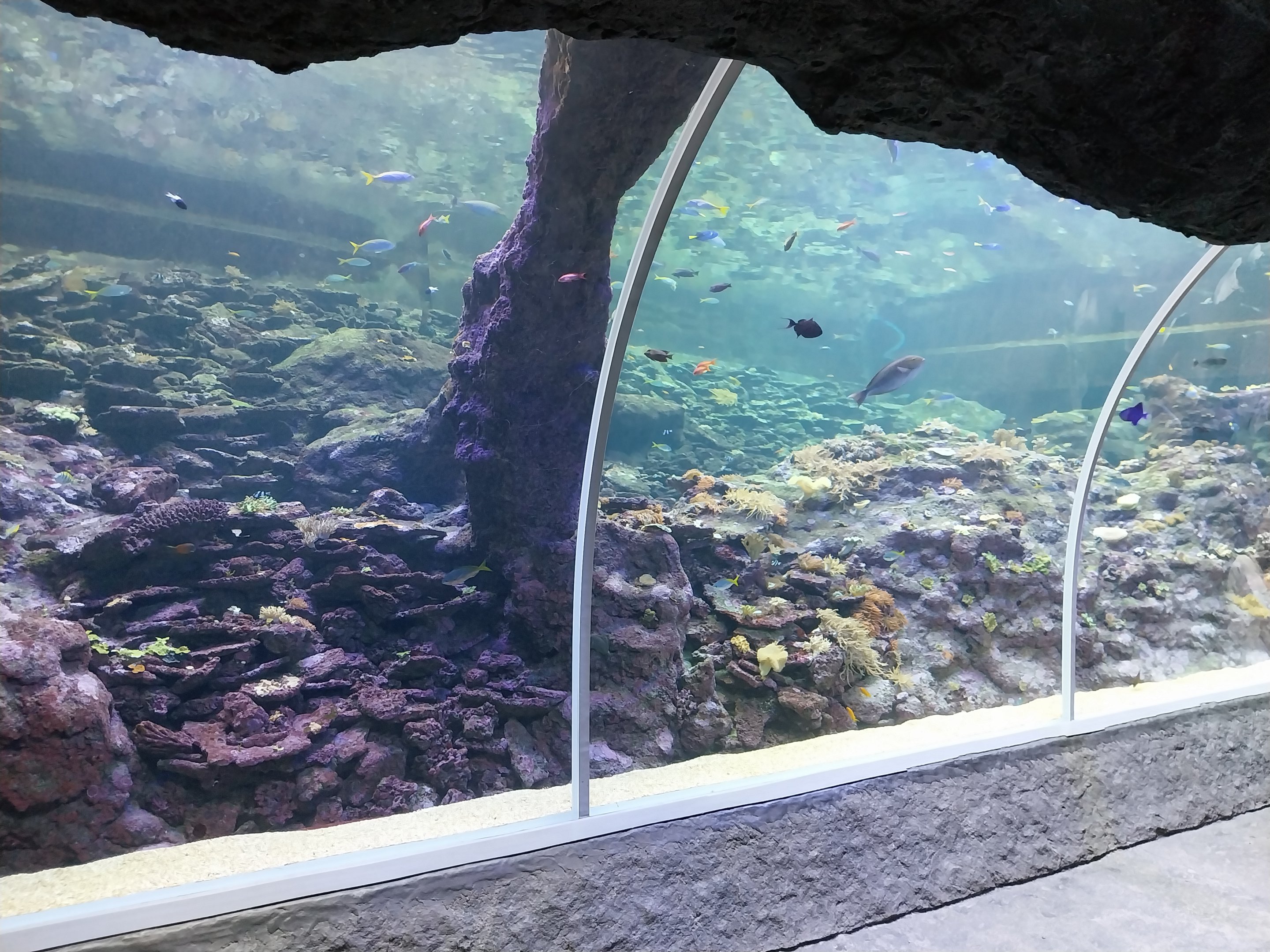
That said, it is a good sized tank, with a crashed Mitsubishi J2M bomber aircraft replica from WWII on the bottom and furtheron sparcely decorated. Walking through the tunnel you realise that the fish on the left are in a different tank, focusing on the higher regions of the coral reef and containing hundreds of smaller fish. A very good solution and I hope to see this tank evolve with more delicate corals to flourish.
After that there is a large dark grottoe, filled with aquariums and a sort of staffed attraction. The zoo map leaves nothing to suggest what this would be, perhaps something with AI glasses as there were seats.
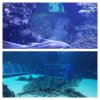
 Hall with several tanks, an attraction and a shark tank viewing point
A third and largest viewing pannel offers very good sights to other visitors, the crashed plane and fish. There are beach chairs to enjoy it but on my first tour there was a large group of school children and these little monsters did what they always do: running around and making as much noise as possible. This tank has quite a nice species line up: Guitarfish, Ocellated eagle ray, Giant grouper, Sandbar and Zebra shark, Indo-pacific tarpon, Great barracuda, Yellowmargin triggerfish, Blacktip reef shark, Shark ray, Stellate puffer, Harlequin sweetlip and Orbicular batfish. There are a few other aquariums here, all a bit barren but time will heel this. The one with Razorfish and Valentines Sharpnosed puffer stood out, as does a circular tank with Banggai cardinalfish, Saddleback clownfish and others.
 3 viewing points at once
Conclusion
The Orientarium is an impressive structure with a fine collection of mostly mammals and fish, catapulting Lodz Zoo straight into modernity. However, like any project, it also has its flaws and downsides that could have been avoided if better design had been in place. The long corridor that connects all the sections is not immediately inviting, and limits the view of animals to one side, so there is no real Southeast Asian experience anywhere. I don't think the Orientarium has this intention, although the zoo's website makes it seem that way, but that you should rather see it as a (long) row of successive animal enclosures brought together under the same roof. So I would describe the Orientarium as an excellent mammal house, but original or immersive it is not. But each enclosure in itself is among the most spacious you will encounter in Europe, there are natural floors everywhere, plenty of climbing opportunities and most species also have access to spacious outdoor enclosures.
For once, the visitor areas are spacious, benches are provided throughout and it is nice that you can view the building on different levels. The colors and materials used are sober but I didn't get a real Southeast Asian feeling anywhere. For a new building, it is unfortunate that two years after opening they are already showing animals from other areas - if you have a good idea, stick to it -and that the zoo's website remains sloppy (perhaps purely due to the fact that in the initial plans they did want to show species from Celebes in the temple hall - crested macaques and anoas).
But it is incomprehensible that this building won the SHARP award for best contemporary construction in 2023, when faced with the terrible sightlines that completely disrupt the visitor experience.
If you think of the Orientarium as a big building full of mammal enclosures and aquariums with species that all more or less call Southeast Asia home, this place is absolutely fine. Because that’s exactly what is is: a number of spacious enclosures all under the same roof. However, it you see the Orientarium as an immersive introspective on Southeast Asian fauna and their tropical rainforest habitat, then you will be disappointed. Because it’s not.
So it depends on you
Coming up next : Some thoughts on Poland’s two major zoo complexes and then: Out of Africa! Or something like that.







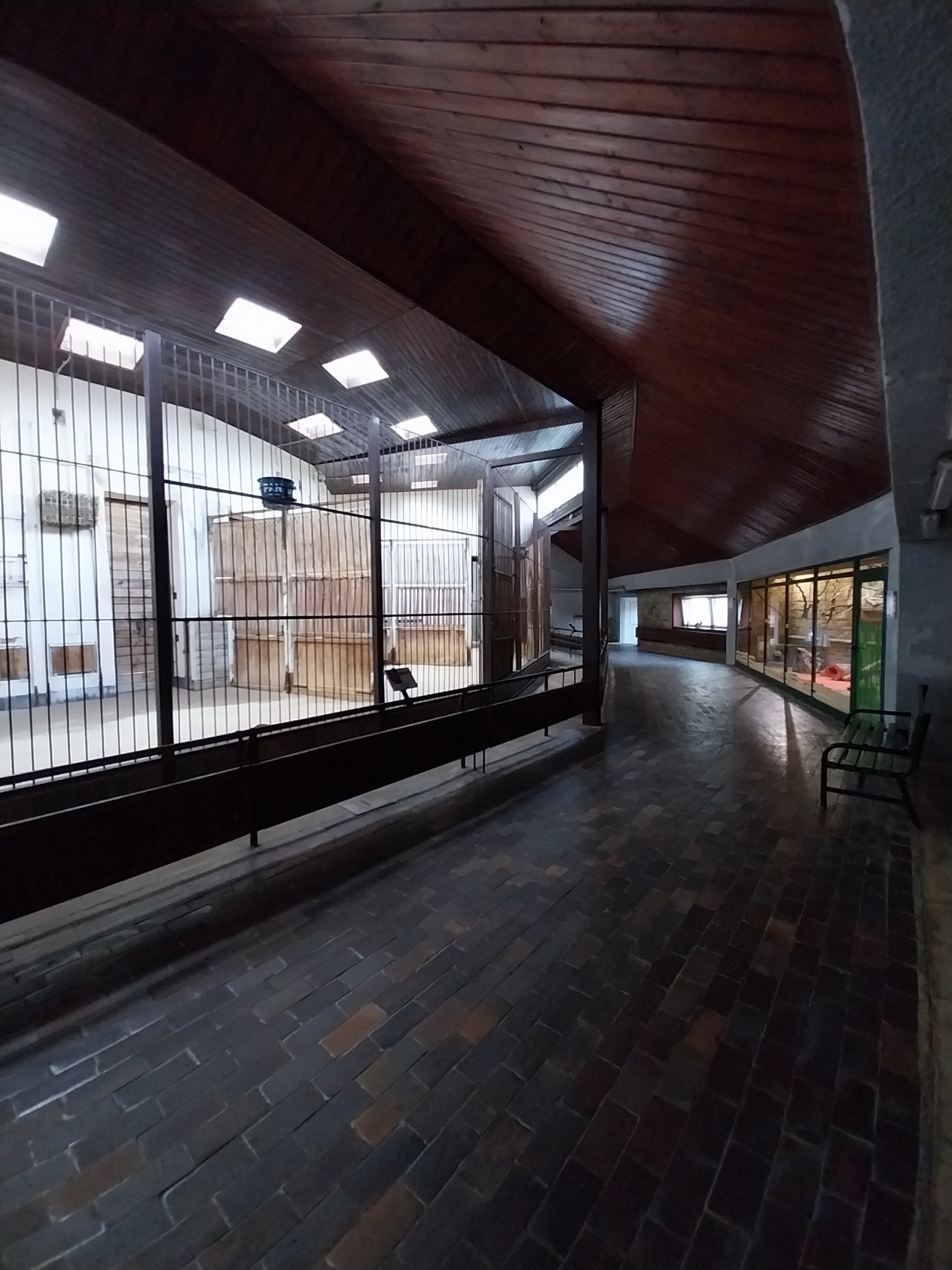




 I always think that the Orientarium in Lodz is comparable (and was surely inspired by) the Afrykarium at Wroclaw Zoo.
  ), but I wasn't very consistent in taking notes or photos that day.