Kakapo's Photographic Collection of Endangered Species

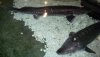
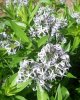
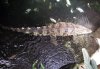
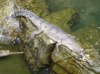
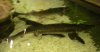
ATLANTIC STURGEON - Acipenser sturio
Acipenser sturio 1.jpg
Acipenser sturio 2.jpg

Photos taken at: Barcelona aquarium, Spain

Short taxonomy: Osteichthyes > Acipenseriformes > Acipenseridae

Native range: Europe

Ex-situ frequence: Common

Danger factors: As in most sturgeons, dam building is the main threat, but the species is also accidentally captured and it suffers habitat degradation such as water contamination, river flow regime regulation, and arid extraction. IUCN says that bycatch capture is the major threat (about 200 individuals fishes every year, evaluated in 1997), but probably this is just the current major threat in the only river where they survive, while dam builing is what whipped it out from almost whole former range.

Other comments: The westernmost of the palearctic sturgeons and the most well known species of the genus, it's extremely wide former range from western Siberia to Turkey and west to Iceland was not enough for guarantee the surviving of the species, as dam builing happened all over it's range. Now is extinct all over its former range except the Garonne river in France, probably the most dramatic range reduction of all European vertebrates. Last recorded breeding in the wild was from 1994. Sturgeon farms are essential for recovering the species and they restocked various times in the wild since 1995, from captive-bred specimens, being especially important in this respect the Guadalquivir river sturgeon farming in south Spain. However, the survival rate of released individuals is only from 3% to 5%. Another important action for conservation of the species is the builing of fish passages in dams. Some of these are already built, but at least in Spain, most projects are still pending to do.

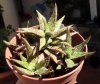
GAAN LIBA ALOE - Aloe jucunda
Aloe jucunda.jpg
Aloe jucunda 2.jpg

Photos taken at: my garden, Saragossa, Spain

Short taxonomy: Liliopsida > Asparagales > Xanthorrhoeaceae

Native range: northern Somalia

Ex-situ frequence: Common

Danger factors: LIvestock grazing, habitat destruction and degradation

Other comments: Gaan Liba is the name of the reserve in Hargeisa, Somalia where this plant is endemic. Such a restricted native range, of about 30 km across, put the plant in risk because populations can be completely depleted due to overgrazing, logging (that eliminates the slight shade that this species needs for thriving), and fires for obtain charcoal. The recollection for medicinal purposes, a common threat within genus Aloe, is not important in this species because its small size make it uninteresting for harvesters. The species, being distinctive and beautiful, easy to grow and easy to propagate, is common in succulent collections worldwide.
 

Attachments

  • Acipenser sturio 1.jpg
    Acipenser sturio 1.jpg
    98.9 KB · Views: 31
  • Acipenser sturio 2.jpg
    Acipenser sturio 2.jpg
    108.3 KB · Views: 34
  • Aloe jucunda.jpg
    Aloe jucunda.jpg
    81 KB · Views: 25
  • Aloe jucunda 2.jpg
    Aloe jucunda 2.jpg
    39.8 KB · Views: 31
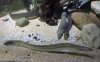
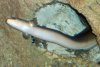
EUROPEAN EEL - Anguilla anguilla

Anguilla anguilla.jpg
Anguilla anguilla 2.jpg

Photos taken at: Saragossa Fluvial Aquarium, Spain and Barcelona aquarium, Spain

Short taxonomy: Osteichthyes > Anguilliformes > Anguillidae

Native range: breeding and hatching in Sargassum Sea in the middle of Atlantic Ocean, living in European rivers

Ex-situ frequence: Very common

Danger factors: Dam building, parasitic diseases, overfishing, contamination by plastics

Other comments: While dams made it disappear from several rivers, the migration of these fishes can go in firm land without water for long distances, and is not a such bad problem as the other threats are currently. Eel was once one of the most important fishing resources in Europe, especially the fry, when they migrate in mass to reach the rivers where its parents lived. These fry are considered a deluxe delicatessen, tough given the current status of the species, today are nearly impossible to find and the alimentary industry substituted them by succedaneous. The species is intensely cultivated in fish farms in several European countries (Spain, Italy, Greece, Germany, Netherlands and Sweden), but these eel farms were still unable to close the breeding cycle so they still need a regular source of wild fry for grow them. Tough the eel farming can be seen as the solution for lifeguard the species, it also can pose a threat as they tried to cultivate the Japanese eel, species which transmitted a parasitic nematode to which Japanese eels are immune, but European eels are very sensitive. The Asiatic nematode (Anguillicola crassus) is now widespread on whole Europe. It destroys the bladder and the reproductive organs of the European eel, making it unable to breed and also unable to reach the Sargassum sea due to exhausting. The nanoparticles of plastic that floats in the sea concentrates just precisely over the Sargassum Sea forming a "plastic island", and the eel fry eat these nanoparticles mistaking them with food, causing intestinal obstruction or starvation. The high abundance of the species in public aquariums and fish farms is not indicative of a healthy ex-situ population: these fishes are very long lived, with a record of 88 years old, and it's useless to keep the adults in tanks if they are unable to breed. In the year 2000, the world population of European eel was 1% to 5% of the 1980 population.
 

Attachments

  • Anguilla anguilla 2.jpg
    Anguilla anguilla 2.jpg
    121.1 KB · Views: 22
  • Anguilla anguilla.jpg
    Anguilla anguilla.jpg
    103.8 KB · Views: 24
ROTI ISLAND SNAKE-NECKED TURTLE - Chelodina mccordi
Chelodina mccordi.jpg

Photo taken at: Bronx zoo, New York, USA

Short taxonomy: Sauropsida > Chelonia > Chelidae

Native range: Roti and Timor islands, Indonesia

Ex-situ frequence: Common

Danger factors: Capture for the pet trade

Other comments: Unlike the vast majority of endangered animal, direct capture is almost the sole cause of its decline, very much over habitat destruction, as the species is very adaptable to altered ecosystems such as rice fields. And unlike almost all other endangered turtles, the species is collected almost only for the pet trade, instead of food. The exaggerated overcollecting already was present before the scientific description of the species. Since 2001, collecting is prohibited, but it continue in illegal way. The species is considered as functionally extinct on Roti. It breeds well in captivity and there are succesful colonies in facilities of Europe, North America and Singapur.

BABY QUEEN PALM - Chamaedorea plumosa
Chamaedorea plumosa.jpg

Photo taken at: Kew Royal Botanical Gardens, UK

Short taxonomy: Liliopsida > Arecales > Arecaceae

Native range: Chiapas, Mexico

Ex-situ frequence: Common

Danger factors: Agricultural expansion (corn crops) and increase of fire regime

Other comments: This is a record-bearer species: the most cold hardy of all Chamaedorea, supporting -10º C, and the most direct sunlight tolerant within the large genus, also is one of the most quickly growing palms in the world. Despite these features, is not as popular in cultivation as it would deserve. In nature, is endemic to two minute spots in the Atlantic side of Chiapas, and the total area of occupance is less than 9 km2, so the species is very sensitive to threats. Also, the extremely uneven proportions between sexes poses a threat for the reproduction of the species,as almost all wild individuals are males.
 

Attachments

  • Chelodina mccordi.jpg
    Chelodina mccordi.jpg
    111.4 KB · Views: 24
  • Chamaedorea plumosa.jpg
    Chamaedorea plumosa.jpg
    88.6 KB · Views: 23
UTILA SPINY-TAILED IGUANA - Ctenosaura bakeri
Ctenosaura bakeri.jpg

Photo taken at: Saragossa fluvial aquarium, Spain

Short taxonomy: Sauropsida > Squamata > Iguanidae

Native range: Utila island, Honduras

Ex-situ frequence: Common

Danger factors: Formerly main threat was direct hunt for meat, currently it's habitat destruction and degradation, tough the poaching still poses a threat.

Other comments: This is the only iguanid and one of only two species of lizards in the world that inhabit exclusively in mangroves. The mangroves are viewed as low value places by the general non-enviromental-concerned population, and often used as garbage dumping. The plastics accumulated in beaches make the iguanas difficult to bury the eggs, and they also can affect incubation temperatures. Mangroves are also destroyed for infrastructure building for touristic development. During the 90's it has been heavily hunted for food. That was prohibited since 1994, but the poach continues currently in illegal way. The hunt is especially intense during breeding season (February to May) and gravid females are selectively hunted as for they are considered a delicacy. From 2006 to 2011, the sex ratio of wild populations became increasingly biased towards males as a result of this selective hunt. Only a little handful of European and North American zoos breeds this species. In 1997, it was estabilished the Útila Iguana Research and Breeding Station in the island, and they release captive-bred hatchlings in the beaches at regular basis, but the rate of survival of the released individuals has not been documented.
 

Attachments

  • Ctenosaura bakeri.jpg
    Ctenosaura bakeri.jpg
    75.7 KB · Views: 24
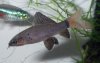
RED-TAILED SHARKMINNOW - Epalzeorhynchos bicolor
Epalzeorhynchos bicolor.jpg

Photo taken at: my aquarium, Saragossa, Spain

Short taxonomy: Osteichthyes > Cypriniformes > Cyprinidae

Native range: Thailand

Ex-situ frequence: Very common

Danger factors: The threats for this species are not very well understood, but probably it has been extirpated by the building of countless dams, water pollution, swamp drainage and road bulding.

Other comments: It was long tought as Extinct in the Wild, until a minuscle population was rediscovered in Chao Phraya river. It's quite possible that this population went extinct too currently, driving the species to Extinct in the Wild again, but it has not been demonstrated. The species is however extremely popular in domestic aquaria and every fish shop have them. The finest example of show that the threat status of a species in IUCN only accounts for wild populations. The idea of using the captive stock for repopulation in the wild has raised, but this stock have a poor genetic diversity and a program of captive breeding that involves natural breeding (instead the hormone-induced inforced breeding that is used for get many common aquaria species including this one) would be needed for get a healthy population for restock in the wild. But natural breeding for this species is quite difficult in captivity, to not say nearly impossible.

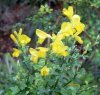
EL FRAILE BROOM - Genista salsoloides
Genista salsoloides.jpg

Photo taken at: Orotava botanical garden, Canary Islands, Spain

Short taxonomy: Magnoliopsida > Fabales > Fabaceae

Native range: Teno massif, Teneriffe island, Canary Islands

Ex-situ frequence: Very rare

Danger factors: Land slides and feral goat grazing

Other comments: It grows in a very small area of very steep cliffs with unstable soils, exposed to strong maritime winds. That makes the land slides a major threat for a species that only counts with 56 individuals in the wild. The species have a very irregular blooming regime, what makes the seed production very scarce.
 

Attachments

  • Epalzeorhynchos bicolor.jpg
    Epalzeorhynchos bicolor.jpg
    87 KB · Views: 27
  • Genista salsoloides.jpg
    Genista salsoloides.jpg
    74.8 KB · Views: 37
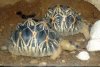
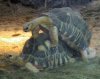
RADIATED TORTOISE - Geochelone radiata
Geochelone radiata.jpg
Geochelone radiata cópula.jpg

Photos taken at: London zoo, UK and Tierpark Hellabrunn, Munich, Germany

Short taxonomy: Sauropsida > Chelonia > Testudinidae

Native range: southern tip of Madagascar

Ex-situ frequence: Very common

Danger factors: Habitat destruction and poaching for food and pet trade

Other comments: The species is strictly protected in Madagascar but law inforcement is very poor, overall after the 2009 political crysis in Madagascar. Two native tribes, the Mahafaly and the Antandroy, have a taboo againts eating these tortoises, but the animals are anyway poached by people of other areas of Madagascar that travel to where these tribes live. It's estimated that up to 241000 adult radiated tortoises are harvested every year (as fot 2005). It's estimated that the species will go functionally extinct in the wild within one tortoise generation (45 years). Fortunately it have a big and safe captive population all over the world: only in North America, 332 individuals (as for 2016) participate in breeding programs. The species is widely available even for private owners. In Madagascar, the Village de Tortues de Mangily (already mentioned in this thread, see the Spider Tortoise message) rescues and breeds radiated tortoises.
 

Attachments

  • Geochelone radiata.jpg
    Geochelone radiata.jpg
    31.4 KB · Views: 24
  • Geochelone radiata cópula.jpg
    Geochelone radiata cópula.jpg
    85.7 KB · Views: 27
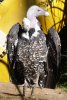
RÜPPELL'S GRIFFON VULTURE - Gyps rueppellii

Gyps rueppellii erlangeri.jpg Gyps rueppellii.jpg

Photos taken at: London zoo, UK (ssp. erlangeri, now disappeared from European zoos), and Pairi Daiza, Belgium

Short taxonomy: Aves > Accipitriformes > Accipitridae

Native range: Africa

Ex-situ frequence: Very common

Danger factors: Poisoning, agricultural expansion, decrease of population of wild ungulates, direct hunt

Other comments: Formerly a common bird, its population is decreasing extremely quickly. Poisoned carcasses are installed both by ivory poachers for don't draw attention over their kills, as by cattle shepherds for kill lions and hyenas. Just one poisoned carcass can kill up to 600 vultures in a single event. Today less than 30000 birds remain, and the reduction of the area of distribution is noteworthy, especially in Nigeria, Somalia and Sudan where is extinct to almost extinct. Poisoning is very low to null in protected areas, but for a vulture, that soar hundreds of kilometers in search of food, a restricted protected area don't avoid the feeding out of it. The poisoning is not only intentional, there is also poisoning by diclofenac, an antiinflamatory drug used for veterinary purposes in cattle and that is fatal to vultures. Hundreds of vultures or parts of them are also sold every year in fetish markets and for medicinal purposes in West Africa. In Nigeria the extintion of the species is entirely attributable to the use of it's parts in fetish practices.

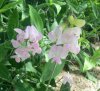
SWEET PEA - Lathyrus odoratus

Lathyrus odoratus (9-5-15 Botánico Alcalá).jpg

Photo taken at: Alcala botanical garden, Spain

Short taxonomy: Magnoliopsida > Fabales > Fabaceae

Native range: South Italia

Ex-situ frequence: Very common

Danger factors: It seems harvest of wild plant for horticultural trade is the main threat for wild populations, but I find that quite strange for an invasive quick-growing annual, and very probably there are other reasons involved.

Other comments: Very popular in gardens, the sweet pea has been cultivated since 17th century and turned from a littke known weed to a floral sensation in 19th century, mainly thanks to the work of a single man (Herry Eckford) that developed hundreds of cultivars. The species is not only popular as ornamental but also widely grown as a model organism and used heavily in the early genetic research. But this plant is like the common carp or the camel: while very common in captivity and feral in the whole world, true wild populations are in the brink of extinction. About 135 botanical gardens grows this species but the majority of them grows only cultivars of it, as happens also in private gardens. It was considered a non-threatened plant in 2010, taking account of all the feral populations, as near threatened in 2011, taking account only in Italian and Sicilian populations, and as critically endangered currently taking only native range. The species is of course least concern if we summarize the non-native range populations.
 

Attachments

  • Gyps rueppellii erlangeri.jpg
    Gyps rueppellii erlangeri.jpg
    46.6 KB · Views: 25
  • Gyps rueppellii.jpg
    Gyps rueppellii.jpg
    336.5 KB · Views: 27
  • Lathyrus odoratus (9-5-15 Botánico Alcalá).jpg
    Lathyrus odoratus (9-5-15 Botánico Alcalá).jpg
    80.1 KB · Views: 23
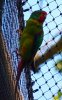
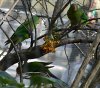
SWIFT PARROT - Lathamus discolor
Lathamus discolor (16-9-21 Tiergarten Schönbrunn, det yo).jpg
Lathamus discolor 2 (16-9-21 Tiergarten Schönbrunn).jpg

Photos taken at: Tiergarten Schönbrunn, Austria

Short taxonomy: Aves > Psittaciformes > Psittacidae

Native range: south east Australia

Ex-situ frequence: Common

Danger factors: Predation by sugar gliders, plus habitat destruction, especially the logging of big old trees that the species needs for nesting. Many other lesser threats too, such as competence for nesting places with introduced common starlings, collision with windows, roadkilling, climatic change, disease transmision and pet trade.
Other comments: 85% of the eggs/chicks of swift parrot in Tasmania dies from predation from sugar gliders! They also kill 65% of the nesting females in the island. The predation by a native species seems a natural factor, but the fact is that it increased a lot as a consequence of deforestation: with the parrots concentrated in much less trees than before, they're much easier to find by sugar gliders. More than half of native forest in Tasmania has been cleared, mainly for agricultural expansion. Out of Tasmania they experiment the same threats.
Estimations of population vary a lot, but it could remain as low as only 300 individuals in the wild for the minimum estimation. There is a "Swift Parrot Recovery Team" dedicated solely to the protection of this species.
 

Attachments

  • Lathamus discolor (16-9-21 Tiergarten Schönbrunn, det yo).jpg
    Lathamus discolor (16-9-21 Tiergarten Schönbrunn, det yo).jpg
    65.7 KB · Views: 23
  • Lathamus discolor 2 (16-9-21 Tiergarten Schönbrunn).jpg
    Lathamus discolor 2 (16-9-21 Tiergarten Schönbrunn).jpg
    122.6 KB · Views: 24
SWIFT PARROT - Lathamus discolor
View attachment 534494
View attachment 534495

Photos taken at: Tiergarten Schönbrunn, Austria

Short taxonomy: Aves > Psittaciformes > Psittacidae

Native range: south east Australia

Ex-situ frequence: Common

Danger factors: Predation by sugar gliders, plus habitat destruction, especially the logging of big old trees that the species needs for nesting. Many other lesser threats too, such as competence for nesting places with introduced common starlings, collision with windows, roadkilling, climatic change, disease transmision and pet trade.

Other comments: 85% of the eggs/chicks of swift parrot in Tasmania dies from predation from sugar gliders! They also kill 65% of the nesting females in the island. The predation by a native species seems a natural factor, but the fact is that it increased a lot as a consequence of deforestation: with the parrots concentrated in much less trees than before, they're much easier to find by sugar gliders. More than half of native forest in Tasmania has been cleared, mainly for agricultural expansion. Out of Tasmania they experiment the same threats.
Estimations of population vary a lot, but it could remain as low as only 300 individuals in the wild for the minimum estimation. There is a "Swift Parrot Recovery Team" dedicated solely to the protection of this species.
Sugar gliders were introduced to Tasmania in the 19th Century, so are not a natural species there. Numbers are also misleading, as males far outnumber females. "Pet trade" is not a threat, and seems to be added to threat lists almost as a reflex by some scientists.
 
Thanks a lot MRJ, very useful information I failed to find while elaborating the sheet. I really wish I would be able to edit it for include these information. Unfortunately now I can't edit post. The pet trade threat was included in the IUCN page for the species, if well in a very minor and last position.

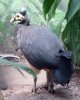
MALEO - Macrocephalon maleo
Macrocephalon maleo (31-7-19 Bronx zoo).jpg

Photo taken at: Bronx zoo, New York, USA

Short taxonomy: Aves > Galliformes > Megapodiidae

Native range: Sulawesi

Ex-situ frequence: Very rare

Danger factors: Excessive egg harvest, plus disturbances that lead to abandon the nesting grounds.

Other comments: The species is sensitive to disturbance: more than half of the nesting grounds occurs just at protected areas. The abandonement of nesting grounds is correlative with the fragmentation of forests: the more connected the forest patches are, the less abandonement of nesting grounds happen. Main reasons for the fragmentation and degradation/destruction of forests and disturbances for the birds are the agricultural expansion, the gold mining, the logging for timber and the harvest of rattan.
The Alliance for Tompotika Conservation, since 2006, employs a permanent team of local staff and villagers in Taima, that provides a year-round protection to maleos, guarding the nesting grounds of the species and registering data as well as educating people in schools and villages about the species. In just 5 years since the project began, the local population of adult maleos returning to nesting grounds has tripled.
The species is present in very few zoos worldwide: four/five USA zoos, one in Europe (Walsrode) and a little bunch of Indonesian zoos. Most of these facilities don't breed the species.

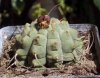
MESCAL BUTTON - Matucana madisoniorum
Matucana madisoniorum (25-4-08 Kaktitos).jpg

Photo taken at: my garden, Saragossa, Spain

Short taxonomy: Magnoliopsida > Caryophyllales > Cactaceae

Native range: Peru

Ex-situ frequence: Common to Rare

Danger factors: Goat grazing and trampling, also collecting, either for the ornamental plant trade or for consumption by mistaking it with the similar-looking peyote.

Other comments: It only occurs at a single location of no more than 16km2 in the Peruvian Amazon dry forest, and the threats did not diminished in it. The species is very showy, but not very common in cultivation as it needs warm temperatures to thrive (minimum 10ºC) and its very prone to root rot by excess of watering. It's also very slowly growing and it does not offset, so it only can be reproduced by seed.
 

Attachments

  • Macrocephalon maleo (31-7-19 Bronx zoo).jpg
    Macrocephalon maleo (31-7-19 Bronx zoo).jpg
    269.9 KB · Views: 22
  • Matucana madisoniorum (25-4-08 Kaktitos).jpg
    Matucana madisoniorum (25-4-08 Kaktitos).jpg
    97.2 KB · Views: 21
MALAYSIAN GIANT TURTLE - Orlitia borneensis
Orlitia borneensis (31-7-19 Bronx zoo).jpg

Photo taken at: Bronx zoo, New York, USA

Short taxonomy: Sauropsida > Chelonia > Geoemydidae

Native range: peninsular Malaysia, Sumatra and Borneo

Ex-situ frequence: Common

Danger factors: Main threat is poaching for meat, overall for export. Other threats include habitat destruction for implement of palm oil plantations, and poach for trade for traditional Chinese medicine.

Other comments: Despite it's critical status, the species is not protected by law in Malaysia, tough it is in the Indonesian part of its range. By 2018, the Malaysian population was declared as commercially extinct. In Indonesia, is mostly restricted to protected spaces as it has been depleted from elsewhere.
 

Attachments

  • Orlitia borneensis (31-7-19 Bronx zoo).jpg
    Orlitia borneensis (31-7-19 Bronx zoo).jpg
    298.1 KB · Views: 26
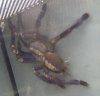
GOOTY SAPPHIRE ORNAMENTAL TARANTULA - Poecilotheria metallica
Poecilotheria metallica (5-8-17 Zoo Zajac, det as 'P. metallica').jpg

Photo taken at: A pet shop in Duisburg, Germany

Short taxonomy: Arachnida > Araneae > Theraphosidae

Native range: Andhra Pradesh, Eastern Ghats, India

Ex-situ frequence: Common

Danger factors: Degradation and destruction of habitat due to logging

Other comments: One of the very very few arthropods evaluated by IUCN, an organization that focus basically in vertebrate conservation. Gooty is the name of a town in India where the spider was found originally. However, it was found in the railway timber yard and the animal is not native here, despite its common name. It's instead native to a very small area more than 100km apart, where it was rediscovered by Nadur et al. in 2001, after 102 years of missing the species, believed to be extinct. The species nest in tree holes, so it's extremely sensitive to logging. It's calculated that if the deforestation trends continues in the area, the species will became soon extinct in the wild.

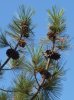
TORREY PINE - Pinus torreyana
Pinus torreyana (12-7-16 La Jolla, det yo).jpg

Photo taken at: La Jolla, San Diego, California, USA

Short taxonomy: Pinicae > Pinales > Pinaceae

Native range: San Diego, California, plus a different subspecies in Santa Rosa island

Ex-situ frequence: Rare

Danger factors: Urban expansion, fires, pests and diseases. The species grows in the Torrey Pines State Park and these trees are not threatened by logging, but the proximity to urban areas made them prone to risk of fires and pests epidemics. Same happens with the trees growing in Santa Rosa island. The trees that grows outside these reserved spaces are usually engulfed by urban development, sometimes conserved as part of urban landscape, other times felled.

Other comments: It's the scarcest pine species in North America. There are only about 3000 individuals in the narrow coastal line of San Diego and about 2000 individuals of the Santa Rosa island subspecies. The latter is a great success of conservation since in early XX century they were only about 100 individuals of said subspecies. It's often planted as ornamental within native range as it's considered a local icon of San Diego, and there are various places named after this species: Torrey Pines State Reserve, Torrey Pines Golf Course, Torrey Pines High School, Torrey Pines Glideport, plus various parks, beaches, pathways and commerces. Currently there is experimentation about the use of this species in forestry plantations in Australia, New Zealand and Kenya.
 

Attachments

  • Poecilotheria metallica (5-8-17 Zoo Zajac, det as 'P. metallica').jpg
    Poecilotheria metallica (5-8-17 Zoo Zajac, det as 'P. metallica').jpg
    167.6 KB · Views: 27
  • Pinus torreyana (12-7-16 La Jolla, det yo).jpg
    Pinus torreyana (12-7-16 La Jolla, det yo).jpg
    138.2 KB · Views: 22
FOUR-EYED TURTLE - Sacalia quadriocellata
Sacalia quadriocellata (16-9-21 Tiergarten Schönbrunn).jpg
Sacalia quadriocellata head (16-9-21 Tiergarten Schönbrunn).jpg

Photo taken at: Tiergarten Schönbrunn, Austria

Short taxonomy: Sauropsida > Chelonia > Geoemydidae

Native range: South east Asia, from southern China to Vietnam

Ex-situ frequence: Rare

Danger factors: Harvest for their shells used in traditional Chinese medicine

Other comments: Despite its critically endangered status, the rate of harvest increased recently, and now is fished using different techniques such as electrofishing. There is not much specific protection measures for this exact species, but it's under the same recovery programs as in general most South East Asian freshwater turtles as a whole. The species is much more endangered in China, where it have the main populations, that it is in Laos and Vietnam, as a result of China being the main demandant of its shells.
 

Attachments

  • Sacalia quadriocellata (16-9-21 Tiergarten Schönbrunn).jpg
    Sacalia quadriocellata (16-9-21 Tiergarten Schönbrunn).jpg
    478.8 KB · Views: 27
  • Sacalia quadriocellata head (16-9-21 Tiergarten Schönbrunn).jpg
    Sacalia quadriocellata head (16-9-21 Tiergarten Schönbrunn).jpg
    355.3 KB · Views: 27
EGYPTIAN TORTOISE - Testudo kleinmanni
Testudo kleinmanni (20-8-12 Tierpark Hellabrunn).jpg

Photo taken at: Tierpark Hellabrunn, Munich, Germany

Short taxonomy: Sauropsida > Chelonia > Testudinidae

Native range: North east Africa (Egypt and Libya)

Ex-situ frequence: Very common

Danger factors: Sheep farming, roadkills, habitat destruction, illegal capture (for sell in situ to tourists or for export to Europe).

Other comments: It's already extinct in Egypt, so it now only thrives in Libya. If danger factors continue current trends, the species will go globally extinct in the wild in next 20 years. There is only about 5000 adult individuals in the wild, only the 15% of the population it had about 30 years ago. Bioparco di Roma coordinates a project about captive breeding and reintroduction of this species in Libya.

NAOLINCO PALM - Zamia monticola
Zamia monticola (Munich).jpg

Photo taken at: Munich botanical garden, Germany

Short taxonomy: Cycadopsida > Cycadales > Zamiaceae

Native range: Guatemala

Ex-situ frequence: Very rare

Danger factors: Habitat loss (severe deforestation)

Other comments: Previous assesment by IUCN (1998) gave the species as extinct. It seems to have been rediscovered alive after that, being upgraded to Critically Endangered in 2003, but I failed finding info about that. It seems that it's not a deeply studied or famous species. It's only found alongside Chiacte river from Chajmayic to Sebol, a very narrow distribution area. A 2008 survey of the family Zamiaceae in Guatemala found every native species of the family in the wild except this one.
 

Attachments

  • Testudo kleinmanni (20-8-12 Tierpark Hellabrunn).jpg
    Testudo kleinmanni (20-8-12 Tierpark Hellabrunn).jpg
    94.9 KB · Views: 25
  • Zamia monticola (Munich).jpg
    Zamia monticola (Munich).jpg
    120.8 KB · Views: 25
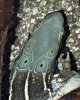
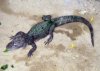
CHINESE ALLIGATOR - Alligator sinensis
Alligator sinensis 2.jpg Alligator sinensis.jpg

Photos taken at: Tierpark Friedrichsfelde, Berlin, Germany and Barcelona zoo, Spain

Short taxonomy: Sauropsida > Crocodilia > Alligatoridae

Native range: eastern tip of China

Ex-situ frequence: Common

Danger factors: Habitat destruction (especially nesting grounds for agricultural expansion) and overfishing that deplete its food resources

Other comments: It passed from about a thousand wild individuals in the 1970's to only 130 in the bottleneck of 2002. From 2003 to the present, the population slightly increased (estimation of an average 150 individuals as for 2015), as a consequence of protection measures. Formerly it was widely distributed in all the lower Yangtze river basin, but now it's restricted to southeastern Anhui Province. The species remained here just because of the creation of the Anhui National Nature Reserve for Chinese Alligator, otherwise it could be easily extinct in the wild. It breeds easily in captivity and there are about 10000 individuals in zoos of the world. Several zoos, alligator farms, museums and safari parks in China breeds this species, and out of China the breeding success has been reached by various other facilities too, such as Bronx Zoo, St. Augustine Alligator Farm and Rockefeller Refuge. Reintroduction of captive-bred individuals is ongoing since 2001. Several nests, eggs and hachtlings has been recorded as a result of reintroduced individuals.
 

Attachments

  • Alligator sinensis 2.jpg
    Alligator sinensis 2.jpg
    101.8 KB · Views: 23
  • Alligator sinensis.jpg
    Alligator sinensis.jpg
    115.8 KB · Views: 22
BRUSH-TAILED BETTONG - Bettongia penicillata
Bettongia penicillata ogilbyi 2.jpg

Photo taken at: Prague zoo, Czech republic

Short taxonomy: Synapsida > Marsupialia > Macropodidae

Native range: Currently extreme southwest of Australia, formerly the vast majority of the Australian continent. Native range is now just 1% of Australian surface.

Ex-situ frequence: Common to Rare

Danger factors: Sheep grazing, agricultural expansion, fire regime increase and introduced predators especially red fox and domestic cat.

Other comments: Nominate (eastern) subspecies went extinct, and just the western subspecies (ogilbyi) is all what remains today. The species was subject to strong conservation efforts, red fox population was taken under control and the bettong was introduced in some fox-free islands. The species recovered very well thanks to protection measures and reached about 40000 individuals and it was deleted from the endangered species list. But from 2001 to 2006 the population collapsed very quickly from unclear reasons and with about a 10% of the population it had before 2001. Possibly, besides fox predation and habitat destruction, there is some parasite-transmitted diseases causing this last steep decline.

EUROPEAN BLUESTAR - Amsonia orientalis
Amsonia orientalis.jpg

Photo taken at: Alcala botanical garden, Spain

Short taxonomy: Magnoliopsida > Gentianales > Apocynaceae

Native range: European Turkey. Formerly, also northern Greece and Asiatic Turkey, but it has been exterminated from here (but see below).

Ex-situ frequence: Common

Danger factors: Habitat destruction by human settlement expansion. In a minor degree, overcollecting for horticultural purposes or for chemical research.

Other comments: In 1999 it was rediscovered alive in the wild in a minuscle spot of Asiatic Turkey, a very narrow area in the Ömerli river basin. The plant is used in medicinal investigation as it have cardioactive, anticancerigenous and antimicrobial characteristics. Fortunately, being common in cultivation most of the plants collected and traded for these purposes comes from captivity.
 

Attachments

  • Bettongia penicillata ogilbyi 2.jpg
    Bettongia penicillata ogilbyi 2.jpg
    81 KB · Views: 22
  • Amsonia orientalis.jpg
    Amsonia orientalis.jpg
    122.4 KB · Views: 21
SIAMESE CROCODILE - Crocodylus siamensis
Crocodylus siamensis.jpg

Photo taken at: Barcelona zoo, Spain

Short taxonomy: Sauropsida > Crocodilia > Crocodylidae

Native range: Indonesia and Malaysia

Ex-situ frequence: Common

Danger factors: Poaching for the skin was the main former threat. Currently it decreased but it's strong enough, and there is also captures for meat, eggs, and supply of crocodile farms, plus accidental captures in fishing gear and habitat destruction and modification, especially by dam building.

Other comments: The excessive hunt for the species leaded to the belief in 1992 that the species went extint in the wild. However, later was found small populations still surviving in Thailand, Vietnam, Burma, Laos and Cambodia. In 2005 was found a nest with hachtlings, a signal that the species was still able to breed. It's estimated that only about 5000 individuals survives in the wild. There are thousands of individuals in crocodile farms, overall in Thailand. Some of the captive bred individuals were released in 2001 and 2004 in Cat Tien national park in Vietnam, and in 2005 and 2006 in Pang Sida national park in Thailand. The captive stock of Siamese crocodile is often hybridized with Saltwater crocodile so not every captive population is suitable for reintroduction programs. Fortunately there is still many pure individuals too.
 

Attachments

  • Crocodylus siamensis.jpg
    Crocodylus siamensis.jpg
    111 KB · Views: 27
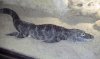
GHARIAL - Gavialis gangeticus
Gavialis gangeticus 1.jpg Gavialis gangeticus 2.jpg Gavialis gangeticus 3 (31-7-19 Bronx zoo).jpg

Photos taken at: Prague zoo, Czech republic and Bronx zoo, New York, USA

Short taxonomy: Sauropsida > Crocodilia > Gavialidae

Native range: Formerly it was widely distributed from Indus river in Pakistan to Ayeyarwaddy river in Burma. Currently restricted to four isolated small populations in northern India and Nepal.

Ex-situ frequence: Rare

Danger factors: Dam building that affect river season regime, and overfishing that depletes fishes on which the gharial depends for feeding. Also, the water course deviation in some rivers. There is a macroproject pending, that pretends to interconnect all the major rivers in India and that will result catastrophic for all the aquatic life.

Other comments: The most distinctive of all crocodilians is in the very brink of total extinction. The world population don't surpass two hundreds of individuals and continue decreasing daily. This animal, differently to the other crocodilians, can't survive out of water for long and can't travel to another water body when the ones where he lives is dried or drainaged. In the past the species was directy targeted for the use of fat, penis and "ghara" (the bump in the tip of nose of adult males), used in traditional Nepalese medicine, but these threats are now extremely low. However, there is still some occasional hunting report for these products, and considering that maybe there is as low as only 20 adult males in the wild in its whole territory, even such accidental menace is significant.

Thousands of gharial hatchlings born in captivity have been reintroduced in their native range, but the results are not good. As long as the threat factors continues, the released individuals are pre-condemned. The steep decline in number of gharial nests over the time, even in protected spaces, demonstrates this.

BORHIDI'S GUANO PALM - Coccothrinax borhidiana
Coccothrinax borhidiana.jpg

Photo taken at: Palmetum Santa Cruz, Canary Islands, Spain

Short taxonomy: Liliopsida > Arecales > Arecaceae

Native range: Punta Guanos, Bahia de Matanzas, northern Cuba

Ex-situ frequence: Very rare

Danger factors: Urban development, road building, wild fires, petrol extraction and cattle grazing

Other comments: It's limited to a tiny coastal line of about 8 hA in arid serpentine soils covered with scrubs. It cannot be even found in other zones with similar habitat in the same Matanzas bay. Only 252 adult individuals have been counted in the wild. Certain beetle, species Coccotrypes dactyliperda, can parasite up to the half of the seeds produced by this species. The germination percentage of remaining seeds is low (32 to 44%) and the do not germinated until two-three months after sowing, and the palm itself is very slow growing. Certainly these are reasons for the scarcity of this palm in cultivation.
 

Attachments

  • Gavialis gangeticus 1.jpg
    Gavialis gangeticus 1.jpg
    141.3 KB · Views: 22
  • Gavialis gangeticus 2.jpg
    Gavialis gangeticus 2.jpg
    75.7 KB · Views: 21
  • Gavialis gangeticus 3 (31-7-19 Bronx zoo).jpg
    Gavialis gangeticus 3 (31-7-19 Bronx zoo).jpg
    349.9 KB · Views: 24
  • Coccothrinax borhidiana.jpg
    Coccothrinax borhidiana.jpg
    156.8 KB · Views: 22
GIANT ASIAN POND TURTLE - Heosemys grandis
Heosemys grandis.jpg

Photo taken at: Plzen zoo, Czech republic

Short taxonomy: Sauropsida > Chelonia > Geoemydidae

Native range: South East Asia, from Burma to Malaysia

Ex-situ frequence: Common

Danger factors: Excessive harvest for meat and in lesser exent for pet trade, as well as habitat destruction for agricultural development

Other comments: Until recently classified just as Vulnerable, it experimented a steep decline in its populations that now put it at the highest rank of danger. It's one of the most heavily exploded turtles in food markets of South East Asia. Adults are now very rare to see outside Thailand. It's commonly reared in ponds of Buddhist temples and escapees and introduced populations are usual, for example it has been introduced in Singapore, where however it don't breed.
 

Attachments

  • Heosemys grandis.jpg
    Heosemys grandis.jpg
    79.1 KB · Views: 21
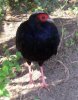
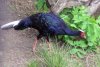
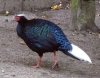
EDWARD'S PHEASANT - Lophura edwardsi
Lophura edwardsi LondonZoo.jpg
Lophura hatinhensis 1 (15-8-13 Zoo de Praga).jpg
Lophura hatinhensis 2 (15-8-13 Zoo de Praga).jpg
Lophura hatinhensis 3 (22-9-18 Zie-zoo).jpg

Photos taken at: London zoo, UK (edwardsi), Prague Zoo, Czech Republic (hatinhensis)

Short taxonomy: Aves > Galliformes > Phasianidae

Native range: Vietnam

Ex-situ frequence: Very common

Danger factors: Habitat destruction. The herbicides used during Vietnam war for clearance of the forests affected severely the species and now it turned into logging either for wood resources or for agricultural expansion.

Other comments: It's critically endangered since 2014 and even possibly extinct in the wild. The forest fragmentation lead isolated patches of forest that becomes drier than if they were interconnected and that's probably also a reason in the decline of the species. Last Vo Quy subspecies record in the wild was in 1999 and last nominate subspecies record in 2000. A camera-trap survey in two areas of adequate and undisturbed habitat in 2011 failed to find the species. Fortunately it have a healthy captive population since the founder first 20 individuals was sent to Europe in 1920, reaching 1033 individuals in captivity worldwide in 2003. In 2018 has been stabilished a captive breeding centre for the species in Vietnam. It's planned to release the first individuals in the wild in 2030, currently is not possible to do since almost no habitat remains.

YELLOW LATAN PALM - Latania verschaeffeltii
Latania verschaeffeltii (23-3-15 Botánico Orotava).jpg

Photo taken at: Orotava botanical garden, Canary islands, Spain

Short taxonomy: Liliopsida > Arecales > Arecaceae

Native range: Rodrigues island

Ex-situ frequence: Common

Danger factors: Lack of regeneration in nature (caused by introduced rats eating seeds and seedlings, cattle grazing and competition with invasive plants), uncontrolled leaf harvest for handicraft, hybridisation with the Mauritius related species (Latania loddigessii), cyclones, infrastructure building plants (airport expansion in 2022).

Other comments: There is only about 111 individuals in the island (as for 2019), divided in various subopulations the largest of which contains only 25 palms. Early reports said that is very common all over the island and the most useful multipurpose plant in it. Today is still widely used, but not common anymore. Seeds are sometimes collected for propagation in nurseries and for reintroduction or for ornamental planting. The species is grown at several botanical gardens worldwide but gardens growing more than one Latania species together must put care for avoid hybridation.

Tough not considered amongst the current threats for the species, is noteworthy that the past decline in population may be related with the extinction of symbiotic fauna: seeds have been dispersed by the now extinct tortoises of the island, flowers pollinated by a now extinct day gecko, and both actions carried by the now extinct turquoise parakeet.
 

Attachments

  • Lophura edwardsi LondonZoo.jpg
    Lophura edwardsi LondonZoo.jpg
    51.8 KB · Views: 24
  • Lophura hatinhensis 1 (15-8-13 Zoo de Praga).jpg
    Lophura hatinhensis 1 (15-8-13 Zoo de Praga).jpg
    114.6 KB · Views: 24
  • Lophura hatinhensis 2 (15-8-13 Zoo de Praga).jpg
    Lophura hatinhensis 2 (15-8-13 Zoo de Praga).jpg
    133.4 KB · Views: 23
  • Lophura hatinhensis 3 (22-9-18 Zie-zoo).jpg
    Lophura hatinhensis 3 (22-9-18 Zie-zoo).jpg
    289.3 KB · Views: 23
  • Latania verschaeffeltii (23-3-15 Botánico Orotava).jpg
    Latania verschaeffeltii (23-3-15 Botánico Orotava).jpg
    121.9 KB · Views: 21
Back
Top