Philippine eagle spotted above Poland and Eastern Germany

Day 11. In the North

#18 Bydgoszcz Zoo

It was a bright Saturday morning and I was in no hurry to reach my next short-by destination as pressumable few people visit zoos on the first morning of the weekend. I was very wrong as parking lots were almost full. The zoo is part of a larger recreational area with a botanical gardens extended forests, (mini) golf courses, etc. As the parking machine was set to Ukrainian, I did not know what to do for a moment, feeling the hot breath of the long queue behind me. Fortunately, the friendly man behind me spoke English and my problem was quickly solved.

This 1978 originated zoo specialises in Polish faune and this is as today the main focus: large and small carnivores, ungulates and birds of prey.

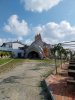
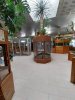
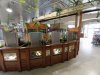
The entrance builing (2014) has a quite large indoor section and it turned out to be the best part of the zoo. In fact it is the only building in de zoo accessible to visitors.

upload_2025-1-26_15-29-27.jpeg

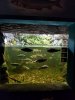
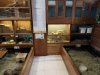
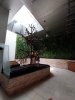
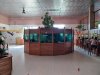
It has a few small saltwater tanks in the entrance area and large freshwater ones for native fish. These four aquaria (and actually there were five because on the floor was a walkable tank whose usefulness frankly escaped me) were of decent quality. Each had a main fish accompanied by a few subsidiary species, and consisted of a large chunk of water with nice naturally finished edges. Unfortunately, each was missing an eye-catcher in the form of a large branch or some other attribute to make them look more attractive.

upload_2025-1-26_15-29-54.jpeg

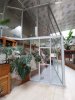
The largest enclosure is dedicated to the zoo’s 2 dwarf crocodiles and it leads into a room with a double path. It consists of not too spacious but nicely decorated terraria for mostly very common species: think of your daily zootrip portion of bearded dragon, leopard gecko and Sinolan milksnake. A few species are rare in European zoos: Green pricklenape, Hispanolian masked curly-tailed lizard, Sahara mastigure and ocellated skink.

upload_2025-1-26_15-40-24.jpeg
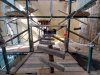
Reptile House - aquarium section with wakable tank

Like birds, reptiles manage to make themselves invisible even in the smallest terraria (or they are simply not there).

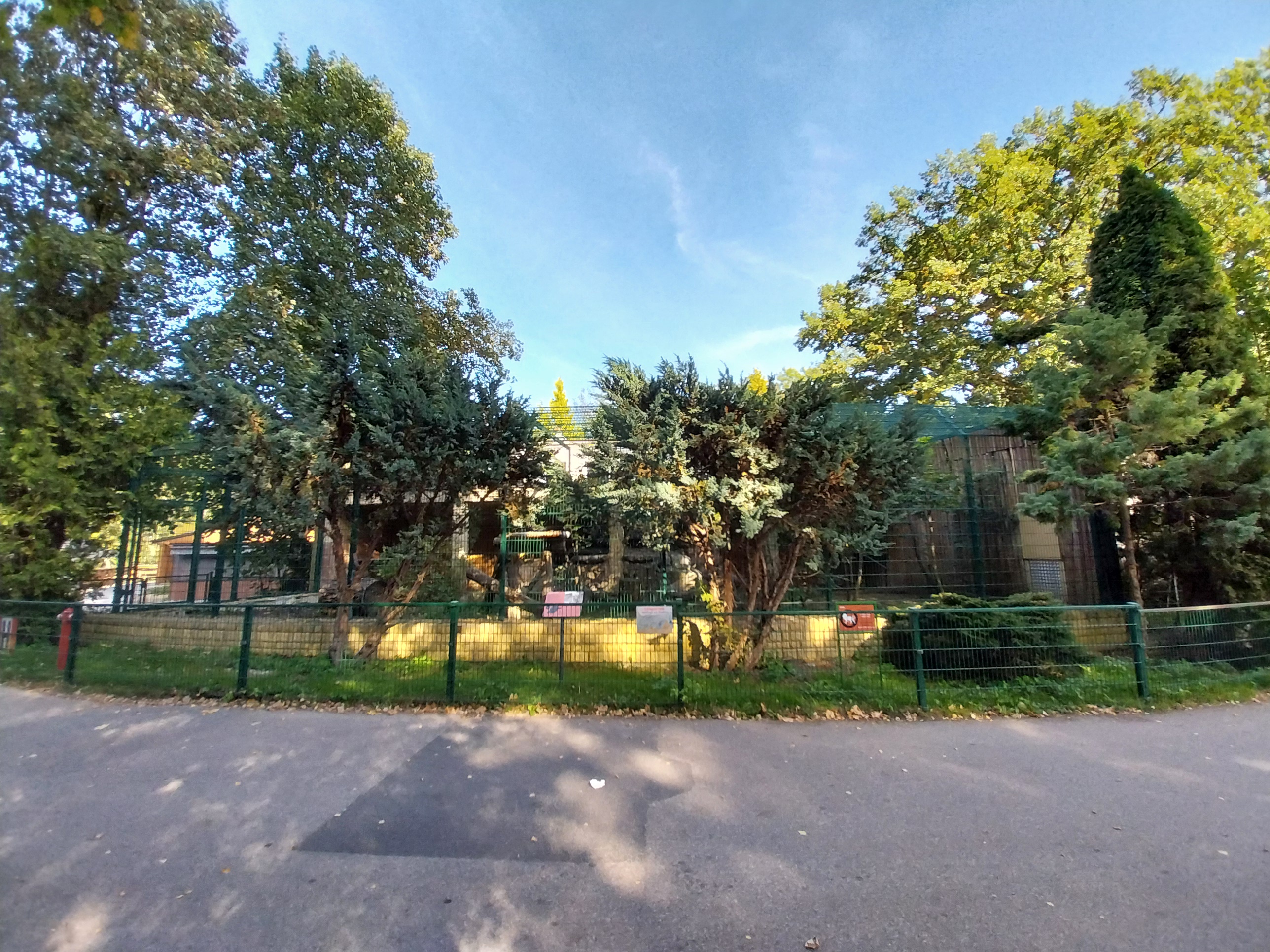
Large predators are presented by Siberian tiger, Snowleopard, Northern lynx, European brown bear and Eurasian wolf. All of these, except for the lynx, live in spacious forested enclosures. A raised platform with glass panels gives a good view of the tiger forest.

upload_2025-1-26_15-30-36.jpeg
European Brown Bear visitor area

upload_2025-1-26_15-31-27.jpeg
Siberian Tiger enclosure as seen from viewing platform

In 2018 the city anounced the plans for a Polararium with extended enclosures for Polar bear, Forest reindeer, Musk ox, seals, penguin and a mixed (!) enclosure for Polar fox and Wolverine. So far I’ve seen no sign of the start of construction.

The far back of the zoo consist of forest with large enclosures for herbivores such as European bison, Wild boar, Moose, Fallow and Roe deer.

A dead end leads to a really shamefull building with extremely small cages for Serval, parrots and Suricate.

upload_2025-1-26_15-33-13.jpeg
the 2 most right 4m² enclosures house serval

Probably the best exhibit of the zoo is a double-enclosure for Mouflon and a pampa with Lama and Capybara. Tropical ungulates are represented by 1 real and 1 fake (plastic) zebra, 1 Somali wild ass and a small herd of nyala.

upload_2025-1-26_15-32-13.jpeg
'Pampa'

I have long since stopped getting excited about mediocre enclosures for Ring-tailed Lemur and Bennett wallabies, but I was very happy to see the Arabian spiny mouse, which can be found in only 8 European zoos. I'm not sure what they do with this in winter, probably lift it and put it in a warmer place.

upload_2025-1-26_15-34-13.jpeg
Arabian Spiny Mouse (Acomys dimidatus)

Next section is entirely dedicated to birds: European black stork, Eurasian crane, Black-necked swan and many birds of prey: Lesser spotted eagle, White-tailed sea-eagle, Steppe eagle, Northern goshawk. In between are Japanese macaques followed by a row of owls: Barn owl (with Edward’s pheasant), Tawny owl (with Lady Amherst pheasant), Tengmalm’s owl (with Eurasian stone-curlew), Ural owl, etc. All these aviaries are rather dilapidated and rusty and are very mediocre at best. However, given their height and planting, I found the owl aviaries quite pleasant to look at.

upload_2025-1-26_15-36-18.jpeg
Bird of prey avenue

upload_2025-1-26_15-38-26.jpeg
Owl aviary

Last is a row of smelly cages in wretched condition for small carnivores like Red fox, Polar fox, Siberian marten, Northern raccoon and European wildcat. Certainly this section was beyond the limits of what is acceptable and it was the bottom point so far on this trip.

This zoo is not a high-flyer: too few interesting species and too many enclosures in poor condition. The large predators and some ungulates are fine and the reptile house is quite pleasant.

My next stop does not promise immediate improvement.
 

Attachments

  • upload_2025-1-26_15-29-27.jpeg
    upload_2025-1-26_15-29-27.jpeg
    110.8 KB · Views: 138
  • upload_2025-1-26_15-29-54.jpeg
    upload_2025-1-26_15-29-54.jpeg
    104.5 KB · Views: 139
  • upload_2025-1-26_15-30-36.jpeg
    upload_2025-1-26_15-30-36.jpeg
    183.4 KB · Views: 147
  • upload_2025-1-26_15-31-27.jpeg
    upload_2025-1-26_15-31-27.jpeg
    283 KB · Views: 145
  • upload_2025-1-26_15-32-13.jpeg
    upload_2025-1-26_15-32-13.jpeg
    179.2 KB · Views: 151
  • upload_2025-1-26_15-33-13.jpeg
    upload_2025-1-26_15-33-13.jpeg
    267.2 KB · Views: 145
  • upload_2025-1-26_15-34-13.jpeg
    upload_2025-1-26_15-34-13.jpeg
    229.2 KB · Views: 145
  • upload_2025-1-26_15-36-18.jpeg
    upload_2025-1-26_15-36-18.jpeg
    175.2 KB · Views: 140
  • upload_2025-1-26_15-38-26.jpeg
    upload_2025-1-26_15-38-26.jpeg
    208.6 KB · Views: 146
  • upload_2025-1-26_15-40-24.jpeg
    upload_2025-1-26_15-40-24.jpeg
    82.1 KB · Views: 133

Bonuspost #18 Bydgoszcz Zoo – Species list reptile house


1. Dwarf crocodile (Osteolaemus tetraspis)
2. Ocellated skink (Chalcides ocellatus)
3. Leopard tortoise (Stigmochelys pardalis) and Brown basilisk (Basiliscus vittatus)

Aquarium section

4. Mountain brook : Brown trout (Salmo trutta fario), Rainbow trout (Oncorhynchus mykiss)
5. Middle river section : Ide (Leuciscus idus), European Chub (Squalius cephalus), Common barbel (Barbus barbus), Wels catfish (Silurus glanis), European Sea sturgeon (Acipenser sturio)
6. Carp: Common roach (Rutilus rutilus), Goldfish (Carassius auratus), Tench (Tinca tinca), European whitefish (Coregonus lavaretus), Common carp (Cyprinus carpio), European eel (Anguilla anguilla)
7. Northern Pike (Esox lucius)
8. Walk through exhibit (closed)

Midroom section

9. Golfodulcean poison dart frog (Phyllobates vittatus)
10. File-eared tree frog (Polypedates otilophus)
11. Radiated ratsnake (Coelognathus radiatus)
12. Marine toad (Rhinella marina)
13. Aesculapian snake (Zamensis longissimus)
14. Red-eared slider (Trachemys scripta elegans)
15. Tokay gecko (Gekko gecko)

Insects

16. Schistocerca gregaria
17. Eurycantha calcarata
18. Elliptorchina javanica
19. Archispirostreptus gigas
20. Grammostola rosea
21. Zophobas morio
22. Pharnicia ponderosa en Sunny Stick insect
23. Blaberrius cracifer
24. Agate snail

25. Central bearded dragon (Pogona vitticeps)
26. Sahara mastigure (Uromastyx geyri)
27. Boa constrictor (Boa constrictor)
28. Green pricklenape (Acanthosaura capra)
29. Standing’s day gecko (Phelsuma standingii)
30. Hispanolian masked curly-tailed lizard (Leicephalus personatus) and Panther chameleon
31. Green and black poison dart frog (Dendrobates auratus)
32. Anthonys poison-arrow frog (Epipedobates anthonyi)
33. Green and black poison dart frog (Dendrobates auratus) and Chinese gliding tree frog (Zhangixalus dennysi)

Wall section

34. Sudan plated lizard (Broadleysaurus major)
35. Common blue-tongued skink (Tiliqua scincoides)
36. Brown basilisk (Basiliscus vittatus) and European legless lizard (Pseudopus apodus)
37. Common leopard gecko (Eublepharis macularius)
38. Plumed basilisk (Basiliscus plumifrons)
39. Frilled lizard (Chlamydosaurus kingii)
40. Cuban rock iguana (Cyclura nubila)
41. Ocellated skink (Chalcides ocellatus)

Entrance section

42. Royal python (Python regius)
43. Sinolan milksnake (Lampropeltis triangulum sinaloae)
44. Corn snake (Pantherophis guttatus)
45. Herman’s tortoise (Testudo Hermanni) and Horsfield’s tortoise (Testudo horsfieldii)
46. Aquarium: Ocellaris clownfish (Amphiprion ocellaris)
47. Aquarium: Ocellaris clownfish (Amphiprion ocellaris) , Blue surgeonfish (Paracanthurus hepatus), Sand star, Banggai cardinalfish (Pterapogon kauderni), Copperband Butterflyfish (Chelmon rostratus),
 
Day 11. #19 Canpol Zoo (Czluchow)

Even as I was preparing for this trip I was pretty sure that the Canpol Zoo would be one of the strangest places. It’s free and that’s the best thing to be said. This place dates from another time era. When my parents enjoyed their first official holidays and travelled on national roads (highways were almost non-existing) towards touristic destinations, they stopped at certain rest areas, often with a restaurant, a (dance) cafe and some smaller attractions (including zoos). They date back to a time when the first official annual holiday and car ownership were on the rise. Some of these roads took on nostalgic and cultural significance, for example US route 66. As a child, I visited several such small zoos in my home country with my parents. These are all gone now. I have no idea whether DK22 in Poland also has such a history.


upload_2025-1-28_17-51-58.jpeg

Canpol has a large gaz station, a hotel, a Wonderland attraction park, a racing circuit, a restaurant and a free zoo. No other place (except Donnersberg in Germany) that I visited is more accurate labeled as a roadside zoo. There is a sense of the past, not immediately negative as the variety of activities at Canpol make for a varied and lively crowd of day-trippers, casual passers-by and young people who come to karting.

upload_2025-1-28_17-55-38.jpeg

It consists of 2 areas divided by a large parking, a truck stop and a car dealer, and it remains a weird experience to cross all this to visit the two parts of the zoo, while signage is absent. The eastern section has spacious enclosures with a large herd of Kafue lehwe, at least 2 Chapman’s zebra, Bactrain camel and a lonely European bison. I think at least half of all visitors are not aware of this section (although there is a free zoo map, quite a surprise). However, they do not miss anything: this zone consists of nothing more than some fenced-in land, with lots of trees and dilapidated stables.

upload_2025-1-28_17-49-7.jpeg

If you want to visit the part closest to the amusement park entrance, you do have to make your way between hordes of screaming children, ice-cream-licking parents, coffee drinking bikers and dogs playing around even before you see the first animals. It starts with a row of cages for monkeys and parrots (Black-capped capuchin, Cotton-top tamarin, Grivet guenon, Blue-and-yellow and Green-winged macaw, and Snowy owl). These are by no means dramatic, but all is said with that.

upload_2025-1-28_17-52-52.jpeg
Cotton-top Tamarin (Saguinis oedipus) enclosure

It’s followed by Ring-tailed lemur and the path leads to a wooded enclosure for domestic horses and 2 cages for Barbary and Japanese macaques.

upload_2025-1-28_17-53-47.jpeg
Barbary Macaque (Macaca sylvanus)

A paddock for Scimitar-horned oryx preludes the end of the visit, as only 2 carnivore enclosures remain. The one for African lions is a fenced field with a few elevated resting platforms, nothing special but without doubt a good enclosure and easily the best of this zoo.

upload_2025-1-28_17-56-32.jpeg

upload_2025-1-28_17-50-35.jpeg
Scimitar-horned Oryx (Oryx dammah) and Lion (Panthera leo) enclosure

The last enclosure is a tiger pit, which sounds more dramatic than it is. However, the Siberian tiger can only be viewed from above, which is not ideal for the animals' psyche. In itself, it is quite nice: there is water and a taiga-like vegetation of coniferous and deciduous trees, scrub and rocks. But it’s too small. If I’m correctly informed, the animal was rescued from a transport to Russia.

upload_2025-1-28_17-49-27.jpeg
Siberian tiger (Panthera tigris altaica) enclosure

The information signs here exist in the form of unfolded books. A break from the often excellent species signs I saw everywhere in Poland and I did not like these : too much superfluous text, too old-fashioned, colourless and unimaginative.

upload_2025-1-28_17-49-47.jpeg

Probably the most intriguing thing about this place is the 6-metre-high gorilla statue by Polish artist Marek Zaleski. It has little to do with the zoo, as it is supposed to represent King Kong, but really even that has nothing to do with the amusement park (it's not a movie-themed park). They only did this because they could, I guess (could have been better).

upload_2025-1-28_17-50-12.jpeg

Tomorrow: a beautifull morning, a disastrous lunch at noon, and then up to something very mediocre.
 

Attachments

  • upload_2025-1-28_17-49-7.jpeg
    upload_2025-1-28_17-49-7.jpeg
    169.2 KB · Views: 138
  • upload_2025-1-28_17-49-27.jpeg
    upload_2025-1-28_17-49-27.jpeg
    106.1 KB · Views: 152
  • upload_2025-1-28_17-49-47.jpeg
    upload_2025-1-28_17-49-47.jpeg
    244.3 KB · Views: 133
  • upload_2025-1-28_17-50-12.jpeg
    upload_2025-1-28_17-50-12.jpeg
    113.4 KB · Views: 134
  • upload_2025-1-28_17-50-35.jpeg
    upload_2025-1-28_17-50-35.jpeg
    149 KB · Views: 135
  • upload_2025-1-28_17-51-58.jpeg
    upload_2025-1-28_17-51-58.jpeg
    220.4 KB · Views: 132
  • upload_2025-1-28_17-52-52.jpeg
    upload_2025-1-28_17-52-52.jpeg
    277.1 KB · Views: 132
  • upload_2025-1-28_17-53-47.jpeg
    upload_2025-1-28_17-53-47.jpeg
    328.1 KB · Views: 143
  • upload_2025-1-28_17-55-38.jpeg
    upload_2025-1-28_17-55-38.jpeg
    134.6 KB · Views: 135
  • upload_2025-1-28_17-56-32.jpeg
    upload_2025-1-28_17-56-32.jpeg
    84.8 KB · Views: 131
Day 12. In and around the Tricity

Sunday already. The B&B was completely full, resulting in me getting the spot for the naughty children during breakfast: on my own under the stairs.

#20 Akwarium Gdynskie / Gdynia Aquarium

Gdynia is a seaport town in northern Poland and is part of the metropolitan area Trojmiasto or Tricity, a conurbation with Gdansk and the spa town Sobot. It’s a rather modern town with many modernist buildings in the city center. A large boulevard leads to the southernmost pier where a 1909 full-rigged sailing ship and a World War II destroyer can be visited.

Almost at the end of the pier lies a public aquarium and sea museum that is operated by the National Marine Fisheries Research Institute. The building dates from 1971 and is of no particular interest although it fits pretty ok with other structures. It has 3 floors, a groundfloor and basement, divided in 8 different exhibitions. Overall the quality of the aquaria and exhibitions is very high, only visitor space is sometimes very (too) narrow.

upload_2025-1-30_18-28-30.jpeg

I follow the route indicated on the zoo's map, even if it's a bit confusing at times: it's easier to go from 1 to 5, because of being on the same floor, then to 2.

The tour starts on floor 1 with a small exhibition N° 1 ‘Zostera Marina’ in the right wing. Z. marina is a seagrass found in Puck Bay, the western part of Gdansk Bay. In this hall we find a number of aquariums showing marine life in this part of the Baltic Sea.

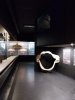
On the second floor is the educational room. This black-clad exhibit N° 2 contains stylish information displays on a number of aspects of marine life, e.g. on the migration of marine fish (f.e. eel in the Sea of Sargasso). It contains large info graphics and maps, polyester fish replica, a large shark's mouth, etc. I thought it was very well done, with a museum-like approach, appropriate lighting and to the point information.

upload_2025-1-30_18-28-53.jpeg

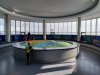
Then it's on to the third and highest floor where exhibit no. 3, the Baltic Room, is located. Very appropriate because, unlike the rooms on the other floors, this round hall has high windows offering a fantastic panoramic view of the harbour, the beach and the Baltic Sea. No fish here, but good education about the tides and the economic importance of the sea. The eye-catcher is a large panoramic bottom relief of the Baltic Sea and its river system.

upload_2025-1-30_18-29-7.jpeg

From the highest point, it then inevitably goes downhill.

The room at the far end of the second floor is dedicated to the Border of Water and Land (exhibit no. 4). Mangrove ecosystems predominate here in some beautiful paludariums, but there are also aquariums dedicated to Lake Tanganyka and the Congo River. The latter has African dwarf crocodiles in addition to Congo salmon. A Common snapping turtle can also be seen here as well as my favourite North American fish, the Alligator gar, and characteristic species such as Archerfish and Four-eyed fish;

The first floor is dedicated to the coral reefs and the deep sea. Right in the middle of the floor is exhibit No. 5 Aquatic Animals of the World. Actually, this is an extension of No. 6, as mainly larger coral fish are shown here. This middle section is perhaps a weaker part of the aquarium with sometimes too small and oddly curved tanks for large fish. I felt it would have been better to place the aquariums on 1 side instead of in a zigzag course. But maybe the construction of the building didn't allow for that (and the weight needs to be distributed more). The aquariums here tend to be more barren, with less light, symbolising the lower parts of the coral reef. There are larger fish to be seen : sharks (Bamboo Shark, Australian Marble Catshark and Northern Baker Shark), moray eels, lionfish, larger doctor fish, butterflyfish, etc. However, the level, both of tanks, species and education remains high, and I especially enjoyed the darkened tanks.

upload_2025-1-30_18-33-27.jpeg

The room at the far end of this floor is dedicated to exhibition no. 6, Coral reef. So if you follow the mapped out tour, you actually have to go back through that overly narrow passage you just walked through. It is much brighter in the last, round room at the end of the building: here there is enough space to view the aquariums without disturbing other visitors. They are all medium-sized tanks, beautifully decorated with corals, sponges and other invertebrates. Many doctor fish, anemone fish, etc can be seen.

upload_2025-1-30_18-29-27.jpeg

The ground floor consists of just 1 room dedicated to the Amazon (exhibit No 7). It starts with a dark-water Red piranha aquarium and is followed by a beautiful mixed tank representing the seasonal floodplain Várzea forest. With Piraputanga, Ocellated River stingray, Quetzal cichlid, Tucamare peacock bass, Leopard sailfin and Suckermouth catfish. It's a nice tank set up like a paludarium, with a large man-made tree trunck, branches and bog-wood, which blends nicely with the greenery. It is followed by a equally large tank with Tambaqui or Black pacu and Green anaconda, an interesting combination. I doubt I have ever seen this fish eater in such a combination.

upload_2025-1-30_18-33-57.jpeg
Tambaqui and Green anaconda

These flooded forest aquaria are certainly the most spectacular on this floor, but it is the tank with two giant electric eels that attracts the most attention. They are gigantic beasts and the aquarium is therefore far too small as they can barely turn around. But eye-catching it certainly is.

Another tank has Silver arowana, Redtail catfish, Rosette river stingray, Barred sorubim and Duckbill catfish. Again, the vegetation above the water adds great aesthetic value.

upload_2025-1-30_18-36-17.jpeg
Red-tailed catfish, Rosette river sting ray and Silver arowana

The basement hides the eighth and newest exhibition ‘Cold Seas - From the Atlantic to the Baltic’ and begins with a large aquarium for lumpfish (Cyclopterus lumpus) and Vivaparous Eelpout (Zoarces viviparus), followed by an equally impressive aquarium for Atlantic Wolffish (Anarchichas lupus) and Mediterranean parrotfish (Sparisoma cretense). A centrally positioned aquarium is inhabited by Eagle rays (Myliobatis aquila) and Jellyfish (Belone belone), while a typical round aquarium has a large school of Blue Jack mackerel (Trachurus picturatus) (accompanied by at least 2 Jellyfish that swam lustily along).

The shark aquarium is in fact the main attraction on this floor. It is large with good depths and a nice collection: Spiny dogfish, Starry and Common Smooth-hound shark, Brown ray, Undulate ray, Small-eyed ray and Grey triggerfish. It is a beautiful tank where especially the large kelp leaves bobbing in the current create a special atmosphere.

upload_2025-1-30_18-30-2.jpeg
Sharks & Triggerfish

European Lobster, Shorthorn sculpin and Nursehound sharks are interesting species to see here in shallow aquariums. I know nothing about fish psychology and welfare, but perhaps having visitors with their noses against the glass pane is not ideal for the animals. On the other hand, it is fun for young children to be able to see these animals up close.

An aquarium for Atlantic cod and Saithe Pollock is followed by one a rather dark and mysterious butt appealing aquarium full of Longespine Snipefish, beautifull pink Swallowtail sea perch and equally beautifull orange Mediterranean Cardinalfish and Snakelocks sea anemone (Anemonia viridis). The quality remains high with the aquarium for Red porgy (Pagrus pagrus), Common white sea bream (Diplodus sargus), Pompano or Silverifsh (Trachinotus ovatus) and Spiny Sea starfish.

upload_2025-1-30_18-30-21.jpeg
Shallow waters of the Atlantic: Red porgy, White sea bream and Silverfish

Two single species tanks, Atlantic Sea Nettle (Chrysaora quinquecirrha) and Spiny Lobster, are the last exhibits. If you want to take a second tour, pay attention because before you know it, you'll be outside the building.

Amid all the grey mice of yesterday and today, Gdynia Aquarium stands out like a pearl in an oyster shell and certainly is worth a visit. I feared that it would be a somewhat old-fashioned place, with poor visitor reception and small, overcrowded aquariums. But instead it’s a modern facility with often well-designed tanks, a good species line-up and good information (Polish and English).

I can easily see myself visiting here again, starting with a cup of coffee. Then some strolling along the stalls on the pier, a visit to the aquarium and a long beach walk. And ending the day with a pint of Grodziskie watching the evening sun over the Baltic Sea.

My next destination was something completely different. As it closed at 2 pm I was a bit in a hurry otherwise I could stroll some more hours at the coast and discover the city.
 

Attachments

  • upload_2025-1-30_18-28-30.jpeg
    upload_2025-1-30_18-28-30.jpeg
    142.8 KB · Views: 123
  • upload_2025-1-30_18-28-53.jpeg
    upload_2025-1-30_18-28-53.jpeg
    58.2 KB · Views: 129
  • upload_2025-1-30_18-29-7.jpeg
    upload_2025-1-30_18-29-7.jpeg
    125.2 KB · Views: 137
  • upload_2025-1-30_18-29-27.jpeg
    upload_2025-1-30_18-29-27.jpeg
    212 KB · Views: 126
  • upload_2025-1-30_18-30-2.jpeg
    upload_2025-1-30_18-30-2.jpeg
    118.3 KB · Views: 131
  • upload_2025-1-30_18-30-21.jpeg
    upload_2025-1-30_18-30-21.jpeg
    160.7 KB · Views: 118
  • upload_2025-1-30_18-33-2.jpeg
    upload_2025-1-30_18-33-2.jpeg
    162.1 KB · Views: 2
  • upload_2025-1-30_18-33-27.jpeg
    upload_2025-1-30_18-33-27.jpeg
    64.6 KB · Views: 122
  • upload_2025-1-30_18-33-57.jpeg
    upload_2025-1-30_18-33-57.jpeg
    182.7 KB · Views: 131
  • upload_2025-1-30_18-36-17.jpeg
    upload_2025-1-30_18-36-17.jpeg
    183.9 KB · Views: 127
I'm still really enjoying these reviews and this is my current favourite thread on ZooChat. It's like one of my road trips, because there's the good, the bad and the ugly from review to review and each post offers up a new surprise! :) I need to get over to Poland one day...
 
Day 12. In and around the Tricity

Sunday already. The B&B was completely full, resulting in me getting the spot for the naughty children during breakfast: on my own under the stairs.

#20 Akwarium Gdynskie / Gdynia Aquarium

Gdynia is a seaport town in northern Poland and is part of the metropolitan area Trojmiasto or Tricity, a conurbation with Gdansk and the spa town Sobot. It’s a rather modern town with many modernist buildings in the city center. A large boulevard leads to the southernmost pier where a 1909 full-rigged sailing ship and a World War II destroyer can be visited.

Almost at the end of the pier lies a public aquarium and sea museum that is operated by the National Marine Fisheries Research Institute. The building dates from 1971 and is of no particular interest although it fits pretty ok with other structures. It has 3 floors, a groundfloor and basement, divided in 8 different exhibitions. Overall the quality of the aquaria and exhibitions is very high, only visitor space is sometimes very (too) narrow.

View attachment 767881

I follow the route indicated on the zoo's map, even if it's a bit confusing at times: it's easier to go from 1 to 5, because of being on the same floor, then to 2.

The tour starts on floor 1 with a small exhibition N° 1 ‘Zostera Marina’ in the right wing. Z. marina is a seagrass found in Puck Bay, the western part of Gdansk Bay. In this hall we find a number of aquariums showing marine life in this part of the Baltic Sea.

On the second floor is the educational room. This black-clad exhibit N° 2 contains stylish information displays on a number of aspects of marine life, e.g. on the migration of marine fish (f.e. eel in the Sea of Sargasso). It contains large info graphics and maps, polyester fish replica, a large shark's mouth, etc. I thought it was very well done, with a museum-like approach, appropriate lighting and to the point information.

View attachment 767882

Then it's on to the third and highest floor where exhibit no. 3, the Baltic Room, is located. Very appropriate because, unlike the rooms on the other floors, this round hall has high windows offering a fantastic panoramic view of the harbour, the beach and the Baltic Sea. No fish here, but good education about the tides and the economic importance of the sea. The eye-catcher is a large panoramic bottom relief of the Baltic Sea and its river system.

View attachment 767883

From the highest point, it then inevitably goes downhill.

The room at the far end of the second floor is dedicated to the Border of Water and Land (exhibit no. 4). Mangrove ecosystems predominate here in some beautiful paludariums, but there are also aquariums dedicated to Lake Tanganyka and the Congo River. The latter has African dwarf crocodiles in addition to Congo salmon. A Common snapping turtle can also be seen here as well as my favourite North American fish, the Alligator gar, and characteristic species such as Archerfish and Four-eyed fish;

The first floor is dedicated to the coral reefs and the deep sea. Right in the middle of the floor is exhibit No. 5 Aquatic Animals of the World. Actually, this is an extension of No. 6, as mainly larger coral fish are shown here. This middle section is perhaps a weaker part of the aquarium with sometimes too small and oddly curved tanks for large fish. I felt it would have been better to place the aquariums on 1 side instead of in a zigzag course. But maybe the construction of the building didn't allow for that (and the weight needs to be distributed more). The aquariums here tend to be more barren, with less light, symbolising the lower parts of the coral reef. There are larger fish to be seen : sharks (Bamboo Shark, Australian Marble Catshark and Northern Baker Shark), moray eels, lionfish, larger doctor fish, butterflyfish, etc. However, the level, both of tanks, species and education remains high, and I especially enjoyed the darkened tanks.

View attachment 767888

The room at the far end of this floor is dedicated to exhibition no. 6, Coral reef. So if you follow the mapped out tour, you actually have to go back through that overly narrow passage you just walked through. It is much brighter in the last, round room at the end of the building: here there is enough space to view the aquariums without disturbing other visitors. They are all medium-sized tanks, beautifully decorated with corals, sponges and other invertebrates. Many doctor fish, anemone fish, etc can be seen.

View attachment 767884

The ground floor consists of just 1 room dedicated to the Amazon (exhibit No 7). It starts with a dark-water Red piranha aquarium and is followed by a beautiful mixed tank representing the seasonal floodplain Várzea forest. With Piraputanga, Ocellated River stingray, Quetzal cichlid, Tucamare peacock bass, Leopard sailfin and Suckermouth catfish. It's a nice tank set up like a paludarium, with a large man-made tree trunck, branches and bog-wood, which blends nicely with the greenery. It is followed by a equally large tank with Tambaqui or Black pacu and Green anaconda, an interesting combination. I doubt I have ever seen this fish eater in such a combination.

View attachment 767890
Tambaqui and Green anaconda

These flooded forest aquaria are certainly the most spectacular on this floor, but it is the tank with two giant electric eels that attracts the most attention. They are gigantic beasts and the aquarium is therefore far too small as they can barely turn around. But eye-catching it certainly is.

Another tank has Silver arowana, Redtail catfish, Rosette river stingray, Barred sorubim and Duckbill catfish. Again, the vegetation above the water adds great aesthetic value.

View attachment 767891
Red-tailed catfish, Rosette river sting ray and Silver arowana

The basement hides the eighth and newest exhibition ‘Cold Seas - From the Atlantic to the Baltic’ and begins with a large aquarium for lumpfish (Cyclopterus lumpus) and Vivaparous Eelpout (Zoarces viviparus), followed by an equally impressive aquarium for Atlantic Wolffish (Anarchichas lupus) and Mediterranean parrotfish (Sparisoma cretense). A centrally positioned aquarium is inhabited by Eagle rays (Myliobatis aquila) and Jellyfish (Belone belone), while a typical round aquarium has a large school of Blue Jack mackerel (Trachurus picturatus) (accompanied by at least 2 Jellyfish that swam lustily along).

The shark aquarium is in fact the main attraction on this floor. It is large with good depths and a nice collection: Spiny dogfish, Starry and Common Smooth-hound shark, Brown ray, Undulate ray, Small-eyed ray and Grey triggerfish. It is a beautiful tank where especially the large kelp leaves bobbing in the current create a special atmosphere.

View attachment 767885
Sharks & Triggerfish

European Lobster, Shorthorn sculpin and Nursehound sharks are interesting species to see here in shallow aquariums. I know nothing about fish psychology and welfare, but perhaps having visitors with their noses against the glass pane is not ideal for the animals. On the other hand, it is fun for young children to be able to see these animals up close.

An aquarium for Atlantic cod and Saithe Pollock is followed by one a rather dark and mysterious butt appealing aquarium full of Longespine Snipefish, beautifull pink Swallowtail sea perch and equally beautifull orange Mediterranean Cardinalfish and Snakelocks sea anemone (Anemonia viridis). The quality remains high with the aquarium for Red porgy (Pagrus pagrus), Common white sea bream (Diplodus sargus), Pompano or Silverifsh (Trachinotus ovatus) and Spiny Sea starfish.

View attachment 767886
Shallow waters of the Atlantic: Red porgy, White sea bream and Silverfish

Two single species tanks, Atlantic Sea Nettle (Chrysaora quinquecirrha) and Spiny Lobster, are the last exhibits. If you want to take a second tour, pay attention because before you know it, you'll be outside the building.

Amid all the grey mice of yesterday and today, Gdynia Aquarium stands out like a pearl in an oyster shell and certainly is worth a visit. I feared that it would be a somewhat old-fashioned place, with poor visitor reception and small, overcrowded aquariums. But instead it’s a modern facility with often well-designed tanks, a good species line-up and good information (Polish and English).

I can easily see myself visiting here again, starting with a cup of coffee. Then some strolling along the stalls on the pier, a visit to the aquarium and a long beach walk. And ending the day with a pint of Grodziskie watching the evening sun over the Baltic Sea.

My next destination was something completely different. As it closed at 2 pm I was a bit in a hurry otherwise I could stroll some more hours at the coast and discover the city.

Really happy with this review of an aquarium I knew almost nothing about, except the high number of species present. It really looks like a very pleasant place with thoughtful design. These Polish zoos know how to surprise.
 
I'm still really enjoying these reviews and this is my current favourite thread on ZooChat. It's like one of my road trips, because there's the good, the bad and the ugly from review to review and each post offers up a new surprise! :) I need to get over to Poland one day...

Really happy with this review of an aquarium I knew almost nothing about, except the high number of species present. It really looks like a very pleasant place with thoughtful design. These Polish zoos know how to surprise.

Thank you both. Few here have done better than both of you when it comes to inspiring trip reports or threads with original angles.

The trip was great and writing reviews equally so.

When @snowleopard writes about the bad and the ugly, well, that's definitely where we end up tomorrow.
 
Day 12. #21 Educational Park – Zoo Exotic Kaszuba - Sierakowice Zoo

I’ve seen in my life a lot of bad zoos or places that pretend to be a zoo. This one could easily reach within the top 5.

It is situated on the countryside near the town of Sierakowice. The building looks like a big fish that is going to devour you. It's the best part of this place.

upload_2025-2-1_11-31-25.jpeg

It’s basically a large hall with a restaurant, play grounds and a mishmash of poor aquaria, terraria, birdcages and animal enclosures. It is noisy, with kiddies running around, and looks like a pet-market.

upload_2025-2-1_11-34-26.jpeg

There are really horrible enclosures, like this one for little owls, piled up between rodents:

upload_2025-2-1_11-32-3.jpeg
Little owl (Athene noctua) in the middle above

Or this storefront window for serval.of which you can detect 2 of these magnificent felids:

upload_2025-2-1_11-32-25.jpeg
Serval (Leptailurus serval) holding

Or this free-flight walk-through bunker for rainbow lorikeets, which is even more kitchily decorated than the colours of the animals. There is some plastic greenery on the wall.

upload_2025-2-1_11-33-48.jpeg
Rainbow lorikeet (Trichoglossus moluccanus)

There are dirty overstocked tanks for freshwater fish, small dark cages for parrots, tiny barren cages for rodents, etc.

upload_2025-2-1_11-36-56.jpeg
White cockatoo (Cacatua alba) on nearly 2 m²

There are tall catering tables with an aquarium, at which you can eat or drink something, with people constantly knocking on the windows.

upload_2025-2-1_11-34-47.jpeg

My visit did not last more than 15 minutes, and I did not have the courage to take a closer look at each exhibit. The only thing that was barely acceptable were the terrariums for tarantulas.

upload_2025-2-1_11-35-9.jpeg
Tarantula

Sierokowice is a horrible place, a bit like Donnersberg but indoors . This venue does not exude any love for animals, just easy money.
 

Attachments

  • upload_2025-2-1_11-31-25.jpeg
    upload_2025-2-1_11-31-25.jpeg
    109.4 KB · Views: 119
  • upload_2025-2-1_11-32-3.jpeg
    upload_2025-2-1_11-32-3.jpeg
    140.8 KB · Views: 122
  • upload_2025-2-1_11-32-25.jpeg
    upload_2025-2-1_11-32-25.jpeg
    91.8 KB · Views: 111
  • upload_2025-2-1_11-33-48.jpeg
    upload_2025-2-1_11-33-48.jpeg
    76.4 KB · Views: 116
  • upload_2025-2-1_11-34-26.jpeg
    upload_2025-2-1_11-34-26.jpeg
    91.1 KB · Views: 113
  • upload_2025-2-1_11-34-47.jpeg
    upload_2025-2-1_11-34-47.jpeg
    142.3 KB · Views: 118
  • upload_2025-2-1_11-35-9.jpeg
    upload_2025-2-1_11-35-9.jpeg
    142 KB · Views: 124
  • upload_2025-2-1_11-36-56.jpeg
    upload_2025-2-1_11-36-56.jpeg
    137.4 KB · Views: 118
Day 12. #22 Charlotta Zoo

Sometimes you get completely caught off guard. I always try to inform myself properly. Finally, through google maps, ZTL and the internet, there is a lot of information to gather. And yet. Somewhere in my mind, the idea had crept in that my next destination would consist of a busy amusement park, a zoo, a dolphinarium and spa resort with hotel, golf courses, etc. Looking back, I have no idea how that got into my head.

Just to say that I thought I was heading for a super busy location, with lots of noise, restaurants, etc.

As I approached, it seemed strange to me that such a venue could only be reached through narrow country roads, but then I thought of Pairi Daiza in my home country, which, before the new bypass was opened, you could only reach through the narrow streets of the nearest village.

upload_2025-2-3_12-44-38.jpeg

Zoo Charlotte isn’t a large zoo and yes it was busy there, but not overcrowded. Within the zoo there weren’t a lot of cafés, restaurants or playgrounds and it had certainly no delphinarium (there is a Fokarium or sealarium).

It is instead a small zoo which starts with a large forested area filled with enclosures, mostly good, and then followed by a large lake with a lot of islands populated with animals. You can have a boat trip around the islands, as there’s a round walking tour.

The first part, right after the entrance, starts with 2 very good-sized aviaries: Common marmoset and Araruna, and Plumed guineafowl and Patagonian Rock-parakeet. A good start because these aviaries are spacious and there is a lot to climb, explore and scurry around for its residents.

upload_2025-2-3_12-44-56.jpeg
Aviary for Ararauna (Ara ararauna) and Common Marmoset (Callithrix jacchus)

This first part of the zoo is called ‘Kraina Bajek’ or ‘Fairyland’, which seemed strange to me, but in reality it just consists of a number of animal enclosures and garden sheds, supplemented by statues of a number of fairy-tale characters. It might be an (not so good) attempt to attract more visitors, but it seems to be like limping on two thoughts, and it is poorly executed. There’s a large aviary for Red-billed blue magpie and Common shelduck, and a high-elevated rather barren enclosure for Pygmy marmoset. Brown Capuchin and Patagonia mara are other very common species on show.

upload_2025-2-3_12-51-59.jpeg
upload_2025-2-3_12-52-42.jpeg
Pygmy Marmoset (Cebuella pygmaea)

There’s a dead end section with rather spacious aviaries for birds-of-prey. The first 3 are a bit too low and have Lesser spotted eagle, European eagle-owl and Great horned owl. The other 4 are much higher but this is poorly utilised and some of these aviaries are split in two with nets: European eagle-owl, Stellers’ Sea eagle, Western Siberian Eagle-owl, Indian peafowl, Great curassow and South American coati.

A nice sized herd of European bison and Vietnamese Sika deer and an enclosure for Kafue lehwe (a species which is very well represented in Poland) preludes a round walk which is quite bizar as there are only enclosures on the inner side, and all of these are on islands.

upload_2025-2-3_12-50-16.jpeg
European Lowland-bison (Bison bonasus bonasus)

upload_2025-2-3_12-45-40.jpeg
Safari boat along island for Red-cheeked Gibbon (Nomascus gabriellae)

This makes it harder to see the animals; the canals are sometimes much wider than necessary to alow the safari boats. Nevertheless, it’s a pleasant stroll between the water and forests but the species line-up is again rather weak: Ostrich, Barbary macaque, Common eland and Scimitar-horned antelope isn’t worth a long drive to this place, as are the Red kangaroo, Capybara and Greater rhea.

upload_2025-2-3_12-46-22.jpeg

upload_2025-2-3_12-46-4.jpeg
Stables for ungulates

Red-cheecked gibbon (already inside their sleeping quarters), Grey crowned crane and Ring-tailed lemur are the most interesting species. The only side path leads to a large pond with Manchurian cranes and Black swan.

upload_2025-2-3_12-46-39.jpeg
Red-cheeked Gibbon (Nomascus gabriellae) building

Charlotta isn’t a bad place but it’s not worth such a long drive. It’s probably a good half day destination if you stay in that region and you have young kids. All its animals exhibits are ok to good, but it lacks interesting species.

Tomorrow : a stunning cat enclosure.
 

Attachments

  • upload_2025-2-3_12-45-13.jpeg
    upload_2025-2-3_12-45-13.jpeg
    263.2 KB · Views: 7
  • upload_2025-2-3_12-44-38.jpeg
    upload_2025-2-3_12-44-38.jpeg
    166.1 KB · Views: 100
  • upload_2025-2-3_12-44-56.jpeg
    upload_2025-2-3_12-44-56.jpeg
    309.8 KB · Views: 108
  • upload_2025-2-3_12-45-40.jpeg
    upload_2025-2-3_12-45-40.jpeg
    246.4 KB · Views: 110
  • upload_2025-2-3_12-46-4.jpeg
    upload_2025-2-3_12-46-4.jpeg
    234.1 KB · Views: 105
  • upload_2025-2-3_12-46-22.jpeg
    upload_2025-2-3_12-46-22.jpeg
    135.9 KB · Views: 105
  • upload_2025-2-3_12-46-39.jpeg
    upload_2025-2-3_12-46-39.jpeg
    294.6 KB · Views: 106
  • upload_2025-2-3_12-50-16.jpeg
    upload_2025-2-3_12-50-16.jpeg
    297.8 KB · Views: 109
  • upload_2025-2-3_12-51-59.jpeg
    upload_2025-2-3_12-51-59.jpeg
    193.2 KB · Views: 98
  • upload_2025-2-3_12-52-42.jpeg
    upload_2025-2-3_12-52-42.jpeg
    148 KB · Views: 103
Day 13 The lion king


#23 Gdansk Zoo – Part 1. The Bad, the Ugly and a Masterclass

I stayed for 2 nights in a Willa, a kind of Polish B&B and it was a relief after all these nights in big hotels with their expensive parking cost. Before I travelled back to the centre of the country I had 1 visit to do in the north, one of which I had some good expectations, and I was not disappointed.

Gdansk Zoo was founded in 1954 and is located in a large forest track between Gdansk and Sopot. With 125 ha it is the largest zoo in Poland.

I parked at the large parking lot near the second entrance of the zoo, but the latter turned out to be closed. Like almost all Polish zoos, the main entrance does not represent much, just a functional building with ticket offices and access control. You buy a zoo plan via a vending machine as in most other large Polish zoos.

upload_2025-2-6_18-20-7.jpeg

I started with the left area of the zoo and the first impressions are not overwhelmingly good: a old seal pond and a very poor elephant enclosure.

But things immediately started to improve significantly after that, with some very decent enclosures for antelopes and a beautiful paddock for a pair of pygmy hippos.

upload_2025-2-6_18-15-29.jpeg
Enclosure Western Pygmy Hippo (Choeropsis liberiensis liberiensis)

To the left, and about 10 metres deeper, are a series of enclosures for South American fauna: Brazilian tapir and Capybara, each with access to ample water features. On a pond sit Great white pelican and above it, a pampa appear. I'm not a big fan of a ‘pampa’ in zoos: too often too stereotypical and always the same species. I consider myself very lucky to have seen Swamp deer in Berlin. Still, I could like this one in Gdansk: it is high above the already mentioned enclosures and densely grown with tall grasses, exactly (and perhaps not quite rightly) the predominant image I have of Argentine pampas. Between the grasses, at least 15 Greater rhea poked their heads above the vegetation, accompanied by a large herd of Vicunha.

On the other site the zebra-giraffe enclosure, let’s call it a savannah, bathes in the morning sun.

The Eastern Bongo enclosure is beautifull with trees, scrubs and a running stream through it. It marks the start to the zoo’s best part, the stunning African lion enclosure (2014). The building is certainly of very high quality: both two cave-like enclosures and the visitor areas are finished in great detail and are extremely impressive. The attraction is enhanced by the fact that other species can also be found here: Arabian sand cats (2 enclosures), Naked mole rats, Grey mouse lemur and Woodland dormouse.

upload_2025-2-6_18-6-20.jpeg
Lion House - Forest African Dormouse (Graphiurus murinus (left) and one of the lion enclosures

Outside there’re 2 enclosures which exceeds in total 1 ha. One is off-show, but the main one is a superb open woodland and hilly enclosure with large trees, scrubland, a pond and tall grasland. It’s nearly 9000 m² are one of the best lion enclosures I have ever seen. Size-wise it’s to compare with Wuppertal, but it couldn’t be more in contrast with that one in terms of vegetation. Whereas Wuppertal's lion enclosure is reminiscent of the wide grasslands of the Serengeti and where dense vegetation is absent, here in Gdansk it is more reminiscent of the Miombo woodland savannahs of southern central Africa. It’s a superb exhibit and worth a trip to Gdansk alone.

upload_2025-2-6_18-9-56.jpeg

The enclosure can be viewed from an elevated visitor path that runs almost completely around it. At the end, there is a viewing platform. It takes some searching for the animals and I can imagine that some visitors find this just a bit too much of a challenge, but personally, I already found this to be the best animal enclosure I encountered during this trip. On the outside of the lion house are two more stylish outdoor cages for the Arabian sand cats. I saw the latter already inside the building but on my second round, both animals were lounging outside in the afternoon heat.

upload_2025-2-6_18-8-38.jpeg
Lion House with 2 exhibits for Arabian Sand Cat (Felis margarita harrisoni)

The tour continues along adjoining enclosures for Common eland and Shetland pony towards a large aviary for Grey-crowned cranes and the Giraffe Building. The latter is of no special interest, it has meerkat as co-habitants. It is followed by a large paddock for Cheetah and the path leads to one of the few accessible buildings in this zoo: the Bird- annex Reptile House.

This clearly older building has a row of aviaries connected with inside. Some of these aviaries literally hang from the building.

upload_2025-2-6_18-12-42.jpeg
Bird and Reptile House - Hanging aviaries (Orange-winged amazon and Senegal Barbet)

The first 4 aviaries have pigeons (Victoria crowned, Nicobar), parrots (Senegal parrot, Nanday and Patagonian parakeet, Yellow-crested cockatoo) and a few other species (Bali myna and Violet turaco). Inside the building these aviaries connect with 3 exhibits, so species-wise there could be some confusion. The entrance hall has 3 terraria with lizards: Ornate mastigure, Giant Madagascar Day gecko and Blue-speckled Tree monitor. The Pigeon-Parrot wing has more terraria but these are small and poorly designed : Broad-snoated caiman, Burmese python, Spur-thighted tortoise, Marginated tortoise and Central Asian tortoise.

upload_2025-2-6_18-12-57.jpeg
Mixed species aviary (Violet Turaco, Victoria Crowned Pigeon, Bali Myna, Eclectus Parrot)

The midsection of the building continues with on one side excellent aviaries connected to the outside for birds (Grey and Senegal parrot, Von der Decken toc, Black-caped lory, Bali myna, Rainbow lorikeet, Yellow-crowned and Turquoise Amazon) and Emeperor tamarin, all good in terms of space and nicely designed. The other side of the corridor consist of very mediocre terrariums for mostly very common species (Leopard gecko, Sinolan milksnake, Red-footed tortoise, etc.) and Malagasy Giant Turtle.

upload_2025-2-6_18-14-18.jpeg
Bird and Reptile House - Mid section visitor area

The rightmost wing of the building is dedicated to macaws, Ararauna and Military, which also have tiny but tall outside cages at the front of the building. Cuban crocodile and Orange-winged amazon are other species here, but the most interesting is a pair of Senegal Barbet, a species I always like to see.

upload_2025-2-6_18-11-45.jpeg
Bird and Reptile House - Frontal macaw aviaries

The Pygmy Hippo House is dark and has two enclosures for African spurred and Radiated tortoises. The animals can move between those two and to the outside enclosure by an underground bypass. I had not seen anything like this before.

upload_2025-2-6_18-10-19.jpeg
Underground bypass for African tortoises

A path behind this building leads past Maned wolves, a lonely Black Sable antelope and behind the antelope enclosures (Scimitar-horned oryx, Western sitatunga and Kafue lechwe) to the awful- looking Elephant House. I’m sure the zoo knows it needs to close this building asap and I know the cost for an new building is extremely high, but the current situation looked pretty unacceptable. Of all the bad elephant buildings I have seen in Poland, this was surely the most dramatic.

I’m close to the main entrance again, and between the ponds for Grey seal and African penguin the zoo’s office buildings mark the second part of the zoos.
 

Attachments

  • upload_2025-2-6_18-6-20.jpeg
    upload_2025-2-6_18-6-20.jpeg
    118.3 KB · Views: 89
  • upload_2025-2-6_18-8-38.jpeg
    upload_2025-2-6_18-8-38.jpeg
    256.8 KB · Views: 98
  • upload_2025-2-6_18-9-56.jpeg
    upload_2025-2-6_18-9-56.jpeg
    238.5 KB · Views: 98
  • upload_2025-2-6_18-10-19.jpeg
    upload_2025-2-6_18-10-19.jpeg
    158.6 KB · Views: 89
  • upload_2025-2-6_18-11-45.jpeg
    upload_2025-2-6_18-11-45.jpeg
    224.9 KB · Views: 96
  • upload_2025-2-6_18-12-42.jpeg
    upload_2025-2-6_18-12-42.jpeg
    261.4 KB · Views: 95
  • upload_2025-2-6_18-12-57.jpeg
    upload_2025-2-6_18-12-57.jpeg
    154.7 KB · Views: 90
  • upload_2025-2-6_18-14-18.jpeg
    upload_2025-2-6_18-14-18.jpeg
    59.6 KB · Views: 88
  • upload_2025-2-6_18-15-29.jpeg
    upload_2025-2-6_18-15-29.jpeg
    231.2 KB · Views: 94
  • upload_2025-2-6_18-20-7.jpeg
    upload_2025-2-6_18-20-7.jpeg
    128.3 KB · Views: 89
Elephant House. I’m sure the zoo knows it needs to close this building asap and I know the cost for an new building is extremely high, but the current situation looked pretty unacceptable. Of all the bad elephant buildings I have seen in Poland, this was surely the most dramatic.

Well the building is truly atrocious. However same as with Wroclaw Zoo, you can't do much when you keep two very old elephants, hell it must be one of the last zoos in Europe to keep a combo of African + Asian elephant. I really hope that the Zoo will decide on building a new exhibit for elephants in the future, after the passing of Wiki and Katka. In general I think that this zoo really needs some more investments. The terrain is really beautiful and it would hugely benefit from some new adjustments e.g new Chimpanzee enclosure (the cage is not too attractive) and some better living quarters for felines.
 
Thanks @Kranich29 for the clarrification of the elephant situation in Gdansk. I was particularly shocked myself when I saw the animals inside the building. Since their stall is barely higher than the animals themselves, it must be very claustrophobic in there. But otherwise also all understanding given their age.

As for the primates, I will write something about that tomorrow and maybe you will be surprised by how I experienced it.

I certainly enjoyed the scenic beauty in Gdansk, perhaps for me the most beautiful zoo in the country (although there is another zoo that is highly regarded in that respect, which I will write about in a few days).
 
I can't thank you enough for this magnificent thread. I've traveled to Poland three times with the main purpose of visiting zoos and reading these magnificent reviews makes me realize once again that I still have a lot to see. I really enjoyed it.

The truth is that Poland is a rather underrated country compared to surrounding countries like the Czech Republic or Germany, but it has an undeniable attraction for zoonerds.
 
As for the primates, I will write something about that tomorrow and maybe you will be surprised by how I experienced it

Well they are functional, the problem is in how attractive the object is. I get the idea that caged exhibits are better for chimps than flat meadow, it is not visually pleasing tho.

I certainly enjoyed the scenic beauty in Gdansk, perhaps for me the most beautiful zoo in the country (although there is another zoo that is highly regarded in that respect, which I will write about in a few days).

Poznań incoming?
 
I have just gotten around to reading the first entries of this thread - very good so far!

I will be visting Dresden and Chemnitz myself for the first time in april, so it's interesting to read your review of those zoos in particular

This bit concers me a little though

Day 1. #2 Tierpark Chemnitz

in the - vain - hope that it would stop raining, I rushed to the Vivarium first. To my horror, I saw construction fences at the entrance. It turned out that part of the building was undergoing a - much needed - renovation. Fortunately 2 halls remained open, packed on all sides with terrariums, often 2 on top of each other. I counted 34 species myself. Among them many color varieties of poison dart frogs, but I am not a specialist in that field

The Vivarium is, obviously, one of my main reasons for visiting this zoo. Do you, or does anyone else, know the extend of these renovations and how much of it will still be underway in april?
It would be quite disappointing to miss out on part of their huge amphibian collection.
 
I have just gotten around to reading the first entries of this thread - very good so far!

I will be visting Dresden and Chemnitz myself for the first time in april, so it's interesting to read your review of those zoos in particular

This bit concers me a little though


The Vivarium is, obviously, one of my main reasons for visiting this zoo. Do you, or does anyone else, know the extend of these renovations and how much of it will still be underway in april?
It would be quite disappointing to miss out on part of their huge amphibian collection.

I am not sure if the renovation is still going on. In September, this was in the back room. I have asked the zoo for more information and will let you know then.
 
#23 Gdansk Zoo. Part 2. Some quirky structures and scenic splendour

I’m not sure if many Zoochatters will like the Primate section of the zoo, but I certainly did.

upload_2025-2-8_18-16-18.jpeg

3 of these buildings rise high above the visitors' path. Each houses 2 species. At the back, the path rises and the buildings can be entered to view the interior enclosures. Much can be said about the age, beauty or design, but 1 thing is certain: all species have spacious and very high outdoor cages where the animals can make full use of their climbing abilities. They lack vegetation, not easy with large primates, hiding places and shelter, all of this is true, but I liked the space and height and there’s a interesting species line-up: Kikuyu guerzza, Patas monkey, Black Howler monkey, Javan Lutung, Mandril, Orangutan and (Western) Common chimpanzee. All-in large family groups including young ones.

upload_2025-2-8_18-33-21.jpeg
Kikuyu Guereza (Colobus guereza kikuyuensis)

Inside, again, it has been kept simple. Visitors can view 1 species on either side. Because you have walked up in the meantime, you are inside on the first floor: the animals can descend through openings in the floor, providing fantastic hiding and moving possibilities between three floors. Again, these are not the most modern enclosures, but you can immediately see which aspects should definitely be retained when modernising.

upload_2025-2-8_18-19-13.jpeg
Patas Monkey (Erythrocebus patas)

The mandrills have a spacious cage connected to their night quarters, the only ones that are not accessible to visitors.

upload_2025-2-8_18-35-31.jpeg
Mandrill (Mandrillus sphinx) enclosure

However I must also confess that things are a little less rosy for both the great apes. It is perhaps a bit too dark and humid there, especially in winter when the animals are confined inside for long periods. No dramatic conditions like I saw in Rostock 25 years ago, but I think improvement is needed here. But certainly the chimpanzees didn't seem to mind: the nine animals make full use of the outdoor cage and the youngest ones romp around.

upload_2025-2-8_18-28-3.jpeg
Common Chimpanzee (Pan troglodytes non subspecific and verus)

This part of the zoo is densely forested and leads past ungulate enclosures for Lowland anoa, Visayan spotted and Fallow deer, a beautifull enclosure for Eurasian elk and another one for Eurasian wolves.


A wetland area has enclosures for Collared peccary, Central European wild boar and North American porcupine, and an aviary for Ural owl. A wooden bridge leads over a pond between 2 aviaries. These have mostly common species such as African spoonbill, Manchurian crane, Cape Barren goose, Greater flamingo, etc. Nothing special, but nicely done.

This part of the zoo excels in very good animal enclosures, and the one for Barasingha deer jumps above that: it is a large varied but open area with tall grasses.

upload_2025-2-8_18-20-55.jpeg

It leads to a series of beautiful aviaries for birds of prey. They are certainly not the biggest aviaries, but they are stylish and quite well appointed and I think the view over the Barasingha meadow somehow gives these animals peace of mind. Which is ofcourse a very personal opinion of a zoo nerd who has been sleeping in very mediocre box-like hotel rooms for the past few weeks.


There are nine in total and it starts with a tall aviary for Andean condors, a species well represented in Poland. This is followed by Red-legged seriema, again condors, Turkey Vulture, Great Curassow, Mongolian tawny eagle, European eagle-owl and Southern Ground hornbill.

The path runs up a hill with stunning views on the Barasingha deer enclosure, a large paddock for domestic Water buffalo, a stunning dromedare enclosure and wooded hills.


On top are attractive rocky enclosures for Mishmi takin and European bison.

upload_2025-2-8_18-24-15.jpeg
European Lowland-bison (Bison bonasus bonasus)

A dead end leads to the only downer of this section, 2 very old cages for Siberian tiger. Along with the elephants, this looked like the most urgent to do of the zoo. And with new tiger enclosures, the zoo can easily moved it’s leopards to this place.

upload_2025-2-8_18-25-25.jpeg
Siberian tiger (Panthera tigris altaica)

Species-wise this area is actually of less interest: its a shame that all those wonderfull enclosures mainly housing domestic species: Dromedary, Yak, Water buffalo, Llama, Alpaca. That Dromedary enclosure f.e. cries for a wild ass species.

The final section of the zoo is concentrated around a large pond with an island for Northern White-cheeked, Red-cheeked gibbon and Black and white rufted lemur, and the new zoo restaurant (one of the few modern and well equipped restaurants in Polish zoos). An old but well-kept Carnivore building has (too) small cages for Persian leopard, Serval and Binturong, while a larger one houses Sumatran Prevost’ squirrel. Eurasian lynx live in pretty new double cages but I think these are size-wise more appropriate for European wildcat, the latter are mentioned on the zoo map but were not signed. Last enclosure is a reasonable sized but poorly designed cage for Pallas’ cat.


Only on a second tour did I discover another side path near the guerezas that led to some dated cages for Azara's agouti, European wildcat and Yellow mongoose. These are small and forgettable.

In such a beautiful natural setting, no one here is probably interested in architecture, but there is a stunning half-timbered villa that serves as the seat of management. A worthy finale to a visit that I particularly enjoyed.

upload_2025-2-8_18-21-37.jpeg

Conclusion

I had a very pleasant day at the Gdansk zoo, which is the most scenic zoo in Poland as far as I am concerned. The zoo has a very nice collection of mammals of which especially the ungulates hit it off in large and often beautifully landscaped enclosures. The primates and certainly some felines are a little less fortunate, but there are no really dramatic things to be seen anywhere. And the lion enclosure is the zoo's showpiece, easy rivalling the top zoos in Europe.

The way many primates are kept will not be to everyone's taste, and especially for the great apes, improvement is much needed. But if you, like me, enjoy a bit of different structures, you will at least get a sense of interest. This is obviously a very personal opinion: these structures are of no historical importance and are by no means a must-see. But I loved them.

If money can be found, a modernisation and expansion of the Bird+Reptile House seems quite easy to me, starting with a spacious macaw aviary against the side of the building.

Then it is a long drive to the Manchester of north-eastern Europe, a big city full of textile mills and jugend-still villas. Could a modern zoo thrive here? Perhaps so.
 

Attachments

  • upload_2025-2-8_18-16-18.jpeg
    upload_2025-2-8_18-16-18.jpeg
    145.3 KB · Views: 85
  • upload_2025-2-8_18-19-13.jpeg
    upload_2025-2-8_18-19-13.jpeg
    168.8 KB · Views: 81
  • upload_2025-2-8_18-20-55.jpeg
    upload_2025-2-8_18-20-55.jpeg
    217.8 KB · Views: 88
  • upload_2025-2-8_18-21-37.jpeg
    upload_2025-2-8_18-21-37.jpeg
    147.8 KB · Views: 85
  • upload_2025-2-8_18-23-54.jpeg
    upload_2025-2-8_18-23-54.jpeg
    287.9 KB · Views: 2
  • upload_2025-2-8_18-24-15.jpeg
    upload_2025-2-8_18-24-15.jpeg
    268.3 KB · Views: 83
  • upload_2025-2-8_18-25-25.jpeg
    upload_2025-2-8_18-25-25.jpeg
    293.2 KB · Views: 89
  • upload_2025-2-8_18-28-3.jpeg
    upload_2025-2-8_18-28-3.jpeg
    280.2 KB · Views: 88
  • upload_2025-2-8_18-33-21.jpeg
    upload_2025-2-8_18-33-21.jpeg
    183.2 KB · Views: 82
  • upload_2025-2-8_18-35-31.jpeg
    upload_2025-2-8_18-35-31.jpeg
    280.5 KB · Views: 84
Back
Top